An Extract from The Long Shadow by Celia Fremlin

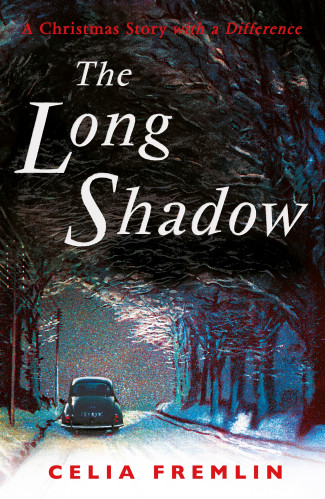
The Long Shadow

I’m delighted to be part of the launch celebrations for The Long Shadow by Celia Fremlin with an extract for you today. I’d like to thank Joanna Lee at Faber and Faber for inviting me to be part of this re-release and for sending me a copy of The Long Shadow.

Published by Faber and Faber on 1st November 2018, The Long Shadow is available for purchase directly from the publisher as well as here.

The Long Shadow

The Long Shadow

Jolted from sleep by the ringing of the telephone, Imogen stumbles through the dark, empty house to answer it. At first, she can’t quite understand the man on the other end of the line. Surely he can’t honestly be accusing her of killing her husband, Ivor, who died in a car crash barely two months ago.

An Extract from The Long Shadow by Celia Fremlin

No, he died two months ago,’ she said; ‘I’m a widow,’ and she waited for the tiny recoil behind his eyes, the twitch of unease, as he adjusted himself to the embar­rassment of it. What do you say to middle-aged widows who turn up at parties so indecently soon? What do you talk to them about? Is the weather a safe topic? Or the state of the country?

I don’t know either, Imogen wanted to scream at him. I don’t know what you’re supposed to say to me, or what I’m supposed to answer—or anything. This is the first time I’ve been anywhere since Ivor died, and I wish I’d never come, I wish I was safe at home being miserable. What a fool I was to let Myrtle persuade me, I might have known it would be like this . . . .

Myrtle wasn’t really to blame, of course. Her intentions had been of the kindliest.

‘It’ll take you out of yourself, darling,’ she’d insisted. ‘After all, Ivor wouldn’t have wanted you to go on grieving for ever . . . .’

*

Like hell he wouldn’t! To Ivor’s vast, irrepressible ego, for ever would have been all too short a tribute. He’d have loved to imagine that Imogen would grieve for him for ever, miss him for ever—indeed, that everyone else would, too: pupils, colleagues,neighbours; even his former wives and mistresses. All of them, all tearing their hair, rending their garments, flinging themselves on his pyre in an abandonment of grief. That’s what Ivor would have liked, and Myrtle, of all people, must know it.

But of course, you couldn’t expect her to mention it, any more than Imogen herself was mentioning it: and so, ‘No, I suppose he wouldn’t,’ she’d lied, and had begun worrying about what to wear.

After all, it might be fun. It might, for a few hours, make her feel like a whole person again instead of the broken half of a couple.

It didn’t, though; and it wasn’t fun. By now, after nearly two hours of it, she felt not merely like a half person, but a half person who has been bisected vertically for an anatomical demonstration . . . all the raw, bleeding ends on display as the audience files past, each in turn peering with fascinated horror.

Over the rim of her glass, Imogen stole a look at her compan­ion. Short, bearded, ten years younger than herself (as most men seemed to be these days)—already she could see the ‘Let-me-out-of-this’ signals flashing behind his horn-rimmed glasses. Any minute now. Myrtle (attentive hostess that she was) would be undulating along, all smiles, to mount yet another rescue operation. The fourth.

*

How long would it go on being like this? How long would the people she was introduced to stand in twitching silence, gulp­ing back their opening gambits, washing their minds clear of funny stories? How long would she go on being an embarrass­ment and an obscenity wherever she went?

Embarrassment. Looking back over these past awful weeks, Imogen sometimes felt that the embarrassment had been worse than the grief: and there was no outlet for it in tears.

The hushed voices. The laughter that died as you drew near. The careful topics of conversation, picked clean of all reference to husbands, funerals, car accidents, professorships, love, happiness, unhappiness, men, women, life . . . . It didn’t leave much.

(What a taster! I’m so pleased I have The Long Shadow on my TBR!)

About Celia Fremlin

celia

Celia Fremlin (1914-2009) was born in Kent and educated at Berkhamsted School for Girls and Somerville College, Oxford, where she read classics and philosophy. During the Second World War she worked for the Mass Observation project, an experience that resulted in her first published book, War Factory (1943, available in Faber Finds), which recorded the experiences and attitudes of women war workers in a radar equipment factory outside Malmesbury, Wiltshire. Her first published novel of suspense was The Hours Before Dawn (1958), which went on to win the Mystery Writers of America’s Edgar Allan Poe award for best crime novel in 1960. Over the next 35 years Fremlin published a further eighteen titles, including three collections of stories.

There’s more with these other bloggers too:
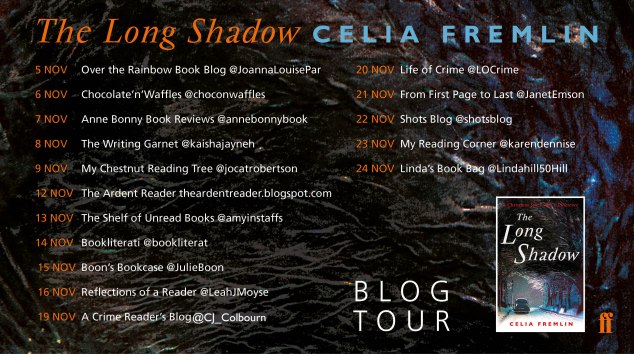
Long_Shadow_blog (1).jpg

Staying in with KT King

IMG_7269 (1)

It’s been a real pleasure finding new authors and being a very small part of their publishing journey here on Linda’s Book Bag this year. I’m delighted to welcome KT King today to tell me all about her debut novel.

Staying in with KT King

Welcome to Linda’s Book Bag KT.

Thank you for inviting me to stay in with you!

My pleasure! Tell me, which of your books have you brought to tell us about this evening?

IMG_7269 (1)

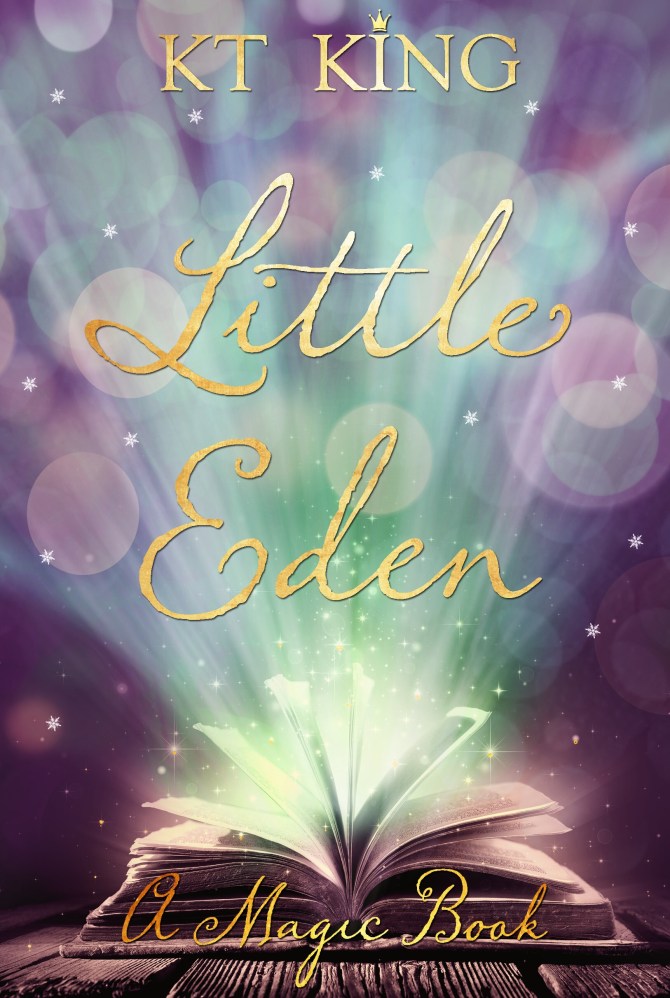
Staying in sounds such a cosy and lovely idea so I have chosen to bring my debut novel Little Eden ~ A Magic Book because it’s cosy and quirky and it’s packed full of tea and cakes too!

(Now that sounds perfect. A book, tea and cakes. It’s difficult to think of anything better! Tell me a bit more.)

Little Eden is thrilling, cosy, exciting, comforting and enlightening but what makes it a Magic Book? Because a magic book opens the heart and expands the mind! I wanted to write a novel that was interactive, that the reader could feel part of and make friends with. I also aimed to create a space in which they would feel safe to explore their sense of self, their spirituality and faith (or lack of it). I feel Little Eden is a literary sanctuary of fun, friends, enlightenment and healing, and so far my readers seem to have fallen in love with it, just as I had hoped they would!

(Little Eden sounds really interesting.)

What readers are saying:

I want to live in Little Eden! I loved the characters even just after reading the first few pages and wanted to know what would happen to them. AK, Health Visitor

I’m so in love with Robert! Great cliff hangers and plot twists and I love all the spiritual stuff too but most of all it’s a great story set in a really beautiful place. LM, Beauty Therapist 

I love the fact you can listen to the music, bake the cakes and be part of Little Eden. The story is full of unexpected moments and at the end of each chapter I just wanted to read another. KE, Shop Assistant

I would recommend this book to anyone, spiritual or not because although it has a lot of true spiritual knowledge in it, it’s also a great read. I could feel the energy vibrating as I read it. Roll on Book 2. AP Author

All  my reviews can be found on www.troubador.com

(This is lovely feedback. You must be delighted.) 

It’s quirky because I have included wiki-links so that readers can find out more about things like past-lives, auras, star children and other spiritual ideas. I have also included recipes, a meditation, prayers, and quotes from literature and some footnotes. There is even a soundtrack, including quoted song lyrics from Tim Rice and Julie Gold, as well as an original poem by Andrea Perry. Readers can also buy the crystals and jewellery mentioned in the book at my Etsy shop, KTKingShop.

(I’ve had a look at your Etsy shop and you’ve some beautiful items there KT.)

It’s got a serious side to it too though. I have suffered with Chronic Fatigue Syndrome for over 25 years and my heroine, Sophie Lawrence has CFS. I wanted to create a heroine who had CFS/M.E to show sufferers and the general public that we are still valid human beings and can contribute to society if given the proper understanding, care and support. Sufferers are often ridiculed, ignored and accused of making it all up or being lazy. Suicide rates are high as are deaths due to neglect and homelessness. This is a real disease which needs to be recognised and researched properly. Over 250 thousand people suffer with it in the U.K alone. I am hoping my heroine, SOPHIE, can help to raise the profile of this devastating illness in the hearts and minds of the public.

(I love that about books KT. They can raise awareness of so many issues and surprise people.)

In 2012 I lost my home and my Reflexology business due to a severe bout of CFS. My elderly parents provide food and shelter for me as I can only work a few hours a month and sometimes not at all. I spent my savings on producing the e-book and get no state aid so I am hoping that I can provide for myself again through Little Eden and the support of my readers. Little Eden has given me a reason to live and I hope it can help others to find some hope, joy and self-confidence again.

(I hope so too. It sounds as if you’re due some positivity.)

What else have I brought and why have you brought it?

Scones

Being such a massive fan of afternoon tea, I had to bring Mrs B’s scrumptious scones. The recipe was inspired by scones I had at a hotel in London a few years ago, for that extra melt in the mouth sensation! The Daisy Place Cafe-Bookshop in Little Eden serves afternoon tea all day long so I put five of Mrs B’s recipes in the back of the novel for my readers to try. After all, a book with a cuppa and a slice of cake is the best night in!

(Oh my goodness. Scones are one of my favourite treats. You’ll be welcome back any time if you bring lovely food like this!)

And we can listen to the soundtrack of Little Eden which is an eclectic mix of disco, ballad and gospel songs.  My favourite song is From a Distance by Julie Gold, because it inspired the novel in the first place and she kindly let me quote her lyrics at the end of the novel, plus Julie herself is an amazingly kind soul, she has been so encouraging to me personally and yet we have never met in person. She reached out to help me, a total stranger! (ITunes links to all the songs are on my blog).

The kindness of strangers is a wonderful thing KT. It’s been lovely staying in with you to hear about Little Eden. I do hope it all works out for you. Good luck!

Little Eden – A Magic Book

IMG_7269 (1)

Little Eden, London, England

2012. The ancient sanctuary town of Little Eden is under threat. Human greed, selfishness and disregard are about to turn the last 1,000 years to dust.

Robert Bartlett-Hart must make a choice.

With the help of his friends (plus plenty of tea and cake), Robert learns that there is more at stake than just Little Eden. Something lies at the heart of Abbey; something that stands between mankind and Armageddon.

Robert and the residents of Little Eden must navigate past lives, other dimensions, and even Heaven itself, to find a way to save Little Eden and themselves.

Will Little Eden survive to usher in a New Age, or will Humanity perish along with it?

Little Eden is available for purchase from your local Amazon site, iBooks, Kobo and Googleplay.

About KT King

_MG_0574 (1)

KT King was born in 1973, East Yorkshire, England. She attended university in Lancaster and Cambridge but in her early twenties found that Chronic Fatigue Syndrome, along with congenital spinal problems (causing severe chronic pain), prevented her from working full-time.

She began re-training as a healer to help with her own health issues and in 2000 trained as a Reiki healer. Over the course of several years she went onto train as a Hypnotherapist, Counsellor and Reflexologist. She became a teacher and a spiritual guide to other healers.

Since 2012, KT has been too ill to work more than a few days a month and so has dedicated the time she can to her lifelong ambition of becoming a writer.

KT says “Several years ago I bumped into a childhood friend who, when she found out I was writing a book, reminded me that we used to play The Famous Five together but I didn’t want to be one of the characters, I wanted to be Enid Blyton! So, it’s only taken 40 years to realise my dream! I wanted to create a novel in which my friends, who are healers and light workers, would see ourselves portrayed in reality rather than pushed into fantasy or ridiculed. A novel in which we could say – that really happens to me!”

Due to ill health and (as many CFS sufferers find) she is not entitled to any disability or state benefits of any kind and is reliant on the charity of her family to provide food and shelter. Having lost her home and her business in 2012, she hopes to make enough money from her series of Little Eden books to have one day have a home again.

KT Loves to hear from her readers.

You can find out more by visiting KT’s blog, finding her on Facebook or following her on Twitter @KTKINGbooks. You might like to visit her Etsy shop too!

Staying in with Sebastiano Lanza

II - That Which Must Happen

I’m at it again here on Linda’s Book Bag – discovering another new to me author! This time I have great pleasure in welcoming Sebastiano Lanza to stay in with me and tell me about one of his books.

Staying in with Sebastiano Lanza

Welcome to Linda’s Book Bag Sebastiano. Thanks so much for agreeing to stay in with me.

Hi Linda, thank you for having me.

Which of your books have you brought along this evening and why have you brought it?

II - That Which Must Happen

Tonight I have brought That Which Must Happen, my first full-length novel!
That Which Must Happen is a novel about fate, not the “inexorable” fate we’re all acquainted with, rather, a series of interconnected events all influenced by each other and, ultimately, by our choices. In other words, an active fate.

(That sounds fascinating.)

It is also Benjamin’s story. He’s a child able to foresee, forestall, and alter events happening all around him. But does he do that of his own accord? Well, I’m not going to say!

However, at some point during the novel, his personal attachments do get in the way, as the only person he truly cares about is faced with a less than ideal fate. Since every event is connected to another and so on, he cannot simply save her, that would make the whole novel rather dull, wouldn’t it?

(It would – but you have me intrigued as to what happens in That Which Must Happen.)

That Which Must Happen is definitely not a light read. There are these terrible events happening throughout the whole novel. It is an attempt at studying what makes fate tick. By which criteria do some events happen whilst others just don’t? Consequently it is also a study of human nature. How do we react in the face of adversities? How should we react to adversities?

(That Which Must Happen sounds quite philosophical.)

Despite having these terrible events plaguing Benjamin’s life and those of the people around him, I think readers, once having read the whole novel, will turn the last page in a feel-good mood.

Please, allow me to share a short excerpt from chapter VI of That Which Must Happen:

Droplets of water, rhythmically hitting a ceramic sink intricately ornamented with golden patterns, were the sole element disrupting the fathomless silence which entirely permeated Ms Penter’s residence.

The setting sun’s sparse beams, purposefully shining through the opaque, stained windows, allowed their dim orange glow to render discernible to cursory glances the considerable amount of dust languishing upon the deep-black grand piano lid. Similarly to the dust, a relative amount of undisturbed peace had settled throughout Ms Penter’s residence.

Vainly attempting to rest her wary mind, Ms Penter had closed her weary eyes; an arduous task rendered impossible by her thoughts, rushing untamed through every possible scenario which could have led to the child’s indescribable pain. She was seated on one of the living room chairs she had previously brought upstairs, to the bedroom. To her right, upon the night table, were: a bottle of fresh water, droplets of condensation obfuscated its transparent body; a richly decorated glass covered in its entirety by green dots; a ceramic plate containing two eggs, which Ms Penter had fried during the previous, apprehension-filled, hours, and a round, blue tin-box entirely filled with Danish cookies.

Ms Penter had awaited the child’s awakening for the entire day. She did not desire for him to wake in a barren environment and, although exhausted, she knew herself all too well; she would not be able to fall asleep, nor find a relative composure of mind and thought, given the dire circumstances she had found herself entangled in.
Unexpected, the rustling sound of moving sheets forcefully compelled the woman to open her exhausted eyes, thus call to attention her wandering mind. What her eyes perceived filled her with an indescribable sense of relief.

Awake at last, the child had sat comfortably atop the pillow, his wide nut-brown eyes, rendered ever more so by his scrawny appearance, were attentively cemented upon the simple and colourful wardrobe; his breathing was regular, his expression somewhat peaceful.

Uncertain, Ms Penter cautiously placed her right hand upon the colourless duvet, only to lean closer towards the child.

“Hi,” she whispered softly, her tone of voice gentle.

Following the woman’s tender greeting, the child’s wide eyes swiftly moved away from the wardrobe’s colourful contours. Startled, once his gaze had met the woman’s graceful silhouette, he abruptly jumped back, against the sturdy bed frame. His nut-brown eyes, moments prior wide, were now shut and sheltered by his scrawny hands; the expression upon his partially concealed visage was one of unbearable pain.

Subsequently to the child’s frightful reaction, Ms Penter’s keen relief steadily faded to dreaded concern. Cautiously, the woman sat upon the duvet as gently as she could, so as to avoid to generate further alarm within his already apprehensive mind.

“Hi,” she softly whispered anew, her tone of voice as calm as she could muster. “You are safe now. I am not going to hurt you,” she continued as she extended her hand towards the young boy, only to halt her movement moments before touching his scrawny, pale forearm.

A few moments of silence went by unnoticed.

The expression of keenly sensed pain, which had previously marked the child’s visage, had become less prominent. Partially reassured by the woman’s calm, collected demeanour and soothing whispers, the child hesitantly moved his pale hands away from his sealed eyes, only to intently seek her hand; his own hand uncertain, his arm’s movements fearful.

At last, the child seized the woman’s hand, his hold growing ever so tight with every unmerciful, passing instant; he allowed himself to release without constraint past nights’, days’, months’ terror through his feeble touch.

His wary eyes, disquieted and finally wide open, met Ms Penter’s disconcerted gaze. The child scrutinized the woman’s eyes, as if in search of something nor he or she could accurately describe, at last exploding in inexhaustible tears.

Promptly, Ms Penter embraced him, his arms now interlocked behind the woman’s back.
“You will be alright,” the woman soothingly whispered in his ear, a note of uncontrolled emotion well discernible in her trembling voice. She sensed through that first, momentous embrace, which she did not allow herself to break until the child’s desperate tears became completely exhausted, that the young boy had shared with her the entirety of his intolerable pain.

Receding sunlight had completely vanished from serene skies. Droplets of water, once again hitting the intricately ornamented ceramic sink, dictated the tempo of unfathomable events unfolding in their silence-filled surroundings.

(Oh! This has really made me want to read on Seb.)

What else did you bring and why?

Rame di Napoli

-Oh, I nearly forgot. I did bring along some cookies. We call these Rame di Napoli. It’s a chocolate marzipan-like cookie filled with either marmalade, nutella, pistacchio creme or anything else really. They’re exquisite.

They certainly look it! Thanks for bringing them and for staying in to tell me all about That Which Must Happen. I’ve been intrigued by your book!

That Which Must Happen

II - That Which Must Happen

Benjamin is a child able to foresee and forestall events unfolding in his life and that of others. Yet he dreads to reshape them, for these events intertwine each and every existence in a delicate balance. However, when he senses his sole caretaker’s imminent death, he feels he must intervene.

In a fevered state, Benjamin was abandoned in the midst of a winter night, and is now sheltered by Ms Penter, a woman grieving over the loss of her own child. As he’s nurtured back to health, and his presence helps the woman to partially let go of her grief, Benjamin is devastated each and every time he glimpses her imminent demise.

Despite his attempts to alter the events leading to her death, Benjamin knows he won’t be able to save Ms Penter without damaging the delicate balance which entwines each and every life. The same balance he was born to preserve.

That Which Must Happen tackles the theme of fate.
Not to be understood as a series of immutable events leading to a predetermined destination, rather, as a series of interconnected events which can be influenced by our choices.

That Which Must Happen is available for purchase from your local Amazon site.

About Sebastiano Lanza

II - Author

Sebastiano was born and bred in Italy, which must be why he loves good food, and is the author of That Which Must Happen. Currently working on more novels, Sebastiano is passionate about non-linear storytelling, labyrinthine plots, and mise en abyme (amidst others), which feature heavily in his works.

Sebastiano takes great pleasure from thinking for hours on end about what’s rather important.
He also adores impossible challenges, if nothing else for their paradoxical nature. Sebastiano believes nothing is impossible.

You can follow Sebastiano on Twitter @SebLanza, and find him on Facebook and Goodreads.

Staying in with Cynthia Brandel

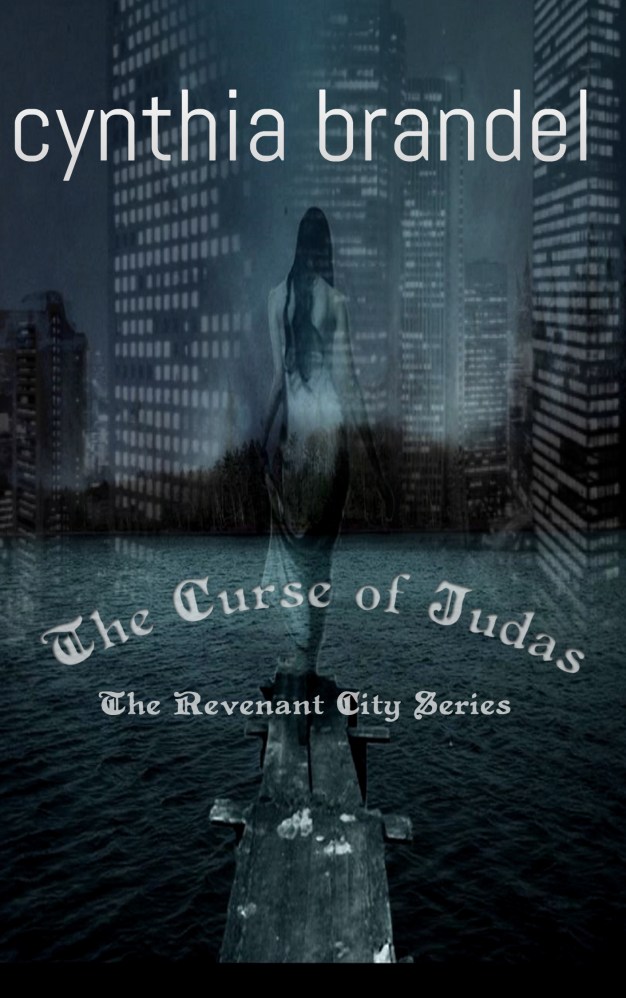
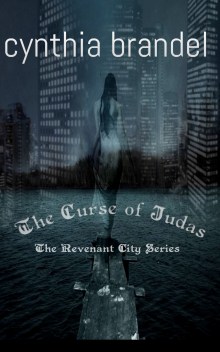
Cover The Curse of Judas

With so many books out in the world and so little time in which to read them I frequently turn to short books or novellas so that I can have the satisfaction of an entire read fitted into my busy life. With that in mind, I simply had to ask Cynthia Brandel to stay in with me and tell me about her novella.

Staying in with Cynthia Brandel

Welcome to Linda’s Book Bag, Cynthia. Thank you for agreeing to stay in with me.

Thank you for having me.  It is nice to be able to take a break and speak with you.

Tell me, which of your books have you brought along to share this evening and why have you chosen it? 

Cover The Curse of Judas

Today, I would like to share my newest novella, The Curse of Judas.  As a working mom with two teenage boys, my days are filled with sports, school work, and everyday chores (as well as trying to fit in time for my own personal interests).  I brought The Curse of Judas with me because it is considered a short read.  I don’t have a lot of time to sit and read a full 300+ page novel.  The Curse of Judas is great for readers like me that have a passion for books, but not a lot of time to spend with them.

(That sounds perfect. As someone with over 900 physical books on my TBR I often look for a short read.)

What can we expect from an evening in with The Curse of Judas?

The Curse of Judas is a post-apocalyptic urban fantasy that will take you to a city where humans are governed by a race called the revenant.  The story interweaves biblical prophecy and vampire lore into one.

The main protagonist, Phoebe, was born and raised along the outskirts of the revenant city.  She and her Pappy look beyond their circumstances to find happiness in the life they’d been given.  I don’t want to give away too much of the storyline, but I will say this: Phoebe is my hero.

She fights for the ones she loves with an ardent passion that strikes me with awe.  Her love for her family is her driving force.  She would choose to put herself in danger, jeopardizing her life, and sacrificing everything if it meant she could keep her family safe.

(Crikey! It sounds as if you’ve packed a lot in to your novella.)

What else have you brought along and why? 

19A825A9562944F3BB25577613381139

Sitting with me this evening is my puppy, who (believe it or not) actually answers to Puppy. He is my constant companion (and nuisance when he feels my laptop has had enough time on my lap) while I am working into the late hours at night.

(He’s gorgeous!)

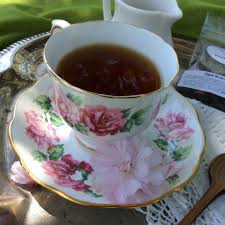
Other than Puppy, I have a nice steaming cup of Earl Grey (my favorite).

5F92F51E7CCE48E2A334D02155DF9D0A

(It’s always tea time in this house so that cup of Earl Grey is very welcome.)

The last thing I have is a confession.  I would like to share with you how the idea for the revenant city came to fruition.  I was driving down the highway, stuck in yet another traffic jam (as seems to always be the case with the continual road construction happening in my area), and I happened to pass the Blood Connection (a donation center).  There was a line of people standing out front of the center, but one man caught my attention.  I don’t usually judge a book by its cover, but this man looked homeless.  His clothes were torn, his hair was unkempt and he had a fairly decent beard sprouting out of his chin.  Like lightning, the idea struck me about the revenant.  I don’t know how I was able to tie a homeless man standing outside a blood bank back to the story of Judas Iscariot, but it just flowed.  So, while I was sitting in the traffic jam, I turned on my voice recorder app and started spouting out The Curse of Judas.

Oh! That’s a bit spooky. Thanks so much for sharing that with me and for staying in and chatting all about The Curse of Judas. I’ve enjoyed our evening and wish you good luck with the book.

The Curse of Judas

Cover The Curse of Judas

The price of survival is blood.  The price of freedom is life.  All things will eventually meet their end…….including humanity.

After generations of advancement, the human race thought they were invincible. That was until the revenant made their presence known. In order to survive, humans had to pay a price.

The cost……their blood. The source of life for all living things.

Persephone Black (Phoebe) was an orphan. She and her Pappy made a living on the outskirts of the revenant city where the poor and desolate were numerous. Phoebe had kept her head low and remained unnoticed for her entire life. She was content working as a junior gardner at the nursery as long as it meant her and Pappy’s continued survival within the city walls.

As fate would have it, Phoebe wouldn’t be able to go unnoticed for much longer. She caught the attention of Cassius, a revenant, and was summoned by him to the tower.

Phoebe would learn more about the revenant than most other humans. Cast into a world that she was not yet ready for, Phoebe would do anything to survive.

But she would soon learn that sometimes the cost of survival is more than a person could bear.

The Curse of Judas is a post-apocalyptic adventure interlaced with biblical prophecy and religious innuendo centered around the story of Judas Iscariot.

Persephone Black would be cast into the fray when she meets a son of Judas. Her existence is both a blessing and a curse for the revenant. If the secret of her birth ever came to light, the world of the revenants would turn on end.

Note: There is a cliffhanger.

The Curse of Judas is available for purchase here.

About Cynthia Brandel

42132018_1993653480698198_5846043139508273152_n-e1537442154731

Other than being an awesome mom and a devoted wife, Cynthia is an avid explorer traveling through the galaxy of her mind meeting new and interesting people along the way. Her destination is unknown, but the fun is in the journey.

Cynthia’s first exploration took her to the world of Sanctoria, a place full of magic and mystery. After falling in love and leading an army to war, Cynthia left Sanctoria and continued on her journey.

Currently, Cynthia resides in one of the Revenant cities on Earth. What mysteries will the city hold and where will Cynthia end up? Who knows? But you can guarantee that Cynthia will tell us all about it!

You can find out more about Cynthia on PinterestGoogle, Facebook, Goodreads, Tumblr, InstagramAmazon and you can also follow Cynthia on Twitter @CynthiaBrandel.

The Lost Daughter by Gill Paul

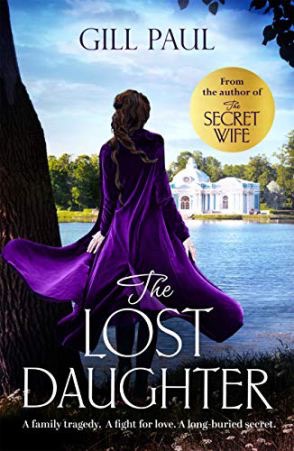
The Lost Daughter

You know when you meet someone for the first time and instantly realise that they are on your wavelength and will become a friend? That’s how I felt the first time I met Gill Paul, author of The Lost Daughter. Our paths have crossed several times since and I have been to two of Gill’s book launches, for both The Lost Daughter and The Secret Wife. Gill has featured on Linda’s Book Bag with a super guest post about the run up to publication in an author’s life that you can read here. I’ve been intending to read Gill’s books for ever and a day, but life has always intervened. This time, however, I’m delighted finally to have a review to share today.

My enormous thanks to Gill Paul for a copy of The Lost Daughter in return for an honest review.

The Lost Daughter is available for purchase here.

The Lost Daughter

The Lost Daughter

A Russian princess. An extraordinary sacrifice. A captivating secret…

From the author of The Secret Wifea gripping journey through decades and across continents, of love, devastating loss and courage against all odds.

1918
With the country they once ruled turned against them, the future of Russia’s imperial family hangs in the balance. When middle daughter Maria Romanova captivates two of the guards, it will lead to a fateful choice between right and wrong.

Fifty-five years later . . .
Val rushes to her father’s side when she hears of his troubling end-of-life confession: ‘I didn’t want to kill her.’ As she unravels the secrets behind her mother’s disappearance when she was twelve years old, she finds herself caught up in one of the world’s greatest mysteries.

My Review of The Lost Daughter

Events of 1918 in Russia will reverberate down the decades and across continents.

Why on earth have I waited so long to read Gill Paul? The Lost Daughter is such an impressive read because of the meticulous research that has gone into the history, politics, sociology and geography of the two timelines which Gill Paul blends with exceptional storytelling into a narrative that grips, entertains and actually shocks at times too. The Lost Daughter truly is a sweeping narrative of love and betrayal, grief and love, national politics and ordinary people so that I was entirely caught up in the magic of the book. I know I’m enjoying a read when I find myself talking to the characters!

I think it’s the attention to detail that works so well. Everything from natural imagery to realistic living conditions is woven into the text in a way that is never jarring or overtly clever but which illuminates perfectly what Gill Paul wants us to think and feel so that we experience the events at the same time as the participants. I went through several emotions reading The Lost Daughter from disgust and horror, through sadness and anger to joy and surprise. Gill Paul conveys brutality and tenderness with equal skill.

There’s quite a wide range of characters and often I find this element of the writer’s craft difficult to retain, but each person was so distinct in The Lost Daughter I had no trouble here. I found it fascinating how historically accurate and yet how fresh and modern the characters were so that I believed in each one completely. They brought out a range of responses in me as a reader from sadness to anger and elation.

The plot is magnificent. I’m not a big fan of dual timelines but here I loved it. I was so entranced by how the two strands were brought together that I simply devoured The Lost Daughter every spare minute I had. Whilst some of the events were a hazy aspect of my history studies, they were brought alive with vivid realism by Gill Paul. I loved the blend of fact and fiction. The themes of love, identity, relationships and so on are universal but so well handled that The Lost Daughter would make a simply fabulous big or small screen film.

I finished The Lost Daughter with absolute contentment. I felt I had been educated, entertained and emotionally involved. What more could a reader ask of historical fiction? I loved this book.

About Gill Paul

Gill Paul

Gill Paul is an author of historical fiction, specialising in relatively recent history. Her novel, Another Woman’s Husband , is about links you might not have been aware of between Wallis, Duchess of Windsor, and Diana, Princess of Wales.

Gill’s novels include Another Woman’s HusbandThe Secret Wife, about the romance between cavalry officer Dmitri Malama and Grand Duchess Tatiana, the second daughter of Russia’s last tsar, who first met in 1914,  Women and Children First about a young steward who works on the Titanic and The Affair set in Rome in 1961–62 as Elizabeth Taylor and Richard Burton fell in love while making Cleopatra. No Place for a Lady is about two Victorian sisters who travel out to the Crimean War of 1854–56 and face challenges beyond anything they could have imagined.

All of Gill’s lovely books can be found here.

You can follow Gill on Twitter @GillPaulAUTHOR, visit her website and find her on Facebook for more information.

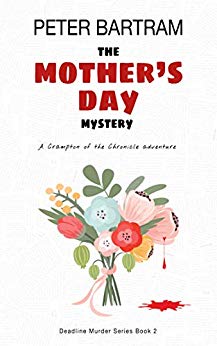
An Extract from The Mother’s Day Mystery by Peter Bartram

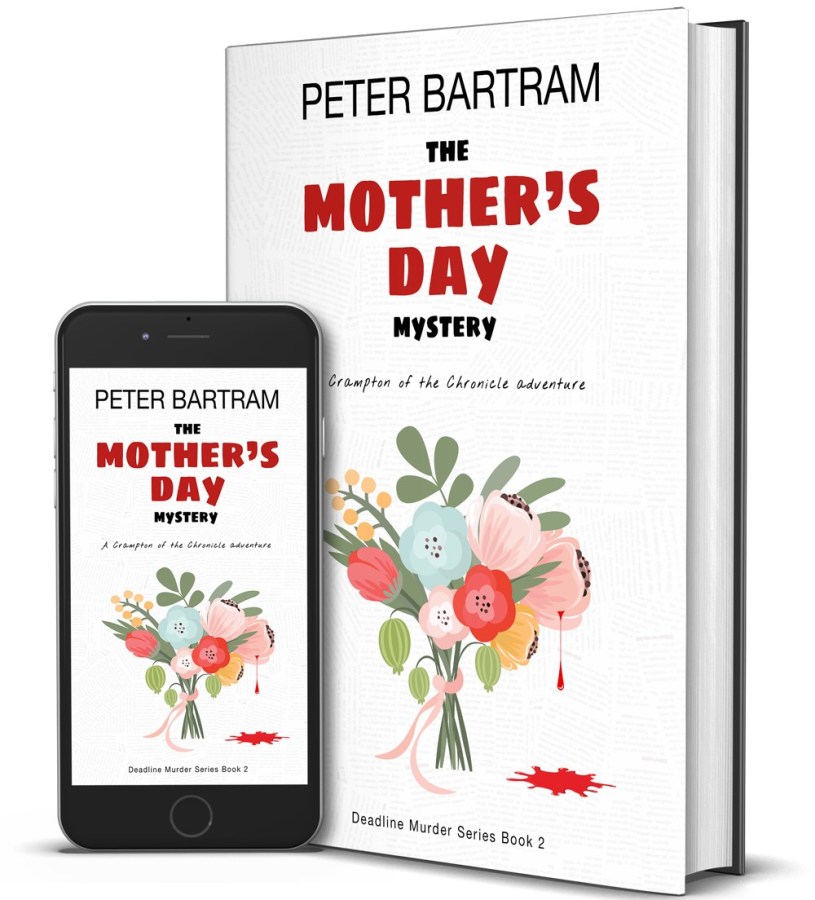
Cover

I’m so pleased to be able to share an extract from Peter Bartram’s latest book, The Mother’s Day Mystery because Peter has been such a regular here on Linda’s Book Bag that he feels like an old friend!

Although the giveaway on the post is now over, there’s a smashing post from Peter about finding the right reader for audio book versions of Murder in the Morning Edition, Murder in the Afternoon Extra, and Murder in the Night Final that you can read here. Peter has also provided guest posts about writing about a 1960s setting here, why he wrote a trilogy here and introducing his protagonists here.

Published on 9th November 2018, The Mother’s Day Mystery is available for purchase here.

The Mother’s Day Mystery

basic cover

There are just four days to Mother’s Day and crime reporter Colin Crampton is under pressure to find a front-page story to fit the theme.

Then Colin and his feisty girlfriend Shirley Goldsmith stumble across a body late at night on a lonely country road. Colin scents a story when the cops dismiss the idea of murder.

Colin and Shirley flirt with danger as they investigate the killing. They take on a crazy hippie commune, an eccentric group of church bell-ringers, and a chemistry teacher with an unusual late-night hobby.

And that’s before they tangle with the mothers… Colin’s landlady has been thrown out of the Mothers’ Union. And Shirley’s mum has gone missing – in a town where a serial killer is on the prowl.

Join Colin and Shirley for a madcap Mother’s Day mystery in Swinging Sixties England, where the laughs are never far from the action.

An Extract from The Mother’s Day Mystery

A Crampton of the Chronicle adventure

Evening Chronicle crime reporter Colin Crampton and his Australian girlfriend Shirley Goldsmith are driving on a lonely road in Sussex. Colin has just addressed a meeting on the subject of the ethics of the press. It’s a talk that will cause him a lot of trouble. But, at the moment, he has other worries on his mind – like the dangerous road and the filthy weather…

Shirley leaned forward and stared out of the rain-streaked windscreen.

“Jeez, Colin, where are you taking me?” she asked.

We were in my MGB heading out of Steyning the dangerous way – on a narrow track which climbed over the South Downs range of hills. Ahead, the road became steeper. The engine note rose as I changed down from third to second gear. High banks overgrown with bushes and nettles closed in on either side. The track was slick with muddy water. If we met a car coming the other way, there’d be a stand-off. Whoever blinked first would have to back up hundreds of yards to a passing place.

I’d rather reverse around Piccadilly Circus in blindfolds.

But after my talk my throat was dry. I needed a drink – and was taking the shortest route I knew.

I said: “There’s a great little pub called the Marquess of Granby in the village of Sompting on the other side of the hills. We can get some supper there.”

“Sounds great. But is this road the only way? It sure is lonely.”

“It’s called the Bostal,” I said. “It’s a Sussex word for a narrow track leading up a hill. This one heads over the Downs to the coast. And you’re right – not much traffic ever comes this way. Especially at night. Or in weather like this.”

Pounding rain ran in rivulets across the windscreen. The wipers struggled to clear the water.

I said: “The loneliness of this road made it popular with smugglers not so many years ago.”

Shirley swivelled in her seat and stared open-eyed at me. “You mean the real ones with black patches over their eyes and spotted handkerchiefs tied round their necks?”

“And parrots on their shoulders screaming, ‘Pieces of eight’. No, not like the smugglers from fiction. Not even like Rudyard Kipling’s smugglers. You remember the poem: ‘Five and twenty ponies trotting through the dark, Brandy for the parson, baccy for the clerk…’ These were real smugglers who were in it for profit. Big money. And woe betide anyone who stood in their way. Even in my granddad’s time there was a gun battle up here between smugglers and customs men. Two smugglers were shot dead.”

“You wouldn’t get them fighting it out on a night like this,” Shirley said.

The engine note fell as we reached the summit of the hill. I changed up a gear and we picked up speed. To our left, the hills fell away in a steep escarpment. The blackness of the night was broken by pinpricks of light on the horizon. They flickered dimly through the rain.

I pointed. “Brighton.”

I depressed the accelerator and the MGB surged forward. The tyres fizzed as they cut through spray from the road.

“Stop,” Shirley yelled. “Stop, now!”

“What the…?”

I stamped down on the brake. The tyres squealed on the wet road. The MGB’s rear-end fishtailed. The headlights wavered. The engine cut as we shuddered to a halt. So what? A perfectly executed emergency stop in my book. And I’d defy any driving instructor to disagree.

I turned to Shirley, but she’d already wound down her window and was staring at something back along the road.

“What is it?” I said.

“There’s something lying on the verge.”

“A person?”

“I don’t think so.”

“It’s probably a dead fox,” I grumbled. “Road kill. But we’d better check.”

I grabbed my torch from the glove compartment and we climbed out of the car. The wind blew needles of rain into our faces. We hunched our shoulders like a couple of old ditch diggers. We scrunched up our eyes and stared into the darkness.

I said: “There is something there. Looks like a lump by the side of the road.”

I shone my torch, but it just made the raindrops sparkle like falling diamonds.

We slithered towards the lump. Our feet splashed through puddles and squelched on mud. We skidded to a halt on the wet grass at the side of the road.

The lump turned out to be a bicycle.

It lay abandoned by the roadside. I shone my torch downwards. It had been a smart bike, too. A bike it’s owner would have taken pride in. A Norman 77I – the I stood for Invincible – made by the British Cycle Corporation. But it wasn’t an invincible bike now. The back wheel was broken. The spokes splayed out like a busted rake. Some were bent, others had snapped. The rear tyre was shredded. One brake cable had severed. Red glass from the rear light lay broken on the road. The handlebars were twisted.

I said. “Looks like this cycle was hit from the rear by something. Probably a car. And going at speed.”

“Is it recent?” Shirley asked.

“Hard to say,” I said. “But the biggest question is what happened to the person riding it? There’s no sign of blood, but that could’ve been washed off by the rain. Let’s take a look around.”

Shirley wandered a few steps onto the grass verge.

“Be careful,” I called after her. “The escarpment falls away sharply and there’s no fence.”

But, as usual, she’d ignored me. She’d vanished into the blackness of the night. I waved the torch around a bit, but I might as well have been lighting matches down a coalmine.

I called out: “Shirley.” But my cry was carried away on the wind. By now, the rain had seeped under my shirt collar and was running down my back.

“Shirley,” I called.

No reply.

I strained my ears and listened for a sound. The wind sobbed in the trees. But there was no crash, no scream as a body hurtled through undergrowth to the foot of the escarpment.

The rain down my back had reached my underpants. Nothing about this was going to end well.

I yelled again: “Shirley!” My voice sounded shrill, or perhaps it was just the way the wind distorted it.

Silence.

And then…

“Over here,” Shirley shouted.

I sighed with relief and ran towards her voice. Didn’t care whether I was near the escarpment’s edge. Couldn’t be bothered the rain had now soaked the seat of my trousers. I was just so relieved to hear her voice.

My torch waved wildly around. I played the beam on Shirley’s face. And knew at once there was trouble. Her eyebrows were drawn down and her lips were compressed with tension. She pointed at the ground.

I swung the torch down.

A crumpled body lay face down in the long grass. It was tall, more than six feet, I guessed. It was dressed in a long gabardine raincoat and a sou’wester. I knelt down, reached under the sou’wester for the neck and felt for a pulse. None.

I looked at Shirley. “Dead,” I said.

(Now, you can’t leave it there Peter. I need to know what happens next!)

About Peter Bartram

peter bartrum

Peter Bartram brings years of experience as a journalist to his Crampton of the Chronicle crime series – which features crime reporter Colin Crampton in 1960s Brighton.

Peter has done most things in journalism from door-stepping for quotes to writing serious editorials. He’s pursued stories in locations as diverse as 700 feet down a coal mine and a courtier’s chambers at Buckingham Palace. Peter wrote 21 non-fiction books, including five ghost-written, before turning to crime – and penning the Crampton of the Chronicle series of humorous crime mysteries.

Peter is a member of the Society of Authors and the Crime Writers’ Association.

You can find Peter on Facebook, follow him on Twitter @PeterFBartram, visit Peter’s website here and find out more about the Colin Crampton books here.

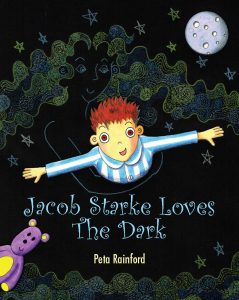
Jacob Starke Loves the Dark by Peta Rainford

Jacob Starke

My enormous thanks to author and illustrator Peta Rainford for sending me a copy of Jacob Starke Loves the Dark in return for an honest review. I adore Peta’s children’s books and have a review of The Niggle here alongside a smashing guest post from Peta about fitting illustrations to text in her books (although sadly the giveaway has now ended) and another review of Isabella’s Adventures in Numberland here.

Jacob Starke Loves the Dark is available for purchase here.

Jacob Starke Loves the Dark

Jacob Starke

Are you afraid of THE DARK? Jacob Starke is. Jacob Starke is TERRIFIED!

Until, that is, he gets to meet The Dark face-to-face and shares an amazing adventure through the wonders of the night sky.

Jacob Starke Loves The Dark is a charming rhyming picture book about being brave, outer space, loving plants and animals and the importance of Dark Skies. An important environmental issue is tackled with beautiful illustrations, humour and a light touch.

My Review of Jacob Starke Loves the Dark

Jacob is afraid of the dark but learns not to worry.

I don’t know about Jacob learning to love the dark, but I absolutely adored Jacob Starke Loves the Dark. This is the third Peta Rainford children’s book I’ve read and whilst they are all wonderful, this it is her best yet. It’s absolutely brilliant and a must read with any child who is afraid of the dark.

The quality of illustration in Jacob Starke Loves the Dark is outstanding. Even though many of the images need to be dark to support the text, they are still vibrant, beautiful and stunning. I loved the way so many animals feature, from domestic cats to turtles, especially as there fantastic messages about caring for the environment and the need to allow nature to experience darkness to thrive. Indeed, I think adults should read this book, never mind children, so that they can appreciate the environment more too.

Obviously, alongside the environmental messages, the main concept of the book is to help children who are afraid of the dark and it is conveyed perfectly. Jacob goes on wonderful adventures with the dark and learns to dispel his fears completely. The way the illustrations personify the dark works flawlessly.

The language in Jacob Starke Loves the Dark is fabulous. Not only does Peta Rainford maintain the rhyme scheme impeccably without straining the language to fit, she balances familiar and challenging language so well, meaning that the book is accessible for independent readers as well as improving their own vocabulary. I’d love to see a copy of this book in every primary school in the UK. I can so so many educational and emotional benefits from reading it with and to children.

It’s difficult to convey what a triumph I think Jacob Starke Loves the Dark is. It’s a wonderful book and I cannot recommend it highly enough. Just buy it!

About Peta Rainford

peta

Peta grew up on the Isle of Wight so long ago she can remember buying crisps from the school  tuck shop for 2½p. As a child she loved words, and loved drawing too, but she had no idea what she wanted to do when she grew up. She studied English at York University and then worked in London as a business journalist and editor for 14 years. She went to art classes and even studied fine art at St Martins, but she still had no idea what she wanted to do when she grew up.

Peta moved back to the Isle of Wight in 2006, and it was here that Peta, now balancing the roles of freelance writer and mum, decided to write and illustrate her first book for children. It was a revelation: a way of combining picture making with her love of words – not to mention an outlet for her awful jokes. It may have taken more than four decades, but finally, Peta knows what she wants to do when she grows up.

Peta Rainford’s books iclude Hairy FairyIsabella Rotten SpellerIsabella’s Adventures in Numberland, The Niggle and Jamie and the Joke Factory.

You can find out more by following Peta on Twitter @PetaRainford and visiting her website. You’ll also find Peta on Facebook.

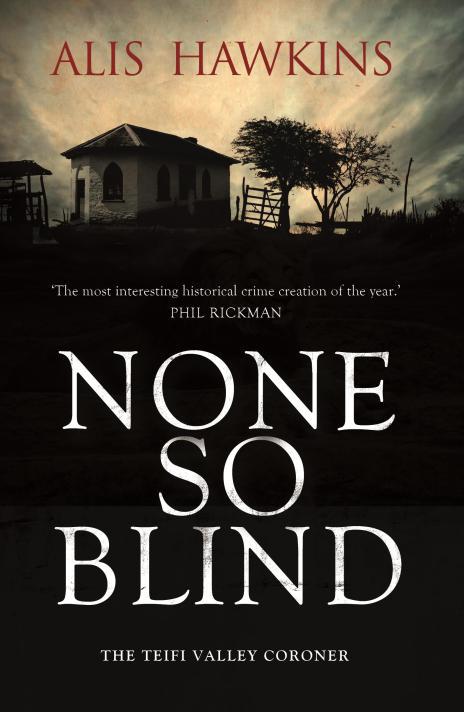
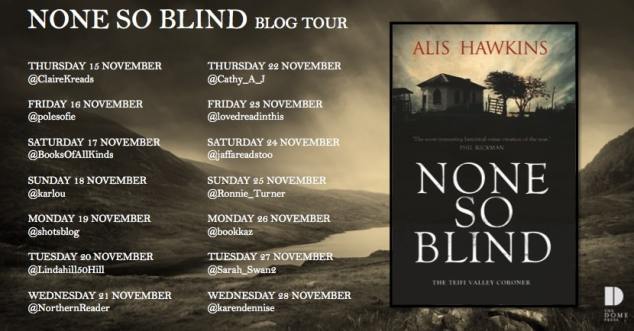
Discussing None So Blind with Alis Hawkins

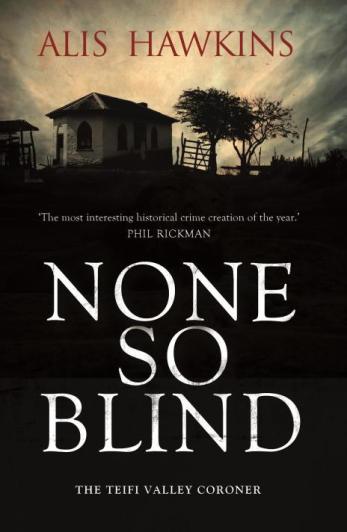
none-so-blinddome1

I’m so grateful to Emily Glenister at The Dome Press for inviting me to be part of the launch celebrations for None So Blind by Alis Hawkins and for sending me a copy of the book for review as it looks EXACTLY my kind of read. I had hoped I’d be able to share my review today but sadly life got in the way of my reading but at least I still have the book to look forward to. I am thrilled, however, to be staying in with Alis Hawkins to chat all about None So Blind.

Staying in with Alis Hawkins

Hi Alis and welcome to Linda’s Book Bag.

Thanks so much for having me, Linda!

I have a sneaky feeling we already know the answer to this question, but which of your books have you brought along to share with me and why have you chosen it?

none-so-blinddome1

I’ve brought along None So Blind, the first in my new historical crime series, the Teifi Valley Coroner. I’ve brought None So Blind, partly because it’s launching me as a crime author but also because it’s a book I’ve been waiting to write for a long time. Previously, I wrote medieval mystery novels set in the South of England but I’m from Cardiganshire and I’d always wanted to write a book set during a very exciting period of the county’s history. Now, with None So Blind, I’ve finally done it.

(How exciting to have a new series. I’m desperate to read None So Blind.)

What can we expect from an evening in with None So Blind?

You can look forward to an immersive murder mystery in the company of two very different young men – Harry Probert-Lloyd, barrister son of the local squire, who ran away to London seven years before the action starts and has now been driven home by encroaching blindness; and John Davies, orphan son of poor tenant farmers who’s pulled himself up by his bootstraps and is now a solicitor’s clerk with ambitions. John becomes Harry’s sidekick in an investigation into a murder in which Harry is personally involved.

(This sounds like a classic duo.)

But there’s a lot more to None So Blind than a murder mystery. The other treat that people can expect from an evening in with this book is an introduction both to a part of Wales most people have never had the pleasure of getting to know and to a series of unique historical events – the Rebecca Riots.

(Ah! My husband is Welsh, studied the Rebecca Riots at school and is champing at the bit to read None So Blind but I won’t let him until I’ve read it first!)

The riots form the backdrop to Harry’s investigation into the murder of Margaret Jones who disappeared in the spring of 1842 when the riots were at their height. Following the discovery of her remains, in the teeth of almost universal opposition, Harry insists on an inquest. But, in an apparent attempt to stifle any further investigation, the inquest jury returns an anomalous verdict. Everybody assumes that that is the end of the matter, but Harry is not going to let things lie. For reasons which become clear as the book progresses, he feels partly responsible for Margaret’s death; he is determined to find out why she died and what part the riots played in her murder.

(This sounds utterly brilliant Alis.)

When I’m talking to people about the book, as soon as I mention the riots, they always ask the same thing. ‘And Rebecca? Who was she?’

In the book, Harry’s friend, Gus, asks the same thing and, though Harry gives him an answer, at a deeper level the question remains ‘live’ throughout the book. During the Rebecca Riots, when men rode out after dark, dressed in women’s clothing, their faces blacked, to destroy tollgates, many different individuals took the role of ‘Rebecca’. And, to begin with, they rode at the head of bands of men who felt they were simply standing up for themselves and seeking the justice which an inequitable system had denied them.

But, to quote Harry, ‘as anybody who has lived through a period of insurrection knows, once people unaccustomed to power have felt its potency, they are apt to begin wielding it indiscriminately…’ and it is that indiscriminate wielding of power that, Harry and John suspect, resulted in Margaret Jones’s death.

(Power corrupts and absolute power corrupts absolutely!)

We watch as the two young men risk public ridicule, their reputation and, possibly, their lives, to uncover the truth. But readers of None So Blind are always one step ahead of either John or Harry as they are privy to the thoughts – and, crucially, the memories – of both young men. Because both of them know more than they are prepared to tell each other about the events of spring 1842.

(None So Blind sounds so intriguing. No wonder you wanted to write this narrative Alis.)

What else have you brought along and why?

illustration

The first thing I’ve brought along is an iconic contemporary cartoon from Punch magazine. The Rebecca rioters probably looked nothing like this but it captures something of the ferocity of their actions as well as illustrating some of the social and political factors that led to the riots.

I’m not entirely sure whose heads are represented on the gateposts, but the name Robert Peel over the gatehouse door refers to the then prime minister while the head on the right looks a lot like the leader of the opposition, Lord Melbourne.

(Maybe blog readers can tell us!)

rushlight

The second thing I’ve brought along is something whose use is described in the book. I’d like readers of Linda’s Book Bag to see if they can guess what it is. Gus Gelyot was clueless, but Harry knew very well because Margaret Jones had owned one. Just in case the scale isn’t clear, its height is somewhere between 20 and 30 cm.

(Er…)

No idea?

(Not really – looks like something I could hang necklaces on or a door stop to me!)

It’s a rushlight holder. Rushlights and they way they’re made feature in None So Blind and they’re a very powerful symbol of the poverty people in West Wales experienced at the time.

(I’d never have come up with that Alis.)

And the last thing I’d like to share with the readers of Linda’s Book Bag is a website which is very important to me. It’s the website of Crime Cymru – the Welsh crime writing collective which I and other crime writers with connections to Wales set up in 2017. Most crime readers are familiar with ‘Tartan Noir’ as the Scottish crime fiction scene is known, but there’s so much wonderful, vibrant crime writing coming from Wales that is relatively unknown, as yet, and we are determined to change that.

If you’re a crime fiction lover, do pop over to http://crime.cymru/ and have a look – I guarantee that you won’t be disappointed.

(Now that does sound like a good idea.)

Alis, thank you so much for staying in with me to tell us all about None So Blind. I’m totally intrigued by the whole concept of the book and am off to bump it up my TBR right now. Congratulations and good luck!

Thanks so much, Linda, for having me on Linda’s Book Bag – it’s been such a pleasure!

None So Blind

none-so-blinddome1

When an old tree root is dug up, the remains of a young woman are found. Harry Probert-Lloyd, a young barrister forced home from London by encroaching blindness, has been dreading this discovery.

He knows exactly whose bones they are.

Working with his clerk, John Davies, Harry is determined to expose the guilty, but the investigation turns up more questions than answers.

The search for the truth will prove costly. Will Harry and John be the ones to pay the highest price?

None So Blind is available for purchase here and directly from The Dome Press.

About Alis Hawkins

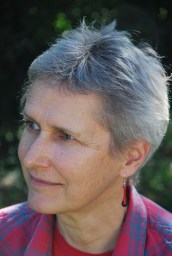
Alis Hawkins Headshot

Alis Hawkins grew up on a dairy farm in Cardiganshire. She left to read English at Oxford and has done various things with her life, including bringing up two amazing sons, selling burgers, working with homeless people and helping families to understand their autistic children. And writing, always. Radio plays (unloved by anybody but her), nonfiction (autism related), plays (commissioned by heritage projects) and of course, novels.

Her current historical crime series featuring blind investigator Harry Probert-Lloyd and his chippy assistant John Davies, is set in her childhood home, the Teifi Valley. As a side effect, instead of making research trips to sunny climes, like some of her writer friends, she just drives up the M4 to see her folks.

Alis speaks Welsh, collects rucksacks and can’t resist an interesting fact.

You can find out more by following Alis on Twitter @Alis_Hawkins and visiting her website. You’ll also find Alis on Facebook.

There’s more with these other bloggers too:
None So Blind Blog Tour Poster (1)

Three Things We Could ALL Learn from Time Out in an Ashram: A Guest Post by Susan Shumsky, Author of Maharishi & Me

cover

I’m always on the lookout for something a little bit different to the usual here on Linda’s Book Bag so I was delighted to be asked to participate in the blog tour for Maharishi & Me: Seeking Enlightenment with The Beatles’ Guru by Susan Shumsky. Today Susan reflects on her experience and suggests three things we could all learn from a similar experience ourselves.

Published by Skyhorse, Maharishi & Me: Seeking Enlightenment with The Beatles’ Guru is available for purchase here.

Maharishi & Me: Seeking Enlightenment with the Beatles’ Guru

cover

Susan Shumsky is a successful author in the human potential field. But in the 1970s, in India, the Swiss Alps, and elsewhere, she served on the personal staff of the most famous guru of the 20th century―Maharishi Mahesh Yogi.

Maharishi died in 2008 at age ninety, but his influence endures through the spiritual movement he founded: TM (Transcendental Meditation). Other books have been written about him, but this spellbinding page-turner offers a rare insider’s view of life with the guru, including the time the Beatles studied at his feet in Rishikesh, India, and wrote dozens of songs under his influence.

Both inspirational and disturbing, Maharishi and Me illuminates Susan’s two decades living in Maharishi’s ashrams, where she grew from a painfully shy teenage seeker into a spiritually aware teacher and author. It features behind-the-scenes, myth-busting stories, and over 100 photos of Maharishi and his celebrity disciples (the Beatles, Deepak Chopra, Mia Farrow, Beach Boys, and many more).

Susan’s candid, honest portrayal draws back the curtain on her shattering, extreme emotional seesaws of heaven and hell at her guru’s hands. This compelling, haunting memoir will continue to challenge readers long after they turn its last page. It dismantles all previous beliefs about the spiritual path and how spiritual masters are supposed to behave.

Susan shares: “Merely by being in his presence, we disciples entered an utterly timeless place and rapturous feeling, and, at the same time, realized the utter futility and insanity of the mundane world.”

Susan’s heartfelt masterwork blends her experiences, exacting research, artistically descriptive and humorous writing, emotional intelligence, and intensely personal inner exploration into a feast for thought and contemplation. Neither starry-eyed nor antagonistic, it captures, from a balanced viewpoint, the essence of life in an ashram.

Three Things We Could ALL Learn from Time Out in an Ashram

A Guest Post by Susan Shumsky

After 22 years living in the ashrams and 6 years on the personal staff of the Beatles’ spiritual guru, Maharishi Mahesh Yogi, I would say we could all learn a lot by disconnecting from the busyness of our mundane life and taking time for spiritual growth. Whether that’s in an ashram or our own home, everyone can benefit from meditation.

When Maharishi first arrived in the West in 1959 to teach his method of Transcendental Meditation (A.K.A. TM), there was no “yoga,” no “meditation,” and no “mantra.” Within 10 years he made these into household words, “with a little help from his friends”—the Beatles.

In the mid-1960s,we hippies sought higher states of consciousness through psychedelic drugs. But, just as the Beatles discovered, LSD was not the answer. After a few horrifying trips down the rabbit hole with Owsley’s sugar cubes, I never came down from the drug and suffered a perpetual LSD flashback.

Learning TM in early August 1967 changed all that. The Beatles also learned in late August 1967, and they studied with Maharishi in Rishikesh for a few weeks in 1968. I spent six months there in 1970.

The atmosphere and idyllic setting in the jungle on a high cliff overlooking the Ganges River in the holy area of Rishikesh was ideal for meditation. That’s where the Beatles enjoyed one of their most creative periods and composed the songs for the “White Album.”

So what are three things we could all learn at an ashram?

  1. Every moment is precious.

Maharishi urged us to make the best use of our time on earth. That means it’s vital to focus on seeking and finding the ultimate reality. Since meditation is a powerful way to do this, practicing meditation and helping others to learn meditation are top priorities.

During the two decades I lived in Maharishi’s ashrams, I found meditation could bring clarity of mind, physical health, emotional balance, spiritual awakening, and ultimate freedom. It can heal all kinds of disturbances and create a more meaningful life.

It’s essential to take time in our busy lives for meditation, affirmation, prayer, and/or other spiritual practices that are suitable for us.

  1. The spiritual path is not what we expect it to be.

People might think living in an ashram is thrilling and romantic. But it isn’t what we expect, and it isn’t a fantasy. During their stay in Rishikesh, the Beatles’ towering expectations included the secret of life, astral magic, supernormal powers, and global peace—all in one month.

We tend to judge others based on personal bias and clouded ego projections. With gurus, our projections are extreme—skewed by notions of how holy people are “supposed” to behave. We fantasize spiritual masters possess no emotions or failings and never make mistakes. They must be self-effacing, austere, chaste, pious (whatever that means), and, above all—poor.

What we don’t realize is enlightened beings are human beings. Absurd expectations of anyone, enlightened or otherwise, surely bring disillusionment. The Beatles left Rishikesh in a huff because Maharishi didn’t measure up to the ridiculous pipe dream they’d invented in their heads.

3.The guru must ultimately be left behind.

Maharishi was known for walking up to people out of the blue and saying stunning, life-changing statements. One day he handed me a flower and said, “Don’t look to anyone. When you don’t look to anyone, then everyone will look to you.”

Though I wanted to stay with Maharishi forever, he knew that wasn’t the best path for me. After I’d worked on his staff in Europe for six years, from 1971 to 1976, he called me into this room and said, “You are too dependent on me as a person. I won’t always be here.” He told me to return to the States and make a lot of money. This was the last thing I expected to hear from him, and the last thing I ever wanted to do. However, by getting kicked out of the nest, I discovered that either God would catch me, or I would have to learn how to fly—real fast.

I continued to live in Maharishi’s ashrams in the States for another 12 years, until 1989. Then I had to leave him behind altogether. It was tough, but what I found was much greater than I ever expected. What I found was myself.

(What a remarkable journey Susan. Thanks so much for a fascinating guest post.)

About Susan Shumsky

image004 (1)

Dr. Susan Shumsky has dedicated her life to helping people take command of their lives in highly effective, powerful, positive ways. She is the multiple award-winning, best-selling author of 14 books. A pioneer in the human potential field, she has spent 50 years teaching thousands of people meditation, prayer, affirmation, and intuition. Her book titles include Miracle Prayer, Divine Revelation, Exploring Meditation, Exploring Auras, Exploring Chakras, How to Hear the Voice of God, Ascension, Instant Healing, Awaken Your Third Eye, Awaken Your Divine Intuition, Color Your Chakras, and Maharishi & Me.

You can find out more by following Susan on Twitter @SusanShumsky and visiting her website. You’ll also find Susan on Facebook and there’s more with these other bloggers:

Blogger Tour Poster Maharishi

Staying in with Angela Panayotopulos

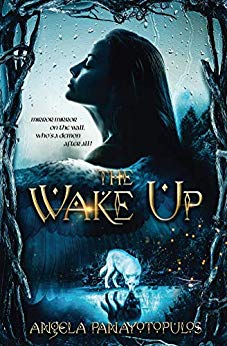
The Wake Up

I began these staying in posts for 2018 with a view to showcasing as many authors as I could because I simply can’t read all the books I have for review. What I hadn’t realised was that I would find my TBR increasing as new to me authors stayed in with me! Today I welcome Angela Panayotopulos to stay in with me.

Staying in with Angela Panayotopulos

Welcome to Linda’s Book Bag Angela. Tell me, which of your books have you brought along to share this evening and why have you chosen it? 

The Wake Up

The Wake Up, my most recently released novel. The Wake Up was six years in the making, primarily based on personal experiences, and it has since emerged as a dark fantasy novel interwoven with socio-political satire and rich with fairy tale allusions. It is set in an alternate U.S. where mirrors sometimes reflect the content of people’s character, terrifying the nation’s leaders and plunging society into a dystopia of fear.The Wake Up is meant to serve as a surreal modern-day fable of loss and love, examining how our choices determine the manner in which we live before we die, reframing the question of whether monsters make war or whether war makes monsters.

(Oo. Good question! What an interesting book The Wake Up sounds.)

What can we expect from an evening in with The Wake Up

Hopefully, a book that will — to paraphrase the words of John Updike — help unblock the traffic jams in people’s heads, whether they’re grappling with a life-altering decision regarding their relationship with themselves, their loved ones, their enemies, their communities, or society as a whole. It’s about illuminating and breaking through stages of denial and grief, and about choosing love and truth over everything else. I use writing as an avenue for expression in the hopes of connecting with others and leaving the world a tad more thoughtful and happier than as I found it. I hope this book helps accomplish just that.

(I think this sounds wonderful. My TBR pile is going to get bigger again I can see!)

What else have you brought along and why?

hug mug

It’s evening, so I’m going with a mug of tea instead of my beloved cup of coffee; still a hug in a mug, so I’m happy! I’ve brought some tea packets to go around; a bit of green tea with raspberry undertones and a spoonful of honey goes a very long way. And if a background soundtrack is doable while we read, just know that these three tracks were my top loops while I was writing the majority of the scenes: Paint it Black by Ciara, Talking in Your Sleep by The Civil Wars, and Bones by MS MR.

Now you’ve intrigued me further Angela as I want to know how that music links with the writing. Thanks so much for staying in with me to tell me about The Wake Up. It sounds fascinating.

The Wake Up

The Wake Up

For years, Lexi has repressed her secret gift: a rare ability to glimpse the angelic or demonic manifestations of people’s personalities in their mirror image. With her family’s glass-blowing studio as her playground and her mirror-making grandfather as her mentor, Lexi comes of age when the nation’s president—an undisclosed Seer who demonizes his gift as fiercely as Lexi treasures hers—bans man-made reflective surfaces, plunging the nation into a dystopia where government agencies annihilate families like Lexi’s.

As her family breaks apart, Lexi falls for a man who comes to stand for everything she despises. Betrayal and deceit ignite a domino effect of dangerous consequences in a world of blurring boundaries between the worldly and otherworldly. Caught up in a battle as old as time itself, the last mirror-maker must revamp a breakup into the greatest wake up of her life, embracing her forbidden capabilities in an attempt to rouse her world out of darkness.

The Wake Up is available for purchase here.

About Angela Panayotopulos

author photo

Angela Panayotopulos first tasted the magic of wordsmithing when she penned and illustrated her debut stories The Horse and His Baby Horse and The Wolf and the Monkey as a five-year-old. These did not become international bestsellers. However, Flint Hill Publishing Center stamped her books and contaminated her with the dangerous notion that she could write. She will be forever grateful.

At 22, Angela earned her Creative Writing M.F.A. from George Mason University, emerging as a full-time freelancer and part-time novelist. Her passion for storytelling is rivaled only by her love of dancing, adventuring with her beloved partner-in-crime, and savoring steaming cups of coffee (preferably while reading something by Neil Gaiman, Robin McKinley, or Laini Taylor). Her prior publications include The Art of War: a Novel, inspired by her grandparents’ ordeals during WWII, and The Cardiology of Broken Things, coauthored with the wonderful Dr. Lars J. Østergaard.

You can find Angela on Goodreads and Facebook.