
My enormous thanks to Anna Stothard for having an early reading copy of The Girl in the Glass House sent to me. It’s my pleasure to share my review today.
Published by Lake Union on 16th November 2026, The Girl in the Glass House is available for pre-order here.
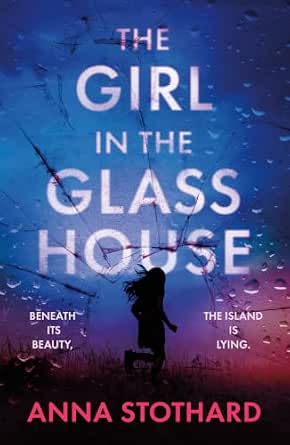
The Girl in the Glass House
A perfect family. A missing child. But everyone is lying.
On the idyllic island of Guernsey, twelve-year-old Celeste Everett vanishes from her bed during a storm.
The last people to see Celeste were her best friends―identical twin sisters who refuse to tell the whole truth about that night.
The Everetts are one of the island’s wealthiest and most powerful families, while the twins’ mother, Jess, is a struggling single parent with secrets of her own. But when suspicion begins to circle her daughters, Jess is drawn into the search for the missing girl―and into the orbit of a family used to getting exactly what they want.
As the magical island turns in on itself, Jess must decide how far she is willing to go to protect her children. Because in a small community, you’re always being watched. And someone knows exactly what happened that night.
My Review of The Girl in the Glass House
Jess and her twin daughters, Polly and Lena, are making a fresh start in Guernsey.
What a fabulous, kaleidoscopic book. I so enjoyed The Girl in the Glass House because, like a kaleidoscope, it is fragmentary, shifting and at the same time incredibly beautiful so that it holds the reader captive. The title is so fitting, because, throughout, there is the feeling that everything could come crashing down – just like a glass house in a storm.
Anna Stothard’s eye for detail in her Guernsey setting is wonderful. Often poetic in style, yet frequently stark, her descriptions transport the reader with a vivid a sense of place. The descriptions convey such meaning too, engendering feelings and emotions in the reader that enhance the reading process.
I thought the plot was brilliantly crafted. The text is multi-layered so that, just when the reader feels they have a grasp of what is going on, events shift, snapshots of the past are dropped into the narrative, and another aspect of time, place, or character is uncovered in a convincing way. The Girl in the Glass House has a fascinating mercurial quality that I found so engaging.
Characters are equally quicksilver in nature. Anna Stothard ensures complete empathy for Jess and yet, she isn’t as perfect and hard done by as might at first be imagined. I found her utterly realistic. Equally important, despite not being physically present for much of the story, is Celeste. She is the catalyst for so much of the action, of the development of character and of the experience for the reader of being on Guernsey. Her rendition is sympathetic, particularly when aspects of her friendship with the twins are revealed, illustrating how, underneath the wealthy, charming life of the privileged, lies a seething mass of corruption and nastiness. Similarly, Elias drives Jess’s actions despite being absent and he adds to the sense of unease. But it is the twins Polly and Lena who are so compelling. They are mesmerising. After reading The Girl in the Glass House I was unsure if I felt sorry for them, envied them, admired them or was terrified of them. They have a disturbing chimeric quality tempered by an innocence and vulnerability that makes them so intriguing and it is this psychological aspect of The Girl in the Glass House that makes the book so succesful.
Add in the superstations of Guernsey which border the supernatural, the island’s own past and its claustrophobic relationships and hierarchical social structure, and The Girl in the Glass House feels underpinned with intangible menace and threat. Anna Stothard explores the meaning of community, influence, society and gossip with the effect that it feels as if all modern life is present. I found this such an affecting element of the story.
The Girl in the Glass House is a deliciously psychological book that explores the thin veneer of civilisation in a way that has the heart thumping and the mind whirling. I thought it was excellent.
About Anna Stothard

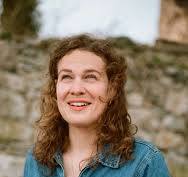
Anna Stothard was born in London and studied English Literature at Oxford University before completing a Screenwriting MFA at the American Film Institute in Los Angeles. She is the author of five acclaimed novels, which have been published all over the world. Her writing often explores themes of identity, belonging, and obsession. After living in Beijing, LA and Berlin, Anna now writes by the sea on the west coast of Guernsey.
For further information, visit Anna’s website or follow her on Instagram.