We Begin At The End by Chris Whitaker

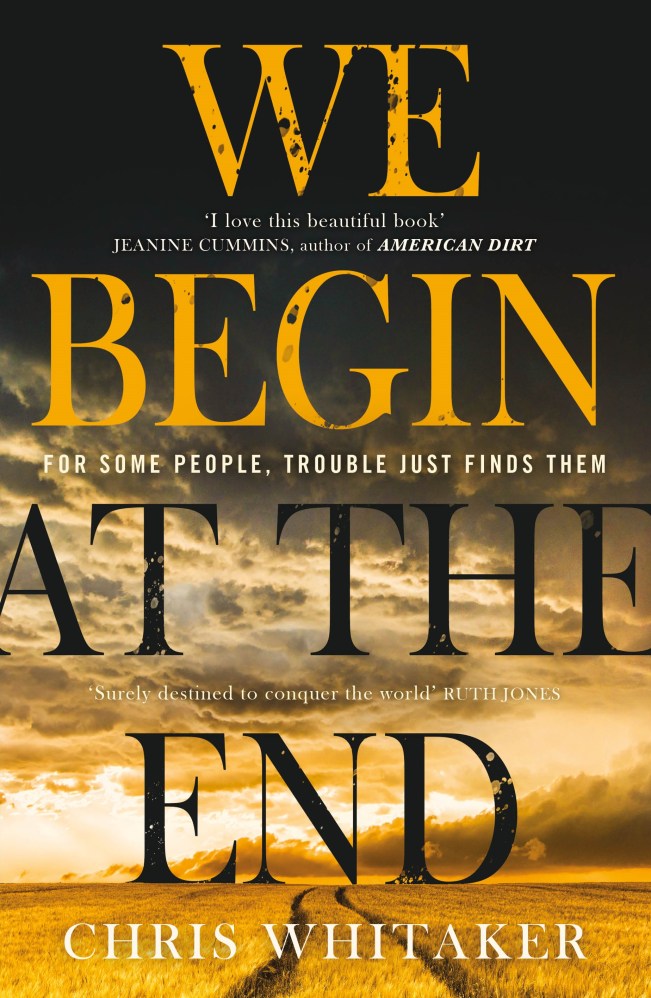
We Begin at the End

I have been desperately awaiting a new book from Chris Whitaker for far too long and am thrilled to be part of the launch celebrations of his latest novel We Begin At The End. My enormous thanks to Zaffre books for sending me a copy of We Begin At The End and to Tracy Fenton for inviting me to participate in this blog tour.

I adore Chris Whitaker’s writing. I reviewed his debut Tall Oaks here and his second novel, All The Wicked Girls, here. All The Wicked Girls was one of my Books of the Year in 2017 too.

We Begin At The End was published by Zaffre on 2nd April 2020 and is available for purchase here.

We Begin At The End
We Begin at the End

‘You can’t save someone that doesn’t want to be saved . . .’

Thirty years ago, Vincent King became a killer.

Now, he’s been released from prison and is back in his hometown of Cape Haven, California. Not everyone is pleased to see him. Like Star Radley, his ex-girlfriend, and sister of the girl he killed.

Duchess Radley, Star’s thirteen-year-old daughter, is part-carer, part-protector to her younger brother, Robin – and to her deeply troubled mother. But in trying to protect Star, Duchess inadvertently sets off a chain of events that will have tragic consequences not only for her family, but also the whole town.

Murder, revenge, retribution.

How far can we run from the past when the past seems doomed to repeat itself?

My Review of We Begin At The End

Sissy Radley’s death is just the start.

It’s no secret that I adore Chris Whitaker’s writing and will come as no surprise that I had probably unreasonably high expectations of We Begin At The End. Chris Whitaker has surpassed every one of those expectations, leaving me reeling and emotionally broken. At one point in my reading of We Begin At The End I genuinely had to pause because the tension was so great I was holding my breath and in danger of forgetting to exhale ever again. It felt akin to immersing myself in a modern day Steinbeck with the insight into human nature of Shakespeare. We Begin At The End is, quite simply, stunning.

Certainly, We Begin At The End is a flawlessly plotted crime thriller, with twists and turns that entertain and surprise, in a fast paced and totally absorbing fashion. I loved the attention to detail Chris Whitaker provides, making the landscape and setting just as much part of the story as the action. There’s a wonderful balance between the claustrophobic Cape Haven and the wider skies of Montana that is so satisfying, transporting the reader completely. It’s not possible to say too much about the plot without spoilers but I can’t remember the last time I finished a book and simply wanted to read it again immediately because I couldn’t quite believe how brilliant it was.

However, We Begin At The End is so much more than one of the best thrillers I’ve read. I’m struggling to find vocabulary that expresses just how emotional it is to read We Begin At The End and how sublimely beautiful the prose is. Frequently, pared down sentences convey such depth of exquisite meaning that is almost physically painful to read, especially with regard to Duchess. It’s no exaggeration to say that I think she might be the most affecting character I’ve ever encountered. Her relationships with the other people are so tenderly drawn and so desperately sad that I wasn’t sure I’d be able to contain myself. My heart broke for her and I lost count of the times I wept for her too.

Indeed all the characters, regardless of their actions, are depicted as real, flawed and totally believable. What Chris Whitaker manages to achieve is such a blurring of good and evil, of right and wrong, in the people of Cape Haven that I felt a tangible and palpable connection to every one of them. Walk in particular engendered such a range of responses in me as a reader from frustration and despair to admiration and pity that I felt I was no longer in control of my own reactions.

I’ve come to the conclusion that I am unable to do justice to We Begin At The End because there isn’t a superfluous character, moment or word that mars a totally fantastic narrative. It is an absolutely outstanding masterclass in perfect writing and I adored it. I’ve said elsewhere that I think Chris Whitaker’s writing touches a reader’s soul and in We Begin At The End he doesn’t merely touch that soul. He captures it entirely and doesn’t let go.

About Chris Whitaker

chris whitaker

Chris Whitaker was born in London and spent ten years working as a financial trader in the city. His debut novel, Tall Oaks, won the CWA John Creasey New Blood Dagger.

Chris’s second novel, All The Wicked Girls, was published in August 2017. He lives in Hertfordshire with his wife and two young sons.

You can follow Chris on Twitter @WhittyAuthor.

There’s more with these other bloggers too:
Chris Whitaker

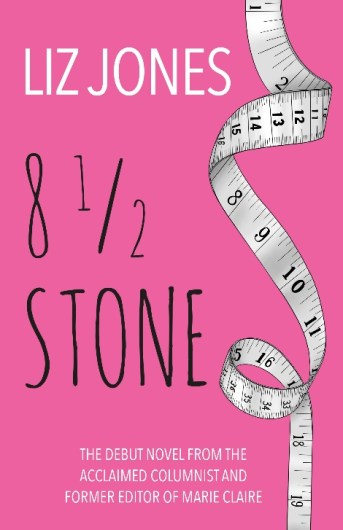
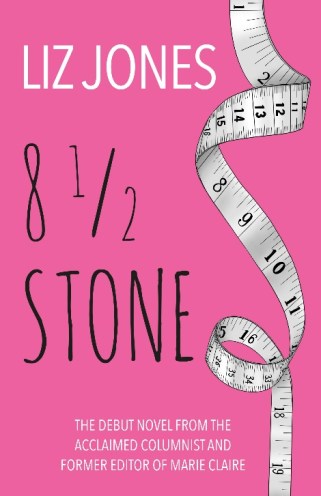
An Extract from 8 1/2 Stone by Liz Jones

8 12 stone

When Martina Ticic from Midas PR got in touch to see if I’d like to be part of the launch celebrations for 8 1/ Stone by Liz Jones, I jumped at the chance and I would like to thank Martina for inviting me to participate. I am thrilled to have an extract from 8 1/2 Stone to share with you today.

Published by Matthew James, 8 1/2 Stone is available for purchase here.

8 1/2 Stone

8 12 stone

When I reach eight and a half stone:

  •  I will be able to shop in Topshop. If only I could fit in a size 10 or an 8, just walk in a shop and not even have to try it on because let’s face it I will be straight up and down, then everything would slot neatly into place, completing the easiest jigsaw puzzle in the world: all straight edges.
  • I will be able to go swimming and not displace all the water and create a tsunami.
  •  I will fit in changing rooms, without banging my elbows or exposing the moon of my arse through the curtain when I bend over.
  •  I will be able to fit behind the narrow benches at Ronnie Scott’s to listen to jazz instead of being offered a chair, at the end.
  • I will be promoted and not have my desk moved to inside the stationery cupboard.

An Extract from 8/2 Stone

Because that is what always happens after a diet. You relapse. You inflate like a hovercraft. You revert to type. You find your natural level, like Lake Victoria.

Which is why I am considering plastic surgery – after a great deal of thought and having made a list of pros and cons. Pros: I will be able to wear normal clothes, my husband might want sex with me, I might not die of a heart attack. Cons: the expense, time off work, might die. Leaps forward in technology and medical discoveries must be good for something, surely. I am thinking liposuction, and a tummy tuck to excise the strange little flap of skin that is a legacy from post-twin diet number 252. (My friend Izzy made me go to Chewton Glen in the New Forest – don’t worry, it had just been refurbed – for a week, where I was on a juice-only regimen with added boot camp and wrapped in wet bandages in a bid to rearrange my organs and reduce my equator, after a particularly invasive colonic where the therapist kept finding peas: ‘Mattar paneer,’ I told her. ‘I’m married to an Indian.’) Anyway, this skin flap is currently covering my pudenda in a generous curtain, much like the one at the Royal Opera House, only not made of red velvet. I haven’t told a soul yet that I’m considering going under The Knife, but I’m secretly browsing websites and imagining how great my new life will be.

Even on my 30th birthday night, when we returned from the sandwich bar at precisely 8.29 p.m., after my disastrous at-home spa and once Neps had lowered his eyes after raising them long enough to give me Harvey’s Bristol Cream liqueurs in a bid to give me either liver cancer or type 2 diabetes so he can at last bury me in an extra-large grave and remarry a stick insect, I had opened my own rather ancient and heavy laptop (like mother, like daughter) and started browsing websites depicting smiling supermodels who obviously never needed to go under a knife in the first place, but were still standing there, in a red, high-cut swimsuit, boobs thrust out, back curved, one knee forward, hand on non-existent hip. This could be my birthday gift to myself, to kick off a brand-new decade: major invasive surgery and anaesthetic that might just finish me off. Browsing these sites, being taken in by the promises, is exactly the same as being addicted to Rightmove.co.uk, except instead of searching for a new house, I am looking for the perfect new body to move into: downsizing, if you will. My life will be happy, once I have a utility room, a marble wet room, an eat-in kitchen and a stomach that doesn’t resemble a pair of obese buttocks. My mission, should I choose to accept it? To get down to my dream weight, a number I have not owned since I was seven.

To be eight and a half stone.

About Liz Jones

Liz Jones

Liz Jones has millions of readers across the world and was shortlisted five times in the last six years as Columnist of the Year at the British Press Awards and Columnist of the Year 2012 at the BSME awards. Liz Jones, former editor-in-chief of Marie Claire — where she ran a high profile campaign to ban skinny models — fashion editor at the Daily Mail and now columnist at the Mail on Sunday, grew up in Essex, and suffered from eating disorders from the age of 11 until her late thirties.

You can find out more on Liz’s website, by following her on Twitter @LizJonesGoddess and finding her on Facebook.

There’s more with these other bloggers too:

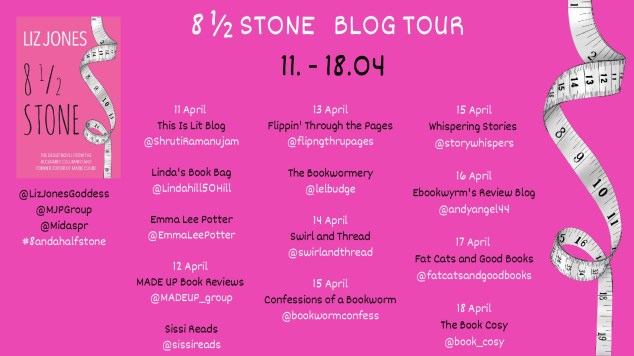
8 12 stone tour poster

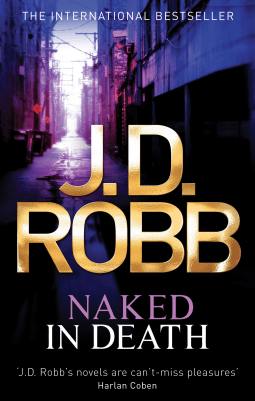
Naked in Death by J.D. Robb

naked in death

It’s a long time since I last read Nora Roberts which was when I reviewed Come Sundown here on the blog. I have never read J.D. Robb before so when I realised Naked in Death was by Nora Roberts writing as J.D. Robb I thought I’d give it a go!

Published by Little Brown imprint Piatkus, Naked in Death is available for purchase through the links here.

Naked in Death

naked in death

Crime and punishment is Lieutenant Eve Dallas’s business. Murder her speciality. Named by the social worker who found her when she was a mere child roaming that city’s streets, Eve Dallas is a New York police detective who lives for her job. In over ten years on the force, she’s seen it all – and knows her survival depends on her instincts.

But she’s going against every warning telling her not to get involved with Roarke, a charismatic Irish billionaire – and a suspect in Eve’s latest murder investigation.

But passion and seduction have rules of their own, and it’s up to Eve to take a chance in the arms of a man she knows nothing about – except the addictive hunger of needing his touch.

My Review of Naked in Death

Eve’s latest case leads to more than police investigation.

Naked in Death is completely outside my normal reading tastes, but having been unable to concentrate on a book of late I decided to give it a try. I’m so glad I did. It’s pure escapism, hugely entertaining and completely distracting.

I found Eve perfectly named. Although Eve is not her original name, it represents the kind of woman she is revealed to be in Naked in Death, as she is both strong and vulnerable, careful and methodical but occasionally rash and always strong willed. I think any reader could identify with some facet of her character, but hopefully not the more devastating experiences she has had.

Roarke is, if I’m honest, completely cliched and yet utterly attractive. He’s rich, tall and handsome and very much a James Bond character and I think I have ended Naked in Death a little bit in love with him. I thoroughly enjoyed the mounting sexual tension between him and Eve and was actually quite surprised by some of the more explicit details of their developing relationship!

In spite of my usual preferred genres, I found the futuristic setting appealed completely. I loved the sumptuous descriptions of Roake’s home and felt very much that New York was a clear and distinct location. Whilst J.D. Robb uses transport and communication in particular to create her settings, there is a perfectly familiar grounding too, especially through the themes so that Naked in Death feels relevant and fresh as well as accessible.

And those themes are universal and pertinent. Relationships, murder, identity, abuse, corruption, violence, politics and honour all reverberate in a thrilling plot that I found transported me away from my own life into another world. I thought the title incredibly apposite too. The murder victims are indeed naked as they die, but the impact on Eve uncovers her personality, her past and a potential future for her too so that she is metaphorically naked as she investigate the deaths.

Naked in Death is exactly as it should be. It’s commercial and somewhat predictable and I thoroughly enjoyed every moment reading it. Just what I needed!

About J.D. Robb

nora roberts

Nora Roberts published her first novel using the pseudonym J.D. Robb in 1995, introducing Eve Dallas, a New York City police lieutenant with a dark past, and billionaire Irish rogue, Roarke. Since then, the In Death series has sold over sixty-six million copies, with each new novel reaching number one on bestseller charts the world over.

You will find Nora Roberts/J.D. Robb on Facebook. J.d. Robb’s website is here and Nora Roberts’ website here.

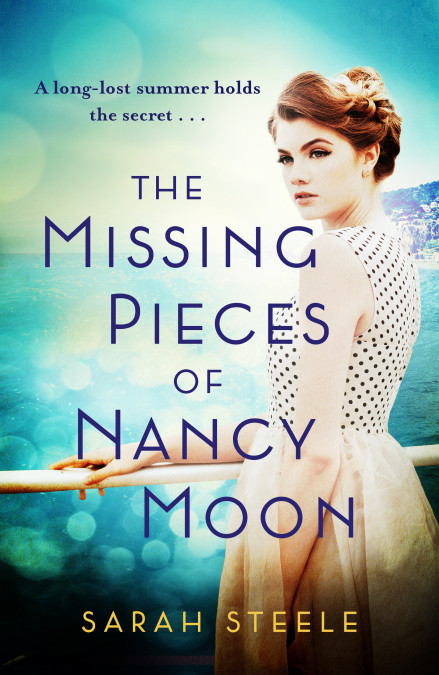
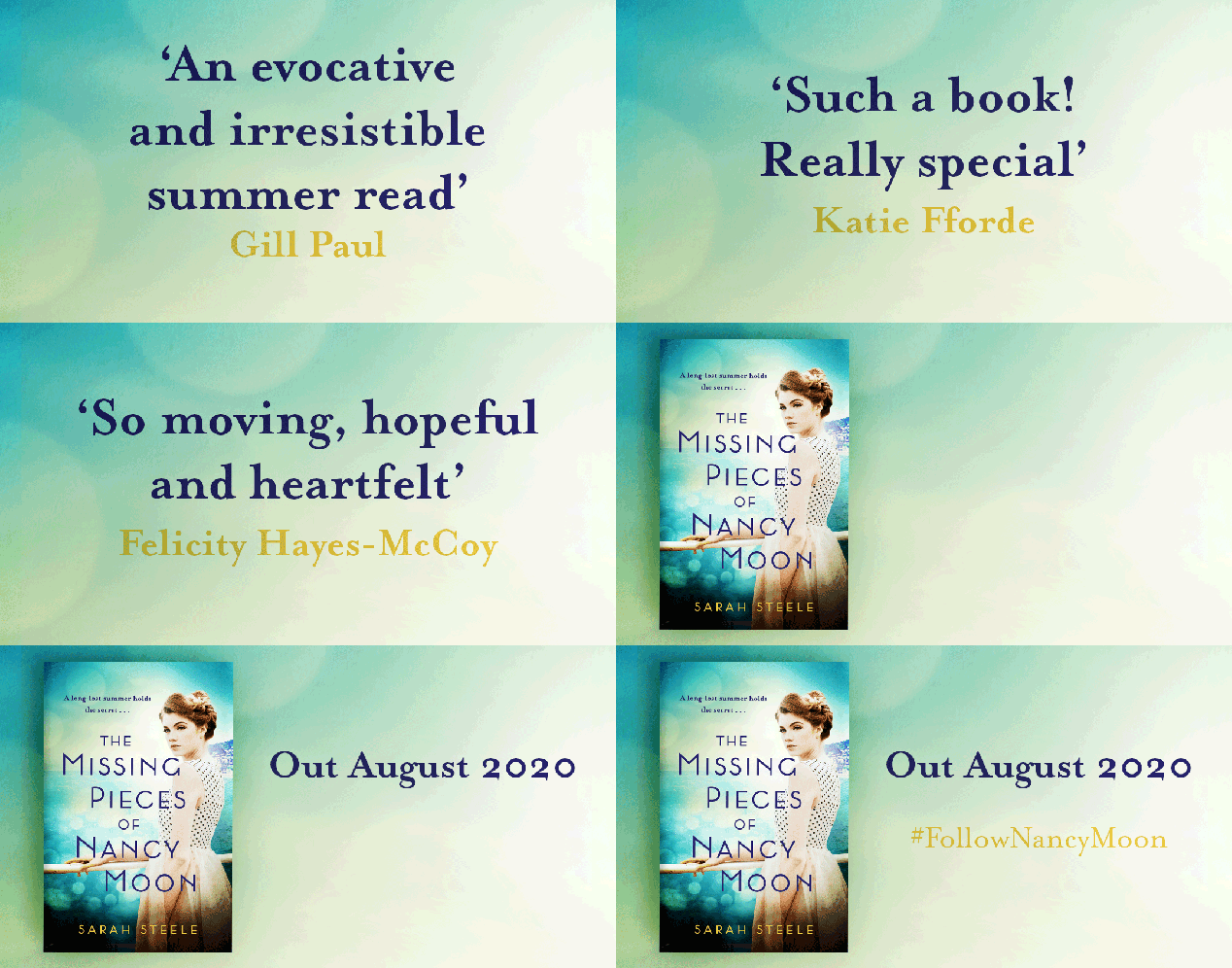
Cover Reveal: The Missing Pieces of Nancy Moon by Sarah Steele

Nancy

I was delighted when Rosie Margesson, publicity officer at Headline got in touch to ask me if I’d like to participate in the cover reveal for The Missing Pieces of Nancy Moon by Sarah Steele as it looks exactly my kind of read.

The Missing Pieces of Nancy Moon will be published by Headline on 6th August 2020 and is available for pre-order here.

Let me tell you all about it:

The Missing Pieces of Nancy Moon

Nancy

To unravel the story of that long-lost summer, she had to follow the thread…

Florence Connelly is broken-hearted; her beloved grandmother has just died and her marriage has collapsed.

But things change when she opens a box of vintage 1960s dress patterns, discovered inside her grandmother’s wardrobe. Inside each pattern packet is a fabric swatch, a postcard from Europe and a faded photograph of a young woman wearing the hand-made dress. Why did Flo’s grandmother never speak of this mysterious woman – Nancy Moon?

Her life in tatters, Flo decides to remake Nancy’s dresses, and to head across to the Continent to re-create Nancy’s Grand Tour of 1962. As she follows the thread, Flo begins to unravel an untold story of love and loss in her family’s past. And perhaps to stitch the pieces of her own life back together…

Doesn’t that sound just gorgeous? I’m so looking forward to reading The Missing Pieces of Nancy Moon.

cover-reveal

About Sarah Steele

sarah steele

Sarah Steele trained as a classical pianist and violinist in London, before joining the world of publishing as an assistant at Hodder and Stoughton. She was then for many years a freelance editor, She now lives in Stroud and in 2018 was the director of Wordfest at Gloucester Cathedral, which culminated in a suffragette march led by Helen Pankhurst.

The Missing Pieces of Nancy Moon is her debut novel.

You can follow Sarah on Twitter @sarah_l_steele.

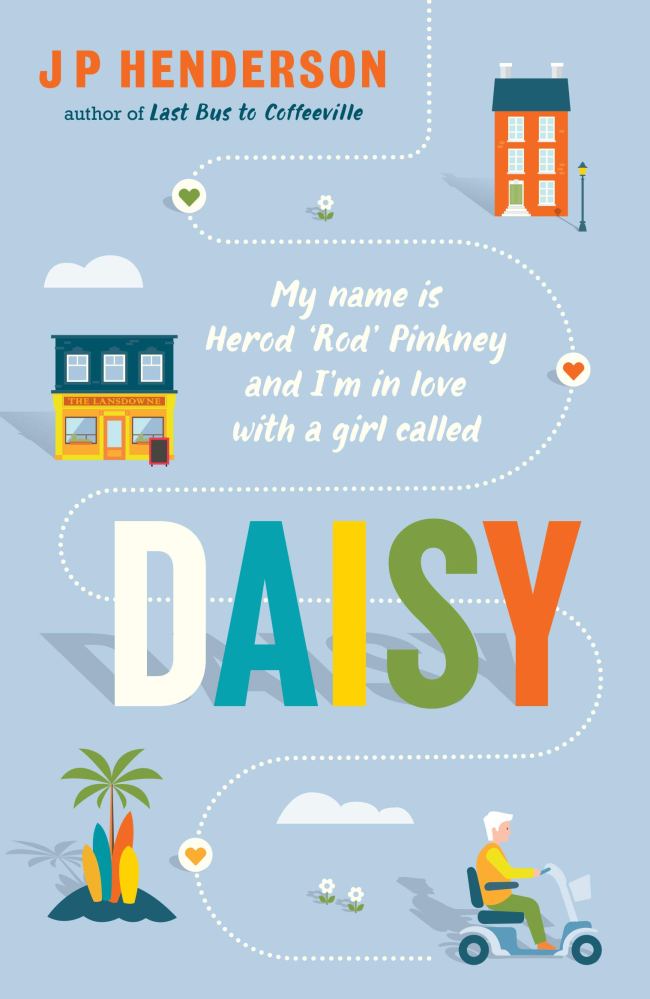
Daisy by J P Henderson

Daisy Cover

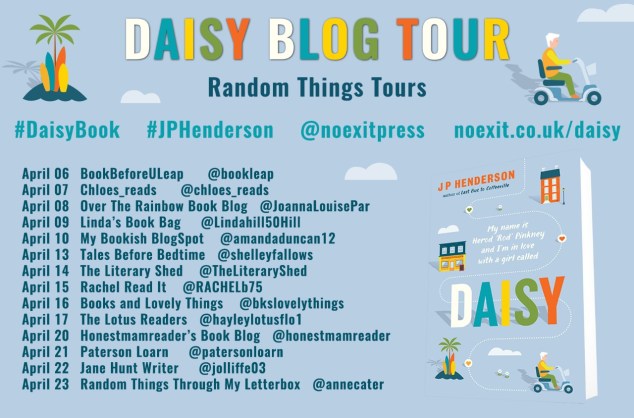
Several months ago a surprise copy of Daisy by J P Henderson dropped through my letterbox and so when I was invited to participate in the launch celebrations by Anne at Random Things Tours it looked like the prefect opportunity to bump Daisy up my TBR. I’m delighted to share my review today.

Published by No Exit Press, on 23rd April 2020, Daisy is available for purchase here.

Daisy

Daisy Cover

MEET DAISY. A PICTURE OF GRACE AND DIGNITY.

MEET HEROD. A… DISAPPOINTMENT

Written in his own words, and guided by a man who collects glasses in a local pub, this is the story of Herod ‘Rod’ Pinkney’s search for Daisy Lamprich, a young woman he first sees on a decade-old episode of the Judge Judy Show, and who he now intends to marry.

When Daisy is located in the coastal city of Huntington Beach, California, he travels there with his good friend and next-door neighbour, Donald, a man who once fought in the tunnels of Cu Chi during the Vietnam War and who now spends most of his time in Herod’s basement.

Herod is confident that the outcome will be favourable, but there’s a problem… Will the course of true love ever run smoothly for this unlikely hero?

Daisy is a funny and touching story of an improbable and heart-warming quest to find true love.

My Review of Daisy

Herod ‘Rod’ Pinkney is writing a book about his quest for love.

Daisy is a lovely book. I thoroughly enjoyed immersing myself into Rod’s world, not least because the first person narrative has such a distinct voice that I felt as if I knew Rod personally. I knew Daisy was going to appeal to me from the very beginning as I had laughed aloud several times at Rod’s comments within a very few pages of the book and that rarely happens when I read. He has a human persona that feels very real.

There’s a smashing plot here because J P Henderson balances major events alongside the minutiae of Rod’s ordinary life with a dry witticism and perfect eye for detail so that I could picture the people, places and events describe with crystal clear vision. I found myself reading with a smile on my face throughout and it obviously impacted on me as I had a dream about guinea pigs, but you’ll have to read the book to see how that experience was prompted! The senses are so well catered for in this vivid writing, especially through food which features frequently.

Although Daisy is light entertainment at its best, that’s not to say that there aren’t some more sombre issues hidden in this hugely entertaining story. Rod’s attempt to find God, his relationships with his parents, Donald’s marriage and war history, Edmundo’s shady past, attitudes towards others in society concerning gender, race, appearance and so on all weave through the pages making for considerable interest as well as light relief.

I feel J P Henderson has created a microcosm of the world in Rod’s life so that Daisy can be read on many different levels. The book can be enjoyed as a simple amusement, but it can also be considered at greater depth so that it is thought provoking too. However you might like to read Daisy, I can really recommend that you do as it’s a smashing book.

About J P Henderson

JPHenderson Author Pic

J P HENDERSON is the author of three previous novels including Last Bus to Coffeeville, which was selected for World Book Night and longlisted for the Dublin Literary Award.

By nature an internationalist, he lives in a cul-de-sac in West Yorkshire for practical reasons.

There’s more with these other bloggers too:
FINAL Daisy BT Poster

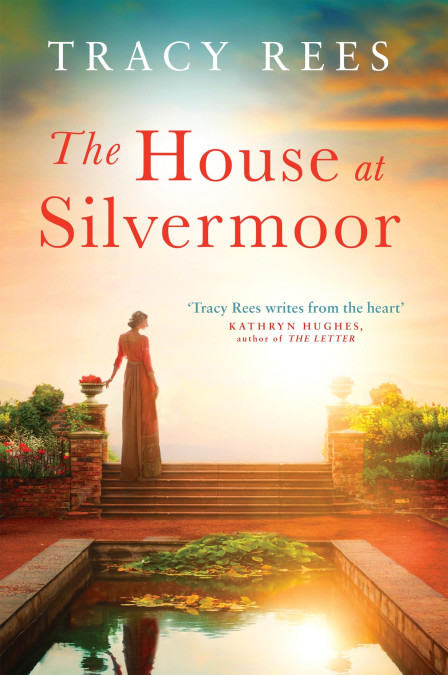
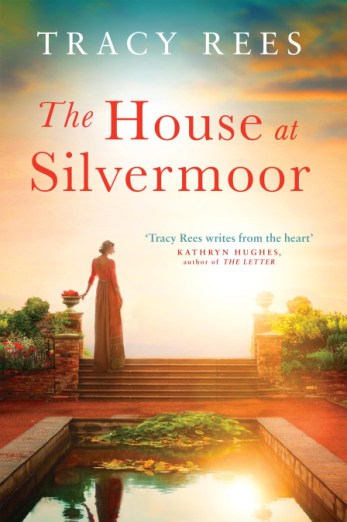
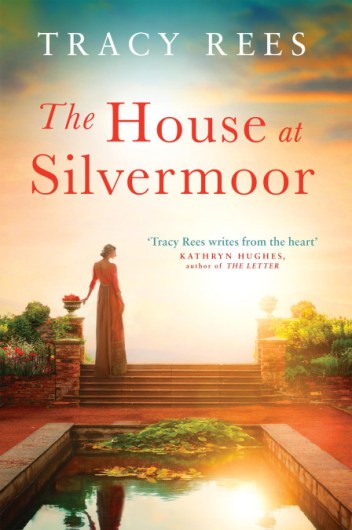
The House at Silvermoor by Tracy Rees

The House at Silvermoor

I love Tracy Rees, both as a person and as a novelist, so when she asked if I’d like to read her latest book, The House at Silvermoor, I was completely thrilled. My enormous thanks to Emma Capron at Quercus for sending me a copy in return for an honest review.

I’ve met Tracy several times, and she has been a regular on Linda’s Book Bag. Amy Snow was one of the first books I ever reviewed on the blog here. I reviewed Florence Grace here and had a wonderful guest post from Tracy about the appeal of the C19th that you can read hereFlorence Grace was one of my Books of the Year in 2016 and you’ll see it featured here. I also reviewed Tracy’s The Hourglass here and Tracy was kind enough to provide a guest post all about her memories of Richmond when Darling Blue was published. Sadly I haven’t managed to read Darling Blue yet!

The House at Silvermoor was released by Quercus in paperback on 2nd April 2020 and is available for purchase in all formats through the links here.

The House at Silvermoor

The House at Silvermoor

England, 1899. A new century is dawning, and two young friends are about to enter into a world of money, privilege and family secrets…

Josie has never questioned her life in a South Yorkshire mining village. But everything changes when she meets Tommy from the neighbouring village. Tommy has been destined for a life underground since the moment he was born. But he has far bigger dreams for his future.

United by their desire for something better and by their fascination with the local gentry, Josie and Tommy become fast friends. Wealthy and glamorous, the Sedgewicks of Silvermoor inhabit a world that is utterly forbidden to Tommy and Josie. Yet as the new century arrives, the pair become entangled with the grand family, and discover a long hidden secret.

Will everything change as they all step forward into the new dawn…?

My Review of The House at Silvermoor

Events will test Tommy and Josie’s friendship over the years.

I truly loved The House at Silvermoor because I was completely transported back in time to an era so perfectly portrayed it was as if I were there, living alongside Tommy and Josie. The social history of the turn of the century, the setting and the daily lives of those at the lowest rung of society’s ladder are woven into the narrative by Tracy Rees just beautifully. Her elegant prose has a tone perfect for the era and although it isn’t really the correct word to use in a reading context, I kept thinking of mellifluous as I read The House at Silvermoor. The writing felt smooth, silken and somehow tender so that I was completely invested in the story. That said, the naturalistic direct speech balanced the richness so flawlessly because it was thoroughly realistic, making the characters come alive and enhancing the reader’s understanding of their position in the world.

As a result of the beautiful quality of the writing I was swept along in the story. Several times I exclaimed aloud, terrified for the consequences of a particular aspect of the plot or heartened by another element. I shed a tear and cheered at different parts of the story too because I became so invested in the people. I think it illustrates just how enraptured I was by Tommy and Josie et al, that the morning after I had finished The House at Silvermoor, I woke up and wondered how they all were, before reminding myself that they were not real people but characters in a novel.

And what characters they are. I thought the way they represented the different strata of society so distinctly, whilst simultaneously illustrating how positive and negative behaviours, love and hate, jealousy and generosity, fear and courage permeate all levels, was inspired. The sense of longing and identity that reverberates through Tommy and Josie is so affecting because Tracy Rees shows just how chance and circumstance can have a profound effect on who we are and what we can achieve, but that ambition and dreams are relevant to all. At times, the hand fate dealt Tommy and Josie was utterly heartbreaking and I came to care about them deeply.

I thought The House at Silvermoor was a perfect example of a sweeping, expansive tale that transports the reader so completely to another time and place. It held me spellbound and I loved every moment of reading it. Wonderful stuff.

About Tracy Rees

Tracy Rees

Born in Wales, Tracy Rees has been called “the most outstanding new voice in historical fiction” by Lucinda Riley and her books are paperback and kindle bestsellers. She was the winner of the Richard and Judy ‘Search for a Bestseller’ Competition. A Cambridge graduate, she had a successful eight-year career in nonfiction publishing and a second career practising and teaching humanistic counselling before becoming a writer.

You can follow Tracy on Twitter @AuthorTracyRees or visit her website for more information.

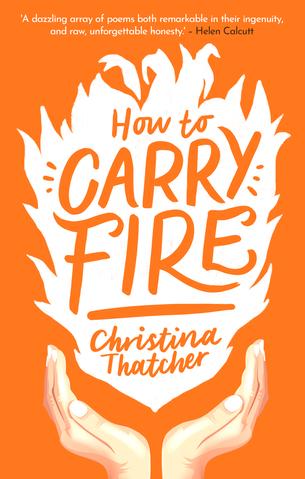
Writing Loss, Love and Fire: A Guest Post by Christina Thatcher, Author of How to Carry Fire

How_to_Carry_Fire_-_FINAL_HIGH_RES_large

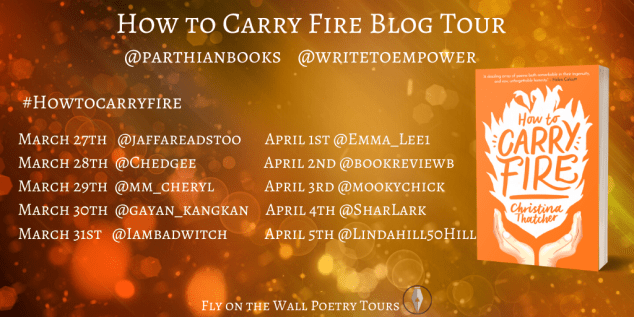
It’s a real honour to be closing the blog tour for Christina Thatcher’s How to Carry Fire with a fabulous guest post from Christina all about writing love, loss and fire. I’m only sorry I couldn’t fit in a review today too because I think How to Carry Fire sounds amazing. My enormous thanks to Christina for her guest post and to Isabelle Kenyon for inviting me to take part in the blog tour.

Published by Parthian Books on 2nd April 2020, How to Carry Fire is available for purchase here.

How to Carry Fire

How_to_Carry_Fire_-_FINAL_HIGH_RES_large

How to Carry Fire was born from the ashes of family addiction.

Beginning with the burning down of her childhood home, Thatcher explores how fire can both destroy and cleanse.

Her work recognises embers everywhere: in farmhouses, heroin needles, poisonous salamanders. Thatcher reveals how fire is internalised and disclosed through anxiety, addiction, passion and love.

Underneath and among the flames runs the American and Welsh landscapes – locations which, like fire itself, offer up experiences which mesmerise, burn and purify.

This poignant second collection reminds us of how the most dangerous and volatile fires can forge us – even long after the flames have died down.

Writing Loss, Love and Fire

A Guest Post by Christina Thatcher, Author of How to Carry Fire

When I was 21 my father burnt down our family home. It was an accident but he never recovered from the guilt. This loss of our house – as well as our cherished objects, photographs and land – acted, in a way, like a culmination of all our losses. My father and brother had been losing their war with addiction for years. Many deaths and heartaches had led to this. The fire felt like the height of our hardship but also like an omen of more destructive things to come.

My second poetry collection, How to Carry Fire, explores these many losses. The writing process was sparked by a workshop I attended in 2017 called ‘The Poem as Witness: War and its Aftermath’. Just one month before, a fire had consumed the Grenfell Tower block in London killing over 70 people. The workshop facilitator asked us to read a transcript from one of the survivors and then played a recording of them, in shock, talking about the trapped residents in the tower. The whole room was silent. Then, we were asked to dig deep and consider what we had survived, what our families had survived, what our communities had survived. Immediately, I felt compelled to write about the fire which had followed me and my family for years. In that workshop, I wrote and read out the first shaky draft of ‘Insurance Report’, the poem which now opens my collection.

In the months and years after, I could not stop thinking and writing about fire. At first, it was physical: the literal flames and wreckage of the house. But, soon, the fire I was writing became emotional: the vein of addiction which runs through my parents and brother, my uncle and cousins. It became the anxiety that I carry about all my loved ones dying. Still, even as I wrote into the darkness, I could not shake the idea that the fire which devastated my family had also released us – how losing everything gave my mother permission to flee her abusive relationship, how it led me to search for a new life abroad.

Soon it became clear that fire was symbolic of both loss and love and that the burning of one home could lead to the building of another. Fire came to represent heartening things too, burning bright in pieces about passion and love. I didn’t expect to write so many poems on this theme but the flames just kept growing. And now this collection has emerged full of a kind of hope that I may never have discovered without the language of fire.

Thank you so much for this wonderful piece Christina. I think How to Carry Fire sounds utterly wonderful and I wish you every success with it.

About Christina Thatcher

Black_and_white_head_shot_medium

Christina Thatcher won the Black Lion Poetry Competition in 2019, was a winner in the Terry Hetherington Award for Young Writers in 2016 and was shortlisted for the Bare Fiction Debut Poetry Collection Competition in 2015. Her first collection, More than you were, was published by Parthian Books in 2017 and was named a Poetry School Book of the Year. Her poetry and short stories have featured in over fifty publications including The London Magazine, Planet Magazine, And Other Poems, Acumen and The Interpreter’s House. She lives in Cardiff and works as a Creative Writing Lecturer at Cardiff Metropolitan University.

For more information, follow Christina on Twitter @writetoempower and Instagram or visit her website.

There’s more with these other bloggers too:
How To Carry Fire Blog Tour

Michael and the Pirates by Vincent Connor

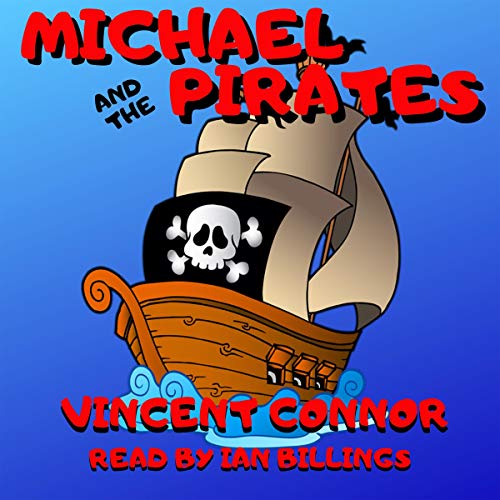
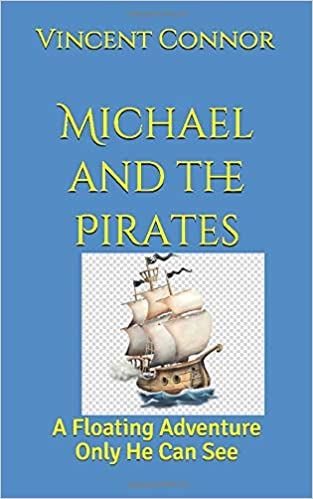
Michael and the Piratesbook

With lockdown, home schooling and difficult times, I’m trying to feature some books here on Linda’s Book Bag that I think might appeal to families and children as well as support independently published authors and the big publishing houses. With that in mind, I’d like to thank Vincent Connor for sending me a copy of Michael and the Pirates in return for an honest review.

Michael and the Pirates is available for purchase here and in audible read by Ian Billings.

Michael and the Pirates

A story in forty-one verses that will appeal to small children, as well as pre-teens. Michael and the Pirates can be read in a leisurely way in about 15-20 minutes. It could also be read as a bedtime treat over a number of nights; roughly, a page per day during the course of a week. With a solid storyline behind it, as well as verse it is written to make it interesting and appealing to adults, as well as children, who will laugh together at the humorous parts.

My Review of Michael and the Pirates

Michael is about to go on an adventure.

I was so lucky both to read a copy of Michael and the Pirates as well as listen to the Audible version. The audio book is brilliantly brought alive by Ian Billings whose different character voices, intonation and pace make for a wonderful listening experience.

I really liked the written version of the story too and can see it bringing considerable enjoyment to children aged around 4 – 10. The rhyming couplets give a regular rhythm and pace and exact rhymes, near rhymes, homonyms and homophones all contribute to the engagement of the story as well as affording great literacy opportunities for children to discuss spellings and notice language patterns. There’s a good range of new and familiar vocabulary included. Unfamiliar words are woven into the story so that meaning is clear.

However, learning opportunities aside, Michael and the Pirates is a super story for sheer enjoyment too. As Mike finds himself lost in the mist, dealing with irascible pirates and battling a giant squid there’s such an engaging narrative. I particularly liked the ending of the story because of the potential for future adventures.

Michael and the Pirates is a smashing children’s story because there’s humour, peril, danger and adventure with lots of mystery woven in. I’m looking forward to Michael’s future adventures.

About Vincent Connor

vincent connor

Vincent Connor doesn’t consider himself AN author, as such, as Michael and the Pirates is his first ever book. However, he found it immensely enjoyable writing this book, and hopes that readers will find as much pleasure in reading it. Vincent is planning more adventures for Michael, as he seems to come into his own when he’s faced with a challenge. He leads me, and I just follow with my pen and pad in hand, capturing the moments for you to enjoy…

You can follow Michael’s adventures on Twitter @michaelandthep1 and Facebook.

Tim Walker Introduces PERVERSE – a collection of short prose and verse

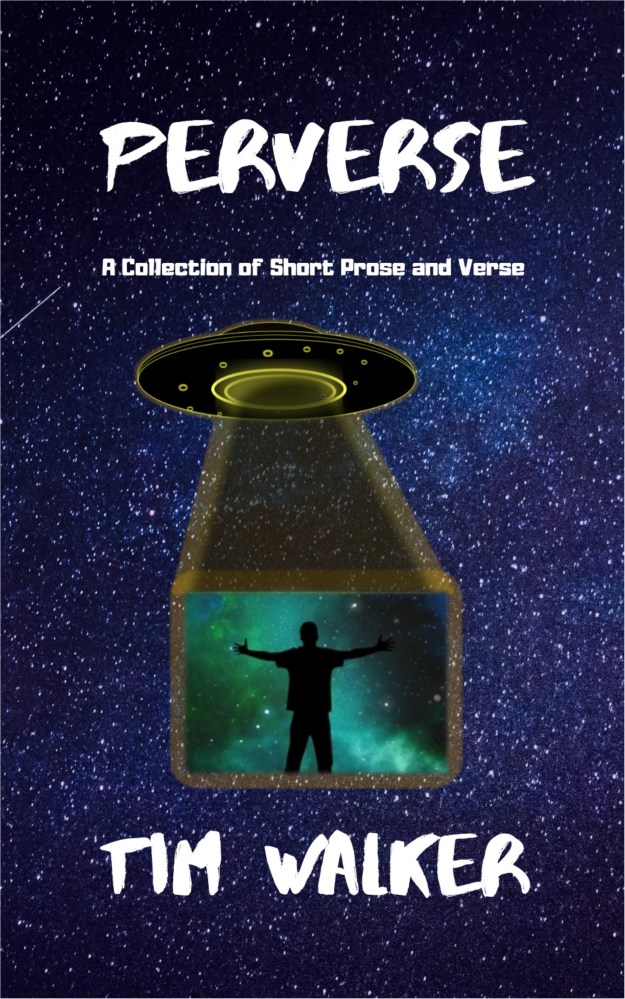
Perverse cover2

Approximately once a year Tim Walker hops onto Linda’s Book Bag and I’m delighted to welcome him back today with a slightly different post, introducing PERVERSE – a collection of short prose and verse, his brand new collection of short stories and poems, and sharing a poem with us.

Last time Tim was here we were sharing an extract from Arthur Dux Bellorum. Tim has introduced his book Uther’s Destiny in a post you can see here, as well as  previously writing a fabulous guest post about fiction and fear when the second book in his A Light in the Dark Ages series, Ambrosius: Last of the Romans, was published, and you can read that post here.

Tim will be back in June so don’t forget to pop back then.

PERVERSE – a collection of short prose and verse is available in ebook and paperback. It’s also free today in Kindle unlimited!

So, over to Tim:

Perverse – a collection of short prose and verse

Perverse cover2

PERVERSE is an eclectic collection of short, snatched memories and random ideas that tumbled out of a monthly spoken word event called The Innerverse. After two years, I had amassed plenty of odd poems and short stories, and began to pull this collection together during corona virus quarantine in March 2020.

‘Perversity’, is an obstinate urge or contrary behaviour; a wilful desire to not conform.

That made me think – life can sometimes be perverse – full of contradictions, disappointments, grief and sheer bloody-mindedness. But despite this, our sense of what is right and our collective willingness to submit to the rule of law, provides a counter balance that somehow gets us through.

I hope you enjoy this collection of verse and prose – a pastiche of my life, a nod to history and current affairs, a wistful look back, a hope for better days, and a celebration of life and all its riches.

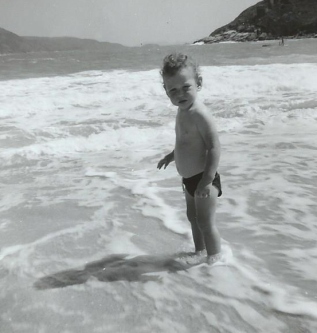
Thanks so much Tim. I think we could all do with a celebration of life right now. Thank you for introducing PERVERSE and for sharing the following poem Down to the Sea with us (as well as the impossibly cute photo of you as a toddler in the sea).

Tim toddler pic

Down to the Sea

Tiny feet dancing on the hot sand

Happily holding Mummy’s hand,

Giggling and squinting in the bright white light

White granules reflecting with all their might

Rhythmic lapping of white prancing mares

Whisper a summons to Neptune’s wet lair.


I break away from her protection

And run towards the beckoning big blue

Her shriek drives me on, wanted to be chased

Into the unknown; a brand-new experience

The consequences only big people know

Onwards into the cool splashing sea

You see it’s all just a game to me

She catches me when I’m up to my chest

Lacking a plan except she knows what’s best

Before my mischief leads to whatever I’ll find

In my infant’s inexperienced and untested mind.


She lifts me with a cry of relief mixed with rage

Her tight grip tells me this is not a game.

It’s the end of my adventure now I’ve been waylaid

Confined to the towel digging holes with my spade.

But I remember the thrill of running into the sea

A defining experience of risk-taker me.

By Tim Walker

About Tim Walker

profile pic3

Tim Walker is an independent author living near Windsor in the UK. He grew up in Liverpool where he began his working life as a trainee reporter on a local newspaper, The Woolton Mercury. A media career ensued, including a stint overseas in Zambia.

His creative writing journey began in earnest in 2013, as a therapeutic activity whilst recovering from cancer treatment. He started an historical fiction series, A Light in the Dark Ages, in 2015, following a visit to the near-by site of a former Roman town.The aim of the series is to connect the end of Roman Britain to elements of the Arthurian legend, presenting an imagined history of Britain in the early Dark Ages.

His latest book is Arthur, Dux Bellorum, a re-imagining of the story of King Arthur, published in March 2019. Book four in the A Light in the Dark Ages series, it won two book awards in April 2019 – One Stop Fiction Book of the Month and the Coffee Pot Book Club Book Award. The final book in the series, Arthur Rex Brittonum, is due out in June 2020.

The series starts with Abandoned (second edition 2018); followed by Ambrosius: Last of the Romans (2017); and book three, Uther’s Destiny (2018). Series book covers are designed by Canadian graphic artist, Cathy Walker. Tim is self-published under his brand name, timwalkerwrites.

Tim has also written two books of short stories, Thames Valley Tales (2015), and Postcards from London (2017); a dystopian thriller, Devil Gate Dawn (2016); and two children’s books, co-authored with his daughter, Cathy – The Adventures of Charly Holmes (2017) and Charly & The Superheroes (2018) with a third in the pipeline – Charly in Space.

To find out more you can visit Tim’s website. You’ll find him on Amazon and Facebook and you can also follow Tim on Twitter @timwalker1666.

Hamnet by Maggie O’Farrell

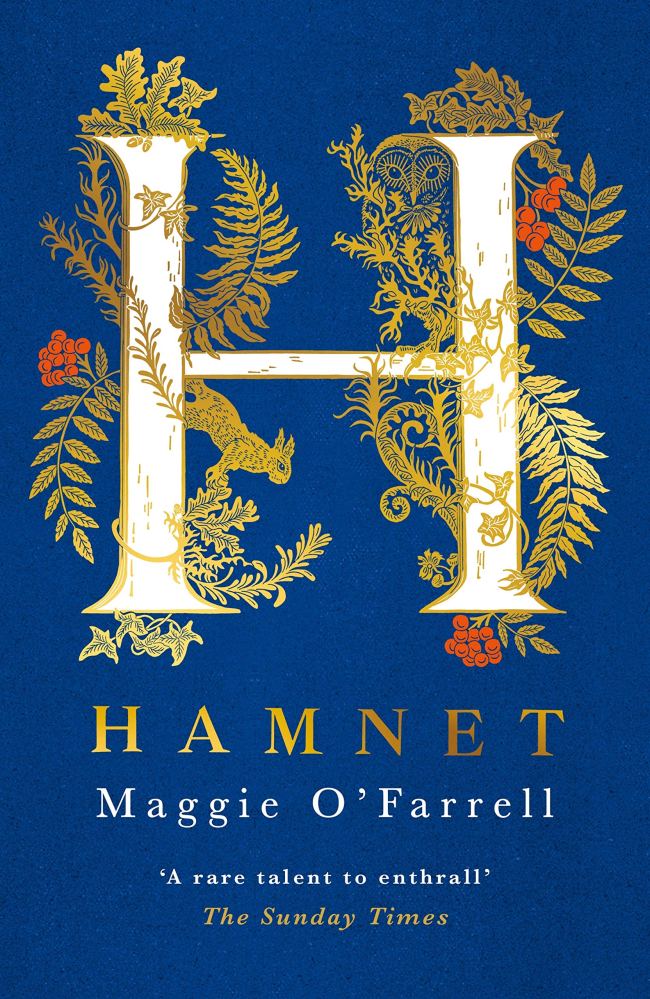
Hamnet Cover

Some weeks ago I was utterly thrilled to receive a wonderful surprise copy of Maggie O’Farrell’s Hamnet from Midas’s Director of Books and Publishing, Georgina Moore. No sooner had I dived in to Hamnet than the coronavirus crisis began and all Maggie’s promotional events had to be cancelled. With lovely Anne Cater of Random Things Tours stepping in to help out I was delighted to join in the blog tour to help celebrate the launch of Hamnet.

Published by Tinder Press yesterday, 31st March 2020, Hamnet is available for purchase through the links here.

Hamnet

Hamnet Cover

TWO EXTRAORDINARY PEOPLE. A LOVE THAT DRAWS THEM TOGETHER. A LOSS THAT THREATENS TO TEAR THEM APART.

On a summer’s day in 1596, a young girl in Stratford-upon-Avon takes to her bed with a fever. Her twin brother, Hamnet, searches everywhere for help. Why is nobody at home?

Their mother, Agnes, is over a mile away, in the garden where she grows medicinal herbs. Their father is working in London. Neither parent knows that one of the children will not survive the week.

Hamnet is a novel inspired by the son of a famous playwright. It is a story of the bond between twins, and of a marriage pushed to the brink by grief. It is also the story of a kestrel and its mistress; flea that boards a ship in Alexandria; and a glovemaker’s son who flouts convention in pursuit of the woman he loves. Above all, it is a tender and unforgettable reimagining of a boy whose life has been all but forgotten, but whose name was given to one of the most celebrated plays ever written.

My Review of Hamnet

An imagined story of Shakespeare’s son Hamnet.

Where on earth do I begin to review Hamnet? This is one of those books that defy the reader because it is so brilliant, so moving and so wonderful that all the usual adjectives and superlatives feel jaded, hackneyed and inadequate in response.

Maggie O’Farrell’s mesmerising prose has a luminous beauty that feels almost ethereal, whilst at the same time being grounded in very human senses. Her descriptions are exquisite, transporting the reader to the late 1500s with vivid clarity, complete depth and authenticity alongside a lightness of touch that is breathtaking. Some of the seamless similes and metaphors literally made me gasp aloud. As I read I could feel a tangible tenderness in the writing that touched me completely. I adored too, the occasional oblique references to Shakespeare’s writing that are slipped in, making Hamnet feel connected through time and space to Hamlet and Shakespeare himself. Indeed, that is one of the huge successes of Hamnet as we see how humanity is linked in minute ways that have profound impact, so that it doesn’t matter whether a reader knows anything about the playwright or his plays to enjoy this story completely.

Whilst Hamnet is the protagonist and catalyst for the narrative, this is very much Agnes’s story. I loved the fact that Shakespeare himself is referred to as ‘the son’, ‘the father’, ‘the husband’ so that Maggie O’Farrell has inverted the concept of history, making Hamnet very much her-story, with Agnes at the heart. And what a character Agnes is. She is the very embodiment of universal womanhood, of her era and of human emotion. Agnes can hate as well as love, control as well as comply, create as well as destroy so that she feels pulsatingly real. Both mystical and earthly, I don’t think I’ve ever encountered a character quite like her. I lived alongside Agnes rather than read about her because she felt so alive.

The other people in the pages of Hamnet are equally vivid and realistic. I often found I had quite strong emotional responses to them so that I experienced pure, unselfish love, strong dislike and all consuming grief particularly powerfully. I wept on more than one occasion as I read. As the captivating plot unfolds, each person is revealed with increasing clarity so that they mattered to me as much as any real people.

Character, setting and sublime writing aside, Hamnet is a cracking story. The narrative ebbs and flows with history, peril, love and events that sweep the reader along. I was utterly mesmerised.

Hamnet is a book that feels absorbed by the reader’s soul rather than read. I am in awe of Maggie O’Farrell’s writing talent and feel privileged to have read Hamnet. Don’t miss it.

About Maggie O’Farrell

Maggie Author Pic

Maggie O’Farrell is the author of the Sunday Times no. 1 bestselling memoir I Am, I Am, I Am, and eight novels: After You’d Gone, My Lover’s Lover, The Distance Between Us, which won a Somerset Maugham Award, The Vanishing Act Of Esme Lennox, The Hand That First Held Mine, which won the 2010 Costa Novel Award, Instructions For A Heatwave, which was shortlisted for the 2013 Costa Novel Award, This Must Be The Place, which was shortlisted for the 2016 Costa Novel Award, and Hamnet. She lives in Edinburgh.

You’ll find Maggie on Facebook and can discover more on her publisher author page.

There’s more with these other bloggers too:

Hamnet BT Poster (1)