A Hard Book to Write: A Guest Post by Jane Johnson, Author of Pillars of Light

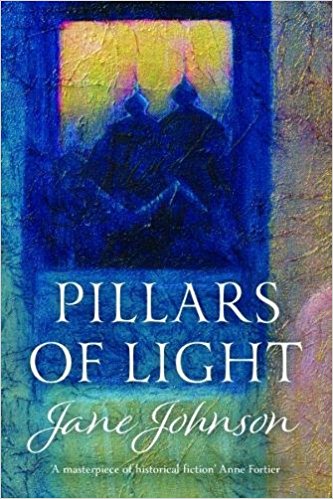
Pillars of Light

I’m delighted to welcome back Jane Johnson, author of Pillars of Light, to Linda’s Book Bag today. Jane previously provided a wonderful post (here) on uniting two cultures when her previous book Court of Lions was published.

Released on 5th October 2017, Pillars of Light is available for purchase here.

Pillars of Light

Pillars of Light

In the Syrian city of Akka, Nathanael, a young Jewish doctor, and a Muslim girl called Zohra are about to fall in love, unaware that Jerusalem has just been taken by Saladin’s army and that their city will soon be engulfed by war.

Meanwhile in England, John Savage, a foundling boy, runs away from his cruel life in a priory with The Moor, a mysterious man driven by a dream of perfection.
John and The Moor become members of a band of conmen travelling through the English countryside faking religious miracles for cash, until they are recruited in Richard the Lionheart’s drive to regain the Latin Kingdom from the infidel. Akka awaits. It will be the site of the greatest–and cruellest–siege of its time. But even in the midst of war, lovers find ways to make transactions of beauty.

Pillars of Light is a powerful and moving novel about the triumph of the human spirit against all the odds.

A Hard Book to Write

A Guest Post by Jane Johnson

As a species we are hardwired for stories. It’s the way we’ve learned about the world around us ever since we sat around campfires in the mouths of caves, fending off the dark and the fear of the unknown it contained. We have taught our children morals through the medium of fairytale; we have passed stories down from generation to generation as an oral tradition, maintaining our cultures, our memories. Tales of heroes and villains, of bad things that happen to the unwary, of good things that happen to the deserving. We have enshrined stories at the heart of religions, sugaring the bitter pills they contain.

I was bewitched by the power of fiction from an early age. I taught myself to read at the age of 3 and from then on devoured all manner of inappropriate material spanning worlds I could not comprehend. It’s probably why my own fiction has ranged so far and wide, from talking animals and fantastical worlds to the grit and glory of our own human history. For in our past lies so much of the information about who we are now.

When I started writing Pillars of Light I was fired by the terrible injustices of war crimes of another age and country – the 12th century, the Third Crusade, the massacre at Acre, by the so-called good guys, led by the magnificently named Richard the Lionheart. He had featured as a hero in so many of the tales I had grown up on – Robin Hood, Ivanhoe, the tale of Blondel, of Bad King John. How could such a hero have slaughtered thousands of civilian hostages in cold blood? Sometimes we have to tell ourselves stories in order to make sense of them.

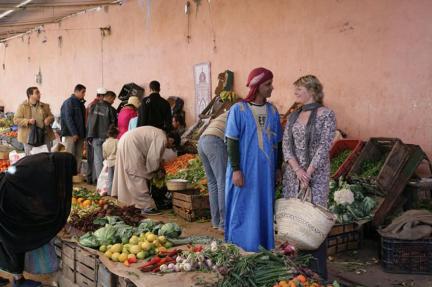
jane market

And as I delved deeper into the research and sank myself into the writing, the current Syrian war broke out, and suddenly I was writing about people in the throes of siege and famine at the same time as the people of Homs and Aleppo were suffering the same terrible privations. It was a hard book to write, and a harder one to publish.

Sometimes, people want to turn away from the stories that really matter, the ones that throw a harsh light on who we really are as a species. Because most of the time we tell stories to deflect the truth, to skip over the surface like a skimmed stone over a dark lake.

About Jane Johnson

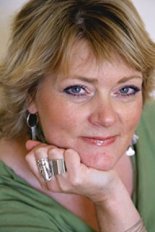
jane

Jane Johnson is from Cornwall and has worked in the book industry for over 20 years, as a bookseller, publisher and writer. She is responsible for the publishing of many major authors, including George RR Martin.

In 2005 she was in Morocco researching the story of a distant family member who was abducted from a Cornish church in 1625 by Barbary pirates and sold into slavery in North Africa, when a near-fatal climbing incident caused her to rethink her future. She returned home, gave up her office job in London, and moved to Morocco. She married her own ‘Berber pirate’ and now they split their time between Cornwall and a village in the Anti-Atlas Mountains. She still works, remotely, as Fiction Publishing Director for HarperCollins.

You can follow Jane on Twitter @JaneJohnsonBakr, or visit her website.

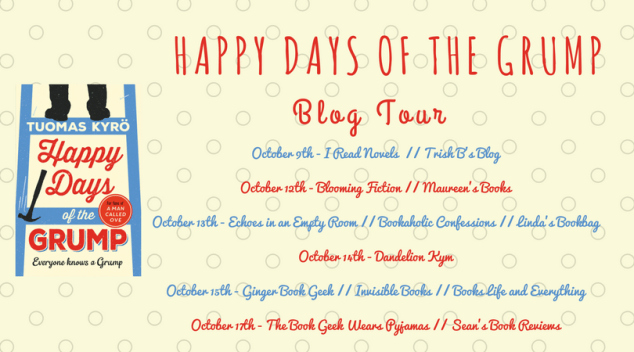
Happy Days of the Grump by Tuomas Kyrö

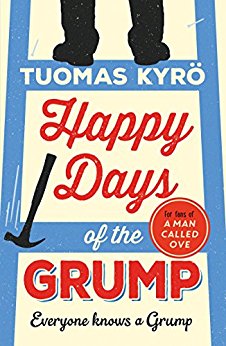
Happy Days of the Grump

My grateful thanks to Imogen at Bonnier Zaffre for sending me a copy of Tuomas Kyrö’s Happy Days of the Grump for review.

Happy Days of the Grump was published by Manilla, an imprint of Bonnier Zaffre, on 21st September 2017 and is available for purchase here.

Happy Days of the Grump

Happy Days of the Grump

Maybe there’s a little grump in all of us . . .

The Grump, at eighty years old, is more focused on death than life; building his own coffin and keen to write his will in ink – who can trust technology, after all? – he knows that everything was much better in the old days.

But when the Grump finds himself in hospital after falling down his basement steps, his life passes before his eyes. Thinking of the people closest to him and reflecting on the changes society has brought about, he realises he must come to terms with the cards life has dealt him.

With warm humour and a wry look at family and relationships, Happy Days of the Grump is sure to bring a smile to even the grumpiest among us.

My review of Happy Days of the Grump

The Grump is building his own coffin and wants to write his will in ink on paper, but life doesn’t always allow a person to do what they want!

Initially I found the translation of Happy Days of the Grump slightly clunky and it took me a few pages to acclimatise to the style, especially as I wasn’t familiar with many of the cultural aspects of Finnish life so I think I missed some of the nuances. Once I got used to the style, however, I thoroughly enjoyed the read. I appreciated the lack of speech marks for the Grump’s thoughts, and frequently his speech, as it placed me firmly inside his head and allowed me to understand him more.

The characterisation was highly empathetic and made me feel slightly ashamed of my sometimes slightly dismissive attitude to others, especially when aspects of the Grump’s character are gradually revealed. I ended up feeling that the Grump had every right to fulfil his wishes to orchestrate his own funeral. Even the more minor characters such as the Grump’s wife and daughter-in-law felt vivid and real.

Given that Happy Days of the Grump is a book more about a man’s attitudes and thoughts than anything else, I was surprised by the plot. There’s quite a bit happening so that the whole concept of the novel remains fresh and interesting throughout.

The most enjoyable aspect of Happy Days of the Grump was the fact that it made me laugh aloud, which I rarely do when reading, and nod frantically in agreement right the way through. I loved the fact that the Grump says what so many of us think – and that he doesn’t always realise he’s saying aloud what he’s thinking.

Happy Days of the Grump is a book that takes a while to attune to but that rewards the reader with a life affirming set of guidelines that we would all do well to live by. I heartily recommend it.

About Tuomas Kyrö

Tuomas

Tuomas Kyrö is a Finnish novelist, columnist, painter, drama, and writer and comic book writer. Kyrö was awarded with the Kalevi Jäntti Prize in 2005 and the Young Aleksis 2006 Prize. His work was nominated for the Finlandia Prize in 2005. Tuomas Kyrö was the first fellow of Eeva Joenpello’s Writers’ House in 2005-2009. Today he lives with his family in Janakkala.

If you read Finnish, you can follow Tuomas on Twitter. You’ll also find him on Facebook. There’s more with these other bloggers too:

happy days of the grump poster

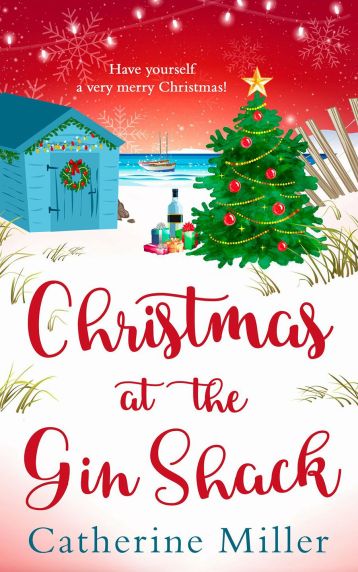
Spotlight on Christmas at the Gin Shack by Catherine Miller

Christmas at the Gin Shack Cover

I’m thrilled to be spotlighting Christmas at the Gin Shack today as part of the launch celebrations for several reasons. Firstly, I loved meeting the characters in Catherine’s Gin Shack series when I reviewed The Gin Shack on the Beach earlier this year and my review of which you can read here. Secondly, Catherine has appeared here before with a lovely guest post about possibilities which celebrated another of her novels, Waiting for You.

I’m also delighted to be taking part to support fellow blogger and friend, Rachel, as she starts a new venture in running author tours and services that you can find out more about here.

Finally, I’m extremely interested in the gins that feature in Catherine’s series!

Christmas at the Gin Shack is available for purchase on Amazon UK, Amazon US and Kobo.

Christmas at the Gin Shack

Christmas at the Gin Shack Cover

Gingle bells, gingle bells, gingle all the way…

Olive Turner might have lived through eighty-four Christmases, but she’ll never get bored of her favourite time of year. And this one’s set to be extra-special. It’s the Gin Shack’s first Christmas – and there’s a gin-themed weekend and a cocktail competition on the cards!

But, beneath the dazzle of fairy lights and the delicious scent of mince-pies, Olive smells a rat. From trespassers in her beloved beach hut to a very unfunny joke played on her friends, it seems that someone is missing a dose of good cheer.

Olive knows she’s getting on a bit – but is she really imagining that someone in the little seaside town is out to steal Christmas? More importantly, can she create the perfect gin cocktail before Christmas Eve – in time to save the day?

About Catherine Miller

B1Tc3dIeBMS._UX250_

When Catherine Miller became a mum to twins, she decided her hands weren’t full enough so wrote a novel with every spare moment she managed to find. By the time the twins were two, Catherine had a two-book deal with HQDigital UK. There is a possibility she has aged remarkably in that time. Her debut novel, Waiting For You, came out in March 2016. She is now the author of four books and hopes there will be many more now her twins have started school. Either that, or she’ll conduct more gin research on Olive’s behalf.

You can also find out more about Catherine Miller on Facebook , via her web site and by following her on Twitter.

There’s more with these other bloggers too:

tour poster

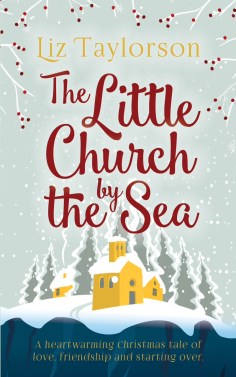
Cover Reveal: The Little Church by the Sea by Liz Taylorson

thelittlechurchkindle

I love seeing new books early in their lives and am delighted to be helping reveal The Little Church by the Sea by Liz Taylorson today, especially as Liz will be featuring on Linda’s Book Bag with a guest post on 24th November as part of the launch celebrations for The Little Church by the Sea. Do call back then to find out what Liz gets up to in an average day!

The Little Church by the Sea will be published by Manatee books on 23rd November and is available for pre-order here.

The Little Church by the Sea

thelittlechurchkindle

Isolated and unwelcome in the picturesque seaside village of Rawscar, Reverend Cass Fordyce has lost her faith and her home. Christmas is coming, and she isn’t looking forward to it. Then she meets attractive local man Hal – twice divorced and with a reputation as a ladies’ man, he’s everything that a celibate vicar like Cass should avoid…especially as Hal is hiding secrets of his own, including his past with the mysterious Anna.

Can Cass ever find her way in Rawscar? What secret does Hal have to hide? And is there ever such a thing as a truly fresh start?

**A HEART-WARMING CHRISTMAS TALE OF LOVE, FRIENDSHIP AND STARTING OVER**

About Liz Taylorson

Liz

Liz has always surrounded herself with books, has a degree in English Literature and worked as a cataloguer of early printed books for a major university library.

Having joined the Romantic Novelists’ Association’s wonderful New Writers’ Scheme to try to learn how to write novels properly in 2015, she started writing fiction and hasn’t stopped since.

Liz says she owes everything to her tolerant and long-suffering husband Ben and her tolerant and long-suffering children, but very little to the cats who are neither tolerant nor long-suffering and keep sitting on the computer keyboard and messing up her manuscript if she forgets to feed them on time.

When not reading or writing Liz is often to be found on stage (or behind it) with her local amateur dramatic society, drinking tea, or visiting one of the several North Yorkshire seaside villages which were the inspiration for the fictional Rawscar, the setting for her debut novel The Little Church by the Sea.

You can find Liz on Facebook, follow her on Twitter and visit her blog.

Love A Village Book: A Guest Post by Sue Moorcroft, Author of The Little Village Christmas

The Little Village Christmas

Regular readers of Linda’s Book Bag might be forgiven for thinking I’m a little bit obsessed by Sue Moorcroft. I’ve met Sue several times and had the chance to interview her here, and have previously reviewed Sue’s The Christmas Promise here, and Just for the Holidays here. As well as all that, Sue has told me about her fantasy holiday companions here too!

Today I’m delighted that Sue is explaining a little about the village concept behind her latest book, The Little Village Christmas.

The Little Village Christmas was published by Avon Books, an imprint of Harper Collins, on 9th October 2017 and is available for purchase here.

The Little Village Christmas

The Little Village Christmas

Alexia Kennedy has lived in the little village of Middledip all her life – and now it’s time for her to give something back. As an interior decorator, she’s been tasked with turning the village’s neglected Victorian pub into a community café that everyone can use.

After months of fundraising by all the villagers, Alexia can’t wait to get going – but disaster strikes when every last penny is stolen. With Middledip up in arms at how she could have let this happen, Alexia feels ready to admit defeat.

But help comes in the most unlikely form when woodsman, Ben Hardaker and his rescue owl Barney, arrive on the scene. Another lost soul who’s hit rock bottom, Ben and Alexia make an unlikely partnership. However, they soon realise that a little sprinkling of Christmas magic might just help to bring this village – and their lives – together again…

Love A Village Book

A Guest Post by Sue Moorcroft

Although every book I publish is ‘standalone’, not depending on any book that’s come before, I do like to write linked books. A linked book is one where the central characters are new but you might find a few places or people that have popped up in my earlier books.

The Little Village Christmas is the story of what happens to Alexia when she agrees to manage the refurbishment of an old forgotten Victorian pub in the village so it may become The Angel Community Café. It’s to be her swan song, a pro bono project to put the cherry on the top of her portfolio as an interior decorator ready for her to take on a new, exciting role with an east London team.

Until someone runs away with all the money.

As two of her greatest friends, Jodie Jones and Gabe Piercy are the worst affected (and also because the east London concern dumps her) Alexia shelves her plans to leave the village to help stage a rescue.

Ben Hardaker has taken a job in the woods of a nearby estate, not feeling particularly sociable since his marriage broke up, threatening his other family relationships and causing him to sell up and move away from home. As he’s Gabe’s nephew he’s unwillingly involved in Alexia’s plans and inexorably brought out of his cottage in the woods.

The whole plot depends upon a charming village setting, where people know and like each other or know who to avoid and get caught up in each other’s lives. ‘Aha,’ I thought. ‘I already have a village in my head and its map is drawn in one of my A3 pads …’ Regular readers will have encountered Middledip village before. It’s surprising how often characters come from, end up, or simply live there. I found a few changes had come over the village since last time I visited – the village hall has had to close, Gwen has left the shop and her place taken by nosy Melanie and renamed ‘Booze & News’ – but it was such a pleasure to see a few old friends. Gabe and his recalcitrant pony, Snobby; head of the village hall committee, Carola, whose decorating skills finally come into their own; and Tubb from the pub, who never really changes.

The village has taken Ben to its heart, calling him ‘the wizard in the wood’ because of the injured owl he’s caring for, and protecting him when someone comes to the village looking for him. He comes to feel so at home that he even chooses to stay there for Christmas and discover what a village Christmas is really like. It’s kind of the opposite of Alexia, who had expected to leave in the New Year …

(And now you’ve got us all intrigued Sue!)

About Sue Moorcroft

DSC_3507

Award winning author Sue Moorcroft writes contemporary women’s fiction with occasionally unexpected themes. The Wedding Proposal, Dream a Little Dream and Is This Love? were all nominated for Readers’ Best Romantic Read Awards. Love & Freedom won the Best Romantic Read Award 2011 and Dream a Little Dream was nominated for a RoNA in 2013. Sue’s a Katie Fforde Bursary Award winner, a past vice chair of the RNA and editor of its two anthologies.
The Christmas Promise was a Kindle No.1 Best Seller and held the No.1 slot at Christmas!
Sue also writes short stories, serials, articles, writing ‘how to’ and is a creative writing tutor.

You can follow Sue on Twitter @SueMoorcroft, find her on Facebook and visit her website.

There’s more with these other bloggers too:

Blog tour banner

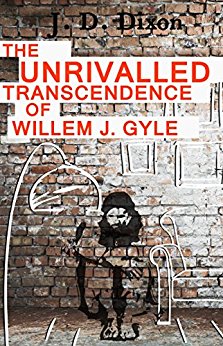
A Publication Day Interview with J.D. Dixon, Author of The Unrivalled Transcendence of Willem J. Gyle

Willem

Having studied philosophy for part of my degree I was so intrigued that J.D. Dixon, author of The Unrivalled Transcendence of Willem J. Gyle, is currently studying for a degree to include that discipline that I had to ask him onto the blog to tell me more in interview.

The Unrivalled Transcendence of Willem J. Gyle is published today, 12th October 2017 by Thistle and is available for purchase here.

The Unrivalled Transcendence of Willem J. Gyle

Willem

In a Scotland beset with depression, Willem is one victim among many. He loses his job, his mother dies and he is forced out of the flat they shared. Seeing no other option, he takes to the streets of Edinburgh, where he soon learns the cruelty felt outside the confines of his comfortable life. Stories from his past are interwoven with his current strife as he tries to figure out the nature of this new world and the indignities it brings. Determined to live freely, he leaves Edinburgh, hiking into the Scottish Highlands to seek solitude, peace and an unhampered, pure vision of life at nature’s breast.

The Unrivalled Transcendence of Willem J. Gyle is at once a lyrical, haunting novel and a set piece in the rage of an oppressed, forgotten community. J. D. Dixon’s sparse, brutal language captures the energy and isolation of desperation, uniting despondency and untrammelled anger in the person of his protagonist.

An Interview With J.D. Dixon

Welcome to Linda’s Book Bag James. Thank you so much for agreeing to answer some questions on my blog about your writing and The Unrivalled Transcendence of Willem J. Gyle in particular. Firstly, please could you tell me a little about yourself?

Hi Linda, thanks for having me. I’m a novelist based in Edinburgh, originally from London. I’m twenty seven and I’ve been writing for about five years now. I enjoy reading philosophy and am midway through a part time degree in Philosophy, Politics and Economics with the Open University, which has begun to influence my writing to a greater degree of late.

A couple of years ago, in the summer of 2015, I had the idea for The Unrivalled Transcendence of Willem J. Gyle and wrote a first draft over a couple of fairly intense weekends. I had a workable copy by November, at which point I sent it to David Haviland of the Andrew Lownie Literary Agency, who happily agreed to take me on. We’re currently working together to finalise a draft of my next novel.

(I think many authors would envy you that speed of process James!)

When did you realise you were going to be a writer?

Early, I think. I wrote lots of terrible poetry and a few short stories as a teenager. I wrote my first novella at twenty. But prior to this I was part of the generation who grew up reading Harry Potter and Phillip Pullman’s Dark Materials. The power of literature was always evident, from the earliest age. And I always wanted to take part in that.

Which aspects of your writing do you find easiest and most difficult?

The planning stage through to completing the first draft is the easiest bit. The macro-editing is hard but enjoyable, as I try to bring the narrative together. And then I get quite bogged down obsessing over the micro-editing: sentence structures, chapter heading formats, etc. And that’s the point I know it’s done.

What are your writing routines and where do you do most of your writing?

When I have an idea, I spend a while reading around the subject, both factual accounts and fiction by writers working on similar themes. When I have enough source material I set out a very in-depth plan, usually detailing the narrative in its entirety on a scene-by-scene basis.

Once the plan is in place I spend a few hours every day writing until it is done. No breaks – it becomes quite obsessive as I try to work through my plan while it’s fresh. I try to hit between one and two thousand words a day (any more and my writing becomes very stilted as fatigue hits) and within a couple of months, or even sooner in the case of The Unrivalled Transcendence of Willem J. Gyle, I will have a workable first draft.

As to where, I can usually be found hanging out in one or another of Edinburgh’s many cafés, hidden behind my laptop.

Without spoiling the plot, please could you tell us a bit about The Unrivalled Transcendence of Willem J. Gyle?

Of course. Willem is a labourer in Edinburgh. Oxygen deprivation as part of a complicated birth has left him with thought processes that are slower than others’. He is laid off a few days before suffering a bereavement, after which he is forcibly evicted from his flat. He takes to the streets.

By novel’s end he has grown disenchanted by humanity and turns his back on the city, hiking into the Scottish Highlands to seek solitude, peace and perspective amongst Scotland’s vast mountain ranges.

The Unrivalled Transcendence of Willem J. Gyle is out today. How are you celebrating?

Honestly? My dog had to have her annual jabs today, so that was first on the list. Aside from this, it was my second wedding anniversary a few days ago and my wife and I had a weekend in Vienna. And this weekend we’re having a launch party at our flat in Edinburgh (I have a big pile of copies of the novel to sign!)

Why did you choose what appears to be quite a depressing subject matter initially as Willem realises what life on the streets is like?

I grew up in London, and so was no stranger to witnessing homelessness. However, it was nothing compared to what I witnessed in Edinburgh. To Holyrood’s great and enduring shame, homelessness seems almost ubiquitous in Scotland.

(I think that might surprise many of your readers.)

I wrote The Unrivalled Transcendence of Willem J. Gyle two and a half years after moving to Edinburgh: I spent much of those years mulling over the issue of such widespread homelessness centred in a city which contains really quite breath-taking amounts of wealth.

How did you create Willem?

He very much evolved as a facsimile. In part he is based on the titular character from Martin Amis’ short story Bujak and the Strong Force. The story is part of Einstein’s Monsters, and the character Bujak has a well of strength inside himself which Amis likens to nuclear power- reserves of anger and sheer, brute power that most men don’t have. In part he is the naïve, poetical yet misunderstand soul of Frankenstein’s monster. In part he draws on the idea of every gentle giant any of us have ever met, but one who has suffered a great betrayal and is beginning to realise his own power.

He isn’t (I hope!) too much of an alter ego. Although I think there is a degree of gratuitous violence in the novel which is there both from, and to please, that part in all of us that wants to let go, think fuck it and watch the world burn around us. Every avenging angel you’ve ever seen on TV or read of in fiction is there; every character who is liberated by having nothing left to lose.

These are the things I had in my head as I wrote him – I think (never trust a writer who claims to know absolutely, retrospectively where their ideas came from!) These ideas fed into the narrative, and the narrative in turn helped me to develop him from these base elements.

Willem seeks solace in nature. To what extent do you think nature has the power to heal and restore us?

I’m a city boy through and through, so it’s more of a hypothetical dream than an iron hard belief. However, I have spent time touring the Sottish Highlands. I used to go hiking and camping with my dad in the south of England. I find the many varied numinous sights to be experienced in nature don’t heal in the conventional sense, rather giving a perspective which helps to diminish any sense of one’s own personal traumas. They expand the tea cup and show how small the storm really is. It can be both daunting and refreshing, but either way you come away with a fresh viewpoint and sense of scale.

How far was it your intention to explore the theme of transcendence in your novel and how far did it arise naturally as you wrote?

It was there from the beginning, in quite an inverted way. With regards homelessness, I have often wondered at the idea of betrayal in terms of Rousseau’s The Social Contract. The idea that drove this narrative was that living on the streets is to be relegated to a class in society derided by most – those deriding them and allowing the problem to persist willingly separate such people from the rights they should enjoy under the social contract, thus breaking it. They are effectively freed from its restraints, and this was the transcendence I set out to capture – Willem realised that he no longer had a duty to abide by standard norms and could, in his mind, fulfil his true potential because of this.

(Gosh – you’ve just taken me back almost 40 years to reading Rousseau at university.)

It seems to me that writing The Unrivalled Transcendence of Willem J. Gyle may have been quite a cathartic experience for you. How far would you agree?

Completely. 100%. Whilst I was writing the initial manuscript friends kept asking me how I was going to be able to write about a man living on the streets when I had never done so. Many reviewers and readers have since said similar things. But for me the novel isn’t about a man’s struggle on the streets – it’s his struggle with himself. That was my entry point into the narrative, and into the character. It’s more a narrative about the intertwining of despondency and rage which I imagine isn’t alien to too many people. That is the driving force of the man Willem, and it was that which I was letting out, in fits and starts, from my own life.

So why do you write?

This answer must necessarily refer back to your previous question. I would hesitate to trust any thinking person who didn’t at least occasionally feel angry, oppressed, and depressed by the world around them, by the fact of being and the conditions attached to that fact. For me, writing is both the place into which I can tidy away these emotions, both little and large, and an attempt to come to terms with the world. I have always felt this as a reader, since my earliest memories. You mentioned catharsis before – as much as it is a stereotype both easy and ponderous to turn to, the whole writing process is my catharsis.

How did you go about researching detail and ensuring The Unrivalled Transcendence of Willem J. Gyle was realistic?

If I’m honest, realism in its most brutal sense has never been a great priority for me. I grew up hooked on Salman Rushdie as a teenager, and the idea that things never need to be quite as they seem, or even follow the strictest logical pattern, has always appealed. Using a slight subversion of reality to make a broader point about our own realities comes with its own charm, and is an invaluable component of a writer’s toolkit. For instance, Willem in the novel has an ever so slightly exaggerated well of physical strength and resilience – I begin the novel by claiming that he has never felt the need to see things clearly, and it’s very much his own subjective reality that the narrative explores.

However, there is of course the need to portray homelessness both with a degree of accuracy and, I hope, sympathy. Ben Judah’s remarkable This is London helped me out, tracing as it does the lives of people living below the radar of middle class respectability in the nation’s capital. The Shelter webpage also contains numerous accounts of people’s experiences of homelessness, as do plenty of other websites. Aside from these, one of the main reasons for writing this novel was my shock when first moving to Edinburgh at how many people there are living on the streets here. Unfortunately, there is no lack of source material, especially in the years post the 2007 financial crash.

The Unrivalled Transcendence of Willem J. Gyle has a cover that suggests a man invisible to society to me. How did that image come about and what were you hoping to convey (without spoiling the plot please!)?

Are we not all invisible to society? I once watched an interview with Stephen Fry in which he said that he always felt life to be a party to which he didn’t get an invitation, and that literature serves the part of that invitation. I don’t think the idea of being overlooked is foreign to many people, and so it’s one that is very easy to put into prose. The artistic team which designed the cover tapped into this perfectly, I think.

(I agree – I think it’s a perfect cover.)

If you could choose to be a character from The Unrivalled Transcendence of Willem J. Gyle, who would you be and why?

Jap, Willem’s pet dog. I set him up as the foil to all that would eventually turn Willem against humanity, and he never experiences anything but the purest joy and excitement. Wouldn’t that be lovely?

If The Unrivalled Transcendence of Willem J. Gyle became a film, who would you like to play Willem and why would you choose them?

Perhaps he would be a little old, but part of Willem came from Tom Hardy’s performances in Peaky Blinders and Warrior. He has the physical presence to make those hidden reserves of strength seem natural.

When you’re not writing, what do you like to read?

I read a lot of philosophy. Particular Locke at the moment. And I read The Economist every week.

In terms of fiction I’ve mentioned a few names already. I enjoy Rushdie and similar writers – Garcia Marquez, Bulgakov. Realists such as J.M. Coetzee and Cormac McCarthy have a great influence on my work. My main aim at the moment is to learn German so that I can read Herta Muller in her own language, both prose and poetry. Poets such as Carlos Drummond de Andrade and Derek Walcott are up there in the list. And if ever I want to read a perfect example of written English I turn away from the above writers’ weightiness and crack open some Wodehouse.

If you had 15 words to persuade a reader that The Unrivalled Transcendence of Willem J. Gyle  should be their next read, what would you say?

If it’s not too pretentious:

This will be an issue by which our generation will ultimately be judged – please, read.

Thank you so much for your time in answering my questions.

And thank you once more for hosting me.

About J.D.Dixon

J D Dixon

D. Dixon was born in London in 1990. He studied English Literature and History at Goldsmiths College, University of London, before pursuing a career as a writer. He currently lives with his wife in Edinburgh.

You can follow James on Twitter @James_D_Dixon.

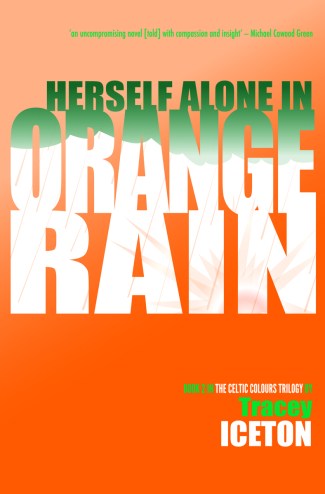
Writing a PHD Novel: A Guest Post by Tracey Iceton, Author of Herself Alone in Orange Rain

orange rain full cvr

Those who know me well know that I have two ambitions – to write a novel and to study for a PhD (my husband has one so I don’t see why I should just stick with my Masters!). When I heard that Tracey Iceton had combined both my ambitions into one activity I couldn’t wait to be part of the blog tour for her latest book, Herself Alone in Orange Rain. I’m fascinated to hear from Tracey all about that process in a brilliant guest post today.

I’d like to thank publicist Karen Bultiauw for my copy of Herself Alone in Orange rain that I shall be reading very soon.
Herself Alone in Orange Rain is published by Cinnamon Press and is available for purchase here.

Herself Alone in Orange

orange rain full cvr

Kaylynne Ryan is a promising art student, used to fighting for her place in a world of men, but when a forgotten friend turns up she realises there is more than her own freedom at stake.

Learning the truth about her Irish heritage, her grandfather who fought all his life for Ireland’s independence, her parents who gave their lives for the same cause, she finds herself drawn into the dangerous world of the Provisional IRA with its bombing campaigns, bloody violence, hunger strikes and patriotic sacrifice. She didn’t look for the Troubles, but they found her nonetheless, and now, whatever the cost, she must join the cause to help rid the Six Counties of the Brits.

Herself Alone in Orange Rain tells the story of one young woman’s fight for freedom and independence, for her homeland and for herself.

Writing A PhD Novel

A Guest Post by Tracey Iceton

Green dawn

Writing a novel as part of a PhD is a radically different process to just writing a novel.  I say this with certainty because my first novel, Green Dawn at St Enda’s was ‘just written’.  I knew what I wanted to do with it, did it, then my editor, the wonderful Jan Fortune at Cinnamon Press read it, told me how to make it better and I went away and did that too.  Simple.

When I got accepted on the creative writing PhD programme at Northumbria I was delighted; my studentship meant I was being paid to write my next novel!  At least that’s how I viewed it at first.  Over the three years of my doctorate I grew enormously as a writer, massively improving my craft and learning far more than even my English Studies honours degree taught me about fiction.  However, I didn’t ‘just write’ my second novel, Herself Alone in Orange Rain.
The process of a practice led PhD is that you write a section (once you’ve done enough research in your field of writing which is a pain for those of us who want to get down to being creative), give your supervisors it to read, meet with them, listen to what’s wrong with it and go home to put it right. It is agonising but worth it and my second novel is a mature, even sophisticated piece of writing, I feel, for this process, because I delved deeper in the mechanics of what I was writing and, more importantly, what I was writing against which I only realised through studying reams of Troubles fiction – fiction about the conflict in Ireland, which I didn’t even know was a genre until I starting the PhD!

To rewind a bit my Celtic Colours trilogy came about after visiting Kilmainham Gaol, Dublin.  Standing in the Stonebreaker’s Yard I learnt the story of the 1916 Easter Rising and was so fascinated by it that I knew I needed to write a novel based on it.  From the beginning my intention was for a trilogy; part one on the Easter Rising, part two on the 1970s/80s Troubles, part three on the situation in Ireland 100 years after the 1916 Rising.  I chose to write fiction because I believe fiction is an accessible, engaging form that invites readers into a world they wouldn’t be interested in exploring through non-fiction.  I was right in this belief because many readers of Green Dawn have commented on how much they learnt about British and Irish history by reading it, something that was a happy side-product of them picking up a novel, hoping to be entertained.

When it came to part two I assumed I would have a male protagonist; I planned to tell the story from the IRA perspective and, well, all IRA members are men, aren’t they?  But a friend, poet Natalie Scott, suggested exploring the woman’s point of view and it didn’t take much investigating to uncover two surprising things – women were active service IRA volunteers (they planted bombs and shot people) and their experiences were not realistically depicted in fiction.  This is where the PhD project took shape, giving me a solid research question: how do I write a novel that offers a credible, realistic portrayal of the experience of being and IRA woman?  In this I had a project I was passionate about.

Through my reading of Troubles fiction for the PhD I encountered female IRA protagonists who were shallow, heavily gendered stereotypes, even childish caricatures and never did I feel these fictional characters resembled or were believable as real women, which is characterisation lesson number one.  There was everything from bloodthirsty ice-maiden assassins to naïve little girlies bullied by male counter-parts.  It was depressing reading but spurred me on, despite the ego bruising of PhD supervision, to write the novel because I was desperate to challenge these misrepresentative fictional portrayals and give a real, genuine fictional voice to the life and experiences of the IRA women I found in my fact-finding research.

Whatever people make of Herself Alone in Orange Rain, I acknowledge it will be controversial for some readers, I stand by it because I know, having spent three years researching and writing it, that it does what no other novel I have found does: it uses the power of fiction to tell the true story of what it was like to be a young woman in the IRA in the 1980s.

About Tracey Iceton

Tracey Iceton Publicity Photograph

Tracey Iceton is an author and creative writing tutor from Teesside who recently completed a PhD in creative writing at Northumbria University. A qualified English teacher experienced in delivering creating writing courses and workshops, Tracey won the 2013 HISSAC short story prize for Butterfly Wings, was runner up in the 2013 and 2014 Cinnamon Press short story competitions with Slag and As the world (re)turns, which appear in the anthologies Journey Planner and Patria. She also won the 2011 Writers Block NE Home Tomorrow Short Story Competition and has been shortlisted for the 2012 Bristol Short Story Competition with Apple Shot and the 2015 Mslexia Women’s Short Story Competition for Ask NotGreen Dawn at St Enda’s, her debut novel and part one of her Irish Trilogy, was published by Cinnamon Press in 2016.

You can find out more on Tracey’s website.

There’s more with these other bloggers too:

Tour poster

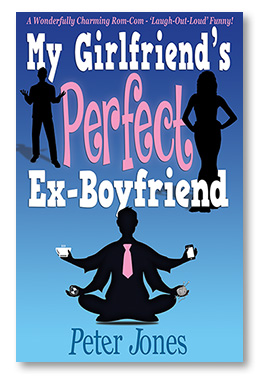
Book Titles: A Guest Post by Peter Jones, Author of My Girlfriend’s Perfect Ex-Boyfriend

MGPEB_800

Having previously interviewed lovely Peter Jones here on Linda’s Book Bag, I’m delighted to welcome him back to celebrate his latest novel, My Girlfriend’s Perfect Ex-Boyfriend, with a super guest post all about book titles. And with a title like My Girlfriend’s Perfect Ex-Boyfriend I think he probably knows what he’s talking about!

My Girlfriend’s Perfect Ex-Boyfriend is available for purchase here.

My Girlfriend’s Perfect Ex-Boyfriend

MGPEB_drop shadow

Adrian Turner, Mountaineer, Secret Agent, Fireman… Ade would dearly like to be any of these things, though he’d trade them all to win the heart of feisty Public Relations Executive, Paige.

Instead, he’s a disillusioned school teacher, on suspension, after an unfortunate incident with a heavy piece of computer equipment. And somebody’s foot.

And Paige? Despite being his girlfriend for the past eighteen months, she still seems to have one foot out of the door and hasn’t quite committed to leaving a toothbrush in the bathroom.

Of course, it doesn’t help that she’s working with her ex-boyfriend, Sebastian. A man who in almost every way imaginable is better, taller, wealthier, hairier, and infinitely more successful than Ade.

Is Paige still in love with Sebastian? Why then did she suggest they get away for a few days? Some place romantic…

But when Adrian finds himself in Slovenia – with Sebastian in the room down the hall – he realises there’s serious possibility that he’s in danger of losing his job, his mind, and the woman he loves…

Book Titles

A Guest Post by Peter Jones

Hello Linda! Thanks for inviting me back onto your blog.

(You’re always welcome Peter!)

So. Book titles…

hate them!

Specifically, fiction book titles.

Why? Because they’re so important, and so much rides on getting them just right. You might spend 10 months of your life writing circ. 80,000 words, but unless those half dozen words on the cover are absolutely perfect, you could quite easily have been wasting your time.

Non-fiction book titles are easy; just describe what your book is about and make darn sure you have a key-word in there (something that people looking for your book might type into google). So for instance, a book about finding happiness in this ever increasingly busy world might be called How To Do Everything And Be HappyThat would work.

But fiction? That’s a whole different ball of wax.

Take for instance my last novel; The Truth About This Charming Man. Not a bad title. But not particularly good either. Unless you saw the cover it doesn’t really tell you what the story is going to be about. Some have argued that even if you DID see the cover, you still wouldn’t know what it was about!

Charming man cover

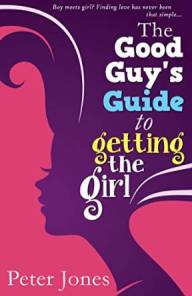
And my novel before that: The Good Guy’s Guide To Getting The GirlTerrible title! Awful! I mean okay, it’s quite funny, a bit of alliteration can’t hurt – and the cover helped a bit – but having previously published four self-help books, most people assumed it was another self-help book! What was I thinking choosing a title like that?

girl

Anyway, fortunately the same cannot be said for my latest fictional offering. This time I’ve cracked it! This time I have a title which is both funny, AND gives the reader a hint of what’s to come. And what’s more I can’t really take any credit for it.

I met my partner Valerie about three years ago.  Val had just come out of a long term relationship with… well, let’s call him Steve. It had been an amicable split so it wasn’t uncommon for her to mention Steve occasionally. I’d say something like, “I’ve made some fresh bread this weekend,” and she’d say, “Oh, Steve used to do that.” Only bloody Steve would have made the bread from flour that he’d milled himself. From a stone that he dug out of the ground. Whilst building his house. Single handedly.

One day I got so cheesed off hearing how fantastic Steve was I said, “If you don’t shut up about Steve I’m going to put him in a novel and then kill him off!” To which Val laughed and said, “What would you call the book? My Girlfriend’s Perfect Ex-Boyfriend?”

Well. It was a such a good title, how could I resist?

“No!” said Val, seeing the light bulb hovering above my head. “You can’t! Absolutely not!” But this was Friday. By the end of the weekend we had renamed Steve, morphed him into this completely unbearable character called Sebastian.

We’d also decided that the protagonist would be a down-on-his-luck school teacher called Adrian, and that his girlfriend would be a sassy American PR executive called Paige. More than that a plot was beginning to emerge that was just too fun not to write!

Now obviously it’s all made up. But that said, I really hope Steve doesn’t recognise himself in it.

(Eek – so do I!)

About Peter Jones

Peter

Peter Jones started professional life as a particularly rubbish graphic designer, followed by a stint as a mediocre petrol pump attendant. After that he got embroiled in the murky world of credit card banking. Fun times.

Nowadays, Peter spends his days writing, or talking about writing.

He’s written three novels; a Rom-Com (Romantic Comedy), A Crim-Com (Crime Comedy), and a Rom-Com-Ding-Dong (A sort-of Romantic-ish Comedy, with attitude). He’s currently working on his fourth novel, which – if it’s a musical – he’ll no doubt describe as a Rom-Com-Sing-Song. (Spoiler: It isn’t).

He is also the author of three and a half popular self-help books on the subjects of happiness, staying slim and dating. If you’re overweight, lonely, or unhappy he’s your guy.

Peter doesn’t own a large departmental store and probably isn’t the same guy you’ve seen on the TV show Dragons’ Den.

You can follow Peter on Twitter, find him on Facebook and visit his website.

You’ll find all Peter’s books for purchase here.

Fairy Tale Origins: A Guest Post by Denise Deegan, Author of The Prince and the Pea

The Prince and the pea

Having met her in real life recently, I’m delighted to welcome Denise Deegan, author of The Prince and the Pea, back to Linda’s Book Bag. I previously featured a smashing guest post about Irish writing from Denise here, so it’s lovely to have another, very different piece from her today.

The Prince and the Pea is a Kindle Single released today 10th October 2017 and is available for purchase here.

The Prince and the Pea

The Prince and the pea

As heir to the throne, Prince Richard is expected to marry well, and his parents are adamant that only the finest princess will do. But is royal blood really more important than the spark of true love?

His father, the king, has devised his own test of true royalty, inviting the haughtiest heiress for miles around to spend a night at the castle, balanced atop a pile of mattresses concealing a single pea. But even though she passes the test, she is too outraged by sleep deprivation to stay beyond breakfast. Meanwhile Richard can’t stop thinking about Rosie O’Toole, the charming chambermaid who has taught him how to lay a fire and find true meaning in his life…

When Rosie is unfairly dismissed and disappears without a trace, Richard is determined to find her. He must bring her back to the castle and reinstate her at once. But as he grows more desperate, Richard realises that he is no longer searching for a chambermaid, but for his one true love.

The Strange Origin of a Fairy-tale Retelling

A Guest Post by Denise Deegan

If you were to look at my writing career, you would probably say, “What is she up to? She’s all over the place. She’s Aimee Alexander and Denise Deegan. She writes for adults and teenagers. She jumps between contemporary and historical. And what’s this? A fairy-tale retelling?”

OK, so you mightn’t say all of that. You might wonder, though. The only explanation I can give is that I write what comes to me, this latest being a fairy-tale retelling of The Princess and the Pea. How did it come to me? That’s when things gets a little bit strange.

The Prince and the Pea happened like this… I just started writing with no actual intention. The words flowed through me. It felt as though I was channelling not choosing them. When I got to “The End”, I asked myself, “Where did that come from?”

Butterfly novels

It occurred to me, then, in a moment of weirdness, that The Prince and the Pea was created, not by me, but by a character from one of my other stories, a teenager called Rachel in my YA series, The Butterfly Novels. In the third of the trilogy, And Actually, Rachel judges her brother’s new girlfriend on whether or not she likes the fairy tale, The Princess and the Pea.

The Princess and the Pea was not one of Rachel’s favourites. She thought the princess precious. A pea? So what? Shouldn’t she have been more worried by all those mattresses and their potential for a nasty fall? The princess was rewarded for being sniffy and complaining. Her reward was a prince. What if the prince was a pratt? These were Rachel’s thoughts.

They climbed into my head and became a story. Does it throw me that a fictional character wrote a story through me? Noooo! I love it. My characters are real people to me. And what could be more real for one of them to write their own fiction through me?

It thrills me that this quirky little story is going out into the world. Which of my fractured audiences is it for? Actually, all. Adults, teens, kids. It is for anyone who believes in true love. It is anyone who believes in controlling destiny. It is for anyone who believes in the individual not the “crown”. And it is for those who like to smile at the world sometimes.

The Prince and the Pea is published by Amazon Publishing today October 10th and retails at the “princely” sum of less than a coffee here.

My Review of The Prince and the Pea

A reworking of a traditional tale from the Prince’s point of view.

At the price of half a cup of tea and about a third of a cup of coffee, I thought The Prince and the Pea was exceptional value. Denise Deegan has taken a well known story and given a fresh new twist so that we see events from a totally different perspective.

Alongside the smooth quality of the writing is a perfect pitch and tone for this kind of tale so that it would appeal to readers of all ages. I really liked the interesting and unusual perspectives so that we have a more rounded and in depth story than is usual in a fairy tale, whilst still retaining the moral examples we expect.

I also loved the themes that again are relevant to all age groups. The way in which we treat those around us, our relationships with those of different social status and our families are all sensitively portrayed so that, although the Prince and the Pea is a short story, it packs a punch. It was so good to have traditional love underpinning a traditional story in both a recognisable and innovative format.

The Prince and the Pea is a smashing way to while away half an hour with that cup of tea!

About Denise Deegan

denisecolour

Denise Deegan lives in Dublin with her family where she regularly dreams of sunshine, a life without cooking and her novels being made into movies. She has a Masters in Public Relations and has been a college lecturer, nurse, china restorer, pharmaceutical sales rep, public relations executive and entrepreneur. Denise’s books have been published by Penguin, Random House, Hachette and Lake Union Publishing. Denise writes contemporary family dramas under the pen name Aimee Alexander. They have become international best-sellers on Kindle.

You can follow Denise on Twitter and find her on Facebook and Instagram.

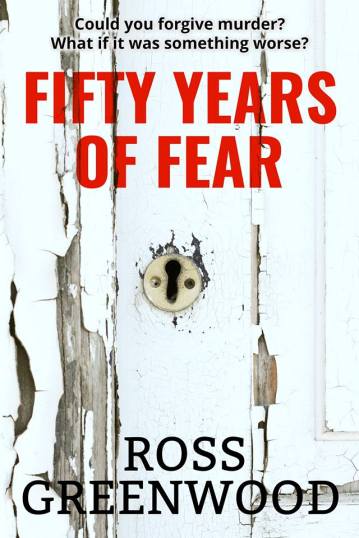
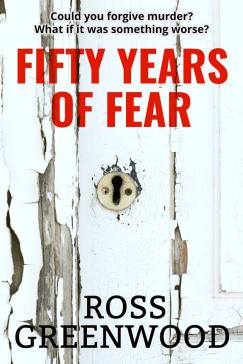
Fifty Years of Fear by Ross Greenwood

Book Cover Fifty Years of Fear - Ross Greenwood

It’s a welcome return to Linda’s Book Bag by Ross Greenwood today as I review Fifty Years of Fear. Ross lives in my nearest town and I was privileged to interview him here. After that interview, quite a bit happened to Ross and he told me all about it as I reviewed his next book, The Boy Inside here.

Fifty Years of Fear was published on 1st October 2017 and is available for purchase here. However, as part of these launch celebrations there’s the chance for one lucky UK reader to win a signed copy of Fifty Years of Fear lower down this blog post.

Fifty Years of Fear

Book Cover Fifty Years of Fear - Ross Greenwood

Could you forgive murder? What if it was something worse?

A childhood accident robs Vincent of his memories, causing him to become sensitive and anxious around others. His differences attract bullies, and he comes to rely heavily on the support of his family.

After the devastating loss of his parents, a remarkable woman teaches him to embrace life and, little by little, he realises the world is far more forgiving than he imagined. When fragments of his memory return, he begins to unravel his past.

Who was his mother? What kind of a man is his brother, Frank? And why does death surround them?

Fate is cruel. History is dark. Things are not as they seem.

Perhaps he should have stayed at home.

My Review of Fifty Years of Fear

It seems Vincent is a shy lad with a volatile older brother, a supportive mother and a very sick father. Appearances can be deceptive.

I wasn’t sure I was going to be able to read Fifty Years of Fear because Vincent’s father’s illness felt too close to my own father’s and brought back painful memories so it took me a while to relax into reading Fifty Years of Fear.

It’s a book that surprised me. I was expecting something less socially revealing and contemplative. I found out more about the workings of a young male mind in reading Vincent’s first person narrative than I have in any other book. I was slowly drawn into his story so that as the plot developed I was surprised by some of the events and I’m not entirely sure I can answer the literal questions posed at the end. I was forced almost against my will to consider nature and nurture and how our environment affects us as we mature. Fifty Years of Fear felt less like a narrative and more like a memoir to me and was interesting as a result. I think the fact that I have encountered many like Vincent and Frank when I was teaching enabled me to connect with their lives and appreciate that their experiences are only too possible.

I really enjoyed the anchoring in social history from that very first 1966 opening. Ross Greenwood knows how to use iconic images to give the reader a thorough idea of time although I’d have liked greater detail for the settings on occasion.

I’m not sure if I enjoyed Fifty Years of Fear. I found it moving, often humorous, and always entertaining and interesting. But it made me question aspects of society that I’m not sure I wanted to consider. The themes of relationships, loss, grief, guilt and love were so intricately drawn that I find I’m still pondering Ross Greenwood’s writing long after I’ve finished the book. I urge you to read Fifty Years of Fear to see for yourself.

About Ross Greenwood

Ross Greenwood Author Image

Ross Greenwood was born in 1973 in Peterborough and lived there until he was 20, attending The King’s School in the city. He then began a rather nomadic existence, living and working all over the country and various parts of the world.

Ross found himself returning to Peterborough many times over the years, usually, so he says “when things had gone wrong.” It was on one of these occasions that he met his partner about 100 metres from his back door whilst walking a dog. Two children swiftly followed. And, according to Ross, he is “still a little stunned by the pace of it now.”

Lazy Blood book was started a long time ago but parenthood and then four years as a prison officer got in the way. Ironically it was the four a.m. feed which gave the author the opportunity to finish the book as unable to get back to sleep he completed it in the early morning hours.

Ross Greenwood’s second book, The Boy Inside, was picked up by Bloodhound Books, and now, Fifty Years of Fear, is out. All his books are thought provoking, and told with a sense of humour.

Ross Greenwood hopes you enjoy reading them.

You can find Ross on Facebook page and visit his web site. You can also follow Ross on Twitter.

There’s more with these other bloggers too:

Fifty Years of Fear - Ross Greenwood - Blog Tour Poster 2.0 (1)

Giveaway

Book Cover Fifty Years of Fear - Ross Greenwood

UK readers can click here to enter to win a signed copy of Fifty Years of Fear by Ross Greenwood, but be quick! Giveaway closes at noon tomorrow 10th October 2017.

Please note this giveaway is being run independently of Linda’s Book Bag.