Discussing Cuttin’ Heads with D.A. Watson

Cuttin Heads

Many thanks to fellow blogger and tour organiser Rachel of Rachel’s Random Resources for inviting me to be part of the blog tour for D.A. Watson’s Cuttin’ Heads. I’m delighted to have D.A. Watson staying in with me to tell me all about the book. And when you’ve heard what he has to say you may well want to enter the giveaway at the bottom of this blog post too!

Staying in with D.A.Watson

Welcome to Linda’s Book Bag, Dave. Thanks so much for staying in with me.

Thanks for having me round, Linda.

Tell me, which of your books have you brought along to share this evening and why have you chosen it? 
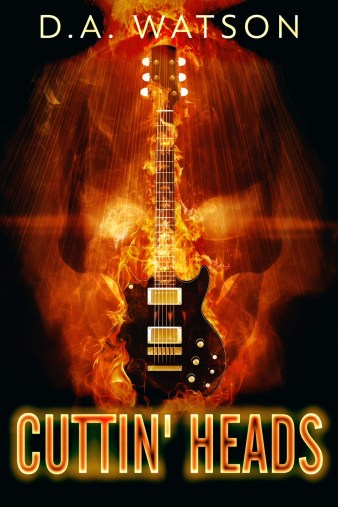
Cuttin-Heads-Main-File

I have here my recently published third novel, Cuttin’ Heads. To be honest, I’ve brought it along because I want it to make me rich and famous, so I’m promoting seven shades of shite out of it by any means necessary. Hope that’s cool!

(Absolutely! Writers have to live. They can’t all wear velvet jackets and reside in ivory towers sighing heavily!)

What can we expect from an evening in with Cuttin’ Heads?

Well, the book’s about a talented, but unrecognised three piece rock band, and what happens to them when they get involved with a mysterious music producer. A lot of it’s based on my own experiences playing in bands over the years, and it is essentially a story about the love of music versus the love of family, how damaged people deal with their demons, and what people are willing to sacrifice to make their dreams come true. So you can expect more rock n roll references than a trip to Gene Simmons’s house, you can expect scares, laughs, hopefully some tears, and deep ponderings on the price of fame, fortune, friends and family. Here’s a wee taster to get you in the mood…

She’s walking through a chapel. The one she used to attend as a child. St Michael’s. Same raggedy red carpet down the aisle beneath her feet. Same intricately carved wooden pulpit pews. The same imposing crucifix on the wall with its thoroughly miserable looking Christ, and the same tiny confessional booth on the floor to the left of the dais, dark wood panels, brass fixings, looking like an upright coffin.

There are no walls to the left or right, only deep banks of vaguely shifting darkness where votive candle flames flicker like a yellow starfield. The air’s heavy, cloying with the sweet smell of incense, and a voice, old as Death and dry as moldering bones, ghosts around the shadowy room, insidious, reverberant, as if spoken in a stone cathedral rather than the little chapel of Luce’s childhood. That voice reads something from the book of Job. A verse that had frightened her as a child.

…Now a thing was secretly brought to me, and mine ear received a little thereof…

The door of the casket-like confessional slowly creaks open, and Karen emerges. She glides across the floor and stands naked in front of the dais, beckoning to Luce, blood spilling from her eyes, nose and mouth in red ribbons as her lips move, mouthing the litany in that ancient, spectral voice.

…In thoughts from the visions of the night, when deep sleep falleth on men…

The priest, old Father Lafferty, hatchet nosed and eyes like cigarette burns, stands beside Karen, also naked. A massive erection juts up between his spindly legs as he grins a rictus grin crammed with too many teeth.

…Fear came upon me, and trembling, which made all my bones to shake…

Karen turns from Luce and looks up at Father Lafferty with beatific devotion before kneeling in front of him and reaching for his cock.

Luce looks away, up at the big crucifix on the wall. The despondent figure of Christ has been replaced by the bass player from Shattered Twilight. She still can’t remember his name, but he’s grinning down at her, his lips twisted in a suggestive leer. His side’s split open, revealing a ropy bulge of dripping viscera, his nailed hands and feet and thorn-torn forehead bloody with stigmata, running black in the candlelight.

…Then a spirit passed before my face, the hair of my flesh stood up…

The deep space blackness to her left and right recedes, slowly revealing crumbling grey brick walls adorned with water-stained posters from past Public Alibi gigs. Fat Sam’s in Dundee. The Tunnels in Aberdeen. King Tuts in Glasgow. Studio 24 in Edinburgh. Last year’s Wickerman Festival. The flyers hang feebly on the wall, barely clinging on.

…It stood still, but I could not discern the form thereof…

Luce becomes aware of music. The tune sounds almost familiar, a song she knows but can’t quite place. Then she recognizes a snatch of melody from Stone Me, one of the band’s early songs, played at a drastically reduced tempo, slow and muddy.

With the random suddenness of dreams, a dead eyed congregation are abruptly filling the pews around her, moaning along to the funereal dirge en masse, and there, up on the dais beneath the crucifix, are the band. Her band. Aldo, Ross, and herself, appearing like animated waxworks with low batteries, only their arms moving sluggishly on their instruments. Glassy eyed, waxy faced, staring ahead out over the heads of the muttering dead choir below.

…An image was before mine eyes, there was silence…

The congregation – who Luce now sees includes her parents, old schoolmates, work colleagues, ex bandmates, friends and lovers and long dead family members – groan along with the band, their lifeless faces turned up to the crucifix, where the Shattered Twilight bass player has now been replaced by another figure, one dressed all in black, long haired and handsome, smiling placidly out over the congregation below.

The music slows further, like a record on a turntable being forced down under a ragged fingernail, until it’s a tonally malevolent, mumbling nonsense sound.

…And I heard a voice, saying…

The people crowded into the pews turn as one and fix Luce with hollow eye sockets, and she realises they’re dead, every one of them. They begin to shuffle towards her, corpulent skin and flesh falling from their bones, and she retreats, backing toward the exit, except she finds herself somehow turned around, forced towards the pulpit as the ghoulish churchgoers surge down the aisle toward her, their skeletal clawed hands reaching for her. She struggles and bucks in panic as they seize her and begin binding her face and limbs with lengths of mouldering fabric that smell of the grave.

Then strong hands grip her by the shoulders from behind. Hands that feel wooden, tipped with carved meathook claws. A strangely accented voice, velvety as coffin lining, whispers in her ear.

…Shall mortal man be more just than God?

Luce screams into the suffocating cloth covering her face, desperately thrashing against the death shrouds knotted around her by the rotting congregation.

But then she remembers, and Luce fights to control the fear, clamping down on it and forcing herself through sheer will to stop shrieking and kicking. Immediately she feels her bonds loosen, and notices for the first time that through the material covering her face, she can make out a floral pattern on the weave of the fabric, blurry and indistinct.

The breath shudders out of her in a long sigh. She removes the duvet from her face, untangling her sweaty limbs from the bedclothes.

(I wish you’d warned me about that before I read it Dave. I’ve come out in a cold sweat now!)

I’m not sure I want to know the answer to this question, but what else have you brought along and why? 

Well, I brought a link to Iron Maiden on YouTube but unfortunately it’s been suspended because of infringements so…

(Actually, I’m not too sorry about that, but I did find another link here. I’m more of a Roxy Music person myself! But why Iron Maiden?)

Iron Maiden’s The Number of the Beast is the first record that I ever genuinely loved. One of my elder brothers bought it when it came out in 1982. I was five years old at the time, and found myself fascinated by it, at first mainly because of the artwork on the cover; a very graphic and frightening vision of Hell. Much of my interest was due to the fact that I was raised in a pretty religious house, where you had to read a bit of bible and say your prayers every night. And the way the music on the record sounded… holy shit. I’d never heard anything like that. It was scary and exciting and fast and angry and really really loud! It’s still one of my favourite albums to this day.

(Pass me the ear plugs and I might let you play it as we chat some more about Cuttin’ Heads.)

Later in life, when I started playing guitar and just immersed myself in music, I learned about the various connections and conflicts between music and religion, like how the mediaeval Catholic church banned a certain note arrangement they called Diabolus in Musica or “the devil’s interval” which was later heavily used in the blues and was a defining characteristic of heavy metal (listen for it in the opening notes of the first song on Black Sabbath’s debut album).

(I’ll just take your word for it. Though I have to say, those connections are fascinating and the cover of Cuttin’ Heads has fabulous resonance with those ideas.)

I learned about the folklore and legends behind the blues, selling your soul to the Devil down at the crossroads, how even in modern times the church were burning rock records as tools of Satan and bands were being dragged through the courts for recording subliminal backwards messages into their albums that were causing kids to kill themselves. Basically, music, religion, books and a fascination with the supernatural were massive influences on me growing up, so it’s fair to say that when I started writing, this was all going to come out in a novel! I just hope people have as much fun with it as I did.

Despite the fact that I think we are chalk and cheese in musical taste, Dave, I’ve really enjoyed hearing about Cuttin’ Heads. Thanks so much for staying in with me to tell me all about it. And I hope you make that money!

Cuttin’ Heads
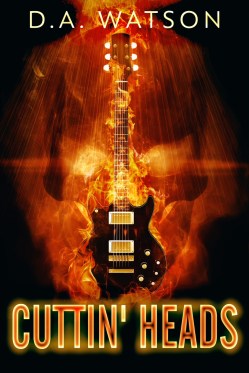
Cuttin-Heads-Main-File

Aldo Evans is a desperate man. Fired from his job and deeply in debt, he struggles to balance a broken family life with his passion for music. Luce Figura is a troubled woman. A rhythmic perfectionist, she is haunted by childhood trauma and scorned by her religiously devout mother. Ross McArthur is a wiseass. Orphaned as an infant and raised by the state, his interests include game shows, home-grown weed, occasional violence and the bass guitar. They are Public Alibi. A rock n’ roll band going nowhere fast. When the sharp-suited, smooth talking producer Gappa Bale offers them a once in a lifetime chance to make their dreams come true, they are caught up in a maelstrom of fame, obsession, music and murder. Soon, Aldo, Luce and Ross must ask themselves: is it really better to burn out than to fade away?

Cuttin’ Heads is available for purchase from Amazon UK.

About D. A. Watson

Cutting Heads - fav1

Prizewinning author D.A. Watson spent several years working in bars, restaurants and call centres before going back to university with the half-arsed plan of becoming a music teacher. Halfway through his degree at the University of Glasgow, he discovered he was actually better at writing, and unleashed his debut novel, In the Devil’s Name, on an unsuspecting public in the summer of 2012. Plans of a career in education left firmly in the dust, he later gained his masters degree in Creative Writing from the University of Stirling.  He has since published two more novels, The Wolves of Langabhat and Cuttin’ Heads, a handful of non-fiction pieces, several short stories including Durty Diana, which was nominated for a Pushcart Prize in 2016, and the Burns parody Tam O’ Shatner, which in 2017 came runner up in the Dunedin Robert Burns Poetry Competition, and was a competition winner at the Falkirk Storytelling Festival.

He lives with his family in Western Scotland.

You can find D. A. Watson on Goodreads and Facebook and follow him on Twitter @davewatsonbooks 

There’s more with these other bloggers too:
Cuttin' Heads Full Banner

Giveaway – Win a signed copy of Cuttin’ Heads

Cuttin-Heads-Main-File

*Terms and Conditions –Please enter here.  The winner will be selected at random via Rafflecopter from all valid entries and will be notified by Twitter and/or email. If no response is received within 7 days then the organiser reserves the right to select an alternative winner. Open to all entrants aged 18 or over.  Any personal data given as part of the competition entry is used for this purpose only and will not be shared with third parties, with the exception of the winners’ information. This will passed to the giveaway organiser and used only for fulfilment of the prize, after which time they will delete the data.

Please note that this giveaway is run independently of Linda’s Book Bag and I am not responsible for despatch or delivery of the prize.

Staying in with Yannis Kyrlis

The Quest

With reading time at a premium in our lives, collections of short stories are becoming so important because we can have the satisfaction of reading a complete work in a relatively short space of time. I’m delighted, therefore, to welcome Yannis Kyrlis to Linda’s Book Bag today to tell me more about his latest collection.

Staying in with Yannis Kyrlis

Welcome to Linda’s Book Bag, Yannis. Thank you for agreeing to stay in with me.

The pleasure is mine Linda.

Tell me, which of your books have you brought along to share this evening?

The Quest

I’ve brought my book The Quest – A Collection Of Short Stories.

What can we expect from an evening in with The Quest – A Collection Of Short Stories?

It is a dream-tinged collection of twelve short stories, which focus on the abstract and the hazy difference between dreams and reality. The book covers a wide range of situations and feelings, from lack of awareness and conscience, to despair, guilt and remorse, from a child’s innocence to the lοss of responsibility of the individual and the crowd psychology, since in many cases it leads to disasters (this is the subject of the short story The Course Of A Crisis). The hero of the short story The Quest, is in pursuit of his internal integration and self-knowledge after “he has lost his heart”. In The Little Girl With Cloth Legs, the path towards the hero’s inner freedom passes through the restoration of harmony and balance between the masculine and feminine sides. The little girl with cloth legs symbolises the hero’s undeveloped feminine energy (compassion, understanding, empathy…)

(Gosh. What a fascinating sounding collection. I’m intrigued.)

My intention has been to bring to the surface the inner scriptwriter existing within all of us, whose voice we often ignore, but who always has something to tell us. I wish to have achieved it to some degree…

I’d like to share three short pieces from the short story The Quest:

It was early afternoon and I was bent over a torrent of refuse looking for my heart. I was stirring the dirty water with a wooden stick, yearning for the moment it would appear. Some days ago, an acquaintance of mine informed me that he had seen it floating among all kinds of garbage. “It’s impossible! My own heart?” I said aloud, mostly to myself. Then my acquaintance pointed out how puzzled the passers-by, who had noticed my heart, were. In fact, an illustrator, who happened to pass by at that time, wanted to draw a picture of this spectacle in order to immortalise the scene.

And although your heart could fit in a handful, he drew it much bigger. I asked the illustrator why. He told me that I was mistaken, that it had its real dimensions and that the extra I was seeing were the heartbeats. “Well, is it alive?” I asked the illustrator, puzzled. “But, of course. Can’t you see it beating?” he answered. Then I considered grabbing it and bringing it to you, but I didn’t do it because I wondered, what would people say? I was afraid they would take me for a scavenger or even for a thief, since everybody would ponder over why I should grab another person’s heart.

……………

The blind barman turned towards us.

“Mister illustrator,” he said, “you are irritated because they are looking at you, whereas many would be flattered. I wonder if you are hiding something and you are afraid it could be revealed under some persistent gaze…”

I got permission to speak and I said:

“Only those who do not have an evolved consciousness are afraid of something like that, whereas my friend is a modest and quiet person and that is the reason why he is bothered when he is at the centre of your attention.”

“Dear Sir, we consider whoever enters in here capable of defending himself,” he answered me. “Besides, it is not the illustrator who is accused, it is you. I commence therefore the procedure of your trial. The fact alone of losing one’s heart doesn’t say much. The realisation of the loss creates the problem. Like any event, however, this also constitutes the link of an endless chain, the endurance of which depends on the weakest link. So, wanting to test but also to be certain of its endurance, we will try to pinpoint the causes of the loss, the conditions which created it, and hence its consequences. Do not fool yourself. There is nothing personal against you or your companion. Whoever accepts such a loss must answer for his actions.

……………

They didn’t realise that I had finished my story, and when they did, a sense of disappointment seemed to come over them. They were obviously waiting for something fancier and concrete, something more familiar, maybe something like the fairy tales they used to listen to as children; all except the illustrator, who, before I even finished, stood up and started dancing an ancient Greek dance, turning round and round with his arms spread and humming.

Following the initial bafflement of the judges, some set about taking part by whistling softly and clapping, whereas most of them fretted and complained loudly. Then the old judge shouted:

“Congratulations illustrator! You dance beautifully! You make me feel younger and wiser.”

Then two advisers from the one era and two from the other lashed out at him and whispered something to him with restrained anger. Immediately the judge regained his serious look and closed his eyes again which he had opened on account of his excitement.

“Back to work, back to work,” he repeated while clanging the crystal.

Everybody stopped at once and sat back down at their seats. Only the illustrator insisted in finishing his dance.

……………

(I find these pieces highly thought-provoking Yannis. What do reviewers say?)

Here are some reviews written mainly by fellow authors on the website of the book, on Amazon uk, on Goodreads and on the blog Everybody’s Reviewing:

“From all the charms of Yannis Kyrlisʼ stories, the most fascinating one is the twist that comes with every ending. The writer employs the art of foreshadowing with real talent, constructing thus masterfully the plot which functions in two layers: in the surface layer, the writer introduces images and ideas which are apparently unrelated to the plot, but which, in the deeper layer, reveal the more philosophical and existential ideas that the writer wishes to communicate. As a result, like every other piece of real Art, the text acquires new meaning every time it is read. On the other hand, his cinematic descriptions bring the story and the characters to life. Finally, the element of the absurd and of the dream-like reality which describe the atmosphere of the stories, and especially of ʽʽThe Questʼʼ, prove without a doubt that this writer has actual imagination. His every story is a whole other world…”

Maroulina Nazou

“A great skill in creating unexpected, striking and fast interchangeable images, which penetrate each other. There always comes an abrupt and surprising consequence, which arouses curiosity. The roles are shared in a highly skillful and allegorical way. The text and the plot are often breathtaking, shaking the reader in a way incredibly hard and sweet as well, leaving behind an optimistic atmosphere, which is not obvious at first sight and cannot be precisely defined. The spare writing style and the plot of the stories are successfully abstract and surrealistic. I enjoyed the book so much that I read it all in one sitting!!”

Circe Raf (author)

“Twelve strangely brilliant stories: The more I read and go deeper into them, the more I get enchanted by them.”

Maria Georgala (author – translator of The Quest – A Collection Of Short Stories)

“Yannis Kyrlis is a man who knows how to handle dreams and paint daylight with marvellous splashes of darkness. This is a collection with twelve short stories of sweet confusion, translated from Greek into English, and published by Austin MacAuley in 2017. In “The Threat”, Kyrlis builds his plot slowly and steadily and holds you there in this eerie story with clear-headed, fresh prose. The “Quest” is a touching, almost romantic story, and readers might find themselves asking if they have lost their hearts, if a lost heart can still be beautiful. It is an inspiring tale of a man who tries to find himself, helped by a stranger who knows how to recognise and paint the beauty of lost hearts, the Illustrator. Like the Judge in the story, sensitive readers will judge themselves and their actions. Some stories are very short, some are longer, like “Confession in a Café”, my favourite story in this beautiful collection. Here we witness again the author’s natural gift to bring in dreams halfway through a piece that is pure realism and take us once more into his strange world of symbols. If you are looking for explanations, look elsewhere, The “Quest” by Yannis Kyrlis will give you none of that.”

Alexandros Plasatis (ethnographer/author)

(You must feel enormously satisfied by those responses Yannis.)

What else have you brought along and why? 

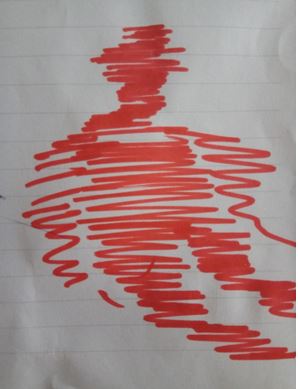
man scribble

I have drawn this sketch which symbolises the eerie, fluid character of the book, the absence of specific forms and boundaries, names of heroes, places, specific time and descriptions of characters. Everything happens somewhere sometime, in a dreamlike atmosphere or in a dreamy world, in which symbolism and allegory are the keys to understand it.

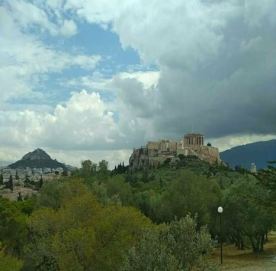
And, since my neighbourhood, Theseion, is located at the foothill of Acropolis in Athens, I took these photos to share them with you and your readers.

First of all you can see the Pnyx ((from the Greek word meaning “tightly packed together”), a hill in Athens (about which I have written in a recent, unpublished story), where the Athenians gathered to host their popular assemblies. Thus the hill became one of the earliest and most important sites in the creation of democracy. At Pnyx all the great political struggles of Athens of the “Golden Age” were fought out. Pericles, Aristides and Alcibiades spoke there, within sight of the Parthenon, temple of Athena, and Demosthenes delivered the famous Philippics, his vilifications of Philip of Macedon.

Acropilis

I am lucky to live close to Acropolis, to the ancient Agora (Market), the temple of Hephaestus and the green hills surrounding the ancient sites.

landscape

landscape 2

The Temple of Hephaestus or Hephaisteion or earlier as the Theseion, is a well-preserved Greek temple. It remains standing largely as built. And… the rock of Acropolis in the background. Photo by Christos_Ster.

hecrop

The temple of Hephaestus at night.

night

What a super set of images Yannis. Thank you so much for being on Linda’s Book Bag and introducing The Quest – A Collection Of Short Stories. It’s been a really interesting evening.

The Quest – A Collection Of Short Stories

The Quest

In The Quest – A Collection of Short Stories Yannis Kyrlis presents a mysterious and dream-tinged collection which focuses on the abstract, the emotional and the hazy difference between dreams and reality. A man loses his heart, and finds it drawn by an illustrator who tries to redeem him. A couple exploring a dump find an object that calls to them, but will they still be in love by the time it reveals its true origin and impact on their lives? Will a young Greek boy find the answer to his existence in a dream, or should he keep running from it?

In this immersive collection of short stories, Yannis Kyrlis effectively combines the surreal, weird, and the deep emotional core that exists within every man or woman.

Published by Austin Macauley, The Quest – A Collection of Short Stories is available for purchase here.

About Yannis Kyrlis

yannis

Yannis Kyrlis was born in Xanthi, North Greece, where he had been working in the private sector. He is a father of two, he has been a resident of Athens for many years, and he is occupied with writing literature.

You can find Yannis on Facebook for more information, or follow him on Twitter @YannisKyrlis.

Staying in with Elizabeth W. Garber

chair fireplace

You all know I keep kidding myself that one day I’ll complete the novel I began three years ago. Well today I’m feeling encouraged as I get to stay in with Elizabeth W. Garber as she tells me about her latest book.

Staying in with Elizabeth W. Garber

Hi Elizabeth and welcome to Linda’s Book Bag. Thank you for agreeing to stay in with me. Which of your books have you brought along to share with me and why have you chosen it?

chair fireplace

I’ve brought my new book Implosion: Memoir of an Architect’s Daughter because I’m so excited about getting ready for my book tour to promote the book this Summer and Fall. It took so much courage and perseverance to write this book. Then it took years to get it published. It’s coming out ten years after I started writing down memories from my childhood.

(That sounds a very familiar story. May authors tell me that their work has taken years from beginning to publication Elizabeth. And I understand Implosion is out today so Happy Publication Day too.)

What can we expect from an evening in with Implosion?

If you love cool mid-century modern architecture and furniture, if you ever wanted to live in a glass Modern house, you’ll get to imagine that world from the inside. You’ll also find a family you care about who will live through some really tough times and will emerge stronger on the other side. My 88 year old mom read this book in one day, and said it was so compelling she couldn’t put it down.

(I bet your Mum was so proud of you. I love the sound of Implosion as I am incredibly nosy so both the narrative and the setting appeal to me.)

What else have you brought along and why?

car

I brought a little Corgi metal car in a little cardboard box, that my brother gave me, because the car is a Jaguar XKE. Why? In a crazy moment when I was 18, my dad gave me his Jaguar sports car, and I took off on a road trip from Ohio to the East Coast. Let me tell you the story. Pretty crazy, but the 1970s was a crazy time.

(Wow –  what a gift and what an adventure.)

Thanks so much for staying in with me to tell me all about Implosion Elizabeth. It’s been a fascinating evening and you’ve encouraged me to get back to my own writing too.

Implosion: Memoir of an Architect’s Daughter

chair fireplaceWhat could be cooler, thinks teen Elizabeth Garber in 1965, than to live in a glass house designed by her architect dad? Ever since childhood, she’s adored everything he loves—his XKE Jaguar, modern art, and his Eames black leather chair—and she’s been inspired by his passionate intensity as he teaches her about modern architecture. When Woodie receives a commission to design a high-rise dormitory—a tower of glass—for the University of Cincinnati, Elizabeth, her mother and brothers celebrate with him. But less than twenty years later, Sander Hall, the mirror-glass dormitory, will be dynamited into rubble.
Implosion: Memoir of an Architect’s Daughter delves into the life of visionary architect Woodie Garber and the collision of forces in the turbulent 1970s that caused his family to collapse. Soon after the family’s move into Woodie’s glass house, his need to control begins to strain normal bonds; and Elizabeth’s first love, a young black man, triggers his until-then hidden racism. This haunting memoir describes his descent into madness and follows Elizabeth’s inspiring journey to emerge from her abuse, gain understanding and freedom from her father’s control, and go on to become a loving mother and a healer who helps others. Published today, 12th June 2018, by She Writes Press, Implosion: Memoir of an Architect’s Daughter is available for purchase here.

About Elizabeth W. Garber

elizabeth

Elizabeth W. Garber is the author of Implosion: Memoir of an Architect’s Daughter (She Writes Press, June 2018) and three books of poetry, True Affections: Poems from a Small Town (2012), Listening Inside the Dance (2005) and Pierced by the Seasons (2004). Three of her poems have been read on NPR’s The Writer’s Almanac, and her poem Feasting was included in his Good Poems for Hard Times. She was awarded writing fellowships at Virginia Center for Creative Arts and Jentel Artist Residency Program in Wyoming.

Elizabeth Garber studied Greek Epic in the Mythology and Folklore Department at Harvard, received a BA from Johns Hopkins, a MFA in creative non-fiction from University of Southern Maine’s Stonecoast Masters Program, and a Masters in Acupuncture from the Traditional Acupuncture Institute. She has maintained a private practice as an acupuncturist for over thirty years in mid-coast Maine, where she raised her family. You can visit her website. You’ll also find Elizabeth on Facebook.

Discussing Mulberry Lane Babies with Rosie Clarke

9781786693006

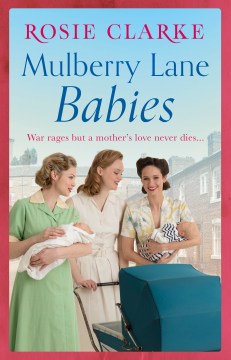
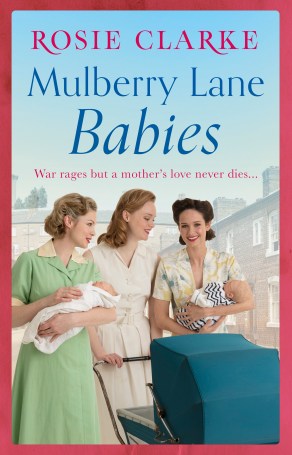
My grateful thanks to Melanie Price at Aria Fiction for inviting me to be part of the launch celebrations of Mulberry Lane Babies by Rosie Clarke. I’m thrilled to have Rosie staying in with me today to chat all about the book.

Published by Aria on 1st June 2018, Mulberry Lane Babies is available for purchase on AmazonKoboiBooks and Google Play.

Mulberry Lane Babies

9781786693006

1941 Mulberry Lane, London. War rages but new life brings new hope. Perfect for fans of Katie Flynn and Cathy Sharp.

Times are hard for all on Mulberry Lane as the war rages into yet another year. Desperate times push people into dangerous situations, and the residents of Mulberry Lane are not exempt.

Menacing shadows lurk on dark street corners, threatening the safety of those who are alone and vulnerable. When Peggy’s twins are born early Maureen and Nellie are there to lend a helping hand.

The mothers of Mulberry Lane stick together despite the grim conditions of war torn London and a shadowy fear that stalks their lives. Neighbours and friends look out for each other and new life brings hope and joy to the Lane.

Staying in with Rosie Clarke

Welcome to Linda’s Book Bag, Rosie. I’m delighted you’re here. Thank you for agreeing to stay in with me.

Hi, nice to join you and I hope you and your friends have a good evening and I’m delighted to share it with you.

I’m sure we will. Help yourself to coffee and cake. I have a pretty good idea, but tell me, which of your books have you brought along to share this evening and why have you chosen it? 

9781786693006

The book I’ve brought this evening is Mulberry Lane Babies.  This is the latest of my books and the third in the Mulberry Lane series.  Those readers who have read the earlier books will be eager to discover what is happening to Peggy, Maureen, Janet and the others…

(I know they will Rosie. I always want to know what happens to the people I meet in books after I’ve read about them.)

What can we expect from an evening in with Mulberry Lane Babies

This is the third book in the Mulberry Lane series and catches up with Peggy and Maureen after their babies are born.  It is a continuing saga of war time and the community of an East End London community.

(Linda’s Book Bag readers will probably already know The Girls of Mulberry Lane and A Wedding at Mulberry Lane.)

They have come through the blitz and survived but now they have to face shortages – and in some cases the tragedy of lost lovers and injured men back from a terrible war.  When everything is black these ladies find a way to make life worth living and the new babies help to bring smiles to their faces.

Many readers now feel they know these ladies and although they have their favourites, most say it is like knowing Peggy or Maureen or Janet.  Jack and his son Tom are the easiest characters to like and I’m sure we’ve all met men like them, helpful and cheerful against all the odds.

In this book Anne finds love and we see more of her story than we have in earlier books.  She is the friend of the main characters but now we see her blossom and her story grow. These books are about ordinary folk living their lives out in the shadow of war.

There have been lots of positive reviews for both Girls of Mulberry Lane and A Wedding at Mulberry Lane, and most seem to agree that they give a realistic picture of women living through the hardships of war and finding comfort in the small pleasures and triumphs offered them.  It is as close to the way things were then as I can make it and I hope the series continues to give pleasure.

(I know it will Rosie. I’ve heard such good things about the whole series and am looking forward to meeting Peggy, Maureen, Janet and Anne for myself very soon.)

What else have you brought along and why? 

champagne and strawbs

I enjoy a nice glass of white wine sometimes in the evenings and a box of something sweet and delicious.  Not what the doctor ordered, but very enjoyable.  Perhaps something decadent like champagne and strawberries dipped lightly in chocolate – how would that go down?

(That would be perfect. You’re my kind of guest Rosie. And my husband is a doctor – albeit of Chemistry – so we’ll get him to order these for us so we don’t feel so guilty!)

I’ve also brought a memory. I remember going down the East End to the markets when I was very young and there were many empty spaces where the bombs had laid waste to the area.  Billboards were surrounded by weeds knee high and this was in the middle of the city, because it took so long to clear all the devastation.  And I remember queuing for fruit – it was a treat to buy a banana or a pomegranate and a stick of rock was a rare treat then…

I can’t imagine what that must have been like. Thank you so much for such a lovely evening Rosie. I’ve thoroughly enjoyed staying in with you to discuss Mulberry Lane Babies.

Well, thank you for the chance to chat and the coffee and cake, and goodnight.

Best wishes, Rosie Clarke

About Rosie Clarke

ROSIE CLARKE

Rosie Clarke is happily married and lives in a quiet village in East Anglia. Writing books is a passion for Rosie, she also likes to read, watch good films and enjoys holidays in the sunshine. She loves shoes and adores animals, especially squirrels and dogs.

You can follow Rosie on Twitter @AnneHerries and visit her website. You’ll also find Rosie on Facebook.

There’s more with these other bloggers too:

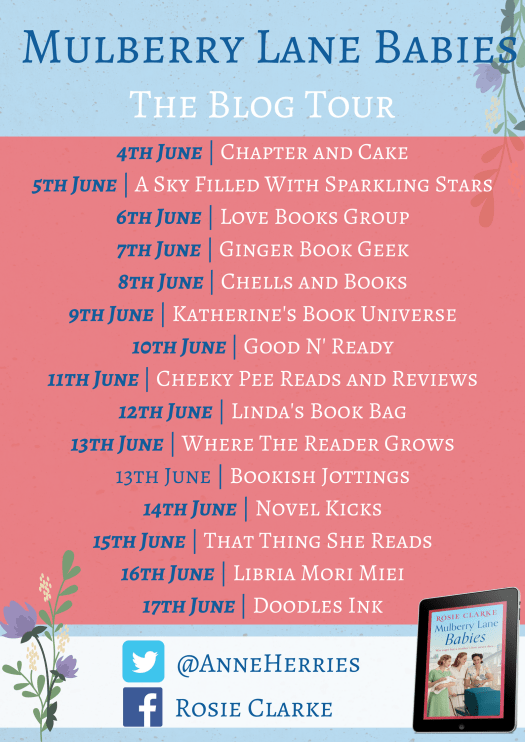
Mulberry Lane Babies Blog Tour

Mary Ann Sate, Imbecile by Alice Jolly

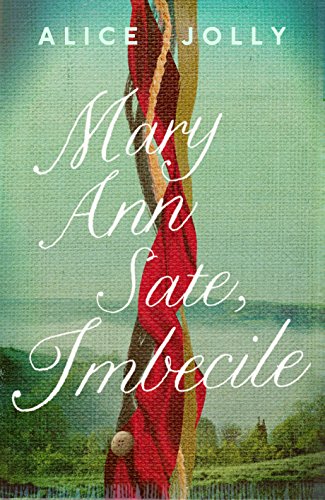
Mary Ann Sate Imbecile

My enormous gratitude to Alice Jolly for a copy of Mary Ann Sate, Imbecile in return for an honest review. I have been privileged to read another of Alice’s books, Dead Babies and Seaside Towns and to interview her here, shortly after I began blogging, so when Alice asked if I’d like a copy of Mary Ann Sate, Imbecile I jumped at the chance.

Mary Ann Sate, Imbecile is published by Unbound on 14th June 2018 and is available for purchase here.

Mary Ann Sate, Imbecile

Mary Ann Sate Imbecile

If you tell a story oft enough
So it become true

As the nineteenth century draws towards a close, Mary Ann Sate, an elderly maidservant, sets out to write her truth.

She writes of the Valleys that she loves, of the poisonous rivalry between her employer’s two sons and of a terrible choice which tore her world apart.

Her haunting and poignant story brings to life a period of strife and rapid social change, and evokes the struggles of those who lived in poverty and have been forgotten by history.

In this fictional found memoir, novelist Alice Jolly uses the astonishing voice of Mary Ann to recreate history as seen from a woman’s perspective and to give joyful, poetic voice to the silenced women of the past.

My review of Mary Ann Sate, Imbecile

Whilst caring for her ill master, servant Mary Ann Sate writes her life story.

Oh! Just occasionally there comes a work of fiction that is beyond definition and beyond superlatives. Mary Ann Sate, Imbecile is one such book. It is, quite simply, exquisite. I was spellbound from the first word to the last. Alice Jolly has not written a book about Mary Ann Sate; rather she has become Mary Ann Sate and bewitched me by her writing. Mary Ann Sate, Imbecile is, in fact, not merely a work of fiction, but is a work of genius. I am not sure where to begin to review it.

When I opened the book and saw that there isn’t a single full stop in over 600 pages I was initially daunted, but the moment I started reading I found the rhythms and cadences of the writing are like a beating heart that mesmerises and enthralls and I could not tear myself away. Set out rather like a ballad or narrative poem Mary Ann’s vernacular voice is rich and vibrant. Her emotions, her life and her personality shimmer and resonate so that it is impossible not to want to read the next section and the next.

So often I was reminded of the most meritorious work of our literary heritage because Alice Jolly writes with unparalleled skill. Wordsworth’s The Prelude, the poetry of John Clare and Gerard Manly Hopkins and so many more, echo through such is the richness of Alice Jolly’s words. Every word is carefully crafted and not a syllable is extraneous to this glorious tapestry of politics, medicine, education, social history, geography and humanity. The poetic quality of the writing conveys place especially well and I loved the colloquial spellings and style.

But alongside the dazzling literary merit that underpins Mary Ann Sate, Imbecile is fabulous storytelling, wonderful characterisation and a sense of place and history that is utterly beguiling. Mary Ann’s accounts of her love for Ambrose, the brutality of her early childhood, her gradual unfolding of events and the truth all make for a compelling narrative that entertains completely. I loved finding out about life at the time from the perspective of this very ordinary, and simultaneously extraordinary, woman. I feel changed by reading about her because of her gratitude for the precious drops of joy in life. So often her words conveyed so perfectly how I have often felt but have been unable to articulate.

I think the story works so incredibly well because it has its foundations in meticulously researched historical detail and whilst everything in the book is filtered through Mary Ann’s perspective, all of the remaining characters are still completely vivid and believable. I particularly loved the comic relief so often provided Nettie and I hated Freda Woebegone with a passion that surprised me.

I’m finding it impossible to convey what an amazing book I think this is. Mary Ann Sate, Imbecile is astounding. It is literary, accessible and absorbing. I think it may be the most remarkable book I have ever read and I feel privileged to have done so. I urge everyone to read it so that their lives can be enriched as mine has been.

About Alice Jolly

alice jolly

Alice Jolly is a novelist and playwright.

She has published two novels with Simon and Schuster and has been commissioned four times by the Everyman Theatre in Cheltenham. She has also written for Paines Plough and her work has been performed at The Tristan Bates Theatre in Covent Garden and The Space, East London. Her memoir Dead Babies and Seaside Towns was published by Unbound in July 2015 and won the Pen/Ackerley Prize. In 2014 one of her short stories won The Royal Society of Literature’s V.S. Pritchett Memorial Prize.

She teaches creative writing on the Mst at Oxford University.

Find out more about Alice on her website or follow her on Twitter @JollyAlice. You can also find her on Facebook.

Staying in with Ivy Ngeow

rhinoi cover

Here on Linda’s Book Bag I frequently mention my love of travel. Today I’m thrilled that my guest Ivy Ngeow is taking me off around the world again as we stay in to chat about one of Ivy’s books.

Staying in with Ivy Ngeow

Welcome to Linda’s Book Bag, Ivy. Thank you for agreeing to stay in with me. Tell me, which of your books have you brought along to share this evening and why have you chosen it? 

I’ve brought Cry of the Flying Rhino and I have chosen it because it is my debut novel and it won the 2016 International Proverse Prize.

rhinoi cover

(Oh! How exciting. Congratulations. I also understand more congratulations are in order as your new novel Heart of Glass was published earlier this week too and there is more information here.)

What can we expect from an evening in with Cry of the Flying Rhino?

Cry of the Flying Rhino is a modern novel set in the railway town of Segamat, which has already been deforested and turned into miles of plantation, and Borneo, whose jungles are under threat. It is written in multiple viewpoints and is set in the 1990s and 2000s. The Chinese GP, Benjie, has been forced to marry Talisa, a mysterious and tattooed teenager, and the adopted daughter of wealthy crass Scottish landowner Ian. Benjie has to discover for himself his wife’s true identity, when Minos and Watan, two Ibans who leave the jungle and appear in Segamat one day, looking for Talisa.

(This sounds very interesting Ivy.)

I am quite pleased that the writing has been compared to my heroes, amongst others, Orwell and Burgess:

Anyone impressed, anyone imprinted upon and inspired by Lalwani, Roy, Chatterjee, Burgess, Lowry or Orwell, will be correspondingly affected by Ngeow. – Professor Jason S. Polley, Department of English, Hong Kong Baptist University

(My goodness. That’s quite an accolade. You must be thrilled with the comparisons.) 

You will also find out in the book what is a flying rhino and why does it cry.

(And I’m very intrigued to do so Ivy!)

What else have you brought along and why? 

I have brought along some inciting photographs.

map

Cry of the Flying Rhino was written thirteen years ago after I made my one and only trip to Borneo with my mother. I was inspired by the dark, macabre and gothic nature of communal longhouse living and the tribal civilisation and culture which have been around for thousands of years.

window

Two things triggered some ideas. Firstly, during the trip, I saw a tattoo parlour called Headhunters. It piqued my interest in the traditional art and symbolism of Iban tattooing, performed manually with a hammer, steel pin and ink made from tree ash. Secondly, long after our trip, I dreamt of a girl in a longhouse with eyes as huge as the “hollows of the benuah tree”. Those words came to me in the dream. I wrote them down. She looked sad and haunted and there was also terror in her eyes. I did not know who she was or what the dream was about but something unpleasant and unusual had happened to her and I set about finding out about the Iban culture, which I later discovered, is based on dreams. That dreams were everything, our hopes, work, happiness and luck.

(Wow – that’s quite a stimulus for your writing.)

tribe

In exploring the two triggers above, I found out that indigenous cultures are threatened and dying, because of loss of habitat due to logging and deforestation, and due to the conversion of the Ibans to other religions. As a result, orang asli (original people) like the Ibans are forced to leave their habitat for the city because their livelihood, dependent on being able to survive in the jungles on the fat of the land, is diminishing due to the jungles being cleared. Their way of life which is so rich in folklore, superstition and traditions will soon be lost. Ultimately the rapid destruction of the jungles will impact upon the rest of the world via climate change and so on. I also found out that children tattooed children which ensured that the art would never die. If adults were one day wiped out by an epidemic or a massacre, the surviving children would all have learned and mastered all survival and artistic skills including tattooing.

(This is utterly fascinating Ivy. I’m thrilled you’ve shared these images and the information with us today.)

Ivy, thank you so much for staying in with me to introduce Cry of the Flying Rhino. I’m absolutely intrigued by what you’ve told me and I’m sure many blog readers will be too.

Cry of the Flying Rhino

rhinoi cover

Cry Of The Flying Rhino is set in 1996 Malaysia and Borneo, told from multiple viewpoints and in multiple voices.

Malaysian Chinese family doctor Benjie Lee has had a careless one night stand with his new employee – mysterious, teenage Talisa, the adopted daughter of a wealthy, crass Scottish plantation owner, Ian, in the provincial Malaysian town of Segamat. Talisa’s arms are covered in elaborate tattoos, symbolic of great personal achievements among the Iban tribe in her native Borneo. Talisa has fallen pregnant and Ian forces Benjie to marry her. Benjie, who relished his previous life as a carefree, cosmopolitan bachelor, struggles to adapt to life as a husband and father.

Meanwhile, Minos – an Iban who has languished ten years in a Borneo prison for a murder he didn’t commit – is released into English missionary Bernard’s care.

One day, Minos and his sidekick and fellow ex-convict Watan appear in Segamat, forcing Benjie to confront his wife’s true identity and ultimately his own fears. Are the tattoos the key to her secrets?

Cry Of The Flying Rhino is published by Proverse and is available for purchase here.

About Ivy Ngeow

ivy

Ivy Ngeow was born and raised in Johor Bahru, Malaysia. A graduate of the Middlesex University Writing MA programme, Ivy won the 2005 Middlesex University Press Literary Prize out of almost 1500 entrants worldwide. She has written non-fiction for Marie Claire, The Star, The New Straits Times, South London Society of Architects’ Newsletter and Wimbledon magazine. Her fiction has appeared in Silverfish New Writing anthologies twice, The New Writer and on the BBC World Service. Her story Funny Mountain was published by Fixi Novo in an anthology Hungry in Ipoh.

Ivy won first prize in the Commonwealth Essay Writing Competition 1994, first prize in the Barnes and Noble Career Essay Writing competition 1998 and was shortlisted for the David T K Wong Fellowship 1998 and the Ian St James Award 1999. Her debut novel, Cry of the Flying Rhino, won the 2016 International Proverse Prize.

Ivy has been a highly-accomplished multi-instrumental musician since childhood and won fifth prize (out of 850 entrants) in the 2006 1-MIC (Music Industry Charts) UK Award for her original song, ‘Celebrity’. Her second novel Heart of Glass, published by Unbound, UK, will be out from 5 June 2018.

To find out more you can follow Ivy on Twitter @ivyngeow and visit her website where you can also obtain signed copies of Cry Of The Flying Rhino.

Staying in with Dean Mayes

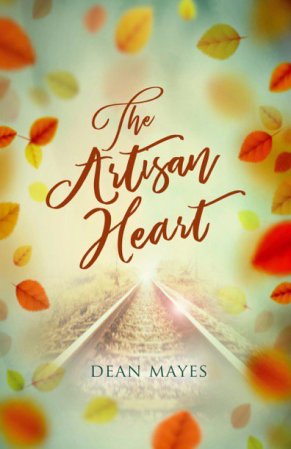
Artisan heart

You know, one of the absolute joys of being a book blogger is the opportunity it affords me to discover all kinds of new books and authors well in advance of their publication dates. Today I have one such combination as I stay in with Dean Mayes to discuss one of his books.

Staying in with Dean Mayes

Welcome to Linda’s Book Bag Dean. Thank you for agreeing to stay in with me.

Hi Linda. Thank you for having me.

Tell me, which of your books have you brought along to share this evening and why have you chosen it? 

Artisan heart

This evening I’ve brought along my brand new contemporary romance, The Artisan Heart. It is my fourth novel for Central Avenue Publishing. After exploring slightly different genres over the past couple of releases (literary fiction and psychological thriller), it is nice to return to my romantic roots with this novel.

(I love books by men with a romantic element. I think The Artisan Heart would be my kind of read.)

What can we expect from an evening in with The Artisan Heart?

The Artisan Heart is unique, I think, in that I have crafted a romantic story in which the gender roles of the two protagonists are kind of flipped on their heads. Both Hayden and Isabelle come to the story, each recovering from fairly destructive relationships and they approach each other as equals rather than traditional man and woman.

In fact, as the story progresses, we find Isabelle taking the lead in the “dance” if you will, which I think is refreshing in romantic fiction. You could even call it a feminist romance.

(Hmm – you might just have coined a new genre there Dean!)

The Artisan Heart also portrays a character who is deaf. Isabelle’s daughter Genevieve has been deaf from a very young age and she communicates through sign language (AUSLAN sign language). This presented a challenge for me in that I basically had to learn a whole lot of signing dialogue and portray it as a natural part of the story, without making the character seem simple. That is probably one of the things I’m most proud of with The Artisan Heart.

(I’m always amazed by the amount of research and effort that authors put in to their work Dean. This must have been a really interesting challenge.)

What else have you brought along and why? 

loaf

So, I’ve brought along one of Isabelle’s delicious bread loaves to share with you. Isabelle is an Artisan baker and she’s trying to resurrect Walhalla’s long dormant bakery. This is pumpkin and poppy seed which is one of Isabelle’s signature loaves baked in her wood oven and she’s become renowned for it throughout the town. Isabelle recommends you slice it thick and lightly toast it before serving with lashings of butter.  One wonders whether her baking has magical properties. She is just so popular.

That bread is just delicious. I think I’ll have another slice! Thank you so much for staying in with me Dean, and telling me all about Isabella and The Artisan Heart. I’ve really enjoyed our evening.

The Artisan Heart

Artisan heart

Hayden Luschcombe is a brilliant pediatrician living in Adelaide with his wife, an ambitious event planner. His life consists of soul-wrenching days at the hospital and tedious evenings attending the lavish parties organized by his wife.

When an act of betrayal coincides with a traumatic event at the hospital, Hayden flees. His destination is Walhalla, nestled in Australia’s southern mountains, where he finds his childhood home falling apart. With nothing to return to, he stays, and begins to pick up the pieces of his life by fixing up the house his parents left behind.

A chance encounter with a precocious and deaf young girl introduces Hayden to Isabelle Sampi, a struggling artisan baker. While single-handedly raising her daughter and trying to resurrect a bakery, Isabelle has no time for matters of the heart. Yet the presence of the new handsome doctor challenges her resolve. Likewise, Hayden is protective of his own fractured heart, but something about Isabelle awakens dormant feelings of his own.

As their attraction grows, and the past threatens their chance at happiness, both Hayden and Isabelle will have to confront long-buried truths if they are ever to embrace a future.

The Artisan Heart will be published by Central Avenue on 1st September 2018 and is available for pre-order here.

About Dean Mayes

Author Shot Large

Dean Mayes released his first novel The Hambledown Dream in 2010.

Dean lives in Adelaide, Australia with his partner Emily, their two children Xavier and Lucy. An Intensive Care Nurse with over 15 years of clinical experience in adult, paediatric and neonatal medicine, he can often be found lying on a hospital gurney at 3 in the morning with a notebook in hand, madly scribbling ideas while on his break.

You can find out more on Dean’s website, follow him on Twitter @Hambledown_Road and find him on Facebook.

#Charity Special Feature: The Pound Project with Paul Murphy

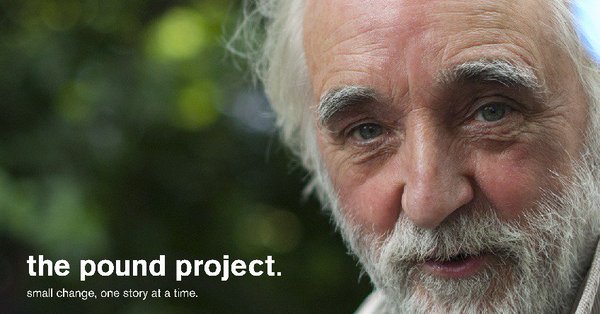
pound project

I’m a strong believer in the idea that books, literature and reading can offer support and solace to many and be a force for good.

Last week I heard all about The Pound Project’s attempts to raise funds for The John Hewitt Society through a campaign in honour of Birmingham-based singer, poet, guitarist and actor Paul Murphy, who died of cancer aged 66. Unfortunately, with my laptop in for repair I wasn’t able to find out more until today.

The Campaign

Paul+for+web+2

Storyteller, author, actor, poet, musician, activist, teacher, troubadour, father, grandfather: the next story from The Pound Project is written by the late Paul Murphy (1949-2016).

To coincide with Paul’s birthday at the start of August The Pound Project are working with his family to release an exclusive, previously unpublished short story from the great man to raise money for the John Hewitt Society – a Northern Ireland based charity that supports writers with invaluable funding, teaching and advice.

The contents of the little book are top secret. However, it is a brilliant story of journeys and identity. There is also a prologue to the story written by Paul’s son Daniel.

The good news is that for just £1 you can read the story online or download the audio. For just £5 upwards The Pound Project will deliver a beautiful little printed book of the story right to your door.

I’ve opted for the £5 pledge and only wish I could afford to do more. If you want to know more click here.

You can follow The Pound Project on Twitter @_pound_project and find them on Facebook.

The John Hewitt Society

john hewitt society

The John Hewitt Society provides opportunities for individuals across Northern Ireland to explore issues of difference and identity through literature and creative writing. Inspired by the ideals and ideas of the poet and political writer John Hewitt, The Society was established in 1987 to promote Hewitt’s ethos of utilising literature and the arts as a medium for tackling prejudice, exclusive concepts of identity, and sectarian hostility.

For thirty years The John Hewitt Society has developed a range of literary and cultural activities to break down parochialism, narrow, exclusive concepts of identity, and hostility towards the ‘other’.

You can visit the website and follow The John Hewitt Society on Twitter @The_JHS and find them on Facebook.

Staying in with Trevor D’Silva

Fateful Decisions - Front Cover

There are so many ways a book appeals to a reader, and I’m delighted to welcome Trevor D’Silva to stay in with me on Linda’s Book Bag today as he has so many elements in his writing that are my favourites. I can’t wait to find out more so let’s get going.

Staying in with Trevor D’Silva

Welcome to Linda’s Book Bag, Trevor. Thank you for agreeing to stay in with me.

Thank you for having me. It is my pleasure to be here with you and take this opportunity to talk to you about my love for history and fiction.

Two of my favourite subjects! Tell me, which of your books have you brought along to share this evening and why have you chosen it? 

Fateful Decisions - Front Cover

I have brought my first novel, Fateful Decisions, which was published in October 2017. People love to read novels, as it allows them to forget the daily pressures of this world, helps them to relax, and slip into a different world. However, a lot of people do not like history. History was my favorite subject in school and I excelled in it. I love remembering dates and events and I can still recall them. Since I love reading novels and history, what better way to combine the two and make it an interesting read for people! They can enjoy the story and at the same time learn about the historical events that took place during the period the novel is set in.

(Brilliant! And as someone who loves both reading and history I think Fateful Decisions could be just my kind of book, Trevor.) 

My novel is set in America and Europe (England, France, and a small portion in Italy) between 1915 to 1946. Therefore, it is filled with historical events from that time period, starting with the sinking of the Lusitania, the Suffragette Movement, The Great Depression, The Russian Revolution and of course World Wars I and II. It is carefully researched (took me seventeen years to write it as I was concentrating on getting my degrees) and is full of historical facts, not usually taught in school.

(Crikey! That’s a lot of time spent researching. I’m not surprised though as Fateful Decisions seems to cover a very volatile and important part of our recent history. Sounds fascinating.)

What can we expect from an evening in with Fateful Decisions?

My book, Fateful Decisions, is a historical fiction novel. The book also contains romance, military history, suspense and also many thrilling events, which all come under the umbrella of historical fiction. The beauty of historical fiction is that, a lot of other genres can come under it and that is why it can appeal to people who love various other genres.

(Good point!)

It is about Rachel Williams meeting two men on the Lusitania in 1915. When the ship sinks, one of the men saves her. Two years later, she meets them at a fund raising event, when America goes to war. Both of them propose to her and she of course is in a dilemma and does not know whom to choose. She asks an elderly relative for advice and she is told to choose carefully. Here is an excerpt from the novel:

Rachel got up to leave and Aunt Victoria said, “My child, remember that the man you want to marry is your own decision, and that decision has consequences.”

“What do you mean?”

“I mean, about your life, the children you will have, and how everything will impact the world.”

Rachel smiled and went to her room. She knew that Aunt Victoria’s last piece of advice came from her wisdom, and she had to think carefully about making the correct decision. She had no idea that many years later, she would think a lot about this piece of advice.

(How intriguing. Of course, I want to know what happens to Rachel now… But I suppose that was your idea!)

She makes her decision and from then on, the story goes onto what happens to her, her family, the people that get involved with them, within a thirty year period. They too make decisions and their lives are altered due to the historical events they are involved in at that time. For example: one of the characters is stuck in Paris during the occupation by the Nazis and she has to make a decision whether to join the French Resistance or not. At the end of the novel, based on what has happened to her and to her family, Rachel has to come to a conclusion if she made the right decision to marry the man whom she chose to marry.

Now, from the synopsis or excerpt, most people would think it is a romance novel, solely for women. However, it is also for men as it contains suspense, thrilling episodes, and military history. From the reviews I have obtained, women usually tell me that they like Rachel and the men usually like the military history part and the main male character in the novel. The military history part takes place in Hawaii and in Europe. There are French and British characters featured in the novel along with the main American characters (real and imaginary). Many people told me that they could not put down the novel and it is pleasing to hear that I achieved what I set out to do with my first novel, which is, to write an interesting hard to put down novel, combining both history and fiction, set in the early part of the twentieth century.

(How lovely to have that kind of feedback Trevor. Congratulations.)

What else have you brought along and why? 

food

I like various kinds of food. So, I brought along some bread pudding because I have a sweet tooth and since wine is featured in my novel in more than one chapter, I brought one of the California wines which I love. You will have to read to see how wine plays an important part in my novel. I like lasagna and that goes very well with wine. Fresh salad with Romaine lettuce, cucumbers, cherry tomatoes and Catalina dressing.

(Oh! You can come back to stay in with me again Trevor if you’re going to bring food like this. Bread pudding is one of my absolute favourites!)

I read on your blog that you have just returned from India. I am originally from India and now live in America. If you want something spicier, I have brought basmati rice and chicken curry; simple but tasty. I know it is a lot of different foods, but like my story which has many genres, each dish has something to offer for everyone. All are welcome to join to eat while we discuss the book.

(I have indeed recently been to India and I can’t wait to return. I wouldn’t worry about the range of foods you’ve brought Trevor. I’m perfectly up to tasting them all except for the wine as it seems to make me ill these days.)

balcony

The photo that fits with an interesting part in the novel is the one of Prime Minister Winston Churchill on the balcony with the royal family on Victory Day in Europe when the war ended in 1945. The reason why I like this picture is because the character the men usually like and identify with, witnesses this event and also gets to dance with two people standing on the balcony. You will have to read to see who they are.

No, no, no Trevor. You can’t just leave us wondering like that. I suppose we’ll just have to read the book to get the answers! Thanks so much for staying in with me and telling me all about Fateful Decisions – and for bringing all that lovely food!

Fateful Decisions

Fateful Decisions - Front Cover

It’s 1915 in the heat of WWI. Two friends heading to England aboard the British ocean liner, RMS Lusitania, meet and fall in love with a charismatic woman. After battling for her affection, Rachel Williams makes her decision, beginning a journey that no one can predict or soon forget. For the next thirty years, Rachel is forced to live with the choice she made, as the dominos fall around her, sequentially.

Is there a sinister force at work? Who can Rachel trust? Will Rachel ultimately regret her decision when she learns how it impacted others?

Set in America and Europe, history and fiction intertwine, commencing with the sinking of Lusitania. Historical events like The Russian Revolution, Prohibition, The Great Depression and World Wars I and II also play important roles in the lives of the characters and the decisions they make to love, betray, forgive, and reconcile.

Fateful Decisions is available for purchase from your local Amazon and on Barnes and Noble.

About Trevor D’Silva

thumbnail_IMG_0581_dsilva_trevor_small

Trevor D’Silva has a B.S. degree in Mechanical Engineering; M.S. degrees in Engineering Management, and Environmental Engineering; and an Associate degree in Accounting. He has lectured in mechanical engineering and environmental science subjects at various colleges. Fateful Decisions is his first novel, encompassing history and fiction from WW I to the end of WW II. He uses his free time to expand his knowledge in history and reading crime, thrillers, and mystery novels.

You can visit Trevor’s website for more details, follow him on Twitter @TrevorDAuthor, and find him on Instagram.

Her Mother’s Secret by Rosanna Ley

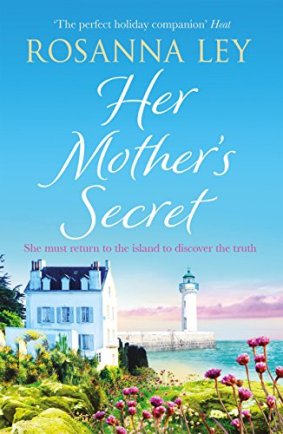
The mother's Secret

Everyone who regularly reads Linda’s Book Bag knows that I love travel as much as I love books so I was thrilled when Rosanna Ley wrote a fabulous guest post on Travel and Research when The Little Theatre by the Sea was published. You can read that post here. I also reviewed Rosanna’s Last Dance in Havana here and that book made it onto my favourite reads of the year here.

Today, as Her Mother’s Secret is about to be released in paperback on 14th June, I’m reviewing this latest book from Rosanna that transports me to another place once again. And if you have a look at this blog post, you’ll know why I’m thrilled to be featuring Her Mother’s Secret on the blog!

Her Mother’s Secret is published by Quercus and is available for purchase here.

Her Mother’s Secret

The mother's Secret

For many years Colette has avoided returning to her homeland – the magical island of Belle-Île-en-Mer in Southern Brittany – afraid to confront the painful memories she left behind. She is living on the Cornish coast when she hears about her mother Thea’s failing health and realises that the time has come for her to go home. But can Colette ever forgive Thea for what she has done?

Despite Colette’s wariness, romantic Belle-Île still fascinates her. She takes on the running of her mother’s flower shop and makes friends with Élodie from the Old Lighthouse where Thea once worked as a nanny and with the enigmatic Étienne who shares Colette’s mixed feelings about the island. As Thea opens up to her for the first time, Colette finds herself softening and being drawn back into the landscape of her past. But can Belle-Île also be a part of her future?

The ghosts of that past still linger. What happened all those years ago and how did it cause the rift between mother and daughter?

It becomes clear that the beauty of Belle-Île hides a devastating family secret – one that Colette is determined to unravel at any cost.

My Review of Her Mother’s Secret

Colette’s return to Belle-Île will bring more than just a reconciliation with her mother.

I expected that I would enjoy reading Her Mother’s Secret by Rosanna Ley, but I hadn’t realised just how much of a siren call this book would have. Life interfered so it took me a week to read it, but in between each reading session I found myself wondering how the characters were getting on without me and what was happening in Belle-Île.

The characters in Her Mother’s Secret are so three dimensional and realistic that it is impossible not to feel totally engaged with them. Indeed, although I understood Mark, I would quite happily have punched him quite hard on a couple of occasions and I’d like to have enveloped Étienne in my arms and held him close. Rosanna Ley employs the men partly as effective backdrops to the women in her narrative so that it makes them all much more vivid and human. I found it fascinating how Thea, who actually has little action as she is dying, is the glue that holds the whole story together, giving a coherence and emotion that ripples though every part of the book. What I found so moving is the exploration of how we not only deceive others, but often we delude and deceive ourselves too. There’s such a strong sense that life is for the living and a message that we need to make the most of our lives, to forgive others, and, more importantly, to forgive ourselves.

The plot is a cracker. So much guilt, so many half-truths and secrets swirl and settle, only to be shaken again, that Her Mother’s Secret is hugely entertaining and frequently quite mysterious. I thought the use of ellipsis was inspired as it tantalises the reader and the smatterings of French add authenticity and realism. Reading Rosanna Ley’s writing feels a bit like having silk next to the skin. It’s smooth and luxurious but a change of pace movement can create a gasp too! I also thought reading Her Mother’s Secret is a bit like watching the ocean around Belle-Île. It ebbs and flows like the tide. Occasionally it is calm and unruffled and occasionally stormy and tempestuous. It is ever changing and mesmerising. Her Mother’s Secret has a real ‘lingerability’ (and if you’ve read it you’ll appreciate that word) – through its story, but equally through its setting.

Rosanna Ley really has a skilful ability to transport a reader to another place. Every sense is catered for so that I genuinely felt as if I were in Belle-Île too as I read. The depth of research that has gone into the plant and flower references, the artistic elements and the geography and tradition of the region mean that the reader trusts the author entirely and can luxuriate in fabulous storytelling.

I so enjoyed this story. Her Mother’s Secret led me away from my own life for a while and I was completely absorbed by it. I think it is the perfect summer read because it has depth, emotion, a fabulous sense of place and, above all, wonderful storytelling. Don’t miss it.

About Rosanna Ley

author

Rosanna Ley is the bestselling author of novels including Return to Mandalay and The Villa, which sold over 310,000 copies. In February 2015 Return to Mandalay was shortlisted for the RNA Award for the Epic Romantic Novel. She has written numerous articles and short stories for magazines, and her novels have been published in the UK, Germany, France, Italy, Spain, Poland, Norway, Hungary, Portugal, Lithuania, Turkey and the Czech Republic. The Villa is also published by Quercus in the US.

Rosanna has also worked as a creative writing tutor for over 20 years. She has led courses for colleges and universities in England, and runs her own writing retreats in the UK and abroad in Italy and Spain. She has worked with community groups in therapeutic settings and completed an MA in Creative Writing for Personal Development in order to support this. She also runs a manuscript appraisal service to appraise and mentor the work of new writers.  She is married with children and lives in Dorset.

You’ll find out more about Rosanna Ley on Facebook and you can follow her on Twitter @rosannaley. You can also visit her website.