A Few of My Favourite Things: A Guest Post by Jane Lovering, Author of Can’t Buy Me Love

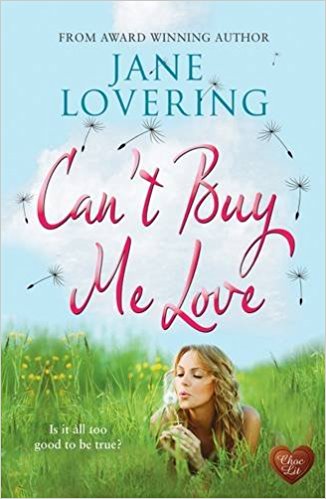
Can't buy me love

I’m delighted to be helping to celebrate the paperback publication of Can’t Buy My Love by Jane Lovering.

Published by ChocLit on 9th May 2017, Can’t Buy Me Love is available for purchase in e-book and paperback here. To celebrate and in keeping with the title, I asked Jane about her favourite (free) things and luckily she agreed to tell me!

Can’t Buy Me Love

Can't buy me love

Is it all too good to be true?

When Willow runs into her old university crush, Luke, she’s a new woman with a new look – not to mention a little bit more cash after a rather substantial inheritance. Could she be lucky enough to score a fortune and her dream man at the same time?

Then Willow meets Cal; a computer geek with a slightly odd sense of humour. They get on like a house on fire – although she soon realises that there is far more to her unassuming new friend than meets the eye …

But money doesn’t always bring happiness, and Willow finds herself struggling to know who to trust. Are the new people in her life there because they care – or is there another reason?

These are a few of my favourite (free) things …

A Guest Post by Jane Lovering

Can’t Buy Me Love by Jane Lovering is out now in paperback and, to celebrate, Jane is sharing her three favourite things … that are free!

  1. Walking my dogs.  Well, I say ‘walking’, it’s more of a controlled sprint; my young dog likes to run everywhere and, because she’s a Patterdale, she has to be prevented from chasing and/or attacking things.  So walks can be a little bit fraught at times.  But, because I live in the most beautiful part of the country (sorry, might be a bit biased), there are lots of places to go, beaches, moorland, open countryside …  And, because I live in the wilds, I don’t even need to get into the car to be able to walk for miles across stunning scenery.  Do I sound smug? I don’t mean to.
  2. I am a huge fan of my bed.  Left to my own devices, I doubt I’d leave it, except for the essentials. It’s big and cosy and I have two duvets and an electric blanket (see above, re living in the wilds, which means big, cold house) and a big pile of books that make me feel guilty on a daily basis.  There’s nothing like climbing into a big, warm bed after a busy day and curling up under forty layers of … actually, I have no idea what my duvets are made of, but they are snuggly so I don’t care … and sleeping for nine or ten hours.  This may seem like an unnecessary amount of sleep, but I had five children, so I’m owed about twelve years of sleep backlog, which I am making up.  And then I wake up to sheep and birdsong, and a Patterdale threatening the milkman.
  3. There is nothing in the world quite so much fun as a really good giggle.  Whether it’s laughing with friends or watching something alone on TV and having a good snort, laughing just makes me feel generally that the world is an all right sort of place. So, whether it’s an episode of iZombie (which I adore, it’s not as scary as it sounds) or re-reading a Terry Pratchett novel, or just watching the cat fall in the pond (again, you’d have thought she’d have learned by now), I really enjoy laughing.  Sometimes I just laugh randomly, if I have an amusing thought, which I am coming to realise makes me look like a mad old woman, but, well, maybe that’s no so far from the truth!

About Jane Lovering
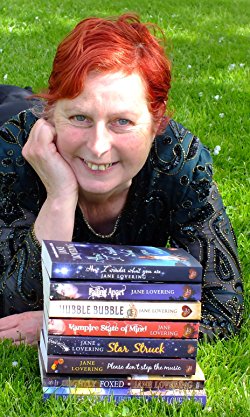
Jane Lovering

Jane was, presumably, born, although everyone concerned denies all knowledge. However there is evidence that her early years were spent in Devon (she can still talk like a pirate under the right conditions) and of her subsequent removal to Yorkshire under a sack and sedation.

She now lives in North Yorkshire, where she writes romantic comedies and labours under the tragic misapprehension that Johnny Depp is coming for her any day now.

Jane’s likes include marshmallows, the smell of cucumbers and the understairs cupboard, words beginning with B, and Doctor Who. She writes with her laptop balanced on her knees whilst lying on her bed, and her children have been brought up to believe that real food has a high carbon content. And a kind of amorphous shape.

You can follow Jane on Twitter, visit her website and find her on Facebook.
Waste Paper: A Guest Post by Sheila Newberry, Author of The Punch and Judy Girl

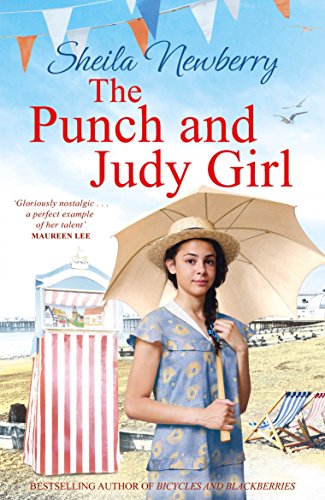
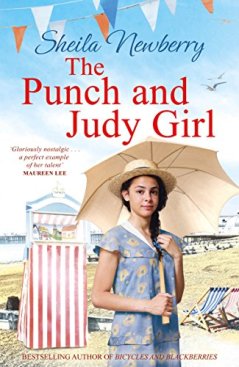
Punch and Judy Girl cover

I’m so pleased to be featuring The Punch and Judy Girl by Sheila Newberry on Linda’s Book Bag. Sheila has kindly written a guest post all about how she began as a writer that I’m delighted to share with you today.

Published on 4th May 2017 by Bonnier Zaffre, The Punch and Judy Girl is available for purchase in e-book and paperback here.

The Punch and Judy Girl

Punch and Judy Girl cover

CAUGHT BETWEEN FAMILY AND DUTY – CAN SHE FOLLOW HER DREAM?

Suffolk, 1925.

After the death of her father, a much-loved Punch and Judy man, May Moon packs her bags and moves to the seaside in the hope of continuing his legacy.

Already tasked with looking after her younger sister, May little imagines her summer will grow tougher still. Her long absent mother has finally returned – and with an agenda all of her own.

But as May struggles to balance her family’s competing demands – and honour her father’s legacy – she’s surprised to discover her passion for performing grows ever stronger.

As the world around her begins to change, might she finally be able to find a dream of her own?

Waste Paper

A Guest Post by Sheila Newberry

A few years after the end of the war, we girls at grammar school who were about to launch ourselves into the world of work were questioned about our choice of future careers.  Most girls wanted to be teachers or nurses, one a scientist, all choices which were greeted with approval. When it was my turn, I blushed and said simply  “I want to be a writer…”  A pause, then came the answer:  “But Sheila, don’t you know there is a shortage of paper?”  I have been conscious of that ever since…

I learned to read and write at three years old, but my mother said I was telling stories to myself in my cot.  She and Dad used to listen outside the door.  I guess it was my way of getting off to sleep. I was a premature baby, almost born in an Austin 7 en route to Suffolk where Mum was going to care for her sister who had just had a baby herself!  She made it to the top step of the stairs at Auntie’s house and I decided to put in an appearance!  I was bright yellow with jaundice and baptised hurriedly.

When I was seven I entertained the school on a Friday afternoon in the village hall to a long-running saga about a black-eyed pirate called Bill.  I made it up as I went along and was so absorbed in the story I wasn’t self-conscious, until the hall caretaker told my aunt (with whom we stayed at times during the war, after being bombed out) how he put down his bucket and mop, and like my parents, “listened outside the door.”  Then I felt too shy to continue.  However, I was writing all the time.  Shortage of paper then indeed:  kind friends cut the flyleaves from old books for my use!  I wrote my first “book” before I was ten, in purple ink, all sixty pages of it, probably purple prose as well!

Later, when I was fifteen, I won an essay prize.  The subject was Waste Paper, just up my street.  I was an avid collector, especially of ancient comics, though my mother pointed out to me that there wasn’t much point in replying to the reader who wanted a penfriend, as “she must be thirty by now!”  I nearly didn’t enter this inter-schools competition set up by the local paper, because I had dashed off pages in my usual awful scrawl, “You let your pen run away with you,” as Dad said. The Head mistress appeared with my script and said:  “The deadline is tomorrow.  Stay after school and rewrite this with no blots!”  Reluctantly, I did, and my form tutor kindly delivered my effort by hand.  I thought no more of it until one morning I was puzzled by girls coming up to me, and saying “Well done!”

I had come first out of 3,000 entries.  I was embarrassed because the Head Girl had come second….  Years later, my old Head Teacher wrote to me, “You have a gift, Sheila, I do hope you use it!”  Well, I try, I really do, Miss C.

I married young and John and I brought up our five boys and four girls on a smallholding in the Weald of Kent.  The house was in a poor state of repair, we had mice under the floorboards and bats in the loft, but we loved it all.  We had numerous pets (as well as the “pests”) – I never stopped writing, and the children were a great inspiration!  I wrote articles on family life for magazines, and short stories for the American bible-belt for children.  With the welcome dollars we purchased a large portable swimming pool.  The children all learned to swim in it, but all I could do was float in an old tyre with the current baby on my lap!

I was also village correspondent while we lived in that village. Emboldened, I began to write romantic short stories, set in the past, and had wonderful feedback from readers. My editor told me I should write books, “because we all want to know what happened next!”  So I did.

I will go on writing, I hope, until I drop. I am writing the biography of my great-grandmother Emma, a story-teller herself, and a remarkable woman.  I have reached 1862 right now – it was entitled Nelly Has Made You a Chocolate Cake, but is now The Forget-Me-Not Girl. There are many more stories to write – and thank you for reading this!

(And thank you Sheila for sharing this story with us!)

About Sheila Newberry

sheila

Sheila Newberry was born in Suffolk and spent a lot of time there both before and during the war. She wrote her first ‘book’ before she was ten – all sixty pages of it – in purple ink. Her family has certainly been her inspiration and she has been published most of her adult life. She spent forty years living in Kent with her husband John on a smallholding, and has nine children and twenty-two lively grandchildren. They retired back to Suffolk where Sheila still lives today.

All of Sheila’s books are available here.

There’s more with these other bloggers too:

punch and judy tour poster

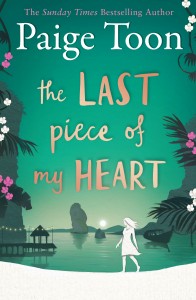
The Last Piece of My Heart by Paige Toon

The last piece of my heart

I don’t actually know which lovely member of Books and the City @TeamBATC for Simon and Schuster sent me a copy of The Last Piece of My Heart by Paige Toon, but whoever it was – thank you!

I was fortunate to meet Paige Toon a year or so ago at a blogger event but I have never read one of her books before. What a fool I’ve been to leave it so long!

The Last Piece of My Heart will be published by Simon and Schuster on 18th May 2017 and is available for pre-order on Amazon paperback, Amazon Kindle, iBooks, Waterstones, WHSmith, Kobo and Google Play.

The Last Piece of My Heart

The last piece of my heart

When life feels like a puzzle, sometimes it’s the small pieces that make up the bigger picture… Join Bridget on a journey to put her world back together.

A successful travel journalist, Bridget has ambitions to turn her quirky relationship blog about the missing pieces of her heart into a book. But after a spate of rejections from publishers, she accepts an alternative proposition.

Nicole Dupré died leaving behind a bestselling novel and an incomplete sequel. Tasked with finishing the book, Bridget is thankful to have her foot in the publishing door, even if it means relocating to Cornwall for the summer and answering to Nicole’s grieving husband, Charlie…

My Review of The Last Piece of My Heart

Bridget needs to write a new book. The trouble is, it’s not necessarily the one she want to write.

I cannot believe it has taken me so long to read Paige Toon. I have half a dozen of her books on my shelves but have never actually got round to reading anything before today. And as I write this review I mean one day. I started reading The Last Piece of My Heart this morning and simply couldn’t put it down. I read through my lunch and dinner and all the other things I should have been doing because from the very first word I was totally invested in what happened to Bridget and I was desperate to know what would happen.

Unashamedly chick-lit in genre, The Last Piece of My Heart represents the very, very best writing of its kind. It is an effortless read that develops emotion so skilfully that it is impossible not to be caught up in the story. Yes, I was expecting a happy ever after ending (and you’ll have to read it for yourself to see if I got one), yes I expected a hunky man as the male protagonist and Charlie doesn’t disappoint, but there’s so much more to this writing than the simple formulaic construction I was expecting.

Firstly, I absolutely loved all the characters, especially Bridget and Charlie, and even those whom I also disliked in the story I appreciated as well defined human beings . It says something that I found baby April a real delight to read about. I’m not maternal and I usually loathe the representation of children in fiction but I felt the balance here was perfect; realistic and unsentimental so that April’s presence enhanced the reading experience for me.

I thoroughly enjoyed the insight into how writers conduct their research and felt Paige Toon’s ability to create a sense of place, be it Cornwall, Thailand or the interior of the camper van Hermie, was very finely wrought so that I could imagine all the settings in my mind’s eye. The playlist of music added an extra dimension to this effect too.

Alongside the elements I was hoping to find was a treasure chest of emotion, a vivid picture of love and grief and a hugely entertaining and enjoyable story that drew me in and captivated me. I absolutely loved reading The Last Piece of My Heart and recommend it wholeheartedly to those looking for the perfect summer read.

About Paige Toon

paige toon

Paige Toon was born in 1975 and grew up between England, Australia and America, following her racing driver father around the globe. A philosophy graduate, she worked at teen, film and women’s magazines, before ending up at Heat magazine as Reviews Editor.

You can follow Paige on Twitter, visit her website and find her on Facebook.
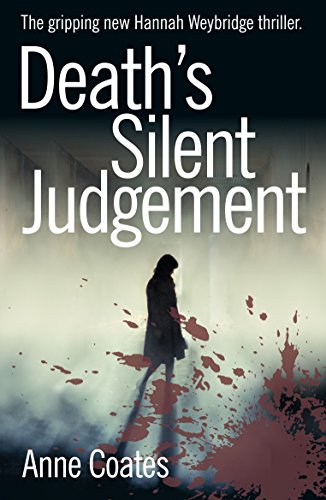
The Challenges of Writing A Sequel, A Guest Post by Anne Coates, Author of Death’s Silent Judgement

Death's Silent Judgement

I’m delighted to welcome Anne Coates back to Linda’s Book Bag to celebrate her latest novel Death’s Silent Judgement. I’ve met Anne on a number of occasions and she’s utterly lovely. Previously, Anne kindly wrote a super post for me on the influence of reading on writing that you can find here.

Death’s Silent Judgement is book two in the Hannah Weybridge thriller series and is the sequel to Dancers in the Wind.  Published by Urbane Publications, today, 11th May 2017, Death’s Silent Judgement is available for purchase in e-book and paperback here or via the publisher here.

Death’s Silent Judgement

Death's Silent Judgement

Death’s Silent Judgement is the thrilling sequel to Dancers in the Wind, and continues the gripping series starring London-based investigative journalist Hannah Weybridge.

Following the deadly events of Dancers in the Wind, freelance journalist and single mother Hannah Weybridge is thrown into the heart of a horrific murder investigation when a friend, Liz Rayman, is found with her throat slashed at her dental practice.

With few clues to the apparently motiveless crime Hannah throws herself into discovering the reason for her friend’s brutal murder, and is determined to unmask the killer. But before long Hannah’s investigations place her in mortal danger, her hunt for the truth placing her in the path of a remorseless killer…

The series is very much in the best traditions of British women crime writers such as Lynda La Plante and Martina Cole.

Three Things That Were Difficult

About Writing A Sequel

A Guest Post by Anne Coates

Only three? I thought when Linda gave me this brief.  Sometimes just getting words on to the page was challenging enough! However I did find that, after a very skeletal first draft, the narrative created its own momentum and the characters led me by the nose or kicked me in the rear.

When I started writing Death’s Silent Judgement, I had no idea where it was going. For me – and Hannah – it was a journey into the unknown. I’m definitely not someone who plans each chapter and knows how the novel ends. So in one way I felt free to explore characters and themes with few restrictions – except that some of the characters, apart from Hannah, had appeared in the first book and so they had their own history to be accommodated.

Dancers in the Wind_small

One of the challenges I had was making sure the timeline worked as Hannah’s life continued. In Dancers in the Wind, Liz Rayman is mentioned as working for a charity abroad and being away for the birth of Hannah’s daughter. In the first book I had used the name of a well-known medical charity but at proof stage I was able to change this to a fictitious name as, by then, I knew there were serious problems at the outpost where Liz had been working. In fact the finished manuscript of Death’s Silent Judgement was sent to Urbane Publications two weeks before Dancers in the Wind was published in October last year so there was little room for manoeuvre.

Initially, Death’s Silent Judgement, began further into the future but then I decided that wasn’t working as too much would have to be explained about what had happened in the interim. I moved the setting back in time but then I also had to change what characters were wearing as we were in a different season. This also affected which characters could be where – I’d had Linda going to be with Hannah after she discovered Liz’s murder but moving the timeline back meant she had just had a baby and wouldn’t be available!

I also had to ensure that any references to what had happened in book one would be understood by readers who may be starting at book two. I was blessed with two readers who checked this for me. One who’d been a reader for Dancers in the Wind and one who was coming new to the series. Fortunately they both thought that Death’s Silent Judgement worked well as a sequel and as a stand-alone.

Parts of the back-story could be explained quite naturally in dialogue and certain things that jogged someone’s memory in the narrative. Some of this was achieved with flashbacks to conversations between Hannah and Liz, as I very much wanted Liz to be a presence in the book, not just a body at the beginning.

My hope is that with Death’s Silent Judgement, I will surprise readers with how characters from book one are more involved in book two. My daughter (who hasn’t read book two yet) was surprised at the death of one of the characters in Dancers in the Wind who, she’d assumed, would be part of the team solving the crime in the next book. Glad that wasn’t predictable!

Challenges apart, writing Death’s Silent Judgement has been a great adventure for me, one I hope will satisfy readers as well.

Currently I am writing the third book with a different set of characters plus some of my favourites from the previous two. Time has moved on a couple of months and the murders are getting nearer to home… Still struggling with the first draft but this time I have some great reviews of Dancers in the Wind to keep me focused and to spur me on during darker moments.

(All the best with juggling that Anne!)

About Anne Coates

anne coates

Anne Coates is a freelance editor and author. While editing and abridging other peoples’ novels and non-fiction, she has contributed short stories to magazines like Bella and Candis and wrote two novels that never saw publication. One afternoon she re-read the second one, saw its potential and rewrote it, restructuring the narrative and adding and subtracting scenes. This work became Dancers in the Wind to be published by Urbane Publications on 13 October, 2016.

Some of her short stories appear in two collections: A Tale of Two Sisters and Cheque-Mate and Other Tales of the Unexpected both published as e-books by Endeavour Press. Anne has also written seven non-fiction books ranging from a history of Women in Sport (Wayland) to Applying to University (Need To Know) and Living With Teenagers (Endeavour Press).

Anne lives in London with three cats who are all rather disdainful of her writing as they have yet to appear in her fiction although a dog has!

You can follow Anne on Twitter and visit her website. You’ll also find Anne on Facebook.
There’s more with these other bloggers too:

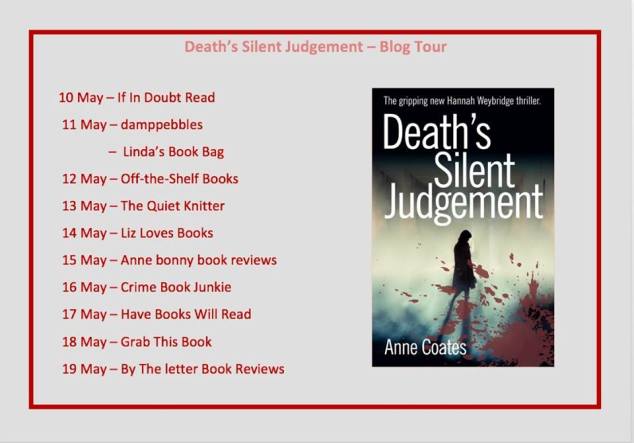
Tour poster

Authority and Ambition: A Publication Day Guest Post by Mehreen Ahmed, Author of The Pacifist

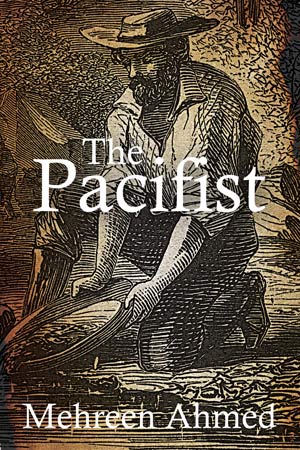
pacifist

I receive literally dozens of review and guest blog requests every day, and sadly I simply can’t accommodate them all. However, when Cosmic Teapot (how’s that for a name?) asked if I’d feature The Pacifist by Mehreen Ahmed which is set in Australia, a country I loved visiting, I had to grab the opportunity.

The Pacifist is published by Cosmic Teapot today, 11th May 2017, and is available for purchase from Amazon, Smashwords, Kobo, iTunes and B&N.

The Pacifist

pacifist

In 1866, Peter Baxter’s misfortune ends the day he leaves Badgerys Creek orphanage. Unsure of what to do next, Peter finds himself on a farm run by Mr. Brown. An ageing man, Brown needs help and is happy to give Peter a place to live in exchange for his labour. Unbeknown to Peter, Brown’s past is riddled with dark secrets tied to the same orphanage, which he has documented in a red folder.

During a chance encounter, Peter meets Rose. Peter cannot help but fall in love with her beauty, grace, and wit; however, he fears that his affection will go unrequited as a result of his crippling poverty. But fate changes when Peter joins the search for gold in Hill End, New South Wales. Striking it rich, he returns to Rose a wealthy man. Peter is changed by his new found affluence, heading towards the mire of greed. Will Rose regret her relationship with Peter?

Meanwhile, Rose has her own troubled history. One that is deeply entwined with Brown’s past and Peter’s future.

Authority and Ambition in The Pacifist

A Guest Post by Mehreen Ahmed

The Pacifist is not just an historical fiction that romanticises the adventurous gold rush period in Australia. Largely, the novel is a commentary on institutional power and a stark warning about blind ambition.  From the outset, The Pacifist illustrates these themes through troubled characters.  Malcolm’s strange upbringing, Rose’s mental illness and supernatural visions, Peter’s idealised version a good life – all finish with unintended consequences. At the heart of driving these characters forward is an orphanage.

In The Pacifist, the orphanage is not the safe haven it should be. Children suffering in the hands of a paedophile is deplorable and inexcusable. The most vulnerable in our society are in the grips of the most despicable. This warrants an investigation into the facilities that society comes to put their trust in. While the story focuses on this one example of an institution taking advantage of the unfortunate, the orphanage itself is a symbol for the greater injustices that happen. A system of authority imposing its will on the less fortunate is not a new idea; still, it is one that needs continuous reinvestigation.  Through fiction, we can find new ways to reopen this dialogue.

The theme of institutional power continues permeates a poor farmer, Brown. The property, owned by Badgerys Creek Orphanage holds a strict caveat over him. He is essentially unable to leave the farm without falling into extreme poverty.  The caveat is symbolic of the ultimate institutional power over its people. A gate-less keeper, this caveat stops Brown from moving forward in life, keeping him in a place of subservience. While in a state of perpetual poverty, he knew that he was free to leave the farm anytime – yet, he couldn’t. The orphanage’s influence on Brown anchored his psyche to the one thing that he knew: the farm. This caveat claimed hold of his family beyond his death.  The farm should be passed onto future generation, exemplifying a system that wants to keep the poor, poor. This is an important and familiar theme in sociology, where it is in the interest of the rich to keep low class individuals where they are.

Ambition is a good thing, but where does one draw a line between ambition and greed? Peter seeks to overcome his social status by working hard. His role in the novel is to show the reader that there is a fine line between success and greed. If one cannot determine the demarcation point between the two, serious repercussions may lay ahead.  His family is thrown into turmoil as a result of his unwillingness to find balance between living life and seeking wealth. The family’s lives become a wasteland, existing within the moral bankruptcy of their own souls. A typical characterisation of nihilism arising out of this sterility, which betrays life. No amount of wealth can absolve them of such sins.

While set in the nineteenth century, The Pacifist contains themes that are relevant to today’s readers. The attempt to rise above institutional power, to better one’s living situation, is a struggle that millions of people around the world consistently experience. Examining this idea through historical fiction is, in part, my way of finding a new context in which to understand this situation.

About Mehreen Ahmed

ahmed2

Queensland writer, Mehreen Ahmed has been publishing since 1987. Her writing career began with journalism, academic reviews and articles. Her journalistic articles appeared in The Sheaf, a campus newspaper for the University of Saskatchewan, Canada, between 1987 and 1999.

Since then, she has authored several works including Jacaranda Blues, Snapshots, and Moirae.  You’ll find all Mehreen’s books here.

You can follow Mehreen on Twitter, find her on Facebook and Goodreads and find her on the Cosmic Teapot website.


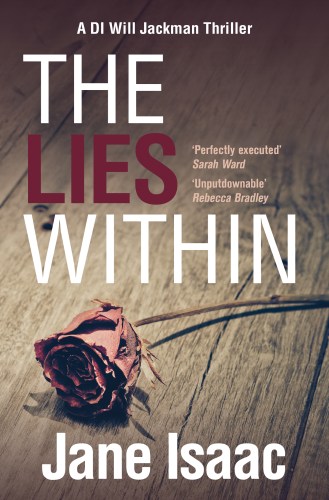
The Lies Within by Jane Isaac

9781785079276

As a member of the #Legend100 bloggers with Legend Press I get to read some brilliant books and I’m thrilled to be part of the launch celebrations for The Lies Within by Jane Isaac.

I was lucky enough to meet up with Jane at my local Literary Festival that you can read about here, and I have previously reviewed another of Jane’s books, Beneath the Ashes, here.

The Lies Within was published by Legend Press on 2nd May 2017 and is available for purchase in e-book and paperback here.

The Lies Within

9781785079276

Be under no illusions by her kind face and eloquent manner… This woman is guilty of murder.

Grace Daniels is distraught after her daughter’s body is found in a Leicestershire country lane. With her family falling apart and the investigation going nowhere, Grace’s only solace is the re-emergence of Faye, an old friend who seems to understand her loss.

DI Will Jackman delves into the case, until a family tragedy and a figure from his past threaten to derail him.

When the police discover another victim, the spotlight falls on Grace. Can Jackman find the killer, before she is convicted of a crime she didn’t commit?

My Review of The Lies Within

Grace is in the dock accused of a murder she didn’t commit. Events leading to that moment reveal layer upon layer of the lies within!

Although The Lies Within is the third in the DI Will Jackman series, it makes no difference whether you have previously read the other books Before It’s Too Late and Beneath the Ashes as The Lies Within is a cracking crime thriller that stands alone perfectly well.

Although it was good to return to Will Jackman, he is not the main focus of The Lies Within and it is Grace who takes centre stage. Her grief at losing her murdered daughter Jo is brilliantly conveyed so that the levels of despair, the ease with which others can manipulate her life and her final decisions are all completely realistic and believable. That said, Will Jackman is not forgotten and we find out more about his personal and professional life so that now I can’t wait to read the next book with him in it. Indeed, I believed wholeheartedly in all the characters (and I did have a wry smile at the description of the judge as I have a friend who is a judge in Peterborough).

Faye is a fabulous creation. As Faye takes over more of the story Jane Isaac manages to convey real tension so that I felt physically uncomfortable reading about her. The only character about whom I would have liked to know more was the murder victim, Jo, but I think this may be a deliberate aspect of the novel as we are reminded that she was a very private person with her own demons from the past.

I loved the settings in The Lies Within as they are very familiar to me, although not the prison in Peterborough! I felt the settings had a real part to play in the story as I could quite easily envisage the events taking place in these particular locations which I thought were eloquently described. It is quite clear from The Lies Within that any small town area could be harbouring devastating criminals and this added to the tension in the narrative for me. It made me wonder just what does go on behind closed doors in provincial places.

The plot is a corker. I felt it had an almost classic Hitchcock element to it as small, yet sinister, things happen that deepen the tension and made me want to read on. I did guess some of the elements but that made the tension worse for me as I wanted to warn characters and obviously couldn’t. I found myself talking to them as if they could hear once or twice.

I read a lot of crime fiction and I thought Jane Isaac hit just the right note with The Lies Within. I cared about the characters, the plot kept me guessing and I really feel this is her best novel to date. I really recommend it.

About Jane Isaac

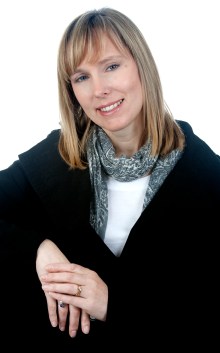
jane-isaac-photo

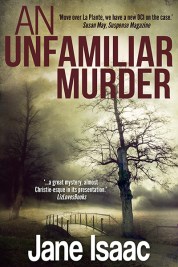
Jane Isaac lives with her husband and daughter in rural Northamptonshire, UK where she can often be found trudging over the fields with her Labrador, Bollo. Her first novel, An Unfamiliar Murder, available here, was nominated as best mystery in the ‘eFestival of Words Best of the Independent eBook awards 2013.’ The sequel, The Truth Will Out, available here, was selected as a ‘Thriller of the Month –April 2014’ by E-Thriller.com. Before It’s Too Late, available here, was published by Legend Press on 1st June 2015.

an-unfamiliar-murder

Jane was runner up ‘Writers Bureau Writer of the Year 2013’ and her short stories have appeared in several anthologies. When she is not writing, Jane loves to travel and spend time with her family. She believes life should be an adventure.

You can find Jane Isaac on Facebook, follow her on Twitter and visit her website

You can find out more with these other bloggers too:

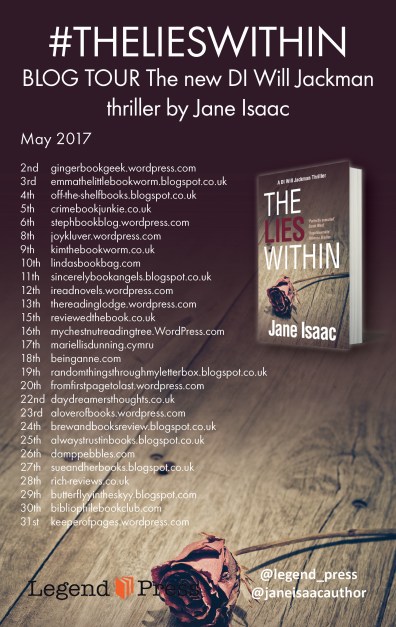
The Lies Within Blog Tour Banner

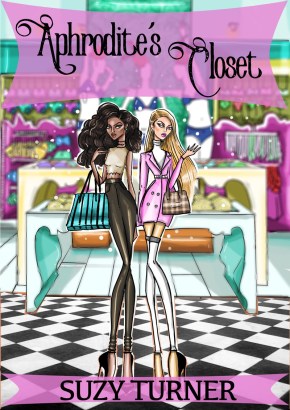
Spotlight on Aphrodite’s Closet by Suzy Turner

Aphrodite's Closet small

I’m very pleased to be showcasing Aphrodite’s Closet by Suzy Turner today, not least because, being of a certain age I appreciate that as well as writing fiction, Suzy has a lifestyle blog for those aged 40+!

Published on 6th May, Aphrodite’s Closet is available for purchase in e-book on Amazon UK and Amazon US.

Aphrodite’s Closet

Aphrodite's Closet small

Agatha Trout didn’t even know she had a Great Aunt Petunia, so imagine her surprise when she finds Petunia left her a corner shop in her will. But it’s not just any old corner shop—it’s a corner shop that needs something unique, something the town of Frambleberry has never seen before. Influenced by her confident best friend, Coco, Agatha is soon convinced that there’s only one way to go: an adults-only sex shop.

While some of the townspeople are clutching their pearls in horror, others are open to the new experiences this shop offers. But not everyone in Frambleberry is convinced. Will the women soldier on in the face of violent threats or will their fears get the best of them—and their new venture—before it even gets off the ground?

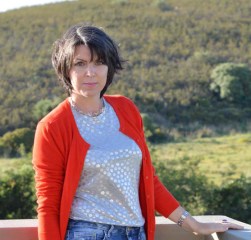
About Suzy Turner

Author Suzy Turner

Born in England and raised in Portugal, Suzy lives with her childhood sweetheart Michael, two crazy dogs and a cat.

Shortly after completing her studies, Suzy worked as a trainee journalist for a local newspaper. Her love of writing developed and a few years later she took the job of assistant editor for the region’s largest English language publisher before becoming editor of a monthly lifestyle magazine. Early in 2010 however, Suzy became a full time author. She has since written several books: Raven, December Moon, The Lost Soul (The Raven Saga), Daisy Madigan’s Paradise, The Ghost of Josiah Grimshaw, The Temporal Stone, Looking for Lucy Jo, We Stand Against Evil (The Morgan Sisters), Forever Fredless,  And Then There Was You, Stormy Summer and her latest, Aphrodite’s Closet.

In 2015 she launched her popular 40+ lifestyle blog which continues to go from strength to strength, while just over a year later, she trained to become a yoga instructor. Suzy continues to write, blog and teach yoga in one of Portugal’s loveliest settings – the Algarve.

You can follow Suzy on Twitter, find her on Goodreads, Instagram and Facebook and visit her book blog.


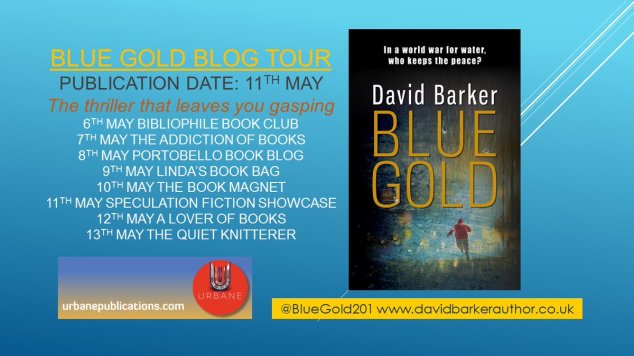
Why I Write, a Guest Post by David Barker, Author of Blue Gold

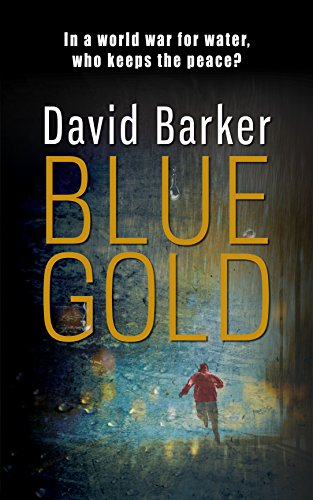
blue gold cover

Today sees one of those books I really wish I’d had time to read but unfortunately haven’t got round to, Blue Gold by David Barker. Thankfully, however, David has written a lovely guest post for Linda’s Book Bag on why he writes that I’m delighted to share with you today.

Blue Gold will be published by Urbane Publications on 11th May 2017 and is available for pre-order here or via the publisher here.

Blue Gold

blue gold cover

The near future. Climate change and geopolitical tension have given rise to a new international threat – a world war for water. This most vital of resources has become a precious commodity and some will stop at nothing to control its flow.

When a satellite disappears over Iceland, Sim Atkins thinks he knows why. He is given the chance to join the hallowed Overseas Division and hunt for the terrorists responsible. But his new partner Freda Brightwell is aggrieved to be stuck with a rookie on such a deadly mission.

Freda’s misgivings are well founded when their first assignment ends in disaster – a bomb destroys a valuable airship and those responsible evade capture. Seeking redemption, the British agents follow the trail to a billionaires’ tax haven in the middle of the Atlantic ocean and uncover a web of deceit that threatens global war. Whom can they trust?

As the world edges ever closer to destruction Sim and Freda must put their lives on the line to prevent Armageddon – and protect the future of ‘blue gold’.

Why I Write

A Guest Post by David Barker

George Orwell wrote a short article in 1946, entitled, ‘Why I Write’. Apt to mention that, since he’s one of my reasons. Men of vision, like Orwell, HG Wells, Arthur C Clarke, who could seemingly predict the future and turn it into a gripping story inspired me from an early age. At the time, I didn’t even realise or think it odd that all those writers were male. I’m glad my daughter is growing up with so many women to inspire her.

The journey from there, to here – with my debut novel Blue Gold out this month – has been rather circuitous. Many people, including my family, were surprised to learn that there was a destination at all! But I’ve always enjoyed writing. Working as an economist in the city, I liked the challenge of making some analytical report clear, succinct and interesting just as much as I liked the analysis itself. When I got bored at the Bank of England, I contemplated a role in financial journalism. But then an offer that was too good to refuse came along and the shift towards more direct involvement in writing was postponed for another decade.

After my daughter was born, we re-discovered the joys of reading out loud to her. When she was old enough, she asked me to make up stories at bedtime. If that was good enough for Tolkien, it was certainly a good enough excuse for me to start writing fiction. Around the same time, I started to research the issue of water shortages more carefully. Two images got stuck in my head and I knew that I had the start and end of a novel.

What I didn’t realise was quite how much hard work and commitment it took to turn an idea into a 90,000-word story. Especially while holding down a full-time job. Coming home in the evenings, tired and surrounded by distractions, it can be very difficult to keep going. I did a good chunk of the first draft on the train during my commute.

And then I discovered that it’s even harder to write well. A good plot isn’t enough. On the Faber Academy How To Write A Novel course we all had to submit our work-in-progress to peer review. That can be a bruising experience, especially when you are making so many rookie errors like I was.

But none of this has put me off. I love trying to create something polished, something that will grip the reader’s attention. I don’t mind the editing process. Or the knowledge that I’ll have to start again from scratch for the next book. I’m already on draft three of the sequel to Blue Gold. (It’s called Rose Gold and should be available in May 2018). And I’ve even started to plot out the final instalment, White Gold.

I woke up at 3am just before Easter. I should have been thinking about the launch campaign for Blue Gold, or how to solve some of the sticking points in the current draft of Rose Gold. Instead I had the opening paragraph of a completely new story and a new voice inside my head. I didn’t ask it to be there. But I had to get up and put pen to paper (or at least put fingers on a keyboard) while it was fresh in my mind.

That’s why I write. Because my mind conjures up people that want to live and places that ought to be seen. The best way I can serve their needs is if I put them into a book and set it loose upon the world. Whether the world is interested in me and my imagination, we’ll just have to wait and see…

About David Barker

David Barker

David was born in Cheshire but now lives in Berkshire. He is married to an author of children’s picture books, with a daughter who loves stories. His working life has been spent in the City, first for the Bank of England and now as Chief Economist for an international fund. So his job entails trying to predict the future all the time. David’s writing ambitions received a major boost after he attended the Faber Academy six-month course in 2014 and he still meets up with his inspirational fellow students. He loves reading, especially adventure stories, sci-fi and military history. Outside of family life, his other interests include tennis, golf and surfing.

You can follow David on Twitter and find out more about him on his website.

There’s more with these other bloggers too:

tour poster

Interviewing Morgan, A Guest Post by Karen King, Author of Perfect Summer

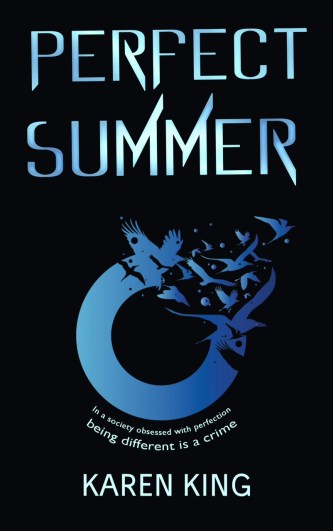
Perfect Summer final

It feels very strange to me that I haven’t had chance to read Karen King yet as I feel as if I’ve known her vicariously for years! I conducted a mini-interview with Karen that you can read here.

I’m delighted to welcome back Karen onto Linda’s Book Bag today to help celebrate her young adult book Perfect Summer. Perfect Summer is published by Accent Press and is available for purchase here.

Karen has kindly agreed to provide a little insight into Perfect Summer by interviewing the heroine of the book, Morgan.

Perfect Summer

Perfect Summer final

Set in a society obsessed with perfection, 15 year old Morgan is best friends with the seemingly perfect Summer. But when Morgan’s brother, Josh, who has Down’s syndrome, is kidnapped, they uncover a sinister plot and find themselves in terrible danger.

Can they find Josh before it’s too late? And is Summer’s life as perfect as it seems?

Interviewing Morgan

A Guest Post by Karen King

Perfect Summer is set in the future about thirty years from now. The heroine of Perfect Summer is 15-year-old Morgan Taylor. Let’s find out a bit more about her.

Q: Everyone is pretty much obsessed with how they look and striving to be as beautiful as they can. How did you feel about that?
Morgan: I never really thought about it, it’s just the way it was. I was actually looking forward to being 16 so I could have some PP (Physical Perfection) surgery.

Q: Your family was put under a lot of pressure when Josh was born. How did that make you feel? Did you ever wish your parents would put him in care?
Morgan: I loved Josh as soon as I saw him, we all did. But I’m really ashamed to admit that I resented him sometimes. I got bullied a lot at school because of him, and that was really hard. But no, I never wanted to send him away. I really love him.

Q: Having a rich, cool friend like Summer must be really hard for you. Did you ever resent her?
Morgan: Yes, lots! I couldn’t help it, she had everything – looks, money, cool parents – the lot! Or so I thought. She was a good friend though, and was always there for me. I felt really sorry for her how everything turned out.

Q: How did you feel when you discovered how many disabled children had been kidnapped and why?
Morgan: Sick. Angry. And desperate to save my little brother.

Q: You, Summer and Jamie risked your lives to find Josh. Especially you and Jamie. Were you ever scared?
Morgan: Terrified! But what could I do? I had to find Josh and the LEF weren’t bothering.

Q: Talking about Jamie, do you fancy him?
Morgan: You bet. He’s really cool. I thought he was a bit geeky at first but he risked everything for us. He’s fantastic.

Q: Do you think your terrible experience has changed you?
Morgan: Definitely. I’ll never be jealous of anyone again. I realise how important my family is. And I’m tougher too, stronger inside. I was lucky. I’ve looked death in the face and survived. Others didn’t.

About Karen King

KK Head and Shoulders

Karen King is the author of over 120 children’s books and has had two YA’s published, Perfect Summer and Sapphire Blue. Perfect Summer was runner up in the Red Telephone Books YA novel competition in 2011 and has just been republished by Accent Press.

Karen is also the author of two romance novels, and has been contracted for three chick lit novels by Accent Press. The first, I do?… or do I? was published in 2016 and the second, The Cornish Hotel by the Sea, is due out in the Summer. In addition, Karen has written several short stories for women’s magazine and worked for many years on children’s magazines such as Thomas the Tank Engine and Winnie the Pooh as well as the iconic Jackie magazine.

When she isn’t writing, Karen likes travelling, watching the ‘soaps’ and reading. Give her a good book and a box of chocolates and she thinks she’s in Heaven.

You can find more about Karen on her website, on Pinterest, Instagram and by following her on Twitter. Karen has a Facebook page for her children’s fiction here and one for her romances here.

There’s more with these other bloggers too:

tour poster

All the Good Things by Clare Fisher

all the good things

I’m delighted to be part of the launch celebrations for Clare Fisher’s debut novel All the Good Things.

All the Good Things will be published by Viking, Penguin on 1st June 2017 and is available for purchase here.

All the Good Things

all the good things

What if you did a very bad thing… but that wasn’t the end of the story?

Twenty-one year old Beth is in prison. The thing she did is so bad she doesn’t deserve ever to feel good again.

But her counsellor, Erika, won’t give up on her. She asks Beth to make a list of all the good things in her life.

So Beth starts to write down her story, from sharing silences with Foster Dad No. 1, to flirting in the Odeon on Orange Wednesdays, to the very first time she sniffed her baby’s head.

But at the end of her story, Beth must confront the bad thing.

What is the truth hiding behind her crime? And does anyone – even a 100% bad person – deserve a chance to be good?

My Review of All the Good Things

Beth has done something dreadful and part of her prison therapy is to write lists of good things.

What a touching and scary read All the Good Things is. It’s touching because we see right into the very soul of dysfunctional and mentally ill Beth and her mother. It’s scary because what happens to them and the crime Beth has committed could actually happen to any one of us. I thought the dropping of the ‘any’ part of Bethany’s name highlighted this possibility. Her faults, her challenges, her triumphs and disasters are a hair’s breadth away for any one of us.

All the Good Things has a really clever structure. Within each of the list elements Beth writes is woven her back story, her childhood and what makes her who she is. Clare Fisher makes the reader confront Beth’s issues with her and understand that anyone we might judge in society, such as a woman in prison, is a real person with genuine struggles of their own. Beth is flawed, complex, intelligent and a complete disaster. The first person narrative with its breezy and realistic tone makes the story all the more real. I loved the way the text physically breaks down in structure at the end to reflect the actions happening in the story. The only element I was less keen on was some of the language in the reports in the file Beth reads. However, I think that might be because reading it made me feel quite uncomfortable.

I’m not sure All the Good Things is a book to enjoy as it paints at times a quite bleak view of the world, but it does have hope and optimism too and is a story that penetrates the soul of the reader. It is a book that educates and touches the reader so that I know it will resonate in my mind for a very long time. In hearing about Beth I was reminded of some of the students I have taught in the past and I know just how realistic her tale is. Life can be brutal, devastating and challenging and Clare Fisher presents Beth’s version of it with compassion and humanity. This is hugely affecting writing. Outstanding.

About Clare Fisher

Clare Fisher

Clare Fisher was born in Tooting, south London in 1987. After accidentally getting obsessed with writing fiction when she should have been studying for a BA in History at the University of Oxford, Clare completed an MA in Creative and Life Writing at Goldsmiths College, University of London. An avid observer of the diverse area of south London in which she grew up, Clare’s writing is inspired by her long-standing interest in social exclusion and the particular ways in which it affects vulnerable women and girls. All The Good Things is her first novel.

You can follow Clare on Twitter and visit her website.

There’s more about and with Clare with these other bloggers:

All-the-Good-Things-blog-tour-banner