Your Stories Matter: Emily’s Sister and Vera McLuckie and the Daydream Club

Emily's sisterVera McLuckie

Having been a teacher who has tried to accommodate children with different needs in the classroom, I’m delighted to be part of the Your Stories Matter publisher celebrations. Today I’m reviewing two books from Your Stories Matter: Emily’s Sister and Vera McLuckie and the Daydream Club. 

Both books are available for purchase by following the publisher links here.

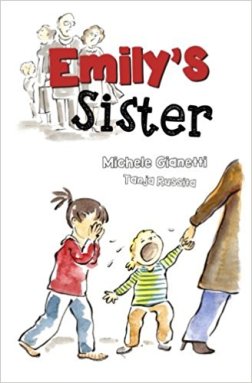
Emily’s Sister

Emily's sister

Emily’s sister is different from other children she knows. She seems to struggle with things most of us just do naturally.

In this delightfully illustrated story, based upon real family experiences, Emily discovers how to understand and help her sister live a happier life.

This story, written by the parent of a child with Dyspraxia and Sensory Processing Disorder (SPD), paves the way for parents, teachers and medical professionals to discuss these specific learning difficulties with children (aged around 7-9).

Unlike most other books on the subject, this book has been written from a child’s perspective: enabling young people to ask questions of the story in a non-threatening way and encouraging them to discover how it relates to them.

This book can be shared with children having special needs, their family, or their classmates.

As with all of its books, the publisher – Your Stories Matter – aims to help people know they are not alone with what makes them different. If a young person or adult can relate to a story, it gives them hope and encourages them to share their concerns. The publisher aims to provide free teaching resources for all of its books that can be used in schools, to help improve understanding and celebrate differences.

My Review of Emily’s Sister

Emily is having a day without her crying sister Elizabeth.

What a cleverly written book Emily’s Sister is. Pitched for children so that they can understand through a child’s perspective what it means for a sibling to have dyspraxia and Sensory Processing Disorder (SPD), the story also helps adults unfamiliar with the conditions to realise the challenges facing those for whom the world can be a distressing place. I think Emily’s Sister would make a smashing story to share with all children, regardless of their abilities.

Although I would have preferred a more British use of language with perhaps Mum instead of Mom and wardrobe instead of closet these are very minor personal questions of taste and do not affect the overall quality of the book. Presented in reader friendly font with plenty of white space that in itself has a calming effect, the book has illustrations that enhance the story. I liked the future depiction too when Elizabeth has learnt some more traditional skills so that there is a positive message throughout.

Emily’s Sister is a smashing book for children and adults alike.

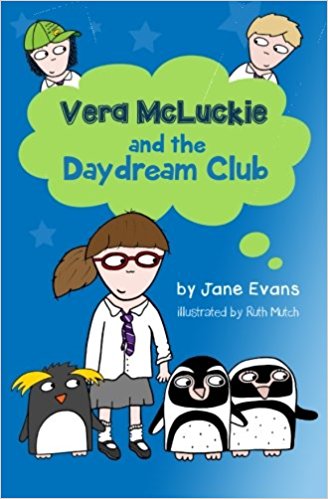
Vera McLuckie and the Daydream Club

Vera McLuckie

This is a children’s story whose main characters happen to have Dyspraxia, Dyslexia and Asperger’s (not made explicit). The book will relate to children who feel different and left out at school (aged 7-9). The book’s real purpose is one of catalyst to help parent and teacher discuss with children, in a gentle way, what it is like to have a learning difficulty.

Vera McLuckie hates school. Mainly because she struggles with stuff the other kids find easy. Oh, and because she keeps getting into trouble for doing what she is really good at. Daydreaming.

So when Vera gets the chance to show just how extraordinary she is, will she dare take on the coolest, smartest girl in the whole of Acorn Bank Primary?

This book works on several levels. It is a lovely story in itself that most children will relate to, dealing as it does with lack of self-belief, peer pressure and the bullying that goes along with not necessarily being the most popular kid in class. These issues can be readily picked up in school and discussed in circle time and PSHE (citizenship) lessons.

But it goes deeper. Whilst not named in the book explicitly, the three main characters exhibit dyspraxic, dyslexic and autistic (Asperger’s Syndrome) tendencies respectively. So the story can be used by parents and teachers as a catalyst for discussing what it is like to have a learning difficulty. In schools, teachers can use the book on a one-to-one, group or class basis to help raise awareness and improve well-being.

My Review of Vera McLuckie and the Daydream Club

Vera hates Mondays because she’ll have to go to school where life is overwhelming.

I loved meeting Vera. She’s a brilliant character and I thought it was inspired to present her vivid quality of imagination and her love of facts, before the conventionally negative elements such as her poor writing so that the first impression of a child who is different is a positive one.

The story explores a variety of differences and ways in which children are unique, whether that’s Bethany’s seeming perfection or Vera’s inability to concentrate in class because she day dreams so much. The interjections from a mystery narrator add a layer of conviction that is enhanced by the end of the story so that dyspraxic, dyslexic and autistic youngsters have positive messages reinforced.

Vera McLuckie and the Daydream Club is not just a story for children with differences. Bethany’s role serves as a way to discuss bullying at all levels and for children (and adults) to understand that even the most perfect individuals very often have problems of their own. It illustrates how success is a multi-layered and very personal aspect.

The drawings in the book, the font size and the white space give a more comfortable read for those with dyslexia and enable the text to be tackled in chunks whether it is read to or by children.

I can imagine Vera McLuckie and the Daydream Club becoming a firm classroom favourite.

About Your Stories Matter

Based in Kendal, Cumbria Paul Johnson is the founder of Your Stories Matter and the parent publishing company Explainer HQ —which provides creative video, audio, animation and print to the business and education sector. All Your Stories Matters titles are published in paperback and are available to order from online retailers including amazon.co.uk.

The publisher Your Stories Matter is dedicated to publishing books that share experiences, improve understanding and celebrate differences. To this end it provides free cross-curricula teaching resources with all of its books on its website. You can also follow Your Stories Matter on Twitter.

There’s more with these other bloggers too:

YSM Blog Tour Banner

Spotlighting Eleanor Oliphant is Completely Fine by Gail Honeyman

Eleanor Oliphant

I’m very pleased to be part of the launch celebrations for Eleanor Oliphant is Completely Fine by Gail Honeyman today as i think it is going to be one of THE books for 2017.

Published by Harper Collins on 18th May 2017, Eleanor Oliphant is Completely Fine is available for purchase through the links here.

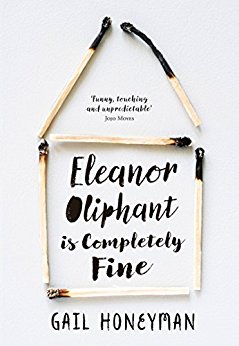
Eleanor Oliphant is Completely Fine

Eleanor Oliphant

Eleanor Oliphant has learned how to survive – but not how to live.

Eleanor Oliphant leads a simple life. She wears the same clothes to work every day, eats the same meal deal for lunch every day and buys the same two bottles of vodka to drink every weekend.

Eleanor Oliphant is happy. Nothing is missing from her carefully timetabled life. Except, sometimes, everything.

One simple act of kindness is about to shatter the walls Eleanor has built around herself. Now she must learn how to navigate the world that everyone else seems to take for granted – while searching for the courage to face the dark corners she’s avoided all her life.

Change can be good. Change can be bad. But surely any change is better than… fine?

About Gail Honeyman

Gail honeyman

While Gail Honeyman was writing her debut novel, Eleanor Oliphant is Completely Fine, it was shortlisted for the Lucy Cavendish Fiction Prize as a work in progress. It has subsequently sold to almost thirty territories worldwide, and it was chosen as one of the Observer’s Debuts of the Year for 2017.

Gail was also awarded the Scottish Book Trust’s Next Chapter Award in 2014, and has been longlisted for BBC Radio 4’s Opening Lines and shortlisted for the Bridport Prize. She lives in Glasgow.

You can follow Gail on Twitter.

An Interview with Prue Leith, Author of The Prodigal Daughter

Prodigal daughter

I can’t begin to explain how excited I am to welcome Prue Leith to Linda’s Book Bag today to celebrate the paperback publication of The Prodigal Daughter. I’ve read and thoroughly enjoyed several of Prue’s books and am thrilled to be able to interview her today in celebration of the paperback release of The Prodigal Daughter.

The Prodigal Daughter is published by Quercus on 18th May 2017 and is available for purchase in e-book, hardback and paperback here.

The Prodigal Daughter

Prodigal daughter

It is 1968. Angelica Angelotti has grown up in the Italian food business started by her English mother and Italian father. Now she is using her cooking talent to strike out on her own, moving to Paris to go to culinary school. There, among the excitement and wild emotion of the student barricades, she falls in love with her charismatic but unreliable cousin Mario – a manic depressive ten years older than her whom her mother had sacked from their restaurant.

Navigating a blossoming career, from the Savoy hotel pastry kitchen to the world of food writing and presenting, alongside an increasingly toxic relationship, eventually proves impossible. Angelica has to leave Mario, and makes the decision to move back to the family home in Gloucestershire to help her other cousin Silvano with a new branch of the family business – reopening the local pub, the Frampton Arms, as a restaurant. As they get to know each other better, Angelica realises her mistake: she chose the wrong brother.

But when Mario reappears, determined to win her back, and as other jealous relatives plot the downfall of the Frampton Arms, will Angelica be able to hold on to her business and the man she’s come to love?

An Interview with Prue Leith

Welcome to Linda’s Book Bag Prue. Thank you so much for agreeing to answer some questions on my blog about your writing. I think you need no introduction but could you tell us a little about yourself? 

I’ve had a great life: happy childhood in South Africa, great career in restaurants and cooking and business; success as first a food writer and journalist and then as a novelist; happy marriage to a writer, Rayne Kruger, until his death in 2002. Two children, both happy and successful (one adopted from Cambodia) second marriage last year to John Playfair. We have five grandchildren between us and a lovely house in the Cotswolds.  So ABSOLUTELY NOTHING TO COMPLAIN OF. I’ve been extraordinarily lucky.

Without spoiling the plot, please could you tell us a bit about your latest novel The Prodigal Daughter?

The Food of Love

It’s the second book in the Food of Love Trilogy, which follows the lives and loves of three generations of the same family from the war until now. The background to all three books is the change in food and farming from rationing and austerity to Heston Blumenthall and telly chef fame via Nouvelle Cuisine and much else, but the main focus of the books is the relationships and love life of the heroine. The Prodigal Daughter covers the sixties and seventies and is the story of Angelica, daughter of two restaurateurs. She learns to cook and falls in love in Paris, becomes a top baker at the Savoy and the first woman in the kitchens, and being feisty and emotional, her private life is as much a roller coaster as her career.

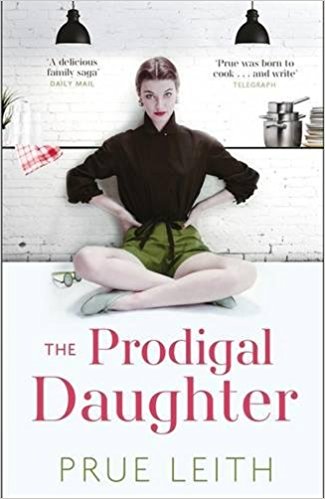
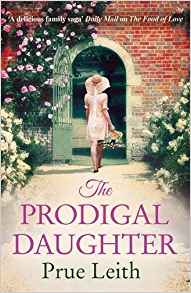
The hardback cover to The Prodigal Daughter has a cover that suggests a doorway to self-knowledge to me. How did that image come about and what were you hoping to convey (without spoiling the plot please!)  

prodigal daughter 1

To be honest, I had little to do with the cover and the paperback of The Prodigal Daughter is completely different. I thought the hardback cover, with the flowers and the archway, a bit too girly, and much prefer the new paperback one. Have a look on Amazon.  (Put in The Prodigal Daughter Prue Leith or you will get pages and pages of The Gilmore Girls TV)

You’ve obviously always written, with your cookery books and newspaper and magazine work, but how difficult was it to make the transition into being a novelist too?

It was easier because I already had an agent so she could hardly refuse to take on my novel, though of course she’d have preferred me to go on writing cookbooks. And the experience of journalism was useful. I knew I could handle the words, but I worried about the plot and had to get a lot of help from first The Arvon Foundations on whose excellent four-day novel writing  course I went on, and also TLC (The Literary Consultancy)  who edited my first book. And then Penguin bought it.

What skills from cooking have you found to be transferable to writing?

None except the need to meet a deadline. You can’t tell a customer the wedding cake will be a few days late.

(Oh – good point!)

To what extent do you think the travels in your early life have affected the settings in your novels?

I’m lazy and short of time so I always write about places I know and situations I know. Hence the Cotswolds, South Africa, places I’ve visited, and most of the novels are set in the food or business world. One was about a gardener, gardening being my other great interest.

The Gardener

(I know that book, The Gardener, well Prue. I really enjoyed it in the days before I began blogging otherwise it would be here on the blog!)

How do you go about researching detail and ensuring your books are realistic?

Google, like everyone else!

Which aspects of your writing do you find easiest and most difficult?

Anything to do with food flows with ease. I’m not good at the interior monologue bit, where I need to get into my character’s head and ponder. I’d much rather get on with the action.

What are your writing routines and where do you do most of your writing?

I write anywhere and everywhere, mostly at the kitchen table.  As the deadline approaches I get up earlier and earlier. I can edit in the afternoon, but not write anything creative.

The Prodigal Daughter is the second in your Food of Love trilogy. How have you managed the planning for this series?

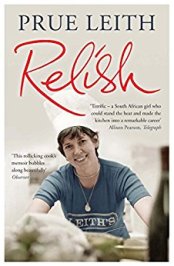
I plan my books in advance, chapter by chapter, but then don’t always stick to the plan. I had wanted to cover the development of food since the war for ages and would have written the trilogy before but my publishers were dead keen on my doing a memoir (called Relish) so I did that first.

relish

I write on a Mac Air, and happily I can write anywhere: train, plane, back of a taxi. I often write in the waiting gaps in the studio when filming.  If I’m at a seriously boring cocktail party I will write in the ladies’ loo. When I wrote Leaving Patrick, which starts in India, I used photos of a recent holiday to remind me of the markets, street life, palaces etc. I keep files on my laptop on all my characters so I know their back-stories and also what they look like. My P.A Francisca is brilliant at noticing when someone’s eyes were green in chapter one and are brown in chapter eleven.

leaving Patrick

The Prodigal Daughter‘s protagonist is called Angelica. Was this a deliberate link to your life in food?

No, I just like the name. And I like Italians for their love of food and music and family. I’d rather belong to the Angelottis than the English Oliver’s.

Most of the female characters are, at least in part, a reflection of me. Especially Angelica, whose career more or less echoes mine.

They feature food, they also have many other creative elements such as singing and gardening.

How important is such creativity as singing and gardening in your own life? 

I cannot sing a note, so the character Joanna in The Choral Society is like me in longing to sing, being unable to, and being a businesswoman. I’ve never been a gardener like Lotte in The Gardener, but I love gardening and the garden in the book is like mine, only ten times larger: where I have a pond, they have a lake, where I have a paddock they have a park, where I have a few roses, they have the National Collection, etc.

choral society

(As someone who can’t sing a note in tune, I remember being so sympathetic towards Joanna when she pretended to sing. I loved this book too Prue!)

Lots of your books feature inappropriate relationships. To what extent is this the voice of experience?

I guess they must be, but I have never thought of it. Most tangled love stories involve some “inappropriate” passions, don’t you think?

(I do indeed – but I can’t possibly say more!)

I know you write poetry. What is the stimulus for this form of writing?

I don’t write much poetry and I’m not very good at it. I never publish any of it. When I fell in love with a pianist I did, for some reason. He set a cycle of my poems to music, which was pretty romantic. But poetry requires a lot of thinking/dreaming time, and I am generally too impatient for that. I find just getting on with the story easier.

You’re recently married. Are we likely to see a version of John in a future Prue Leith novel? 

Probably, poor chap! But he is amazingly tolerant and easy going so I don’t suppose he’d mind. He’s lovely anyway, so he’s unlikely to be upset.

If you could choose to be a character from The Prodigal Daughter, who would you be and why?

Angelica of course

I know your Food of Love trilogy has been optioned for a TV series. Who would you like to play Angelica and why would you choose them?  

Vanessa Kirby, The girl who plays Princes Margaret in The Crown.

When you’re not writing, what do you like to read?

Anything, currently, belatedly, reading Bill Bryson’s History of Everything, also Bee Wilson’s book on how we eat, Consider the Fork

If you had 15 words to persuade a reader that The Prodigal Daughter should be their next read, what would you say? 

A tale of ambition, jealousy, desire, set in Paris, London and the Cotswolds. What’s not to like?

Thank you so much, Prue, for your time in answering my questions.

About Prue Leith

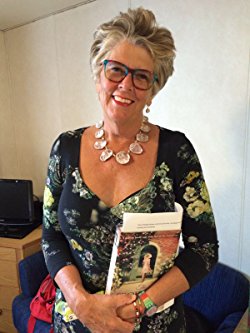
Prue

As a cook, restaurateur, food writer and business woman, Prue Leith has played a key role in the revolution of Britain’s eating habits since the 1960s, and was recently announced as one of the judges on Channel 4’s Great British Bake Off. With twelve cookery books under her belt, Prue gave up writing about food to concentrate on fiction. She has written five contemporary novels and a memoir, RelishThe Prodigal Daughter is the second novel in a trilogy that began with The Food of Love. All Prue’s books are in print with Quercus. She lives in Oxfordshire.

You can follow Prue on Twitter and find out all about her on her website.

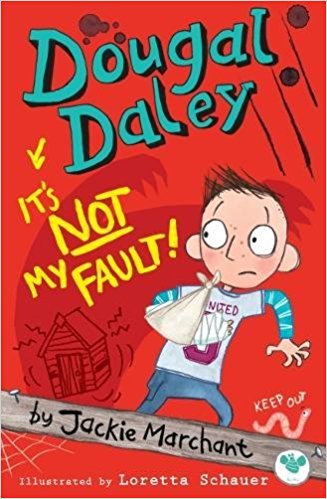
Dougal Daley: It’s Not My Fault by Jackie Marchant and illustrated by Loretta Schauer

Dougal Daley

As an ex-English teacher and literacy consultant I’m always delighted when a brilliant children’s book comes my way for review and Dougal Daley: It’s Not My Fault by Jackie Marchant, illustrated by Loretta Schauer is one such book. My thanks to Faye Rogers for including me in the celebrations of Dougal Daley: It’s Not My Fault.

Dougal Daley: It’s Not My Fault was published by Wacky Bee Books on 4th April 2017 and is available for purchase here.

Dougal Daley: It’s Not My Fault

Dougal Daley

I, Dougal Daley, am dead! Ok I’m not actually dead. But if I’m not careful I soon will be.

In this first book, football-loving Dougal Daley finds himself at risk from the mysterious creature living in the garden shed. Nobody believes him but as a precaution, he sets upon writing his will – rewarding those who help him and disinheriting those who get on his bad side. Meanwhile, as limbs and windows alike are broken by rogue footballs and unhinged canines, Dougal finds himself in all sorts of trouble. . .and NONE of it is his fault!

My Review of Dougal Daley: It’s Not My Fault

Dougal has a problem. It’s in his shed and worrying him so much he’s writing his will!

I loved meeting Dougal. He’s an absolute star. I did wonder whether my middle aged female identity was affecting my judgement but I’m convinced that Dougal Daley: It’s Not My Fault will appeal equally well to children in the 7-11 age group as it did to me, because Dougal says things that all children think and feel at some points in their lives.

I liked the variety of textual approach so that there is never too much text at once for readers of all abilities to get to grips with. There’s plenty of white space, super illustrations and a wide variety of fonts in the notes and messages from Dougal’s friends which mean there’s something for everyone. I do have a slight qualm about some notes in entirely upper case or random mixed case as that’s a pet issue for me when teaching children to write, because it is better to model the correct versions, but these aspects are well separated form the main text. The illustrations are perfectly in tune with the text so that they add an extra layer of enjoyment to the read.

The plot is brilliant. It’s exciting and interesting. The scrapes Dougal gets into will resonate with all children, from accidentally breaking things to getting into trouble at school and falling out with friends. Indeed, there are loads of themes that could help struggling children discuss their own issues such as death, friendships, bullying, school and family relationships. That’s not to say Dougal Daley: It’s Not My Fault is preachy or dull – far from it. The humour is wonderful, especially those moments around the dog.

Dougal himself is a triumph of a character. He is accident prone, funny and charming – even at his worst. I thought Dougal Daley really was a superhero!

About Jackie Marchant

jackiepic

Dougal Daley was inspired by a messy bedroom and a random question from my son about writing a will. Dougal Daley has been huge fun to write about – you wouldn’t believe the disasters that happen around him (none of which are his fault of course)! When I’m not writing I love doing school visits and creative writing workshops. I also take time away from the writing world looking after guide dogs while their owners are away.

You can follow Jackie on Twitter and visit her website.

About Loretta Schauer

lorettapic

I originally studied performing arts and have a degree in Dance Performance – well you never know when you need a quick pirouette! I also worked in practical conservation for a long time, and spent many years battling balsam, identifying lichen, and searching for creepy crawlies before I picked up my pencils and paints and began exploring illustrating and writing for children. In 2011 I won the Waterstone’s ‘Picture This’ competition and I now illustrate full time. However I am still happiest noodling around for fossils and shells on the beach!

You can follow Loretta on Twitter and visit her website.

There’s more with these other bloggers too:

Dougal Daley Banner1

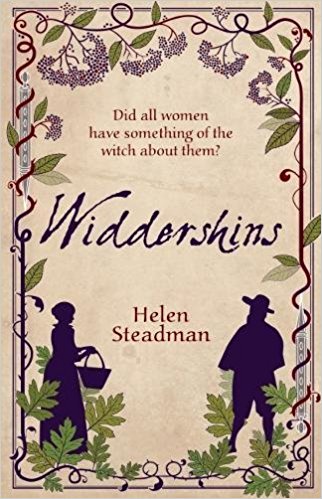
Widdershins by Helen Steadman

widdershins1

My enormous thanks to Natalie Clark at Impress Books for an advanced reader copy of Widdershins by Helen Steadman in return for an honest review.

Widdershins will be published in paperback on 1st July 2017 and is available for pre-order here.

Widdershins

widdershins1

‘Did all women have something of the witch about them?’

Jane Chandler is an apprentice healer. From childhood, she and her mother have used herbs to cure the sick. But Jane will soon learn that her sheltered life in a small village is not safe from the troubles of the wider world.

From his father’s beatings to his uncle’s raging sermons, John Sharpe is beset by bad fortune. Fighting through personal tragedy, he finds his purpose: to become a witch-finder and save innocents from the scourge of witchcraft.

Inspired by true events, ‘Widdershins’ tells the story of the women who were persecuted and the men who condemned them.

My Review of Widdershins

Jane learns the ways of natural healing from her mother. John is an orphan affected by his bad luck. Each is a product of their time.

Widdershins is absolutely brilliant. Read it.

I’m not sure I can bring myself to say anything else, so wonderful was this story, but I’ll try.

Set in the mid seventeenth century, Widdershins paints the most vivid and disturbing portrait of the times. Helen Steadman shows humanity (or frequently the lack of it) nature, superstition, the church and authority, relationships and life at all levels in a totally absorbing and disturbing read. On occasion I could hardly bear to continue and I kept stopping to put down the book and recover my composure before I read the next part so enraged was I by the attitudes displayed. I had a good idea intellectually about the era and how women were treated, but I’ve never experienced that knowledge so viscerally and emotionally as I did when reading Widdershins.

The characters of Meg, John, Jane, Tom, Annie et al were described so wonderfully through their speech and actions that they came alive as I read. I utterly loathed John but understood him completely so that alongside my hatred, Helen Steadman made me feel sorry for him too. That is masterful writing. I don’t want to reveal any of the plot for fear of spoiling the read for others but there were elements in Jane’s story that had me exclaiming aloud and giving her advice until my husband thought I’d gone quite crazy.

Widdershins is inspired by actual events but this is no dry retelling of our history. Helen Steadman is as much a witch in her spellbinding ability to enthral the reader as any of those in the story. I’m not usually overly fond of dual narratives but the stories of Jane and John absorbed me entirely and as their lives began to converge my heart genuinely thumped louder. Widdershins is historical fiction at its best, but it’s also a roller coaster read of emotion and thrills too.

I really like the way Widdershins is divided into three sections, perhaps representing the superstitious number three and its significance in the holy trinity and folklore that underpin the story.

However, an aspect that I think really took Widdershins from a very good read to an outstanding one for me was the overall quality of the prose. There’s a cracking plot, historical accuracy, naturalistic dialogue befitting the era and wonderful characterisation, but best of all is the beauty and rawness of the language. The natural descriptions took me back to my childhood and I felt there wasn’t a word out of place. I was there with Jane picking elder flowers for example.

Initially I wasn’t especially looking forward to reading Widdershins as I thought it might be dry and ‘worthy’. Instead I discovered a vivid and dynamic story that transported me back in time it and cannot recommend Widdershins highly enough.

About Helen Steadman

helen steadman

Helen Steadman lives in the foothills of the North Pennines, and she particularly enjoys researching and writing about the history of the north east of England. Following her MA in creative writing at Manchester Met, Helen is now completing a PhD in English at the University of Aberdeen. When she’s not studying or writing, Helen critiques, edits and proofreads other writers’ work, and she is a professional member of the Society for Editors and Proofreaders.

You can follow Helen on Twitter and visit her website. You’ll also find her on Facebook.
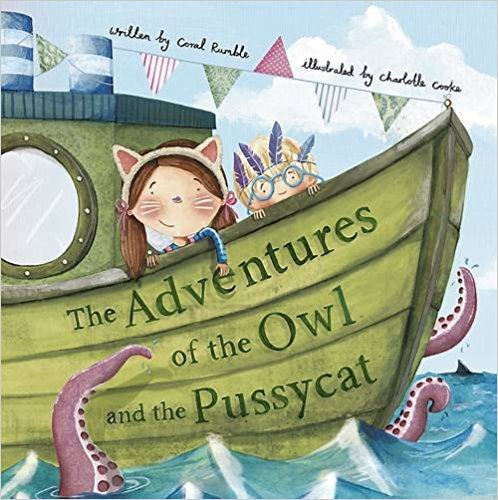
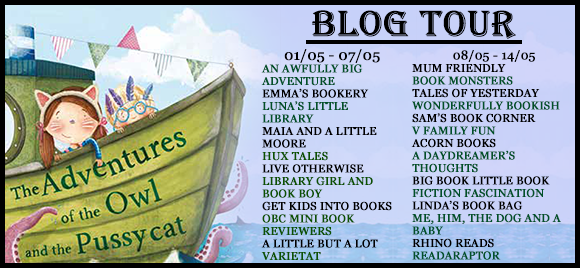
The Adventures of the Owl and the Pussycat by Coral Rumble and illustrated by Charlotte Cooke

owl & pussycat

It gives me great pleasure to support Faye Rogers in bringing you The Adventures of the Owl and the Pussycat by Coral Rumble today. Published on 4th April 2017 by Wacky Bee Books, this children’s story is available for purchase here.

There’s more about The Adventures of the Owl and the Pussycat on Goodreads.

The Adventures of the Owl and the Pussycat

owl & pussycat

The Owl and the Pussycat went to sea, in a box on the living room floor. They sailed away for a year and a day and these are the things that they saw… Join two curious children on a quirky adventure, loosely based on the classic Edward Lear poem, The Owl and the Pussycat​.​

My Review of The Adventures of the Owl and the Pussycat

Based on Lear’s The Owl and the PussycatThe Adventures of the Owl and the Pussycat is a delightful modern take on the poem.

The Adventures of the Owl and the Pussycat takes very little time to read, but the text rhymes well and provides some lovely new vocabulary for young children with words such as ‘dangling’ and ‘jangling’. Despite the textual brevity, I can see hours of fun and educational value in this book. it’s not just the main text that has wit and rhyme, but the small touches that reward extra time spent in reading the story are lovely. The fact the boat, with a nod to Lear, is called the ‘Petit Pois’, the passport stamps (especially for Pirate Cove) and the wanted poster for the seagull all add layers of detail and language that appeals to adults and children alike.

I love the focus on nature as so many children live in inner city environments and there is so much joy in the discovering new creatures like the swordfish, puffin and lobster. The way in which the little boy wears glasses is a real benefit to those with children struggling with sight early on and I liked the fact the two children are dressing up and using their imaginations as they ‘sail’ away in their cardboard box.

However, it is the wonderful illustrations that give verve to the book and bring the text to glorious life. They are simply glorious. I also think they add to the numeracy too, perhaps counting the audience members at the flute concert, or the number of times the naughty seagull appears.

In The Adventures of the Owl and the Pussycat both text and illustration combine to make a wonderful read that children of all ages can enjoy. It’s a really lovely book.

About Author Coral Rumble

coralpic

I have worked as a poet and performer for many years and I’m proud to have my work featured in Favourite Poets (Hodder). I have three published poetry collections of my own and have contributed to more than 150 anthologies. I am also one of the writers of the popular Cbeebies programmes ‘Poetry Pie’ and ‘The Rhyme Rocket’. I have given workshops in some fairly unusual venues as well…the grandest of which being Buckingham Palace!

You can find out more about Coral on her website.

About Illustrator Charlotte Cooke

charlottepic

I was thrilled and proud when my picture book The Adventures of the Owl and the Pussycat was highly commended for the Macmillan Children’s Prize in 2010. Since then I have gone on to illustrate many other picture books and I enjoy making the occasional card too. When I’m not in my studio I’m usually outside running or playing referee to my two kids.

You can follow Charlotte on Twitter and visit her website.

There’s more about and from Coral and Charlotte with these other bloggers:

owl and pussycat banner6 normal

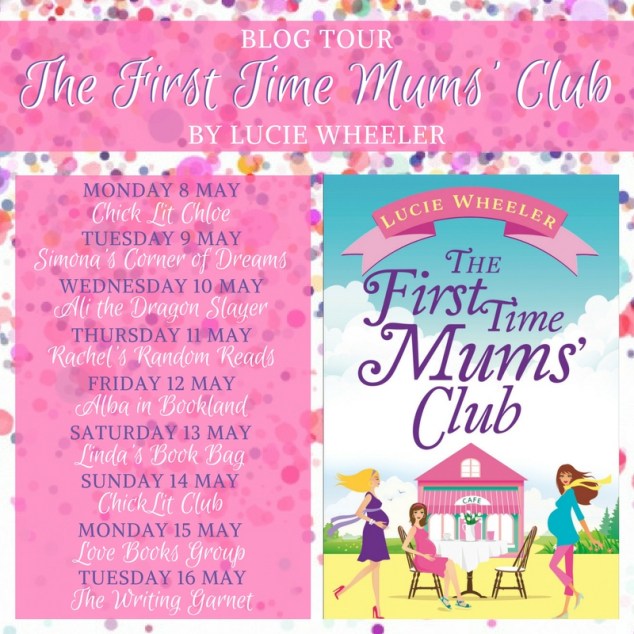
Friendship: A Guest Post by Lucie Wheeler, Author of The First Time Mums’ Club

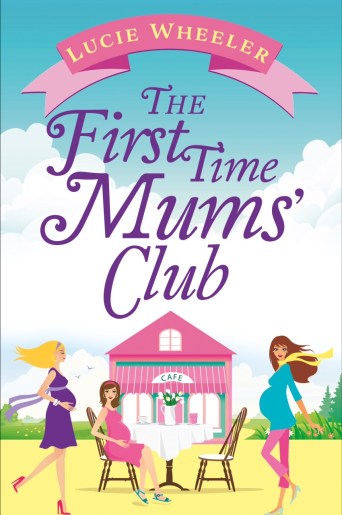
First Time Mums Club cover

I love hosting new to me authors, and it gives me great pleasure to welcome Lucie Wheeler to Linda’s Book Bag today to help celebrate her lovely new book, The First Time Mums’ Club. Lucie has written a smashing post about friendship which is at the heart of The First Time Mums’ Club.

The First Time Mums’ Club was published by Harper Impulse on 5th May 2017 and is available for e-book purchase and paperback pre-order here.

The First Time Mums’ Club

First Time Mums Club cover

Meet Pippa…

After years of trying and a failed IVF attempt, Pippa is thrilled to see two little lines appear on a pregnancy test. Finally a precious baby to call her own. This is all Pippa has ever wanted…if only husband Jason could show just a little excitement.

Imogen…

A baby is the icing on the cake for Imogen and Alice – proof that their love for each other can overcome any obstacle. But when Imogen starts receiving malicious texts, it’s clear that not everyone is thrilled about the girls’ good news.

And Ellie…

A drunken one-night stand and Ellie’s life is ruined! Pregnant, jobless and the relationship with her best friend, Chris, over- forever. Because Chris just happens to be the father of Ellie’s baby…and potentially the love of her life!

For these first time mums the road to motherhood is bumpier than most!

Friendship

A Guest Post by Lucie Wheeler

I’ll be there for you….

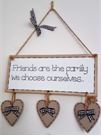
I love the saying that “friends are the family we choose ourselves”. I even have a plaque …

plaque

Friendship was always a crucial element that I wanted to include in my writing. All the stories I write, involve friendship on a multitude of different levels. And friendship plays a key role in The First Time Mums’ Club with Ellie, Pippa, Imogen and Zoe forming an amazing friendship bond.

My friends are there to hold me when I am sad, congratulate me when I achieve, laugh with me when I am silly and kick me into shape when I go off the rails. I honestly do not know what I would do without them in my life. And I think it is important to have different groups of friends too. I have a number of groups of friends who help me in all sorts of different ways:

The Romaniacs

   Romaniacs

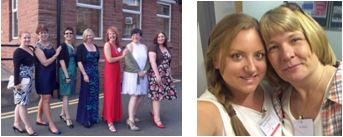
These girls are my lifeline in writing and a lot of the time, personally too. They are always there to push me harder to achieve what I want to achieve, career wise. They are my shoulder of support, my inspiration and my sisters. I class each and every one of these lovely ladies as my family. Thank you Celia, Laura, Catherine, Sue, Vanessa, Debbie and Jan.

My long term friends

Kayleigh

Kayleigh: she’s my longest best friend. We have known each other since we were toddlers and she has been my rock. My daughter calls her ‘auntie Kayleigh’ and she really does hold a special place in my heart. She has been the most stable thing in my life prior to having my daughter and I know she will be my best friend forever. She is one of those people who has so many friends and is always socialising with someone – and I can understand why, because she knows how to be a great friend. I am very lucky to have her in my life. She holds an element of Zoe’s social side and, like Zoe, Kayleigh is the type of person that people feel able to open up to and go to for advice.

She gets married this year too and I am honoured to have been asked to be her Maid of Honour!

Tarnya: I have known Tarnya since we were at college doing our Performing Arts Diploma. Tarnya has always been there for me, through thick and thin, and I know she always has my back. Regardless of whether I am right or wrong in a situation, Tarnya is the girl that will be at the front, fighting my corner and then asking me afterwards what actually happened! Her unwavering loyalty is amazing. She has an element of Ellie in her!

Hannah: An incredibly special human being. We have been friends for about 8 years and I know she is going to be in my life forever. She is the weirdest person I know! Never before have I met someone so crazy, yet sane. So full on, yet passionate. So honest, yet supportive. Hannah will tell me if I have done something wrong, but she will be by my side to put it right again. She keeps my feet on the ground but equally, pushes me to fly. She makes me feel like part of her family. We go holiday with Hannah and her children at the end of this month and I am SUPER excited. Hannah has Pippa’s caring side and Imogen’s love for children. If I owned a nursery, Hannah would be my first employee because her love for children and making them laugh is incredible. She also makes me laugh – a lot!

My university friends

uni

I knew it would take a lot of juggling going to university and I resigned myself to that fact that I wasn’t there to make friends! How wrong I was. I’m very lucky that my year group, as a whole, are fantastic and we all get on so well. Naturally, we do have our little close friendship groups within the year but I honestly feel like all of them are my friends and I could walk in and sit with any of them and not feel uneasy. I do have my close friends though and so I would like to shout out to Leanne, Abi and Alex for always being there for me and helping to keep me sane! Also special thanks to Claire, Ben, Louise, Esther, Katie and Hannah for giving me the laughs needed to get through a degree. I know I have made some friends for life.

My virtual friends

Well, this group of people play a massive part in my everyday sanity. I am very lucky to have such a wonderful group of online friends. Most of these online friends are authors, agents, editors and bloggers. And each and every one of them play a huge part in my everyday life. I couldn’t possibly name everyone but I just want you to know that you are all wonderful people. I wish I could post photos of you all.

About Lucie Wheeler

11046192_333965996801986_2806143484448268141_o

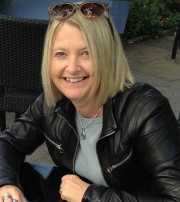
Lucie Wheeler lives in Essex with her husband and daughter, and her English Bull Terrier, Dame, who loves to sit under Lucie’s desk as she writes and keep her feet warm. Never one to sit still, Lucie always has lots going on in her life. Currently, she’s writing her novels alongside studying for a degree. She is also one of The Romaniacs.
Lucie loves reading, spending time with friends and eating chocolate – when she gets to do all three, she’s a very happy lady!

You can follow Lucie on Twitter, find her on Facebook and visit her website.

There’s more with these other bloggers too:

First Time Mums Club

A Few of My Favourite Things: A Guest Post by Jane Lovering, Author of Can’t Buy Me Love

Can't buy me love

I’m delighted to be helping to celebrate the paperback publication of Can’t Buy My Love by Jane Lovering.

Published by ChocLit on 9th May 2017, Can’t Buy Me Love is available for purchase in e-book and paperback here. To celebrate and in keeping with the title, I asked Jane about her favourite (free) things and luckily she agreed to tell me!

Can’t Buy Me Love

Can't buy me love

Is it all too good to be true?

When Willow runs into her old university crush, Luke, she’s a new woman with a new look – not to mention a little bit more cash after a rather substantial inheritance. Could she be lucky enough to score a fortune and her dream man at the same time?

Then Willow meets Cal; a computer geek with a slightly odd sense of humour. They get on like a house on fire – although she soon realises that there is far more to her unassuming new friend than meets the eye …

But money doesn’t always bring happiness, and Willow finds herself struggling to know who to trust. Are the new people in her life there because they care – or is there another reason?

These are a few of my favourite (free) things …

A Guest Post by Jane Lovering

Can’t Buy Me Love by Jane Lovering is out now in paperback and, to celebrate, Jane is sharing her three favourite things … that are free!

  1. Walking my dogs.  Well, I say ‘walking’, it’s more of a controlled sprint; my young dog likes to run everywhere and, because she’s a Patterdale, she has to be prevented from chasing and/or attacking things.  So walks can be a little bit fraught at times.  But, because I live in the most beautiful part of the country (sorry, might be a bit biased), there are lots of places to go, beaches, moorland, open countryside …  And, because I live in the wilds, I don’t even need to get into the car to be able to walk for miles across stunning scenery.  Do I sound smug? I don’t mean to.
  2. I am a huge fan of my bed.  Left to my own devices, I doubt I’d leave it, except for the essentials. It’s big and cosy and I have two duvets and an electric blanket (see above, re living in the wilds, which means big, cold house) and a big pile of books that make me feel guilty on a daily basis.  There’s nothing like climbing into a big, warm bed after a busy day and curling up under forty layers of … actually, I have no idea what my duvets are made of, but they are snuggly so I don’t care … and sleeping for nine or ten hours.  This may seem like an unnecessary amount of sleep, but I had five children, so I’m owed about twelve years of sleep backlog, which I am making up.  And then I wake up to sheep and birdsong, and a Patterdale threatening the milkman.
  3. There is nothing in the world quite so much fun as a really good giggle.  Whether it’s laughing with friends or watching something alone on TV and having a good snort, laughing just makes me feel generally that the world is an all right sort of place. So, whether it’s an episode of iZombie (which I adore, it’s not as scary as it sounds) or re-reading a Terry Pratchett novel, or just watching the cat fall in the pond (again, you’d have thought she’d have learned by now), I really enjoy laughing.  Sometimes I just laugh randomly, if I have an amusing thought, which I am coming to realise makes me look like a mad old woman, but, well, maybe that’s no so far from the truth!

About Jane Lovering

Jane Lovering

Jane was, presumably, born, although everyone concerned denies all knowledge. However there is evidence that her early years were spent in Devon (she can still talk like a pirate under the right conditions) and of her subsequent removal to Yorkshire under a sack and sedation.

She now lives in North Yorkshire, where she writes romantic comedies and labours under the tragic misapprehension that Johnny Depp is coming for her any day now.

Jane’s likes include marshmallows, the smell of cucumbers and the understairs cupboard, words beginning with B, and Doctor Who. She writes with her laptop balanced on her knees whilst lying on her bed, and her children have been brought up to believe that real food has a high carbon content. And a kind of amorphous shape.

You can follow Jane on Twitter, visit her website and find her on Facebook.

Waste Paper: A Guest Post by Sheila Newberry, Author of The Punch and Judy Girl

Punch and Judy Girl cover

I’m so pleased to be featuring The Punch and Judy Girl by Sheila Newberry on Linda’s Book Bag. Sheila has kindly written a guest post all about how she began as a writer that I’m delighted to share with you today.

Published on 4th May 2017 by Bonnier Zaffre, The Punch and Judy Girl is available for purchase in e-book and paperback here.

The Punch and Judy Girl

Punch and Judy Girl cover

CAUGHT BETWEEN FAMILY AND DUTY – CAN SHE FOLLOW HER DREAM?

Suffolk, 1925.

After the death of her father, a much-loved Punch and Judy man, May Moon packs her bags and moves to the seaside in the hope of continuing his legacy.

Already tasked with looking after her younger sister, May little imagines her summer will grow tougher still. Her long absent mother has finally returned – and with an agenda all of her own.

But as May struggles to balance her family’s competing demands – and honour her father’s legacy – she’s surprised to discover her passion for performing grows ever stronger.

As the world around her begins to change, might she finally be able to find a dream of her own?

Waste Paper

A Guest Post by Sheila Newberry

A few years after the end of the war, we girls at grammar school who were about to launch ourselves into the world of work were questioned about our choice of future careers.  Most girls wanted to be teachers or nurses, one a scientist, all choices which were greeted with approval. When it was my turn, I blushed and said simply  “I want to be a writer…”  A pause, then came the answer:  “But Sheila, don’t you know there is a shortage of paper?”  I have been conscious of that ever since…

I learned to read and write at three years old, but my mother said I was telling stories to myself in my cot.  She and Dad used to listen outside the door.  I guess it was my way of getting off to sleep. I was a premature baby, almost born in an Austin 7 en route to Suffolk where Mum was going to care for her sister who had just had a baby herself!  She made it to the top step of the stairs at Auntie’s house and I decided to put in an appearance!  I was bright yellow with jaundice and baptised hurriedly.

When I was seven I entertained the school on a Friday afternoon in the village hall to a long-running saga about a black-eyed pirate called Bill.  I made it up as I went along and was so absorbed in the story I wasn’t self-conscious, until the hall caretaker told my aunt (with whom we stayed at times during the war, after being bombed out) how he put down his bucket and mop, and like my parents, “listened outside the door.”  Then I felt too shy to continue.  However, I was writing all the time.  Shortage of paper then indeed:  kind friends cut the flyleaves from old books for my use!  I wrote my first “book” before I was ten, in purple ink, all sixty pages of it, probably purple prose as well!

Later, when I was fifteen, I won an essay prize.  The subject was Waste Paper, just up my street.  I was an avid collector, especially of ancient comics, though my mother pointed out to me that there wasn’t much point in replying to the reader who wanted a penfriend, as “she must be thirty by now!”  I nearly didn’t enter this inter-schools competition set up by the local paper, because I had dashed off pages in my usual awful scrawl, “You let your pen run away with you,” as Dad said. The Head mistress appeared with my script and said:  “The deadline is tomorrow.  Stay after school and rewrite this with no blots!”  Reluctantly, I did, and my form tutor kindly delivered my effort by hand.  I thought no more of it until one morning I was puzzled by girls coming up to me, and saying “Well done!”

I had come first out of 3,000 entries.  I was embarrassed because the Head Girl had come second….  Years later, my old Head Teacher wrote to me, “You have a gift, Sheila, I do hope you use it!”  Well, I try, I really do, Miss C.

I married young and John and I brought up our five boys and four girls on a smallholding in the Weald of Kent.  The house was in a poor state of repair, we had mice under the floorboards and bats in the loft, but we loved it all.  We had numerous pets (as well as the “pests”) – I never stopped writing, and the children were a great inspiration!  I wrote articles on family life for magazines, and short stories for the American bible-belt for children.  With the welcome dollars we purchased a large portable swimming pool.  The children all learned to swim in it, but all I could do was float in an old tyre with the current baby on my lap!

I was also village correspondent while we lived in that village. Emboldened, I began to write romantic short stories, set in the past, and had wonderful feedback from readers. My editor told me I should write books, “because we all want to know what happened next!”  So I did.

I will go on writing, I hope, until I drop. I am writing the biography of my great-grandmother Emma, a story-teller herself, and a remarkable woman.  I have reached 1862 right now – it was entitled Nelly Has Made You a Chocolate Cake, but is now The Forget-Me-Not Girl. There are many more stories to write – and thank you for reading this!

(And thank you Sheila for sharing this story with us!)

About Sheila Newberry

sheila

Sheila Newberry was born in Suffolk and spent a lot of time there both before and during the war. She wrote her first ‘book’ before she was ten – all sixty pages of it – in purple ink. Her family has certainly been her inspiration and she has been published most of her adult life. She spent forty years living in Kent with her husband John on a smallholding, and has nine children and twenty-two lively grandchildren. They retired back to Suffolk where Sheila still lives today.

All of Sheila’s books are available here.

There’s more with these other bloggers too:

punch and judy tour poster

The Last Piece of My Heart by Paige Toon

The last piece of my heart

I don’t actually know which lovely member of Books and the City @TeamBATC for Simon and Schuster sent me a copy of The Last Piece of My Heart by Paige Toon, but whoever it was – thank you!

I was fortunate to meet Paige Toon a year or so ago at a blogger event but I have never read one of her books before. What a fool I’ve been to leave it so long!

The Last Piece of My Heart will be published by Simon and Schuster on 18th May 2017 and is available for pre-order on Amazon paperback, Amazon Kindle, iBooks, Waterstones, WHSmith, Kobo and Google Play.

The Last Piece of My Heart

The last piece of my heart

When life feels like a puzzle, sometimes it’s the small pieces that make up the bigger picture… Join Bridget on a journey to put her world back together.

A successful travel journalist, Bridget has ambitions to turn her quirky relationship blog about the missing pieces of her heart into a book. But after a spate of rejections from publishers, she accepts an alternative proposition.

Nicole Dupré died leaving behind a bestselling novel and an incomplete sequel. Tasked with finishing the book, Bridget is thankful to have her foot in the publishing door, even if it means relocating to Cornwall for the summer and answering to Nicole’s grieving husband, Charlie…

My Review of The Last Piece of My Heart

Bridget needs to write a new book. The trouble is, it’s not necessarily the one she want to write.
I cannot believe it has taken me so long to read Paige Toon. I have half a dozen of her books on my shelves but have never actually got round to reading anything before today. And as I write this review I mean one day. I started reading The Last Piece of My Heart this morning and simply couldn’t put it down. I read through my lunch and dinner and all the other things I should have been doing because from the very first word I was totally invested in what happened to Bridget and I was desperate to know what would happen.

Unashamedly chick-lit in genre, The Last Piece of My Heart represents the very, very best writing of its kind. It is an effortless read that develops emotion so skilfully that it is impossible not to be caught up in the story. Yes, I was expecting a happy ever after ending (and you’ll have to read it for yourself to see if I got one), yes I expected a hunky man as the male protagonist and Charlie doesn’t disappoint, but there’s so much more to this writing than the simple formulaic construction I was expecting.

Firstly, I absolutely loved all the characters, especially Bridget and Charlie, and even those whom I also disliked in the story I appreciated as well defined human beings . It says something that I found baby April a real delight to read about. I’m not maternal and I usually loathe the representation of children in fiction but I felt the balance here was perfect; realistic and unsentimental so that April’s presence enhanced the reading experience for me.

I thoroughly enjoyed the insight into how writers conduct their research and felt Paige Toon’s ability to create a sense of place, be it Cornwall, Thailand or the interior of the camper van Hermie, was very finely wrought so that I could imagine all the settings in my mind’s eye. The playlist of music added an extra dimension to this effect too.

Alongside the elements I was hoping to find was a treasure chest of emotion, a vivid picture of love and grief and a hugely entertaining and enjoyable story that drew me in and captivated me. I absolutely loved reading The Last Piece of My Heart and recommend it wholeheartedly to those looking for the perfect summer read.

About Paige Toon

paige toon

Paige Toon was born in 1975 and grew up between England, Australia and America, following her racing driver father around the globe. A philosophy graduate, she worked at teen, film and women’s magazines, before ending up at Heat magazine as Reviews Editor.

You can follow Paige on Twitter, visit her website and find her on Facebook.