Cover Reveal: The Little Church by the Sea by Liz Taylorson

thelittlechurchkindle

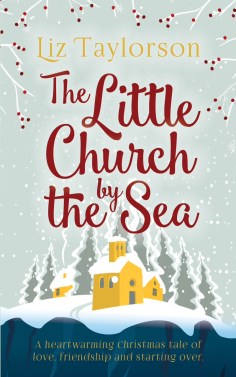
I love seeing new books early in their lives and am delighted to be helping reveal The Little Church by the Sea by Liz Taylorson today, especially as Liz will be featuring on Linda’s Book Bag with a guest post on 24th November as part of the launch celebrations for The Little Church by the Sea. Do call back then to find out what Liz gets up to in an average day!

The Little Church by the Sea will be published by Manatee books on 23rd November and is available for pre-order here.

The Little Church by the Sea

thelittlechurchkindle

Isolated and unwelcome in the picturesque seaside village of Rawscar, Reverend Cass Fordyce has lost her faith and her home. Christmas is coming, and she isn’t looking forward to it. Then she meets attractive local man Hal – twice divorced and with a reputation as a ladies’ man, he’s everything that a celibate vicar like Cass should avoid…especially as Hal is hiding secrets of his own, including his past with the mysterious Anna.

Can Cass ever find her way in Rawscar? What secret does Hal have to hide? And is there ever such a thing as a truly fresh start?

**A HEART-WARMING CHRISTMAS TALE OF LOVE, FRIENDSHIP AND STARTING OVER**

About Liz Taylorson

Liz

Liz has always surrounded herself with books, has a degree in English Literature and worked as a cataloguer of early printed books for a major university library.

Having joined the Romantic Novelists’ Association’s wonderful New Writers’ Scheme to try to learn how to write novels properly in 2015, she started writing fiction and hasn’t stopped since.

Liz says she owes everything to her tolerant and long-suffering husband Ben and her tolerant and long-suffering children, but very little to the cats who are neither tolerant nor long-suffering and keep sitting on the computer keyboard and messing up her manuscript if she forgets to feed them on time.

When not reading or writing Liz is often to be found on stage (or behind it) with her local amateur dramatic society, drinking tea, or visiting one of the several North Yorkshire seaside villages which were the inspiration for the fictional Rawscar, the setting for her debut novel The Little Church by the Sea.

You can find Liz on Facebook, follow her on Twitter and visit her blog.

Love A Village Book: A Guest Post by Sue Moorcroft, Author of The Little Village Christmas

The Little Village Christmas

Regular readers of Linda’s Book Bag might be forgiven for thinking I’m a little bit obsessed by Sue Moorcroft. I’ve met Sue several times and had the chance to interview her here, and have previously reviewed Sue’s The Christmas Promise here, and Just for the Holidays here. As well as all that, Sue has told me about her fantasy holiday companions here too!

Today I’m delighted that Sue is explaining a little about the village concept behind her latest book, The Little Village Christmas.

The Little Village Christmas was published by Avon Books, an imprint of Harper Collins, on 9th October 2017 and is available for purchase here.

The Little Village Christmas

The Little Village Christmas

Alexia Kennedy has lived in the little village of Middledip all her life – and now it’s time for her to give something back. As an interior decorator, she’s been tasked with turning the village’s neglected Victorian pub into a community café that everyone can use.

After months of fundraising by all the villagers, Alexia can’t wait to get going – but disaster strikes when every last penny is stolen. With Middledip up in arms at how she could have let this happen, Alexia feels ready to admit defeat.

But help comes in the most unlikely form when woodsman, Ben Hardaker and his rescue owl Barney, arrive on the scene. Another lost soul who’s hit rock bottom, Ben and Alexia make an unlikely partnership. However, they soon realise that a little sprinkling of Christmas magic might just help to bring this village – and their lives – together again…

Love A Village Book

A Guest Post by Sue Moorcroft

Although every book I publish is ‘standalone’, not depending on any book that’s come before, I do like to write linked books. A linked book is one where the central characters are new but you might find a few places or people that have popped up in my earlier books.

The Little Village Christmas is the story of what happens to Alexia when she agrees to manage the refurbishment of an old forgotten Victorian pub in the village so it may become The Angel Community Café. It’s to be her swan song, a pro bono project to put the cherry on the top of her portfolio as an interior decorator ready for her to take on a new, exciting role with an east London team.

Until someone runs away with all the money.

As two of her greatest friends, Jodie Jones and Gabe Piercy are the worst affected (and also because the east London concern dumps her) Alexia shelves her plans to leave the village to help stage a rescue.

Ben Hardaker has taken a job in the woods of a nearby estate, not feeling particularly sociable since his marriage broke up, threatening his other family relationships and causing him to sell up and move away from home. As he’s Gabe’s nephew he’s unwillingly involved in Alexia’s plans and inexorably brought out of his cottage in the woods.

The whole plot depends upon a charming village setting, where people know and like each other or know who to avoid and get caught up in each other’s lives. ‘Aha,’ I thought. ‘I already have a village in my head and its map is drawn in one of my A3 pads …’ Regular readers will have encountered Middledip village before. It’s surprising how often characters come from, end up, or simply live there. I found a few changes had come over the village since last time I visited – the village hall has had to close, Gwen has left the shop and her place taken by nosy Melanie and renamed ‘Booze & News’ – but it was such a pleasure to see a few old friends. Gabe and his recalcitrant pony, Snobby; head of the village hall committee, Carola, whose decorating skills finally come into their own; and Tubb from the pub, who never really changes.

The village has taken Ben to its heart, calling him ‘the wizard in the wood’ because of the injured owl he’s caring for, and protecting him when someone comes to the village looking for him. He comes to feel so at home that he even chooses to stay there for Christmas and discover what a village Christmas is really like. It’s kind of the opposite of Alexia, who had expected to leave in the New Year …

(And now you’ve got us all intrigued Sue!)

About Sue Moorcroft

DSC_3507

Award winning author Sue Moorcroft writes contemporary women’s fiction with occasionally unexpected themes. The Wedding Proposal, Dream a Little Dream and Is This Love? were all nominated for Readers’ Best Romantic Read Awards. Love & Freedom won the Best Romantic Read Award 2011 and Dream a Little Dream was nominated for a RoNA in 2013. Sue’s a Katie Fforde Bursary Award winner, a past vice chair of the RNA and editor of its two anthologies.
The Christmas Promise was a Kindle No.1 Best Seller and held the No.1 slot at Christmas!
Sue also writes short stories, serials, articles, writing ‘how to’ and is a creative writing tutor.

You can follow Sue on Twitter @SueMoorcroft, find her on Facebook and visit her website.

There’s more with these other bloggers too:

Blog tour banner

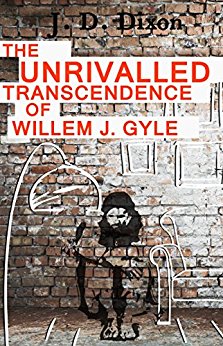
A Publication Day Interview with J.D. Dixon, Author of The Unrivalled Transcendence of Willem J. Gyle

Willem

Having studied philosophy for part of my degree I was so intrigued that J.D. Dixon, author of The Unrivalled Transcendence of Willem J. Gyle, is currently studying for a degree to include that discipline that I had to ask him onto the blog to tell me more in interview.

The Unrivalled Transcendence of Willem J. Gyle is published today, 12th October 2017 by Thistle and is available for purchase here.

The Unrivalled Transcendence of Willem J. Gyle

Willem

In a Scotland beset with depression, Willem is one victim among many. He loses his job, his mother dies and he is forced out of the flat they shared. Seeing no other option, he takes to the streets of Edinburgh, where he soon learns the cruelty felt outside the confines of his comfortable life. Stories from his past are interwoven with his current strife as he tries to figure out the nature of this new world and the indignities it brings. Determined to live freely, he leaves Edinburgh, hiking into the Scottish Highlands to seek solitude, peace and an unhampered, pure vision of life at nature’s breast.

The Unrivalled Transcendence of Willem J. Gyle is at once a lyrical, haunting novel and a set piece in the rage of an oppressed, forgotten community. J. D. Dixon’s sparse, brutal language captures the energy and isolation of desperation, uniting despondency and untrammelled anger in the person of his protagonist.

An Interview With J.D. Dixon

Welcome to Linda’s Book Bag James. Thank you so much for agreeing to answer some questions on my blog about your writing and The Unrivalled Transcendence of Willem J. Gyle in particular. Firstly, please could you tell me a little about yourself?

Hi Linda, thanks for having me. I’m a novelist based in Edinburgh, originally from London. I’m twenty seven and I’ve been writing for about five years now. I enjoy reading philosophy and am midway through a part time degree in Philosophy, Politics and Economics with the Open University, which has begun to influence my writing to a greater degree of late.

A couple of years ago, in the summer of 2015, I had the idea for The Unrivalled Transcendence of Willem J. Gyle and wrote a first draft over a couple of fairly intense weekends. I had a workable copy by November, at which point I sent it to David Haviland of the Andrew Lownie Literary Agency, who happily agreed to take me on. We’re currently working together to finalise a draft of my next novel.

(I think many authors would envy you that speed of process James!)

When did you realise you were going to be a writer?

Early, I think. I wrote lots of terrible poetry and a few short stories as a teenager. I wrote my first novella at twenty. But prior to this I was part of the generation who grew up reading Harry Potter and Phillip Pullman’s Dark Materials. The power of literature was always evident, from the earliest age. And I always wanted to take part in that.

Which aspects of your writing do you find easiest and most difficult?

The planning stage through to completing the first draft is the easiest bit. The macro-editing is hard but enjoyable, as I try to bring the narrative together. And then I get quite bogged down obsessing over the micro-editing: sentence structures, chapter heading formats, etc. And that’s the point I know it’s done.

What are your writing routines and where do you do most of your writing?

When I have an idea, I spend a while reading around the subject, both factual accounts and fiction by writers working on similar themes. When I have enough source material I set out a very in-depth plan, usually detailing the narrative in its entirety on a scene-by-scene basis.

Once the plan is in place I spend a few hours every day writing until it is done. No breaks – it becomes quite obsessive as I try to work through my plan while it’s fresh. I try to hit between one and two thousand words a day (any more and my writing becomes very stilted as fatigue hits) and within a couple of months, or even sooner in the case of The Unrivalled Transcendence of Willem J. Gyle, I will have a workable first draft.

As to where, I can usually be found hanging out in one or another of Edinburgh’s many cafés, hidden behind my laptop.

Without spoiling the plot, please could you tell us a bit about The Unrivalled Transcendence of Willem J. Gyle?

Of course. Willem is a labourer in Edinburgh. Oxygen deprivation as part of a complicated birth has left him with thought processes that are slower than others’. He is laid off a few days before suffering a bereavement, after which he is forcibly evicted from his flat. He takes to the streets.

By novel’s end he has grown disenchanted by humanity and turns his back on the city, hiking into the Scottish Highlands to seek solitude, peace and perspective amongst Scotland’s vast mountain ranges.

The Unrivalled Transcendence of Willem J. Gyle is out today. How are you celebrating?

Honestly? My dog had to have her annual jabs today, so that was first on the list. Aside from this, it was my second wedding anniversary a few days ago and my wife and I had a weekend in Vienna. And this weekend we’re having a launch party at our flat in Edinburgh (I have a big pile of copies of the novel to sign!)

Why did you choose what appears to be quite a depressing subject matter initially as Willem realises what life on the streets is like?

I grew up in London, and so was no stranger to witnessing homelessness. However, it was nothing compared to what I witnessed in Edinburgh. To Holyrood’s great and enduring shame, homelessness seems almost ubiquitous in Scotland.

(I think that might surprise many of your readers.)

I wrote The Unrivalled Transcendence of Willem J. Gyle two and a half years after moving to Edinburgh: I spent much of those years mulling over the issue of such widespread homelessness centred in a city which contains really quite breath-taking amounts of wealth.

How did you create Willem?

He very much evolved as a facsimile. In part he is based on the titular character from Martin Amis’ short story Bujak and the Strong Force. The story is part of Einstein’s Monsters, and the character Bujak has a well of strength inside himself which Amis likens to nuclear power- reserves of anger and sheer, brute power that most men don’t have. In part he is the naïve, poetical yet misunderstand soul of Frankenstein’s monster. In part he draws on the idea of every gentle giant any of us have ever met, but one who has suffered a great betrayal and is beginning to realise his own power.

He isn’t (I hope!) too much of an alter ego. Although I think there is a degree of gratuitous violence in the novel which is there both from, and to please, that part in all of us that wants to let go, think fuck it and watch the world burn around us. Every avenging angel you’ve ever seen on TV or read of in fiction is there; every character who is liberated by having nothing left to lose.

These are the things I had in my head as I wrote him – I think (never trust a writer who claims to know absolutely, retrospectively where their ideas came from!) These ideas fed into the narrative, and the narrative in turn helped me to develop him from these base elements.

Willem seeks solace in nature. To what extent do you think nature has the power to heal and restore us?

I’m a city boy through and through, so it’s more of a hypothetical dream than an iron hard belief. However, I have spent time touring the Sottish Highlands. I used to go hiking and camping with my dad in the south of England. I find the many varied numinous sights to be experienced in nature don’t heal in the conventional sense, rather giving a perspective which helps to diminish any sense of one’s own personal traumas. They expand the tea cup and show how small the storm really is. It can be both daunting and refreshing, but either way you come away with a fresh viewpoint and sense of scale.

How far was it your intention to explore the theme of transcendence in your novel and how far did it arise naturally as you wrote?

It was there from the beginning, in quite an inverted way. With regards homelessness, I have often wondered at the idea of betrayal in terms of Rousseau’s The Social Contract. The idea that drove this narrative was that living on the streets is to be relegated to a class in society derided by most – those deriding them and allowing the problem to persist willingly separate such people from the rights they should enjoy under the social contract, thus breaking it. They are effectively freed from its restraints, and this was the transcendence I set out to capture – Willem realised that he no longer had a duty to abide by standard norms and could, in his mind, fulfil his true potential because of this.

(Gosh – you’ve just taken me back almost 40 years to reading Rousseau at university.)

It seems to me that writing The Unrivalled Transcendence of Willem J. Gyle may have been quite a cathartic experience for you. How far would you agree?

Completely. 100%. Whilst I was writing the initial manuscript friends kept asking me how I was going to be able to write about a man living on the streets when I had never done so. Many reviewers and readers have since said similar things. But for me the novel isn’t about a man’s struggle on the streets – it’s his struggle with himself. That was my entry point into the narrative, and into the character. It’s more a narrative about the intertwining of despondency and rage which I imagine isn’t alien to too many people. That is the driving force of the man Willem, and it was that which I was letting out, in fits and starts, from my own life.

So why do you write?

This answer must necessarily refer back to your previous question. I would hesitate to trust any thinking person who didn’t at least occasionally feel angry, oppressed, and depressed by the world around them, by the fact of being and the conditions attached to that fact. For me, writing is both the place into which I can tidy away these emotions, both little and large, and an attempt to come to terms with the world. I have always felt this as a reader, since my earliest memories. You mentioned catharsis before – as much as it is a stereotype both easy and ponderous to turn to, the whole writing process is my catharsis.

How did you go about researching detail and ensuring The Unrivalled Transcendence of Willem J. Gyle was realistic?

If I’m honest, realism in its most brutal sense has never been a great priority for me. I grew up hooked on Salman Rushdie as a teenager, and the idea that things never need to be quite as they seem, or even follow the strictest logical pattern, has always appealed. Using a slight subversion of reality to make a broader point about our own realities comes with its own charm, and is an invaluable component of a writer’s toolkit. For instance, Willem in the novel has an ever so slightly exaggerated well of physical strength and resilience – I begin the novel by claiming that he has never felt the need to see things clearly, and it’s very much his own subjective reality that the narrative explores.

However, there is of course the need to portray homelessness both with a degree of accuracy and, I hope, sympathy. Ben Judah’s remarkable This is London helped me out, tracing as it does the lives of people living below the radar of middle class respectability in the nation’s capital. The Shelter webpage also contains numerous accounts of people’s experiences of homelessness, as do plenty of other websites. Aside from these, one of the main reasons for writing this novel was my shock when first moving to Edinburgh at how many people there are living on the streets here. Unfortunately, there is no lack of source material, especially in the years post the 2007 financial crash.

The Unrivalled Transcendence of Willem J. Gyle has a cover that suggests a man invisible to society to me. How did that image come about and what were you hoping to convey (without spoiling the plot please!)?

Are we not all invisible to society? I once watched an interview with Stephen Fry in which he said that he always felt life to be a party to which he didn’t get an invitation, and that literature serves the part of that invitation. I don’t think the idea of being overlooked is foreign to many people, and so it’s one that is very easy to put into prose. The artistic team which designed the cover tapped into this perfectly, I think.

(I agree – I think it’s a perfect cover.)

If you could choose to be a character from The Unrivalled Transcendence of Willem J. Gyle, who would you be and why?

Jap, Willem’s pet dog. I set him up as the foil to all that would eventually turn Willem against humanity, and he never experiences anything but the purest joy and excitement. Wouldn’t that be lovely?

If The Unrivalled Transcendence of Willem J. Gyle became a film, who would you like to play Willem and why would you choose them?

Perhaps he would be a little old, but part of Willem came from Tom Hardy’s performances in Peaky Blinders and Warrior. He has the physical presence to make those hidden reserves of strength seem natural.

When you’re not writing, what do you like to read?

I read a lot of philosophy. Particular Locke at the moment. And I read The Economist every week.

In terms of fiction I’ve mentioned a few names already. I enjoy Rushdie and similar writers – Garcia Marquez, Bulgakov. Realists such as J.M. Coetzee and Cormac McCarthy have a great influence on my work. My main aim at the moment is to learn German so that I can read Herta Muller in her own language, both prose and poetry. Poets such as Carlos Drummond de Andrade and Derek Walcott are up there in the list. And if ever I want to read a perfect example of written English I turn away from the above writers’ weightiness and crack open some Wodehouse.

If you had 15 words to persuade a reader that The Unrivalled Transcendence of Willem J. Gyle  should be their next read, what would you say?

If it’s not too pretentious:

This will be an issue by which our generation will ultimately be judged – please, read.

Thank you so much for your time in answering my questions.

And thank you once more for hosting me.

About J.D.Dixon

J D Dixon

D. Dixon was born in London in 1990. He studied English Literature and History at Goldsmiths College, University of London, before pursuing a career as a writer. He currently lives with his wife in Edinburgh.

You can follow James on Twitter @James_D_Dixon.

Writing a PHD Novel: A Guest Post by Tracey Iceton, Author of Herself Alone in Orange Rain

orange rain full cvr

Those who know me well know that I have two ambitions – to write a novel and to study for a PhD (my husband has one so I don’t see why I should just stick with my Masters!). When I heard that Tracey Iceton had combined both my ambitions into one activity I couldn’t wait to be part of the blog tour for her latest book, Herself Alone in Orange Rain. I’m fascinated to hear from Tracey all about that process in a brilliant guest post today.

I’d like to thank publicist Karen Bultiauw for my copy of Herself Alone in Orange rain that I shall be reading very soon.
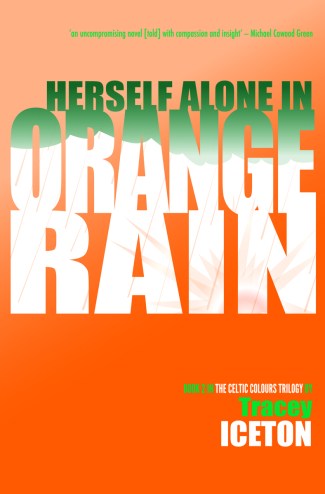
Herself Alone in Orange Rain is published by Cinnamon Press and is available for purchase here.

Herself Alone in Orange

orange rain full cvr

Kaylynne Ryan is a promising art student, used to fighting for her place in a world of men, but when a forgotten friend turns up she realises there is more than her own freedom at stake.

Learning the truth about her Irish heritage, her grandfather who fought all his life for Ireland’s independence, her parents who gave their lives for the same cause, she finds herself drawn into the dangerous world of the Provisional IRA with its bombing campaigns, bloody violence, hunger strikes and patriotic sacrifice. She didn’t look for the Troubles, but they found her nonetheless, and now, whatever the cost, she must join the cause to help rid the Six Counties of the Brits.

Herself Alone in Orange Rain tells the story of one young woman’s fight for freedom and independence, for her homeland and for herself.

Writing A PhD Novel

A Guest Post by Tracey Iceton

Green dawn

Writing a novel as part of a PhD is a radically different process to just writing a novel.  I say this with certainty because my first novel, Green Dawn at St Enda’s was ‘just written’.  I knew what I wanted to do with it, did it, then my editor, the wonderful Jan Fortune at Cinnamon Press read it, told me how to make it better and I went away and did that too.  Simple.

When I got accepted on the creative writing PhD programme at Northumbria I was delighted; my studentship meant I was being paid to write my next novel!  At least that’s how I viewed it at first.  Over the three years of my doctorate I grew enormously as a writer, massively improving my craft and learning far more than even my English Studies honours degree taught me about fiction.  However, I didn’t ‘just write’ my second novel, Herself Alone in Orange Rain.
The process of a practice led PhD is that you write a section (once you’ve done enough research in your field of writing which is a pain for those of us who want to get down to being creative), give your supervisors it to read, meet with them, listen to what’s wrong with it and go home to put it right. It is agonising but worth it and my second novel is a mature, even sophisticated piece of writing, I feel, for this process, because I delved deeper in the mechanics of what I was writing and, more importantly, what I was writing against which I only realised through studying reams of Troubles fiction – fiction about the conflict in Ireland, which I didn’t even know was a genre until I starting the PhD!

To rewind a bit my Celtic Colours trilogy came about after visiting Kilmainham Gaol, Dublin.  Standing in the Stonebreaker’s Yard I learnt the story of the 1916 Easter Rising and was so fascinated by it that I knew I needed to write a novel based on it.  From the beginning my intention was for a trilogy; part one on the Easter Rising, part two on the 1970s/80s Troubles, part three on the situation in Ireland 100 years after the 1916 Rising.  I chose to write fiction because I believe fiction is an accessible, engaging form that invites readers into a world they wouldn’t be interested in exploring through non-fiction.  I was right in this belief because many readers of Green Dawn have commented on how much they learnt about British and Irish history by reading it, something that was a happy side-product of them picking up a novel, hoping to be entertained.

When it came to part two I assumed I would have a male protagonist; I planned to tell the story from the IRA perspective and, well, all IRA members are men, aren’t they?  But a friend, poet Natalie Scott, suggested exploring the woman’s point of view and it didn’t take much investigating to uncover two surprising things – women were active service IRA volunteers (they planted bombs and shot people) and their experiences were not realistically depicted in fiction.  This is where the PhD project took shape, giving me a solid research question: how do I write a novel that offers a credible, realistic portrayal of the experience of being and IRA woman?  In this I had a project I was passionate about.

Through my reading of Troubles fiction for the PhD I encountered female IRA protagonists who were shallow, heavily gendered stereotypes, even childish caricatures and never did I feel these fictional characters resembled or were believable as real women, which is characterisation lesson number one.  There was everything from bloodthirsty ice-maiden assassins to naïve little girlies bullied by male counter-parts.  It was depressing reading but spurred me on, despite the ego bruising of PhD supervision, to write the novel because I was desperate to challenge these misrepresentative fictional portrayals and give a real, genuine fictional voice to the life and experiences of the IRA women I found in my fact-finding research.

Whatever people make of Herself Alone in Orange Rain, I acknowledge it will be controversial for some readers, I stand by it because I know, having spent three years researching and writing it, that it does what no other novel I have found does: it uses the power of fiction to tell the true story of what it was like to be a young woman in the IRA in the 1980s.

About Tracey Iceton

Tracey Iceton Publicity Photograph

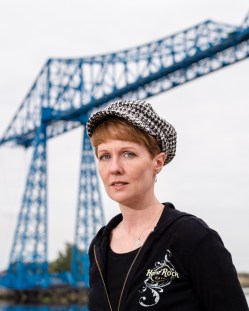
Tracey Iceton is an author and creative writing tutor from Teesside who recently completed a PhD in creative writing at Northumbria University. A qualified English teacher experienced in delivering creating writing courses and workshops, Tracey won the 2013 HISSAC short story prize for Butterfly Wings, was runner up in the 2013 and 2014 Cinnamon Press short story competitions with Slag and As the world (re)turns, which appear in the anthologies Journey Planner and Patria. She also won the 2011 Writers Block NE Home Tomorrow Short Story Competition and has been shortlisted for the 2012 Bristol Short Story Competition with Apple Shot and the 2015 Mslexia Women’s Short Story Competition for Ask NotGreen Dawn at St Enda’s, her debut novel and part one of her Irish Trilogy, was published by Cinnamon Press in 2016.

You can find out more on Tracey’s website.

There’s more with these other bloggers too:

Tour poster

Book Titles: A Guest Post by Peter Jones, Author of My Girlfriend’s Perfect Ex-Boyfriend

MGPEB_800

Having previously interviewed lovely Peter Jones here on Linda’s Book Bag, I’m delighted to welcome him back to celebrate his latest novel, My Girlfriend’s Perfect Ex-Boyfriend, with a super guest post all about book titles. And with a title like My Girlfriend’s Perfect Ex-Boyfriend I think he probably knows what he’s talking about!

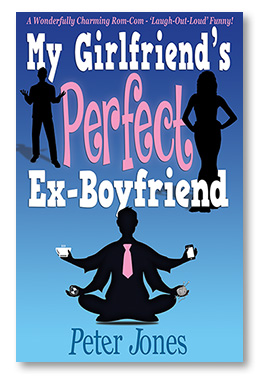
My Girlfriend’s Perfect Ex-Boyfriend is available for purchase here.

My Girlfriend’s Perfect Ex-Boyfriend

MGPEB_drop shadow

Adrian Turner, Mountaineer, Secret Agent, Fireman… Ade would dearly like to be any of these things, though he’d trade them all to win the heart of feisty Public Relations Executive, Paige.

Instead, he’s a disillusioned school teacher, on suspension, after an unfortunate incident with a heavy piece of computer equipment. And somebody’s foot.

And Paige? Despite being his girlfriend for the past eighteen months, she still seems to have one foot out of the door and hasn’t quite committed to leaving a toothbrush in the bathroom.

Of course, it doesn’t help that she’s working with her ex-boyfriend, Sebastian. A man who in almost every way imaginable is better, taller, wealthier, hairier, and infinitely more successful than Ade.

Is Paige still in love with Sebastian? Why then did she suggest they get away for a few days? Some place romantic…

But when Adrian finds himself in Slovenia – with Sebastian in the room down the hall – he realises there’s serious possibility that he’s in danger of losing his job, his mind, and the woman he loves…

Book Titles

A Guest Post by Peter Jones

Hello Linda! Thanks for inviting me back onto your blog.

(You’re always welcome Peter!)

So. Book titles…

hate them!

Specifically, fiction book titles.

Why? Because they’re so important, and so much rides on getting them just right. You might spend 10 months of your life writing circ. 80,000 words, but unless those half dozen words on the cover are absolutely perfect, you could quite easily have been wasting your time.

Non-fiction book titles are easy; just describe what your book is about and make darn sure you have a key-word in there (something that people looking for your book might type into google). So for instance, a book about finding happiness in this ever increasingly busy world might be called How To Do Everything And Be HappyThat would work.

But fiction? That’s a whole different ball of wax.

Take for instance my last novel; The Truth About This Charming Man. Not a bad title. But not particularly good either. Unless you saw the cover it doesn’t really tell you what the story is going to be about. Some have argued that even if you DID see the cover, you still wouldn’t know what it was about!

Charming man cover

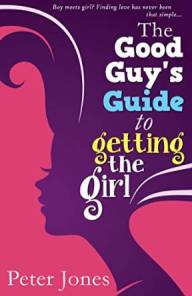
And my novel before that: The Good Guy’s Guide To Getting The GirlTerrible title! Awful! I mean okay, it’s quite funny, a bit of alliteration can’t hurt – and the cover helped a bit – but having previously published four self-help books, most people assumed it was another self-help book! What was I thinking choosing a title like that?

girl

Anyway, fortunately the same cannot be said for my latest fictional offering. This time I’ve cracked it! This time I have a title which is both funny, AND gives the reader a hint of what’s to come. And what’s more I can’t really take any credit for it.

I met my partner Valerie about three years ago.  Val had just come out of a long term relationship with… well, let’s call him Steve. It had been an amicable split so it wasn’t uncommon for her to mention Steve occasionally. I’d say something like, “I’ve made some fresh bread this weekend,” and she’d say, “Oh, Steve used to do that.” Only bloody Steve would have made the bread from flour that he’d milled himself. From a stone that he dug out of the ground. Whilst building his house. Single handedly.

One day I got so cheesed off hearing how fantastic Steve was I said, “If you don’t shut up about Steve I’m going to put him in a novel and then kill him off!” To which Val laughed and said, “What would you call the book? My Girlfriend’s Perfect Ex-Boyfriend?”

Well. It was a such a good title, how could I resist?

“No!” said Val, seeing the light bulb hovering above my head. “You can’t! Absolutely not!” But this was Friday. By the end of the weekend we had renamed Steve, morphed him into this completely unbearable character called Sebastian.

We’d also decided that the protagonist would be a down-on-his-luck school teacher called Adrian, and that his girlfriend would be a sassy American PR executive called Paige. More than that a plot was beginning to emerge that was just too fun not to write!

Now obviously it’s all made up. But that said, I really hope Steve doesn’t recognise himself in it.

(Eek – so do I!)

About Peter Jones

Peter

Peter Jones started professional life as a particularly rubbish graphic designer, followed by a stint as a mediocre petrol pump attendant. After that he got embroiled in the murky world of credit card banking. Fun times.

Nowadays, Peter spends his days writing, or talking about writing.

He’s written three novels; a Rom-Com (Romantic Comedy), A Crim-Com (Crime Comedy), and a Rom-Com-Ding-Dong (A sort-of Romantic-ish Comedy, with attitude). He’s currently working on his fourth novel, which – if it’s a musical – he’ll no doubt describe as a Rom-Com-Sing-Song. (Spoiler: It isn’t).

He is also the author of three and a half popular self-help books on the subjects of happiness, staying slim and dating. If you’re overweight, lonely, or unhappy he’s your guy.

Peter doesn’t own a large departmental store and probably isn’t the same guy you’ve seen on the TV show Dragons’ Den.

You can follow Peter on Twitter, find him on Facebook and visit his website.

You’ll find all Peter’s books for purchase here.

Fairy Tale Origins: A Guest Post by Denise Deegan, Author of The Prince and the Pea

The Prince and the pea

Having met her in real life recently, I’m delighted to welcome Denise Deegan, author of The Prince and the Pea, back to Linda’s Book Bag. I previously featured a smashing guest post about Irish writing from Denise here, so it’s lovely to have another, very different piece from her today.

The Prince and the Pea is a Kindle Single released today 10th October 2017 and is available for purchase here.

The Prince and the Pea

The Prince and the pea

As heir to the throne, Prince Richard is expected to marry well, and his parents are adamant that only the finest princess will do. But is royal blood really more important than the spark of true love?

His father, the king, has devised his own test of true royalty, inviting the haughtiest heiress for miles around to spend a night at the castle, balanced atop a pile of mattresses concealing a single pea. But even though she passes the test, she is too outraged by sleep deprivation to stay beyond breakfast. Meanwhile Richard can’t stop thinking about Rosie O’Toole, the charming chambermaid who has taught him how to lay a fire and find true meaning in his life…

When Rosie is unfairly dismissed and disappears without a trace, Richard is determined to find her. He must bring her back to the castle and reinstate her at once. But as he grows more desperate, Richard realises that he is no longer searching for a chambermaid, but for his one true love.

The Strange Origin of a Fairy-tale Retelling

A Guest Post by Denise Deegan

If you were to look at my writing career, you would probably say, “What is she up to? She’s all over the place. She’s Aimee Alexander and Denise Deegan. She writes for adults and teenagers. She jumps between contemporary and historical. And what’s this? A fairy-tale retelling?”

OK, so you mightn’t say all of that. You might wonder, though. The only explanation I can give is that I write what comes to me, this latest being a fairy-tale retelling of The Princess and the Pea. How did it come to me? That’s when things gets a little bit strange.

The Prince and the Pea happened like this… I just started writing with no actual intention. The words flowed through me. It felt as though I was channelling not choosing them. When I got to “The End”, I asked myself, “Where did that come from?”

Butterfly novels

It occurred to me, then, in a moment of weirdness, that The Prince and the Pea was created, not by me, but by a character from one of my other stories, a teenager called Rachel in my YA series, The Butterfly Novels. In the third of the trilogy, And Actually, Rachel judges her brother’s new girlfriend on whether or not she likes the fairy tale, The Princess and the Pea.

The Princess and the Pea was not one of Rachel’s favourites. She thought the princess precious. A pea? So what? Shouldn’t she have been more worried by all those mattresses and their potential for a nasty fall? The princess was rewarded for being sniffy and complaining. Her reward was a prince. What if the prince was a pratt? These were Rachel’s thoughts.

They climbed into my head and became a story. Does it throw me that a fictional character wrote a story through me? Noooo! I love it. My characters are real people to me. And what could be more real for one of them to write their own fiction through me?

It thrills me that this quirky little story is going out into the world. Which of my fractured audiences is it for? Actually, all. Adults, teens, kids. It is for anyone who believes in true love. It is anyone who believes in controlling destiny. It is for anyone who believes in the individual not the “crown”. And it is for those who like to smile at the world sometimes.

The Prince and the Pea is published by Amazon Publishing today October 10th and retails at the “princely” sum of less than a coffee here.

My Review of The Prince and the Pea

A reworking of a traditional tale from the Prince’s point of view.

At the price of half a cup of tea and about a third of a cup of coffee, I thought The Prince and the Pea was exceptional value. Denise Deegan has taken a well known story and given a fresh new twist so that we see events from a totally different perspective.

Alongside the smooth quality of the writing is a perfect pitch and tone for this kind of tale so that it would appeal to readers of all ages. I really liked the interesting and unusual perspectives so that we have a more rounded and in depth story than is usual in a fairy tale, whilst still retaining the moral examples we expect.

I also loved the themes that again are relevant to all age groups. The way in which we treat those around us, our relationships with those of different social status and our families are all sensitively portrayed so that, although the Prince and the Pea is a short story, it packs a punch. It was so good to have traditional love underpinning a traditional story in both a recognisable and innovative format.

The Prince and the Pea is a smashing way to while away half an hour with that cup of tea!

About Denise Deegan

denisecolour

Denise Deegan lives in Dublin with her family where she regularly dreams of sunshine, a life without cooking and her novels being made into movies. She has a Masters in Public Relations and has been a college lecturer, nurse, china restorer, pharmaceutical sales rep, public relations executive and entrepreneur. Denise’s books have been published by Penguin, Random House, Hachette and Lake Union Publishing. Denise writes contemporary family dramas under the pen name Aimee Alexander. They have become international best-sellers on Kindle.

You can follow Denise on Twitter and find her on Facebook and Instagram.

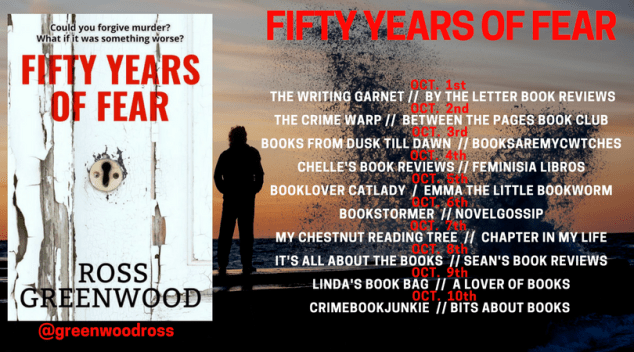
Fifty Years of Fear by Ross Greenwood

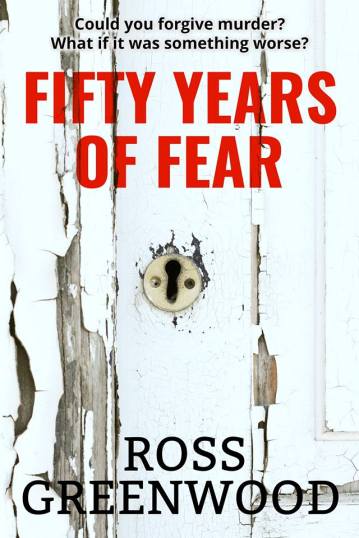
Book Cover Fifty Years of Fear - Ross Greenwood

It’s a welcome return to Linda’s Book Bag by Ross Greenwood today as I review Fifty Years of Fear. Ross lives in my nearest town and I was privileged to interview him here. After that interview, quite a bit happened to Ross and he told me all about it as I reviewed his next book, The Boy Inside here.

Fifty Years of Fear was published on 1st October 2017 and is available for purchase here. However, as part of these launch celebrations there’s the chance for one lucky UK reader to win a signed copy of Fifty Years of Fear lower down this blog post.

Fifty Years of Fear

Book Cover Fifty Years of Fear - Ross Greenwood

Could you forgive murder? What if it was something worse?

A childhood accident robs Vincent of his memories, causing him to become sensitive and anxious around others. His differences attract bullies, and he comes to rely heavily on the support of his family.

After the devastating loss of his parents, a remarkable woman teaches him to embrace life and, little by little, he realises the world is far more forgiving than he imagined. When fragments of his memory return, he begins to unravel his past.

Who was his mother? What kind of a man is his brother, Frank? And why does death surround them?

Fate is cruel. History is dark. Things are not as they seem.

Perhaps he should have stayed at home.

My Review of Fifty Years of Fear

It seems Vincent is a shy lad with a volatile older brother, a supportive mother and a very sick father. Appearances can be deceptive.

I wasn’t sure I was going to be able to read Fifty Years of Fear because Vincent’s father’s illness felt too close to my own father’s and brought back painful memories so it took me a while to relax into reading Fifty Years of Fear.

It’s a book that surprised me. I was expecting something less socially revealing and contemplative. I found out more about the workings of a young male mind in reading Vincent’s first person narrative than I have in any other book. I was slowly drawn into his story so that as the plot developed I was surprised by some of the events and I’m not entirely sure I can answer the literal questions posed at the end. I was forced almost against my will to consider nature and nurture and how our environment affects us as we mature. Fifty Years of Fear felt less like a narrative and more like a memoir to me and was interesting as a result. I think the fact that I have encountered many like Vincent and Frank when I was teaching enabled me to connect with their lives and appreciate that their experiences are only too possible.

I really enjoyed the anchoring in social history from that very first 1966 opening. Ross Greenwood knows how to use iconic images to give the reader a thorough idea of time although I’d have liked greater detail for the settings on occasion.

I’m not sure if I enjoyed Fifty Years of Fear. I found it moving, often humorous, and always entertaining and interesting. But it made me question aspects of society that I’m not sure I wanted to consider. The themes of relationships, loss, grief, guilt and love were so intricately drawn that I find I’m still pondering Ross Greenwood’s writing long after I’ve finished the book. I urge you to read Fifty Years of Fear to see for yourself.

About Ross Greenwood

Ross Greenwood Author Image

Ross Greenwood was born in 1973 in Peterborough and lived there until he was 20, attending The King’s School in the city. He then began a rather nomadic existence, living and working all over the country and various parts of the world.

Ross found himself returning to Peterborough many times over the years, usually, so he says “when things had gone wrong.” It was on one of these occasions that he met his partner about 100 metres from his back door whilst walking a dog. Two children swiftly followed. And, according to Ross, he is “still a little stunned by the pace of it now.”

Lazy Blood book was started a long time ago but parenthood and then four years as a prison officer got in the way. Ironically it was the four a.m. feed which gave the author the opportunity to finish the book as unable to get back to sleep he completed it in the early morning hours.

Ross Greenwood’s second book, The Boy Inside, was picked up by Bloodhound Books, and now, Fifty Years of Fear, is out. All his books are thought provoking, and told with a sense of humour.

Ross Greenwood hopes you enjoy reading them.

You can find Ross on Facebook page and visit his web site. You can also follow Ross on Twitter.

There’s more with these other bloggers too:

Fifty Years of Fear - Ross Greenwood - Blog Tour Poster 2.0 (1)

Giveaway

Book Cover Fifty Years of Fear - Ross Greenwood

UK readers can click here to enter to win a signed copy of Fifty Years of Fear by Ross Greenwood, but be quick! Giveaway closes at noon tomorrow 10th October 2017.

Please note this giveaway is being run independently of Linda’s Book Bag.

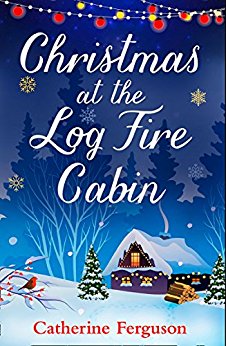
An Extract from Christmas at the Log Fire Cabin by Catherine Ferguson

Christmas at the log fire cabin

Having thoroughly enjoyed Catherine Ferguson’s Four Weddings and a Fiasco, my review of which you can read here, I am thrilled to be part of the launch celebrations for Christmas at the Log Fire Cabin today and I have a lovely extract for you to read.

Published by Avon Books, an imprint of Harper Collins, on 2nd October 2017, Christmas at the Log Fire Cabin is available for purchase through the links here.

Christmas at the Log Fire Cabin

Christmas at the log fire cabin

When Poppy’s boyfriend Harrison proposes the week before Christmas and gives her twelve days to decide, she doesn’t know what to do. With the festive season in full swing, it’s make or break time for the couple and the clock is ticking…

Meanwhile, Poppy’s best friend Erin is desperate for the pair of them to fulfil their dream of setting up a dinner party catering company – and when an opportunity arises at a luxury log fire cabin, the girls take their chance to impress. But they hadn’t bargained on the owner of the cabin being quite so attractive – or having quite such a sexy voice.

As the twelve days tick on, will Poppy realise that Harrison is the one for her? Or will it be love in the lodge when the new year comes?

Lose yourself this Christmas in the new novel from the brilliant Catherine Ferguson, perfect for cosying up with by the fire.

An Extract From Christmas at the Log Fire Cabin

‘Hello, Jed Turner?’

‘Er, hi!’ It’s definitely him. I’d recognise those deep, velvety tones anywhere. ‘I hope you don’t mind me phoning. I – um – just wanted to let you know that I can’t stay at yours for Christmas, even though it sounds lovely what with the hot tub and the log fire and everything.’

There’s a brief pause.

‘Shit, sorry,’ he says. ‘You’re obviously not Clemmy.’

‘No, ’fraid not. I’m Poppy. You got the wrong woman.’

‘Ah, well.’ He gives a throaty chuckle. ‘That sounds like the story of my life right there.’

I laugh. ‘It’s like that, is it?’

‘Sadly, Poppy, it is. But things can only get better.’ He doesn’t seem sad. In fact, he sounds quite cheerful about it.

‘Very true,’ I agree, thinking of Clemmy, who he’d seemed pretty keen on.

Clemmy is such a pretty name.

‘So, Poppy, I’m really glad you phoned me.’

‘It was no problem at all.’

‘If I hadn’t discovered the mistake, my carefully laid plans for a merry Christmas would have gone right up in smoke. I must have hit a wrong digit. Did I get the area code right, at least? Are you in Surrey?’

‘I am. I live in Angelford?’

‘Ah, yes. In that case you’re very close to my uncle’s holiday home. Which is where we’ll be for Christmas. Lovely area.’

‘Yes, I suppose it is. It’s just when you live in a place, you quite often don’t appreciate its beauty as much as other folk.’

‘That’s true. Do you think that also applies to people living within spitting distance of the Eiffel Tower? Or over the road from the Grand Canal in Venice?’

‘Over the water, you mean.’

He laughs at my very feeble joke. ‘You’ve got an exceptional café in Angelford, if I remember rightly. Best chocolate-fudge brownies in the world. Am I right or am I right?’

‘You’re right. We do. Although, can I suggest you try the raspberry-cream-and-white-chocolate cheesecakes next time?’

‘I’ll make sure I do that.’ I can hear the smile in his voice. ‘Then we can compare notes.’

‘You won’t regret it. I tried to make them myself but nothing tops their version.’

‘Are you a good cook, then?’

‘Er, not bad, I suppose. The kitchen’s my favourite room in the house.’

‘Yes? What sort of things do you make?’

I smile, wondering if he’s just being polite. But I don’t think he is. He sounds genuinely interested.

‘Everything, but Italian food is my speciality.’

‘Can you make pasta from scratch? And tiramisu?’

I can. Actually, I’m making tiramisu for a special dinner party,’ I say, deciding on the spot that this is what I’ll make for Mrs Morelli’s dessert.

‘My mouth’s watering. This sounds like it’s far more than just a hobby, if you don’t mind me saying. Are you a chef?’

His question stops me in my tracks. I’m not a chef. But if Erin has her way, I’ll certainly be cooking for a living. The pints of prosecco I’ve drunk make me bold. I take a deep breath. ‘Actually, I’m a caterer, specialising in Italian food. I do private dinner parties.’

My heart gives an odd little thump. Just saying those words makes me feel like a different person. More confident and self-assured, somehow.

‘Sounds amazing. Are you working tonight?’

‘Er, no, not tonight.’ Suddenly I feel like a fraud. I’m very glad Jed Turner can’t see the burning heat creeping into my face. ‘My – um – next engagement is on Saturday.’ Why am I trying to impress a man I don’t even know?

‘Looking forward to it?’

‘Yes! At least, I think so.’

He laughs. ‘You don’t sound sure.’

‘I’m just a bit nervous, that’s all,’ I confess. ‘The woman I’m cooking for was born in Italy.’

‘Ah, so there’s that extra pressure to deliver genuine Italian flavours,’ he murmurs, hitting the nail right on the head.

‘Absolutely!’

‘Well, you sound very passionate when you talk about cooking and that’s a great sign. I’m sure you’ll impress on Saturday.’

‘Thank you.’ My face flushes even redder with pleasure.

‘I’ll keep your number,’ he chuckles. ‘Just in case I ever have an Italian-food emergency. I live over the border in West Sussex, but an emergency is an emergency.’

About Catherine Ferguson

catherine-ferguson

Catherine Ferguson burst onto the writing scene at the age of nine, anonymously penning a weekly magazine for her five-year-old brother (mysteriously titled the ‘Willy’ comic) and fooling him completely by posting it through the letterbox every Thursday.

Catherine’s continuing love of writing saw her study English at Dundee University and spend her twenties writing for various teenage magazines including Jackie and Blue Jeans and meeting pop stars. She worked as Fiction Editor at Patches magazine (little sister to Jackie) before getting serious and becoming a sub-editor on the Dundee Courier & Advertiser. Moving south in her thirties, she set up Surrey Organics, delivering fresh organic produce to people’s homes – and this experience provided the inspiration for her first attempt at writing a full-length novel.

Catherine lives with her son in Northumberland.

You can follow Catherine on Twitter.

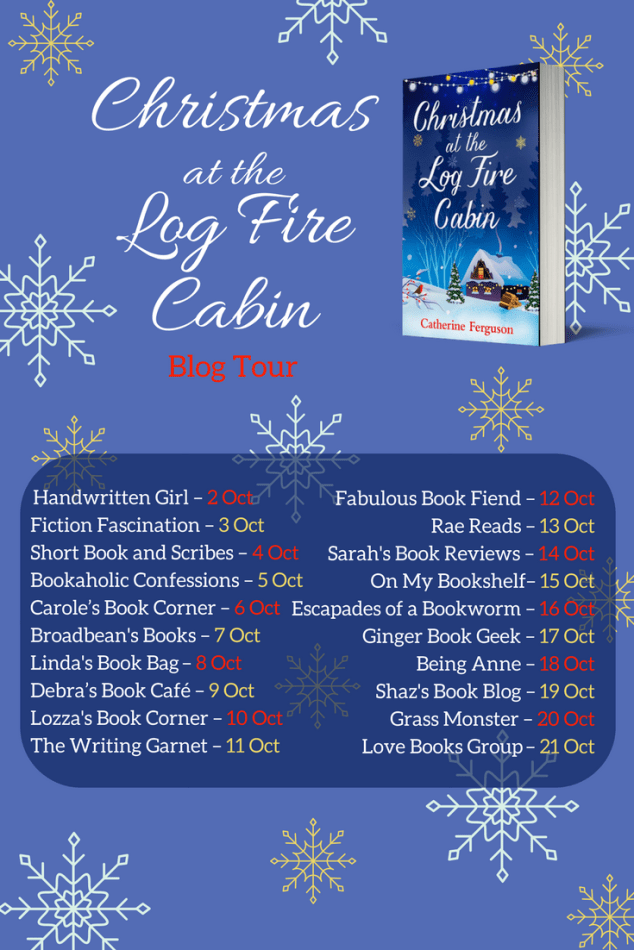
There’s more with these other bloggers too:

Blog tour

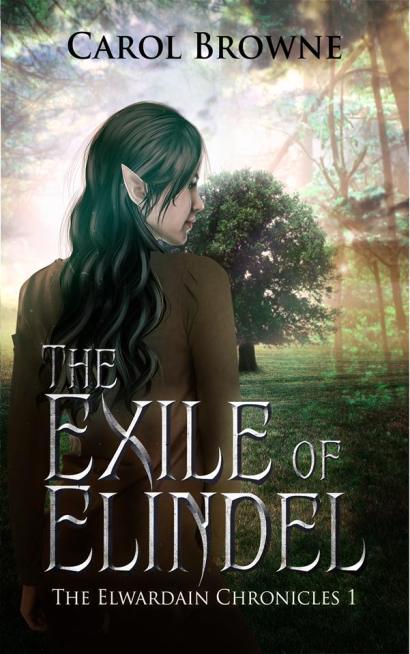
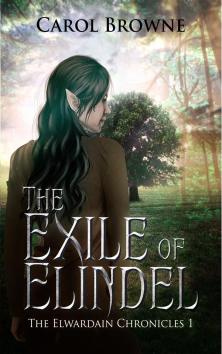
A Writer’s Inspiration: A Guest Post by Carol Browne, Author of The Exile of Elindel

Exile of Elindel 2017

Regular readers of Linda’s Book Bag know what a fabulous time I had at the Deepings Literary Festival where I live earlier this year and which you can read about here. One of the authors I met was Carol Browne, author of The Exile of Elindel, who had previously featured on the blog here and I was delighted to find Carol lives only three miles from me!

Published today, 8th October 2017, the first book of The Elwardian Chronicles The Exile of Elindel is available for purchase here.

The Exile of Elindel

Exile of Elindel 2017

Elgiva, a young elf banished from Elvendom, must seek shelter among the Saxons as her only hope of surviving the coming winter.

Godwin, a Briton enslaved by the Saxons, is a man ignorant of his own inheritance and the secret of power he possesses.

A mysterious enemy, who will stop at nothing to wield absolute power over Elvendom, is about to make his move.

When destiny throws Elgiva and Godwin together, they embark upon the quest for the legendary Lorestone, the only thing that can save Elvendom from the evil that threatens to destroy it.

There is help to be found along the way from a petulant pony and a timid elf boy but, as the strength of their adversary grows, can Elgiva’s friends help her to find the Lorestone before it falls into the wrong hands?

A Writer’s Inspiration

A Guest Post by Carol Browne

Where do writers get their ideas? Many admit to being inspired by music and that was certainly the case when I had the idea for my novel The Exile of Elindel. I hadn’t even been planning to write a novel at all.

It was back in 1976 when I was sitting in a pub in Runcorn, Cheshire, listening to the juke box, and Mike Oldfield’s In Dulce Jubilo came on. The rhythm of the music suggested the movement of horses to me and in my mind’s eye a picture unfolded. I saw a herd of white horses galloping across a plain with the swarthy mass of a great forest behind them. Watching them advance from a shallow ridge of land were two characters. One I knew was a young female elf while her companion seemed to be a knight in shining armour. (I felt his appearance was symbolic of his relationship to the elf not how he really was.)

The scene was so real to me that as soon as I saw these characters they existed as if they were flesh and blood. But who were they? Where had they come from? Where were they going? I felt they were nearer the end of their story rather than the beginning and that they were on some kind of quest. I had to find out if they would be successful.

The image stayed with me from then on, refusing to be ignored. There was a tale here that needed to be told and I knew I’d never rest until I discovered what had brought these two very different characters to the point I saw in my daydream and why they were together. Moreover, what of the magnificent herd of horses!

The nature and appearance of these characters suggested that they belonged to the realm of fantasy fiction. I had read Lord of the Rings the previous year and was about to complete an English degree—which included Old English and left me with a fascination for Anglo-Saxon Britain—so my head was filled with elves, magic, quests, swordplay, spooky forests and the mysterious and enchanted Dark Ages. Thus, the setting and spirit of the story evolved from this treasury of ideas and influences.

I had found a world for these characters of mine to inhabit but I didn’t put pen to paper until 1977. Fortunately, I had no idea it would take me until 2013 to have my work accepted by a publisher (after I had abandoned an unsuccessful stint as a self-published author) nor that said publisher would go out of business just over a year later. At the end of 2015, I found a new home for The Exile of Elindel and I’m delighted that it is re-released with a gorgeous new cover today, 8th October 2017. All thanks to my wonderful publisher Burning Willow Press.

During the intervening years between the daydreamed image and eventual publication, I found I had committed myself to a trilogy. What started as a stand-alone book is now Book I of The Elwardian Chronicles. And all because I heard a piece of music on a juke box.

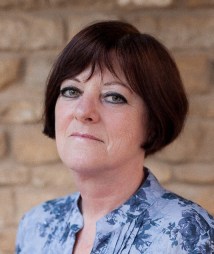
About Carol Browne

carol-july14

Born in Stafford in the UK, Carol was raised in Crewe, Cheshire, which she thinks of as her home town. Interested in reading and writing at an early age, Carol pursued her passions at Nottingham University and was awarded an honours degree in English Language and Literature. Now living and working in the Cambridgeshire countryside, Carol usually writes fiction and is a contracted author at Burning Willow Press.

You can find Carol on Facebook, can follow Carol on Twitter and visit her website.

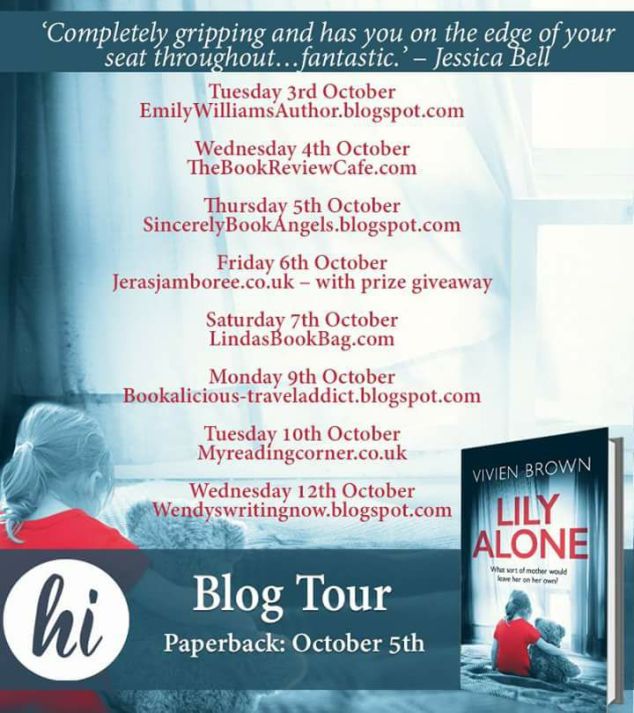
An Interview With Vivien Brown, Author of Lily Alone

Lily Alone

The writing process fascinates me and I love interviewing authors about their books. Today I’m delighted to welcome Vivien Brown, author of Lily Alone, to Linda’s Book Bag. Vivien kindly gives me an insight into how and why she writes, in my latest author interview.

Published by Harper Impulse, Lily Alone is available for purchase here.

Lily Alone

Lily Alone

What sort of mother would leave her all alone… a gripping and heart-wrenching domestic drama that won’t let you go.

Lily, who is almost three years old, wakes up alone at home with only her cuddly toy for company. She is afraid of the dark, can’t use the phone, and has been told never to open the door to strangers.

But why is Lily alone and why isn’t there anyone who can help her? What about the lonely old woman in the flat upstairs who wonders at the cries from the floor below? Or the grandmother who no longer sees Lily since her parents split up?

All the while a young woman lies in a coma in hospital – no one knows her name or who she is, but in her silent dreams, a little girl is crying for her mummy… and for Lily, time is running out.

An Interview with Vivien Brown

Welcome to Linda’s Book Bag, Vivien. Thank you so much for agreeing to answer some questions on my blog about your writing and Lily Alone in particular. Firstly, please could you tell me a little about yourself?

I have always loved working with words, rather than numbers. When I left school, a job as an author seemed like nothing but a pipe dream and was never a serious option, and ironically I ended up working first in a bank and then in a council accountancy department, so for a while numbers were definitely winning! It was only when I took a break having given birth to twins that I started to write in earnest. I then made a major career change, working with other people’s children as well as my own, originally as a registered childminder and then in libraries and children’s centres, promoting reading to the under-fives. In my spare time I was sending short stories to magazines and had a go at a first novel. My day to day involvement with young children and their (quite often young single) parents was a huge asset while I was writing Lily Alone. Nowadays my girls are grown-up, I have a new marriage, a beautiful granddaughter and two cats, who all help to make my life complete.

Why do you write?

I always have, and always will. For fun or for money… it makes no difference. I love doing it and can’t imagine a time when I will ever stop.

When did you realise you were going to be a writer?

Probably when I sold my first story to Woman’s Weekly and realised that others might actually enjoy reading what I wrote, and be willing to pay for it!

What are your writing routines and where do you do most of your writing?

When I was going out to work, I got into the habit of writing after 9 a night, to fit in with family routines, often staying up until the early hours. Now that I am an at-home writer, I don’t tend to stick to a routine at all. I can write when the fancy takes me, except when I have a deadline to meet when it becomes a much more frantic and full-time thing. I have a study upstairs, looking over the garden, with all my writing needs around me, and only come out for food!

I know your life has been heavily involved in promoting reading. How has this love of reading impacted on you as a writer?

In my working life, I was running library storytime sessions every week and giving talks to parents about the importance of reading to their children. I was also heavily involved in gifting the national Bookstart scheme, whereby all babies and toddlers receive free packs of books, and I was on the book selection panel one year. I soon became very aware of which stories captured kids’ imaginations and become lifelong favourites, and which failed to hit the mark, so I started reviewing children’s books and writing regular articles for nursery and childcare magazines. I wrote a few funny children’s poems which were published in school anthologies too. I think the elements that make a story work are the same in adult and children’s fiction – strong characters, a good sense of place, a compelling storyline, a satisfying ending, and something to either laugh, cry or care about.

You’ve written scores of short stories for a variety of women’s magazines. Which elements from short stories can easily be adapted to writing full length novels and which others are completely different?

As Vivien Hampshire, I have been a regular contributor to most of the UK women’s magazines for quite a long time, having had around 140 stories in print. My themes are pretty constant. I write about families, romance, day to day life, and I like to chuck in a few animals too! My characters vary from children to the elderly. Endings can be uplifting or sad, but are always plausible and written to suit the readership, and I have been known to add a touch of comedy from time to time. Novels share so many of these elements, but I now have to spread my story over 100,000 words instead of just 1000! That means going into far more depth, adding more minor characters and sub-plots, and allowing myself to develop wider themes. Lily Alone, with its social services and hospital scenes, also involved quite a bit of research, which I rarely have to think about in a short contemporary magazine story.

How did you go about researching detail and ensuring Lily Alone was realistic?

I began with internet searches, as most writers do these days, so I was able to get the basic information I needed about head injuries, comas, etc. My daughter is a nurse, so she read the scene set in A&E and put me right on a few of the finer details, like the order in which Ruby’s injuries would be dealt with. My other daughter had just qualified as a social worker in a children and families team, so I was able to pick her brains, and that of her boss, about some of the procedures that kicked in once Lily was found.

Without spoiling the plot, please could you tell us a bit about Lily Alone?

The book is really asking the question: What sort of mother would leave her two year old daughter alone? And what could possibly have led her to do it? Little Lily wakes up alone with only her cuddly toy for company. She is hungry, afraid of the dark, can’t use the phone, and has been told never to open the door to strangers. In the flat downstairs, a lonely old woman keeps herself to herself, wonders at the cries coming from upstairs but decides not to interfere. Lily’s father hasn’t seen her for a while. He’s been abroad, absorbed in his new job and his new girlfriend, and her granny lives miles away. In a hospital bed, a young woman lies in a coma. No-one knows her name or who she is, but in her silent dreams, a little girl is crying out for her mummy…

The concept of a child left alone like Lily is quite disturbing. What made you choose this as a premise for your novel?

I’m not sure it was a conscious decision from the start. I like writing about the complicated dynamics within families, and about children, and started off with nothing more than the image of a road accident victim and who might miss her if she didn’t come home. Having worked with kids, I love watching them develop their independence as they learn and grow. My first (self-published) novel as Vivien Hampshire – Losing Lucy – was about a baby taken from her pram and the impact on the lives of those around her, and Lily Alone follows similar themes. I wanted to explore how one simple mistake could have lasting effects not only on the girl who made it but on everyone around her – so expect some drama, some life-changing decisions and some romance, when all the other characters are thrown together by Lily’s plight!

One of the themes of Lily Alone seems to me to be the way in which many of us are isolated in our lives. How important is it to explore such themes through fiction do you think?

In writing this novel – my first as Vivien Brown – I wanted to step away from romantic comedy and light-hearted stories into domestic drama, and tackle something a lot more serious. By placing Lily and her mum Ruby in a block of flats in London, miles from her home town, and giving Ruby no close family of her own to fall back on when things got tough, I was isolating her from any kind of support network. Her neighbours have their own lives and problems, and nobody has made any real effort to get to know each other. Village life may well be very different, but I’m sure many people in cities live this way, and for those who are without family, or may be elderly, shy, jobless or poor, loneliness is an inevitable result. I don’t think fiction will change that, but it may help raise awareness.

Lily Alone has a cover that suggests a bleak life because of the grey background and danger through the red in the dress. How did that image come about and what were you hoping to convey (without spoiling the plot please!)?

I had no input in creating the cover which was all the work of Harper Impulse and their book designers. I was shown some earlier versions which neither I nor the publishers felt was quite right, but when we saw this one it immediately felt perfect for the book. It conveys that sense of Lily being all alone except for her bear, and the moving curtain and big bed add to that, I think. Lily does not actually wear red in the story so there is a little poetic licence going on, but it is very effective. There have been many comments and compliments about the cover, which I am so pleased about.

You’ve also written romantic comedy under the name Vivien Hampshire with How To Win Back Your Husband. Which genre is the most challenging for you as an author? 

I find romantic comedy relatively easy to write, as it sticks pretty much to a tried and tested formula, where every reader knows from page one that the hero and heroine are going to get together by the end. I have enjoyed writing that sort of story, but now I need more to get my teeth into. Domestic drama is tougher to write, without such an obvious clear-cut path through the story, and is more emotional for me and for the readers. That’s where I now see my future as an author.

If you could choose to be a character from Lily Alone, who would you be and why?

Most of them have problems and sadness in their lives, at least when the story begins, so I think I would opt for Laura, a nurse who befriends the comatose Ruby in hospital. She is young, with a close group of female friends, has her whole career ahead of her, and there is the hint of romance to come!

If Lily Alone became a film, who would you like to play Lily’s mother Ruby and why would you choose them?

Lily’s mum Ruby is only twenty two, quite thin, fragile and unglamorous, so my list of possible actresses is quite limited. Emma Watson from the Harry Potter films would be great, but even she is 5 years too old now!

And when you’re not writing, what do you like to read?

I tend to stick largely to women’s fiction, in the broadest sense. I veer between contemporary romance, 1940s and 1950s sagas, and psychological thrillers, usually ones written by women and with female protagonists, but I also like Dick Francis books set in the world of horseracing, and occasionally revisit some of the old classics, especially Jane Austen’s. My favourite authors in recent months have been Clare Mackintosh, Veronica Henry, Iona Grey, Jean Fullerton, Elaine Everest and Milly Johnson.

Finally, if you had 15 words to persuade a reader that Lily Alone should be their next read, what would you say?

A child left alone. What might happen while you’re gone? To her? … or to you?

Thank you so much for your time in answering my questions Vivien.

Thank you for inviting me today, and I hope your readers will fall in love with Lily and care about her just as much as I do!

About Vivien Brown

Viv Brown photo

Vivien Brown lives in Uxbridge, Middlesex, with her husband and two cats. For most of her life she has immersed herself in words – as an avid reader, writer, poet, library outreach worker, storyteller, gifter of Bookstart packs to babies and toddlers, creative writing tutor and crossword fanatic. She enjoys dipping into dictionaries and exploring the meaning of words, and watching and/or taking part in TV quiz shows. In the evenings she loves nothing more than losing herself in a good book, a compelling TV drama or her regular supply of women’s magazine short stories – which all help to provide inspiration and ideas for her own fiction. Lily Alone is her debut novel.

You can find out more by following Viv on Twitter.

There#s more with these other bloggers too:

Lily alone tour poster