
One of the lovely aspects of blogging is belonging to a supportive community and I’m fortunate to be part of Book Connectors on Facebook where I ‘met’ today’s featured guest author Tara Guha.

Tara’s novel is available in e-book and paperback and was published by Legend Press on 1st September 2015.
Tara and I discussed our experiences of reading and how it had been affected by studying or teaching English. We agreed that a love of the subject isn’t all plain sailing. Here’s what Tara thinks:
Stop – don’t read!
If you want to write, read. That’s what we’re told, isn’t it? To write well you should read everything you can get your hands on, and then read some more. I can’t remember how many times I’ve seen that advice.
Well, dear reader, it didn’t work for me. For three years of my life I read non-stop. I read for a minimum of eight hours a day and frequently much more. I read 14th century romances, 20th century American fiction, 19th century poetry and pretty much everything in between. I read small print, large page, old English prose at a rate of one page per minute: I know this because that was the rate I had to maintain in order to get my weekly reading done. Every 60 seconds, turn. Keep reading!
I was doing an English degree at Cambridge. In those days, and these too, English meant English literature. The greats. The iconic heavyweights of literature that have shaped our relationship to reading (and life) ever since. Each week I would read the main work in question and then several books of context and criticism before attempting to condense all the various viewpoints, my own included, into a hand-written essay.
Oh, the enviable life of the English student. Sitting out in the sunshine browsing a book while everyone else is in lectures. Reading up on the roof when the rest of the year is doing exams (and hates you). Reading alongside fellow English students, tucked up in college rooms, sipping tea and coffee and more tea.
What a breeze.
It had its moments, I’ll admit. I’ve loved reading since the moment I could do it, so having a mandate to discover more and more wonderful books should have been a dream come true. Doing what is for most of us a hobby and calling it studying gives English students the reputation of dossers, and I can see why it looks that way. But the truth is that reading in such a pressurised way started to erode the joy of it, and the need to maintain a critical stance denied me the wonder of getting properly lost in a book. In fact, for a good year after my degree I barely picked up a book. I couldn’t help analysing everything I read; I felt as if I’d eaten from the tree of knowledge and lost my innocence. It left a strange hole in my life.
But the rot didn’t stop there. While I eventually started reading again – in a somewhat faltering way, but gaining momentum – the more lasting damage was to my writing. As a child I wrote reams – poetry, stories, songs and random musings. But after three years of immersing myself in all the great works of literature my overriding thought was, what on earth can I have to say that hasn’t been said already (and better)? As soon as I started writing something, the critic in me sneered at it and I usually ended up eating biscuits or watching TV instead. I have a lot of two sentence-length pieces of writing from that time.
Several years later it dawned on me that being creative and being a critic are two diametrically opposed impulses. Many creative children who write well are encouraged to study English, ie to learn to be a critic instead of nurturing their own creativity. Looking back, I’d say that although I loved the whole university experience, English was probably the worst possible subject I could have chosen because I’m fundamentally someone who likes to create rather than critique. It seems counter-intuitive and perhaps people who have more confidence in their own ability to write would not experience this as extremely as I did. But I suspect I’m not alone in having this reaction.
It wasn’t until a friend bought me The Artist’s Way by Julia Cameron for my thirtieth birthday that I began to re-engage with my own creativity. Interestingly, one of the exercises she suggests is to stop reading altogether for a week. No newspapers, websites, books, cereal packets – nothing. A complete detox in order to access your own voice, your own thoughts and feelings. I followed the programme religiously and at the end of it I had succeeded in opening the door just a bit on the part of me that had effectively been shut away.
Several years down the track and that door is open most of the time. I’ve just had my first novel, Untouchable Things, published and I’ve brought music back into my life too. I’ve made peace with my internal critic and acknowledge that he (yup, he’s a he) is important but can’t be allowed to dominate, or I’ll never write another word. And in a nice loop back to that English degree, Untouchable Things is peppered with literary references and I realise that my characters’ reverence for those great works of literature mirrors my own. The years of intensive study taught me to truly appreciate them, but those magnum opuses are no longer a block to my own writing. They exist as entirely separate, timeless, self-contained works of mastery that enrich my life but bear little or no relation to my own tortuous works-in-progress.
Talking of which, there’s a document open alongside this one entitled “novel number two” that I really should get back to. And you, if I might say, have been reading for more than long enough. It’s been nice to chew the fat – but don’t you have some writing to do?
————–
I totally understand Tara’s viewpoint and can’t wait to lose myself in reading the outcome of her regained creativity, ‘Untouchable Things’.
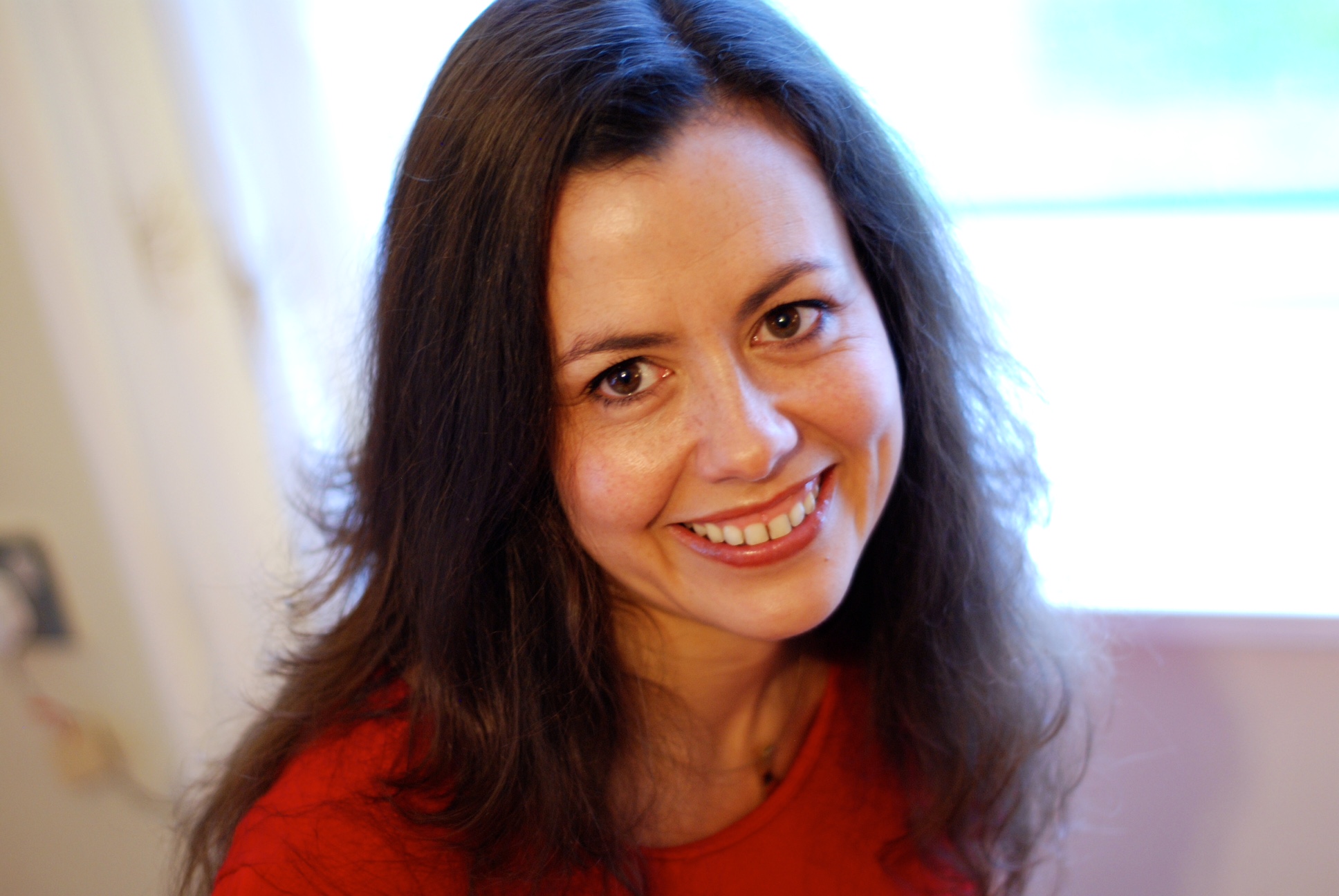
You can find out more about Tara here. She is also on Twitter and Facebook