The One by John Marrs

the-one

My grateful thanks to Stephanie Naulls at Ebury Press for an advanced reader copy of The One by John Marrs in return for an honest review. Previously titled A Thousand Small Explosions, The One is published by Del Rey, an imprint of Ebury, in e-book on 26th January 2017 and in paperback on 4th May 2017 and is available for pre-order here.

Having really enjoyed reading The One, I’m delighted to say I will be interviewing John on 25th January 2017 so do come back then.

The One

the-one

How far would you go to find THE ONE?

One simple mouth swab is all it takes.

One tiny DNA test to find your perfect partner – the one you’re genetically made for.

A decade after scientists discover everyone has a gene they share with just one person, millions have taken the test, desperate to find true love.

Now, five more people take the test. But even soul mates have secrets. And some are more shocking – and deadlier – than others…

My Review of The One

When DNA is used to find your perfect love match in life, nothing can go wrong – can it?

For the first five chapters or twenty pages I didn’t think I was going to enjoy The One. I needed to attune myself to switching between characters and holding the different threads of the plot together. However, it didn’t take me long to find myself thinking I’d just read another chapter, and another, and another until I was so enthralled by the twisty, clever plot that I couldn’t tear myself away. The brevity of each chapter and the mini cliff hangers meant that there was an almost breathless pace at times that I loved.

And the plot is twisty. I did work out some elements and for others I had that ‘Oh. I wasn’t expecting that!’ moment, making for a highly entertaining read. I’d quite like to go back and read each of the different characters’ narratives altogether in one go to see if the experience is different as I think there’s a great quality to John Marrs’ writing that would stand up to several reads. I could also see The One as a brilliant television series.

The characterisation was entirely plausible and convincing – even for the more minor characters, so that there were several layers to the different strands. I warmed to some characters more than others which for me reflected what happens in real life, but I certainly wanted to know what happened to them all, especially Christopher, Ellie and Nick.

I also really appreciated the way in which John Marrs incorporated a range of themes. Whilst it’s possible to read The One simply as a highly entertaining thriller, it deserves more consideration than that too. Themes of relationships (obviously), nature versus nurture, sexuality, family, truth and honesty all ripple throughout the text so that there’s plenty for the reader to contemplate too. Reading The One really made me question the benefits and disadvantages of the internet and social media.
The One is my first John Marrs read and it certainly won’t be my last. I thoroughly enjoyed this cleverly conceived novel and highly recommend it.

Oh, and would I take a DNA test to find my perfect love match after reading The One? Not on your life!

About John Marrs

john-marrs

John Marrs is a freelance journalist based in London, England, who has spent the last 20 years interviewing celebrities from the world of television, film and music for national newspapers and magazines. He has written for publications including The Guardian’s Guide and Guardian Online; OK! Magazine; Total Film; Empire; Q; GT; The Independent; Star; Reveal; Company; Daily Star and News of the World’s Sunday Magazine.

His debut novel The Wronged Sons, was released in 2013 and in May 2015, he released his second book, Welcome To Wherever You Are.

You can follow John on Twitter and find him on Facebook.

The Words in My Hand by Guinevere Glasfurd

words-in-my-hands

My enormous thanks to Ruby Mitchell at Hodder for a copy of The Words in My Hand by Guinevere Glasfurd in return for an honest review. The Words in My Hand is published by Two Roads Books, an imprint of John Murray Press, in e-book now and hardback on 14th January 2017 with the paperback available on 9th February.

The Words in My Hand is available for purchase and pre-order here and from all good booksellers including Waterstones and W H Smith.

Today I have my review of The Words in My Hand, but I loved it so much I asked Guinevere if she’d be interviewed about it so do please come back on paperback publication day 9th February 2017, to find out more.

The Words in My Hand

words-in-my-hands

The Words in My Hand is the re-imagined true story of Helena Jans, a Dutch maid in 17th-century Amsterdam, who works for Mr Sergeant, the English bookseller. When a mysterious and reclusive lodger arrives – the Monsieur – Mr Sergeant insists everything must be just so. It transpires that the Monsieur is René Descartes.

Helena’s life, like that of so many women in history in history, is scarcely recorded. In The Words in My Hand she is a young woman who yearns for knowledge, who wants to write so badly she makes ink from beetroot and writes in secret on her skin – only to be held back by her position in society as a servant, and as a woman.

Weaving together the story of Descartes’ quest for reason with Helena’s struggle for literacy, their worlds overlap as their feelings deepen; yet remain sharply divided. For all Descartes’ learning, Helena has much to teach him about emotion and love.

When reputation is everything and with so much to lose, some truths must remain hidden. Helena and Descartes face a terrible tragedy and ultimately have to decide if their love is possible at all.

My Review of The Words in My Hand

When housemaid Helena encounters the infamous René Descartes, two totally disparate world collide with surprising effects.

My goodness The Words in My Hand is a wonderful, wonderful book. Shortlisted for the Costa First Novel Award 2016 it represents the kind of novel that epitomises perfect literary fiction for me.

Unique in style, Guinevere Glasfurd has an authorial voice that is almost mystical and draws in the reader so that the more of Helena’s story was revealed, the more hypnotised by the writing I became. At the risk of sounding pretentious, the writing reminded me of a stained glass window lit by the sun. The variety of sentence length and structure in the first person narrative approach was so beautiful to read. So many things came into exquisite focus for me reading The Words in My Hand. The quality of the descriptions is such that I was there with Helena in Amsterdam and Sandpoort in particular. Also, I had studied Descartes at university but had never really got an impression of the man and had certainly not thought about the women of the time. However, Guinevere Glasfurd’s meticulous research and fabulous writing was both thought provoking – how might women have fared –  and enlightening. I felt I really knew and understood the two main characters, Helena and Descartes perfectly. This really is history brought to vivid life.

Whilst there is a great plot as the relationship between Helena and Descartes develops, along with wonderful characterisation, what really made The Words in My Hand such an enthralling read for me was the exploration of language and the way in which it defines, constrains and liberates us as individuals. Helena’s desire for education and literacy underpin her entire being, and I felt there was a really intellignet feminist message without it being clumsy and inelegant. I found myself savouring the single word chapter titles, thinking back over the chapter and reflecting on how apt they were. The Words in My Hand is not a book to be rushed, but to be appreciated almost syllable by syllable. It is very special indeed and I adored it.

About Guinevere Glasfurd

guin

Guinevere Glasfurd’s lives on the edge of the Fens near Cambridge. Her short fiction has appeared in Mslexia, the Scotsman and in a collection from The National Galleries of Scotland. The Words In My Hand, her first novel, was written with the support of a grant from Arts Council England. Guinevere Glasfurd manages the Words and Women Twitter feed, a voluntary organisation representing women writers in the East of England. You can find out more on her website.

Painkiller by N.J. Fountain

painkiller

My extremely grateful thanks to Ella Bowman at Little Brown for an advanced reader copy of Painkiller by N.J. Fountain in return for an honest review. Painkiller was published by Sphere in paperback on 29th December 2016 and is available for purchase from all good booksellers and directly from the publisher here.

Painkiller

painkiller

I cannot go on like this. I feel such a burden to you. You are young and can start again. You deserve that chance. By the time you read this I will be dead. Do not grieve for me, for I am now without pain.

Yours truly for ever,
Monica

Monica suffers from chronic neuropathic pain. Every second of her life is spent in agony, and she is coping with it the best she can. However, there are whole years of her life which are a blur to her.

But when she finds a suicide note, written in her handwriting, she begins to question everything. She has no memory of writing it – so who did? And if someone tried to kill her once, what’s to say they won’t try again . . .

My Review of Painkiller

Monica is in terrible pain and the medication she takes has affected her memory, but that might be the least of her worries.

Crikey Painkiller is brilliant. I was enthralled by every word of it and found it to be a fabulous thriller. I must say something about the structure because it feels perfect for the novel. The character ‘titles’ serve to break up the text physically in the same way Monica’s memory is fractured, adding to the enjoyment in the read. I liked the use of the emboldened text and italics to add layers of meaning and challenge the voracity of assertions still further so that there are many layers to the story. There’s also quite a bit of white space on the pages that seemed to me to represent the gaps in Monica’s memory so well.

Monica is such a completely convincing character and finding that she was inspired, however loosely, by a real person made the narrative even more affecting. I loved the way the cover shows a fractured and distorted person, reflecting the character we meet in the story. There’s an unreliability to all the characters; Monica, Dominic and Niall especially, and things are never quite what they seem so that I had to keep changing my perspective and shifting my position. Painkiller is incredibly entertaining because of this.

The plot is extremely well constructed leading to a satisfying ending that is unpredictable and exciting. I kept thinking of a pit of writhing snakes as I read because the story line twisted and coiled, with interesting and dramatic scenes leading me to false assumptions that I thoroughly enjoyed.

Alongside the sheer entertainment of Painkiller is a poignant and relevant theme of what happens to those suffering huge pain on a daily basis and how it affects those around them. And it’s this that helps make Painkiller such a wonderful read for me. I always look for an emotional hook and alongside the cracking pace, the exhilarating story and the credible characters there’s that added extra layer of interest that pulls in the reader and doesn’t let them go. I thought Painkiller was a cracking thriller and I can’t recommend it highly enough.

About N.J. Fountain

nev-fountain

NJ Fountain is an award-winning comedy writer, chiefly known for his work on the radio and television show Dead Ringers. He has also contributed to programmes such as Have I Got News For You, 2DTV and the children’s sitcom Scoop. He also writes for Private Eye.

You can follow N.J. Fountain on Twitter.

New Year, New Challenge, a Guest Post by Sue Featherstone, Author of A Falling Friend

a-falling-friend-cover

It gives me enormous pleasure to be starting 2017 with a guest post by lovely Sue Featherstone, co-author of A Falling Friend, as she is not only beginning a new year, but a whole new life and is telling us about it today. A Falling Friend, was published by Lakewater Press on 25th April 2016 and is available for purchase here.

A Falling Friend

a-falling-friend-cover

After spending her twenties sailing the globe, making love on fine white sand, and thinking only of today, Teri Meyer returns to Yorkshire – and to studying. That’s when she discovers John Wilmot, the second Earl of Rochester, and poet of all things depraved. What she doesn’t realise is even beyond his grave, his influence over her is extraordinary. To hell with the consequences.

Having gone out on a limb to get old friend Teri a job at the university at which she teaches, it doesn’t take long for Lee Harper to recognise a pattern. Wherever Teri goes, whatever she does, every selfish choice she makes, it’s all setting her up for a nasty fall. But Teri’s not the sort to heed a warning, so Lee has no choice but to stand by and watch. And besides, she has her own life to straighten out.

A clever, raw and hilarious character-driven masterpiece that follows the lives of two friends with the same ambitions, but who have vastly different ways of achieving them.

New Year, New Challenge

A Guest Post by Sue Featherstone

What do my sister, rush hour travel, and fictional characters Lee Harper and Teri Meyer have in common?

Any ideas?

It’s really quite simple: thanks to all of the above, I start 2017 as a pensioner.

After a lifetime in journalism and public relations, and nearly 20 years teaching journalism at Sheffield Hallam University, I closed my reporter’s notebook at Christmas and chucked my teacher’s red marking pen in the bin.

Officially, I’ve retired.

In practice, I’ve swapped teaching to do what I’ve wanted to do since I was nine years old – write full-time.

It’s taken a lot of soul-searching because, leaving a well-paid job (and a very enjoyable one too) seemed incredibly risky.

But 12 months ago, my sister, a hospital consultant, who is a year my junior, announced she was retiring. The NHS was turning into a shadow of its former self and she didn’t want to be part of it anymore. Within months she looked ten years younger. And God knows how many years happier.

Which started me thinking… The rush hour rat-race provided further food for thought.

I’ve been lucky – as an academic my schedule has been reasonably flexible. On non-teaching mornings I’ve been able work from home for a couple of hours and avoid rush hour travel altogether.

But this last year there have been a lot of early morning meetings and lots of standing cheek by jowl with other bleary-eyed commuters. And far too many times that I’ve had to suppress murderous thoughts towards those musically-challenged travellers whose tinny thump, thump, thump leaked from their headphones.

But it was Teri and Lee, who broke the camel’s back.

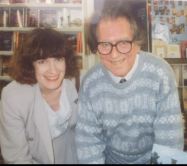
They’re the heroines [sic!] of A Falling Friend, my first novel with my friend and writing partner, Susan Pape, also a journalist and former journalism lecturer. After producing two successful journalism text books together, we decided to become proper writers and write a novel. It took us a long time because both of us were still juggling full-time careers. Eventually, however, it was finished and, after the requisite number of rejections, we secured a publishing deal with Lakewater Press.

A Falling Friend came out in spring 2016 and is doing very nicely. We haven’t set the world on fire – yet! – but we’ve attracted some good reviews and even earned a little bit of money. A sequel is now complete and will, hopefully, be published this spring. Book three will soon be underway.

I’m very grateful to Teri and Lee.

They taught me how much I love writing.

And, importantly, that I love it far more than I love teaching other people how to write – which, believe me, I’ve loved a great deal. I was very sorry to say goodbye to my wonderful Sheffield Hallam friends and colleagues and to our students too.
But I’m excited that, as 2017 begins, I’m no longer Sue Featherstone, journalist and academic.

But Sue Featherstone. Writer.

(And I wish you a happy new year and every success Sue.)

About Sue Featherstone

sue-1

Sue Featherstone is a former journalist and public relations practitioner turned academic.

Her career started in local newspapers before switching to PR to become internal communications manager with a large utility company. She completed a degree in English Literature as a mature student and subsequently moved into higher education, teaching journalism to undergraduate students at Sheffield Hallam University.

At the beginning of 2017, Sue left Sheffield Hallam to focus on her writing.

Together with her friend and writing partner Susan Pape, she has written two successful journalism text books – Newspaper Journalism: A Practical Introduction; and Feature Writing: A Practical Introduction.

Their first novel, A Falling Friend, was published by Lakewater Press in 2016 and a sequel will follow in spring 2017. They now write about books at bookloversbooklist.

You can follow Sue on Twitter and visit her website.


The Book of Summers by Emylia Hall

the-book-of-summers

Having previously loved reading The Sea Between us by Emylia Hall, my review of which you can read here, when it came to my turn to choose a book for my reading group I was delighted to see The Book of Summers on the List. The Book of Summers was published by Headline Review in 2012 and is available for purchase through publisher links here.

The Book of Summers

the-book-of-summers

Beth Lowe has been sent a parcel. Inside is a letter informing her that her long-estranged mother has died, and a scrapbook Beth has never seen before. Entitled The Book of Summers, it’s stuffed with photographs and mementos complied by her mother to record the seven glorious childhood summers Beth spent in rural Hungary. It was a time when she trod the tightrope between separated parents and two very different countries; her bewitching but imperfect Hungarian mother and her gentle, reticent English father; the dazzling house of a Hungarian artist and an empty-feeling cottage in deepest Devon. And it was a time that came to the most brutal of ends the year Beth turned sixteen.

Since then, Beth hasn’t allowed herself to think about those years of her childhood. But the arrival of The Book of Summers brings the past tumbling back into the present; as vivid, painful and vital as ever.

My Review of The Book of Summers

When The Book of Summers arrives in the post with a message telling Beth her mother, Marika, is dead, the recollections presented in the book force Beth to reconsider her past and who she has become.

If I’m totally honest, I wasn’t sure I was going to like the presentational device of looking through the pictures and remembering the past, but within a few pages I was completely enthralled by Emylia Hall’s writing and I found that I couldn’t get Marika out of my head so that I was thinking about her when I wasn’t reading. I think it’s interesting that I enjoyed the writing increasingly as Beth began to write more about Hungary – in much the same way as Beth enjoyed her life more there than in England.

The Book of Summers is an intense, beautifully written representation of growing up. The depth of emotion is almost unbearable at times and I felt a range of emotions from joy to melancholy, sadness to elation along with Beth as I read. I know I have been totally captivated when reading about the central character feels as if I’m reading about myself and Emylia Hall created exactly that sensation for me. There’s quite a reduced number of characters which I felt added an almost claustrophobic potency to the story. Save for a couple of incidents, there isn’t a hugely developed plot – a young woman looking over a book of photographs – but the uncovering of the past, the exemplification of relationships and the challenges of growing up are all truly wonderfully authored.

The poetic quality of the narrative is beautiful. Every sense is presented so vividly and evocatively that I was there swimming in the lake, smelling the citronella and feeling the heat of cracked leather car seats on the backs of my legs. I can’t believe that Emylia Hall isn’t as much of an artist as Zoltan as she paints such a magnificent kaleidoscopic canvas of words.

The Book of Summers is the perfect coming of age narrative, representing the true emotion of what makes us human. I loved it.

About Emylia Hall

emylia-hall-detail

Emylia Hall was born in 1978 and grew up in the Devon countryside, the daughter of an English artist and a Hungarian quilt-maker. After studying English and Related Literature at the universities of York and Lausanne, she spent five years working in a London ad agency, before moving to the French Alps. It was there that she began to write. Emylia now lives in Bristol with her husband, the comic-book writer and children’s author, Robin Etherington. Her first novel, The Book of Summers, was a Richard & Judy Bookclub pick in 2012.

You can follow Emylia on Twitter and visit her website. You’ll also find her on Facebook.

Happy New Year and Thank You Giveaway

2017

Those of you who follow Linda’s Book Bag on a regular basis will know that 2016 wasn’t an especially good year for me personally and I wrote a bit about it in my ‘Best Books of 2016’ round up here where you’ll also find some amazing reads.

However, one element that has been a constant joy has been the world of book blogging. I have made so many wonderful friends through the blogging community and have been given so much support throughout the year that I’m incredibly grateful.

I have received books, messages, cards and gifts of support and each one has really touched me. I’ve done my best to support the fabulous bloggers, authors and publishers who’ve been there for me but haven’t always been as efficient as I’d like. To say thank you and to wish everyone a happy, healthy and successful 2017 I’d like to run a small giveaway.

To enter to win a £15 or $15 Amazon e-voucher, just click here. Open internationally, the giveaway closes at UK midnight on Saturday 7th January 2017.

Thanks so much everyone, for all your support, and Happy New Year xxx.

A Publication Day Interview with Paul Mathews, Author of We Have Lost the Pelicans

pelicans-cover-final-600px

Once again the wonderful Book Connectors on Facebook has brought me into contact with an author – this time Paul Mathews whose latest comedy thriller We Have Lost the Pelicans is published today, 28th December 2016. We Have Lost the Pelicans is available for purchase in e-book here.

As 2016 seems to have been a pretty dreadful year for so many, including me, it’s wonderful to be ending the year on Linda’s Book Bag with an interview with Paul to tell me all about this latest comedy thriller.

We Have Lost the Pelicans

pelicans-cover-final-600px

London, 2044. The St James’ Park pelicans have gone missing – the day before the Republic’s new pelican flag is unveiled. At the same time, British intelligence uncovers coded e-comms about possible anti-Government activity. Who are the bird-nappers and what do they want? And who is behind the secret messages?

Agent Howie Pond – licence to lunch – reluctantly agrees to try and find out. Howie’s fiancée Britt has a secret mission of her own – to identify the mysterious owner of Windsor Castle.

And to add to the chaos, Howie and Britt are supposed to be getting married tomorrow…

There’s a super trailer for We Have Lost the Pelicans here.

An Interview with Paul Mathews

Hi Paul. Thank you so much for agreeing to answer some questions on my blog about your writing and your novel We Have Lost the Pelicans that is published today. Firstly, please could you tell me a little about yourself?

Thanks, Linda. It’s great to be here. Okay. I’m a 44-year-old British guy, who’s given up the 9-to-5 to become a full-time indie author. I self-publish my comedy-thriller e-books on Amazon, with the help of an editor and graphic designer. In my previous life, I was a UK Government press officer for 16 years. So, I know a bit about PR and marketing, which comes in handy. Before that, in the dim and distant pre-internet days, I was an accountant. But we don’t talk about that. And delving even deeper into the past, I somehow ended up studying philosophy at Cambridge University. What else? Oh, yes. I love cheese. And Marmite. Sometimes together. That’s the kind of crazy world we authors live in.

And tell us a little about We Have Lost the Pelicans too.
It’s the second book in my We Have Lost comedy-thriller series, which is set in a British Republic in the year 2044. There are two main characters: Howie Pond, the president’s spokesperson and rookie secret agent; and his journalist girlfriend Britt. In the first book, We Have Lost The President, the nation’s leader goes missing. In the second book, the St James’ Park pelicans disappear overnight – the day before a big presidential announcement in the park – and Howie is asked to investigate. Meanwhile, Britt is trying to find out who owns Windsor Castle. Oh, and it’s very funny. Mustn’t forget to mention that.
persident

(Find out more about We Have Lost the President here.)

When did you first realise you were going to be a writer?

When I was 11 years-old, I was writing adventure books and producing my own comics, so I always had that creative urge. I won a local playwriting competition aged 18 and I would’ve loved to pursue it more actively after that. But that was back in 1990, when the internet didn’t exist and it was harder to find opportunities. I only got back into it in 2006 when an old school friend asked me to write her school’s pantomime. I wrote more plays and found an online publisher (Lazy Bee Scripts) who accepted my work. And then I progressed to novels. It’s taken more than three decades to become a full-time writer. But definitely worth the wait.

If you hadn’t become an author, what would you have done instead as a creative outlet?

I was an amateur actor for several years and was attracted to professional acting as a possible career change. But it’s expensive to train, I didn’t fancy the idea of having to pretend I’m a tree with a bunch of 20-somethings, and work is sparse. If I’d been brave enough, I think I could have become a stand-up comedian. I might give it a go at one of those ‘open mic’ nights soon. Or maybe not!

You gave up ‘real’ work to become an author full time. How did you make that decision and what impact has it had on your life?

By the time I’d hit the magical age of 42, I’d had enough of working long hours in London. And while some press office work is creative, the vast majority isn’t. I decided that being stuck in an office, using about 10% of my creative talents, was not where I wanted to be. It wasn’t that difficult a decision to make because I’d been thinking about a career change for a while.

The main impact is that, in these early days, I am investing a lot of time and money, with the rewards coming later. In other words, I no longer have an income! But luckily I saved for years, my wife has a good job and the cost of living in Poland – where I do lots of my writing – is much cheaper than the UK. Another consequence is that my cat sees a lot more of me at home now, which I think she’s happy about. I’m never quite sure.

Your books are comedy thrillers. How difficult is it to balance those elements?

I’ve always written comedy, so that’s the easy part. Plotting a good thriller is the hard work. I try to make each chapter an adventure in itself, which keeps the reader engaged. Chapters switching between the two main characters is one way I build tension. The important thing is that the humour should flow from the characters and their actions, and not be forced upon the reader e.g. with lots of unnecessary one-liners.

Are you naturally funny in real life?

Yes, I’m hilarious. But I would say that!

(Well I suppose you would!)

Your Mum likes your author photo. What does she think of your books?

I think she enjoys them. She’s an author herself – but a totally different genre (paranormal fiction). She writes as Carolyn Mathews (sorry, had to get a plug in there for my Mum!).

You’ve written quite a few plays. Why did you decide to write in another genre?

Playwriting simply doesn’t offer the same creative rewards in terms of audience. Amateur drama groups tend to go with established playwrights and it can take years for an amateur play to receive its first performance. For example, my full-length comedy Happiness was premiered in June by the St Mary’s Players in Welling – five years after it was published. E-books are a much more immediate way for my work to be enjoyed by people who love a good story and a good laugh. People who read your blog, for example..!

Which aspects of your writing do you find easiest and most difficult?

It’s not really the writing – it’s what comes before and after it. I don’t enjoy the preparation work; it drags on over many weeks, as ideas come to me. Also, the endless re-reading of full-length drafts (my first novel was 100,000 words) can turn your brain to mush after a while. I never have an actual problem with writing – unless I have a hangover or I’m ill, when I’m not quite so productive.

What are your writing routines and where do you do most of your writing?

We have a second bedroom that has been turned into my office – I do all my writing there on a laptop. I usually set myself a 2,000-word daily target (equivalent roughly to one of my chapters). When I’m in full writing mode, I write Sunday to Thursday and do social media on Friday. I treat it much more like a job than I used to. Routine is important. And so are periods when you just chill out and let the editor do all the hard work.

I know that you’re often distracted by social media. How far do you think it’s a benefit or a curse for authors?

It’s useful for keeping friends, family and hardcore fans updated about your work. And I found my editor and graphic designer through it. But it sells a fraction of the books that well-targeted advertising can shift. Spend too much time on Facebook or Twitter, and your productivity suffers. When I’m writing, I have short social media breaks which work well.

When you’re not writing, what do you like to read?

I read comedy fiction and, in the past, I read a lot of science fiction. The Hitchhikers Guide to the Galaxy series is a big influence on me and several Amazon reviewers have noticed similarities between myself and Douglas Adams, which are the kind of comments that make it all worthwhile. I find it helpful to see how other comedy writers structure their work, so reading their novels is both work and pleasure. I’m reading The Perpetual Astonishment of Jonathon Fairfax by Christopher Shevlin at the moment which, coincidentally, involves a scene with a pelican in St James’ Park!

You studied Philosophy at university. How has that helped or hindered your writing?

Philosophy wasn’t a proactive choice of subject – it was the only option after I changed my mind about studying mathematics. So, I guess, in a way, going in the wrong direction as a young man made me more determined to go in the right direction in later life. And my main characters do have their philosophical moments, so it comes in useful.

If you could choose to be a character from one of your books, who would you be and why?

Brian the auto-tech is a funny robot who features in the series. I would enjoy not being human for a while, so I’ll go with him.

If We Have Lost the Pelicans became a film, who would you like to play the main characters of Howie and Britt?  

I’m not sure about Howie – he is a grumpy 40-something. Me, maybe, as I’ve done a bit of acting?!  Britt is quite a steely, no-nonsense character, so I could easily see Gwyneth Paltrow in that role.

If you had 15 words to persuade a reader that We Have Lost the Pelicans should be their next read, what would you say?

If the book is made into a film, you can be one of the extras!

Thank you so much, Paul, for your time in answering my questions.

About Paul Mathews

paul

Paul Mathews is a 44-year-old British guy who’s given up his 9-to-5 job in London to become a full-time novelist. Why did he make this bold step? Well, he’d had enough of crazy managers and printers that didn’t work properly. So one afternoon, he shut down his computer, deleted all his emails and escaped the office – never to return.

Now he does what he loves . . . sits at a laptop, spends hours on social media and occasionally does a bit of writing. Before becoming a poverty-stricken writer, he was a Government press officer and PR guy. He’s even been an accountant. But he doesn’t like to talk about that. And going back further, he went to Cambridge University and studied philosophy. The internet didn’t exist then. And the internet doesn’t exist in his debut novel. So that makes him feel less old than he really is.

You can follow Paul on Twitter and find out more about him on his website.

Cover Reveal: It Started With A List by Lindsey Paley

it-started-with-a-list-lindsey-paley-cover

One of the pleasures of blogging is supporting authors who don’t have big publicity budgets behind them and so I’m delighted to be helping to reveal the new romantic comedy It Started With A Kiss by Lindsey Paley today. It Started With A Kiss is available for purchase in e-book here.

It Started With A List

it-started-with-a-list-lindsey-paley-cover

When life delivers lemons, make a list!

Even better, make three!

Becky Mathews is obsessed with making lists – she has a daily ‘To Do’ list, a Wish List and a meticulously researched Bucket List to end all lists. She loves to be organised and her favourite kind of day is when she can strike an item from one of her lists. But all her avid list-making has got her so far is an ex-husband and a tiny flat in Hammersmith. And now she’s lost her job!

Can Becky learn to ditch her lists and fly solo – without a safety net?

It Started With A List is a romantic comedy that will warm your heart and maybe deliver a few golden coins of happiness…

About Lindsey Paley

lindsey-paley

Lindsey Paley is the author of contemporary romance novels and a series of MG/YA fantasy adventure novel entitled Star Jumpers. When not scribbling away in her peppermint and cream writer’s retreat (shed) she loves baking cakes and going for country walks (sometimes with a golf club). Her first novel The Wish List Addiction and her second The Wedding Yarn are both available with all of Lindsey’s books here.

You can follow Lindsey on Twitter and find her on Facebook.

My 2016 Favourite Books: Or, Why I Haven’t Read Your Book Yet…

books-of-the-year-2016

I only began blogging in February 2015 so 2016 was going to be THE YEAR. I would read at least three or four books a week and get the blog really buzzing with reviews.

Well, you know what they say about the road to Hell, and what a hellish year it’s been. I wasn’t even going to compile an annual round up, but then I thought that wasn’t fair to the wonderful authors I have met and read this year, so this blog post is a celebration of the books that have affected me most along with an explanation of why I probably haven’t got round to your book yet, for which apologies. There are so many books I wish I’d read that are sitting on my TBR, but life hasn’t allowed it.

January

So, the Hill household began 2016 anxiously awaiting the lymph node biopsy results from my husband’s cancer surgery on 10th December 2015. We couldn’t settle to anything much and reading took a back seat. However, there were two books I thought were outstanding. The first was In A Land of Paper Gods by Rebecca MacKenzie, reviewed here and Amanda Prowse’s Another Love, reviewed here. Both took me on emotional journeys. It was my privilege to interview Amanda later in the year too.

February

After a couple more anxious weeks we finally got the results we wanted. Steve’s biopsies were all clear and he was cancer free. With that huge relief I felt able to read a bit more and my favourite book that month was The Ballroom by Anna Hope which I raved about here and which almost became my Book of the Year. I loved the sense of history behind the prose.

The Ballroom

March

So, life was back on track and all was going to be fine after all. Wrong. Having been quite ill all the second week my Dad was rushed into hospital on 11th with life threatening sepsis as his gall stones hadn’t been diagnosed. We were told that ‘Anyone else his age would have succumbed by now’ and not to expect him to live. However, he survived and spent several weeks in hospital.

Whilst Dad was recovering we had the awful task of telling him that, on 17th March, our much anticipated great niece Emma Faith was still born at full term. Our (emotionally and geographically) close knit family was devastated. With an inquiry to be carried out we couldn’t have Emma’s funeral, so again I found settling to reading difficult. Luckily I had already been thoroughly entranced by The Finding of Martha Lost by Caroline Wallace and had reviewed it here.

martha lost

April

Once we got through Emma Faith’s funeral on 15th April, and leaving aside the terrible car accident my cousin had where he was lucky passers-by pulled him clear before his car went up in flames, I was able to read a bit. I found Lyn G Farrell’s The Wacky Man absolutely stunning. You can see why here.

wacky man

When I’m not reading I love to travel but as life kept getting in the way at least I was able to do so vicariously through Isabelle Broom’s wonderful My Map of You, reviewed here.

My Map of You

May

Well, well. 2016 wasn’t all bad after all. Off to Japan and Taiwan on holiday so there was little chance to catch up on reading as we were so busy. However, I’d previously loved Amy Snow (reviewed here) by Tracy Rees and was delighted when I found her follow up novel Florence Grace was just as good and I reviewed it here. Tracy also wrote a guest post for the blog you can read here.

Florence Grace

June

At last, a month where we were at home, no-one was taken ill with life threatening injuries or illnesses and I could read. Read I did! It was back to my normal reading habits for a whole month, devouring several books a week. I was intending on choosing a book of the month, but there were so many stunning books read that month I’ll simply list my favourites with links to their reviews:

lying in wait

The fabulous psychological thriller Lying in Wait by Liz Nugent reviewed here. Having so loved the book I was excited to interview Liz too here.

Valentina

Another fantastic thriller, the debut Valentina by S.E Lynes reviewed here. Once again I was so excited to interview the author here and I’ve since met Susie who is a real star.

last dance in havana

A gorgeous trip to Cuba with Last Dance in Havana by Rosanna Ley reviewed here and a dip into history as well as passion.

The joyce girl cover

The amazingly well researched and written The Joyce Girl by Annabel Abbs reviewed here along with a fascinating guest post. I had no idea about James Joyce’s daughter until this fantastic book.

Also in June as I was sitting in a field at Burghley House waiting to see my idol, Bryan Ferry, in concert for the umpteenth time, a message came through to say that I had won the Best Book Review Blog in the Bloggers Bash Awards. I was amazed and very proud.

July

Having been proud of my Bloggers Bash award I was thrilled to find in July that I had posted 500 blogs on Linda’s Book Bag in 14 months of blogging. Well, you know what pride comes before don’t you?

We’d been in Valencia for a few days and returned home to find my wonderful Dad had had a massive stroke the evening before. He was completely paralysed except for his left forearm, left thumb and two fingers. He could swallow only pureed food and thickened liquids, seemed unable to see properly, he was doubly incontinent and couldn’t speak. He was also in terrible pain. Sometimes he appeared to know us and sometimes he didn’t. We spent between three and six hours a day supporting Mum and visiting him in hospital which was going to be our daily routine for the next 17 weeks. All reading time pretty much disappeared but I had read the fabulous The Trouble With Henry and Zoe by Andy Jones on holiday so reviewed it here.

henry and zoe

Before I’d gone away I had read Owl Song at Dawn by Emma Claire Sweeney ready for the blog tour and that was another of my favourite books in 2016 that almost became a Book of the Year. Here is my review.

Owl Song

There was another book that really spoke to my soul this month; The Day I Lost You by Fionnuala Kearney – but more of that later.

The day I Lost You

August

Life had its pattern now. Visit Dad, support Mum (especially as it was her birthday month too) and deal with the hospital and authorities. I found it almost impossible to find time to read and only really picked up the wonderful Lily and the Octopus by Steven Rowley because it was thin and looked like a quick read! It was brilliant and I reviewed it here.

Lily and the Octopus

September

Dad still wasn’t improving and neither was life or the time I had to devote to reading and blogging. Steve had another, thankfully benign, growth removed and we waited anxiously for the results. That said, two of the books I read in September were amazing. One is ostensibly a children’s book, Fir For Luck by Barbara Henderson but which is an enthralling historical read for all ages, reviewed here, and the other was also an historical story, this time by William Ryan, The Constant Soldier, reviewed here. Barbara also wrote a smashing guest post for Linda’s Book Bag about publication day that you can read here.

fir-for-luck Constant Soldier

October

What an emotional month. My niece shares her birthday with my Dad on 1st so not only had she and her husband lost their little girl, there was the reminder on this day of the link between birth and family. Also in October, my parents had their 65th wedding anniversary, having first met when Mum was 4 and Dad 8 was and he gave her his teddy because she was upset. With Dad still in decline this was not easy.

However, I was beginning to get used to the daily routines now and reading a little more with two books really standing out for me this month. I loved Lily’s House by Cassandra Parkin, reviewed here and Sue Moorcroft’s The Christmas Promise, reviewed here because both had an emotional pull. I’d been highly entertained by an interview with Sue in which she told me about her ‘compost heap’ approach to planning and you can read more about that here.

lilys-house-cover christmass-promise

November

I haven’t catalogued all the deaths of family and friends this year in this blog post, but I began the month with a funeral which kind of summed up how the year had been. It was to get worse. On 9th November at 12.38 PM my Dad died with me and my sister with him. His funeral was on 24th with another friend dying that very day. Dad’s passing was a relief as he was no longer suffering and at last time was regained for some reading.

Two books really stood out for me in November. The first was a wonderful homage to Shakespeare, For the Love of Shakespeare by Beth Miller which has such a lively style it cheered me up considerably and which I reviewed here. The second was another brilliant historically based novel from Cesca Major, The Last Night, reviewed here along with an interview with Cesca. I had previously loved Cesca’s The Silent Hours my review of which can be found here.

for-the-love-of-shakespeare  the-last-night

December

So, another funeral over this month, the third in four weeks, and I’m ending the year with a book of the month by an author I featured at the beginning of the year – Amanda Prowse. This time it is The Food of Love and another highly charged emotional read, reviewed here.

basic-cover

In Summary

So, whilst I read very little in 2016 compared with my normal habits, the books kept arriving – sent by hopeful self-published authors via email, by post from publishers and established authors whom I’ve read or featured before and the pile has grown to well over 700 awaiting reading. This is why I probably haven’t read your book. And I’m sorry. I understand the importance of reviews. But life took over this year as you can see – and I haven’t told you all the people we’ve lost, mostly to cancer, this year. I’m aiming to get back on track and read as many of these books as possible in 2017.

Authors are always welcome to a guest post or interview whilst they are waiting for a review that may, or may not, ever happen.

Despite 2016 genuinely being the worst year of my life, I want to finish this blog post with a positive – my Book of the Year 2016.

Book of the Year

The day I Lost You

There were many contenders for my Book of the Year. I think 2016 has seen some exceptional texts published and I’m only sorry I haven’t read them all. But there is one book that has resonated with me so captivatingly it has to be my book of the year, and that is The Day I Lost You by Fionnuala Kearney. It isn’t my favourite psychological or historical genre. It isn’t the most literary book I read. It isn’t even the most entertaining book I read. But The Day I Lost You is the book that most touched my soul – and that’s what makes a great book for me.

Thank heavens I read, and reviewed here, The Day I Lost You by Fionnuala Kearney in the first half of July. I’d never have coped had it come later in the year. I read this with tears streaming down my face almost from beginning to end. Its emotion touched me and I have thought about The Day I Lost You almost continuously throughout all the events that have happened this year. It is heartbreaking and matched my life in 2016 perfectly.

I would like to thank the fantastic blogging community for all your wonderful support this year. I hope you had a better 2016 than I did and that 2017 is a gloriously happy, healthy and bookish year for us all.

Merry Christmas and a Happy, Healthy New Year

A Year and a Day by Isabelle Broom

a-year-and-a-day

My enormously grateful thanks to Sarah Harwood at Penguin Random House for a copy of A Year and a Day by Isabelle Broom in return for an honest review. A Year and a Day was published by Michael Joseph, an imprint of Penguin, on 17th November 2016 and is available for purchase in e-book and paperback through the publisher links here.

My Map of You

I loved Isabelle Broom’s previous novel My Map of You and you can read my review here.

A Year and a Day

a-year-and-a-day

Welcome to a city where wishes are everywhere

For Megan, a winter escape to Prague with her friend Ollie is a chance to find some inspiration for her upcoming photography exhibition. But she’s determined to keep their friendship from becoming anything more. Because if Megan lets Ollie find out about her past, she risks losing everything – and she won’t let that happen again . . .

For Hope, the trip is a surprise treat from Charlie, her new partner. But she’s struggling to enjoy the beauty of the city when she knows how angry her daughter is back home. And that it’s all her fault . . .

For Sophie, the city has always been a magical place. This time she can’t stop counting down the moments until her boyfriend Robin joins her. But in historic Prague you can never escape the past . . .

Three different women.

Three intertwining love stories.

One unforgettable, timeless city.

My Review of A Year and a Day

Three different women, Sophie, Megan and Hope find Prague is the catalyst for change in their lives.

I see myself as an emotional reader, but I have never before encountered the emotion of jealousy in my reading. Isabelle Brooms evokes and describes the magical quality of Prague so effectively that, not only is it a character in its own right, but I wanted desperately to be back there. There was such vibrancy to the descriptions that I could recognise so many of the places I’ve visited and loved but I was also introduced to others that I’ve missed, so that I feel compelled to return. I was genuinely jealous of the characters exploring the city.

I think it’s Isabelle Broom’s appeal to the senses that makes her writing so satisfying to read. She conveys the elements of her settings so effectively that it’s more like being there than reading about them.

A Year and a Day has a depth and sumptuousness that makes it such a satisfying read. The plot is deceptively simple – a set of people exploring Prague – but the profound exploration of relationships, emotions, fears and desires is outstanding. I didn’t always agree with how the characters behaved, Megan especially, but I understood and empathised fully their reasons. It felt a bit like reading about family members you know are flawed but you love them anyway.

It’s this quality of Isabelle Broom’s writing that makes her books so special. She seems to have an innate ability to express almost poetically what her characters, and indeed her readers, are feeling. I loved the way the relationships ebbed and flowed, with the three strands of the story intertwining so smoothly. Although I felt less invested in Hope as a person, my heart went out fully to Sophie and to Megan and Ollie. I have to confess to shedding a tear or two along the way.

If you haven’t encountered Isabelle Broom yet, I urge you to do so. A Year and a Day is a perfect winter read.

About Isabelle Broom

isabelle broom.jpg

Isabelle Broom was born in Cambridge nine days before the 1980s began and studied Media Arts at the University of West London before starting a career first in local newspapers and then as a junior sub-editor at Heat magazine. She travelled through Europe during her gap year and went to live on the Greek island of Zakynthos for an unforgettable and life-shaping six months after completing her degree. Since then, she has travelled to Canada, Sri Lanka, Sicily, New York, LA, the Canary Islands, Spain and lots more of Greece, but her wanderlust was reined in when she met Max, a fluffy little Bolognese puppy desperate for a home. When she’s not writing novels set in far-flung locations, Isabelle spends her time being the Book Reviews Editor at Heat magazine and walking her beloved dog round the parks of north London.

You can follow Isabelle on Twitter and find her on Facebook.