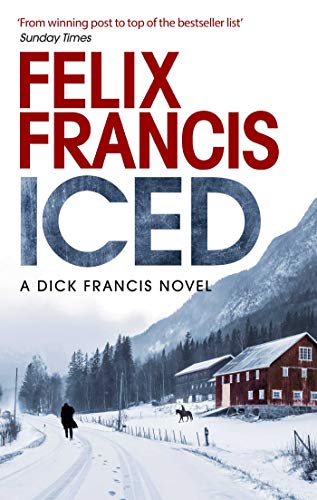
Discussing Iced with Felix Francis

I’m so disappointed that I didn’t have time to read Iced by Felix Francis in time for this blog tour, but am thrilled that Felix has agreed to stay in with me to chat all about it today. My enormous thanks to Hayley Cox for inviting me to participate in Iced‘s launch celebrations.

Staying in with Felix Francis

Welcome to Linda’s Book Bag, Felix. Thank you for agreeing to stay in with me. I rather think I know, but tell me, which of your books have you brought along to share this evening and why have you chosen it?

ICED. It is my 15th novel and is published this month.

What can we expect from an evening in with Iced?

ICED is the 54th Dick Francis novel (my 15th) and again, and as always, portrays the rich world of horse racing. However, this one is slightly different in so far that it is set in St Moritz in the Swiss Alps, where, every year, racehorses compete on a track built right on the frozen lake. Add to that the adrenalin-producing excitement of the Cresta Run, and the novel has all the ingredients for an action-packed rollercoaster ride of emotion and skulduggery.

Crikey. I wasn’t aware that Iced was your fifteenth Dick Francis. I think Iced sounds very exciting. I’m thrilled to have it waiting for me on my TBR. How has it been received so far?

As one reviewer wrote: “Felix Francis pulls no punches here and goes to places few would care to follow as he carefully details the trauma that surrounds a young life, magnifying the internal anguish of an apprentice jockey fighting not only a battle with the scales but also the terrifying memories of his father’s tragic death. Both triumph and disaster are ever present, but those imposters are ultimately dwarfed by exploitation and an addiction which see a promising career in ruins almost before it began. At times it is an uncomfortable read: we identify all too easily with the young hero, but are powerless to influence the damaging choices he makes, choices that leave him exposed and vulnerable. Not for the first time, however, the Swiss mountains offer redemption: as all his yesterdays cohere and offer one last chance to get back in the saddle, our hero is forced into a final confrontation, a confrontation that sees him finally understand his past and lay the ghosts that haunt him.

What a brilliant response. You must be delighted. 

What else have you brought along and why have you brought it?

Glühwein would be appropriate, or maybe a Bullshot (special cocktail for the Cresta Run make from vodka and beef stock), plus some fine-dining delights. The Sunny Bar at The Kulm Hotel specialises in Peruvian food, so maybe some of that too.

I’m rather fond of a cocktail but I’ve never tried a Bullshot! Maybe I’ll stick with the glühwein!

My guests would include James Sunley, President of the St Moritz Tobogganing Club, together with the other fearless riders of the Cresta Run who regularly hurl themselves head-first down the three-quarter-mile-long ice chute with no brakes and precious little steering at speeds of up to eighty miles-per-hour.

Hmm. I’m not sure that’s what I’ll be doing in a hurry Felix! Thank you so much for staying in with me to chat about Iced. You heat up the glühwein and I’ll give Linda’s Book Bag readers some more information about Iced:

Iced

Miles Pussett is a former steeplechase jockey. Now he gets his adrenaline rush from riding down the Cresta Run, a three-quarter-mile Swiss ice chute, head first, reaching speeds of up to eighty miles per hour.

Finding himself in St Moritz during the same weekend as White Turf, when high-class horseracing takes place on the frozen lake, he gets talked into helping out with the horses. It is against his better judgement. Seven years before, Miles left horseracing behind and swore he would never return.

When he discovers something suspicious is going on in the races, something that may have a profound impact on his future life, Miles begins a search for answers. But someone is adamant to stop him – and they’ll go to any lengths to do it . . .

Published by Simon and Schuster on 16th September 2021, Iced is available for purchase through the links here.

About Felix Francis

Felix Francis took over writing the ‘Dick Francis’ novels from his father in 2006. His 15th novel, ICED, is published in September 2021. Felix lives in Oxfordshire with his wife, Debbie, and their three dogs who are really in charge! He is a member of the International Thriller Writers, the Crime Writers Association and the Mystery Writers of America. In 2019 was the International Guest of Honor at Bouchercon 50 in Dallas, Texas, the world’s largest crime fiction convention.

Find out more on Felix’s website and follow him on Twitter @felix__francis.

There’s more with these other bloggers too:

Staying in with Sam Gridley

One of the aspects of book blogging I most enjoy is ‘meeting’ authors and books I would not otherwise encounter. Today I am pleased to welcome Sam Gridley to the blog to tell me all about one of his books. Let’s find out more:

Staying in with Sam Gridley

Welcome to Linda’s Book Bag Sam.

I’m pleased to be here, Linda. Thanks for inviting me.

Thank you for agreeing to stay in with me.

Well, right now the weather outside is terrible. I think we both made an excellent choice.

Argh! The weather is a nightmare these days. Much better to concentrate on books I think! Tell me, which of your books have you brought along to share this evening and why have you chosen it?

I’ve brought my novella The Bourgeois Anarchist. Of my three published books of fiction, this is the latest and perhaps most relevant to our current cultural debates. It confronts serious issues with, I hope, good humor and respect. One reviewer mentioned the book’s “light touch” and “affection for its characters.”

That sounds lovely.

Actually, I couldn’t help but treat the main character, Susie Alioto, with affection. I’ve been in love with her for years.

Oo. Tell me more.

Susie and her mathematician son first appeared in a mystery-spoof I wrote some years ago. I thought it was tremendously funny, but apparently not enough other people did, and it was never published. Yet Susie has stayed with me, demanding to come back in a better story.

Oddly, in the years since her first go-round, Susie has stayed exactly the same age, while her son has changed his name and grown eleven years younger.

The wonders of fiction eh? 

What can we expect from an evening in with The Bourgeois Anarchist?

You too will fall in love with Susie, I can almost guarantee it. She’s tremendously good-hearted, an idealist, and about ten times as tough as you’d guess from her diminutive size. And yet she gets entangled in a situation that proves almost too much for her.

The plot includes arsonists, mobsters, sleazy cops and life-threatening violence, but the real focus is Susie’s conflicting loyalties and difficult moral choices. She’s long been an anarchist, at least theoretically—she spent two decades in a militant commune—but now her principles leave her floundering in her time of need. You might say the quandary involves her head versus her heart, but her head is on both sides, and her emotions are flipping about like butterflies.

I rather like the sound of Susie. What about her son?

Despite the seriousness of the plot, her son Eric, a classic nerd, should keep you chuckling. Though Eric knows nothing about sports, he can tell you the equations for a prolate spheroid (e.g., a football). And in case you’re inclined to mock Susie’s political idealism as naïve, don’t worry, Eric will do it for you.

The Bourgeois Anarchist sounds a lot of fun. What else have you brought along and why have you brought it?

I hated show-and-tell in school, but in this case I have something good to present. I’ve brought a poster!

Among historical anarchists, Susie’s favorite is Errico Malatesta (1853–1932), an Italian who spent most of his life in exile. She keeps the poster shown here on her refrigerator so that his most famous saying—“Impossibility never prevented anything from happening”—can be a constant inspiration.

That’s brilliant!

There are various posters of Malatesta, but this one, as I described it in the book, didn’t exist, so I created it myself. I’ve made it freely available with the slogan, “You too can have an anarchist on your refrigerator!”

One other note relating to this once-famous anarchist: Susie’s son’s full name is Eric Malatesta Leffler. When he was nine, Susie dragged him through Italy to retrace Malatesta’s path during an absurdly futile rebellion. Then when Eric was a teen, his friends told him his middle name meant “diseased testicle.” His distaste for his mother’s politics should need no further explanation.

No, I suppose not!

Oh, and something else: A “bourgeois anarchist” is of course a contradiction in terms, or it ought to be. But when a young friend first heard the title, he quipped, “Aren’t they all?”

Now that IS food for thought. Thanks so much for staying in with me to tell me about The Bourgeois Anarchist Sam. It sounds very entertaining. You pop into the kitchen to put your poster on the fridge and I’ll give Linda’s Book Bag readers a few more details.

The Bourgeois Anarchist

Susie Alioto is a longtime political militant. After college she spent two decades in an anarchist commune, and at age 66 her beliefs haven’t wavered. She protests with young people to demand justice and human rights. She marches for gun control, for Black Lives Matter, for action against climate change. A portrait of her special anarchist hero, Errico Malatesta, hangs on her refrigerator with an inspirational quote of his: “Impossibility never prevented anything from happening.”

Yet Susie now teaches at an expensive private school, and her life is comfortably middle-class. Her son Eric, a budding mathematician, mocks her as a “bourgeois anarchist.”

As the story opens, violence breaks out at a peaceful rally, and Susie is injured. A young woman dressed in Antifa gear rescues her, and Susie is drawn into a mysterious intrigue involving angry activists and devious capitalists, gentrification, arson, even mobsters. Cops pound on her door to demand information. Though Susie tries to hew to her principles, the true nature of justice becomes muddled, and her anarchist heroes-including the grizzled Malatesta on her refrigerator-provide no clear answer. People’s lives are involved, and she doesn’t know what to do. The dilemma escalates into an existential crisis.

In the midst of this turmoil, Susie stumbles into unexpected romance. But is the new man any more reliable than the ones who’ve failed her in the past? Meanwhile her son, the apolitical math geek, adds an offbeat and comic perspective that may offer a clue to the personal and political intrigues.

Published on 9th July 2021, The Bourgeois Anarchist is available for purchase from Amazon, Barnes and Noble and directly from the publisher, Finishing Line Press.

About Sam Gridley

After being born in Pittsburgh, Sam Gridley lived in Camden, Providence, Bristol, Westchester, Inglewood, Palos Verdes Estates, Torrance, Redondo Beach, Northridge, Culver City, Berkeley, Oakland, Cambridge, Brighton, London, Palo Alto, Bellefonte, Baltimore, Lyndhurst, Rutherford, and perhaps other communities he has forgotten. This was before the age of 29. Since then he has settled in Philadelphia and scarcely budged. As an author, he has published two novels, The Shame of What We Are and The Big Happiness, as well as stories and satire in more than sixty magazines and anthologies. He has received two fellowships from the Pennsylvania Council on the Arts and a Wallace Stegner Fellowship from Stanford University. Married for many years, Sam has two grown children, one neurotic dog and a small backyard where several gerbils are buried.

For further information, visit Sam’s blog, or follow him on Twitter @SamGridley2.

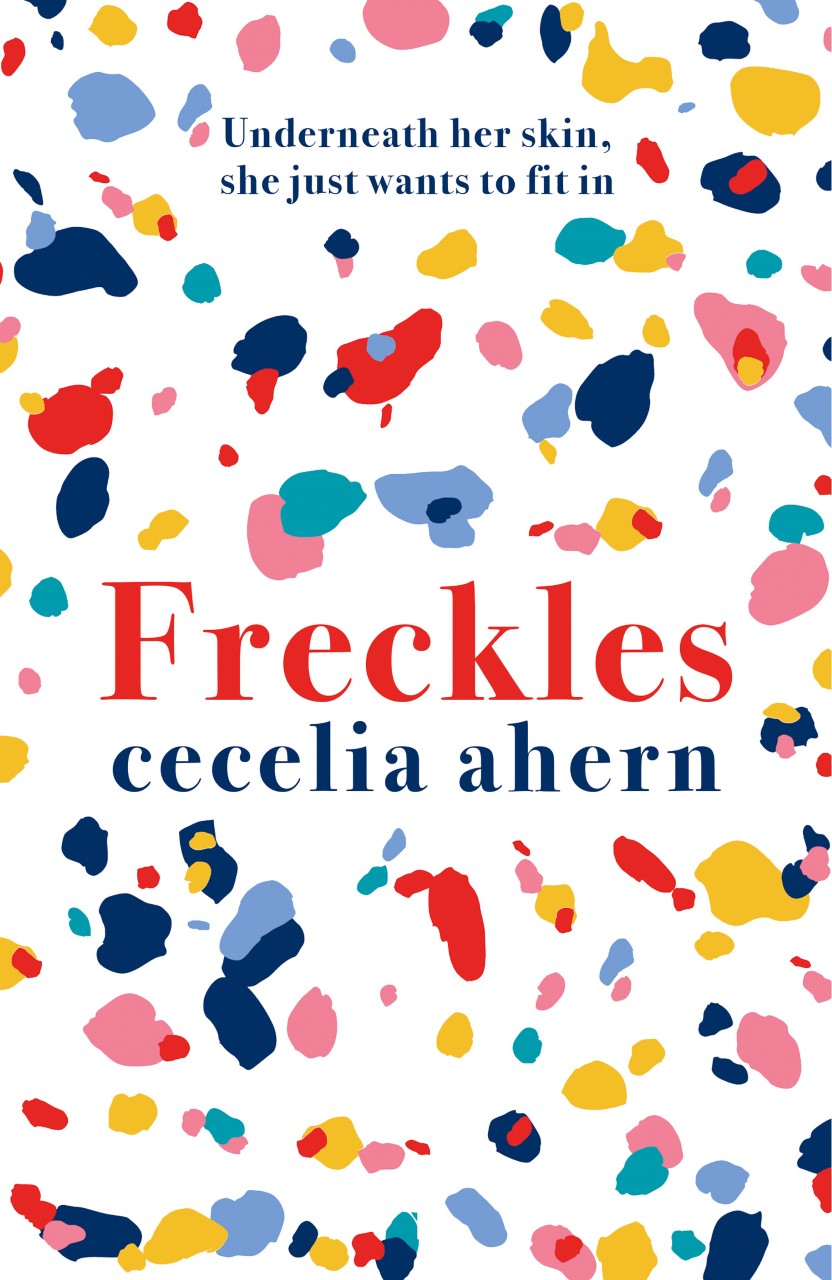
Freckles by Cecelia Ahern

I’ve long loved Cecelia Ahern’s writing so it is wonderful to be helping to close the blog tour for her latest book Freckles. My grateful thanks to Anne Cater of Random Things Tours for inviting me to take part and to Harper Collins for sending me a copy of Freckles in return for an honest review.

Most recently I reviewed Cecelia Ahern’s Postscript here and was delighted to participate in a Zoom meeting with the author almost a year ago when the book was published. I have also reviewed her short story collection, ROAR, here.

Freckles is published by Harper Collins and is available for purchase through the links here.

Freckles

Five people.
Five chances.
One woman’s search for happiness.

Allegra Bird’s arms are scattered with freckles, a gift from her beloved father. But despite her nickname, Freckles has never been able to join all the dots. So when a stranger tells her that everyone is the average of the five people they spend the most time with, it opens up something deep inside.

The trouble is, Freckles doesn’t know if she has five people. And if not, what does that say about her? She’s left her unconventional father and her friends behind for a bold new life in Dublin, but she’s still an outsider.

Now, in a quest to understand, she must find not one but five people who shape her – and who will determine her future.

Told in Allegra’s vivid original voice, moving from modern Dublin to the fierce Atlantic coast, this is an unforgettable story of human connection, of friendship, and of growing into your own skin.

My Review of Freckles

‘Freckles’ Allegra Bird is searching.

I started Freckles slightly apprehensively as I didn’t feel quite in tune with the writing to begin with. I think this is an important aspect of reading Freckles because there is a musical quality to Cecelia Ahern’s writing, not least alluded to in her protagonist’s name, where the rhythm is sometimes sombre, sometimes staccato jazz in style, sometimes upbeat and so on so that the narrative draws in the reader until there is a brilliant finale. Reading Allegra’s life is like listening to a concert of eclectic pieces that all commit to a theme until they are beautifully harmonised. Having begun it uncertainly, I ended up loving Freckles.

The complete joy in this book is the plot’s gradual uncovering of Allegra to both the reader and to Allegra herself, from her self-harming school days, through her persona as a traffic warden to her understanding of what it means to be a daughter and, quite literally, to be comfortable in her own skin. Cecelia Ahern creates Allegra with tenderness and brutality, with honesty and compassion until I felt an almost physical need to climb into the book and support her. I was moved and entertained by her in equal measure. I loved meeting the other characters too; especially as Cecelia Ahern is unafraid to to give her readers fully rounded individuals who don’t always behave appropriately or who are flawed and unattractive as well as supportive and positive ones. This has the effect of presenting a real microcosm of the world in Freckles that could be transported to any setting and that is utterly absorbing.

However, although I loved the the story and the characters, it was the presentation of real life in Freckles that captivated me most. The rumours surrounding Pops illustrate how truth and reality can be blurred until people are changed and affected. Allegra’s obsessive personality, her forthright nature and her ability to create her own problems show just how difficult it can be for some people simply to exist in society. Minor characters like Whistles and Spanner help the reader understand that we shouldn’t judge others because we never really know the full extent of what is happening in their lives. I loved the traffic warden motif running through because I thought Cecelia Ahern handled it literally and metaphorically to perfection. We need rules for stability but we need to understand humanity alongside those rules, to flex them and adapt them in order for us all to retain our humanity. I found this aspect of Freckles both profound and affecting.

Freckles is a surprising book. It wasn’t quite what I expected at the beginning and took me a while to settle into because it felt edgier than other Cecelia Ahern books I’ve read, but I ended up loving it unreservedly and recommend it completely.

About Cecelia Ahern

Cecelia Ahern is one of the biggest selling authors to emerge in the past fifteen years, having sold more than 25 million copies worldwide in over 50 countries. Two of her books have been adapted as major films and she has created several TV series in the US and Germany. Her novel PS I Love You was a New York Times bestseller and huge #1 bestseller in Ireland and the UK. In 2007, it was made into a major film starring Hilary Swank and Gerard Butler and most recently, Cecelia wrote the sequel- Postscript which was an instant bestseller.

Cecelia has written13 bestselling novels including two YA novels and a critically acclaimed collection of short stories, ROAR which is being produced by and starring Nicole Kidman. Her novels have resonated with readers everywhere through their thoughtful, unique and inspiring storytelling and have won numerous awards. Cecelia lives in Dublin with her family.

You can find out more by following Cecelia on Twitter @Cecelia_Ahern, visiting her website and finding her on Instagram and Facebook.

There’s more with these other bloggers too:

Staying in with Gillian Hawser

I think ours might be the only household in the country that hasn’t seen the television series Bridgerton so when I heard Gillian Hawser’s writing might transport me to a similar era, I simply had to invite her onto Linda’s Book Bag to stay in with me. My thanks to Sophie Morgan at Troubador for putting us in touch with one another.

Staying in with Gillian Hawser

Welcome to Linda’s Book Bag Gillian. Thank you for agreeing to stay in with me. Tell me, which of your books have you brought along to share this evening and why have you chosen it?

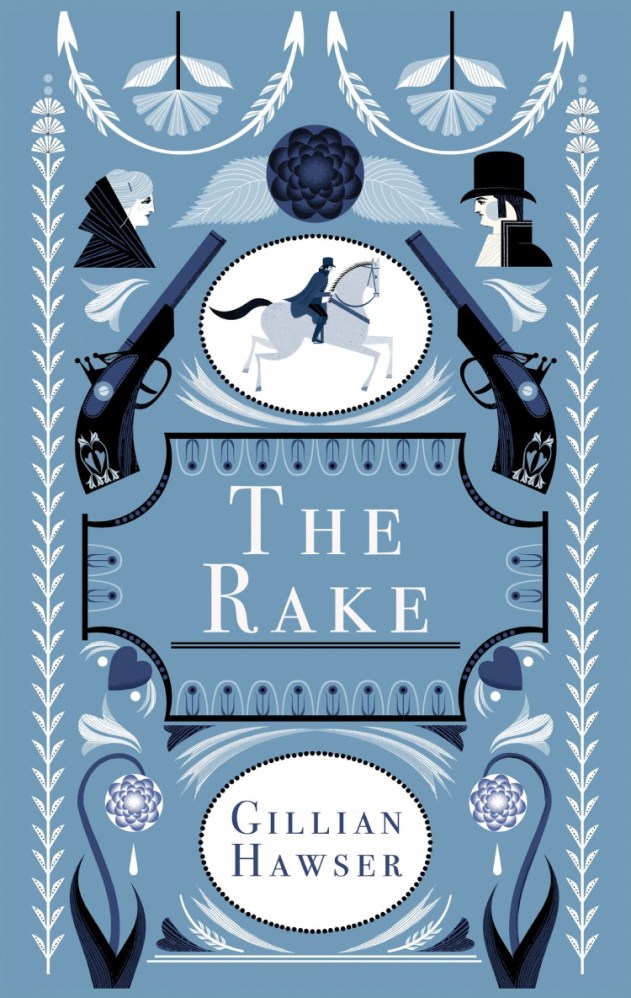
The Rake. I have chosen this as one of two books which I have written recently which take place at the turn of the 19th C. I am particularly obsessed by this period – the Whig aristocracy, were unique, essentially a  governing class –they ran the country for most of the 18th C.  Economic power was concentrated in the landed interest and they owned most of the land. Having said that they were educated, they were political, they patronised the arts, they hunted and danced but women such as Lady Melbourne who is in The Rake (as the godmother to Grizelda) or the Duchess of Devonshire were as politically motivated as their husbands.  They governed in every area … Foreign Office boxes littered their houses.

Behind every great man eh…?

What can we expect from an evening in with The Rake?

It is a love story, as Jane Austen’s stories are love stories but my main characters learn through their misadventures – they develop and change; Jaspar, the rake, recognises poverty and illness.

In my other book The Arranged Marriage Perpetua learns to stand up to the world. I am conscious that many girls are bullied – maybe bullied is too strong a word  but forced to do as their mother’s wish … and I don’t think this is simply found in the 18th/19th C – it is still around today. It was hard for women then but it’s still problematical now.

It most definitely is Gillian. We are not good at learning lessons from history.

What else have you brought along and why have you brought it?  

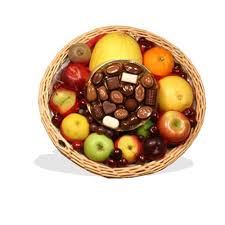
I have brought fruit and chocolates!

Thanks so much Gillian. What are you working on now?

I am currently completing a book about three girls who meet in a home for unmarried mothers in 1946. Different period but some of the problems for women are universal.

That sounds great. Thanks so much for staying in with me this evening. You share out the chocolates and I’ll tell readers more about The Rake.

The Rake

A remarkable tale of redemption and transformation, The Rake is a love story set against the backdrop of a changing world.

It is the turn of the 19th Century and Lord Jaspar Heddington is a rich handsome rake, who womanises with impunity, indulged by the world he inhabits who turn a blind eye to his peccadilloes. However, when Jaspar seduces the beautiful, innocent Laura Ludgrove, the enusing scandal is different.

To escape the fallout, his beloved sister, Nillie, orders him out of London and back to Bardfield, his estate in the country. On the journey, he encounters a mysterious and beautiful girl who captivates him – and then unexpectedly shoots him. Wounded and bleeding, his life is ultimately saved by young Dr Horace Sugden, a trailblazer of the new scientific world.

Overwhelmed, Jaspar struggles to understand why he was shot. Still haunted by the strange encounter, Jaspar decides to search for the girl who invades his dreams – but will he emerge with more than he bargained for?

Published by Matador on 1st August 2021, The Rake is available for purchase through the links here.

About Gillian Hawser

Gillian Hawser is an internationally renowned casting director, BAFTA Film Committee and Council member and BIFA chair.

You can follow Gillian on Twitter @gillianhawser. and Instagram.

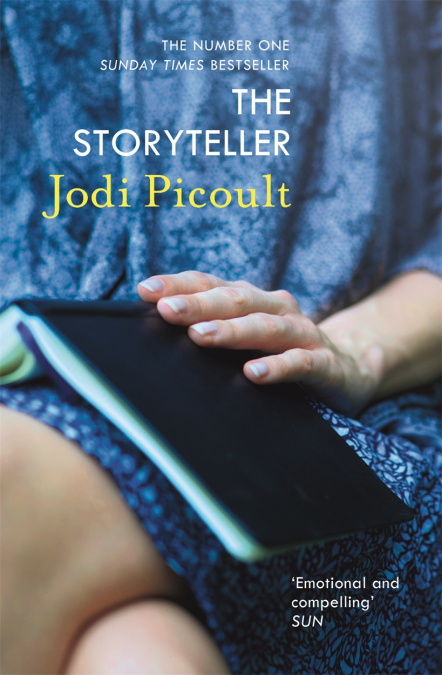
The Storyteller by Jodi Picoult

I’ve long been meaning to read Jodi Picoult but never quite got round to it, so when The Storyteller arrived as the latest read for my U3A book group, I was delighted. I’m sharing my review today.

Published by Hodder in 2013, The Storyteller is available for purchase through the links here.

The Storyteller

For seventy years, Josef Weber has been hiding in plain sight.

He is a pillar of his local community.

He is also a murderer.

When Josef decides to confess, it is to Sage Singer, a young woman who trusts him as her friend. What she hears shatters everything she thought she knew and believed.

As Sage uncovers the truth from the darkest horrors of war, she must follow a twisting trail between terror and mercy, betrayal and forgiveness, love – and revenge.

My Review of The Storyteller

Sage strikes up a friendship with Josef.

I  cannot begin to tell you how angry I am with myself for not having read a Jodi Picoult book before. The Storyteller is fiction at its very best. The title fits the book sublimely. Not only is Jodi Picoult a consummate storyteller, but the novel itself has so many layers of storytelling that it is quite astounding. For example (and without spoiling the plot) Sage creates a narrative about her own life, deciding, without knowing, how others view her. Josef has a story to offload to Sage, wanting to write his own ending. Minka is a catalyst for so many of the stories, including the one she begins to write as a child. Leo is chasing and verifying the stories told to him. The Storyteller embodies the traditions of created narratives from fairy tales, mythology, allegory, history and personal circumstance until it mesmerises the reader. I thought it was wonderful.

The plot races along and as someone not usually keen on multiple timelines or points of view I can honestly say I was captivated by the quality of the writing and structure in The Storyteller. At times I didn’t find the content easy, but I was so ensnared by Jodi Picoult’s writing I couldn’t tear myself away. Indeed, aspects of the narrative invaded my dreams, so powerful is the writing.

The sections relating to the Holocaust are extremely powerful and I think some readers might find them distressing because they have obviously been carefully researched so that they are authentic, vivid and affecting. However, The Storyteller is not a depressing book because Jodi Picoult examines the strength of human nature even when humanity is at its worst, making the book truly immersive. The experiences so many of us thankfully will never encounter become completely knowable. The references to food in particular create this effect brilliantly and I found The Storyteller such a visual read that it was as if I were present watching the action rather than reading about it.

I thought the characters were wonderful. Jodi Picoult presents Sage, Josef et al with such a rounded authenticity that they feel completely real. I loved the way she led the reader into considering what makes us who we are, and to question what is right or wrong and how we might behave in similar circumstances. Even Sage’s name with its culinary links and the allusion to knowledge that Sage gains throughout the story is perfectly chosen.

It’s almost impossible to consider all the themes in The Storyteller. I think this is a book that would reward many readings as there would be something new to discover every time. War, humanity in so many forms, grief, guilt, forgiveness, what makes us human, history, loyalty, obedience, power, racism, family, relationships, and survival are just a few of the aspects to consider when reading The Storyteller, making it a rich and multi-layered book that I found so powerful.

Meticulously researched, flawlessly written and emotionally engaging, The Storyteller is a magnificent book that I adored. I recommend it most highly.

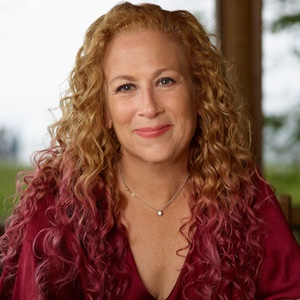
About Jodi Picoult

Jodi Picoult is the author of over 20 novels, with 40 million copies sold worldwide. Twelve of her books have debuted at #1 on the New York Times bestseller list. Five novels have been made into movies and Between the Lines (co-written with daughter Samantha van Leer) has been adapted as a musical. She is the recipient of multiple awards, including the New England Bookseller Award for Fiction, the Alex Award from the YA Library Services Association, and the NH Literary Award for Outstanding Literary Merit. She is also the co-librettist for the musicals Breathe, and The Book Thief. She lives in New Hampshire with her husband.

For further information visit Jodi’s website, follow her on Twitter @JodiPicoult and find her on Facebook and Instagram.

An Interview with Ambreen Hameed and Uzma Hameed, authors of UNDYING

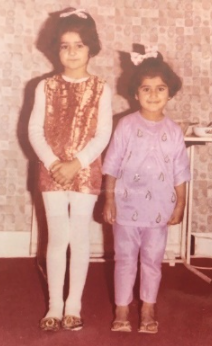
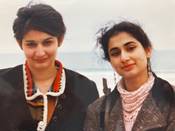
My enormous thanks to Ben at Cameron Publicity for putting me in touch with Ambreen Hameed and Uzma Hameed, authors of UNDYING. Ambreen and Uzma are sisters and co-author books. I was so intrigued by the concept that I simply had to interview them here on Linda’s Book Bag.

An Interview with Ambreen Hameed and Uzma Hameed

Welcome to Linda’s Book Bag ladies. Would you like to introduce one another please?

Ambreen: Uzma is my younger sister, though by no means the lesser. She’s a successful theatre-maker and dramaturg who, among her many credits, collaborated on the Royal Opera House’s ballet acclaimed ballet Woolf works.  In UNDYING, she writes the voice of the younger sister, Zarina.  If it hadn’t been for her determination and her  formidable editing skills we would never have finished the book.

Uzma sounds formidable!

Uzma: Ambreen has degrees in physics and the philosophy of science and has a passion for knowledge. She’s a journalist with a highly successful career in TV, including as series producer for C4’s landmark Devil’s Advocate and, somehow, has managed to fit in being a yoga teacher too. As a writer, she’s super-talented – and fast. She’s also my big sister and the voice of the elder sister, Sufya in UNDYING.

Crikey! You both make me and my big sister seem very inadequate!

And could you tell me a bit about UNDYING?

Ambreen: Undying is a black comedy told from the point of view of two British Muslim sisters who have fallen for the same man.  At the time the novel takes place, they aren’t communicating well with each other (we gradually understand the reason why) so – privy to both sisters’ experience – the reader always knows more than each sister.  The man they are in love with is called Heathrow – he’s an elusive but charismatic individual named after the Terminal 3 concourse where he was found abandoned as a child.  The epigraph for the book is Humphrey Bogart’s  line  from Casablanca “It doesn’t take much to see that the problems of three little people don’t amount to a hill of beans in this crazy world” because, like Ilse, Rick and Victor in the movie, our love triangle takes place against a backdrop of seismic political change.   One of our favourite reviews of the book called it “The Bronte sisters meets Four Lions.”  We couldn’t have been more chuffed.

I bet!

Uzma: As children, we heard of a superstition that says that djinns (genies) are attracted to triangular spaces and we were interested about the kind of destructive power that might exist in a love triangle. UNDYING is set against the backdrop of the Clinton/Lewinsky affair, and the subsequent bombing of Iraq that was considered by many to be an attempt to deflect attention from his impeachment trial. In a sense, the destruction that was unleashed on the global stage, could be said to have its origins in an ill-fated triangular relationship. Among Heathrow and the two sisters too, the triangular relationship has unforeseen and devastating consequences when Zarina performs an esoteric ritual to draw Heathrow to her (not really believing it will have any effect!) but ends up inadvertently summoning a djinn.

You have both made me desperate to read UNDYING. So, what was it like writing together as sisters?

Ambreen: Working together as sisters was both extremely challenging and extremely rewarding.   We quickly realised that in order to properly understand the deep currents in the relationship between Zarina and Sufya we were going to have to excavate our own sibling relationship.  The challenge – and the rewards – lay in having difficult  conversations that perhaps we would otherwise never have had.  Not only did it help us build layers into what happens between Sufya and Zarina but it also brought us much closer together.  But there were times when we had to take deep breaths and give each other space.  It can be hard enough taking notes as a writer – as I mentioned, Uzma is a brilliant editor – and it can get really tough when the notes come from your sister … the person who knows how best to press your buttons!

Uzma: A huge gift was having the benefit of each other’s imagination. Although we had drafted a detailed structure that set out what events would be narrated in each chapter, how we each interpreted our ‘instructions’ was often a surprise. There were so many times when I thought I could never have written the chapter the way that Ambreen did, but what she had written also immediately inspired new ideas for my next chapter too. At the outset we were interested in exploring the shifting nature of truth within families – the way that no two siblings will agree on their shared history.  We didn’t expect that we would encounter this issue head on in the actual process of writing.  In this sense, the book wasn’t just about the clash of perspectives between siblings – it actually embodies it.

I imagine that was quite an interesting experience. How has the experience of writing a book together changed your relationship?

Uzma: Often in families, siblings become polarised, occupying different territories. One lovely by-product of writing this book is that we realised that we are perhaps more similar than we had thought!

If you were to sum up the experience of writing UNDYING as sisters what three words would you use?

Ambreen: Painful, enriching, hilarious.

Uzma: Challenging, fulfilling, surprising.

How did you write?

Uzma: In UNDYING, Sufya and Zarina write alternating chapters so that the reader switches between the two characters’ viewpoints. Ambreen and I together devised a detailed structure which laid out what the heart of each chapter was ‘about’ and what needed to ‘happen’. This document was quite detailed with each of the plotlines – magical/psychological/relationship/political colour-coded so that we could make sure that each of the plates were kept in the air! Still, the real writing happened on our own when we would each bring the events in the structure to life, often with unexpected epiphanies occurring. For example, we didn’t decide the form that the djinn would take – mostly because, no matter how much we discussed it, none of the ideas felt quite right. But, having inhabited the writing up to that point, once I reached the chapter where the djinn first appears, I suddenly knew what it had to be…but I won’t tell you here!

No. No plot spoilers thank you!

What advice would you give to others considering joint authorship?

Uzma: For us, this ended up being a life-event as well as the writing of a book – a revealing and joyous process that we both wanted to stick with, despite having to write in gaps between other work on and off for a decade! I think if you weren’t writing with your sister, you might be wise to put a collaboration agreement in place with roles, timescales and what happens if you disagree, all stipulated up front!

Knowing my sister I think you’re right. She’d be hounding me every step of the way…

UNDYING has been described as having ‘Sit-com style comedy’. How has your work in theatre Uzma and in television Ambreen impacted on the style of UNDYING?

Ambreen: A number of readers have talked about how visual the book is, and I think this is particularly true of Uzma’s writing.  Throughout the novel, her character Zarina is trying to stage a play (about another more ancient love triangle), and you can really feel the truth of Uzma’s many years of experience in the theatre, as well as her dramatic imagination.   I think my own experience in television and journalism perhaps helped us expand the novel from the story of “three little people”, to a story about a British Muslim family caught up in a world which views Muslims in general with suspicion and incomprehension.

Uzma: Only the reader is privy to what both sisters are doing/thinking which, (we hope!) adds a sense of suspense, especially as chapters often end on a dramatic note before the viewpoint switches. I think that’s one of the reasons so many people have said the book would be so suited to a TV serial.

I think is sounds perfect to be adapted to television.

How important is dark comedy or satire in conveying truths about society in fiction do you think?

Ambreen: I don’t think we knew when we started out that we were going to write “dark comedy”.  But in retrospect it seems obvious that we couldn’t write about our subject matter in any other way.  The satirical voice is so powerful, and can help convey and capture experience that would otherwise be too painful to digest.

How important has your cultural heritage been in the writing of UNDYING?

Ambreen:  Again, I don’t think we realised when we started planning our story that we would be exploring British Muslim identity.  But it makes sense that as the world around the two sisters becomes more polarised, each of them is forced to assess what it means to her to live with the label British Muslim.

Uzma: We discovered that, in writing about sisters, we were also writing about being British-Muslim because the experience of being immigrants in a society that is so culturally different impacts on the sibling relationship. Each sister has to carve out her own path between expectations and influences, inevitably bringing up questions of loyalty and betrayal.

What might those unfamiliar with British Muslim experience learn from UNDYING?

Ambreen: First and foremost we hope that people will enjoy it and love the characters.  The difficulty remains that “British Muslim” conjures up stereotypical images and roles to those who are unfamiliar, and we hope that our characters are complex, humanising and loveable so that readers go away with a richer sense of who their British Muslim neighbours are.

What are you working on now?

Ambreen:  I’m writing another novel now – the story of an Urdu  interpreter who works in police stations.  The situation of  interpreter has always fascinated me – someone who is between worlds, and who must convey meaning between two other people with absolutely no input from herself – as if  she didn’t exist.

I used to be a police lay visitor and interpreters fulfilled such an important role for both the police and detainees.

Uzma: I have been scoping out my next book which, at the moment, I’m not going to say much about as it’s still at an early stage. I’m not sure when I’ll get a block of time to write it yet, as my theatre work has picked up again after lockdown. I’m currently working The Dante Project, a new ballet by Wayne McGregor which opens in October.

It must be wonderful to be back in live work after all the lockdowns.

Is there anything else we should know about UNDYING?

Ambreen and Uzma: It has been longlisted for the Bath Novel Award 2021, and  championed by some of our literary heroes!

Congratulations. How exciting. Fingers crossed. Here are some of the comments being made about UNDYING:

A novel of huge ambition: both an irony-sharpened comedy of manners (and errors – lots of errors), and a powerful, passionately written dissection of the anger, confusion and violence that led up to 9/11.  I loved ‘Undying’, and couldn’t put it down until I had reached the last page.

Stef Penney 

*

Sibling rivalry, evolutionary science, theatre, film and even magic all have a part to play in Ambreen and Uzma Hameed’s exuberant tale of a romantic triangle that also touches on questions of belonging, identity and individuality that we all wrestle with today. Undying is huge fun. Its sitcom-style comedy and affectionate satire deepen into a mystery that explores what unites and divides us, in families and communities, and asks how art, science and religion try to make sense of a violent and unjust world.

Boyd Tonkin

*

What begins as a warm, sharply observed and trenchantly witty study of sibling rivalry, family dynamics and social mores amongst British Pakistanis (with a wonderful cast of principal and supporting characters) develops into a deep and tragic dramatic study of conflict in all its forms: family, gender, social and political. I loved the references to Humphrey Bogart and to Bollywood, to the sex lives and biological imperatives of bees and other animals, to political Islam versus actual lived Muslim life, and to corporate shenanigans in the supermarket world! This is much, much more than the story of two sisters in love with the same man. 

Savita Kalhan

*

The narrators are two sisters alternating between chapters, changing perspectives, winning and losing the sympathies of the reader. They take you on an audacious, at times, bewildering and always enthralling journey. The main characters stay with you: the entwined yet intensely rivalrous siblings, Zarina and Sufya, Heathrow, like Heathcliff, the unknowable, sexually mesmerising outsider, a range of Muslim relatives defying all stereotypes. The books shift between the real and spectral worlds, lived realities and imagined scenarios. You end up wanting more. I hope the Hameed sisters give us more.

Yasmin Alibhai-Brown

Thank you Ambreen and Uzma for giving us such a wonderful insight into UNDYING. I wish you both every success.

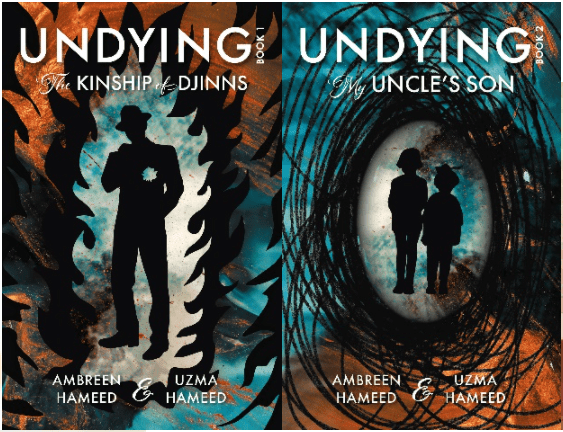
UNDYING Book 1: The Kinship of Djinns

It is 1998 and the leader of the free world is under fire after an affair with a young intern. Meanwhile, in a corner of South London, the Malik sisters have also committed a sin: they are in their thirties and still not married. Now the unexpected return of their childhood playmate spells the chance of a happy ending: but only for one of them. And this time, younger sister Zarina is determined she won’t be second in line to Sufya, the eldest – even if it means resorting to dubious occult practices. But as tensions rise across the Muslim world, sibling rivalry and Sufi spells are not the only forces with which the three lovers must contend.

Longlisted for The Bath Novel Award 2021

UNDYING Book 1: The Kinship of Djinns is available for purchase here.

UNDYING Book 2: My Uncle’s Son

Christmas 1998 approaches and the Malik sisters struggle to come to terms with Heathrow’s disappearance. A series of unanswered questions leads Sufya on a journey across the Holy Land. Back in South London, Zarina believes she is receiving messages from beyond the grave. As the leader of the free world sends bombs down on Baghdad, anger boils over in the Muslim community. The family falls under suspicion and both sisters must pick a side.

My Uncle’s Son is the thrilling conclusion to UNDYING.

UNDYING Book 2: My Uncle’s Son is available for purchase here.

About Ambreen Hameed and Uzma Hameed

Ambreen Hameed is a television producer and journalist.  Ambreen’s career in television began at the BBC on the Asian programme, Network East, after which she worked for London Weekend Television, on its flagship current affairs show, The London Programme. She was series producer of the award-winning Channel 4 series Devil’s Advocate presented by Darcus Howe. Three of her London Programmes were nominated for Royal Television Society awards including an hour-long Special on the experiences of Black and Asian officers in the Metropolitan Police Service. Other career highlights include the award-winning series Second Chance for Channel 4, and Dispatches. She has also written for New Statesman and a short story for Radio 4’s Pier Shorts.

You’ll find Ambreen on Twitter @AmbreenHameed1 and Instagram.

UZMA HAMEED is a writer, director and dramaturg, working in theatre and dance. In 2015 she was dramaturg to choreographer Wayne McGregor on the Royal Ballet’s multi award-winning production of Woolf Works. She has since collaborated with him on Obsidian Tear (2016)Multiverse (2016) and The Dante Project – Inferno (2019) for the Royal Ballet, and on Company Wayne McGregor’s Autobiography (2017). She has also worked with choreographer Cathy Marston on Northern Ballet’s Victoria (2019), which won the Sky Arts/South Bank Show award for dance.

In 1997 she founded The Big Picture Company, a theatre company which quickly gained a reputation for its innovative visual style, combing new writing with choreography and film. For Big Picture, she wrote and directed plays which toured extensively around the UK and enjoyed London seasons at The Young Vic, BAC and Riverside Studios. From 2002-2005 Uzma was Associate Director at Derby Playhouse.

Uzma has directed for Kali Theatre, led projects at the National Theatre Studio and given talks and workshops for a variety of organisations including The Royal College of Art, Dulwich Picture Gallery, Edinburgh International Festival and Playwrights Studio Scotland.

You’ll find Uzma on Twitter @UzmaHameedRexha and Instagram.

UNDYING has a Facebook page and website too.

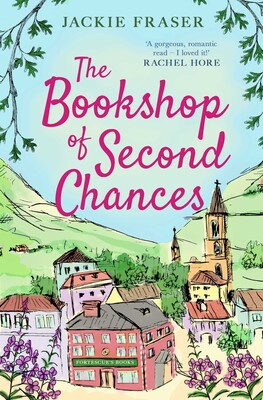
The Bookshop of Second Chances by Jackie Fraser

My enormous thanks to Laurie McShea and Sara-Jade Virtue of TeamBATC for inviting me to participate in the blog tour for The Bookshop of Second Chances by Jackie Fraser and for sending me a copy of the book in return for an honest review. I’m thrilled to share that review today and to have the honour of closing the tour.

Published by Simon and Schuster in paperback on 2nd September 2021, The Bookshop of Second Chances is available for purchase through these links.

The Bookshop of Second Chances

Set in a charming little Scottish town, The Bookshop of Second Chances is the most uplifting story you’ll read this year!

Shortlisted for the RNA Katie Fforde Debut Romantic Novel Award 2021.

Thea’s having a bad month. Not only has she been made redundant, she’s also discovered her husband of nearly twenty years is sleeping with one of her friends. And he’s not sorry – he’s leaving.

Bewildered and lost, Thea doesn’t know what to do. But, when she learns the great-uncle she barely knew has died and left her his huge collection of second-hand books and a house in the Scottish Lowlands, she seems to have been offered a second chance.

Running away to a little town where no one knows her seems like exactly what Thea needs. But when she meets the aristocratic Maltravers brothers – grumpy bookshop owner Edward and his estranged brother Charles, Lord Hollinshaw – her new life quickly becomes just as complicated as the life she was running from…

An enchanting story of Scottish lords, second-hand books, new beginnings and second chances perfect for fans of Cressida McLaughlin, Veronica Henry, Rachael Lucas and Jenny Colgan.

My Review of The Bookshop of Second Chances

Running away is just the start for Thea.

The cover image of The Bookshop of Second Chances gave me a preconceived idea of the nature of the book so that I was surprised to find Jackie Fraser’s writing a lot more gritty and edgy than anticipated and I enjoyed the read all the more for it. I had expected a standard romantic story and indeed there is romance, but The Bookshop of Second Chances is very much more than that. There’s actually quite a deep psychological aspect to the story as Edward’s family background is uncovered. Add in considerable dry humour and The Bookshop of Second Chances is enormously entertaining.

I loved meeting Thea. She’s a thoroughly rounded character in whom Jackie Fraser balances strength and insecurity absolutely perfectly so that Thea feels very much a real woman. Her first person narrative makes reading the story seem as if a close friend is chatting with the reader. Jackie Fraser has an unusual style in the direct speech employed by Thea and Edward particularly, and this enhances the intimate feeling, the sense of immediacy and the reality and authenticity of the story. I thought this aspect was brilliant. Of the male characters it was Edward who completely captivated me. Resonant of Charlotte Bronte’s Rochester he epitomises the brooding anti-hero that is so attractive. I was in love with him myself from the first time I met him and was fascinated to see if or how his interactions with Thea might develop into something more. You’ll have to read the book to find out what ensues!

I so enjoyed the plot. In a sense, not a great deal happens but this is by no means a criticism. Rather, The Bookshop of Second Chances gives a totally absorbing and compelling insight into the building of an ordinary new life for Thea and demonstrates so skilfully how new friendships and relationships are established. There’s a real depth to this aspect of the book that I found fascinating. It’s as if Jackie Fraser has looked into the mind of a kind of ‘Everywoman’ in Thea and afforded the reader the opportunity to understand her, to empathise and to exclaim ‘Oh yes!’ in response to some of Thea’s thoughts and actions. I found this such an engaging aspect of The Bookshop of Second Chances.

The themes of The Bookshop of Second Chances are totally captivating. The breakdown of a marriage, the need to start again in middle age, the concepts of fidelity, revenge, public versus private persona, family, friendship and love all blend into a compelling story that I found both entertaining and intelligent.

I really recommend The Bookshop of Second Chances. I have a feeling it might not be exactly what readers are expecting, but they’ll love what they find. I thoroughly enjoyed it.

About Jackie Fraser

Jackie Fraser is a freelance editor and writer. She’s worked for AA Publishing, Watkins, the Good Food Guide, and various self-published writers of fiction, travel and food guides, recipe books and self-help books since 2012. Prior to that, she worked as an editor of food and accommodation guides for the AA, including the B&B Guide, Restaurant Guide, and Pub Guide for nearly twenty years, eventually running the Lifestyle Guides department.   She’s interested in all kind of things, particularly history, (and prehistory) art, food, popular culture and music. She reads a lot, (no, really) in multiple genres, and is fascinated by the Bronze Age. She likes vintage clothes, antique fairs, and photography. She used to be a bit of a goth. She likes cats.

You can follow Jackie on Twitter @muninnherself and Instagram. You’ll find Jackie on Facebook and there’s more with these other bloggers too:

Research: A Guest Post by M W Arnold, Author of Wild Blue Yonder

It gives me enormous pleasure to welcome back M W Arnold to Linda’s Book Bag today to celebrate his latest book Wild Blue Yonder with a guest post all about research for historical novels. Mick is such a generous author and a great writer and I’d like to thank Rachel of Rachel’s Random Resources for inviting me to participate in this blog blitz.

You’ll find what happened when previously I stayed in with Mick alongside my review of the first novel in the Broken Wings series, A Wing and a Prayer, here.

Wild Blue Yonder is available for purchase here as well as via Nook and iBooks.

Wild Blue Yonder

Wild Blue Yonder

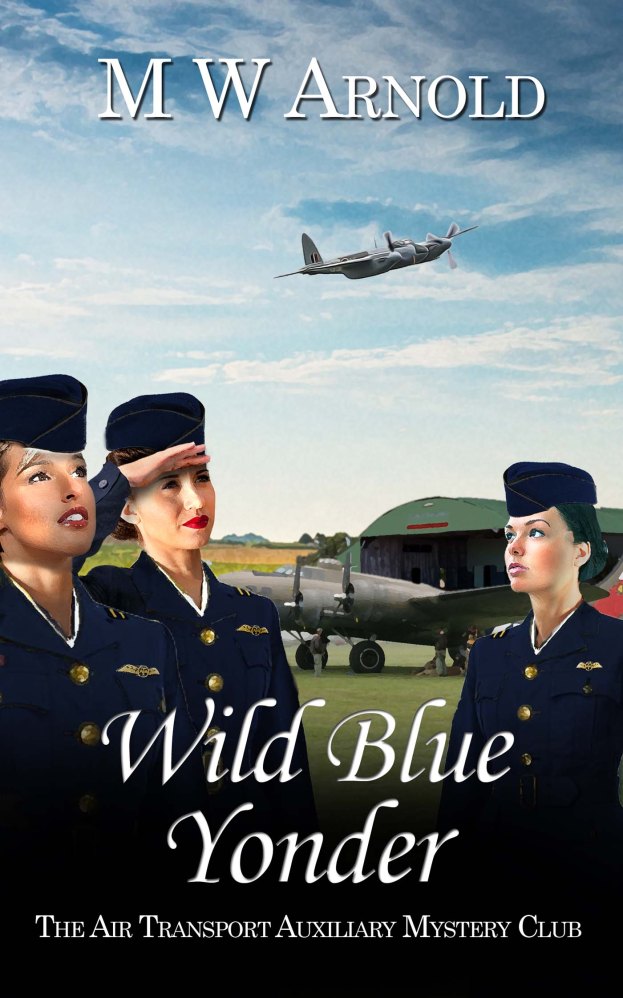
Air Transport Auxiliary pilot Doris Winter is accused of stealing a valuable item from a famous Hollywood movie star, now a captain in the US Army Air Corps, after a dance at the air base in England where he’s stationed. Gathering her close friends together, she’s determined to clear her name.

Ruth’s POW son suffers a life-changing injury just as her own cottage takes damage in an air raid and Penny’s estranged little sister unexpectedly turns up, having run away from school. Together with the ongoing thefts of items of clothing and surprise personal revelations, these all threaten to hamper their investigation.

In spite of the worsening war situation, they must band together to rise above their troubles and prove love and friendship is worth fighting for.

Research

A Guest Post by M W Arnold

Research.

One wee word, but its potential for making or breaking a book is immense, especially, at least in my experience, for a historical story. I try and remember now I’m writing in this genre that there’s always going to be at least one person out there who is ready to pounce on any mistakes I make.

I hadn’t planned upon writing my first World War Two saga, it kind of happened. I’d had a romantic/drama published back in 2017 and then decided to become ill. By the time I was recovered, I felt the need to start writing something new, something different. A very good writing friend of mine, Elaine Everest, made that suggestion. I’ve always loved history and after watching a documentary on the Spitfire Girls, I found myself investigating this mysterious organisation called, the Air Transport Auxiliary. To say I was astounded by what they accomplished and how they went about it, would be to put it mildly. The internet is a boom to writers and never more so than during what we are just coming out of. Through this, I discovered a wealth of material from which I could craft a good few dozen books, if I could clone myself.

However, it’s one thing finding the material, quite another putting it to good use. World War Two is so well documented that you cannot get event in the wrong order, as it stands out a mile. The clothes you describe have to be authentic to what could be worn during the war. Don’t forget, in wartime Britain, virtually everything was rationed, including clothing, so you can’t have someone decide to pop into Harrods and buy a bespoke satin cocktail dress. Believe me, I know, as I’d written just such a scene and was very pleased with how it came out before that thought hit me. Hence, research. This revealed that Harrods chiefly made uniforms.

Which brings me onto contacts, by the backdoor. You may be surprised at how long some institutions have been around and how easy it is to contact them these days, as most have an online presence and hence, an email address or online form. I emailed Harrods and was soon into a great email conversation with their very helpful ‘History of Harrods’ department. I’m afraid I don’t have the lady I was chatting with name handy, but she couldn’t be more helpful with checking facts with me, what was and was not possible, that kind of thing. I dare say I could have re-written the scene without her help, but to have the facts from the (next best thing to the) horse’s mouth was so useful. Plus, she told me to feel free to contact her again whenever I need her.

That’s a very important thing to remember whenever you initiate contact with someone you want something out of. Be polite. You must take into account that they are almost certainly at work and would need to take time out of their day to find out what you wish to know. It’s entirely up to them whether they reply, let alone use their time to find out the information you wish to know. If they come back with a ‘no’, you should reply thanking them for their time. Politeness costs nothing.

I’ve made quite a few contacts during writing these sagas and without them the books would have been much harder to write. There’s a Police Inspector in Portsmouth who’s been invaluable in all three books so far written.

Even when I think I’ve written a scene correctly, it still needs to be checked for authenticity, as the misuse of a single word can spoil everything. On this subject, I mentioned internet research earlier, but there’s nothing like having a relevant book to hand. I have thesaurus’s, dictionaries, even baby name books, but if you looked at my book shelves, you’d find books on the Black Market, Airfields of Great Britain in the war, the 1940’s house and housewife and probably 90% of the books written by and about the Air Transport Auxiliary. I can spend all day reading and call it research! This is also a great excuse to watch my Lady Wife’s enormous collection of films about World War Two!

I’ll finish on this note – if there’s one thing I’ve discovered from my research about the war, it’s that the British always made time for a cup of tea.

****

This tea drinker thinks that’s the perfect place to end! Thanks so much for such an insightful guest post Mick.

About M W Arnold

Mick is a hopeless romantic who was born in England and spent fifteen years roaming around the world in the pay of HM Queen Elizabeth II in the Royal Air Force before putting down roots and realizing how much he missed the travel. He’s replaced it somewhat with his writing, including reviewing books and supporting fellow saga and romance authors in promoting their novels.

He’s the proud keeper of two cats bent on world domination, is mad on the music of the Beach Boys, and enjoys the theatre and humoring his Manchester United-supporting wife. Finally, and most importantly, Mick is a full member of the Romantic Novelists Association. Wild Blue Yonder is the second novel in his Broken Wings series and he is very proud to be a part of the Vintage Rose Garden at The Wild Rose Press.

You can follow Mick on Twitter @Mick859 and find him on Facebook. Mick is also on Instagram.

There’s more with these other bloggers too:


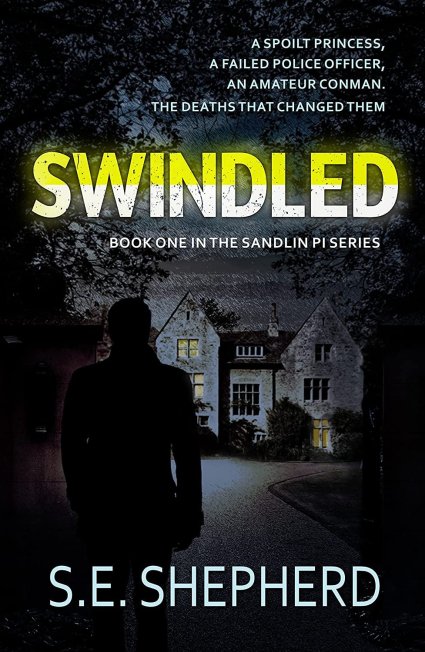
Swindled by S.E Shepherd

My enormous thanks to Rebecca Collins at Hobeck for sending me a copy of Swindled by S.E. Shepherd in return for an honest review. I’m delighted to share that review today. Swindled is the first in a brand new thriller series from S.E. Shepherd.

You may know the author as Sue Shepherd too. In that incarnation, you’ll find Sue here on Linda’s Book Bag chatting with me about Can’t Get You Out of My Head and here when I had a spotlight on Sue to celebrate Love Them and Leave Them.
Published by Hobeck today, 7th September 2021, Swindled is available for purchase here.

Swindled

Lottie

Beautiful, but a little spoilt, Lottie Thorogood leads a charmed life. Returning home from horse riding one day, she finds a stranger, drinking tea in the family drawing room – a stranger who will change her life, forever.

Hannah

After a bad decision cut short her police career, Hannah Sandlin is desperate to make her mark as a private investigator. She knows she has the skills, but why won’t anyone take her seriously? She’s about to become embroiled in a mystery that will finally put those skills to the test and prove her doubters wrong. It will also bring her a friend for life.

Vincent

Vincent Rocchino has spent his life charming the ladies, fleecing them and fleeing when things turn sour. How long can he keep running before his past catches up with him?

My Review of Swindled

Lottie, Hannah and Vincent have more in common than they might think.

Swindled was absolutely NOT what I was expecting. I thought I’d be in for a good read but I wasn’t aware that S.E. Shepherd would blend her storytelling with such naturalistic dialogue, often including surprising expletives, with considerable humour and more than a touch of naughtiness too. All these aspects add up in Swindled to a book greater than the sum of its parts in a hugely entertaining read. In fact, as well as being a fast paced thriller, I found Swindled ever so slightly bonkers and that is no bad thing at all!

It took me awhile to settle in to the different characters and timescales at the start but I loved the way the threads belonging to Hannah, Lottie and Vincent gradually drew together. There were several moments when I was completely wrong-footed by S.E. Shepherd so that the title Swindled seems to reflect the treatment of the reader as well as the behaviour of Vincent!

Speaking of Vincent, I felt I should have loathed him from the very beginning, but somehow he retained my sympathy. Certainly he’s a lying, cheating, manipulative individual, but equally, he has a vulnerability, a need to be accepted and loved, and a personality that attracts trouble not always of his making that give him an appealing depth. In fact, it was Lottie I liked least of the three main characters but again, S.E. Shepherd managed to manipulate me into caring about her and liking her by the end of the narrative.

Entertaining story and great characters aside, I thoroughly enjoyed the themes explored in Swindled. Identity of several kinds  is at the heart of the story, but sexism, manipulation in many forms, ambition, wealth and poverty, family and friendship and so on all add to the mix so that there is much to uncover whilst reading.

I think Swindled is an entertaining exploration of the concept that what doesn’t break you makes you stronger – unless it kills you, but you’ll need to read the book to find out why!

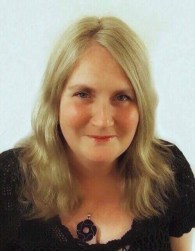
About Sue Shepherd

Sue Shepherd author photo

Born in Harrow, Sue went on to spend several years living in Hertfordshire before selling up and taking a leap of faith across The Solent. She now resides on the picturesque Isle of Wight with her husband, two sons and a standard poodle.

Her passions in life are: her family, writing, the seaside and all the beautiful purple things her sons have bought her over the years.

Happiest when hunched over her laptop with a cup of tea on the go, Sue loves to create stories with plenty of heart and laughs, but she makes sure to include a bit of naughtiness too. Ask Sue to plan too far in advance and you’ll give her the heebie-jeebies and she’d prefer you not to mention Christmas until at least November!

You can follow Sue on Twitter @thatsueshepherd You’ll find Sue on Facebook and Instagram too.
In Loving Memory by Lacie Brueckner and Katherine Pendergast

My grateful thanks to Kat’s Socks for sending me a copy of children’s book In Loving Memory: A Child’s Journey to Understanding a Cremation Funeral and Starting the Grieving Process by Lacie Brueckner and Katherine Pendergast in return for an honest review.

In Loving Memory is available for purchase here.

In Loving Memory:

A Child’s Journey to Understanding a Cremation Funeral and Starting the Grieving Process

The co-author Lacie Brueckner has been a funeral director serving families since 2005. She has always taken a special interest in meeting the needs of children during the funeral process. She has found that most children want to feel included in the funeral too.

In this story a young girl named Harper has lost her grandma. Through gentle words and soft illustrations Harper learns what a funeral looks like and how she can participate. Harper and her family also take you through her journey of starting the grieving process.

A child who has lost someone near and dear to them can learn from young Harper’s experience.

Harper learns the following throughout her journey:
-Death is a natural part of life. Harper learns that plants, animals, and people live and die.
-Bodies go through natural changes when we die, so our bodies might look a little different. Through beautiful illustrations, Harper sees an open casket visitation, funeral, and grave side services.
-Each child might have a different comfort level when it comes to participating in a funeral. Harper’s parents allow her to decide how much she wants to participate in the funeral process by asking if she would like to see the body. They also ask if she is comfortable getting up and sharing a special memory of her grandma.
-Feeling different emotions is natural. Sometimes emotions come and go long after the funeral. Harper’s mom helps her do special activities that remind her of her grandma.
-Harper learns that our loved ones are always in our hearts long after the funeral. There are pages for your child to write or draw memories and ideas on what they can do to remember their loved one.

There is a video message from the authors that you will find here.

My Review of In Loving Memory

A children’s book about death and remembrance.

An aside for UK readers before I begin my review proper is that In Loving Memory is an American book so a couple of practices are different to those we have in the UK, such as cremation taking place in advance of the funeral, whereas in the UK the two events are usually held on the same day. Some language is different such as ‘vacation’ for holiday. That said, I think any differences can be turned to a benefit and used to explore language use in wider contexts such as KS1 and early KS2 classrooms or other children’s groups.

In Loving Memory is just the kind of book needed to help children come to terms with the death of a loved one, because it reassures them that the feelings they have are perfectly natural and to be expected. It’s short and accessible enough for a child to read independently, but I think would work best when shared with an adult so that discussions can be had about their own deceased loved ones. The concept of cremation is made clear and is dealt with in a matter of fact manner that demystifies it for children and removes the fear and trepidation.

In Loving Memory takes a child through the grieving process, but keeps a focus on positive aspects such as recreating activities that have been enjoyed together as when Harper bakes the cookies she used to love making with her Grandma. I think this would be a fabulous thing to do. I loved the scrapbook Harper’s Mum makes of all the things Grandma loved the best so that there is a permanent reminder of the joy in her life. I think this would be a healing and helpful idea for adults and children alike to ensure their memories of those they loved remain clear and present. I thought the space for young readers to share their own favourite memories of a loved one at the end of the book, either through writing or drawing, was an excellent touch too.

The illustrations in In Loving Memory are beautifully presented, conveying emotions and complementing the writing perfectly so that whilst the subject is sad, the book is actually very uplifting. I have one small comment to make in that I’d have liked Grandma to have friends and family of a wider ethnic range to make the book even more inclusive, but this is very much a personal preference.

I think In Loving Memory could be just the resource families, teachers, children’s workers and others are looking for in tackling the tricky subject of death with children aged 4 to 8. I recommend it.

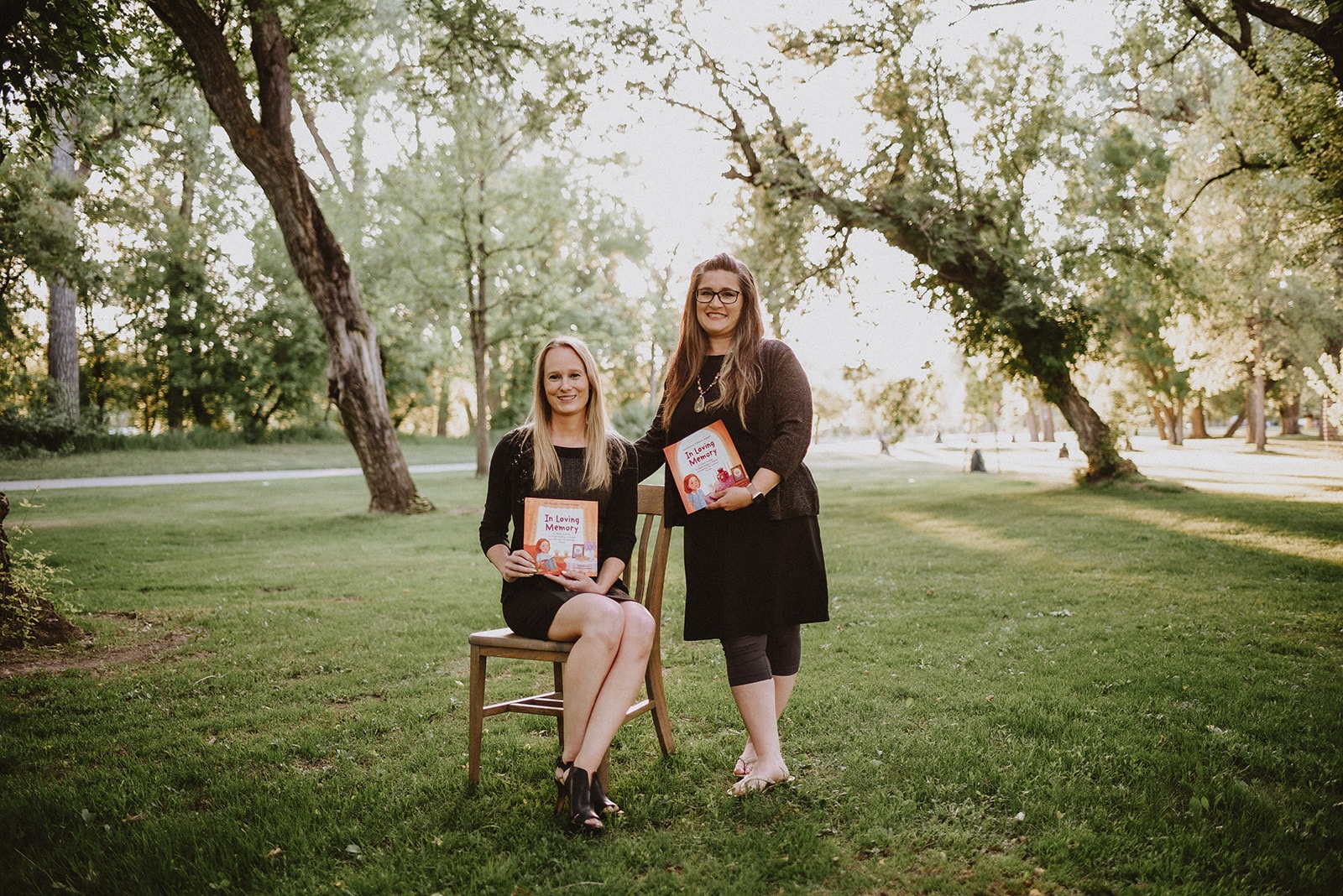
About Lacie Brueckner and Katherine Pendergast

Lacie has been a funeral director serving families since 2005. She takes a special interest in meeting the needs of children during the funeral process, as they very much want and need to feel included too. In her experience she has found that including them and letting them lead the way in how much they want to be included usually works the best. Lacie is a North Dakota native and lives there with her husband and 5 children. She has always had an interest in writing and was honored to co-author this book.

Katherine lost her mom many years ago, and one of her favourite memories of her mom was on her last Mother’s Day. They planted petunias and went out for ice cream. Now, every Mother’s Day, Katherine plants petunias at her house not because they are her favourite but because they remind her of this special memory with her mom. Katherine lives with her family and two dogs in Bismarck, North Dakota. She has also written several other books including her award-winning books Pickles the Dog: Adopted, Pickles the Dog: A Christmas Tradition, and Babies of the Badlands.

You’ll find further information by visiting the Kat’s Socks website and finding more on Facebook and Instagram.