Out of the Darkness by Katy Hogan

out of the darkness

I was delighted to receive a copy of ‘Out of the Darkness’ from Katy Hogan in return for an honest review. It was published on 6th July 2015 by Illumine Publishing and is available to purchase here in the UK and here in the US.

Jessica Gibson’s world has fallen apart. An only child of a single parent her beloved mother has just died and grief has overwhelmed Jessica, making her lonely and bitter. A chance meeting with Finn seems to improve her situation briefly, but events are going to become much more complicated than having a simple new friendship.

Out of the Darkness is such a good book. It manages to be both completely sad and thoroughly uplifting at the same time. Certainly, depending on your own personal views of life after death, you might need willingly to suspend your disbelief, but that aside, Katy Hogan has written a book of love and loss, grief and hope in which there are positive messages for us all. I’d defy any reader not to find themselves weeping at some point. I know I did. I finished reading it just after some particularly difficult news of my own and found that reading ‘Out of the Darkness’ helped me considerably (and let me say I am a complete sceptic when it comes to life after death).

The story is tightly plotted, weaving together the lives of three completely human and empathetic characters Jessica, Alex and Hannah whose individual stories are far more closely linked than they or the reader might initially believe. They all have their physical and emotional frailties so that they are like people we know rather than characters in a book. In fact, this was my only criticism and also a measure of the quality of Katy Hogan’s writing in the response I felt; Jessica occasionally smokes and I hate smoking so I felt angry with her for spoiling our ‘friendship’!

It is difficult to define just what kind of book ‘Out of the Darkness’ really is. It is certainly about friendship, love and loyalty. It is also about loss grief, family relationships and religion and spiritual belief. As well as being a novel it could almost become a self help book. However, I think to try to categorise this poignant and beautifully written novel is to do it a disservice. ‘Out of the Darkness’ is sensitively and emotionally written and a great story.

You can find out more about the book here and on Facebook. You can follow Katy Hogan on Twitter

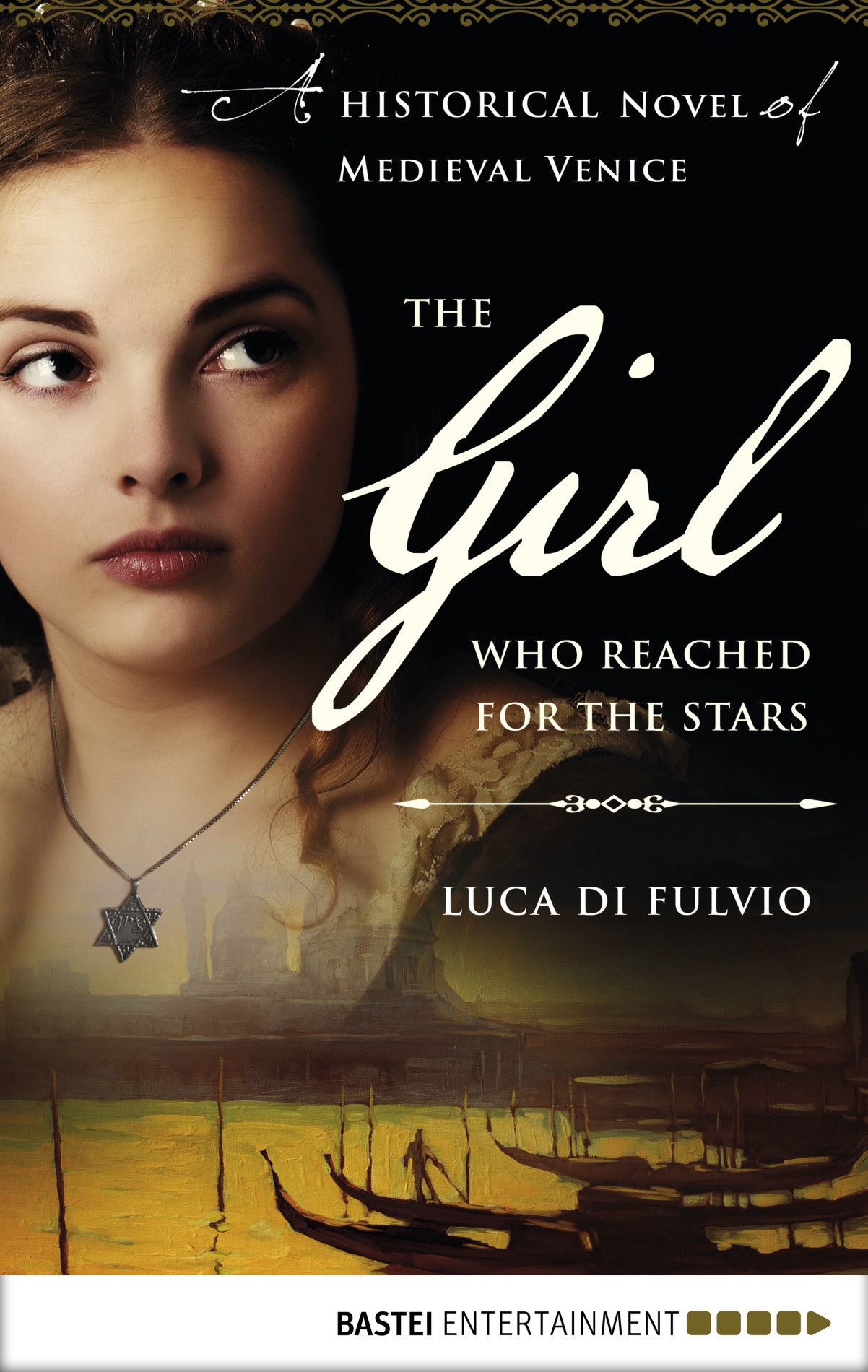
The Girl Who Reached for the Stars by Luca Di Fulvio

The Girl Who Reached for the Stars Jacket

I was very pleased to be sent a copy of Luca Di Fulvio’s ‘The Girl Who Reached for the Stars’ published as an ebook by Bastei on October 26th 2015. It was such an unusual book that I asked if Luca would be prepared to be interviewed for my blog and luckily he agreed.

Welcome Luca, and thank you for agreeing to answer some questions.

Ciao Linda, happy to be here.

Firstly, please could you tell readers a little bit about yourself ?

It took me a while to decide which road to take, but I always knew I wanted to do something creative. I got a place at the Accademia d’Arte Drammatica and went into acting. But directors couldn’t stand me because I was always trying to change my lines. ‘Stop pissing me off and write your own play!’ a director once shouted at me. And that’s how I came to write my first piece for theatre, an adaptation of Thomas Mann’s Tonio Kroger. I finally knew what I wanted to do. But it took me ten years to get my first book published (a resounding flop).

For those who don’t know your writing how would you sum it up?

I like to make up stories like the ones my grandmother told me when I was a little boy. Stories that made me dream. That enthralled me and made me care for the characters. Stories that scared me, made me smile. My grandmother’s words made me ‘see’ what she was describing. And I too try to make readers see what I’m describing, because I’m a very visual person.

What are your writing routines? Do you plan meticulously or do you let the story evolve as you write?

I’m exactly halfway between the two. In the early stages, a suggestion of something, an image or an atmosphere begins to emerge. Then I start to give it a shape and work out a rough outline. But after that, while I’m writing, I listen to my characters in the same way I like to listen to my friends. Heart and instinct come before mind and the structure of the story. It couldn’t work any other way. You can’t convey emotion using only your mind and a story structure.

I know you write many different genres and under different pseudonyms. Which do you prefer and why?

Trying out different genres was just one of the paths I went down in order to find the right road for myself. I was like a hunting dog in a wood, following one scent, then losing trace of it and following another instead. These experiences contributed to making me a better writer; I learned something from all of them. But I was still looking for the thing that would really suit me. So much so that when I found what I wanted to write (The Boy who Granted Dreams), I had no qualms about giving up the commercial thriller-writing route that had been earning me a good living in Italy. I only used a pseudonym once, for a children’s book. At the time I was writing very violent thrillers and I could imagine mothers (understandably) being put off buying a book of mine for their kids.

‘The Girl Who Reached for the Stars’ is set in 16th century Venice. How did you research the era and ensure the details were authentic?

My family comes from Venice. I used to play ball in Campo del Ghetto as a little boy. It’s a world I’ve always felt ‘at home’ with. Even so, of course I had to do a lot of research. I only went to the history books for street names, which have obviously changed, and to find out about the bye-laws that affected the Ghetto. Otherwise, I mostly looked at first-hand accounts of ordinary people’s daily life at the time. The kind of fiction I’m interested in is about the foot soldiers, and not the generals.

Why did you choose this period of history and if you were to set the story in today’s world, how do you think it might have changed, if at all?

I chose the precise moment in time when the Ghetto was created; that is, the moment when, on the pretext of religious differences, it was decided that one man was worth more than another. These trumped up excuses were used as a cloak to hide the true economic and commercial reasons for the move. There was little value placed on the lives of individuals, resulting in huge suffering. In that sense, you could say it’s not that different from today’s world. ‘Political correctness’ might cause us to put on a hypocritical façade, but at heart much remains the same.

You don’t shy away from the unpleasant elements of setting. How does it make you feel as you write those parts of your novels?

I write stories in which the characters are fighting for ideals and often succeed (even if, since Biblical times, it’s always been difficult to imagine David winning again against Goliath). To make up for this incorrigible optimism of mine, I try to be very honest with my readers and not to hide from them the terrible experiences and situations that are part of the worlds I write about. All things considered, maybe we ought to appreciate the world we live in a bit more.

Your writing really appeals to all the senses from the vibrant colours of clothing, through the sound of oars in the water, to the putrid scent of dog faeces. How important is it to you to write in such a layered way and do you think having a theatrical background helps you to write in this cinematic style?

Have you ever read a novel written before the Lumiere brothers and thought, ‘Wow, this reads like a film!’? I have. I think cinema – which I’m a big fan of – learned to tell stories from our own senses, and from our capacity to literally ‘see’ images forming out of a simple printed page. We readers have always used our heads to create what we now know as cinema. People probably used to say, ‘It was as if I was in that scene, seeing it, like in a dream!’

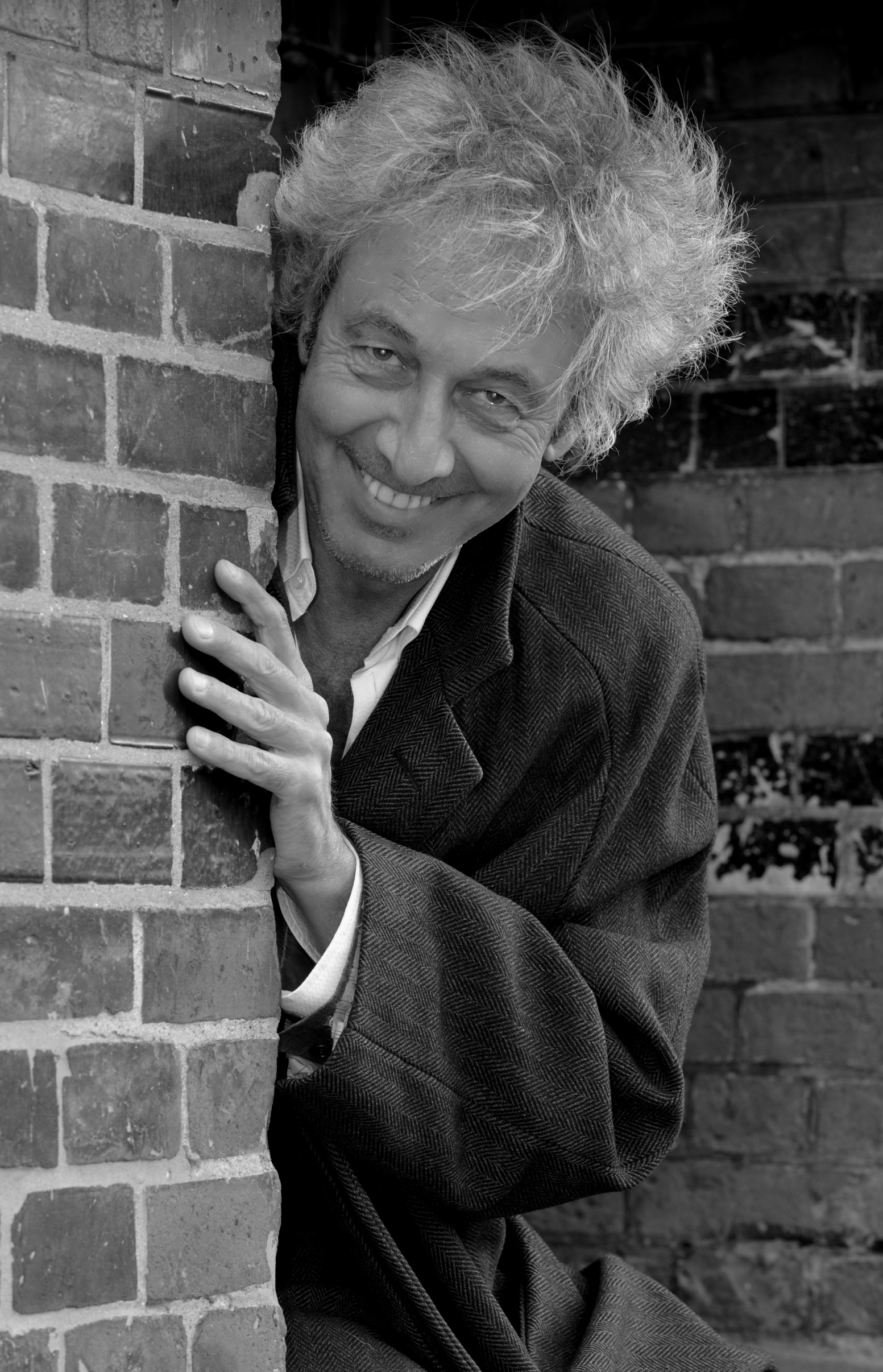
Luca_Di_Fulvio-029(c)Olivier_Favre

(Photo courtesy of Olivier Favre)

There’s a real sense of passion behind the story. How much of it reflects you as a person and how much of Mercurio is based on you?

Not only am I a passionate man, but I firmly believe that without feeling (and sharing) emotions, we’re slightly incomplete human beings. For this reason, the fact is I could never write without hoping to inject a bit of passion into my words. As for Mercurio, though, I have to say I’m nothing like him. I’m a much more ordinary person. But isn’t that the wonderful thing about writing? Imagining being a bit of a hero?

Of all the themes (like prejudice, dishonesty, greed, love and retribution) present in ‘The Girl Who Reached for the Stars’ which would you like the reader most to remember and why?

Two of them, for sure: love and prejudice. If we allowed ourselves to love and be loved, and overcame our prejudices, we would easily become better human beings. The absence of love demeans the heart. Prejudice demeans the intelligence. And the heart and the brain are the two organs I like best.

What are you writing next and when can we expect to read it?

At the moment I’m writing a story I’m really excited about, set in Buenos Aires in the early 1900s. It must have been an incredible world to live in. Records show there were around two million people living in Buenos Aires at the time (of whom a million were Italian). And at least seventy per cent of them were men. Almost all the emigrants were men, in any case. Can you imagine? A world made up entirely of men, and you’d see them dancing the tango together while waiting their turn at one of the dozens and dozens of brothels. So that’s the basic setup, and against that backdrop, I’m telling the story of two women in this male-dominated world.

Thank you so much for answering my questions. Your answers were really fascinating.

Thank you!

The Girl Who Reached For The Stars by Luca Di Fulvio is out now, price £3.99 in eBook, published by Bastei Entertainment and available here in the UK or here in the US. You can follow Bastei books on Twitter.

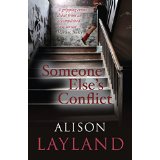
Someone Else’s Conflict by Alison Layland

Someone elses conflict

An enormous thank you to Helena at www.honno.co.uk for providing a copy of Alison Layland’s ‘Someone Else’s Conflict’ in return for an honest review. Available in ebook and paperback, ‘Someone Else’s Conflict’ has its Honno publication anniversary on 6th November 2015.

As well as reviewing ‘Someone Else’s Conflict’, I am delighted that Alison Layland has agreed to answer the questions I had as a result of my reading.

Review

Vinko is a refugee whose past life still overshadows his present. Jay is a story-telling busker with a secret that, almost literally, haunts him. Marilyn is picking up the pieces of her life – both metaphorically after the breakdown of her relationship and physically after a damaging storm. Little do they realise how their paths will interweave.

It is impossible to categorise ‘Someone Else’s Conflict’ into a genre. It is part love story, part allegory, part thriller and part mystery. It has layers of political history. These aspects combine wonderfully into a brilliant read. I absolutely loved the book. There are themes about refugees, about political turbulance, about identity and truth. This might sound rather fragmented,  but not a bit of it. ‘Someone Else’s Conflict’ is, ultimately, about humanity and I can’t praise it highly enough.

Although mainly written in the past tense, the narrative opens and closes in the present tense which lends an immediacy to the writing. I found my pulse quickening as each word was added to the prologue and I was hooked straight away.

One of the elements that makes ‘Someone Else’s Conflict’ so successful is the effortless way in which what ought to be disparate genres are woven into an exciting and believable story. Alison Layland uses the senses so effectively that I felt as if I were watching a film rather than reading a book. I know a book is good when I find myself thinking about the plot and characters when I’m not actually reading it as I did here.

I thought of Jay as a kind of Everyman character and found the way his perceived guilt is shown as almost a physical manifestation a really clever way of suggestion PTSD. The magic of ‘Someone Else’s Conflict’ is Alison Layland’s subtlety in conveying some strong feelings and historical details so that the reader understands where the characters have come from almost intuitively. I became involved with the characters as soon as they were introduced and cared about the outcomes for them. Indeed, I would like a follow up story as I am reluctant to leave them behind.

I think readers who like accurate, well researched and brilliantly written love stories and thrillers will adore ‘Someone Else’s Conflict’ as much as I did. I can’t recommend it highly enough.

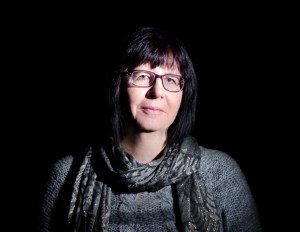
Alison answers my questions about ‘Someone Else’s Conflict’ 
fDSC_3422

What made you decide to base your story around those who had been involved in the conflict in Croatia?

When I started writing the novel I had a growing interest in Croatia and the Balkans, initially triggered by a book I’d been translating and deepened by further reading and travel. As I found out more about the conflicts following the break-up of Yugoslavia I felt that the focus of our awareness in the UK, at the time and subsequently, was on the Bosnian conflict that flared up later, and I wanted to find out more about what happened in Croatia from 1991. I think I’m like most people in that I remembered the horrors of the siege of Dubrovnik, but knew little about the rest.

You’ve been teaching yourself Croatian whilst writing ‘Someone Else’s Conflict’. How important was this to you in making the novel authentic?

At first I was quite nervous about setting my novel against such a controversial background and I wanted to do all I could to get a feel for the region and culture. As a linguist, in addition to reading and travel, another way I could do this was to start learning the language, which became a pleasure in itself. It was particularly useful in the novel for portraying Vinko, a recent immigrant to the UK who still has difficulty speaking English – I could use the problems I was having, and mistakes I would make in his language, to give an insight into his English.

 How did you gather the information that gives such depth to your novel? Did you visit Croatia, interview refugees or use some other method?

I read widely over a long period of time – both factual books about the country and, specifically, the conflict, as well as travel writing and a lot of fiction set in the region and the times, and wider Balkan literature in translation. With my family, I have travelled widely around Croatia, Bosnia and the rest of the Balkans, getting well off the beaten track. I did talk to people there, but it can be a difficult subject to raise on a casual visit (especially with my very limited knowledge of the language), so most of my insight was from more indirect sources. I’m also inspired in my writing by music and really enjoyed discovering Croatian artists such as Darko Rundek, some of whose songs are about the conflict. While working on the novel, I had a serendipitous assignment to translate, from German, the subtitles of videos by a Swiss Bosnian photographer who returned to his homeland and interviewed people about their experiences of the war and its aftermath, which gave me some very poignant insights.

 Whilst the majority is in the past tense, the novel both begins and ends in the present tense which I felt gave it an immediacy. What made you decide to structure it that way?

I wanted to differentiate and contrast the scenes from the past. The first and last scenes are different from, but related to, the flashbacks throughout the novel. I’m glad the sense of immediacy works; I also chose the present tense for these scenes as I felt the contrast with the narrative past gives it a slightly distancing, disorienting feel appropriate both to the events themselves and the way that these scenes are experienced through Jay’s eyes.

 Many of your characters are trying to escape the past. To what extent do you believe that running away is a fundamental part of the human condition?

I think it’s natural to want to bury events in our lives that we regret or which affected us deeply – to run away. Sometimes it works, but guilt is a very powerful emotion and usually there comes a point when people have to face it. I’m also fascinated by the way we’re shaped by our past, both personal and collective. I’m not only referring to Jay’s wartime experiences, but the way Marilyn’s recent past colours the way she reacts to him, and Vinko’s past has made him the person he is, and in a way exonerates some of his actions.

 I thought Jay was reminiscent of a kind of Everyman. What was your intention in developing his character?

I like that idea! I always saw him as quite an ordinary person – at least in terms of courage and moral responsibility – shaped by extraordinary experiences. However, he’s not entirely ordinary, as he has a talent for storytelling and charismatic performance, which was where his character began for me. I was interested in the idea of using stories as a veil over the past, a way of coming to terms without facing up to things entirely. I also wanted to explore the point of view of someone who has experienced traumatic events and inflicted harm on others, but neither as a victim or unwilling participant, nor as a psychotic villain. What does it feel like to choose your role, to embrace it, but then realise you’ve chosen wrongly?

 Although the novel is resolved, there is potential for a follow up. Will we see more of Jay in the future (please!)?

I’m tempted – I do have plenty of ideas for my characters’ futures, which I may return to before long. Although completely different, the novel I’m writing at the moment has a slight background link to Jay, and although it’s not material to the story it’s nice to maintain a connection!

 Allegory and storytelling are central features of ‘Someone Else’s Conflict’. Have you always been interested in the ways humans construct their own realities, memories and identities through stories and how difficult was it to write them in this novel?

I believe stories are incredibly important to the human experience, as entertainment and escapism – which we all need – but more significantly as a way of understanding and explaining the world around us, recording history and empathising with people beyond our own direct experience. I’ve told myself stories for as long as I can remember and over the years have developed a passionate interest in oral storytelling – though mostly as a listener rather than a teller. From the start I wanted to include stories that Jay tells, as a natural part of his character – both as a storyteller and as someone who is trying to escape his past but can’t help being drawn to the things that haunt him. Like he does in the novel, I made the stories up, and had great fun doing so, but I’ve been told by readers – including a friend who’s a professional storyteller – that they have an East European atmosphere, which is really gratifying as it tells me I’ve got the “feel” right.

In a way, Jay almost suffers his perceived guilt as a physical manifestation. It made me think of those who suffer PTSD. Did you research PTSD in preparation for writing ‘Someone Else’s Conflict’ and why (without revealing too much of the plot) did you make the boy so real?

From the start, I envisaged the boy – who is central to Jay’s most traumatic event and turning point during the war – as a kind of physical manifestation of his conscience, and my research confirmed that this was plausible since vivid hallucinations can be a symptom of PTSD. For someone who has lived as a loner in self-imposed exile for years, the boy is also like a malevolent imaginary friend, a part of the past that he wants to, but can’t, leave behind.

For those who haven’t read ‘Someone Else’s Conflict’ (and they should immediately as it is brilliant) what would you like to say to them about the book?

Thank you! It’s been a difficult novel to categorise (personally, I don’t like categorising anything, but it has to be done for publication!) and several people have said they “don’t usually read crime novels or thrillers” but really enjoyed this. So if that sounds like you, please don’t be put off by the label – while I certainly intended the novel as an exciting, gripping read, I began writing it as essentially a love story, exploring issues of trust and friendship, and that’s what it remains at heart.

I’d like to thank Alison  for taking the time to provide such fascinating answers. 

Links:

Website: http://www.alayland.uk

Twitter: @AlisonLayland

Facebook: https://www.facebook.com/AlisonLaylandAuthor

The Prime Writers: http://www.theprimewriters.com

Other buying links (apart from Amazon UK and Amazon US):

Honno

Lovereading: http://www.lovereading.co.uk/book/13461/Someone-Else-s-Conflict-by-Alison-Layland.html

Amazon international: http://authl.it/B00K9W416I

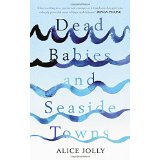
Dead Babies and Seaside Towns by Alice Jolly

dead babies

I encountered Alice Jolly through the Book Connectors group on Facebook. Her inspirational book ‘Dead Babies and Seaside Towns’, published by Unbound on 2nd July 2015, is a true first hand account of her family, of losing a baby, Laura, and her attempts to complete the family unit through any means.

I’m not a maternal person and have never had any children of my own but from the first word to the last I was completely absorbed in Alice Jolly’s moving and honest account. The fact that it is a true story based on personal experience gives it all the more impact. I don’t think I have ever cried so much at a book, even when there are moments of lightheartedness too. As I read I kept trying to tear myself away and ‘Dead Babies and Seaside Towns’ kept calling me back. It was as if it had hit me in the solar plexus and had complete dominance over my feelings so that I had to keep reading.

What is so compelling is that readers could read ‘Dead Babies and Seaside Towns’ as a completely emotional fiction, but knowing it is based on Alice Jolly’s real experiences and those of the people she encounters makes it just stunning.

The rawness of the writing at times is harrowing and Alice Jolly pulls no punches about how difficult her and Stephen’s experience has been. However, what shines through most is that, by the end, they have Hope – in more ways than one!

Having been so moved by Alice Jolly’s writing, I was thrilled that she agreed to answer some of my questions.

Alice, ‘Dead Babies and Seaside Towns’ is such a personal book, how does it feel to have put it in the public domain?

If feels very good.  It was a difficult book to write and an even more difficult book to publish (it was crowdfunded).  I feel as though I can move on now although, paradoxically, the comments and questions of readers continually pull me back into the experiences and issues which the book raises.   But I don’t mind that.  I thought very hard before I started out on this whole process.  You can’t do these things half-heartedly or lose your nerve.  Once you are in, you are in.

There is a strong sense of place in this book. How important is place to you personally?

Enormously important.  I write in the book about the fact that I am often over whelmed by the sheer ‘there-ness’ of things and that is really true.  I also love books with a strong sense of place.  That’s the joy of books.  They make you see the ‘ordinary’ world around you differently and also take you to places you may never actually visit.

Have you always had sharp observational skills or did your experience of being still whilst pregnant with Laura heighten your observational powers?

I think that I have always noticed everything.  I must have been born that way.  But I think that it is also true that, when you have very difficult experiences, you cling to the physical details of the world.  However bad you feel, you can often get out of your own head by soaking up everything that is around you.

I found your writing stunning – so emotional . You mention the writing process at times in ‘Dead Babies and Seaside Towns’. How much did you have to edit to convey your thoughts and feelings and how far was the book more of a natural progression simply writing about your experiences?

I do always do a great deal of editing and re-writing.  I think nearly all good writers do.  Having said that, there was a real sense in which I never really wrote this book at all.  What I did was edit the diaries that I kept at the time.  But still there was a huge amount of work involved.  At some point you have to separate yourself from the work.   You have to stop asking, ‘What do I want to say?’ and you have to ask, ‘What does the reader actually need to know?’  When that moment came for me, I took about 30,000 words out of the book in a week.  That needed to happen.

Have you found writing ‘Dead Babies and Seaside Towns’ cathartic?

I didn’t write the book as therapy and I didn’t expect the process to make me feel better.  But strangely it has.  I say in one of the final chapters that books can be like boxes.  There comes a moment when you put the lid on.  Then you put it away on a shelf.  You can get it out again if you want to but you can also leave it there for as long as you want.  That’s what this feels like to me now.  I’ve got the lid on.  I will always have these issues on the shelves of my life but I make the decisions now about when I want to look at them.

You say at one point in the book ‘words are one of the few ways we can bring the dead back to life’. Do you often reread what you’ve written to remind yourself of Laura?

I’m certainly very glad that I’ve been able to honour my missing daughter by writing about her.  I do like looking at the book for that reason.  However, the book wasn’t just for her.  It was for other parents who have been through similar experiences.  But beyond that – importantly – it was written for everyone who suffers serious adversity, no matter what the cause.  And actually that is all of us because life gets really tough for everyone at some point.  Really the big question of the book is, ‘Why can’t we just talk openly about these difficult things?’  I don’t want everyone to wallow in misery all the time.  But I really think that emotional authenticity is so important.  When we are happy we should be able to say so, and when we feel desperate we should be able to say that as well.

How far, if at all, do you think attitudes have changed towards losing a child in pregnancy and towards surrogacy since your first hand experience?

The two issues are very different.  Attitudes to stillbirths have changed a lot of the last 40 years.  However, there is still a very long way to go.  On the question of surrogacy, I think that opinions are changing all the time.  However, there is sadly a huge amount of misinformation around the place.  I never wanted to ‘market’ surrogacy.  I just wanted to raise the level of the debate.  I wanted to tell a ‘normal’ surrogacy story as the press only ever focus on extreme cases that have gone badly wrong.  People should have proper information on which to base their opinions.

How did you go about finding just the right quotation to use at the beginning of each chapter?

Actually the quotes were horribly difficult.  I just didn’t understand that the whole issue of Permissions (the process whereby a publisher asks permission to use quotes) is fraught with difficulty.  Very late in the day it all went horribly wrong for me.  I had used many quotes from R. S. Thomas who is my favourite poet but then the R.S.Thomas’ estate said that I couldn’t quote anything from his work.  This came late in the publishing process and I was just exhausted.  I got very teary about the whole thing and felt my book had been destroyed.  But now I am happy with the quotes – despite having to choose mainly quotes that are out of copyright (so no permission is needed).

If you could provide one sentence of advice for those going through the same experience, what would it be?

I suppose I would quote Voltaire.  ‘Life is a shipwreck but we must laugh in the lifeboats.’

If you’re not writing what do you like to read?

Modern novelists: Shirley Hazzard, James Salter, Anne Michaels.  Classic novelists: the Brontes, Thomas Hardy, Scott Fitzgerald, Forster.  Poets – Gerald Manley Hopkins and Philip Larkin.  Also there is one small novel that everyone should read – The Return Of The Soldier by Rebecca West.  It is perfect.

What are you currently writing?

I am writing a new novel.  It is written in the voice of Victorian woman who is poor and self educated and yet tells her difficult story with extra-ordinary power.  I already know that I will find it hard to get this novel published.  That has always been a problem for me.  But in all honesty I have no doubts about what I do.  C.S.Lewis said, ‘We read to know that we are not alone.’  So many women who have read the memoir have said, ‘I feel as though you have told me my own story.’  Comments like that make it all worth it.

Find out more about Alice on her web site or follow her on Twitter

You can buy ‘Dead Babies and Seaside Towns’ direct from the publishers as well as here in the UK and here in America.

I’m sure Alice won’t mind if I include a couple of the links from the back of her book that might be helpful to others in her situation:

Sands – The Stillbirth and Neonatal Death Charity

The Miscarriage Association

Brilliant Beginnings

What Happens At Christmas by T A Williams

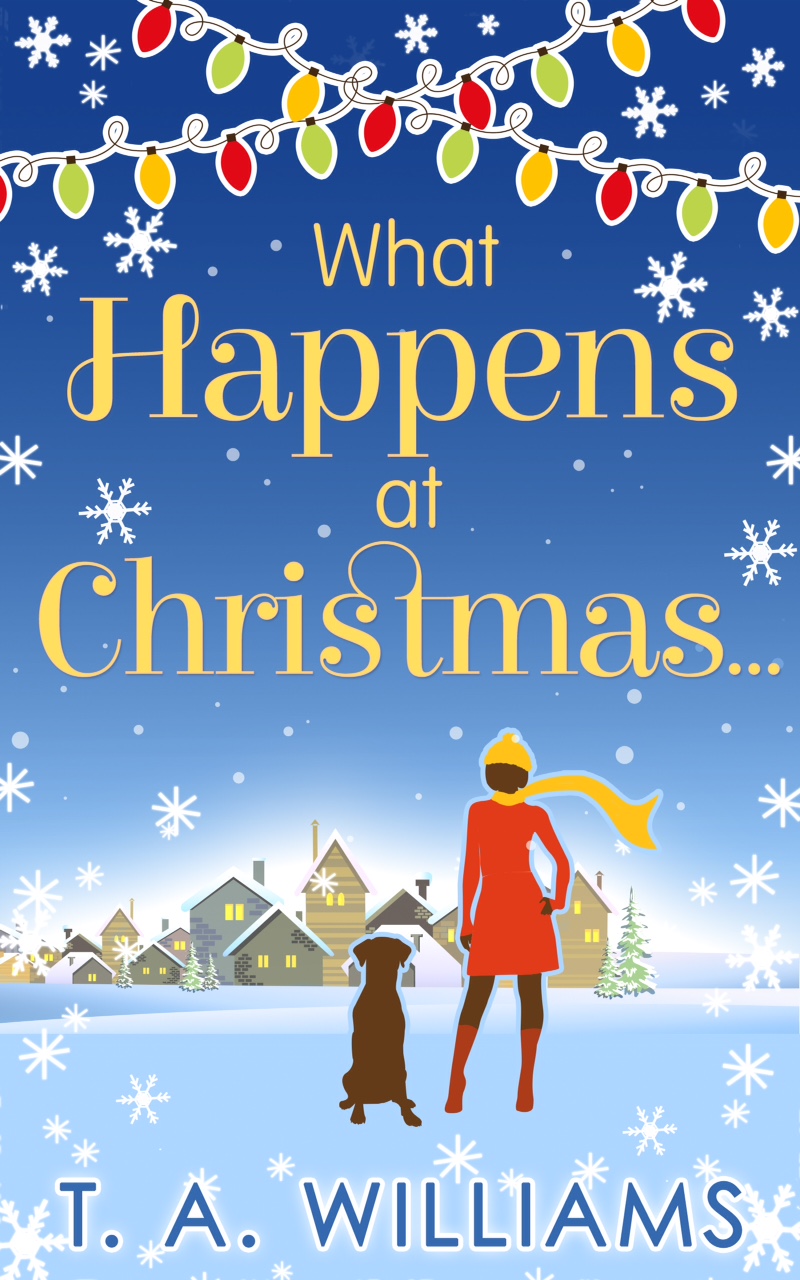
WHAC Cover jpeg

As I love reading his stories, I’m delighted to be able to share part of TA Williams’ latest ‘What Happens…’ series, ‘What Happens at Christmas’ which was published on 22nd October 2015 by Carina.

TAWilliams-Christmas-BTBanner

Extract:

It was a stunning day – crisp, clear and with just a light offshore breeze. The sea first came into view in the distance beyond the broad expanse of sand dunes and beach that constituted Saunton Sands. The road then curled gently round the coast, offering magnificent views across the open cliff tops to the rocks and waves below. Visibility was so good, Jack was able to point out Lundy Island , lying twelve miles out in the Bristol Channel. Beyond that there was nothing until you reached southern Ireland and, from then on just the Atlantic Ocean all the way to the USA .

The sea looked like a sheet of corrugated iron as it neared the shore, with row after row of waves rolling in. They came into the village of Croyde itself and Holly started seeing signs for surf schools, surf shops and even a campsite called Surfers’ Paradise . Malibu it might not be, but Croyde was clearly a British surfing Mecca , even on a day like today when the outside temperature was in single figures. As they drove down the narrow access road to the car park, they could both see majestic waves rolling into the bay between the rocky outcrops either side. Jack parked at the far side of the car park among a vast collection of old VW campers, clearly the vehicle of choice for the surfing community, and turned off the engine. The engine noise was immediately replaced by the raucous cries of seagulls and the regular crunch of waves hitting the beach a hundred yards below them. From where they were parked, they were able to look down between sand dunes and a café directly onto the beach.

‘Look at those waves! Magic Seaweed said it would be a five star day and, boy, were they right!’ He sounded like a little boy on his birthday.

‘Magic Seaweed?’ She smiled at him, happy to see his obvious excitement.

‘The fount of all wisdom for surf dudes.’

‘So you’re a surf dude?’

‘I suppose I should really have a VW camper for true street cred, but the old Land Rover’s pretty close. And, of course, that’s an Al Merrick custom board tied to my roof. That’s worth loads of bonus points.’ He grinned at her. ‘Yeah, I’m a dude, or at least I like to think I am.’

‘This is the first time I’ve been with a dude. In fact, I’m not totally sure I know what a dude is, but so far so good.’ She gave him a smile. ‘So, if you’re a dude, what does that make me?’

He had no hesitation. ‘That makes you a babe.’ He grinned at her. ‘No question. Very definitely a babe.’

Holly rather liked the sound of that, but she didn’t comment. Scruffy Land Rovers and outdoor pursuits hadn’t featured too highly on her list of essentials for possible boyfriends so far. Anyway, she thought to herself, one pretty normal prerequisite was that the man in question should at least appear to demonstrate some sort of romantic interest towards her. Jack Nelson, nice and friendly as he was, appeared to show as much affection towards her as he did to Stirling the dog. She dismissed the thought and glanced back down to the beach, absently reaching back over her shoulder to scratch Stirling’s ears.

If this has whetted your appetite for ‘What Happens at Christmas’, you can buy it here in the UK and here or here in the US.

TAWilliams

You can find out more about Trevor and follow him here:

Website

Facebook

Goodreads

Twitter

You can also win an ecopy of one of TA Williams’ other books What Happens in Tuscany. Enter here

The Other Half of My Heart by Stephanie Butland

Other half cover

My enormous thanks to Sarah Harwood at Penguin Random House for providing a copy of Stephanie Butland’s ‘The Other Half of My Heart’ in return for an honest review. It was published by Black Swan in paperback on 22nd October 2015.

Bettina (Tina) May has opened a bakery as a means to forget her unhappy past. She is trying to develop a relationship with Rufus, but her heart isn’t entirely in it. There are too many memories preventing her from going forward. Will she ever be truly happy?

Having hosted Stephanie here on Linda’s Book Bag as part of her book launch, I’d heard such good things about ‘The Other Half of My Heart that I was determined to read it as soon as I could. I was not disappointed.

It took me ages to read ‘The Other Half of My Heart’. Not because I didn’t enjoy it, but because the depth of emotion that came through the writing was so overwhelming I could only bear it for short bursts. I had to keep putting the book down to absorb and reflect on what I’d read otherwise my own heart was in danger of breaking with Bettina’s. I had thought from the original promotional materials that the narrative might be lightweight, but not a bit of it. Stephanie Butland explores major themes of life including death, love, jealousy, loss and grief. Well plotted, so that even where the reader already knows certain elements, there is still a surprise to jolt them. Descriptions of baking are wonderful and the bonus recipes from the book at the end are a real delight.

However, it is the characterisation that is the triumph of this novel. Bettina is both physically and emotionally damaged and ‘The Other Half of My Heart’ explores without sentimentality the ways in which we come to terms with what life throws at us – sometimes more successfully than others. Initially I found some of Bettina’s actions difficult to appreciate and was frustrated that she behaved as she did towards Rufu, but as the pieces of the past were slowly revealed it became apparent that she couldn’t have behaved any other way. This is such clever writing.

Stephanie Butland has created a totally compelling story that doesn’t so much tug at your emotions as twist them into an almost visceral depth of feeling. In the same way Bettina measures the ingredients for her baking, so every word from Stephanie Butland is measured to ensure her writing is emotive, beautiful and satisfying. This is a book everyone should read.

You can follow Stephanie Butland on Twitter on Facebook and on her web site.

Guest Post by A Death for a Cause Author Caroline Dunford

A death for a cause

Having just seen and thoroughly enjoyed the film ‘Suffragette’, I was delighted to meet writer Caroline Dunford via Book Connectors on Facebook and to discover that her latest ‘The Euphemia Martins Mysteries’ book, ‘A Death for a Cause’  is based around the time of the Suffragette movement.

‘A Death for a Cause’ was released as an ebook on 15th October 2015 and will be out in paperback on 20th November 2015.

Here, Caroline writes about the way the struggle for equality has not yet been fully realised.

A Woman’s Rights

Men and women are biologically different. Only one of the two genders is able to give birth. There have been civilisations that have regarded this as a near to divine ability and others, who have seen it as a weakness. In today’s enlightened world women are perceived as having a choice of having children or not. Except if you start examining this you head down the rocky road lined by anti-abortion protestors, anti-contraceptions advocates and even those who believe a woman’s place is the home. The stark reality is that in various cultures across the world women are not believed to be the equal of men.

You might think this is all a bit hard hitting for my cozy historical crime series, ‘The Euphemia Martins Mysteries’, to tackle, but the series has always been about Euphemia and her struggle to survive in the early 1900s when the United Kingdom was very much in the hands of men. ‘A Death for A Cause’, the eighth book, finds Euphemia actively plunged into the Suffragette debate. She has in her own way been a supporter of women’s rights for a long time. A woman determined to make her own way in the world and support herself, she has cocked a snook at the idea she is less able and less intelligent than any male counterpart. Indulged and over-educated (for the time) by her deceased father, she has stood up to men considered to be her superiors and outwitted cunning murderers. But in all of this, although she has been taken a stand, she has been sheltered from many of the harsh realities of life.

Her original employer may be dastardly, but the championship of his brother and later his sister have kept her in a protective bubble where she can rant and storm about inequality, but where she is well fed, housed and for the time, indulged. In the latest book all this is stripped away.

Caught up accidentally in a suffragette march, she comes to blows with a policeman who is about to beat a defenceless girl (and yes, this did happen to suffragettes) and ends up in jail. Here she is forced to spy on her suffragette sisters by her long time influence, the spy Fitzroy, who persuades her it is in the interest of the National Security, to root out a dangerous murderer from within the so called Shrieking Sisterhood’s ranks.

In trying to unravel this tangled tale Euphemia is brought up sharp against the realities of being a women living in poverty and even finds herself venturing incognito into a brothel. Arguably her experience of the harshness of the lives of real women outside her charmed circle has more effect on her than the emotional shock she suffered helping the survivors of the Titanic in ‘A Death for King and County’.

image2

But then the Euphemia stories have always been about what it is like to a woman in a difficult and unequal age. What readers may not always realise is that the struggles of Euphemia in all her stories also echo the on-going struggles of women today. From the petty realities of an EU 5% luxury tax on tampons, to the horrific use of rape against women as a weapon in war, the battle the suffragettes started so long ago is still not won. Perhaps in her own small way Euphemia is flying the flag for this on-going struggle.

———————————-

You can find out more about Caroline on her web site, or follow her on Twitter.

Caroline’s books can be found here in the UK and here in the US.

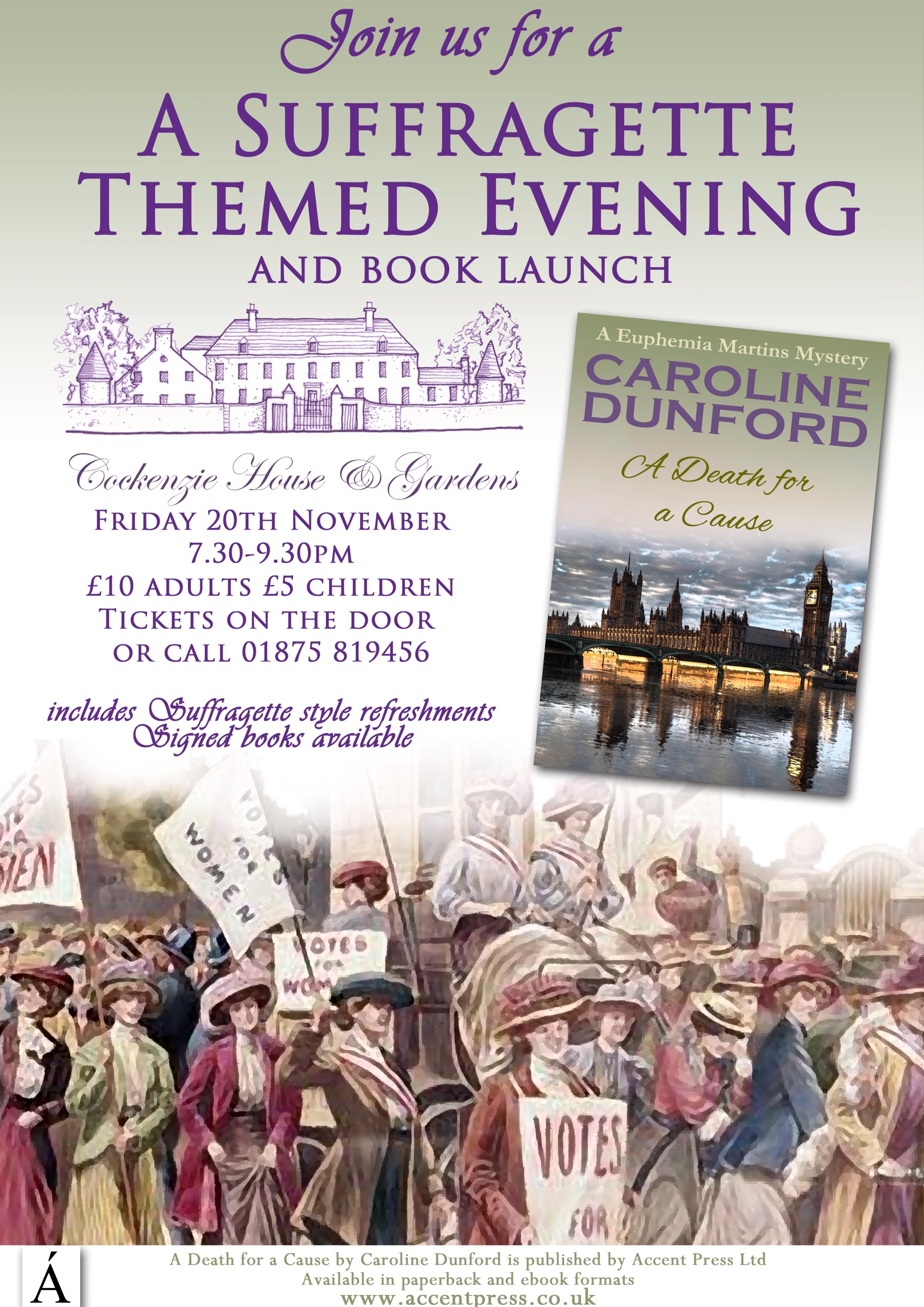
You might also like to join Caroline for a Suffragette themed evening and book launch:

image1

A Blonde Bengali Wife and Me – Guest Post by Anne Hamilton

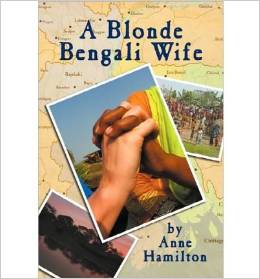
ABBW

I’m delighted to be hosting a guest post by Anne Hamilton whose book ‘A Blonde Bengali Wife’ is re-launched in eBook format on 3rd November. It can be bought here in the UK or here in the US and all proceeds go to the charity Bholas Children that looks after orphaned or disabled children who might otherwise be abandoned.

Anne tells us about the warmth, hospitality and humour to be found in a place many of us never think about, let alone visit.

A Blonde Bengali Wife and Me

Anne Hamilton

I fell in love on the sixteenth of February 2002. It was unexpected, a strangeness growing familiar, breeding contentment, and settling with a knowing certainty like a warm blanket around my shoulders. Quietly simmering over days and weeks, it probably began in a makeshift kitchen in Rajoir, developed on a bus in Jessore, reached the point of acknowledgement in front of the television in Dhaka, and was cemented in Chittagong. The honeymoon led me through Cox’s Bazaar and finally into the Sunderbans. 

(A Blonde Bengali Wife: Prologue)

Arriving back in Bangladesh is like going home. I’m a forty-something, independent woman, now with my own child but when I go to visit my own parents, there’s a part of me eternally fourteen. After a while the excitement fizzles into mild irritation. The familiarity allows comments about choice of activity, clothes, food and sleep patterns – they always know best – and I remember that this holiday is actually quite hard work. For everyone. Yet it doesn’t matter. There’s an underlying bond of belonging that ensures the smiles outweigh the frowns.

That’s me and Bangladesh, and it’s the reason why the country is so special to me. I love it dearly. It fascinates me, drives me to distraction, still unnerves me a little bit – and I don’t doubt the feeling is mutual!

‘Who is Bengali wife?’ Mr Hoque appears at the merest sniff of food, rubs his hands, eyes alert. Bely, claiming responsibility for my transformation, gestures at my outfit and the hot food. Mr Hoque roars with laughter. ‘A blonde Bengali wife. Very good. Very funny. I must taste her first meal.’  (Ch17)

The People’s Republic of Bangladesh isn’t India. Situated in the Bay of Bengal, it was, until the War of Liberation in 1971, East Pakistan. It doesn’t have the spectacular palaces and monuments or the tourist trail of India, or the international profile of Pakistan.  What it does have is its people. I have never received a warmer welcome anywhere. I’ll always appreciate that, and I’ve mused on it again, in the wake of the international refugee crisis.

In Dhaka, Hasina and Mr Hoque (yes, he’s told me to call him Nozmul endless times, but he’s Mr Hoque, he always will be!) took me in without question, treated me like another daughter, and it was Hasina who made me the ‘blonde Bengali wife’.

In Khalia, the three brothers, Bachchu, Mannu and Munnu – I still only know them by their nicknames – tirelessly offer me shelter, food and companionship; Munnu accompanied me across half the country. It was they who offered the accolade, ‘Annie, you are just the same as a Bangladesh girl, but more pale.’

In Bhola, the community of Bhola’s Children is part of me. I’m a Trustee of this charity, which would not exist but for the writing of A Blonde Bengali Wife, and the insight and commitment of my then literary agent, Dinah Wiener. On our last visit, my little boy, who has – inexplicably – always wanted six big brothers, sighed with 4 year old satisfaction and said he’d found them. ‘Can we bring Bhola home for a visit?’ he asked, and then after a thought, ‘but not the girls, they’re too kissy.’

‘Ah ha! Dissention in the ranks! As I thought. Infiltrators,’ Mrs Begum accuses. ‘First you girls present yourselves as brides, albeit of the most feeble demeanour, and then you pretend to be ones of us. Where are you hiding them? Where are you hiding the marauding arsenic germs, you hussies?’ (Ch8)

I’ve never laughed as much as I do in Bangladesh. Some of it’s verging on the hysteria – the day I change buses four times because: a wheel falls off the first, the road runs out in front of the second and we need a ferry to cross a stretch of water fifty feet to reach the third bus, which doesn’t move because the driver can’t get the goats off the roof. The fourth bus is fine except there aren’t any seats – I don’t mean there isn’t any space to sit down, I mean there are no seats. Just springs sticking up where the seats used to be.

There is so much genuine humour too, and if much of it is based on my bumbling inability to survive unaided in this confusing country, that’s fine by me. I’m giving something back… even if it is entertainment by default. When I read A Blonde Bengali Wife now, I still laugh out loud. Is it shameless admitting that?  I’m not laughing because I’m a great, humorous author, but because I was there, it really happened, and I’m reliving it.

In seconds the table is covered by great glass dishes of desserts: a sticky vermicelli pudding, wet and dry halva, coconut rice balls, and two large bottles of RC cola. We all cram into the small dining room which doubles as a bedroom, and shovel, slurp and munch such that any passing alien would assume we have ten minutes to consume enough to see us through hibernation. (Ch25)

I fail dismally in the eating stakes in Bangladesh. I love food, I love cooking, I love sweets; my original diary on which A Blonde Bengali Wife is based, reads a bit like a Famous Five story. When we’re not out adventuring, we’re eating. Or doing both at the same time. I can’t keep up.

In the poorest rural villages, people have little to offer visitors, yet Bangladeshi hospitality is innate. When your guest doesn’t drink well-water because it will (no being fussy here, it will) make her sick, you borrow a dusty bottle of warm Coke from the market and you crack an egg or kill the chicken. I’m not a vegetarian but at home I choose not to eat much meat – in Bangladesh, now, I eat what I’m given (drawing the line at fish larvae, and cockerel crowns). Except if I don’t finish what’s on my plate, I obviously don’t like it so I’m brought something else. If I do finish, I automatically get another serving… And rice?  I come home dreaming of being trapped in a rice mountain.

It is only fitting that I give Munnu the last words.

He thinks carefully: ‘Say: I said goodbye, I got in the airplane, and went home. The End,’ he advises.

And this is what I do. (Ch30)

That end was just the beginning. I’ve been to Bangladesh about a dozen times now, and next year will see me and my little boy on our third visit together. When I first wrote A Blonde Bengali Wife, I never knew it would have such far-reaching effects. It has changed my life. It made me realise I could write a whole book. It gave me firm connections with a country the polar opposite to the one in which I happen to have been born. It helped me see that people are the same everywhere. That Bhola’s Children is supported by the book is the ultimate link. I’m on a journey into writing and a journey into Bangladesh and I plan that both will continue for a very long time.

Anne Hamilton

You can keep in touch with Anne’s adventures, her support for Bhola’s Children and her writing through these links

Anne’s Blog

Facebook

Twitter here or here

Talk of the Toun by Helen MacKinven

71bylzbDCUL

I’m delighted to be part of the launch celebrations for a brand new author, Helen MacKinven, and her debut novel ‘Talk of the Toun’. ‘Talk of the Toun’ was released by Thunderpoint on October 29th, 2015.

Effortlessly capturing the religious and social intricacies of 1980’s Scotland, this debut novel is a perfect mix of pathos and humour as two girls wrestle with the complications of growing up and exploring who they really are.

I’m even more pleased that Helen has agreed to provide a guest post for me on the fascinating topic of unlikeable characters in novels, which you can read below.

About Helen:

www 37 - Copy

Helen MacKinven writes contemporary Scottish fiction, with a particular interest in exploring themes such as social class and identity, using black comedy and featuring Scots dialect. She graduated with merit from Stirling University with an MLitt in Creative Writing in 2012.

In her day job Helen MacKinven works with numbers, travelling all over Scotland to deliver teacher training in maths.

About ‘Talk of the Toun’:

Seonaid Francis, Director of ThunderPoint Publishing said, ‘Helen MacKinven has caught the pain and angst of growing up in small town Scotland with charm, courage and humour.’

Well known Scottish author Karen Campell says Talk of the Toun is: ‘Fresh, fierce and funny, this deftly-drawn clash of small town life versus big ambition is a sharp and poignant study of growing up in 1980s Scotland. You’ll laugh, you’ll cry… you’ll cringe.’

Novel Summary

She was greetin’ again. But there’s no need for Lorraine to be feart, since the first day of primary school, Angela has always been there to mop up her tears and snotters.’

An uplifting black comedy of love, family life and friendship, ‘Talk of the Toun’ is a bittersweet coming-of-age tale set in the summer of 1985, in working class, central belt Scotland.

Lifelong friends Angela and Lorraine are two very different girls, with a growing divide in their aspirations and ambitions putting their friendship under increasing strain.

Artistically gifted Angela has her sights set on art school, but lassies like Angela, from a small town council scheme, are expected to settle for a nice wee secretarial job at the local factory. Her only ally is her gallus gran, Senga, the pet psychic, who firmly believes that her granddaughter can be whatever she wants.

Though Lorraine’s ambitions are focused closer to home Angela has plans for her too, and a caravan holiday to Filey with Angela’s family tests the dynamics of their relationship and has lifelong consequences for them both.

Effortlessly capturing the religious and social intricacies of 1980’s Scotland, ‘Talk of the Toun’ is the perfect mix of pathos and humour as the two girls wrestle with the complications of growing up and exploring who they really are.

A guest post from Helen – Unlikeable Characters:

When I read a novel, I’m hoping to meet an interesting new character. I don’t need to like the character to make them interesting; in fact I often find the more unlikeable, the more interesting. Nice is boring.  But introduce me to a flawed complex character I want to know more, why do they behave the way in which they do? What’s the root cause of their antisocial, illegal, immoral actions? What makes them tick? I know that goody two shoes won’t step out of line so unlikeable characters are the ones I want to follow their next move. I might be horrified but like rubber-necking a car crash, it’s hard to resist a peek.

One of the most unlikeable characters I’ve encountered in the movies has to be Jordan Belfort in Wolf in Wall Street.  I watched the film in a cinema in Falkirk and whilst I felt repelled by the debauchery on display, many in the audience laughed and in my opinion completely missed the point.  But the common factor between those guffawing and those who were cringing was that we were all fascinated and glued to the screen. I loved the film, not because I admired Jordan Belfort but because it was an excellent portrayal of how greed can create a monster.

I’m drawn to unlikeable characters in fiction too.  One of my favourite books from my teenage years was Catcher in the Rye by J.D. Salinger. What’s to like about the cynical Holden Caulfield?  For me, he captured the naivety of youth and as antihero he evoked a sense of empathy in me for his struggle to find his place in the world.

Another of my favourite books is The Butcher Boy by Patrick McCabe where we meet Francie Brady whose troubled childhood stimulates a violent fantasy world. Again, you might ask why a reader would want to spend time with a boy who commits a brutal murder. Because he makes you think, he makes you wonder and he gives a new perspective on an unfamiliar world.

When I started to write Talk of the Toun, I wanted to write a book I would want to read.  But I didn’t set out to create an unlikeable character in Angela, simply an authentic one. That was why I was surprised to read a review that Angela, “did not come across to me like a nice person in the slightest”.  However the reviewer added, “That said, the dislike wasn’t something to put me off reading this novel. If anything, I wanted to see what would happen to Angela and to her friends and family”. I sat back with a contented sigh, uttering, “Excellent, my work here is done”.

If I’ve managed to provoke a strong reaction in a reader I’ve achieved my goal. Angela is as flawed as Jordan, Holden and Francie but her gran shows her unconditional love. Her gran sees beyond Angela’s attitude and actions and recognises that her granddaughter is an insecure teenager who has a lot to learn in life. I’m not expecting readers to like Angela, but I would like them to appreciate that she’s not inherently a bad person; she simply makes major errors of judgement through a lack of maturity and self-confidence.  Unlikeable or not, Angela is a complex character and one I hope readers will want to spend time with to discover whether she pays for her mistakes or not.

My Review of Talk of the Toun:

For the first few sentences I didn’t think I was going to like Helen MacKinven’s book because of the strong dialect in direct speech, but within moments I was hooked. The first person voice is impossible to ignore and before you know where you are you’re living Angela’s life with her. I would defy any reader not to find part of themselves or someone they know in her personality.

‘Talk of the Toun’ is so enjoyable on many levels. Firstly the consistency of the writing with such an identifiable personality of Angela coming through, means that a reader has to admire Helen MacKinven’s authorial skill. All the characters are such real people. Seventeen year old Angela is a liar, a glutton and a bully to her younger sister. She is also loyal, brave and caring. Lorraine is spoilt and fickle, but also burdened with the responsibility of a handicapped younger sister and a mother whose religion is surface deep only and not so well reflected in her actions. No wonder Lorraine behaves as she does at times.

Other than a caravan holiday, the events are actually relatively few, but somehow completely remind the reader of what it was like to be on the brink of independent adulthood. I found the songs, the descriptions, the food all combined to take me right back to the early 1980s and although I was a few years older then than Angela and Lorraine then, I could identify completely with their hopes and fears, their internal emotional battles and their approach to the world around them. It really did feel as if Helen MacKinven had been inside my head. This is such evocative writing.

At times, the language is quite strong, as are references to bodily functions and sexual practices, but nothing is gratuitous or out of place. I found ‘Talk of the Toun’ thoroughly engaging. Occasionally I laughed out loud. I frequently shared memory jerking passages with my husband and once or twice I even shed a tear. Great stuff!

Further Information

ThunderPoint Publishing Ltd., a Publisher Member of Publishing Scotland, was established in 2012, has six novels in print with ten further titles scheduled for publication from 2015 through to 2018.

Seonaid Francis grew up in Glasgow and graduated from Strathclyde University and later with a MLitt (Distinction) from UHI. She has worked around the world in China, Hong Kong, Turkey and France.

Talk of the Toun is available in ebook and paperback from selected bookshops, Amazon UKAmazon US and other online retailers.

www.thunderpoint.co.uk; 07909588822; info@thunderpoint.co.uk

The Meet Cute Series by Katey Lovell

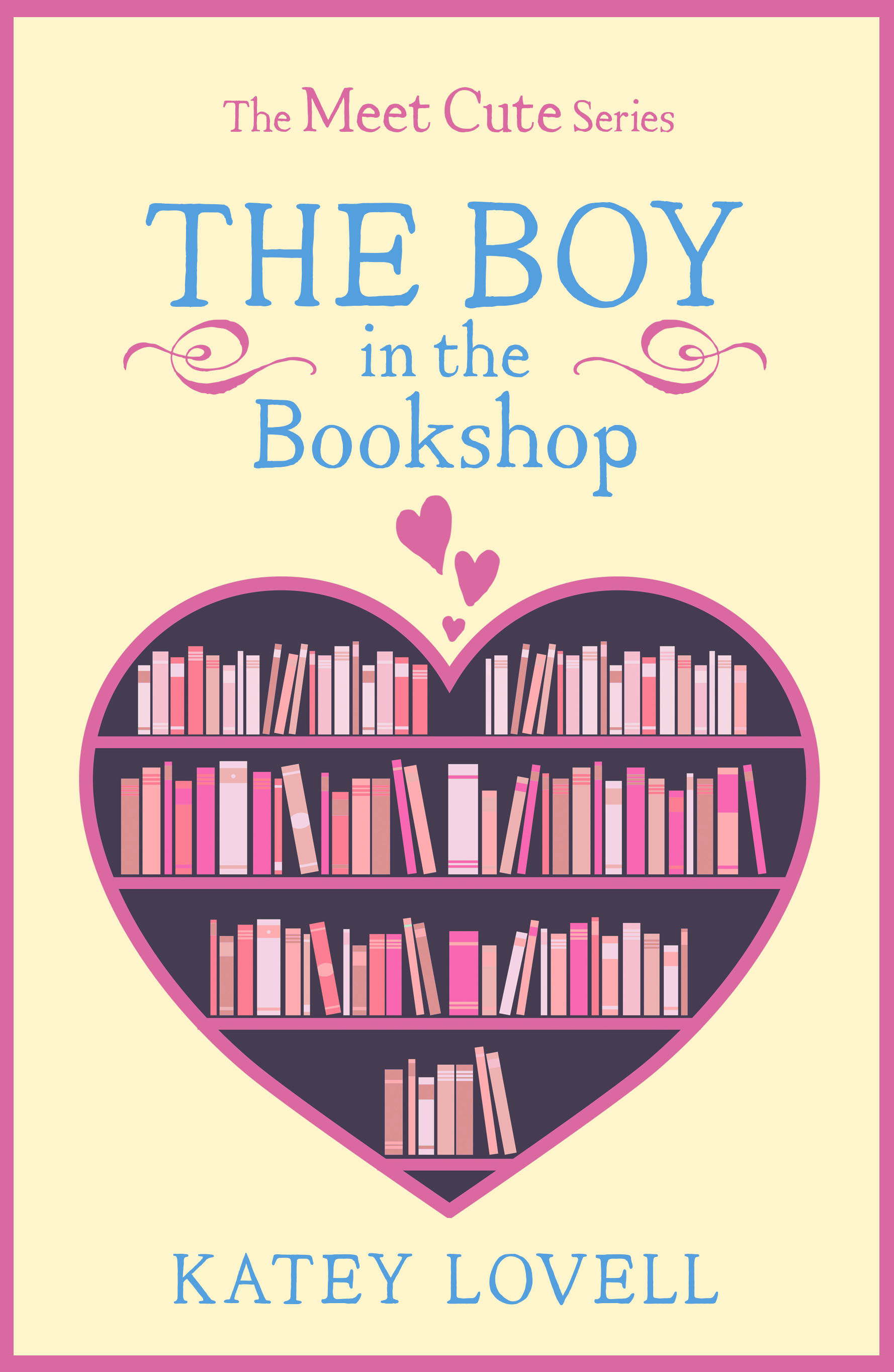
Boy_inthe_Bookshop_Meet_Cute_2

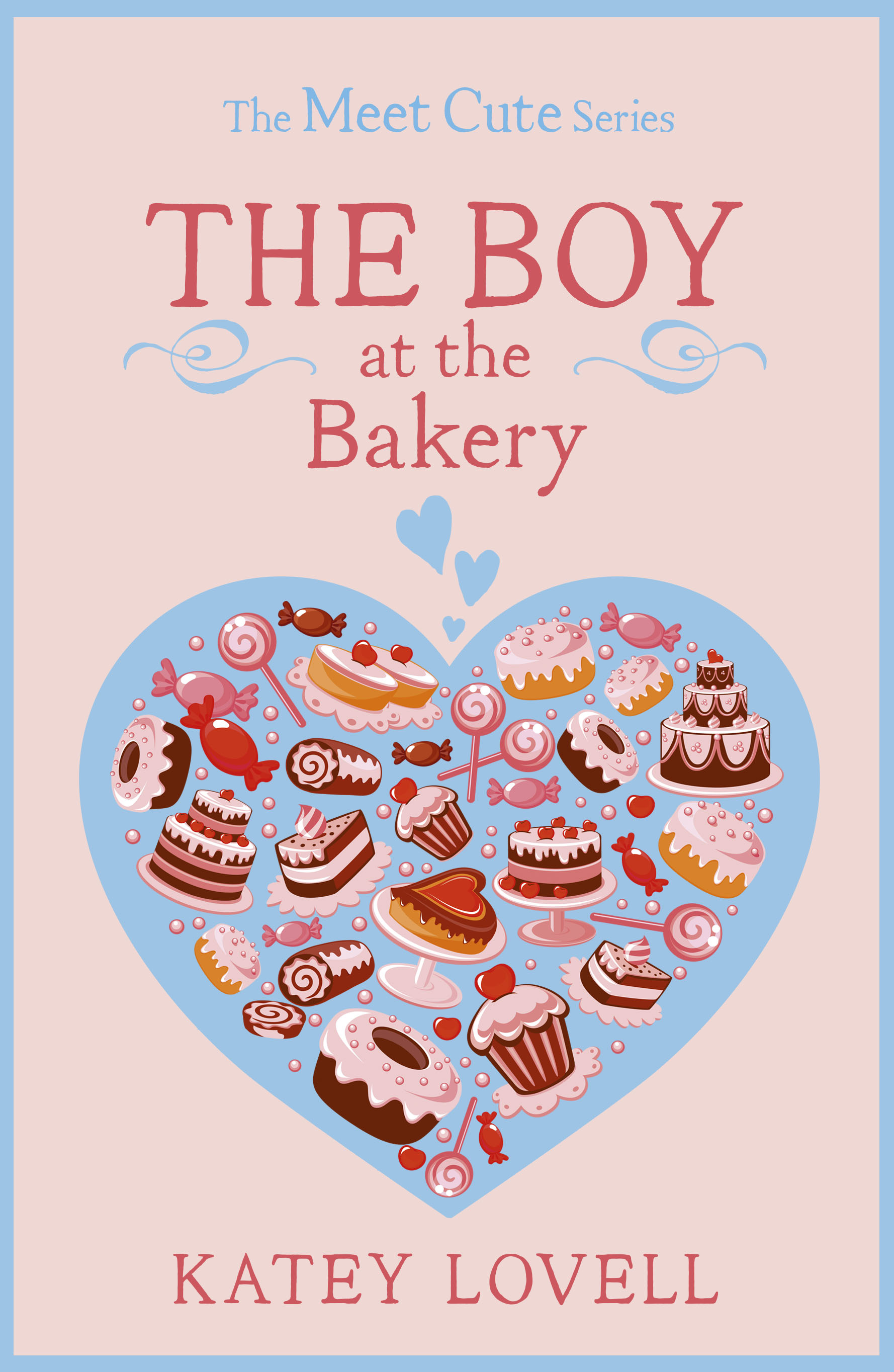
Katey Lovell is the author of ‘The Meet Cute series’.  ‘The Boy in the Bookshop’, the first short story in the series was released on October 29th to be followed by ‘The Boy at the Beach’ on November 5th and ‘The Boy at the Bakery’ on November 12th.

I’m delighted to host Katey on the blog today, explaining how she came to write ‘The Meet Cute’ series. Here’s what she said:

I started writing The Meet Cute Series back in Spring 2014 when I wrote a short story about a couple who meet at a surf class in California for a competition.  The story didn’t win, but it did plant a seed somewhere deep in my brain that there was scope for this idea to go further.  When a friend said she loved stories with a romantic ‘meet cute’ everything fell into place and I started writing the next story, then the next, then the next.  Soon I had seven stories which I submitted to publishers as a collection, but although I received positive feedback most said they weren’t looking for short stories and encouraged me to submit something longer.  It was disheartening as I knew there were readers out there waiting for bite-size romantic tales.

The Boy at the Beach

I’d read Brigid Coady’s Kiss stories which were aimed at a similar market and knew Harper Impulse were a forward-thinking digital publisher looking for fresh ways to tell a story, but it was still a (very lovely!) shock when I received the phone call saying they wanted to publish the Meet Cute stories as individual reads.  I hadn’t even thought about that possibility, but with the surge in people reading on tablets and mobile phones it seems the time is right for short stories to nudge their way back into the limelight.

Boy_atthe_Bakery_Meet_Cute_2 (2)

I’m very excited to think ‘The Meet Cute series’ could bring romantic fiction to readers that might not otherwise read it, as well as meeting the needs of those who are loyal to the genre but short of time to read full-length novels.

About Katey Lovell

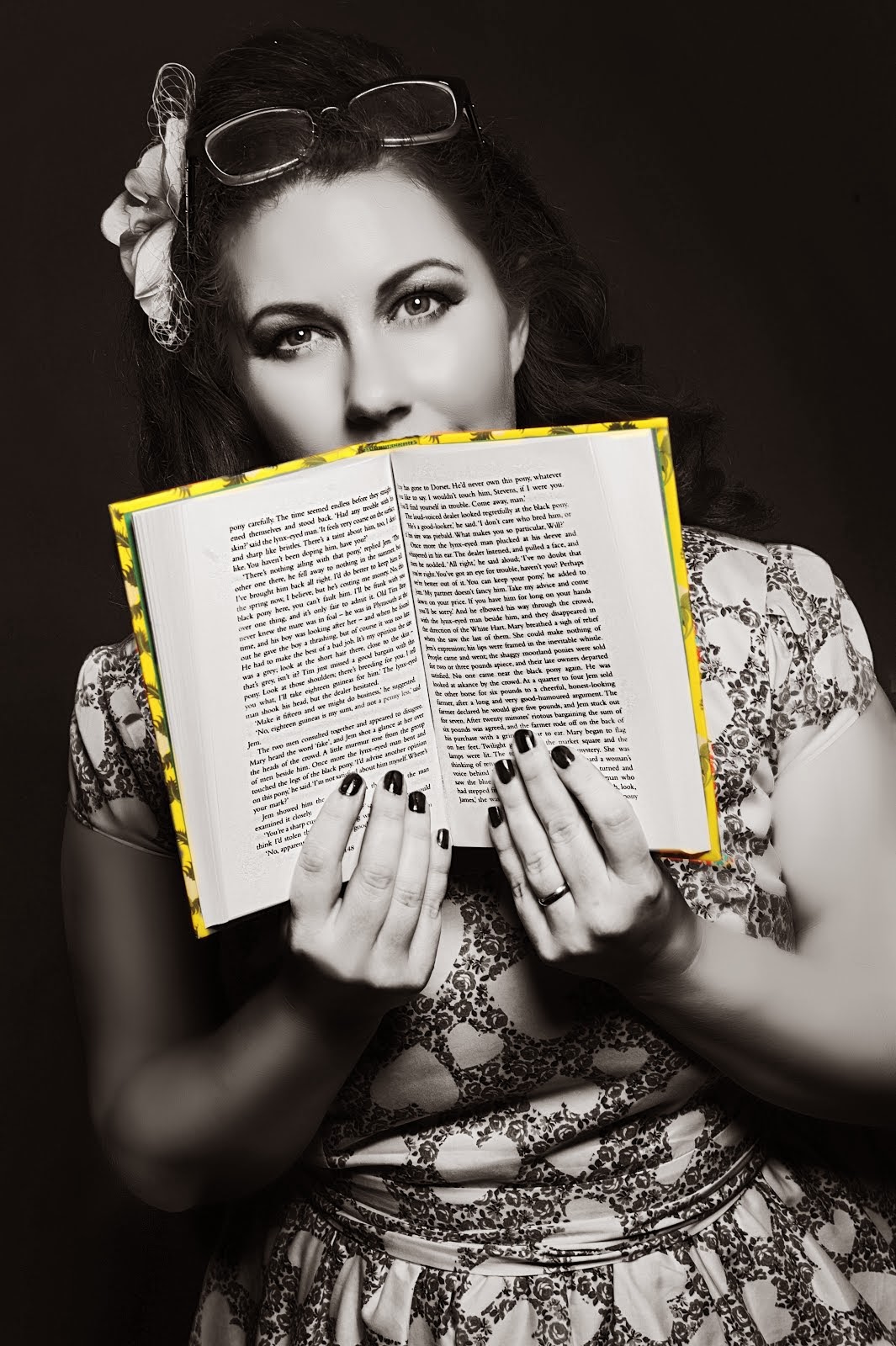
DSC_9580 copy

Katey Lovell is fanatical about words. An avid reader, writer and poet, she once auditioned for Countdown and still tapes the show every night. Getting the conundrum before the contestants is her ultimate thrill.

She loves love and strives to write feel-good romance that’ll make you laugh and cry in equal measure.

Originally from South Wales, Katey now lives in Yorkshire with her husband and their seven year old son.

Find Katey on Twitter, Facebook and her author blog

You can buy Katey’s Meet Cute Series here:

Amazon UK

Amazon US

Nook

Kobo