Release day interview with Amanda Prowse, author of My Husband’s Wife

My husband's wife

Today, 14th July 2016, is release day in e-book and hardback of Amanda Prowse’s wonderful novel My Husband’s Wife, my review of which you can read here. Published by Head of Zeus My Husband’s Wife is available for purchase here.

Having loved everything Amanda has ever written I’m delighted that, to celebrate My Husband’s Wife, Amanda kindly agreed to be interviewed on Linda’s Book Bag. (Actually, that’s an understatement – I’m beside myself with excitement!)

My Husband’s Wife

My husband's wife

Once a week, Rosie Tipcott counts her blessings. She goes to sit on her favourite bench overlooking Woolacombe and thanks her lucky stars for her wonderful husband, her mischievous young daughters, and her neat little house by the sea. She vows to dedicate every waking hour to making her family happy.

But life doesn’t always work out as we would want it to and when Rosie is on the receiving end of some unexpected and unwelcome news, it sets in motion a chain of events that she never would have thought possible and forces her to re-evaluate her life and everything that she thought she knew.

Read Rosie’s story in My Husband’s Wife to follow how this ordinary wife and mother reacts when her world falls apart.  Can she overcome the situation and get her life back on track?

An Interview with Amanda Prowse

Amanda, I’m thrilled to be welcoming you onto Linda’s Book Bag to celebrate launch day for My Husband’s Wife. Thank you so much for being here and agreeing to be interviewed.

Although I think you need no introduction, please could you tell readers a little about yourself?

I’m Amanda Prowse and while I’ve just turned 50, I refuse to act like it as I still feel and think that I’m 16 on the inside.  In reality, I’m a mum to two teenage boys. I’m an army wife and I’m a writer of women’s fiction.  Essentially I write books about ordinary women like you and I who find themselves in extraordinary situations and its how they dig deep, drawing on strength that they probably didn’t know that they had, to get them through those events, or at least make the best of a bad situation.

When did you first realise you were going to be a writer?

Probably when I was writing my first book, Poppy Day.  I’ve always loved reading and been an avid reader but I never thought that someone like me would be able to write a book or be able to get a book published.  It felt like it was beyond my ability, with no contacts or experience of the publishing world.  I didn’t grow up in a house full of books and I never thought it would be possible for someone like me, but then when I was writing my first book, something just clicked and by the time that I finished it, I really felt that I was onto something.

Poppy day xxx

I first realised that I was doing something unusual when I was on the LBC Radio Book Club in London with another author and the host said ‘How hard is it to get your next idea?’ I said something quite casually like ‘You know when you get the whoosh come into your head and you see the book and then you just write it down?’ and everyone just looked at me. There was a bit of a pause in proceedings and they said ‘What do you mean?’ so I said, ‘Well you know, you get that whoosh moment when the book comes in?’ Again they all just looked at me like I was nuts. At that moment I realised that maybe this doesn’t happen to everyone, maybe there’s only a few people that it happens to. I understood that I had this kind of very odd but wonderful gift for what I do; which is to see these books in their entirety in my head and be able to write them down very quickly.  Also it helps a lot in that pretty much what I write is almost what goes to print, it doesn’t need much editing because I have a very clear idea of the finished version.  So that was the moment I realised that maybe I could do something that other people couldn’t and that it was a bit special.  I’m thankful for it every day.

If you hadn’t become an author, what would you have done instead as a creative outlet?

I never considered myself to be very creative until I started writing because I always had quite a pedestrian job as a management consultant.  Prior to writing, when I think about it, my creative flair came out through the way I dressed and the way that I styled my home.  I’ve never shied away from being quirky or having an unusual decorative piece that other people might baulk at, so I suppose looking back that I’ve always had that flair in me, I just didn’t really know how to get it out.

(Well, I’m glad you found out!)

What are your writing routines and where do you do most of your writing?

I write everywhere and anywhere. I write on the bus, on the train and on any long flights, so plane journeys are great for me, because no one in my family can knock on the door and say ‘Where’s my pants?”  I’m kind of in my own little bubble on long haul flights so I get a lot of writing done!

I write also write in bed, I write on the sofa, I write in my study, I write in my garden, and in the car. If I’m driving or being driven that’s often my thinking time and I’m writing in my head then as well thinking, ‘Yes that will work’ and I’ll generate an idea, image or a picture.   While I’m going along, something will just pop into my head that will enhance the story I’m working on so I’ll store it away and think I’ll add that in next time I’m on my laptop.

Another example of working anywhere was that quite recently I was recording Another Love as an audio book in a London studio when I looked out of the window over some rooftops in Queens Park where I was, and with my left hand I picked up my pen and just jotted a few little notes for something I’d seen. The producer said ‘What are you doing?’ and I had to say ‘I’m sorry, I‘ve just had a bit of an idea for a book I’m working on’. He’s like ‘You’re trying to read an audio book,’ and I thought ‘Yep, that is true multi-tasking’, so yes, anywhere and everywhere.

another Love XXXX

Which aspects of your writing do you find easiest and most difficult?

I’m very highly motivated to write; I get up early and I write every day.  I have so many stories that I have more already than I could write in my lifetime.  When they come into my head, I write down one line to remind me of that story.  I have over thirty ‘definites’ in my special notebook now and many more that sadly might not make it to print.

The hardest part of writing is saying goodbye to a character at the end of a book.  They become very real to me, particularly Poppy with whom I’ve had a very close relationship over the past four years, in fact since I first started writing.

Even Rosie in My Husband’s Wife is special to me.  I’m very very fond of her; I got to know her, I can picture her and I feel like she’s my friend. To send that book off to my publisher and know that’s probably the last time I will think of her or write about her for a while is like waving a friend off at the airport wishing them a happy, safe, long life but actually thinking you’d rather having them living next door to you so you could pop in for a cuppa.  I guess that’s the hardest bit, I miss my friends when they go.

Do you have other interests that give you ideas for writing?

Walking, I love walking. I love being near water so if I’m near a beach, a pond, a river it doesn’t matter, any water I find quite inspirational.  Just sitting and looking at it can really get me to a quiet place of contemplation where my ideas flow better and more often.

Simeon and I will go for a long walk after dinner, a couple of hours just wherever we are – it doesn’t matter.  It could be a coastal path, up a hill, around a mountain, it could be a busy city but we walk and we chat and that’s good.  It helps me talk things though with him and it helps my idea and my creative process.

When you’re not writing, what do you like to read?

The only downside of my job is that it takes up so much of my time that my reading has absolutely dropped through the floor.  Instead of devouring three or four books a week, which I did my whole life and loved every second of, I’m now reduced to reading one or two books a month, so I have to be very, very particular.  I read any good story from any genre, I love the Twilight series, I will go back and re-read things like The Thorn Birds, my absolute favourite.  Most recently, I’ve enjoyed The Last Dance in Havana and The Optician’s Wife.

I have to be very careful and more picky about what I read because its such a rare thing for me to be able to do nowadays but literally any good story by any good author is the best answer I can give.

My Husband’s Wife is part of your No Greater Courage series. How did that series come about?

The No Greater Courage series was a follow up to the No Greater Love series, which featured different forms of love at its core; but then I started to write about women’s bravery much more and how women had to be brave to get through certain situations.  I think that women have an amazing capacity for this and it always surprises me the strength that women show in situations where you just think that actually they would crumble.

Your writing encompasses some challenging themes at times, like adultery, alcoholism and post-natal depression. Why do you choose to write about such issues?

I don’t set out to write about these issues but these tend to be the stories that come into my head.  I believe that you can only really write convincingly about what you know. These are the things that have touched my life and have shaped, moved or scarred me in some way, so its just really drawing on my own personal experience.  For example, in A Mother’s Story I write about Post Natal Psychosis.  I had nothing like that condition, but I did suffer Post Natal Depression in a mild form and therefore I was able to imagine what that would be like if that was exacerbated.

Actually I think all these topics – drinking too much, feeling unhappy about your weight or being the victim of someone who has an affair – this is what happens to us, this is real life, this is what life is.  Life is this beautiful, wonderful journey into the unknown but then there are these huge potholes of devastation and sadness that we fall into and that we have to find a way to dig our way out of. That’s just what life is.  I think that’s why so many women find my books relatable because they see aspects of their own story and their own life in them.

(I agree – and if it hasn’t happened to us as readers directly, we probably know someone for whom it has been part of their life.)

A mothers story

How do you go about researching detail and ensuring your books are realistic?

I use the Internet a LOT and don’t hesitate to use consultants for very specialist advice when they are needed.  I always interview at least a dozen women before I write on a particular subject and these ladies find it therapeutic to share their stories with me.  This stage is critical in helping to shape my opinion.  When I’ve finished the bulk of the manuscript, I go back to the consultants and volunteers to check that I have the right details.

For example, I’ve just been writing a book dealing with anorexia. After I’d finished the book, but before I sent it off for editing so I still had a chance to adapt and amend it, I spoke to a group who suffered from eating disorders to make sure that I was pitching it right, that what I thought was true was realistic and accurate so that I could tweak the slightest detail that wasn’t absolutely spot on.  For my credibility as a professional writer it is vital that it is a true representation rather than just something that comes out of my head and with each book being so different and varied, it takes a lot of effort.

Frequently when I read your books I find I am reduced to tears – often of joy and frequently of sadness when I identify with your characters. How are you affected when you’re writing?

Exactly the same!  As I’m writing it I often find myself laughing, particularly in My Husband’s Wife when I was writing a lot of the dialogue between the children and their mother. I found it hilarious; they’re really funny girls, great little characters and I use that humour as a kind of foil for the darker moments and anyone who has read Will You Remember Me? will know exactly what I’m talking about.

will you remember me

So yes, exactly the same for me Linda, sometimes I’m laughing, sometimes I’m crying, my stomach churns at the tense moments and I get that great raised fist pumping moment of joy when something great happens.  What’s more, I know if I’m feeling it and it’s happening for me, that its going to work in the book and the chances are that this is also how the readers will react; so actually it’s a really good marker for me.

People say my books are a true emotional roller coaster and I think that’s a really good way of describing them; the fear, the anticipation, the joy, the laughter and the sadness, it’s like a very complex recipe, but it all seems to work at the end.

(It certainly does!)

You also balance the emotional elements with a lighter humour too. How difficult is it to achieve that in your writing?

I think I’ve kind of strayed into this question in my response above.  It’s not a conscious thing but as I see the book in my head before I write it down, those moments are there and obviously that comes from my real life where I balance tragedy or sadness.  I think partly that it’s all these years of being an Army wife and, as military families will tell you, you kind of need a particular brand of humour just to get you through the darker times. Very often, even in times of great distress or sadness, if you can find something to laugh at, or find a small element of humour where appropriate, it can lift the darkest moment and remind you that actually life is good.

The women in your stories find themselves on roller coaster journeys. To what extent are they based on elements of your own life or on the lives of those you know?

They’re all based on my own life experiences, albeit not such extreme examples as the situations that many of my characters find themselves in.  That being said, however, when something has happened to you, like you’ve ever deeply loved someone and know how much you need and value that love, then it’s easy to imagine having your heart broken.

At the end of the day we all have the same emotional weapons in our arsenal; we’re all the same, it’s all we have; joy, sadness, humour, resilience.  All these aspects of human nature are there in my life, so it’s the case when I am writing a story, of pulling out those pieces that are most appropriate and making it work.   In summary, I think that so long as you’ve experienced living life fully, you can imagine what it’s like to feel these things, so that these elements are all loosely based on my experience, or of those close around me, but with the volume turned up I guess.

In many ways your plots are quite prosaic, concentrating mostly on ordinary life. What draws you to writing about the events that many of us have experienced?

I think that you can only truly write with conviction about what you know.  I’ve never climbed a mountain, I’ve never done anything heroic, saved a life, sailed an ocean or swum a shark infested sea.  I’ve never done anything like that, so all I can write about is ordinary life and actually I’m just a very ordinary wife and mum and I write about all of our lives.  I think is probably the key to a lot of my success because I’m writing about all of us – it’s no coincidence when people say ‘that could have been my story , that could have been my sister, that could have been my friend’, because it is, it is all of their stories.  I actually think I’m kind of a like a mouthpiece for us all.  I hope I speak up for us all and I hope I take topics that are difficult for us to discuss and make it easier to talk about by turning them into fiction.

The title My Husband’s Wife has several references and meanings in the story. I know you won’t want to give away the plot, but which comes first, the title or the concept in your writing?

That’s a good question!  All of my books come to me fully formed and ready to write down, so I don’t have to give them too much thought.  This is because it’s like watching a film in my head and I just write about what I’m seeing. Very often its like I’m seeing that movie for the very first time. I enjoy it and I think ‘Oh, that was good’ and more often not, the title comes with the story.  I see the story title just as I would see it as a movie title page so I see My Husband’s Wife and then I see the story as if it were a film playing out. After that I just write it down. As I’m saying that, I realise that it sounds pretty wacky, but that that’s how it happens to me and very often the story and the title come together.

Occasionally my publishers will suggest a new or a different title and I always go with their suggestions. These guys are the professionals and that they know best and usually it works. I really like the title My Husband’s Wife . It does have a rather layered meaning which is kind of clear when you get to the end of the book.

I find your development of setting incredibly realistic. How do you create settings? Do you have photographs of the interiors and places? Do you create mood boards or use something like Pinterest, or are those images all in your mind?

I spend a lot of time visualising the settings and fix a very firm image of them in my mind.  This creates a very strong reference for me, which I populate with minute detail.  I imagine I see the rooms and that I’m an integral part of it all, so I just describe where I am and what I see. Often I see a lot more than is in the book.  I don’t include all of the detail as that might be a bit over the top and it could become a bit monotonous – no one needs to know if there are four cups or sixteen cups, or maybe that the clock said 2 o’clock or 4 o’clock, so I just share the most interesting pieces that I think are necessary to convey the scene.  The finer detail is in my head and it will always be there but that’s kind of my own background material.

In My Husband’s Wife Rosie is very much shaped by her past. To what extent do you think that is part of the human condition?

I think it’s impossible not to be shaped by the events of your past but I’d just like to add as a caveat that just because you’ve been through something negative or debilitating, or sad, or harmful, it doesn’t mean that’s the person you become.  Very often a lot of the very strong inspirational women I meet have used these negative aspects of their past, turned it into fuel and gone on to make something bloody brilliant happen in their future as a result of it.

(That’s fabulous advice for us all, I think, Amanda.)

My Husband’s Wife is dedicated to your husband Simeon and I know he is hugely supportive of your writing. How has his help enabled you to achieve your success?

Simeon is the reason I am able to write. I think it is very rare to have a partner who says ‘Yep sure, give up your job, we’ll sell the house, we’ll sell the car, we’ll cut back on all of our expenditure, just sit at home and write a book and we’ll see how it goes’.  I mean that level of support was something that I never expected and it was tough for my family when I started.  At first being skint and having to live off pasta and beans felt like a wonderful Bohemian adventure, but it very quickly became horrible not being able to buy the kids new trainers or have a holiday.  Things that are small actually and don’t really matter, but feel like a big deal when you can’t do it or can’t afford it.  He’s the one that told me I should write and he had faith in me. That made me think that if Simeon has faith in me then maybe I can do this after all.

The reason it’s so important is that he’s the one who allowed me to bring my dream to fruition without pressure. He said ‘Have a go. If it doesn’t work at least you’ve tried’.  Because I was writing pressure free, it was the most amazing gift he could have ever given me.

And he continues to be incredibly supportive. We both are of each other. I support his career, he supports mine and we look at our diaries and just whose ever job takes priority is just where we are.

So basically yes, he is very supportive and I love him very much. I’m thankful for him every day.

My Husband’s Wife has an unidentified female on the cover. How did that image come about and what were you hoping to convey (without spoiling the plot please!)?

Its funny, this is one of the strongest images that I think relates to the character in the book.  Very often the creative team who are putting together my covers and the team who are looking at the actual book are working remotely.

The moment I saw the cover of My Husband’s Wife I thought ‘That’s Rosie, that looks like Rosie’, and her vulnerability, her ordinariness, her size and her posture for me perfectly sum up the character.  I have absolutely no say in my covers, I leave them down to a team who are the experts which is how I believe it should be done.

I don’t have a say about the colour. I don’t even think about them actually. I don’t think about the colours, the covers, the text, the font, any of it. I just write the stories and then it goes off to a team and that’s their passion, that’s their strength. I think its important to leave them free to do their job and I think they do it very well. But it was amazing the first time I saw the cover and thought ‘Yep that is Rosie’. I’m over the moon with it.

If you could choose to be a character from My Husband’s Wife who would you be and why?

Oh that’s a very good question again and tricky to answer without giving too many spoilers. I would probably be Mo, Rosie’s Mother in Law. She has a lovely balance in her life and she seems settled and she has a beautiful view and a garden.  What more could I want out of life than that?

If My Husband’s Wife became a film, who would you like to play Rosie and why? 

Oh my word! Obviously we are in talks with people for a lot of my books to be made into films. I would have no choice over this but I think the lady who played the Beth in Broadchurch, Jodie Whittaker, maybe not physically, but personality wise, she would be perfect.

I know you support charities through your work. Would you like to tell readers a little more about this?

Yes, I am an ambassador for the UK Sepsis Trust.  Sepsis is a widespread but relatively unknown condition that kills more people every year in the UK than Road Traffic Accidents, HIV, Breast, Bowel and Prostate Cancer put together.  It’s one of those conditions that can be fatal but which is entirely treatable if you catch it early enough.  The problem is that most people, including healthcare professionals, can often miss the early tell-tale signs.

To help readers find out about the symptoms of Sepsis and what to look out for, I wrote a book called Three and a Half Heartbeats about a family who are touched by Sepsis and I have donated all of the proceeds to the charity to help promote their fantastic, lifesaving work.

Three and a half heartbeats

It has been very rewarding to be involved in the project as I’ve been contacted by a number of readers who told me that as a result of their reading the book, they correctly identified the symptoms of Sepsis in their loved ones and having voiced their concerns to Doctors, had their amateur diagnosis confirmed and saved the lives of friends or family members.

(I just want to interrupt here Amanda and say I’m one of those readers. My father had undiagnosed sepsis earlier this year and I recognised it because of the work you’ve done. He almost died, but pulled through and I’m very grateful.)

My philosophy is centred on the idea that to be happy, you only need enough.  To me, it is very important to give something back. I’m delighted to have helped people in a practical way through the medium of story telling.

And finally, Amanda, if you had 15 words to persuade a reader that My Husband’s Wife should be their next read, what would you say?

For anyone who’s felt the leap of fear in their throat that one day, the one they love might have a change of heart.

(That’s more than 15 but I’ll let you off!)

About Amanda Prowse
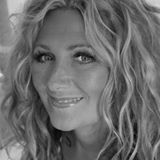
Amanda Prowse

Amanda Prowse is a No.1 International Bestselling author who, along with her family, has been a regular visitor to the beautiful North Devon resort of Woolacombe for years.

Always looking for new ideas for stories, a chance encounter at the Beachcomber Café on the seafront during her annual summer holiday last year gave Amanda Prowse an idea for her latest book, with Woolacombe as its setting.  Now, in the summer of 2016, My Husband’s Wife is set to be THE holiday read of the season.

Amanda Prowse is recognised as the most prolific writer in the UK today and has been described as ‘The Queen of domestic drama’ by the Daily Mail.

Amanda Prowse is the bestselling author of contemporary family fiction and has written twelve books and six novellas that have been translated into dozens of languages all around the world.

what have i done

Her titles include What Have I Done? which was voted an Amazon Kindle editor’s book of 2013 and A Mother’s Story that received the accolade of being the best family fiction novel by the Daily Mail.  It also won the coveted Sainsbury’s eBook of the Year 2015.

You can follow Amanda Prowse on Twitter and visit her web site here. You will also find her on Facebook.

All of Amanda Prowse’s wonderful writing is available here .

Publication Day Interview with J. A. Corrigan, author of Falling Suns
Falling Suns

It gives me enormous pleasure to be hosting a publication day interview with J A Corrigan, as her debut novel Falling Suns is published today July 14th 2016 by Accent Press. Falling Suns is available for purchase from all good bookshops and from Waterstones, Amazon, The Guardian Bookshop and W H Smith.

Falling Suns

Falling Suns

Ex-DI Rachel’s small son is missing. Then his body is discovered. Her cousin Michael is found guilty of his murder and incarcerated in a secure psychiatric unit. Four years later, now divorced and back in the police force, Rachel discovers that Michael is being released to a less secure step-down unit, with his freedom a likely eventuality. Unable to cope with this, she decides upon revenge, assuming a new identity to hunt him down and kill him. However, as she closes in on her target, her friend Jonathan, a journalist, uncovers some unnerving information about her mother and others in her family and begins to suspect that Rachel’s perception of the truth might not be as accurate as she thinks that she might be about to murder the wrong man…

An Interview with J.A. Corrigan

Hi Julie-Ann. Thank you so much for agreeing to answer some questions on my blog about your writing and your debut novel Falling Suns.

Firstly, please could tell me a little about yourself?

Hi Linda, and thank you for hosting this Q&A blog.

I am married, with one daughter. I live in Berkshire, but was born in Mansfield, Nottinghamshire – a place with which I still have strong connections. I’m a qualified physiotherapist and have worked within both the NHS and privately. I gave up working last year to concentrate more on my writing, but may well go back to it one day.

When did you first realise you were going to be a writer?

I always wanted to write. I wrote as a child and a young teenager, but then I put the idea on a back burner. Oddly enough, the desire came back to me soon after having a baby, but I decided to wait until she was a little older before I had a go. I’m glad I did now as the whole process is so time-consuming and the very nature of the ‘craft’ does seem to encourage obsessiveness. I don’t think that obsessiveness (that you need to have to be successful I feel) sits that well with having a young child. Not for me anyway – but I do know that other writers who cope brilliantly. I’m not great at multi-tasking; a professional job and a child was enough with me to cope with. I started writing seriously when my daughter was ten.

Which aspects of your writing do you find easiest and most difficult?

I find the first draft of a novel the most difficult. It is then when I need massive swathes of time to think and write. I’ve come to love writing the second draft, and editing.

I have to say, I do love researching my novels too. A little bit too much sometimes!

What are your writing routines and where do you do most of your writing – I know you like to write when you’re travelling for example?

I’m definitely an early morning person. I write more prolifically and am the most creative first thing in the morning. When writing a first draft I try to get up at 5am, and I’ve usually written 2,000 words by late morning. Any other words I add that day are a bonus. I can’t write anything new in the evening, but I can edit at that time or read for research.

I write at my desk in my study and rarely use my laptop for ‘proper’ writing. I’m a physiotherapist and understand the perils of poor posture! Also, I try to see the writing as a job, so I get dressed and go to work in my study. Although I must admit that recently the getting dressed bit is lapsing …

I don’t write that much when I’m travelling or on holiday but I always have a notebook in my bag that comes home bulging. It starts on the plane (if going abroad); ideas for stories seem to come thick and fast, including short story concepts as well as plot points for a novel-in-progress. Lying on a sun lounger facing the sea I allow my mind to open and the ideas that emerged on the plane begin to sprout and grow.

If you hadn’t become an author, what would you have done instead as a creative outlet?

I think definitely a journalist in the first instance.

But at the top of the list too – a buyer for Selfridges comes to mind! I do love beautiful ‘things’ – sounds shallow, I know, but I do. Home furnishings as well as clothes …

Also, after loitering on the periphery of the literary world I would love to be involved in PR and marketing.

(Oh, me too – the more I blog the more I’d like to work in book PR)

You have written, and had published, many short stories. What were the differences and challenges in writing a full-length novel?

Writing a novel is a marathon; the writer needs to keep going. Whereas writing short stories is more of a sprint – concentrated energy given to a smaller amount of prose. I do feel that many of my short stories were novels-in-waiting and it was this thought that finally pushed me into attempting my first novel.

How did you go about researching detail and ensuring your novel Falling Suns was realistic?

I did a lot of research for Falling Suns. To try and give the novel true veracity I researched every aspect of the themes that are explored in the novel: institutional corruption, method acting, Chinese medicine, mental health problems, cosmetic surgery, as well as locations in Poland, and London!

You explore some important themes like corruption, phone hacking and morality that reflect and affect today’s society in Falling Suns. How far was this your primary aim and how far did they arise naturally out of your plot?

In all truthfulness these themes came about more through plot than a conscious desire to explore these aspects of society. However, I knew these themes would be explored as soon as I began outlining the novel and so at that point I made a conscious decision that the novel’s tone would centre on these issues.

Have you changed your opinions of those who take revenge in their lives as a result of writing Falling Suns?

Writing the novel encouraged me to think a lot about the moral issues surrounding revenge. It is never the right and ethical act, and yet it is a compulsion that I think sits stubbornly, perhaps even resolutely, inside many of us. The need for revenge creates a lot of conflict within an otherwise ‘moral’ character – and that is a good place for a writer to begin a story.

National institutions are not represented very positively at times in Falling Suns. How do you think readers will react to the way you explore their corruption?

In Falling Suns although Littleworth isn’t represented in a vastly positive way, I do try to emphasise that the events which occur there are not representative of all psychiatric institutions. I.e. when Jonathan researches an institution in the south of the UK.

Falling Suns is a work of fiction and the characters that are portrayed in Littleworth are indeed fictitious; however, it is not outside the realms of fact that what occurs there could happen.

Wherever a person, or an organisation, holds power there is always the opportunity for corruption. It is a human trait that shows itself time and time again.

I love the blurriness of the cover to Falling Suns. I think it represents the blurring of lines between morality and the law that your novel explores. What were you hoping to convey with that image (without spoiling the plot please)?

I think you are right! I also think the image represents motion in stillness, if you like. Although Rachel’s son Joe is not alive, not physically existing, he does indeed still exist very strongly inside her mind. She is reluctant to let him go – and here lies Rachel’s dilemma, and sadness.

I do love the cover that Accent Press designed for me.

How did you create Rachel’s character? Did you write her back-story, have a character profile, create a mood board, use Pinterest or some other method?

I have to admit, I don’t do a lot of planning of my characters. I mean, I have a strong image of what they look like and their basic personality, but I don’t really start to expand on that until I start writing.

Rachel was very difficult to write and it took me a few drafts to really ‘get’ her. She had to be strong but vulnerable. Capable but fragile. I think I really got to grips with her once I did begin to explore her past and her childhood. And of course I was able to use Jonathan to give an outside viewpoint of her.

If you could choose to be a character from Falling Suns, who would you be and why?

I would probably be Jonathan! I’d have loved to be a journalist!

If Falling Suns became a film, who would you like to play Rachel?

That’s an easy answer! Uma Thurman. Although she might be a little too old.

You didn’t ask, but I’d have Charlotte Rampling play Margaret!

If you had 15 words to persuade a reader that Falling Suns should be their next read, what would you say?

A novel addressing every parent’s nightmare and by reading we might be able to understand ourselves a little better.

Sorry, that’s 19. I’m not good with sticking to word counts!

(You’re forgiven as I was always hopeless at Maths too.)

Thank you so much, Julie-Ann, for your time in answering my questions.

faalling suns pre

About Julie-Ann Corrigan

JA

J.A. Corrigan now lives in Berkshire, but was born in Mansfield, Nottinghamshire. Her maternal grandad was a miner, her paternal, a baker. Her gran worked on a fruit and veg store in Mansfield’s market square.

After A Levels she completed a Humanities degree in London, majoring in History and English Literature. She then went on to train and work as a physiotherapist.

She loves to run, cook, and drink good wine. She likes to read great novels, autobiographies and a diverse range of non-fiction. Adoring travel, JA seems to be at her most creative, and most relaxed, sitting in a very narrow airline seat, going somewhere. She has been writing seriously since 2010 and her short stories have been published in various anthologies.

Her debut novel, Falling Suns (Accent Press) is a compelling psychological thriller that explores the darker side of human nature.

You can follow J.A.Corrigan on Twitter, find her on Facebook and visit her website. You an also find out more with these other bloggers:

tour

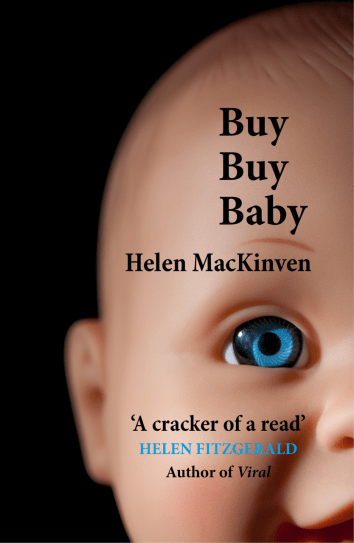
DD Support! A Guest Post by Helen MacKinven, author of Buy Buy Baby

BBB COVER

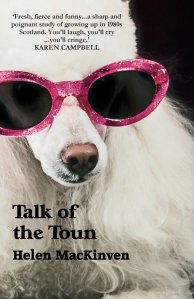
Today I’m delighted to be part of the launch celebrations for Helen MacKinven’s latest book Buy Buy Baby. I reviewed Helen’s debut Talk of the Toun last year and you can read my review here.

71bylzbDCUL

Buy Buy Baby was published by Cranachan on 7th July 2016 and is available for purchase here.

I met Helen recently at an author and blogger event and discovered what a lovely person she is so I’m thrilled that she is writing a guest blog for Linda’s Book Bag today all about the support she has enjoyed as an author. I’m also reviewing Buy Buy Baby.

Buy Buy Baby

BBB COVER

What price tag would you put on a baby?

Set in and around Glasgow, Buy Buy Baby is a moving and funny story of life, loss and longing.

Packed full of bitchy banter, it follows the bittersweet quest of two very different women united by the same desire – they desperately want a baby.

Carol talks to her dog, has an expensive eBay habit and relies on wine to forget she’s no longer a mum following the death of her young son.

Cheeky besom Julia is career-driven and appears to have it all. But after disastrous attempts at internet dating, she feels there is a baby-shaped hole in her life.

In steps Dan, a total charmer with a solution to their problems. But only if they are willing to pay the price, on every level…

DD Support

A Guest Post by Helen MacKinven

For this ‘stop’ on the Buy Buy Baby blog tour, Linda invited me to write a guest post on being part of a writing community, either online or both, and it made me realise how lucky I’ve been on my writing journey.

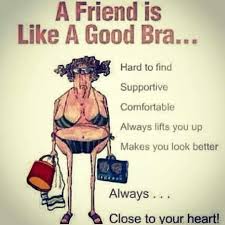
download (1)

This image was on one of my birthday cards this year. It’s a great analogy of friendship but also one that reminded me of my relationship with people I’ve met over the last few years connected to my writing.

Writing is a solitary activity and I’m happy to spend time with only my laptop and dogs at my side but I suffer from cabin fever if I don’t get out and about often enough. After tapping away on the keyboard, for me, it’s important to seek the company of like-minded folk.  As a writer, I’ve had lots of DD support since I began writing. From the beginning of my writing journey, I’ve been very fortunate to have been unofficially mentored by my close friend, writer Karen Campbell, who has offered me feedback, publication advice and even hosted my book launches.

When I did a MLitt in Creative Writing at Stirling University, I was part of a small group of new writers and apart from critiquing each other’s work throughout the course, we’ve all remained good friends (despite trading brutally honest comments in writing workshops!) and meet regularly to share our highs and lows in writing and life.

I did dabble with attending a Writing Group and while I appreciate the benefits for writers, it wasn’t the best way for me to develop as a writer, as unlike the MLitt group, we all had different agendas which didn’t match my needs. The main reason I left was that most of those attending at the time would not be my target readers and this meant I was on the receiving end of multiple points of view from folk who had no interest in the themes and setting of my work in progress. I decided that I should follow my gut instinct and listen to comments from trusted readers rather than a random selection of writers whose attendance was inconsistent.

But, I’ve also gone to lots of one-off writing workshops as well as two residential weeks and met other writers who have stayed in touch with me either in person or online. As the old BT advert says, it’s good to talk and even if that means moaning about rejections, writers’ block and a growing backside from sitting too long, I find it healthy to mix with other writers.

Also, by taking a screen break, I’ve become actively involved with local spoken word groups and their events have helped me build my confidence as a performer and been the source of lovely new friends.

I live in the central belt of Scotland which makes most events accessible but sometimes, it’s not possible to meet in person and that’s where social media is a huge bonus. Through Twitter and Facebook, I’ve connected with many writers, who share links to competitions, opportunities and offer a virtual shoulder to cry on or a #woohoo to celebrate success and their support is especially welcome at times when I’ve needed a boost.

13343065_939449862818894_6655977861398364169_n

But, getting me and my words out there isn’t just about meeting other writers. Since the publication of my debut novel, Talk of the Toun, I’ve had the privilege of meeting readers and bloggers in person and interacting, not only online. At a recent Book Connectors event in Edinburgh, I got the chance to put a face to the name and thank bloggers, like Linda, who’ve very kindly helped me on the path to publication. To have the support of a reader or blogger who’s tweeted that they’ve enjoyed my book or stayed behind at an event to chat to me couldn’t be measured in bra sizes!

13346830_939449886152225_3236470461855340546_n

My Review of Buy Buy Baby

Two very different women, Carol and Julia, have one thing in common – the desire for a baby. When they both meet Dan, this desire will lead to more complications than they could possibly envisage.

I thoroughly enjoyed Buy Buy Baby and noticed that, whilst the characteristics that make this very much a Helen MacKinven novel are still there, there is a greater sophistication to her writing now too from her debut Talk of the Toun. I really appreciated the variety to the narrative, with the range of sentence structures and the use of Carol’s journal so that I found Buy Buy Baby very entertaining and convincing.

Buy Buy Baby is filled with local dialect and accent that gives a real sense of setting and character, especially to Carol. There’s also the wit and humour that I’ve come to expect from Helen’s writing. The tone is sharp, sassy and often littered with entirely appropriate expletives and colloquialisms so that it’s as if you’re meeting, rather than reading about, real people.

Also typical of Helen MacKinven’s writing is the fact that, underneath the banter and humour are some serious issues sensitively handled that make the reader think. Carol’s intense grief at the loss of her son Ben, both women’s need to have a child, the use of material possessions to enhance an otherwise unsatisfactory life – all these enhance the depth and quality of the novel.

Another aspect that appealed to me as a reader too was the literary conceit of writing. From Carol’s journal through Julia’s day job to Kirsty’s book launch there are nods to the writing world that give an extra layer of authenticity to Buy Buy Baby.

I really enjoyed Buy Buy Baby – and coming from someone not remotely maternal, that’s saying something!

About Helen MacKinven

www 37 - Copy

Helen MacKinven writes contemporary Scottish fiction, with a particular interest in exploring themes such as social class and identity, using black comedy and featuring Scots dialect. She graduated with merit from Stirling University with an MLitt in Creative Writing in 2012.

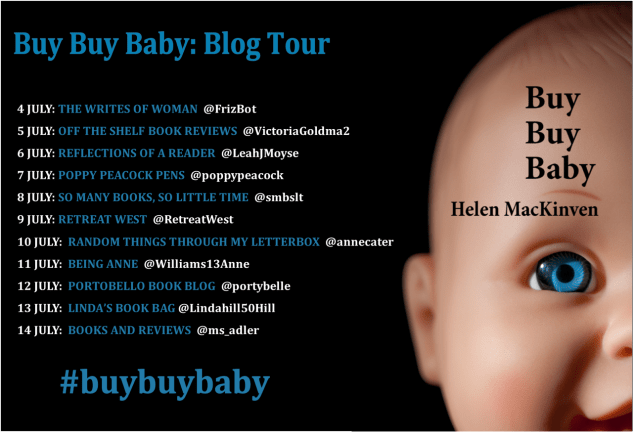
You can find Helen on Facebook, visit her website and follow her on Twitter. You’ll also find more about and by Helen with these other bloggers:

blog tour 1

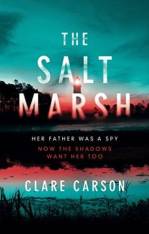
A Guest Post by Clare Carson, author of The Salt Marsh

cover

I’m delighted to be part of the launch celebrations for The Salt Marsh by Clare Carson. The Salt Marsh was published by Head of Zeus on 16th June 2016 and is available for purchase in e-book, hardback and paperback from Amazon, Waterstones, W H Smith and directly from the publisher as well as to order from all good bookshops.

Today Clare has kindly provided Linda’s Book Bag with a guest post all about the inspiration of birds and her protagonist Sam.

The Salt Marsh

cover

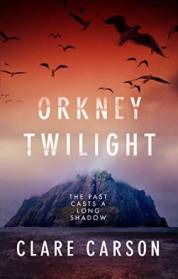
A haunting thriller set in the windswept marshes of Kent and Norfolk, from the author of Orkney Twilight

It is a year since Sam’s father died, but she cannot lay his ghost to rest. Jim was an undercover agent living a double life, and Sam has quit university to find out the truth about his work. Her journey will take her from the nightclubs of 80s Soho to the salt marshes and shingle spits of Norfolk and Kent. Here, in a bleak windswept landscape dotted with smugglers’ huts and

buried bones, Jim’s secret past calls to her like never before. Now Sam must decide. Will she walk away and pick up her own life? Or become an undercover operative herself and continue her father’s work in the shadows…

Sam And Her Barn Owl

A Guest Post by Clare Carson

orkney

Birds feature in both the novels I have written – Orkney Twilight and The Salt Marsh. These are stories about Sam, the daughter of a police spy. The links between birdwatching and spying are numerous. Many spies have been keen birdwatchers. The quiet skills of observation and identification are common to both. In spying slang, a birdwatcher is a spy. But the main reason birds appear in my books is because a sense of place is part of all thrillers and, as far as I’m concerned, birds are part of every place.

I love watching birds, but I’m no twitcher – I don’t always have a pair of binoculars to hand and I wouldn’t go out of my way to spot a rare species. I prefer the serendipity of finding birds in unexpected places. I came across an off-course whimbrel in London’s Saint James’ Park when I was taking a breather from the office because I was fed up with my job. I was eyeballed by a kestrel which had landed on the balcony of my south London flat one morning when I was beginning to wonder what on earth I was doing there. A head-banging pileated woodpecker cheered me up when it appeared in the garden of the unfurnished Washington D.C. house I’d just moved to, after travelling across the Atlantic with two toddlers in tow.

In The Salt Marsh, Sam feels a particular kinship with barn owls. I’ve had three close encounters with a barn owl. The first was on holiday in Corsica with my husband, tipsily swaying back late one night from a restaurant along a dark mountain road, we almost tripped over a pair of round eyes staring up from the tarmac. A barn owl chick had fallen from its nest, Disneyesque in its white, fluffy cuteness. We stood guard, flagging down approaching cars and asking them to wait as it took its bearings, hopped away and disappeared in the maquis.  The second barn owl was in Norfolk. We had been to visit an old friend who had bought a house in the middle of nowhere. Driving back in the dark we lost our way, pulled over to look at the map and caught the wise bird in the headlights, sitting on a gate post. It couldn’t be bothered to budge and watched with disdain as we argued about which C road we were on.

The third barn owl was in Norfolk again – out on the north coast. The first evening of a summer holiday after a tetchy day stuck in traffic, I dragged my family with me for a walk. As we reached the path across the marsh, the ghostly bird swept by our heads, its blunt face glowing in the dusk. It stopped and hovered a few feet further on, wings flittering like a moth, before it gave up on whatever creature it had been tracking, swooped away and vanished in the dark. When I was searching for a bird which would provide Sam with solace in The Salt Marsh, this was the one that appeared in my mind.

About Clare Carson

clare

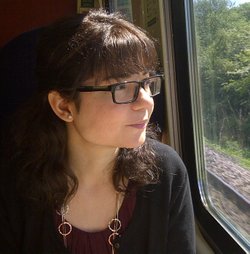
Clare Carson is an anthropologist and works in international development, specialising in human rights. Her father was an undercover policeman in the 1970s. She drew on her own experiences to create the character of Sam, a rebellious eighteen year old who is nevertheless determined to make her father proud.

You can follow Clare on Twitter and find out more with these other bloggers:

IMG_20160708_164506

In Praise of the Fairy Story, A Guest Post from Valerie-Anne Baglietto, author of Four Sides to Every Story

four sides

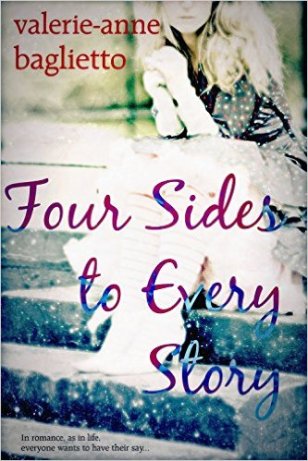
Although it doesn’t feel like it, I’ve only been blogging just over a year which means that I have missed several great books and today I’m featuring one of those that slipped past without me noticing it last year. Valerie-Anne Balietto’s Four Sides to Every Story was published by Novelistas Ink on 24th June 2015 and I’m delighted to have a slightly belated guest blog from Valerie-Anne to celebrate that birthday.

Four Sides to Every Story is available for purchase here.

Four Sides to Every Story

four sides

If you found ‘the one’ would you know it straight away, or would you need a little push in the right direction?

What if there was someone like Lily Rose Whyte in your life, whose sole aim was to help you? Someone who could jiggle fate and fortune in your favour, without you even realising.

And what if you live in a sleepy Cheshire village where nothing much seems to happen, except suddenly one summer, everything does. Your life is turned upside down and inside out. As we all know, love has a habit of doing that.

But hold on. Slow down. Because what if – for once – Lily’s got it wrong? About as wrong as she can get. What would you do then?

Don’t worry, though. Life isn’t a fairy tale, and magic doesn’t exist. So, as long as you don’t read this book, and you never meet Lily Rose Whyte, you’re perfectly safe.

Aren’t you…?

In Praise of the Fairy Story

A Guest Post by Valerie-Anne Baglietto

I’ve always had a fascination for fairy tales, which isn’t surprising really, as they’re the first stories we usually hear as children. They’ve beguiled their way into many a wannabe writer’s head, and even when, as adults, the trappings of the stories are shrugged away, the basic plotlines will always remain. Writers use them without realising most of the time. As a child, before Enid Blyton came into my life, my shelves groaned with Ladybird books, bought as little treats and rewards by my parents. But one of the most influential books of my childhood came from a family friend. To this day it’s a firm favourite, and one I’ll always have out on display. A compilation of fairy tales sensitively retold by Bridget Hadaway, with the most beautiful illustrations – just look at that fairy godmother’s hat!

fairy tale pic

I think most of us are aware of the long evolution of folk tales and fables over the centuries, so for the purpose of this post, I’m focussing on the versions in living memory. I’m also not going to drone on about feminism, because I think these stories have been analysed to death on this score. I read them as a child, and I didn’t grow up waiting for some man to save me. I’m in favour of the sexes helping each other equally – or is that too radical an opinion?

I also don’t think watching Disney Princess movies is warping my daughter in any way, although there’s a philosophy that opines differently. The girls are the main characters, aren’t they? They do things that I admire. Walk into parties on their own without flinching. Stand up to beastly men and even more beastly older women. Read a lot to expand their minds. Sing loudly in public places, often to wildlife, unfazed by the fact someone might hear them. They fall in love, and are loved in return, and they make sacrifices for those they love, be they lovers or family members. For pity’s sake, let’s not get nitpicky. Let’s just have fun and enjoy them.

Love and sacrifice go very much hand in hand in my books, too, with the sacrifice usually securing some sort of redemption and the happy ending we’ve come to expect. I think that’s one of the reasons we need fairy tales in our lives. Even the simplest of them carry a moral, a message. Of course, the morals used to be depicted in a much darker way in the earlier tales, and the cautionary messages have evolved to keep up with the times.

My readers want the enchantment I try to inject into my books, and I know this because they often tell me so, but at the same time I like to give them something to chew on. The idea for a novel entitled Four Sides to Every Story came to me early in 2012, and as the concept snowballed over the next few months, I began to think of who the four narrators would be. It was always going to be embedded in the real world but with recognisable fairy tale elements, although not all the narrators would necessarily be reliable. A fashionable trend nowadays, as any bookworm will know, yet why should they be the prerogative of psychological thrillers? I decided I wanted to have a castle in the book, and set it in a picturesque village called Fools Castle (fictional, but located in Cheshire). There would be a ‘wicked’ stepmother. A cottage with wisteria curled around the door. An overgrown garden. A girl with ridiculously long hair. A lonely widower and an independent, dauntless heroine… Ideas from my childhood storybooks, basically. But once I’d set it all up, I wanted to divert the reader down a different path from the one they might have been expecting.

I think the notion of a fairy godmother being one of the main characters came from sitting around munching popcorn and devouring Disney movies with my daughter (terrible mother that I am). Movies like Enchanted, Tangled, Frozen, and especially Maleficent – which is Sleeping Beauty retold from the ‘evil’ fairy’s point of view. We also went to see the musical Wicked last year, which portrays the story of the Wizard of Oz from a different perspective. Although I’d finished writing Four Sides to Every Story by then, watching Wicked struck a chord. I had tried to do the same thing with my own story: subvert the plot, mess around with the old expectations, show how a familiar storyline can be turned on its head when narrated from a different character’s perspective.

four sides

While Four Sides to Every Story isn’t a retelling of an actual fairy tale, it probably references Cinderella the most, although it’s definitely not another in a long line of ‘Cinderella stories’. I think it’s safe to say we all know the recognisable thread of a fairy tale, and the way the story ought to unfold. But this time, it doesn’t. It starts going very wrong. The path to true love becomes treacherously rocky. And, oh, the fun I had once I got into my stride writing it!

And finding true love isn’t the end of the adventure. It’s really just a beginning. I hadn’t intended to write a sequel, but when my initial batch of readers came back to me to say they wanted more, my characters seemed to concur. The more I was asked, the more ideas that developed to take my story forward. So now I have a notebook full of fresh plot strands, and a prologue and an epilogue that have already made me cry. When I’m ready, and finished with my current project, I will be sitting down and filling in all the space in between.

To be honest, part of me is impatient to get back to Fools Castle. In a way, it’s a kind of homesickness. The book I’m working on now is more issue driven, and being written under a pen-name, and while it’s stretching me as a writer (always a good thing) I’m beginning to yearn to get lost in a good old fairy tale again. We all need to get lost in them sometimes. To be transported back to the thrill we felt when we were discovering the joy of reading for the first time. As adult bookworms, I think we get a unique kick from the memory of curling up in our comfiest childhood nook, learning to navigate a world of books, of imagination, of hope. I love being reminded of that. Sometimes, all it takes is a modern story to mention a glass slipper or an enchanted mirror, in passing, and I’m whisked back to that cosy childhood nook again.

Almost as if, by magic…

VA

About Valerie-Anne Baglietto

val

Valerie-Anne Baglietto wrote her first ‘book’ aged four. A story about a boy whose mother’s nose was incredibly long and spiral-shaped. Over twenty years later, her first published novel The Wrong Sort of Girl won the Romantic Novelists’ Association New Writer’s Award. Recently she was shortlisted in the 2105 Love Stories Awards.

Valerie-Anne contributes to the Novelistas Ink blog and lives in a very full house in North Wales. By day, she can be found hunched over her desk, where, like most writers, she consumes too much coffee. By night, she clears up after her husband, three children, a Pomeranian with delusions of grandeur and a perpetually ravenous guinea pig.

Occasionally she sleeps.

Find out more by visiting Valerie-Anne’s website, reading the Novelistas blog and following her on Twitter.

A Guest Post by Daisy James, author of If The Dress Fits

If the dress fits

Recently I had the pleasure of meeting Daisy James at an author and blogger get together and she’s absolutely lovely, so it gives me enormous pleasure to be part of the paperback launch celebrations for her latest novel If The Dress Fits. If The Dress Fits is published by Carina and is available in e-book now and in paperback from 14th July 2016. If The Dress Fits can be bought here.

Today Daisy is explaining all about the inspiration for If The Dress Fits in a very personal guest blog.

If The Dress Fits

If the dress fits

She might be the most famous person in the country, but no one even knows her name…

Callie’s exquisite, glittering silk gown has been shortlisted for the celebrity wedding of the year. But just as all her dreams are coming true, disaster strikes!

Leaving behind the bright lights of London, Callie is forced to return home to sleepy Althorpe. And there’s one man she hopes to avoid – the childhood sweetheart who turned her life upside down. But now she’s back, is it finally time to stop running?

Yet, as Callie faces her past, a Cinderella-like hunt begins for that perfect, pearl-embroidered dress, mysteriously submitted without a name…

The Magical Emporium

A Guest Post from Daisy James

“You can take a girl out of Yorkshire, but you can’t take Yorkshire out of a girl”

I’m proud of being ‘a Yorkshire lass’ as my father used to call me, so I just had to set one of my stories in my home county. I grew up in a tiny village near Knaresborough in North Yorkshire very similar to Allthrope in my new novel, If The Dress Fits. The village had a few shops; a baker’s, a hardware store, a florist’s, but the magical emporium that drew me to its window every day on my way home from school was not the sweet shop, but the haberdashery shop.

felt

Perhaps this particular fascination with becoming an all-round seed pearl Princess was inevitable – hardwired into my genes, you might say – as my mother, before she was married, worked in the haberdashery department of a large department store. She too loved nothing better than to immerse herself in a pile of fluffy fabrics or a pyramid of yarn. One of my most abiding memories is of my mother laughing as she related  her favourite story about the diverse questions, posed mostly by men, that would send her, and her young colleagues, off into fits of inappropriate giggles:

Is this the department where I can get felt?

Or  

Can I get felt here?

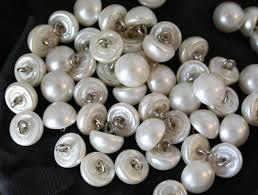
So, I would stare through the dusty window – sometimes it would have a sheet of yellow cellophane draped over it to protect the display from harsh sunlight which was an event in itself – and dream of the weekend when my Mum would take me to the little haberdashery shop to spend my pocket money on a length of ribbon or a card of pearly buttons. My sister thought I was crazy, her pocket money was reserved only for the very best mix-up the sweet shop had to offer!

buttons

I would take my time deciding what to choose, marvelling at the spools of ribbons, intricate lace and trimmings neatly displayed in a kaleidoscope of colours, at the zips dangling from the carousels like lizard’s tongues alongside the elastic and press-studs. I’d run my fingers over the various yarns – mostly natural wools, cottons or mohairs – none of that modern acrylic my grandmother would swear could give you an electric shock. I was truly in my personal version of paradise as I flicked through the pattern books to select a cardigan that maybe one day, in the distant future, I might be able to attempt myself.

zips

Many of these little jewels of the high street have disappeared now – I know my childhood Aladdin’s Cave has – to be replaced by trendy wine bars and the ubiquitous coffee shops. But maybe, just maybe, there is an upsurge of interest in all types of crafting, not just of the knitting and sewing variety, but of embroidering, cross-stitching, card-making, not to mention the current obsession with all thinks culinary. I, for one, celebrate that renewed passion for hand-made items, for there is nothing better than spending a quiet half hour clicking the needles to disperse the stresses of a busy day at the computer screen.

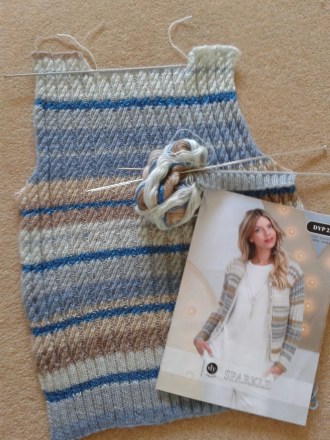
Want to know what I’m knitting now?

20160606_094426

What do you think?

I’d love to hear about your own projects.

About Daisy James

Photos of me - bio 023

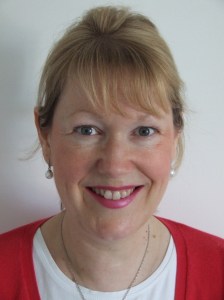
Daisy James is a Yorkshire girl transplanted to the north east of England. She loves writing stories with strong heroines and swift-flowing plotlines. When not scribbling away in her peppermint-and-green summerhouse (garden shed), she spends her time sifting flour and sprinkling sugar and edible glitter. Her husband and young son were willing samplers of her baking creations which were triple-tested for her debut novel, The Runaway Bridesmaid. She loves gossiping with friends over a glass of something pink and fizzy or indulging in a spot of afternoon tea – china plates and teacups are a must.

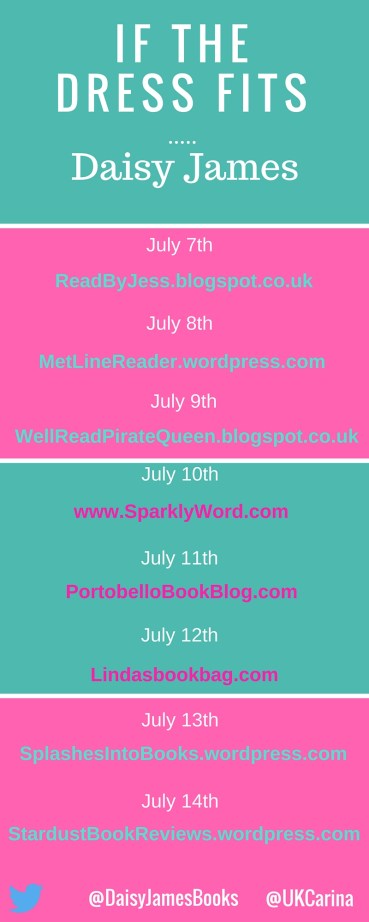
You can find all Daisy’s books here and you can find Daisy on Facebook and follow her on Twitter.

There’s more about, and from, Daisy with these other bloggers:

Blog Tour banner

Heroes and Villains. A Guest Post from Peter Worthington, author of The Eden Tree

eBook Cover Peter Worthington

With such a personal backround to the story, it gives me great pleasure to be part of the launch celebrations for The Eden Tree by Peter Worthington. The Eden Tree is published by Clink Street Publishing on 19th July 2016 in e-book and paperback and is available to purchase from online retailers including Amazon and to order from all good bookstores.

Today, Peter is telling Linda’s Book Bag readers all about why he prefers to write from a hero’s perspective.

The Eden Tree

eBook Cover Peter Worthington

Mark Twain said, “The two most important days in your life are the day you are born and the day you find out why.” John James Morgan knew the day he was born. Two days before his sixty-first birthday he found out why.

John is a happily married businessman, father and grandfather, living in Cheshire, in the heart of England. Happy, that is, until his family face a crisis. A terminal one. At the local market, a flower-seller tells John a story that changes his life. Assured his destiny is in his own hands, John crosses the globe in pursuit of a religious artefact which has remained hidden for two thousand years. Presented with an antique box containing maps, parchments and a bag of leaves, John returns to the UK and witnesses a miracle. With the box in his possession, John and his family find new friends and enemies; lives are threatened and people die, although some will be healed. With the help of many different people, from all walks of life, John’s journey will finally lead him to the discovery of an extraordinary and mysterious tree. But what will this Eden tree mean to John, his family, their faith and their future?

The Eden Tree is author Peter Worthington’s first novel; a fictional account based on his own experiences with his son, John Wesley, who underwent treatment for cancer but sadly passed away shortly after his seventh birthday. The Eden Tree has allowed Peter to give his much-loved son “a happier ending.”

Heroes or Villains? Which is easier to write and why?

A Guest Post from Peter Worthington

The question appears easy to answer but actually isn’t. Even with a central hero in a storyline an author needs to make a backdrop for that heroism. In that backdrop there is often the murky world of the villain. For a writer I find it a bit like cleaning the drain. We know it’s unpleasant but the job has to be done. Once the depraved character has spoken and behaved wickedly I can leave the stench and debris behind. Preferably on the page and not in my life!

An author has to write with authenticity from several points of view. I prefer to write as a main character as a hero, a protagonist who may have several villains hindering his quest. Their villainy becomes part of the plot. Will our hero foil them? Or will he become like them?

It forms easier in my mind to imagine my character as a good guy as that is how I see myself! Often as an author I need to explore “the dark side” but don’t like to remain in that mind-set. Does it taint an author when he or she steps into the villain’s shoes? Can a writer imagine evil deplorable deeds and behave in print as villainous and then easily switch to the hero? I suppose since childhood we have developed play-acting skills and can disassociate ourselves from the hateful villain.

It is heart-warming when a reader tells me that they appreciate a character. In my writing I try to reveal the caring hero. One who feels he serves a higher good. But I am aware that some characters in my novel are repulsive and I hope readers don’t believe that I admire those evildoers. Soap opera stars who play the villain are vilified in real life. That is scary!

In case anyone thinks I am becoming a monk, I have written short stories with my main character as a villain. For example, “The cell was eight feet wide” was about a man escaping from jail. Despite his unsavoury character I had one reader tell me she admired him and wanted another episode! In another flash fiction: “Insanity: my family says I am” a teenager escapes from an asylum and creates chaos. The surprise ending shocked many readers.

Often in writing an author will have his protagonist make choices. A hero will make the brave, praiseworthy and altruistic choices. I believe that readers feel better when they see that despite some flaws their hero is one that embodies trust. One that they admire and seek to copy. It is easier to write from a hero’s perspective as we all need noble embodiments to imitate.

In my novel The Eden Tree I have created some heroes and villains and have tried to talk and think the way that portrays them. Greed, selfishness, prejudice and criminality all are evidenced in my villains. They are traits I recognise and seek to avoid. It is interesting that no one who has read my novel so far finds the actions of James and his friends as wrong, and yet they are hackers. When I wrote the novel I considered the hackers as heroes in the story. Heroes can have weaknesses.

With all his roughness I also enjoy writing about Sean, one of my main characters, who is tough but vulnerable. A hero. It is easier to write about a military type who won medals than a lowlife who fled the battlefield. It is also easier to write about my hero John who chases his destiny and brings benefits to all.

So in the main I find it easier and I prefer to write about a hero as I identify with the desires, beliefs and actions of a hero. I don’t think an author places themselves or their characters in the role of villain easily. At least I don’t. I prefer my readers to feel that they can associate with my protagonist and cheer him on. Most of us like the ‘bad guys’ to get what is coming to him, and as an author I am the same. It heartened me when my editor wrote “YES!” in the margin when editing my novel. She found empathy with one of my characters’ actions and that pleases any writer.

About Peter Worthington

Today Peter Worthington lives in Bromsgrove, Worcestershire with his wife Margaret. Peter has enjoyed a bright and varied career as a church minister, financial adviser and internet consultant. Now retired he is busier than ever thanks to his three grandchildren, studying for an Open University Degree in Creative Writing, voluntary work, playing World of Warcraft, serving on the board of a housing association and writing. He has previously published short stories in a number of Christian magazines.

For more information you can follow Peter on Twitter or visit his website. There’s is more about and from Peter with these other bloggers:

Peter Worthington_Banner

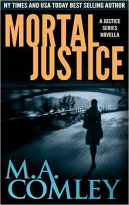
Mortal Justice by M A Comley

mortal justice

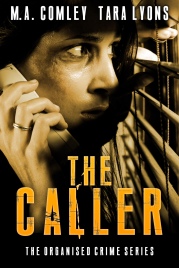
I recently featured Mel (M A) Comley on Linda’s Book Bag with a guest post and review of her jointly authored crime thriller The Caller with Tara Lyons. You can read that post here.

TheCaller_ebook_Final

Today I’m reviewing Mortal Justice, a crime novella that is part of Mel’s Justice series and which will be released on 15th July 2016. Mortal Justice is available for purchase here.

Mortal Justice

mortal justice

A 12,000 word Justice short novella to be read between Cruel Justice and Impending Justice from NY Times and USA Today bestselling author M A Comley.

cruel justice

What would you do if you saw a stranger’s life in danger?

DI Lorne Simpkins and her partner, DS Pete Childs investigate a violent attack. Lorne becomes increasingly concerned when her star witness, Donna Moran, goes missing. She knew Donna was petrified, but has Donna just gone into hiding, or has she been taken by the offenders?

impending justice

My Review of Mortal Justice

When Donna sees a man being beaten up in an alleyway whilst on her way to work, little does she realise how her own life will be in danger.

Not having read the other books in the Justice series I wasn’t sure if reading a novella that fits between two other books would work, but I enjoyed this fast paced and exciting story. It didn’t make any difference to me that I hadn’t encountered the main characters Lorne and Pete before, as I instantly got a good impression of their working relationship and enough of Lorne’s private life to feel an interest in them as people straight away. I’m now interested to go back and read the other books in the series to find out more, which I think shows how skilful a writer M A Comley is.

I don’t much like reading about physical violence but I thought the level of violence portrayed in Mortal Justice was perfectly handled. There’s a realism without gratuity that I really appreciated. I’d have liked more detail about the settings but understand that this is a bridging novella so space is short. I liked the variety of structure with lengthier paragraphs to provide sufficient plot and character detail to give depth to this well-written novella, and found the snappy briefer sentences really added to the tension and pace. M A Comley knows just how to keep the reader’s attention in a plot that doesn’t let up for a moment.

Alongside the crime thriller plot I thought the themes were an excellent, if sad, reflection of many aspects of today’s society. So often crimes are witnessed but not reported and the reasons the gang commit murder at the beginning are frequently those we read about in the press (though I don’t want to say more for fear of spoiling the story). There’s quite a lot to reflect on in this quick read and I think it’s impressive that M A Comley has been able to incorporate so much thought provoking material so subtly.

Readers who still expect a pacy and exciting read from their novellas will be delighted with Mortal Justice. I’d recommend it.

About M A Comley

Find out more about Mel on her website, find her on Facebook and follow her on Twitter. You’ll find Mel’s books for purchase on Amazon UK and on Amazon US.

mel header 9_30_2015


Release Day Blitz What Happens At The Beach by TA Williams

TAWilliams-Beach-RBBanner

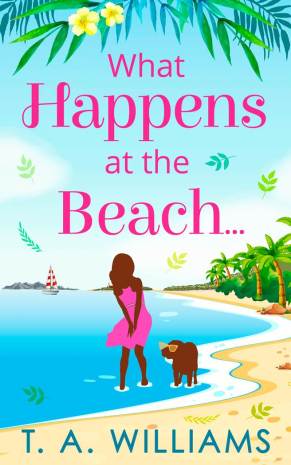
TA Williams is absolutely lovely, and so are his books which is why he’s the most featured author on Linda’s Book Bag. Today I’m delighted to be sharing the details of his latest What Happens in… book, What Happens at the Beach which is another standalone from the series. Released today by Carina UK, an imprint of Harper Collins, What Happens at the Beach is available for purchase on Amazon UK and Amazon US.

What Happens At The Beach

TAWilliams-Beach-Cover

For the perfect summer romance…

It’s finally time for Natalie Dryden to decide what she really wants! After ditching her sparkling engagement ring, and her ghastly fiancé, she jets off for the sun-kissed shores of Southern France – the only place that has ever truly felt like home. For the first time ever, Natalie is determined to forget all about men and follow her dreams!

…head to the French coast!

Only, avoiding the male population isn’t quite so easy, especially when she meets smooth-talking Philippe and gorgeous fisherman, Remy! But then Natalie, quite literally, bumps into brooding millionaire Mark whilst swimming in the glittering azure-blue bay – and her life is turned upside-down.

Love might be off the cards for Natalie, yet suddenly she finds herself in her dream job and working with her dream man! But is it all too good to be true…?

About TA Williams

TAWilliams

Firstly, my name isn’t T A. It’s Trevor. I write under the androgynous name T A Williams because 65% of books are read by women. In my first book, Dirty Minds one of the (female) characters suggests the imbalance is due to the fact that men spend too much time getting drunk and watching football. I couldn’t possibly comment. Ask my wife…

I’ve written all sorts: thrillers, historical novels, short stories and now I’m enjoying myself hugely writing humour and romance. Romantic comedies are what we all need from time to time. Life isn’t always very fair. It isn’t always a lot of fun, but when it is, we need to embrace it. If my books can put a smile on your face and maybe give your heartstrings a tug, then I know I’ve done my job.

I‘ve lived all over Europe, but now I live in a little village in sleepy Devon, tucked away in south west England. I love the place. That’s why you’ll find leafy lanes and thatched cottages in most of my books. Oh, yes, and a black Labrador.

I’ve been writing since I was 14 and that is half a century ago. However, underneath this bald, wrinkly exterior, there beats the heart of a youngster. My wife is convinced I will never grow up. I hope she’s right.

Find out more about Trevor on his website, on FacebookGoodreads and Amazon. You can also follow him on Twitter.


In Praise of Vampire Literature with Chloe Hammond

Darkly Dreaming

I’ve set myself a challenge in Linda’s Book Bag to consider a wider range of genres and to feature books I don’t normally read. Today I’m pleased to welcome Chloe Hammond to try to persuade me why vampire fiction is a genre for me! Chloe’s book Darkly Dreaming, the first in the Darkly Vampire Trilogy is available for purchase in e-book and paperback on Amazon UK, Amazon US and Mineeye.

Darkly Dreaming

Darkly Dreaming

Rae and best friend Layla are in France, escaping the wreckage Rae created when she left her unhappy marriage. She’s escaping the misery she created for herself by dreaming her life away.

At a street festival they are infected with the Vampire virus by a rebellious vampire and Rae finds herself living a new and terrifying existence. She struggles to retain her essential self, which she has only just re-discovered, but she is struggling against new and powerful drives and desires. She and Layla are taken to join the vampire Pride by Guillaume, the Pride Leader. He explains their new evolution into stronger, faster, more intelligent beings, which heal quickly, and only feed on blood, but they are not the vampires of legend.

They are not undead, and they are not immortal…

Decide On Something Darkly Different?

A Guest Post from Chloe Hammond

Don’t like vampire books? Well, no neither do I, in the main. So why on earth did I write one then? I wrote Darkly Dreaming because I remember when I was a teenager and books by Anne Rice and Poppy Z. Brite completely absorbed me. Then I out grew them. I read Anne Tyler, Margaret Atwood and Faye Weldon instead. Occasionally I would try something paranormal, but most of the time I found them trite. Most of the vampire books seemed to be Mills and Boons with fangs, and I often couldn’t even finish them. I’m a slow reader, which makes me a fussy reader, if I can’t engage quickly with the characters, or the writing makes me flinch I stop reading. A book takes me three or four days to read, at least, and there are so many good ones I’m not wasting my hard won leisure time on bad writing, overly perfect characters, or predictable stories. I want special, every single time.

Toni Morrisette said that if there’s a book you want to read, and you can’t find it, then you need to write it, or words to that effect. I read Deborah Harkness, and enjoyed her writing, I wanted more. I wanted older, fatter, uglier, life weary heroines. I wanted them clumsy, funny, and friends with black people, white people, gay people, straight people. I wanted imperfect heroines I could actually relate to.  You see, Darkly Dreaming isn’t just a book I thought of, it came to me as terrifying nightmares.

The sort of nightmares where you are too scared to poke your foot over the end of the bed, or even reach your hand out of the duvet to turn your lamp on. So I wrote out these scenes, and I took people I know, and I used their personalities as templates. It is true what they say about your characters developing a life of their own, Rae and Layla put their own twist on what I wanted them to say and do, so flaws developed, small cracks in their characters that were in place ready for something that happens in book two or three.

Initially I wrote in secret, but as my confidence grew, I told people. My mother wanted to read it. Oh lord. There’s lots of rude bits. I told her this, and she pointed out that without rude bits I wouldn’t have been born. Urgh. So I gave her an early draft to read, one without the prologue, and was so worried about the sexy bits I completely forgot to tell her it was a vampire story. My mother doesn’t read horror, or fantasy, or any sort of dark fiction, never has. She loved it, even though it gave her nightmares. She said she actually enjoyed the vampire nightmares, because it was more exciting than her normal dreams about trying to catch the correct train on time.

She told me she was completely absorbed in the woman’s contemporary literature novel of two women reaching forty and reassessing their lives, and then all of a sudden, wham, there’s vampires. She said the story was so well characterised and believable that she found the vampire viral infection and the character’s reactions to their new existence completely conceivable. She explained, that it isn’t a story about vampires, it’s a story about two women, with very distinct personalities, who stumble into a terrifying adventure, which could only happen to them, because it is created by their reactions to their circumstances.

If you read the reviews of Darkly Dreaming on Amazon you’ll see that several of my readers are people who normally avoid the genre all together, or are completely jaded by the surplus of cloned stories available. Yet these are the readers who seem to have enjoyed my book the most, who have the deepest emotional reactions to it. I was told I have written vampire literature, but I felt that sounded arrogant until I read the definition of literature that described it as being character driven: often the biggest plot development being a change in the characters interior world, rather than exterior. The definition of dark fantasy is difficult to pin down, but is consistently referred to as being the place where the reader has sympathy with the monster.

So, I like to class Darkly Dreaming, Book 1 of The Darkly Vampire trilogy as Dark Literature; and if you fancy investing 99p to see if I’m right, to see if I’ve managed to write a vampire book that appeals most to people who don’t like vampire books, I’ll be very grateful. And if you could drop me a little review, letting me know what you thought, I’ll be the happiest author in town.

About Chloe Hammond

Chloe Hammond

Born in Liverpool, Chloe Hammond grew up in West Wales. The family didn’t have a television, so she was forced to overcome her difficulties with the written word, and books became her escape of choice. She quickly became addicted. Chloe studied Behavioural Sciences at the University of Glamorgan, but pestered her lecturers to be allowed some modules of Creative Writing.

After university she embarked on an all-encompassing vocation in support work. For twenty years Chloe worked with the homeless, refugees, vulnerable women, and disadvantaged teenagers.

She always planned to write- life just got in the way. Then Chloe found herself losing her joie de vivre, she was diagnosed with anxiety and depression. She needed to completely change her life, and she needed to be open about her diagnosis. Usually very self-sufficient, she refused to give the depression the isolation it craves. She feared judgement, but instead she discovered gentle compassion and support. Chloe finally made time to write again. Writing soothes and grounds her; exhilarates and stimulates her.

She is happily married and has been for eleven years. She lives with her husband in little house in the Welsh seaside town of Barry, with great views over the fair and out to sea. They have two rescue dogs, Bonnie and Bella and a fat and fluffy cat called Coco. Chloe apologises for her poor quality author photo, but she utterly hates having her photo taken, and looked slightly less deranged in this one than all the others.

You can follow Chloe on Twitter, find her on Facebook and on the Darkly Dreaming Facebook page. There’s also more on Goodreads and Tumblr.