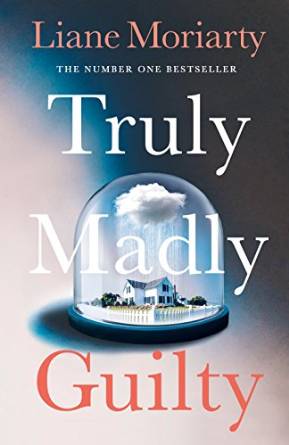
Truly Madly Guilty by Liane Moriarty

Truly Maddly Guilty

I have to thank Lovereading for my advanced reader copy of Truly Madly Guilty by Liane Moriarty in return for an honest reader panel review. Truly Madly Guilty is published by Michael Joseph, an imprint of Penguin Books on 28th July 2016 and is available from Amazon, Lovereading, Waterstones, Barnes and Noble, W H Smith and to order from all good bookshops.

Truly Madly Guilty

 Truly Maddly Guilty

Despite their differences, Erika and Clementine have been best friends since they were children. So when Erika needs help, Clementine should be the obvious person to turn to. Or so you’d think.

For Clementine, as a mother of a two desperately trying to practise for the audition of a lifetime, the last thing she needs is Erika asking for something, again.

But the barbecue should be the perfect way to forget their problems for a while. Especially when their hosts, Vid and Tiffany, are only too happy to distract them.

Which is how it all spirals out of control…

My Review of Truly Madly Guilty

Sam and Clementine join old friends Erika and Oliver at a barbeque with Vid and Tiffany after which none of their lives will ever be the same.

Before I begin this review I must point out that I have just read what for me was a stunning series of books that have touched me mind and soul so I feel that Truly Madly Guilty may have suffered in comparison.

Truly Madly Guilty is an accurate, damning and witty depiction of middle class lives. There are great touches of humour and an almost wicked accuracy in the relationships presented. However, I was expecting a gripping thriller and whether it was my expectations or the narrative itself, but Truly Madly Guilty didn’t ignite any emotional involvement within me.

Well written and intelligent, the writer’s craft in Truly Madly Guilty is obvious, and I appreciated the skill with which it is written. But somehow I felt as if I were reading with detachment. I didn’t warm to the characters and didn’t much care what happened to them until the final fifty pages or so of the novel when the truth behind the facades was finally revealed.

I found the overt references to the day of the barbeque became too frequent so that I was irritated rather than enjoying a build up of tension or enjoying an in joke between reader and author. Once the day had arrived then I felt more in tune with the rhythms of the narrative and enjoyed it more.

Don’t get me wrong. This is an incredibly well written book, deftly plotted with good development of character and a truly insightful understanding of what happens behind closed doors in marriages and families. It just wasn’t a book for me on this occasion.

About Liane Moriarty

You can find Liane on Facebook, or visit her website.

Strong Women by Michelle Moran, author of Mata Hari

Mata hari

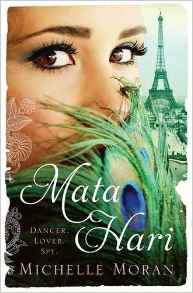
I am delighted to be part of the launch celebrations for Mata Hari by Michelle Moran. Mata Hari is published by Quercus on 28th July 2016 and is available for purchase from Amazon UK, Amazon US, W H Smith, Waterstones and directly from the publisher.

With such an interesting character at the heart of Mata Hari, I’m thrilled to be featuring a guest post from Michelle Moran today all about strong women.

Mata Hari

Mata hari

Paris, 1917. The notorious dancer Mata Hari sits in a cold cell awaiting freedom . . . or death. Alone and despondent, Mata Hari is as confused as the rest of the world about the charges she’s been arrested on: treason leading to the deaths of thousands of French soldiers.

As Mata Hari waits for her fate to be decided, she relays the story of her life to a reporter who is allowed to visit her in prison. Beginning with her carefree childhood, Mata Hari recounts her father’s cruel abandonment of her family as well her calamitous marriage to a military officer. Taken to the island of Java, Mata Hari refuses to be ruled by her abusive husband and instead learns to dance, paving the way to her stardom as Europe’s most infamous exotic dancer.

From lush Indian temples and glamorous Parisian theatres to stark German barracks in war-torn Europe, Moran brings to vibrant life the famed world of Mata Hari: dancer, courtesan, and possibly, spy.

Strong Women

A Guest Post by Michelle Moran

Writing about strong women is something that comes naturally to me. My mother is a strong woman, as was her mother before her, and I like to think that I will pass on this characteristic to my daughter as well.

Yet I never anticipated writing historical fiction until I participated in my first archaeological dig. It was there that I first started thinking about the women of our past. I had always known that I wanted to be a writer, and suddenly it seemed that I had come across something that resonated with me–the lives of historical women.

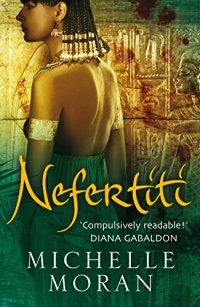
Nefertiti

It just so happened that after this trip I went to Berlin and visited the museum housing Nefertiti’s limestone bust. Face to face with one of the greatest beauties to have ever lived, I was captivated. She looked not just beautiful, but strong. Powerful. I wanted to know who she was. I began the research into her life and discovered as I went that she had indeed been a powerful woman–one who’d inspired strong emotions when she lived over three thousand years ago. Those emotions had been so strong that the men who ruled after her tried to erase her name from history.

I’m fascinated by women whose lives have been obscured by both jealous rulers and time. Resurrecting them through literature has become a passion of mine and I hope that my latest novel, Mata Hari, will help do exactly this for Margaretha Zelle, known to the world as Mata Hari.

About Michelle Moran

Michelle Moran’s experiences at archaeological sites around the world first inspired her to write historical fiction. She is the author of Nefertiti and its standalone sequel The Heretic Queen, as well as Cleopatra’s Daughter and The Second Empress. She lives in Texas.

You can find out more about Michelle Moran on her website , on Facebook and with these other bloggers:

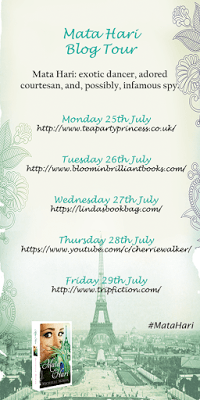
Mata Hari Blog Tour Poster (2)

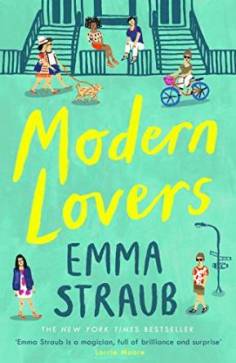
Modern Lovers by Emma Straub

modern lovers

I’m indebted to Gaby Young at Penguin Random House for a copy of Modern Lovers by Emma Straub in return for an honest review. Modern Lovers was publisheed by Michael Joseph, an imprint of Penguin Books on 28th June 2016 and is available for purchase from Amazon, Waterstones, W H Smith, Foyles and from Hive.

Modern Lovers

modern lovers

Friends and former college bandmates Elizabeth and Andrew and Zoe have watched one another marry, buy property, and start families, all while trying to hold on to the identities of their youth. But nothing ages them like having to suddenly pass the torch – of sexuality, independence, and the ineffable alchemy of cool – to their own teenage offspring.

Back in the band’s heyday, Elizabeth put on a snarl over her girl-next-door smile, rich-kid Andrew let his unwashed hair grow past his chin, and beautiful Zoe was the lesbian all the straight women wanted to sleep with. Now nearing fifty, they all live within shouting distance in the same Brooklyn neighbourhood and the trappings of the adult world seem to have arrived with ease. But the summer that their children reach maturity (and start sleeping together), the fabric of the adult lives suddenly begins to unravel, and the secrets and revelations that are finally let loose can never be reclaimed.


My Review of Modern Lovers


Elizabeth and Andrew have a perfect teenage son, Harry. Married couple Zoe and Jane have a rather more wayward teenage daughter, Ruby. Life for all of them is about to become complex and confusing.

I really enjoyed this sharply observed study in what makes us human. Emma Straub knows exactly what each of her characters needs, hopes for and fears, whether they are a lesbian mother or a teenage virgin boy and she conveys that knowledge incisively but humanely so that the reader can’t fail to have sympathy for each of them. I have to confess that I found Andrew an idiot, but I’m sure he would not begrudge me that analysis if I were able to tell him so!

There were so many touches that made me smile as I understood completely the middle aged neuroses of those around 50 years old as they come to terms with the realisation they are no longer young. There’s real wit and humour too as all four adult characters face personal challenges. The past very definitely has a bearing on the present in the tangle of memory, shared experience and deceit so that any reader of a ‘certain age’ would find aspects that resonate in their own lives.

The narrative hinges over one summer as Jane and Zoe contemplate divorce and Elizabeth ‘helps’ the process. The plot plays second fiddle to brilliant characterisation with just a few events that have quite devastating results. Both teenagers, Harry and Ruby, reflect and echo the past mistakes their parents have made but prove themselves quite as mature as the adults.

It’s the character driven spats and arguments, the references to food, music and film and the naivety of the adults that make Modern Lovers such a fun read. Emma Straub explores fully the desire of us all to be loved, and I found Modern Lovers to be witty, brilliantly observed and entertaining with great insight into real life and real human beings. It’s no wonder Emma Straub is a best selling author in America – she will be here in the UK soon too.

About Emma Straub

emma straub

Emma Straub is the New York Times-bestselling author of The Vacationers, Laura Lamont’s Life in Pictures, and the short story collection Other People We Married. Her fiction and non-fiction have been published in The New York Times, The Wall Street Journal,Vogue, Elle, and Conde Nast Traveller, and she is a contributing writer for Rookie. Straub’s work has been published in fifteen countries.

You can follow Emma Straub on Twitter, visit her website and find her on Facebook.

Owl Song at Dawn by Emma Claire Sweeney

Owl Song email banner (3)

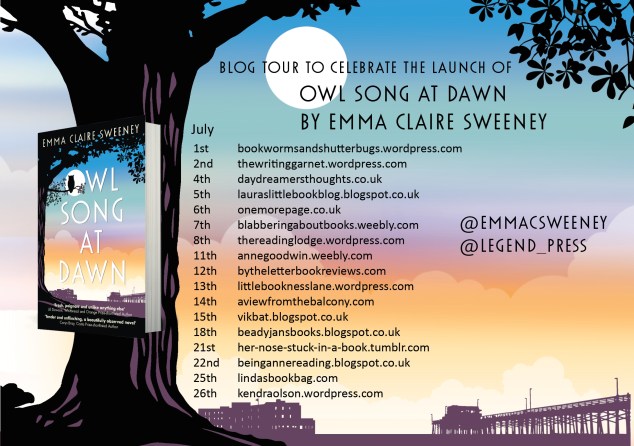
I’m absolutely thrilled to be part of the launch celebrations for Owl Song At Dawn by Emma Claire Sweeney.  Owl Song At Dawn was published by Legend Press on 1st July 2016 and is available for purchase in e-book and paperback on Amazon, from W H Smith, Waterstones and from all good bookshops.

Owl Song At Dawn

Owl Song

Maeve Maloney is a force to be reckoned with. Despite nearing eighty, she keeps Sea View Lodge just as her parents did during Morecambe’s 1950s heyday. But now only her employees and regular guests recognise the tenderness and heartbreak hidden beneath her spikiness.

Until, that is, Vincent shows up. Vincent is the last person Maeve wants to see. He is the only man alive to have known her twin sister, Edie. The nightingale to Maeve’s crow, the dawn to Maeve’s dusk, Edie would have set her sights on the stage all things being equal. But, from birth, things never were.

If only Maeve could confront the secret past she shares with Vincent, she might finally see what it means to love and be loved a lesson that her exuberant yet inexplicable twin may have been trying to teach her all along.

My Review of Owl Song At Dawn

Maeve Maloney runs a guest house for those with a range of abilities, keeping the past at bay by being busy. But when Vincent arrives on the doorstep, the past won’t stay away.

What a tour de force. Owl Song At Dawn is, quite simply, an outstanding novel. I’m not entirely sure that what I write about it will do it justice.

It took me a long time to complete as I had to read Owl Song At Dawn in short bursts because I found the intensity of the underlying emotions so overwhelming that I could only cope with a bit at a time. It broke my heart from the very beginning. There was something in the fierce love and desperate guilt that Maeve displays that captivated me and touched my soul. She is an incredible woman, flawed, proud, loving and so very lonely that I wanted to travel to Morecombe and hold her, to tell her ‘All’s all right now Linda’s here’.

The structure of the novel is incredible as we weave back and forth in Maeve’s life and memories. Underpinned by letters and emails (some of which made me rage) we get a full picture of exactly how Edie is in all her glory, even though she is only present in Maeve’s reminiscences. And this is what is so brilliant about Emma Claire Sweeney’s writing. Edie’s reported comments and sayings act almost like a Greek Chorus to enhance the readers understanding of events and characters in Owl Song At Dawn, but also their understanding of society both in the time the book is partly set and today. I thought it was a stroke of brilliance to write the past events about Edie in the present tense, because Edie is so much a part of Maeve’s very being.

As the layers of the past peel back, and all is revealed about events and relationships, the reader understands just how far we are shaped by our memories and how we carry misunderstandings and guilt with us to affect our present and our future. But along with the loneliness and guilt Maeve experiences, Owl Song At Dawn also gives us gentle tenderness and joy so that when the tears were streaming down my face it was as much with the positive emotions of hope and love displayed as through sadness.

I loved them all, Steph and Len, Dot and Zenka, Vince and Dave, even Frank and Mr Roper, but especially Maeve and Edie. They became so real to me I dreamt about them and having I’ve finished the Owl Song At Dawn I miss them and wonder what will happen now.

I cannot recommend Owl Song At Dawn highly enough, even though every time I think about it I want to weep. It is beautiful, emotional and moving.

You can visit Emma Claire Sweeney’s website and follow her on Twitter. There’s more about and from Emma Claire Sweeney with these other bloggers:

Owl Song at Dawn blog tour

Sandlands by Rosy Thornton

sandlands

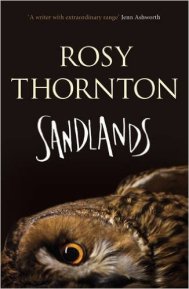
I’m delighted to be part of the launch celebrations for Sandlands, the lovely collection of short stories from Rosy Thornton which was published on 21st July 2016 by Sandstone Press. Sandlands is available for purchase in e-book and paperback on Amazon, from WH Smith and to order from all good bookshops.

To celebrate Sandlands, Rosy kindly agreed to be interviewed for Linda’s Book Bag and I have my review below.

Sandlands
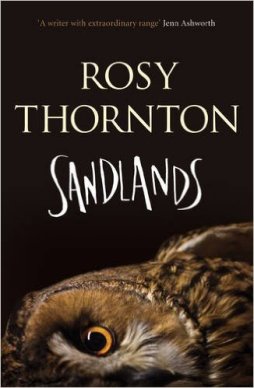
sandlands

From the white doe appearing through the dark wood to the blue-winged butterflies rising in a cloud as a poignant symbol of happier times, the creatures of the Suffolk landscape move through Rosy Thornton’s delicate and magical collection of stories. The enigmatic Mr Napish is feeding a fox rescued from the floods; an owl has been guarding a cache of long-lost letters; a nightingale’s song echoes the sound of a loved voice; in a Martello tower on a deserted shore Dr Whybrow listens to ghostly whispers. Through the landscape and its creatures, the past is linked to the present, and generations of lives are intertwined.

An Interview with Rosy Thornton

Hi Rosy. Thank you so much for agreeing to answer some questions on my blog about your writing and Sandlands in particular.

Firstly, please could you tell me a little about yourself?

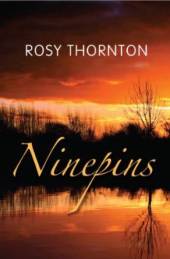
Hello Linda, and thank you so much for having me on your blog! I’m Rosy and I’m an academic lawyer by profession but over the past ten years or so have had a second, secret life as a writer of fiction. I have published five novels to date – one of which, Ninepins, won the East Anglian Book Awards prize for fiction in 2012 – and now with my new book, Sandlands, a short story collection.
nine

When did you first realise you were going to be a writer?

I always feel a fraud when I’m asked that question, because I sense I’m supposed to say I always knew I had to write. Most authors I’ve heard speaking at book events or on the radio were keeping diaries from the age of seven, and crayoning stories to read to their dolls. I don’t recall doing anything of the sort – I was much too busy reading what other people had written. In fact, I made it past the age of forty before it ever entered my head to attempt to write stories of my own. Put it down, if you wish, to a mid-life crisis!

(Oo. There’s hope for me yet then!)

Sandlands marks a departure for you from novels into the world of short stories. How did you decide write in this genre and what were the challenges you faced in comparison with longer pieces?

It’s funny, because I think my natural tendency as a writer is towards length. (I fear it may be a lawyer thing!) One publisher, rejecting my first attempt at a novel twelve years ago now, described my manuscript as ‘too wordy’ – a paradoxical concept when describing a book. (Too many words? Or simply the wrong ones?) But I know what he meant. Left to my own devices, I effuse. I found it hard enough at the beginning to tell a story in less than the space of a 120,000 word novel. Short stories, I thought, were required to be pithy, and pithiness wasn’t me. But then I had a go, and discovered what a liberation the short form can be. You don’t have to work out every detail of every character’s life, their back story and hopes for the future. You don’t need to construct a complex timeline, story arcs and intersecting subplots. You grab a big blank canvas, start in the middle and paint with intense concentration an interesting middle bit – maybe suggest the rest of the picture with a few broad brushstrokes here and there – and then that’s it, you’re done. The readers have all the fun of filling in the rest for themselves.

You’re from Suffolk and the landscape plays an important part in your Sandlands stories. How far do you think we are shaped as people by the landscapes we grow up in?

I’m sure the landscapes of our lives do shape us – and I’m sure as writers they also shape the stories that we tell. I could no more write a gritty novel in a run-down urban setting than I could street dance or tell you where to change for Turnpike Lane. I can do desolation – but it would be the flat and featureless desolation of the Cambridgeshire fens in Ninepins, or in Sandlands a salt grey dawn on the Suffolk marshes with only the curlew cries for company.

Sandlands is dedicated to your father, John Thornton. How did he inspire this collection?

My family moved to Suffolk with my father’s job when I was eight, so at that basic level he is responsible for my thinking of the place as home. But he was also a man who loved the countryside. His own father – my grandfather – was a farmer in Lincolnshire, and Dad chose to go to university while my uncle stayed to run the farm. But although Dad worked behind a desk he remained a countryman at heart, rearing hens and keeping bees, and foraging for fungi and wild herbs before such things became the fashion. He instilled in me an awareness of the natural world which I think finds expression in my writing, perhaps especially in Sandlands. So when he died quite unexpectedly, coming in for supper from a day’s gardening, two years ago when my stories were half written, it felt appropriate to dedicate them to his memory.

To what extent do you think your law background affects your writing? Is writing an antidote to law, a complement or are the two areas of your life completely separate?

I was joking earlier about the wordiness of lawyers, but it’s only half the truth. Being a lawyer, analysing statutory provisions and the fine print of judicial pronouncements, does tend to equip you with a fine forensic eye for words, for the fluidity or fixedness of their meanings. Lawyers cannot get away with using words loosely, lazily or inaccurately. We have to pick exactly the right one for every context. A misplaced semi-colon here or there can change the meaning of a document. And that precision is a very transferable skill, I think, from legal texts to fiction. It might be a different bank of words we’re choosing from, but storytellers need to select their words with just as much care as lawyers.

Family relationships are important in all your writing. Why do you choose to explore this theme so much?

I’m not sure ‘choose’ is the right word, Linda, for writers and their preoccupations. (It’s the wand that chooses the wizard, you know, and not the wizard who chooses the wand!) I don’t write crime, or thrillers, or (at least not recently, and never entirely) romance. I have no interest in portraying future worlds or warped political distopias. What that leaves is just people, really – and its people and their relationships that interest me. I’ve been both a daughter and a mother, so mothers and daughters are a particular recurring theme, but parents and children, husbands and wives, colleagues, neighbours, lovers, friends… this is life. What else is there to write about? In Sandlands, I also found myself exploring in more than one story the special bond between grandparent and grandchild.

You lecture at Emmanuel College, Cambridge. To what extent do you think writers need a formal education to be successful?

Not in the least, I’m certain of it. Of course higher education – all education – is a life-enriching, mind-expanding thing. Teaching, for me, is not just a living, it’s also a vocation. But do you need a degree to write a novel, or to write a good novel? Not at all. I think it would be very sad if someone lacked belief in their writing just because they didn’t do well at school. I was always rubbish at creative subjects. I could do the analytical stuff all right but was convinced I lacked imagination. A legal education, after all, is not an obvious qualification for becoming a novelist. But if you read a lot of fiction, if you love books, live and breathe books, then that’s the best foundation of all – whether or not you hold an MA in Creative Writing.

It might be said that your novels are very much ‘women’s fiction’. How do you react to this statement and is Sandlands a departure from the genre?

The truth is, I’d be bored just writing over and over the same sort of book. I like to try something different every time, to attempt new challenges. Of my five novels to date I would say that two are rom coms, one is a campus satire, and two are, broadly speaking, women’s fiction. Whether Sandlands represents a departure, I’m not sure. More ‘literary’, perhaps, and less ‘commercial’ – though I abhor those terms and the supposed distinction they presume. For me, my writing is all one continuous spectrum. But the voices in the stories forming this collection are certainly diverse – male and female, young and old. I hope men as well as women might enjoy the book. But then, I’d hope that for all my books.

Many of the themes in Sandlands are quite prosaic and you bring them to life beautifully (I loved the description of Salvatore potato picking for example). Was this deliberate or did the themes arise naturally for you?

Again, I’d say it was more an organic thing than a conscious choice. But if you write about the mundane and everyday, then introduce the magical, the dark or unexpected, it somehow has more power. The ghost that stalks the corridors of some gothic stately home is safely ‘other’, and therefore containable – it’s the one in the shadows of a familiar room that captures our deepest fears. Jenn Ashworth (a brilliant writer and an all-round lovely person) said of one of the stories in Sandlands: “Home becomes unhomely, unfamiliar and frightening, and then the gentleness of a long-known landscape and people is whisked back into view.” A friend described another story as “quietly apocalyptic”. These are the contrasts I’m aiming for!

Some of the stories in Sandlands are written in the first person and some in the third. Why is that and did you change perspective for any of them in the editing stage?

As I’ve said, the stories in the collection are pretty varied. Some are ghostly or magical, some poignant and sad; one or two, I hope, are funny. So I guess it made sense to employ a mixture of narrative styles and degrees of ‘psychic distance’ (as they say) to reflect these different moods. And it’s curious you should ask about a shift of perspective during editing, because one story (entitled ‘Mad Maudlin’) did change from third person to first, to make it more immediate and immersing.

I thought your writing had the beauty of poetry. Do you read or write poetry yourself and would you consider publishing some in the future?

I could never write poetry in a million years, and I don’t read a great deal of it, either. When I do, it’s not the fearfully abstruse stuff but the accessible kind: often funny, and preferably rhyming! Particular favourites are Sophie Hannah, Carol Ann Duffy, John Hegley and a recent (to me) discovery, Paul Groves.

That said, I do think poetry and short stories have much in common. It’s those blank spaces I was talking about earlier: the empty white paper around what is actually on the page, leaving room for the reader’s imagination to roam. But the stories in Sandlands are not poems. They’re not just a sequence of pretty images or abstract ideas – they are… well, stories. Proper, old-fashioned stories with a beginning and an end, and things happening in between that you’d recognise as a plot!

Thank you so much, Rosy, for your time in answering my questions.

Not at all – it’s been a genuine pleasure. Thank you very much for inviting me along, Linda!

My Review of Sandlands

Wow. I just loved this collection of short stories. Reading Sandlands was like dipping into an exotic box of chocolates and realising each one is different but equally satisfying with a unifying theme.

I wasn’t expecting the wonderful poetic quality of the writing. It put me in mind of Seamus Heaney at his very best. There’s a preternatural undercurrent that weaves its spell throughout so that I found the writing mesmerising. I felt immersed in the experience of reading so that it became an almost physical pleasure, like stroking smooth silk or tasting perfectly chilled champagne. The presentation of Suffolk as a county is outstanding. Whether it’s the implied contempt for non-Suffolk seedypuffs or the ethereal sight of mist over the fields I felt Suffolk was as much a character as any of the humans.

There are many voices behind the narratives and every one is completely convincing. I loved the way many stories began as if the reader had been in conversation with the narrator. Frequently there’s an immediacy and quite ordinary context that belies the story to come, such as the consideration of a damp proof course or looking at an image of a piano on a laptop, so that the reader is surprised and ensnared into experiencing the emotions of those presented almost against their will.

But what I found most enthralling was the ghostly undercurrent of the past that echoes its way through so much of the text. Rosy Thornton links a human, county and national heritage to the present so convincingly that at times a memory, an echo, the present and the past knit together almost hypnotically. Reading Sandlands feels a bit like falling through space in a direction over which you have no control.

I’m sure I’ve missed so much from only having read these stories once so far. The references to mythology and literature that help create such a rich tapestry of narrative deserve several readings and Sandlands is a book I won’t be parted from. It is beautiful, intelligent and spellbinding.

About Rosy Thornton
Rosy Thornton

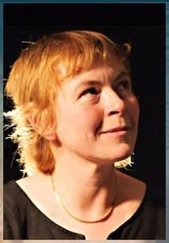
Rosy Thornton is the author of four previous novels: More Than Love Letters (2007), Hearts and Minds (2008), Crossed Wires (2009) and The Tapestry of Love (2010). In addition to writing fiction, she lectures in law at the University of Cambridge, where she is a Fellow of Emmanuel College. Married with two daughters, she lives in a village in the Cambridgeshire fens. Her book, Ninepins (2012), won the East Anglian Book Awards prize for fiction in 2012.

You’ll find all Rosy Thornton’s books here.

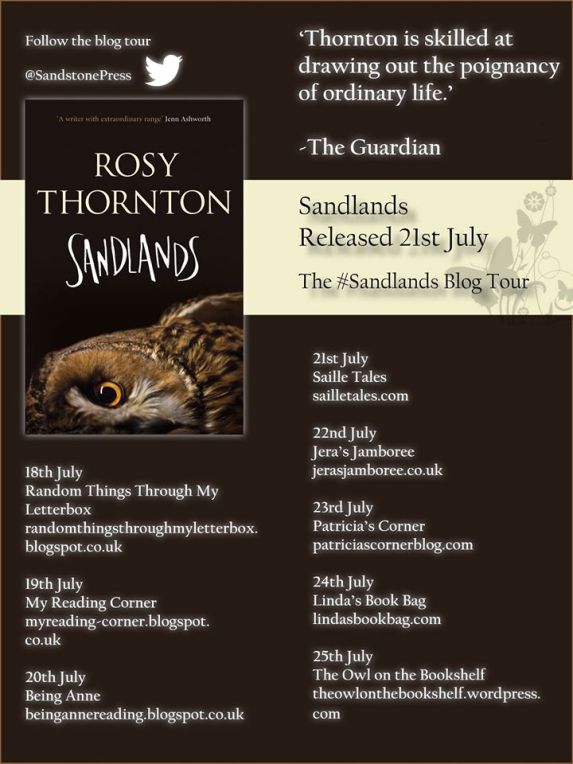
You can find out more about Rosy on her website and with these other bloggers:
Sandlands tour poster

Blog Post 500

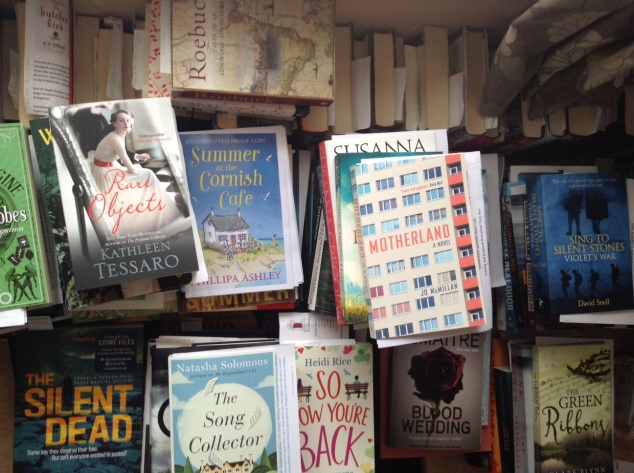
IMG_0577

I’ve just realised that since my first tentative blog post on February 7th 2015 I’ve had 499 blog posts on Linda’s Book Bag so today to celebrate I’ve decided to run a very small giveaway for post 500.

As you can see from the photo of about a third of my physical To Be Read (TBR) pile above, I have plenty of blog posts still to come. My Kindle is also bursting with books to the extent that I have banned mysef from BookBridgr and NetGalley.

In the last year and a bit I’ve met authors, publishers and bloggers. I’ve been to meet-ups, book launches and parties.

So, I want to thank all those authors who’ve been kind enough perhaps to send me their book, or answer my questions and provide giveaways and guest posts. Without their blood, sweat and tears in writing their wonderful books my life would be a greyer, darker place.

I’d like to thank the publishers who’ve trusted me to write a (mostly) coherent (if not always favourable) review by sending advanced reader copies, giving me books for giveaways and for including me in blog tours so that I have been introduced to books I’d never otherwise have encountered.

And I want to thank especially the wonderful blogging community who have supported me all the way. I’ve met so many bloggers face to face and they are lovely.

In order to spread a little book love of my own, click here to enter to win an Amazon e-voucher for £15 or £15 and buy a book you fancy – maybe one that’s been featured on Linda’s Book Bag. It’s open internationally until 31st July. Good luck!

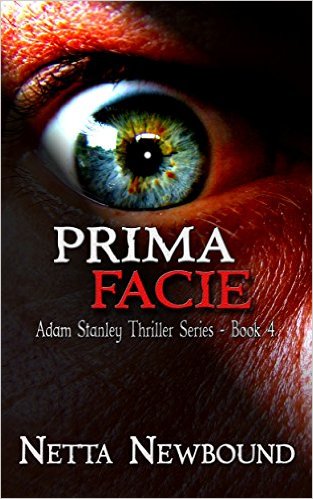
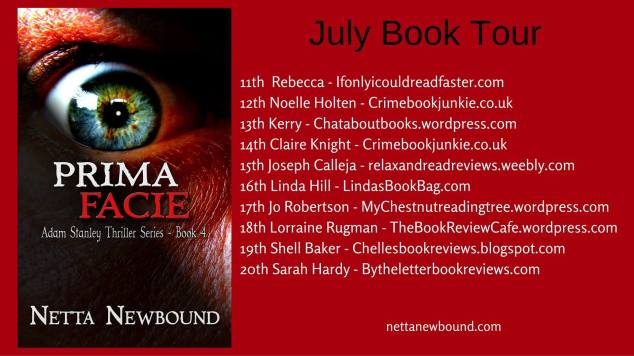
An Interview with Netta Newbound, author of Prima Facie

cover

I’m delighted to be part of the launch celebrations of Prima Facie by Netta Newbound which was published by Junction on 8th July 2016. Prima Facie is available for purchase here.

To celebrate this fourth novel in the Adam Stanley series, I have an interview with Netta today all about her writing.

Prima Facie

cover

A Compelling Psychological Thriller Novel.

In this fast-moving suspense novel, Detective Adam Stanley searches for Miles Muldoon, a hardworking, career-minded businessman, and Pinevale’s latest serial killer.

Evidence puts Muldoon at each scene giving the police a prima facie case against him.

But as the body count rises, and their suspect begins taunting them, this seemingly simple case develops into something far more personal when Muldoon turns his attention to Adam and his family.

An Interview with Netta Newbound

Hi Netta. Thank you so much for agreeing to answer some questions on my blog about your writing.  

Hi Linda, thanks for having me.

Firstly, please could you tell me a little about yourself?

I’m originally from Manchester, England, but immigrated to beautiful New Zealand, eighteen years ago with my husband, three young sons and five suitcases. Before getting into writing I worked as an early childhood teacher and also a real estate salesperson.

I know you didn’t start writing seriously until your children left home, but when did you first realise you were going to be a writer?

I’ve always been interested in writing, but my parents brought me up with a practical outlook— it’s fine to have interests, but I would need a ‘proper’ job in order to put food on the table. This was correct, I guess—when the children were young we certainly needed two incomes to fund our lifestyle etc. But as soon as we could afford to lose my income, I didn’t hesitate. I’m fortunate that my husband fully supports my writing.

If you hadn’t become an author, what would you have done instead as a creative outlet?

I sing. Does that count? I’d never make a living from it, and I need a glass or two of wine to get the old voice box lubricated, but there’s nothing I love better than desecrating a few numbers. I also enjoy restoring furniture and interior design and decorating.

What drew you to the thriller genre as opposed to any other?

I love thriller novels. I’ll read most genres, but my true love has always been psychological thrillers. I love watching what happens to ordinary people when the shit hits the fan, and delving into the psyche of the characters

Deception is at the heart of many of your books. How far do you think deception is a usual human characteristic?

I’d say that varies person to person. Everyone is capable of deception if the situation demands it.

How do you go about researching detail and ensuring your books are realistic?

If there’s something I don’t know about, I’ll avoid going into too much detail, but, thankfully, with the internet, there’s very little you can’t become an expert on—within reason of course. I wouldn’t go into too much depth on something like rocket science or brain surgery.

Which aspects of your writing do you find easiest and most difficult?

The actual writing flows easily, so long as I have a general idea of the direction I want the story to go in. But I don’t plot, preferring to be as surprised by the plot twists as the reader is.  However, I struggle with the tediousness of editing.

What are your writing routines and where do you do most of your writing?

I have an office, and for a while I forced myself to stick to office hours, but that didn’t last long. I’ll go into the office at around 9am and work until 5pm then after dinner will continue in front of the TV until bedtime.

I write, edit, critique and proof read, from waking in the morning to going to bed at night – I don’t have an off switch. Even if I go out with my hubby for the day, I take my laptop and continue while in the car. I drive him to distraction.

When you’re not writing, what do you like to read?

Thrillers, of course – and some horror novels so long as they’re not too far-fetched. I love Stephen King – he is my all-time favourite.

Do you have other interests that give you ideas for writing?

Just life. I can obtain ideas from anywhere – the news  – the supermarket – the café – absolutely anywhere. Often an idea will start off as a tiny thought and morph into something bigger that just can’t be ignored.

Your novels have very striking covers. How do those images come about?

It takes me hours and hours of trawling through stock photos and, although I don’t have a clear idea what I’m looking for, I always know it when I see it.

If you could choose to be a character from one of your novels, who would you be and why?

I’d say Geraldine from The Crime Files series. She’s probably the most like me and yummy James Dunn would be a bonus.

If one of your Adam Stanley books became a film, who would you like to play Adam?

Without hesitation, Tom Hardy. I actually write Adam’s scenes with Tom in mind. Haha.

If you had 15 words to persuade a reader that a Netta Newbound book should be their next read, what would you say?

Looking for a thrilling ride? Take a seat, buckle up and hold on tight!

Thank you so much, Netta, for your time in answering my questions.

My pleasure, thanks for the opportunity.

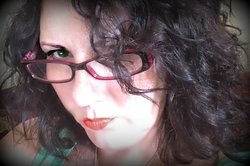
About Netta Newbound

netta

Netta Newbound, originally from Manchester, England, now lives in New Zealand with her husband Paul and their boxer dog Alfie. She has three grown-up children and two delicious grandchildren.

As a child, Netta was plagued by a wild imagination, often getting in trouble for making up weird and wonderful stories. Yet she didn’t turn her attention to writing until after her children had grown and left home.

Although she mostly writes psychological thriller novels, all of which consistently rank highly in the best seller categories, she has also written several non-fiction books with a close friend and fellow author under the names of Sandra Rose & Jeanette Simone.

You’ll find all Netta’s books here. You can follow Netta on Twitter, find her on Facebook and visit her website.

There is more about and from Netta with these other bloggers:

tour poster

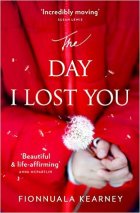
The Day I Lost You by Fionnuala Kearney

The day I Lost You

I cannot thank Lovereading enough for a copy of The Day I Lost You by Fionnuala Kearney in return for an honest review. The Day I Lost You is available in ebook now and is available for purchase on Amazon. It will be published in paperback by Harper Collins on 22nd September 2016 . The Day I Lost You is available to order from Lovereading, Waterstones, W H Smith and Foyles.

I thoroughly enjoyed reading You, Me and Other People, Fionnuala Kearney’s debut, last year and you can find my review here. You Me and Other People is available for purchase here.

you me and other people

The Day I Lost You

The day I Lost You

THE DAY I LOST YOU WAS THE DAY I DISCOVERED I NEVER REALLY KNEW YOU

When Jess’s daughter, Anna, is reported lost in an avalanche, everything changes.

Jess’s first instinct is to protect Rose, Anna’s five-year-old daughter. But then she starts to uncover Anna’s other life – unearthing a secret that alters their whole world irrevocably.

THE DAY I LOST YOU WAS THE DAY YOU TORE OUR FAMILY APART

My Review of The Day I Lost You

When Jess’s daughter Anna is missing, feared dead, in an avalanche during a skiing holiday Jess thinks the worst has happened. She’s wrong. Things are going to get much, much worse.

Oh dear. I honestly don’t think I am going to recover from reading The Day I Lost You. My heart was broken within a few pages and I basically sobbed my way through the rest of the story. This is such an emotional read. Given that the premise is based on mother and child relationships and I have no maternal feeling at all, Fionnuala Kearney has managed to reduce me to an emotional wreck which just goes to show the power of the writing.

The warmth and understanding of relationships that I found in Fionnuala’s debut You, Me and Other People, are still there but I think her ability to craft a text has become much more sophisticated so that there is not a word out of place. The effect is that the emotional pull is almost overwhelming.

The characterisation is outstanding. Anna is the lynch pin to the plot, and we get to know her at the same time as the rest of the characters, including those who thought they knew her best, so that we feel we are a part of the story. I empathised with Jess completely and mirrored her suspicions as the story went on. Even the most minor characters, including Pug, feel real and human. When I got to the end of the book I felt bereft. I need to know more about what happens to them in the future. They’ve almost become part of my life.

But what is so clever about The Day I Lost You is that whilst it is the most perfect embodiment of raw grief and unconditional love, it is also a compelling mystery from wondering what happened to Anna in the avalanche, given her body hasn’t been found, to several more aspects that I can’t write about for fear of spoiling the plot. This isn’t a thriller, but at times I felt the same sensation in my stomach as you get when going over a fast drop. Just when I thought I knew Anna as much as Jess did, something else pulled that truth away so that I had to read more.

I think what made The Day I Lost You such a perfect read for me is that it is about us. It is about all the frailties, the imperfections, the emotions that make us who we are. I loved it – every word.

You can read reviews from other Love Reading readers here.

About Fionnuala Kearney

Fionnuala.jpg

Fionnuala is pronounced “Finoola”. Fionnuala Kearney is Irish, living just outside London and hugely proud to say she’s a writer.

You’ll find Fionnuala on Facebook or on Twitter and you can visit her website.


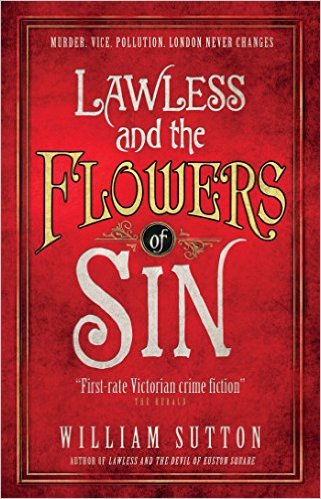
Seven Sinful Blogs – Gluttony, A Guest Post by William Sutton, author of Lawless and the Flowers of Sin

cover

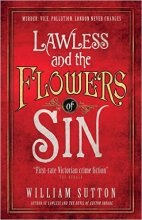
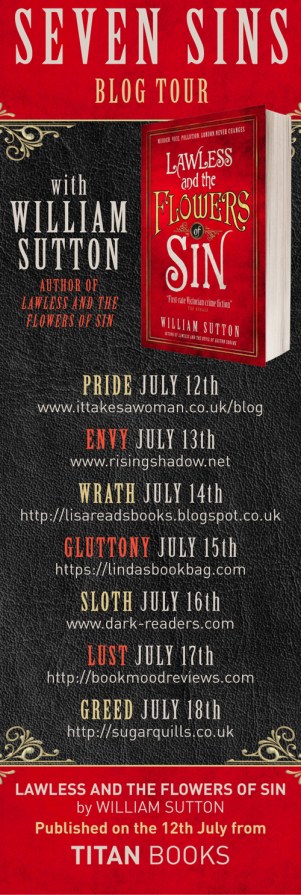
I’m a 5:2 diet follower so when I was asked if I’d like to host a guest piece on gluttony by William Sutton to celebrate his latest book Lawless and the Flowers of Sin, how could I refuse?

Lawless and the Flowers of Sin was published by Titan Books on 12th July 2016 and is available for purchase from Amazon, Titan, the Guardian Bookshop, Waterstones and from all good bookshops.

Today William ponders how we moved from austerity to gluttony in a thought provoking guest post.

Lawless and the Flowers of Sin

cover

A Foundation for Fallen Women. An automaton chess-master. An impossible theft.

As reluctant inspector of vice, Lawless undertakes a reckoning of London’s nighthouses, Lawless is fascinated by Felix, the forlorn maestro driven by mysterious sufferings to establish this charitable foundation. Every secret he uncovers points to many more covered up. When reputations are at threat, those running the show can be merciless in defending them…

Seven Sinful Blogs – Gluttony

A Guest Blog by William Sutton

Hello, hello, I’m William Sutton, author of Lawless and the Flowers of Sin, published by Titan Books. To celebrate, I’m delivering a series of Sinful Blogs.

Gluttony v Austerity: a Visit to the 1940s

It’s not often we return to the past. For a historical novelist, an event like Southwick’s D-Day Revival Weekend can be eye-opening. I learnt something not only pertinent to my novels, but to today’s politics.

What pleasure we have in dressing up. What pleasure in returning to the past, even if it is a past of make believe. My in-laws loved it, reminiscing about the styles, fashions, vehicles and ration books of their earliest childhood.

The hog roast was what struck me as dissonant. Everyone was dressed in 1940s outfits (or thereabouts: there were teddy boys and Brylcreem merchants amongst landgirls and flappers). There were wartime buses, uniformed gents strolling the village lanes, jazz in the pub, brass bands playing down the road. Make do and mend stands, jumble sale trestles, Dig for Victory allotments, military vehicles, and village tea stalls.

Returning to the past. A wonderful dream (especially for a novelist). People nodding politely as we passed. Bus driver tips his hat. The theatricality of village life. The air raid warden. The steam-powered bus. The larger than life pub landlady.

Nothing to jar.

Except the plentiful food. I’m sure the odd hog was roasted on the sly by canny Hampshire farmers. Nonetheless, we visitors to Southwick expected an endless bounty, and we got it.

Our modern ease with gluttony and abundance made me pause. I didn’t realise how much I had absorbed the wartime (and post-war) tales of ration books, thrift and waste-not-want-not. At the ’Allo ’Allo hog roast stand, by the Red Lion pub, we ordered hog roast, sausage butties, Pimm’s and more – and it felt strange. After visiting the Map Room, where Eisenhower and Churchill gave D-Day the go-ahead, we sat down for a cream tea. Then a cheeky pint in the Golden Lion, listening to a rather wonderful old jazz band. (I mean the jazz was old; though the band were too.)

Jam, butter, cream, scones, milk, sugar, tea. Hog, bread, butter, ketchup, sausages. Pimm’s lemonade. Disposable cups, disposable plates, disposable food, disposable income.

Ladies and gentlemen, I offer you the war of the centuries:

Gluttony versus Austerity.

The 1940s is not my period (though the 1860s didn’t seem so far away, with bowler hats, flat caps and demure dresses). Yet something struck me: about the tales we tell of the past; about the lies we tell of the present. Our government sells us a story of austerity that excuses and justifies many a cut, a shortcut, a politicised shrug. And yet this is very much a land of plenty. If the plenty is not divided equally, is that our problem or not? Is it the government’s problem?

In 1864, the country’s wealth was divided even less equally than today. Thousands were made homeless by the building of the Metropolitan Line; thousands more by the shiny new Embankment. But who cares? Nobody really important had to move. Or if they did, they were compensated.

These developments began the inexorable vortex that still consumes London now: that those who are prepared to do manual and menial jobs in the centre of the City cannot afford to live there. With the advance of Progress promised after the War, such inequality and unaffordability had decreased.

Why is it now again on the rise?

“Take your country back,” we were told.

Back to the 1960s, before all the wishy-washy-pinko-egalitarian nonsense?

Back to the 1860s, before women’s rights, worker’s rights, free education, enfranchisement?

Back to the 1060s, and throw in a bit of feudal deference?

Wonderful dreams are perhaps always just dreams. The polite nods, the theatricality , the larger than life pub landlady seem less cosy, even a little threatening, when we reflect how shoddily the promises of post-war Britain are being treated now.

I loved my visit to a 1940s town, and I congratulate the people of Southwick on a wonderful job. I think it’s wonderful to commemorate the wartime spirit, and there is a healthy patriotic fervour to that commemoration. But there is a strange fetishisation – like Monty Python’s sketch about deprivation – of a past that never was; or a past that was less comfortable and unified than we pretend.

I also am reminded how quickly gluttony, with austerity as its pompous ally, consumes our sense of justice.

About William Sutton

Find out more about William Sutton on his website, on Facebook and by following him on Twitter. There’s also more sinfulness with these other bloggers:
Seven-Sins-Tour

Interview and Giveaway – Summer in Tintagel by Amanda James

cover

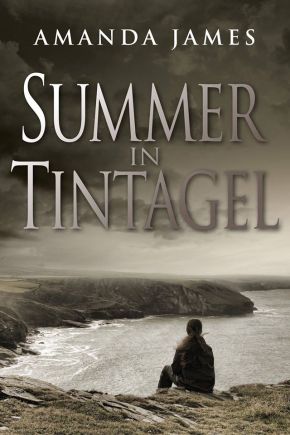
Once again it’s the wonderful Book Connectors on Facebook that has brought me into contact with a new to me author, Amanda James. Even better, her latest book, Summer in Tintagel was published yesterday 14th July 2016 by one of my favourite publishers Urbane Publications and you have the chance to win an e-copy of Summer in Tintagel at the bottom of this blog post. Summer in Tintagel is available from Urbane and Amazon.

To celebrate the publication of Summer in Tintagel, I’m interviewing Amanda all about her latest book.

Summer in Tintagel

cover

We all have secrets……

Ambitious journalist Rosa Fernley has been asked to fulfil her grandmother Jocelyn’s dying wish. Jocelyn has also passed on a secret – in the summer of 1968, fleeing from the terror of a bullying husband, she visited the mysterious Tintagel Castle. Jocelyn wasn’t seeking love, but she found it on the rugged clifftops in the shape of Jory, a local man as enigmatic and alluring as the region itself. But she was already married, and knew her husband would never let her find happiness and peace in Jory’s arms.

Now as her days are nearing their end, she begs Rosa to go back to Tintagel, but is unwilling, or unable, to tell her why.

Rosa is reluctant – she has a job in London, a deadline that won’t wait and flights of fancy are just not in her nature. Nevertheless, she realises it might be the last thing she will do for her beloved grandmother and agrees to go. Once in Tintagel, Rosa is challenged to confront secrets of her own, as shocking events threaten to change everything she has ever believed about herself and her family. She also meets a guide to the castle, Talan, a man who bears a striking resemblance to Jory.

Will the past remain cloaked in tragedy, sadness and the pain of unrequited love? Or can Rosa find the courage and strength to embrace the secrets of the past, and give hope to the future?

An Interview with Amanda James

Hi Amanda. Thank you so much for agreeing to answer some questions on my blog about your writing and Summer in Tintagel.

Thank you so much for inviting me, Linda. It’s great to be here.

Firstly, please could you tell me a little about yourself?

I used to be a teacher but left the profession in 2012 after 15 years. I had always wanted to be a writer and decided that it was a now or never moment.  So glad I did. I have four novels published already,  Summer in Tintagel is my fifth.

When did you first realise you were going to be a writer?

I think when I had my first short story published in 2010. This gave me the confidence to really believe I could do it after years of thinking about it.

Which aspects of your writing do you find easiest and most difficult?

It depends on the book, I think. But in general it’s the research and plotting that’s most difficult.  I find the writing relatively easy and love to get lost in the story and my own world. The characters always surprise me too as they rarely end up doing what I’d planned for them!

To what extent do you think your experience as a teacher has helped or hindered your own writing?

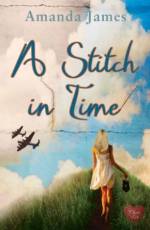
A Stitch in Time

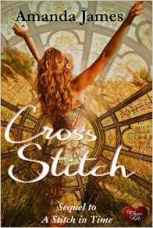
It helped tremendously, especially in the time travel books, A Stitch in Time and Cross Stitch.  My main character Sarah Yates/ Needler is a history teacher who travels through time to save lives. As I used to be one – a history teacher, not a time travelling one sadly – I could draw on my experience.  I used the time periods that Sarah goes back to that I most enjoyed teaching too.  I did include some incidents in the book based loosely on my relationships with staff and students; I won’t say which ones though! I don’t think it hindered at all.

cross stitch

When you’re not writing, what do you like to read?

I have a pretty eclectic taste. I do love Dean Koontz, and I enjoy thrillers and suspense in general. I do like a good family drama with a twist too. At the moment I have finally got round to reading, I know Why the Caged Bird Sings by Maya Angelou. It is so moving and beautifully written.

If you hadn’t become an author, what would you have done instead as a creative outlet?

I love singing and am in the local choir. I used to paint a little and need to find the time to dabble again!

How do you go about researching detail and ensuring your books are realistic?

I use the internet mostly and ask specific questions on social media if I need to. There are always lots of lovely people who know the answers!

Do you have other interests that give you ideas for writing?

I love walking along the cliff paths near my home in Cornwall. I take inspiration from the ocean and rugged coastline. When I’m there, the ideas just flow.

Summer in Tintagel opens at a cracking pace. How did that opening evolve? Was it easy to produce or did you have to work hard to create such an incredible atmosphere?

Thank you, glad you like it. I changed the beginning after about six months. I felt it needed more oomph and a stronger hook to draw the reader in. I used a scene to open that becomes significant in the story much later on. Hopefully this will intrigue the reader.

Summer in Tintagel has a very atmospheric cover. How did that image come about and what were you hoping to convey (without spoiling the plot please!)?

The cover is wonderful thanks to my publisher – Matthew at Urbane Publications. We have a female figure looking out across the sea and dramatic coastline. Is she lost in thought perhaps? Is she wondering what to do, how to solve a problem that’s happened in her life? Is she waiting for someone or something? I wanted to convey mystery and intrigue and I think the cover does that.

(It certainly does!)

If you could choose to be a character from Summer in Tintagel, who would you be and why?

I’d be Rosa, because she’s a strong character with extraordinary abilities. I’ll say no more than that!

If Summer in Tintagel became a film, who would you like to play Rosa?  

Probably someone like Kelly Reilly. Though she is a little older than Rosa, she does look very similar.

If you had 15 words to persuade a reader that Summer in Tintagel should be their next read, what would you say?

Lose yourself in beautiful Tintagel where you’ll find, love mystery and a long lost secret.

Thank you so much, Amanda, for your time in answering my questions and good luck with Summer in Tintagel.

You’re very welcome, Linda. Thanks for having me, I have really enjoyed it!

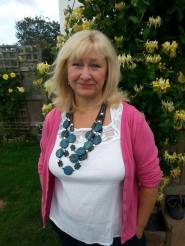
About Amanda James

author 1

Amanda James has written since she was a child, but never imagined that her words would be published. Then in 2010, after many twists and turns, the dream of becoming a writer came true.

Amanda has written many short stories and has four novels currently published. A Stitch in Time was published in April of 2013 by ChocLit and has met with great success.

Also with Choc Lit are Somewhere Beyond the Sea and Dancing in the Rain (March 2014), Cross Stitch (December 2014)

There’s more from Amanda James on her blog and you can follow her on Twitter and find her on Facebook. You can find all Amanda’s books here.

Click here to enter to win an e-copy of Summer in Tintagel. Open internationally until 23rd July 2016.