The Reading Group: December by Della Parker

reading-group-december

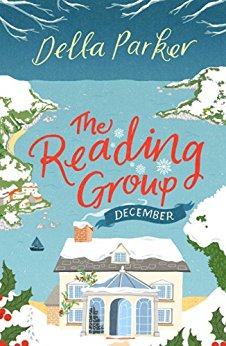
The Reading Group: December by Della Parker is published today, 1st December 2016, by Quercus and is the first in The Reading Group Series. The Reading Group: December is currently free for download here.

The Reading Group: December

reading-group-december

Meet the Reading Group: six women in the seaside village of Little Sanderton come together every month to share their love of reading. No topic is off-limits: books, family, love and loss . . . and don’t forget the glass of red!

Grace knows that the holiday season is going to be different this year. No turkey, no tinsel, no gorgeously wrapped gifts under the tree . . . how on earth is she going to break it to her little boys that Christmas is effectively cancelled? And can she bear to tell anyone her embarrassing secret? Enter the Reading Group: Grace’s life might have turned upside down but there’s no problem they can’t solve.

My Review of The Reading Group: December

Grace and Ben are enduring terrible family problems, but help might just be at hand.

Wow. The Reading Group: December might only be a few pages long and take less than 15 minutes to read but it really packs a punch. It is such a perfect Christmas story.

Grace’s reading group friends are distinct and well presented and I can’t wait to read more about them in future episodes.

This story deals with the financial problems Ben and Grace are experiencing as well as the childhood illness of one of their triplets. Links are deftly made between this story and A Christmas Carol by Charles Dickens that Grace’s book group are reading so that there’s a real satisfaction in spotting the allusions.

I think I found this story resonated with me so much as I’ve been through the worry of health problems for family members myself this year and I could really empathise with the emotions both Grace and Ben display.

If you haven’t already clicked to get your copy of The Reading Group: December, I urge you to do so. It’s brilliant.

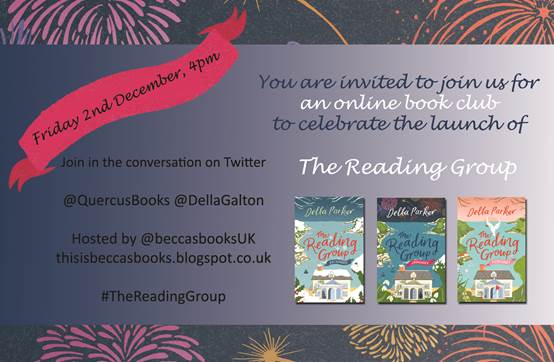
There’s also a chance to join in The Reading Group discussions with fellow blogger Becca tomorrow at 4pm:

reading-group-banner

About Della Parker

della-parker

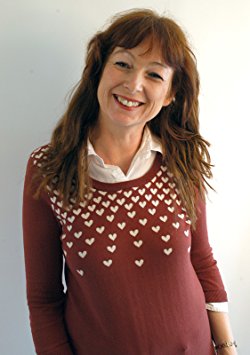
Della Parker lives in a Dorset village with her two large hounds.

Before becoming a writer she worked as a Customer Services Manager for a water company. Solving customer complaints is not a million miles away from solving plot problems, so Della thinks her former life was quite a good background for a writer. And of course there were the wonderful characters she met.

When Della is not writing she enjoys running marathons and going to the gym for long workouts. Unfortunately, she doesn’t have the time to pursue these worthwhile hobbies as often as she’d like to – as she much prefers writing!

All the books in Della’s Reading Group Series are available here.

You can follow Della on Twitter and visit her website here. You’ll also find her on Facebook.

A Publication Day Interview with Miranda Gold, Author of Starlings

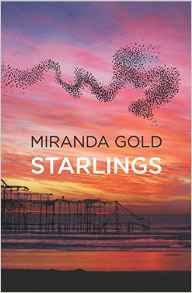
starlings

Whilst I love many genres of fiction, I really enjoy those books with a psychologial and emotional element to them. Consequently, I’m thrilled to have an interview with Miranda Gold whose novel Starlings is published today 1st December 2016 by Karnac Books.

Starlings is very firmly on my TBR, and can be purchased in e-book and paperback on Amazon and directly from the publisher.

Starlings
starlings

Struggling to bear the legacy of her grandparents’ experience of the Holocaust and her mother’s desperate fragility, Sally seeks to reconnect with her brother Steven. Once close, the siblings have become distant since Steven left London, separating himself from their shared history.

Starlings reaches back through three generations of inherited trauma, exploring how the impact of untold stories ricochets down the years, threatening to destabilise a coherent sense of self. Having always looked through the eyes of ghosts she cannot appease, Sally comes to accept that Before may be somewhere we can never truly leave behind and After simply the place we must try to make our home.

An Interview with Miranda Gold

Hi Miranda. Thank you so much for agreeing to answer some questions on my blog about your writing and Starlings which is out today.

Thanks so much for inviting me.

Firstly, please could you tell me a little about yourself?

I was born in London and, despite my mongrel roots and the wanderer in me, it’s where I’ve always lived. Yes, it’s a city riddled with contradictions, but I love the layers to it, the pockets that seem like worlds of their own. I was an incorrigible mimic growing up, so I’ve always been trying on different characters, different voices – I usually hear a character before I see her. For a long time I thought there was no magic like theatre – but fiction offered me a different landscape, a more internal one perhaps and I now feel more drawn to the way readers might develop a relationship with the words on the page, it’s a strange type of intimacy that makes them part of the creative process, it’s still a collaborative form. Either way the centre of it is trying to see how a characters’ eyes shape their world and how that world shapes them – this is when I’m not being distracted by my niece and nephew who are far too gorgeous for my own good (a similar problem seems to occur with my neighbour’s cat).  I’ve never experienced writing as lonely – writing opens my eyes, I feel unanchored and disengaged without it; for me, loneliness is when I’m not writing.

And please tell us a bit about Starlings.

The heart of it is how those closest to us become strangers and the struggle to unravel the knot of inherited memory. Sally is haunted by her grandparents’ experience of The Holocaust and the way her mother has come to embody it – it is what has been left unsaid that extends its power over her. Sally’s connection with her brother Steven had helped her carry the weight of their history, but he has moved away, separating himself from their past to try and forge a life of his own.

When did you first realise you were going to be a writer?

Storytelling has always been a part of my life, but then that instinct to imitate, to represent, to string event into narrative – it’s an impulse I heard and saw immediately when I was teaching children drama. I don’t think I had any moment of realisation and I still don’t really think of myself as a ‘writer’ – the word stalls me, I write, it’s something I do and if I’m not engaged with it I start to feel disorientated very quickly.

If you hadn’t become an author, what would you have done instead as a creative outlet?

I wanted to act for a long time and the process of developing character is similar – I still have to walk and breathe the part, and this is no less important, perhaps more important, if the character is familiar because I’ll have made assumptions and I have to clear all the preconceptions away, get to know them on their own terms.

How do you go about researching detail and ensuring your books are realistic?

This depends so much on what I’m working on, but with Starlings, the research came late into the development of the novel. I had to pull myself back though because I was trying to convey how these memories are handed down and seen and felt through the lens of subsequent generations. The experience of survivors and their plea – Never forget, Never again – was not something I felt I could (or should) find the words for, but something I felt I wanted to approach, perhaps to honour. I was tempted to step away from the (often sketchy) understanding I had of my own family’s history, I wanted to leave the Holocaust behind – but it is part of a personal and collective biography and there was an urgency that kept bringing me back to it. If I’d focused on the ‘facts’ Starlings would be another novel. Instead it is preoccupied with how powerful the absence of facts can be. As I’d grown up hearing stories I wanted to listen more than read, I think I was listening out for how the narrator tells as much as what they said. I was put in touch with two survivors and I listened to the recordings of oral histories which can be accessed through the British Library website. I’m not sure realism always serves the story best, it has to be absolutely true to the world of the novel and the characters, but realism in terms of details can often be distracting, some of the historical novels I’ve read feel suffocated by detail…but in terms of realism, yes I wanted that to anchor it but a mind tripped by the past while the present drives on around her demands something else.

Which aspects of your writing do you find easiest and most difficult?

They’re quite often the same thing. Take it at the most basic level – all a writer needs is pen and paper – there are worlds of potential in that blank page, the possibilities might offer themselves up or shy away, but they are there. In the later stages the writing develops its own momentum and then it’s more about letting it carry. It’s only after this I track back and start to plan – though I know I’ll probably be taken off course. I think I probably take the long way round but it’s the only way I can do it. I do a lot of background work on the characters before and during the writing so they shape their own course – it may not look or feel like I’m organising the narrative in advance but I am in a way. I used to dread returning to the page to edit – now it’s something I enjoy as much as the writing itself. The first draft is often propelled by an urgency that can be overwhelming so the second, third, fourth drafts, however frustrating, have a more settled tempo, and I find it exciting when I can clear away obscurity in a moment, all those pages I thought I was so attached to were just a playground where I’ve tumbled and scraped my knee…I wince a bit and trundle on. I have my fair share of middle distance staring, but I get a bit tetchy when I’m not writing once it’s found that momentum of its own – that’s the gift it gives back if I’m lucky, I have to grab it.

What are your writing routines and where do you do most of your writing?

I love stolen time – the time when I’m waiting, or it’s late, or I just hadn’t expected to get the chance – the pressure’s off and the work moves forward quite suddenly. I tend to try and sneak a burst in early on just so that the story is moving when I come to it later in the day. I write at home in the afternoon until I get cabin fever and then I’ll be scribbling or typing while eking out a coffee, I might go to the library – I’m not difficult about where – I’ve written in pubs, on the tube, in the airport – unless I’m struggling to hear the rhythm of the section I’m working on I actually find absolute quiet more difficult. It always surprises me how much of the writing happens ‘in between’ – especially if there’s something I can’t quite see or hear – there’s not much to be gained from banging my head against a brick wall so I’ll put the pen down, get out the way, leave the characters and their story and get on with everything else I’ve neglected – chances are I wasn’t listening closely enough and need to back track a little.

I know you’ve written scripts before. How did that experience differ from, and affect your writing of, a novel?

Other than working on my adaptation for Starlings, it has been some time since I’ve written for theatre, but whatever the form, I always feel as though I am beginning again – every piece demands a new logic – I can only just about grasp how to write the work I have ‘finished’.

I suppose the most fundamental difference is that with writing a novel I am building a world out of words, there is no other medium to translate a character’s experience. Theatre has an immediacy and a compression – a single gesture or a subtle shift in tone, a change in light these can signify so much, instantly. There is an intensity that comes from it being a collective experience – it is live, public, the entire narrative arc is taken in with only one interval, at most two, occasionally none. Also the impermanence, the fact that no performance can ever quite be repeated, the words are coming off the page and contrasting moments can happen simultaneously where as, of course, with fiction, the impression of simultaneity can only be created with one word laid down after another. But there is another type of immediacy in fiction – both with the reader’s connection to the page that brings the world of the novel alive, and dipping in and out of a character’s consciousness. The visceral element of fiction has to come as the reader translates the words back into experience, its builds, and because it depends directly on the reader reimagining (the mind holding all five senses without the director’s and cast’s interpretation), the effect can be more enduring. That said, I saw a production of The Homecoming more than a decade ago and it’s still with me.

(Oh, that’s so interesting.I often wonder about the gap between the what the writer writes and what the reader reads when they bring their personal history to their experience of the book.)

Starlings is being adapted for the stage. How much are you involved in this process and what can we expect?

I’m due to workshop some ideas in the next few months…I’ll keep you posted!

Starlings explores family relationships. How important was it to you to write about this theme?

Family relationships often form the foundation for my writing, even when I’m not conscious of setting out to explore them. These connections may not be explicit but they play into the characters’ trajectories, pulling them back, pushing them forward, creeping up on them, evaporating. Why will one character carry her history inside herself and another transcend it? How can those we share so much suddenly seem ultimately unknowable? Or is it that the familiar becomes invisible, that it’s only when a pattern breaks that it reveals itself? Though I resist the idea of inevitability, I am intrigued by repetition, by the tenacity of what persists and what it might mean to the world beyond, how does that world redefine it?  I’m curious about how many versions there are of each family member, how each are played out against or in response to how they are perceived. What is it that colours the lens each character looks through?

(Again, Miranda, I find this fascinating as I believe we have so many perceptions of ourselves depending on who we are with, let alone the perceptions others have of us.)

There is an iterative theme of trauma throughout Starlings. How far do you believe that trauma is an important part in making us who we are?

This depends on so much, none of it measurable and, at least from what I understand, the way trauma is embodied is not something that is stable. I think the foundation we have plays into how trauma affects us, as do the resources we have. It isn’t necessarily about strength or fragility or even resilience and I think there is a danger of letting it eclipse identity, we are so much more than what has happened to us…whether it paralyses someone or reveals their resilience, I’m not sure it’s helpful to understand this simply in relation to their suffering – victims, martyrs, survivors – these are all just symbols, short hand when true empathy tries to understand the nuances, the contradictions.

Sally is shaped by the shared memories of her family. Do you have memories from your own family that have influenced who you are as a writer?

‘Shaped’ feels a little too definitive for me in this context – though of course it’s for the reader to interpret this. Certainly, Sally is haunted both by her own memories and the memories that have come to her in fragments – through stories, dreams – but the gaps, the silences, the way the stories keep changing, these seem to have an even more powerful hold. I think what is most destabilising is the way these memories can be remade or dismissed so there is the sense (‘true’ or otherwise) that there is no mirror to Sally’s experience other than the ghosts behind her. I understand memories passed down as an inheritance and this compels me here because the fear of forgetting and the fear of remembering can have equal strength, magnifying each other rather than being cancelled out. The memories themselves are both alien and familiar, a core part of identity and yet, because they are so malleable, often emphemeral, how can they form any essential part of us? I’m fascinated by how strongly we can identify who we are by our memory despite its fallibility. I think shared memory can be a treasure though, whether delightful or painful, they forge a sense of connection, of belonging – much like the reading experience itself, it’s about seeing what someone else sees, that might be illusory, but sometimes it’s the closest we can get to seeing through another’s eyes.

I don’t think I could disentangle what influences me, there are so many strands, patterns reveal themselves in the rewriting, but I’m not always conscious of these when I set out. A memory might propel the piece or even initiate it, but then it meets the world I’m writing in and morphs into something else. Memory is such a potent mix that makes fiction seem like the best home for it.

If you could travel back through time to visit a part of your own family history, when would it be and why would you choose it?

I’m not sure I can really answer that at the moment. Although Starlings is by no means an account of my family history, it does draw on it – it did grow out of it to some extent and taps into so much of what I grew up around, trying to communicate the experience of it, if not the facts. Maybe once I have more distance from it I could think about booking myself a time travel ticket.

I find Starlings an interesting title, making me think of a murmeration and the way memories and echoes of the past swirl and weave  – rather like starlings do together. How did the title arise and what were you hoping to convey?

The title came in a late draft. I’d been staying in Brighton and I was watching the murmeration just as the sun was going down. It felt as though everything was focalised through this dance in the sky, this instinctive coordination – and people just stopping, even if it was only for a moment, to look up – or glance with someone, a stranger, who’d seen it too, a fleeting moment of connection. I can’t say honestly that this is what I’d hoped to convey, I just knew this apparently magical course through the sky, organised by its own collective intelligence, was there the evening before and would be there the next – and that was all I needed to know.

As the murmuration has become such a familiar postcard picture I was worried its magic would be lost. I talked to friend who is an artist (William Barrett – open to commissions I might add!) and he said he’d do a ‘mood board’ for the cover (I knew I was on to the right person) and try and get that sense of tentative hope…I think he caught it.

(He certainly did as I think the cover for Starlings is beautiful!)

The Holocaust is a catalyst for Starlings. Was it your intention to remind modern readers of that part of our past or did that arise organically as you wrote?

It arose organically and it was only in the second or third draft that I began to see it drawing into foreground, in the first draft there were only references, none of them explicit – there were so many suggestions but they were obscured – I don’t think I felt I could touch it. I still feel a bit uneasy about whether it was my place to tell this story – but as I’ve said, it isn’t an attempt at transcribing any part of history, only to show a little of what I saw though the lens of the third generation – though that now has disappeared as Sally became herself and, of course, saw something else.

If you could choose to be a character from Starlings, who would you be and why?

I think I’ve been living with these characters too closely to answer that just yet, but if I had to be one I think Claire – she has such a warm, spontaneity, she feels like the least haunted of the characters.

If Starlings became a film, who would you like to play Sally and why?  

That’s what casting directors are for! No, I think I’d like to give the reader the freedom to imagine that, once you get an image in your head it can be hard to erase.

If you had 15 words to persuade a reader that Starlings should be their next read, what would you say?

Survival meant silence, but stories left untold live on, their echo chasing the next generations.

Or maybe –

Sally’s brother Steven has freed himself from the ghosts of family history – why can’t she?

(I like both these tag lines Miranda!)

Do you have other interests that give you ideas for writing?

There’s been quite a resurgence in oral storytelling and when these myths, legends, wonder and fairy tales are brought to life all the underlying structures resonate. Music has always been a short cut to the soul for me, bypasses all the analytical and critical – I’m not sure it gives me ideas so much as create space for them. Theatre certainly, but if I’m honest I’m as likely to be inspired by the person I spot in the foyer or the one who has to get up so I can get to my seat as I am by the play – there are overlaps, something external sparks with a line sparks with…it depends on how open my own senses are. Being in a new environment can set something in motion – but it’s as much about being away from the familiar in order to see it as it is writing about (or through) wherever it is I’ve arrived.

And finally, when you’re not writing, what do you like to read?

I re-read quite a bit – poetry and plays as well as novels – books become reference points and the person I am coming back to Gatsby or To The Lighthouse finds something else behind what I heard five, ten, fifteen years before. The compression of short fiction, like poetry, can be astonishing – there can be a sudden visceral power, a single moment can expand out in an almost tactile Three of the most striking novels I’ve read this year have been in translation – Human Acts, Signs Preceding The End Of The World and A School For Fools. I’m a reader who likes to stay on the page, it’s not just about turning it, and, each of these novels had lyricism that was both brutal and beautiful, they forged their own language to say what couldn’t be said – it meant they had a vitality that made the poignancy carry.

Thank you so much for your time, Miranda, in answering my questions. Your responses have been so interesting and though provoking. I can’t wait to read Starlings.

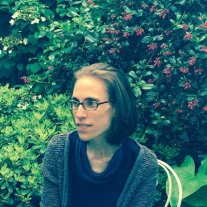
About Miranda Gold
miranda-gold

Miranda Gold is a novelist and playwright. Her novel, Starlings, is currently being adapted for the stage, and she is now working on a new novel exploring post-natal psychosis. Before turning her focus to fiction, Miranda took the Soho Theatre Course for young writers, where her play, Lucky Deck, was selected for development and performance. She is currently based in London.

You can follow Miranda on Twitter.

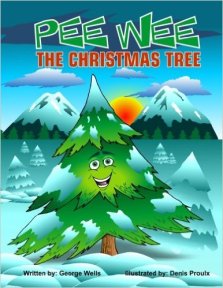
Pee Wee The Christmas Tree by George Wells and illustrated by Denis Prouix

cover

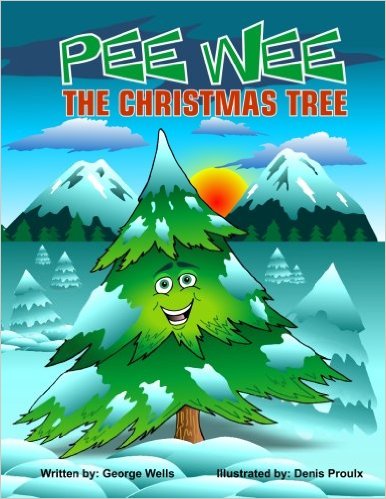
As it’s almost December I think it’s high time to start thinking about Christmas so I’m pleased to be reviewing Pee Wee the Christmas Tree on Linda’s Book Bag today. Pee Wee the Christmas Tree was published on 5th July 2016 and is available for purchase here.

Pee Wee The Christmas Tree

cover

For years, Pee Wee has lived in the shadow of the bigger trees on the Christmas farm. Without enough sunlight to grow tall and strong, he has been forced to watch helplessly as the other bigger and more attractive trees are picked every year, going home with a happy family. Just as Pee Wee is about to give up hope that he will ever get the chance to bring joy to a family during the holiday season, he is finally cut down to be sold!

After years of waiting, Pee Wee is disappointed to find that he is still overlooked by customers wanting fuller trees to  decorate. With his dream of celebrating Christmas with a family of his own fading fast, he is at last discovered by two children who tell their father that they found one that is the perfect size. Driven back to their home and adorned with lights and decorations, Pee Wee is finally able to accomplish his life’s big dream: to make children happy at Christmas!

Pee Wee the Christmas Tree by George Wells is the perfect story for young kids this holiday season, encouraging them to never give up on their own dreams and proving that – large or small – there is room for us all.

My Review of Pee Wee the Christmas Tree

Poor Pee Wee. He’s so much smaller than all the other Christmas trees that he’s always overlooked.

In the interests of honesty and integrity I have to begin by getting some negatives out of the way about Pee Wee the Christmas Tree. There are a couple of editing errors that have crept in to the book that affect the sense of the narrative such as ‘he overlooked once more’ rather than ‘he was overlooked once more’ and ‘though’ for ‘thought’. I would prefer an apostrophe before ’cause’ when it means ‘because’ too. My ex-literacy consultant head struggled with the change from past tense to present and then past again at the end of the book and I always prefer children’s books not to be written entirely in upper case letters as, when we teach writing, we don’t want children to write that way so it’s better to exemplify what we do want.

However, those personal grouches aside, I thought Pee Wee The Christmas Tree was a lovely heartwarming tale with a positive message just right for sharing with children at Christmas. There’s a super message that all of us, no matter what size, have something to offer as Pee Wee makes the family happy at Christmas. There’s much to discuss with children, such as how when we ignore someone we can make them unhappy and lonely so that young children are learning lovely positive messages. I think it’s admirable to teach children that making others happy is the best gift we can have and that we can achieve our dreams no matter how small we are.

The illustrations are an absolute triumph with vibrant, bright colours that children will love. Again, I think there is a great educational value here as it would be good to develop numeracy by counting the presents under Pee Wee when he finally finds a home and the lights strung across him.

Pee Wee The Christmas Tree is a jolly Christmas tale.

You’ll find George Wells on Twitter and more about Pee Wee on Facebook. There are more reviews from these other bloggers too:

george-wells_banner

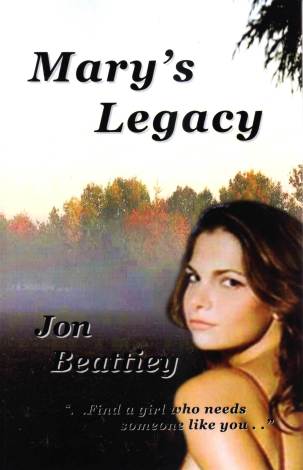
An Interview with Jon Beattiey, author of Mary’s Legacy

m-l-cover-front-as-printed

I’m pleased to welcome Jon Beattiey, author of Mary’s Legacy, to Linda’s Book Bag today. Mary’s Legacy is published by Tregertha Imprints and is available for purchase directly from Jon here.

As well as interviewing Jon about his writing, I’m sharing one of Jon’s poems.

Mary’s Legacy

m-l-cover-front-as-printed

. . . She died, and left her film art-director husband Donald with the prospect of a life on his own. Twenty-five years of love and companionship destroyed by an insidious fatal illness.

In the train northbound to his remote cottage in the Lakes he reflects on her passing, on the resolute way she faced death and her last instruction echoes through his head.

“find a girl who needs someone like you”

His love for her is stronger than death and her spirit, her indomitable sprit, is always there, in his mind, in the way he sees her presence in every place, every action throughout the forthcoming days,  How can he possibly be expected to ‘find another girl’?

But he does, when one member of a party of walkers gets into trouble on the path near his cottage and he can’t help but become involved . . .

Can dark-haired Paula truly fill the space Mary left and allow him to fulfil her last request? The story follows the pair as they develop a relationship built around the perceived spiritual presence of Donald’s deceased Mary.

From the depths of the Lake District to the strange world of Pinewood Studios, with a glance into daughter Sarah’s Parisian world of haute couture, a film’s conception moves to the beautiful location work in Puglia (Southern Italy) where we meet the lovely Michaela and then on to a prestigious film launch. . .

A surprisingly intense and beautiful story of how a love can become more dominant than death; it will inspire and strengthen awareness of the power of the stubborn human spirit in a fascinating and most readable way.

An Interview with Jon Beattiey

Welcome to Linda’s Book Bag, Jon. Tell me, how did you begin writing?

The first novel took shape after a foray into the damp February countryside (2006) where I met a lone lady horse-rider who offered a lovely smile – and wove a story around the meeting once home and sitting in front of the screen . . . only ten years and twelve novels ago! This must have been pre-destined – though a ‘hands-on’ person and creative in many ways, writing has become an all-absorbing pastime.  My mother wrote, but not professionally.  I still own a number of her prize books.

How do you conduct your research for your many novels?

Most of the detail and backdrop for novels comes from a lifetime of experience; I feel sorry for the bright young budding authors who haven’t had the benefit of life.  They can’t possibly weave the same depth of story.

Your novels have strong female protagonists. Why do you write from this perspective?

I write ‘relationship’ fiction (not ROMANCE as in M & B!) so the ‘ladies’ must figure strongly – a story wouldn’t be the same without its leading lady and they allow one to develop intrigue.  There are strong male characters too – Peter in Windblow, Andrew in the Manor Trilogy, Jones in Seeking, Jack in Greays Hill, Peregrine in Melisande  etc.

Which element of writing do you feel is most important?

The setting for a novel is all-important.  It must be right for the story, and essentially correct so readers can, if necessary, identify with the area.  Sometimes the backdrop dictates the twist of the story.  Melisande is a case in point.

What is the most difficult aspect of writing do you think?

Finding the right moment to take the story on as there are other factors that dictate the time available.  I don’t have any routine; I’ll add a sentence, a phrase, a paragraph or a thousand words according to mood, time and circumstance.  It’s mostly behind the cosy desk in our library, with a view over the garden.

Which of your books is your favourite?

I’m often asked ‘which is your favourite book” – the answer is often ‘the one I’m writing.  I loved writing Twelve Girls (over three/four years, a ‘Girl’ at a time), ‘Seeking’ was also a joy to write – it flowed beautifully and was set around my old school haunts – and Greays Hill is a ‘Tour-de-force’ of childhood memories which unexpectedly became the HNA’s Book of the Month on publication.  It is also beautifully printed, with chapter illustrations too.  A joy to hold and thumb pages . . .  and I’m proud of ‘em all.

When you’re not writing, what do you like to read?

Well, with so many books thrown at me by different publishers it’s difficult to choose.  Now and again one appears that grips me,  Kashmir Shawl by Rosie Thomas comes to mind – or Nine Pins by Rosy Thornton – there are many others who share my philosophy on plot and backdrop.  Sadly, there so many that are ‘also-rans’ because they are ‘written to the clock’ by writers contracted to mainstream publishers and have little depth to them.

What other interests do you have that inspire your writing?

Walking: it’s odd how, when out and about, little incidents produce story lines.  The Contour novel (first of a trilogy) followed meeting that lady rider.  Seeking was inspired by the glance from one late-teenage girl from a group leaving a senior school across a road in Stamford.  Melisande came from an intriguing European fairy-tale – and the latest one – 6,500 words so far – from a chance remark from a bookseller in Ballyvaughan, an Irish town on the Co. Clare coast.

Tell us a bit about the mentoring  you do.

Driven by the oft-quoted comments from young people “how do you manage to produce such lovely stories’, I offered to ‘teach’ one young lady who said ‘I wish I’d had you as my English teacher at school’ – and it went on from there.  She’s since been published.

If you had to be a character from one of your books, who would you choose?

Difficult question.  Each one has an individualistic streak, so I’d probably say I’d pinch a bit from most of them – the best bits!  Though many debut writers will have some autobiographical traits written unconsciously into their stories, I’ve taken pains to ensure this isn’t the case.  Life tells you which aspects of one’s character are likeable, and what isn’t – and this helps when drafting a protagonist’s c.v.  I do love the girls though – each and every one of the dozens I’ve invented.  The great thing is, you can tell them what to do and they don’t argue  . . . though I once killed one off, lost sleep over her demise and so had to write her back into life. An author’s power of resurrection!

How would you feel about one of your books being turned into a film?

Turning a book into a film?  Dream world.  I worked with Twentieth Century Fox and Warner Bros as a location provider in the ‘80’s for some notable films (Aliens, Batman) and had I been writing then, who knows what might have happened – I had the ear of the directors!  Since then, I’ve used the backdrop of the film world in Mary’s Legacy, an emotional write because it covers the death of a lovely girl from cancer and how her film art-director husband is able to turn her loss into bringing another woman back to a proper life from what could have been despair.  That might make a superb and topical film – as would Greay’s Hill – in fact a notable reviewer has suggested it.  (A copy is currently sitting in a production office in Hollywood!)  I also had a comment from a BBC producer that Twelve Girls would make an excellent ‘Two series of six episodes’ – but I’m still waiting!

And how would you describe a Jon Beattiey book in 15 words?

Different, believable, heartfelt, ‘proper English’, no overt swearing or clumsy sex.  Charming characters, beautiful backdrops.

Finally, I’d like to share one of Jon’s poems today:

In Memoriam, Pace.

 For every life there is a living, for every death there is a giving.

Giving life to death is heartache, yet,

Death is part of life, to understand may leave us empty,

Until the reason of the parting gives sense to life,

And to the gift that God has taken.


This we must accept; each one must sacrifice our love,

So life can then again become us;

To journey on towards our destiny,

And live, knowing that we have given

Our best, our love, to God.


We mourn, as mere mortals do, the gift now taken from us.

The greater gift, the greater depth of loss,

Though we should not grieve too long, too deep, for

That life, that gift, has found a better place,

And in so doing,

Leaves us the room to construct yet more gifts

To offer God, in time’s fulfilment.

About Jon Beattiey

jon

Jon Beattiey has a long-term background of industry in the management of people and property. He did three years with the National Trust, having responsibility for the care and conservation of a major property in Surrey and now runs both a mail-order business and a B & B with his wife. Jon is a prolific writer, copy editor and reviewer, even on a number of occasions beating The Times to  influential reviews, which included a Booker prize winning novel.  Also, on the ‘reading’ panel for a National Book Award and monitoring submissions to a major publisher of women’s’ fiction, Jon successfully mentors up and coming new writers, undertakes school tutorials and focuses on young people’s literary development.  When possible, he loves to travel by train across Europe yet still likes to explore out-of-the-way places in the UK for story ideas.

Jon now lives in Bedfordshire with his wife Sue, has three grown -up children, each with youngsters of their own. He enjoys gardening, long walks in open country and the challenge of writing in all its aspects, including poetry.  He participates in Literary Festivals when time allows, gives talks on a variety of literary subjects and has lost count of the number of book-signings undertaken.  Jon loves well-bound volumes, well-run second-hand and independent bookshops, hates e-books, heavy discounting and worries about the over-use of mobile devices that diminish true social interaction.

You can find out more about Jon on his website and find him on Facebook.

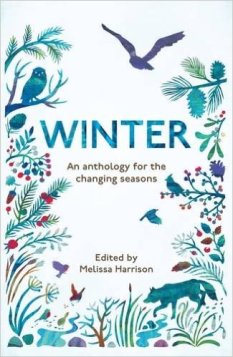
Winter – An Anthology for the Changing Seasons edited by Melissa Harrison

winter

I am indebted to Alison Menzies Publicity for a copy of Winter – An Anthology for the Changing Seasons edited by Melissa Harrison in return for an honest review. Winter – An Anthology for the Changing Seasons was published by Elliott and Thompson in conjunction with the Wildlife Trusts on 20th October 2016 and is available from all good book sellers including online here.

I was previously privileged to read Summer – An Anthology for the Changing Seasons and you can find that review here.

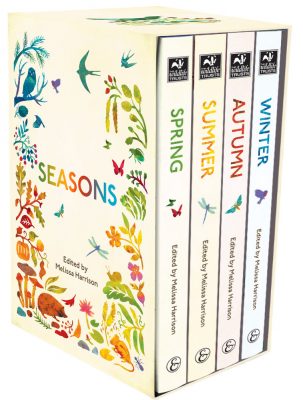
The boxed set of all four seasons is available here.

seasons-box-set

Winter – An Anthology for the Changing Seasons

winter

Winter is a withdrawal: quiet and dark and cold. But in the dim light frost shimmers, stars twinkle and hearths blaze as we come together to keep out the chill. In spite of the season, life persists: visiting birds fill our skies, familiar creatures find clever ways to survive, and the world reveals winter riches to those willing to venture outdoors.

In prose and poetry spanning seven hundred years, Winter delights in the brisk pleasures and enduring beauty of the year’s turning. Featuring new writing from Patrick Barkham, Satish Kumar and Anita Sethi, extracts from the work of Robert Macfarlane, James Joyce and Kathleen Jamie, and a range of exciting new voices from across the UK, this invigorating collection evokes the joys and the consolations of this magical time of year.

My Review of Winter –

An Anthology for the Changing Seasons

I’m finding it difficult to review Winter – An Anthology for the Changing Seasons without repeating all my praise for Summer too.

Once again this anthology is an absolute delight. There really is something for everyone, regardless of whether the reader likes poetry or prose, modern or classical literature, essay or diary.

I found a warming familiarity through the inclusion of old favourites like Hardy’s The Darkling Thrush or Dickens’s Bleak House as these pieces brought back memories from my past as well as reminding me of the season of winter. However, I also found real delight in newer passages from authors I have never encountered before. Emma Kemp’s piece on her walk with her dog, Luka, for example evoked such a strong feeling of solitude and foreboding that it made goosebumps appear on my arms. The senses are indeed, so well catered for in this anthology.

Although each piece is in the anthology on merit, there were a few new to me pieces that resonated with me completely so that I felt the writer had looked into my soul and understood me. Anna Laetitia Barbauld’s letter to Mrs Beecroft summed up exactly how I feel about the winter so that I too believe I am one of those creatures that sleep all winter. I loved too, learning new aspects of nature and new words like ‘broal’ in Jen Hadfileld’s poem that embarrassingly I hadn’t encountered before. Not only does Winter – An Anthology for the Changing Seasons entertain delightfully, it educates too.

The only way to convey just how glorious this book is, is to say, just buy it. I think these anthologies are outstanding, with such rich and eclectic selections, that they are an absolute must for nature lovers everywhere.

About the Editor Melissa Harrison

melissa-harrison

Melissa Harrison is a writer and nature lover whose first novel Clay (2013) won the Portsmouth First Fiction prize, was selected for Amazon’s ‘Rising Stars’ programme and  named by Ali Smith as a book of the year. Her second, At Hawthorn Time (2015), was shortlisted for the Costa Best Novel Award and chosen by the Telegraph as one of their Books of the Year; both books are as much about the natural world as they are about people. She writes the Nature Notebook in The Times and regularly speaks about conservation, literature, and the very fertile ground between the two.

You can follow Melissa Harrison on Twitter or visit her website.

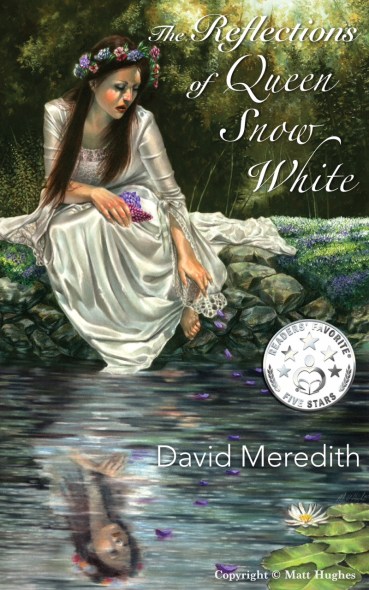
The Timeless Allure of Fairy Tales, a Guest Post by David Meredith, author of The Reflections of Queen Snow White

snow-white

This post comes with an enormous apology to David Meredith, author of The Reflections of Queen Snow White, as I promised a slot to David on Linda’s Book Bag way back in May and personal events so overtook me I completely forgot to put it out. Putting that omission right, David is today telling us all about the timeless allure of fairy tales and their incredible impact and relevance in today’s society.

The Reflections of Queen Snow White is available for purchase in e-book on your local Amazon site.

The Reflections of Queen Snow White

snow-white

On the eve of her only daughter, Princess Raven’s wedding, an aging Snow White finds it impossible to share in the joyous spirit of the occasion. The ceremony itself promises to be the most glamorous social event of the decade. Snow White’s castle has been meticulously scrubbed, polished and opulently decorated for the celebration. It is already nearly bursting with jubilant guests and merry well-wishers. Prince Edel, Raven’s fiancé, is a fine man from a neighboring kingdom and Snow White’s own domain is prosperous and at peace. Things could not be better, in fact, except for one thing:

The king is dead.

The queen has been in a moribund state of hopeless depression for over a year with no end in sight. It is only when, in a fit of bitter despair, she seeks solitude in the vastness of her own sprawling castle and climbs a long disused and forgotten tower stair that she comes face to face with herself in the very same magic mirror used by her stepmother of old.

It promises her respite in its shimmering depths, but can Snow White trust a device that was so precious to a woman who sought to cause her such irreparable harm? Can she confront the demons of her own difficult past to discover a better future for herself and her family? And finally, can she release her soul-crushing grief and suffocating loneliness to once again discover what “happily ever after” really means?

Only time will tell as she wrestles with her past and is forced to confront The Reflections of Queen Snow White.

The Timeless Allure of Fairy Tales

A Guest Post by David Meredith

Especially in the past ten years or so, retellings, reboots and reimaginings of these wonted yarns have become exceedingly popular in the form of televisions shows like “Grimm”, “Once Upon a Time”, and “Sleepy Hollow” or movies like “Into the Woods”, “Snow White and the Huntsman” “Maleficent”, and “Jack the Giant Slayer” just to name a few. Even in the realms of literature there are countless retellings and reworkings, not the least of which is my own reimagining The Reflections of Queen Snow White. What is it about these ancient tales that fascinates us so? What is it that keeps us hungry to hear them told and retold again and again unto perpetuity?

There are a couple of divergent theories on the matter. The first is that fairytales are a method of escape. With extravagant flights of fancy, impossible destinations, and magic as quotidian as the air we breathe they transport us to a world more lambent and pure than the achromatic halls and passages our weary feet tread day in and day out in the vapid, workaday world. Stark characters who are much more noble or far more dastardly than is likely in the maudlin greys and convoluted truths which compose our reality allow our imaginations to take flight and escape the earthly bonds of our humdrum, banal lives. Fairy tales enchant us, according to this view, through their impossibility and their emancipating impact on our consciousness.

The other, antipodal supposition is rather that fairy tales are engaging because they are unequivocally, brutally true. Nations have risen and fallen into the dust of vague remembrance. Peoples and tribes have warred to triumph or defeat a thousand-thousand times, ardent in their certainty that theirs was the good and righteous struggle of all time only to be largely obscured by a fog of days that grows thicker with every terrestrial rotation of this great, lonely island of green and blue upon which we all reside, and yet we remain largely the same. Human passions, desires, and vices have not changed very much over the 20,000 years or so of chronicled history.

People struggling with poverty and marginalization still wish upon stars and dream of ameliorating their unenviable station. The ambitious, the ruthless, and the brutal still commit unspeakable atrocities of callous cruelty and jealousy and the victims thereof still discharge their anguished cries for a hero to balance the scales of justice once more. People still yearn for everlasting love and are still broken and desolate when happily ever after proves to be far more effervescent than they had hoped it would be. Fairy tales speak to us, because they address immutable truths that are an inescapable portion of the whole of what humanity really means.

Ellen Spitz (2015) asserted “The core of fairy tales seems to reach deeper—well beyond the delights and shocks caused by improbable events—towards a species of raw honesty and authenticity.” They speak to our deepest desires, darkest fears, and greatest flaws, but they are also aspirational. They provide us with examples, regardless how improbable, of how we might overcome desperate circumstances to achieve greatness and contentment in a world where such things often seem rarified and elusive. They give us hope that everything really will turn out all right in the end.

So why do we continue to be captivated by fairy tales? Why do these stories connect with so many people on a level that approaches the spiritual? – Because, they are true… and not true. They connect with us by common experience and fantastical fabrication to show that despite the hectic vexations of twenty-first century living there are still things universally shared. They whisk us away to imaginary worlds where naught but a wish and a dream can lead us to everlasting happiness, but cohere to the deepest realities of our inner being and collective experience. In the end, we continue to cherish fairy tales because they are stories about us – perhaps a more perfect us or even an impossible us, but us nonetheless – and what it truly means to be human.

About David Meredith

david-meredith

David Meredith is a writer and educator originally from Knoxville, Tennessee. He received both a Bachelor of Arts and a Master of Arts from East Tennessee State University, in Johnson City, Tennessee as well as a Tennessee State Teaching license. On and off, he spent nearly a decade, from 1999-2010 teaching English in Northern Japan, but currently lives with his wife and three children in the Nashville Area where he continues to write, teach English, and is pursuing his doctoral degree in educational leadership.

You can follow David on Twitter, and visit his website.

8 Memories of the 80s, a Guest Post by Sarah Lewis, author of The 80’s Annual

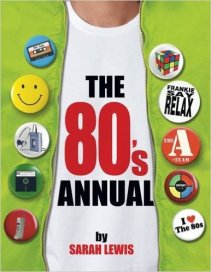
80s-annual

Oh my goodness. What a decade the 1980s was for me. I got my degree, got my first teaching job and got married within the first few years of the decade. Consequently I’m thrilled to be returning to that era with Sarah Lewis, author of The 80’s Annual, as she recalls eight outstanding memories for her during that decade.

The 80’s Annual was published in hardback on 1st November 2016 by New Haven and is available for purchase with free worldwide delivery here as well as from other retailers like Amazon and Waterstones.

The 80’s Annual

80s-annual

A full-colour retrospective of the year, with more than a nod to the teenage magazines of the era, The 80’s Annual embodies the excitement felt by the generation who grew up receiving an annual at Christmas.

Featuring celebrity commentary on 80’s popular culture, 20 Question interviews, Top Tens, with contributions from Bruce Foxton, The Selecter, Johnny Hates Jazz, Musical Youth, Londonbeat, Then Jerico, Phil Fearon, Brother Beyond, Modern Romance, John Parr, Paul Hardcastle, Hazell Dean, Steve Blacknell, Garry Bushell, Matthew Rudd and more.

Not forgetting the obligatory cheesy photo story, 80’s fiction, crosswords, puzzles, and quizzes including Lyrically Challenged, Pop Quiz and Which 80’s Group Are You? The 80’s Annual offers the perfect combination of nostalgia and new. A great read for every adult 80’s child.Going back to the 80s has never been so much fun!

8 Memories of The 80s

A Guest Post by Sarah Lewis

When the Eighties began, I was still in single figures. I turned 18 at the beginning of 1989, so I think it’s fair to say that, for me, the decade holds a wealth of memories as diverse as the era itself. Here are eight of my favourites:

The return of space shuttle Columbia

I was ten years old when Columbia, the first space shuttle was launched on 12th April, 1981. When it made its descent two days later, the excitement was palpable. Our headmistress gathered all the pupils into the school hall, where we sat cross-legged on the polished, wooden floor, as the bulky Seventies-style television was wheeled in on its tall frame. We all watched in awe as Columbia landed safely, and made space history.

Swimming whatever the weather

During the early Eighties, my brother and I would go swimming at our local outdoor pool every Wednesday evening. It was fantastic when the sun was shining, but just as much fun when it rained. Once we were in the pool during thunder and lightning! When we had finished swimming, we would run over to the wooden hut at the side of the pool to buy sweet treats like chocolate tools or Texan bars. In the colder weather, we would stand there wrapped in our towels, shivering as we sipped piping hot mugs of Oxo.

Culture Club’s first appearance on Top of The Pops

I had not long started at secondary school when the band made their first appearance on TOTP with Do You Really Want To Hurt Me? I was mesmerised by Boy George from the minute he appeared on my TV screen, and have been a lifelong fan of his since. I can remember going into school the next day, and the first lesson we had was Games. All the conversation in the changing rooms was about that performance, and what gender Boy George was. I got incredibly frustrated with those who were convinced he was a girl. Er … the clue’s in the name!

The recording of Do They Know It’s Christmas

Bob Geldof had moved to my home town a couple of years before Band Aid was formed, and was a familiar face to me. Watching the coverage of the recording, the subsequent fundraising success of the track, and then Live Aid the following summer was like watching a neighbour make history.

Teenage Magazines  

I have always been a prolific reader, and eagerly awaited every issue of magazines such as Smash Hits, Just Seventeen and Jackie. I was thrilled when I had a letter printed in Jackie, and then the magazine published a crossword I had put together. Smash Hits holds a special place in my heart because I had my post printed in their penpal section, during the spring of 1986. I received hundreds of replies from all over the world, some of whom I am still in touch with, and one of which is my son’s godfather!

Getting our first video recorder

For someone who religiously taped the Top 40 off the radio every Sunday, the possibility of recording my favourite television programmes was a dream come true. Then there were the trips to the video shop every Saturday, to choose a tape to hire for the weekend. Having a Betamax recorder, our options weren’t as vast as those who had opted for a VHS model, but I never cared. Even having to adjust the tracking until the half black/half white screen appeared didn’t dull my enjoyment of this technological wonder.

My first road trip

Having passed my test in March 1989, and bought my beloved ‘N’ reg Austin Allegro, I was keen to get lots of miles under my belt. Once we had completed our A levels that summer, my friend Kate and I embarked on a road trip to North Wales. We had an amazing time despite the engine overheating in Wrexham, and blowing an oil seal on the journey home. It took us over nine hours to get back to Kent, and because we hadn’t budgeted for buying so much oil, the last bottle we bought was solely with coppers and five pence pieces!

The fall of the Berlin Wall

I had only been out in the big world of work for a few months when the wall came down on 9th November, 1989. For me, this historical event not only put to an end the Cold War and allayed the fears of nuclear war, which had hung over me during my early teenage years, but it also underlined the personal freedom I felt having recently left school. It was both a tangible and symbolic means of opening up the world and its possibilities.

About Sarah Lewis

john-otway-me-jona-lewie

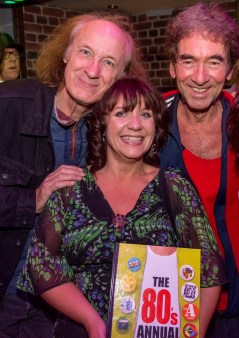
Sarah with John Otway and Jona Lewie

Sarah is a self-confessed obsessive of Eighties culture, and a mine of useless trivia on the decade. With an uncanny knack of bumping into celebrities, the ability to recall in startling detail events from over three decades ago (although likely to forget what she ate for breakfast!), and a number of diaries kept during her childhood and teenage years, no one is better placed to bring you a true taste of the Eighties.

Born and raised in The Garden of England, Sarah has lived in Kent all her life. Growing up surrounded by beautiful countryside, but miles from ‘civilisation’, saw her innate interest in music become a lifelong infatuation with radio and vinyl. Entrusted with her parents’ record collection from a young age, she spent hours listening to an eclectic mix of songs from Jim Reeves to The Kinks, Elvis to Sam Cooke, Otis Redding to The Rolling Stones. The latter’s High Tide And Green Grass album remains a firm favourite. At 10 years old, Sarah began her own vinyl collection when she bought her first 7″ single in Woolworths, Adam & The Ants’ Stand & Deliver.

Today, that now sizeable collection continues to grow with both new releases by 80’s artists and old classics, found in charity shops or received as gifts from friends. Played whenever she feels like taking a break from the radio, her “daily default background music”, Sarah believes her fascination with the Eighties has been compounded by years of exposure to its music, including gigs and retro festivals.

You can Follow Sarah on Twitter, visit her website and read her blog. You’ll also find her on Facebook.

Christmas at Lilac Cottage by Holly Martin

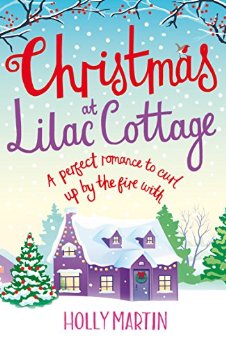
christmas-at-lilac-cottage

My grateful thanks to Emily Burns at Bonnier Zaffre for a copy of Christmas at Lilac Cottage by Holly Martin in return for an honest review. Originally released in e-book, Christmas at Lilac Cottage is now available for purchase in paperback too here.

Christmas at Lilac Cottage

christmas-at-lilac-cottage

Snow is falling on White Cliff Bay, where Christmas is magical and love is in the air . . .

Penny Meadows loves her cosy cottage with its stunning views over the snow-topped town of White Cliff Bay, but not even the roaring log fire can keep her personal life from feeling frozen.

That is until dashing Henry and his daughter Daisy arrive at the cottage for the festive season. And between decking the halls and baking delicious mince pies, Penny realises there is more to Henry than meets the eye.

With sleigh bells ringing and fairy lights twinkling, the ice-sculpting competition and Christmas Eve ball are in full swing. Will Penny be able to melt the ice and allow love into her heart? And will she finally have the perfect Christmas she’s been dreaming of?

My Review of Christmas at Lilac Cottage

Penny has been so hurt in the past that her lonely existence has become the norm, but that could just be about to change when she rents out the annexe to her cottage.

Christmas at Lilac Cottage is my first Holly Martin read and it certainly won’t be my last.

I have one negative comment that I want to get out of the way first and that it the over use of the word ‘arse’! It appears much too often as an insult, an endearment, a reprimand, as a casual comment and as a physical description to the extent that I almost began playing ‘arse’ bingo to spot it as I read. Mind you, that did add to my entertainment value from the book too!

That aside, I thoroughly enjoyed Christmas at Lilac Cottage. I appreciated the way in which Holly Martin set up the difficulties in relationships so that there was good tension in what is, essentially, a feel-good read. Whilst I didn’t always agree with the way Henry and Penny conducted their relationship I could understand why they behaved the way they did and I though it was very realistically portrayed so that I was on their side throughout.

I thought this realism was carried through into a really well created plot too. The events that create tension are those we could all, as readers, easily relate to. I really enjoyed the unusual premise of an ice sculptor in Penny too, and learnt quite a bit about a topic I’ve never really thought about before. Considering Daisy’s mother and the responses of the townsfolk to Penny’s past relationship made me appreciate how other people’s attitudes can affect us and I thought this was one of the most successful aspects of Christmas at the Lilac Cottage. It may be a conventional Christmas read in some respects, illustrating a difficult relationship between two highly attractive main characters, but there was also much to think about too.

Although I liked the characters of Penny, Henry and Daisy in particular, even the smallest bit-part players also felt real and three dimensional through Holly Martin’s descriptions. I think Henry must be every heterosexual woman’s dream and I loved the romantic sections involving him and Penny. These aspects also gave much of the humour too especially through Penny’s voluble explanations and that scene in the car, so that reading Christmas at the Lilac Cottage was enormously entertaining and frequently had me giggling.

I don’t often mention book covers, but in this case I have to say how beautifully sparkly and festive Christmas at the Lilac Cottage is. The image in this blog post doesn’t do it justice and merely picking it up to read lifted my spirits.

Christmas at the Lilac Cottage is a lovely feel-good read just right for the run up to Christmas – a season which forms the back drop of the story, but doesn’t over dominate. Even better, there’s a smashing recipe just asking to be backed at the end too. I’m looking forward to reading much more from Holly Martin in the future.

About Holly Martin

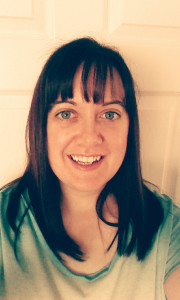
holly-martin

Holly Martin studied media at university which led to a very glitzy career as a hotel receptionist followed by a even more glamorous two years working in a bank. The moment that one of her colleagues received the much coveted carriage clock for fifteen years’ service was the moment when she knew she had to escape. She quit her job and returned to university to train to be a teacher.

Three years later, she emerged wide eyed and terrified that she now had responsibility for the development of thirty young minds. She taught for four years and then escaped the classroom to teach history workshops, dressing up as a Viking one day and an Egyptian High Priestess the next. But the long journeys around the UK and many hours sat on the M25 gave her a lot of time to plan out her stories and she now writes full time, doing what she loves.

Holly has been writing for 7 years. She was shortlisted for the New Talent Award at the Festival of Romance. Her short story won the Sunlounger competition and was published in the Sunlounger anthology. She won the Carina Valentine’s competition at the Festival of Romance 2013 with her novel The Guestbook. She was shortlisted for Best Romantic Read, Best eBook and Innovation in Romantic Fiction at the Festival of Romance 2014.

the-guestbook

You can follow Holly on Twitter, find her on Facebook and find all Holly’s books here.

What Happened Next, a Guest Post by Colette McCormick, author of Things I Should Have Said and Done

things-i-should-5-amend

Regular readers of Linda’s Book Bag know I’m full of good intentions when it comes to writing my own novel and less good at actually doing it. Therefore, I’m always fascinated by the process others have gone through. So, I’m delighted to welcome Colette McCormick, author of Things I Should Have Said and Done, today to tell us all about what happened immediately after she got her book deal.

Things I Should Have Said and Done was published by Accent Press on 15th November 2016 and is available for purchase here.

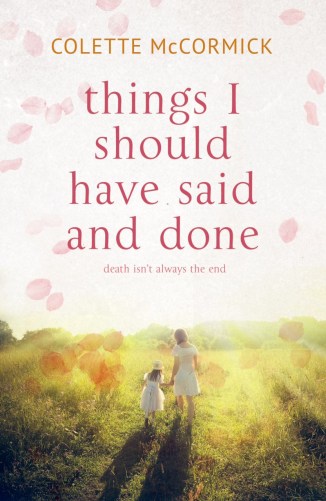
Things I Should Have Said and Done

things-i-should-5-amend

Ellen never knew what hit her. But when a drunk driver runs a red light her life is over in an instant. Her small daughter survives – and Ellen, hovering in the borderland between life and the afterlife, can only watch as her loved ones try to pick up the pieces without her. Her husband Marc, struggling with being a single parent. Naomi, her little girl, blaming her mother for leaving her. And Ellen’s mother, full of guilt, slowly falling apart. Ellen isn’t ready to let go. She doesn’t want to say goodbye. She is confused, angry and hurting for her family and herself.

And that’s where George comes in. He is her guide through her confusion as she witnesses the devastation among the living. With George at her side Ellen learns that even though she is dead she is not helpless. There are things that she can do from beyond the grave to influence what happens in the world she left behind. But George is new to his ‘job’, and has issues of his own. A working arrangement starts to become something neither of them expects. It is only after death that life can be fully understood.

What Happened Next

A Guest Post by Colette McCormick

My goal was to get a book deal and I’d not given a lot of thought to what would happen after I’d secured it. I had absolutely no idea what would need to happen to get my book from the slush pile and onto the shelves.

This is what happened next.

The first thing was that I had to tell the world, well my friends and family anyway. That was actually harder than it sounds because writing is something that I did just for myself so very few people knew that I “wrote” and only one person knew that there was a book that I was trying to place. I got more than one quizzical look, as if they thought I’d been dreaming or drinking but everyone seemed happy for me. I think some of them still think I was talking nonsense though.

In terms of the book however, at first nothing happened, well it did at the publishers but not for me. I sometimes wondered if I had actually imagined it. Now that would have been awkward.

Then, one day, a few months after the contract had been signed I had an email from my editor asking how I felt about a name change. I actually felt fine because I knew it was coming, I knew that the book needed it and by this stage it was all about making the book the best that it could be. I wasn’t about to get precious about a name. So the book that had been Beyond the Light, became Things I Should Have Said and Done.

Several weeks later a “cover treatment,” arrived which, I soon found out, is a mock up of what the book cover would look like. I’d had no idea what to expect and when I saw it I was blown away. It was so pretty, and I have to be honest, I like pretty. I downloaded it onto my phone and looked at it often. This was how my book was going to look and it started to feel very real.

I had something that I could use on social media and so now was the time to start the self promotion that every new writer has to get used to. I have learned that social media, used the right way, can be my friend. I’m still not great at it but I am learning and I think I’m getting better at spreading the word about my book.

So I had a new name, I had a cover and now the hard work was about to start.

I’d never seen anything like the editorial comments before. My editor had gone through the novel and now I had to do the same. I had to go through the novel line by line and either accept or decline every little change that had been made, from a comma to deleting a paragraph. I was amazed what a difference changing a word here or an intonation there could make. I found this the hardest part of the whole process mainly because of the time pressure that was involved. I had a week to get it done and I work full time so my time for editing was limited.  For the first time, writing started to feel like a job and I was relieved when I delivered them on time even though it did mean a 5am start on the Sunday morning.

After the line edits came the proofreading which (thankfully) wasn’t done by me, but I did have to accept it.

By this time I had a publication date and all that was left to do was to wait for that day to arrive and promote the book whenever and wherever I could.

One week before publication day I came home from work to find a parcel and I was beyond excited when I opened it to find my author copies inside. Finally I had my book, yes my book, in my hands.

It was fourteen months between signing the contract and publication day. It was one heck of a ride and I loved every minute of it.

About Colette McCormick

dscf3443

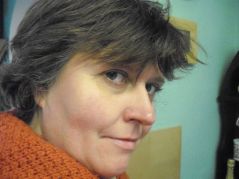
Colette McCormick was born and raised in Sheffield but has made the North East her home for over 30 years. Writing is her love but her job is as a charity shop manager for a leading children’s charity. She has a husband, two sons and a daft dog.

You can follow Colette on Twitter, find her on Facebook and Instagram and visit her blog.

An Extract from Fifteen Words by Monike Jephcott Thomas

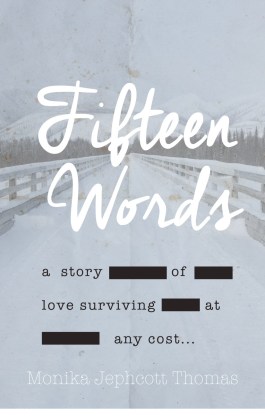
fifteen-words-cover

I love historical fiction and am delighted to be part of the launch celebrations for Fifteen Words by Monike Jephcott Thomas, bringing you an extract from the book today. Fifteen Words was published by Clink Street on 22nd November 2016 and is available for purchase in e-book and paperback from Amazon.

Fifteen Words

fifteen-words-cover

Two young doctors form a profound and loving bond in Nazi Germany; a bond that will stretch them to the very limits of human endurance. Catholic Max – whose religious and moral beliefs are in conflict, has been conscripted to join the war effort as a medic, despite his hatred of Hitler’s regime. His beloved Erika, a privileged young woman, is herself a product of the Hitler Youth. In spite of their stark differences, Max and Erika defy convention and marry.

But when Max is stationed at the fortress city of Breslau, their worst nightmares are realised; his hospital is bombed, he is captured by the Soviet Army and taken to a POW camp in Siberia. Max experiences untold horrors, his one comfort the letters he is allowed to send home: messages that can only contain Fifteen Words. Back in Germany, Erika is struggling to survive and protect their young daughter, finding comfort in the arms of a local carpenter. Worlds apart and with only sparse words for comfort, will they ever find their way back to one another, and will Germany ever find peace?

Fifteen Words is a vivid and intimate portrayal of human love and perseverance, one which illuminates the German experience of the war, which has often been overshadowed by history.

An Extract from Fifteen Words

In this extract we are in the last year of the war. Erika and her father-in-law Karl are trying to get across a decimated Germany to the relative safety of Karl’s home in North-West Germany on a crumbling train system at breaking point with the sheer numbers of migrants fleeing danger: from the Allied bombings, from other politically opposed Germans, or just trying to find family. The trains and stations are also bursting with non-German refugees fleeing persecution.

This extract is an example of not only some of the gripping action in the book, but also of the comedy which sometimes finds its way into the most unlikely moments in this story – as perhaps can only happen in a story set in such a bizarre landscape as a World War.

‘The train is about to leave. Will you be able to make it?’

Erika felt better for having been sick, but could have happily laid on the stinking couch for the rest of the morning. The sun was up now though and she took some solace from that as she hurried as fast as she could behind Karl. ‘I’ll make it,’ she smiled. She had to. For Karl more than herself. She couldn’t imagine how frustrated he would be if they missed this train.

‘Good,’ he said, ‘because there’s not another for fifteen hours.’

As they entered the station Erika felt another wave of nausea wash over her. She stopped and bowed her head, hands out in front for balance and protection from the crowds. The feeling soon passed and she raised her head to see Karl almost hopping about with the tension of it all.

Tick tick tick tick.

A whistle sounded. Karl beckoned to Erika with epileptic energy. She hurried after him to the platform where their train and their luggage were getting ready to leave them. The guard was at one end waving his flag at the driver, signalling him to go. There was a clunk as the engine took the strain on its chain of carriages. Karl grabbed Erika’s hand with his left and mounted the ledge outside the nearest compartment door as the train began to move.

‘Step up!’ he yelled at her.

The train continued gradually building momentum.

Erika put one foot on the ledge and found herself hopping along beside the train as Karl tried to haul her up. Karl had a firm grip on the compartment door with his good hand but Erika’s weight was the last straw for the camel’s back of his exhausted left wrist and he yelped.

The yelp told Erika she would end up on her back on the platform if she didn’t stop relying on Karl to rescue her. With her free hand she grabbed the compartment door too and ripped herself clear of Karl’s well-meaning molestations. She now had two hands to hold on with and she yanked herself up onto the ledge next to her father-in-law.

Karl and Erika looked at each other for a second, the fear on each other’s faces laced with delight at their success. Until Karl tried to open the door.

It was locked.

Or it seemed to be locked. Erika looked in through the window. The compartment was full of people and she came face to face with a mother breast feeding her baby. A soldier was standing with his back to door holding it firmly shut, as he had been since they boarded to gallantly preserve the mother’s dignity. Erika couldn’t be sure whether his chivalry was so fierce towards the mother that he would keep two other passengers hanging on the outside of an accelerating train till the child was full, or whether he was just unaware of their presence. Karl knocked on the window. Erika even saw the mother’s lips move as she said something to the soldier. But he didn’t budge. The baby suckled on. Quickly, like everyone else in the country, hurrying up in case he missed out or the supplies dried up.

Karl shouted an expletive which, coming from him, would have made Erika laugh and blush had she not been clinging on for dear life to the outside of a train that was now moving out of the station at some speed.

‘Oi, boss!’ a voice came riding on the growing wind from behind Karl. It belonged to a young chap sticking his head out the door of the next compartment. ‘Come in this way.’

Karl looked at the chap. Looked back at Erika as if to say, ‘Shall we?’ Erika glowered back at Karl with more than a hint of sarcasm in her features that said, ‘No, I’m fine here thanks!’ And they quickly began to edge along the outside of the speeding train. Karl put one hand out to help Erika along but she slapped it away. If she had time to think at all she thought he wouldn’t consider it a rude gesture in the circumstances as they both needed two hands to clamp themselves to whatever railings and bars made themselves available to them on their precarious shuffle along to the next compartment. Memories of her climbing holidays in the Alps chugged through her muscles and she later found herself, ironically, praising God for some aspects of the Hitler Youth Movement, the parts that promoted physical fitness at least. For the first time in a few months she didn’t think about the fact that she was pregnant in so much as she didn’t feel the tiredness, the cramps, the sickness. She was being pumped full of adrenaline, the magical hormone that put everything else the body was going through on hold when it was in charge. And now it really was a time for adrenaline to be in charge. Karl had reached the next compartment and the young chap opened the door ready to receive them.

They will have to close that if we reach the tunnel before I’m in, Erika thought to herself.

Because indeed there was a tunnel up ahead and they were closing in on it fast. She saw Karl disappear into the carriage and then she did think about the physiognomy of her pregnancy, despite the adrenaline. She thought about how far she stuck out from the side of the train because of her belly and how that meant flattening herself against the side of it as they roared through the tunnel was not an option. She would be churned up between the bricks and the train if she wasn’t inside by then.

Tick tick tick tick.

‘Come on, Miss,’ the young chap beckoned frantically, just as Karl had done to her at the station entrance a few minutes before. She was sick of being beckoned at like a dog. She was sick of waddling like a duck. She inhaled her frustrations, like the steam engine consumed coal, turning them into kinetic energy to power herself along with her arms for the last few metres. Things suddenly got very dark as the bright blue winter sky was blocked out now by the looming tunnel. Her feet side stepped along the ledge as fast as possible, too fast for their own good and she slipped.

She felt herself fall.

About Monike Jephcott Thomas

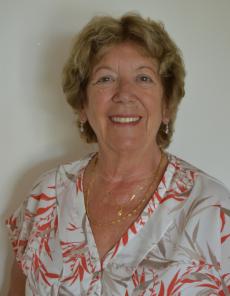
monkika-jephcott-thomas

Monika Jephcott Thomas grew up in Dortmund Mengede, north-west Germany. She moved to the UK in 1966, enjoying a thirty year career in education before retraining as a therapist. Along with her partner Jeff she established the Academy of Play & Child Psychotherapy in order to support the twenty per cent of children who have emotional, behavioural, social and mental health problems by using play and the creative Arts. A founder member of Play Therapy UK, Jephcott Thomas was elected President of Play Therapy International in 2002.

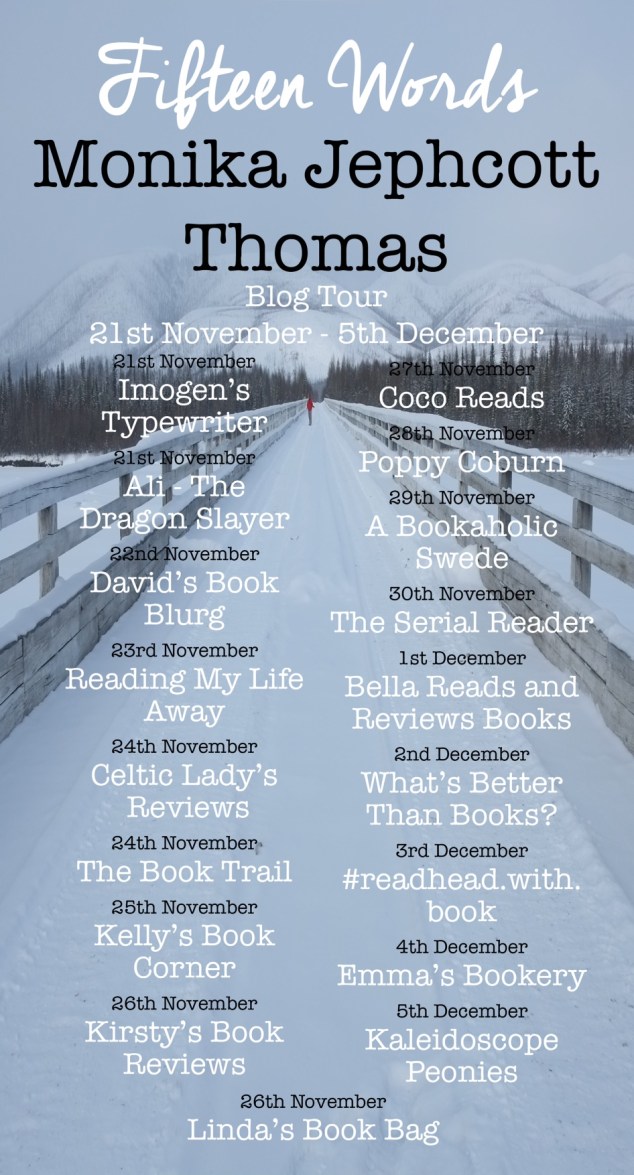
You can find out more by visiting Monika’s website and with these other bloggers:

fifteen-words-alternative-banner