Hush Little Baby by Joanna Barnard

Hush little baby

My grateful thanks to Becky Hibbert at Penguin Random House for a copy of Hush Little Baby by Joanna Barnard in return for an honest review.

Hush Little Baby was released in e-book by Ebury Press yesterday, 1st May 2017, and is available for purchase and paperback pre-order here.

Hush Little Baby

Hush little baby

When baby Oliver breaks his arm, no-one can (or will) say how it happened.

His mother is exhausted.

His father is angry.

His older sister is resentful.

And they all have something to hide.

My Review of Hush Little Baby

Ten month old Oliver has a broken arm and no-one is able, or willing, to say what happened.

Firstly let me say that Hush Little Baby is a cracking domestic thriller that keeps the reader guessing throughout. I definitely suspected every character who had access to Oliver on the day of the injury. I was desperate to know what had happened.

However, what struck me so much about Hush Little Baby was the exploration of the characters, what makes us human and the eye opening information about what happens and could happen when physical abuse is suspected. The reactions of those outside the family made for uncomfortable reading as I felt my own attitude was being highlighted quite unfavourably. I think I’ve probably fallen into the ‘no smoke without fire’ opinion in the past and now I feel quite ashamed. The themes in Hush Little Baby are brilliantly handled. We frequently don’t know what goes on behind closed doors and Hush Little Baby illustrates just how easily an ‘ordinary’ family can implode.

Hush Little Baby is a masterclass in character driven plotting. Whilst Oliver’s injury is the catalyst for the action, it is almost incidental as Joanna Barnard peels back the layers of Sally, Richard and Martha. I went through the complete range of emotions about each of these characters. At times I hated, loved and pitied each one. They are so vivid and real that it was difficult not to believe that they are not living people. The first person perspectives add to this feeling so effectively. Joanna Barnard is able to create a fifteen year old girl and an adult man with equal skill and realism.

Each character has a past that helps the reader gain full insight into why they are as they are and I really felt as if Joanna Barnard was manipulating me thoroughly as she controlled how I felt about each one. Several times I exclaimed aloud ‘Oh!’ I had a busy time when I began reading Hush Little Baby and couldn’t devote sustained periods to reading it. I think it says something about the quality of the book that I wondered how the characters were faring when I wasn’t reading.

I thought Hush Little Baby was intelligent, skilful and absorbing and I really recommend it.

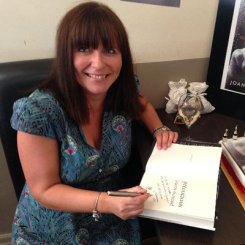
About Joanna Barnard

joanna barnard

An English Literature graduate, Joanna Barnard has experience in marketing and as a counsellor. In 2014, she won the inaugural Bath Novel Award. A Northerner currently exiled in the South of England, Joanna misses flat vowels, friendly bus drivers and chips and gravy.

She is the author of Precocious and Hush Little Baby.

You can follow Joanna on Twitter and visit her blog where you’ll find a list of events featuring Joanna.

An Extract from The Chosen Path by Jason Hershey

The Chosen Path

I’m very pleased to be part of the launch celebrations of The Chosen Path by Jason Hershey. The Chosen Path is the second book to feature Thelonious “Theo” Mitchell following To Die To Live and I’m delighted to have an extract to share with you today. The Chosen Path will be published tomorrow, 3rd May 2017, and is available for purchase here.

The Chosen Path

The Chosen Path

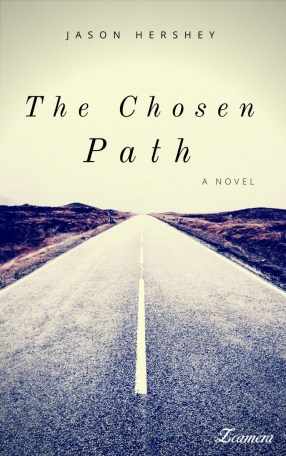
From the author of the emotional To Die To Live, comes the next riveting chapter of one man’s search to find his purpose in life.

Thelonious “Theo” Mitchell, now a college freshman, is eager to put the death of his friend, Draven, behind him. Devoting himself to school and sports, he meets Sabrinna, a beautiful co-ed who sweeps him off his feet. Untrusting and hidden behind a wall, he allows himself to fall for her.

Will he find his soulmate and someone who can restore his faith and trust in people? Or will she leave him reeling and continuing his search for a purpose in life?

An Extract from The Chosen Path

To be rejected when you give your heart, your whole heart, hurts. What was it inside me that allowed me to get hurt? Was I too nice? Was I too trusting? The questions kept replaying themselves over and over in my head. I felt like a victim of my own thoughts, beat down and weak, with no discernable way out. I just wanted someone for me. Someone who had my back and was down to love me.

I stood up off of the park bench and started to walk. I wasn’t sure where I was headed, but I needed a change. A change of heart, of outlook on life, of friends and future. I needed to straighten my life out, and fast. I walked slowly, taking my time to admire the quiet of the street. One thing about college in Kansas, it was quiet in the little town. I was able to reflect. I knew what I needed to do. It was doing it that was going to be hard. I didn’t know when I would tell people. The team had become my family. I loved those guys. They were a part of me and I was a part of them.

I couldn’t be around her, though. There was too much pain and hurt there for me. I was crushed every time I saw her. Every thought broke me down a bit more. I needed to remove myself from the situation before I forgot who I was.

I picked up a rock and threw it into the bushes, listening to it crash through the branches and leaves. When I was a child, I would stand in my backyard and throw rocks into the alley for hours on end. There was something therapeutic about it. The flight of the rock, free in the air, never knowing where it would land. I was the only person around and my footsteps echoed on the empty sidewalk. I knew that after tonight, my whole life would be different. I was ready for the change.

About Jason Hershey

Jason Hershey

Jason Hershey was originally from Phoenix, Arizona, but currently resides in Cuyahoga Falls, Ohio with his wonderful family. He is a graduate of Bethel College in North Newton, Kansas with a BS in Elementary Education. Jason has always been a writer, but gave it up to work on his teaching career.

You can find Jason on Facebook and follow him on Twitter.

An Interview with Kate Dunn, Author of The Dragonfly

the dragonfly

Having spent a month AWOL in April with no interviews or guest posts on Linda’s Book Bag, I’m delighted to be back to my normal blogging today with an interview with Kate Dunn, author of The Dragonfly.

The Dragonfly was published by Aurora Metro on 27th April 2017 and is available for purchase here.

The Dragonfly

the dragonfly

When Colin discovers his son is on a murder charge in France, he trails his small boat, The Dragonfly, across the channel to stay in Paris to try and help him. There he meets his grand-daughter the irrepressible Delphine for the first time. They embark on an exciting boat journey through the picturesque French canals, heading south through Burgundy, until the butter melts.

Along the way, they catch up with Tyler, a spirited American, and through various mishaps and misunderstandings, they land big fish, cultivate new loves and uncover a burning secret.

But can Colin finally help his son get off the hook?

Shortlisted for the 4th Virginia Prize for Fiction, The Dragonfly is the new novel by Kate Dunn: ‘a charming family drama set on the waterways (and in the prisons!) of France.’ (Claire King, author of The Night Rainbow and Everything Love Is). A beautifully written and expertly plotted adventure: ‘Quirky and warm-hearted, with darker undertones that keep you gripped. Kate Dunn is a fine storyteller.’ (Ben Elton)

An Interview with Kate Dunn

Hello Kate and welcome to Linda’s Book Bag. Thanks so much for agreeing to tell me about your latest book, The Dragonfly.

Tell me, what was the inspiration for your new novel The Dragonfly? 

My husband and I have done a lot of racketing around the French waterways and we once saw, tied up next to us in a marina, a tiny little boat only about four metres long and we got chatting to the owner and he and his granddaughter had been on an epic journey lasting 36 days and counting!  They were an extraordinary couple and I was fascinated by the challenges for such an ill-assorted pair living in an incredibly confined space and having to cope with the havoc that boating on the canals and rivers can sometimes wreak.  So that was the starting point for my novel, which is an account of the relationship between a middle-aged Englishman, Colin and his French granddaughter, Delphine, who are thrown together when her mother is killed.  To keep her out of harm’s way and offer some kind of diversion, he takes her on holiday on his tiny day boat The Dragonfly, and they have numerous adventures together as they sail south from Paris.

Did writing The Dragonfly help you relive places you’ve visited and things you’ve seen?

It certainly did.  The novel has sprung directly from my own experience, so most of the mistakes that Colin makes are ones that my husband and I have made ourselves, and a number of their adventures are in fact our adventures, or ones we have been told about by other boaters (there’s a real community on the waterways, with a great sense of pooled resources and information).  And the location is incredibly important to me in my writing – I think it’s a vital anchor to any story, so I go to a good deal of trouble to make it as vivid, real and accurate as I can.

Was description easier because you could see the reality in your mind’s eye?

I’m not sure about that.  I think you need to have an incredibly vivid image in your mind’s eye of anything that you are writing about, whether it’s real or imagined.  Sometimes it can be a bit restrictive, having to adhere slavishly to something real – I think you can run the risk of ending up with a kind of literal transcription, rather than something you have creatively taken ownership of – if that makes sense.

(It certainly does – and I hadn’t thought of it quite like that.)

Was it actually quite difficult to capture the essence of what you’d experienced and turn it into part of a fictional work?

Some of the waterways in France are just so staggeringly beautiful that any kind of description is inevitably going to fall short – so that is always a challenge.  When I’m drawing on my own experiences (which I don’t often do, The Dragonfly was rather a steep learning curve in that respect) I think that the emotional truth of what has happened and the impact that it has had on you is as important as any concrete details about the experience itself. It’s a balancing act as you do need some of these details to help make the story specific rather than generalised.  I think a few individual insights are always more telling than a wash of too much information.

(I agree that it is the emotional pull that really makes a novel.)

Were there places you hadn’t been and had to research vicariously or by visiting them?

Every place that features in The Dragonfly is somewhere that we have sailed to ourselves, although my husband recently reminded me (rather sorely it must be said) that I made him go back miles and miles to a particular lock to check whether it had chestnut or beech trees growing beside it.  And the Internet is a wonderful tool for research – I did find myself checking things on Google Earth / the French tourist board / whatever  as I was writing to make sure that the background information was as accurate as possible.

What were you hoping to achieve by drawing on your own experience?

I have a passionate love for France so I wanted the novel to be a hymn of affectionate (and sometimes irritable) praise to a country that I really love and admire.  I wrote it at a difficult time in my life, following the sudden death of my father and my son leaving home to go to college, so writing about Colin and the sadness that he feels about being estranged from his son Michael was a way of addressing my own grief and sense of dislocation. Although it is quite a light and amusing story, what underpins it is something a little darker.  Maybe I wanted to show to myself that by working through my own feelings I could develop resilience and find a kind of resolution.  It’s a book about reconciliation – perhaps the actual journey that my characters undertake mirrors my own journey through bereavement and out the other side – I hadn’t thought of that before!

After a year like I had last year Kate, I can totally empathise with those sentiments. Thanks so much for sharing some of the background to The Dragonfly with us today.

About Kate Dunn

Kate-Dunn-writer-author

Kate Dunn comes from a long line of writers and actors: her great-great-grandfather Hugh Williams was a Welsh chartist who published revolutionary poetry, her grandfather, another Hugh Williams, was a celebrated  film star and playwright and she is the niece of the poet Hugo Williams and the actor Simon Williams.

Kate has acted in repertory, toured around Britain, the Far and Middle East and appeared in three West End plays, as well as a number of television productions. She has a PhD in Drama from Manchester University.

Following the birth of her son Jack she turned to writing and has had four books published including Rebecca’s Children, Always and Always – the Wartime Letters of Hugh and Margaret Williams, Exit Through the Fireplace – The Great Days of Rep
and Do Not Adjust Your Set – The Early Days of Live Television.

The Dragonfly was short listed for the Virginia Prize awarded to encourage fresh women’s voices in fiction.

You can visit Kate’s website and follow her on Twitter.

My Sister and Other Liars Publication Day Interview with Ruth Dugdall

my sister and other liars

Having met lovely Rugh Dugdall and heard her read from her novel Humber Boy (you can find out more about that here) I’m thrilled to welcome her on Linda’s Book Bag today to celebrate her latest novel My Sister and Other Liars.

My Sister and Other Liars is published today, 1st May 2017 by Thomas and Mercer and is available for purchase here. You can read my review of My Sister and Other Liars here.

My Sister and Other Liars
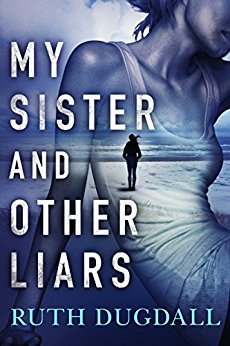
my sister and other liars

Sam is seventeen, starving herself and longing for oblivion. Her sister, Jena, is mentally scarred and desperate to remember. Between them, they share secrets too terrible to recall.

Eighteen months earlier, Sam was still full of hope: hope that she could piece together Jena’s fragmented memory after the vicious attack that changed their family forever. But digging into the past unearthed long-hidden lies and betrayals, and left Sam feeling helpless and alone in a world designed to deceive her.

Now, in a last bid to save her from self-imposed shutdown, Sam’s therapist is helping her confront her memories. But the road to recovery is a dangerous one. Because Sam has not only been lying to her doctors: she’s been hiding dark secrets from herself.

An Interview with Ruth Dugdall

Welcome to Linda’s Book Bag Ruth. Thank you so much for agreeing to answer some questions on my blog about your writing and congratulations on today’s publication of My Sister and Other Liars. Firstly, please could you tell me a little about yourself?

Hi Linda, I’m Ruth Dugdall and I write crime novels. Sounds like the beginning of an addicts meeting, which just about sums it up. In fact, crime is all I’ve ever known about; I first entered a prison when I was 18, and I started working with criminals straight after graduation, aged 21. When I qualified as a probation officer I thought I was in it for the long haul, like a stick or rock if you broke me in half I’d have had `probation officer` written through my core. But the writing was always there, just as a hobby, all along. When The Woman Before Me won the CWA Debut Dagger in 2005 I decided to see if I could make a go of writing. It’s been a long, difficult, journey but I’ll never regret that decision.

the woman before me

Without spoiling the plot, please could you tell us a bit about My Sister and Other Liars?

Like all of my novels, the story is inspired by real events. It is set in Ipswich, where I grew up, and also on a hospital ward for women with eating disorders.

Sam is a teenage anorexic living on a council estate in Suffolk. Her sister, Jena, was attacked and left brain damaged on Sam’s 16th birthday, and the police have made no arrests. Frustrated, Sam decides that if the police can’t bring Jena’s attacker to justice then she will. Even if it kills her.

My Sister and Other Liars opens with a couple of quotations about memory. Why do you think writers are seemingly so obsessed with memory and identity?

`Memory is the diary we all carry with us`, and yet it is completely unreliable and so subjective. I am fascinated that siblings can talk about their childhood and find themselves completely disagreeing on the same experiences. We can remember things that haven’t happened, simply because we were told about them, and we lose other things completely.

When I was interviewing criminals I was always struck by their `story` of the crime, and how it was at odds with the victim’s story, but they believed it totally. My job was to shift that belief, and I came to understand that `memory` and our sense of `self` is a fragile, malleable thing. Which makes it perfect fodder for writers, especially crime writers.

The `unreliable narrator` is often someone whose memories cannot be trusted, often because they are mentally unstable or are substance abusers. In this case, Jena’s memory is fractured because of the attack, which caused brain damage, so she only partly remembers. Sam, who witnessed the attack but cannot describe the attacker, is unable to trust her memory because she is young, it was dark and raining, and yet she digs deeper, unable to rest until she can remember everything.

Often it is best not to remember.

You say your books are about ordinary people who behave in extraordinary ways. How far do you think we all have the capacity to behave like the characters you present?

For me, the evil killer waiting in the shadows is simply not interesting, or realistic. After working with so many criminals I’ve had this belief re-enforced again and again: people can behave monstrously, but they are usually not monsters. This is a far more terrifying idea, because it means any of us, given the right toxic mix of environment and opportunity, could do something bad. This idea is a central one for me, and I keep returning to it with my characters. I describe people who seem and look ordinary, and then lift their skin to see what lies beneath.

Your novels are very gritty and showcase workers such as probation officers within the justice system that other books tend to ignore. Why do you choose to write about these characters?

Fact: probation officers have more direct contact with criminals than any other profession.

Yet they are (almost) invisible in crime novels and films, replaced by journalists and psychologists who, in reality, would have limited access. After I won the Debut Dagger it took 5 years to find a publishing deal, and one reason was that publishers didn’t believe the public would be interested in the role. I think that’s very sad, as these workers are really the backbone of the criminal justice system and deserve to be represented.

humber-boy

Humber Boy was set in Hull, your home town, but you now live in Suffolk and have lived in Luxembourg. How does location affect a writer do you think?

Location is important, but even when I lived in the rather refined and rarefied Luxembourg, I still sought out its gritty corners. Apart from Nowhere Girl (set in Luxembourg) my books are set in Suffolk. The county is east of everything, and the town where I live is at the end of a motorway which only leads here. Any further, and you end up in the North Sea. So the town is a bit like a `closed room mystery`, where people know each other and if something happens one of them had to have done it. Here we are, in a small town, under a wide sky, with the sea stopping us from dropping off the side…I love it and there’s no shortage of inspiration.

You’ve honed your writing technique through short stories as well as your novels. How has your writing developed to the point of writing My Sister and Other Liars?

Novel writing is a marathon, it requires time every day, building up the right muscles and the stamina to see it through to the end. Short stories are more like a sprint, and I love having that contrast. My short stories are very different to my novels, much lighter and more comic, and are published in magazines such as Women’s Weekly.

Unlike running a marathon, though, there’s never really an end point with novel writing, instead there are a series of deadlines. Even publication doesn’t feel like the finish line because it’s then about how the book is received and how it sells. This certainly keeps me on my toes, and there are often times when I wonder why I put myself through such a masochistic process, but then I lose myself in a scene and forget my doubts. That’s the magical part, the addictive part.

When I heard you speak at an event, you said that writers write because they feel compelled to do so. How do you feel when you’re not actually writing?

When I’m not writing I’m not a writer, I’m other things. But I never feel more `myself` than when I’m lost in a story.

How do you go about researching detail and ensuring your books are realistic?

I enjoy research, and take it very seriously. I’m currently working on a novel called Innocence Lane and Suffolk Constabulary have allocated me a Detective Sergeant to act as an advisor, which makes me one lucky writer. My detective has synaesthesia, and so I’m in contact with the President of the Synaesthesia Association and I’ve also liaised with a professor who specialises in the subject. Next week I’m going to a shooting range to learn how to use a rifle…

Which aspects of your writing do you find easiest and most difficult?

That’s a good question. I love the editing process, when the novel exists in a rough form but needs honing, as I feel a bit like a sculptor with a block of marble, trying to get the shape right. I’m good at working with feedback, and always enjoy working with editors. The hardest part has to be dealing with rejections, which does come with the territory, but is still tough to handle. Every book I’ve published, with the exception of Nowhere Girl (which was sold as an idea) has accrued many rejections before finally being published.

What are your writing routines and where do you do most of your writing?

I have a study, but I’m just as likely to be found in the lounge, sat on the sofa with a laptop balanced on my knee! A writer can write anywhere, in fact other locations are good for the imagination, so I always have a pen and notebook with me. Nowhere Girl was written as I explored Luxembourg’s neighbouring countries so was mostly written in cafes.

I know you are always willing to speak to audiences about your writing. How important is it for authors to connect either virtually or in real life with the people who read their books do you think?

I don’t think it would be possible, these days, to have a successful novel if the author wasn’t willing to promote it. A bold statement, I know, but I think readers have expectations that they can know more about the author or the process, we live in a time when book groups are on every corner so readers are sophisticated and critical, and they want answers. I never turn down any invite, I travel far and wide to speak to people. The Women’s Institute is my favourite organisation, I have about 30 WI talks booked for this year, and they are always vibrant and characterful meetings.

You run workshops in schools on occasion. Why do you do that?

I have visited schools where the pupils have studied my novels, and I also like to run creative writing courses to inspire kids. I went to a failing comprehensive, and when I was fourteen a poet came in – I wish I could remember his name, but I can recall his face perfectly. He took a group of us and we did poetry for a week, and it was probably one of the most important weeks of my school life because it opened a door, showed me something was possible that I hadn’t considered before. To go into a school and do the same thing, is my way of paying back.

And, when you’re not writing, what do you like to read?

I read widely, and will read several books at once. I’ve just read Roanoke Girl and loved it, very powerful, and focused on similar themes to My Sister & Other Liars. I finished The Handmaid’s Tale yesterday, for the zillionth time. I have a select list of books that I re-read yearly, as a way to remind myself of what can be achieved in a novel and this is one of them, along with The Secret History and Sharp Objects.  

My Sister and Other Liars has a cover that suggests another identity inside the person to me. How did that image come about and what were you hoping to convey (without spoiling the plot please)?

The cover was designed by Thomas Mercer, and I loved it from first sight. I think they got the vibe just right.

If you could choose to be a character from My Sister and Other Liars who would you be and why?

I don’t really do appealing characters, so that’s a tough one. I think I’d be Monica, the spunky drama student, as she’s making the best with what she’d been given and she’s not going to take any nonsense.

If My Sister and Other Liars became a film, who would you like to play Sam and why would you choose them?  

Andrea Riseborough is an actress I admire and she always chooses intense roles. At 35 she’s too old for Sam, but she’d be great for Jena and I think she’d be up for it.

If you had 15 words to persuade a reader that My Sister and Other Liars should be their next read, what would you say?

Girl, Interrupted meets We Were Liars. Domestic noir, from the perspective of a teenage anorexic.

Thank you so much, Ruth, for your time in answering my questions and congratulations on My Sister and Other Liars.

About Ruth Dugdall

ruth dugdall

Ruth studied English at university and then took an MA is Social Work. Following this she worked in the Criminal Justice System as a social worker then as a probation officer. Part of this time was spent seconded to a prison housing serious offenders. She continues to work within the Criminal Justice System, most recently in Luxembourg.
Ruth’s novels are informed by her experience and are “authentic and credible”.

You can follow Ruth on Twitter, visit her website and find all her books here.
The Deepings Literary Festival 2017

DEEPINGS-LITERARY-FESTIVAL

I have just had a brilliant couple of days. I live in a small village, Deeping St James, attached to a small market town, Market Deeping, with the villages of Deeping Gate, West Deeping and Deeping St Nicholas all close by. Over this bank holiday weekend is the first ever Deepings Literary Festival and although I’ve only been able to experience the first two days, they’ve been amazingly good and I wish I’d had chance to do more.

Thursday 27th April

me

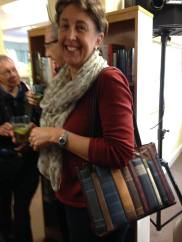
On Thursday evening I went along to the Festival launch at Market Deeping library (the library that refused to die when it was threatened with closure). Local dignitaries and authors came and children from one of the primary schools performed for us.

IMG_0912

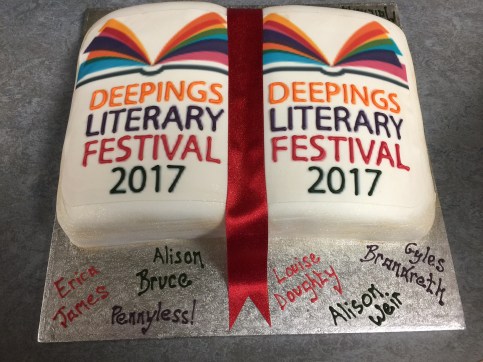
Smashing celebratory cake!

Friday 28th April

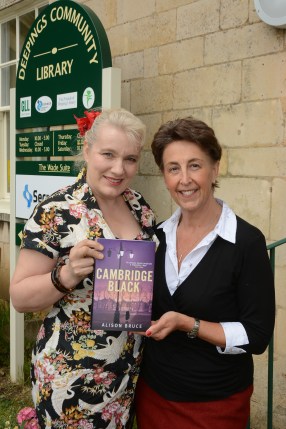
On Friday 28th April I was honoured to be asked to interview Alison Bruce, author of the Cambridge series of Gary Goodhew crime thriller books, all of which are available for purchase here.  I have recently reviewed Alison’s Cambridge Black here.

DSC_4165

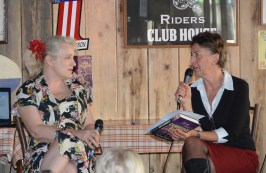
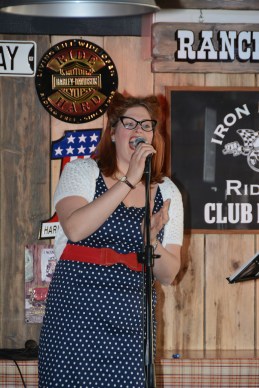
After a quick photo shoot at the library (thanks to my husband Steve), we went across to the event at The Iron Horse Ranch House which was sold out and Alison was a brilliant interviewee. We ran out of time way before the audience had run out of questions.

DSC_4190

We were also treated to some fantastic singing by Rachel Eyre who entertained us with songs from the 1940s, 1950s and musical shows.

DSC_4183

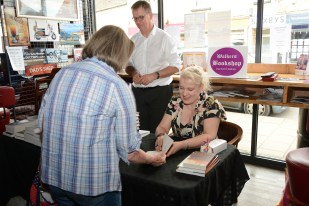
After the interview, Rachel continued to entertain us whilst Alison was inundated with audience members buying copies of her books and waiting to get them signed. Thankfully, Tim from Walkers Bookshop in Stamford was on hand!

DSC_4216

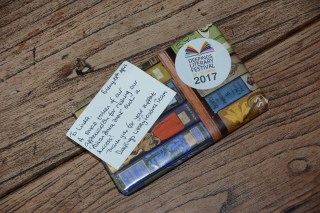
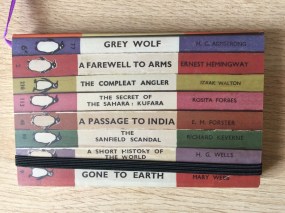
At the end of the event I was surprised by a gift from the festival committee as a thank you for taking part – it turned out to be a fabulous bookish notebook – just right for a blogger and bookworm.

DSC_4222

my notebook

Saturday 29th April

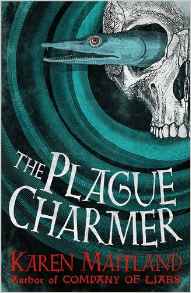
On Saturday I had signed up to hear Karen Maitland, author of The Plague Charmer speak about ‘Plague, Pottage and Poison’, the background to this novel.

DSC_4266

DSC_4290

Now, I have a confession. I was sent a proof copy for review of The Plague Charmer way before it was published in October last year and I’ve never got round to reading it. Having heard Karen’s utterly brilliant talk I shall definitely be starting it as soon as I can. The Plague Charmer is available for purchase here.

DSC_4275

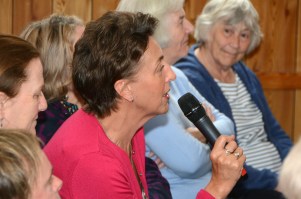
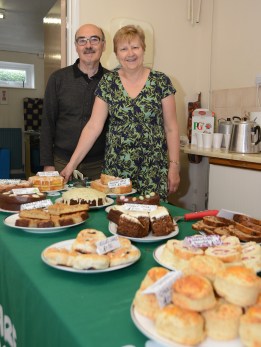
There were wonderful homemade cakes at the venue (I had the chocolate fudge cake) and refreshments being sold to raise money for Cancer charities and I even got to ask a Karen a question.

Plague Charmer

The Plague Charmer is available for purchase here.

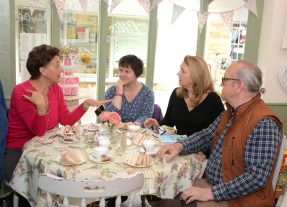
Following Karen’s talk I didn’t have time to stay to hear the others in the same venue as I was winging my way across to Lilli’s Tearoom to have lunch with Erica James.

DSC_4305

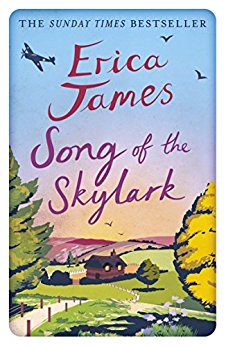
Erica is a prolific author and it was a real privilege to have lunch and hear speak and answer our questions. All of Erica’s books are available for purchase here, but I was able to buy, and have signed, Song of the Skylark, her latest. It was such a pleasure to meet an author I’ve long admired. You can read my review of another of Erica’s books, The Dandelion Years, here.

song of the skylark

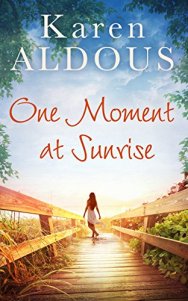
Even lovelier than expected for me was I was able to meet up with authors Julie Stock and Karen Aldous (and Karen’s husband) and have a chat with them too. I have previously interviewed Karen for Linda’s Book Bag and you can read that interview here.

DSC_4313

Just waiting for the tea and cakes to turn up too!

the vineyard in Alsasce

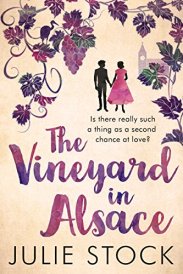
Julie’s book, The Vineyard is Alsace, is available for purchase here, and you can find all Karen’s books here.  Karen even signed a bookmark for me too.
0ne moment at sunrise

Immediately after the Erica James event I went hot-foot along to the library for a Read Dating event with 10 authors, being organised by Liz Waterland who runs the U3A book group to which I belong and, without whom, the library would be closed.

DSC_4329

Liz checking to make sure we’re all moving on at the right time!

DSC_4347

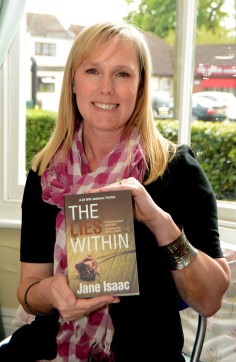
Jane Isaac

It was frenetic afternoon, dashing from one author to another to hear about their books and so good to meet up with lovely Jane Isaac again. I’ve reviewed another of Jane’s books, Beneath the Ashes, here and will be reviewing her latest, The Lies Within, on the blog on 10th May.

DSC_4320

The Lies Within by Jane Isaac is available for purchase here.

I also got to speak with almost all the following authors:

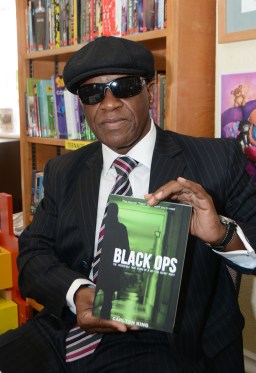
Carlton King

DSC_4321

Black Ops is available for purchase here.

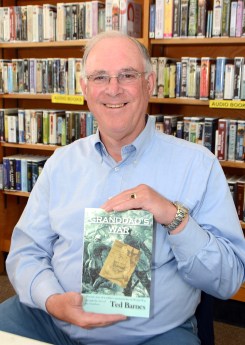
Ted Barnes

DSC_4330

Granddad’s War is available for purchase here.

Carol Browne

DSC_4325

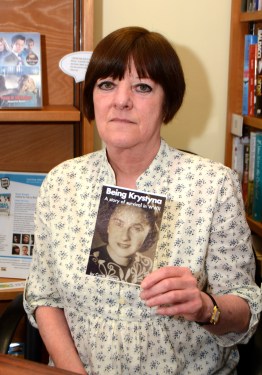
Being Krystyna is available for purchase here.

You can read a previous Linda’s Book Bag post from Carol here.

Ferrel E. (Darren) Calpin

DSC_4322

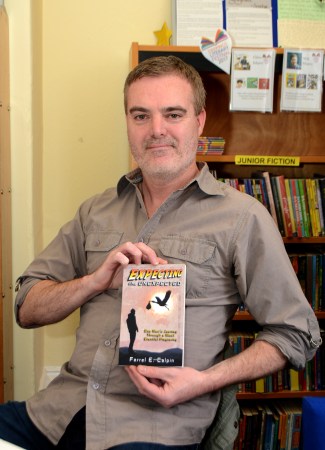
Expecting the Unexpected is available for purchase here.

Michael Cayzer

DSC_4323

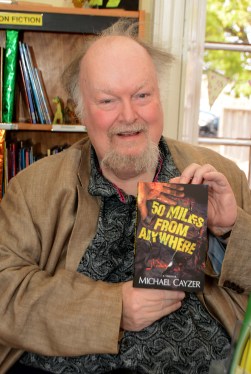
50 Miles From Anywhere is available for purchase here.

Emma Lannigan

DSC_4324

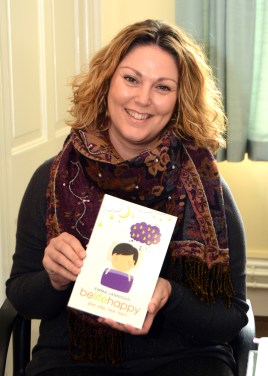
belifehappy: give. play. love. learn is available for purchase here.

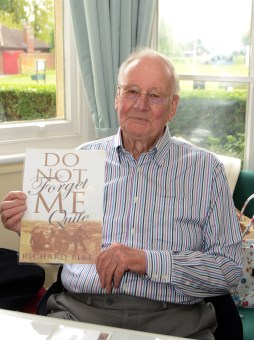
Richard Pike

DSC_4328

Do Not Forget Me Quite is available for purchase here.

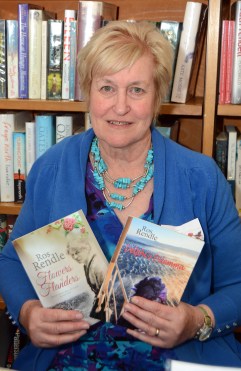
Ros Rendle

DSC_4327

Ros’s books, including Flowers of Flanders, are available for purchase here.

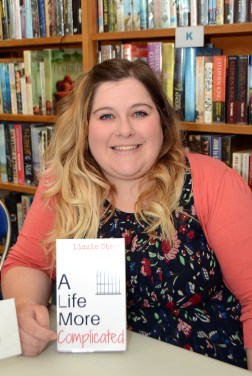
Lizzie Steel

DSC_4326

A Life More Complicated is available for purchase here.

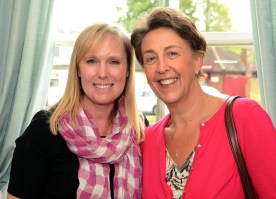
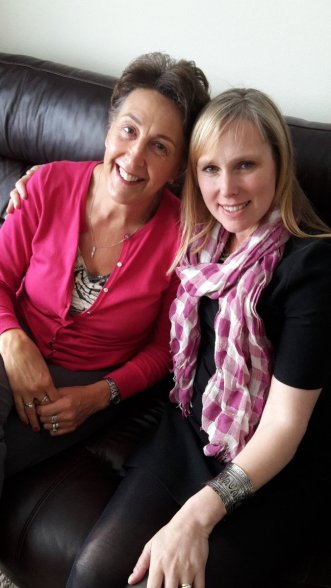
It really was a brilliant afternoon and I overheard another attendee sum up how I felt when she said, ‘I’ve had a wonderful time!’ Even better for me too was the fact that Jane was able to come back home with me for tea and cake!

with Jane

If you’d like to see what you missed across the weekend have a look at the Deepings Literary Festival website! I would like to thank all the organisers who have put in so much hard work to make the first Deepings Literary Festival a huge success and I can’t wait to be involved in the next one!

An American Decade by Richard Aronowitz

An American Decade

My grateful thanks to Karen Bultiauw at Accent Press for a copy of An American Decade by Richard Aronowitz in return for an honest review.

An American Decade was published by Accent on 3rd April 2017 and is available for purchase through the publisher links here.
An American Decade

An American Decade is a novel that connects the current political climate with that of the tumultuous 1930s; a decade in which the world was changed forever.

After the death of his wife, Christoph leaves Germany in 1930 and eventually finds success as a singer on Broadway. As the decade unfolds he witnesses the rapid rise of American organisations sympathetic to Hitler. The ominous presence and popularity of these far right groups become a constant reminder of his inaction. As the human horrors of Nazism close in he is forced to act and sets sail across the Atlantic in search of a hidden piece of his history.

Evocative, heartfelt and beautifully written, An American Decade is a must-read novel for those who recognise the enduring impact of history and human frailties.

My Review of An American Decade

Widowed at 30 after only a few months of marriage, German Christoph heads to New York to make a new life, leaving more than just memories behind in Germany.

I can’t say that I enjoyed An American Decade. This is not because it isn’t beautifully written, evocative and intelligent, because it is all those things and more. I didn’t enjoy it because it made me face some terrible truths about our society and our world in a way that made me think not much has changed. I know this will sound mad, but reading An American Decade made me think of eating high quality bitter chocolate when I’m used to Dairy Milk. I appreciated its quality but I found the message hard to swallow.

Even at the moments when he redeems himself, I despised Christoph who is the personification of humanity’s ability for stasis and self-deception. His selective presentations of the truth and his justifications for inaction as being best for others, mirror the way in which the world of the 1930s stood by and watched the rise of Nazi-ism. Christoph is a creation of genius by Richard Aronowitz.  At the same time as I wanted to shake Christoph until his teeth rattled, I had a horrible feeling that, had I been him, I may have behaved very similarly in my treatment of Miriam and Anne, withholding full truth and effectively deceiving myself. Christoph’s edited letters to Miriam made me fume. However, I also fully understood why he behaved as he did and that is what made An American Decade so ensnaring. Brutalised in the trenches of WW1, Christoph cannot bear to think history will repeat itself and not all of his impotence is self-inflicted.

The sense of place and time is so cleverly done. We have a picture of America and Germany painted through ideology as well as physical description so that there is an intensity to the settings that echoes through the pages like Christoph’s voice through the concert halls. The descriptions of New York took me back to the brief time I lived there so effectively. Using popular culture, newspaper reports, letters and Christoph’s first hand experiences the reader is given a vivid and searing view of the times. It is not a comfortable picture and the more Christoph achieves the American Dream, the more the contrasts work so effectively.

An American Decade is a disturbing book. I’m not sure I’ve entirely come to grips with it and reading it has left me feeling perturbed and actually quite anxious. It has made me think and question both my own personality and the world around me now, as well as in its past. Unsettling, perfectly crafted and beautifully written An American Decade is a troubling book. I think you should read it and decide for yourself!

About Richard Aronowitz

Richard Aronowitz

Richard Aronowitz was born in 1970 and grew up in rural Gloucestershire. His debut novel, Five Amber Beads, was published by Flambard Press in 2006 and his second novel, It’s Just the Beating of My Heart, was published by Flambard Press in 2010. His third novel, An American Decade, is published by Accent Press and Five Amber Beads will be republished by Accent Press in June 2017. He is married with one son and lives in Oxford.

You can follow Richard on Twitter and visit his website. You’ll also find him on Facebook.

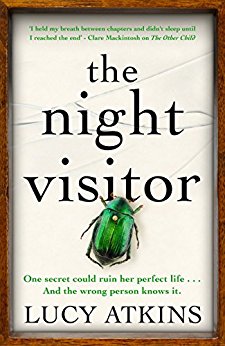
The Night Visitor by Lucy Atkins

The night visitor

Crikey, am I grateful to Hannah Robinson at Quercus for an advanced reader copy of The Night Visitor by Lucy Atkins in return for an honest review.

Published in e-book and hardback by Quercus on 4th May 2017, The Night Visitor is available for pre-order here.
The Night Visitor

The night visitor

Professor Olivia Sweetman has worked hard to achieve the life she loves, with a high-flying career as a TV presenter and historian, three children and a talented husband. But as she stands before a crowd at the launch of her new bestseller she can barely pretend to smile. Her life has spiralled into deceit and if the truth comes out, she will lose everything.

Only one person knows what Olivia has done. Vivian Tester is the socially awkward sixty-year-old housekeeper of a Sussex manor who found the Victorian diary on which Olivia’s book is based. She has now become Olivia’s unofficial research assistant. And Vivian has secrets of her own.

As events move between London, Sussex and the idyllic South of France, the relationship between these two women grows more entangled and complex. Then a bizarre act of violence changes everything.

The Night Visitor is a compelling exploration of ambition, morality and deception that asks the question: how far would you go to save your reputation?

My Review of The Night Visitor

TV historian Professor Olivia Sweetman has a new book out and is riding high, but all is not as it seems.

Oh my goodness! The Night Visitor is just my kind of read. I love a psychological thriller and The Night Visitor has every element that I adore, from almost Gothic symbolism to characters that put me in mind of some of the most damaged women in literature such as Dickens’ Miss Havisham and Du Maurier’s Mrs Danvers.

I so want to mention specific images or phrases but I know that this will spoil the read for others. Suffice it to say that The Night Visitor is meticulously planned, down to the smallest word so that every nuance, every phrase, every full stop adds depth and quality to highly intelligent and utterly hypnotising reading. The title itself is just perfect, there being different interpretations throughout the narrative and I’m unsure which version of ‘the night visitor’ image I found most disturbing. Omens and portents pepper the text adding layers of suggestion.

From the first moment, as Olivia is standing at a vertiginous height to deliver her book launch speech, I was hooked, on edge as I read and totally captivated. The quality of the language is so flawless that a simple, seemingly innocuous word can shock the reader completely. I had to keep putting down the book, breathing and giving myself a break, before being compelled to read on. I think what is so good about The Night Visitor comes from what isn’t written, as much as what is. Lucy Atkins understands the power of suggestion and she doesn’t resolve everything fully so that the reader’s own imagination contributes to the enjoyment in the book.

The two main characters, Olivia and Vivian, are absolutely outstanding creations. Neither woman is likeable and yet they both draw in the read so that it is impossible not to want to know what happens to them. They are the living embodiment of ego, obsession, deception and manipulation. What I found so awful is that it is easy to see just how we deceive ourselves and create our own self-serving truth and morality.

I also really appreciated the scientific elements underpinning (and I use that word advisedly!) the narrative. Coleopterology, academia, publishing and the media are all themes explored convincingly and sometimes uncomfortably in ways that would not let me tear myself away.

Readers who want a beautifully crafted, meticulously planned and gripping psychological thriller that makes them think, need look no further. Lucy Atkins’ The Night Visitor delivers everything those readers could possibly want and more. I can’t recommend it highly enough.

About Lucy Atkins

lucy atkins

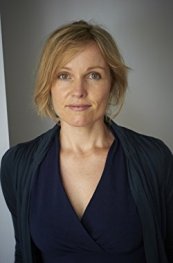
Lucy Atkins is the author of three acclaimed novels: The Night Visitor (May 2017), The Missing One (2014) and The Other Child (2015), published by Quercus. She has also written, co-written or ghost-written seven non-fiction books including the Amazon nuber one selling parenting title, First Time Parent (Collins).

Lucy is a book critic for The Sunday Times and regularly appears on BBC radio Oxford’s Book Club. She was a feature journalist for many years for UK newspapers including The Guardian, The Telegraph, The Times, The Sunday Express and magazines such as Red, Woman & Home, Psychologies and Grazia. Lucy lives with her family in Oxford, UK.

You can follow Lucy on Twitter and visit her website.

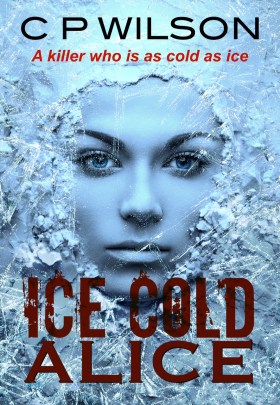
Giveaway and Review of Ice Cold Alice by CP Wilson

ice-cold-alice

My grateful thanks to the author C. P. Wilson for a copy of Ice Cold Alice in return for an honest review.

Published by Bloodhound today, 20th April 2017, Ice Cold Alice is available for purchase here.
I’m absolutely thrilled that C.P. Wilson has kindly provided an e-copy of Ice Cold Alice to give away internationally and a paperback in the UK. To enter, see the bottom of this blog post.

Ice Cold Alice

ice-cold-alice

They thought that they had all the power, until she took it from them.

A killer hunts abusive spouses, blogging about their sins post-kill. Soon the murders and the brazen journaling draws the attention of Police Scotland’s CID. This killer works with surgical preparation, precision and skill, using a unique weapon of her own and never leaves a trace of evidence behind.

Edinburgh’s DI Kathy McGuire, nearing the end of her career, begins the hunt for the murderer as a media frenzy erupts.

But McGuire might have met her match…What has led this killer to take the law into her own hands? Is the woman accountable really a cold-hearted killer or a desperate vigilante?

My Review of Ice Cold Alice

Highly successful and wealthy writer Alice Connolly is definitely not all she seems and the bodies mount up!

Ice Cold Alice opens in a violent and dramatic manner and maintains the pace throughout. However, that is not to say that there isn’t contrasting tenderness, especially between Bobby and Kathy, to provide light to the shade which only serves to make all the scenes more effective. Indeed, Bobby is essential to providing a balance in the depiction of men and I found him a wonderfully convincing individual.

There are so many elements to Ice Cold Alice that create a really good read. The attention to detail (while a bit too visceral for me at times) with appropriate vocabulary means that the reader believes completely in what is read. The word play of Alice’s blogger alias Tequila Mockingbird with its literary connection is clever and the quotation from To Kill a Mockingbird, ‘You never really understand a person until you consider things from his point of view – until you climb into his skin and walk around in it‘, kept going through my head as I read. The book title is also so cleverly chosen as Alice uses ice blades in her attacks but is also as detached and ‘ice cold’ as she can be in her approach to ridding the world of abusive men.

And it is the theme of abuse that is so well explored. Whilst Alice tracks down, researches and kills men who are abusing their partners, there are other levels of abuse too, such as the sexist treatment Kathy receives from fellow male police officers at the start of her career and the violence meted out by the police when they themselves are attacked. Even Kathy abuses Bobby in a sense as she puts her career in front of her family. With these elements in mind, Ice Cold Alice asks the reader to consider what kind of punishment or retribution is acceptable. Reading Ice Cold Alice made me question what justice really means as Alice is a calculating and violent murderer, but I wanted her to succeed and get away with her crimes. That didn’t make for a very comfortable consideration of my own character!

Alice’s personality is at the heart of the book as C.P. Wilson gradually uncovers who she is and why she behaves quite as she does. I think I would have preferred a more linear plot line, but that is a matter of personal taste, and the ‘Then’ sections are compelling in their ability to help the reader understand Alice’s motivation.

Ice Cold Alice is a powerful and persuasive read that gets the pulse racing. I really enjoyed it.

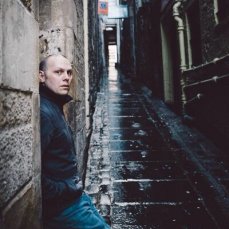
About C. P. Wilson

Mark wilson

C.P.Wilson is the Crime Thrillers pseudonym for Mark Wilson, the Amazon-bestselling author of eleven works of fiction and one non-fiction memoir. His short story Glass Ceiling won first prize in May, 2015 on Spinetingler’s Short story competition and will be included in Ryan Bracha’s Twelve Nights at Table Six. dEaDINBURGH reached the quarter finals of the Amazon Breakthrough Novel Award in 2014 and is a finalist in the Wishing Shelf Book Awards, 2015.

Mark currently teaches Biology in a Fife secondary school and is founder of Paddy’s Daddy Publishing, a company he set up to assist Indie-authors. He writes in his spare time, in lieu of sleep.

You can visit Mark’s blog and find him on Facebook . You can also follow Mark on Twitter.

Giveaway

ice-cold-alice

For your chance to win an e-copy (open internationally) or a paperback (UK only) of Ice Cold Alice, click here. Giveaway closes at UK midnight on Wednesday 26th April 2017.
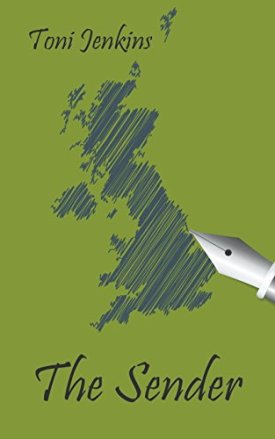
The Sender by Toni Jenkins

the sender

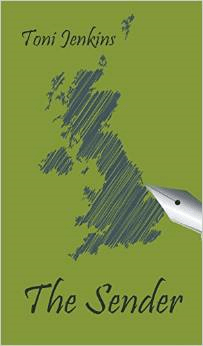
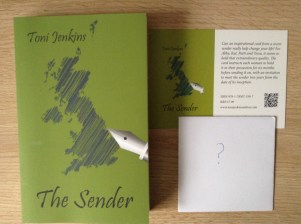
Almost a year ago I went to a blogger and author meet up in Edinburgh organised by fellow blogger Joanne of Portobello Book Blog where I met lovely Toni Jenkins, author of The Sender. Toni kindly sent me a copy of The Sender along with an envelope bearing a question mark with instructions not to open it until I’d read the book.

As many of you know, life got the better of me last year (see here) and I’ve been taking off April from my usual blogging in order to catch up with books that have been sitting on my TBR for ages. Although Toni wrote a fabulous guest post in a letter to her younger self all about writing for Linda’s Book Bag that you can read here, I’m ashamed to say that it is only now that I have got round to reading The Sender.

The Sender

The Sender front cover png

Can an inspirational card from a secret sender really help change your life? For Abby, Kat, Patti and Tessa, it seems to hold that extraordinary quality. The card instructs each woman to hold it in their possession for six months before sending it on, with an invitation to meet the sender two years from the date of its inception.

From Edinburgh to Glasgow, York to Cambridge, the card is sent on a journey to impart its magic.

But who is the sender and what was their motive? And why were they the chosen ones?

My Review of The Sender

When the sender realises that Abby is in dire need of support, they send her an anonymous card with a four leaf clover attached and instructions to hold on to the card for six months before sending in it to someone else.

What a lovely concept for a novel. Recipients receive an anonymous card containing a good luck symbol, a four leaf clover, that they retain for six months and then send on so that there is love, hope and support weaving around the world just when those receiving the card need a boost most in their lives. I thought this was such a smashing idea.

In effect The Sender is a series of novellas that are connected through the women sending on the card. Each would stand as a highly entertaining story in its own right but Toni Jenkins cleverly weaves the strands of their stories together until the point the main characters all meet and have a ready made friendship and support group.

There is an eclectic cast of characters so that there is someone for every reader to relate to. I especially liked Rina and Flo, who, whilst at opposite ends of the age range, were women I felt I’d have liked to know in real life.

The themes encompassed are those that we will all have encountered at some point. Those themes of grief and friendship resonated particularly for me and I really felt that The Sender was a book I should have read sooner so that I could have had benefit from its hope and optimism. Other concepts explored include adoption, infidelity, divorce, business, success, illness, childbirth, travel and so on, so that what Toni Jenkins has done is create in microcosm an entire world where readers can identify with something that affects them. The Sender provides a positive experience through an engaging narrative where characters have real-life struggles. I liked too the sense of mystery at wondering who had sent the original card.

The Sender reminds readers that, in an increasingly hostile and violent world, there is still the power of love, hope and friendship. I’m so glad I’ve read it.

About Toni Jenkins

Newspaper photo

Toni’s passion for writing began when she was 9 years old and bored on a long car trip. With a notebook and pen in hand, she began writing comedic poems to pass the time and discovered a great love of playing with language and personifying objects, creating Walter Wall who yearned to travel and Debbie Drawing Pin who feared being typecast!

Over the years she ventured into short stories and began collecting and writing quotes, amassing hundreds of them since her childhood. Finally, in her early thirties, she took the plunge and wrote her first novel, cementing her desire to write contemporary fiction.

She lives in the city she fell instantly in love with in the mid-nineties, and is proud to call Edinburgh and the UK her home.

You can find out more about Toni and read an extract from The Sender on her website. You can follow Toni on Twitter and find her on Facebook.

Sending on The Sender!

img_0716

In the spirit of The Sender, I would like to pass on my signed copy to someone recommended by a reader of Linda’s Book Bag. If you feel someone you know (and you can email me their address) deserves to receive The Sender please comment below. I’ll put the names in a hat on 30th April and draw out the winner. Once I have the recipient’s address I’ll send them The Sender along with a lovely handmade card that Toni sent to me. They won’t know where the book has come from.

The American Girl by Rachael English

The American Girl

Regular Linda’s Book Bag followers will know that I’m AWOL from blog tours, guest posts and interviews this month whilst I try to read some of the books that have been sitting on my TBR for ages.

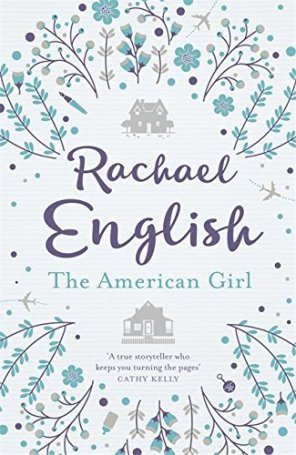
The American Girl, by Rachael English is a relatively new addition but as Rachael has been kind enough to send me a couple of her books in the past I thought I’d begin with her latest novel. I cannot thank her enough for sending me a copy in return for an honest review.

The American Girl is available now in e-book and for paperback pre-order here.
The American Girl

The American Girl

Boston 1968. Rose Moroney is seventeen, smart, spirited – and pregnant. She wants to marry her boyfriend. Her ambitious parents have other plans. She is sent to Ireland, their birthplace, to deliver her daughter in a Mother and Baby home – and part with her against her will.

Dublin 2013. Martha Sheeran’s life has come undone. Her marriage is over, and her husband has moved on with unsettling speed. Under pressure from her teenage daughter, she starts looking for the woman who gave her up for adoption more than forty years before.
As her search leads her to the heart of long-buried family secrets, old flame Paudie Carmody – now a well-known broadcaster – re-enters the frame.

From Boston to rural Ireland; from Dublin back to Boston, The American Girl is a heart-warming and enthralling story of mothers and daughters, love and cruelty and, ultimately, the embrace of new horizons.

My Review of The American Girl

When Rose finds herself pregnant at the age of 17 in 1968, society will not accept the situation and her parents send her away. These actions will reverberate through the decades.

Oh my goodness I loved this book. Everything about The American Girl made it just the kind of read I adore. I’m sure there’s something in the water in Ireland that makes for natural storytellers as Rachael English certainly knows how to create a plot that holds the reader completely enthralled. I genuinely felt devastated when I’d finished as I didn’t want the story to end. The American Girl was one of those books that made me resent normal life when it prevented me from reading it.

Firstly, the plot of The American Girl is brilliantly constructed with shocks and surprises along the way and a devastating insight into the mind set of the 1960s. Although I could understand the actions of Grace and Ed I simply couldn’t forgive them and this set up my emotional engagement with the whole of the story so that I felt completely invested in what happened to Martha.

The quality of Rachael English’s writing is just gorgeous. She balances a lightness of touch with humour through absolutely pitch perfect dialogue so that the emotional elements are heightened further. The variety of paragraph and sentence length gives a naturalness that I found utterly beautiful and absorbing. The deftness of description added depth to make the characters and settings so realistic that I could hardly bear to tear myself away from them.

It is the characters that make The American Girl such a wonderful book. These are not two dimensional sketches on a page, but real and warm people who engendered a whole range of emotions in me as a reader. Cat gave me hope and entertainment. I loathed Rose’s parents without mercy and found myself far less forgiving and accepting of them than she is. I loved Martha without reservation, even when I felt she didn’t always behave perfectly as in her desire to run her daughter, Evanne’s, life. I was so angry with the treatment of the girls in the convent that I almost felt murderous towards the nuns. Indeed, it was the exploration of the roles of women that drew me in to The American Girl so unfailingly. I could see my own flaws, hopes, desires and needs reflected even though I have no experience of similar situations. Rachael English has held up a mirror to the souls of women that I found held me in thrall. I was completely captivated.

I genuinely loved The American Girl. Part love story, part tragedy, part social history, it is a book that will remain in my heart for a very long time.

About Rachael English

rachael english

Rachael English is the author of three novels: Going Back which was shortlisted for the most-promising newcomer award at the 2013 Bord Gáis Irish Book Awards, Each and Every One which like Going Back was a top five bestseller in Ireland, and, The American Girl.

Like many authors, Rachael also has a day job and is a presenter on Ireland’s most popular radio programme, Morning Ireland.

You can follow Rachael on Twitter and find her on Facebook.