An Interview with Emma Curtis, Author of One Little Mistake

cover

I’m so pleased to be part of the launch celebrations for One Little Mistake by Emma Curtis. One Little Mistake will be published in e-book on 23rd February 2017 and paperback on 15th June 2017 and is available for purchase here.

I so love a psychological thriller and am delighted to have the opportunity to interview Emma Curtis about One Little Mistake today.

One Little Mistake

cover

Vicky Seagrave is blessed: three beautiful children, a successful, doting husband, great friends and a job she loves. She should be perfectly happy.

When she risks everything she holds dear on a whim, there’s only person she trusts enough to turn to.

But Vicky is about to learn that one mistake is all it takes; that if you’re careless with those you love, you don’t deserve to keep them . . .

An Interview with Emma Curtis

Hi Emma and welcome to Linda’s Book Bag. Firstly, can you tell us a bit about yourself please?

Hi Linda. Thank you so much for putting this together. It’s my first interview for One Little Mistake and so is a great opportunity to work out what my responses and feelings about the book are.  I am in my early fifties, married and live in London and have two grown up children.  I’ve wanted to write for a long time but started after I had my second baby and needed something to fill my mind.  I had no luck but learnt a great deal.  I worked as a secretary for many years and then started writing again when my oldest went to University.  Four years and several manuscripts later I found a wonderful agent, Victoria Hobbs at AM Heath (the hardest thing, harder than writing or finding a publisher, is getting representation.)  I was lucky enough to be picked up by Transworld.

(I think talent might have something to do with it too!)

And tell us a little about One Little Mistake without spoiling the plot please! 

One Little Mistake came from unresolved feelings of guilt about early motherhood.  When I had my first child we were living in a one bed flat in Stockwell, my husband was travelling a lot for work and I became very isolated.  I was young and my friendship group hadn’t reached that stage yet, so I was on my own. I can’t look back at that time without wincing in horror.  It never occurred to me to ask for help from family or doctors.  It could have gone badly wrong, but fortunately my son and daughter survived my sketchy mothering and have grown into grounded and gorgeous young adults. One Little Mistake is about a young mother whose moment of madness puts her in a position where  she can no longer trust the people closest to her.

When did you first realise you were going to be a writer?

I think the moment I thought, I can do this, was when I won first prize in a Short Story competition.  It was like I had been given permission to say, I am a writer. That was a wonderful moment for me for which I’ll be forever grateful.  It spurred me on.

What drew you to a psychological thriller as opposed to any other genre in your writing?

Because I love them!  I am an eclectic reader and read all types of fiction, but a good domestic noir, psychological thriller is my guilty pleasure.

From a technical point of view I do need boundaries, a kind of scaffold to the novel, because that scaffold frees me to write how I like and what I like within it.  Does that make sense?  When I first started, I tried Mills and Boon and although I had no success, I loved what you could do within their rules – those came on a cassette back then.  A climbing rose flourishes on a good solid trellis after all.

There seems to be a proliferation of women writing psychological thrillers. Why do you think that is and how far do you think different genres are gender driven?

You are right, there are.  I don’t know why that is.  I know that I love watching that sort of drama on TV but my husband and son won’t touch it.  They cope well with violence, blood-curdling torture and endless decapitations in the likes of Game of Thrones and Vikings, but the thought of a child going missing from an ordinary family just like theirs – well they just can’t hack it.  Perhaps we need a psychiatrist for that one.

Which aspects of your writing do you find easiest and most difficult?

Writing fresh material is the easiest aspect.  Self-editing is the toughest.  Somewhere in the middle is doing the work that my editor wants – particularly because it often involves restructuring. Staying focussed can be hard, particularly when I’m publicising a current book.  I spend too much time on Twitter when I should be writing.

What are your writing routines and where do you do most of your writing?

I like to start early and finish at lunch time.  I work in different places depending on the time of year. In the spring, summer and Autumn I use my shed.  In the winter I set up in the spare bedroom.  Now that my children have sort of moved home (they keep coming back!) I have plenty of choice.  I use Voice Recognition software these days so I have to be out of earshot or I get self-conscious. After lunch, I walk for an hour or so, thinking through the next scene or working out solutions to problems (or ways out of corners I’ve written myself into!) I’m lucky to live in such a beautiful part of London.  I don’t work in the evenings because it keeps me awake at night.

How do you go about researching detail and ensuring your books are realistic?

I go to the places and walk and I read round my subject and central theme.  Without giving anything away, to get into Katya’s head, I read memoirs by ordinary women who had been through truly horrible experiences as children.

At the initial research stage of the novel I’m writing currently, I’ve listened to Youtube videos made by people who have left the Jehovah’s Witnesses.  It’s fascinating, shocking and has been a real eyeopener.  I’m hoping to meet a survivor to discuss how it really feels, and have been putting feelers out.

One Little Mistake arises out of quite a prosaic domestic situation. To what extent do you think that everyday life can inspire dramatic fiction? 

I know exactly what you mean.  I’ve written scenes using events that have actually happened to me, only to be told that readers will find it hard to believe.

Domesticity is so much more interesting to me than a glamourous backdrop.  I have no interest in writing thrillers set in huge corporations, politics, or drug cartels.  There are authors who do that brilliantly.  I like the minutiae of family life.  I know from experience that it doesn’t take much to wind a relative up the wrong way.  Crime and murder is so much more interesting when it happens between people who know each other well, don’t you think?

(I do indeed – and I also know exactly what you mean about everyday life being beyond belief at times…)

Trust is a central theme to One Little Mistake. Which came first – the concept of trust and then the narrative, or the narrative and then the exploration of trust – or did one arise naturally out of the other?

I’d say they arose naturally.  I had my premise and an idea or where I wanted the novel to end up.

When you were writing One Little Mistake what techniques did you consciously employ to create such tension?

Write the scene.  Go back and slow it down.  Go back and slow it down some more.  Add detail.  And if I can bear it go back…Something else you can do is reach a crucial point then frustrate your reader by inserting another scene.  It can’t be gratuitous padding, it has to move the plot forward, but the reader will be desperate to get back to the cliffhanger.

How important do you think social media is to authors?

I know that some authors don’t use it and do perfectly well without, but I think it’s increasingly important.  It’s vital to me.  Sad to say, I’m not great at isolation and Twitter and The Prime Writers keep me feeling connected.  As for whether Twitter influences sales, it entirely depends who you ask, or who is giving the Media talk.  Book bloggers are a growing phenomenon and the great thing is that they are connecting more and more with each other and authors both on social media and in the real world.  I was delighted to meet Bloggers in the flesh at Louise Beech’s launch of A Mountain in My Shoe.  Anyone who wants to sell a product needs a decent footprint on the internet and it’s there, it’s free and it’s common sense to use it.  I have no time for people who are snotty about it. (Get quite hot under the collar actually!)

If you hadn’t become an author, what would you have done instead as a creative outlet?

The thought makes me feel panicky!  I have no idea.  I think I’d get very bored. I’ve always liked doing up wrecks so maybe some more of that.

Do you have other interests that give you ideas for writing?

I’m curious about other people’s lives but I don’t know if that came before the writing or developed from it.

(Oh – I think all writers are inherently nosy!)

If you could choose to be a character from One Little Mistake, who would you be and why?

I’d be Jenny.  She is unflappable, down to earth and without pretentions.

If One Little Mistake became a film, who would you like to play Vicky and why would you choose them?

Nicola Walker without hesitation.  Her face is wonderful, all her emotions are written there.  I think she’s an amazing actress.

If you had 15 words to persuade a reader that One Little Mistake should be their next read, what would you say?

Wow! That is hard. If you don’t count the title this makes 15! Or is that too cheeky?

You’ll love One Little Mistake.  It’s a complex, spinetingling suspense that will keep you up all night.

And what can we expect next from Emma Curtis?

My next novel is a psychological suspense about Joanna, whose Jehovah’s Witness family have shunned her since she left the faith, and Andrew, whose family were murdered twenty-five years ago.  They haven’t seen each other since and when they meet again, it feels right.  Who else could possibly understand what it’s like to be without a family?

The discovery of a corpse means the case is reopened and a fresh look taken at what Andrew did that night.  How badly does Joanna want to believe in his innocence? And how much is she prepared to overlook and excuse?

Crikey – that sounds amazing – I look forward to reading it! Thanks so much for your time in answering my questions Emma.

About Emma Curtis

emma

Emma Curtis was born in Brighton and brought up in London. Her fascination with the darker side of domestic life inspired her to write One Little Mistake, her first psychological suspense. She has two children and lives in Richmond with her husband.

You can follow Emma on Twitter and there’s more with these other bloggers too:
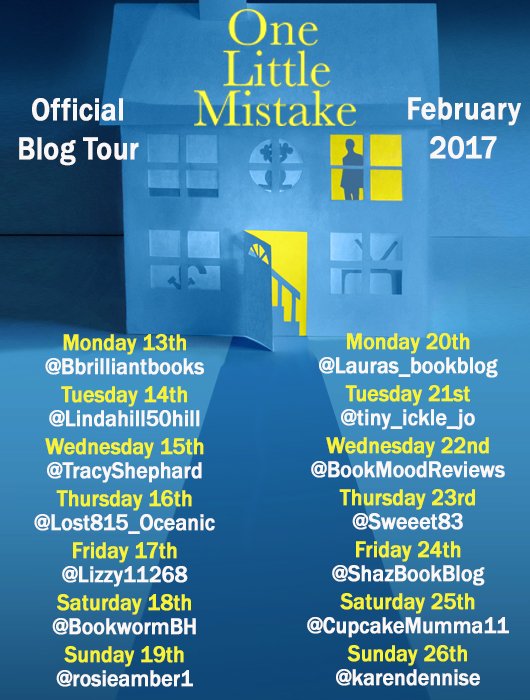
tour-poster

Publication Day Interview with Andy Jones, author of Girl 99

girl-99

I so loved Andy Jones’ The Trouble with Henry and Zoe, reviewed here, that when I heard he would have another book, Girl 99, published today, 14th February 2017, I had to invite him onto Linda’s Book Bag to tell me more about it. Luckily he agreed to be interviewed!

Published by Lake Union, Girl 99 is available for purchase in e-book and paperback here. As well as interviewing Andy, I’m reviewing Girl 99 too.

Girl 99

girl-99

When Tom’s girlfriend walks out on him the day before Christmas, he feels humiliated but not necessarily heartbroken. Sadie wasn’t, after all, The One. If we’re being precise, she was number eighty-five.

And so, for reasons that are only mostly wrong, Tom embarks on a mission to bring his number of encounters up to a nice neat one hundred.

Over the course of his quest he sleeps with a colleague, a colleague of a friend, a friend of a friend, a friend of a friend’s wife, the estate agent selling his flat and several more besides.

Everything is going, if not well, then at least according to plan…and then Tom meets Verity. Whether she’s The One remains to be seen, but she’s certainly more than just another number.

An Interview with Andy Jones

Welcome to Linda’s Book Bag Andy. Thank you so much for agreeing to answer some questions on my blog about your writing . Firstly, please could you tell me a little about yourself?

Hey, thanks for having me. A little about me? Okay – I’m a husband, a father of two girls, and the owner of two lady cats. So I spend my days surrounded by women of one species or another. I fit my writing around my ‘day job’ as a freelance copywriter. Favourite movie is Forrest Gump (this week, anyway), favourite book is The Amazing Adventures of Kavalier & Clay by Michael Chabon. Oh and I mix a wicked Martini.

Without spoiling the plot, please could you tell us a bit about Girl 99?

In short, it’s a book about love, sex, fidelity, commitment and growing up. In slightly less short, it’s a romantic comedy about a guy called Tom, who, for various reasons (not all bad, honest) is on a mission to sleep with 100 women. But he learns that if you blindly peruse sex, then inevitably, you will miss out on the real prize – love.

I know you have a very busy lifestyle with a family and full time job. What advice would you give to those wanting to write but feeling they don’t have time?

My advice would be quite brutal. You do have the time, you simply have to stop making excuses. You get up early, stay up late, sacrifice the gym, sacrifice TV box sets, sacrifice Thursday night down the pub with your mates. You need to be a bit selfish and a lot obsessive about time. But I promise you, the time is there, you simply have to find it and use it.

As well as your novels, you also write short stories. What are the techniques do you need to employ differently or similarly with longer and shorter fiction?

In short stories, I think readers give you latitude with certain amounts of backstory and character motivation. They are prepared to accept that some things (although not all) simply are. My short stories also tend to be darker than my novels, there are some things I think we can stomach in small doses, but which can become arduous over the long haul. Also, I think readers of novels tend to want a resolution, whereas short stories can exist as open-ended snapshots. Perhaps the biggest difference in the way I approach both forms is in the outlining. For novels, I like to work it all out first. But short stories, I just dive in and see where they take me.

You’ve written about second novel syndrome in the past. What was it like writing your third novel Girl 99 in comparison?

Well here’s the thing about that – Girl 99 was actually my first novel. But I hadn’t found a publisher for it until after the success of The Two of Us and The Trouble With Henry & Zoe. That said, I’m a different writer now than I was when I first wrote Girl 99, so I revised the novel heavily for this official outing. And it was tremendous fun. Perhaps because the story was all worked out, I could concentrate on fleshing out the characters and refining the writing. Fourth novel syndrome, though, well that’s something else entirely – maybe we can discuss that next time.

(We will indeed!)

You’re conscious of having quite a popular name and are sometimes confused with other writers  – have you ever wished to be called something other than Andy Jones and why do you say that?

Well yes and no. I like my name, I definitely feel like an Andy. Although I suppose Jones is a bit bland. But with hindsight, yes, a pen name would have served me well. There are a bunch of books out there by other Andy Joneses – stuff about presidents, farts, burps. All important stuff, of course, but not mine. But if not Any Jones, what? I have a hard enough time naming my characters, let alone myself.

(I’m glad you say that as I find pinning down character names really tricky when I write.)

Your books have been translated into different languages. How involved with that process are you as the author?

I don’t have an awful lot to do with these – the cover designs, for example, happen with no consultation. But it is exciting to receive copies of these new versions through the letterbox. Translation, too, tends to happen without much consultation, although I did have a Swedish editor ask me what a ‘trolley’ was. And – being uninitiated in Cockney Rhyming slang – my US editor was baffled by the idea that one of my characters was ‘Hank Marvin’.

(Maybe ignorance is bliss here!)

Arguably, your books fall into the ‘female fiction’ genre. What is your view of assigning genres to writing and how do you feel about this assessment of your writing?

It’s tricky, isn’t it. I honestly didn’t know there was a genre called ‘female fiction’, so I was surprised to see my books labelled as such. And to be honest, I don’t really know what it means – that my books are more likely to appeal to women than men? If so, then I might debate that point – I’m a fella, after all. And I’ve had great feedback from readers of both sexes.

Genre labels can be useful: ‘horror’, ‘romance’, ‘thriller’ – you know what you’re getting. But others can be quite reductive, I think. ‘Literary’, ‘Chick lit’, ‘lad lit’, don’t tell us much. I write about people and relationships are at the core of my stories. They tend to be funny, too, so it’s fair to say my stories are romantic comedies. So far. My next novel, though, I don’t know if I’d call it romantic. Although it does feature couples struggling with relationships. And there is humour, but it’s dark, so I’d hesitate to call it a comedy. But it’s still me, still my style, still writing about the same things that have always interested me – humans. But would you call my new book a rom-com, no. Would you call it women’s fiction? I doubt it. And that, for me, is part of the issue. So what do we call it? I tend to lean on Contemporary Fiction, because that’s what it is. But I appreciate that this doesn’t help the publishers identify a market. Oh god, am I ranting? Like I said, it’s tricky.

Your writing has relationships at its heart. How do you plot your stories to explore this theme (like Tom’s attempt to reach 100 girls in his life in Girl 99)?

Big question, Linda. Mainly because my process is evolving. With Girl 99, the concept came first – it’s a quick and simple pitch. But from there I had to decide who this story was about, and why he’s driven to behave the way he does. So I spent a lot of time developing his character. From there, I thought about an overarching story flow and began brainstorming scenes, things that could happen off the concept, and situations that would reveal the protagonist’s character. It’s only then, that a theme might emerge – in this case the idea of there being a ‘One’ – a perfect partner – for everybody. And of whether we can find love again after losing that ‘One’ – as in the stories of Doug, El and Tom’s father. And when I have that, everything begins to tighten up. You write more scenes that resonate of the theme, and maybe cull some that don’t. So in this process, I had a very detailed outline running to over a hundred pages and I didn’t deviate much from that.

With my new novel (working title, Four), I am coming at it in a more organic way. I had what I believed to be a terrific set up, one that would have a ripple of consequences, but I didn’t know at the outset what they might be. Again, I investigated the characters, and then laid out some story beats, but this time I stopped short of writing a detailed outline. I bought two cork boards and a stack of index cards and pinned the scenes to the wall. I’m 50,000 words in now and still rearranging, cutting and adding scenes as I go. At the start of each new scene or chapter, instead of turning to my detailed road map, I take down one index card and stare at it until I figure out how to get into the scene, what happens, and how to get out. It’s refreshing, exciting and more than a little terrifying. But I’ll probably stick with this method for a while now – it seems to be working.

I find your writing quite emotional. How far do you have a reader in mind as you write with the intention of evoking an emotional response and how far does your narrative evolve organically?

Thank you, that’s very flattering. I don’t aim for an emotional response, as such – I think if I did that it would come off as contrived. But I try to be honest, to have my characters behave in a human way, rather than a ‘character’ way. And if the premise is right, or conducive, and if the characters are realistic and layered, the emotion will come. I never really know which scenes will best deliver that, they’re seldom the ones I might have identified as ‘emotional’ from the outset. These big scenes – a death, a breakup, a betrayal – they’re daunting to me as a writer, because they’re so easy to screw up. Often the temptation is to swerve them, cut away, have them happen off-screen. But that’s just self-doubt; so I brace myself and go after it. And then fix it in the edit.

How do you go about researching detail and ensuring your books are realistic?

I do desk research initially, but whenever possible I interview people who know or have experienced the thing I’m researching. This year I’ve spent some time with  GP and a marriage counsellor – so make of that what you will.

What are your writing routines and where do you do most of your writing?

I do almost all of my writing in my office. I’m a freelancer in my day job, so I try to take weeks or fortnights off now and then to work at my books for a concentrated period. But even when I’m ‘day-jobbing’ I never do Mondays – that’s a sacred writing day. Then during the week, I try and fit in a further 3 sessions of about 2-3 hours, either before I leave for work, once I get home or at the weekend. You juggle. But I think about the story every day – fiddling with the outline, making notes, sending emails to myself, researching something.

If you had 15 words to persuade a reader that Girl 99 should be their next read, what would you say?

15! A luxury.

If you don’t buy Girl 99, I’m putting mum in a cold remote nursing home.

(For the sake of your Mum we’d better get buying!)

Thank you so much for your time in answering my questions Andy.

You are so much more than welcome.

My Review of Girl 99

Tom’s on a mission. His best friend El has made him a bet that he can’t sleep with 100 women and, having just split from girlfriend Sadie, Tom accepts the bet.

I have to admit that initially I felt uncomfortable with the premise of Girl 99 that Tom is prepared to work his way through women as sexual partners as if they are a disposable commodity because that felt wrong to me, until I realised that that is the whole point of the book. Tom needs to come to the same conclusion and unless he does, he won’t find contentment. You’ll have to read Girl 99 to find out if this happens!

I love Andy Jones’ lively and engaging style of writing. It’s humorous, conversational and honest so that it’s really effortless to read. He is able to use dialogue in a natural way that makes me feel as if I am eavesdropping conversations rather than reading them on the page. I frequently found myself cringing at El’s language in the restaurant, but equally it was exactly as he would speak.

I thoroughly enjoyed the characterisation too. I really felt I got to know Tom as an individual. He’s endearing, frustrating, an idiot, good friend and a fool so that, much as I wanted to dislike him at times, I simply couldn’t. It’s this characterisation that is the particular strength of Girl 99. I really enjoyed meeting the different characters, especially El and it’s no coincidence that Verity is so named.

I think Girl 99 has something for every reader. Some will enjoy the racier passages and there is quite a bit of sex in this narrative. Some will find (as I did) the parts about the shoot for the advertising campaign highly entertaining. But for me, what I liked most was the exploration of relationships and human emotion. Andy Jones writes with such skill that he manages to encompass a wide range of these relationships without them ever feeling contrived, from the gay partnership between El and Phil, through Bianca’s burgeoning love life, to the senior relationship between Doug and Eileen so that Girl 99 isn’t just about a man on a mission to sleep with 100 women, but is actually about the variety, reality and honesty of relationships.

Girl 99 is not easily definable. Part chick-lit, part contemporary fiction, part lad-lit and part humorous narrative it is, above all, a really good read.

About Andy Jones

andy-jones

Andy Jones lives in London with his wife and two little girls. During the day he works in an advertising agency; at weekends and horribly early in the mornings, he writes fiction.

He is the bestselling author of three novels: The Two of Us, The Trouble With Henry and Zoe, and Girl 99. Additionally he has written a collection of short stories and two picture books for younger readers. His books have been translated into twelve languages.

You’ll find Andy Jones on Facebook and you can follow him on Twitter or visit his website.

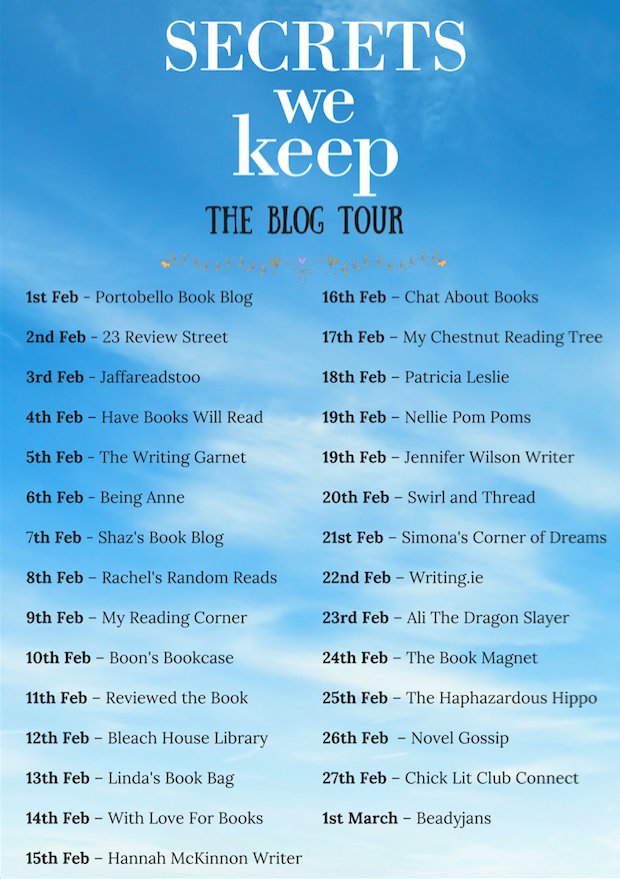
Secrets! A Guest Post by Faith Hogan, author of Secrets We Keep

secrets-we-keep-final

I’m absolutely delighted to welcome back Faith Hogan, author of Secrets We Keep, to Linda’s Book Bag. Previously Faith was kind enough to write about creating character and you can read that post here.

Today, to celebrate her latest novel Secrets We Keep, Faith is writing all about  – secrets! Secrets We Keep was published by Aria on 1st February 2017 and is available for purchase in e-book and paperback here.

Secrets We Keep

secrets-we-keep-final

Two distant relatives, drawn together in companionship are forced to confront their pasts and learn that some people are good at keeping secrets and some secrets are never meant to be kept..

A bittersweet story of love, loss and life. Perfect for fans of Patricia Scanlan and Adele Parks.

The beautiful old Bath House in Ballytokeep has lain empty and abandoned for decades. For devoted pensioners Archie and Iris, it holds too many conflicting memories of their adolescent dalliances and tragic consequences – sometimes it’s better to leave the past where it belongs.

For highflying, top London divorce lawyer Kate Hunt, it’s a fresh start – maybe even her future. On a winter visit to see her estranged Aunt Iris she falls in love with the Bath House. Inspired, she moves to Ballytokeep leaving her past heartache 600 miles away – but can you ever escape your past or your destiny?

Secrets We Keep

A Guest Post By Faith Hogan

It’s an interesting title, I mean we all keep some secrets don’t we? Perhaps not all as far-reaching as those in my new novel, but we all have little secrets. I mean, they’re not actually lies or anything, but they are… vital to keep things on an even keel.

Take relationships, for example – marriage even.

I’m married to the most wonderful man – but I do think  our relationship is just a little bit better thanks to a little mystery, or if you prefer, a few small secrets that are worth keeping. I asked friends of mine, one of them married almost thirty years, what kind of secrets they kept from their other halves, here’s a taste of what they said.

  • Never let a man look in your bag.

The reason – men don’t understand basic Feng-shui – or at least not the hand bag version anyway – you know, throw everything in, close it up and then presto, when you open it you can’t find what you’re looking for. We know of course that this encourages us to constantly re-organise.  Re-organising your handbag involves going back to scratch – emptying everything out systematically until you find the said missing item and then dumping everything back in again.

Actually, most men are afraid to look inside your handbag and the ones that aren’t are either a little thick or have an inner handbag fetish. The effect of explaining this to any man results in red face, awkward stammering and the bag being throw down immediately.

  • There is nothing healthier than a little revenge.

Now, before we lose the run of ourselves here, we’re talking spoonful’s of revenge – not full on ‘Bobbit’  style vengeance. I mean, is there so much wrong with hiding someone’s car keys after they insulted your driving? And which of us would have really blamed Mrs Woods for smashing Tiger’s clubs over his head in a fit of rage? (Okay, well, that might be a bit extreme,) but you get the idea. In Secrets We Keep one woman gets her revenge in the sweetest way she can think of and I’ll bet you’ll be cheering her when she does!

  • It’s okay for him to see your smalls… but…

Yep, you’ve got it, store those big knickers at the bottom of your drawers. Big knickers are a vital weapon in every woman’s armoury. It doesn’t matter how big or small your tummy looks to others, Generally to us – well, it’s going to feel like Scafell Pike, if we have to attend one of his work do’s and we’re expected to mingle with all those bright young skinny things from his office.

  • He doesn’t need to know what your friends once called him:

It was unfortunate that he turned up to your first date wearing a mustard jumper with elbow patches and corduroy trousers that were two sizes too big. It was understandable that your friends might have called him Victor Mildrew to begin, but it was all a long time ago now and best forgotten. You don’t really want to hear that his friends called you Nora Batty or Nanny Mc Phee, do you?

Yes, I think some Secrets are definitely worth keeping!

Faith x

About Faith Hogan

new-author-photo-2017-2

Faith Hogan was born in Ireland where she lives in the west with her husband, children, a very fat cat called Norris and a selection of (until recently!) idle writerly mugs and cups. She gained an Honours Degree in English Literature and Psychology from Dublin City University and a Postgraduate Degree from University College, Galway.  She has worked as a fashion model, an event’s organiser and in the intellectual disability and mental health sector.

She was a winner in the 2014 Irish Writers Centre Novel Fair – an international competition for emerging writers.

You can follow Faith on Twitter and find her on Facebook. You’ll find her website here.

There’s more with these other bloggers too:

tour-poster

Research for Writing, a Guest Post by Susanna Beard, author of Dare to Remember

dare-to-remember-cover

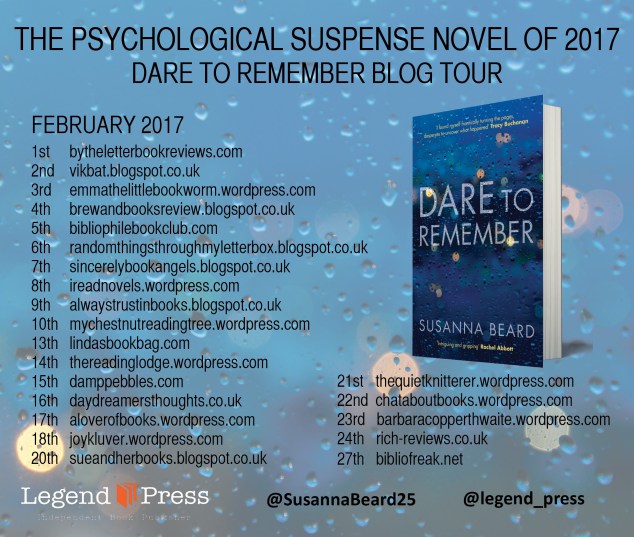
Anyone who regularly visits Linda’s Book Bag will know that I love a psychological thriller and so I’m delighted today to welcome Susanna Beard, author of Dare To Remember, to tell us all about her research for writing and to be part of the launch celebrations.

Dare To Remember was published by Legend Press on 1 February 2017 and is available for purchase on Amazon.

Dare To Remember

dare-to-remember-cover

Reeling from a brutal attack that leaves her badly injured and her best friend dead, Lisa flees to the countryside to recuperate. With only vague memories of the event, she isolates herself from her friends and family, content to spend her days wandering the hills with her dog, Riley.

However, Lisa is soon plagued, not only by vivid flashbacks, but questions, too: how did their assailant know them? Why were they attacked? And what really happened that night?

As she desperately tries to piece together the memories, Lisa realises that there’s another truth still hidden to her, a truth she can’t escape from. A truth that may have been right in front of her all along.

Research for Writing

A Guest Post by Susanna Beard

When I was around 17 years old, I mentioned to my father that I’d like to write a novel. I’m not sure whether I was thinking about a career in writing, or if I was simply interested in getting a book published, but I’d always enjoyed creative writing in my English classes at school, and relished using my imagination to make up stories.

My father’s response was to say: “Don’t be silly. You won’t be able to write a novel. There’s so much research to do.” I remember at the time thinking: “Well I like research, so what’s so difficult about that?” Anyway the end result was that I didn’t consider writing as a career, though ultimately I found one which required me to write every day – sometimes all day. I don’t know if I would have taken up novel writing much earlier if my father hadn’t said that, and I don’t blame him for what he said. He had a strange and deep reverence for books; perhaps he just didn’t think that ‘ordinary’ people had the ability to enter that world.

Anyway, when I wrote Dare to Remember, my first novel, I didn’t think much about research: my story is based somewhere in England, my towns, cities and villages are unnamed, coming from my imagination. My characters, too, are fictional. But my plot did need research – and yes, I did very much enjoy the learning process.

Having decided that my protagonist, Lisa, would be suffering from PTSD, I needed to research both the condition and the treatment. I did so via a combination of reading recommended books and interviewing expert, qualified therapists with experience of treating the disorder. This gave me a body of notes, and quotes, and in particular vocabulary and language which were incorporated into my story – not by any means in their entirety, but just enough to provide authenticity. For instance, Lisa eventually recovers from her memory loss in a – cathartic – therapy session, so it was important to know how both therapist and patient would be likely to react.

In her efforts to rebalance her life and to remember the details of the event that almost killed her, Lisa decides to meet her attacker – a young man called Fergus, who is in prison for his crimes. For me, this meant researching restorative justice – the process whereby offenders are helped to rehabilitate through reconciliation with victims. This felt a little daunting as I have no background in law, but it was important for Lisa to gain perspective on the crime and the opportunity for closure.

I found that being an author allowed me access to the experts in a non-threatening way, and, as well as researching online, I met with both the Restorative Justice Council and Victim Support to get an insight into the process. This gave me the knowledge and understanding I needed to make those scenes involving Lisa’s decision to pursue that route convincing.

It’s interesting how you can put many hours into research, only to find that very little detail actually makes it into your story. And that’s the right way to use your research. Like character development, it’s the knowledge and understanding behind the scenes that’s important. It gives you the confidence to hint at a deeper expertise, to use the right words, to demonstrate understanding without the need to explain. Which, I suppose, in a way brings us back to ‘show, not tell.’ But that’s another story.

About Susanna Beard

susanna-beard

Susanna lives in Marlow, Buckinghamshire with her two sons and two dogs. She has worked in public relations and marketing since her twenties. As well as walking and adventures, Susanna loves tennis, skiing and hanging out with friends. Dare to Remember is her first novel.

You can follow Susanna on Twitter, visit her website and find her on Facebook.

dare-to-remember-blog-tour-banner

Researching the Men! A Guest Post by Lorraine Wilson, author of Chalet Girls

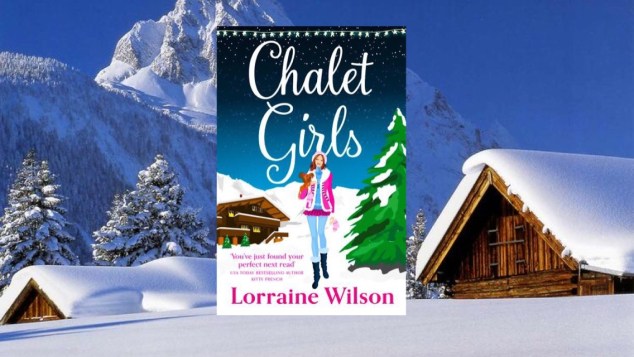
cover

I’m really pleased to welcome Lorraine Wilson, author of Chalet Girls to Linda’s Book Bag today to celebrate her latest book. I asked Lorraine who she’d envisaged to be the men in Chalet Girls and she took up the task with surprising alacrity. Although skiing has never interested me in the past, I’m thinking of taking it up now!

Chalet Girls was published by by Harper Impulse on 10th February 2017 and is available for purchase in e-book and paperback here. To help celebrate publication, the author is running a wonderful giveaway that you will find further down this post.

Chalet Girls

cover-chalet

What happens when life in Verbier suddenly goes off-piste?

Lucy’s been bowled over by the sexy extreme skier who’s hurtled into her life. But can she accept Seb’s commitment to his adrenaline-filled career?

Trusting any man is out of the question after what’s happened to Beth. So why is she so drawn to twinkly-eyed Dan when he’s leaving at the end of the season?

Sophie’s madly in love with her gorgeous fiancé, Luc. Only instead of gleefully planning the winter wedding of her dreams, all she wants is to run and hide…

Three Chalet Girls are about to strap on their skis and find out!

Researching the Men!

A Guest Post by

Being asked to research hot men for a guest post is always such a chore! But, being dedicated to my craft, ahem, I applied myself to the task to find three men to hit the slopes with who remind me of my three heroes in Chalet Girls.

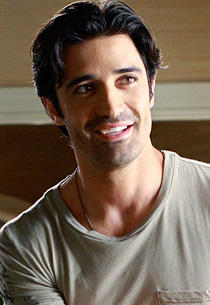
For Luc I think Gilles Marini is a good match. If you need further convincing just google ‘Giles Marini and swimming pool scene’ and I think you’ll be convinced!

giles

For Dan I’ve chosen William Levy. He looks just like Dan does in my mind – a man you could have a fun day skiing with but beneath the banter there’s a confidence that’s undeniably sexy.

william

Seb, my extreme skier, is a less conventional hero – he has more experience and is a bit edgier. For him I’ve chosen Olivier Martinez – you get the feeling you’d be in competent hands if he took you off piste…

oliver

For Seb I did take real life inspiration from YouTube videos of pro snowboarder Xavier de le Rue. Watching Xavier being dropped by helicopter onto the ridges of perilous alpine mountaintops gave me the initial inspiration for Seb’s character. You can watch one of Xavier’s jaw dropping mountain descents here.

snow

Giveaway

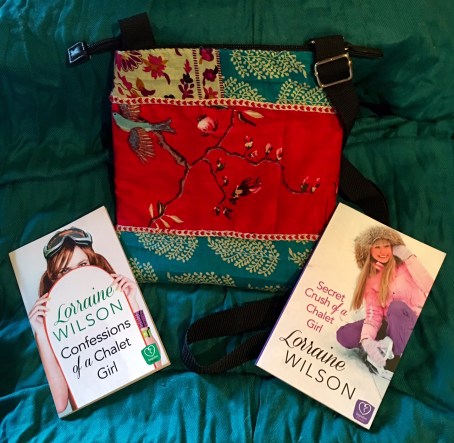
prize

Enter enter to win a unique Indian patchwork handbag and signed paperback copies of Confessions of a Chalet Girl and Secret Crush of a Chalet Girl by clicking here.

About Lorraine Wilson

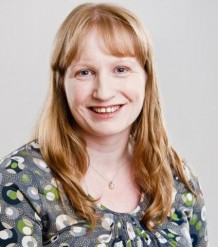
lorraine-wilson-218x247

Lorraine lives in Wiltshire with her husband but loves to travel and has lived in four continents. From playing amidst Roman ruins in Africa as a child to riding a Sultan’s racehorse in the Middle East as a teen, Lorraine has many experiences to draw on for the stories she’s been writing ever since she can remember. When she’s not writing you’ll find Lorraine listening to audiobooks while she sews or designs handbags, usually with a rescue terrier or two curled up on her feet.

You can find Lorraine on Facebook, follow her on Twitter and visit her website.

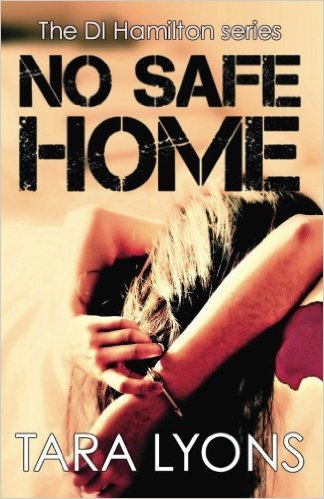
No Safe Home by Tara Lyons

no-safe-home

Having met lovely Tara Lyons, author of No Safe Home, on several occasions and had the privilege of a guest post from her on Linda’s Book Bag about the intricacies of the mind that you can read here, imagine my delight when I heard my name was going to have a cameo appearance in No Safe Home! Obviously I couldn’t wait to read it.

No Safe Home was published on 31st January 2017 by Bloodhound and is available for purchase in e-book and paperback here.

No Safe Home

no-safe-home

Detective Inspector Denis Hamilton is haunted when the suspicious death of a teenage girl triggers suppressed memories. With a stalker targeting vulnerable women in Central London, and his team rapidly diminishing, Hamilton must conquer his emotions before another family is destroyed.

In a sleepy town in Hertfordshire, Katy has worked hard to rebuild her life after leaving behind everything she knew. But when her past catches up with her, and her young son’s life is threatened, Katy must admit her true identity if she has any hope of surviving.

A home should be a safe place, shouldn’t it?

But sometimes it is hard to know who you can trust…

My Review of No Safe Home

Katy Royal is attempting to leave her past behind, but little does she realise just how much of it is about to catch up with her.

Now, here’s the thing. I know Tara and she’s lovely. Linda’s Book Bag is mentioned in the acknowledgements of No Safe Home and I was lucky enough to have my name included in a cameo role. So, I was terrified of reading No Safe Home in case I didn’t like it. I didn’t like it – I really liked it.

No Safe Home opens in dramatic style and doesn’t let up. I genuinely felt my pulse increase at times as I read and the short chapters add to that feeling of breathlessness generated. There are frequent mini cliff hangers that meant I couldn’t put aside No Safe Home until I’d just read a little bit more and before I knew it, I’d read it in one sitting. The plot is incredibly well developed so that it isn’t always possible to guess what will happen and again this adds to the enjoyment of the read.

I especially liked the perfect balance between developing the role of DI Denis Hamilton whilst creating the character of Katy Royal. I felt I knew them both well by the end of the book. Both their lives are gradually and skilfully revealed so that it doesn’t matter if you haven’t read the first of the DI Hamilton books, In The Shadows. No Safe Home works as a stand alone story in its own right.

The procedural and medical details are well researched and provide just the right level of detail to enhance the reader’s experience and I found Tara Lyons has a quality of description that enables the reader to envisage a scene vividly. She makes excellent use of the senses in her writing. I also really appreciated the smattering of literary references in the narrative too.

The premise that we are not safe in our own homes is a disturbing one and I found the exploration of this theme and the consequences of society’s use of the online virtual word all made for a riveting read. Indeed, it isn’t just the crime victims in this novel who have No Safe Home – others suffer too, adding layers of interest.

Tara Lyons has also skilfully constructed several possibilities for future DI Hamilton books. The investigating team has evolved and there are a couple of elements in No Safe Home that made me think ‘Oh! I wonder where that might go,’ in the future. Having read No Safe Home, I can’t wait to find out.

I thought No Safe Home was a thrilling read and I thoroughly enjoyed it.

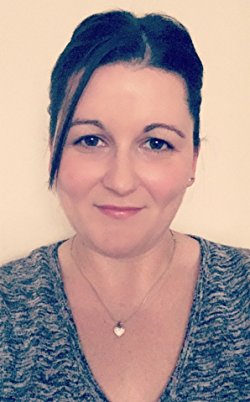
tara-lyons

Tara has always enjoyed writing and having studied English Literature at university went on to work as an Assistant Editor on an in-house magazine. She now concentrates on writing her own novels.

You can find Tara on Facebook, visit her website and follow her on Twitter.

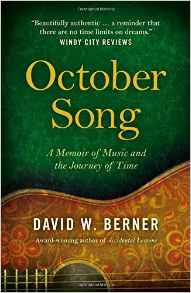
An Interview with David W. Berner, author of October Song

october-song

Sadly I don’t have time to read all the books that come my way, but I thought October Song by David W. Berner looked so interesting that I invited David onto Linda’s Book Bag to tell me more. Thankfully, David agreed to come along.

October Song will be published by Roundfire and John Hunt Books on April 28th 2017 and is available for pre-order here.

October Song

october-song

In the vinyl era, David W. Berner played rock ‘n’ roll in a neighborhood garage band. Decades later at the age of 57 he enters a national songwriting contest and quite unexpectedly is named a finalist. But there’s more. He’s called on to perform the song live at a storied venue for Americana music. Grabbing his old guitar and the love of his life, David hits the road, hoping to live out a musical fantasy he thought had been buried long ago. October Song is a powerful examination of the passage of time, love, the power of music, and the power of dreams.

An Interview with David W. Berner

Welcome to Linda’s Book Bag David. Thank you so much for agreeing to answer some questions on my blog about your writing. Firstly, please could you tell me a little about yourselves?

My background is journalism, but I’m a lot of things, really. My “storytelling” days, I like to say, began when I was paperboy. As a kid, I had a paper route with 110 customers and I like to think I was delivering stories to readers even then. Much of my journalism work is in broadcasting, but I’ve written a great deal for arts magazines, travel websites, and a number of personal essays have been published in literary magazines and websites. I grew up in Pittsburgh and I am a die-hard Steelers fan, but I have lived in the Chicago area for many years and the Midwest has become my adopted home. I play guitar, have a dog named Sam (Samantha), and live in a great little house with my beautiful Leslie—my domestic partner, significant other, confidant. I teach at Columbia College Chicago and regularly work for CBS Radio in Chicago.

Without spoiling the plot, please could you tell us a bit about October Song?

It’s the story of dreams—when do we let them go? In the vinyl era of rock-n-roll, I played guitar in a neighborhood garage band. Decades later at the age of 57 I entered a national songwriting contest and quite unexpectedly was named a finalist. I was then called on to perform the song live at a storied venue for Americana music more 500 miles from home. So I grabbed my old guitar and the love of my life, and hit the road. The book is about that trip, that dream, and, I hope, a powerful examination of the passage of time, love, the power of music, and the power of dreams. I think it’s a relatable story. We all have dreams we must decide to live out or let go.

(That sounds a fantastic experience.)

When did you first realise you were going to be a writer?

I have been a writer of some kind—not always a good one, though—since I was a kid. I wrote a book in 2nd grade entitled The Cyclops. Our teacher helped us produce paper mache books. The story was inspired by the Jacque Cousteau specials on television in the 1960s, the ones about ocean adventures. As a teenager I started writing songs. Nothing special, but they were extensions of what I was feeling. I wrote for the school newspaper a bit in high school. Got into journalism after college and wrote for broadcast and radio. I was certainly not a “born” writer. I really wasn’t very good in the beginning, and I am still growing and working on my craft. I think in some ways I will always be “becoming” a writer. Believing I can still grow keeps me on my toes.

How do you go about researching detail and ensuring your books are realistic?

I write from my heart. Trust my realities and my gut. If I need details for a place for a particular person, I use my journalism skills and simply ask a lot of questions.

Which aspects of your writing do you find easiest and most difficult?

Easy and difficult are probably not the categories I would put them in. It’s more about what I like and what I love. Getting started is probably the hardest. I like it, but don’t love the process of beginning. However, I love, love, love re-drafting. It’s the best part of the work. Going back over a manuscript after allowing it to sit for a time, to percolate, and then to dig back into it and make it the best it can be is most rewarding.

(How interesting. Many authors tell me that the editing stage is the part they enjoy least!)

What are your writing routines and where do you do most of your writing?

I’m a coffee shop writer. But, I am currently building a writer’s shed on my property. It’s in the spirit of Thoreau and Dylan Thomas. It’s 8 x 10 and will be, I hope, a very special space for writing. I have written about the shed a bit in my blog here. But when I finally move my work to the shed, I still plan to have immediate access to coffee.

If you hadn’t become an author, what would you have done instead as a creative outlet?

I believe being an author as an extension of all the things I do—radio journalism, teaching, songwriting. It’s all part of me. My job is a storyteller. I wanted to be an oceanographer when I was young boy. Maybe I would have been that. Still, I am doing now what I always wanted to do, what I was supposed to do, even when I wasn’t sure what that was.

October Song is a memoir. How difficult or cathartic was it to write?

Most of my work is personal. Even my novel, Night Radio, the only fiction I’ve written, has elements of reality in it. And although I have been asked this question a lot, I’m still not sure how to answer it. “Cathartic” might be too strong a word. I can say every book, including October Song has been freeing and has helped me understand what it was I faced, experienced, went through. Like the great essayist and author Joan Didion, I really don’t know what it is I’m thinking or trying to write until I start to write. It’s like pulling away a curtain on something brand new for all to see, including me. In fact, I didn’t set out on the songwriting road trip with intentions of writing a book. I had no idea this was going to be a story to tell. But during part of the weekend, I started taking notes on the experience and the more I wrote the more I saw had I a unique story to share.

Much of your writing seems to consider personal identity. How important a theme is this to you?

Thanks for bringing this up. It’s great insight. And you are right, I have always been thinking about who I am, who we are? I think that’s a lifelong question and one with varied answers as we move thorough life. Our identity changes all the time—father, son, lover, worker, friend, enemy. We are many things and only one at the same time. It’s a fascinating subject to me.

Music is central to much of your writing. What do you listen to as you write?

Music has been the only constant identity I have had in my life. Playing it, recording it, singing it loud with the car windows rolled down. Lyrics, great ones, make me cry, especially Dylan. Beautiful melodies sooth and spark me. But despite this, I don’t always listen to music when I write. Writing Night Radio and October Song—my two most recent books and the most music-based—I listened to the music mentioned in the manuscripts. I didn’t play the songs all the time, but occasionally, yes. Night Radio has a Spotify playlist attributed to it. October Song will too when the book is released. And when all else fails and I’m in the mood for music while writing, there is always Miles Davis.

Creativity is obviously a central part of your life. What advice would you give to those scared to release their own creativity through writing or song?

Whatever you are going through, whatever the subject you are writing about, someone else is going through it or examining it too. Examining your life in fiction or non-fiction is a life worth living, to paraphrase Socrates. If your medium is music, or painting, or dance, it is still the same thing. It’s storytelling and that is part of our human condition. We are storytellers. Tell yours. I understand that being vulnerable isn’t always easy, but the good artists find a way to embrace vulnerability. They let it all out. Let it out. We are all in this together.

To what extent does writing October Song represent fulfilling your own dreams?

If you’re talking about writing a book, another book, then yes, it does. I love telling stories and I have found that creative nonfiction is a good genre for me. So, in that sense, absolutely the book is part of the fulfilling of a larger dream. And the subject and focus of October Song is really all about that question.

You believe that age is just a number. What can we expect next for David W. Berner?

I’m working on a manuscript about the notion or concept of home. What does home mean to us? Arriving, leaving, searching for home—how does that fit into our lives? And what is home? Is it a place, a feeling, an experience? I see the end product as a book of essays, creative nonfiction all related to this subject, stories of all kinds with that theme. As I have said before, I’m writing this to try to figure out exactly what I’m trying to say about the concept of home. It’s shaping itself as it goes along.

October Song has a cover that almost suggests the idea of the grass being greener on the other side to me. How did that image come about and what were you hoping to convey (without spoiling the plot please!)?

That’s a very interesting observation. I hadn’t thought of that. But, to carry that through, I think checking out the grass on the other side is fine, but be aware that it isn’t always greener. What is for certain is that no matter where that grass may be, it still needs to be mowed. You still must cultivate your passions to make them work for you. The grass is not always greener, but new experiences, new challenges, and opportunities to stretch creatively or to open your mind to something new is the medicine of life, isn’t it? So, maybe that “grass is greener” book cover says I lot more than I ever imagined!

If October Song became a film, who would you like to play you and why would you choose them?  

This is a fun question.  I could see an older Ethan Hawke playing me, maybe? The Ethan Hawke of the movie Boyhood, a little grey in the hair, some wrinkle in the forehead. He may be too handsome to play me. Plus, he has hair. I don’t. Leslie, my partner, is also in the book. Anyone who is warm and beautiful would be perfect. When I asked her, she thought maybe Catherine Keener. There appears to be a little hippie in her and that works.

When you’re not writing, what do you like to read?

Mostly creative nonfiction. Love Joan Didion, Annie Dillard, and Hemingway’s nonfiction stories like Death in the Afternoon. But I also read newer writers who are crafting stories in the tradition of these greats. I just re-read Thoreau’s Walden, but I also just finished Patti Smith’s M Train. Loved it.

If you had 15 words to persuade a reader that October Song should be their next read, what would you say?

I would simply ask this question: What dream did you once have that you wish you could still try to realize? I like that it’s a question, allowing the reader to have his or her own interpretation. I like that.

So do I. Many thanks, David, for agreeing to be interviewed.

About David W. Berner

author

David W. Berner is an award-winning journalist, broadcaster, author, and teacher. He has published three books (two memoir, one collection of essays) and will soon publish a work of fiction. David has more than forty years’ experience in broadcast journalism as a reporter, anchor, news director and program director. He regularly contributes to the CBS Radio Network and has contributed to public radio stations around the country, including NPR’s Weekend edition.

David’s first book, Accidental Lesson (Strategic) was awarded the Royal Dragonfly Grand Prize for Literature. In 2011, he was awarded the position of Writer-in-Residence at the Jack Kerouac Project in Orlando, Florida and his memoir – Any Road Will Take You There: A Journey of Fathers and Sons (Dream of Thing Publishing) – is a product of the three-months spent at Kerouac’s former home. The book won the Chicago Writers Association “Book of the Year” award in 2013. In 2015, David was awarded the Writer-in-Residence honor by the Ernest Hemingway Foundation of Oak Park and his collection of essays, There’s A Hamster In The Dashboard (Dream of Things Publishing) was named a 2015 “Best Book” by the Chicago Book Review. He has also performed live literature at 2nd Story, Essay Fiesta, and Sunday Salon around Chicago.

You can follow David on Twitter, find him on Facebook and visit his blog.

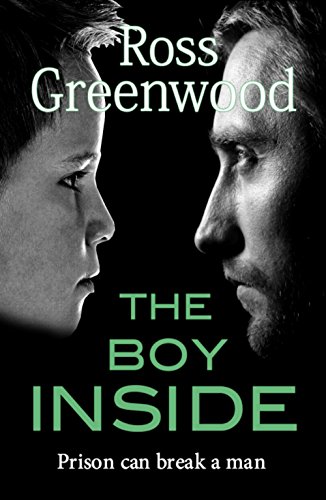
A Year in the Life, a Guest Post by Ross Greenwood, author of The Boy Inside

the-boy-inside

It gives me great pleasure to welcome back Ross Greenwood to Linda’s Book Bag today to celebrate the publication of The Boy Inside. Ross is a local author to me and I had the privilege of interviewing him almost a year ago when his first novel Lazy Blood was published. You can read that interview here.

The Boy Inside was published by Bloodhound Books on 7th February 2017 and is available for purchase in e-book and paperback here. In celebration of The Boy Inside, Ross has agreed to tell me what’s been happening in the year since he was on Linda’s Book Bag.

The Boy Inside

the-boy-inside

How can you make the right decisions if everything you’ve been told is a lie?

With absent parents and broken friends, twenty-one year old Ben is making choices which are ruining his life. In jail, again, he and his cellmate, Jake, take a hostage in a futile gesture against a system they can’t control.

This powerful, beautifully written novel gives a vivid and realistic picture of those we send to jail.

Who would you rely on if you were locked up?

Do we ask the most from the ones who have the least?

A Year In The Life

A Guest Post by Ross Greenwood

It’s been a strange time. Linda asked me to write a piece about a year as a self-published author. Only I’m not one now!

I finished Lazy Blood about eighteen months ago. I knew nothing about the publishing world and hadn’t really planned to publish. Perhaps just get some copies printed off. However, the people I got to proof read, loved it. They said you have to get it out there, and that set the ball rolling.

Those who have self-published a book will know what an up-and-down experience that is, but enjoyable nevertheless. I began to receive some great reviews, from people I didn’t know! That inspired me to write the second book, The Boy Inside. The plan had been to write three stories, all with very different protagonists whose lives were affected by prison.

The almost unanimous feedback I got from readers about the first book was that they loved the insight into what our prisons are really like. I was a prison officer for four years and was surprised at what I found when I worked there.

On completion of The Boy Inside I sent it out to agents and publishers. I ended up with two publishers who were keen and an agent. I never expected to be in a position to have to choose between anyone. I decided to go with Bloodhound books in the end as I knew Betsy from online book clubs and as a successful author herself she was very aware of all the fears authors have. They really seem to understand the business.

It was actually a few weeks later that it sank in that I was going to be a real published author. It can be a lonely existence; writing a book. Then at the end it can be demoralizing when no one is interested. So, I’m grateful for Bloodhound for publishing it and providing such a great cover. However, I’m also grateful to so many people, mostly online, who have been so supportive. Linda is one! You’ve all given your time for free with nothing expected in return. I now try to return that to others.

So, this novel is inspired by a story I often heard when I was at work. A tough upbringing leads to a dissociated existence which inevitably ends with jail. Once you are in the prison system, it’s very hard to break free. What events led Ben and his friends to be criminals? Will they be able to make a future for themselves when they leave?

This story will shock some and surprise many. I hope you enjoy it. This book is real life at its rawest.

My Review of The Boy Inside

With a hostage situation about to implode, Ben’s life in prison is just the beginning of this story.

What a powerful and affecting read The Boy Inside is. Aside from a plot that involves everything from petty theft to murder, there is so much that can be learnt from reading this exceptionally well written story. I have to say something about the book’s clever structure too as it is divided into several sections in much the same way as serial offenders’ lives are divided into stretches in prison.

The characters that appear are all too familiar to society, with drug addicts, criminals and prostitutes peppering the narrative, but what is different to many other crime books is the level of humanity behind the writing. Having worked in the prison service Ross Greenwood knows first hand what places inmates there. Ben may be a boy inside, in prison, but Ross Greenwood also shows us utterly clearly the boy inside, the real person behind the criminal and the path that has led Ben to that prison cell. Having taught youngsters similar to Ben in the past I found I was very moved by the situations Ben and Jake especially found themselves in. The home backgrounds of alcoholism, violence and neglect are sadly only too realistic. I also really liked the way in which Ben’s past is revealed, with his route to criminality, his first experiences of sex, his friendship with Jonty all adding to layers that made him a very real person. It was the naturalness of the direct speech that helped create this impression for me too.

What did surprise me was how much I learnt about what life in prison is like. I had some inkling, having acted as a police lay visitor for a few years to local prison cells, but the level of corruption and lawlessness revealed was so convincing and authentic I felt shocked at times.

An element that really resonated with me was the sense of Peterborough as a setting. Peterborough is my nearest city and I recognised so many of the locations which added to my enjoyment because they are authentically presented.

In a sense, this should be a depressing book, but I found The Boy Inside a sensitive and enlightening read as well as a gripping story. There is hope and characters like the Singhs act as a counterpoint to the negative aspects so that I felt The Boy Inside was a realistic and entertaining narrative. I really enjoyed it.

About Ross Greenwood

Ross

Ross was born in 1973 in Peterborough and lived there until he was twenty, attending The King’s School in the city. He then began a rather nomadic existence, living and working all over the country and various parts of the world.

He found himself returning to Peterborough many times over the years, usually when things had gone wrong. It was on one of these occasions that he met hs partner about a hundred metres from his back door whilst walking a dog. Two children swiftly followed. He’s still a little stunned by the pace of it now.

This book was started a long time ago but parenthood and then four years as a prison officer got in the way. Ironically it was the four a.m. feed which gave him the opportunity to finish the book as unable to get back to sleep, he completed it in the early morning hours.

You find Ross on Facebook page and visit his web site. You can also follow Ross on Twitter.

There’s more with these other bloggers too:

ross-poster

Headline Blogger and Author Event

img_0676

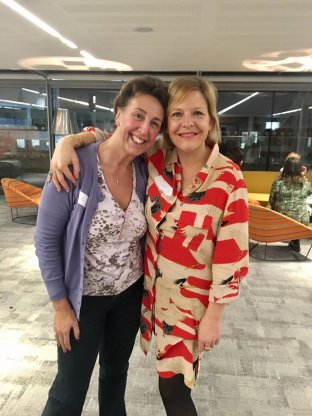
What a super evening I had last night at the Headline Blogger Evening at Carmelite House. I’d like to say thank you to all those involved, and especially the wonderful Georgina Moore whom you should follow on Twitter here.

hodder-09-02-2017-with-georgina

With the fabulous Georgina Moore!

It’s so lovely to meet those wonderful publicists who send we bloggers fantastic books to read. I always relish meeting up with fellow bloggers and this time I met in real life a couple I’ve followed since I started blogging: John from The Last Word blog and Jackie from Never Imitate.

adam-handy-john-tina-and-me

With Adam Handy, John (The Last Word)  and Tina (Trip Fiction)

We had wine and nibbles as well as the opportunity to talk with several authors before walking away with fantastic books. I so enjoyed speaking with Alison Weir and Colette McBeth, both of whom signed books for me and I have to admit to having a bit of a fan girl moment talking with Adele Parks whose latest book The Stranger in My Home was also published in paperback yesterday. Equally brilliant was having the chance to speak at length with  Adam Handy and Felicia Yap.

Authors attending or featured last night were:

Adam Handy and Pendulum

pendulum

You wake. Confused. Disorientated.
A noose is round your neck.
You are bound, standing on a chair.
All you can focus on is the man in the mask tightening the rope.
You are about to die.
John Wallace has no idea why he has been targeted. No idea who his attacker is. No idea how he will prevent the inevitable.
Then the pendulum of fate swings in his favour.
He has one chance to escape, find the truth and halt his destruction.
The momentum is in his favour for now.
But with a killer on his tail, everything can change with one swing of this deadly pendulum…

You have one chance. Run.

Pendulum is available here

Adele Parks and The Stranger in My Home

the-stranger-in-my-home

Alison is lucky and she knows it. She has the life she always craved, including a happy home with Jeff and their brilliant, vivacious teenage daughter, Katherine – the absolute centre of Alison’s world.

Then a knock at the door ends life as they know it.

Fifteen years ago, someone else took Alison’s baby from the hospital. And now Alison is facing the unthinkable.

The daughter she brought home doesn’t belong to her.

When you have everything you dreamed of, there is everything to lose.

The Stranger in My Home is available here.

Alison Weir and Six Tudor Queens: Katherine of Aragon

six-tudor-queens

A Spanish princess. Raised to be modest, obedient and devout. Destined to be an English Queen.

Six weeks from home across treacherous seas, everything is different: the language, the food, the weather. And for her there is no comfort in any of it. At sixteen-years-old, Catalina is alone among strangers.

She misses her mother. She mourns her lost brother.
She cannot trust even those assigned to her protection.

Katherine of Aragon. The first of Henry’s Queens. Her story.

History tells us how she died. This captivating novel shows us how she lived.

Six Tudor Queens: Katherine of Aragon is available here.

Amanda Reynolds and Close to Me

close-to-me

When Jo Harding falls down the stairs at home, she wakes up in hospital with partial amnesia – she’s lost a whole year of memories.

A lot can happen in a year. Was Jo having an affair? Lying to her family? Starting a new life?

She can’t remember what she did – or what happened the night she fell.

But she’s beginning to realise she might not be as good a wife and mother as she thought.

Close to Me is available for pre-order here.

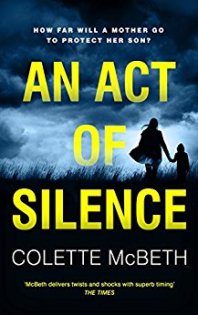
Colette McBeth and An Act of Silence

an-act-of-silence

These are the facts I collect.

My son Gabriel met a woman called Mariela in a bar. She went home with him where they had sex. They next morning she was found in an allotment.

Mariela is dead.

Gabriel has been asked to report to Camden Police station in six hours for questioning

Linda Moscow: loving mother to Gabriel. Linda promised herself years ago that she would never let her son down again. Even if it means going against everything she believes in – she will do anything to protect him. She owes him that much.

Gabriel Miller: the prodigal son. He only ever wanted his mother’s love, but growing up he always seemed to do the wrong thing. If his mother could only see the bad in him – how could he possibly be good?

How far will a mother go to save her son? Linda’s decision might save Gabriel, but it will have a catastrophic impact on the lives of others. What would you do if faced with the same impossible choice?

An Act of Silence is available for pre-order here.

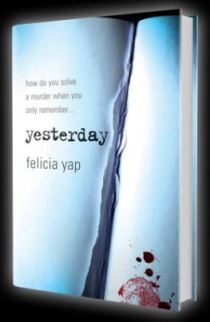
Felicia Yap and Yesterday

yesterday

There are two types of people in the world. Those who can only remember yesterday, and those who can also recall the day before.

You have just one lifeline to the past: your diary. Each night, you write down the things that matter. Each morning, your diary tells you where you were, who you loved and what you did.

Today, the police are at your door. They say that the body of your husband’s mistress has been found in the River Cam. They think your husband killed her two days ago.

Can you trust the police? Can you trust your husband? Can you trust yourself?

Yesterday is available for pre-order here.

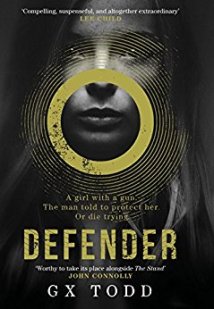
G X Todd and Defender

defender

On the cusp of sleep, have we not all heard a voice call out our name?’

In a world where long drinks are in short supply, a stranger listens to the voice in his head telling him to buy a lemonade from the girl sitting on a dusty road.

The moment locks them together.

Here and now it’s dangerous to listen to your inner voice. Those who do, keep it quiet.

These voices have purpose.

And when Pilgrim meets Lacey, there is a reason. He just doesn’t know it yet.

Defender pulls you on a wild ride to a place where the voices in your head will save or slaughter you.

#HearTheVoices

Defender is available here.

Jen Williams and The Ninth Rain

the-ninth-rain

The great city of Ebora once glittered with gold. Now its streets are stalked by wolves. Tormalin the Oathless has no taste for sitting around waiting to die while the realm of his storied ancestors falls to pieces – talk about a guilt trip. Better to be amongst the living, where there are taverns full of women and wine.

When eccentric explorer, Lady Vincenza ‘Vintage’ de Grazon, offers him employment, he sees an easy way out. Even when they are joined by a fugitive witch with a tendency to set things on fire, the prospect of facing down monsters and retrieving ancient artefacts is preferable to the abomination he left behind.

But not everyone is willing to let the Eboran empire collapse, and the adventurers are quickly drawn into a tangled conspiracy of magic and war. For the Jure’lia are coming, and the Ninth Rain must fall…

The Ninth Rain is available for pre-order here.

Julia Crouch and Her Husband’s Lover

her-husbands-lover

She stole her husband. Now she wants to take her life.

After the horrors of the past, Louisa Williams is desperate to make a clean start.

Her husband Sam is dead. Her children, too, are gone, victims of the car accident in which he died.

Sam said that she would never get away from him. That he would hound her until she died if she tried to leave. Louisa never thought that he would want to harm their children though.

But then she never thought that he would betray her with a woman like Sophie.
And now Sophie is determined to take all that Louisa has left. She wants to destroy her reputation and to take what she thinks is owed her – the life she would have had if Sam had lived.

Her husband’s lover wants to take her life. The only question is will Louisa let her?

Her Husband’s Lover is available here.

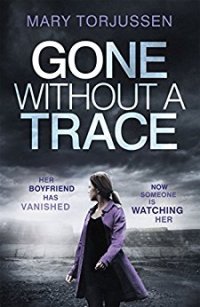
Mary Torjussen and Gone Without A Trace

gone-without-a-trace

No one ever disappears completely…

You leave for work one morning.

Another day in your normal life.

Until you come home to discover that your boyfriend has gone.
His belongings have disappeared.
He hasn’t been at work for weeks.
It’s as if he never existed.

But that’s not possible, is it?

And there is worse still to come.

Because just as you are searching for him someone is also watching you.

Gone Without A Trace is available here.

Nikola Scott and My Mother’s Shadow

my-mothers-shadow

It is 1958. Elizabeth has been sent away from her London home to the beautiful Hartland House in Sussex. Over an idyllic summer by the coast, she grows close to the confident young Shaws, who treat her like one of their own. A lovely but innocent girl, Elizabeth is ready to fall in love – but her dreams are dangerously naïve.

Decades later, Elizabeth’s daughter Addie is stunned when a stranger appears on her doorstep, claiming that they are sisters. Addie doesn’t believe it. Until her beloved father admits that everything she’s been told about her early life is a lie.

For Addie and her new sister Phoebe it’s the beginning of an emotional journey back to a time of fallen women and domineering fathers, as they discover the extraordinary truth about how their lives began…

My Mother’s Shadow is available for pre-order here.

I think my spring reading might just be sorted!

Plotting a Unique Structure, a Guest Post by S.D.Robertson, author of If Ever I Fall

if-ever-i-fall

I’m delighted to welcome back S.D. Robertson, author of If Ever I Fall to Linda’s Book Bag. S.D. Robertson previously wrote about his journey to publication on the blog hereIf Ever I Fall was published yesterday 10th February 2017 by Avon Books, an imprint of Harper Collins, and is available for purchase here.

To celebrate today’s publication of If Ever I Fall, I have a great guest post from S.D. Robertson all about how this cleverly plotted book came about. I’m reviewing If Ever I Fall too.

If Ever I Fall

if-ever-i-fall

Is holding on harder than letting go?

Dan’s life has fallen apart at the seams. He’s lost his house, his job is on the line, and now he’s going to lose his family too. All he’s ever wanted is to keep them together, but is everything beyond repair?

Maria is drowning in grief. She spends her days writing letters that will never be answered. Nights are spent trying to hold terrible memories at bay, to escape the pain that threatens to engulf her.

Jack wakes up confused and alone. He doesn’t know who he is, how he got there, or why he finds himself on a deserted clifftop, but will piecing together the past leave him a broken man?

In the face of real tragedy, can these three people find a way to reconcile their past with a new future? And is love enough to carry them through?

How I Developed My Novel’s Unique Structure

A Guest Post by S.D. Robertson

My new book, If Ever I Fall, has a rather unique structure. There are three interweaving plot strands, which appear one after the other as the story unfolds. I’ll call them parts A, B and C to keep things simple.

Part A is a series of letters written by a grieving woman called Maria to someone called Sam. Part B is about Jack, who awakes with amnesia in a strange derelict mansion, looked after by Miles, who says he’s a doctor. Part C tells the story of Dan, a newspaper editor whose life is in tatters.

What’s most unusual is that part C is written backwards. It starts in 2017, around the same time that part A takes place, but then over the course of the novel it gradually takes the reader back to a key event that happened two years earlier. So, for instance, the first instalment is set in May, the next in April, the one after that in March, and so on.

At the beginning it’s also not clear how the strands relate to one another, or when and where part B takes place. So as you can probably imagine, it wasn’t the easiest thing in the world to write. It involved a lot of detailed notes and timelines, as well as quite a bit of hair pulling and swearing at myself.

If I’m honest, at times during the writing process, I wished I’d not done it that way. For the most part, my debut novel, Time to Say Goodbye, had a far more straightforward linear structure. Occasionally when I was constructing this novel, I did miss that. However, once it was finished, I knew I’d made the correct decision. It was definitely the right way to tell this particular story.

Each of the key characters in the novel is, for different reasons, feeling lost. I wanted my readers to experience a taste of this. But I also knew it was important not to make things too confusing, as writing in a simple and engaging way has always been very important to me as an author.

Essentially, my aim with this novel is for readers to be presented with a puzzle that they become actively engaged in trying to solve before the answers present themselves in the text. I want to draw them into the story, so they feel involved rather than mere observers.

The backwards idea for part C came to me during the very initial stages of developing the concept. I decided to re-watch Christopher Nolan’s fantastic film Memento, which also involves amnesia, and that convinced me to go for it; that a story told in reverse could work.

From there, once I started actually writing the novel, it was a case of thorough planning and keeping on top of things. I had a central diagram of how the three strands were set to unfold in relation to one another and an ever-expanding notebook packed with background information.

Rather than taking on each part separately and bringing them together at the end, I chose to write everything in the same order that it appears in the book. That seemed to be the most sensible way to keep on top of things – and I got there eventually.

I also decided to write each section in a different way to keep them distinct, both for me as author and for readers. So there’s the letter format of part A, while part B is first person present tense, and part C is third person past tense.

After that, the editing process was crucial for ironing out any structural kinks. My editors at Avon were massively helpful when it came to making sure that things didn’t get too confusing and that it was always clear where and when the action was taking place.

So now you know how I developed the unique structure of If Ever I Fall. I do hope you enjoy reading it.

My Review of If Ever I Fall

With Dan and Maria’s lives in free fall and the mysterious Miles looking after amnesiac Jack, the world is not all it seems.

If Ever I Fall was completely different to my expectations. I imagined I was about to read a cosy and emotional women’s fiction narrative that I would thoroughly enjoy. I certainly enjoyed If Ever I Fall and I did find it emotional, but this three stranded story exceeded my expectations, with an almost psychological thriller or mystery element too.

It’s quite hard to say too much about the plot without spoiling the story for other readers, but S.D. Robertson’s skill in weaving the plot strands is masterful. At times there’s a disjointed nature to one of the plot devises that makes it a little confusing. This is not a negative. The flashback, dreamlike, elements serve to provide the same experience for the reader as for the character. I thought this was so well done.

With such a complex plot, it surprised me just how well developed the characters are. My heart went out to them all with the exception of one – but again I don’t really want to say who as I don’t want to spoil the read! Maria’s epistolary sections that explore her fragile state of mind are so moving. S.D. Robertson shows how O.C.D can affect lives to breaking point and the themes of If Ever I Fall are intense and affecting for the reader. Grief, relationships, memory and identity all underpin both character and plot so that there really is something for every reader in this book.

I also really appreciated the title. If Ever I Fall can relate to literal actions in the story but equally to metaphorical ones as characters fall from grace, fall apart in their relationships, fall into depression and mental ill-health and so on. I think the significance of the title only becomes clear after the book is read completely.

If Ever I Fall did not live up to my expectations. It exceeded them and I will be thinking about it for a long time.

About S.D. Robertson

SD Robertson.jpg

Former journalist S.D. Robertson quit his job as a local newspaper editor to pursue a lifelong ambition of becoming an author and to spend more time with his wife and daughter. If Ever I Fall is his second novel. A heart-rending story of family tragedy, it is published on 9 February 2017.

You can follow S.D. Robertson on Twitter, visit his web site and find him on Facebook.

There’s more with these other bloggers too:
If Ever I fall tour poster.png