A Publication Day Interview with Claire Dyer, Author of The Last Day

new cover

Having been privileged to do the cover reveal for The Last Day by Claire Dyer, I’m absolutely delighted that Claire joins me in interview on publication day. I’m even more thrilled that I’ll be joining Claire at the launch for The Last Day this evening and I can finally share my review!

The Last Day is published today 15th February 2018, by The Dome Press and is available for purchase here.

The Last Day

new cover

They say three’s a crowd but when Boyd moves back in to the family home with his now amicably-estranged, Vita, accompanied by his impossibly beautiful twenty -seven-year-old girlfriend, Honey, it seems the perfect solution: Boyd can get his finances back on track while he deals with his difficult, ailing mother; Honey can keep herself safe from her secret, troubled past; and Vita can carry on painting portraits of the pets she dislikes and telling herself she no longer minds her marriage is over.

But the house in Albert Terrace is small and full of memories, and living together is unsettling.

For Vita, Boyd and Honey love proves to be a surprising, dangerous thing and, one year on, their lives are changed forever.

An Interview with Claire Dyer

Welcome to Linda’s Book Bag, Claire. Congratulations on today’s publication of The Last Day.

Firstly, when did you realise you were going to be a writer?

I think I’ve always aspired to be a writer. As a little girl I’d write stories and poems – they were obviously very bad – but I was lucky that my family encouraged me. My mother died when I was seven and I was told that she had loved writing and had short stories published in her school magazine, so I guess I wanted to carry on where she left off. However, it wasn’t until my kids were teenagers that I finally started to apply myself conscientiously to practising the craft. I remember when I went to meet my first publisher, I had a very strong sense that my mother was there with me; it felt great to be able to share the moment, albeit virtually, with her!

(I’m sure your mother would be so proud of you.)

You’re a poet as well as a novelist. How do the two disciplines enhance or inhibit one another do you think?

When I’m writing poetry I try to think like a story-teller: a fellow poet once said that a poem is like a scene in a book and that when writing, we should do what we do in fiction, ie. get in late and get out early, so I constantly re-evaluate my opening and closing stanzas to make sure the poem is as instant and vivid as possible. And, when I’m writing fiction, I try to think like a poet: I listen for the music and beauty in language and give a lot of thought to word choice. I therefore believe the two disciplines go hand in hand and feel very blessed that I seem to have found a voice in both.

I know you know you now teach creative writing after quite an eclectic CV. How does teaching writing impact on your own work?

You’re right, I have had a very varied number of jobs! My approach to the creative writing courses I teach now has been to deconstruct the elements I believe writers use in their fiction, and so we look at character, plot, place, point of view, etc., etc., and then when we’ve got a grip on what they are, we have a go at putting them back together in our writing. Moreover, my grandfather always said that if you wanted to learn an instrument, you should take a pupil, so teaching has made me really focus my mind on what makes good writing good and has instilled in me the discipline to try and put into practice what I preach!

Without spoiling the plot, please could you tell us a bit about The Last Day?

The Last Day is about three people – Vita, her former husband, Boyd, and Boyd’s new girlfriend, Honey – learning to live together in Vita’s small terraced house. The story follows them over the course of a year during which their separate and shared pasts and their present conflicts and tensions collide, changing them all in ways they don’t foresee.

As it’s publication day for The Last Day, how will you be celebrating?

The very lovely people at The Dome Press are throwing a party and it’ll be fantastic to be able to share the event with those who supported me and the book while I was writing it, those who’ve made it into a real thing with pages and everything, and those who’ve been such champions of it so far! I am so looking forward to saying a huge and soppy thank you to as many people as I can!

(And I’m looking forward to being there Claire!)

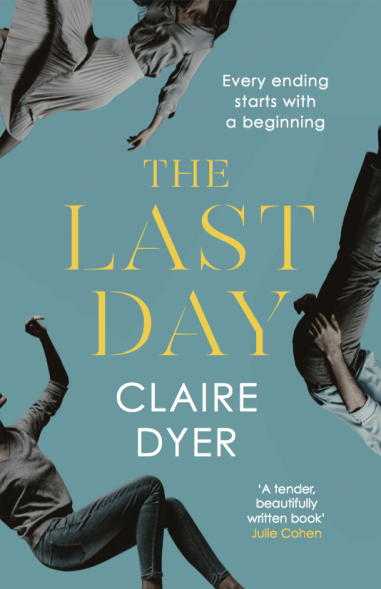
I was thrilled to reveal The Last Day cover. I love it. It suggests a real maelstrom of relationships to me. How did that image come about and what were you hoping to convey (without spoiling the plot please!)?

Firstly, thank you SO much for the cover reveal! The cover was designed by Mark Swan and when it got sent through to us, everyone at The Dome Press and DHH Literary Agency really loved it because it summed up so precisely what the book is about: three people in a state of flux. I particularly like its energy and its colours and how the figures represent so closely how I see the characters in my mind!

It was my absolute pleasure and delight Claire.

The Last Day is written in the continuous present tense suggesting an immediacy and the possibility for the events to occur to any one of us. Why did you choose this tense instead of a simple past?

This is probably not a very writerly thing to say, but I don’t think I consciously chose to write it in the continuous present, it just came out that way! I suppose it was because the story was happening as I was writing it and there are sections in it which just wouldn’t work in any other tense but I can’t really say any more about that right now!

You explore love as a theme in The Last Day. To what extent do you think love has the ability to surprise us still?

Oh, I think love is a constantly changing thing but that sometimes it’s hard for us to rationalise this and so it makes it an intriguing topic to explore. Sometimes we can get hooked on the past and are fearful of the future and so we forget to live in the present and therefore miss the signs that tell us that something is beginning or ending until it’s too late.

If you could choose to be a character from The Last Day, who would you be and why?

I’d love to be Vita for a day! I adored writing her because I never quite knew what was going to come out of her mouth next. She swears, is rude and bad-tempered, but she’s also complex, compassionate and loving. She’s a woman who doesn’t say what she means and doesn’t mean what she says, one who believes she lives life on her terms but who doesn’t really and who gets to know herself in a way I admire. She has the sort of courage I sometimes wish for myself!

When you’re not writing, what do you like to read?

I read loads of different kinds of books. Having done an MA in Victorian literature, I confess I adore Brontë, Dickens, Eliot, etc., and, after doing a module on 20th Century American Literature during my first degree, I’m also a big fan of F Scott Fitzgerald and Hemingway. But I love all books really. I’ve been in a Book Group for 13 years and we’ve read 140 books over that time! I’m also part of the Radio Reads team on BBC Radio Berkshire, so we pick a different book each month that listeners can get from their local libraries and again, we’ve had a huge range of titles, from psychological thrillers, to rom coms, to literary, historical fiction and detective fiction and cosy crime. I also read a lot of poetry. I subscribe to a number of magazines and journals and go to poetry readings – my shelves are jammed tight with the poetry collections of the many poets I admire.

If you had 15 words to persuade a reader that The Last Day should be their next read, what would you say?

Please do read it, like love can so too may The Last Day surprise you!

Thank you so much for your time in answering my questions Claire.

My Review of The Last day

Living with her estranged husband Boyd and his much younger girlfriend Honey will affect Vita in surprising ways.

The Last Day is an affecting and effective novel that is intelligent, beautifully plotted and superbly crafted.

The mix of Vita’s first person narrative against the third person sections belonging to Boyd and Honey should place her centre stage but the balance of perspectives is delicately wrought so that I felt I knew and understood all three equally well. These are vivid, desperate people whose lives are so intricately interwoven that Claire Dyer has a masterful touch in conveying their lives, their passions, their bitterness and their griefs.

I loved the lurking menace from Honey’s past that hangs threateningly over the story, and the grief that she, Vita and Boyd all experience is almost too much to bear. Having so few extraneous minor characters in Belle, Tricia and Colin gives a taut claustrophobic feeling so that I was waiting for the storm to break. Although I guessed the plot with ease, this was by no means negative, but rather added to the enormous satisfaction in reading a crafted, honed and beautiful novel.

The title The Last Day is perfect. I can’t explain all the nuances for fear of revealing too much of the plot, but I thought the ways we are reminded that there are so many last days in our lives and that we never know exactly when any particular one will occur gave the novel an almost Shakespearean feeling. There is real tragedy here on many levels.  The manner in which Vita’s thoughts are presented almost as asides adds to this sensation and gives depth to her character whilst making the reader see inside her head so clearly.

I didn’t like the way the novel ended, not because it wasn’t perfect because it was, but because there could really be no other resolution and not everyone could have their happy ending as I wanted. I was reduced to tears at both the desperate sadness and the potential optimism that pervade this story. Claire Dyer understands humanity and presents it on the page with utmost skill.

I haven’t read anything from Claire Dyer before, but my goodness I will in the future. I loved The Last Day and cannot recommend it highly enough.

About Claire Dyer
Claire Dyer

Claire Dyer’s novels The Moment and The Perfect Affair, and her short story, Falling For Gatsby, are published by Quercus.

Her poetry collections, Interference Effects and Eleven Rooms are published by Two Rivers Press. She has an MA in Creative Writing from Royal Holloway, University of London and teaches creative writing for Bracknell & Wokingham College.

She also runs Fresh Eyes, an editorial and critiquing service.

You can follow Claire on Twitter @ClaireDyer1 and visit her website. You’ll also find Claire on Facebook.

There’s more with these other bloggers too:

new poster

Staying in with Judith Barrow

Layout 1

I’m absolutely delighted to welcome Judith Barrow to Linda’s Book Bag to stay in with me today and tell us all about A Hundred Tiny Threads. I reviewed this wonderful book here on the blog and have also been privileged to interview Judith in a post you’ll find here when Changing Patterns was released. There’s also information about Judith’s Living in the Shadows here.

If you’re an author who’d also like to stay in with me and tell me about one of your books, please click here for more details.

Staying in with Judith Barrow

Welcome back to Linda’s Book Bag Judith. Thank you for agreeing to stay in with me.

Thank you for inviting me, Linda, It’s always good to have a night in with a friend.

It is indeed. So, tell me, Judith, which of your books have you brought along to share this evening and why have you chosen it?

I’ve chosen A Hundred Tiny Threads because, besides it being my latest book, it’s the prequel to my Howarth trilogy and it’s interesting because it’s set around  a hundred years ago this year; the time of the ending of  First World War, the fight for Home Rule in Ireland and the increased activity of the Suffragettes. .And, more importantly for me as the author, it’s the era that explains the early lives of the two protagonists, Winifred and Bill Howarth,  who appear in the first of the family saga trilogy, Pattern of Shadows, as middle aged people and the parents of Mary Haworth, the protagonist of the trilogy. These are two characters who wouldn’t leave me alone until I’d told their stories because they felt they hadn’t had a fair deal in that book.

I loved hearing about Winifred and Bill when I read A Hundred Tiny Threads Judith and am so glad you listened to them!

What can we expect from an evening in with A Hundred Tiny Threads?

Although the book is written from an omniscient narrator’s point of view, I’d like Winifred to talk with us tonight. Although there is much about Bill’s early life that shaped him into the bitter and difficult man he became, I feel that it is she who most wants to explain the choices she made.

Here she tells us about her friend, Hanora, who is trying to persuade her to join the Suffrage Movement: and how nervous she is:

“I told here,’I can’t get involved in something like that.’

‘But ya’re involved, Win, Hanora told me. ‘Ya’re a woman. I’m a woman. And we have no say in anything. The men have it all their own way. Last year the Liberals called a General Election to put off passing the Suffrage Bill. I believe what the WSPU say—’

The WSPU?’

‘The Women’s Social and Political Union.’ Honora lifted her eyebrows. ‘Did ya not know that even? They’re fighting for the vote for us all.’ Honora leaned across the table, put her hand on my arm. ‘They are, ya know,’ she said, dismissing my shake of my head. ‘The Government said they would try to get the vote for us but the politicians haggled over it. We think Asquith was against us from the start.’ Honora pressed her lips together and drew in a long breath. ‘They try to make out it’s our own fault, that too many of us have taken action. Been violent, they say,’ she said as I opened her mouth to ask what she meant. ‘But I ask ya, what choice have we had? They’ll all too busy watching their own backs against that other blasted House– the House where all the toffs are. And the trade unions–they’re fighting the unions all the time. And they’re frightened about what’s happening back home; about us, the Irish, wanting Home Rule…’ she stopped, having run out of breath.”

 And here Winifred tells us of her first Suffragette meeting;

“The woman on the stage flung her arms wide. ‘We will get the vote. However many of us have to suffer–have to die even. We will get the vote.’

There was a roar of approval throughout the hall.

A raft of placards suddenly appeared in front of me, closing off the narrow view I had. They were twisted around so I could read some of them.

Votes for Women

The Bill, the Whole Bill and Nothing but the Bill.

 No taxation without registration.

I glanced towards Honora, The girl’s cheeks were red and she was shouting out the chant with the other three girls, their hands linked and raised above their heads. ‘Votes for women.’ When she returned my gaze her dark eyes were glittering with excitement. ‘We’ll show the beggars,’ she mouthed. ‘We’ll show them’

We? The chill that crawled over my scalp accompanied my thoughts; what had I got myself into?”

But then two things happen; she reluctantly finds herself attracted to Honora’s brother, Conal, who she initially dislikes.

And, here, she learns a little of her grandmother’s history and why she’s living in the hovel that is Wellyhole Terrace.

“’ Your Grandfather left me penniless. Gambled away everything we’d got. I didn’t know how much debt we were in until afterward he died; until I was turned out of the house by the bailiffs. My house.’ Her eyes reddened with the tears she was fighting to hold back. ‘That’s how long I’ve been here.’

I knelt by her side and put my arms around her. ‘I’m sorry. Don’t cry.’ The anger was swift against the man who’d done this to my beloved grandmother. ‘But I don’t understand. If it was your house, how—’

 ‘When you marry–I think it’s still the same–Winnie–when you marry–everything you have then belongs to the man.’ She stroked my hair. ‘It’s not right and it’s not fair. But that’s how it is.’

 I heard the deep breath grandmother took.

‘It’s men that decides what happens with women. Them in the Government don’t want to change that, they’re sitting pretty, all right. They don’t want anything changing. But it has to. We women have rights too.’ She lifted my head and smiled. ‘So–you ask what I know about the Suffragettes? I know they’re right. And if you think they’re right as well, you should join them, never mind what your mother says. You follow your heart.’”

Winifred falls in love with Conal who shows he is committed to the cause for votes for women. But one day her world falls apart:

“I sensed the atmosphere was different from other marches, there was a tension, a pent-up anger amongst the crowd; no organized ranks, the people milled around as if unsure which way to go. I could just see the heads of the police on horseback and two large black police vans.

The crush got worse. Shopkeepers on both sides of the road went back into their shops, closing the doors.

Our new anthem, The March of the Women, rose and fell beneath the shouts and cries of those already being jostled and buffeted.

We linked arms. Honora was already singing but her voice broke every now and then as we were pressed forward by the people behind us. I panicked .Suddenly there were louder screams, the clatter of horses hooves, loud bells rang from somewhere and people were turning, running, scattering in all directions, pursued by the police randomly hitting out with their batons. I heard my own scream, a splintering of glass, a the loud shout of “votes for women”. Shop windows broke. I saw people hitting at the panes of glass.

I tried to hold on to Honora’s hand but her glove was torn from my hand. The last I heard from her was a scream, the last I saw was the fear on her face as she disappeared underfoot.

A horse thundered towards us; women collapsed under blows and hooves. Two women were on the roof of one of the shops throwing broken slates down at the police.

Conal was hit; I heard his gasp of pain, saw him hold his ear, blood seeping through his fingers. ‘

Then the hooves of a horse were over my head. It reared up, eyes rolling. mouth pulled wide in the bit. I saw the angry face of a policeman, whip held high above his head.

Then all I felt was the weight of Conal pinning her to the ground.

When I came to I was in pain and so cold. I called for Conal but he didn’t answer. I rolled onto my back on the cobbles in a narrow alleyway, dark stone buildings crowded in on me, there was only a rectangle of dark starless sky.

A woman, knelt by my side. She was drenched, her hair flattened to her scalp. She wore a white jacket, dirty and wet, the remnants of her long skirt showing ripped stockings, bloodied knee.

I asked her what had happened. She told me that the police had turned the hoses on us. And when I asked her again where Conal was she said she didn’t know where anyone was and that I should get up and go with her.

’There’s nothing more we can do here,’ she said, ‘they’ve beaten us.’

I haven’t seen Conal or Honora since that day.”

That’s wonderful thanks Judith. These excerpts give a brilliant feel for the historical and personal aspects of A Hundred Tiny Threads.

What else have you brought along and why?

You probably didn’t notice but I’ve wheeled a piano into your hall and I have the score sheet for the Suffragette anthem, The March of the Women, written by Ethel Smyth and Cicely Hamilton in 1910. I thought we could have a go at singing it? Here, I’ve got a copy for you…

Goodness me Judith – you really don’t want me singing. When I did as a child my dad used to suggest I went for a long walk… But if you insist I’ll give it a go.

March of the Women

Shout, shout, up with your song!

Cry with the wind, for the dawn is breaking;

March, march, swing you along,

Wide blows our banner, and hope is waking.

Song with its story, dreams with their glory

Lo! they call, and glad is their word!

Loud and louder it swells,

Thunder of freedom, the voice of the Lord!


Long, long—we in the past

Cowered in dread from the light of heaven,

Strong, strong—stand we at last,

Fearless in faith and with sight new given.

Strength with its beauty, Life with its duty,

(Hear the voice, oh hear and obey!)

These, these—beckon us on!

Open your eyes to the blaze of day.

Comrades—ye who have dared

First in the battle to strive and sorrow!

Scorned, spurned—nought have ye cared,

Raising your eyes to a wider morrow,

Ways that are weary, days that are dreary,

Toil and pain by faith ye have borne;

Hail, hail—victors ye stand,

Wearing the wreath that the brave have worn!

Life, strife—those two are one,

Naught can ye win but by faith and daring.

On, on—that ye have done

But for the work of today preparing.

Firm in reliance, laugh a defiance,

(Laugh in hope, for sure is the end)

March, march—many as one,

Shoulder to shoulder and friend to friend.

Well, that was rousing wasn’t it? Must say though, Linda, you’re puffing a bit!

I’m not used to singing (and now you know why)! I notice you have your fingers in your ears. It’s safe to remove them now. 

Oh, and Bill’s arrived. Should I let him in later?

Er, maybe when he’s sobered up a bit!

Thanks so much for staying in with me Judith. I’ve really enjoyed it – despite the singing!

A Hundred Tiny Threads

Layout 1

It’s 1911 and Winifred Duffy is a determined young woman eager for new experiences, for a life beyond the grocer’s shop counter ruled over by her domineering mother.

The scars of Bill Howarth’s troubled childhood linger. The only light in his life comes from a chance encounter with Winifred, the girl he determines to make his wife.

Meeting her friend Honora’s silver-tongued brother turns Winifred’s heart upside down. But Honora and Conal disappear, after a suffrage rally turns into a riot, and abandoned Winifred has nowhere to turn but home.

The Great War intervenes, sending Bill abroad to be hardened in a furnace of carnage and loss. When he returns his dream is still of Winifred and the life they might have had… Back in Lancashire, worn down by work and the barbed comments of narrow-minded townsfolk, Winifred faces difficult choices in love and life.

A Hundred Tiny Threads was published on 17th August 2017 by Honno Press and is available for purchase here and directly from Honno.

About Judith Barrow

judith Barrow

Judith Barrow grew up in a small village in Saddleworth, at the foot of the Pennines in North-West England, UK. In 1978 she moved with her husband, David, and their three children to Pembrokeshire in West Wales, where she is a creative writing tutor. Her short stories have been published in several Honno anthologies. Her first novel, Pattern of Shadows, published by Honno, is a wartime saga, set around the first German POW camp in Britain. The sequel, Changing Patterns was published in May 2013. The last of the trilogy is Living in the Shadows. The prequel to the Pattern series, A Hundred Tiny Threads, is now published. Judith also has an eBook, Silent Trauma that is fiction built on fact and based on the drug Diethylstilboestrol, which has caused devastating damage to unborn women.

You can follow Judith on Twitter and find her on Facebook. Judith also has an excellent blog where you’ll find wonderful reviews and articles.

An Interview with Andie J Fessey, Author of Comet

comet

What better day to interview an author who is a self-confessed hopeless romantic than Valentine’s Day? I’m delighted to welcome Andie J Fessey, author of Comet, to Linda’s Book Bag in interview today.

Comet is available for purchase here.

Comet

comet

For the residents of Harrowby Street, the blistering summer of 1947 brings a welcome respite after one of the worst winters on record.

Spending her days in a factory, Iris, the eldest of the Bennett siblings, works with her Mother, bringing in much needed money to their home, after the death of her Father.

Their friend and neighbour Sheila, fearing for her and her son Wally’s safety at the hands of her abusive husband, hatches plans to flee for a new beginning in Australia.

Iris’s brothers spend their days playing in the street and listening to tales spoken by Archie, the local Rag and Bone man.

Apart from avoiding the attention of the local bullies, the Nelsons, their days are content.

Until a heart-breaking tragedy strikes.

Time is rapidly ticking away for the Bennett children and their friends, caught in an adventure bringing them closer together and changing their lives forever.

As will all of the lives touched by a horse called Comet.

An Interview with Andie J Fessey

Welcome to Linda’s Book Bag, Andie. Thank you so much for agreeing to answer some questions on my blog about your writing and Comet in particular. Firstly, please could you tell me a little about yourself?

Thank you Linda and it is truly my pleasure to be interviewed by you. Well, I’m Andie and I’m the author of two published novellas and novels, including my latest work, the romantic period drama Comet.  I have spent over twenty five years in the murky world of the security service and, in addition to being an equestrian, archer, traveller, swordsman and, as I am repeatedly informed, an old fashioned, hopeless romantic, I am currently working my way through the twenty plus novels I currently have in the pipeline.

Why do you write?

Why do I breathe? Writing is something I always wanted to do and throughout my career, I have been able to do this in a professional capacity e.g. writing policies, procedures, processes, training manuals etc. It may sound boring to some, but it certainly placed me in good stead for self-editing my drafts. I have lived a colourful life, at times filled with adventure, thrills, travel, beautiful women and love and loss. It is a good feeling to be able to convey some of my tale into my works. I also enjoy the creativity and escapism and the feeling within myself, I am doing something my late parents would be proud of.

(So many authors tell me writing is akin to breathing for them Andie.)

When did you realise you were going to be a writer?

It became a personal goal of mine from a very early age, to one day write novels. It was around the time my teacher in Infant School screamed at me to stop writing on the walls and the other children with paint and to just “get on with it child!” I sat at my desk and picked a book from a nearby pile. It was a story set in space and it totally entranced me, taking me away from that hard bench and cold classroom and transporting me to far-flung distant galaxies. I knew from then onwards, I wanted to be a writer. I wrote my own short story called “Ellis” in the first year of High School and followed it with a short tale, involving wolves, which drew the whole class to tears! I was amazed at the effect my words had upon my peers. I was hooked.

(Speaking as an ex-teacher I’m glad it was school that inspired you – even if it wasn’t quite in the positive way I might have hoped!)

Which aspects of your writing do you find easiest and most difficult?

I find the dialogue the easiest part by far and quite often, that comes before the rest of the tale. The most difficult is purely and simply finding the time to write. I work extremely long hours and have gone from 5-8k+ words per day, to less than 1k. I have over Twenty One novels I am working on and it is purely finding the time to pen the words onto paper. I guess another self-imposed ‘difficulty’, is my maintaining self-discipline. My earnest intention is to work on my novels one by one, but (and that’s a big but!) I tend to have ideas for one book enter my mind whilst I am working on another and find myself jumping to that other book to write it down. My aim is to write the following five in this order, Dignity (Period Drama), Care to Love (Romance), Autumn (Romance), Fallen (Thriller) and Obsession (Psychological Thriller). Sounds like a plan, but let us see what order they end up in!

(My goodness! Most authors struggle to cope with one at a time!)

What are your writing routines and where do you do most of your writing?

Working long hours has thrown my normal writing routine off-kilter slightly, but, as any writer does, we adapt. I love to drive and visit new places and that is when most of my tales appear, so having a decent voice app on my phone is a huge bonus. I also make character notes throughout the day on anything from post-it notes and writing pads to my mobile telephone, laptop and tablet. Once I have a kernel of an idea for a story, I write down the basic synopsis. From this, I will segment different ‘Scenes’ (I do not have them as individual chapters at this point, as one idea in one ‘scene’ may play out better in another I find.) From this, the chapters start to take life. At home, I either work upon the kitchen peninsula or, if the weather permits, sat outside in the back garden to write beneath the stars. Otherwise, I book myself into a nice country hotel at the weekend and work on my novels there.

Without spoiling the plot, please could you tell us a bit about Comet?

As one is quite renowned for going off on a tangent at the best of times, I shall allow the book blurb itself to answer this question. Blog readers will find it above!

What made you choose the harsh winter of 1947 for the setting for Comet?

Britain suffered the second worst winter in recorded history in 1947. Recovering from World War Two, the terrible conditions the harsh winter brought with it, virtually brought the country to its knees. Through this adversity, the country recovered regardless and hope prevailed. I felt this period ran parallel with Comets story, demonstrating with hope, strength, loyalty, dignity and love, anything can be accomplished. The background characters also fitted in well with this era, though the tales of love within the story can transcend any period in time. Love springs eternal.

How much do horses feature in your day to day life?

Up until the start of last year, they certainly featured daily in my life. I was fortunate enough to have two horse companions, an ex-steepler TB for Show Jumping and Cross Country and a Scottish / Dutch Warmblood for Dressage. Relocating to the West Midlands due to my work meant I could not commit myself to them 100 per cent and, as anybody around horses knows, it truly is a twenty four hour a day commitment. Fortunately, they are in the capable hands of an equestrian who loves them, so I know they are in the best place possible. I still keep my hand in the equine world and will shortly be getting back in the saddle so to speak. For now however, I shall use my knowledge of horses, to bring them to life upon the page.

(Oo – it must have been hard leaving them behind.)

Several authors have horses in their books. What qualities do they have that makes them so compelling?

With no deliberate intention of alienating any other animal lovers e.g. dogs and cats, I find horses to be the most empathetic of all animals. There is strength, dignity and a strong bond within a horse, which is difficult to place into words, but I hope by writing about them, it may convey to others what it is like to feel that bond. It is about having an unbreakable trust with an animal, an animal with the ability at any time to hurt or even kill you, but still getting onto its’ back and experiencing that connection. It is about looking into the horses’ eyes and feeling love and pride. It’s a feeling of freedom, human and horse joined as one in a glorious union. It is a skill, an art, a commitment to a person and their horse. It is a journey along a very long road, learning something new every day. It is about having a best friend who can read you like a book, who knows when you are happy or sad without being told and who just also happens to have a mane and tail. It’s about teamwork. I even enjoy the mucking out, so I guess I fall into the Lady Chatterley’s Lover bracket!

(I think that could be a whole other conversation!)

I’ve seen reviews that describe Comet as having fantastic and realistic dialogue. How do you achieve this?

When I write, I find the dialogue to be the easiest part of the story. To achieve this, I storyboard what I initially wish the characters to convey, their emotions, their current surroundings and situation. I play the characters enacting this within my mind, as if I were viewing them on the screen, running through their dialogue until it rings true. In my novella The Walk, the majority of the tale is a narrative by the main protagonist. That was enjoyable to do, his character existing within my mind and thoughts as his words came to life. If the dialogue feels stilted, wooden or just plain unbelievable however, it goes straight into the ‘nice try, but no biscuit’ pile.

How did you go about researching detail and ensuring Comet was realistic for its 1947 setting?

I am not the type to sit there and search on the internet, as I like to go out and ‘get my hands dirty’ so to speak. For the equine related details, I not only used my own personal equestrian expertise, but spoke to farriers who either worked in that era, or served their apprenticeships under somebody who did.

I spent a lot of time in libraries, travelling around the areas which would become the backdrop for Comet and interviewing local people who lived through that era, to obtain a feeling of what it was like to live back then.

Call it kismet if you wish, but when I relocated to the West Midlands, I found myself in a house-share with my landlady’s elderly Father, Arthur. Arthur turned out to be a font of knowledge of living life through that time. He was a godsend during the final editing of Comet and was not shy in pointing out any minor inconsistencies regarding even the smallest of details.

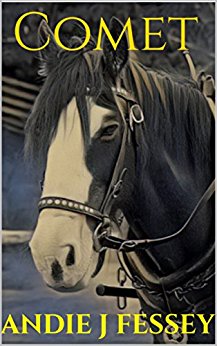
Comet has a cover that places the horse at the centre of the story. How did that image come about and what were you hoping to convey (without spoiling the plot please!)?

The final cover of Comet is the third incarnation. The first cover was a stylised photograph of a rag and bone man walking to the distance, along a cobbled street. The second was of a group of children atop the rear of a horse-drawn cart. They were both adequate enough covers, but lacked that certain je ne sais quoi. In my mind’s eye, I kept seeing Comet’s profile as I completed the final edit of the draft, as he is the character who ties the others together. The final cover came about, purely by accident. Finishing a meal in a quaint country pub, my companion and I opted to take a stroll before returning to my car. She asked me what sort of horse Comet was (yes, I had bored her senseless over our meal!) and I did a quick search on the internet on my mobile for a horse fitting his description. I stopped in my tracks as lo and behold, the picture within my mind was there in front of me. A few alterations and copyright homage later and the cover became born.

If you could choose to be a character from Comet, who would you be and why?

It would be nice to say Comet himself, to observe and experience his perception of the events enacting around him. However, as a hopeless romantic, I would have to opt for the role of David. To experience the sweet excitement of meeting someone and falling deeply in love with them so soon, despite the events they find themselves embroiled within. To be kind, loyal, and generous, despite having nothing but himself and his heart to give. Actually, I think I AM David, so next question please!

Moving on! If Comet became a film, who would you like to play Iris and why would you choose them?  

Sheridan Smith. I believe Sheridan to be one of our country’s most underrated actresses, who has an amazing scope of artistic ability, which could bring an innocence and strength to the role of Iris. To cheat and add another couple of characters to the mix, For Ron, I would say Tom Hardy and for Archie, Patrick Stewart or Ian McKellen.

When you’re not writing, what do you like to read?

I am an avid, voracious reader who devours books like a man possessed. I like reading biographies, mainly regarding comedians, in addition to anything by Dean Koontz, Michael Palin and Staci Layne Wilson. I love the novels by Stieg Larsson and wished he had written more, before he was taken away from this world. My taste in literature is quite eclectic, taking in multiple genres from thrillers and horrors, science-fiction and historical to crime, but, you are unable to beat reading a good old classic romance to warm the heart, whilst sat in front of an open fire.

If you had 15 words to persuade a reader that Comet should be their next read, what would you say?

Adventure? Tick. Action? Tick. Romance? Tick. Drama? Tick. Coming of age? Tick. Love? Tick.

Thank you so much for your time in answering my questions Andie.

It has been an absolute pleasure Linda, thank you so much.

About Andie J Fessey

Andie J Fessey Author Pic

Andie J Fessey was born in Liverpool, England, to two wonderful parents. Living in Liverpool until his twenties, he then embarked upon a journey of wonder and experience throughout the world, employed within the dark and murky world of the security services for over twenty-five years.

He is the acclaimed author of The Walk, Two Hours, Origin and Comet.

He is currently residing in the UK working on his catalogue of twenty-one forthcoming novels.

He is also an equestrian, traveller, archer, swordsman and, as is often cited, an old-fashioned, hopeless romantic.

You can follow Andie on Twitter @AJFessey and find him on Facebook.

An Extract from Craving by Esther Gerritsen

Craving Cover

One of the joys of fiction is its ability to transcend physical boundaries. Today I’m thrilled to be part of the build up to the Dutch #Boekenweek in the UK by featuring Craving by Dutch writer Esther Gerritsen. Not only do I have a wonderful extract to share, but there’s also a link to Esther talking about Craving at the Edinburgh Book Festival.

Published by World Editions and translated by Michele Hutchinson, Craving is available for purchase here.

Craving

Craving Cover

The relationship between Coco and her mother is uneasy to say the least. When they run into each other by chance, Elisabeth casually tells Coco that she is terminally ill. As Coco moves in with her mother and takes care of her, aspects of their troubled relationship come to the fore once again. Elizabeth tries her best to conform to the image of a caring mother, but struggles to deal with Coco’s erratic behaviour and unpredictable moods.

You can watch a fabulous clip of Esther talking about the theme of mothers and daughters in Craving at the Edinburgh Book Festival by clicking here.

An extract from Craving

For the first time in her life, Elisabeth unexpectedly runs into her daughter. She comes out of the chemist’s on the Overtoom, is about to cross over to the tram stop when she sees her daughter cycling along the other side of the street. Her daughter sees her too. Elisabeth stops walking. Her daughter stops pedalling, but doesn’t yet brake. The entire expanse of the Overtoom separates them: two bike paths, two lanes of traffic, and a double tramline. Elisabeth realises at once that she has to tell her daughter that she is dying, and smiles like a person about to tell a joke.

She often finds making conversation with her daughter difficult, but now she really does have something to say to her. A split second later it occurs to her that you mustn’t convey news like that with too much enthusiasm and perhaps not here, either. In the meantime, she crosses the Overtoom and thinks about her doctor, how he keeps asking her: ‘Are you telling people?’ and how nice it would be to be able to give the right answer at her next appointment. She crosses between two cars. Her daughter brakes and gets off her bike. Elisabeth clutches the plastic bag from the chemist’s containing morphine plasters and cough mixture. The bag is proof of her illness, as though her words alone wouldn’t be enough. The bag is also her excuse, because she hadn’t really wanted to say it, here, so inappropriately on the street, but the bag has given her away. Hasn’t it? Yes? And now, so abruptly, Elisabeth is crossing the Overtoom, slips behind a tram, because it isn’t right, her child on one side of the street and she on the other. It isn’t right to run into your daughter unexpectedly.

The daughter used to be there all the time, and later, when she wasn’t, Elisabeth would be the one who had dropped her off. Later still there were visiting arrangements and in recent years not much at all. In any case, the birthdays remained. Things had always been clear-cut and she’d got used to not thinking about the daughter when the daughter wasn’t there. She existed at prearranged times. But now there she was on her bike, while they hadn’t planned to meet and it was wrong and had to be resolved, transformed, assimilated, she still has a tramline to cross, just behind a taxi that toots its horn and causes her coat to whip up. Her daughter pulls her bike up onto the pavement. The final lane is empty.

Elisabeth notices at once that her daughter has gained even more weight and blurts out, ‘Have you had your hair cut again?’ because she’s terrified her daughter can read that last thought about her weight. Elisabeth likes to talk about their hair. They have the same hairdresser.

‘No,’ her daughter says.

‘Different colour then?’

‘No.’

‘But you still go to the same hairdresser’s?’

‘Yes.’

‘Me too,’ Elisabeth says.

Her daughter nods. It begins to drizzle.

‘Where are you going?’ is too nosy, so this: ‘I thought you lived on the other side of town.’

‘I have to move out soon, the landlord’s given me notice.’

‘Oh,’ Elisabeth says, ‘I didn’t know.’

‘How could you have known?’

‘I… I don’t know.’

‘I only just found out myself.’

‘No, then I couldn’t have known.’ The rain becomes heavier.

‘We’re getting wet,’ Elisabeth says.

Her daughter immediately goes to get back on her bike and says, ‘We’ll call, OK?’

‘My little monster,’ Elisabeth says. Her father had always called her that. He still did. It sounded funny when he said it. Her daughter gapes at her. Then her lips move. Go away, she says, silently. Elisabeth isn’t supposed to hear and she respects that; her stomach hurts, but she hasn’t heard it. Her daughter’s short hair lies flat and wet against her skull. Elisabeth thinks of towels, she wants to dry her daughter, but her daughter turns away from her, one foot already on the pedal.

So Elisabeth is forced to say, ‘I’ve got some news.’ Done it. Her daughter turns back to her.

‘What is it?’

‘Sorry,’ she says, ‘I’m going about this the wrong way, it’s nothing nice.’

‘What is it?’

‘But I don’t want you to take it badly.’ She slowly lifts up the plastic bag from the chemist’s. She holds the bag aloft using both hands, its logo clearly visible.

‘You might be wondering: why isn’t she at work?’

Her daughter ignores the bag.

‘What?’

‘I’ve just been to the chemist’s.’

‘And?’

‘It’s the doctor. He said it.’ She lets the bag drop.

‘What did the doctor say?’

‘That I need to tell people.’

‘What, Mum?’

‘That I might die. But we don’t know when, you know. It might be months.’

‘Die?’

‘Of cancer.’

‘Cancer?’

‘It’s an umbrella term for a lot of different illnesses actually. It just sounds so horrible.’

‘What have you got then?’

‘Oh, it’s all a bit technical.’

‘Huh?’

‘It started in my kidneys but…’

‘How long?’

‘Must have been years ago.’

‘No. How long have you known?’

Elisabeth thinks of the hairdresser, the first person she told. She goes every other month and her new appointment is for next week, in which case it has to be more than…

‘How long, Mum?’

‘We’ll get drenched if we keep on standing here like this.’

‘How long?’

‘I’m working it out.’

‘Days? Weeks?’

‘I’m counting.’

‘Months?’

‘Well, not months.’

‘Christ.’ Her daughter looks angry.

‘I shouldn’t have told you, should I?’

‘But… are they treating you?’

‘Not at the moment, no.’

‘Are they going to treat you?’

‘If they can think of something.’

‘And can they?’

‘Not at the moment.’

‘… and so?’

‘Sorry,’ Elisabeth says, ‘I shouldn’t have told you like this. We’re getting soaked.’ The bag is now hidden behind her back.

‘So you… might… but not definitely?’

‘You’re not likely to live a long time with something like this.’

‘Not likely?’

‘Probably not.’

‘Christ.’

‘We’ll call each other. Let’s call. Yes? We’ll call?’

About Esther Gerritsen

esther-gerritsen-boekenweekgeschenk-2016

Esther Gerritsen (1972) is a Dutch novelist, columnist, and playwright. She made her literary début in 2000. She is one of the most established, widely read, and highly praised authors in the Netherlands, and makes regular appearances on radio and at literary festivals. Esther Gerritsen had the honor of writing the Dutch Book Week gift in 2016, which had a print-run of 700,000 copies. In 2014 she was awarded the Frans Kellendonk Prize for her oeuvre.

You can find out more about World Editions, #Boekenweek and Esther with these other bloggers:

poster

Staying in with Lizzie Lamb

Girl in the castle

I’m thrilled to welcome an author I’ve met in real life to Linda’s Book Bag to stay in with me today. This time it’s lovely Lizzie Lamb.

If you’re an author who’d also like to stay in with me to tell me about one of your books, please click here for more details.

Staying in with Lizzie Lamb

Welcome to Linda’s Book Bag Lizzie. Thank you for agreeing to stay in with me.

Hi Linda and thanks for the invitation. February is a miserable month, so sitting by the fire with a friend talking about books, maybe sharing a wee dram of uisge beatha, is a good way to spend an evening waiting for spring to arrive.

You might well be right! Tell me, which of your books have you brought along to share this evening and why have you chosen it?

thumbnail

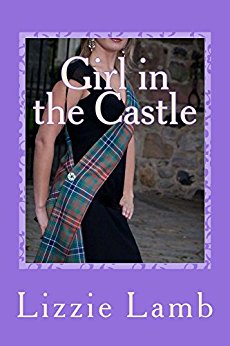
I’ve brought along my latest contemporary romance, Girl in the Castle to share with you. In this novel I’ve been able to give my imagination free rein and use some of the romantic tropes I’ve jotted down in my Writer’s Notebook. It’s my favourite book to date (mind you, I say that about every novel I finish!) and quite a few readers have told me that they wish they were Henriette, Girl in the Castle. With a sexy, brooding kilted hero living in the same castle, who can blame them?

(Who indeed!)

I’d love to share an extract with you to give a flavour of the novel. Here, the heroine and the castle’s chatelaine are sitting round the fire exchanging the craic, much as we are now.

Alice’s sitting room commanded a fine view of the loch and was the warmest room in the castle, thanks to the fire kept burning twenty-four-seven, at her command . . . The room had two large windows set at right angles, and on the remaining walls tapestry were hung to keep out the draughts. At night, it was easy to imagine the castle was a ship sailing untroubled across a wide ocean, the only light visible the beacon on the jetty at the far side of the loch. This evening, the castle—for all its leaks, creaks and lack of modern day facilities—felt solid and dependable and Henriette relaxed, secure in the knowledge that no one could cross the loch unless Lachlan, the boatman, fetched them.  

This sounds so welcoming Lizzie. So, what can we expect from an evening in with Girl in the Castle?

Linda’s Book Bag readers might like to have a look at this trailer for Girl in the Castle as they will get a real feeling of the Scottish Highlands.

(That’s smashing Lizzie. I love the atmosphere – and the kilts!)

Having set the scene, let me share what some readers have said about Girl in the Castle:

“A witty, entertaining and well researched modern day romance set in the beauty of the Scottish Highlands with a strong, intelligent heroine, brooding love interest and a cast of quirky characters. What’s not to love?!”

“ I am so envious of Henri’s job as an historian researcher, and even more so of her Scotsman in a kilt. I loved the characters, the setting and all of the little bits of Scotland that Lizzie manages to get into her novels.”

“I want to be the Girl in the Castle!”

“Lizzie always delivers great romances and the hottest of heroes.”

(You must be thrilled with those responses.)

What else have you brought along and why? 

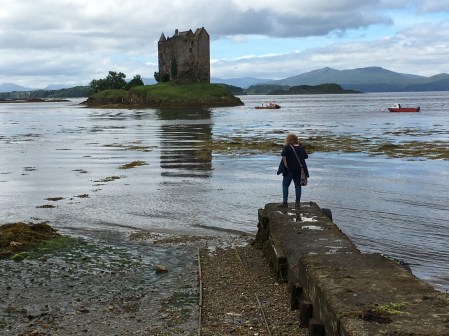
Me, waiting for boat over to Castle Stalker

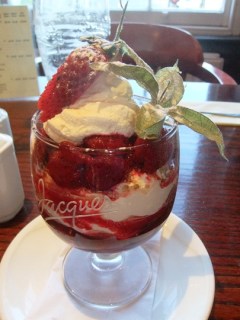
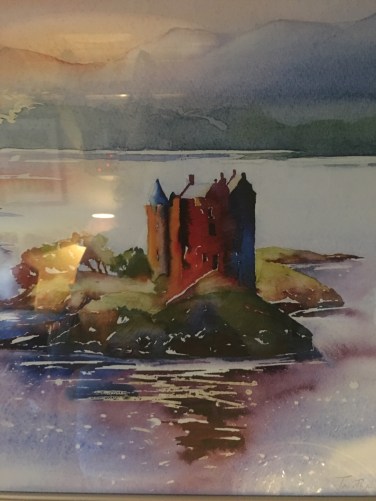
Tonight, I’ve brought along a fine bottle of single malt whisky to keep out the winter chills,  two portions of Cranachan, a dessert made with raspberries, oats, whisky and cream, and a tin of homemade Scottish Tablet to nibble on while we look at photographs and a painting of Castle Stalker, Appin, the inspiration behind Girl in the Castle.

Cranachan

(Oo. Hang on a minute whilst I fetch a couple of spoons!)

photograph of my poster of Castle Stalker

Two summers ago the laird, complete with kilt, took us across to the castle in his boat. Later, standing on the battlements and looking across the loch, the plot of Girl in the Castle began to take shape in my mind – the rest  of history…

Girl in the Castle for iPhone

You’ve made me want to read Girl in the Castle (and visit Scotland) so much. Thank you for staying in with me Lizzie. It’s been fun.

Girl in the Castle

Girl in the castle

Her academic career in tatters, Dr Henriette Bruar needs somewhere to lay low, plan her comeback and restore her tarnished reputation. Fate takes her to a remote Scottish castle to auction the contents of an ancient library to pay the laird’s mounting debts. The family are in deep mourning over a tragedy which happened years before, resulting in a toxic relationship between the laird and his son, Keir MacKenzie.

Cue a phantom piper, a lost Jacobite treasure, and a cast of characters who – with Henri’s help, encourage the MacKenzies to confront the past and move on.

However – will the Girl in the Castle be able to return to university once her task is completed, and leave gorgeous, sexy Keir MacKenzie behind?

Girl in the Castle is available for purchase here.

About Lizzie Lamb

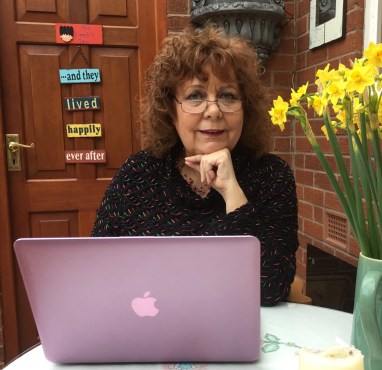
author photo (3)

After teaching her 1000th pupil and working as a deputy head teacher in a large primary school, Lizzie decided pursue her first love: writing. Lizzie joined the Romantic Novelists’ Association’s New Writers’ Scheme, wrote Tall, Dark and Kilted (2012), followed a year later by Boot Camp Bride. She published a third novel Scotch on the Rocks in July 2015. It achieved Best Seller status within two weeks of appearing on Amazon and was shortlisted for the prestigious Exeter Novel Prize. In Spring 2017 Lizzie published Girl in the Castle, which reached #3 in the charts. She is currently working on a novel set in Wisconsin – Sweet Little Lies, and has more Scottish-themed romances planned.

Lizzie is a founding member of indie publishing group New Romantics Press and has held Author Events at Waterstones High Street, Kensington, London and Aspinalls, London, and other local venues.

Lizzie lives in Leicestershire, England, with her husband David (aka Bongo Man) and their naughty parrot, Jasper.

You’ll find all Lizzie’s lovely books here. You can follow her on Twitter @lizzie_lamb, find her on Facebook and visit her website.

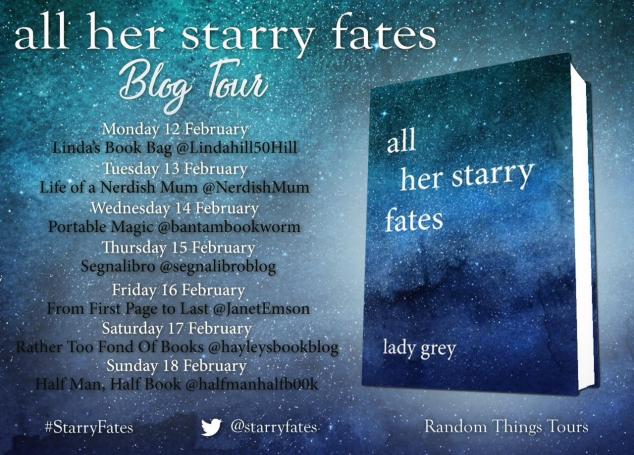
All Her Starry Fates by Lady Grey

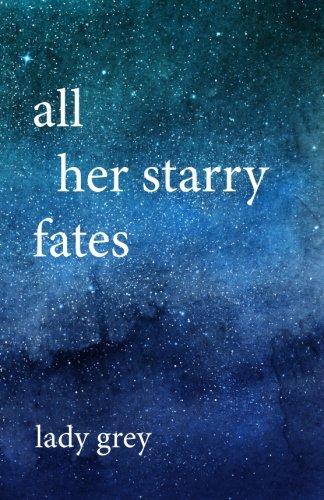
all her starry cover

I’ve really enjoyed getting back into reading poetry since I began blogging and was so pleased to be invited by fellow blogger and organiser Anne Cater of Random Things to take part in the tour for All Her Starry Fates by Lady Grey.

All Her Starry Fates is available for purchase here.

All Her Starry Fates

all her starry cover

In all her starry fates, Grey explores how the otherworldly relates to the everyday— with poems about love, loss, memory, inheritance, and belonging.

My Review of All Her Starry Fates

A collection of unusually structured poems with a real sense of looking for identity.

Firstly I have to say how I was drawn in by the title. I immediately wanted to know, ‘What about all her starry fates?’

I really enjoyed this collection. The structure of the poems is interesting with unusual use of punctuation and a lack of upper case letters that reflects the questioning and unformed character of the voice that seemed to be behind so many of the entries. In i wanted poetry for example, I loved the way the lower case I shows the vulnerability of the speaker and conveys a self loathing in 9 short lines.

I loved the imagery, especially the use of simile, the vocabulary related to nature, and the range of syntax so that some poems spill over with enjambement leading the reader from one thought to another like a stream of consciousness, whilst others have single word sentences that pull up the reader and make them slow down and think more clearly and acutely about what they have read. I thought the summative definitions at the ends of some of the poems were inspired.

I confess I hadn’t heard of Charles Bukowski and the poem dedicated to him sent me scurrying off to find out more so that the enjoyment of these poems lies not only within the pages of the anthology, but in things outside them too.

The themes of love, self knowledge and exploration, both physically and emotionally, resonate throughout. There’s so much self-doubt and uncertainty that I felt the emotions quite profoundly. I thought it interesting that in part three of the collection, poems began to have titles so that the poet seemed more confident, even when the self-doubt appeared to remain. There are many, many references to doors and windows as if the poet is always searching for a way out – or in – and is permanently on the threshold of being who they really want to be but never quite making it, and never giving up.

I really enjoyed All Her Starry Fates and feel that I could read and reread this collection many, many times and find new elements to consider and enjoy. This is a moving and interesting series of poems and I highly recommend them.

About lady grey

You can follow lady grey on Twitter @starryfates.

There’s more with these other bloggers too:

tour poster

Staying in with Mary Smith

Mulberries

As I’ve just returned from a trip to Uganda it seems fitting to welcome Mary Smith to the Linda’s Book Bag today to take me on my travels again at the same time as we stay in together, as you’ll see below! It’s a welcome return for Mary as I thoroughly enjoyed her collection of  stories Donkey Boy and have reviewed them here.

If you’re an author who’d also like to stay in with me to tell me about one of your books, please click here for more details.

Staying in with Mary Smith

Welcome to Linda’s Book Bag, Mary. Thank you for agreeing to stay in with me.

Tell me, which of your books have you brought along to share this evening and why have you chosen it?

I’ve brought my novel, No More Mulberries, which tells the story of Scottish-born midwife, Miriam living in Afghanistan with her Afghan husband, Dr Iqbal. She knows their relationship is in trouble. Her husband has changed from the loving, easy-going man she married and she fears he regrets taking on a widow with a young son, who seems determined to remain distant from his stepfather.

When Miriam acts as translator at a medical teaching camp she hopes time apart might help her understand the cause of their problems. Instead, she must focus on helping women desperate for medical care and has little time to think about her failing marriage. When an old friend appears, urging her to visit the village where once she and her first husband had been so happy, Miriam finds herself travelling on a journey into her past, searching for answers to why her marriage is going so horribly wrong. Iqbal, too, must deal with issues from his own past – from being shunned by childhood friends when he contracted leprosy to the loss of his first love.

I’ve chosen to share it because I became very fond of my characters – and because I still miss Afghanistan, where I worked for a number of years, and am always delighted to have an opportunity to revive my memories.

(I love travel and a trip to Afghanistan, albeit vicariously, is perfect thanks Mary.)

What can we expect from an evening in with No More Mulberries?

DSCF0936

You can expect to be transported to Afghanistan, to one of its most remote areas in the foothills of the Hindu Kush. You can expect to spend time in the villages becoming involved in the lives of the people – and you can expect to be surprised because life in Afghanistan may come across differently from how it’s portrayed in the media. You can also expect to smile sometimes and perhaps shed a tear or two at other times.

DSCF1070

(Aha! I love a book where I can have a cry whilst I’m reading!)

One of my favourite reviews on Amazon says:

Excellent. In the same genre as The Kite Runner and a Thousand Splendid Sons but from an entirely different angle, that of an educated Scots woman who lives in Afghanistan with her Afghan husband… it was an easy and interesting story and yet I learned so many different things about the culture of the Afghans … Life in the Afghan village with its traditions and customs were so different and difficult to understand for an outsider, as well as having the complications of her personal life. Read this book, I think everyone who does will have more understanding of both Afghans and Muslims than before as well as being entertained by a darn good story!

I’m proud of that ‘darn good story’.

I bet you are. What a wonderful review. No More Mulberries sounds brilliant. 

What else have you brought along and why?

I see many of your guests have brought along champagne but it wasn’t available in Afghanistan. I could have brought some Uzbek red wine – but it was for the chickens and belongs in a different book – so I brought some Afghan food to share. There has to be mulberries, of course, Miriam’s favourite fruit. I loved them, too, but can only find dried ones here.

(I have a friend with a mulberry tree so I’ll have to put you in touch with one another.)

Afghans make the best kebabs in the world, served hot off the skewer wrapped in a fresh nan which soaks up the juices. We can have kabuli rice topped with raisins and strips of carrots glistening with oil and little leek-filled dumplings which are delicious. Or we can go simpler with ash – pasta – served with quroot, a rock-hard sour cheese made from buttermilk which is re-hydrated into a sauce. It really tastes much better than it sounds. One of my favourite dishes – perhaps because it is easily reproduced at home – is banjan-sia borani. This is egg-plant (aubergine) slices fried and served with cooked tomatoes, topped with a sour cream and yoghurt garlicky sauce and dried mint.

banyan

My mouth is watering at the thought. Thanks so much for staying in with me Mary. I’ve had a brilliant time.

No More Mulberries

Mulberries

Scottish-born midwife, Miriam loves her work at a health clinic in rural Afghanistan and the warmth and humour of her women friends in the village, but she can no longer ignore the cracks appearing in her marriage. Her doctor husband has changed from the loving, easy-going man she married and she fears he regrets taking on a widow with a young son, who seems determined to remain distant from his stepfather.

When Miriam acts as translator at a medical teaching camp she hopes time apart might help her understand the cause of their problems. Instead, she must focus on helping women desperate for medical care and has little time to think about her failing marriage.

When an old friend appears, urging her to visit the village where she and her first husband had been so happy. Miriam finds herself travelling on a journey into her past, searching for answers to why her marriage is going so horribly wrong.

Her husband, too, has a past of his own – from being shunned as a child to the loss of his first love.

No More Mulberries is available for purchase here.

About Mary Smith

MAry Smith

Mary Smith has always loved writing. As a child she wrote stories in homemade books made from wallpaper trimmings – but she never thought people could grow up and become real writers. She spent a year working in a bank, which she hated – all numbers, very few words – ten years with Oxfam in the UK, followed by ten years working in Pakistan and Afghanistan. She wanted others to share her amazing, life-changing experiences so she wrote about them – fiction, non-fiction, poetry and journalism. And she discovered the little girl who wrote stories had become a real writer after all.

Drunk Chickens and Burnt Macaroni: Real Stories of Afghan Women is an account of her time in Afghanistan and her debut novel No More Mulberries is also set in Afghanistan.

You can find out more about Mary and her writing on her website, on Facebook and by following her on Twitter.

The Intruder by P. S. Hogan

the intruder

My extremely grateful thanks to Hayley Barnes at Transworld Books for a surprise advanced reader copy of The Intruder by P. S. Hogan.

The Intruder was published in e-book on 1st February 2018 and is available for purchase and paperback pre-order here.

The Intruder

the intruder

He has the key to hundreds of houses.
Maybe even to yours.

William Heming is an estate agent. He’s kept a copy of every key to every house he’s ever sold. Sometimes he visits them. He lets himself in when the owners are out. But what will happen if he gets caught?

What will he do next?

My Review of The Intruder

William Heming is an estate agent with a difference. Even after a sale the buyer is always on his books!

Ooo The Intruder is clever. Tautly written and plotted it worms its way under the reader’s skin until they are consumed by the need to know what will happen next.

The language is like poetry at times and the superb quality of description places the reader at the scene with William Heming until they almost become part of the story. I loved the way the variety of sentence structure mirrored the natural cadences of thought so that I felt as if I was almost in William’s head. Similarly, I found the direct appeal to the reader through the rhetorical questions and first person address made me experience the narrative so clearly first hand that I felt complicit in William’s actions as if I had carried them out myself. This is what makes The Intruder so compelling. Reading it gave me a very uncomfortable feeling as I found I had a grudging admiration for a highly disturbed and dangerous man.

The plot almost borders the ridiculous as Heming entrenches himself more and more in other people’s lives and yet it is entirely believable and plausible. P. S. Hogan anticipates any disquiet on the part of the reader and addresses it directly making them feel foolish as William explains his actions.

I found The Intruder scarily affecting because of the mundanity of many of William’s actions even though they are so definitely morally wrong at best and downright criminal at other times. I wanted this villain to succeed, even if that meant murder, and reading The Intruder has left me questioning my own morality and that of every person I’ve ever met.

Creepy, compelling and disturbing The Intruder makes the reader think and I for one will never trust an estate agent again. I’m sure there will be those who would prefer more visceral events or more blistering a plot, but I think Heming is the Macbeth of the modern age and The Intruder is just brilliant in conveying the potential for everyday evil in all of us.

About P. S. Hogan

P. S. Hogan was born in Yorkshire. He is married with four children and has been a journalist and columnist on the Observer for over 20 years.

Staying in with Andrea Jutson

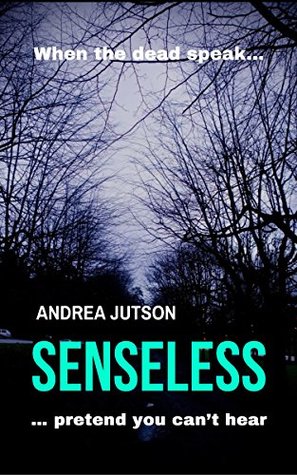
Senseless (UK edition)

One of the most wonderful things about being a blogger is the chance to meet authors both face to face and vicariously whom I’d never otherwise encounter. Today I’m delighted to be staying in with Andrea Jutson who is another new to me writer.

If you’re an author who’d also like to stay in with me to tell me about one of your books, please click here for more details.

Staying in with Andrea Jutson

Welcome to Linda’s Book Bag, Andrea. Thank you for agreeing to stay in with me.

It’s an absolute pleasure.

Tell me, which of your books have you brought along to share this evening and why have you chosen it?

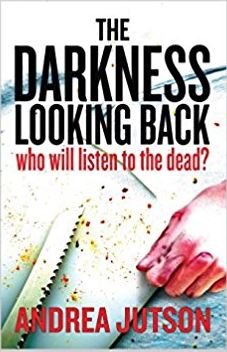
Today I’ve brought along my first novel in the James Paxton series, Senseless. I’ve written two books featuring Paxton so far, and it’s always best to start at the beginning. And I’m very excited to say that it’s just been released in the UK, having been published originally in New Zealand, where the books are set. And book two, The Darkness Looking Back, is due out in February…

darkness

What can we expect from an evening in with Senseless?

If you’re going to spend the evening with James Paxton, be warned that you may not want to switch the lights off. While the books are very much police procedural thrillers – I was inspired by Mark Billingham and Stuart MacBride – there’s also a tinge of the supernatural. Paxton is quite possibly the world’s most reluctant medium, having left his native UK to escape the whispers of his neighbours, but the other side hasn’t finished with him…

(O-oh! Sounds like I’m going to have nightmares!)

After stumbling across a dead body, and hearing the dead man speak, Paxton is dragged into a murder investigation. And the bodies keep on mounting. You can expect a good number of twists and turns, leavened with dark humour, plus of course the beautiful Auckland landscape. Although a crime thriller loaded with corpses possibly isn’t the best tourism advertisement, I hope some of you will be inspired to visit. There’s a lot more to us than mountains and hobbits. It’s really important to me to give a sense of the city, even if we don’t have nearly this many murders on a regular basis! I must say, I’ve learnt so much more about Aberdeen from Stuart MacBride, Iceland from Yrsa Sigurdardottir or Cape Town from Deon Meyer, than I ever would have done otherwise. Reading crime novels is a great education – almost as good as travel itself, and certainly a lot cheaper.

(Love that idea of travelling through fiction Andrea.)

It amused me to make Paxton’s home town Wellington, Shropshire (where I attended an extremely interesting service at the local Spiritualist Church), as a link between the UK and New Zealand. I picked Shropshire as a location thanks to a teenage fascination with the works of Ellis Peters, and Wellington (now part of Telford) leapt off the map. Some time later, working in London for a year, I ended up getting a job at the Wellington Arch, but that’s a different Wellington again…

(Woo – lots of coincidences then…)

What else have you brought along and why?

Today I’ve brought a bottle of Oyster Inn sauvignon blanc to share with you, Linda. I don’t drink a lot of wine, as it goes straight to my head, but this is some of the most deliciously fruity stuff from Marlborough in New Zealand, which is blended and sold at a restaurant on Waiheke Island in Auckland. So it’s come, in a roundabout way, direct from Auckland to you. Pour a glass while I pull out this book from my bag. Ah, thanks. I’ll just put it over here so I don’t spill it.

oyster inn

So here’s what started this whole business – a book called Ghost Hunting with Derek Acorah, from the old programme Most Haunted. When I was in my teens, I used to watch a bit of it, and it inspired me to try writing a detective series with supernatural elements. It’s a lot trickier than it looks, as of course you can’t have your main character know everything immediately just by chatting to a spirit. Luckily the other side is famously hazy.

ghost hunting

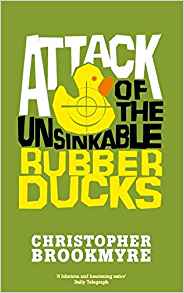
A lot of people ask me the question, do I believe in psychics? The truth is, probably not. Until I was in my early twenties I would have answered most definitely yes, but as time has gone on I’ve become considerably more sceptical, especially after reading Christopher Brookmyre’s wonderful Attack of the Unsinkable Rubber Ducks and more about the history of the spiritualist movement.

rubber duck

Poor old Sir Arthur Conan Doyle made a complete dick of himself, I’m sorry to say, no matter how much I enjoy Sherlock Holmes. So – at the moment I would say no, just as I don’t believe in God or angelic beings, but I always treat believers with respect, because a) it’s good manners, b) several good friends and family members are passionate believers and c) there should always be room for doubt (which is why blind faith has never appealed). Ghosts are such fascinating things, and bigots or extremists who claim to be certain of everything frighten me a lot more.

(Good point!)

In the meantime, I console myself that fantasy authors don’t have to believe wholeheartedly in elves, werewolves or the fae to write about them, no matter how much they might like to. I’ve tried to ensure that what Paxton senses reflects spiritualist orthodoxy. Research is the key – read up on your subject, whether it’s goblin lore or mediums’ autobiographies, speak to knowledgeable people, and make it as authentic as possible. I’m so pleased that Oscar de Muriel is writing supernaturally-themed crime novels set in Edinburgh now, which gives more authority to the genre as well as being bloody good reads!

I’d like to raise a glass to all the authors I’ve mentioned, and all the other fantastic authors who’ve inspired me to become a better writer over the years. Thanks guys. And thanks Linda, for having me.

Thank you Andrea. I’ve really enjoyed hearing about Senseless. Thanks so much for staying in with me to talk about it and to discuss all the things that make me nervous!

Senseless

Senseless (UK edition)

A small park in a nice Auckland suburb is the least likely spot to stumble across a body. The discovery of a man recently bludgeoned to death shatters the illusion of midwinter calm.
But unfortunately for James Paxton, death is nothing out of the ordinary. Suspicion falls all too easily on the Englishman who’s hiding a secret. Not only did Paxton find the dead man – he spoke to him, too. Gifts he wished he never had are called into play when Mark Bradley begs him to track down his killer, for the sake of his daughter. Paxton’s carefully constructed new world threatens to crumble as he is sucked into the hunt for a predator, while the police snap close at his heels. And the corpses keep on mounting, one by one …

A darkly gripping mystery with an other-worldly twist.

Published by Williams and Whiting and Senseless is the first in Andrea Jutson’s James Paxton Mysteries and is available for purchase here.

About Andrea Jutson

Andrea 1

Andrea Jutson is a writer from Auckland, New Zealand. She has written two crime novels featuring reticent medium James Paxton, Senseless and The Darkness Looking Back, and is at work on a third. In her career, Andrea has been a bookseller, journalist, collections librarian, book buyer and journalist again, and once spent almost a year selling tickets at a heritage site in London. She now works at a public relations agency, and lives in South Auckland.

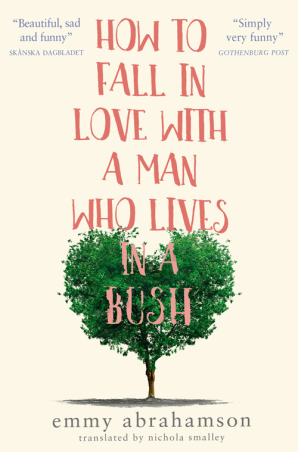
How To Fall In Love With A Man Who Lives In A Bush by Emmy Abrahamson

How to fall in love with a man who lives in a bush

My enormous thanks to Emilie Chambeyron for an advanced reader copy of How To Fall In Love With A Man Who Lives In A Bush by Emmy Abrahamson, translated by Nichola Smalley, in return for an honest review.

How To Fall In Love With A Man Who Lives In A Bush was published by Borough Press, an imprint of Harper Collins, on 25th January and is available for purchase here.

How To Fall In Love With A Man Who Lives In A Bush

How to fall in love with a man who lives in a bush

Julia is looking for Mr Right, but Ben is more Mr Right-Now-He-Could-Do-With-a-Bath…

You may think you know what kind of novel this is, but you’d be wrong.

Yes, Julia is a single-girl cliché, living alone with her cat in Vienna and working in a language school. And yes, a series of disastrous dates has left her despairing of ever finding The One – until Ben sits next to her on a bench. He’s tall, dark, handsome…

…and also incredibly hairy, barefoot, a bit ripe-smelling and of no fixed abode.

You guessed it – they fall in love, as couples in novels do. But can Julia overlook the differences between them, abandon logic and choose with her heart?

Funny, filthy (literally) and fizzing with life – and based on a true story! – this is the perfect antidote to all those books promising you that Prince Charming lives in a castle.

My Review of How To Fall In Love With A Man Who Lives In A Bush

Julia’s life is fairly boring, as are the men in her life – until she meets Ben.

I really enjoyed this antedote to saccharine love stories. How To Fall In Love With A Man Who Lives In A Bush has a quirky view of romance, relationships and finding our happy ever after ending and has particular appeal as it is based on a true story. I have to admit I was slightly confused at the beginning as I stupidly misunderstood Austria for Australia but as Vienna is so well described and I recognised many of the settings from my own visit, I was soon engrossed in the narrative.

Julia and Ben are unconventional and so well suited – if only Julia would realise it before it’s too late! I found their dialogues particularly engaging and whilst there are frequent expletives they never felt gratuitous. Indeed, the speech adds considerably to the humour and I laughed aloud many times. There’s a realistic feeling of impudence and mockery that was so appealing. Parts of How To Fall In Love With A Man Who Lives In A Bush are quite explicit and rude but I liked them!

Having taught English I shared many of Julia’s frustrations so that I could really empathise with her character. I loved her intended plots for writing her own books and the way she realised they had been done before, cursing their authors. She felt like a vivid person whom I’d like to meet. What is conveyed so well through Julia is the way we tolerate and befriend those we often don’t really like because of social convention or personal need. I thought this element was the triumph of the book. It might be lighthearted but it has some weighty themes underpinning the humour.

How To Fall In Love With A Man Who Lives In A Bush is fun, witty and engaging. I found it a very enteraining and quick read to cleanse my reading palette in readiness for my next read.

About Emmy Abrahamson

enny

Emmy Abrahamson published her first book in 2011, the young adult novel Min pappa är snäll och min mamma är utlänning (My Dad’s Kind and My Mum’s a Foreigner). She has written three other YA books and was nominated for Sweden’s August Prize in 2012 for Only väg is upp (The Only Way Is Up). How to Fall in Love with a Man Who Lives in a Bush is her adult debut.