An Interview with Wendy Holden, Author of Laura Lake and the Hipster Weddings

Laura Lake

Having been a wedding photographer’s assistant for five years, what could be better than to be helping celebrate the publication of Laura Lake and the Hipster Weddings by Wendy Holden? I’m delighted that Wendy has agreed to tell me about her writing and Laura Lake and the Hipster Weddings in particular.

Published by Head of Zeus, Laura Lake and the Hipster Weddings is available for purchase in e-book and hardback here.

Laura Lake and the Hipster Weddings

Laura Lake

She’ll need a triple-barrelled name for the castle one. She’ll need a gallon of glitter for the woodland one. She’ll need a lobster-shaped hat for the Shoreditch one.

Laura Lake longs to be a journalist. Instead she’s an unpaid intern at a glossy magazine – sleeping in the fashion cupboard and living on canapés. But she’s just got her first big break: infiltrate three society weddings and write a juicy exposé.

Security will be tighter than a bodycon dress, but how hard can it be? Cue disappearing brides, demanding socialites – and a jealous office enemy who will do anything to bring her down…

An Interview with Wendy Holden

Welcome to Linda’s Book Bag Wendy. Thank you so much for agreeing to answer some questions on my blog about your writing . Firstly, please could you tell me a little about yourself?

Hello Linda, and thank you so much for asking me to do this. It’s a joy and a privilege to answer your questions. About me; I was born in Yorkshire, went to school there, then went to Cambridge and afterwards moved to London where I worked for many years on glossy magazines. The perfect preparation for writing comic novels about glossy magazines!

Without spoiling the plot, please could you tell us a bit about Laura Lake and the Hipster Weddings?

With great pleasure! At the beginning of the novel, Laura is desperate to break into journalism. She lands a prestigious glossy magazine job through her wits rather than any fancy connections. It’s only an unpaid internship, and as she is skint she has to sleep secretly in the fashion cupboard and live on canapés. Her big break is when she is commissioned to write an article about high society weddings. She isn’t invited to any of them but she has to infiltrate them somehow. One’s an arty bash held in a Shoreditch loo, another’s a mystic Celtic handfasting under an ancient oak and the third is all castles and carriages and tiaras. To keep her job, she must write a big article about them. But will she manage it, or will it all go horribly wrong?

When did you first realise you were going to be a writer?

When my first novel, Simply Divine, was accepted by my agent. I wrote it in instalments before work, mainly to see if I could actually do it. It was inspired by the job I had at the Sunday Times when I ghost-wrote a column for Tara Palmer-Tomkinson. She became very famous as a direct result, while I remained skint and obscure. I was cross about it until I had an epiphany and realised that here, at last, was the plot I had been looking for. Simply Divine was an instant hit and was about a downtrodden hack writing a column for a partygoing socialite.

As an ex-English teacher myself I’m interested that you were inspired by your own English teacher. Tell us a bit about that.

Until I reached the sixth form at school, my favourite subject was history. Then Mrs Symons burst into my life and from that point on it was all about the Romantic poets and Shakespeare. I could see for the first time how literature reflected and explained – in the most beautiful, memorable way – real life, and it was the only subject for me after that. I went on to read English at Cambridge, but I have to say that none of the teaching I received there was a patch on Mrs Symons’!

So, when you’re not writing, what do you like to read now?

I read a lot of books for review for the Daily Mail. This is interesting as I see what is coming through. And of course I read every mag and paper I can get my hands on. This leaves very little time for reading the whole of Shakespeare and Proust, my endlessly-deferred annual resolution!

How far do you think growing up near the home of the famous Brontes has affected your impression of what it means to be an author?

The Brontes are completely fascinating; their whole story is amazing. Perhaps the aspect I relate to most is their experience of being governesses; they came from a relatively poor background to work with rich people who did not respect them and this inspired aspects of their novels. I went from a working class family to Cambridge and the hilariously self-indulgent world of glossy magazines. I think that I share the Brontes’ satirical view of the doings and behaviour of the wealthy!

Your writing is unashamedly chick-lit (which I love) in style. What would you say to those who eschew chick-lit as less worthy a genre?

Plenty of people think that comic novels are somehow less worthy than those that make you cry or fill you with horror. My view is that making someone laugh is a lot harder to do than shocking or upsetting them. It’s also a much better thing to achieve. There are too few comic novelists in the world and entertainers like me are more necessary now than ever.  I am proud of what I do and I think humour is more than important, it is crucial. We all need to laugh.

Laura Lake and the Hipster Weddings is part of a series of Laura Lake books. How do you manage your plotting for a series?

Laura is a journalist and in each of her adventures she investigates an aspect of how we live now, paying particular attention to anything excessive, glamorous, upmarket and amusing. Hipster Weddings was a romp through the crazy overstyled world of contemporary weddings and the fact that these days anything goes. Her next adventure, Laura Lake And The Celebrity Meltdown, moves the action to a fashionable Suffolk village full of famous people. I haven’t decided what the next adventure will be, but there is no shortage of funny possibilities; Laura Lake And The Clean-Eating Retreat, Laura Lake And The Artisan Cheesemakers etc. There is a short story coming out in July called Laura Lake And The Luxury Press Trip, in which a glam magazine jolly to a palm-fringed island has unexpected consequences!

And how did you create the character of Laura Lake?

I wanted to create a new kind of heroine, one with guts, glam and a sense of humour. There didn’t seem to be anyone like this around. I wanted her to be someone readers can relate to whether they are eighteen or eighty. I wanted her to work in a glamorous world and report on glossy things, yet be able to see their ridiculous side too.  Laura is a sort of female Tintin; her journalistic adventures take her all over the world. She is funny, courageous and clever, but fiercely loyal and relatively uncomplicated. She isn’t in thrall to a man, she isn’t congenitally miserable and she doesn’t have demons. She’s a woman of action, self-reliant yet kind. She is also really cool and chic, thanks to all the style advice from her indomitable French grandmother, Mimi. It’s Mimi who tells her that smiling is the best facelift, and that sensuality beats sexuality every time. ‘Why corset and truss yourself up? You are not a chicken!’

You’ve worked in similar environments as Laura. What do you miss about that lifestyle now that you’re a full time writer?

Writing is a lonely business and I do miss working with other people. But there is absolutely no way of getting round it. If you want to be a writer, you have to ‘sit down on your arse and do it,’ as my fellow Yorkshirewoman, the great Barbara Taylor Bradford, puts it. A glossy magazine office is also an endless sequence of hilarious minidramas, most of which have to be seen to be believed, so I miss all that too.

If you hadn’t become an author, what would you have done instead as a creative outlet?

A cartoonist – I used to do them a lot and was published everywhere from Vogue to Private Eye. I also used to do caricatures, often as presents for my friends at their weddings. They were probably horrified but used to pretend to be thrilled. I met my husband when I was drawing caricatures of people at a university ball. I was there with my sketchpad and he was in a jazz band right behind me.

What are your writing routines and where do you do most of your writing?

I write every day in my hut in the garden. It’s the most amazing place; started as a flatpack put up by the previous owner and used to store garden furniture.  I have added a whole new wing – a ‘hutstention’ – and also a deck in the front. Inside there are rugs, a chaise longue, a turntable, a red telephone, a phrenologist’s head, an electric organ and lots of fairy lights. Oh, and a set of framed Aubrey Beardsley prints that I bought at auction. It’s the best place to work in the world. So far as hours are concerned,  I try and do a normal working. But I m horribly easily interrupted. “Is that the postman?!” etc.

How do you go about researching detail and ensuring your books are realistic?

I observe people closely and I read a lot of magazines and newspapers. There is endless inspiration in them; the killer detail is always something so ridiculous you could never make it up.  Hello magazine in particular is a publication of amazing subtlety.  That sounds like a contradiction in terms, but there are some deeply subversive interviews in which hilarious facts are unearthed.

Which aspects of your writing do you find easiest and most difficult?

I find conversations and funny incidents are the easiest and descriptions the most difficult, because you have to pause instead of romping ahead with the action.  The trick is to make descriptions funny; Evelyn Waugh and P G Wodehouse were masters at this.

Do you have other interests that give you ideas for writing?

I am still passionately interested in history and always having ideas for historical novels. The past is full of stories. But I am also interested in how people interact with the past, and the characters at historical sites. In Stratford-upon-Avon recently we came across someone dressed as Shakespeare’s schoolmaster. He wouldn’t get out of character and said things like ‘yea, verily mistress’ to whatever you asked. That struck me as utterly hilarious. And there is a whole series of comic novels in National Trust properties.  My last book, Honeymoon Suite, was a comedy set on a historic estate and among the characters who lived there; the modern-day ‘servants’ in the farm shop and Visitor Welcome Centre.

Laura Lake and the Hipster Weddings has a Andy Warhol popart style cover to me. How did that image come about and what were you hoping to convey (without spoiling the plot please!)?

I am thrilled you think it’s Warholesque. We wanted it to stand out and be striking. The bright colours and bold design tell you that the story is uplifting, glamorous and fun. And about a strong woman, who will make an impression!

If you could choose to be a character from Laura Lake and the Hipster Weddings, who would you be and why?

Laura is my favourite. She is a version of me; I identify with her struggles to break into journalism because I went through something similar myself (though never had to sleep in the fashion cupboard!). But I also love her friend Lulu, the famous international socialite, and her self-obsessed actor friend Caspar. Those two are definitely going to appear in every book.

If Laura Lake and the Hipster Weddings became a film, who would you like to play Laura and why would you choose them? 

Someone chic, clever and a bit offbeat; Kirsten Stewart would be perfect.

And finally, if you had 15 words to persuade a reader that Laura Lake and the Hipster Weddings should be their next read, what would you say?

It’s really funny and glamorous and Laura Lake will be the next big thing.

I’m sure she will! Thank you so much for your time in answering my questions, Wendy.

You are welcome!!

About Wendy Holden

wendy holden

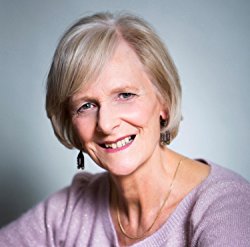
Number-one bestselling author Wendy Holden was a journalist on Tatler, The Sunday Times, and the Mail on Sunday before becoming an author. She has since written ten consecutive Sunday Times Top Ten bestsellers. She is married, has two children and lives in Derbyshire.

You can follow Wendy on Twitter, visit her website and find her on Facebook.

There’s more with these other bloggers too:

Laura Lake blog tour

Giveaway and Interview With Blue Authors Judith Blevins and Carroll Multz

Blue_JBlevins_CMultz_FC

One of the reasons I began blogging was because I used to review fiction aimed at 11-14 year olds for a big UK publisher and feel reading is such an important part of life. So it gives me great pleasure to be supporting BHC Press in introducing Judith Belvins and Carroll Multz, authors of Blue, book three in the Childhood Legends Series, to Linda’s Book Bag readers today. Blue is aimed at middle grade readers.

Blue was published by BHC Press/Barking Frog on 13th February 2017 and is available for purchase in e-book and paperback from your local Amazon site.

As well as an interview with the authors I have an international giveaway to win a signed paperback copy of Blue at the bottom of this blog post.

Blue

Blue_JBlevins_CMultz_FC

The Best Kept Secret…

Blue paint covered a five-year-old Cuban refugee seeking asylum in the United States. In his search for a safe-haven and, in an attempt to find food, he succeeded in causing a paint spill that would forever change his life and the lives of those who befriended him.

My name is Shacoo Bandaris, a twelve year old and a member of a club known as the Are You One Toos (R*U*1*2s). I, together with another club member, Rhymin’ Sally, was responsible for extricating from his predicament the boy we dubbed “Blue.”

Keeping Blue a secret from the authorities and our parents was no easy task. Discovery would have meant possible deportation for Blue and, of course, a punishment we chose not to think about. Follow our trail of intrigue as the R*U*1*2s attempt to keep Blue the best kept secret—at least until he is naturalized.

An Interview with Judith Belvins and Carroll Multz

Welcome to Linda’s Book Blog, Judith and Carroll. Thank you both so much for agreeing to answer some question on my blog about your writing. Firstly, please could you tell me a little about yourselves?

Carroll: I owe everything to my father, the first attorney I knew and admired, and my mother, whose love and inspiration will be with me always. My whole career, like Judy’s, was centered in and around the courtroom where I served as a prosecutor, defense attorney and later as a judge. I have been involved in a number of cases that have been reported in such publications as the New York Times, Redbook magazine and various police magazines. My last case was the Columbine Copycat case that occurred in Fort Collins, Colorado, in 2001 that was featured by Barbara Walters on ABC’s 20/20.           

One of my passions has been as an educator. I have taught courses in chemistry, biology, and business law at the college level. I am currently completing twenty-eight years as an adjunct professor at Colorado Mesa University in Grand Junction, Colorado, teaching law-related courses at both the graduate and undergraduate levels.

Judy:  As with Carroll, my whole professional life has been centered in and around the courts and the criminal justice system. My experience in having been a court clerk and then serving under five consecutive district attorneys for thirty-six years with the Mesa County District Attorney’s Office in Grand Junction, Colorado, has provided the fodder for my novels. I have had a daily dose of mystery, intrigue and courtroom drama and my novels, according to my publishers, share all with my readers.

Without spoiling the plot, please could you tell us a bit about Blue?

As the back matter for Blue, the third in our series in The Childhood Legends Series™, indicates, it chronicles the exciting and challenging journey of a five-year-old Cuban refugee, seeking asylum in the United States. In his search for a safe-haven, and in an attempt to find food, he succeeds in causing a paint spill that would forever change his life and the lives of those who befriend him.

Two members of a club of middle grade youngsters known as the Are You One Toos (R*U*1*2s) stumble upon the boy covered in blue paint and extricate him from his predicament. Because of the blue paint and his inability to speak English, he is dubbed “Blue.”

Keeping Blue a secret from the authorities and the R*U*1*2s’ parents would prove to be no easy task. Discovery would have meant possible deportation for Blue, and of course, serious consequences for the R*U*1*2s. Until Blue is naturalized, the R*U*1*2s succeed in keeping him the best kept secret in town. The evolution of Blue culminates in him, upon reaching adulthood, becoming a United States Senator.

You both write independently as well as collaboratively. Would you tell blog readers a little bit about your independent writing please?

Our genre is mystery, intrigue and courtroom drama—for both our independent and collaborative adult novels. Our whole purpose, singly and collectively, is to inspire, inform and entertain (in that order). We draw upon our life experiences and particularly our past careers in our writings.

As with every writer, we have our strengths and weaknesses, our likes and dislikes, and our peculiarities and preferences. We consider ourselves creative and having a knack for storytelling. The fantasy world has been a refreshing diversion for both of us and a way of disassociating ourselves from the inevitable disappointments in life. We are absorbed in our craft to such an extent that we could make it our only diet and we only deviate reluctantly in order to find time for the other important things in life.

What skills do you each have that enable you to write collaboratively?

Carroll: Without question, Judy’s ability to create images, mood and atmosphere through dialogue and dialogue tags are her strong points. Her development of character patterns leaves a vivid impression on the reader. Also she has a better knack than I do for getting inside her characters and varying their speech patterns to fit their character.

Judy: Carroll’s writing is laced with a philosophical bent. His underlying messages, though subtle, are unmistakable. Whether it is developing a court scene or advancing an agenda, his underlying argument bleeds through and leaves a lasting impression. His forte is painting a vivid picture through the use of words and creating conflict and drama that pique the reader’s interest.

How do you manage the organization of writing collaboratively?

When we decided to write collaboratively, we were somewhat skeptical. Both of us had had trying experiences in that regard. It was not long before we discovered that two heads were better than one and a lot more enjoyable. One of us was always coming up with a plot that intrigued the other. In fact, we find that there is always a plot waiting in the wings.

We start by brainstorming the proposed-plot and allocating names, descriptions and traits to the protagonist, antagonist and normally the major characters. We plot the novel tightly together to begin with so that it flows quite well. We develop sub-plots along the way. Usually one of us will sketch a chapter or two before it is loaded onto the computer. The two of us will review the draft and make changes to what we call the initial version.

The initial version is reviewed by Judy as it’s typed; the printout by Carroll. Major modifications are discussed before and during the rewrite by the two of us usually sitting together at the computer. At times, we also work independently.

How do you manage any differences of opinion when you’re writing?

So far, that hasn’t been a problem. If it becomes one, we will seek the advice of fellow authors whose opinion we respect.

Blue is for middle grade readers. What made you decide to write for this age group?

 We both agreed that a person’s destiny is forged at an early age and that first impressions can be critical to one’s future. With our youth being exposed to so much violence, destruction and negativity, we felt compelled to propel them in a more promising direction. What better tool than one of our novels.

Blue touches on a complex theme of asylum seekers in America. What made you choose this as the basis for the book?

America was founded by immigrants. Those who seek asylum for noble reasons and honor a tradition that exacts obligations and expectations in exchange for privileges and immunities should not be denied citizenship. Our book has been awaiting release for several years, long before immigration became a political football.

Blue is the third in your Childhood Legends Series. What can we expect from the series?

The next novel is The Ghost of Bradbury Mansion, followed by White Out, A Flash of Red and Back in Time. The eighth novel in The Childhood Legends Series™, is nearing completion. In addition to providing entertainment, all are geared to inspire and inform.

When did you first realize you were going to be writers?

Carroll: I have been writing since grade school. I have authored or co-authored seven technical books and manuals, nine adult novels, and seven middle grade novels, and over fifty articles that have been published in various legal publications.

Judy: I started writing late in my career, first as Carroll’s assistant, typing and proofing his novels, and later in writing novels of my own and collaborating with Carroll on two adult novels and eight middle grade novels in a collection titled The Childhood Legends Series™.

If you hadn’t become authors, what would you have done instead as a creative outlet?

Carroll: I grew up in a musical family and learned to play the piano at an early age. I have recorded approximately twenty of my musical compositions and am in the midst of writing a musical. In the absence of writing, I would probably devote more time to music.

Judy: I would read and travel more. With my knowledge and love of music, I would probably volunteer to assist Carroll in writing his musical.

How do you go about researching detail and ensuring your books are realistic?

Depending on the information sought, much is obtainable online.  Research at the library is becoming less and less frequent. Other sources vary depending on the nature.

Which aspects of your writing do you fine easiest and most difficult?

For both of us the most difficult thing is to write the great American novel and sell the movie rights.

What are your writing routines and where do you do most of your writing?

With travel, book signings, family affairs, sporting events, concerts, and teaching for Carroll, trying to find significant blocks of time to write is at a premium. Most of our writing is done on the computer.

When you’re not writing, what do you like to read?

Carroll: I do a lot of reading and research in preparation for the four classes I teach each semester. When I’m not writing, composing or teaching, I like to read historical novels, inspirational books and mystery novels. During the presidential election, I enjoyed reading books by and about the candidates.

Judy: Like Carroll, I enjoy historical novels and inspirational books. However, I enjoy reading the latest bestselling novels. I like nothing better than curling up with a good book or watching an old movie.

Do you have other interests that give you ideas for writing?

Same answer for both of us: interest in court cases, legislative developments, U.S. Supreme Court decisions, current news, world events and historical accounts.         

If you could choose to be a character from Blue, who would you be and why?

Carroll: Easy answer—Blue! He overcame adversity to achieve prominence. He did so with daring, courage, grace and dignity.

Judy: Either Shacoo or Rhymin’ Sally. Shacoo because of her commitment to high ideals and Sally because “she’s just darn cute!”

If you had 15 words to persuade a reader that Blue should be their next read, what would you say?

If you like human interest stories and love stories with happy endings, read Blue!

About Judith Belvins

judith blevins

Judith Blevins’ entire professional life was spent experiencing the mystery, intrigue and drama that unfold daily within the criminal justice system. Her previous experience as a court clerk, and then serving five consecutive district attorneys, has provided the inspiration for her stories. Blevins, now retired, lives in Grand Junction, Colorado, and continues to write mystery/romance novels. She and fellow fiction writer, Carroll Multz, have coauthored a series of children/young adult novels featuring the R*U*1*2s, a band of preteens who collaborate to solve mysteries.

About Carroll Multz

carroll

Carroll Multz has been a trial lawyer for over forty years, a former two-term district attorney, assistant attorney general, and judge, has been involved in cases ranging from municipal courts to and including the United States Supreme Court. His high profile cases have been reported in the New York Times, Redbook Magazine and various police magazines. He was one of the attorneys in the Columbine Copycat Case that occurred in Fort Collins, Colorado, in 2001 that was featured by Barbara Walters on ABC’s 20/20. Now retired, he is an Adjunct Professor at Colorado Mesa University in Grand Junction, Colorado, teaching law-related courses at both the graduate and undergraduate levels. He has authored over a dozen technical books and novels.

Giveaway

Blue_JBlevins_CMultz_FC

For your chance to enter to win a signed paperback copy of Blue, click here. Giveaway ends UK midnight on Tuesday 28th March 2017. Open internationally.

The Importance of YA Fiction, A Guest Post by Christina Hoag, Author of Girl on the Brink

GirlOnTheBrinkCover

One of the reasons I began blogging was because in the past I had reviewed teenage fiction for Hodder so that I could say whether I thought the books would be suitable for KS3 class readers. Since then I have found there to be some fantastic Young Adult (YA) fiction which is frequently overlooked.

Today I’m delighted to welcome Christina Hoag to Linda’s Book Bag. Christina’s Girl on the Brink is a YA novel and she’s telling us all about why YA fiction is important.

Girl on the Brink is available for purchase here.

Girl on the Brink

GirlOnTheBrinkCover

Sometimes the one you love isn’t the one you’re meant to be with.

The summer before senior year, 17-year-old Chloe starts an internship as a reporter at a local newspaper. While on assignment, she meets Kieran, a quirky aspiring actor. Chloe becomes smitten with Kieran’s charisma and his ability to soothe her soul, torn over her parents’ impending divorce. But as their bond deepens, Kieran becomes smothering and flies into terrifying rages. He confides in Chloe that he suffered a traumatic childhood, and Chloe is moved to help him. If only he could be healed, she thinks, their relationship would be perfect. But her efforts backfire and Kieran becomes violent. Chloe breaks up with him, but Kieran pursues her relentlessly to make up. Chloe must make the heartrending choice between saving herself or saving Kieran, until Kieran’s mission of remorse turns into a quest for revenge.

The Importance of YA Fiction

A Guest Post by Christina Hoag

Think back to when you were a teenager. Did you like being told what to do? That you were making a mistake? Probably not, and frankly most of us don’t like that as adults, either. That’s why couching life lessons as stories is a valuable way to send messages or impart knowledge, especially to adolescents who tend to think they’ve got life sewn up by the age of sixteen.

I’m sure parents who are reading this will be well familiar with the eye-roll, the shrug, the responses of “whatever” or “are you done yet?” when they’ve tried to deliver sermons on life lessons to their teen kids, which we regard as an integral part of parenting. Somehow we get the feeling that our valuable advice simply rolls off teenagers like oily suntan lotion and because we want the best for our children, we fear for them.

Unfortunately, the best way to learn from our mistakes in life is by actually making them. We sure don’t forget those lessons quickly. But we can also learn life lessons through the power of story. Stories allow us to vicariously experience the mistakes of others and learn what happens to characters without actually having to go through the painful consequences ourselves.

That’s why I wrote Girl on the Brink, a novel that chronicles the tale of an abusive relationship that a 17-year-old protagonist falls into, and why I aimed the novel specifically at teenage girls instead of writing a book for adults. It was inspired by something that happened to me, and I felt strongly that if more girls were forewarned about the red flags of an abusive boyfriend at the start of their dating lives, they might be able to avoid such relationships not just in adolescence but also in womanhood, or at least get away from these men sooner, before the stakes intensify.

The challenge, of course, in writing a book with a strong social message is making it too heavy-handed and didactic. Readers, especially teens, aren’t going to pick up a book that’s going to preach at them. They have to be so absorbed in the plot and characters that they don’t really notice the message. The theme has to be woven into the story so it becomes secondary, subliminal, and it has to. People read fiction largely for entertainment, not for lectures.

As I was writing Girl on the Brink, I had to keep this uppermost in my mind, and it took a while. I had to keep revising and revising, sometimes drastically, until it finally twigged. I had to let go of the message and concentrate on unfolding the story, because the message was inherent in the plot points and character actions. My job was simply to make the story as suspenseful and “un-put-down-able” as I could.

When Girl on the Brink was finally published last August, I didn’t know how it would be received. It had been a hard sell, rejected by agents and editors all over the place. No one, it seemed, was much interested in a contemporary realistic tale of a bad romance. Much of YA fiction tends to land more on the frothy, unrealistic side (falling in love with a werewolf, anyone?). I at last found an editor at a small U.S. publisher (Fire & Ice YA) who was into the book—and its message. At her suggestion, we put a page of resources at the end of the book.

Luckily, Girl on the Brink was well received from the get-go. When Kirkus Reviews said the book imparted a lesson without seeming preachy, I knew I must’ve hit the right balance. That was underscored when Suspense Magazine named it on its Best of 2016 YA list. While compliments are always nice for an author to hear, ultimately it meant that I stood in good stead of getting my message about dating violence to readers. If Girl on the Brink helps just one girl avoid or get out of an abusive relationship, I will have fulfilled my goal.

About Christina Hoag

ChristinaHoagAuthorHeadshot

Christina Hoag is a former journalist for the Miami Herald and Associated Press who’s been threatened by a murderer, had her laptop searched by Colombian guerrillas and phone tapped in Venezuela, hidden under a car to evade Guatemalan soldiers, posed as a nun to get inside a Caracas jail, interviewed gang members, bank robbers, thieves and thugs in prisons, shantytowns and slums, not to forget billionaires and presidents, some of whom fall into the previous categories. Kirkus Reviews praised Christina as a “talented writer” with a “well crafted debut” in Skin of Tattoos (Martin Brown Publishing, 2016), a gangland thriller. Her YA thriller Girl on the Brink (Fire and Ice, 2016) was named to Suspense Magazine’s Best of 2016 YA list. She also writes nonfiction, co-authoring Peace in the Hood: Working with Gang Members to End the Violence (Turner Publishing, 2014), a groundbreaking book on violence intervention used in several universities. Christina makes her home in California, USA.

You can find out more by visiting Christina’s website, finding her on Facebook and following her on Twitter. Christina is also on Instagram and Goodreads.

The Idea of You by Amanda Prowse

the idea of you

My grateful thanks to the author Amanda Prowse for an advanced reader copy of The Idea of You in return for an honest review.

It’s no secret to regular readers of Linda’s Book Bag that I love Amanda Prowse’s writing (she’s also a pretty wonderful person too – what other author would send your Mum a signed book to cheer her up?). I have been privileged to interview Amanda here, and to review My Husband’s Wife here, Another Love here and The Food of Love here. Indeed, two of Amanda’s books made it onto my favourite reads of 2016 (see here)!

The Idea of You is published today, 21st March 2017, and is available for purchase in ebook and paperback here.

The Idea of You

the idea of you

With her fortieth birthday approaching, Lucy Carpenter thinks she finally has it all: a wonderful new husband, Jonah, a successful career and the chance of a precious baby of her own. Life couldn’t be more perfect.

But becoming parents proves much harder to achieve than Lucy and Jonah imagined, and when Jonah’s teenage daughter Camille comes to stay with them, she becomes a constant reminder of what Lucy doesn’t have. Jonah’s love and support are unquestioning, but Lucy’s struggles with work and her own failing dreams begin to take their toll. With Camille’s presence straining the bonds of Lucy’s marriage even further, Lucy suddenly feels herself close to losing everything…

This heart-wrenchingly poignant family drama from bestselling author Amanda Prowse asks the question: in today’s hectic world, what does it mean to be a mother?

My Review of The Idea of You

A desperate desire for a baby leads Lucy to reassess her whole life and relationships as miscarriages blight her attempts at creating a family.

Anyone who knows me also knows that I am the least maternal person in the universe so it it testament to the outstanding quality of Amanda Prowse’s writing that I found The Idea of You a heart rending read, and was frequently and deeply moved by the emotions presented. I didn’t always like Lucy, but she had every ounce of my empathy and sympathy as she is such a fabulous, human creation. As I read The Idea of You it felt like looking into the soul of another person and I understood her completely.

And it is not just Lucy who is so realistic. Every character felt real to me. I think I most sympathised with Camille who struggles to adjust to the life her parents have, in effect, created for her.

In essence, the plot is simple, but the themes covered are so naturally presented and so brilliantly woven together that reading The Idea of You is an altogether satisfying experience. I think what I enjoy so much about Amanda Prowse’s writing is that she seems able to convey EXACTLY what any human might think and feel without sentimentality or cloying banality. Her words always reflect the truth in a manner that any reader can identify with. Relationships between parents and children, siblings, partners, friends and workmates alongside themes of marriage, family, trust, hope and despair all combine to afford a fantastic reading experience for any reader in The Idea of You – even those for whom the main topic initially might appear to have no resonance. The exploration of what makes a family in modern society is stunning.

I also loved the element of mystery presented throughout. The first person passages gradually reveal another story that enhances the main narrative and brings greater understanding to the reader. Similarly, I thought the factual aspects of foetal development and the sensitive presentation of the frequently inexplicable reasons for miscarriage would be of comfort to many.

I thought I might find The Idea of You too remote from my own feelings and experiences but as ever with Amanda Prowse, it is a masterclass in emotional writing and I cannot recommend it highly enough.

About Amanda Prowse

Amanda Prowse

Amanda Prowse is an International Bestselling author who has published sixteen novels in dozens of languages. Her recent chart topping No.1 titles What Have I Done?, Perfect Daughter and My Husband’s Wife have sold millions of copies around the world.

Other novels by Amanda Prowse include A Mother’s Story which won the coveted Sainsbury’s eBook of the year Award and Perfect Daughter that was selected as a World Book Night title in 2016. Amanda’s book The Food of Love went straight to No.1 in Literary Fiction when it was launched in the USA and she has been described by the Daily Mail as ‘The Queen of Drama’ for her ability to make the reader feel as if they were actually in the story.

Now published by Lake Union, Amanda Prowse is the most prolific writer of contemporary fiction in the UK today; her titles also score the highest online review approval ratings for several genres.

You can follow Amanda Prowse on Twitter and visit her web site here. You will also find her on Facebook.

All of Amanda Prowse’s wonderful writing is available here.

An Extract From Follow Me Down by Sherri Smith

Follow me down cover

I’m delighted to be part of the launch celebrations for Follow Me Down by Sherri Smith. I love a good thriller so I’m thrilled to be able to share an extract from Follow Me Down with you today.

Follow Me Down is published by Titan on 21st March 2017 and is available for purchase in e-book and paperback here.

Follow Me Down

Follow me down cover

Mia has built a life for herself far from the small town where she grew up. But she is forced to return home when her brother goes missing. Once the golden boy of the community, Lucas has disappeared the same day as the body of his student is pulled from the river. Unable to reconcile the media’s portrayal of Lucas as a murderer with her own memories of him, Mia is desperate to find another suspect. But if Lucas is innocent, why did he run?

An Extract From Follow Me Down

Wayoata does not have its own airport. The earliest flight landed in Bismarck. I had to drive another three hours northeast to get there. I’d reserved a silver sedan online, but the car rental clerk handed me keys for a candy-red PT Cruiser and tried to up-sell the insurance coverage. I asked for something else, anything else. The color didn’t matter—it could be a beige or black sedan, the kind of car that didn’t draw any attention (negative or positive)—but the clerk just shrugged helplessly.

The drive was claustrophobic, with open fields so lacking in depth and dimension the view could have been a canvas backdrop. The sun lit up the greasy bug spatters on the windshield; they looked like a demented child’s finger painting. After leaving for college, I’d returned once a year for Thanksgiving and would sit in my mother’s room, plate in lap, silently picking away at the pinkish turkey the care home provided. Once Lucas moved back, nearly five years ago, I no longer felt obligated to make an annual visit, telling myself that Mimi now had Lucas to visit her anytime she wanted and that was important to me, that Mimi had someone. Equally important was that the someone wasn’t me.

I knew I was getting close when I saw the same old anti-abortion billboard: a photo of some four-year-old forever stuck in the late nineties with her neon sweater and ribboned hair with abortion kills children scrawled across her. Thirty seconds later, I was passing Wayoata’s welcome sign. wayoata: home of the corn and apple festival produced the usual knot in my throat. Just seeing it made me feel sticky and heavy. Someone had spray-painted an “S” in front of “Corn,” and the smiling cartoon corn below had been given a penis tip shooting three ejaculating dashes onto the heavily lashed apple. It said something about the town that the welcome sign was always in some state of defacement while the antiabortion sign remained unscathed.

Then came the two competing gas stations lit up like casinos. The houses got closer together. Labyrinthine residential streets followed; the backyards offered views of rusted grain elevators, and the roads looped around and back out to Main Street to avoid dead end signs; no one wanted to look out their window and see a dead end. A number of storefront businesses had shut down. Wayoata was too far northeast to have benefited from the state’s Bakken oil boom, and so, like at prom, where one side of the gym was full of ugly girls who wouldn’t put out, all the able-bodied men migrated to the other side, where the getting was good. Faded purple ribbons hung from trees and streetlamps like half-opened gifts.

About Sherri Smith

Sherri Smith

Sherri Smith has previously written two historical fiction novels for Simon & Schuster UK, The Children of Witches and The Virgin’s Tale. When not writing she spends time with her family, two rescue dogs and restores vintage furniture that would otherwise be destined for the dump. She lives in Winnipeg, Canada where the long, cold winters nurture her dark side. Follow Me Down is her first thriller.

You can follow Sherri on Twitter, visit her website and find her on Facebook.

There’s more with these other bloggers too:

Follow-Me-Down-blog-tour#3

Cover Reveal: Just for the Holidays by Sue Moorcroft

Just for the Holidays

Regular Linda’s Book Bag readers will know just how much I love Sue Moorcroft and her writing. The Christmas Promise was one of my books of the year in 2016 and you can read my review here.

Having met Sue in real life I’ve also been privileged to host her in interview on the blog and here‘s where you can read that post.

So, it gives me enormous pleasure to be helping to reveal Sue’s latest book Just for the Holidays. Just for the Holidays will be published in e-book and paperback by Avon Books, an imprint of Harper Collins, on 18th May 2017 and is available for pre-order here.

Just for the Holidays

Just for the Holidays

In theory, nothing could be better than a summer spent basking in the French sun. That is, until you add in three teenagers, two love interests, one divorcing couple, and a very unexpected pregnancy.

Admittedly, this isn’t exactly the relaxing holiday Leah Beaumont was hoping for – but it’s the one she’s got. With her sister Michele’s family falling apart at the seams, it’s up to Leah to pick up the pieces and try to hold them all together.

But with a handsome helicopter pilot staying next door, Leah can’t help but think she might have a few distractions of her own to deal with…

A glorious summer read, for you to devour in one sitting – perfect for fans of Katie Fforde, Carole Matthews and Trisha Ashley.

About Sue Moorcroft

DSC_3507

Award winning author Sue Moorcroft writes contemporary women’s fiction with occasionally unexpected themes. The Wedding ProposalDream a Little Dream and Is This Love? were all nominated for Readers’ Best Romantic Read Awards. Love & Freedom won the Best Romantic Read Award 2011 and Dream a Little Dream was nominated for a RoNA in 2013. Sue’s a Katie Fforde Bursary Award winner, a past vice chair of the RNA and editor of its two anthologies.

The Christmas Promise was a Kindle No.1 Best Seller and held the No.1 slot at Christmas!

Sue also writes short stories, serials, articles, writing ‘how to’ and is a creative writing tutor.

There’s more about Sue via these links:

websiteblogGoogle+LinkedInGoodreadsTake Five AuthorsFacebook and her Facebook author page. You can also follow Sue on Twitter.

Accidental Thriller, A Guest Post by Stephen May, Author of Stronger Than Skin

cover

When you’ve gone to the same university as an author, what could be better than to help celebrate their latest book? I’m delighted to be part of the launch celebrations for Stronger Than Skin by Stephen May. I asked Stephen to tell me a bit about how he wrote a story that became both a thriller and a love story and thankfully he agreed to do so!

Stronger Than Skin was published on 16th March 2017 by Sandstone Press and is available for purchase in e-book and paperback here.

Stronger Than Skin

cover

Mark Chadwick is cycling home from work, eager to get back to his pregnant wife Katy and two children, when he sees the police calling at his house. He knows exactly why they are there and he knows that the world he has carefully constructed over twenty very deliberately uneventful years is about to fall apart. He could lose everything.

A story of a toxic love gone wrong, with a setting that moves easily between present day London and 1990s Cambridge, Stronger Than Skin is compulsively readable, combining a gripping narrative with a keen eye for the absurdities of the way we live now.

Stronger Than Skin: Accidental Thriller, Accidental Love Story

A Guest Post by Stephen May

All books should be thrillers, shouldn’t they? Of a kind? Even the novels of Brontes. Even those of Jane Austen (Will they get all the daughters married off before penury overtakes them) I’m being a bit facetious, but only a bit. I do believe all decent books need to have some propulsion, some reason to keep turning the pages. ‘But what happens next?’ is the principal motivating question for every reader whether the book in front of them is the Bible or Jilly Cooper’s Riders. I would also argue that most good books should contain love, romance and desire too. It should be as hard and as painful to contemplate a book without these elements as it is to think of a life without them.

Having said that… I never set out to write a thriller. And I never set out to write a love story either. I actually wanted to write a book about growing older in contemporary Britain; a book about that uneasy period between the emphatic end of youth and the creeping numbness of middle age. A book about the time when you might be busy busy busy with the every day (children, work, life partners, aging parents) but a time when, sometimes, in the quiet pause when the wine is poured but before Netflix fires up, you find yourself wondering where your life went. Is this really what you had planned? When did you go from being ‘promising’ to being that tired guy whose face stares back from the mirror? When did all that potential morph into just about getting by and what were you doing while it happened?

I guess I wanted to explore answers to the question posed in that old Talking Heads song: ‘How did I get here? With my beautiful home and my beautiful wife? What is this highway made of?’

So I had a subject but I didn’t really have a story and, as I said at the top of this piece, I like a novel to have a story. Other writers seem to get by without one (Yes, I’m looking at you Donna Tartt) but I think books should have fierce forward motion. A bit of poke.

I wasn’t worried about not having the story however. I knew I’d find it. If you keep showing up for work, then your unconscious (which only listens to the things you do, not the things you say) will help you. If you procrastinate your unconscious will find seductive things for you to waste time on. It will think you want to fritter your time away. Keep writing – trying, failing – to write your novel and your unconscious will lead you to the things that you need. Or to put it another way, to put it Picasso’s way – ‘inspiration exists, but it’s got to find you working.’

So then, eventually, the unconscious led me to pick up a paper I don’t normally read, where I found the seed of the story that would allow me to dramatise the things I was interested in.

In an old copy of The Sun I read of a man who walked into a police station and confessed to a murder that had been filed as an accidental death. He also said that he hadn’t acted alone he named an accomplice – who denied it – and so the police, after some persuasion (all the flipping paperwork) eventually re-opened the case.

It wasn’t the details of the crime that interested me as much as the potential ramifications on the person not confessing. Those involved had led blameless exemplary lives since the crime. They had got away with it. And yet here they were, suddenly up to their necks in it.

So then I was immediately playing the game that all writers play. The game of What if? What if when the police went round to speak to the he took off and went to ground, hiding from the police while also trying to get to persuade their one-time friend to retract the confession? And what if that accomplice was a former lover? What if their affair had ended badly? What if the accusation was the most serious there could be and want if my protagonist was someone fundamentally ill-equipped for life on the run?

And that, in a nutshell, is Stronger Than Skin. (The title comes from the idea that scar tissue is tougher than undamaged skin. That the damage life deals out, makes you more robust – it’s not actually true by the way. In fact unwounded is 70% stronger than that which is scarred)

In each of my novels there are subjects I return to again and again. One is the emotional turmoil of adolescence, another is family life. The latter is often avoided by male novelists. I don’t know why. The conflict, the shifting alliances, the compromises, the small – and sometimes big – betrayals, the secrets, the power struggles. The difficulties and tensions of family life, Every ordinary family has enough drama for a dozen novels. Every family contains as much intrigue as the court of Henry 8th.

There is no point fighting my attraction to these subjects. As someone said ‘ignore your obsessions at your peril.’ There’s a sense in which you don’t choose your subject, it chooses you. For the same reason all more protagonists have been from small towns because for me, that’s where the UK is. It’s not in the big cities or the rolling countryside. It’s in the small or middling sized towns like Bedford (where I grew up) Colchester (where I went to University) or Burntisland (where my father comes from).

So in my novel we have two strands. We have the story of a working class kid –  trying to adjust to life at Cambridge University in 1990 and he is wondering why life amid the dreaming spires isn’t quite the glittering prize he imagined when he meets an enigmatic, sophisticated charming member of the upper classes who turns his life upside down (and yes, before you ask, I am a fan of Brideshead Revisited) and as they embark on a passionate affair my hero, Mark, gets sucked into events he can’t control and revelations about this time are drip fed through the narrative which is otherwise concerned with his efforts to stay away from the police long enough to contact his former lover and get her to withdraw her police statement.

Balancing these two stories was a bit a high-wire act, and like any circus performer I broke quite a few bones while learning how to manage it, but I think, finally, I nailed it. It took a while. I have the bruises (and yes, the scars) but in the end I hope the book has the propulsion of the best thrillers, the erotic tension of the best love stories and also explores what it means to be experiencing the gradual invisibility what seems to be the fate of the middle-aged. It also allowed me to write about pubs and, in passing, about the absurdities of the life we live now. Most good writing – whether ostensibly a thriller or a love story or a cookbook come to that – is about looking hard at what other people don’t bother to notice. It’s about paying attention.

About Stephen May

Stephen May

Stephen May’s first novel TAG was longlisted for Wales Book of The Year and won the Media Wales Reader’s Prize. His second, Life! Death! Prizes! was shortlisted for the 2012 Costa Novel Award and The Guardian Not The Booker Prize. He also collaborates on performance pieces with theatre-makers, artists, film-makers, musicians and dancers.

You can follow Stephen on Twitter and visit his website.

There’s more with these other bloggers too:

StS blog tour 2

Judging a Book by its Cover, A Guest Post by Michael J. Sahno, Author of Miles of Files

Miles of Files final Classic ebook version Front cover ml

A while ago I featured Michael J. Sahno on Linda’s Book Bag with a guest post all about setting that you can read here. Since then Michael has been rebranding Miles of Files and I’m very pleased to welcome him back to explain all about that process and how we can, sometimes wrongly, judge a book by its cover.

Miles of Files is available for purchase in e-book and paperback on Amazon US and Amazon UK.

Miles of Files

Miles of Files final Classic ebook version Front cover ml

When Paul Panepinto finds out that his boss is stealing from their Tampa company’s 401(k) plan, he has to make a decision: try to stop the criminal at the risk of losing his own job, or keep his mouth shut and try to live with himself…

How We Judge a Book By Its Cover

A Guest Post by Michael J. Sahno

I launched my first three novels simultaneously on the day I launched my company, Sahno Publishing, via press release. Crazy, right? What can I say? It seemed like a good (marketing) idea at the time.

Because I was starting a company and paying for everything out of my own pocket, I hired an editor to do all three books and a designer for all three as well. It was a lot of money.

These folks worked hard, and I’m not going to complain one bit. The graphic designer not only provided cover designs but also did the book interiors, even helping me with my website layout. For each of the three books, he delivered three designs from which to choose, for a total of nine choices. Fair enough, right?

My wonderful wife assisted with the selection process – she has a natural eye for design – and I was pleased with the outcome: three novels I could present to the world, and an iconic graphic showing them all together.

The only problem was that one of my covers didn’t thrill everyone – the cover for Miles of Files, which I happen to believe is my best novel so far. No one I know personally said anything bad, but when I approached one library, the acquisitions director said, “This cover is really not going to do your book any favors.” Ouch!

Miles of Files paperback mockup 2

Ultimately, that kind of valuable feedback led me to this week’s re-launch. When I won a contest from 99designs for a free book cover design, I immediately thought about that conversation and Miles of Files. Someone had judged my best book by its cover – judged it harshly – and had taken a pass. How many other books suffer the same fate?

Needless to say, I’m thrilled with the new cover. Twenty-four designers competed in this contest, and I received a total of 73 designs. I only hope that people now see the book for what it is even before they open it: a funny, fast-paced thriller.

And in the future, I won’t be so quick to dismiss the notion that even the most discerning readers judge a book by its cover.

About Michael J. Sahno

mike sahno

Michael J. Sahno was born in Bristol, CT. He earned his Bachelor’s from Lynchburg College and his Master’s in English from Binghamton University. Sahno has been a professional writer since 2001. His novels cater to an imaginative audience, particularly those who enjoy literary fiction with a twist of drama and plenty of humor. Sahno is a member of the Florida Writers Association and American Library Association, and the founder of Tampa Literary Authors.

You can follow Michael J. Sahno on Twitter, find him on Facebook and visit his website.

poster

The Healing Power of Art, A Guest Post by Robert Uttaro, Author of To The Survivors

to the survivors

One of the aspect of blogging I really enjoy is finding books that are out of the ordinary, even though I don’t necessarily have time to read them all. I think To The Survivors by Robert Uttaro is probably one such book, sharing as it does the experiences of those who’ve suffered sexual assault. I asked Robert what he thought about the arts as a means to help people heal after traumatic experiences and he shares his thoughts with us below.

To The Survivors is available for purchase through the links here.

To The Survivors

to the survivors

To The Survivors is about one man’s journey as a rape crisis counselor with true stories of sexual violence shared by survivors in their own words. Gently and beautifully constructed, To The Survivors is moving,tender, sharp, and piercingly true all at once.

Readers will encounter uncensored written stories, poems, and interviews from women and men who have experienced rape and sexual assault, plus the advocate-author voice that weaves their experiences together.

The survivors are diverse in age, gender, and ethnicity, yet each gives a similarity raw and heartfelt account of his or her victimisation and recovery. The authenticity and vulnerability with which survivors speak resonates profoundly. But this book is not just for survivors of sexual violence. Robert Uttaro believes anyone can benefit from the words in these pages, rape survivor or not.

The Healing Power of the Arts

A Guest Post by Robert Uttaro

Art is one of the most powerful gifts we can give and receive. Art moves our hearts and souls. It can inspire. It can teach. It can provide peace and comfort. It can make us question…It can help us to heal. It connects people from diverse and similar backgrounds. Art accomplishes so many things at various points throughout life that I cannot capture all of its beauty and purpose. I believe art helps us to communicate with God.

Every person can connect with some form of art. For me, music is the form of art that I connect with the most. I have had a deep love of music and musicians since I was a little kid. I listen to music throughout the day and night, especially when I write, cook, exercise, and even when I pray. If it weren’t for music, my book To the Survivors would have never been completed.

To The Survivors is about my journey as a rape crisis counselor with true stories of men, women, and one transgendered man who have been raped and sexually assaulted. Readers will encounter uncensored written stories, poems, and interviews from survivors in their own words. The survivors are diverse in age, gender, and ethnicity, yet each gives a similarity raw and heartfelt account of his or her victimization and recovery. The authenticity and vulnerability with which survivors speak resonates deeply. But this book is not just for survivors of sexual violence. I believe anyone can benefit from the words in these pages, rape survivor or not.

There are different paths of healing and different forms of expression. Some people would rather speak to share their truths and pain, while others prefer to write fiction or non-fiction. Some prefer to speak. For some, poetry is a profound way to express what may be difficult to express through the spoken word. Jenee is one woman in To the Survivors who shared her poetry and story with me. Her poems “March Fourteenth” and “March Twenty-Eighth” were so powerful to me that I knew I had to begin and end the book with them. I believe Jenee’s poetry allowed her to truly express her thoughts and prayers after such evil.

There is power in our words. One of the insightful aspects of To the Survivors is seeing people open up and speak about horrific crimes for both themselves and for the benefit of others. People can grow and heal; they do not have to be silenced and suffer with shame throughout their lives. I want to share two examples of this. Don is one man who was raped when he was a child. I had never met Don or known his story, but he agreed to come to my apartment and talk with me. He had never shared his story in full to anybody before that morning. His healing process continued to grow after our talk, and over time he began to talk more comfortably about the abuse he endured. Don later began sharing his story to high school and college students.

Jenee is another example of the benefit of sharing in To the Survivors. Jenee, like Don, had never shared her story with anyone. She was willing to share but did not want to use her real name in the book. After re-reading much of the book, it was Shira’s chapter in To the Survivors who inspired Jenee to use her real name. Jenee also began to speak to high school and college students throughout her healing process.

It is not for me to tell people how to live or act, but I do believe in the power of the arts and the power of God. Art is one of the tools we possess to overcome evil on this earth. Anyone out there who is reading this and may be struggling emotionally with anything at all, tap into a form of art you connect with and express yourself any way you choose to. As I write in the B.L.E.S.S. chapter in To the Survivors, “Always remember to take care of yourself no matter what, and never stop doing the things you love that bring peace and joy to your life. Whether it is music, art, exercise, cooking, reading, sports, prayer, nature, or any of the other amazing gifts life has to offer: Embrace them. Do what you love to do, embrace all the beauty that exists within yourself and the world around you, and take care of yourself.”

About Robert Uttaro

Robert Uttaro

Robert Uttaro is in his eighth year of working and volunteering as a rape crisis counselor, public speaker and community educator. Inspired by his undergraduate studies in Criminal Justice, he continues to embrace a life-long commitment to activism and advocacy for survivors of sexual violence. Serving as a counselor, Uttaro supports rape survivors and their significant others through various legal and case management issues. He also facilitates workshops aimed at education, prevention and exposure of the realities of sexual violence. Uttaro is currently touring many universities and high schools throughout Massachusetts.

You can follow Robert on Twitter, visit his website and find him on Facebook.

Fiction and Fear, A Guest Post by Tim Walker, Author of Ambrosius, Last of the Romans

ambrosius-final-kindle-cover

I’m very pleased to welcome Tim Walker, author of Ambrosius: Last of the Romans, to Linda’s Book Bag as I’m fascinated by that era of our history. Tim has kindly agreed to explain a little bit about why he thinks readers like me have that interest.

Ambrosius: Last of the Romans is available for purchase here.

Ambrosius: Last of the Romans

ambrosius-final-kindle-cover

A country shell-shocked by the end of Roman rule lies open to invasion from ruthless barbarians. Cruel tyrant Vortigern has seized control and chosen to employ Saxons in his mercenary army. But who is the master and who the puppet?

Enter Ambrosius Aurelianus, a Roman tribune on a secret mission to Britannia. He is returning to the land where, as a child, he witnessed the murder of his noble father and grew up under the watchful eyes of an adoptive family in the town of Calleva Atrebatum. He is thrown into the politics of the time, as tribal chiefs eye each other with suspicion whilst kept at heel by the high king.

Ambrosius finds that the influence of Rome is fast becoming a distant memory, as Britannia reverts to its Celtic tribal roots. He joins forces with his adoptive brother, Uther Pendragon, and they are guided by their shrewd father, Marcus, as he senses his destiny is to lead the Britons to a more secure future.

Ambrosius: Last of the Romans is an historical fiction novel set in the early Dark Ages, a time of myths and legends that builds to the greatest legend of all – King Arthur and his knights.

Historical Fiction Evokes Primal Fear

A Guest Post by Tim Walker

Fear of invasion is a primal anxiety, etched on our primitive, tribalistic consciousness. It’s about safeguarding precious resources from predatory ‘others’ – peoples unknown to us around whom a narrative of grotesque and fearsome attributes is spun by the leaders of our tribe to prepare us for war.

Sound familiar? Well it should, as it’s practically the history of human development in a nutshell. This notion of repelling invaders is part of the history of the British people; people who have at one time been the invaders themselves. Our island home has meant invading armies have had to brave the storms of the Channel to land and meet hostile locals – from Julius Caesar to the Normans.

But wedged between these two momentous events was one with more profound and far-reaching consequences. I’m talking about the coming of the Angles, Saxons and Jutes. We’re still talking their language, so deep-rooted was their influence, and they mapped-out the divisions between England, Wales and Scotland. The coming of Germanic tribes to fight as mercenaries for the Romans and then, following their departure, an early Briton high king, known as Vortigern (although this is deemed by some to be a title akin to ‘over-king’), is not seen as an invasion. They were invited in, saw what they liked, and sent for the friends and families.

This coming of waves of settlers – warrior tribes – from what is modern day Denmark and northern Germany, happened over a period of two hundred years, their numbers building to form formidable armies who in time swept away all Briton tribal resistance. They fought each other and developed kingdoms, claiming the land as their own and defending it from other invaders.

This period in history, known as the Dark Ages, is so called because the light of learning and record-keeping was extinguished by pagan barbarians in an orgy of destruction. Most Roman villas and settlements were plundered, as were the temples and early churches, as some of the wealthier Romano-Britons evacuated to northern Gaul and the ordinary folk remaining fled to the countryside or to old Iron Age hill forts that were once again occupied.

Little detail is known, save for the few surviving, and at times contradictory, records of monks such as Nennius, Gildas and Bede, of what actually happened during a three hundred year period up to the reign of King Alfred at the end of the ninth century. By then, Anglo-Saxon King Alfred was facing a whole new set of invaders – the Vikings.

This is the backdrop to my new historical fiction novel, Ambrosius: Last of the Romans. Ambrosius Aurelianus was the son of a murdered noble and possibly Briton’s first high king, Constantine. Tantalising glimpses are offered in the writings of Gildas, Nennius, Bede and Geoffrey of Monmouth, of a high king of the besieged Briton tribes who organised resistance to the westward march of successive waves of Saxon armies. He is the elder brother of Uther Pendragon in one account, who succeeds him and in turn is succeeded by Arthur.

kingarthur350

My story is a link between the departure of the Romans from Britannia and the coming of King Arthur, a legendary figure whom devoted archaeologists and historians are still trying to legitimise. It was a time of grim determination to cling onto a crumbling order, whilst faced with a fearsome and ruthless enemy. The Saxon wolf had been invited into the Briton sheep pen, and wool was about to start flying. I’ll leave with this haunting lament from Gildas, written barely one hundred years after these events:

The poor remnants of our nation… that they might not be brought to utter destruction, took arms under the conduct of Ambrosius Aurelianus, a modest man, who of all the Roman nation was then alone in the confusion of this troubled period by chance left alive.

Taken from On the Ruin of Britain (De Excidio Britanniae) by Gildas, c. AD550, translated by J.A. Giles.

About Tim Walker

tim-profile-picture

Tim has been writing fiction since 2013, following a career encompassing journalism, marketing, general management and business ownership.

After school, he worked as a trainee reporter, progressing to writing a music column and reviewing films.

He obtained an honours degree in Communication Studies, majoring in film studies, and added a Post-Graduate Diploma in Marketing two years later in Bristol.

After graduating, he worked for ten years in London in the newspaper publishing industry in market research and advertising sales support.

He followed this with two years as a voluntary worker with Voluntary Services Overseas (VSO) in Zambia, working in book publishing development.  Soon after, he set up and managed his own publishing, marketing and management consultancy company.

Tim now lives near Windsor in Berkshire where he blogs and writes creative fiction.

You can visit Tim’s website, find him on Facebook and follow him on Twitter.