Staying in with Marc Joan

It’s an absolute pleasure to welcome a new to me author Marc Joan to Linda’s Book Bag today to tell me all a bout his latest book. Let’s find out more:

Staying in with Marc Joan

Welcome to Linda’s Book Bag Marc and thank you for agreeing to stay in with me.

You are most welcome, and thank you very much for the opportunity!

Tell me, which of your books have you brought along to share this evening and why have you chosen it?
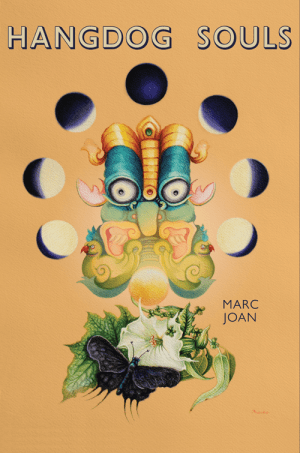
I have brought Hangdog Souls, which is my first full-length work. Although I have recently finished a second novel, at present Hangdog Souls is my only published novel, so the decision was made for me!

It sounds as if second book syndrome hasn’t affected you though!

I hope this book won’t always be the only full-length publication, but it may well end up remaining my favourite one, as it was deeply informed by formative experiences of my life – not least, my ‘third-culture kid’ childhood in South India. (explanatory note: a ‘third-culture kid’ childhood refers to an upbringing in a country and culture that is different from that of one’s parents / one’s passport country).

I love that premise. What can we expect from an evening in with Hangdog Souls?

Well, I think every reader will take something different from any given book, according to their own personality and life experiences to date. After all, even a single word can mean slightly different things to different people. Consider, for example, ‘river’. To an English person, the word may conjure up the gentle, idyllic waters we remember from ‘The Wind in the Willows’. To a Chinese person, the word may recall the capricious violence of the Yangtze and its devastating floods. And to an Indian person, the same word could carry connotations of death, rebirth and the sanctity of Mother Ganga. If a single word can carry different subjective flavours, a whole book most certainly can, and should. So I don’t think it is for the author to say what readers should expect or get from a given narrative.

Oh absolutely. I couldn’t agree more. It always fascinates me how different readers bring their own experiences and perspectives to their reading.

But I think it is fair to say this much: that Hangdog Souls can be read at different levels (for example, as a set of linked literary/gothic stories set in South India, or as an over-arching metastory dealing with guilt, absolution and living with bad memories) and that reviewers to date have compared the book to work by David Mitchell, Haruki Murakami, Vladimir Nabokov and MR James. Hopefully that gives readers an idea of what they might be getting themselves into! I should also say that the writing style, vocabulary, tense, etc changes as the story proceeds from the ~1790s to ~2070, so it is difficult to provide a representative extract. But perhaps a flavour of the book can be detected in the following excerpt:

Thirukumar sits on one side of the table, and I on the other; between us waits the old wooden chessboard. This Thiru adjusts and re-adjusts, fraction by tiny fraction, until its planes mirror those of the table. Nailed to the board is a metal tea-strainer; its wire-mesh dome is fixed above the board’s very centre, as if to cage geometry. To my right, a twelve-volt powerpack enjoys similar precision, centred between board’s edge and table’s edge. Here, however, Thiru’s careful symmetry is desecrated: two tangle-prone wires, each ending in a crocodile clip, uncoil from the power unit in disordered spirals. Thiru paws at them, frowning, but their helices defeat his linear needs. He tuts, and positions them in the usual way: one crocodile clip grasping the mesh of the tea-strainer, and the other gripping a pair of metal forceps. Then he sighs, my brother, and runs his hands through hair uncut since we started the Dairy.

“Harikumar? Ready?” he asks.

              “Sure am, dude.” With my gloved left hand, I pat the Thermos of dry ice; with my right, I wave a glass capillary tube. The tube has a rubber bulb at one end, which I squeeze between finger and thumb. “All systems go.”

That’s fabulous Marc. Of course, I now need to know what they are up to!

What else have you brought along and why have you brought it?

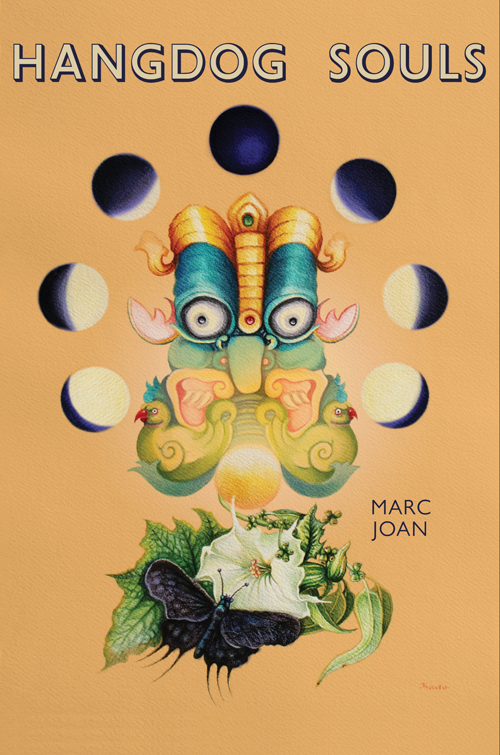
I’ve brought the original artwork for the cover of Hangdog Souls. This was produced for us by Prasad Natarajan, a professional wildlife artist based in Bangalore. Every element of the cover art directly relates to key elements of the book. The moon cycle relates to themes of both astronomy and astrology, which surface repeatedly throughout the narrative. The parakeets also are intimately linked to astrology (though if you don’t know why that should be, you’ll have to read the book to find out!).

I don’t and I will!

The two plants at the bottom of the picture are, respectively, Datura (also known as moonflower or thorn-apple) and eucalyptus. The former is well-known for its poisonous / hallucinogenic properties. The latter is widely grown as a commercial crop in South India, including in the Nilgiri Hills, which is where Hangdog Souls is mostly set. Eucalyptus is particularly key to the story — one of the protagonists steals eucalyptus seeds from Cook’s Endeavour on its return from Botany Bay and brings them to the Kingdom of Mysore in India, hoping thereby to make his fortune. Finally, the central, dramatic face of the cover art may require some explanation. It is a representation of a ‘kirtimukh’, which is a grotesque commonly employed in the intricately carved Hindu temples of South India. The kirtimukh seems to occupy a similar niche to that of the gargoyle on European churches: it is often placed high up, and is sometimes said to ward off evil spirits. However, the kirtimukh seems to have more of mythological basis than the gargoyle; briefly, it represents an all-powerful, unstoppable fundamental force summoned by a god to battle a demon. The demon is utterly consumed by this elemental force; similarly, in Hangdog Souls, one of the characters tries to steal elemental energies for his own selfish ends, and ends up being annihilated. So Prasad did a wonderful job with the artwork – we are all very happy with how it turned out.

I think the cover is absolutely fabulous Marc and now you’ve explained the significance to the story it’s truly whetted my reader’s appetite for the book. Thank you so much for telling me all about Hangdog Souls.

Hangdog Souls

Kingdom of Mysore, 1799. A guilt-racked British Army deserter tries to win safety for those he loves — but his reckless bargaining only leaves him trapped between destinies, condemned to facilitate centuries of suicide and murder. Death after death, each death diminishes him, until — a quarter of a millennium later — a Keralan astrophysicist has the chance to annul the soldier’s Faustian bargain. But Chandy John is weakened by his own burden of grief. Will this twenty-first century scientist become just another helpless nexus between undeserved death and undeserved life?

Hangdog Souls is set in the Dravidian heartlands of South India — and in a blurred edgeland where alternative realities elide. Through linked narratives of guilt, shame and the search for absolution, this book takes readers from the arid Tamil plains to the highest peaks of the Nilgiris, and from occult horrors in Tipu Sultan’s kingdom to creeping madness in the world of particle physics.

Spanning three hundred years, the stories in Hangdog Souls weave together the fates and fortunes of multiple characters — individuals that echo through the generations, asking always the same question: What weight can balance the death of an innocent?

Published by Deixis Press on 27th July 2022, Hangdog Souls is available for purchase here.

About Marc Joan

Marc Joan spent the early part of his life in India, and the early part of his career in biomedical research. He draws on this and other experience for his fiction, which has been published in magazines including Lighthouse Literary Journal, Structo, Bohemyth, Smokelong Quarterly, Hypnos, Chroma, Madcap Review, Danse Macabre, The Apeiron Review, STORGY, Literary Orphans, Bookends Review, Sci Phi, Weird Horror (Undertow Publications), The Dread Machine, Sein und Werden and Nightscript. His novelette, The Speckled God, was published by Unsung Stories in Feb 2017; he is a contributor to the forthcoming Comma Press anthology ‘Mirror in the Mirror’, the Night Terror Novels anthology Ceci n’est pas une histoire d’horreur, and the DBND anthology ‘Ghost Stories for Starless Nights’. His first novel, Hangdog Souls, was published by Deixis Press in July 2022.

Marc has been placed in various competitions as follows: he was a finalist in the Aesthetica Creative Writing Award 2017/2018; Runner Up in the Ink Tears Short Story Competition 2017/18; received a Special Mention in the Galley Beggar Short Story Competition 2017/18; long-listed for the Brighton Prize 2017; reached the last 60 (from nearly 1,000 entries) of the 2018 BBC National Short Story Award; received an Honourable Mention (placed in the top 4%) of the 2020 CRAFT Short Fiction Prize; was winner of the 2020 Punt Volat Short Story Competition, and finalist in the same competition with a second entry; was long-listed in the 2020 William van Dyke Short Story Prize (one of 20 semi-finalists from over 400 entries); achieved Highly Commended in the Gatehouse Press New Fiction Prize, 2020; was finalist / selected for publication in the 2020/21 Aesthetica Creative Writing Award; was short-listed in the 2021 Short Fiction / University of Essex International Short Story Competition (one of seven short-listed from ~780 entries); was long-longlisted in the 2021 Brick Lane Bookshop Short Story Prize; proceeded to the second round (top 5% of entries) of the 2021 Bridport Short Story Prize; and had two stories long-listed in the 2021 Exeter Story Prize.

For further information, visit Marc’s website, or follow him on Twitter @MarcJoan5.

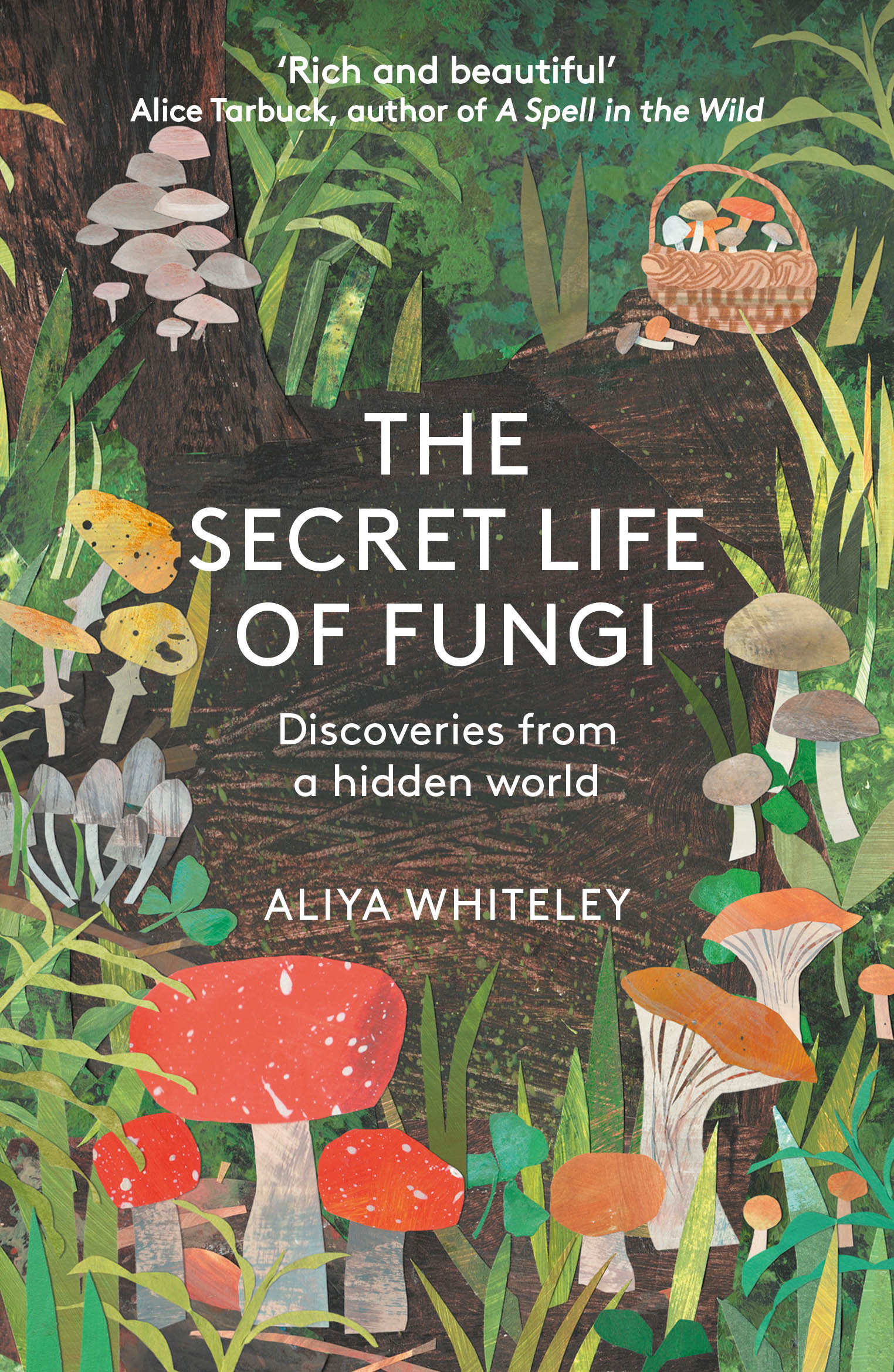
An Extract from The Secret Life of Fungi by Aliya Whiteley

Today, 8th October 2022, is UK Fungus Day so when better to share an extract from The Secret Life of Fungi by Aliya Whiteley? My huge thanks to Alison Menzies for affording me the opportunity to do so.

The Secret Life of Fungi is published by Elliott & Thompson and is available for purchase through the links here.

The Secret Life of Fungi

Fungi can appear anywhere, from desert dunes to frozen tundra. They can invade our bodies and thoughts; live between our toes or our floorboards; they are unwelcome intruders or vastly expensive treats; symbols of both death and eternal life. But despite their familiar presence, there’s still much to learn about the eruption, growth and decay of their interconnected world.

Aliya Whiteley has always been in love with fungi – from a childhood taking blurry photographs of strange fungal eruptions on Exmoor to a career as a writer inspired by their surreal and alien beauty. This love for fungi is a love for life, from single-cell spores to the largest living organism on the planet; a story stretching from Aliya’s lawn into orbit and back again via every continent.

From fields, feasts and fairy rings to death caps, puffballs and ambrosia beetles, this is an intoxicating journey into the life of extraordinary organism, one that we have barely begun to understand.

An Extract from The Secret Life of Fungi

From: To Name, To Know

The Field Guide to Mushrooms of Britain and Europe, written by H. and R. Grünert, contained wonderfully vivid, intense photographs that revealed how different mushrooms could be. They ranged from the morels, with their scrunched, spongy textures, to the domed, comforting pillows of the boletes. There were puffballs: fleshy, swollen lumps as big as a cow’s head in one picture, and their apparent opposites, growing outwards in firm yet delicate flat discs: the brackets. Gill fungi looked fanned and velvety, rich ruffled material beneath their caps, and who could fail to be intrigued by the phalloids, tall and sticky, or curling over into strange, almost floral growths? And yet these photographs came with a warning in the introduction: never become complacent about identification. No number of pictures, illustrated or photographed, can capture every aspect of a mushroom. Even the most experienced foragers need to double-check, to be certain. The book told me not to rely on the visual, but to read the descriptions carefully and take my time.

Even the most standardised description of a mushroom contains an element of stylistic evocation that’s difficult to describe. They are such potent, sarcous objects that bringing them into sharp focus with words takes skill. Along with the descriptions came the English language names, beyond the drier, scientific Latin. They had a resonance of their own, from Bog Bell to Fairy Sparkler, passing through Rubber Ear and Dead Man’s Fingers along the way.

Who gave mushrooms these wonderful titles? Many come from traditional British folk names, which means some mushrooms have had many different ones over the years. Identification guides published over the last three centuries or so have added their own, often without much success in getting them to stick. The process of streamlining to one accepted name has yet to end. My 1992 edition of the field guide had many as-yet-unnamed entries. But there has been a more recent push to give each Latin name an English counterpart. The British Mycological Society formed a working party in 2005 to give us more common names for fungi; their website lists them, as currently agreed on, and also includes a list of protocols to follow to suggest new ones. Could all mushrooms get their own names? That seems unlikely – there are over 15,000 species of wild mushrooms in the UK alone. But it would be good to have more words, if only to keep up with the more generously named wild flowers of Britain.

The word ‘toadstool’ came to me when I looked at that large flat mushroom, but my instinct that it was not a good fit was both correct and incorrect. The words ‘mushroom’ and ‘toadstool’ are pretty much interchangeable, although some of us tend to think of toadstools as the poisonous varieties of mushroom. It’s a great word, though, conjuring images of a warty toad squatting atop a slimy, dank growth. Perhaps the venomous nature of toads led to the association – there’s no evidence to suggest toads do like hopping about in highly fungal areas, although both like the damp, I suppose. The word dates back to the Middle Ages.

****

I’m so looking forward to reading The Secret Life of Fungi – not least because the book is dedicated ‘For my father’ and one of my most precious memories is going mushrooming with my own much missed Dad in the field across the brook from where we lived.

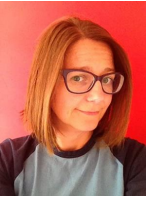
About Aliya Whiteley

Aliya Whiteley is inspired by how fungi and humanity share the world. She grew up in North Devon where she developed an early passion for walking and observing nature. She writes novels, short stories and non-fiction and has been published in places such as The Guardian, Interzone, McSweeney’s Internet Tendency, and in several anthologies. Previously a magazine editor, she has written about the natural world for Mental Floss and in her fiction. Her novella, The Beauty, was shortlisted for both Shirley Jackson and Sabotage Awards, and depicts a future world in which a fungus interacts with humanity to create a new form of life, leading readers all over the world to send her photographs and articles relating to mushrooms.

She walks with her dog through the woods and fields around her home in West Sussex every day, taking inspiration from the hidden worlds around her.

For more information, visit Aliya’s blog.

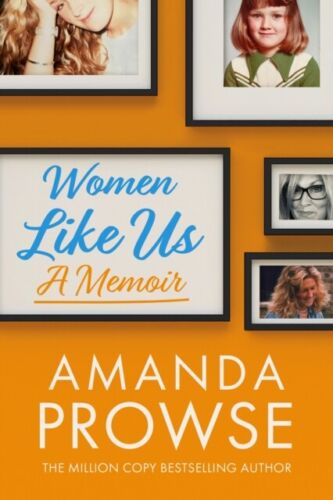
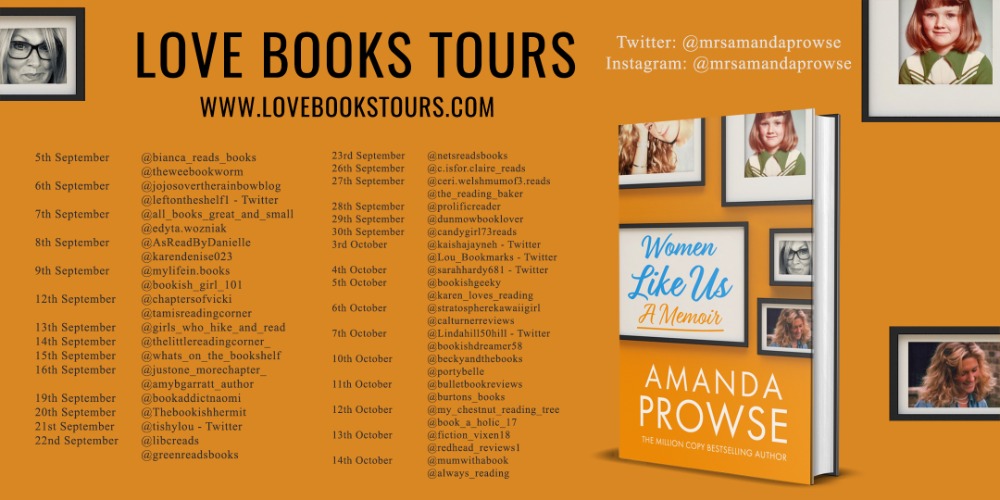
Women Like Us: A Memoir by Amanda Prowse

Now, if you’re a regular blog reader you’ll know I adore Amanda Prowse’s fiction, but today it’s my absolute pleasure to share my review of her non-fiction Women Like Us: A Memoir. My enormous thanks to Kelly at Love Books Tours for inviting me to participate in this blog tour.

Amanda has featured many times on Linda’s Book Bag as follows:

My review of The Boy Between is here.

My review of The Coordinates of Loss is here.

My review of Anna is here.

My review of Another Love is here.

My review of My Husband’s Wife is here.

My review of The Food of Love is here.

My review of The Idea of You is here.

As well as meeting her in real life, I have also been privileged to interview Amanda here.

Women Like Us was published by Little A on 6th September 2022 and is available for purchase here.

Women Like Us: A Memoir

I guess the first question to ask is, what kind of woman am I? Well, you know those women who saunter into a room, immaculately coiffed and primped from head to toe?

If you look behind her, you’ll see me.

From her childhood, where there was no blueprint for success, to building a career as a bestselling novelist against all odds, Amanda Prowse explores what it means to be a woman in a world where popularity, slimness, beauty and youth are currency―and how she overcame all of that to forge her own path to happiness.

Sometimes heartbreaking, often hilarious and always entirely relatable, Prowse details her early struggles with self-esteem and how she coped with the frustrating expectations others had of how she should live. Most poignantly, she delves into her toxic relationship with food, the hardest addiction she has ever known, and how she journeyed out the other side.

One of the most candid memoirs you’re ever likely to read, Women Like Us provides welcome insight into how it is possible―against the odds―to overcome insecurity, body consciousness and the ubiquitous imposter syndrome to find happiness and success, from a woman who’s done it all, and then some.

My Review of Women Like Us: A Memoir

I’m not much usually of a reader of memoir but from the very first page of Women Like Us it was as if Amanda Prowse had looked straight into my soul and said, ‘I see you’. Genuinely, reading Women Like Us made me feel understood, uplifted and as if I’d been given permission to let go a breath I’ve been holding for over 60 years.

Women Like Us is written with such honesty, such humour and such skill that it is like having a conversation with your best friend. I’m not going to say too much about the events that happen to the author as there’s as much, if not more, drama in her life as in any fiction and I don’t want to spoil the discoveries for other readers, but what is so utterly wonderful about Women Like Us is the honest diffidence, the raw emotion and the self-deprecating humour in the way they are conveyed.

Reading Women Like Us leaves the reader with undiluted admiration for Amanda Prowse. She is unafraid to present the difficulties of life such as food addiction, low self-esteem, grief, negative body image and poor mental and physical health, family relationships and marriage with clarity, insight and humility so that she gives permission to her readers to face their own fears, accept their own imperfections and simply be. This makes Women Like Us perhaps sound like a depressing, navel gazing indulgence but that is absolutely NOT the case. It’s funny, emotional and such a fabulous read that I cannot recommend it highly enough. It’s also a fascinating exploration of being a writer that any aspiring (or indeed established) author would benefit from reading.

Written with warmth, honesty and humanity, Women Like Us is not only an engaging and entertaining insight into a much loved author’s life, but it may well be one of the most helpful and supportive books any woman –  any human – could read. It’s astonishingly fabulous. It made me laugh and it made me weep. I won’t forget it. Don’t miss it.

About Amanda Prowse

Amanda Prowse

Amanda Prowse is an International Bestselling author whose twenty-eight novels, two non-fiction titles and seven novellas have been published in dozens of languages around the world. Published by Lake Union, Amanda is the most prolific writer of bestselling contemporary fiction in the UK today; her titles also consistently score the highest online review approval ratings across several genres. Her books, including the chart-topping No.1 titles ‘What Have I Done?’, ‘Perfect Daughter’, ‘My Husband’s Wife’, ‘The Girl in the Corner’ and ‘The Things I Know’ have sold millions of copies across the globe.

A popular TV and radio personality, Amanda has appeared on numerous shows where her views on family and social issues strike a chord with viewers. She also makes countless guest appearances on BBC national and independent Radio stations including LBC, Times Radio and Talk FM, where she is well known for her insightful observations and her infectious humour. Described by the Daily Mail as ‘The queen of family drama’ Amanda’s novel, ‘A Mother’s Story’ won the coveted Sainsbury’s eBook of the year Award and she has had two books selected as World Book Night titles; ‘Perfect Daughter’ in 2016 and ‘The Boy Between’ in 2022.

Amanda is a huge supporter of libraries and having become a proud ambassador for The Reading Agency, works tirelessly to promote reading, especially in disadvantaged areas. Amanda’s ambition is to create stories that keep people from turning the bedside lamp off at night, great characters that ensure you take every step with them and tales that fill your head so you can’t possibly read another book until the memory fades…

For more information, you can follow Amanda Prowse on Twitter @MrsAmandaProwse and visit her website here. You will also find her on Facebook and Instagram.

There’s more with these other bloggers too:

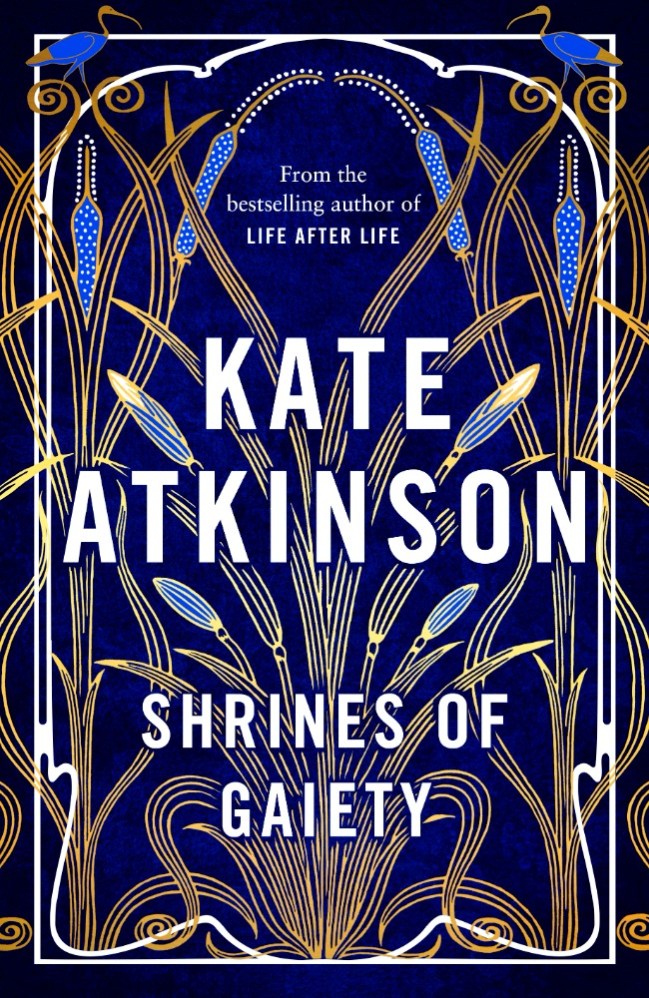
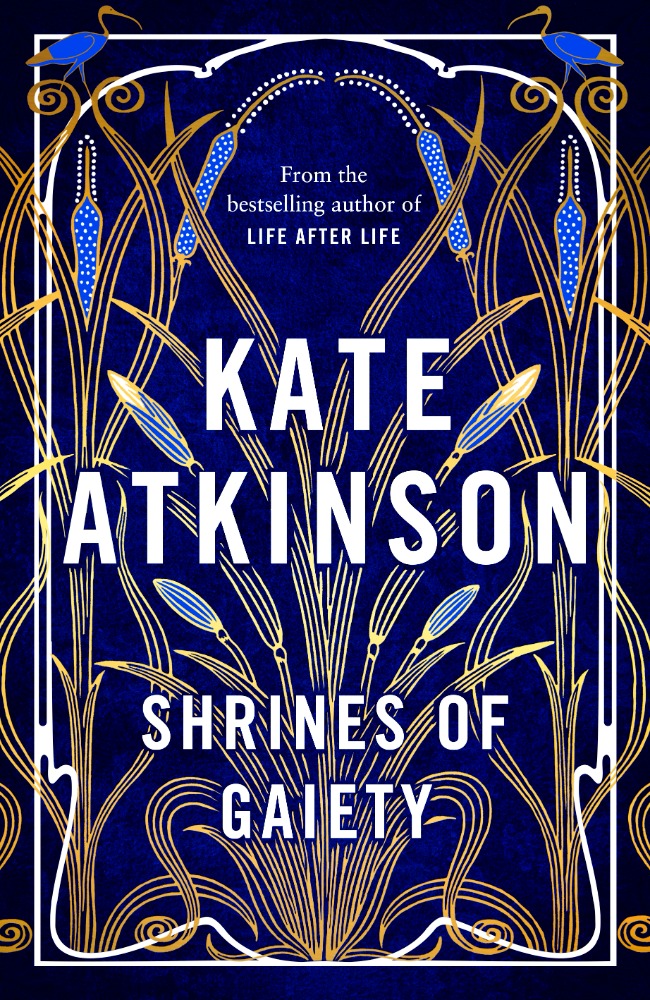
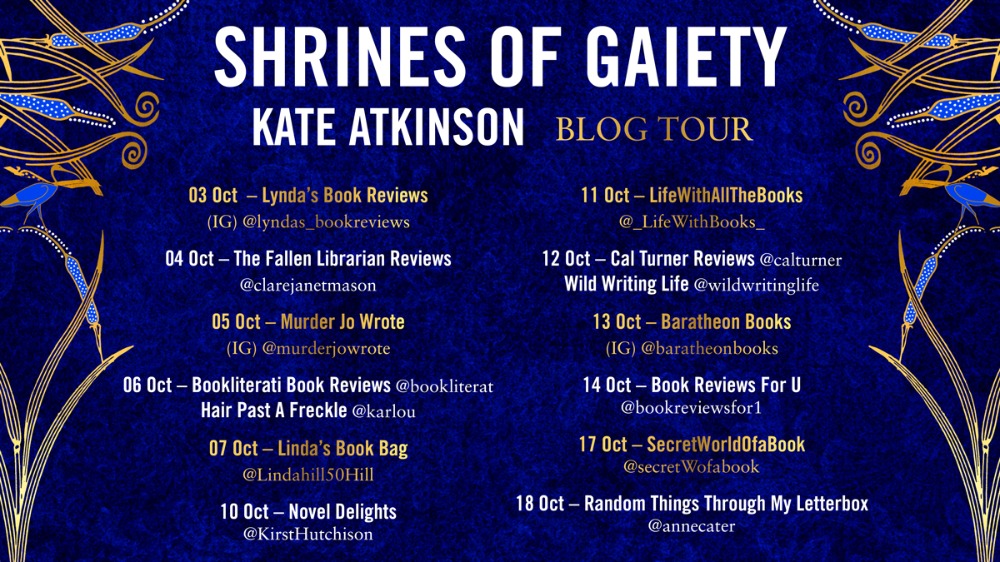
Shrines of Gaiety by Kate Atkinson

I can’t believe it’s over a decade since first I became a fan of Kate Atkinson’s writing when I read Behind the Scenes at the Museum. It’s an absolute thrill today to be part of the blog tour for her latest book Shrines of Gaiety. My enormous thanks to Anne Cater of Random Things Tours for inviting me to participate by sharing my review.

Shrines of Gaiety was published on 27th September 2022 and is available for purchase here.

Shrines of Gaiety

1926, and in a country still recovering from the Great War, London has become the focus for a delirious new nightlife. In the clubs of Soho, peers of the realm rub shoulders with starlets, foreign dignitaries with gangsters, and girls sell dances for a shilling a time.

At the heart of this glittering world is notorious Nellie Coker, ruthless but also ambitious to advance her six children, including the enigmatic eldest, Niven whose character has been forged in the crucible of the Somme. But success breeds enemies, and Nellie’s empire faces threats from without and within. For beneath the dazzle of Soho’s gaiety, there is a dark underbelly, a world in which it is all too easy to become lost.

With her unique Dickensian flair, Kate Atkinson brings together a glittering cast of characters in a truly mesmeric novel that captures the uncertainty and mutability of life; of a world in which nothing is quite as it seems.

My Review of Shrines of Gaiety

Nellie Coker is newly released from prison.

Oh my goodness. Shrines of Gaiety is sublime and I adored every word.

There’s a wicked razor sharp humour underneath the writing that I loved. Kate Atkinson knows exactly how to convey meaning through acerbic asides that give her writing a vivacity and appeal and make the reader feel she is writing exclusively for them. This has the effect of drawing in the reader and making them an almost active participant in the narrative. I lost count of the number of times I laughed aloud at some aside or reference. The literary and historical allusions sprinkled throughout the narrative are a treasure trove of jewels, delighting the reader and adding an extra dimension to the story that makes it sparkle every bit as much as one of Nellie’s nightclubs.

The plot has several fascinating threads, such as Nellie’s threat from gangster rivals and Gwendolyn’s search for Freda and Florence alongside huge dollops of treachery and corruption as Freda searches for fame and fortune, but in effect the plot is secondary to the magnificent exploration of class, manners and society beneath London’s thin veneer of civilisation so that The Shrines of Gaiety is a brilliant social commentary. In her presentation of the post war Roaring Twenties, Kate Atkinson explores family, loyalty, betrayal, sexuality, fate, organised crime, morality, the role of women and so much more in a veritable kaleidoscope of literary brilliance. I read Shrines of Gaiety with a huge smile on my face because it felt such a treat to be immersed in this world.

The settings and characters are absolutely glorious. I adored the early, exquisite histories that provide the backstories to the main characters. Of course Nellie takes centre stage as the keystone of the story, but she is just one of a cornucopia of fabulous people that populate this narrative. I thought the manner with which the author interwove their stories like some kind of mycelium network was inspired, especially as it meant some surprises along the way too. The characterisation is so astute, peeling back the layers of London society and revealing what lies beneath its glittering surface.

It’s so hard to review Shrines of Gaiety without spoiling the pleasure in reading it for others but I think it is a modern classic that will endure across the decades. It’s a delicious book and I loved it. Shrines of Gaiety is one of my favourite reads this year.

About Kate Atkinson

Kate Atkinson is one of the world’s foremost novelists. She won the Costa Book of the Year prize with her first novel, Behind the Scenes at the Museum. Her three critically lauded and prize-winning novels set around the Second World War are Life After Life, an acclaimed 2022 BBC TV series starring Thomasin McKenzie, A God in Ruins (both winners of the Costa Novel Award) and Transcription.

Her bestselling literary crime novels featuring former detective Jackson Brodie, Case Histories, One Good Turn, When Will There Be Good News? and Started Early, Took My Dog, became a BBC television series starring Jason Isaacs. Jackson Brodie later returned in the novel Big Sky. Kate Atkinson was awarded an MBE in 2011 and is a Fellow of the Royal Society of Literature.

There’s further information on Kate’s website and on Facebook. There’s more with these other bloggers too.

Staying in with Mike Downey on ISTRIA GOLD Publication Day

I’ve a very exciting guest with me today as Mike Downey stays in with me to chat about his debut novel. My huge thanks to Jaime at Ink Editorial for putting us in touch with one another. Let’s find out more:

Staying in with Mike Downey

Welcome to Linda’s Book Bag Mike and thank you for staying in with me.

I dream of staying in!! So, to be able to do so in good company and with a decent book or two is a real pleasure. So much of my time is spent on the road with my various film productions and as chairman of the European Film Academy, that feet up, in front of the fire with a good book and a good glass of wine is just what the doctor ordered – so thank you very much for the invitation!

You’re most welcome! Tell me, which of your books have you brought along to share this evening and why have you chosen it?

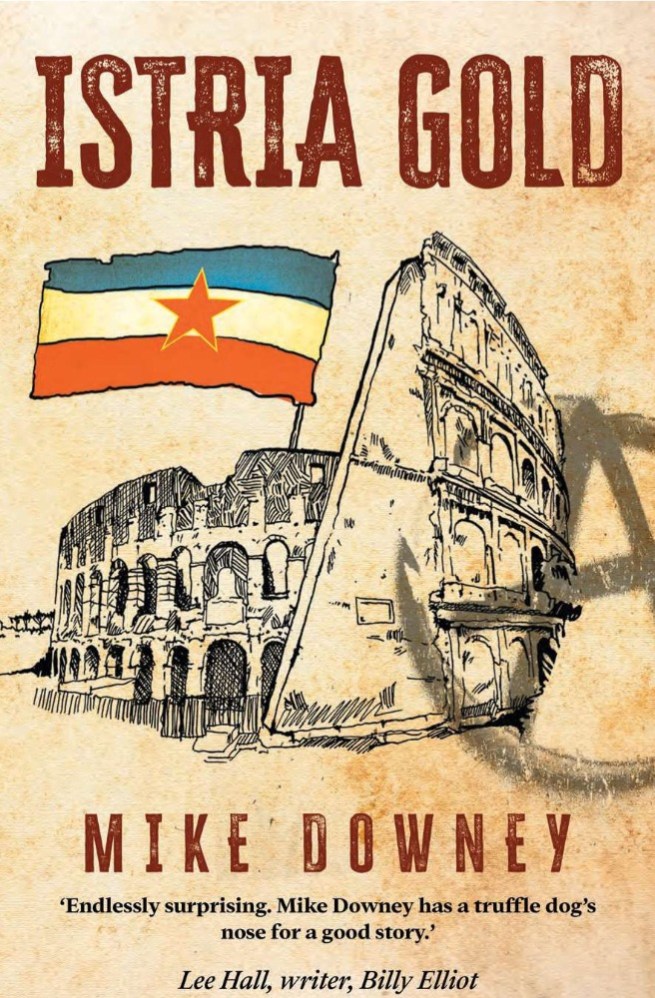
My non-fiction stuff about how to produce movies seemed inappropriate – so this time I have chosen to bring along my debut novel:  ISTRIA GOLD – set in the former Italian province of Istria on the Croatian Adriatic – it takes the reader on an adventure through three time frames, moving from the world of contemporary eco-warriors to the gladiators in the Pula arena of the 1st Century AD and on to the fighters of the Partisan War of Liberation in 1943.

That’s quite some timescale. What is it about?

The main theme is greed.  A greed driven by the potent elixir of the fabled Istrian truffle.  It’s also the first part of a trilogy of books set in the Istrian peninsula which follow the theme of hate: ISTRIA BLACK and corruption: ISTRIA BLUE.  The ominously sounding themes aren’t as lugubrious as they might seem:  beneath the morality stories of human foibles and folly there is a real sense of human warmth, solidarity and continuity passed down through the ages.

Thank goodness for that. It seems to me the themes of the trilogy are hugely resonant in today’s society. What can we expect from an evening in with ISTRIA GOLD?

Aside from a good adventure romp across the centuries being led by the seductive and fragrant whiff of the White Princess and the Black Diamond (as the white and black truffle are known locally) you’ll get a gentle introduction to a region and a culture that is rich not only in culinary delight, but also art, architecture, viticulture and all manner of pleasures that are to be found when vertically and horizontally integrated into a new place via a new piece of original literature.  As the US novelist, Melanie Finn, author of The Hare and Shame said when she first read ISTRIA GOLD“Downey is a passionate tour guide as well as a nimble story-teller.” 

I love a book that transports me to another place Mike.

There are so many places and landscapes in Istria, as they are magical, excruciatingly lovely and pure and their transcendental beauty is just cries out to be seen – especially central Istria. My passion for the peninsula goes back a long way and and I was lured here by a number of things – cinema in the Vespasian arena especially – as well as the fact that this breathtakingly beautiful peninsula in the Adriatic Sea, lying mostly inside Croatia’s border, has the perfect climate for an Anglo- Irishman (four seasons in a day) – as well as the fact that the and Croatian, Slovenian and Italian cultures of the region are responsibly and perfectly preserved and celebrated.

It sounds wonderful and not an area I know so I shall have to read ISTRIA GOLD to find out more.

What else have you brought along and why have you brought it?

Just so we get a real flavour of the book, and what it is like to stay in on a wet autumn night in Istria, I’ve brought two things along.  The first is a bottle of Grimalda red wine.  It’s named after the village I live in in Istria (and which plays a central role in the book) and is created by master vintner and all round great human being Ivica Matosevic – it is the culmination of all his experiences as one of the great wine makers of Istria.  I was there when the first vines were planted back in 2002 and now as the only inhabitant of Grimalda the village, I’m happy to still be here as the vines have reached their full potential in successfully transmitting the specific Istrian terroir signature in the bottle. Steven Spurrier is one of the most important wine critics in the world – he says of Grimalda red: “Matošević Grimalda Red 2018 takes its place among other world-renowned wines like Chateau Latour. This 60% Merlot, 30% Teran, 10% Cabernet Sauvignon is bursting with vineyard character, vibrant spice and black fruits, sour cherries with oak on the palate.”

That sounds delicious. Sadly wine makes me ill so you’ll just have to pour yourself another glass and I’ll simply enjoy the aromas.

It’s best served with a plate of locally made fresh pasta with added Tuber Melanosporumat this time of year.  That’s what I would call Fuži s tartufima – which is one of the most popular Istrian specialties – a delightful combination of traditional fuži pasta and the famous Istrian truffles. The black truffle is a respectable truffle variety. The pasta should be cooked in salted water until al dente, and it is then drained and combined with butter, (optionally) heavy cream, and truffles – white Istrian truffles, black winter truffles (not optional) , or a combination of both.

Consume the Grimalda wine with the truffles found in the damp dales beneath the Venetian Hill Village of Motovun and it will become clear to you that earthly paradise can be attained.

I’ll pass on the wine and pour myself a class of champagne (which doesn’t make me ill) and tuck in as that sounds very appetising indeed.

Lee Hall, the writer of Billy Elliot, Cooking With Elvis, Spoonface Steinberg and the recent Elton John biopic Rocketman wrote of ISTRIA GOLD:  “Mike Downey has a truffle dog’s nose for a good story.”

I have to agree and disagree.  I think I also have a damn good nose for a good truffle as well as a decent bottle of local wine!

Cheers!  And welcome to Istria!

Cheers! Thanks very much Mike and thank you for staying in with me to chat about ISTRIA GOLD. You get the drinks to accompany the pasta and I’ll tell Linda’s Book Bag Readers a little bit more about ISTRIA GOLD:

ISTRIA GOLD

LONDON, 2019: After undercover cop Marco Mihailić is drummed out of the Metropolitan Police he seeks refuge with his family in Croatian Istria. He finds a world utterly changed from his childhood, and one in which his beloved grandfather Nino’s truffle-dealing escapades have got him into the kind of trouble that he can no longer handle.

ROMAN ISTRIA, AD 81: 18-year-old Lucia desperately needs to escape the gladiatorial games, and her beloved English mastiffs are her way out. Although trained to kill in the arena, her loyal companions Brutus and Britannica have a secret ability that is the key to Lucia’s freedom: their ability to smell out beds of truffles. They will help make her fortune and take Lucia and her family away from the violence and horror of the games.

ISTRIA, 1943: Brothers Pino and Nino Mihailić have seen waves of invaders beat, kill and imprison their innocent neighbours in war-torn Istria. Driven by fear and revenge, they join Tito’s Partisans. Within a year Pino’s star is riding high after a series of guerrilla victories, but Nino sees another way out of this war: his dog and the lucrative truffles they find in the countryside.

ISTRIA GOLD is released on 6th October by MPress Media and Calm Productions and is available for purchase here.

About Mike Downey

Mike Downey is an Irish author, activist, and film producer.  He is also currently the Chairman of the European Film Academy and President of the Lux Award of the European Parliament.  His debut novel ISTRIA GOLD is an ambitious an atmospheric historical thriller, the first in a trilogy starring ex-cop Marco Mihailić. Set on Croatia’s Istrian peninsula, ISTRIA GOLD explores the turbulent region’s history, culture, and traditions, bringing it to life in the grand tradition of authors such as Martin Walker and his BrunoCourrèges series.

For further information, visit Mike’s website.

An Ocean Apart by Sarah Lee

Today it’s a privilege to share another of my My Weekly online reviews. This time it’s of An Ocean Apart by Sarah Lee.

An Ocean Apart is published by Pan Macmillan and is available for purchase through the links here.

An Ocean Apart

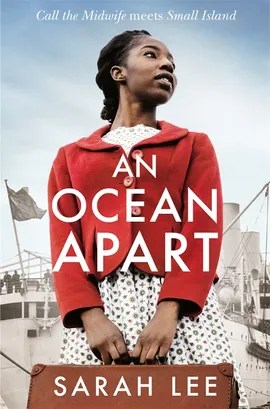
Inspired by real life stories of the Windrush Generation and her mother’s own experiences as a nurse coming to Britain from the Caribbean, Sarah Lee’s debut novel An Ocean Apart is a must for fans of Call the Midwife.

It’s 1954 and, in Barbados, Ruby Haynes spots an advertisement for young women to train as nurses for the new National Health Service in Great Britain. Her sister, Connie, takes some persuading, but soon the sisters are on their way to a new country – and a whole new world of experiences.

As they start their training in Hertfordshire, they discover England isn’t quite the promised land; for every door that’s opened to them, the sisters find many slammed in their faces. And though the girls find friendships with their fellow nurses, Connie struggles with being so far from home, and keeping secret the daughter she has left behind in search of a better life for the both of them . . .

My Review of An Ocean Apart

My full review of An Ocean Apart can be found on the My Weekly website here.

However, what I can say here is that An Ocean Apart is a charming, entertaining and surprisingly profound insight into the world of the Windrush Generation in 1950s Britain.

Do visit My Weekly to read my full review here.

About Sarah Lee

Sarah Lee has been a journalist and editor for the past twenty-five years, working across news and features and writing for regional and national newspapers, as well as commissioning for women’s true-life magazines. More recently she has focused her attention on the world of travel, creating luxury blog LiveShareTravel, and working with destinations and brands worldwide on storytelling marketing campaigns and conferences through her company, Captivate.

For more information, follow Sarah on Twitter @sarahleetravels and Instagram. You’ll also find Sarah on Facebook.

Giveaway: Scribblings by Tom Panagiotopoulos

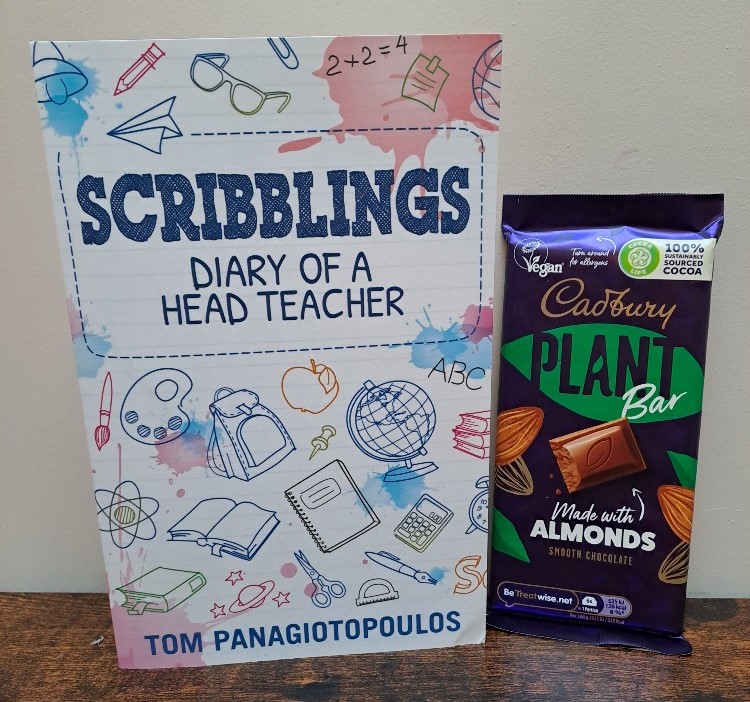
I’ve had Scribblings by Tom Panagiotopoulos on my TBR pile for a while now and as an ex-teacher and educational consultant it has a siren call for me. Whilst I’m still waiting for it to reach the top of that towering TBR heap, I’m delighted to be able to offer a lucky UK reader a chance to read Scribblings for themselves along with some smashing vegan chocolate thanks to Sarah Hembrow at Vulpine Press. (I really wanted to call this post Scribblings and nibblings – but I wont!) Let me tell you about the book first:

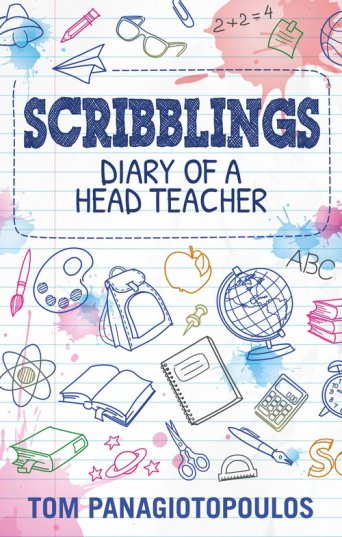
Scribblings was published by Vulpine Press on 22nd March 2022 and is available for purchase here.

Scribblings

“It was the worst horror film I had ever seen, and I was in it! It wasn’t until his leg fell to the ground with a resounding thump and bounced for a few feet, did I realise that Nathaniel’s leg was a prosthetic.”

Being the head teacher of a primary school sounds like the ideal job. But it’s not all playing with toys and going home at three in the afternoon.

From parents fighting in the playground to the toilets spewing out raw sewage and contaminating the school, a head teacher’s day can range from the sublime to the ridiculous.

Filled with life, laughter, tears and tantrums, Scribblings journeys through the battles of leading a primary school in one of the most deprived areas in the country. Where the struggles are immense, but the rewards are priceless.

Come inside and witness first-hand what happens once the school gates are closed.

Journey inside an inner-city primary school with head teacher Mr P. Written over the course of a school year, Mr P details the reality of working in a school in one of the most deprived areas of the country. What goes on behind closed doors after you drop your children off in the morning? How do teachers juggle parents, pupils, and the ever-demanding education authorities? Come inside and join us for the highs and lows of primary school life.

****

I think Scribblings sounds brilliant. Here’s your chance to win a copy:

Giveaway

A Copy of Scribblings by Tom Panagiotopoulos and Vegan Chocolate

Open to UK readers only due to postage costs. For your chance to win a Copy of Scribblings by Tom Panagiotopoulos and vegan chocolate click here.

Competition closes UK midnight on Tuesday 11th October. Your details will not be retained. The winner will need to provide a UK postal address.

Good luck!

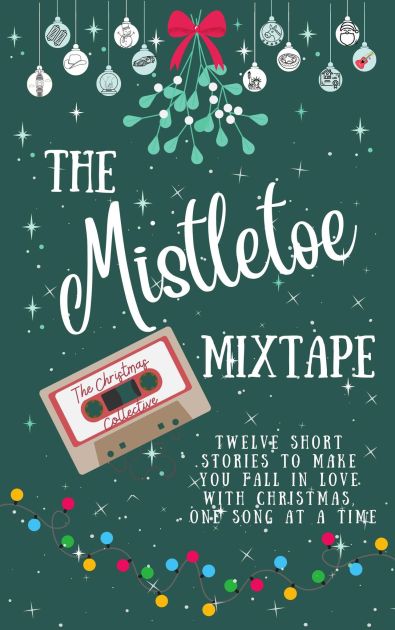
The Mistletoe Mixtape by The Christmas Collective – A Guest Post

It’s a pleasure to join the Rachel’s Random Resources blog tour for The Mistletoe Mixtape by The Christmas Collective by sharing a guest post today. My thanks to Rachel for inviting me to participate. As well as a guest post, there’s also a smashing competition for a lucky reader to win a paperback copy of The Mistletoe Mixtape further down this blog post.

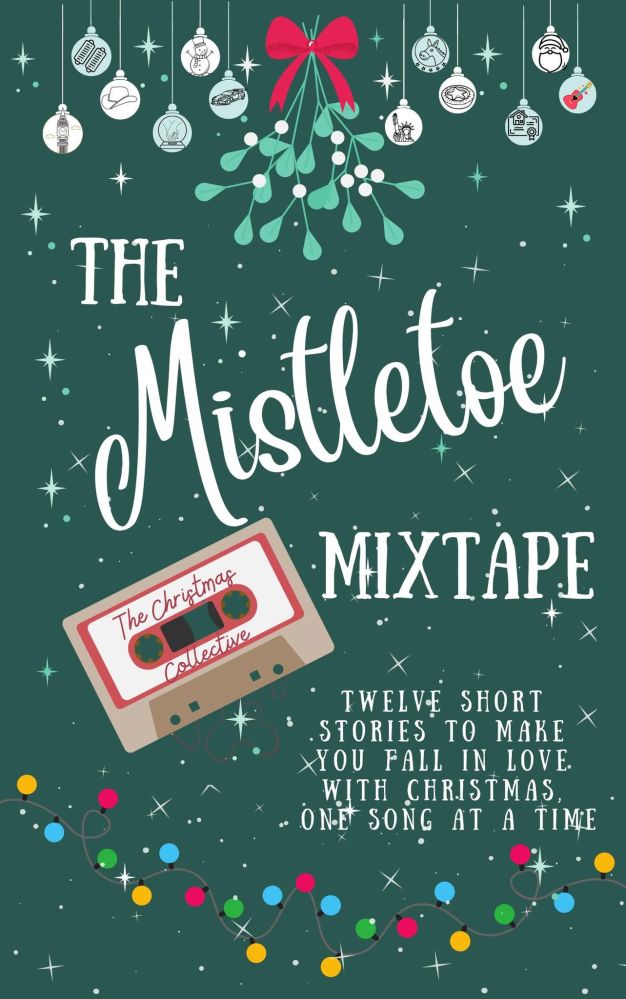
The Mistletoe Mixtape is available for purchase here.

The Mistletoe Mixtape

Snuggle up for the holidays with 12 very different tales of love that will have you dancing under the mistletoe!

The Mistletoe Mixtape, the second anthology from The Christmas Collective, is a diverse and inclusive mix of stories, with more swoon-worthy characters, second chances and happy endings.

Amongst these twelve Christmas music inspired stories you will discover long lost love, festive fantasy, LGBTQ+ love stories, witty one liners and holiday romances. There really is a story to capture every reader’s festive spirit. So grab yourself a hot chocolate, pop on your favourite festive tunes and immerse yourself in the magic of The Mistletoe Mixtape.

****

Creating Romantic Leads

A Guest Post by Jenny Bromham of The Christmas Collective

Who doesn’t love a swoon-worthy leading man or woman? To me, that’s one of the main reasons we pick up a romance book or watch a romance film – we don’t just want to watch the characters fall in love, we want to fall in love with them ourselves!

But where does the inspiration come from, for these irresistible characters? Are they based on real life love affairs, on heart-throb celebs, on literary heroes? With this question in mind, I interviewed some of the authors from The Mistletoe Mixtape anthology. I asked them to reveal the inspiration behind the characters we’re all going to fall in love with this Christmas.

Dominic the Donkey by Donna Gowland

Kate Winslet’s character in The Holiday was an inspiration, as was Ryan Reynolds’s character in The Proposal. I loved the idea of a character who’d spent so long lusting after her boss, that she’d closed herself off to any other chance of love.

Wrapped in Red by Joe Burkett

My leading man is Charlie. He is a lost soul who has been cast adrift. My inspiration for him…I wanted to create a character who thought that they had it all sown up, only to realise that their world was built on sand. From there, I wanted to see how Charlie could rebuild his life.

Santa Baby by Helen Hawkins

Erm… every Netflix/Hallmark Christmas movie heroine ever! Busy city business woman meets small town kind hearted gentle giant…

Walking in a Winter Wonderland by S.L. Robinson

My inspiration was my own woeful love life, being single again (by choice) at the age of 32. Though I’m not as dramatic about it as my protagonist, Lucky, I made her slightly older and with a more devastating reason to be turned off love. It was cathartic to have myself work out the harder parts of a breakup with some fantasy and escapism!

A Winter’s Tale by Jenny Bromham

My leading man, Garry, is a gentle giant and an unassuming romantic.Physically, he’s based on Mikael Persbrandt’s character, Jakob, from the TV show, Sex Education. Emotionally, he’s based on Gabriel from Far From The Madding Crowd by Thomas Hardy. Garry’s unrelenting patience and love for my protagonist, Sarah, simmers gently and endlessly throughout.

White Christmas by Marianne Calver

I think lots of us can relate to that feeling of wanting to present our best selves to the world, especially on social media. That was the basis for Bianca who is struggling with how she wants to be perceived and how she sees herself.

Fairytale of New York by Michelle Harris

I really wanted Daniel to be a well-rounded character with depth. Not easy in a short story but, hopefully, I succeeded. I also imagine him as quite smouldering and hot, because life is more fun that way. I imagine him as a Regé-Jean Page type to look at. I wonder if readers would agree?!

I think Michelle’s question is key here. Will you imagine the romantic leads as they are in the authors’ minds, or will you have your own equivalent to Ryan Reynolds, Mikael Persbrandt or Regé-Jean Page? Will the stories of lost love, found love and love that’s been waiting at the sidelines stir memories from your own experiences?

The Mistletoe Mixtape offers twelve very different tales of love with twelve very different leading men and women. I really enjoyed chatting to my co-authors and learning where their larger-than-life characters sprung from. Now the only question that remains is, which of them are you going to fall in love with this Christmas?

About The Christmas Collective

The Christmas Collective is a group of twelve romance authors who came together when shortlisted for a festive romance competition. Together they have created two Christmas Romance anthologies, More Than Mistletoe (2021) and The Mistletoe Mixtape (2022).

The Christmas Collective authors are spread far and wide, across the UK, Ireland, Spain and South Korea, however, one thing connects them despite the distance: a love of romance and Christmas.

For further information, visit their website, find them on Facebook, TikTok and Instagram or follow them on Twitter @ChristmasCo2022.

There’s more with these other bloggers too:

Giveaway

For your chance to win a paperback copy of The Mistletoe Mixtape (Open to UK and Ireland only) click here.

Please note that this giveaway is run independently of Linda’s Book Bag as follows:

The winner will be selected at random via Rafflecopter from all valid entries and will be notified by Twitter and/or email. If no response is received within 7 days then Rachel’s Random Resources reserves the right to select an alternative winner. Open to all entrants aged 18 or over.  Any personal data given as part of the competition entry is used for this purpose only and will not be shared with third parties, with the exception of the winners’ information. This will passed to the giveaway organiser and used only for fulfilment of the prize, after which time Rachel’s Random Resources will delete the data.  I am not responsible for despatch or delivery of the prize.

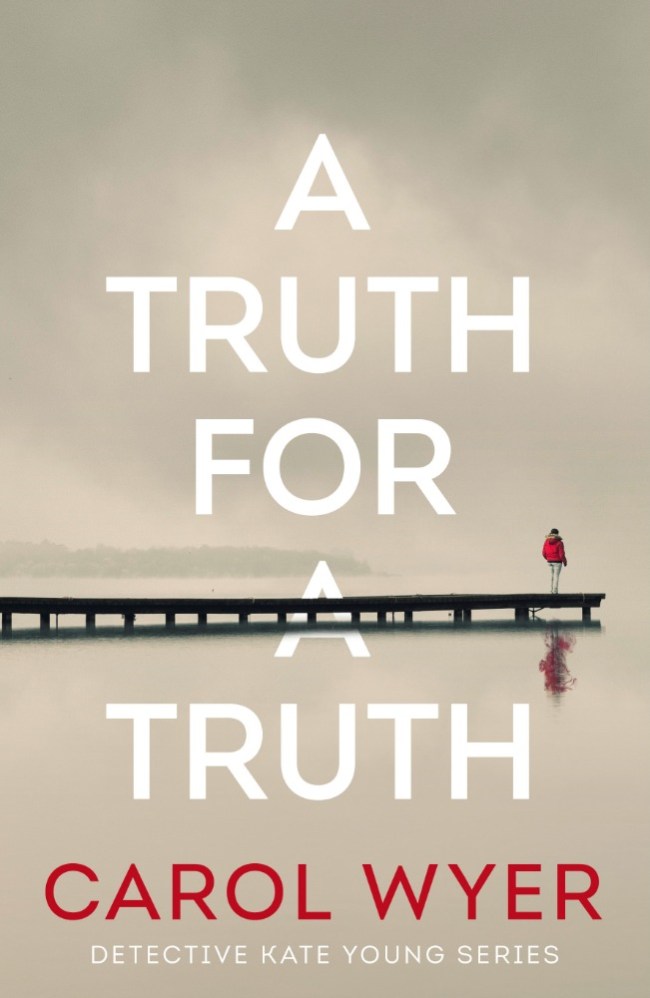
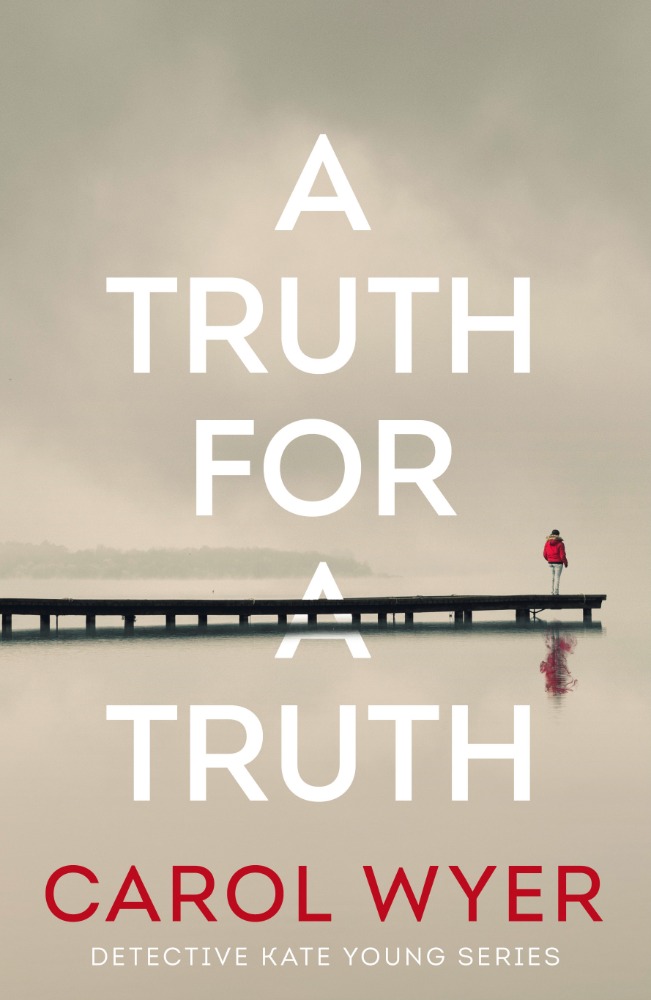
Cover Reveal: A Truth for a Truth by Carol Wyer

I’ve been a bit remiss of late sharing and reviewing for lovely Carol Wyer as I’ve been away so much and inundated by life and blogging commitments so I’m delighted to participate in the cover reveal for her latest DI Kate Young book A Truth for a Truth.

I shared my review of Carol’s Somebody’s Daughter here.  I reviewed her What Happens in France here, and previously we celebrated the publication of Carol’s The Missing Girls in a post you can read here. I also interviewed Carol about her writing here to mark the publication of Little Girl Lost.

Most recently I reviewed An Eye for an Eye in a post you’ll find here.

Let’s find out more about A Truth for a Truth:

A Truth for a Truth

DI Kate Young’s team is hunting for a killer. What they don’t know…is that the killer is her.

DI Kate Young has known for years that her boss, Superintendent John Dickson, is a violent and evil man. But when she finally confronts him and accidentally shoots and kills him, she’s forced to cover her tracks before anyone can pin his death on her. With revelations about his corruption soon to become public knowledge, Kate sets up a trail of evidence to make it seem that Dickson has conveniently vanished…

But Kate knows the corruption doesn’t end with Dickson. As she heads up the team investigating his supposed disappearance, she also pursues other loose ends. Stanka, the sex worker who supplied the evidence against Dickson, leads her to crucial information on another corrupt officer, DI Harriet Khatri, and her dubious involvement with sex traffickers.

As the noose starts to tighten on Kate, she finds herself targeted by traffickers, the bent cops on her force and even her own team of detectives. Can she stay one step ahead of them all and bring Harriet to justice? Can she trust anyone around her? And can she possibly get away with murder?

****

Oo. I hope so!

A Truth for a Truth will be published by Thomas & Mercer on 4th April 2023 and is available for pre-order on Amazon UK, US and AUS.

About Carol Wyer

Carol Wyer is a USA Today bestselling author and winner of the People’s Book Prize Award. Her crime novels have sold over one million copies and been translated into nine languages.

A move from humour to the ‘dark side’ in 2017, saw the introduction of popular DI Robyn Carter in Little Girl Lost and proved that Carol had found her true niche.

In 2021, An Eye For An Eye, the first in the DI Kate Young series, was chosen as a Kindle First Reads. It became the #1 bestselling book on Amazon UK, USA and Australia. Since then, two further books in the series have been published, with a fourth and fifth due out in 2023.

A standalone psychological thriller, Behind Closed Doors, will be out later this year and is available to preorder now.

Carol has had articles published in national magazines ‘Woman’s Weekly’, featured in ‘Take A Break’, ‘Choice’, ‘Yours’ and ‘Woman’s Own’ magazines and written for the Huffington Post. She’s also been interviewed on numerous radio shows and on Sky and BBC Breakfast television.

She currently lives on a windy hill in rural Staffordshire with her husband, Mr. Grumpy . . . who is very, very grumpy.

When not plotting devious murders, she can be found performing her comedy routine, Smile While You Still Have Teeth.

All of Carol’s books are here. You can follow Carol on Twitter @carolewyer, visit her website and find her on Facebook and Instagram.

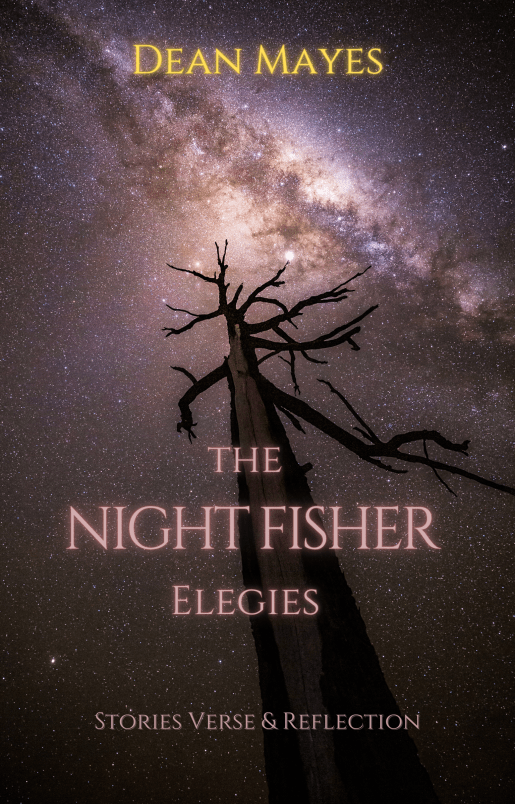
An Extract From The Night Fisher Elegies by Dean Mayes

I’m a huge fan of eclectic collections and when I heard about Dean Mayes’ The Night Fisher Elegies I knew I had to feature it on Linda’s Book Bag even though I simply couldn’t fit in a review. It’s a privilege to host an extract from the book today.

It’s over four years since I stayed in with Dean to chat about another of his collections, The Artisan Heart in a post you’ll find here.

The Night Fisher Elegies is available for purchase here.

The Night Fisher Elegies

Taking the reader on a journey through love, faith, death, grief, family and dreams, The Night Fisher Elegies weaves together powerful explorations of humanism, moments of reflection tinged with melancholy and short verses, which inhabit the sometimes brutal landscape of self examination. Dean wanders through a palace of memories contained within nostalgic love, experimenting with style, tone and character. He poses questions for the reader to ponder and wrestle with and offers pieces designed to evoke and provoke, while others are simply present as meditations to inspire and affirm.

Drawing inspiration from literary heroes such as Jim Harrison, Rainer Maria Rilke, Albert Camus, Charles Bukowski & Patrick White this collection brings together pieces from over 10 years of writing and creating. The Night Fisher Elegies showcases Dean Mayes’ literary style across short fiction, ghazal poetry, short form essays and personal reflections.

An Extract from The Night Fisher Elegies

Arnold Webb.


(2021).


This is what I know about Arnold Webb.

He was a bushman first, brought into the world with an axe in his hand. He was no stranger to hard work and toil. He wore sweat on his brow with pride — in fact, he relished it.

His hands were calloused, and though Arnold’s hands were bushman’s hands, his fingers were long, delicate even. Legend had it that he could play Rachmaninoff better than Rachmaninoff himself.

His arms were solid, his shoulders broad. But you would never see him without a tie or his moth eaten Harris tweed — even if he was chopping wood or digging a trench or milking a cow. Sometimes Arnold wore a bow tie, usually on special occasions, but he would often surprise you with his tendency to wear one day to day — just because he felt like it. His beard was thick, yellowed at the corners of his mouth from years of tobacco stains. His silver hair was perpetually entangled with saw dust — or dandruff. It was probably saw dust.

When he smiled, you expected to encounter a hollow maw, or jagged tombstones, but Arnold had a perfect set of pearly white teeth that he swore were his own.

Arnold lived on Russell’s Creek Road, beyond the bitumen, beyond civilisation on a plot of rolling land thick with eucalyptus. There, Arnold rebuilt his childhood home — then a two roomed cottage — into a grand house, with a wrap around verandah, a corrugated iron roof and pretty curtains in the windows he’d sown himself. The house boasted fireplaces in each room and an iron stove in the kitchen. Yet, he was content with an earthen floor. Despite encouragement and offers of help to do so, he only decided to lay boards down in the last years of his life, because his bones grew tired of the uneven floor. He couldn’t believe he had gone without them for so long.

There on his little plot, Arnold raised his chickens, milked his cows, sheared his sheep and sawed his timber, deriving a small income from the products of his labours but subsisting on a tradition of rural bartering and his own dogged independence. He grew vegetables where vegetables shouldn’t grow. Pumpkins and potatoes of impressive size. Tomatoes and carrots of unrivalled quality. Everyone wanted to know his secret. Of course, he wouldn’t share it.

Arnold drove an EH Holden with venetian shades in the back window. The glossy, sky blue panelling and chrome he kept buffed to a shine. The white walled tires were as new as the day they had been fitted. The engine purred. The Holden was his pride and joy. You could always tell it was Arnold driving because he only ever drove at 20 miles an hour — even when he was in a hurry. He was never late for an appointment. He planned his journeys well in advance and those journeys were rare.

The most precious thing Arnold had was his companion — a sleek red fox he had reared from a pup. The fox was tame, uncannily obedient and was, according to Arnold, the finest sheep dog he had ever owned. It had a luxuriant red coat, a bushy tail and vivid, piercing eyes. The fox accompanied him everywhere. It had a basket in the back window of the Holden and whenever Arnold turned up anywhere, you could see curled up on a crocheted blanket.

Arnold had trapped its mother years before and he’d felt guilty upon realising animal was pregnant. Arnold delivered the pup himself. He couldn’t bring himself to euthanize it, so he took the pup home and raised it, nurtured it and trained it. Not once did it ever attack Arnold’s chickens or sheep or cows. It protected Arnold’s home from its vantage point on the front porch beside Arnold’s rocking chair.

While Arnold remained a confirmed bachelor, it was said his heart had been broken once. A woman of means and spirit who had turned his head and rendered him love struck. The grand house he had built had been for her and he’d decked it out with all the accoutrements she had asked for. He’d even positioned the master suite so that it overlooked the valley — the best view in the district. But she didn’t stay. No-one was quite sure why. Rumour had it that she had lost a baby. That she’d had second thoughts about country life and had returned to the City. Suffice it to say, after she’d gone, Arnold closed his heart and he never spoke of her again.

Arnold died alone — or so I’d heard. He’d fallen asleep in his rocking chair — an antiquarian copy of Tolstoy in his lap, a bottle of Cabernet and a half empty tumbler at his side. Arnold had simply never woken up. Weeks had passed before anyone realised. When he was found, the fox was still at his feet, surrounded by chicken feathers. Evidently, its animal instinct had not been completely buried. It had bared its teeth when the ambulance officers attempted to remove Arnold’s body and only took flight when the police constable drew his weapon.

No-one claimed Arnold’s property. Apparently, he had a sister but she never appeared. When solicitors met to discuss his will, it was discovered Arnold Webb was independently wealthy. He’d been a stockbroker in times past and had amassed a fortune on the back on some very canny investments. Still no-one emerged to secure his inheritance.

Beyond the bitumen on Russell’s Creek Road, the house stands in the quiet. It is slowly being reclaimed by the bush. The curtains in the dust covered windows are moth eaten now, like Arnold’s Harris tweed. A swarm of bees have taken up residence in the corner of the verandah. The cows and the sheep have long gone. A rooster and a hen remain in the coop and have produced several offspring.

At night, you can hear the sounds of the bush. The wind rustling through the eucalyptus. The babbling of the creek. The calls of so many birds. The grunts of Sanbar up on the ridge.

And the plaintive cry of a fox.

****

I love that! I have a feeling that The Night Fisher Elegies is exactly my kind of read.

About Dean Mayes

Author Shot Large

Dean Mayes is an Intensive Care Nurse who is fascinated by philosophy and the paranormal, so his stories weave an element of magical realism with deep humanism. He grew up near Melbourne, Australia, and now lives in Adelaide with his wife, Emily, his children, Xavier and Lucy, and his writing partner – a 10 year old spaniel named, Sam. Dean loves outdoor cooking, anything to do with Star Wars and (insanely) long-form podcasts.

An Intensive Care Nurse with over 15 years of clinical experience in adult, paediatric and neonatal medicine, he can often be found lying on a hospital gurney at 3 in the morning with a notebook in hand, madly scribbling ideas while on his break.

For further information, visit Dean’s website, follow him on Twitter @Hambledown_Road and find him on Facebook.