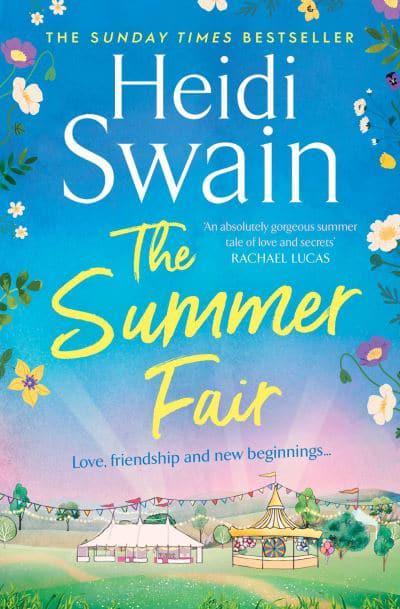
The Summer Fair by Heidi Swain

With Heidi Swain featuring here as often as she does you might be forgiven for thinking this is Heidi’s Book Bag, not Linda’s Book Bag, but as I so enjoy Heidi’s writing I won’t mind the name change! My thanks to Harriett Collins for inviting me to participate in the blog tour for Heidi’s latest book, The Summer Fair. I’m delighted to share my review today.

Before I do so, however, here are the other posts you’ll find featuring Heidi:

My review of Underneath the Christmas Tree here.

My review of A Taste of Home here.

My review of The Winter Garden here.

My review of The Secret Seaside Escape here.

My review of Poppy’s Recipe for Life here.

My review of Mince Pies and Mistletoe at the Christmas Market here.

A ‘staying in’ post with Heidi to chat all about Sunshine and Sweet Peas In Nightingale Square here.

A guest post from Heidi to celebrate Snowflakes and Cinnamon Swirls at the Winter Wonderland, explaining exactly what Christmas means to her here.

Published on 12th May 2022 by Simon and Schuster, The Summer Fair is available for purchase through the links here.

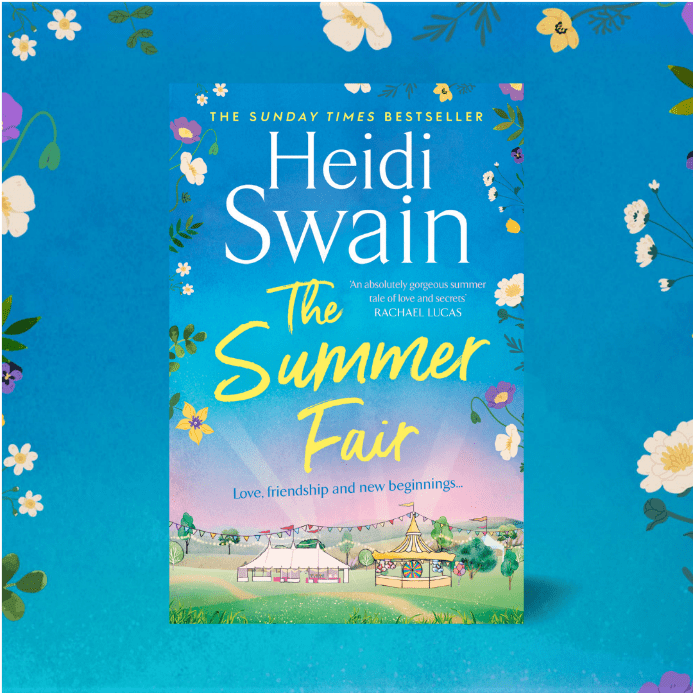
The Summer Fair

Join Sunday Times bestseller Heidi Swain back in Nightingale Square for a sunshine and celebration filled summer…

Beth loves her job working in a care home, looking after its elderly residents, but she doesn’t love the cramped and dirty house-share she currently lives in. So, when she gets the opportunity to move to Nightingale Square, sharing a house with the lovely Eli, she jumps at the chance.

The community at Nightingale Square welcomes Beth with open arms, and when she needs help to organise a fundraiser for the care home they rally round. Then she discovers The Arches, a local creative arts centre, has closed and the venture to replace it needs their help too – but this opens old wounds and past secrets for Beth.

Music was always an important part of her life, but now she has closed the door on all that. Will her friends at the care home and the people of Nightingale Square help her find a way to learn to love it once more…?

My Review of The Summer Fair

Beth needs a fresh start.

Heidi Swain has done it again! The Summer Fair is filled to the brim with love, community and belonging in all their forms so that it’s a book to soothe the soul and gladden the heart.

It doesn’t matter whether a reader has met some of the characters in Nightingale Square before, or is encountering them for the first time, as this lovely, lovely story works beautifully either way. I loved being reminded of those like Harold whom I’ve met before, but equally it felt wonderful to discover new folk like Beth and Eli.

The story bubbles along with events that illustrate how we are very often our own worst enemies. Of course there will be a happy ending – this IS Heidi Swain – but the journey to that ending is a real delight to read. There’s humour, frustration and a depth of emotion I found extremely effective.

Beth works so well as a character because she is highly relatable. She’s by no means perfect and can be occasionally sharp or unkind, so that when she atones, the story becomes all the more engaging. Her history illustrates just how we can let ourselves be shaped by events beyond our control, but Heidi Swain shows the reader, through Beth and the cast of the Edith Cavell Care Home, that we don’t have to tolerate the status quo and set our dreams aside regardless of our age. Indeed, one of the triumphs of this book is the older characters who are vivid, real and distinct so that they have true status in the story rather than being an adjunct to the narrative.

Both Eli and Pete feel authentic and true too so that I was desperate for them to be happy every bit as much as I wanted Beth to find her true role in life. What Heidi Swain does so brilliantly in her writing is to make the reader care about the people in her stories and The Summer Fair is no exception.

I adored the themes too. Whilst the narrative of The Summer Fair is uplifting in its own right, music, crafts, gardening, animals and friendship are presented as effective reminders that our mental health can be improved in simple ways. Equally important is the understanding that we deserve a life after those we love are no longer with us and that to find happiness and use our talents is not a betrayal. I can imagine readers being helped emotionally as well as being royally entertained by The Summer Fair.

If, to quote a certain playwright, music be the food of love, then Heidi Swain has given us a banquet in The Summer Fair. I loved it.

About Heidi Swain

heidi-swain-576635598

Heidi lives in beautiful Norfolk with her family and a mischievous cat called Storm. She is passionate about gardening, the countryside, collecting vintage paraphernalia and reading. Her TBR pile is always out of control!

You can follow Heidi on Twitter @Heidi_Swain and visit her blog or website. You’ll also find Heidi on Facebook and Instagram.

There’s more with these other bloggers too:

A Publication Day Extract from Dead in the Water by Mark Ellis

I am delighted to share a publication ay extract from Mark Ellis’s Dead in the Water today, not least because I have heard such good things about Mark’s writing but I’ve never had chance to fit in reading him. Today’s extract has made me want to rectify that situation as soon as I can. My thanks to the folk at Midas PR for sending it my way!

Dead In The Water is the fifth book in the acclaimed DCI Frank Merlin historical detective series and can be read as a standalone. The third novel in the series, Merlin at War, was on the CWA Historical Dagger Longlist in 2018.

Published by Headline imprint Access today, 19th May 2022, Dead in the Water is available for purchase through the links here.

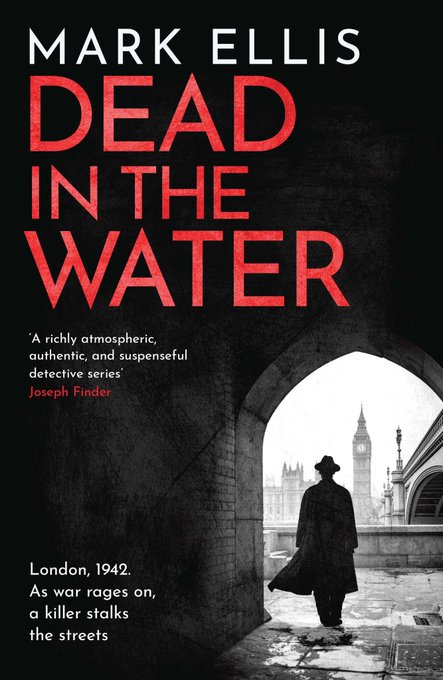
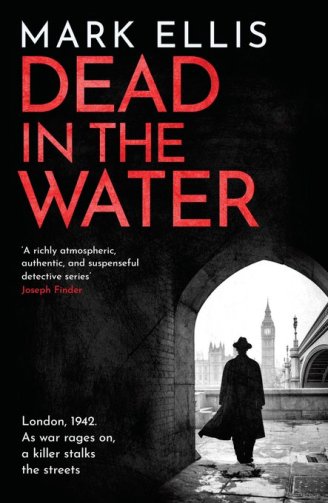
Dead in the Water
Summer, 1942.
The Second World War rages on but Britain now faces the Nazi threat with America at its side.

In a bombed-out London swarming with gangsters and spies, DCI Frank Merlin continues his battle against rampant wartime crime. A mangled body is found in the Thames just as some items of priceless art go mysteriously missing. What sinister connection links the two?

Merlin and his team follow a twisting trail of secrets and lies as they investigate a baffling and deadly puzzle .

An Extract from Dead in the Water

Prologue

November 1938

Vienna

The apartment was in a fashionable residential building just off the Ringstrasse, the grand boulevard that encircled the centre of Austria’s capital. Daniel was the fourth head of the Katz family to live there. Samuel Katz, his ​great-grandfather​ and founder of the eponymous family bank, had been the first. Daniel’s wife Esther and the younger of their four children, Sarah and Rachel, shared the apartment with him. His son and older daughter were away studying at the Sorbonne in Paris.

Daniel had taken over the running of the bank in 1920, after the sudden death of his father. Under his assured management, it had weathered the economic storms of the twenties and early thirties and had emerged as one of the soundest finance houses in Vienna. All should have been good in the Katz world. It was not. For the Katzes were Jews, and since March, Adolf Hitler had ruled their country. Daniel’s younger brother, Benjamin, had been quick to sniff the wind years before, when Hitler had first come to power in Germany. He had moved to London, where he had rap-idly built up his own successful financial business. He had pestered Daniel for years to follow him, but Daniel had stubbornly resisted. An eternal optimist, he continued to believe, against all the evidence, that Hitler would make allowances for Jews who had brains and skills to offer society. The German annexation of Austria had at last put paid to this optimism. It was now crystal clear that all Jews, clever or not, were to be pariahs. The authorities had begun to strip him of his business interests. There was no prospect of escape, and it had become only a matter of time before everything was lost.

Now, on this fine autumn morning, that time had come. The family was breakfasting together in the dining room. The servants had long gone, and mother and daughters had prepared the meal. A letter had just arrived from their son, Nathan, and Esther was reading it aloud. As she turned to the final page, there was a sudden fierce pounding at the door, and a voice screamed, ‘Open up, Jewish scum!’

Daniel hurried to the hallway to see the front door already splintering under the pounding of rifle butts. Snarling soldiers pushed through. One of them dragged him down the corridor to where his petrified wife and daughters were cowering.

‘I am Sergeant Vogel. You will all do as you are told. Where is your sitting room?’

Daniel inclined his head to the left. ‘Second on the right. But . . . what is this about? This is a private dwelling. On what grounds . . .’

The sergeant struck him hard on his right cheek. ‘Shut up and move along.’

‘But gentlemen, please. You have no right. I must ask you to leave.’

The sergeant smiled and looked at his men. ‘Gentlemen, eh? Very polite, ain’t he, lads?’ He waved his gun. ‘Move.’

The party entered the larger of the apartment’s two parlours. Vogel, a fat man with the purple nose of a serious drinker, had a quick look round, then instructed the other soldiers to search the rest of the flat. He turned his attention back to the family. ‘Every-one get over there by the window.’

They did as they were told. Looking down into the street,

Daniel saw a fleet of military vehicles. ‘May I ask what is happening?’

The sergeant grinned. ‘What is happening is that we are taking some of you rich Viennese Jews on a nice little vacation. We’ve got a holiday camp waiting for you, a place called Mauthausen. You’ll love it.’ He moved to the window and looked down himself at the action on the street. He emitted a satisfied grunt, then turned his attention to the girls. ‘You have two fine​-looking​ daughters, Katz. I think I might steal a kiss before we go. Maybe a little more. What do you think, eh, my lovelies?’ Sarah cringed as he reached out to touch her. Then a peremptory voice sounded.

‘Vogel! What the hell are you doing?’

Another soldier was at the door. A younger man than Vogel but apparently of higher rank. His collar sported the insignia of the SS.

The sergeant stepped back. ‘I was just . . . just about to start searching everyone, sir.’

‘Starting with the prettiest, I see.’ The officer considered for a moment. ‘You may check to see if Herr Katz is armed, but I think it unnecessary to search the ladies.’

A clearly disappointed Vogel nodded and frisked Daniel roughly. ‘He’s clean, sir.’

The SS officer flashed a shark​-like​ smile. ‘I’m forgetting my manners, Herr Katz. My name is Spitzen. Colonel Ferdinand Spitzen. Heil Hitler.’ His hand rose in more of a wave than a salute. ‘What a ​fine-​looking family you have, Herr Katz.’ He stared at the women for a moment, then looked down at his highly polished boots. ‘Such a pity.’

‘I beg your pardon, Colonel?’

Spitzen’s face darkened. ‘You may beg my pardon indeed, Herr Katz. However, it will sadly not be forthcoming. The time has come for Jews to pay the price for the crimes of their race.’ He turned back to Vogel. ‘Go and see how the others are getting on. Make sure no one damages anything, or there’ll be hell to pay. Understand?’

‘Yes, sir.’ The sergeant disappeared into the corridor and the colonel began to walk around the room, voicing his admiration for the paintings, the opulent furniture and the numerous fine objets d’art dotted all around. Eventually he settled himself in a large leather armchair by the fireplace. ‘So, Herr Katz. You will not be surprised to know, I’m sure, that the Reich has a full file on your long career as a crooked Jewish banker.’ He flicked a speck of dirt from his trousers. ‘Have you anything to say?’

‘I have been a straight and honest businessman all my life. I do not recognise your description.’

After considering this reply for a moment, Spitzen eased him-self to his feet, strolled over to Daniel and punched him hard in the face. Daniel collapsed to the floor, blood spurting from his nose. Esther and his daughters burst out crying, and rushed to help him to his feet.

‘You lie, Katz!’ shouted the colonel. ‘You and your race have connived for years to defraud the great German people. The Füh-rer has now, thankfully, decided to put a halt to this abuse once and for all. Justice will be served.’ He returned to his chair. ‘As it happens, the name of Daniel Katz is surprisingly well known among the ruling circles of the Reich. Not because of your crim-inality, but for another reason. You are something of an art collector, are you not?’

Daniel realised for the first time that his tie had come loose. He attempted to retie it, but found that his hands were shaking too much. He shrugged.

‘We were under the impression that the greatest pieces in the collection were kept in your headquarter offices in Schottengasse. However, when we searched them, we did not find what we were looking for.’ Spitzen glanced around the room. ‘I see some attractive paintings here, but, unless I’m very much mistaken, these are again lesser works. Am I mistaken?’

Vogel appeared at the door before Daniel could answer.

‘Yes, Sergeant?’ Spitzen said irritably.

‘We’ve found a lot of stuff. Paintings, drawings, sculptures, ornaments. Some jewellery in the bedrooms. Oh, and a safe that needs opening.’

‘What about those particular items I listed for you?’ ‘Haven’t found them yet.’

Spitzen frowned, then turned back to Daniel. ‘You will open the safe for Sergeant Vogel. And you will show him any other hid-den safes or receptacles for items of value in the flat. Don’t bother trying to conceal anything. There is no point. Once you are out of here, everything will be pulled apart.’

Daniel closed his eyes, then nodded.

‘I have what I believe to be a comprehensive list of the finest works in your collection. If they are not here, you must tell me where they are.’

‘I . . . I sent some works abroad.’

‘There is no record of transfer in official export records.’ ‘I did not . . . did not use official channels.’

‘I see. Yet another crime to be added to your long list. It may interest you to know that we’ve already had valuable assistance from some of your employees. According to them, you have stored a good portion of your collection in this country. They remember items being packed and dispatched to Austrian destinations. Unfortunately, there is no written record of these destinations. No doubt if I put a team on the matter they will track the works down, but things might go a little better for you and your family if you provide the addresses now.’

Daniel glanced nervously at his wife but said nothing.

Spitzen indicated the two girls. ‘You know, I made a point of protecting your daughters earlier.’ The ​shark-​like smile reap-peared. ‘Such protection could easily be removed.’

With a look of despair, Daniel conceded. ‘All right, all right. I’ll tell you.’

‘How sensible of you. Vogel, find Herr Katz a pen and paper.’

About Mark Ellis

Mark Ellis is a thriller writer from Swansea and a former barrister and entrepreneur. He grew up under the shadow of his parents’ experience of the Second World War. His father served in the wartime navy and died a young man. His mother told him stories of watching the heavy bombardment of Swansea from the safe vantage point of a hill in Llanelli, and of attending tea dances in wartime London under the bombs and doodlebugs.

In consequence Mark has always been fascinated by WW2 and in particular the Home Front and the fact that while the nation was engaged in a heroic endeavour, crime flourished. Murder, robbery, theft, rape and corruption were rife. This was an intriguing, harsh and cruel world – the world of DCI Frank Merlin. Mark Ellis is a member of several writers organisations including the Crime Writers’ Association and Crime Cymru. The third novel in his historical detective series, Merlin at War, was on the CWA Historical Dagger Longlist in 2018.

For further information, follow Mark on Instagram, Facebook or Twitter @MarkEllis15 and visit his website.

There’s more with these other bloggers too:

Tackling Difficult Subjects Through Fiction: A Guest Post by Louise Fein, Author of The Hidden Child

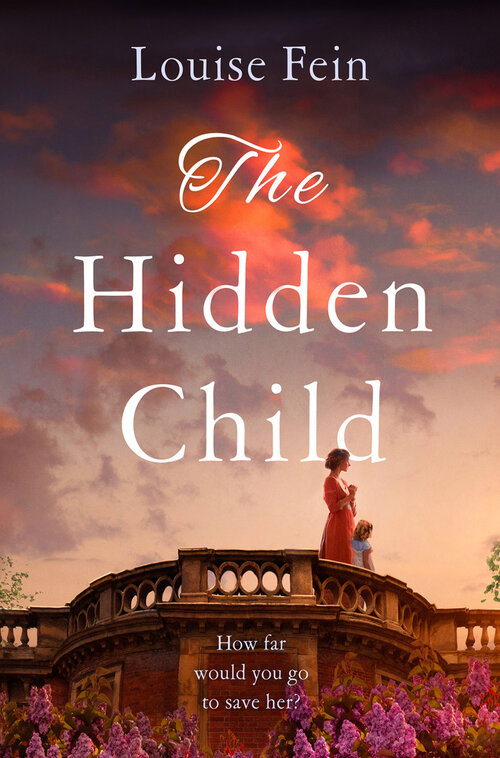
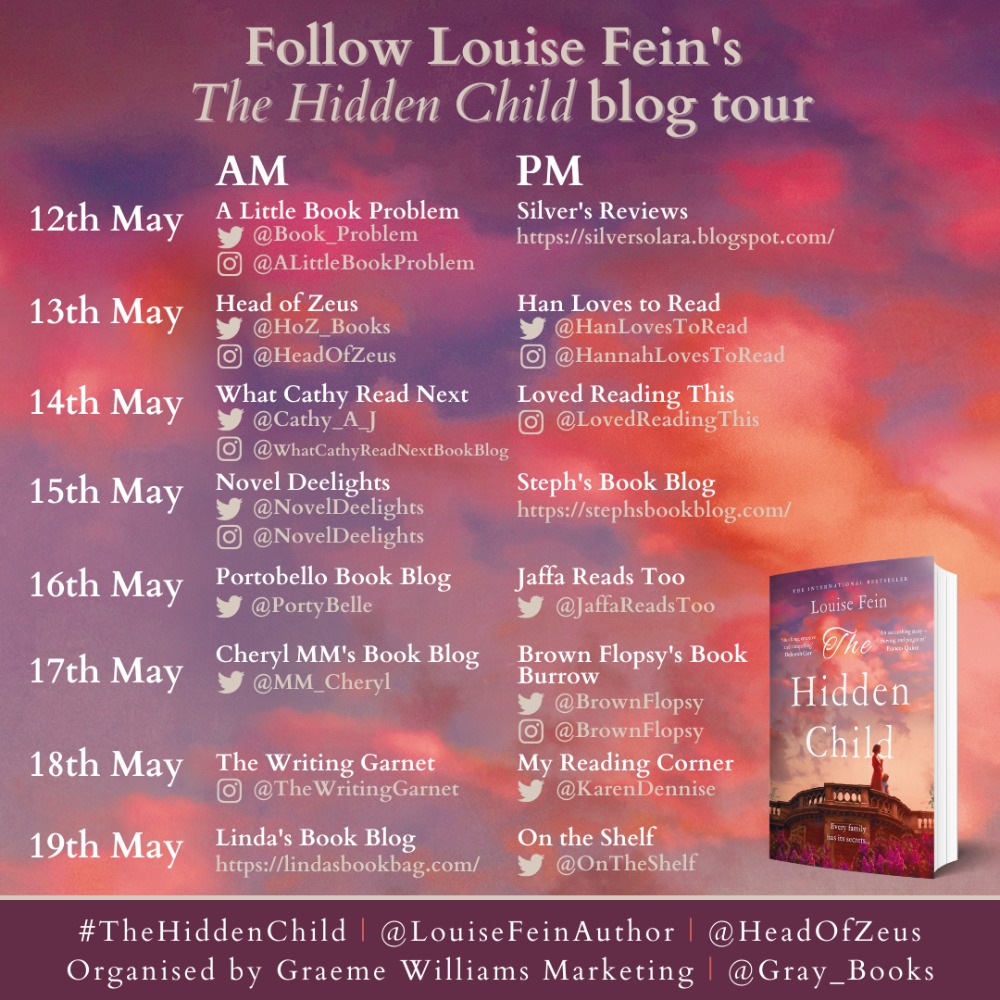
I cannot express how much Louise Fein’s The Hidden Child is calling to me from my TBR and I’m thrilled to have been invited to participate in the blog tour. My huge thanks to Graeme Williams for that invitation. It’s a real privilege to host a guest post from Louise today.

Just released in paperback by Head of Zeus on 12th May 2022, The Hidden Child is available for purchase in all good bookshops, online and directly through the publisher here.

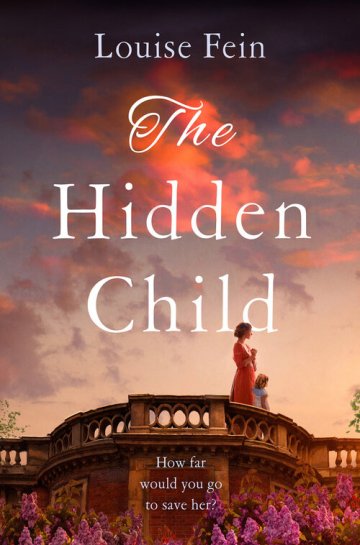
The Hidden Child

From the outside, Eleanor and Edward Hamilton have the perfect life, but they’re harbouring a secret that threatens to fracture their entire world.

London, 1929.

Eleanor Hamilton is a dutiful mother, a caring sister and an adoring wife to a celebrated war hero. Her husband, Edward, is a pioneer in the eugenics movement. The Hamiltons are on the social rise, and it looks as though their future is bright.

When Mabel, their young daughter, begins to develop debilitating seizures, they have to face an uncomfortable truth: Mabel has epilepsy – one of the ‘undesirable’ conditions that Edward campaigns against.

Forced to hide their daughter away so as to not jeopardise Edward’s life’s work, the couple must confront the truth of their past – and the secrets that have been buried.

****

Tackling difficult subjects through fiction

A Guest Post by Louise Fein

I believe that all characters in novels must be a product of their time. So, as a writer of historical fiction, they should not have ideas or values which reflect those of today, and for that reason might be considered ‘difficult’. Of course, there must be balance, or there is a risk of completely alienating a modern readership with very unpalatable viewpoints. I feel I have a duty to be as authentic and true to the times I write in as possible, which does mean tackling difficult subjects. For me it is a matter of integrity – whitewashing, glorifying or romanticising the past means we can’t properly understand the present or learn from it for the future. It means we yearn for a false history which never existed. That said, I am writing fiction where the story is the most important element to what I’m writing, so liberties are of course taken, characters and situations invented. However, I hope that the overall sentiments, values and flavour of the novels I write, remain historically authentic.

The Hidden Child is set in the late 1920’s. I chose that period for a few reasons. It was a time of great social and economic change. Often the 1920’s are portrayed as the ‘roaring’ twenties – a time of freedom and excess after the war years. But for many ordinary people, the ‘20’s were a time of deprivation and hardship, and also great uncertainty. The rise of the working classes, liberation of women and the wide circulation of thoughts and ideas which questioned the very basis of capitalism and democracy, brought fear to the ruling and moneyed classes. All around the world was the rise of autocracy and the planned economy. Fear of the demise of democracy, freedom and a certain way of life drove rhetoric for extreme measures to be taken to protect them, albeit rhetoric based on false premises. Premises such as eugenics, a topic dealt with in The Hidden Child.

Within The Hidden Child are some ideas and views which today’s reader may find reprehensible. I don’t shy away from writing about these because however much we would like to think times have changed, human nature has not, and the legacy of these ideas linger on, not only in far-away countries, but right here at home. I think to have a healthy society, we need to understand where ideas come from, what drives people to think and behave as they do. I believe this is always at the heart of what I write. This can make for, at times, uncomfortable reading. I am, however, ultimately an optimist for the better part of human nature to shine through in the end, and this is also reflected in my fictional worlds. There is always hope, always good. In both The Hidden Child, and my debut novel, People Like Us, I chose to tell my stories from the points of view of those who hold views so contrary to my own. I always seek to understand why people might believe such things, and ultimately, what might drive them to think differently.

Tackling difficult subjects through fiction is an ideal way to do so. I believe fiction has a unique power to engage widely with people. It is its ability to emotionally draw a reader in and to have them walk side-by-side with characters, completely immersed in their world which gives it that power. Novels are an incredibly flexible tool enabling the writer to take a set of facts and fill the gaps with fiction which can take readers to literally any time or place. This is what I love about reading, and writing. To learn something of the world, of human nature and ideally, how we can all be more compassionate towards each other. I don’t think any subject should be off-limits for fiction. Tackled in the right way, with humanity and understanding, novels can be the perfect forum for exploring and engendering discussion.

****

That is absolutely fantastic Louise, thank you. I couldn’t agree more. I’m so looking forward to reading The Hidden Child and would like to thank you for this wonderful guest post.

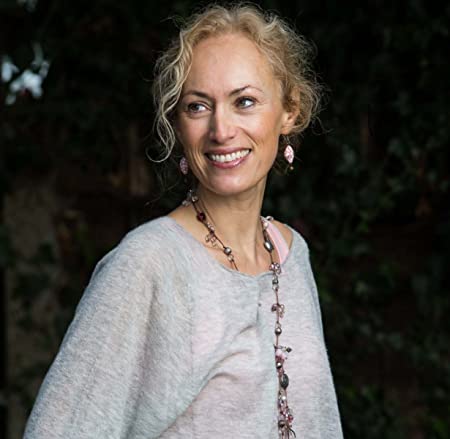
About Louise Fein

Louise Fein was born and brought up in London. She harboured a secret love of writing from a young age, preferring to live in her imagination than the real world. After a law degree, Louise worked in Hong Kong and Australia, travelling for a while through Asia and North America before settling back to a working life in London. She finally gave in to the urge to write, taking an MA in creative writing, and embarking on her first novel, Daughter of the Reich (named People Like Us in the UK and Commonwealth edition). The novel was inspired by the experience of her father’s family, who escaped from the Nazis and arrived in England as refugees in the 1930’s. Daughter of the Reich/People Like Us is being translated into 11 foreign languages, has been shortlisted for the 2021 RSL Christopher Bland Prize, the RNA Historical Novel of the year Award 2021 and long listed for the Not The Booker Prize 2020.

Louise’s second novel, The Hidden Child, was published in the Autumn of 2021. Louise lives in the beautiful English countryside with her husband, three children, two cats, small dog and the local wildlife who like to make an occasional appearance in the house. Louise is currently working on her third novel.

For further information about Louise, visit her website, follow her on Twitter @FeinLouise and find her on Facebook and Instagram. There’s more with these other bloggers too:

Capital Crime Festival 2022 from @CapitalCrime1

I was so looking forward to attending the launch of Capital Crime 2022 last evening at Goldsboro Books, thanks to a very generous invitation from the lovely folk at FMcM, but sadly a recent bout of Covid has taken the wind out of my sails quite dramatically and I simply didn’t have the energy to make the trip to London from darkest Lincolnshire.

It was back in 2019 when I had the most amazing time at the inaugural Capital Crime festival. You can read about it here.

Now Capital Crime is back for 2022 and although I couldn’t attend the launch, I can tell you all about it:

Capital Crime 2022

Capital Crime launched their 2022 programme with a bang last night at leading independent bookshop, Goldsboro Books, at a party to announce their stellar line up and spectacular new location.

Taking place in the shadow of the iconic Battersea Power Station from 29th September – 1st October 2022, Capital Crime will bring together readers, authors, industry figures and the local community for the first major literary festival held on the site for a weekend of fun, innovation and celebration of crime fiction.

Consisting of over 40 events and over 150 panelists, the line-up will include appearances from Peter James, Kate Mosse, Mark Billingham, Richard Osman, Robert Harris, SA Cosby, Dorothy Koomson, Jeffrey Archer, Anthony Horowitz, Charlie Higson, Jeffery Deaver, Lucy Foley, Bella Mackie, Ragnar Jónasson, Paula Hawkins, Reverend Richard Coles, Mark Edwards, Claire McGowan, Ben Aaronovitch and Former President of the Supreme Court of the United Kingdom, Judge Lady Hale, in conversation with Harriet Tyce. Their full schedule of innovative panel talks will be announced later in the summer.

As part of the live festival this year, Capital Crime’s Social Outreach Initiative will be returning for a third year with the aim to create an inclusive, safe space where state school students with an interest in books can engage with authors, agents, editors and publishers to help demystify the publishing industry.

The festival will also be launching the coveted Fingerprint Awards, which celebrate the best in genre, as chosen by readers. In 2022 the Fingerprints will present eight awards as well as a prestigious lifetime achievement award.

Co-founded by David Headley, the owner of one of London’s destination bookshops, which attracts visitors from all over the world, Capital Crime 2022 will serve as a major London attraction, following the regeneration of the local Battersea area and improved transport links. Festival Founder, David Headley, said: “I am so delighted that Goldsboro Books and Capital Crime, along with our valued festival sponsors, will be working in partnership this year to bring a bigger and better live celebration of crime fiction back to London. We were so proud of what we achieved at our inaugural festival, and look forward to welcoming authors and readers to our new, exciting venue.”

Festival Director, Lizzie Curle, said: “After what’s been an emotional few years, we are so grateful to our readers, authors and sponsors for their support, and are thrilled to be reuniting household name authors, new voices in fiction and their fans at our new home in Battersea Park. Though this Capital Crime event may look a little different from the outside; diversity, inclusivity and accessibility remain at the heart of our festival. We can’t wait to celebrate the best genre in the world, and hope everyone will agree it’s been worth the wait.”

With diversity, accessibility, inclusivity and readers at the heart of the festival, Capital Crime this year will take place in a series of large stretch-tented venues for multiple panel events, signing area, a stunning bar area central to the festival, a pop up Goldsboro Books bookshop in the iconic Pump House Gallery, and an array of London’s tastiest street food traders.

***

Weekend and Day Passes are available from the Capital Crime website.

***

About Capital Crime

Founded by bookseller, agent and publisher, David Headley, and author Adam Hamdy, Capital Crime is a new crime and thriller festival located in London. Built around the reader, Capital Crime is modelled on the extremely successful mass participation, multimedia conventions that engage and delight audiences in new and innovative ways. Capital Crime is committed to producing an inclusive, welcoming festival that will deliver something for everyone.

You can find out more on Twitter @CapitalCrime1, on the Capital Crime website and on Instagram.

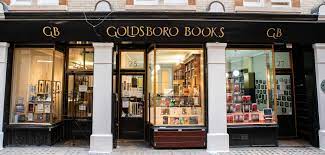
About Goldsboro Books

Goldsboro Books is an independent bookshop, based in central London, specialising in signed first edition books. Providing an expert, knowledgeable team and a carefully curated range is at the heart of the business, delivering the best book-buying experience for every customer. Goldsboro Books aims to interest and inspire book lovers, readers and collectors and provide the finest quality signed books in the world.

Goldsboro Books was founded in 1999 by two friends and book collectors, David Headley and Daniel Gedeon. Their reputation for spotting quality books early on, an expert eye on the future collectibles, along with enthusiasm and passion for bookselling excellence has grown with the business and Goldsboro Books has become a world-famous and much admired bookshop. Their global reputation grew in 2013 when they were the only bookshop in the world to have signed copies of The Cuckoo’s Calling by Robert Galbraith, who of course turned out to be none other than J.K. Rowling.

For further information about Goldsboro Books, please visit their website or follow them on Twitter @GoldsboroBooks.

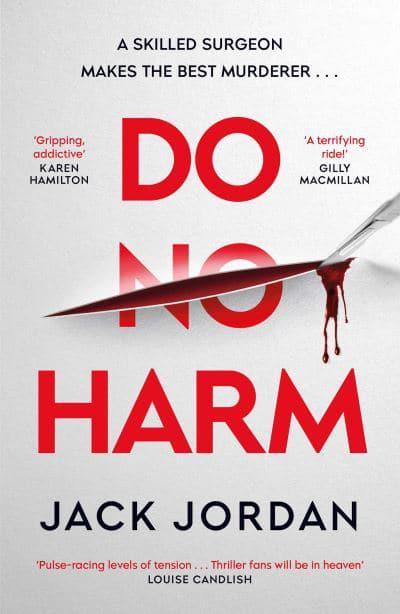
Do No Harm by Jack Jordan

I love Jack Jordan’s writing and can’t believe how long it is since I read one of his books. Consequently I’m delighted that Jack’s lbrand new thriller Do No Harm is my latest online My Weekly magazine review.

Shortly after I began blogging in 2015 I reviewed Jack’s Anything for Her in a post you’ll find here. I also reviewed My Girl here. and helped to reveal Jack’s Before Her Eyes here.

Do No Harm is published by Simon and Schuster on 26th May and is available through the links here.

Do No Harm

My child has been taken. And I’ve been given a choice…
Kill a patient on the operating table. Or never see my son again.

The man lies on the table in front of me.
As a surgeon, it’s my job to save him.
As a mother, I know I must kill him.
You might think that I’m a monster.
But there really is only one choice.
I must get away with murder.
Or I will never see my son again.

I’VE SAVED MANY LIVES.
WOULD YOU TRUST ME WITH YOURS?

My Review of Do No Harm

My full review of Do No Harm can be found on the My Weekly website here.

However, here I can say that Do No Harm is classic Jack Jordan. Fast paced, exciting and a thumpingly good read with layers of depth that make it all the more engaging and thought provoking. I loved every moment of it.

Do visit My Weekly to read my full review here.

About Jack Jordan

Jack Jordan is the global number one bestselling author of Anything for Her (2015), My Girl (2016), A Woman Scorned (2018), and Before Her Eyes (2018).

To find out more about Jack, enter numerous annual giveaways to win signed copies of his books, and be one of the first to hear of new book releases and news, follow him Jack on Facebook, Twitter @JackJordanBooks and Instagram.

Staying in with Caron McKinlay

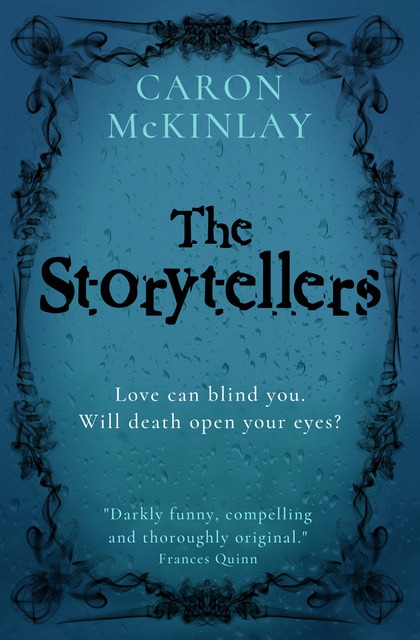
It’s only fairly recently that I have ‘met’ Caron McKinlay online, but I’ve already discovered what a lovely person she is and I am thrilled to welcome her to Linda’s Book Bag today to tell me all about her debut novel. Let’s find out what she had to say.

Staying in with Caron McKinlay

Welcome to Linda’s Book Bag Caron and thank you for agreeing to stay in with me.

Tell me, which of your books have you brought along to share this evening and why have you chosen it?

Thank you for inviting me, I am so happy to join you, I’ve been following your social media posts and reviews for ages now.  They are always so brilliant, and I have found so many new authors through reading them. I have brought along my debut book The Storytellers.

That’s really lovely of you to say. I’m so glad you enjoy my reviews. So, tell me, what can we expect from an evening in with The Storytellers?

The Storytellers has been described as The Midnight Library meets Mhairi McFarlane and I am delighted with that vibe. Set in real life and the afterlife it has a speculative edge and a feminist thread. And it deals with the themes of grief, love, identity and esteem.

Crikey. That’s some elevator pitch. Tell me more.

So expect and evening of romance, humour and mystery. A few early readers said they laughed out loud at some points, and I hope we can find something to smile about too. All three women have different senses of humour so hopefully at least one of them will resonate with you.

Three women?

Ronnie is focused on her teaching career but will do anything to snare Graham even if that means pushing past her sexual boundaries. Nikki is fed up with downing sambuca and one night stands in Blackpool and wants true love and a white picket fence. Mrs Hawthorne is grieving but when she meets Charles who is a lonely widow something sparks between them.

But as the sun sets and the evening progresses, the book gets darker. Expect swearing, threesomes, and death.  Perhaps it’s time to for a glass of red wine before we meet The Gatekeeper who will reveal the women’s fates? None of the women really like him and I don’t think he will fare any better with us. But then I’m not sure how I would react if some stranger told me I was dead too.

Well quite! I can’t imagine it would be the best news! I’m not sure about a glass of wine. I’m beginning to think I might need something stronger for an evening in with The Storytellers!

Although the narrative deals with three women and their toxic relationships with men – the story itself is uplifting. One early reader said it was like getting a message from the Fairy Godmother she didn’t know she needed. And Francis Quinn said she was so engrossed she missed her stop on the train!

That’s a brilliant response. You must be thrilled Caron.

It is such an exciting and scary thing to put your heart out into the world so I do hope when its published on May 16th that readers enjoy it too, it means a lot to me.

I’ve been hearing VERY good things about The Storytellers. A slightly belated happy publication day and many congratulations. What else have you brought along and why have you brought it?

I’ve brought along V E Schwab to persuade her to sit and read my book – there wouldn’t be any other way I could get it to her! I absolutely adored The Invisible Life of Addie LaRue and although I don’t have her talent, I would still love to hear her thoughts on mine.

I’m sure we can persuade her!

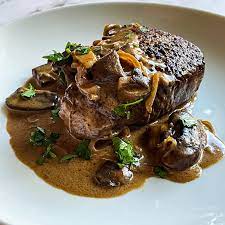
But since that is an impossible feat. I have brought along my favourite dinner for us. I’m probably showing my age as its quite an eighties thing. But I hope you enjoy Steak Diane. The question is of course do you want these potatoes made into mash or chips to accompany it?

Chips of course!

And don’t forget the coconut rum, pineapple and cream for our Pina Coladas. On top of the red wine and rich food I think we might fall asleep on the sofa. Or do you think we might make last drinks at the pub? I’m game if you are?

Oo. Let’s have a Pina Colada here and then head to the pub. You never know, we might meet our own Graham and Charles! Thanks so much for staying in with me to chat about The Storytellers Caron. I’ve really enjoyed it and am delighted I have a copy to read just as soon as I can. Now, you mix the cocktails and I’ll give readers a few more details about the book:

The Storytellers

Trapped between life and the afterlife, three women meet and share their stories while discovering the truth about the men in their lives—and about themselves.

Suspended in an eerie state of limbo, an entity called the Gatekeeper tells Nikki, Ronnie, and Mrs. Hawthorne they are on the cusp of entering the afterlife—but only if the women can persuade him that in their earthly lives, they knew the meaning of love.

Fragments of their memories return, plunging them back into their pasts, and forcing them to face the desires, disappointments, addictions, lies, and obsessions they battled in life.

But before time runs out, will they find the answer to the ultimate question: what is love?

The Storytellers was published on 16th May 2022 by Bloodhound and is available for purchase on Amazon UK, Amazon US, Barnes and Noble and Kobo.

About Caron Mckinlay

Caron grew up in a mining town on the east coast of Scotland where her dad would return from the pit and fill her life with his tall tales and encourage her to tell her own. Despite this, she never thought about making a career in writing – that was what posh people did, not someone from a working-class council estate.

After living in Italy for a while and the birth of her daughters, she became a teacher and taught in various secondary schools before becoming a headteacher in Merseyside.

However, her father’s death came as a shock and was the cause of deep introspection but her emotions gave birth to a short story, Cash, which was published in the Scottish Book Trust’s anthology, Blether. A second chance at love also spurred an early retirement and a move to Edinburgh where she lives happily with her husband.

When not blogging, reading, and writing, Caron spends her time supporting her daughters, Francesca and Paola, who fill her with pride and joy. She doesn’t enjoy exercise – but loves running around after her grandsons, Lyle and Noah, to whom she is devoted.

Caron had three childhood dreams in life: to become a published author, to become a teacher, and for David Essex to fall in love with her. Two out of three ain’t bad, and she’s delighted with that.

​Caron is often hanging around on social media and she loves to hear from readers so please feel free to contact her.

You’ll find all Caron’s links here, but for further information, visit her website, find her on Facebook and follow her on Twitter @CaronMcKinlay and Instagram.

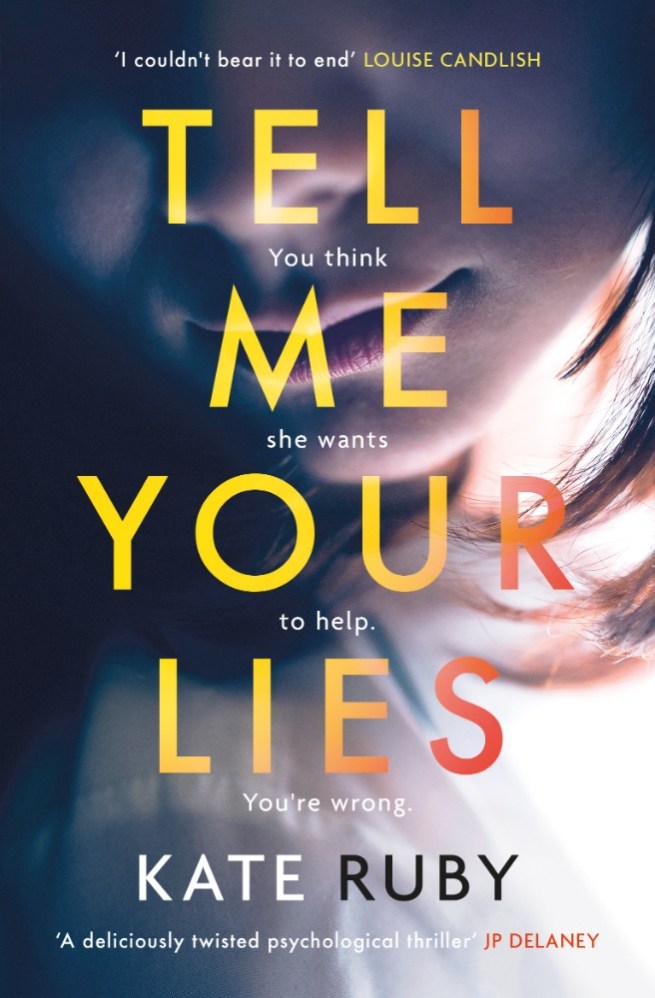
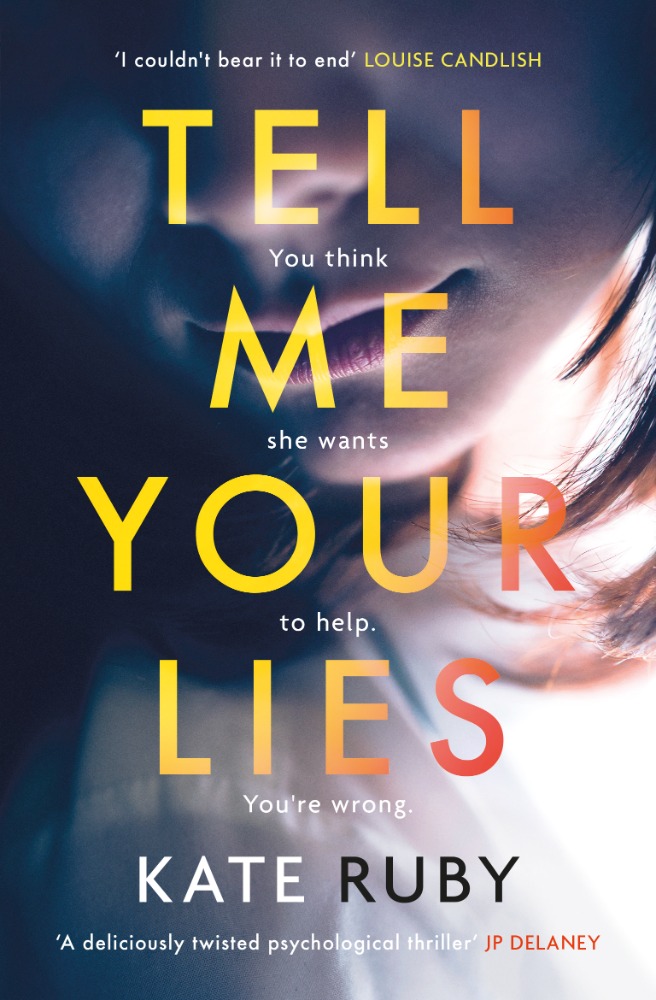
Tell Me Your Lies by Kate Ruby

I’ve had Tell Me Your Lies by Kate Ruby calling to me from my TBR for many months and I was delighted to be invited onto the blog tour for it by the folk at Midas PR. It’s a real pleasure to share my review of Tell Me Your Lies today.

Tell Me Your Lies was published by Simon & Schuster on 28th April 2022 and is available for purchase through the links here.

Tell Me Your Lies

You think she wants to help.
You’re wrong.

Lily Appleby will do anything to protect the people she loves. She’s made ruthless choices to make sure their secrets stay buried, and she’s not going to stop now.

When her party-animal daughter, Rachel, spins out of control, Lily hires a renowned therapist and healer to help her. Amber is the skilled and intuitive confidante that Rachel desperately needs. But as Rachel falls increasingly under Amber’s spell, she begins to turn against her parents, and Lily grows suspicious.

Does Amber really have Rachel’s best interests at heart or is there something darker going on? Only one thing is clear: Rachel is being lied to. Never quite knowing who to believe, her search for the truth will reveal her picture-perfect family as anything but flawless.

Loosely based on a true story, this is perfect for fans of Sabine Durrant, Teresa Driscoll and Kate Riordan – the perfect read to be devoured in one sitting, bursting with tension, layered characters and relationships which are never as simple as they first seem . . . 

My Review of Tell Me Your Lies

Rachel needs help.

I’m not sure I’d call Tell Me Your Lies a psychological thriller, as I didn’t find it a fast-paced read that left my heart thumping. In essence the plot is about a young woman, Rachel, with an addictive personality whose family, and her mother Lily in particular, pay Amber to assist. It is also, however, much, much more than that and a magnificent psychological insight that is truly compelling. I thought it was a cracking read.

There’s a malevolent undertone from the very first page of Tell Me Your Lies that makes the reader wonder just what kind of narrative they are going to get. Kate Ruby drips hints like poison so that the reader becomes intoxicated with wanting to find out what happens. The first person voices of Lily and Rachel and the final chapter have the effect of making the reader feel they are part of the process. They are involved in the conversations and the plot every bit as much as the characters. Even the chapter endings are like mini barbs, hooking in the reader still further. What worked so brilliantly for me was that I simply didn’t predict the final outcomes and I have a feeling that I’ve been manipulated by the author every bit as effectively as the characters manipulate each other. This is such skilled writing.

I loathed all three main women but my goodness I found them fascinating; from the self-destructive Rachel through the controlling, domineering Lily to the too-good-to-be-true Amber, there’s a veracity, a universality, that feels absolutely right. The fact that Tell Me Your Lies is loosely based on a real life Amber makes the toxic dynamics all the more interesting. Indeed, Amber is the perfect name for her character as, just as insects become trapped in natural amber, this Amber traps others in her thrall, increasing their vulnerability and suggestibility. That said, the pronouns of the title could relate to any of the three women. At no point is it entirely clear just who is telling whom the lies. Every single one – Rachel, Lily, Amber – is so wonderfully flawed and mesmerising.

Dripping with vitriol, deception and truth, Tell Me Your Lies is a cracking read. It’s about control, coercion, nature and nurture and the lies we tell ourselves. Kate Ruby creates truly toxic family dynamics that leave the reader reeling. It’s uncomfortable to read and yet it doesn’t let the reader put it down. I thought it was fabulous.

About Kate Ruby

Kate Ruby is a producer and screenwriter, with a highflying career in television. Tell Me Your Lies, a psychological thriller, is her debut novel and is currently in development for a major TV show. As an executive producer for drama, she spent a decade at the BBC, working on shows including Spooks and Being Human. Currently Head of Television for a global production company, she has worked on major Netflix shows including Watership Down, Traitors and The English Game. She has recently worked on the BBC/HBO adaptation of JP Delaney’s bestselling thriller The Girl Before, starring Gugu Mbatha Raw and David Oyelowo.

For further information, follow Kate on Twitter @katerubybooks.

There’s more with these other bloggers too:

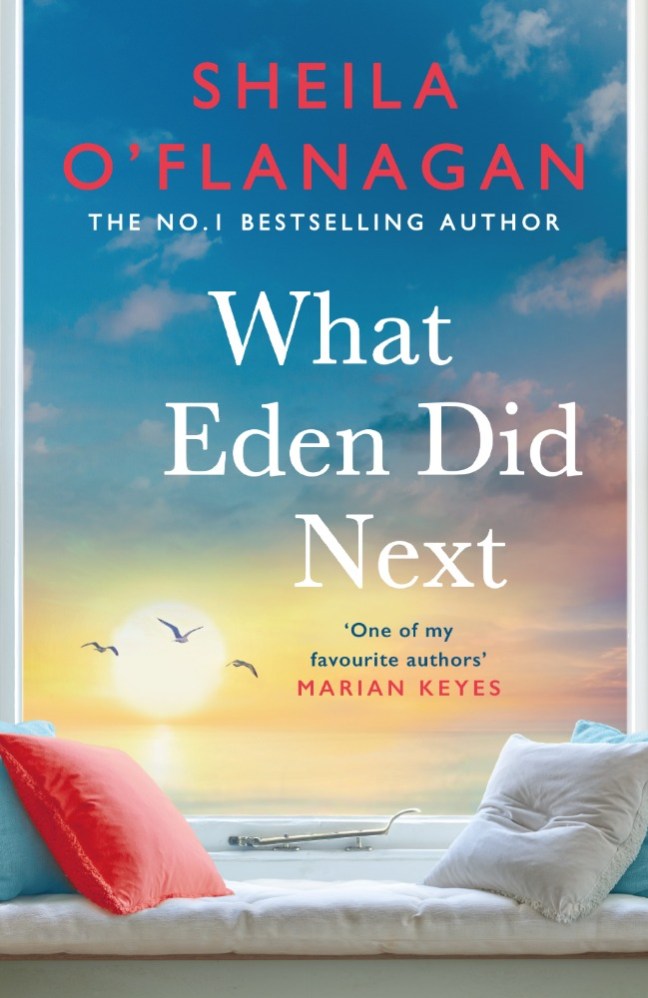
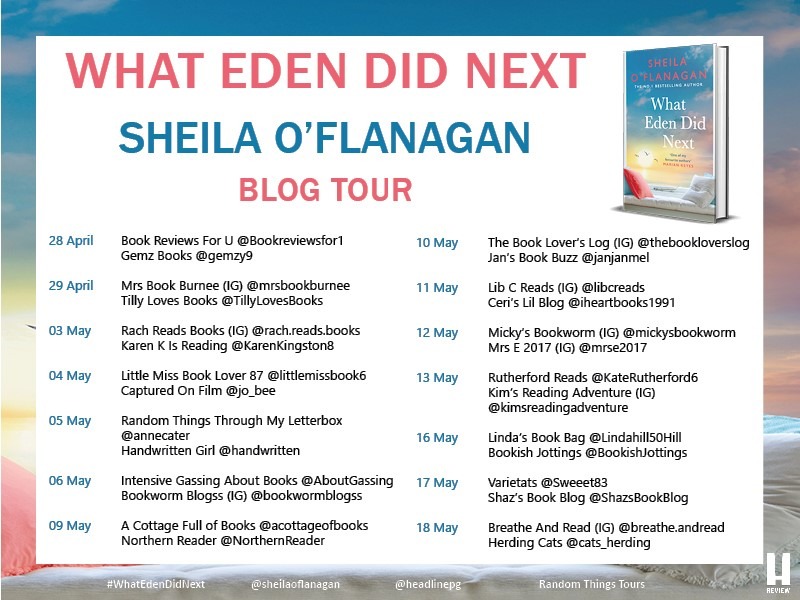
What Eden Did Next by Sheila O’Flanagan

It’s almost exactly a year since I reviewed the lovely Sheila O’Flanagan’s Three Weddings and a Proposal here on Linda’s Book Bag and I’m thrilled to be able to share my review of Sheila’s latest book What Eden Did Next for the blog tour today. My thanks to Anne Cater of Random Things Tours for inviting me to take part.

Previously when Sheila celebrated the paperback publication day for The Women Who Ran Away, I was delighted to be able to share an extract from the book here.

Sheila and I stayed in together here to chat about Her Husband’s Mistake.

Also on the blog Sheila previously told me all about her inspiration for another of her books My Mother’s Secret in a guest post that you can read here. I reviewed My Mother’s Secret here.

Published by Headline on 28th April 2022, What Eden Did Next is available for purchase through the links here.

What Eden Did Next

Five years after the death of her firefighter husband, Eden knows better than anyone that life can change in an instant. Now, instead of the future she had planned with Andy, she has Lila – the daughter he never got the chance to meet. And instead of Andy, she has his family.

Then Eden meets someone. Someone she knew before Andy, before Lila, before the tragedy. Someone who reminds her of how she used to be. But Andy’s mother has other plans. And Eden is facing an impossible choice. One that could tear a family apart . . .

Honest and emotionally gripping, What Eden Did Next is an irresistible, sometimes heart-breaking, ultimately joyful, novel of love, loss – and finding your own way to happiness.

My Review of What Eden Did Next

If you’re looking for a fast paced, twisty Adrenalin packed read, find something else. If, however, you want a story that speaks to the heart and soul of who we really are, that understands grief, and loss, and hope, and leaves you totally satisfied as you finish reading, then What Eden Did Next is exactly what you need. I adored it and might even go so far as to say it is my favourite Sheila O’Flanagan book.

There’s romance and a traditional love story here, but more than that there’s an exploration of love in many forms. Sheila O’Flanagan presents to perfection the ways love can shape us both positively and negatively, how it can consume and overwhelm us, and how it can make us behave totally unselfishly and in the worst ways imaginable. What Eden Did Next also looks at family, community and friendship and makes the reader feel included and heartened.

Whilst there are dramatic moments, the plot is relatively gentle but all the more engaging for being totally realistic. This is because it makes What Eden Did Next feel completely authentic. Eden could be any one of us, making her relatable and striking. I loved meeting her. Equally, I adored Elizabeth for her lightness of touch and her philosophy of making the most of life. I found Valerie all too domineering and frequently wanted to shake the Petras, Michelles and Krystles of the cast so that it really did feel as if I’d met real people. I found all life represented here without cliche or contrivance, but rather this community sparkles and engages in its very normality. I thought this was absolutely wonderful writing.

What Eden Did Next is a glorious insight into the roles women assume in society and the support and pressures families can bring. It’s warm, mature and insightful. I loved it and recommend it unreservedly.

About Sheila O’Flanagan

Sheila O’Flanagan is the author of nearly 30 bestselling novels including Three Weddings and a Proposal, The Women Who Ran Away, Her Husband’s Mistake, The Hideaway, The Missing Wife and All For You (winner of the Irish Independent Popular Fiction Book of the Year Award). She lives in Dublin with her husband.

You can find out more by following Sheila on Twitter @sheilaoflanagan, or finding her on Facebook or Instagram and visiting her website for more details.

There’s more with these other bloggers too:
An Extract from OVERLAND By Richard Kaufmann

Anyone who knows me also knows I adore travel and when I heard that OVERLAND by Richard Kaufmann could take me on my travels without leaving my home I was intrigued. I’m thrilled to have an extract, translated by Rachel Ward, from OVERLAND to share with you today.

Published in March 2022, OVERLAND is available for purchase here.

Overland

Richard Kaufmann once travelled to Morocco, unintentionally with no money, simply because he had set off without any kind of plan. It changed him, and the way he travelled in future. Here, he shares his stories and vision for how we can all holiday in comfort, without wrecking the environment. And we don’t have to take especially long, or go particularly far. We find the most beautiful destinations when we travel overland. Normally we never see them, because we fly right over them.

OVERLAND is a mix of witty travel stories about trips around Europe, to Morocco and Iran just by train or coach and contains thought-provoking essays about slow traveling.

An Extract from OVERLAND

When Time Goes by Like It Does on a Train

Travelling by train means giving up control. We sit down and it carries us away. If sheep wander onto the track, the train comes to a halt and a crew member announces something like: “There is currently a delay of several minutes to our journey, due to technical difficulties.”

Soothing processes such as this give us the certainty that – thanks to dozens of people working behind the scenes – we only have to keep breathing and we’ll get there. There’s a romance to train travel that no other means of transport can beat. Films such as Alfred Hitchcock’s North by Northwest and Wes Anderson’s Darjeeling Limited portray a sophisticated railway lifestyle, where people dress for dinner in the restaurant car as if they’re on their way to the opera. Romances blossom in generous private cabins and the staff are as discreet and refined as if this were a 4-star hotel.

This image is a very long way from reality – that goes without saying. Yet the same romanticism creates an enduring myth that persists (despite the realities) to this day.

People dream of journeys lasting several days: on the Trans-Siberian Railway, for example. Crossing continents by train may seem as nostalgic as the idealised rail journeys of the movies. Why the hell would anyone spend that long on a train when there are quicker alternatives? A flight from Frankfurt am Main to London takes just two hours. By train, it’s eleven, on a good day. Almost six times as long. Not to mention how many times more expensive it is to book a train ticket.

The arguments for rail travel get ever thinner. Particularly when it comes to holidays, framed as a fortnight that children and parents alike can look forward to. Two hours of screaming kids are bad enough, so imagine the horror of eleven hours and numerous changes. You have to be crazy or plagued by ethical scruples. But there’s no need for you to be either as brave or as honourable as this makes it sound.

Time on a train can – without exaggeration – be the best part of a journey. If you enter into it, you can experience hours of relaxation in a travelling living room, listening to music, watching your favourite series or films, eating peanuts and going on excursions to the dining car for a hot meal and a cool beer. Even changes can be an opportunity for a little bit of exercise or a miniature city break. These are the very things we want in a holiday: peace, time for ourselves. It’s even possible with children! You just have to be prepared. For a good train journey with kids, you need drawing materials, books and digital games. Or better still, board games. While little Phillip is trying to build a hotel on Chausseestraße (or The Angel Islington), fields of oilseed rape whizz past the windows. Look down from a huge bridge at the deep, forested valley below and you’ll soon forget to be cross about losing that rental income.

The time we thought we never had is there for us on the train. Why? Because for once there’s no alternative. There may be many reasons why we feel so harassed in our everyday lives. But our sheer range of options is a major one. In the 2010s, people talked about FOMO, fear of missing out. It is paralysing, plunges us into turmoil and the fear of spending time on the second-best, anxiety that we could be somewhere else, have something better. As a result, we often do nothing. Doing nothing is the only way of being sure we aren’t doing the wrong thing. OK, so you could argue that up there in the aeroplane I’m just as hemmed in without distractions. Up there, I can think about life too, eat cheese on toast with a can of beer and edit videos on my mobile phone.

And that’s true. But if people enjoy this period of reflection, consumption and production, why chose this of all places to cut back? I think that we should free ourselves of the idea that the holiday doesn’t start till we reach our destination, and that the happiness we find there ends with our departure. It makes us forget all the frustrations and times of waiting, the waste that we experience while we are there. Worse still, we steal our own pleasure in what might be the two calmest phases of our whole journey.

If we don’t have screaming children with us, that is. The journey out can be so much more than a chance for contemplation, it can be a period of ultimate peace. Our mental image of our destination towers ahead of us, full of expectations that haven’t yet been cashed in.

The slower the better, because the closer we come to our destination, the closer we come to reality. And that is never as wonderful as the world of our imagination.

Our destination may spoil us with surprises, we may meet people who send us off in new directions. Yet every place is destined to disappoint.

We have to accept that our ideas, our romanticism, are part of us. And we have to treat them accordingly. That is why we very often speak about holiday memories, or about trips we never want to miss out on. And we should value our expectations in the same way: they are the feeling of anticipation, of looking forward, from the moment we book. The feelings of happiness that help us get through weeks and months in the office. It’s a little like love. The quicker we get to the destination, the worse it was.

  1. So what do we do with this insight? How can we tend the pleasure in advance? How can we immeasurably heighten the pleasure of anticipation?

Let’s make the travel time a hall of mirrors for our reflections. We just have to direct our impatience down the right lines. Let’s use all our senses as we approach a place: to do so, we look out of the window on the journey and watch the landscape changing.

As we travel south, the trees gradually change and you can see the light growing warmer. Heading north, we notice differences in architecture or dramatic rock formations. These changes don’t force themselves on our attention. We have to be alert to perceive them. The more we internalise this, the more our emotions are synchronised with the place where our passion for travel is taking us.

Watching a film set in our destination, or listening to music, can help us feel even more emotionally connected. We can take a book and learn a few words of another language, or read about the history of another place.

We can make plans for where we’ll go when we get there: what we want to see, what we’re longing to try. Then we’re tired out and doze a little, with one eye shut while the other keeps staring greedily out of the window.

Then we can stretch our legs a little. Return to our seats with a bottle of wine and enjoy a glass while watching the lake and the reflected rays of the sun curving as we pass by. “Un bicchiere di vino…” – How do you say please again? “Per favore.”

The trees lengthen, the light warms and the seat has already bonded in some way with the shape of our body, so that in the end we’re a little sorry to leave the train. Our eyes thrill at the sight of the glass-domed station roof as we arrive. Suddenly we have to fight our way through crowds of people again.

Now we no longer have a book sitting next to a wine glass in a temporary living room that can give us a safe glimpse into the culture and language of this country. We’re forced to function again. Which way is the hotel? Where is the underground station? Do we need a taxi? Where can we get some cash? Then we leave the station through heavy wooden doors and an ensemble of buildings spreads out in front of us.

We’re catapulted into the heart of the city. Mopeds whizz past us and there are people everywhere, hurrying in every direction. Suddenly there are just so many options. We’re pleased that all this is tangible at long last.

Our expectations are replaced by reality. And it is boundlessly beautiful. Yet all the same we miss the interplay of images in our minds, just a little. For a millisecond, we grieve for the sense of anticipation and the relief from having to take decisions. Arriving after a journey means the end of the unique freedom to make progress without active involvement on our part.

****

Oh dear. That has made my desire to get travelling again even more acute. I want to experience the slow approach to travel right now!

About Richard Kaufmann

Photo (C) Sophie Valentin

Richard Kaufmann is a writer and free journalist. His topics include Sustainability, Future and Travelling. He was a cofounder of the German printed magazine transform in Berlin and editor in chief till 2019. After that, he published his first book LANDREISEN on RAZ EL HANOUT, which was released as an English Edition in 2022 as OVERLAND. More publications in German language can be found at in agora42, GEO Saison, der Freitag or ze.tt (ZEIT Online). He got a BA in International Communication Management from University of Applied Sciences in Holland in Amsterdam. Today he lives in Leipzig, Germany.

For further information please see Instagram.

A Paperback Publication Day Guest Post by Charlotte Butterfield, Author of By This Time Tomorrow

I have the most incredible respect for English teachers – after all, I used to be one, so when I realised that Charlotte Butterfield not only has a book out in paperback today, but is also an English teacher I simply had to ask her how one affects the other. Luckily, Charlotte agreed to tell me and I have a super guest post to share with you to celebrate today’s publication of By This Time Tomorrow.

Published by Hodder and Stoughton in paperback today, 12th May 2022, By This Time Tomorrow is available in all formats through the links here.

By This Time Tomorrow

Jessica Bay has it all – and it’s all too much. Between moody teenagers, a hectic job and a husband who can recall that the last time they slept together was 632 days ago but somehow can’t remember to put the bins out, Jess is close to breaking point.

Desperate for change, she moves the family to a tiny island in the English Channel. An island that has a secret: it can take you back in time to relive any day in your past. To have another go at doing it right.

But as Jess becomes dizzy with the fact that she can, she forgets to consider if she should. Because changing even one moment in your past will change your whole future in unknowable ways. How much of her supposedly imperfect life is Jess willing to gamble? And will she realise the risks before she loses everything?

The joys of being a writer and an English teacher…

A guest post by Charlotte Butterfield

Whether it’s getting six of my most eager Year 9 girls to brainstorm titles for my new book based on a quick blurb, or scanning my register for good character names, it’s fair to say that being an English teacher has very real benefits when it comes to being a writer. It also means that in theory I know what a comma splice is; how to use a fronted adverbial along with the best of them and can spell ‘onomatopoeia’ (which I even managed to shoehorn into my latest novel, don’t ask me how).

As any teacher will attest to, during term time you’re a hamster on a wheel, so the only writing I tend to do while teaching consists of ‘Remember your capitals for proper nouns and you’ve written three pages with no paragraphs.’ But come the holidays I switch off from marking, planning and reports and reacquaint myself with my fictional friends, so the first drafts of all my books have all been written in the long summer holidays.

Inspiration-wise, a school is a never-ending source of stories. My new novel, By This Time Tomorrow, is about a harried mum of two teenagers, and while two of my own three children are just entering this hormonal paradise, my teen students were convenient unknowing muses, although thankfully none of them was quite as bad as my entirely made-up Molly and Liam! A staff room is also one of the best places in the world to eavesdrop for future plotlines, although sitting there with a notebook and pen frantically scribbling down what my colleagues are divulging is seemingly frowned upon and ‘makes people feel uneasy’. Who knew?

It’s not all positive though, one of my Year 7 students came skipping in to class after Christmas once to say that my second novel Crazy Little Thing Called Love – about a woman taking a vow of celibacy after a series of disastrous relationships – was in her Christmas stocking. I then had to have a very embarrassing conversation with her mother that went a little like this:

‘Hello, firstly, thank you so much for buying my novel for Harriet* (*not her real name) I really appreciate the support, but it’s not really suitable for an eleven year old; I write adult fiction’ [Cue sharp intake of breath from said mother as I suddenly realised what she thought I meant] ‘no, no,’ I gushed quickly, ‘not that type of adult fiction!’ [Cue relieved exhalations]. She then confiscated the book, read it, liked it, reviewed it and suggested me for her book club. She’s now one of my good friends, so I deftly managed to sidestep that potential landmine, sell a few more copies and make a prosecco-buddy into the bargain! All’s well that ends well.

****

All’s well that ends well indeed Charlotte! Reminds me of a time a parent donated some books for the school library. One made Fifty Shades of Grey look like a Ladybird book!

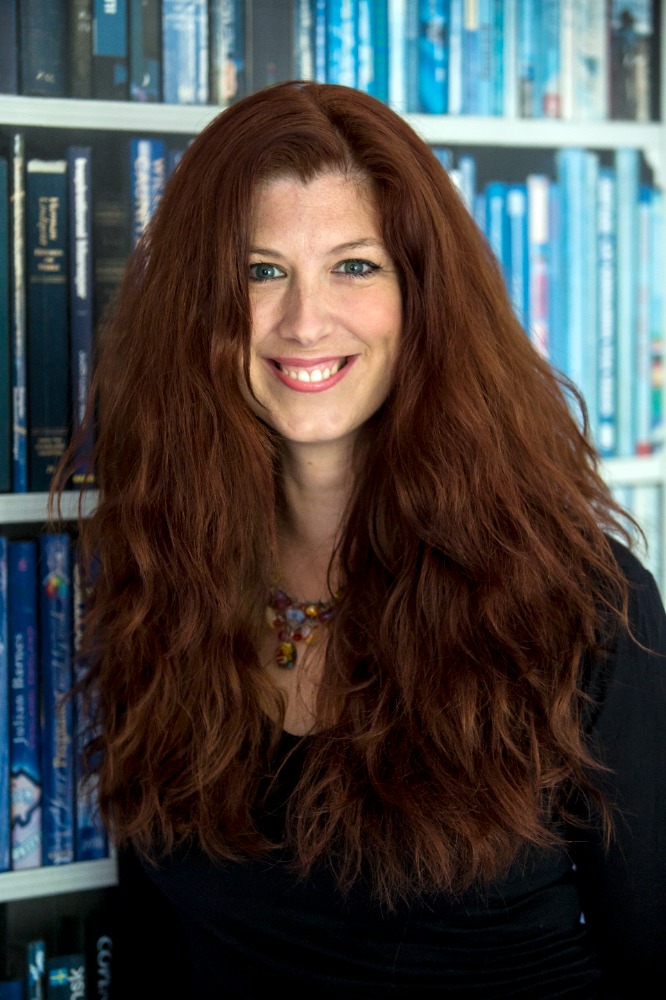
About Charlotte Butterfield

Contrary to the impression her novel might give, Charlotte Butterfield loves her life just as it is. A former magazine editor, she was born in Bristol in 1977 and studied English at Royal Holloway. She moved to Dubai by herself on a one-way ticket with one suitcase in 2005 and left twelve years later with a husband, three children and a 40ft shipping container. She now lives in the Cotswolds, where she is a freelance writer and novelist. Her first novel won a Montegrappa award at the 2016 Emirates Festival of Literature, and she went on to publish three romantic comedies with One More Chapter (previously Harper Impulse). By This Time Tomorrow is her fourth novel, and the first published by Hodder & Stoughton.

For more information, follow Charlotte on Twitter @CharlieJayneB and find her on Facebook and Instagram.