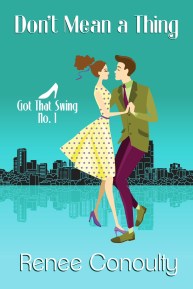
Giveaway and Extract from Don’t Mean a Thing by Renee Conoulty

reneeconoulty-dmat

It’s so exciting to be part of the launch celebrations for Don’t Mean a Thing by Renee Conoulty as I’ve been following Renee since I began blogging and now she’s a published author.

Don’t Mean a Thing was published by Kindred Ink Press on 2nd November 2016 and is available for purchase from Amazon USAmazon UKAmazon AUSiTunesBarnes and NobleKobo and Smashwords.

Not only do I have a guest post from Renee and an extract from Don’t Mean a Thing, but there’s a chance for you to enter to win a copy of Don’t Mean a Thing at the bottom of this blog post.

Don’t Mean a Thing

reneeconoulty-dmat

What if you finally took the lead, but life refused to follow?

Thirty-year-old introvert, Macie Harman, has finally found a career she is passionate about, and after months of training, she’s begun her new job in the Royal Australian Air Force. Leaving behind her family, friends, and the life she knew, Macie has travelled to the other side of the country where the only person she knows is Rachael, the extroverted girl she went through basic training with. Everywhere Macie goes, Rachael is there too.

While looking for a way to widen her circle of friends in her new town, Macie discovers a local swing dancing class. The jazz music captures her heart, and Matt, the sexy swing dancer, sweeps her off her feet. Matt has claimed the tropical Northern Territory as home and has no plans to leave. He loves his teaching career with its predictable routine and has a great bunch of friends. All he wants now is the right girl to make his house a home.

Military life is tougher than Macie expected, and not everyone can deal with the inevitable separations and last minute changes. Is this exciting but unpredictable life something Macie wants to fight for, or could she give it up and put down roots with Matt?

An Extract From Don’t Mean A thing

I stared out my window, trying to take it all in. Glimpses of a golf course. A bridge. Palm trees. Two rockets jutting up from the ground. Before I knew it, the taxi pulled into a parking space before the boom gate.

“You’ll have to walk from here, love. No taxis on the base.”

“That’s okay, I’ve got a lift.” I spotted Rachael waving from the car next to us. I passed him the military issued cab charge card and transferred my luggage into Rachael’s boot.

“Macie!” Rachael squealed, throwing her arms around me. Her blonde mane whipped into my face.“I hope you get a room in my block. Let’s go get your key.”

She shoved me towards the passenger side. I clambered in, pulling a strand of hair from my mouth. After presenting our ID cards to the security officer, Rachael drove on. The boom gate dropped behind us, closing off the civilian world.

Here we were, the Royal Australian Air Force Base Darwin, in the tropical Top End of the Northern Territory of Australia.

Home.

Rachael pulled up outside an older building.

“Here’s admin,” she said.

“Thanks. I’ll be back in a minute or two.”

“Don’t be silly. I’ll come with you and make sure you get a good room.”

Rachael trailed into the office behind me.

“Hello. Can I help you?” The receptionist greeted.

“Yes, please. I’m ACW Macie Harman. I’m posting in today, and I need to organise my accommodation and all the other things on this list.” I unfolded the joining instructions.

“Welcome to Darwin.” She replied with a smile. She wasn’t wearing a uniform. I was surprised that not everyone who worked on the base was military.

“Can Macie have the spare room in building twenty-nine?” Rachael asked.

The Top End

A Guest Post by Renee Conoulty

Most people know that the seasons in Australia and the rest of the Southern Hemisphere are the opposite to the Northern Hemisphere. While most people associate Christmas with cold snowy weather – we turn on the air-conditioning so that we can cope with wearing Santa hats while unwrapping our presents. My kids are even more confused, because we didn’t even have Summer in Darwin. Now that we’ve moved to New South Wales, I’ve had to explain the four seasons to them. In the Top End, we only had two seasons – the dry season and the wet season (also known as the hot season and the sweaty season). The temperature is fairly consistent all year round – mid 30s (Celcius) but the humidity increases dramatically in the wet season along with the thunderstorms and risk of cyclones.

I remember the first time I stepped out of a plane and walked across the tarmac in the tropical north of Australia. I was 17 and had flown from Ballarat, Victoria to Cairns in North Queensland to spend ten days up in the rainforest assisting a scientific research team. I remember feeling like I’d stepped into the butterfly enclosure at the Melbourne zoo. The humidity wrapped around me and I struggled to breathe. And that was in July.

Nothing could prepare me for the build up and the following wet season in Darwin. They call it troppo season for a reason. It sends you slightly mad. Unless you are sitting quietly in an air-conditioned room, you’re sweating.

Whenever I hung the washing on the line (in the morning so I could bring it in before the afternoon storm), I did so in my pyjamas. I didn’t want to soil another outfit and create more laundry. One load of washing would have me pouring with sweat and desperate for a shower.

Walking the kids from the school carpark to their classroom would send beads of sweat trickling down my forehead. We lived walking distance from the school, but I couldn’t comprehend walking in the wet season.

When I actually attempted physical exertion, I discovered shin sweat. Did you know that could even happen?

I also discovered that sweating bucket-loads unfortunately doesn’t burn calories.

About Renee Conoulty

reneeconoulty

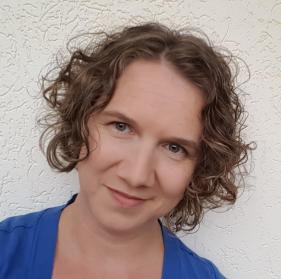
Renee Conoulty is an Australian Air Force wife and mother of two. Her debut chick lit novel, Don’t Mean a Thing, is now available through Kindred Ink Press.

When she’s not devouring books, reviewing and blogging on HeySaidRenee, or writing her own stories, Renee can be found swing dancing. Or possibly napping. She tweets about reading and reviewing via HeySaidRenee and about writing, military life and dancing via ReneeConoulty, but hasn’t created a handle for nap talk yet.

You can sign up for Renee’s monthly newsletter for her highlights on blogging, reading, writing and life here. There’s more about Renee on her website, on Goodreads and on Facebook.

Click here for your chance to enter to win one of three e-copies of Don’t Mean a Thing.

reneeconoulty-dmat-btbanner


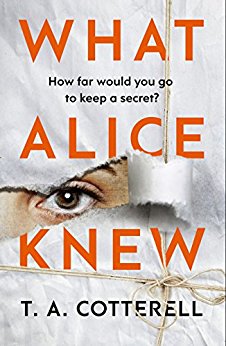
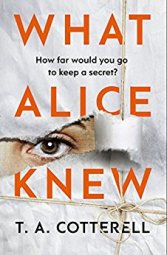
What Alice Knew by T.A. Cotterell

what-alice-knew

My grateful thanks to Becky Hunter at Penguin Random House for an advanced blogger copy of What Alice Knew by T.A. Cotterell in return for an honest review. What Alice Knew is out now in e-book and will be published in paperback by Black Swan on 20th April 2017. What Alice Knew is available for purchase and pre-order through the publisher links here.

What Alice Knew

what-alice-knew

How far would you go to keep a secret?

Alice has a perfect life – a great job, happy kids, a wonderful husband. Until he goes missing one night; she receives a suspicious phone call; things don’t quite add up.

Alice needs to know what’s going on. But when she uncovers the truth she faces a brutal choice. And how can she be sure it is the truth?

Sometimes it’s better not to know.

My Review of What Alice Knew

Alice has been away painting a portrait when she receives a call from her daughter saying Ed, Alice’s husband, hasn’t come home and so begins a change to all their lives.

My goodness. I love a psychological thriller and What Alice Knew fitted the bill perfectly. I hadn’t actually intended on reading it yet, but I picked up the book, read the first few pages and was so seduced by the assured quality of the writing, the voice of authority in the narrator and the revealing of a world about which I know nothing – art – that I was hooked and simply couldn’t set it aside until I’d consumed every word.

I thought What Alice Knew was complex, intelligent and thought provoking. There were so many layers to this narrative, akin to the paint with which Alice builds up her paintings, that I feel I need to reread What Alice Knew time and time again to appreciate them fully, especially the subtle cultural references (like Macbeth and Gatsby) which just added to the sheer pleasure of reading. The art imagery underpins the whole of the narrative and I want to go back and research some of the paintings mentioned before I reread the book. I loved the way the chapter numbers were presented within picture frames, for example. This suggested to me not only the theme of art running through the story, but also the concept of being framed in a crime and also being intellectually constrained by borders and the emotional boundaries of our past in much the same way as the numbers are confined within the rectangles. It was also as if the boundaries of certain truths were immutable, like the frames, so that Alice had to behave in some of the ways she did. I think T.A. Cotterell has produced a narrative to make the reader think in so many ways.

I loved the characterisation. Essentially we only really see characters through the filter of Alice’s perception in this first person account. Alice lives in a world of art, but also of artifice so that at the same time Alice was making her decisions I found I was made to question her actions and my own morality, and not always comfortably either. I thought this was masterful writing because I no longer seemed to be in possession of my own mind. T.A.Cotterell creates a situation that had me changing my mind and standpoint without my permission. In fact, I felt Alice lives her life one step removed from reality as she paints, possibly deluding herself about what she sees in her subjects and using a canvas to represent her version of the sitter’s truth in the same way many of us live our lives. It left me wondering what truth really is and how we construct our own validity.

I also thought the other themes represented were challenging and riveting. The notion of family and how it makes us who we are, the concept of loyalty, the social mores of today’s society and social media all weave through the text so that there is an almost hypnotic realism that made me quite tense at times.

What Alice Knew is not what I was expecting. It’s quite unlike any other psychological thriller I’ve read and I can’t praise it highly enough.

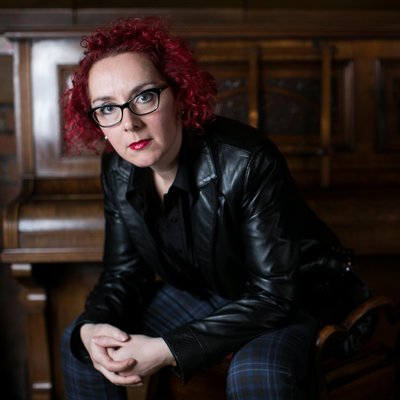
About T.A. Cotterell

ta-cotterell

T. A. Cotterell read History of Art at Cambridge University. He worked in the City before resigning to become a freelance writer. He is now a writer and editor at the research house Redburn. He is married with three children and lives in Bristol.

You can follow T.A. Cotterell on Twitter.

Cover Reveal: Born Bad by Marnie Riches

born-bad

Having been privileged to host a guest post from Marnie Riches yesterday on Linda’s Book Bag (that you can read here), I’m delighted to be helping to reveal her first paperback release Born Bad.

Born Bad will be released in paperback by Avon, an imprint of Harper Collins on 9th March 2017 and is available for pre-order here.

Born Bad

born-bad

A powerful, gritty novel set in the criminal underworld of Manchester from bestselling author Marnie Riches.

Manchester’s criminal underworld is shaken to the core when gang leader Paddy O’Brien is found bleeding by the poolside of his sprawling Bramshott mansion. So begins a fierce battle for the South Side, with the leading Manchester gangsters taking the law into their own hands – even when they have to play dirty to win…

This is a brand new crime series from the bestselling Marnie Riches; a fast-paced, gritty and darkly comic novel that brings the grime of Manchester to life…

About Marnie Riches

marnie

Marnie Riches grew up on a rough estate in Manchester. She learned her way out of the ghetto, all the way to Cambridge University, where she gained a Masters degree in German & Dutch. She has been a punk, a trainee rock star, a pretend artist, a property developer and professional fundraiser. Previously a children’s author, now, she writes crime and contemporary women’s fiction.

Marnie Riches is the author of The Girl Who Wouldn’t Die – the first installment of the George McKenzie crime thriller series, published by Maze and Avon at Harper Collins.

In her spare time, Marnie likes to run (more of a long distance shuffle, really) travel, drink and eat all the things (especially if combined with travel) paint portraits, sniff expensive leather shoes (what woman doesn’t?) and renovate old houses. She also adores flowers.

You can follow Marnie on Twitter, visit her website and find her on Facebook.

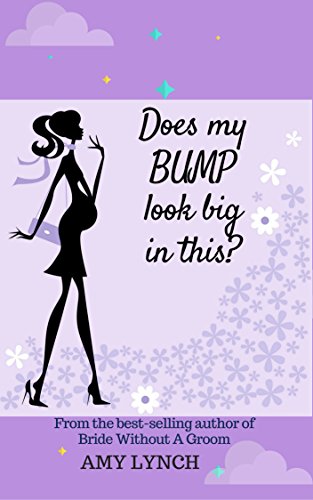
Does My Bump Look Big In This by Amy Lynch

updated-cover

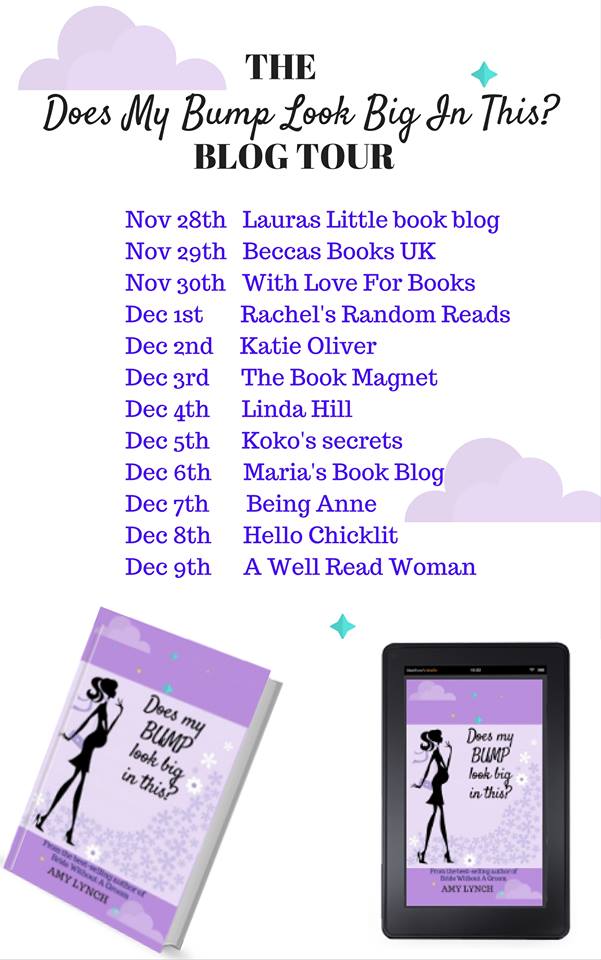
It’s so lovely to be celebrating Does My Bump Look Big In This by Amy Lynch as I read the first book about Rebecca and Barry, Bride Without a Groom, some time ago and you can read that review here. I also have an extract from Bride Without a Groom here.

The sequel to Bride Without a GroomDoes My Bump Look Big In This was released in paperback on 9th November 2016 and is available for purchase in paperback and e-book here.

Does My Bump Look Big In This

updated-cover

The mother of all comedies is due…

Newlyweds Barry and Becky are just back from their tropical honeymoon. The tans are gorgeous, and it was five star luxury all the way. But there’s a problem. Barry’s desperate for a baby, and Becky’s not quite so keen. Surrounded by pregnant friends and a mother who’s talking about the ticking of invisible biological clocks, Becky starts to feel the pressure. When a surprise pregnancy rocks the boat, Becky’s friends and family are rooting for her all the way.

Will she navigate the choppy waters to motherhood?

Will she survive antenatal classes?

Can she avoid stretchmarks, indigestion and her dreaded boss?

And most importantly of all… does her bump look big in this?

My Review of Does My Bump Look Big In This

The honeymoon is over for Rebecca and long-suffering Barry, but Rebecca’s friends aren’t as interested in the photos as she’d hoped. They are more focused on babies and that doesn’t interest Rebecca at all!

Does My Bump Look Big In This is such a fun read. I laughed aloud at several moments and I have absolutely no idea how poor Barry puts up with his wife. I must admit, the more I read, the more glad I was that I’m child-free! I still can’t warm to the self-obsessed Rebecca, but she’s like some hideous car crash – you just can’t help looking – and I can’t help reading about her. What worries me is that I have a horrible feeling there are people just like her in society who are as shallow, self-obsessed and essentially lazy. Amy Lynch has brilliantly created a comic monster in her writing.

Whilst this is a lighthearted and entertaining read, Does My Bump Look Big In This also explores some bigger themes and issues. My heart went out to Barry as he struggled to tell Rebecca about his redundancy and Amy Lynch explores so creatively how we interact as couples and families. I’m sure all those exaggerated fears and desires Rebecca displays are felt to some extent by most pregnant women and they will be able to relate to this narrative really well.

I liked the structure of the book immensely too. Rebecca is so outrageous in her behaviour and demands that the first person approach allocated to her is just right. She approaches the reader directly at times and that made me feel I was part of the entertaining events. I  also appreciated the way Rebecca’s sections are counterbalanced by the third person writing about Barry so that just when she becomes overwhelming there is a quietness and sanity to allow time to reflect.

Although a sequel, Does My Bump Look Big In This works just as well as a stand alone read and if you’re looking for some fun whilst you wait for your own baby to arrive, Amy Lynch is the writer for you!

About Amy Lynch

Amy Lynch picture

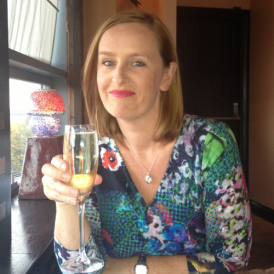
Amy Lynch is an Irish author of humorous romantic women’s fiction, but not always with fairy tale endings! She has been working in the charity sector for many years, is married and has two young children. When she is not writing, she can be found juggling school runs, packing lunch boxes, tackling the laundry mountain and walking two large rescue dogs who stare at her until she walks them. Talk about multi-tasking!

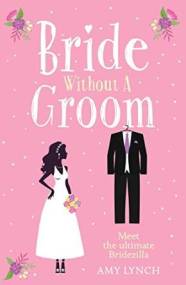
Her debut novel Bride Without a Groom, a laugh out loud Bridezilla comedy, was published by Avon, Harper Collins in May 2015.

cover

You’ll find Amy on Facebook and you can follow her on Twitter. You can also visit her website.

There’s more with these other bloggers:

poster

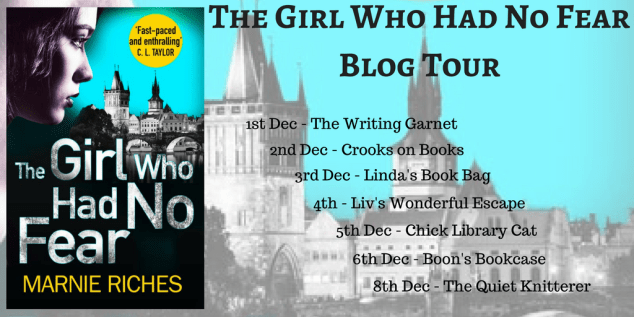
#NoFear Crime Fiction Heroines, a Guest Post by Marnie Riches, author of The Girl Who Had No Fear

cover

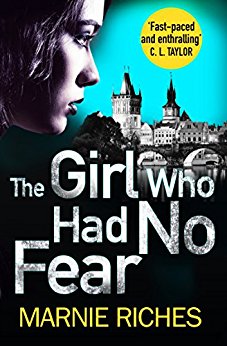
I’m thrilled to be part of the launch celebrations for The Girl Who Had No Fear by Marnie Riches. The Girl Who Had No Fear is book four in the George McKenzie series and was published by Maze, a Harper Collins digital imprint, on 1st December 2016 and is available for purchase here.

I’m so excited to be sharing a guest post from Marnie Riches today, all about kick-ass heroines.

The Girl Who Had No Fear

cover

Amsterdam: a city where sex sells and drugs come easy. Four dead bodies have been pulled from the canals – and that number’s rising fast. Is a serial killer on the loose? Or are young clubbers falling prey to a lethal batch of crystal meth?

Chief Inspector Van den Bergen calls on criminologist Georgina McKenzie to help him solve this mystery. George goes deep undercover among the violent gangs of Central America. Working for the vicious head of a Mexican cartel, she must risk her own life to find the truth. With murder everywhere she turns, can George get people to talk before she is silenced for good?

A pulse-pounding race against time, perfect for fans of Stieg Larsson and Jo Nesbo.

#NoFear – Crime-fiction Heroines That Kick Ass

A Guest Post by Marnie Riches

When I penned The Girl Who Wouldn’t Die – the first book in the George McKenzie series – I consciously chose to write a capable, mouthy female criminologist as my lead protagonist. In commercial crime fiction, gung-ho, kick-ass and boasting possession of gigantic cojones are characteristics normally reserved for the likes of Jack Reacher and Harry Hole. But they shouldn’t be. There are many women I have known personally who are as tough as old boots and daring as the devil. George is in many ways my ode to those real life heroines.

In The Girl Who Had No Fear, I think George faces her most dangerous challenge yet by taking on the might of a brutal Mexican drugs cartel. For me, it’s important to write the sort of heroine who could kill you with her intelligence as well as carefully placed thumbs. And I’m pleased to say that George frequently takes out her enemies with her barbed tongue alone! So, badass female characters are very much my thing as a reader, too.

Taking all that into account, here are my three favourite heroines in crime fiction:

Clarice Starling: In Thomas Harris’ classic crime novel, The Silence of the Lambs, it is Clarice, the trainee FBI agent, who is chosen by her boss to rush in where qualified FBI agents fear to tread – right into the maximum security wing of a Baltimore State Hospital for the Criminally Insane. Clarice, being a brainy and physically capable sort, succeeds in piquing evil genius, Dr. Hannibal Lecter’s curiosity before capturing his heart. For her tenacity alone, she deserves to parade the skin-flaying serial killer, Buffalo Bill’s scalp on her belt.

Lisbeth Salander: Stieg Larsson’s world-famous, spiky goth of a heroine is really what persuaded me to write my own crime novel with mouthy brainiac, George in the lead. I loved Salander the moment I met her in The Girl With the Dragon Tattoo. She looks amazing. She’s socially awkward. She’s super-intelligent. She really does kick actual ass. I loved her unapologetic non-conformist sexuality. I loved the fact that she could be heroic whilst also being almost certainly somewhere on the autistic spectrum. Most of all, she was refreshing. If only she didn’t have to be an easy victim of sexual abuse as a pre-condition to triumph! It’s the only downside to an otherwise wonderful character, and Salander is not to be missed.

Lori Anderson: Steph Broadribb is a new name on the crime-writing scene in the UK, though, as the highly popular blogger, Crime Thriller Girl, she’s definitely no stranger to it. Lori Anderson’s not your average crime fiction lead. She’s a bounty hunter, for a start, and an American! I found Steph’s debut, Deep Down Dead unputdownable. This was due, in part, to Lori’s strong character. She was brilliant at battering the living daylights out of some really nasty characters with only a can of pepper spray and feminine ninja cunning. Her maternal instincts were heart-rending. And she even managed to get jiggy with a hot guy amid some challenging circumstances. Lori Anderson is a heroine to watch!

There are also a number of excellent female detectives in UK crime fiction – Sarah Hilary’s Marnie Rome and Eva Dolan’s DS Ferreira spring to mind. Ava Marsh’s Stella in Untouchable is also pretty special. But here, I’ve selected the biggest, loudest and most unusual characters that have appealed to me.

Which of your favourite reads boast a heroine who has #NoFear?

About Marnie Riches

marnie

Marnie Riches grew up on a rough estate in Manchester. She learned her way out of the ghetto, all the way to Cambridge University, where she gained a Masters degree in German & Dutch. She has been a punk, a trainee rock star, a pretend artist, a property developer and professional fundraiser. Previously a children’s author, now, she writes crime and contemporary women’s fiction.

Marnie Riches is the author of The Girl Who Wouldn’t Die – the first installment of the George McKenzie crime thriller series, published by Maze and Avon at Harper Collins.

In her spare time, Marnie likes to run (more of a long distance shuffle, really) travel, drink and eat all the things (especially if combined with travel) paint portraits, sniff expensive leather shoes (what woman doesn’t?) and renovate old houses. She also adores flowers.

You can follow Marnie on Twitter, visit her website and find her on Facebook.

There’s more with these other bloggers too:

the-girl-who-had-no-fear-blog-tour

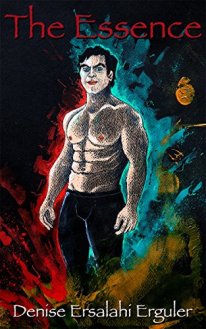
Spotlight and Giveaway: The Essence by Denise Ersalahi Erguler

the-essence

I originally began Linda’s Book Bag simply to share my views of the books I read. However, since then the blog has developed and one of the aspects I really enjoy is supporting authors. I haven’t had time to read Denise Ersalahi Erguler’s latest book The Essence, which is her first YA science fiction fantasy book, but really wanted to support Denise given her health battles. Denise has previously featured on Linda’s Book Bag with a great guest post about writing and dyslexia which you can read here.

The Essence was on 30th November 2016 and is available in e-book here, but you have a chance to win an e-copy at the bottom of this blog post.

The Essence

the-essence

How far would you go for the man of your dreams? To another town, another country or … another planet?

On a perfectly ordinary day in Central London, the perfectly ordinary Fiona falls through a sink hole and wakes up on the Planet Nageena. There, in a parallel world, war is raging between two factions, the Geenans and the Kwades, and both sides believe that Fiona has the secret that will save their world.

All Fiona knows is that she has finally come face to face with the man she has been dreaming of – literally – every night for as long as she can remember … and he doesn’t want to know.

Can Fiona possibly save Nageena? And how far will she be risking not only her dreams but her own life to do it…?

About Denise Ersalahi Erguler

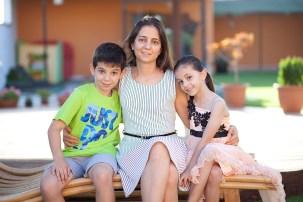
Denise author photo

Denise Ersalahi Erguler moved to North Cyprus 10 years ago from London where she lives with her husband, and two young children. In her past life, Denise was an interior designer concentrating on open office space. Denise is currently battling a rare form of brain cancer, and when she is well enough she helps run the family business, a successful fabric and home furniture store. Denise writes for children and adults, and The Essence is her first adult/young adult Sci-Fi fantasy book.

You can follow Denise on Twitter and catch up with her on Facebook.

For your chance to enter to win an e-copy of The Essence, open internationally until UK midnight on 9th December 2016, click here.

The Food of Love by Amanda Prowse

basic-cover

I’m such a fan of Amanda Prowse that I’m thrilled to be part of the launch celebrations for The Food of Love which was published yesterday, 1st December 2016, by Lake Union. The Food of Love is available for purchase in e-book, audio book and paperback here.

Since I began blogging I have reviewed Another Love by Amanda Prowse here, and My Husband’s Wife here. I was also honoured to host an interview with Amanda that you can read here.

The Food of Love

3d-book

Inspired by Amanda’s own extreme struggle with body image and a family history of anorexia, this is a compelling and heart-wrenching look at family, food and the challenge of raising teenagers in our self-obsessed, image conscious society.

Freya Braithwaite knows she is lucky. Nineteen years happily married to a man who still excites her, two beautiful teenaged daughters, and her dream career as a health food writer. Her home is filled with love and laughter, with a passion for food at its very core.

But no amount of love could have prepared Freya for the devastating impact of anorexia and bulimia on her family. In a desperate battle to rescue her youngest child from its clutches, Freya will do all she can to save her daughter, her marriage and her family. But how can she when food, the social glue of their family, is both the problem and the solution? Is Freya’s own obsession with clean eating partly to blame? And how can you save someone who doesn’t want to be saved?

My Review of The Food of Love

the-food-of-love-twitter-banner-72dpi

Under the very nose of her food writer mother Freya, Lexi is spiralling into the clutches of anorexia with a disease that will affect the whole family.

I have always loved everything I’ve ever read by Amanda Prowse, finding her able to look inside the very soul of humanity and create characters who are vivid, human and multi-faceted. However, in The Food of Love I truly believe she has surpassed herself. I think The Food of Love is possibly Amanda Prowse’s best novel yet.

Frequently when I read Amanda Prowse’s books I’m reduced to tears, but that didn’t happen this time. It wasn’t because I wasn’t moved by the situation the Braithwaite family find themselves in, but rather that I experienced such a range of emotions from sadness and empathy to shock and horror that it was almost as if I dare not let go otherwise I wouldn’t recover. I felt a visceral response which reminded me very much of the feelings I have recently endured in my own life, albeit in different circumstances with my stroke affected father and his eventual death. When I read the time countdown sections I was in a state of perpetual fear wondering what their outcome might be.

The writing is a masterful account of what it is like to live with someone with a terrible mental illness whom you love but can’t help. The relationship between Freya and Lockie, for example, is so realistic my heart broke for them. I would like to see The Food of Love read by those with family members in similar circumstances and by those working in professions that support them as it gives a terrible insight into a family in meltdown and provides some answers as to what might, and might not, help. The research and honesty that has gone into this spellbinding narrative is outstanding.

I feel I ought to write more about The Food of Love, but I can’t. Its effect is sitting in my very soul and I don’t have sufficient vocabulary to explain. Just read it for yourself.

About Amanda Prowse

Amanda Prowse

Amanda Prowse is a bestselling novelist with an incredible 136K followers on Twitter. This is her sixteenth novel and her books have been translated into a dozen languages and regularly top bestseller charts all over the world. Amanda has been dubbed ‘The Queen of Domestic Drama’ and writes about ordinary women and their families who find their strength, courage and love tested in ways they never imagined.

Through writing The Food of Love, Amanda has come face to face with her own feelings of shame, secrecy and obsession with food. Overweight as a child and a yo-yo dieter as an adult, Amanda has struggled with body image and overeating all her life.

All of Amanda Prowse’s wonderful writing is available here .

You can follow Amanda Prowse on Twitter and visit her web site here. You will also find her on Facebook.

There’s more with these other bloggers too:

the-food-of-love-uk-blog-tour-part-1-2-me

the-food-of-love-uk-blog-tour-part-2-1

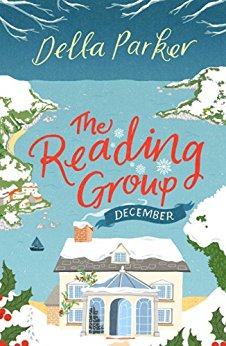
The Reading Group: December by Della Parker

reading-group-december

The Reading Group: December by Della Parker is published today, 1st December 2016, by Quercus and is the first in The Reading Group Series. The Reading Group: December is currently free for download here.

The Reading Group: December

reading-group-december

Meet the Reading Group: six women in the seaside village of Little Sanderton come together every month to share their love of reading. No topic is off-limits: books, family, love and loss . . . and don’t forget the glass of red!

Grace knows that the holiday season is going to be different this year. No turkey, no tinsel, no gorgeously wrapped gifts under the tree . . . how on earth is she going to break it to her little boys that Christmas is effectively cancelled? And can she bear to tell anyone her embarrassing secret? Enter the Reading Group: Grace’s life might have turned upside down but there’s no problem they can’t solve.

My Review of The Reading Group: December

Grace and Ben are enduring terrible family problems, but help might just be at hand.

Wow. The Reading Group: December might only be a few pages long and take less than 15 minutes to read but it really packs a punch. It is such a perfect Christmas story.

Grace’s reading group friends are distinct and well presented and I can’t wait to read more about them in future episodes.

This story deals with the financial problems Ben and Grace are experiencing as well as the childhood illness of one of their triplets. Links are deftly made between this story and A Christmas Carol by Charles Dickens that Grace’s book group are reading so that there’s a real satisfaction in spotting the allusions.

I think I found this story resonated with me so much as I’ve been through the worry of health problems for family members myself this year and I could really empathise with the emotions both Grace and Ben display.

If you haven’t already clicked to get your copy of The Reading Group: December, I urge you to do so. It’s brilliant.

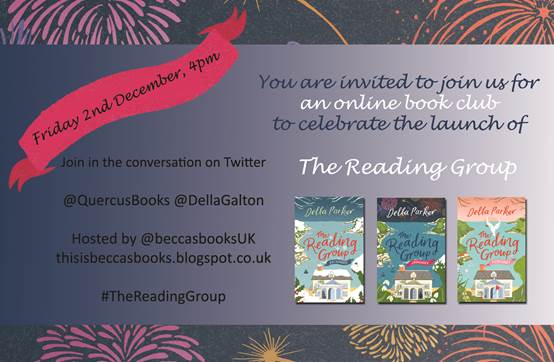
There’s also a chance to join in The Reading Group discussions with fellow blogger Becca tomorrow at 4pm:

reading-group-banner

About Della Parker

della-parker

Della Parker lives in a Dorset village with her two large hounds.

Before becoming a writer she worked as a Customer Services Manager for a water company. Solving customer complaints is not a million miles away from solving plot problems, so Della thinks her former life was quite a good background for a writer. And of course there were the wonderful characters she met.

When Della is not writing she enjoys running marathons and going to the gym for long workouts. Unfortunately, she doesn’t have the time to pursue these worthwhile hobbies as often as she’d like to – as she much prefers writing!

All the books in Della’s Reading Group Series are available here.

You can follow Della on Twitter and visit her website here. You’ll also find her on Facebook.

A Publication Day Interview with Miranda Gold, Author of Starlings

starlings

Whilst I love many genres of fiction, I really enjoy those books with a psychologial and emotional element to them. Consequently, I’m thrilled to have an interview with Miranda Gold whose novel Starlings is published today 1st December 2016 by Karnac Books.

Starlings is very firmly on my TBR, and can be purchased in e-book and paperback on Amazon and directly from the publisher.

Starlings
starlings

Struggling to bear the legacy of her grandparents’ experience of the Holocaust and her mother’s desperate fragility, Sally seeks to reconnect with her brother Steven. Once close, the siblings have become distant since Steven left London, separating himself from their shared history.

Starlings reaches back through three generations of inherited trauma, exploring how the impact of untold stories ricochets down the years, threatening to destabilise a coherent sense of self. Having always looked through the eyes of ghosts she cannot appease, Sally comes to accept that Before may be somewhere we can never truly leave behind and After simply the place we must try to make our home.

An Interview with Miranda Gold

Hi Miranda. Thank you so much for agreeing to answer some questions on my blog about your writing and Starlings which is out today.

Thanks so much for inviting me.

Firstly, please could you tell me a little about yourself?

I was born in London and, despite my mongrel roots and the wanderer in me, it’s where I’ve always lived. Yes, it’s a city riddled with contradictions, but I love the layers to it, the pockets that seem like worlds of their own. I was an incorrigible mimic growing up, so I’ve always been trying on different characters, different voices – I usually hear a character before I see her. For a long time I thought there was no magic like theatre – but fiction offered me a different landscape, a more internal one perhaps and I now feel more drawn to the way readers might develop a relationship with the words on the page, it’s a strange type of intimacy that makes them part of the creative process, it’s still a collaborative form. Either way the centre of it is trying to see how a characters’ eyes shape their world and how that world shapes them – this is when I’m not being distracted by my niece and nephew who are far too gorgeous for my own good (a similar problem seems to occur with my neighbour’s cat).  I’ve never experienced writing as lonely – writing opens my eyes, I feel unanchored and disengaged without it; for me, loneliness is when I’m not writing.

And please tell us a bit about Starlings.

The heart of it is how those closest to us become strangers and the struggle to unravel the knot of inherited memory. Sally is haunted by her grandparents’ experience of The Holocaust and the way her mother has come to embody it – it is what has been left unsaid that extends its power over her. Sally’s connection with her brother Steven had helped her carry the weight of their history, but he has moved away, separating himself from their past to try and forge a life of his own.

When did you first realise you were going to be a writer?

Storytelling has always been a part of my life, but then that instinct to imitate, to represent, to string event into narrative – it’s an impulse I heard and saw immediately when I was teaching children drama. I don’t think I had any moment of realisation and I still don’t really think of myself as a ‘writer’ – the word stalls me, I write, it’s something I do and if I’m not engaged with it I start to feel disorientated very quickly.

If you hadn’t become an author, what would you have done instead as a creative outlet?

I wanted to act for a long time and the process of developing character is similar – I still have to walk and breathe the part, and this is no less important, perhaps more important, if the character is familiar because I’ll have made assumptions and I have to clear all the preconceptions away, get to know them on their own terms.

How do you go about researching detail and ensuring your books are realistic?

This depends so much on what I’m working on, but with Starlings, the research came late into the development of the novel. I had to pull myself back though because I was trying to convey how these memories are handed down and seen and felt through the lens of subsequent generations. The experience of survivors and their plea – Never forget, Never again – was not something I felt I could (or should) find the words for, but something I felt I wanted to approach, perhaps to honour. I was tempted to step away from the (often sketchy) understanding I had of my own family’s history, I wanted to leave the Holocaust behind – but it is part of a personal and collective biography and there was an urgency that kept bringing me back to it. If I’d focused on the ‘facts’ Starlings would be another novel. Instead it is preoccupied with how powerful the absence of facts can be. As I’d grown up hearing stories I wanted to listen more than read, I think I was listening out for how the narrator tells as much as what they said. I was put in touch with two survivors and I listened to the recordings of oral histories which can be accessed through the British Library website. I’m not sure realism always serves the story best, it has to be absolutely true to the world of the novel and the characters, but realism in terms of details can often be distracting, some of the historical novels I’ve read feel suffocated by detail…but in terms of realism, yes I wanted that to anchor it but a mind tripped by the past while the present drives on around her demands something else.

Which aspects of your writing do you find easiest and most difficult?

They’re quite often the same thing. Take it at the most basic level – all a writer needs is pen and paper – there are worlds of potential in that blank page, the possibilities might offer themselves up or shy away, but they are there. In the later stages the writing develops its own momentum and then it’s more about letting it carry. It’s only after this I track back and start to plan – though I know I’ll probably be taken off course. I think I probably take the long way round but it’s the only way I can do it. I do a lot of background work on the characters before and during the writing so they shape their own course – it may not look or feel like I’m organising the narrative in advance but I am in a way. I used to dread returning to the page to edit – now it’s something I enjoy as much as the writing itself. The first draft is often propelled by an urgency that can be overwhelming so the second, third, fourth drafts, however frustrating, have a more settled tempo, and I find it exciting when I can clear away obscurity in a moment, all those pages I thought I was so attached to were just a playground where I’ve tumbled and scraped my knee…I wince a bit and trundle on. I have my fair share of middle distance staring, but I get a bit tetchy when I’m not writing once it’s found that momentum of its own – that’s the gift it gives back if I’m lucky, I have to grab it.

What are your writing routines and where do you do most of your writing?

I love stolen time – the time when I’m waiting, or it’s late, or I just hadn’t expected to get the chance – the pressure’s off and the work moves forward quite suddenly. I tend to try and sneak a burst in early on just so that the story is moving when I come to it later in the day. I write at home in the afternoon until I get cabin fever and then I’ll be scribbling or typing while eking out a coffee, I might go to the library – I’m not difficult about where – I’ve written in pubs, on the tube, in the airport – unless I’m struggling to hear the rhythm of the section I’m working on I actually find absolute quiet more difficult. It always surprises me how much of the writing happens ‘in between’ – especially if there’s something I can’t quite see or hear – there’s not much to be gained from banging my head against a brick wall so I’ll put the pen down, get out the way, leave the characters and their story and get on with everything else I’ve neglected – chances are I wasn’t listening closely enough and need to back track a little.

I know you’ve written scripts before. How did that experience differ from, and affect your writing of, a novel?

Other than working on my adaptation for Starlings, it has been some time since I’ve written for theatre, but whatever the form, I always feel as though I am beginning again – every piece demands a new logic – I can only just about grasp how to write the work I have ‘finished’.

I suppose the most fundamental difference is that with writing a novel I am building a world out of words, there is no other medium to translate a character’s experience. Theatre has an immediacy and a compression – a single gesture or a subtle shift in tone, a change in light these can signify so much, instantly. There is an intensity that comes from it being a collective experience – it is live, public, the entire narrative arc is taken in with only one interval, at most two, occasionally none. Also the impermanence, the fact that no performance can ever quite be repeated, the words are coming off the page and contrasting moments can happen simultaneously where as, of course, with fiction, the impression of simultaneity can only be created with one word laid down after another. But there is another type of immediacy in fiction – both with the reader’s connection to the page that brings the world of the novel alive, and dipping in and out of a character’s consciousness. The visceral element of fiction has to come as the reader translates the words back into experience, its builds, and because it depends directly on the reader reimagining (the mind holding all five senses without the director’s and cast’s interpretation), the effect can be more enduring. That said, I saw a production of The Homecoming more than a decade ago and it’s still with me.

(Oh, that’s so interesting.I often wonder about the gap between the what the writer writes and what the reader reads when they bring their personal history to their experience of the book.)

Starlings is being adapted for the stage. How much are you involved in this process and what can we expect?

I’m due to workshop some ideas in the next few months…I’ll keep you posted!

Starlings explores family relationships. How important was it to you to write about this theme?

Family relationships often form the foundation for my writing, even when I’m not conscious of setting out to explore them. These connections may not be explicit but they play into the characters’ trajectories, pulling them back, pushing them forward, creeping up on them, evaporating. Why will one character carry her history inside herself and another transcend it? How can those we share so much suddenly seem ultimately unknowable? Or is it that the familiar becomes invisible, that it’s only when a pattern breaks that it reveals itself? Though I resist the idea of inevitability, I am intrigued by repetition, by the tenacity of what persists and what it might mean to the world beyond, how does that world redefine it?  I’m curious about how many versions there are of each family member, how each are played out against or in response to how they are perceived. What is it that colours the lens each character looks through?

(Again, Miranda, I find this fascinating as I believe we have so many perceptions of ourselves depending on who we are with, let alone the perceptions others have of us.)

There is an iterative theme of trauma throughout Starlings. How far do you believe that trauma is an important part in making us who we are?

This depends on so much, none of it measurable and, at least from what I understand, the way trauma is embodied is not something that is stable. I think the foundation we have plays into how trauma affects us, as do the resources we have. It isn’t necessarily about strength or fragility or even resilience and I think there is a danger of letting it eclipse identity, we are so much more than what has happened to us…whether it paralyses someone or reveals their resilience, I’m not sure it’s helpful to understand this simply in relation to their suffering – victims, martyrs, survivors – these are all just symbols, short hand when true empathy tries to understand the nuances, the contradictions.

Sally is shaped by the shared memories of her family. Do you have memories from your own family that have influenced who you are as a writer?

‘Shaped’ feels a little too definitive for me in this context – though of course it’s for the reader to interpret this. Certainly, Sally is haunted both by her own memories and the memories that have come to her in fragments – through stories, dreams – but the gaps, the silences, the way the stories keep changing, these seem to have an even more powerful hold. I think what is most destabilising is the way these memories can be remade or dismissed so there is the sense (‘true’ or otherwise) that there is no mirror to Sally’s experience other than the ghosts behind her. I understand memories passed down as an inheritance and this compels me here because the fear of forgetting and the fear of remembering can have equal strength, magnifying each other rather than being cancelled out. The memories themselves are both alien and familiar, a core part of identity and yet, because they are so malleable, often emphemeral, how can they form any essential part of us? I’m fascinated by how strongly we can identify who we are by our memory despite its fallibility. I think shared memory can be a treasure though, whether delightful or painful, they forge a sense of connection, of belonging – much like the reading experience itself, it’s about seeing what someone else sees, that might be illusory, but sometimes it’s the closest we can get to seeing through another’s eyes.

I don’t think I could disentangle what influences me, there are so many strands, patterns reveal themselves in the rewriting, but I’m not always conscious of these when I set out. A memory might propel the piece or even initiate it, but then it meets the world I’m writing in and morphs into something else. Memory is such a potent mix that makes fiction seem like the best home for it.

If you could travel back through time to visit a part of your own family history, when would it be and why would you choose it?

I’m not sure I can really answer that at the moment. Although Starlings is by no means an account of my family history, it does draw on it – it did grow out of it to some extent and taps into so much of what I grew up around, trying to communicate the experience of it, if not the facts. Maybe once I have more distance from it I could think about booking myself a time travel ticket.

I find Starlings an interesting title, making me think of a murmeration and the way memories and echoes of the past swirl and weave  – rather like starlings do together. How did the title arise and what were you hoping to convey?

The title came in a late draft. I’d been staying in Brighton and I was watching the murmeration just as the sun was going down. It felt as though everything was focalised through this dance in the sky, this instinctive coordination – and people just stopping, even if it was only for a moment, to look up – or glance with someone, a stranger, who’d seen it too, a fleeting moment of connection. I can’t say honestly that this is what I’d hoped to convey, I just knew this apparently magical course through the sky, organised by its own collective intelligence, was there the evening before and would be there the next – and that was all I needed to know.

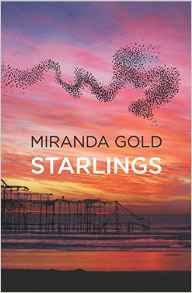
As the murmuration has become such a familiar postcard picture I was worried its magic would be lost. I talked to friend who is an artist (William Barrett – open to commissions I might add!) and he said he’d do a ‘mood board’ for the cover (I knew I was on to the right person) and try and get that sense of tentative hope…I think he caught it.

(He certainly did as I think the cover for Starlings is beautiful!)

The Holocaust is a catalyst for Starlings. Was it your intention to remind modern readers of that part of our past or did that arise organically as you wrote?

It arose organically and it was only in the second or third draft that I began to see it drawing into foreground, in the first draft there were only references, none of them explicit – there were so many suggestions but they were obscured – I don’t think I felt I could touch it. I still feel a bit uneasy about whether it was my place to tell this story – but as I’ve said, it isn’t an attempt at transcribing any part of history, only to show a little of what I saw though the lens of the third generation – though that now has disappeared as Sally became herself and, of course, saw something else.

If you could choose to be a character from Starlings, who would you be and why?

I think I’ve been living with these characters too closely to answer that just yet, but if I had to be one I think Claire – she has such a warm, spontaneity, she feels like the least haunted of the characters.

If Starlings became a film, who would you like to play Sally and why?  

That’s what casting directors are for! No, I think I’d like to give the reader the freedom to imagine that, once you get an image in your head it can be hard to erase.

If you had 15 words to persuade a reader that Starlings should be their next read, what would you say?

Survival meant silence, but stories left untold live on, their echo chasing the next generations.

Or maybe –

Sally’s brother Steven has freed himself from the ghosts of family history – why can’t she?

(I like both these tag lines Miranda!)

Do you have other interests that give you ideas for writing?

There’s been quite a resurgence in oral storytelling and when these myths, legends, wonder and fairy tales are brought to life all the underlying structures resonate. Music has always been a short cut to the soul for me, bypasses all the analytical and critical – I’m not sure it gives me ideas so much as create space for them. Theatre certainly, but if I’m honest I’m as likely to be inspired by the person I spot in the foyer or the one who has to get up so I can get to my seat as I am by the play – there are overlaps, something external sparks with a line sparks with…it depends on how open my own senses are. Being in a new environment can set something in motion – but it’s as much about being away from the familiar in order to see it as it is writing about (or through) wherever it is I’ve arrived.

And finally, when you’re not writing, what do you like to read?

I re-read quite a bit – poetry and plays as well as novels – books become reference points and the person I am coming back to Gatsby or To The Lighthouse finds something else behind what I heard five, ten, fifteen years before. The compression of short fiction, like poetry, can be astonishing – there can be a sudden visceral power, a single moment can expand out in an almost tactile Three of the most striking novels I’ve read this year have been in translation – Human Acts, Signs Preceding The End Of The World and A School For Fools. I’m a reader who likes to stay on the page, it’s not just about turning it, and, each of these novels had lyricism that was both brutal and beautiful, they forged their own language to say what couldn’t be said – it meant they had a vitality that made the poignancy carry.

Thank you so much for your time, Miranda, in answering my questions. Your responses have been so interesting and though provoking. I can’t wait to read Starlings.

About Miranda Gold
miranda-gold

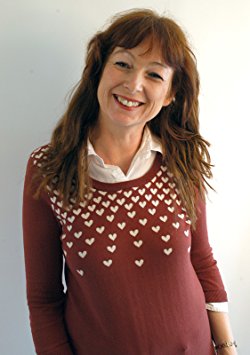
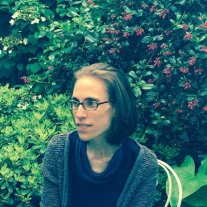
Miranda Gold is a novelist and playwright. Her novel, Starlings, is currently being adapted for the stage, and she is now working on a new novel exploring post-natal psychosis. Before turning her focus to fiction, Miranda took the Soho Theatre Course for young writers, where her play, Lucky Deck, was selected for development and performance. She is currently based in London.

You can follow Miranda on Twitter.