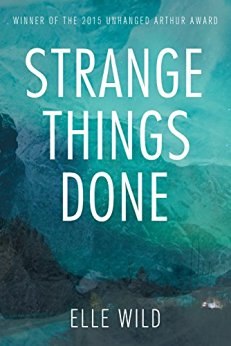
A Publication Day Interview with Elle Wild, author of Strange Things Done

strange-things-done

It gives me enormous pleasure to welcome Elle Wild to Linda’s Book Bag. Elle’s novel Strange Things Done is published today 24th September 2016 by Dundurn in e-book and will be released in October in paperback. Strange Things Done is available for purchase from the publisher, Amazon and all good book sellers.

In celebration of publication day, Elle agreed to be interviewed for Linda’s Book Bag. I found her answers to my questions utterly fascinating.

Strange Things Done
strange-things-done

As winter closes in and the roads snow over in Dawson City, Yukon, newly arrived journalist Jo Silver investigates the dubious suicide of a local politician and quickly discovers that not everything in the sleepy tourist town is what it seems. Before long, law enforcement begins treating the death as a possible murder and Jo is the prime suspect.

Strange Things Done is a top-notch thriller — a tense and stylish crime novel that explores the double themes of trust and betrayal.

An Interview with Elle Wild

Hi Elle. Thank you so much for agreeing to answer some questions on my blog about your writing and about Strange Things Done which is published today.

Hello! Thank you for hosting me.

Firstly, please could you tell me a little about yourself?

Certainly. In my “former lives”, I’ve been a short filmmaker, freelance journalist, copywriter, and radio host. I wrote and hosted a 20-episode program called “Wide Awake” for the CBC’s Early Edition on Radio One in Vancouver. The latter was one of the strangest jobs I ever had – I stayed up all night recording sound bites from various events around the city, then spun them into stories and added voice over narration and music. (The CBC referred to me as their “Resident Insomniac”.) The stories would play as the sun was coming up over the city. I loved it, though it was exhausting and I had to go straight on to work (at an advertising agency) in the morning.

(Crikey, that sounds really crazy!)

When did you first realise you were going to be a writer?

Oh, I think I always knew that I was going to be a writer or a painter. For a while I tried to balance my two passions by making films, which is really a marriage of story and images. When I was a kid, I used to keep a school journal where you would put your class picture and check off little boxes to indicate what you wanted to be when you grew up. Every year the boxes I checked were: writer, detective, and cowboy. (I guess there was no box for painter.) At any rate, now I write detective stories, so I wasn’t far off – just missing the horse.

If you hadn’t become an author, what would you have done instead as a creative outlet?

Definitely I would have been a painter. I still might be one day, I hope.

How do you go about researching detail and ensuring your narratives are realistic?

I interview a lot of people. My debut novel is set in Dawson City, Yukon (in Canada) and I secured an Artist in Residence position there to immerse myself in the place, have an opportunity to study the locals, and ask a lot of questions. I met with members of the Dawson RCMP (Royal Canadian Mounted Police) to ask procedural questions, and have since been speaking to local police in my area. I also met with the town coroner, the mayor, and members of the Tr’ondëk Hwëch’in (the First Nations band in Dawson City). One of my main characters is First Nations, so I particularly wanted to be well informed about where he might live and what kind of background he might have come from, and why he might make any choices he was going to have to make.

(Blog readers will find that link fascinating too, Elle)

Which aspects of your writing do you find easiest and most difficult?

I’ve learned so much in writing my first novel. I find it relatively easy to come up with ideas, but I’ve learned to be harder on my ideas in the beginning and to pitch a lot of different ideas to colleagues, friends, family and also my agent in order to learn which idea is easiest to pitch – because the pitch is everything. If the story doesn’t have a unique angle in a one sentence pitch, it will be very difficult to sell through to an agent or for the agent to sell through to a publisher. The writing word-by-word or line-by-line is important, of course, but no one will ever get that far if they don’t like your 1-line pitch.

What are your writing routines and where do you do most of your writing?

Well, my writing routines adapt according to what’s happening in my life. I started out by writing when my baby was sleeping, then he stopped napping. For a while I tried writing instead of sleeping. Once my son started school, I wrote while he learned. Since he’s been home for the summer, I’ve taken to setting my alarm for 5am every day and write until he wakes up. This year will be different again, because my husband and I have made the choice to homeschool our son – so I’ll need to keep my monastic 5am start. Not ideal, but hopefully it just shows you that you can always make time when you think you have none.

When you’re not writing, what do you like to read?

Oh, I read everything I can get my hands on, but mainly a balance of what would be termed straight “literary fiction” and “literary mystery”. I just finished Anna Mazzola’s wonderful debut, The Unseeing, and I’m currently reading another terrific and very whimsical historical mystery called Edgar Allan Poe and the London Monster. Some of my favourite writers include Margaret Atwood, Karen Russell, Michael Chabon, and Alan Bradley. I’m also really looking forward to reading Do Not Say We Have Nothing by Madeleine Thien and All That Man Is by David Szalay.

Do you have other interests that give you ideas for writing?

I think I’m interested in everything. Sometimes I get ideas from strange stories I find in the newspaper. I recently wrote a short story (published in Ellery Queen Mystery Magazine) based on a news article that suggested Japan was considering using robots to care for its elderly.

Strange Things Done has a very cold looking cover. How did that image come about and what were you hoping to convey (without spoiling the plot please!)?

Well, I’m afraid I can’t take credit for the cover of the book, as it was designed by the publisher, though I like it.

Dawson City, your setting for Strange Things Done, is a small community. Why did you choose this rather than a large city for the location of your novel?

I wanted to experiment with the conventions of noir. Generally speaking, “noir” makes me think of a large, dark city, and of things happening in shadowy alleys, so there was something interesting to me about setting a noir in a very bright, snowy place, and in a small town. Also, I like the pressure the setting puts on the characters – they know a local must be responsible for what has happened, and that there’s really nowhere to run once freeze-up hits. It all felt very claustrophobic. Dawson City is surrounded by mountains and by the Yukon River. In the winter, when the river freezes, the ferry is dry-docked and the Top of the World highway to Alaska closes, meaning that there is really only one route out to the south. If the road snows in, you’re pretty trapped and isolated. I find that scary.

You’ve recently returned to Canada after a spell in the UK. What similarities and differences in attitudes to reading and to writers did you notice?

We have internationally renowned writers in Canada, like Margaret Atwood and Michael Ondaatje. In fact, there are currently two Canadians on the Man Booker Prize shortlist, Madeleine Thien and David Szalay, so we definitely produce writers here. That said, there probably aren’t as many prizes available for writers in Canada, and there are significantly less literary agencies. According to the Writers’ Union of Canada, there are only about thirty agents in Canada, so the competition to find representation is quite stiff. (I count myself very lucky to have an agent – I’m represented by Westwood Creative Artists.)

It’s also much more difficult to feel connected to the literary hotspots because of the sheer geographical size of Canada. Most of the agents and publishers are in Toronto, which is a long way away if you live on the West Coast like I do. I have never met my agent or publisher in person. When I lived in England, I lived very close to Bath, and was close enough to Bristol to attend events like CrimeFest, or I could take a train into London fairly easily where, as you know, everything happens. I definitely feel less connected here, and I do miss that sense of being in the centre of it all in England.

How important is Canada to you as an inspiration for writing?

Ironically, I think that sense of isolation and distance that I’ve experienced in Canada is also something that informs my writing, and in a way, connects me to other Canadians.  That said, I’m not always going to write about Canada  – my last story was set in Tokyo and my upcoming novel is set in Victorian London and Dorset – but I think the importance of landscape and sense of place will always influence my work, and perhaps the sense of being on the outside looking in.

Strange Things Done has been described as Nordic style noir in genre. What is your response to that epithet?

I would take that as a compliment, as I’m a huge fan of Nordic noir. I particularly loved Peter Hoeg’s Miss Smilla’s Feeling for Snow and S.J. Gazan’s The Dinosaur Feather. I would count count them as influences.

Poetry has been the inspiration for the title of Strange Things Done. What part does poetry play in your life?

I come from a family of storytellers. My mother was a librarian and was also the library’s storyteller, so I grew up listening to her entertain kids at circle time. My father had memorized tracts of poetry in his youth and liked to break them out around the campfire like a party trick, his favourite being The Cremation of Sam McGee by Robert Service. That poem made me very curious about the Yukon, and eventually I wound up doing an Artist in Residency there for a couple of months in Dawson City, as I said. I’d like poetry to play a bigger part in my life than it does currently. I think it’s fair to say that I’m still learning, but I’m in awe of the way a poem can create a mood or tell a story in just a few short lines.

(The Cremation of Sam McGee is here if blog readers would like to read it)

If you could choose to be a character from Strange Things Done, who would you be and why?

Oh, I’d definitely choose Sally because she is so comfortable in her own skin and has such a good time being herself, without any kind of judgement. That’s pretty far away from how I am myself, and probably how most writers are. I think writers drown themselves in their own tiresome self-analysis and judgement.

If Strange Things Done became a film, who would you like to play Jo and why?  

I’d love to see someone in the vein of Eva Green (Penny Dreadful) or Rachel McAdams (The Notebook) play Jo Silver. I think both women have an interesting balance of fragility and strength. Either are capable of convincing you that, despite appearances, they have a kind of inner steel running through them. Oh, I also love Ellen Page (Juno). She has wonderful comedic timing and would bring a certain frankness to the role.

If you had 15 words to persuade a reader that Strange Things Done should be their next read, what would you say?

I’d say, “Strange Things Done is an award-winning northern noir in the vein of Peter Hoeg.”

Or I’d quote someone else:

 “What a wonderful dark, quirky, and complex debut novel this is.”

– Ian Hamilton, internationally bestselling author

Thank you so much, Elle, for your time in answering my questions.

Thank you! And thank you to anyone who reads the novel.

About Elle Wild
elle_wild

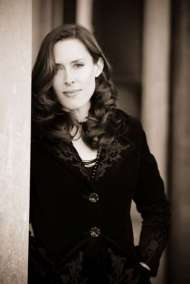
Elle Wild grew up in a dark, rambling farmhouse in the wilds of Canada where there was nothing to do but read Edgar Allan Poe and watch PBS mysteries. She is an award-winning short filmmaker and the former writer/host of the radio program Wide Awake on CBC Radio One. Her short fiction has been published in Ellery Queen Magazine and her articles have appeared in The Toronto Star, Georgia Straight, and Westender. Wild’s debut novel, Strange Things Done, won the Arthur Ellis Award 2015 for Best Unpublished First Crime Novel, and was shortlisted in multiple contests internationally. Recently returned from the U.K., Wild currently resides on an island in the Salish Sea named after the bones of dead whales.

You can follow Elle on Twitter and visit the Strange Things Done website.
Around The World in 80 Tales by Dave Tomlinson

around-the-world

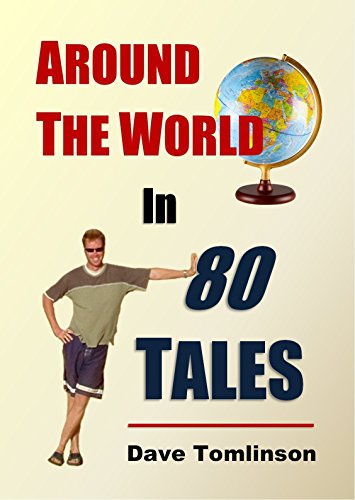
I love travel as much as I love books and so when I was offered the chance to review Dave Tomlinson’s Around The World in 80 Tales how could I refuse? Around The World in 80 Tales was published on 16th August 2016 and is available for purchase in e-book from your local Amazon site.

Around The World in 80 Tales

around-the-world

TRAVEL TURNED ME INTO A STORYTELLER
Travel is an amazing experience and I’ve spent years of my life living out of my backpack. I’ve explored well-beaten tourist trails and to far corners beyond them. Each journey is an adventure and each adventure gives with a story to tell. So one day I decided that yes, I would write 80 of my best Travel Stories.

After leaving me speechless, travel then turned me into a storyteller!

I’ve found that travel is a kaleidoscope of people, places, events, history, culture, food and fun. Through the pages of my book, I’ll bring it all to life for you. The stories are fascinating, inspiring, amusing and amazing. Some even get a little crazy but collectively they are an insight into the wonderful highs and gritty realities of travelling the world on a budget.

My review of Around The World in 80 Tales

Dave Tomlinson has taken his travels and turned them into a travelogue with first person accounts of his adventures written in around 500 words per location and with photographs mostly taken by the author to illustrate.

I have to confess I didn’t read Around The World in 80 Tales all in one go or in the fairly random order it is presented, but kept dipping in to the contents beginning with the places I’ve been to myself like Laos, Australia, Ecuador, Japan and Taiwan. I think this is a book that rewards such an approach as the reader can travel where they fancy with Dave Tomlinson as the mood takes them.

I was entertained too, by finding out about the places I have yet to visit and having my preconceived expectations confirmed or undermined by Dave’s experience. I think his trip on an Indian train isn’t one I want to repeat when I eventually go to India, but he has confirmed that I really need to see the terracotta army in China!

What I liked most about Around The World in 80 Tales is the personal style that captures a local flavour so that I got a real feel for the less touristy areas of the countries visited. Occasionally the vocabulary lacked some of the romance I associate with travel writing, but I think that also made the vignettes more accessible too. Around The World in 80 Tales reminded me of the photobooks my husband makes after our travels and for some readers it may be too personal an approach, but I would still recommend reading it as a means to get a flavour for a country before you visit.

There are some lovely photographs that accompany the writing, mostly taken by the author himself, that bring to life the places being described.

Around The World in 80 Tales is an interesting travelogue for those who want to visit countries vicariously.

About Dave Tomlinson

dave

Dave is a travel blogger who has spent over ten years travelling many countries and continents, cheaply and safely and he delights in sharing his passion for travel with others.

You can find out more about Dave and his travels by visiting his website, finding him on Facebook and following him on Twitter.

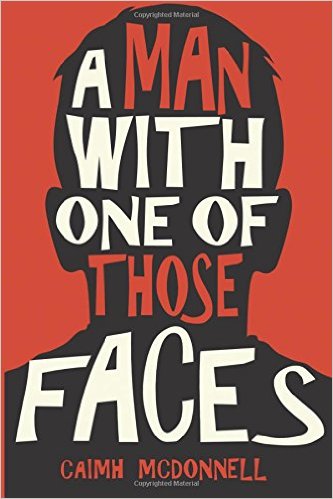
Improbable Tropes, a Guest Post by Caimh McDonnell, author of A Man With One Of Those Faces

a-man-with-one-of-those-faces

It gives me great pleasure to welcome Caimh McDonnell to Linda’s Book Bag today with a guest post on a topic dear to my heart, improbable tropes in crime fiction. Caimh’s darkly comic crime novel A Man With One Of Those Faces was published on 27th August 2016. A Man With One Of Those Faces is available for purchase on Amazon UK and  Amazon US.

A Man With One Of Those Faces

a-man-with-one-of-those-faces

A darkly comic Irish crime thriller.

The first time somebody tried to kill him was an accident.
The second time was deliberate.
Now Paul Mulchrone finds himself on the run with nobody to turn to except a nurse who has read one-too-many crime novels and a renegade copper with a penchant for violence.

Together they must solve one of the most notorious crimes in Irish history . . .
. . . or else they’ll be history.

Improbable Tropes in Crime Fiction

A Guest Post by Caimh McDonnell

Dear TV Producers,

I hereby swear that, regardless of how bad the rest of it is, I will faithfully watch at least three series of any cop show that contains the following scene in its opening episode.

EXT: Evening. A rainy parking lot.

A woman in her 20s, attractive enough to maximise the audience’s horror when she dies, stands under an umbrella while a handsome in a world-weary way police detective, whose gruff exterior hides a heart of gold, questions her.

Detective: “Just take me through it one more time mam.”

Victim No 1: “Well, like I said, I was just coming back to my car and I was about to get in when I noticed him trying to hide in the back seat.”

Detective: “I see.”

Victim No 1: “I mean, why would anyone do that? It’s a small car, how on earth did he think I wouldn’t see him? Who has ever gotten into a car and not noticed a fully-grown human being in the back? I mean, who does that?”

Detective: “No one mam. Nobody has ever done that.”

I’ll be honest, I am an absolute nightmare to watch TV with. If a lazy device such as the attacker who can inexplicably make themself invisible in the back seat of a mid-sized car pops up, my long-suffering wife knows that the next twenty minutes is going to involve me pontificating on exactly how unlikely that is to have ever happened. Such a device isn’t the sole preserve of the over-worked hack either. Aaron Sorkin, a god amongst screenwriters and my personal all-time hero bar none, uses this device in A Few Good Men. Worse, Tom Cruise gets out of his car, buys a paper and in all of the 30 seconds it takes, a man sneaks into his back seat, ready to pop up and scare the bejesus out of Tom when he gets back. The newspaper seller is helpfully blind but Tom isn’t. In fairness to the otherwise utterly flawless Mr Sorkin, the backseat driver is a CIA specialist but as far as I’m aware, the CIA has yet to find a way to generate a Harry Potter style cloak of invisibility.

Obviously, whether it is a film script or a novel, every writer should avoid such devices or better yet – point them out. Nothing makes your work seem more authentic than pointing out how unrealistic other people’s is. I’ve noticed that is one particular trick that even the very best authors can’t resist. In Darkly Dreaming Dexter, the first of Jeff Lindsay’s brilliant Dexter books, Dexter refers to how unrealistic the CSI shows on television are. In The Mercedes Man no less an author than Stephen King, then refers to how unrealistic Dexter is. No doubt somewhere right now, some author is trying to work up the courage to dare to point out something unrealistic in a Stephen King book. I wish them luck.

In the meantime, I will continue to get upset about inexplicable occurrences like the invisible attacker in the back seat. I even wrote a short story in an effort to get this particular monkey off my back. It is called How to Send a Message and if you’d like to read it, it is one of a triumvirate of short stories that can be read for free by those who sign up to receive my newsletter here.

Also, if you’ve got any similar bugbears that you notice in crime fiction, whether it be TV, Film or novels, do let me know by contacting me through my website. I’m thinking of forming a support group, either for improbable trope sufferers or their long-suffering spouses.

About Caimh McDonnell

caimh

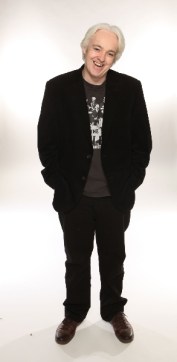
Caimh McDonnell is an award-winning stand-up comedian, author and writer of televisual treats.

His writing credits include The Sarah Millican Television Programme, A League of Their Own, Mock the Week and Have I Got News for You. He also works as a children’s TV writer and was BAFTA nominated for the animated series ‘Pet Squad’ which he created. He was also a winner in the BBC’s Northern Laffs sitcom writing competition.

During his time on the British stand-up circuit, Caimh has firmly established himself as the white-haired Irishman whose name nobody can pronounce. He has brought the funny worldwide, doing stand-up tours of the Far East, the Middle East and Near East (Norwich).

His debut novel, A Man with One of Those Faces, a darkly comic crime thriller set in Dublin, is out now.

You can find out more by following Caimh on Twitter and by visiting his website.

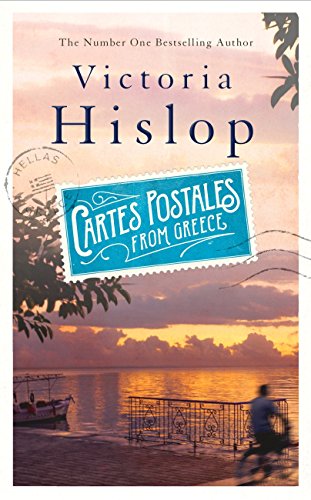
Cartes Postales From Greece by Victoria Hislop

cartes postales

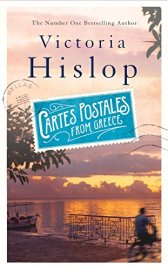
My thanks to Caitlin Raynor at Headline for an advanced reader copy of Cartes Postales From Greece by Victoria Hislop. Cartes Postales From Greece is published in hardback on 22nd September 2016 by Headline Review and is available for purchase from all good booksellers.

Cartes Postales from Greece

cartes postales

Week after week, the postcards arrive, addressed to a name Ellie does not know, with no return address, each signed with an initial: A.

With their bright skies, blue seas and alluring images of Greece, these cartes postalesbrighten her life. After six months, to her disappointment, they cease. But the montage she has created on the wall of her flat has cast a spell. She must see this country for herself.

On the morning Ellie leaves for Athens, a notebook arrives. Its pages tell the story of a man’s odyssey through Greece. Moving, surprising and sometimes dark, A‘s tale unfolds with the discovery not only of a culture but also of a desire to live life to the full once more.

My Review of Cartes Postales From Greece

When Ellie finds postcards from A, addressed to S Ibbotson, in her flat pigeon hole they sow the seed of desire to visit Greece. A notebook arrives too as she goes off to Athens and so the book begins.

I’ve always loved Victoris Hislop’s writing  and I have to say that I was apprehensive about reading Cartes Postales From Greece as I was slightly disappointed in my last Victoria Hislop read, The Sunrise, my review of which you can read here, which, although good, didn’t move me like her other writing.

Initially I didn’t ‘get’ this book at all. Ellie seemed to disappear completely and I couldn’t attune myself to the writing. I set the book aside, came back to it later and suddenly I understood. It is not a story about Ellie, or A (even though the notebook tells us and Ellie about his innermost emotions), or S Ibbotson. It is Greece that is the central character, gradually uncovered through the tales A hears on his travels and which are linked with the notebook.

I have one criticism that I didn’t see the need to have Ellie as part of the structure. The ending of the book was too tidy for my liking and A’s notebook is quite strong enough to stand as a plot device alone.

However, Victoria Hislop weaves magical elements into what are, in effect, a series of short stories or snapshots. We meet colourful charcaters from beautiful women to corrupt officials. We read about the history, mythology, geography and economy of Greece. Each aspect is beautifully illustrated by postcards and photographs which are produced with a slight sepia tone giving a dreamlike quality to them and enhancing the concept that perhaps the truth isn’t always told in the stories. There are many layers for interpretation here. I felt reading Cartes Postales From Greece was the next best thing to actually visiting the country. It is incredibly well researched, immaculately written and thoroughly absorbing.

For anyone who loves the country or wants to understand it better, Cartes Postales From Greece is an essential read. Beautifully and vividly written it is evocative and I thought Cartes Postales From Greece is Victoria Hislop at her very best.

About Victoria Hislop

vic-hislop

Victoria Hislop read English at Oxford, and worked in publishing, PR and as a journalist before becoming a novelist. She is married with two children.

Her books have been translated into more than 30 languages.

You can find Victoria Hislop on Twitter and Facebook and visit her website.

Dark Heroes of Romance, a Guest Post by Lindsay J. Pryor, author of the Blackthorn Series

blood-bound

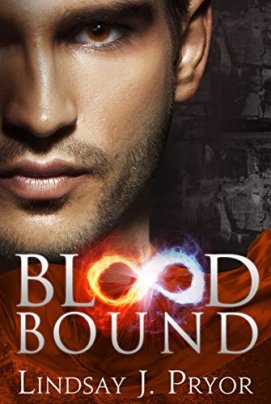
I’m thrilled to welcome Lindsay J. Pryor to Linda’s Book Bag as her penultimate Blackthorn novel, Blood Bound, is released today, 21st September 2016, from Bookouture. Blood Bound is available for purchase in e-book here.

Today, to celebrate Blood Bound, Lindsay is telling us all about romantic heroes.

Blood Bound

blood-bound

Love can be heaven. Or it can hurt like hell.

For exiled angel Jessie, falling for Eden Reece has been her salvation. When she discovers that her angel tears, used to heal Eden, are actually poisoning him the burden of guilt is crushing.

Jessie is determined to make things right and, with Eden by her side, they are a formidable team. But with Blackthorn surrounded by an impenetrable barrier and the army of Sirius Throme closing in, their mission is a desperate one. When Jessie discovers they are up against her own kind too, it looks impossible.

Eden and Jessie don’t just need a cure, they need a way out – and have less than 48 hours to find both.

Eden will fight to the last to protect Jessie, but when they are captured and separated, demons from his past return to haunt him. Suddenly, Jessie is forced to question everything she knows about the man she loves.

Yet the most shattering twist is still to come. Because what you care about most can be your biggest weakness.

For Blackthorn to survive, either Jessie or Eden will have to make the greatest sacrifice of all…

The thrilling penultimate story in the Blackthorn series will leave you breathless.

Dark Heroes of Fiction

A Guest Post by Lindsay J. Pryor

blog-tour2

What constitutes a hero in romantic fiction? I’ve always found this an interesting topic for discussion amongst writers and readers. Does the hero always have to be the good guy? Does he need to shine as such from the very beginning? Is there any set ideal or formula? Fortunately not. There are readers and writers alike who readily embrace the amazingly diverse and eclectic genre that is romance – and that includes its heroes too.

I write the Blackthorn dark paranormal romance series. I began my journey into romance with the classics. My first dark romantic hero was Heathcliff from Wuthering Heights. At the age of 17, I remember participating in discussions in my English Literature classes about what could constitute him as a hero. We had many a debate as to whether Heathcliff could be referred to as such, and not least because his behaviour was so despicable at times. That’s not how they were supposed to behave! They’re supposed to be good and kind and self-sacrificing, let alone gentle and tender with the heroine and those she cares about. Heroes have to be almost super-human, even better than everyone else – that’s the whole point, surely? I guess it was those types of debates that first made literary characters so fascinating for me – not least the influence of reader perceptions and belief systems on how a hero is received.

I’ve always veered towards darker heroes because they intrigue me the most. I love flawed characters. I want my hero to work for his title; I don’t want him to come ready made to save the day. For me, characters need to develop and evolve, no matter how subtly. I want to be able to understand them, not necessarily agree with them.

blackthorn-series-summmary

It was inevitable dark heroes would play an integral role in my Blackthorn series – they’d have to be dark to survive in the cruel world that has been inflicted upon them. I don’t want my heroes and heroines to have an easy time. I want them to fight external and, more importantly, internal conflict to be with the one they love. I wanted my Blackthorn characters to battle their hearts and their beliefs, as well as the system they live in, to justify their feelings. The higher the stakes, the better the tension and conflict. I wanted my love interests to pose huge risks to each other not just because of what they are but who they are – questioning each other’s very nature. I find it even more powerful when there is every reason for them not to be together, but they still manage to pull through. There’s nothing like falling in love, let alone staying in love, against the odds in romance.

readers-comments

Fortunately, as each Blackthorn book is part of a series with an overarching plot, each building on the previous one, it allows all of my characters to grow at different rates. Some of my heroes might be adverse to the light but I have the advantage of having glimpsed into their futures and knowing they’re worth the struggle.

Thank you so much for hosting me and Blackthorn, Linda 🙂

My absolute pleasure Lindsay!

About Lindsay J. Pryor

blog-profile

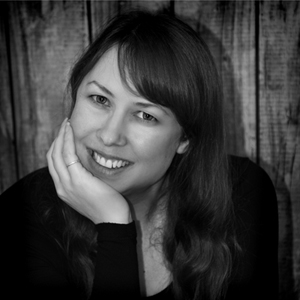
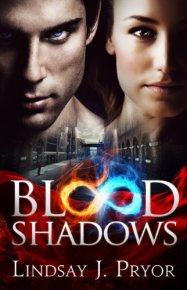
Lindsay J. Pryor is the author of seven novels in her Amazon bestselling Blackthorn series. Her complex, dark and gritty urban PNR has achieved numerous Gothic and PNR Amazon number ones both in the UK and the US, thousands of 5 star reviews, and more than thirty blog nominations and awards. Blood Shadows – Lindsay’s debut novel – was optioned by US film giants Relativity Media.

blood-shadows

Lindsay has been creating stories since she was nine years old, having quickly decided that fantasy was more interesting than reality. More than thirty years later, writing remains her passion.

Lindsay is a qualified Psychology lecturer and English teacher. Before becoming a full-time author, she taught for eighteen years, primarily to improve literacy for children with special needs. She was born and grew up in Wales but now lives in England with her husband, their rescue bunny and a plethora of wild woodland creatures.

To find out more about Lindsay or her books, please visit her website find her on Facebook, where she regularly chats to her readers, or follow her on Twitter.

A Guest Post by Wendy Robertson, author of The Bad Child

bad-child

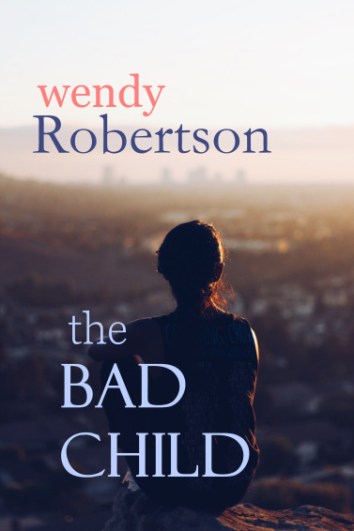
I’m very pleased to welcome author Wendy Robertson to Linda’s Book Bag today. Wendy’s latest novel The Bad Child was published in August and is available in e-book and paperback for purchase here.

Today Wendy tells us all about being a writing magpie and about some of the women who aren’t necessarily ‘good’ but who have inspired her writing, including The Bad Child.

The Bad Child

bad-child

We’re all experts in childhood. After all weren’t we all once children?

But … Twelve year old Dee – is a misfit in her family. Her parents see her stubborn willfulness as a source of chaos in the household. It’s the last straw when she decides not to speak. As her life begins to unravel Dee tells us her own story – how she begins to rescue herself from her own life. But she’s not alone on her journey. Travelling with her is a woman who throws pots and a dog called Rufus. Then there are Dee’s drawing books and characters she’s met in stories she has read…

Do Mothers Have To Be Angels?

A Guest Post from Wendy Robertson

Writers are like magpies. We pick up – and bury deep – tiny, glittering gems of observation and memory only to find them resurfacing to become subconsciously available for some new and quite different story.

So I have been thinking about prison lately.

I met this girl in prison, let’s call her June: tall and tough and a bit of a leader in there. She wrote with me a bit, talked with me rather more. She once told me she’d called her daughter Armani because it was a glamorous name. I was puzzled. ‘The suits?’ I said. ‘No. The actress,’ she said. She meant Hermione.

She was one of the many young mothers I met and worked with in prison. The dilemmas of motherhood were big marker ‘inside’, connected as they were to a core of distress in the women’s lives: waiting for their mothers and sisters to bring their children to play on visiting day; using tooth-paste to pin pictures and letters from their children on their cork boards; enduring the heartbreak of seeing their children for the last time before they’re taken into care and sometimes more permanently off for adoption. Middle-aged and middle-class women endured all this, as well being in prison when their children are studying for their O and A levels or graduating from university.

If love were the only criteria for motherhood I would look on most of these women as good mothers. Angels in some waysSurvivors certainlyBut it’s important to know that these women did not come to the role of motherhood unscarred. When I was in prison up to 80% of the women had documented references to their being physically, mentally or psychologically harmed in their childhood, youth or young adulthood. June once said to me, ‘The scars on my arms ain’t nothing to the scars inside.’

attachment-1

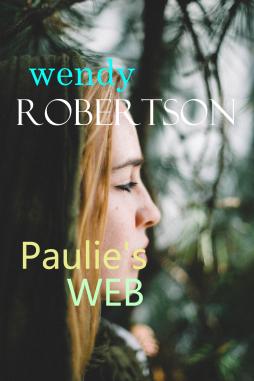
Ten years later all these experiences had distilled in my mind sufficiently for me to write my novel Paulie’s Web.    This fictional story is about Paulie Smith who, freed after serving six years of a life sentence, embraces the struggle to accept life ‘on the out’. She reflects on her time ‘inside’, focusing on four very different women whom she first met on the white prison van. Then she goes in search of them ‘on the out’ and we discover their own tragedies, their own recovery, their present lives and the things that still bind them together.

Now all these glittering insights have again re-surfaced in my mind as I was completed my new novel The Bad Child  – the story of 12 year old Dee, the middle child of an affluent, privileged family who suddenly decides not to speak.  She causes chaos and disturbance in her family as she battles from within the powerlessness of childhood to redefine her own life.

I have to say this glittering magpie-hoard from an over-observant childhood, maidenhood and adulthood has served me very well as a novelist. Because my life has been a mansion of many rooms rather than a hut with one window I don’t restrict myself to any genre. In my search to write the truth I have refused to ‘brand’ myself – term regrettably overused in modern book marketing.

That makes me a happy and fulfilled magpie…

I have found some comfort in these words:  ‘An unhappy childhood was not an unsuitable preparation for my future, in that it demanded a constant wariness, the habit of observation, and the attendance on moods and tempers; the noting of discrepancies between speech and action; a certain reserve of demeanour; and automatic suspicion of sudden favours.’   Rudyard Kipling.

About Wendy Robertson

portrait

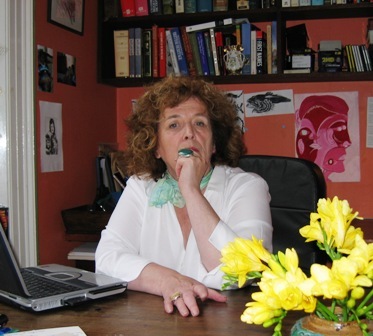
In the middle of her writing career Wendy spent five years as Writer in Residence in a women’s prison. This was a life-changing experience for her – broadening her view, deepening her empathy and her understanding of the whole of society. One outcome of that experience was her novel Paulie’sWeb This, while fictional, tells some truths about the varied lives of many of the interesting and wise women she met in prison.

You can follow Wendy on Twitter, visit her blog here and read an extract from The Bad Child on the Damselfly blog.

An Interview with Paul Crampton, Author of The Dream Messiah

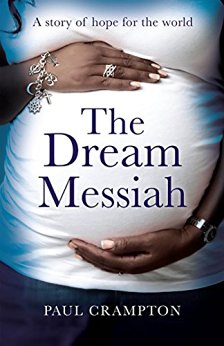
cover

I’m very pleased to welcome Paul Crampton to Linda’s Book Bag today to tell me about his writing and his novel The Dream Messiah in particular. The Dream Messiah was published in December 2015 and is available for purchase in e-book and paperback here.

The Dream Messiah

cover

Two completely unrelated young Londoners – Hamila Rashid, a black, ex-Somalian refugee living in the UK – and Tony Hammond-Jones, a white, middle-class bishop’s son from rural Hertfordshire – begin having recurring dreams featuring each other. When they finally manage to meet, they slowly realise that they share a destiny that has the potential to change the world forever.

An Interview with Paul Crampton

Hi Paul. Thank you so much for agreeing to answer some questions on my blog about your writing and The Dream Messiah in particular.   

Firstly, please could you tell me a little about yourself?

Hello Linda: I was born in Canterbury, in 1957, and have lived and worked in the city for most of my life. I’m divorced and earn my living, such as it is, as a full-time writer of fiction and non-fiction. I have a little orchard, attached to my garden, where I love to go and sit, and forget about my woes. I also love music, classical mainly, but also jazz, prog-rock and English folk.

When did you first realise you were going to be a writer?

I became a writer of fiction in 2002, having tried to find an artistic outlet that felt right for most of my life. I have tried learning an instrument, writing poetry and painting pictures. And, although I enjoy all of these things when other people are producing them, I wasn’t any good myself. And then, when I started to write fiction, it felt as if I’d finally found my outlet. I suppose I shouldn’t have been surprised, because I enjoyed it at school.

Which aspects of your writing do you find easiest and most difficult?

The easiest aspect for me is coming up with ideas. When I’m in the right frame of mind, they come thick and fast. For example, in 2014, I wrote a manuscript entitled ‘111 Creative Writing Ideas’. I’ve not done anything with it yet! I also love writing dialog and building up character profiles. The most difficult thing I find is getting started; those troublesome early chapters. However, once I get past that, I can fly!

One thing I should mention, at this stage, is that I have a mental health condition whereby I experience a lot of anxiety and, to a lesser extent, depression. This both helps and hinders the creative writing process, depending on where the pendulum has settled at the time. For example, for most of 2015, I couldn’t write a word, but this year, I can’t stop!

(I think writing can be a cathartic experience for many Paul. I can only write poetry when I’m depressed!)

What are your writing routines and where do you do most of your writing?

When the mood is right, I write every day, on the dining room table, because I only feel I’m truly happy during that process. I am also a morning person, and try to work solidly from 9:00 am to 1:00 or 2:00 pm.

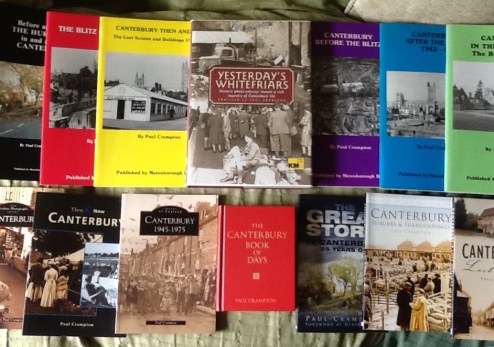
canterbury

I know you’ve written several non-fiction books about your home town of Canterbury and the area, so what led you to turn to fiction too from 2002, resulting in The Dream Messiah?

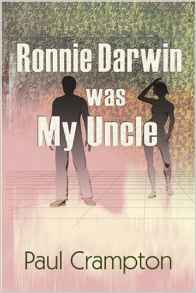
As I mentioned above, I’d been searching for a creative outlet for years. And then, in 2002, I had a dream that, effectively, was the plot for an entire novel. In the morning, I could remember every detail, and wrote it down. This, eventually, became my first novel: Ronnie Darwin Was My Uncle.

ronnie

You have a profound message in The Dream Messiah. Without spoiling the plot, what was your purpose in writing it?

The idea for that particular novel came out of my reaction to 9/11. I must confess I knew little about Islam, and couldn’t believe that such carnage was being carried out in its name. So I began to research Islam and discovered, to my surprise at the time, a religion of peace, love and tolerance. In fact, Islam has much more in common with Christianity and Judaism than it has differences. And I felt I wanted to say something about those things they had in common, rather than the hate message that was being perpetuated in some areas of the popular media.

How far do you think authors need a social conscience when writing?

I think it probably matters very little. I think it’s far more important to be true to the book you are writing at the time. Then again, no one can help pouring much of themselves, and their values, into whatever they are writing, even on a subconscious level. I suppose my characters tend to be deep thinking, complex, and anxious; the poor sods. I can also write ruthless characters too, because I came across many of those during my near 30 years of salaried work for BT. And, at the end of the day, most of us can draw on the dark side we all have lurking in there amongst all that grey matter.

You’ve mentioned Ronnie Darwin Was My Uncle, but is there a dream that you have had that has stayed with you and affected your life?

Well, apart from Ronnie Darwin and The Dream Messiah itself (part of which was another dream I had), I recently dreamt about a vast, dusty book shop, situated in an old house, with many rooms all full of old-looking books. One could wander from one to the other along rickety corridors. The proprietor was an old man straight out of Dickens. Crucially though, in each room, were wax work models of the authors whose books were featured therein.  And, if you went into any particular room, and thought hard about the authors in question, they came alive and talked about their lives to you.

(That sounds like a book in the making to me Paul!)

How did you go about creating Tony and Hamila in The Dream Messiah? Did you create whole character profiles, for example, or did they emerge organically as you wrote?

Hamila was the nicest, most pleasurable character I have ever written. I suppose, if I’m honest, I wrote her as an ideal life partner for me. Tony is partly me, inevitably, and then again so is his friend: the troubled soul, Daniel, who had committed suicide before the book begins. I think a lot about character profiles before I start, but these remain open to tweaking, if the plot demands it. Unusually though, they govern the plot.

If you could choose to be a character from The Dream Messiah, who would you be and why?

I suppose as they are, in some ways, idealised characters (otherwise God wouldn’t have chosen them), they are not really like me, although Tony is, in some ways. Therefore I would have to be him, especially as he becomes involved with Hamila!

If The Dream Messiah became a film, who would you like to play Hamila and Tony?  

Hamila is easy. Her visual appearance has always been based on the Welsh actress, Jose D’Arby. Tony is harder, but, I suppose, someone like Ralph Little? I have put pictures of how I see my characters on the Facebook page dedicated to The Dream Messiah.

image2

(Readers can visit that Facebook page by clicking here)

If you had 15 words to persuade a reader that The Dream Messiah should be their next read, what would you say?

Two young Londoners have dreams, featuring each other, that suggest they share an important destiny.

And finally, what are you working on at the moment?

I am working on a trilogy of religious conspiracy novels called: The Canterbury Apocalypse. This has been eight years in the making and, for the first time, joins together my fiction and non fiction writing. I have already started a Facebook page here dedicated to this concept.

Good luck with that Paul and thank you so much for your time in answering my questions.

My pleasure!

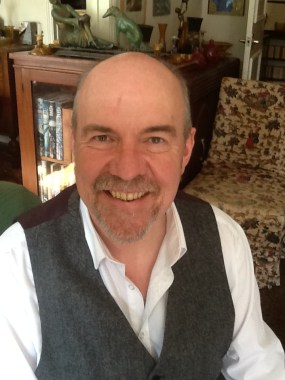
About Paul Crampton

paul

Paul Crampton was born in Canterbury in 1957, and has lived and worked in the city for most of his life. His love for Canterbury, and its wide and varied history, has led to the publication of over 15 books on the subject to date. He has also written histories of Whitstable and Folkestone.

Paul started writing fiction in 2002, and has had several novels puiblished. The Dream Messiah is the first of these to reach a wide audience.

You can follow Paul on Twitter and visit The Dream Messiah Facebook page.

One Christmas in Paris by Mandy Baggot

one-christmas-in-paris

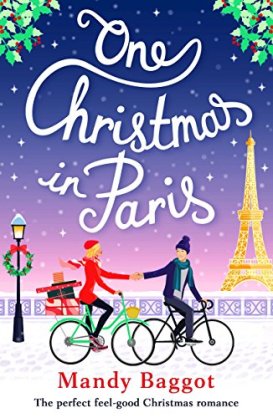
I am extremely grateful to Mandy Baggot for an advanced reader copy of One Christmas in Paris in exchange for an honest review. One Christmas in Paris is published in e-book by Bookouture on 7th October 2016 and is available for purchase here.

One Christmas in Paris

one-christmas-in-paris

They say Paris is the City of Love, so bring your je ne sais quoi and don’t forget the mistletoe!

Ava and her best friend Debs arrive in Paris just as the snow starts to fall. The Eiffel Tower glitters gold and the scent of spiced wine is all around, but all Ava can think about is Leo, her no-good, cheating ex.

Debs is on a mission to make Ava smile again, and as they tour the Christmas markets, watch lamplight glittering on the river Seine, and eat their body weight in pain-au-chocolat, Ava remembers there’s more to life than men … Until they cross paths with handsome, mysterious photographer Julien with his French accent and hazelnut eyes that seem to see right inside her.

Ava can’t ignore the intense chemistry between them, but her fingers have been burned before and she can’t forget it, especially when her ex, Leo, starts texting again. Can Ava really trust Julien – and what exactly is his secret?

Will Ava go home with a broken heart, or will she find true love amongst the cobbled streets of Paris?

Join Ava and Julien in the most romantic city in the world this Christmas, as they discover the importance of being true to themselves, and learn how to follow their hearts.

One Christmas in Paris is a gorgeous, laugh-out-loud romantic comedy – perfect for fans of Jane Costello, Miranda Dickinson and Lucy Diamond.

My Review of One Christmas in Paris

When Ava joins her friend Debs on an impromptu trip to Paris, she doesn’t realise just how much it will change her life.

I confess I haven’t got round to reading Mandy Baggot before as I was somewhat disbelieving of the rave reviews she always gets. I was utterly wrong to doubt her. One Christmas in Paris epitomises the best of its romantic comedy genre and is a delight to read.

I think what works so well is the reduced cast of characters. With the main focus on Ava and Julien, both of whom I adored, Debs and Didier play an excellent supporting role (though I was irritated by Debs’ constant use of ‘totes’ peppered throughout her speech) so that the reader feels they have chance to get to know and understand the characters as people – pretty much in tune with how they come to understand themselves. Readers can identify with so many facets of their personalities, their fears, hopes and insecurities. There is a brilliant balance of viewpoint from the perspectives of Ava and Julien giving a hugely satisfying read.

Mandy Baggot has a cinematic style when writing about setting. I may have been reading One Christmas in Paris on the hottest September day for over a century, but I was completely transported to snowy Paris just before Christmas. Somehow Mandy Baggot provides enhancing detail at the same time as moving on the plot to perfection so that I felt I really wanted to be there too to experience the markets, the Seine cruise and the iconic landmarks. My only ‘criticism’ here is the description of food as it is so realistic it made me ravenous. I really needed a baked Camembert!

The romantic elements are beautifully handled. There’s a sensuality that simultaneously remains realistic so that those moments are ones the reader can relate to.

Alongside what readers might expect from a book in this genre, there are deeper and affecting themes too. Yes, there’s romance and the hurdles it faces along the way, but there’s also deeper elements like reference to the Paris attacks and how other life changing events might simply be overlooked in their wake. There’s an investigation of how both physical and emotional scars can prevent us from engaging with our present and future. There’s an exploration of family dynamics that I think will resonate with so many readers.

I know some readers are sceptical about this genre, and I have been myself in the past, but if they were to read Once Christmas in Paris by Mandy Baggot I think they would have to agree this is wonderful writing that transports you from the mundanity of life to a world of romance laughter and a crackingly good read. I loved it.

About Mandy Baggot

mandy-baggot

Mandy Baggot is an award-winning writer of romantic comedies, chick-lit and contemporary romance.

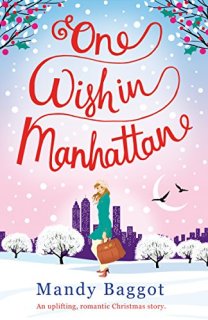
In February 2016 her romantic comedy novel, One Wish in Manhattan, was shortlisted for the Romantic Novelists’ Association Romantic Novel of the Year award.
one-wish-in-manhattan
Mandy loves mashed potato, white wine, country music, World’s Strongest Man, travel and handbags. She has appeared on ITV1’s Who Dares Sings and auditioned for The X-Factor.

Mandy is a member of the Romantic Novelists’ Association and the Society of Authors and lives near Salisbury, Wiltshire, UK with her husband, two daughters and cats, Kravitz and Springsteen.

Find out more about Mandy by visiting her website. You can follow her on Twitter and find her on Facebook. You’ll find all Mandy’s lovely books here.
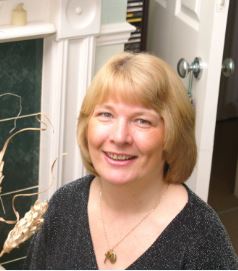
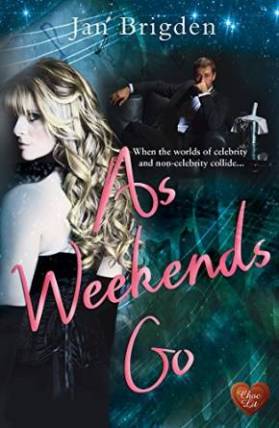
Doing Your Research, A Guest Post by Jan Brigden, Author of As Weekends Go

as-weekends-go

I’m delighted to be welcoming back lovely Jan Brigden, author of As Weekends Go to Linda’s Book Bag. I have previously interviewed Jan and you can read that interview hereAs Weekends Go was published by Choc Lit on 4th December 2015. As Weekends Go is available on Amazon UK and Amazon US and by following the publisher links here.

CHOC

As an aspiring romantic writer myself, I’m delighted that Jan has agreed to write a guest post all about her research process today.

As Weekends Go

awg_hirespackshot-150dpi

What if your entire life changed in the space of a weekend?

When Rebecca’s friend Abi convinces her to get away from it all at the fabulous Hawksley Manor hotel in York, it seems too good to be true. Pampering and relaxation is just what Rebecca needs to distract herself from the creeping suspicion that her husband, Greg, is hiding something from her.

She never imagined that by the end of the weekend she would have dined with celebrities or danced the night away in exclusive clubs. Nor could she have predicted she would meet famous footballer, Alex Heath, or that he would be the one to show her that she deserved so much more …

But no matter how amazing a weekend is, it’s always back to reality come Monday morning – isn’t it?

Football Stadiums and Grand Hotels:

The perks of doing your research as a writer

A Guest Post by Jan Brigden

I had to do plenty of research for As Weekends Go and thoroughly enjoyed it. Almost everyone I approached was kind and helpful, especially when I explained that I was writing a novel and wanted clarification of certain aspects, whether it be about places, procedures, customs, etc.

Take York, for instance, a city that features heavily in the book. Yes, I’d visited with my husband for a few days, but that was for leisure. Once I knew I wanted Rebecca and Abi (my two lead female characters) to spend their fictional weekend there, I accepted that my array of photos and memories wouldn’t suffice. I’d need to return, several times, notebook and pen poised, to carry out some proper investigating. Not just the touristy bits, but the nitty gritty of everyday life … opening and closing times (no, not just the pubs!) where the supermarkets were, the climate, local newspapers, house prices, etc, etc. During my three return visits I filled two big notepads with precious snippets of advice and information from residents and businesses, knowing that when I read it all through on the train on the way back to London, I’d feel confident that anything I subsequently wrote for the novel would be as authentic as possible.

york

Similarly, with Alex  – my male lead – being a footballer, I needed to check certain facts about his profession. Having met one or two players over the years, and also coming from a footie-mad family, I already had a good knowledge of the game. I’d made loads of notes from the internet, watched lots of TV footage, read the odd autobiography, but again, it was a contact at my local football club who validated everything for me. I also received a fab tour of the stadium in the process. If I only used a quarter of the stuff I’d learned, both in York and about football, I could be sure it was genuine.

One of my most enjoyable and invaluable book research experiences, was when I met with the duty manager of a country hotel not far from where I live, upon which I loosely based Hawksley Manor – my fictional hotel in York. It was a roasting hot day and I must have asked the poor man thirty questions, all of which he answered with a smile. Yet it was the guided walkabout and being shown the different rooms, seeing the various menus, learning the staff and management structure, who did which shift, seeing the spa facilities up close, all the products that were ordered in, and when, that gave me that confidence buzz again. Whatever I wrote about, I’d either have seen or heard first hand.

Of course, there will always be things that prove trickier to verify, the odd person who may be reluctant to divulge information, or that one sentence you’ve written that leaves a question in the reader’s mind. I’d hate to take the fun out of fiction altogether – after all, imagination is a wonderful tool – but when writing about real places or professions or sets of rules and regulations, I can definitely recommend doing your research.

About Jan Brigden

jan

Jan is a Romaniac and you can find more about that group of writers here. Readers can also find Jan on Facebook and follow her on Twitter.

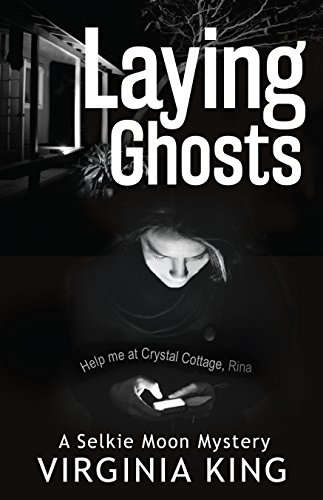
Short Story: Laying Ghosts by Virginia King

laying-ghosts

My grateful thanks to the author, Virginia King, for a copy of Laying Ghosts in return for an honest review. Laying Ghosts is a short story prequel to the Selkie Moon Mystery Series by Virginia King and includes a bonus first chapter of The First Lie, the first book in the series. Laying Ghosts is available for purchase in e-book here.

The First Lie ebook 400 KB

I have a guest post from Virginia King and my review of The First Lie here.

Laying Ghosts

laying-ghosts

Ghosts used to moan. Now they … phone.

A strange message, a deserted beach house, a shocking incident from the past … Selkie Moon’s life will change forever.

When a text message from a long lost friend lures Selkie Moon to Crystal Cottage, the chilling events from a house-party four years earlier wrap her in ghostly fingers and turn her life upside-down.

My Review of Laying Ghosts

When Selkie gets a text message from her friend Rina whom she hasn’t heard from in four years, she has to respond and meet her at Crystal Cottage, but the message isn’t as simple as it might appear.

Crikey what a short story! Laying Ghosts had me gripped from the first sentence right through until the closing line. At times I found the subject matter of the sexual elements quite shocking but completely appropriate to the plot. The exploration of control and fear that pervades some relationships is incredibly well handled.

It is difficult to express how much Virginia King has packed into this short story of less than 50 pages. Alongside a fast pace and thrilling story, she has created characters that are easily known to the reader, especially Selkie, Andrew, Frank and Rina. Although Laying Ghosts is completely satisfying as a stand alone read, I liked the way there are hints as to Selkie’s character that lay the foundations for the rest of the series.

There’s a real tension behind the plot because of the first person narrative from Selkie with plenty of surprises for the reader too. What I really enjoyed was the way in which Virginia King created atmosphere through attention to the small details so that I was able to visualise Crystal Cottage and the garden in particular.

I thought the supernatural elements were highly effective so that they gave an authenticity to the story without the ridiculous co-incidences I’ve sometimes found in this genre.

Laying Ghosts is not the kind of story I usually choose to read, but Virginia King has made me feel I’m missing out. I found it hugely entertaining, creepy and quite disturbing at times. It’s a brilliant way to be converted to the genre!

About Virginia King

Virginia King Author Portrait Small

When a voice wakes you up in the middle of the night and tells you to write a mystery series what’s a writer to do? That’s how Virginia King came to create Selkie Moon, after a massage from a strange woman with gifted hands was followed by this nocturnal message. Virginia sat down at the keyboard until Selkie Moon turned up. All she had to do was jump, the first sentence said. Soon Virginia was hooked, exploring far-flung places full of secrets where Selkie delves into psychological clues tangled up in the local mythology.

Before Selkie Moon invaded her life, Virginia had been a teacher, an unemployed ex-teacher, the author of over 50 children’s books, an audio-book producer, a workshop presenter and a prize-winning publisher. These days she lives in the Blue Mountains west of Sydney with her husband, where she disappears each day into Selkie Moon’s latest mystery. Bliss.

You can find out more about Selkie Moon and Virginia on Virginia’s website, on Facebook and by following Virginia on Twitter. You’ll also find buy links for all Virginia’s books here.