Celebrating Deadly Harvest by Michael Stanley

Deadly Harvest A/W.indd

I absolutely adore Botswana and couldn’t believe it when I was asked to be part of the launch celebrations for Deadly Harvest by Michael Stanley which is set there. Deadly Harvest, Book 4 in the Detective Kubu Series, is published by Orenda books and is available in e-book and paperback by following the links here.

I have a wonderful guest post from Michael Stanley all about collaborative writing.

Deadly Harvest

Deadly Harvest A/W.indd

‘A wonderful, original voice – McCall Smith with a dark edge and even darker underbelly’ Peter James

‘Richly atmospheric … a gritty depiction of corruption and deception’ Publishers Weekly

A young girl goes missing after getting into a car with a mysterious man. Soon after, a second girl disappears, and her devastated father, Witness, sets out to seek revenge. As the trail goes cold, Samantha Khama – new recruit to the Botswana Criminal Investigation Department – suspects the girl was killed for muti, the traditional African medicine usually derived from plants, sometimes animals and, recently and most chillingly, human parts. When the investigation gets personal, Samantha enlists opera-loving wine connoisseur Assistant Superintendent David ‘Kubu’ Bengu to help her dig into the past. As they begin to discover a pattern to the disappearances, there is another victim, and Kubu and Samantha are thrust into a harrowing race to stop a serial killer who has only one thing in mind…

‘Under the African sun, Michael Stanley’s Detective Kubu investigates crimes as dark as the darkest of Nordic Noir. Call it Sunshine Noir, if you will – a must read’ Yrsa Sigurðardóttir

‘This book took me to a world I didn’t want to leave. It kept me reading, it kept me guessing, and it kept me gasping at its many twists and surprises’ R.L. Kline

‘Compelling and deceptively written…’ New York Journal of Books

Collaborative Fiction Writing

A Guest Post by Michael Stanley

Our first book, A CARRION DEATH, which was first published in 2008, took us three years to complete.  Of course, since this was our first foray into writing fiction, it wasn’t surprising that we had an enormous amount to learn.  One of the things we learnt was that it’s unusual for two people to write fiction together.  But as we learnt more, we discovered that there are several highly successful writing teams in the genre – Nicki French (husband and wife), PJ Tracy (mother and daughter), Charles Todd (mother and son), Karen Perry (two friends), just to name a few.  Indeed, it’s becoming sufficiently common that some teams even use both their names rather than hiding behind a pseudonym; for example, the Swedish partnership of Roslund and Hellstrom.

Both of us have been university professors and both of us have enjoyed collaborating in our academic lives.  Stanley has co-authored non-fiction books; Michael has written many academic papers with other researchers.  So it seemed natural to us to work together on a project writing fiction.  And we enjoyed finding out how to do that.

Sometimes writers (and readers) ask us how we can share this very private creative art with another person.  We think this is the wrong question.  For us, a better question is how can someone write alone?  We have the benefit of having an involved person to brainstorm with, to bounce ideas off, and to give truly critical feedback.  We also have the benefit of having someone to share a glass of wine with while discussing the intricacies of plot or character – a solo writer can’t do that, because no one else will be totally involved.
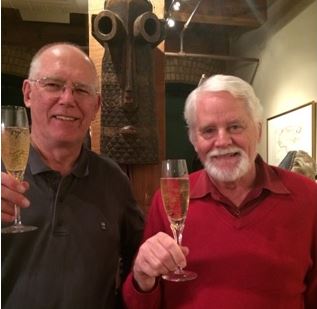
wine 2

We both do everything.  We brainstorm together, follow up on research, travel to little known parts of Botswana, and write.  Our process is that one of us does the first draft of a piece, sends it by email to the other, and receives a response which is often a highly commented and edited version.  The originator responds, then back and forth in that way, perhaps more than twenty times.  Eventually the piece is not written by Michael or by Stanley, but rather by some gestalt, named Michael Stanley, who sits somewhere between Minneapolis and Johannesburg in cyberspace.  Readers tell us the product is seamless; our friends tell us they can identify who wrote what, but they are wrong about half the time!

We believe there are many benefits to collaboration.  We can brainstorm plot and character, and we think we get a more cohesive final product as a result.  When one of us flags, the other is there to nag and take up the slack.  Best of all we get immediate and interested feedback on anything we write.

However there are some caveats.  You must be willing to take harsh criticism, knowing that it’s directed at the product rather than you, and that the only goal is to improve the work.  There must be trust and an ability to see the other person’s point of view.  It helps if you have similar writing styles.  And it probably takes longer than writing alone.  But all that is outweighed by the biggest advantage: it’s great fun!  And, after all, most people who write do it for the enjoyment.

DEADLY HARVEST is the fourth in the Detective Kubu series, and these books would never have seen the light of day without the collaborative style we’ve developed.  We’ve remained good friends, and we’re still having fun.  For us, collaboration definitely is the way to write mystery fiction.

About Michael Stanley

MichaelstanleyPortrait 300 dpi

Michael Stanley is the writing team of Michael Sears and Stanley Trollip. Both were born in South Africa and have worked in academia and business. Stanley was an educational psychologist, specialising in the application of computers to teaching and learning, and is a pilot. Michael specialises in image processing and remote sensing, and teaches at the University of the Witwatersrand. On a flying trip to Botswana, they watched a pack of hyenas hunt, kill, and devour a wildebeest, eating both flesh and bones. That gave them the premise for their first mystery, A Carrion Death, which introduced Detective ‘Kubu’ Bengu of the Botswana Criminal Investigation Department. It was a finalist for five awards, including the CWA Debut Dagger. The series has been critically acclaimed, and their third book, Death of the Mantis, won the Barry Award and was a finalist for an Edgar award. Deadly Harvest was a finalist for an International Thriller Writers’ award.

For more information about DEADLY HARVEST or to book an interview with Michael Stanley, please contact Karen Sullivan: Karen@orendabooks.co.uk

You can also follow the launch celebrations with these other bloggers:

new tour poster

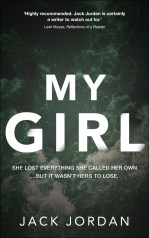
My Girl by Jack Jordan

My Girl

I’m delighted to be featuring Jack Jordan again on Linda’s Book Bag. I first encountered Jack’s writing when he launched his debut, Anything For Her, last year and was so impressed by what a talented thriller writer he is. You can read my review of Anything For Her here and buy a copy here.

Today I’m reviewing Jack’s latest novel My Girl which is another cracking thriller.

My Girl

My Girl

Paige Dawson: the mother of a murdered child and wife to a dead man.

She has nothing left to live for… until she finds her husband’s handgun hidden in their house.

Why did Ryan need a gun? What did he know about their daughter’s death?

Desperate for the truth, Paige dedicates her life to unearthing her husband’s secrets.

But she has no idea who she is up against, or that her life isn’t hers to gamble – she belongs to me. 

My Review of My Girl

Having so enjoyed Jack Jordan’s debut Anything For Her, it was with some trepidation that I began My Girl as I was prepared to be disappointed by second novel syndrome. Not a bit of it. Jack Jordan’s incredible story telling ability shines through again in a thrilling new book.

Paige is in free fall in a spiral of drink and drugs following the disappearance of her daughter several years before and her husband’s suicide. Just when she hits rock bottom, her life implodes further.

My Girl is a thrilling narrative. I had to keep reading to find out what would happen next in this roller coaster story. Carefully constructed, brilliantly potted and satisfyingly concluded, I’d defy any crime or psychological thriller reader not to enjoy this book. It isn’t possible to say too much about the plot as this would spoil the read but suffice it to say that it is compelling and exciting, with quite a few gasp out loud moments.

The character of Paige is so well drawn, especially as the author is a young man and she is a middle aged woman. Jack Jordan understands what makes us human and he knows exactly how to exploit the frailties we all suffer. Paige’s behaviour is frustrating but totally understandable given the traumas she has been through.

What I find so skilful about Jack Jordan’s writing is his ability to provide the little details that really bring a scene alive without overwhelming his audience. He enables the reader to visualise completely what is happening with consummate ease so that there is a cinematic feel to the reading experience. Indeed, I think both My Girl and Anything For Her would make fabulous films.

I thought My Girl was brilliant. I thoroughly enjoyed reading it and I am so delighted that I have discovered this fantastically talented writer. I can’t wait for the next Jack Jordan book.

About Jack Jordan

Jack

Jack Jordan – ‘an introvert disguised as an extrovert, an intelligent person who can say very unintelligent things, and a self-confessed bibliomaniac with more books than sense.’

You can find out more about Jack by following him on Twitter and visiting his website. You’ll also find him on Facebook.

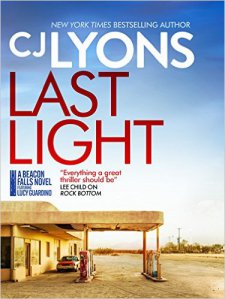
Last Light by C J Lyons

Last Light

I’m indebted to Hayley Steed at EDPR for an e-copy of Last Light by C J Lyons in return for an honest review. Last Light is the seventh Lucy Guardino novel although it can be read, as I did, as an entirely standalone book, and was published on 3rd May by Edgy Reads. Last Light is available for purchase on Amazon UK, Amazon US, from Waterstones, iTunes and Fantastic Fiction.

Last Light

last light 1

After leaving the FBI, life should be easy, right? Wrong—not if you’re Lucy Guardino.

Lucy has always seen herself as a normal Pittsburgh soccer mom who happened to have a job chasing the worst of the worst. But after a violent predator targets her family and she’s injured, Lucy sacrifices her career with the FBI in order to keep her family safe.

What is she now that she’s no longer a FBI Special Agent? she wonders as she begins her new job with the Beacon Group, a private consulting firm that specializes in cold cases and bringing justice to forgotten victims. Lucy fears she’s traded being a kick-ass law enforcement officer for being a civilian mother hen shepherding a team of amateurs.

Her fears appear justified when she’s partnered with TK O’Connor, a former Marine MP struggling with her transition to life back home, and sent to rural Texas to investigate a case that’s more than cold, it’s already been closed with the killers behind bars for the past twenty-nine years.

But…who really killed Lily Martin, her infant daughter, and husband? Why was an entire family targeted for annihilation?

What price will Lucy pay when she fights to expose a truth people will kill to keep buried?

My Review of Last Light

Retired through injury from the FBI, Lucy Guardino joins the Beacon Group to solve cold cases. Her first, leading back to 1987, is not going to be as straightforward as she hopes.

I haven’t read any of the other Lucy Guardino books but reading Last Light I can see how they have built an enormous following. Fast paced and gritty with seedy corruption, shady and varied characters and just the right level of violence to give an authentic appeal, especially to those who love late night American police dramas, this is a series well worth exploring. Initially I didn’t think I was going to like the style as it felt too American for my taste, and I wasn’t sure about the level of county police corruption presented in the early stages of the book. However, having suspended my disbelief, I was drawn into the narrative and the characterisation almost against my will as the strands of the story developed and I found I wanted to know what happened next.

The main characters, particularly TK, all have their flaws and frailties which make them all the more believable and I liked the strong female portrayal of Lucy. Indeed, there is enough revealed with just enough still hidden to draw the reader into the next book, wanting to know just how the relationships develop as the Beacon team works together.

The themes presented are very thought-provoking. The treatment of those who’ve been mentally damaged by active service, how we define and behave within families, the levels of corruption that exist around us that we complicitly ignore are all explored within the pages of Last Light, giving it an interest beyond simply being a good crime thriller.

I thought the switches between 1987 and the present day were really skilfully handled so that the tension was built up the more the truth was uncovered. The denouement is dramatic and thrilling to read and I found myself quite tense and reading more quickly in tune with the writing.  C J Lyons certainly knows the elements that make for an exciting read. I could easily see Last Light as a big screen feature film.

Last Light is perfect for those who like American crime thrillers.

C J Lyons

You can find out more about C J Lyons by following her on Twitter, finding her on Facebook or visiting her web site.

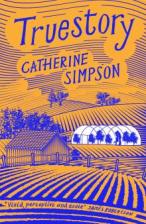
From Journalist to Novelist – A Guest Post from Catherine Simpson, author of Truestory

Truestory final cover

Those who visit Linda’s Book Bag regularly know how I love to meet authors and fellow bloggers. On Saturday 4th June 2016 I was fortunate to attend an author and blogger meet up in Edinburgh organised by the lovely Joanne Baird. You can see more about that day on Joanne’s blog here. Whilst having lunch I chatted to Catherine Simpson whose novel Truestory was published by Sandstone Press on 17th September 2015 and is available for purchase here. Catherine agreed to come along to Linda’s Book Bag and today she is telling us all about the ups and downs of moving from being a journalist to becoming a novelist in a great writing guest blog.

Truestory

Truestory final cover

Alice’s life is dictated by her autistic son, Sam, who refuses to leave their remote Lancashire farm. Her only time ‘off’ is two hours in Lancaster on a Tuesday afternoon – and even that doesn’t always pan out to be the break she needs.

Husband Duncan brings Larry, a rootless wanderer, to the farm to embark on a money making scheme they’ve dreamed up. Alice is hostile but Larry beguiles Sam with tales of travel in the outside world and, soon, Alice begins to fall for him, too.

By turns blackly comic, heart-breaking and heart-warming, Truestory looks at what happens when sacrifice slithers towards martyrdom. Both happy and sad, ultimately Truestory is a tale of hope.

From Journalist to Novelist: The Ups and Downs

A Guest Post from Catherine Simpson

I wanted to be a fiction writer – so I became a journalist. This is not uncommon. Journalism seemed do-able, as opposed to novel writing which appeared as accessible to someone from a 1970s comprehensive as becoming a professional ballet dancer or a portrait painter. There seemed to be a recognised route into journalism, you could do a degree in it (I started mine in 1989); it didn’t seem embarrassing to admit ‘I want to be a journalist,’ unlike ‘I want to be a novelist.’ Even so it took a couple of false starts as a bank clerk and a civil servant until I did a one-year National Council for Training of Journalists (NCTJ) course and then on to do my degree.

I earned my living writing ‘real-life’ stories for women’s magazines – Woman and Woman’s Own, at first, then Closer and Reveal, Bella, Best, Chat and the rest, with occasional features for national newspapers: the Daily Mail, The Herald, The Scotsman. I fitted the work around raising my two daughters. In those heady days (pre 2008), journalism paid well and you met interesting people. I wondered why everyone didn’t want to be a journalist.

Then when I was 45 I remembered I wanted to write a book. My elder daughter has autism and it was getting increasingly hard to get out on journalism jobs because there was always a crisis to deal with, so I began to study creative writing from home with the OU and then a Creative Writing MA at Edinburgh Napier University.

My first (unpublished) manuscript was shortlisted in the inaugural Mslexia women’s novel competition and then the opening chapters of my second manuscript won me a Scottish Book Trust New Writers Award. This manuscript became Truestory – my debut novel published last September by Sandstone Press. By then I was 51.

People often remark that journalism must be a good training ground for novelists and in some ways that is true. I work well with a deadline; in fact I love a deadline. Without a deadline my work slows right down.

I never feel I must wait for the muse to strike. If I’m writing a novel, or (as is now the case) a memoir, I write it; whether with a pen and paper or on my laptop. I start to write and the words come – sometimes reluctantly – well, usually reluctantly – but they come none the less.

Having been a journalist I am used to sending off work for someone else to read and edit. I’m used to feedback. I’m used to my articles going out of my hands and having headlines attached and photo captions added by sub-editors.

All of this is good and helpful. However, in other ways journalism is not a good preparation for writing fiction, as fiction feels very different to writing articles that tell other people’s stories.

Truestory is about a mother raising a child with autism; it is a work of fiction inspired by real events, but it is very much fiction; the events in it are made up. This did not stop me feeling hideously exposed when the novel was about to come out. Would people realise it was fiction? Would they think I’d done all the things Alice (the mother in Truestory) had done?  I got cold feet. When the first copies of the book arrived I could hardly bear to open it. What had I done?

But readers are more sophisticated than that and I’ve only been asked once or twice: ‘Did such-and-such really happen?

Having been a journalist people also remark that the people I interview must provide inspiration for endless fictional stories. In fact I have never found this to be the case. The people I interview for ‘real life’ stories are often victims of crime and abuse. Their stories rarely have satisfactory arcs – there is much injustice and unsatisfactory endings that would not suit the readers of fiction. Events in real life are sometimes so random that fiction readers would lose patience and not believe the plotline. It is usually true that real life is stranger than fiction.

Where being a journalist has helped me the most (and the fact that my husband has also been a journalist working in the national press for 25 years) is in the coverage I’ve had for my novel.  I was happy to talk about my personal story of raising an autistic child – in fact I, and my daughter, who is now 21, were both delighted to talk about it to raise autism awareness. This gave us an angle for newspaper features which helped a lot with the publicity.

I could offer to write my own features, as I did here for the Daily Mail and here for the Daily Telegraph. Or the paper could interview me and write their own feature, as happened here with the Daily Record.

It’s very hard to get book reviews so being able to get coverage on news and features pages was vital. Having the experience of dealing with news desks and having contacts in the industry is where my background as a journalist really was a godsend.

Catherine full screen

You can find out more about Catherine Simpson by visiting her website and following her on Twitter.

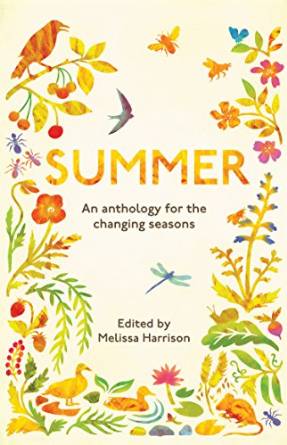
Summer – An Anthology for the Changing Seasons edited by Melissa Harrison

Summer

I am indebted to Alison Menzies Publicity for a copy of Summer – An Anthology for the Changing Seasons edited by Melissa Harrison in return for an honest review. Summer – An Anthology for the Changing Seasons was published by Elliott and Thompson in conjunction with the Wildlife Trusts on 19th May 2016.

Summer is the second of four titles known collectively as The Seasons and is available for purchase on Amazon and from Waterstones.

Summer – An Anthology for the Changing Seasons

Summer

Summer is a season of richness: gold against blue; sun dazzle on water; sweet fragrance, and the sound of insects, filling the air. We feel the sand between our toes, or the grass beneath our feet. In these long, warm days, languid and sensual, we reconnect with the natural world, revelling in light and scent and colour once more.

Capturing the high point of the year’s progress, Summer presents prose and poetry spanning eight hundred years. Featuring new contributions by Simon Barnes, Michael McCarthy and Esther Woolfson, classic extracts from the work of Charles Dickens, Mary Webb and Philip Larkin, and diverse new nature writing from across the UK, this vibrant and evocative collection will inspire you to go out and enjoy the pleasures of summer.

My Review of Summer – An Anthology for the Changing Seasons

I’ve been dipping in and out of this beautiful anthology for some time but didn’t want to post a review until I had read every entry. There are poems, extracts and essays spanning several centuries, so that there is something for every reader in this celebration of the season.

I might be biased as my favourite author, Thomas Hardy, is featured a couple of times as are other well known classical writers like George Elliott and Charles Dickens (with a piece I hadn’t previously read to my shame) as well as more modern writers like Benjamin Zephaniah, but I thought the eclectic mix of pieces was glorious.

However, I think the passages I enjoyed most were from writers I haven’t encountered before. I loved In An August Garden by Alison Brackenbury as she explores where those enormous spiders that appear at the end of summer actually come from. I found Jacqueline Bain’s piece on ‘the black, the drab and the furtive’ illustrated a side to summer we seldom consider. I hadn’t though about a stag farting either, but the 13th century anonymous piece means I’ll never look at deer in quite the same way again!

There’s a beauty to this book – from the glorious cover to the simple illustrations like that of the swallow that adorn the inside pages. The writings are all evocative, enlightening, entertaining or thought provoking. It was a relief to find Timothy, Reverend Gilbert White’s tortoise, had gained weight in the year since 1775 and I found Janet Willoner’s piece about the otter read like the most beautiful poetry even though it’s a prose piece.

Now I’ve read all the elements in this lovely book, I shall treasure it and return to it again and again in the future because, to steal from Jan Freedman’s quoting of David Attenborough, this book affords ‘an innate pleasure and delight and interest and curiosity in the natural world’.

Summer – An Anthology for the Changing Seasons would make a perfect gift for any lover of words or nature.

About the Editor Melissa Harrison

Melissa Harrison is a writer and nature lover whose first novel Clay (2013) won the Portsmouth First Fiction prize, was selected for Amazon’s ‘Rising Stars’ programme and  named by Ali Smith as a book of the year. Her second, At Hawthorn Time (2015), was shortlisted for the Costa Best Novel Award and chosen by the Telegraph as one of their Books of the Year; both books are as much about the natural world as they are about people. She writes the Nature Notebook in The Times and regularly speaks about conservation, literature, and the very fertile ground between the two.

You can follow Melissa Harrison on Twitter or visit her website.

Taking on the Difficult Stories with Susan Gandar, author of We’ve Come To Take You Home

cover

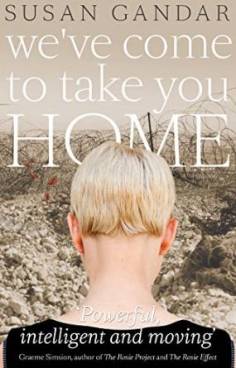
One of the delights of blogging is that books I’m introduced to books I wouldn’t necessarily encounter. We’ve Come To Take You Home by Susan Gandar is one such book. Susan has kindly agreed to provide a guest blog today all about how her debut adult novel We’ve Come To Take You Home doesn’t shy away from difficult stories, and I’m delighted to be sharing her post with you.

Available from the publishers in ebook and in paperback as well as on Amazon UK and Amazon US, We’ve Come To Take You Home was published by Mataor on 28th March 2016.

We’ve Come To Take You Home

cover

‘Powerful, intelligent and moving …’ Graeme Simsion, author The Rosie Project and The Rosie Effect

‘We’ve Come to Take You Home’ is an unusual and compelling story of love, loss and the importance of family.

Samantha Foster and Jessica Brown are destined to meet. One lives in the twentieth century, the other in the twenty-first century

April 1916 and thousands of men have left home to fight in the war to end all wars. Jessica Brown’s father is about to be one of those men. A year later, he is still alive but Jess has to steal to keep her family from starving. And then a telegram arrives – her father has been killed in action.

Four generations later, Sam Foster’s father is admitted to a hospital’s intensive care unit with a suspected brain haemorrhage. A nurse asks if she would like to take her father’s hand. Sam refuses. All she wants is to get out of this place, stuck between the world of the living and the world of the dead, a place with no hope and no future, as quickly as possible.

As Sam’s father’s condition worsens, her dreams become more frequent – and more frightening. She realises that what she is experiencing is not a dream, but someone else’s living nightmare…

We’ve Come to Take You Home is an emotionally-charged story of a friendship forged 100 years apart.

Taking on the Difficult Stories

A Guest Post by Susan Gandar

Susan Gandar signing books

Whilst working as story consultant on the TV hit show Casualty I gained a reputation for taking on so-called ‘difficult’ stories . The expected result might have been a drop in viewing figures. Quite the opposite happened – they rocketed from 7 million to 14 million.

And I’ve followed much the same game plan with We’ve Come To Take You Home. Both Sam’s story and Jess’ are ‘difficult’, in the sense they are strongly rooted in reality, in small detail. My own mother died of a brain haemorrhage. I had many of the same experiences as Sam, including being too afraid to hold her hand, a fear I never overcame, but Sam does.

In Jess’ story, I don’t try to soften up what was a very challenging and harsh time. She loses her father, her baby brother dies of starvation, very common during the First World War, but not often admitted or spoken about, and her mother commits suicide, again not in the least unusual. She’s left alone, working as a maid in London, and ends up, at the age of 15, pregnant not knowing whether the father of her child is alive or dead. Does she or doesn’t she keep the baby? It would be a very difficult decision for a girl of that age now. But can you imagine what it must have been like in 1917?

I didn’t want to go down the typical linear narrative structure instead choosing to run the two stories together, side by side. They bump into each other along route before tying up firmly at the end. And, guess what? This is the structure that was so successful on Casualty and one I believe will appeal enormously to young adult readers who so are used, and so able, to do multi-strand thinking. I read an interview with the agent Darley Anderson not so long ago – about young adult readers, the need to reach out to them, to offer something structurally, in the sense of narrative, different. And that’s exactly what I’ve tried to do.

And then just to make my life even more difficult, I add a touch of ‘fantasy’ or ‘magic’ – although I would prefer the description, ‘supernatural’ or even ‘spiritual’. Because in the context of We’ve Come To Take You Home, there are no ghosts, only spirits, and they are as real as you and me.

An odd mix, but boundaries exist to be challenged.

About Susan Gandar

Susan Gandar holding book

My father, John Box, was a film production designer, working on ‘Lawrence of Arabia’, ‘Dr. Zhivago’, ‘The Great Gatsby’, ‘A Man For All Seasons’ and the musical ‘Oliver’. Our house was always filled with people, usually eccentric, always talented, invariably stroppy, discussing stories. My mother put my father’s four Oscars to good use as toilet roll holders, doorstops and hat stands.

A major chunk of my childhood was spent loitering around on film sets. Who needs an ‘English education’ when you have the polystyrene-coated streets of downtown Moscow, ten miles outside of Madrid, to explore?

But then the years of ‘Who Will Buy My Sweet Red Roses’ came to a rather abrupt end. Reality knocked on the door in the guise of the Metropolitan Line to Shepherds Bush and the BBC. Working in television as a script editor and story consultant, I was part of the creative team responsible for setting up Casualty. I became known for going after the more ‘difficult’ stories at the same time successfully racking up viewing figures from 7 to 14 million.

I went on to develop various projects for both the BBC and the independent sector. The period I enjoyed most was working with Jack Rosenthal, a wonderful writer, on the series Moving Story – ‘That’s a situation, a good situation, but now you need to make it into a story.’

Martin, my husband, was made an offer he couldn’t refuse and we left England to live in Amsterdam. ‘Ik wil een kilo kabeljauw, alstublieft’ (I want a kilo of cod please) will, if all goes well, buy you a piece of cod – I decided to concentrate on my writing rather than my Dutch pronunciation.

My debut novel, We’ve Come to Take You Home, set in the present and in 1918, a crossover aimed at the adult and young adult women’s popular fiction market, was published on 28th March by Matador.

You can find out more about Susan on her website, find her on Facebook and follow her on Twitter.

How To Find Your (First) Husband by Rosie Blake

how to find your first husband

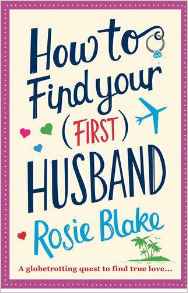
I’m incredibly grateful to Alison Davies at Atlantic Books for a copy of How To Find Your (First) Husband by Rosie Blake in return for an honest review. How To Find Your (First) Husband was published by Corvus on 2nd June in paperback and e-book and is available to purchase from Amazon, Waterstones, Foyles and from all good bookshops.

You can also find my review of one of Rosie Blake’s other books How To Stuff Up Christmas by clicking here.

How to stuff up christmas

How To Find Your (First) Husband

how to find your first husband

Isobel Graves moved to LA determined to be the Next Big Thing. Instead, she is dressed as a giant prawn handing out fliers promoting a fish market. Rather than attending glamorous parties and dating exciting men, her evenings consist of watching box sets with her sort-of boyfriend, whose idea of romance is a late-night drunken text.

Where did it all go wrong?

When Isobel catches sight of Andrew Parker, her childhood sweetheart, in the background of a TV news story she feels it’s a sign. If she’d stuck with Andrew everything would have turned out better. Now she just needs to find him…Join Isobel as she travels from LA to Devon and to a remote Malaysian island in search of true love.

My Review of How To Find Your (First) Husband

Oh my goodness, I adored this book. Just occasionally there’s a novel that is a perfect embodiment of its genre and How To Find Your (First) Husband by Rosie Blake is just that – perfect. I’m always sceptical about books that are said to be ‘hilarious’ or ‘funny’ as I seldom find them so, but I really did laugh aloud at this romantic comedy. I think it was because the humour felt so natural and not at all self-conscious or contrived. Isobel’s asides to herself and the reader created an intimacy so that it felt like sharing an in-joke with a close friend. For me, Isobel’s mother was a great source of amusement.

With apologies to all Geography teachers everywhere, I loved the range of characters. This is a perfect example of show, don’t tell, to create the individuals, that all writers could benefit from reading. Characters are gradually uncovered so that we get to know them at the same time as Isobel. I think the fact that there are only half a dozen characters focused on helps this too. I felt sorry for Liz and Andrew in many ways and sympathised with Mel’s fears and insecurities. Iz seemed completely natural – a real person, not a fictional character and I was desperate for her to be happy.

The plot is fast paced and thoroughly entertaining whilst retaining a realism that makes the story all the more attractive. I simply did not want the book to end because I enjoyed reading it so much. I thought the premise that Isobel is looking for her childhood sweetheart worked exceptionally well and certainly rekindled a few memories of my own early immature loves.

Underlying what is essentially a light hearted beach read are some deeper themes – the protection of wildlife, knowing what we really want from life, not letting the past adversely affect our present and future – all of which enhance the reading experience. This isn’t to say that the novel veers from a deftly written escapist text, but that it has layers that reward further thought.

Having read the story I’m desperate to be on the beach. Rosie Blake conjures up setting so well, invoking all the senses so that I really was transported to an island paradise in Tioman. There is a clear distinction between LA, Cornwall and Malasia so that a real sense of place comes through.

If you’re looking for the perfect romantic comedy to take on holiday, look no further. How To Find Your (First) Husband is a simply wonderful summer read. When is the next Rosie Blake book due as I don’t think I can wait long to read it?

About Rosie Blake

Rosie is an author of comic commercial fiction. She spent her university years writing pantomimes based on old classics (highlight: ‘Harry Potter: The Musical’) and went on to write short stories and features for a range of publications including Cosmopolitan,The LadySunday PeopleBest and Reveal magazines. She worked in television as a presenter on both live and pre-recorded shows in Bristol and London. She has written three novels and plans to write many more.

Rosie likes baked items, taking long walks by the river and speaking about herself in the third person. Her greatest ambition in life is to become Julia Roberts’s best friend.

You can follow Rosie Blake on Twitter and via her web site.

Alfie Bloom and the Talisman Thief by Gabrielle Kent

Alfie Bloom Talisman Theif

I’m fast becoming a fan of children’s fiction and am delighted to be part of the launch celebrations of Alfie Bloom and the Talisman Thief, the second book in the Alfie Bloom series by Gabrielle Kent. Alfie Bloom and the Talisman Thief was published by Scholastic on 2nd June 2016.

This lovely fantasy book is aimed at 8 – 12 year olds and is available for purchase here in both paperback and e-book or directly from Scholastic. You can find out more on Goodreads too.

Today Gabrielle Kent tells us all about the origins of Alfie Bloom

Alfie Bloom and the Talisman Thief

Alfie Bloom Talisman Theif

When Alfie Bloom inherited a castle and a centuries-old magic, his dull and lonely life was changed forever. But Alfie’s new life has come with dangers he never could have expected. When Ashford the butler is kidnapped in the middle of the night, the castle comes under threat from a terrifying enemy. Trapped inside with only his twin cousins and best friend Amy, it’s up to Alfie to defend his inheritance and prevent a terrible fate from befalling the whole of England!

The Origins of Alfie Bloom

A Guest Post by Gabrielle Kent

coch

I have loved castles since I was very young. I visit local ones wherever I go and always wondered what it would be like to have one of my very own. In 2006 some friends took me to Castle Coch in Wales. It is a fabulous place full of quirky little touches and looks as though it was built by someone who wanted a fairytale castle of their very own. In one of the rooms I came across a carving of The Fates above a fireplace. I felt as though they could come to life at any minute and tell me my destiny. I imagined a child inheriting the castle and talking to The Fates. As I made the long drive back from Cardiff to Teesside the idea grew bigger and bigger, and by the time I got home the story of Alfie Bloom was ready to be written.

fates

The name of the town where the story is set, Hexbridge, is a blend of the North Eastern towns Corbridge and Hexham. I see the novel as being set around that beautiful area and think the composite name sounds magical. The creation of Hexbridge was influenced by the age and layout of Helmsley and Alnwick market towns. When I was eleven years old, my class went on a field trip to Alnwick. We visited the castle and I was struck by the ornate coaches inside. These were in my head when I wrote about the coach that took Alfie to learn of his inheritance. During that visit to Alnwick there was a medieval festival held in the market square. Everyone was dressed in costume and there was dancing, food and craft stalls and a ducking stool in the centre of the square. That festival influenced the Samhain and Beltane festivals that Alfie attends in the first two books.

coach

Like Alfie, I moved town in my final year of primary school. This was a really significant event for me, I had to build friendships and get to know the temperaments of my new teachers. I was really impressed with the beautiful Victorian building after the modern, blocky grey school I had moved from. There were rumours that there were secret passages behind panels and the school stage. I imagined Alfie and his friends within the corridors and school hall of that building as I was writing about Wyrmwald House. I visited that school recently and was very pleased to hear that tales of secret passages from the headteacher’s office are still going strong!

Alfie’s relationship with his cousins is very much influenced by my relationship with some of my cousins in Ireland, particularly my younger cousins Niall, Aisling and Sinead who lived on a farm in Wicklow. They were wildlings and had the best ideas for adventures. We built forts from haybales, climbed trees in the orchard and raided my aunty’s secret chocolate stash for midnight feasts – despite still being full from the massive feasts she cooked for us every evening. Those summers were pretty idyllic and an escape from the rough estate where we lived back in England before moving to a new town. It was as though I got to step into a magical world for a few weeks each year and I wanted to carry that feeling into my writing.

So, while the idea for the first book came to me at Castell Coch, the origin of the Alfie Bloom novels lies in all the places I have visited, the people I care about, and the adventures that I hope I never stop having.

About Gabrielle Kent

Gabrielle

Gabrielle Kent has worked in and around the videogames industry for fifteen years and currently lectures in games art and design at Teesside University. As well as teaching, she directs and presents Animex, the UK’s largest annual games and animation festival, bringing young people together from all over Europe. Gabriellehas written and contributed to a number of articles, papers and broadcasts on gaming and is a regular judge on the Games BAFTA awards. In 2006 she was voted one of the Top 100 most Influential Women in the games industry by US based Next Gen magazine.

You can find out more about Gabrielle Kent on her Website and you can follow her on Twitter.

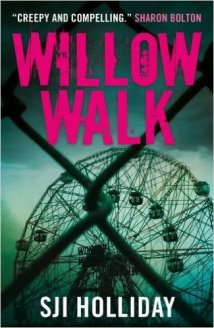
Willow Walk by SJI Holliday

willow walk

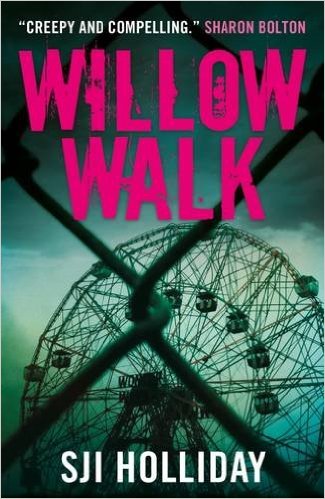
I’m indebted to Laura Nichol at Black and White Publishing for an advanced reader copy of Willow Walk by SJI Holliday in return for an honest review. Willow Walk will be released in paperback by Black and White on 10th June 2016 and is also available in e-book on Amazon and from the publisher. Willow Walk follows SJI Holliday’s debut Black Wood and is the second in the Banktoun trilogy.

Willow Walk

willow walk

When the past catches up, do you run and hide or stand and fight?

When a woman is brutally attacked on a lonely country road by an escaped inmate from a nearby psychiatric hospital, Sergeant Davie Gray must track him down before he strikes again. But Gray is already facing a series of deaths connected to legal highs and a local fairground, as well as dealing with his girlfriend Marie’s bizarre behaviour. As Gray investigates the crimes, he suspects a horrifying link between Marie and the man on the run – but how can he confront her when she’s pushing him away? As a terrified Marie is pulled back into a violent past she thought she’d escaped, she makes an irrevocable decision. And when events come to a head at a house party on Willow Walk, can Gray piece together the puzzle in time to stop the sleepy town of Banktoun being rocked by tragedy once more?

My Review of Willow Walk

Sergeant Davie Gray has an embryonic relationship with Marie Bloomfield but Marie has a past that will come back to haunt her.

I have a confession to make. Black Wood by SJI Holliday has been languishing on my ‘To Be Read’ pile for over a year and I haven’t got round to reading it. Having devoured Willow Walk in day that I simply had to put on hold until I’d finished it, I’ll be digging out Black Wood immediately. I’m sure there are Banktoun nuances I’ve missed by not having read Black Wood, but Willow Walk is fantastic as a stand alone book.

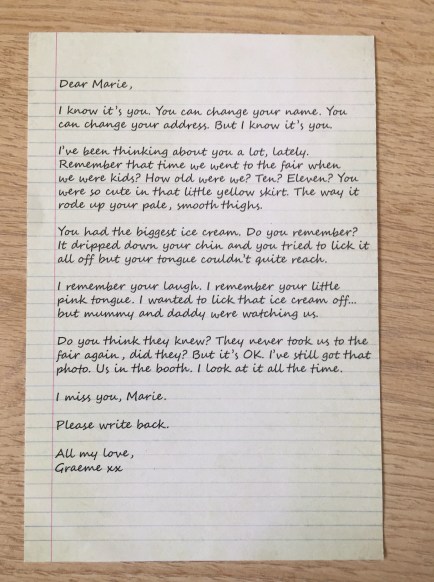
By the end of the prologue my heart was racing and it didn’t slow down until well after I’d read the last word. This is thriller writing at its best. It’s taut, pacy and heart-thumpingly good. What is so effective is what isn’t said as well as what is. SJI Holliday knows exactly how to build suspense by drip-feeding information so that the reader’s imagination runs riot. I found the build up sinister and I was unnerved by the letters from Graeme that intersperse the narrative, bringing him into sharp focus.

IMG_0375

I found the tightly knit community of Banktoun as claustrophobic as Marie’s habit of holding her breath under water when she goes swimming. What also held my attention so effectively is that Davie Gray isn’t a policeman with deep psychological issues of his own as in so many crime based novels and this made Willow Walk a refreshing and captivating story for me.  There’s quite a range of characters but they are all skilfully linked either through the main or sub-plot which weave in and out and complement one another perfectly.

Willow Walk also made me think as much as it entertained me. Love is explored in all its passions and frailties so that I was left questioning whether I felt repulsion or sorrow for Graeme. Similarly, I felt almost guilty about the way our society deals with the production, distribution and use of legal (or herbal) highs, how we treat those with a range of mental health issues, how our institutions succeed or fail because of the integrity of their staff. There’s so much in this novel that I think it will repay several reads and there will always be more to uncover. This is such intelligent writing.

Speaking of writing, SJI Holliday’s narrative style is incredible. Her dialogue is natural and the range of sentences give tension and atmosphere. She can pivot the whole plot on a couple of words. Stunning stuff.

Willow Walk is just how I like my crime fiction – the psychological elements far outweigh the police procedural ones so that I feel as tainted by the criminals as those in the book who come into contact with them. I can’t recommend Willow Walk highly enough.

You can find out more about SJI Holliday via her website, by following her on Twitter or finding her on Facebook.

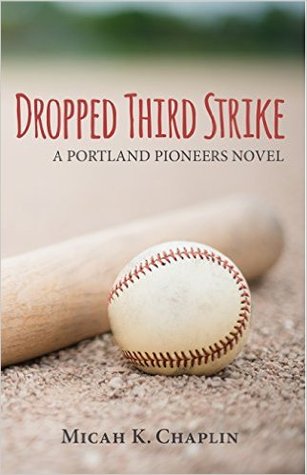
Dropped Third Strike by Micah K. Chaplin Release Day Blitz

dropped third strike

When I began Linda’s Book Bag my intention was just to post an occasional review of the books I read. However, in the year since I began, the blog has evolved to try to support authors as much as I can. Today, I’m delighted to be spotlighting Micah K. Chaplin’s self-published novel Dropped Third Strike (A Portland Pioneers Novel #1) which is released today 6th June 2016. This adult romance is published in e-book and is available on Amazon. You’ll find more about it on Goodreads.

Dropped Third Strike

dropped third strike

Kate Marks is hitting it out of the park as general manager of the Portland Pioneers. Her childhood friend Reid Benjamin is struggling to hit anything at all and, as a result, has suddenly found himself out of a job. When Kate hires him as hitting coach for the Pioneers, she’s determined to keep everything strictly professional, but she has underestimated Reid’s charm. His proximity has forced her to face a past she would rather forget. Reid wants another chance, but Kate isn’t convinced he’s changed his game.

About Micah K. Chaplin

Micah Pic

Micah K. Chaplin is an Iowa girl with a passion for writing, live music and Texas Rangers baseball. Sometimes the three loves combine.

She earned a bachelor of arts degree in mass communication from Buena Vista University in 2002. She published her first novel in 2003 and you can find more of her writing here.

You can visit Micah’s website, find her on Facebook and follow her on Twitter.