Release Day Blitz: Random Acts of Unkindness by JacquelineWard

randon acts

I’m pleased to be supporting Faye Rogers PR in bringing you a brand new novel by Jacqueline Ward, Random Acts of unkindness which is published today 21st June 2016. Random Acts of Unkindness is available on Amazon and you can also find out more about it on Goodreads.

Random Acts of Unkindness

randon acts

How far would you go to find your child?

DS Jan Pearce has a big problem. Her fifteen year old son, Aiden, is missing. Jan draws together the threads of missing person cases spanning fifty years and finds tragic connections and unsolved questions.

Bessy Swain, an elderly woman that Jan finds dead on her search for Aiden, and whose own son, Thomas, was also missing, may have the answers.

Jan uses Bessy’s information and her own skills and instinct to track down the missing boys. But is it too late for Aiden?

Set in the North West of England, with the notorious Saddleworth Moor as a backdrop, Random Acts of Unkindness is a story about motherhood, love and loss and how families of missing people suffer the consequences of major crimes involving their loved ones.

Random Acts of Unkindness is the first in the DS Jan Pearce series of novels.

Read an extract from Random Acts of Unkindness

CHAPTER ONE

I look a little closer and instinctively back away.

Her eyes are hollow holes where the birds have pecked away at her skull and she’s covered in tiny soft feathers and greying bird shit. Fragments of silvered hair lie on her shoulders, pulled out at the roots and exposing pinprick follicles made bigger by beaks. Her mouth is set in a wry smile showing yellow teeth, as if somehow, despite the torn skin and the deeply painful twist of her body, she’s having the last laugh.

The shock is so deep that it hurts more than it should, and tears threaten as I gaze at her. A human life ending in such a terrible, lonely way. It hits me with sadness so intense that I take a moment to sit with her, to tell her broken shell of a body that someone cares. Then fear oozes through the sadness, pushing it under and reminding me of why I’m here. Where are you, Aiden? Where is my son?

I slump onto a brown box sealed with Sellotape that’s sitting next to a small blue suitcase. It looks like this old woman was going somewhere. Somewhere she never got to.

Bessy Swain, by the looks of post on the doormat. A couple of bills and some takeaway menus. A letter from social services that arrived too late to make any difference.

As well as the boxes there are piles of newspapers and scrapbooks stacked up against ancient peeling sepia wallpaper. From the state of the house this woman has been suffering for a while. Poor Bessy.

Outside, starlings perch on the windowsill, quietly watching, judging me as I put off the inevitable phone call. Through the open kitchen door I can see a couple of blackbirds standing on the shed roof, and I can hear their song of accusation. I know I need to call this in and get Bessy some dignity, but I also need to finish what I came here to do.

The day job kicks in and I pull my scarf around my nose and mouth to protect my senses from the rancid fumes I hadn’t even noticed until now. My phone starts to ring, forcing me into the here and now.

I look at Bessy’s body and then at the flashing screen. Shit. It’s Mike. My partner in crime. Crime solving, that is. Like me, he’s a Detective Sergeant  working on Special Operations.

‘Jan. Where the hell are you?’

I pause. How am I going to explain this? I take a big breath and then pull down my scarf.

‘Right, yeah. I was just . . .’

‘Looking for Aiden. Come on, you’re going to get us both sacked. You’re supposed to be in Lytham Road, attending the Operation Prophesy briefing.’

On the worn kitchen worktop that separates the lounge from the kitchen a dead starling stares at me, its dried eyes condemning me from the pits of death.

A small metal toaster holds the remains of two slices of bread, which have been pecked right down to the toaster elements. The dead bird is lying close to the toaster, its feathers puffed from electrocution.

How many birds are there in here?

In my hurry to get inside I hadn’t registered anything apart from needing to know if Aiden was here. But now, sitting here with my mobile hot against my cheek, I realise I am sitting in a house covered in bird feathers and faeces.

The back door slams shut in a gust of wind. A few stray starlings are flying about in the kitchen, but most of the birds are now outside, my entrance breaking open their jail. What I can’t understand is why the windowsills are covered in them, their wings and curled up feet scratching at the dirty glass.

Then I realise they want to get back in.

‘Jan? Jan? Are you there?’

I nod at my mobile phone.

‘Yep. Look, I’ll just finish off here. I got a tip off about there being a funny smell coming from a house and I thought . . .’

Mike sighs deeply.

‘I know exactly what you thought. But this has to stop. Or you have to do it in your own time. It’s not just your own life you’re fucking up here. I’m your partner and I’ll back you up, but there’s a line. There’s a fucking line. Where are you anyway?’

The secure safety net I have in Mike has started to fracture recently and it shatters a little more now with the pain in his voice. I desperately want to put it right, but I can’t. Not yet. I have to deal with this.

‘57 Ney Street, Ashton.’

‘Connelly’s rented houses, aren’t they? I’m telling you, you’re heading for trouble.’

I end the call there. He’s right. I’m heading for trouble. But put any parent in my position and try telling me they’d do differently. I have a good reason. Mike knows that, but he also knows that everyone else’s lives are moving on and he’s trying to drag me on with him.

I push the phone into my bag and I pull my scarf back up against the smell. It’s invaded my hair, clothes  and skin, but the action gives me a bit of comfort and control.

There’s a sudden noise from upstairs and my heart skips. The memory of Aiden calls me back and overpowers the sensible part of my brain urgently screaming that maybe poor Bessy wasn’t alone after all. Maybe someone killed her. Maybe I shouldn’t be here on my own. Maybe I shouldn’t be here at all. Maybe, maybe, maybe.

I tread the worn stair carpet and creep up, nudging open the first door on the right. It’s a boy’s bedroom, all red and white, Manchester United. So she has children. Or grandchildren? But no one is in here now.

Slowly I move on to the next door and there’s a flash of feathers. Two starlings fly past and circle the landing. Another flies at me as I step inside, hitting the side of my head. It’s a dull thud on the temple that causes a slight flash, then turns into a sickening stinging sensation. The shock bursts the tears that have been waiting to be shed since I found Bessy and not Aiden. I slump on an old double bed and touch my forehead, feeling for the dampness of blood, but luckily there is none. I shift my weight onto a pretty pink quilt and pillows for respite.

Suddenly, sitting alone in the empty house, I feel so very small and wish someone would tell me what to do next. Tell me how to find my son.

The thought that he could be captive, suffering, or dead suffocates me, and I feel my body begin to panic. Large hands squeezing my lungs. And then there’s another bird flapping, this time in a large wooden wardrobe. Sounds loosen the squeeze and I can breathe again. I need to finish this.

I open the double wardrobe door and duck out of the way this time as the bird escapes onto the landing, joining the others.

‘How did you get in there, little guy?’

They fly round and round, looking for a way out, some kind of escape, and I know how that feels. This release calms me somehow and I take an enormous breath and find raw comfort from the material of my scarf as it sucks into the crevices of my mouth.

There’s a chest lodged at the bottom of the wardrobe, like a forgotten treasure. It’s against regulations, it’s against everything I thought I stood for, but I open it anyway. I need to find out more about Bessy.

Inside, there’s another box and some papers, on top of a rolled-up baby shawl. Pink. She must have a son and a daughter.

I’m not sure what I’m searching for. A way to avoid it happening to me? What not to do. How to not die alone.

I open the inner box and there are bundles of twenty-pound notes. My fingers trace the smooth paper and lines of thick rubber bands. It isn’t often you see money like this, all rolled up and waiting for something important. My thoughts switch back to Aiden.

I remember his dark hair and angry teenage skin. I remember that I will do anything to get him home. And somehow, at this moment, the realisation of something happening to my son makes me stoop down and contemplate the unknown territory of stealing.

I’ve worked in the police force for almost two decades; I know how criminal minds work. I know that whoever has Aiden could come knocking any second, minute, hour, day now demanding money. I’m surprised they haven’t already. Time I have, but money I don’t and, as I realise the weight of a potential ransom, an intense panic prickles in my fingers. Before I can refuse this primal urge, I push the notes into my deep shoulder bag, along with the papers.

I know it’s wrong, of course; even as I’m doing it I sense my own desperation. I’m a member of the police force. I’m the most honest person I know, committed to catching the scum who do this sort of thing. Yet I can’t help myself. This is different. This is for Aiden. This could be the only way I will ever see my son again.

I’ve been involved in missing person cases before and I’ve looked at the mother, desperate and determined, and wondered how far you would go to find your child. Now I know. All the way Aiden, I’ll go all the way to find you, son.

I unravel the pink shawl, hoping I will, for a moment, lose myself inside someone else’s memories or pain instead of my own. No such luck. My hand touches fragile bone, and a tiny skeletal hand falls into mine.

I almost scream, but aren’t I Detective Sergeant Janet Pearce, Surveillance Specialist? Aren’t I hard? Tough? Impenetrable? I close the lid with shaking fingers and replace the box, hurrying now, fighting back tears. This is all wrong. It’s all too much and I rush downstairs.

My phone rings just as I’m standing in front of poor Bessy. Mike. Again.

‘Jan? Have you left there yet? You need to be here. We’re starting the briefing in half an hour and if you don’t make this one . . .’

The bag is heavy on my shoulder and pinching at the skin under my cotton T-shirt. I need to get it to my car before I ring this in, but now I have no choice. If I don’t say anything to Mike someone will suspect further down the line. I check my watch. I’ve been here ten minutes.

‘OK. I’ll be there. But I need to ring in a suspicious death.’

There’s a silence for a moment. I can hear him breathing. Mike knows what I’m going through. He gets it. He’s probably my best friend in the whole world right now. He speaks again.

‘Not . . . ?’

‘No. An old woman. Looks like natural causes, but a bit gruesome. Anyway. That’s what I found when I got here. I’ll wait until someone arrives, then I’ll be right with you.’

I sound composed, professional, but I’m still shaking. I hang up. He’ll be pleased, because I’ve got a legitimate excuse to miss the briefing. I hurry through the kitchen, out the door, and through the yard. The birds scatter then regroup on the telephone wires above.

My car’s in the back alleyway. I take the money and push it under the front seat. I push the letters into the elasticated pocket on the side of the door and pull my bag back onto my shoulder. Oh my God. What am I doing? I know this is so fucking wrong and I try to tell myself again that it’s necessary. But away from the drama of the house sense creeps in. If there was going to be a ransom from Connelly wouldn’t it have come weeks ago?

No. I can’t do it. I can’t. I pull out the money and push it back into my bag and hurry back to the house. What was I thinking? This isn’t me. The birds just sit there, their heads turning as they watch me rushing around. I try to shoo them away, because they are witnesses to my uncharacteristic misdemeanour, but they won’t go.

I move past Bessy, running now, and toward the narrow stairs, silently apologising for disturbing her secret.

But it’s too late. I see a blue flashing light against the darkness of the room and hear the back door open. Two uniformed police officers appear and someone is banging on the door.

Hugging my bag and shame to my chest, I fumble with the lock and open it. DS Jack Newsome, one of my opposite numbers in the regional police, pushes past me, followed by two uniformed officers.

‘Jesus Christ. That’s awful. How long’s it been here?’

I don’t like Jack. He hasn’t got a compassionate bone in his body. I find myself moving protectively between him and Bessy.

‘She, Jack, she. This is a person. A woman. She deserves a little respect.’

The word sticks on my tongue, heavy with mockery. Respectful, unlike me, who has just stolen her life savings. I’ve never felt guilt like this before, and I wonder how people can live with it. He smirks.

‘Right, Jan. She. How long has she been here?’

I see Bessy with fresh eyes. As Jack does, as any policeman would. Her faded dress is sagging in odd shapes against the decomposition of her body, and brown lace-up shoes sit the wrong way round, her ankles ballooning awkwardly in the crossed position they must have rested in as she died.

‘I don’t know, Jack. But I arrived fifteen minutes ago. Had a tip off about a bad smell and was just passing.’

He’s nodding and grinning. Yet underneath I can see his annoyance as he sighs and wipes his hand through his dark hair, then wipes tiny beads of perspiration away from his forehead. And, of course, the giveaway twitch at the corner of his eye that always tells me when Jack thinks he’s onto something.

‘Just passing, were you? A little bit out of town, isn’t it? Away from your usual place of work? So who was the tip off from?’

I smile now and wonder if it covers up my devastation.

‘Member of the public. In a public place. Just on my way to Ashton Market buying some bacon for the weekend when I heard two women talking about this property and the smell. Simple as that.’

He’s shaking his head.

‘OK, Jan, if that’s how you want it. I suppose all’s well that ends well.’

We look at Bessy. She’s someone’s mother. Like me.

‘Not for her, though. Which is why we’re here, not to find out the ins and outs of my shopping habits. No?’

Jack turns away now. He’s looking toward the kitchen. As he approaches the door, I hear a flutter of wings and beaks tapping on glass.

‘What the bloody hell? Get those birds out of here. And search the house. Get forensics down here, and we need a coroner’s wagon for the old bird here. Cover her up, John. She’s giving me the creeps.’

So the police machine swings into action. I stand there for a moment, wondering if there is a way for me to put the money back, but the two uniformed officers are upstairs now, battling with angry starlings.

I don’t mention that they will need two coroner’s vehicles, one for poor Bessy and one for the tiny baby. God only knows why she’s got a dead baby in her wardrobe. That poor woman must have had a terrible life if the state of this place is anything to go by. Without a word I leave by the front door and walk around to the back alley.

The houses are well maintained and I feel a little easier now the neighbours are out and I have a reason for being here. I get in my car and, with the bag still over my shoulder, drive off. In my rearview mirror the birds still watch, their heads cocking.

Two streets away, I pull up outside an old peoples’ home. I know this is a safe spot away from CCTV. My phone hasn’t even got a signal here. I’m a surveillance expert, latterly of the Communications Department, more lately promoted to DS in Special Operations. It’s my job to know these things.

Even so, guilt overwhelms me, and I remember when I first became a police detective; so full of goodwill and always on the side of the person who had been harmed. I spent hours poring over mind maps and evidence boards, midnight sessions in the operation room and endless visits to witnesses.

Sometimes when I lie awake at night thinking about Aiden, I wonder if I would have shuffled events in a different way this wouldn’t have happened. That always leads to me swearing that from now on I’ll do the right thing, be good, anything, as long as I get him back. Holding myself bolt upright, smiling, being polite, saying thank you; are they all little combinations to finding out what has happened?

In the clarity of daylight it all seems different. No hippy thinking will get me through the day. Action is needed. And, after all, in this game it’s almost impossible to be good all the time. The deeper you get into something, the more complex the relationships, the situations. Everyone’s got something on someone, and they’re going to use it at some point. Until now I’d kept my fingers out of the till, been good as gold. But this is different. This is personal.

I count the money. There’s forty-four thousand pounds. Jesus. I automatically scan the horizon for the signs I know are there, at the root of my suspicions of where my son is. Connelly. I see the scarves and shoes hanging from the telephone wires, silent messages in an unspoken world and my heart turns back to stone.

I push the money under the seat, still distraught that I took it, more distraught that I couldn’t put it back, and seeing no way to return it now. I decide that, in return for it, I’ll do what I can to see Bessy Swain’s case resolved. I’ll do what I can to find out why she had to hide a baby. Someone owes her that, at least.

About Jacqueline Ward

JW

Jacqueline Ward writes short stories, novels and screenplays. She has been writing seriously since 2007 and has had short stories published in anthologies and magazines. Jacqueline won Kindle Scout in 2016 and her crime novel, Random Acts of Unkindness, will be published by Amazon Publishing imprint Kindle Press. Her novel SmartYellowTM was published by Elsewhen Press in 2015 and was nominated for the Arthur C Clarke Award in 2016. Jacqueline is a Chartered psychologist who specializes in narrative psychology, gaining a PhD in narrative and storytelling in 2007. She lives in Oldham, near Manchester, with her partner and their dog.

You can find out more about Jacqueline on her website and follow her on Twitter. You’ll also find her on Facebook and Goodreads.
Spotlight on Midsummer at Eyre Hall by Luccia Gray

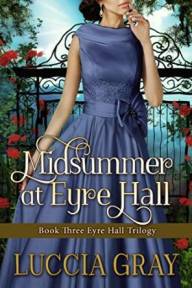
Midsummer at Eyre Hall

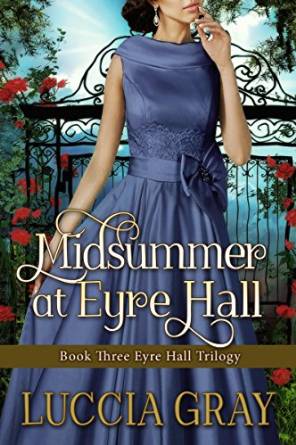
I’m spotlighting Midsummer at Eyre Hall by Luccia Gray because I have so enjoyed the first two books in the series. Midsummer at Eyre Hall is published today, 21st June 2016, and available in e-book here.

The author, Luccia Grey, has no idea that I’m doing this, but I know just how hard she has worked and how dedicated she has been to creating this series that I wanted to surprise her.

Luccia has her own blog Rereading Jane Eyre where there is so much detail about the series and the writing process. You can find that blog here.

You can read my review of the first in the trilogy All Hallows at Eyre Hall here and my review of the second book, Twelfth Night at Eyre Hall, here (the competition associated with that blog post is now closed).

I’m really looking forward to reading the concluding part.

Midsummer at Eyre Hall

Midsummer at Eyre Hall

Midsummer at Eyre Hall is the third and final volume of The Eyre Hall Trilogy, which chronicles the lives of the residents of Eyre Hall from the beginning to the height of the Victorian era.

Following the death of her second husband, Richard Mason, Jane is finally engaged to the man she loves. However, her oldest son, John Rochester, will do everything in his power to stop the wedding and take over Eyre Hall and the Rochester Estate, with devastating consequences for Jane.

Romance, mystery and excitement will unfold, based on the lives of the original characters, and bringing to life new and intriguing ones, spinning a unique and absorbing narrative, which will move the action from the Yorkshire countryside to Victorian London, and magical Cornwall.

About Luccia Gray

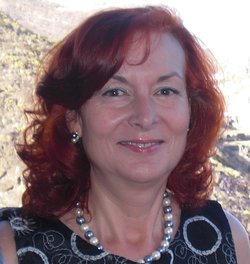
Luccia Gray Author

Luccia Gray was born in London and now lives in the south of Spain with her husband. She has three children and three grandchildren. When she’s not reading or writing, she teaches English at an Adult Education Centre and at the Spanish National University.

You can find out more about Luccia Gray and the Eyre Hall Trilogy on the web site and you can follow the author on Twitter. You’ll also find her on Facebook.

All three books in the Eyre Hall Trilogy are available here.

An Interview with Nigel May, author of Lovers and Liars

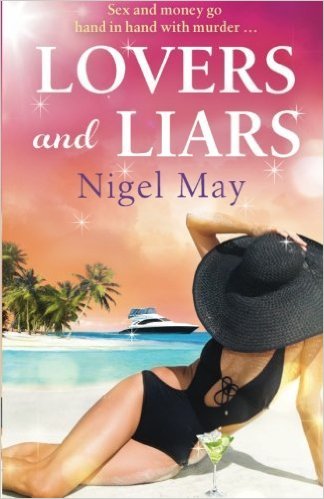
lovers and liars

I’m an enormous fan of the publisher Bookouture and so it gives me enormous pleasure to be helping celebrate one of their latest releases, Lovers and Liars by Nigel May. Lovers and Liars was published in paperback on 16th June 2016 and is available for purchase here. It is also available as an e-book.

Nigel has kindly agreed to be interviewed for Linda’s Book Bag and you can read that interview below.

Lovers and Liars

lovers and liars

Welcome to the Velvet Hotel Barbados where money and sex go hand in hand with murder ….

When Millionaire playboy Sheridan Rivers is found dead at his luxurious hotel on the paradise island of Barbados, there are several suspects in the frame…

Sutton: Sheridan’s long-suffering wife was permanently pushed aside for his younger lovers. Was it time for her to make a stand?

Kassidy: Sheridan’s assistant longs to be wealthy in her own right. Employed for her sexual and organisational skills, could she have had her eyes on a bigger prize?

Nikki: Sheridan’s oldest daughter has done something really bad that her dad has discovered. What price will she pay to keep his silence?

Heather: The apple of her father, Sheridan’s eye. But she’s recently been widowed due to a terrible accident Sheridan was responsible for. Is the time ripe for revenge?

Four women, each with a cross to bear – all waiting for the perfect moment to exact their revenge …

This summer, pour yourself a glass of bubbly and escape with the elite to the golden beaches of Barbados for a sexy, scandalous romp that you won’t be able to put down.

An Interview with Nigel May

Hi Nigel. Thank you so much for agreeing to answer some questions on my blog about your writing and your latest book Lovers and Liars

You are very welcome – it’s great to be here. Thank you for having me.

Firstly, please could you tell me a little about yourself? 

I’m name is Nigel Peter May, I’m 47 years of age and I write spicy crime books full of intrigue, drama, beauty, glamour, celebrity, travel, murder and revenge. With a lovely dose of naughtiness thrown in for good thrilling measure. I’m Scorpio and proud of it so I like things with added spice and intrigue.

You’ve been described as the UK’s male Jackie Collins. What’s your reaction to that title?

A total honour as Jackie Collins is my favourite authoress of all time. I have read her books ever since I was a teenager. She always had such a magical way of creating page-turning novels with thrills and spills on every page, and that’s what I try to do with mine. I met her shortly before her sad death and she asked for copies of my books which was just incredible. Nobody writes a Jackie Collins novel like Jackie as they were unique in my opinion but if people want to compare me to her then there is no greater accolade as far as I am concerned.

(That must have been an amazing meeting and so thrilling to have her ask for your work.)

When did you first realise you were going to be a writer? 

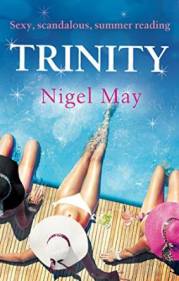
I was a showbiz journalist for many years working for magazines and newspapers and adored interviewing stars about their lives and immersing myself in their glamorous worlds. I worked in London for nearly two decades interviewing all sorts of fabulous people. Then I made the move into TV hosting (which is my other job) and I kind of stopped writing for a while. I reached the stage where I was really missing it so I decided to start writing my first book, Trinity, on my days off from the TV. I count myself very lucky that here I am now with my fifth book Lovers And Liars. It’s been an amazing journey.

trinity

What drew you to writing the sexy fiction you write? 

Because I believe people love to escape the normalities of life and dive into a world of incredible riches and decadence, yet meet characters who are as flawed as the rest of us, riddled with their insecurities and vulnerabilities. I have always been fascinated with stories from authors like Jackie Collins, Jacqueline Susann and Shirley Conran so for me, when I started writing, it seemed natural that I write in that genre. It’s what I love. And it gives me, and hopefully every reader of my novels, a chance to unwind and delve into places, parties and positions that we would never normally find ourselves in. Who doesn’t love a riotous, diamond-dipped drama?

(Good question – diamonds are my Aries birthstone!)

Which aspects of your writing do you find easiest and most difficult? 

Starting a book is always hard as the opening chapter is so essential. It needs to grab everyone into the story and make people think that they really want to keep turning every page to see what happens next. I always try to create characters that people love, or love to hate, and I think finding that fine line between a character being a lovable rogue and somebody that readers are indifferent about can be tricky. I hope that everyone believes in the characters that I write, especially the lovers and the liars, the divas and the devils in my latest novel.

What are your writing routines and where do you do most of your writing? 

I arise early and try to be at my computer at ridiculous o’clock in the morning. It’s the time when I feel that most of my ideas are flowing. I’m a scribbler so all of my storylines and ideas and plotlines will be written longhand into a pad before I even start on the computer. Then I refer to them as I start writing. Things change as I go along and I never plot anything out completely as I love to be open to change. I have altered murderers and victims and lovers before as a result of a new plot twist springing into my head. I think it’s so important to not become too bogged down with thinking that a story has to be a certain way. I want my stories to be enjoyable, dramatic and believable and sometimes that means straying from the original path that I was following.

When you’re not writing, what do you like to read? 

I read every day, normally when I’m climbing into bed at night. I think I am like many bloggers out there and have a pile of books to be read always waiting to go. I read both from my Kindle and with paperbacks so I have a huge back catalogue to plough through. I love a good mystery and adore a whodunit. I do love glamour as well though and anything obsessed with celebrities and scandal.

(I know exactly what you mean about that huge pile of books waiting to be read!)

What is it like being a Bookouture author? 

In a word, fabulous. They have managed to give my books a wonderful boost that maybe I would never have had if I had carried on self-publishing. They have given my novels a glossy look with covers that always fit the story within perfectly. Plus they have shared their guidance and expertise with me all the way along. Being a writer can be a lonely and incredibly difficult thing at times (although I wouldn’t change it for the world) and to have somebody at the end of the phone or via Skype that can pick you up and keep your mojo flowing because they believe in you is a wonderful thing.

How do you research the exotic locations for your books? 

barbados

I try to visit as many places as I can so that I can write with authenticity about them. It’s hard to visit everywhere as obviously my novels clock up a lot of air miles and take the reader around the world. But I will always try to make it there. In Lovers And Liars a lot of the action takes place in Barbados which is a place that I visited with friends for the first time in 2015. As soon as I went there I knew I had to set a novel in paradise and I soaked up as much of the atmosphere as I could to give the novel a truly tropical feel. Toronto and Crete are both featured heavily in Lovers And Liars too and I made sure that I visited them both so that I could really gain a feel for what is what was like there. When I start plotting novels I quite often think ‘ooh where would I like to visit’ and then decide to set some of the novel there accordingly. My passport is constantly on the go!

Your books always have very glamorous covers. Was that a deliberate choice from the very beginning or did they evolve naturally? 

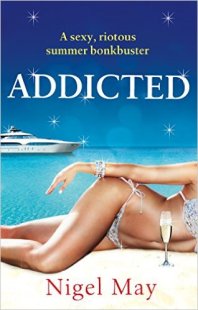
addicted

My first two covers, when I self-published Trinity and Addicted, were designed by a great friend of mine and I loved them, but when Bookouture took me on they wanted to rebrand the books with new covers and I have to say, they have done an incredible job. The covers are sexy and glamorous and intriguing and immediately give the reader the feel that something luxurious and fabulous will be happening from cover to cover. I love the pink on the new book, it’s a quite a departure from my traditional blue and I think gives the book a really exotic and fresh feel.

If you could choose to be a character from Lovers and Liars, who would you be and why? 

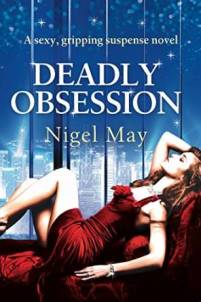
I adore Blair Lonergan, the DJ. He first popped up in Deadly Obsession in a minor role but in Lovers And Liars he’s definitely one of my main men. He’s young, fit, a huge hit in the bedroom department and also has a kind and loving heart which we really get to see in the latest book. Naturally I am nothing like him (apart from the heart!), but I do love him as a character. I adore Sutton as well as she is such a strong-minded family woman, who puts her brood before anything, yet she still doubts herself. As I am sure everybody does.

deadly obsession

If  Lovers and Liars became a film, who would you like to play Sutton, Heather, Nikki and Kassidy?  

Great question. I think Sutton should be played by Taraji P Henson who plays Cookie in Empire. A really wonderful actress who shows both weakness and strength in all that she does. Or perhaps Angela Bassett as she is amazing too. Heather and Nikki could be played by Jennifer Hudson and Beyoncé. And Kassidy would be somebody like Emilie De Ravin who is an incredible actress.

Nigel, thanks so much for answering all my questions so fully. I really enjoyed having you on Linda’s Book Bag.

About Nigel May

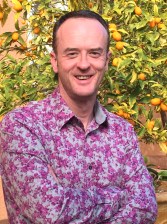
IMG_0880

Nigel’s books have been Amazon best sellers, read by celebrities and fellow authors alike, and have proved that a man can successfully write in a ‘glam fiction bonkbuster world’ that has always been a strongly female domain.

Nigel was also the only male writer amongst 44 authors featured in the chart-topping, beach-read anthology of short-stories SUNLOUNGER. He also contributed a short story to SUNLOUNGER 2.

He regularly presents on UK television where he has built up a substantial following. He has also featured on Channel 4, C5, ITV and broadcast live from America. He is also one of the UK’s most popular craft personalities, having launched his own successful range, A-May-Zing.

As a writer he has written for many of the UK’s most successful magazines and newspapers, specialising in showbiz and celebrity, as well as writing on subjects ranging from relationships through to exotic travel.

You can find out more about Nigel and his books on his website and follow him on Twitter.

There’s more from Nigel with these other bloggers too:

Lovers-and-Liars-Blog-Tour-Graphic

Book Anniversary Guest Blog by Colette Kebell

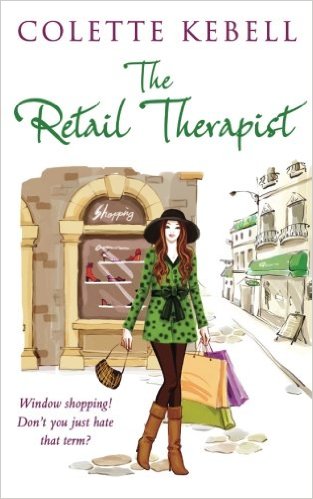
Retail therapist

I’m always happy to support authors on Linda’s Book Bag and when I heard that Colette Kebell was about to celebrate the first anniversary of publishing The Retail Therapist I thought I’d ask her onto the blog to tell us more about that last year. The Retail Therapist is available for purchase on Amazon UK and Amazon IT,from Waterstones and all good bookshops.

The Retail Therapist

Retail therapist

Window shopping! Don’t you just hate the term?

It is like going into a sweet shop and not being able to buy anything, or not knowing what to buy first. That is exactly my line of business, helping people make the right choice.
I’m one of those fashion consultants that are so popular nowadays amongst the upper crust, although I started ages ago. Choosing the right clothes for the right occasion is not an easy task: the dress has to match your personality and, if it can, enhance it.

This story is about how I abandoned the rat race, spending days in a legal office, and followed my dream of becoming a fashion consultant. I believe I’m something more though, I’m a Retail Therapist and I’m sure you are itching to know the story about how I started and how I helped my clients look fabulous! So, what are you waiting for? Hurry up, click that “buy” button up there and be prepared to enter the mysterious world of a Berkshire Retail Therapist girl.

Learning Lessons

A Guest Post by Colette Kebell

Hello Linda and thank you so much for the opportunity of doing a guest post to celebrate the one year anniversary of the launch of “The Retail Therapist”.  I have to say, it took a little time mulling over what to write as I don’t often think about where I am today compared to a year ago…between one thing and another life has been a bit hectic since then.

Turning to your suggested questions, first and foremost the biggest “high” is when you have your book returned by the copy editor, you’ve read it through just to ensure they’ve not changed anything too drastic and then hit that upload button to make it “live” on Amazon!  There is such a sense of achievement when you see your work there available to buy for the first time.  There are many other highs prior to this, from first deciding to write, actually reading what you’ve started and enjoying it, the input from, in my case, my husband, who read and commented on it throughout the writing process. There was so much laughter in our household during that time, in respect of both my books, and I think that comes across in my story telling.  Then, of course, there is the moment when you first clap eyes on the cover. After what in my case was quite a small brief, my cover designer just got me from the outset.

There are lows of course, tense moments when you wonder whether you have done the right thing in becoming a writer, whether anyone will want to buy and more importantly enjoy your work, will anyone then want to write reviews, how to deal with the marketing side of things (not my strong point as I’m not a sales person). The learning curve is an immense one and one that brings tears at times, not least when I discover I have a new review, as so far they’ve been such lovely ones they made my heart soar.

In hindsight, I would have probably built up my media presence sooner than I indeed did.  I only started to build my website once the book was about half done; same with twitter and Facebook.  These are important tools to a self-published author and so if I had done more research in the first instance, I would probably have dealt with those a lot sooner.  The other thing I would do differently in future is organise a Book Launch Blog Tour.  I had already decided that I would, especially as they feature in Blue and Green Should Never Be Seen! (Or so Mother Says), enlist the help of some bloggers to write three reviews of each book, excerpts of which now appear on the back covers of my paperbacks.  Having said that, being a complete novice to the world of writing, I knew little or nothing about how important bloggers indeed are to authors.  I have since learned my lesson though and appreciate every opportunity that bloggers give me in respect of my books, whether it be a guest post such as this one, or indeed an interview or review.

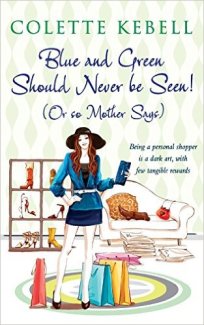
Blue and Green

Currently I have three “works in progress” one of which is the sequel to my first two, another of the same genre, but this time set in New York and the third is one that a friend of mine inspired me to start writing by inadvertently giving me the title in conversation (and she will be told and thanked once that is ready to be uploaded).  I have had a bit of a struggle this past year or so though, hence having 3 WIPs, due to our house sale/purchase.  I’m currently sitting at the kitchen table in our property in France, with my two dogs but separated from hubby, due to our purchase not having gone through yet.  I may even be here for another couple of months so, though it is peaceful and I have my dogs for company, I cannot participate in any author/blogger events that are coming up currently, nor do I have my ever supportive husband by my side.  We had to take the decision to separate due to being unable to find a rental property in the UK that would allow us to keep our dogs with us and therefore, had no other option than the one we took.

After writing Blue and Green I felt that I had a lot more to say about GiGi and how she reached the point she had and so, following reading a number of articles focusing on authors deciding to do prequels, I felt it would be a good thing to do.  The story was just itching to be told and so I wrote The Retail Therapist.  I think, if I had thought about it a little more, I could have turned that into a full size novel and if I had known what the RNA criteria was going to be in respect of self-published author membership (or even about their new author membership) I would have probably made it at least a little longer so as to fall within their criteria.  Hindsight is a good thing, but there is little point in dwelling on things that you discover too late to change.

In summary, I love writing and have a lot of fun when I do so and hopefully that comes across on the pages that people read.  I’m quite shy by nature though talking about my books makes me a far more passionate and animated person, though I occasionally have to stop myself from going OTT on that subject.  Little point in boring people when there are so many other subjects that can be discussed and you never know, as was the case with one of current WIPs, there may be a story that just jumps out at you, even during everyday conversations.

Colette’s Blue and Green Should Never Be Seen! (Or so Mother Says) is available here  in the UK and translated into Italian here.

About Colette Kebell

Colette has given a talk at Folkestone Festival about her self-publishing that you can see here.

You can follow Colette on Twitter, find more about her on her web site and find her on Facebook.

Short Story Exclusive by Four Weddings and a Fiasco author Catherine Ferguson

four weddings 2

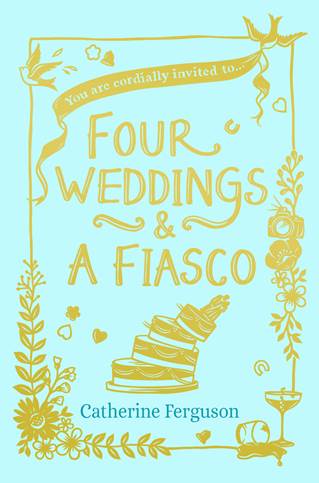
Having recently read and thoroughly enjoyed Catherine Ferguson’s Four Weddings and a Fiasco, I’m delighted to be part of the launch celebrations for this lovely book.

Four Weddings and a Fiasco was published by Avon Books in e-book and paperback on 16th June 2016 and you can purchase Four Weddings and a Fiasco from all good bookshops, on Amazon, or directly from Harper Collins.

You can read my review of Four Weddings and a Fiasco here, but today I have the fifth episode in an exclusive short story written by Catherine. It tells more about Katy Peacock before Four Weddings and a Fiasco begins. At the bottom of this blog post you’ll find the other bloggers where you can catch up with the whole story.

Four Weddings and a Fiasco

Four weddings 1

Katy Peacock lives a life as colourful as her name.

As a wedding photographer, she spends her days making other people smile as she captures all sorts of fun and capers at celebrations that range from the wacky to the wild.

But her own life isn’t looking quite so rosy. Her mum is acting out of character, her menacing ex is back on the scene, and she is torn between two gorgeous men. And that’s before we even get started on the trouble her sister is causing . . .

As Katy weathers the ups and downs of the season, she revisits problems from the past, discovers new friendships and finds that four weddings and a fiasco have the power to change her world beyond measure.

A funny, feel-good read, perfect for fans of Lucy Diamond and Jenny Colgan.

Read Extract Five of an exclusive Catherine Ferguson Short Story

ONE BRIDE AND A BOMBSHELL

5

It was my sister’s birthday that day and she’d organised a night out with the girls. And she was determined I should be there.

She began pleading the instant I walked through the door with my weekend bag.

‘Oh, Katy, you have to come. You always do.’ She pressed her hands together. ‘Please?’

With her luminous grey eyes and pushed-out lower lip, she was the image of the oh-so-cute four-year-old who used to drive me nutty getting her own way with Mum all the time – an unpardonable sin when you’re a narky thirteen-year-old, like I was at the time.

I laughed. ‘Oh, go on, then. I’ll join you for one or two drinks.’

‘Fantastic.’ She gave her hands a little clap.

‘But I’ve got to be home by nine,’ I warned.

Her look turned serious. ‘You have my word, Cinderella. I totally understand. You need your trial to go well tomorrow. Otherwise Crabby Camilla won’t hire you.’

I smiled. ‘Correct.’

It was going to be a watershed day in my life.

I was determined nothing was going to spoil it.

When I joined the girls in the pub later, around seven, they’d been out for pizza and were in fine form, drinking prosecco like it was lemonade.

I knew and liked them all, and after cheering my arrival, which made the entire pub turn curiously in our direction, they continued their animated chat on the eternal subject of men.

Sienna said I had to talk some grown-up sense into her friend, Carrie.

Apparently Carrie fancied a guy standing at the bar but was point blank refusing to go up and speak to him.

Personally, I thought it was up to Carrie whether or not she was prepared to make such a brave move and risk being rejected. Far better, I said, to make a little bit of eye contact with him and see what happened.

They all nodded in agreement, and I realised they were simply taking wise advice from the ‘old person’ at the table, which was quite a sobering thought. At twenty-eight, I wasn’t exactly decrepit, but practically everyone else at the table could qualify for a teen bus pass.

‘It’s all so complicated, this love business,’ complained Amy. She heaved a giant sigh. ‘Katy, please tell us that by the time you’re approaching your thirties, it all starts to make complete sense.’

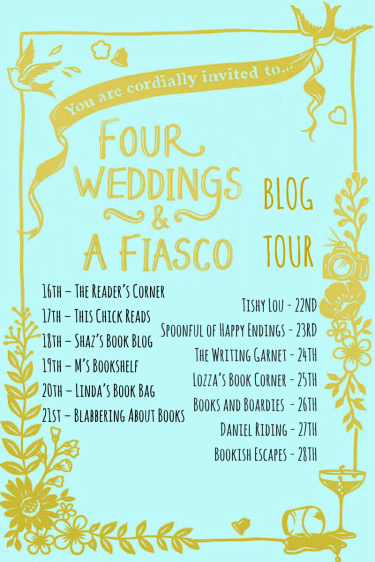
You can find all Catherine’s books here and follow her on Twitter. To read the full story from Catherine, please see these other bloggers:

BLOGTOUR

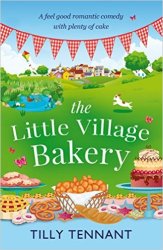
An Interview with Tilly Tennant author of The Little Village Bakery

little village bakery

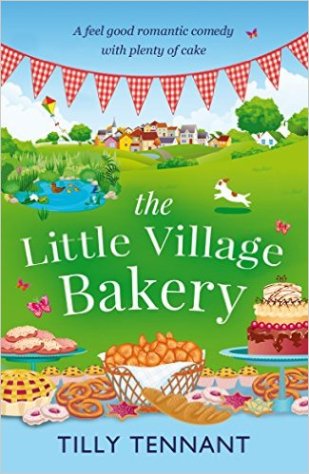
I’m a great fan of the publisher Bookouture and so it gives me enormous pleasure to be helping celebrate one of their latest releases, The Little Village Bakery by Tilly Tennant which is available for purchase here.

I’m delighted that Tilly Tennant has agreed to be interviewed for Linda’s Book Bag too.

The Little Village Bakery

little village bakery

Help yourself to a generous slice of Victoria sponge, a perfect cup of tea and a big dollop of romance. Welcome to the Little Village Bakery.

Meet Millie. Heartbreak has forced her to make a new start and when she arrives at the old bakery in the little village of Honeybourne she is determined that this will be her home sweet home. Her imagination has been captured by the tumbledown bakery but with no running water and dust everywhere, her cosy idea of making cakes in a rural idyll quickly crumbles.

Luckily the locals are a friendly bunch and step in to help Millie. One in particular, Dylan, a laid-back lothario, soon captures her attention.

But just as Millie is beginning to settle in, an unexpected visitor from her past suddenly turns up determined to ruin everything for her. It’s time for Millie to face the skeletons in her closet if she’s going to live the dream of running her little village bakery, and her blossoming romance with Dylan.

An Interview with Tilly Tennant

Hi Tilly. Thank you so much for agreeing to answer some questions on my blog about your writing and your latest book The Little Village Bakery.

Firstly, please could you tell me a little about yourself?

Of course! I’m Tilly, somewhere in my forties (that’s all you’re getting), two teenage daughters, a husband and lots of grey hairs as a result! I was born in Dorset but now live in Staffordshire.

When did you first realise you were going to be a writer?

I’d always dabbled, but never written anything seriously – mainly because I couldn’t imagine why anyone would care what I had to say. Then, ten years ago, I decided I’d had enough of feeling unfulfilled in jobs that I didn’t particularly enjoy, and I enrolled on a university course to study English. While I was there I filled a gap in the timetable with a creative writing module, wrote my first novel in the summer holidays, and instantly became addicted.

Which aspects of your writing do you find easiest and most difficult?

I love writing first drafts, right at the beginning, when anything is possible, and this is when it’s easiest. But giving the finished novel to my editor– that’s tough. She’s lovely, and very encouraging, but it’s her job to be critical however constructive that might be. I think most writers are delicate little flowers and it doesn’t take much to knock our confidence. I certainly find it hard to acknowledge that something I thought was brilliant actually doesn’t work at all.

What are your writing routines and where do you do most of your writing?

Most of my writing is done at the kitchen table. I desperately want an office but so far that’s proving tricky! I used to write in the evenings when the kids had gone to bed, so I would always be up late. This summer, however, I’m taking a career break to write my three novels for Bookouture so I’m happily sitting at the table when everyone else is at work and school. It’s much better for my social life and it means I now get to watch the odd bit of TV at night, which is a luxury compared to before when I would spend nights working. I try to set myself a word count target for that day, depending on what else I know needs doing, and I’m quite annoyed at myself if I don’t stick to it because that’s the only way I can discipline myself enough to make sure deadlines get met.

How far has being a fiction editor helped or hindered your novel writing?

Brilliant question! I think it helped enormously at the beginning. I’d just finished my degree and was working for a small press, initially reading submissions and sending on ones I thought had potential to the boss. After a while she started to send them back saying she’d signed them and asking if I would edit them. It was a brilliant way to learn my craft at a very technical level; you can be far more objective reading someone else’s stuff, and I could spot things that didn’t work and things that did quite easily. Once I understood why I could apply what I’d learned to my own writing. Sadly, the workload became too much, so in the end I had to start turning jobs down or lose valuable time needed to concentrate on my own projects. I still edit from time to time, but it’s mostly on an informal basis now for people I’ve edited before.

You’ve recently signed with the fabulous Bookouture. Would you tell us a bit more about how that happened please?

I’m still so excited about this! I’d been self-publishing for a couple of years with the help of my agent and we were steadily building up a readership.  I’d been thinking about a more traditional publishing contract for a while – the independent publishing was enjoyable and successful but I wanted to branch out.  Sometimes, things just come along at the right time in your life, and this is what happened. I’d mentioned to my agent my thoughts about a book deal, and then Bookouture got in touch with us because my work had been brought to their attention, wanting to know if they could read my next novel when it was done. In another happy quirk of fate, I had a finished novel sitting on my laptop and ready to go. I sent it, they liked it, and here we are!

When you’re not writing, what do you like to read?

I have a very broad taste in books. In fact, I’ll read almost anything that I find in front of me. It’s a family joke that I won’t read the papers until they’re spread over the floor for decorating, and my husband will go off to do something else and find me an hour later, dried paintbrush in my hand and poring over three week old headlines.  At the moment I’m trying to catch up with all the books my Bookouture colleagues are producing. I’ve just read Helen Pollard’s The Little French Guesthouse and I’m now reading Tom Bale’s See How They Run, at the same time as a children’s book by Christopher Edge called The Many Worlds of Alfie Bright, and various ‘how to’ books on screenwriting.

Your book The Little Village Bakery is set, unsurprisingly, in a bakery. What is the appeal for baking at the moment do you think and do you bake as well as write?

It wasn’t really a deliberate decision to set it in a bakery for any reason other than I wanted the main character to bake. Initially, the inspiration for the story had come from a novel I read a long time ago called Like Water for Chocolate, where the protagonist could weave magic into the food she cooked. But as the draft continued, it became obvious that Millie was going to use far more ordinary ingredients in her cakes, and buying a bakery to renovate was the way to go. Obviously, I am aware that there is a huge buzz about baking right now with TV shows such as Bake Off, and the book might appeal on that level to some, but Millie’s baking is only a small part of the story.

As for me, I am the world’s worst! Actually, that’s not strictly true. It’s fair to say that my cakes look pretty terrible, and I definitely fail on the presentation front, but they don’t taste too bad. I don’t get as much time as I’d like to practise, though.

The Little Village Bakery has a very summery cover. How did that image come about and what were you hoping to convey (without spoiling the plot please!)?

In all honesty I had very little input when the cover was designed, other than to ooh and ahh when it was sent to me and be a tiny bit thrilled with it! The book is set in a flaming hot British summer, and I think it conveys that archetypal image of picnics and summer fetes very well.

If you could chose to be a character from The Little Village Bakery, who would you be and why?

This is hard! It would be easy to say Dylan, just because everyone loves him and he doesn’t even have to try. But I think it might be Jasmine because I’d love to be brave enough for pink hair and I wish I was arty enough to make jewellery.

If The Little Village Bakery became a film, who would you like to play Millie?  

This is another tough question! I’ve been pondering and I think I’m going to say Jenna Coleman. She has that feline sort of beauty that Millie has, and she can rock a bobbed haircut!

If you had 15 words to persuade a reader that The Little Village Bakery should be their next read, what would you say?

If you believe in love, loyalty, friendship and second chances, this book is for you.

Oh 15 words exactly! Thank you so much for your time in answering my questions Tilly.

Thank you so much for having me!

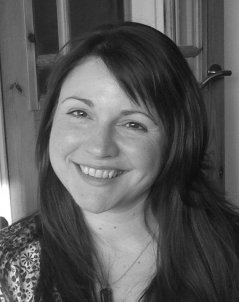
About Tilly Tennant

23776_1435621208482_8239110_n

Tilly Tennant was born in Dorset, the oldest of four children, but now lives in Staffordshire with a family of her own. After years of dismal and disastrous jobs, including paper plate stacking, shop girl, newspaper promotions and waitressing (she never could carry a bowl of soup without spilling a bit), she decided to indulge her passion for the written word by embarking on a degree in English and creative writing, graduating in 2009 with first class honours. She wrote her first novel in 2007 during her first summer break at university and has not stopped writing since.

You’ll find Tilly’s books here. You can follow Tilly on Twitter and visit her website.

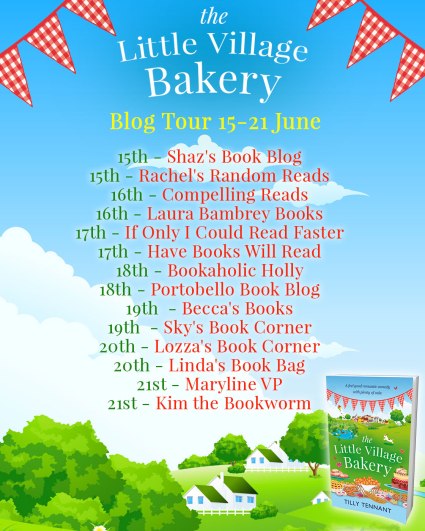
You’ll find more about Tilly Tennant and The Little Village Bakery with these other bloggers:

The-Little-Village-Bakery-Blog-Tour-Graphic

#Blogival Guest Post by Tracy Peppiatt

ticket

I’m delighted to be taking part in the #Blogival Festival organised by Clink Street and today I’m welcoming Tracy Peppiatt onto Linda’s Book Bag to tell us all about writing a memoir in We Never Let Go. We Never Let Go was published by Clink Street on 23rd March 2016 and is available in e-book and paperback from all good bookshops and Amazon.

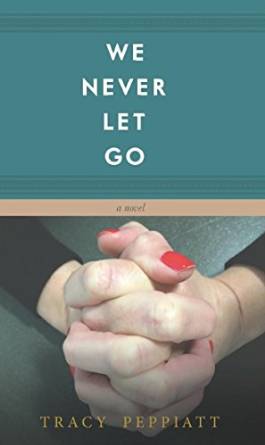
We Never Let Go

cover

It is said that a picture paints a thousand words but unless those words are revealed the viewer has to make their own interpretation. A family photograph like thousands of others may give a clue to the location and time through clothing and scenery, but what is not apparent are the thoughts, aspirations, and life of those portrayed. This is a story of a working class family, whose voyage through the rapidly changing society of the 60’s and 70’s, was probably like many others. But the difference with this story is that despite the often genuinely desperate situations that they found themselves, they persevered throughout with love and mutual dependence but primarily because there was little choice. The bond that holds us all together through all of life’s twists and turns and ultimately determines how we turn out in later life is the underlying story that is revealed. However, as we are the product of our response to our experiences through life, we ultimately never let go.

Five Important Things To Consider When Writing A Memoir

A Guest Post by Tracy Peppiatt

Honesty How often do we live our lives as a series of half-truths to ourselves and others. When you are at your lowest you need to realise and accept where you are in order to either seek the help or find the strength to commence the road to recovery. Why do we face these challenges in life? and why does it have to happen to me? How did I get here? Is there a reason for all of this? By addressing these questions we are being honest with ourselves and others and can progress and live a more enlightened and hopefully fulfilling life. In time we can also give forgiveness to those who harmed, abused or caused us pain and in this way we too grow and gain strength from the honesty of being able to forgive. With the loss of my mother I had to find this honesty within me in order to move on with my life.

Reader identification with the story; It is said that ‘We are the product of our life’s experiences’ however this is not strictly true as two people can go through the same experience and have a very different outcome. In my case when I lost my mother at Christmas in 2011, and this is an inevitable consequence for most of us, this was the removal of the foundation upon which my life had been constructed. This resulted in me having a breakdown which was followed by a period of ill health which affected me both physically and mentally. We all have challenges and how we deal with them determines us, so “We are really the product of how we have responded to our life’s experiences”

Exploration of the Past; In choosing to write the story of my relationship with my mother I realised that the story was of the evolving relationship of two women living their lives in parallel at the same time but at two different stages of their lives. We grew up under different circumstances and were living and responding differently as a result of this. Growing up in the exciting and somewhat frivolous 60s and 70s compared to my mother who had known the real austerity of rationing and the uncertainty of War. The definition of poverty is misquoted nowadays but the lack of the basics of food, shelter, clothing and safety were experiences that were perhaps more common in earlier years, and were certainly my experience, although love was always there. I realised whilst writing our story that there was so much more to it than just what we were living through and that her burden of dealing with our daily challenges were added to by her having to provide strength and guidance to a young woman growing up in a strange new world.

Tribute to another person; We meet people for a Reason a Season or a Lifetime. In the case of your mother that person is hopefully for a large part of the Lifetime. For me and for my mother there are so many Reasons for me to be grateful to her and it is only as I get older and go through the Seasons of my life that I realise the great strength and sense of perspective that she selflessly imparted to me that has enabled me to gain and enjoy my Lifetime.

Why is it important? I reached a point where I felt the need to review my own life and consider my own mortality through a reflection of my mother’s life. Once both your parents have gone you realise that in the great way of things you are next! By commencing writing this story I was able to exorcise some of the past demons that had lain dormant in the knowledge that if they came to the fore again then my mother was there to protect me. With her gone I had to face these and address these fears on my own, and in so doing was able to realise and acknowledge the role that she played in keeping our family together through some very tough times. The story is one that will have played out across the generations in many families but the common theme is that we can come to terms with our personal experiences but “Never let go”

About Tracy Peppiatt

I was born and raised in Hull, my mother Hannah was born of a middle class family and my father after serving in the Second World War found work as a fisherman. My childhood wasn’t the happiest, we lived in a working class community and often struggled to make ends meet, my father was often frustrated and aggressive and it was only my mother that kept the family together. My elder sister left home when she was eighteen years old because she wanted to escape and try and make a better life for herself, after she left we weren’t allowed to mention her name around my father which was incredibly sad and difficult. Things got steadily worse as the years went by and my mother ended up leaving my father with me and my siblings and we ended up in a refuge for women suffering domestic violence. My book, We Never Let Go is in memory of my mother, who passed away at Christmas 2011, and who was the centre of the family and succeeded in bringing them up and together, without her we wouldn’t have survived. It also carries the message that there is always hope and the  possibility for new beginnings, even in the direst circumstances, and I hope will provide much-needed support for those suffering poverty and domestic violence. Today I live in Middlesex with my husband and enjoy laughter and love every day that was so sadly missing from my childhood and is something I will never take for granted.

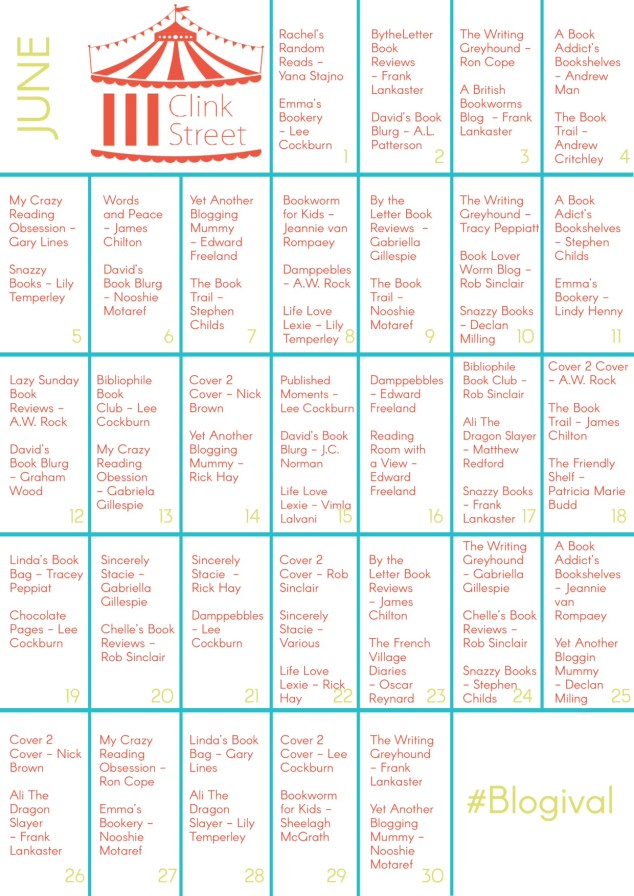
The Clink Street #Blogival is running for the whole of June. Find out more with these other bloggers.

Blogival Calendar

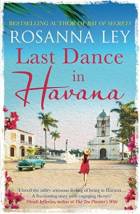
Last Dance in Havana by Rosanna Ley

last dance in havana

I was delighted to be accepted by Quercus Books to take part in their summer reading programme #QuercusSummer and to receive the first book Last Dance in Havana by Rosanna Ley, published in e-book and paperback on 16th May 2016. Last Dance in Havana is available for purchase on Amazon, from Quercus, Waterstones, WH Smith and all good bookshops.

Last Dance in Havana

last dance in havana

Cuba, 1958. Elisa is only sixteen years old when she meets Duardo and she knows he’s the love of her life from the moment they first dance the rumba together in downtown Havana. But Duardo is a rebel, determined to fight in Castro’s army, and Elisa is forced to leave behind her homeland and rebuild her life in distant England. But how can she stop longing for the warmth of Havana, when the music of the rumba still calls to her?

England, 2012. Grace has a troubled relationship with her father, whom she blames for her beloved mother’s untimely death. And this year more than ever she could do with a shoulder to cry on – Grace’s career is in flux, she isn’t sure she wants the baby her husband is so desperate to have and, worst of all, she’s begun to develop feelings for their best friend Theo. Theo is a Cuban born magician but even he can’t make Grace’s problems disappear. Is the passion Grace feels for Theo enough to risk her family’s happiness?

My Review of Last Dance in Havana

When Elisa dances the rumba with Duardo one steamy night in 1958 in Havana, the passions of the moment will reverberate for decades.

Immediately from the sensual and sensuous opening to Last Dance in Havana I knew I was going to love this book. I was completely transported into the world of Elisa and Grace so that I found it hard to tear myself away from reading when real life made its demands.

Frequently I felt as if my heart was breaking and my head was screaming silently, ‘No. Don’t do that. Don’t say that!’ so that I was absolutely caught up in the narrative. There is such visceral emotion I could hardly bear to read on but I couldn’t stop reading either. I could feel my throat tightening with the attempt not to cry so often because I found the level of passion and the depth of love portrayed overwhelming at times.

The quality of the writing is so effective. In some ways the plot is relatively simple, but Rosanna Ley’s varied and beautiful prose encompasses a range of sentence lengths that capture the moment, the emotion , the meaning, perfectly. She draws on all the senses in a way that adds layers of glorious experience for the reader. Seldom have I encountered a writer who can convey those senses so completely.

The settings depicted are completely authentic. I have never been to Bristol but I feel I could find my way around quite easily. The descriptions of Cuba have made me desperate to visit and experience the rumba for myself, to travel in an open-top American car and taste the chicken, rice and beans. Importantly too, I feel I have learned a considerable amount about Cuba’s political history through the deftly written and brilliantly researched back-drop to the story. Identity, honesty, passion, love and truth are all intricately woven into that history and into the narrative. This is masterful story-telling.

Rosanna Ley’s characters are so human. They are flawed, believable, and appealing – even Rosalyn, whom I can hardly forgive for her actions.

I have absolutely no idea why I haven’t read Rosanna Ley before. She is exactly my kind of author and I’ll be getting my hands on everything she’s ever written. I really do think you need to put your life on hold and read Last Dance in Havana. I feel my life has been enriched by the experience of doing so. I absolutely loved it.

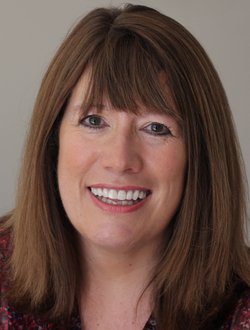
About Rosanna Ley

rosanna ley

Rosanna Ley is the bestselling author of novels including Return to Mandalay and The Villa, which sold over 310,000 copies. In February 2015 Return to Mandalay was shortlisted for the RNA Award for the Epic Romantic Novel. She has written numerous articles and short stories for magazines, and her novels have been published in the UK, Germany, France, Italy, Spain, Poland, Norway, Hungary, Portugal, Lithuania, Turkey and the Czech Republic. The Villa is also published by Quercus in the US.

Rosanna has also worked as a creative writing tutor for over 20 years. She has led courses for colleges and universities in England, and runs her own writing retreats in the UK and abroad in Italy and Spain. She has worked with community groups in therapeutic settings and completed an MA in Creative Writing for Personal Development in order to support this. She also runs a manuscript appraisal service to appraise and mentor the work of new writers.  She is married with children and lives in Dorset.

You’ll find Rosanna Ley on Facebook and can follow her on Twitter. You can also visit her website.

Guest Post by Deborah Lawrenson, author of 300 Days of Sun

25817393[1]

Although I haven’t had time to read 300 Days of Sun by Deborah Lawrenson yet, I was so intrigued by the story line that I had to ask her onto Linda’s Book Bag to tell me about the theme of identity that so obviously runs through the book.

300 days of Sun is available here in e-book and paperback.

300 Days of Sun

25817393[1]

Travelling to Faro, Portugal, journalist Joanna Millard hopes to escape an unsatisfying relationship and a stalled career. Faro is an enchanting town, and the seaside views are enhanced by the company of Nathan Emberlin, a charismatic younger man. But behind the crumbling facades of Moorish buildings, Joanna soon realizes, Faro has a seedy underbelly, its economy compromised by corruption and wartime spoils. And Nathan has an ulterior motive for seeking her company: he is determined to discover the truth involving a child’s kidnapping that may have taken place on this dramatic coastline over two decades ago.

Joanna’s subsequent search leads her to Ian Rylands, an English expat who cryptically insists she will find answers in The Alliance, a novel written by American Esta Hartford. The book recounts an American couple’s experience in Portugal during World War II, and their entanglements both personal and professional with their German enemies. Only Rylands insists the book isn’t fiction, and as Joanna reads deeper into it, she begins to suspect that Esta Hartford’s story and Nathan Emberlin’s may indeed converge in Faro—where the past not only casts a long shadow but still exerts a very present danger.

A Question of Identity

A Guest Post by Deborah Lawrenson

When I was growing up, the simple question, “Where do you come from?” had no simple answer. I was asked it often as I was always the new girl. As a diplomatic service family, we moved across Europe, the Middle East and Asia and back again, interspersed with a few years every now and then in London.

I went to ten schools, starting with an international convent in Peking (as it was), and including an American school in Brussels and a village school in Luxembourg. Home was less the bolt-hole in London than it was the books and crockery that marked our camp in foreign places. It was always clear, too, that the question of where I came from was actually another way of asking “Who are you?”.

Perhaps inevitably, states of flux and identity have always interested me. Perhaps that’s why I like to write recognisable landscapes into my novels; the places are the anchors of the story and the human characters reveal themselves in the way they react and adapt to the setting.

Questions about identity run through my new novel 300 Days of Sun. It’s an issue that can be hard enough to answer in normal circumstances. But what happens if a child grows to adulthood and discovers he is not the person he thought he was? For Nathan, in the present-day storyline, personal history is shattered. His understanding of his family, his childhood, his place in the world, is revealed to be a lie. How can he ignore the urge to find out the truth? Would it even be possible to ignore what he now knows?

Joanna, a journalist, is also re-evaluating her life. When she and Nathan meet in Faro, Portugal, she is wondering how to make a new start. He recognises her strengths, and asks her to help him. Her determination to be true to herself, come what may, is crucial.

For Alva, in wartime Lisbon, the moment she changes her perception of her circumstances – and her marriage – is when she realises that her husband has no intention of taking her “home” to America. She is forced to adapt to life in Portugal, and in doing so, becomes someone entirely different.

And while Nathan and Alva are in the process of change – change neither of them has sought in the first place – the world around them is unstable, too. Violent storms re-draw coastal geography. Nature cannot be contained even with modern sea-barrier engineering. Economic and political power shifts undermine the individual.

Perhaps appropriately, this novel has several different genre elements. It’s part historical fiction, part romantic suspense, part literary thriller. I always try to write in a way that transports the reader to a setting, capturing a vivid sense of place and I research carefully to make the imaginary experience as accurate as possible, whether that is the smells of the old town, or the soft shushing sounds of the Portuguese language.

Is this evocation of place a way of finding a calm still centre in the wild uproar of life? I sometimes think so. As a writer, I’ve become more and more aware that each book I offer a story to the reader – and a complex weave of subconscious thoughts to myself. Sometimes it has been years after a novel was published that I realise (or allow myself to realise) what the story was really about.

But I’m pretty sure that with 300 Days of Sun the time had come to think about all those border crossings and classrooms full of unfamiliar faces, and the fear and excitement of having to start all over again.

About Deborah Lawrenson

deborah

Deborah Lawrenson spent her childhood moving around the world from Kuwait to China, Belgium, Luxembourg and Singapore with diplomatic service parents. She read English at Cambridge University and worked as a journalist in London. She is the author of eight novels, including the critically acclaimed The Art of Falling, which was a WHSmith Fresh Talent novel, and The Lantern, which was picked as a summer read for the Channel 4 TV Book Club in 2011. She lives in Kent and spends as much time as possible at a crumbling hamlet in Provence, the atmospheric setting for The Lantern

If, like me, you’re intrigued by Deborah’s writing, you’ll find all her books here. You can also visit her website, follow her on Twitter and find her on Facebook.

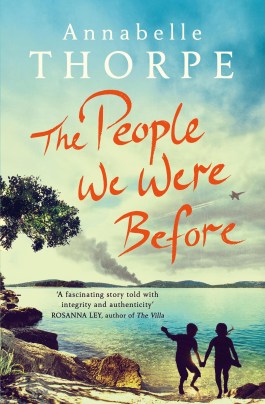
Guest Post by Annabelle Thorpe, author of The People We Were Before

bookcover

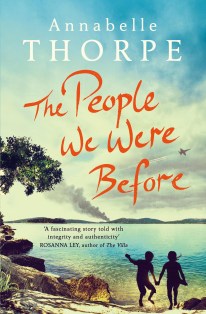
Once again I’m judging a book by its cover and adding to my enormous TBR! As I love the look and sound of The People We Were Before by Annabelle Thorpe I just had to invite Annabelle onto Linda’s Book Bag and luckily she agreed to write a guest post all about the writing process and how authors inadvertently reveal themselves through their words.

The People We Were Before was published by Quercus on 21st April 2016 and is available on Amazon, from Waterstones and all good bookshops.

The People We Were Before

bookcover

Yugoslavia, summer 1979. A new village. A new life. But eight-year-old Miro knows the real reason why his family moved from the inland city of Knin to the sunkissed village of Ljeta on the Dalmatian Coast, a tragedy he tries desperately to forget.

The Ljeta years are happy ones, though, and when he marries his childhood sweetheart, and they have a baby daughter, life seems pretty much perfect. But storm clouds are gathering above Yugoslavia, and when war breaks out one split-second decision destroys the life Miro has managed to build. Driven by anger and grief, he flees to Dubrovnik, plunging himself into the hard-bitten world of international war reporters.

There begins a journey that will take him ever deeper into danger: from Dubrovnik, to Sarajevo, to the worst atrocities of war-torn Bosnia.  Slowly, Miro realises that even if he survives, there can be no way back to his earlier life. The war will change him, and everyone he loves, forever.

The Unintentional Reveal

Sounds like a twist in an Agatha Christie plot doesn’t it?  The moment when a character gives something away, a glimpse into the inner workings of their mind, that either counts them in or out as the murderer.  But unintentional reveals happen all the time in fiction; moments when the author surfaces momentarily, in a character’s opinion or way of behaviour.  Sometimes this is done deliberately; some authors base a character on some facets of their own personality, or recreate their own experiences and life lessons in their books.

What’s more common – and what definitely happened to me whilst writing The People We Were Before – is how facets of yourself appear in the book without you even noticing.  You’d be forgiven for thinking that with a novel written in the first-person, where the narrator is a young Croatian boy (who becomes a married Croatian man) there’d be little opportunity for unintentional reveals of any kind.  That was something I liked; an ability to remain anonymous, hidden behind my character, my own voice never really heard.

But gradually, each time I read the book back, I realised it was filled with unintentional reveals; episodes from my own life, re-cast and re-written, often dredged from my subconscious and only recognisable to me once I saw them on the page.  At the beginning of the book Miro, my narrator, and his family move hundreds of miles from the town where he grew up, to a village on the coast, very much against his Mother’s wishes.  It was only when I re-read those early chapters, read Miro’s perceptions of his mother’s dismay at having to move, that I remembered moving house at a similar age, and my own Mum’s unhappiness at an unwanted move.  When Miro – wide-eyed with excitement – attends his older sister’s wedding, he is exactly the age I was when my first sister got married.  Recently, flicking through the book again, I recognised Miro’s need to explore beyond the comfortable world in which he grew up, as a mirror of my own.

Writing a novel can equally show you things about yourself that you’d never realised before.  As a journalist myself, albeit of the soft, travel-writing kind, I’d never really considered war reporting as something relevant to me.  But as the world of hardened war correspondents became increasingly central to the book, it became clear to me that I admired them, that it was a world that I felt drawn towards, could imagine being part of.  In reality of course, I’m not brave enough (and too squeamish, sadly) to put myself in that sort of peril on a daily basis, but still – it was a revelation to me how much the job appealed.

In my second novel, Night Falls on the Kasbah, which I’m currently writing, my central character – Freya – is a woman, and I’ve been constantly aware of whether I am putting too much of myself in her, whether her anxieties, fears, joys and opinions coincide too closely with mine.  But the other day, reading a chapter from The People We Were Before where Miro and his two friends, Josip and Pavle,  had exactly the kind of mickey-taking conversation I have with my closest friends – I realised there was really no point in worrying.  We are the novels we write, the characters we draw, the situations we put them into.  Intentionally or not, as authors, we are constantly revealing different facets of our characters – both to our readers and to ourselves.  And I’ve come to realise that that’s a good thing rather than bad; another part of what makes being a writer such an endlessly fascinating job.

About Annabelle Thorpe

beachbwater (2)

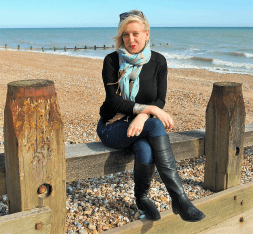
I’ve been a travel and features journalist for almost twenty years, writing mostly for the Times, Sunday Times Travel Mag, Express and Guardian.  Ironically, I turned to journalism as a way to make some money while I wrote my first novel – this was in the mid 1990’s!  Getting published was an incredibly long, slow process – The People We Were Before has been in the works for about ten years!

I split my time between London and Sussex, where I grew up, and am currently working on my second novel, Night Falls on the Kasbah, which is set in Marrakech and Doha, and should be published in May 2017.

You can find out more about Annabelle Thorpe on her website and you can follow her on Twitter.