Blood and Roses by Catherine Hokin

CRDg-oxW8AAKMmD

I am delighted to be helping to launch ‘Blood and Roses’ by Catherine Hokin, published on 13 January 2016 from Yolk Publishing. It is also my pleasure to bring you a guest post from the author, Catherine Hokin. You can buy ‘Blood and Roses’ here in the UK and here in the US, and from all good bookshops.

About ‘Blood and Roses’

Blood and Rosesa novel of Margaret of Anjou and her pivotal role in the Wars of the Roses by Catherine Hokin.

1460

The English Crown – a bloodied, restless prize.

The one contender strong enough to hold it? A woman. Margaret of Anjou: a French Queen in a hostile country, born to rule but refused the right, shackled to a King lost in a shadow-land.

When a craving for power becomes a crusade, when two rival dynasties rip the country apart in their desire to rule it and thrones are the spoils of a battlefield, the stakes can only rise. And if the highest stake you have is your son?

You play it.

‘Blood and Roses’, a work of historical fiction, retells the story of Margaret of Anjou (1430-82), wife of Henry VI and a key protagonist in the Wars of the Roses. This is a feminist revision of a woman frequently imagined only as the shadowy figure demonised by Shakespeare.Blood and Roses’ examines Margaret as a Queen unable to wield the power and authority she is capable of, as a wife trapped in marriage to a man born to be a saint and as a mother whose son meets a terrible fate she has set in motion.

The story opens in 1480 with Margaret as an unwilling exile in France and is structured as a reflection on the events of her life and the relationships that shaped it, primarily her son Edward, her husband Henry IV, Anne Neville and the Earl of Warwick.

The novel spans 1435 to 1480. The dynastic conflicts around the throne, known to a modern audience as the Wars of the Roses, are the main backdrop to the story including the battles which were some of the bloodiest ever fought.

​The main conflicts in the novel reflect both the issues of the age – the challenge of holding onto a crown in a kingdom riven by dynastic struggle in which loyalties shift like quicksand – and the personal price to be paid by being a woman outside her time. In trying to resolve her marriage and its desperate need for an heir, shape her son for a dangerous future and reconcile her ambition with her lack of power, does Margaret become the author of her own fate?

A key issue for historians has been the relationship between Margaret of Anjou and her husband Henry IV (who suffered from what has been described as narcolepsy, resulting in long periods of what are best described as coma) and the paternity of her son, born 8 years into what was a seemingly barren marriage. Blood and Roses offers a solution to the paternity question rooted in Margaret’s political acumen and her relationship with Jacquetta Woodville – a friendship which ended in a betrayal that has never been fully explored.

This is a novel about power: winning it, the sacrifices made for it and its value. It is also a novel about a woman out of her time, playing a game ultimately no one can control.

A Guest Post from Catherine Hokin

Until relatively recently I taught English to teenage boys – there’s probably a book in there but I shall leave that one for now – and, like much of teaching, the curriculum was heavily compartmentalised. One half-term it would be short stories, the next it would be non-fiction, then novels and so on. When I imagined myself as a writer (which I did and often, particularly when faced with a pile of year 9 stories to mark), I also thought in that compartmentalised way: I am going to be a novelist, short stories are what short story writers do. The reality, I am glad to say, has been quite a different tale.

The novel writing began first: ‘Blood and Roses’ was born out of a lifelong love of History and a particular fascination with the medieval period which I specialised in at University. It is a very rewarding process, from the research stage, when I am looking for the gaps into which I can weave my narrative, to the writing process itself where the length of a novel allows me to explore characters and dilemmas in great depth.

Conversely, it can also be a very frustrating experience. It is difficult to get feedback – I am not someone who wants to submit chapter by chapter to a writing group – and novels, at least the ones I seem to write, are very long. You can be 85,000 words down the line before you submit and realise it has all gone rather wrong! This is where short stories come in.

I started writing short stories about a year ago to give myself another outlet for writing when the novel, as all they do at some point, had me spinning in circles. What I hadn’t realised was how much I would learn about my craft when I had only limited words at my disposal. The beauty of short story writing is that there are lots of competitions and, for a very small fee, they give feedback – I have entered stories to get pointers on character development, setting and structural devices that, although the short stories all have contemporary timeframes, I then wanted to use in my novel. It has been a fast, invaluable and cheap learning curve I would recommend to any author.

There are challenges. I am wordy by nature, in short stories you have to strip everything back and one carefully picked word must stand for ten. And they can only be snapshots: the reader enters a short story very often in the middle of the action but still expects the writer to deliver a rounded character or two and a sense of some kind of resolution. In 3000 words if you are lucky but, more often, in 1500 – I haven’t dared flash fiction with its 500 word limit yet. So what do I love about them, apart from the feedback? The sense of achievement of something finished and whole; the way the format lets me play with structure and character in a way an historical novel can’t and, being really honest, the fact I’ve won competitions and just had my first paid commission. Nothing says writer like your name in print and a pay cheque!

Ultimately I suppose, my short stories and my novel (and my blog) are the same: I write about feisty, interesting women. More than that, they are all strands that have led to the best sentence I’ve ever heard – I went to collect some printing the other week and the assistant said, “it’s that author, come for her stuff.” I may have kissed him, let’s draw a veil…

About Catherine Hokin
chair

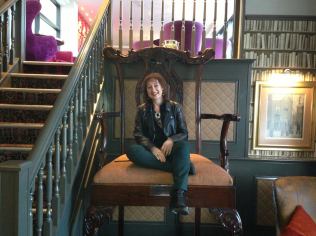
Catherine is a Glasgow-based author with a degree in History from Manchester University. After years of talking about it, she finally started writing seriously about 3 years ago, researching and writing her debut novel, ‘Blood and Roses’which will be published in January 2016 by Yolk Publishing.

About a year ago, Catherine also started writing short stories – she was recently 3rd prize winner in the 2015 West Sussex Writers Short Story Competition and a finalist in the Scottish Arts Club 2015 Short Story Competition. She regularly blogs as Heroine Chic, casting a historical, and often hysterical, eye over women in history, popular culture and life in general.

Social media links:

Web site

Blog

Facebook

Twitter

You can find out more about Catherine Hokin and her debut novel, ‘Blood and Roses’, with these other bloggers.

Blood and Roses Blog Tour

River Road by Carol Goodman

River Road

‘River Road’ by Carol Goodman appeared as surprise book post through my letterbox. It is published on 19th January 2016 by Titan Books and is available in ebook and paperback direct from the publisher or on Amazon UK and  Amazon US.

When Professor Nan Lewis hits what she thinks is a deer on the road on her way back from a faculty party in New York state, little does she expect a police officer at her door the following morning to tell her that one of her favourite students, Leia Dawson, has been killed in a hit and run accident and that Nan is the chief suspect. Worse still, Nan’s own daughter was previously killed in a road accident in the same place…

‘River Road’ is a cracking thriller. It kept me guessing all the way through so that I suspected every character at some point as being Leia’s murderer. There’s an intensity of writing that really enthralls. The descriptions, particularly of the landscapes are dramatic and visual, allowing the reader to picture the scene perfectly.

I also loved the literary references that pepper the text. They are never intrusive, but they lend an authenticity to Nan’s role and character. I’m sure the author’s own teaching background has assisted with this extra layer of credibility.

The first person delivery gives pace and immediacy so that it is impossible not to want to read on and the plot races along, twisting and turning so that I felt my pulse increasing with the events. There’s certainly never a dull moment in Nan’s life.

I found the cast of characters completely believable and I really enjoyed the romantic aspect that emerged as a counterpoint to the murderous and thriller genre elements. ‘River Road’ also impresses because Carol Goodman isn’t afraid to tackle themes that can blight many lives, from alcoholism and drug addiction to complete and utter grief so that as well as being a thoroughly entertaining story, this is a novel of depth and substance too.

‘River Road’ is well written, exciting and entertaining – everything a good book should be. Thriller readers will love it.

You can follow Carol Goodman on Twitter and via her website. You’ll also find her on Facebook

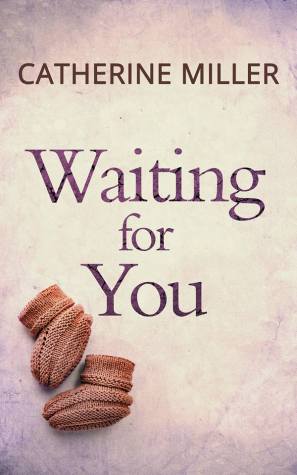
Waiting for You by Catherine Miller

12345615_10156178858210386_2471713879675962436_n

I’m delighted to be introducing a new book by Catherine Miller called ‘Waiting for You‘ which is published by Carina on 10th March 2016 and can be ordered here.

Today Catherine is holding a special Facebook Launch Event for ‘Waiting for You‘ where you can win prizes by visiting here. She also has a special message for readers at the bottom of this post.

About ‘Waiting for You’

Waiting for You is an emotional and gripping debut novel you won’t be able to put down…

You’d never guess that Fliss Chapron doesn’t have it all

All Fliss wants is to see two blue lines telling her she is pregnant with her much longed for second baby. But as the negative tests stack up, dreams of completing her perfect family feel more hopeless every day.

After years of disappointment, Fliss’s husband Ben is spending more time at the office than in their marital bed, and Fliss finds herself wondering who could be responsible for their inability to conceive another child. Yet, where do you lay the blame when it comes to having a child – and can anyone really be at fault…

As Ben becomes increasingly distant, Fliss begins to question whether her desire for a baby is just a sticking plaster to save her marriage. Because in the end, how well can you ever know another person…even the man you’re married to?

A message from Catherine:

Don’t Wait … To Back A Debut

We’re two strangers meeting in a bar for the first time: The Reader and The Writer. Well, probably not a bar. More likely a coffee shop, a cosy couch or if we’re really lucky a sun lounger by a pool. Where you take me is up to you. I’m happy to be read where you are most comfortable. Be it on the bus to work, outside the school gates or curled up in bed. Wherever it is, it’s a strange privilege to be with you. Then it’s my turn to take you on a journey to another life, another world. The one that until now only existed in my head. You are the person who will make it real. This is the friendship we start to weave and like the best kind of meetings with strangers, it’s my hope it lasts a lifetime.

Catherine x

Follow Catherine Miller on Twitter and her blog

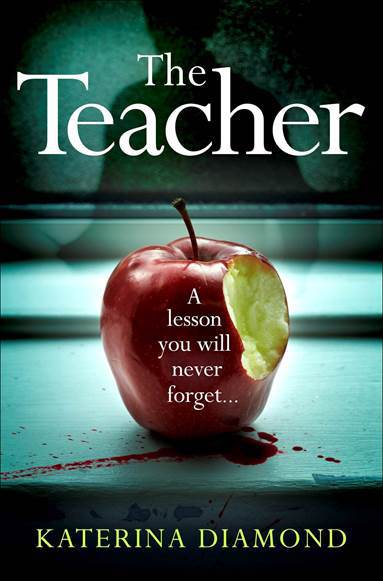
The Teacher by Katerina Diamond Cover Reveal

the teacher

If you’ve been following Twitter you may have seen #DoYouDare. I’m delighted to be revealing the cover of the new book by Katerina Diamond, ‘The Teacher’. ‘The Teacher’ is published by Avon on 10th March 2016 and is available here to order.

The book:

You think you know who to trust?
You think you know the difference between good and evil?

You’re wrong …

This is The Teacher: a debut crime novel from Katerina Diamond (on Twitter as @TheVenomousPen). It will upturn everything you thought you knew. And you absolutely will not forget it.

A LESSON YOU WILL NEVER FORGET

The body of the head teacher of an exclusive Devon school is found hanging from the rafters in the assembly hall.

Hours earlier he’d received a package, and only he could understand the silent message it conveyed. It meant the end.

As Exeter suffers a rising count of gruesome deaths, troubled DS Imogen Grey and DS Adrian Miles must solve the case and make their city safe again.

But as they’re drawn into a network of corruption, lies and exploitation, every step brings them closer to grim secrets hidden at the heart of their community.

And once they learn what’s motivating this killer, will they truly want to stop him?

SMART. GRIPPING. GRUESOME.

This is a psychological crime thriller in a class of its own.

Warning: Most definitely *not* for the faint-hearted!

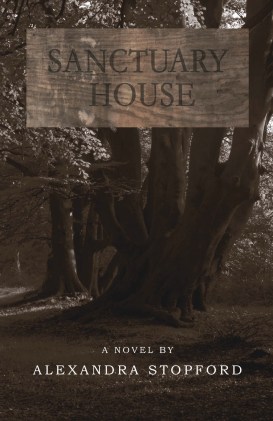
Sanctuary House by Alexandra Stopford

Sanctuary House

I’m very pleased to be bringing you a spotlight today on ‘Sanctuary House’ by Alexandra Stopford. Alexandra Stopford kindly agreed to write a guest post for Linda’s Book Bag, describing how ‘Sanctuary House’ evolved. I haven’t had chance to read the novel yet, but I think you’ll agree it looks fascinating.

About the book

‘Sanctuary House’ is a novel in the form of letters from Sophie to her absent father.  Sophie’s life is turned upside down when a car crash kills her ‘almost born’ baby brother (Leo).  This is the catalyst for her father’s subsequent disappearance and her mother’s breakdown, which ultimately leads Sophie’s mother into the clutches of Sunra, the leader of a small cult/community known as ‘Divine Passage’. The past narrative is punctuated by her present day situation, struggling to adjust to a new life in foster care and desperate to hang onto the memory of her father.  While the past narrative reaches a pessimistic climax, the present day narrative shows a Sophie coming to terms with all that has happened and looking forward to her future.

The Background to Sanctuary House

I started this book as one for young children, as I wanted to explore a child with an imaginary friend, but when I came to think of the type of circumstance in which an imaginary friend might be required, I thought about being lonely and isolated, and the idea of a cult came to fruition.  I have never been involved in a cult but a family member was (although I only remembered this after I’d finished the book, but perhaps it was in my subconscious mind somehow) and I started to look at cults on-line, how they are run, the kind of person that might join etc etc.  I then invented Divine Passage and thought up Sunra, the cult leader.

Originally it was written as a chronological narrative all in the past, but when I did my MA I changed it to letters to Sophie’s absent father.  Although it spoils the ‘surprise’ that she survives the cult, it allows me to keep the father alive for Sophie (otherwise he simply disappears at the start of the book and you never hear anything more about him) and also to see Sophie’s eventual triumph as she settles into her present day life, makes friends and faces her traumatic past.  Many people who have read the book were disappointed that her father doesn’t reappear.  I didn’t really plan this.  It just happened to end that way.  However, I do plan a sequel so who knows, he may reappear, or he may not!

Emotionally, I got very involved with Sophie and started to hate Sunra and find her mother very weak and disliked the way she treated Sophie.  The introduction of Zara was also unplanned, she just popped into my mind and her timing seemed good for the plot.  It’s amazing how characters inveigle their way into your psyche, without you really realising!

My college tutor who was my mentor on the book found the beginning so emotional she had to pass it to a colleague to read and assess, since she lost a baby while she was reading it.  Although I obviously did not want to distress her, the fact she found it so emotive she couldn’t continue with it, made me realise it was very powerful.

Alexandra Stopford

Published as an ebook, you can buy ‘Sanctuary House’ here in the UK and here in the US.


Strictly Between Us by Jane Fallon

Strictly btween us

I was fortunate to win a signed copy of ‘Strictly Between Us’ by Jane Fallon from Curtis Brown Books. ‘Strictly Between Us’ is published by Penguin on 14th January 2016. It is available to buy on Amazon UK and Amazon US.

Tamsin has been best friends with Michelle since their school days and when she hears rumours that Michelle’s husband Patrick might be unfaithful to Michelle, she decides to see if these rumours are true. Unfortunately, Tamsin has just, somewhat accidentally, had a brief sexual encounter with Patrick herself. Asking her work assistant Bea to help find out what Patrick is up to is not necessarily Tamsin’s wisest move.

I thoroughly enjoyed this story. There is a first person conversational tone that speaks directly to the reader as if the characters are friend sharing secrets so that I was engaged with the writing from the opening line. There’s also real humour  and I found myself smiling and laughing at many of the phrases. One element that is a triumph is the natural nature of the dialogue, especially that between Tamsin and Adam.

Divided into five parts like a traditional play, the first concentrates on Tasmin, but then Bea plays a wider role in the story and there are some unexpected and clever plot twists that are very entertaining. It kept making me think of Scott’s ‘What a tangled web we weave when first we practice to deceive’. I kept telling myself I’d just read a couple of pages, only to find an hour had passed as I was engrossed in the narrative. I couldn’t wait to see how it would all end.

The author’s background in television lends an authenticity to the story that, whilst lighthearted, makes it totally credible. Indeed, I’d love to see ‘Strictly Between Us’ made into a rom-com film.

‘Strictly Between Us’ is a thoroughly entertaining and enjoyable story. It’s the perfect read for a holiday, a wet winter’s afternoon and a duvet day.

You can read more about Jane Fallon on her web site, follow her on Twitter and on Facebook

The Queen’s Choice by Anne O’Brien

The Queen's Choice

I recently read and reviewed ‘The Queen’s Choice’ by Anne O’Brien. If you read my review here you’ll see I loved it. Consequently I am utterly delighted to be supporting the launch of this wonderful book with a question and answer session with Anne below, where Anne gives a fascinating insight into the writing of this super book. The Queen’s Choice’ is published by Mira Books on 14th January 2016 priced £12.99 in hardback.

TQC Blog Tour

The Queen’s Choice

October 1396. Attending the marriage of Richard II, King of England, Joanna of Navarre encounters Henry Bolingbroke, the Earl of Derby. Their attraction is immediate and mutual, despite Joanna’s marriage to the much older John, Duke of Brittany.

Several years later, Henry has been crowned King of England having overthrown the tyrannical Richard, and the recently widowed Joanna is surprised to receive a proposal of marriage from him. To accept means losing her sons, and abandoning her Regency of Brittany, but unable to discard her still-strong feelings for Henry, Joanna reluctantly agrees.

However, life in England is not what Joanna had expected. Accustomed to having her previous husband’s ear and a say in matters of policy, she is shocked to find herself shut out of politics and regarded by many as an enemy for her Breton heritage. Henry is distracted by rebellions from all corners of the country, and the repeated attempts upon his life lead him to suspect everyone – even his wife. Both are too proud to confront the distance that is growing between them. Alone, and with no one to confide in, can Joanna overcome her pride and make amends with her husband? And if the two reconcile, can Henry maintain his hold upon the Crown and establish himself as rightful King?

An Interview with Anne O’Brien

Thanks so much for agreeing to be interviewed about ‘The Queen’s Choice’ Anne. Firstly, how and why did you choose the quotations that appear at the start of The Queen’s Choice’?

I chose them because they all seemed directly relevant to Joanna’s story, and of course might intrigue the reader to read on …

– ‘Who ever lov’d, that lov’d not at first sight?’

                                   Christopher Marlowe 1564-1593:  Hero and Leander

Evidence suggests an attraction, a love at first sight, between Henry and Joanna.

– Forasmuch as I am eager to hear of your good estate … I pray you, my most dear and most honoured lord and cousin, that you would tell me often of the certainty of it, for the great comfort and gladness of my heart.  For whenever I am able to hear a good account of you, my heart rejoices exceedingly.’

Written at Vannes 15th February 1400: the Duchess of Brittany to King Henry IV

This is taken from the only letter we have in Joanna’s own words.  It is the closest to a love letter as we ever get from her.

– (The wives of powerful noblemen) must be highly knowledgeable about government, and wise …

Christine de Pizan: The Book of the City of Ladies c. 1405

Christine was contemporary with Joanna.  Although there is no evidence that they ever met, I am sure that Joanna would have been aware of her work.  I expect that she read Christine’s thoughts on the role of women in government with interest – and perhaps applied them to herself.

– Thou shalt not suffer a witch to live

                                    Exodus  22.18

How to remove a potentially influential woman from the scene?  Accuse her of witchcraft! Joanna was not the first nor would she be the last to suffer.  And the penalty for being a witch could indeed be death.

When you’re writing how easy is it to leave aside your teaching voice and adopt a narrative voice or do you think they are the same?

What an interesting question!  In some ways they are the same.

To make history enjoyable for students, it must engage their emotions.  It must be lively and driven by the excitement of the characters and the events.  The same can definitely be said for telling a good story.  The reader must be drawn in, to live the experience.

But teaching demands that students be given a thorough detail of historical facts.  Here is the danger when writing fiction.  There must be a fine balance between drama and fact.  Too many facts can destroy the pace and the excitement.  Sometimes ‘history’ must be omitted for the sake of the novel.

Why did you choose the first person to relate Joanna’s story rather than the third?

To write in the first person puts Joanna centre stage.  This is her story, the tale of a woman with power who was forced to make some painful decisions, and then live with the consequences.  I enjoy writing about medieval women who, through history, have very little voice.  To make Joanna the main protagonist – with everything seen and experienced through her eyes – restores her voice and her place in history.

There is an immediate attraction between Joanna and Henry. What is your personal view of love at first sight?

I think that for some fortunate people it happens.  An  instant connection.  A basic attraction.  Something that ‘clicks’ between them that is more than just sexual allure.  Love in its fullest sense perhaps takes time to develop as they come to know each other better, but I certainly believe in it.

What research methods do you use to ensure historical accuracy?

To begin I need a structure of the life of my main character.  In this case Joanna.  I read everything that might give insight into her.  Here there are some historians I trust more than others.  I use primary sources as well as secondary ones where they are important.

Once I have a basic ‘skeleton’ and for Joanna it was very basic, I delved into the dark and bloody politics of Henry IV’s reign because this will set the scene.  Joanna will act out her life against this back ground.

A final layer is to apply the personal bits to make Joanna a complete figure, to clothe her skeleton in flesh and also clothes and jewels and talents.  This knowledge is acquired through my writing about this period in history over a number of years.

Accuracy to the historical time is essential, and I have a responsibility to Joanna and the people she meets on her journey.  There will always be dispute over some events, but based on the evidence, and what seems realistic, in the end I must make my own decisions.

(I really thought you brought Joanna alive perfectly.)

The women you present embody the full range of personalities. How far is the presentation of a female perspective important to you as opposed to just writing a highly entertaining story?

It is vitally important.  The medieval women I write about faced different pressures and influences from those facing most women today: the demands of family, status, religion.  Women had little freedom to express themselves, even royal women.  They are for the most part silent.

And yet these women in their lives were not too different from their 21st century sisters.  I write about relationships.  Within those, I am sure that women expressed the same emotions that we do.  The laugh and weep, they rejoice and feel hatred.  They are afraid but can be very courageous.  History leaves us with a two dimensional picture of these women – such as Joanna.  I hope to make them rounded characters, reacting to life as women of their time and status.  Here is their chance to speak out.

Although I give a female perspective, it is not my intent to write feminist history, and – bottom line – it must be a good story which develops the characters of the men in power as much as it does that of my heroine.

I thought the style you adopted was perfect. How difficult is it to keep your writing authentic to the period whilst still appealing to a modern audience?

I try to think through the mind and thoughts of my ‘heroine’.  I think that helps.  Her experience must be authentic and true to her place in history.  She is not allowed to do or think anything that is anachronistic.  But it must be lively and personal, always with that element of drama to give a page-turning quality.

I particularly like to use conversation to get ideas across.  Through talking to each other, I hope my characters draw the reader in and carry them through the plot to a satisfactory end.  I try to keep the language ‘modern’ in that it is not Shakespearean nor what I would call ‘gadzooks’ history which is very artificial.  It is a fine balance and I simply write with ‘gut feeling’.

(I’d say your ‘gut feeling’ is spot on!)

Had you been Joanna, would you have married Henry?

I would like to think that I would have had the courage to abandon family and power for an uncertain life in a foreign country.  Joanna of course did not have hindsight.  I’m not sure that I would have coped well with Henry at his most recalcitrant!

How far do you think Joanna orchestrates her own destiny and how far is she a hostage to the times in which she lived?

Definitely something of both.

By choosing to marry the King of England rather than be Regent in Brittany for her young son, Joanna chose her own destiny and set her own future path.  There was an enormous about of political pressure on her to reject Henry, but she chose to follow her personal desires.  And how much she had to give up to do so!

But when she was Queen Consort, then she soon discovered the restrictions on a foreign queen in a country devastated by civil war and with an increasingly hostile parliament, restrictions that she could not influence.  The charges of witchcraft indicate how even the most powerful women of the highest rank were vulnerable if they made enemies.  Joanna learned how powerless she could be and was forced to come to terms with it.

I think that is one of the reasons why Joanna is such an engaging and complex character.

If you could choose a period in history in which to spend the rest of your life which would it be and why?

This would be England in the reign of Richard II.  I would like to be attached to the royal court ( I expect I would end up as something menial) which would give me the opportunity to meet so many of the  people I have written about.  Katherine Swynford, John of Gaunt, Elizabeth of Lancaster, John Holand and of course the characters in The Queen’s Choice were all people of Richard’s Court.  It was a glittering reign with a youthful ambitious king, but one touched by tragedy too as Richard’s faults and failures led to his downfall and death.   I would like to have been there, to see if my interpretation of these characters was correct.  How exciting that would be.

Other than Joanna and Henry, which character in ‘The Queen’s Choice’ would you most like to spend a day with and why?

This would be Bishop Henry Beaufort, Henry’s half brother, one of the Beaufort offspring of John of Gaunt and Katherine Swynford.  A cleric but a clever, ambitious one, a true medieval wheeler and dealer, full of cunning intelligence.  I think that he would be well informed on all that was going on in Henry’s reign.  I imagine conversation with him would be highly enlightening on the state of the realm.

Although I might like a conversation in passing with Lord Thomas de Camoys too.  Now there’s an interesting character …

(Definitely my choice would be Thomas de Camoys)

Were Joanna alive today, what role do you think she would have in society? 

She would have her eye on a top job, for sure.  Probably financial.  Chancellor perhaps?  Watch out George Osborne!

Anne, thank you so much for such detailed answers to my questions.

Loved the questions.  Thank you so much for the chance to talk about my interests and about Queen Joanna in particular.

About Anne O’Brien

12392018_986275288104724_3462507891609838339_n

‘Anne O’Brien has joined the exclusive club of excellent historical novelists’ Sunday Express

 Praise for Anne’s previous novel The King’s Sister:

‘A gripping tale…packed with love, loss and intrigue’ S Magazine

‘A fast-paced historical drama that is full of suspense’ Essentials

‘A brilliantly researched and well-told story; you won’t be able to put this book down’ Candis

‘An epic historical adventure…4 stars’ Heat

‘An exciting and intriguing story of love and historical politics. If you enjoy Philippa Gregory and Alison Weir, you will love Anne O’Brien’ We Love This Book

‘A fast-moving, compelling account of one wilful royal woman’s determination to defy powerful dynastic expectations and marry the man she loves.’ Lancashire Evening Post

‘This book is flawlessly written and well researched, and will appeal to her fans and those who like Philippa Gregory’s novels too. ’Birmingham Post

ANNE O’BRIEN was born in the West Riding of Yorkshire. After gaining a BA Honours degree in History at Manchester University and a Master’s in Education at Hull, she lived in the East Riding for many years where she taught History. Leaving teaching – but not her love of history – Anne turned to novel writing and her passion for giving voice to the oft forgotten women of the medieval era was born. Today Anne lives in an eighteenth-century cottage in Herefordshire, an area steeped in history and full of inspiration for her work.

Visit Anne online at www.anneobrienbooks.com

Find Anne on Facebook and follow her on Twitter @anne_obrien

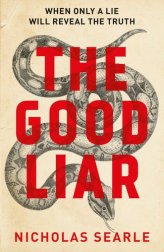
The Good Liar by Nicholas Searle

good liar

I received an advanced reader copy of ‘The Good Liar’ by Nicholas Searle from the publisher in return for an honest review. ‘The Good Liar’ is published in ebook and hardback by Viking on January 14th 2016 and is available on Amazon UK and Amazon US a well as from all good bookshops.

Roy Courtnay is a con man of the highest order. He ensnares women through Internet dating sites and is working on Betty to be the latest of his victims. But there is more to Roy than initially meets the eye and the lies of his past may be catching up with him more than he knows.

I’m finding it difficult to review ‘The Good Liar’ by Nicholas Searle as I can’t decide if I thought it was brilliant or I didn’t like it at all.

To deal with the negative first, I couldn’t bear the insidious, creepy and foul Roy to the extent that I felt uncomfortable reading about him and I was unable to empathise with him or to feel an emotional connection with the text. However, this suggests a high quality of writing that the author can make me feel this way and ‘The Good Liar’ is well written other than for a few cliched phrases.

The descriptions are excellent, and appeal to all the senses so that it is easy to picture the scenes in a kind of literary tapestry. The depiction of the sordid underbelly of criminality is sublime and at times there is a real elegance to the writing.

The plot is interestingly structured as it travels backwards in time, uncovering layers of Roy’s past so that it is difficult to know what is true and what is a fabrication. It is as sinuous as the snake on the cover. I found a couple of events slightly too far fetched, but then I think Roy has no moral compass except with regard to himself, and I’m not entirely familiar with those who appear to be psychopaths so this might be acceptable behaviour. I enjoyed the denouement of the story as I felt there was a closure for me as a reader as well as the characters, but I couldn’t decide if the final two chapters were superfluous.

I’m not sure what it was about ‘The Good Liar’ that didn’t fully appeal to my taste as a reader. I thought it was interesting but equally I felt as if I were detached from the reading experience rather than immersed within it. I’m sure others, however, will find Nicholas Searle’s style gripping and enthralling.

You can follow Nicholas Searle on Twitter.

Six Lies by Ben Adams

Six Lies Tour Banner

Having previously read Ben Adams’ debut novel ‘Six Months to Get a Life’ (my review of which you can read here) and having interviewed Ben here I am delighted to be supporting his latest release ‘Six Lies’ with Brook Cottage Books. You have the opportunity to win your own ebook copy of ‘Six Lies’ at the bottom of this blog post.

Six Lies

six lies cover for pc w endorse

Genre: Humour, Romance

Release Date: 23/11/15

Publisher:  SilverWood Books

How would you feel if, one day, you discover that everything you thought you knew about your family was a fabrication? Your mother wasn’t your mother, your father was a liar and your whole upbringing was a sham.

Confronted with this exact situation, Dave Fazackerley doesn’t feel great. It doesn’t help that he has just buried the woman he thought of as his mother. Or that his wife, his one true soulmate, recently jumped into bed with a librarian. Even his band, his only escape from reality, is going through a rough patch.

How will Dave respond? Will he discover the truth about his family? Will his band ever play a gig again? More importantly, can Dave entice his wife back from the arms of the book-dork or will he take a chance on a new love?

BUY LINKS   AMAZON UK   AMAZON US

My Review

When bank teller, and part time musician, Dave Fazackerley’s mum dies, the last thing he expects is a letter telling him she wasn’t his birth mother. So begins a series of events that uncover more lies and affect Dave’s whole future.

I really enjoyed ‘Six Lies’. The first person approach is really conversational so it is like listening to a witty friend rather than reading a book, even when the voice changes to another character. The technique works well as it provides different perspectives that engage the reader. I loved getting the male viewpoint in a book that fits the romance genre.

I find Ben Adams’ writing effortless to read. It flows well so that the story feels organic and natural. Not all authors are able to do this! The plot races along and there are several twists that made me exclaim out loud. Well resolved too, I found ‘Six Lies’ thoroughly entertaining so that those who like a book that transports them out of their own lives for a while will not be disappointed.

The thread of music running through is great and I loved the references that took me back to my youth.

Whilst ‘Six Lies’ is an easy and entertaining read full of both humour and romance, meaningful themes underlie the narrative and make the reader think about how they might react in similar circumstances. I think it takes considerable skill to be able to present these issues so integrally and naturally, as Ben Adams does. I can’t really explain what they are without giving away the plot and spoiling the read, but believe me, they work! This book stands its ground exceptionally well in the world of contemporary fiction.

‘Six Lies’ by Ben Adams has just confirmed what I already thought about this author – he’s one to watch and read.

About Ben Adams

edited Adam medium q

Like a lot of people, Ben went to school, then college and eventually grew up and got a responsible job, a house and a family. And then his mid-life crisis kicked in.

Realising that life was in danger of becoming all too serious, Ben started writing. Not in the way that Forrest Gump started running, but at least he started. He wrote on steamed up mirrors in the bathroom to make his children smile. Eventually he graduated to making up stories to entertain his kids at bedtime.

For some reason, his boys didn’t seem interested in his tales of every-day life, relationships, family, trauma, farce and the occasional bit of debauchery. They preferred JK someone or other.

Following his short-lived career as a children’s author, Ben now concentrates on writing stories for grown-ups. He writes for people who have lived, loved, worked, strived and suffered – people like him. People like you.

Ben lives in southwest London with his two boys and Albus, his dog.

AUTHOR LINKS

FACEBOOK

GOODREADS

BLOG

AUTHOR WEBSITE

Twitter: @benadamsauthor

GIVEAWAY

WIN AN EBOOK COPY OF SIX LIES BY CLICKING HERE


Twelfth Night at Eyre Hall by Luccia Gray

Twelfth Night at Eyre Hall Tour Banner 1

I’m delighted to be part of the celebrations of ‘Twelfth Night at Eyre Hall’ by Luccia Gray in association with Brook Cottage Books. As well as my review of this gripping book, you’ll find a giveaway open internationally to win a paperback copy of ‘Twelfth Night at Eyre Hall’ at the bottom of this blog post. ‘Twelfth Night at Eyre Hall’ is available here in the UK and here in the US.

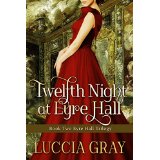
twelfth night at eyre hall

‘Twelfth Night at Eyre Hall’ is the second in the Eyre Hall trilogy by Luccia Gray. I thoroughly enjoyed the first, ‘All Hallows at Eyre Hall’, and you can read my review here. I didn’t hesitate when I was offered the chance to read and review the second book.

About ‘Twelfth Night at Eyre Hall’

Following Edward Rochester’s death in All Hallows at Eyre Hall, Jane Eyre, who has been blackmailed into marrying a man she despises, will have to cope with the return of the man she loved and lost. The secrets she has tried so hard to conceal must be disclosed, giving rise to unexpected events and more shocking revelations.

Romance, mystery, and excitement will unfold exploring the evolution of the original characters, and bringing to life new and intriguing ones, spinning a unique and absorbing narrative, which will move the action from the Yorkshire countryside, to Victorian London, and across the Atlantic Ocean to Colonial Jamaica.

My Review

Although I’m glad I have read Charlotte Bronte’s ‘Jane Eyre’ and Luccia Gray’s ‘All Hallows at Eyre Hall’ because I think they have added layers of appreciation I might otherwise have missed, ‘Twelfth Night at Eyre Hall’ can be enjoyed perfectly well as a stand alone read. There is everything a reader could want in a thoroughly exciting and fast paced plot. Love, murder, mystery, violence, sexual exploitation all feature, but never gratuitously so that there is a compelling reality to the text. ‘Twelfth Night at Eyre Hall’ is a cracking read and I was gripped from the beginning.

Now a wealthy woman in her forties married to vile Mr Mason, Jane has another love, the much younger, and her previous servant, Michael Kirkpatrick. Life is complicated and Luccia Gray weaves the story around these two main characters highly skilfully. I loved the touches that added credibility and depth to the era such as Jane’s friendship with Charles Dickens. Descriptions of both the richness of grand houses and the poverty of London’s back streets create a very visual enjoyment too. Luccia Gray’s writing could be so easily adapted for film or television.

The various first person voices are all totally distinct so that I felt like I was catching up with old friends as I read. I can’t wait for the third book in the trilogy to be published and again, although ‘Twelfth Night at Eyre Hall’ is crafted with a hugely satisfying ending, there is potential for an incredible finale to the trilogy. Brilliant.

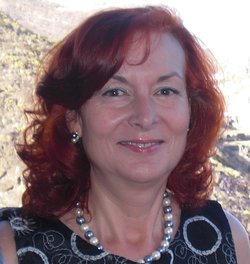
About the author

Luccia Gray Author

Luccia Gray was born in London and now lives in the south of Spain with her husband. She has three children and three grandchildren. When she’s not reading or writing, she teaches English at an Adult Education Centre and at the Spanish National University.

If you’d like to find out more about Luccia Gray and this wonderful series, here are the author links you need:

Facebook

Twitter

Goodreads 

Google+ 

Pinterest

Blog Rereading Jane Eyre 

 Giveaway 

Win a paperback copy of Twelfth Night at Eyre Hall by clicking here.