Breakneck Point by T. Orr Munro

Since I began reviewing for My Weekly I have had the privilege of reading so many brilliant books. Today I’m delighted to share my views on Breakneck Point by T. Orr Munro.

Published by HQ on 14th April 2022, Breakneck Point is available for purchase here.

Breakneck Point

A gripping new crime series for fans of Val McDermid, Jane Casey, Cara Hunter and Mare of Easttown

CSI Ally Dymond’s commitment to justice has cost her a place on the major investigations team. After exposing corruption in the ranks, she’s stuck working petty crimes on the sleepy North Devon coast.

Then the body of nineteen-year-old Janie Warren turns up in the seaside town of Bidecombe, and Ally’s expert skills are suddenly back in demand.

But when the evidence she discovers contradicts the lead detective’s theory, nobody wants to listen to the CSI who landed their colleagues in prison.

Time is running out to catch a killer no one is looking for – no one except Ally. What she doesn’t know is that he’s watching, from her side of the crime scene tape, waiting for the moment to strike.

My Review of Breakneck Point

My full review of Breakneck Point can be found on the My Weekly website here.

However, here I can say that Breakneck Point is a fast paced, exciting, crime thriller from a writer I think will be winning all the awards in future. I thought it was brilliant.

Do visit My Weekly to read my full review here.

About T. Orr Munro

Orr Munro was born in Hampshire to an English mother and a Greek/Armenian father who later moved to Devon. After university she trained as a CSI, then became a secondary school teacher. She changed career at 33 to become a police and crime journalist. She has since returned with her family to live in North Devon, the setting for Breakneck Point. Her time as a CSI provided much of the inspiration for the novel, shining a light on what happens behind the crime scene tape.

You can follow Tina on Twitter @TinaOrrMunro and Instagram.

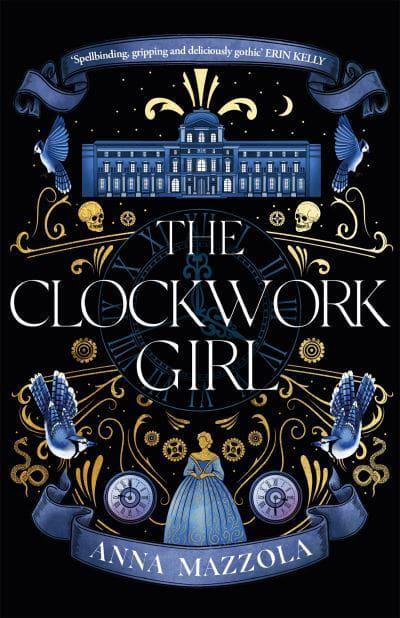
The Clockwork Girl by Anna Mazzola

Having absolutely loved The Story Keeper by Anna Mazzola, reviewed here, I was thrilled when a copy of Anna’s latest book, The Clockwork Girl, arrived. My enormous thanks to Alex Layt for sending me a surprise copy.

Published by Orion on 3rd March 2022, The Clockwork Girl is available for purchase through these links.

The Clockwork Girl

Paris, 1750.

In the midst of an icy winter, as birds fall frozen from the sky, chambermaid Madeleine Chastel arrives at the home of the city’s celebrated clockmaker and his clever, unworldly daughter.

Madeleine is hiding a dark past, and a dangerous purpose: to discover the truth of the clockmaker’s experiments and record his every move, in exchange for her own chance of freedom.

For as children quietly vanish from the Parisian streets, rumours are swirling that the clockmaker’s intricate mechanical creations, bejewelled birds and silver spiders, are more than they seem.

And soon Madeleine fears that she has stumbled upon an even greater conspiracy. One which might reach to the very heart of Versailles…

A intoxicating story of obsession, illusion and the price of freedom.

My Review of The Clockwork Girl

Madeleine has a new position.

The Clockwork Girl is absolute, unadulterated, brilliance. I thought it was fantastic.

Anna Mazzola has an intelligent deftness of touch that transports the reader completely to Paris of the late 1700s. The sights, sounds, aromas, politics, history, people, events and so on combine into an enthralling read that I found stunning. I could not devour The Clockwork Girl quickly enough and yet I didn’t want it to end because it captivated me so completely. There’s an atmosphere of mystery, menace and the strong sensation that there is something rotten at the heart of Paris, that simply ensnares the reader. If I say that, with all the recent horrors in the world, I have struggled to concentrate fully on anything but that The Clockwork Girl held my attention unwaveringly, it might convey what a mesmerising narrative this is.

The Clockwork Girl is an inspired title because, not only is this a story about automata, but Madeleine’s social class and her history mean that she is treated like an automaton. Women, children and the poor are deemed less than human, giving a disturbing historical insight that reverberates today. Themes of corruption – both of the flesh and the mind – at all levels made my blood boil because I was so invested in the narrative. Relationships from the most manipulative to the most caring and supportive give strata of interest alongside an exciting, sublimely plotted and thrilling story so that I think if I were to reread the story time and again I’d discover something new on each occasion. Honestly, I could not have been more impressed by Anna Mazzola’s crafting of historical detail with fictional creation.

Madeleine is a triumph. In a sense The Clockwork Girl is a feminist story as Madeleine survives against the backdrop of male dominance, corruption and manipulation. She’s the perfect balance of strength and vulnerability that makes her credible, engaging and a person whom the reader is desperate to succeed. What works so well in The Clockwork Girl is the illustration that whilst men hold all the power, it is women who are at the heart of events. Amongst those men, Reinhart and Lefevre illustrate the extremes of obsession possible in the human psyche in a compelling manner.

It’s hard to convey just what a triumph The Clockwork Girl is. It’s beautifully written without shying away from the brutal and disturbing. It’s creepy and believable in equal measure. It’s filled with clockwork creations but with humanity at its heart. I absolutely adored The Clockwork Girl. It’s one of my favourite reads of 2022.

About Anna Mazzola

Anna Mazzola is an award-winning and critically acclaimed novelist. Her debut novel, The Unseeing, won an Edgar Award in the US and was nominated for the Historical Writers’ Association’s Debut Crown in the UK. Her second novel, The Story Keeper, was longlisted for the Highland Book Prize.

You can follow Anna on Twitter @Anna_Mazz and visit her website for more information. You’ll also find her on Instagram and Facebook.

Jacobé & Fineta by Joaquim Ruyra, translated by Alan Yates

It was a real surprise to find Jacobé & Fineta by Joaquim Ruyra, translated by Alan Yates in my book post. My enormous thanks to Fum D’Estampa Press for sending me a copy. I’m delighted to share my review today.

Published by Fum D’Estampa Press on 23rd April 2022 Jacobé & Fineta is available for purchase here.

Jacobé & Fineta

Hauntingly beautiful, stark and deceptively complex, Joaquim Ruyra’s short stories have long been celebrated as some of the most important and iconic pieces of literature in the 20th century Catalan canon.

Of these short stories, Jacobé and Fineta stand out as masterpieces of their genre in terms of their powerful descriptions of the towns and countryside of the Mediterranean coastline and the subjects they cover.

Accompanied by Ruyra expert and critic Julià Guillamon’s introduction, Alan Yates’ sublime translation in this limited edition brings them to a new audience.

My Review of Jacobé & Fineta

Two short stories in translation.

This slim volume is an intense and fascinating read. In fact, there’s a literary cadence that makes the writing more like listening to harmonious music than reading.

In Jacobé and Fineta the writing is intense, poetic and sumptuous, conveying meaning through subtle implications as much as through obvious exposition. I’m not sure I gathered every nuance of meaning, but I found the writing mesmerising. In Jacobé, for example, the story can be taken at face value as the tragic tale of a person suffering a physical and mental breakdown. Equally, however, there’s a sense of allegory, a religious exploration of the way the sins of the fathers are visited on offspring so that the story is multi layered and perplexing even as it is beautifully written and engaging.

Fineta echoes Jacobé’s unworldliness so that reading this pair of stories makes the reader feel as if they have glimpsed a kind of time slip. It’s as if Jacobé and Fineta are a type of literary string theory with unbroken connections affecting characters long after events have taken place and linking them firmly with the past. The stories are thought-provoking as a result.

Joaquim Ruyra’s prose is translated exquisitely by Alan Yates. Images of nature, especially the sea, are beautifully depicted so that the rhythms of the writing appear to emulate the tides themselves. In contrast to nature, the people in these two stories feel discordant and unable to maintain their place in the natural scheme of life whilst simultaneously appearing as if they are completely part of the universe. This makes reading Jacobé and Fineta feel somehow otherworldly.

It’s quite hard to define my response to the two stories in Jacobé and Fineta. The prose is quite beautiful and completely mesmerising.  I think I’d have to say I am in awe of them even if I’m unsure I have grasped their nuances fully. I really recommend that you read them for yourself.

About Joaquim Ruyra

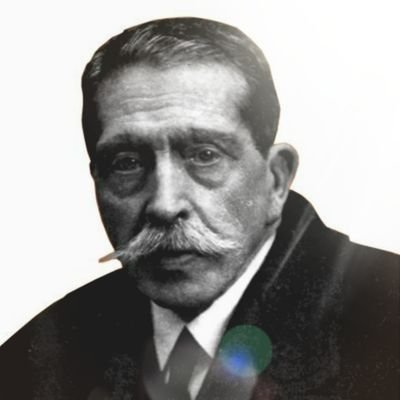
Joaquim Ruyra i Oms was a Catalan short-story writer, poet and translator, considered a key figure in modern Catalan literature and one of the great narrators of the 20th century. Besides his literary work, he was also aware of linguistics and participated in the First International Congress of Catalan Language.

About Alan Yates

Alan Yates, born in Northampton in 1944, studied Modern Languages at the University of Cambridge. From 1968 he taught in the Department of Hispanic Studies at the University of Sheffield where he was promoted in 1990 to a personal Chair in Catalan Studies. Early retirement in 1999 enabled him to cultivate his enthusiasm for literary translation (exclusively Catalan-English), for which he has been awarded various distinctions.

Shadow Girls by Carol Birch

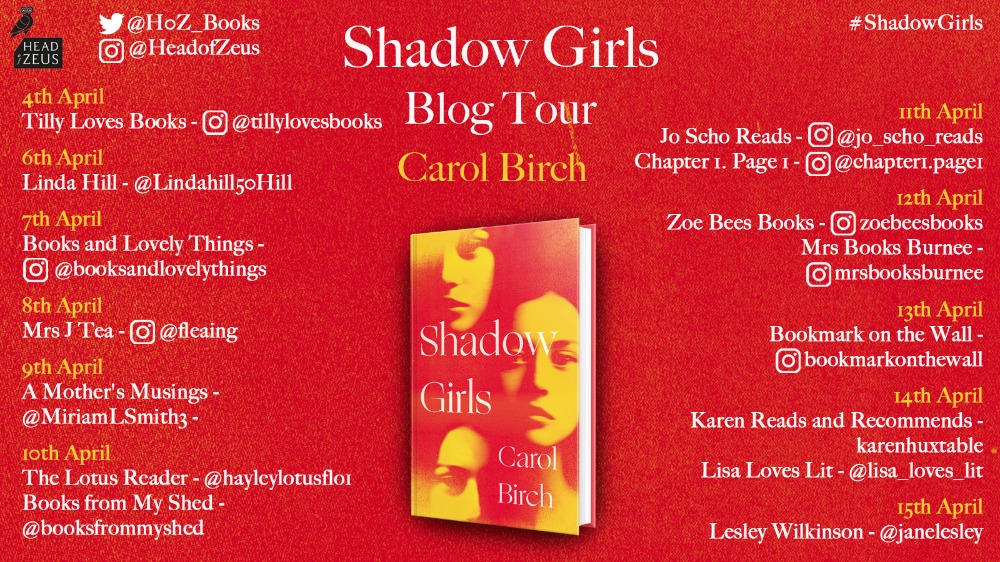
I’ve had Shadow Girls by Carol Birch calling to me from my TBR for many months so it’s a real pleasure finally to be able to share my review today. My grateful thanks to Kate Appleton at Head of Zeus for inviting me to participate in this blog tour.

Published by Head of Zeus imprint Apollo on 14th April 2022, Shadow Girls is available for purchase through the links here.

Shadow Girls

Combining psychological suspense with elements of the ghost story, Shadow Girls is a literary exploration of girlhood by the Booker Prize-shortlisted author of Jamrach’s Menagerie.

Manchester, 1960s. Sally, a cynical fifteen-year-old schoolgirl, is much too clever for her own good. When partnered with her best friend, Pamela – a mouthy girl who no-one else much likes – Sally finds herself unable to resist the temptation of rebellion. The pair play truant, explore forbidden areas of the old school and – their favourite – torment posh Sylvia Rose, with her pristine uniform and her beautiful voice that wins every singing prize.

One day, Sally ventures (unauthorised, of course) up to the greenhouse on the roof alone. Or at least she thinks she’s alone, until she sees Sylvia on the roof too. Sally hurries downstairs, afraid of Sylvia snitching, but Sylvia appears to be there as well.

Amidst the resurgence of ghost stories and superstition among the girls, a tragedy is about to occur, one that will send Sally further and further down an uncanny rabbit hole…

My Review of Shadow Girls

Sally’s a smart girl at school.

Any reader looking for a visceral, fast paced and twisting plot won’t find it in Shadow Girls. They will, however, find a quiet, menacing malevolence that lurks under the surface creating a tension that inveigles itself into the reader’s mind. I found Shadow Girls beautifully written, atmospheric and very creepy.

What Carol Birch does so well in Shadow Girls is to take the monsters of childhood; the shadowy corners, the echoing school corridors, the unexplained noises that we all know so well, and weave them into a spellbinding narrative that mesmerises, making the reader feel as if they are there in the corner of the room watching Sally as she negotiates the smoke like details just out of the corner of her eye. I loved how the plot built quietly and, except for a couple of dramatic moments, almost prosaically, to its conclusion because it made the events all the more relatable. Add in the hooks of music, especially the discordant or indistinct notes that feel as if they are not quite real and Carol Birch has created a disturbing, compelling narrative. Her writing is exceptional.

The characterisation is so skilful. Sally’s increasing paranoia, her flawed reasoning and her self-justification when her actions are less than kind should make her repugnant. Instead she is a genuine, tangible creation who could be any one of us, making her all the more affecting for the reader. There’s a level of self-destruction and isolation that begins with her trapped in the middle of two sets of twin siblings so that why she is as she is and why she becomes who she becomes is thoroughly understandable. It’s not possible to add more for fear of revealing too much. Pamela and Sylvia too are utterly real so that their lives at school feel completely authentic.

The themes of Shadow Girls are fascinating. There’s an unflinching exposition of girlhood, with its rebellions, petty jealousies, cruelty and vulnerability that fixes the narrative even when other aspects of the story feel supernatural and other-worldly so that Shadow Girls is brilliantly balanced. I loved the fluidity of friendship, of reality, of time and place.

It’s hard to define Shadow Girls and I suspect it may divide opinion among readers. I thoroughly enjoyed it, finding the literary nature of the prose, the psychological mystery and the delving into the darker side of the human psyche all superbly presented.

About Carol Birch

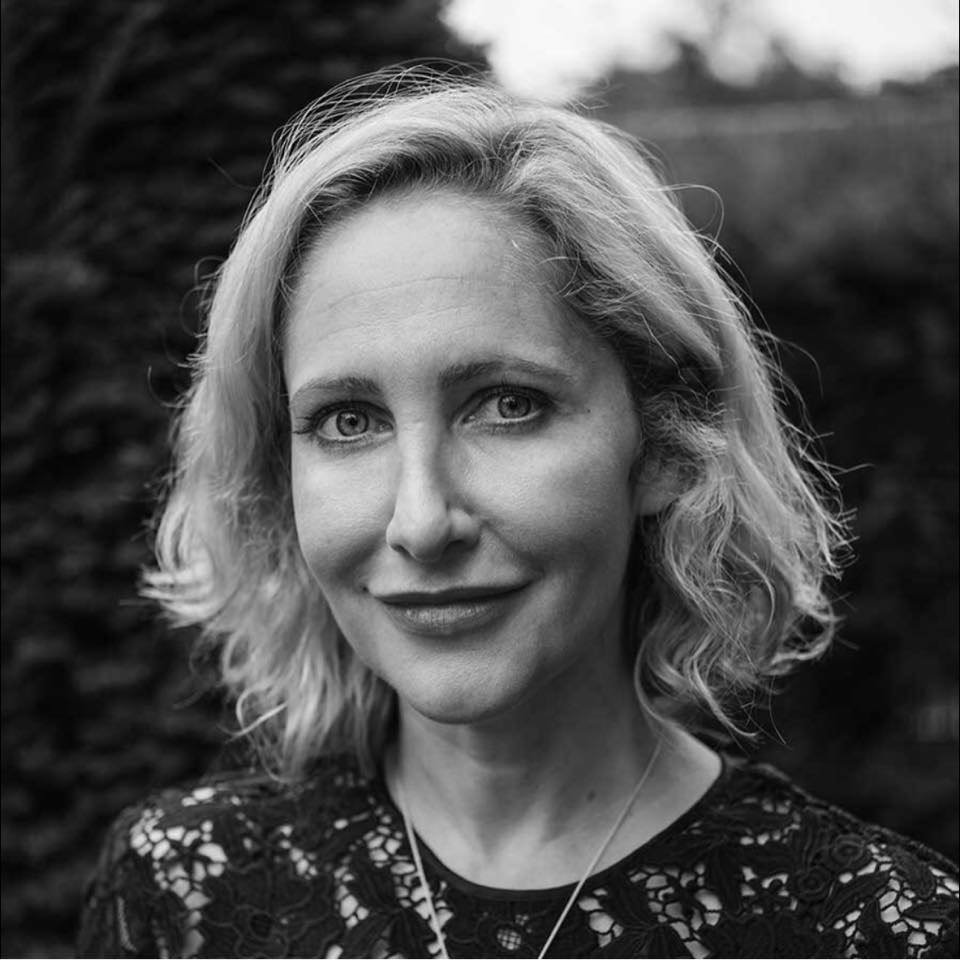
Carol Birch is the award-winning author of twelve novels, including Turn Again Home, which was long-listed for the Man Booker Prize, and Jamrach’s Menagerie, which was a Man Booker Prize finalist and long-listed for the Orange Prize for Fiction and the London Book Award. Born in Manchester she now lives in Lancaster.

There’s more with these other bloggers too:


Shy and Mighty by Nadia Finer

My enormous thanks to Cora Siedlecka for sending me a copy of the children’s book Shy and Mighty by Nadia Finer in return for an honest review. I’m delighted to share that review today.

Published by DK Children’s Books on 7th April 2022, Shy and Mighty is available for purchase through the links here.

Shy and Mighty

Our noisy world sometimes feels like it’s not made for shy people. This book will help children understand shyness and find their inner voice.

Shyness is often misunderstood. It’s not a personality flaw, it’s a complex trait with many positive aspects. However, shyness means many kids struggle to speak up in class, get involved in activities, make friends, put themselves forward, and compete. As a result they can miss out on exciting opportunities, and are often overlooked, ignored, and sidelined… but it doesn’t have to be this way.

Introducing Shy And Mighty, a brand new book that offers an insightful way of looking at the subject that will comfort and reassure shy children and can help them to overcome the aspects of their shyness that are holding them back, without pretending to be something they’re not.

Featured in the pages of this heartwarming book, you can find:

-Practical advice aimed at 7-9 year olds on how to take small steps to achieve your dreams, how to work with other -people, and ways to get your views heard
-Bright, fun illustration helps to digest complex topics like understanding body language and appearing more confident
-Features relatable, and often challenging situations but offers activities, solutions, and coping strategies for children
-Book is divided into two sections Shy (which is about understanding shyness) and Mighty (how to thrive with your shyness)

Did you know that over the last 15 years, the incidence of shyness in children has rise from 40% to 48%? So with shyness already on the rise, as well as an over-reliance on technology and an impact on social integration due to COVID-19, there have been fewer opportunities for young people to develop their social skills. That’s why Shy and Mighty includes simple tools and ideas to help children take small steps to get more involved, share their ideas, and make friends, whilst also exploring the science behind shyness, the potential costs of shyness, and more in a completely accessible and easy-to-understand format for young readers.

A must-have volume for shy children aged 7 to 9, this inspiring book can also come in handy for parents, carers, educators and even librarians who are seeking to understand the challenges faced by shy kids, and equip them with skills to feel braver and to thrive in social situations.

Shy and Mighty can help kids go from invisible, to invincible!

My Review of Shy and Mighty

Shy and Mighty is, as might be expected from a  DK book, a robust, beautifully produced hard backed book that feels high quality.

What an absolute joy to open a children’s book and find the end papers illustrated  with a range of children from all ethnicities. Immediately Shy and Mighty feels inclusive and friendly. It’s a real pleasure to find characters in wheelchairs too. Sara Thiekler’s images are pitch perfect for the target audience, with just the right level of maturity and child like appeal for KS2 youngsters. That said, Shy and Mighty is an invaluable tool for shy people, or their friends and family, whatever their age.

I loved the way Nadia Finer begins Shy and Mighty by sharing her own shyness because this immediately gives the reader someone to relate to. The language the author uses is incredibly well matched to the target audience too. She explains how our brains control our shyness, and outlines the physical responses in our bodies for example, but she does so in an accessible, easy to understand language without ever patronising the shy child.

Shy and Mighty considers different situations like school or home where a child might feel shy and offers practical coping strategies, but what is so important is that Nadia Finer makes it absolutely clear that a child doesn’t need to change who they are, that there is nothing wrong with being shy. The author emphasises that being yourself is acceptable, that none of us is perfect and that the messiness of being who we are can also be our mightiness.

I thought the small tasks in the ‘Mighty Mission’ circles were excellent and I can see Shy and Mighty being an invaluable resource to adults supporting shy children, especially to teaching assistants in schools. Indeed, despite being an outgoing sixty something, I found some of the sections like the one on ‘Take control’ had valuable advice for me too.

Speaking of educational settings, although I can see Shy and Mighty being an absolute boon to a shy youngster at home, there’s so much within its pages that it would be brilliant for classroom use. Not only does the book help shy readers to understand themselves, it enables their peers to understand them too. Shy and Mighty could support PSHE perfectly.

Shy and Mighty is an excellent book with multiple uses. I think it is an invaluable addition to children’s lives.

About Nadia Finer

Nadia is a regular speaker in schools and runs the Mighty Mob, which is an online program to help shy kids feel braver, more able to speak up and join in, and more comfortable to be themselves.

For further information, visit the Shy and Mighty website, or follow Naida on Instagram, Facebook and Twitter @nadiafiner.

About Sara Thielker

Sara Thielker was born in beautiful Oxford, and now lives in Wiltshire.

Sara’s illustrations are an extension of her love for the earth. She practices green living as much as possible, always printing on recycled or sustainable paper and does not use plastic packaging for any of her products.

When Sara is not illustrating you can often find her outside exploring with her family or in her kitchen creating vegan meals or treats.

For further information, visit Sara’s website or find her on Instagram and Twitter @SaraThielker.

Geraniums by Marlene Hauser

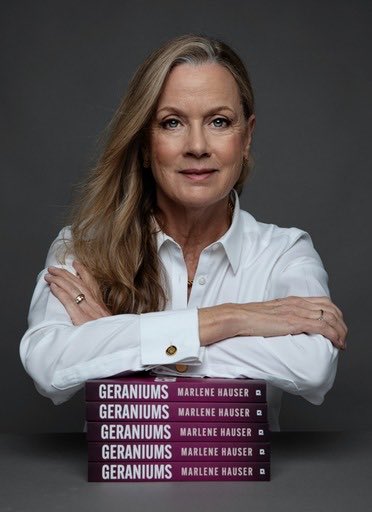
My enormous thanks to Marlene Hauser for sending me a copy of Geraniums in return for an honest review. I so enjoyed Marlene’s writing in Off Island, reviewed here, that I knew I would enjoy Geraniums and I’m delighted to share my review today.

Published by The Book Guild on 28th April 2022, Geraniums is available for purchase here.

Geraniums

Lily Preston, clever beyond her years, is only four when she realises her family is headed for disaster. While she, older sister Mags and younger brother Artie are dragged around America and the world during the 1960s and early ’70s by their military father Jack, he propels their mother, gentle, green-fingered Lauren Rose, to the edge of insanity through mental and physical abuse. A cat-and-mouse game of escape and entrapment ensues, testing Lily’s resilience, resourcefulness and family loyalty to the limit.

Jack, an emotionally scarred war veteran, enlists the help of his equally formidable mother Emma to turn his children against the fragile Lauren Rose and drive her away. Their next mission is to make Lily and her siblings conform to a strict, unforgiving code of behaviour and crush their spirited natures. Rebellion is met with increasingly harsh penalties.

Jack brings new women into his children’s lives, but Lily vows that, no matter what, she will one day trace her real mother, compelled to by the enduring bond between them. Love arrives in the form of high-school sweetheart Diego, who helps her in her quest to break free from Jack and Emma’s control. When their persecution of her reaches bizarre new heights, Lily is forced to stand up to them in public and assert her right to independence, a college education, the chance to fulfil her dream of becoming a writer… once she has achieved the longed-for reunion with her mother.

My Review of Geraniums

Lily’s life is a struggle.

Geraniums is a beautifully written and compelling literary fiction that I thoroughly enjoyed. Marlene Hauser has a style that ensnares the reader because of her ability to step inside the minds of her characters and enable the reader to experience, through them, the events of the novel. There’s a painterly writing style too, with descriptions that place the reader at the heart of the narrative.

The plot is elegantly wrought, with Lily’s perspective leading the reader through the events of her family’s life in such a realistic way that it is clear any generic family could be just as dysfunctional, controlling and abusive as Jack’s so that Geraniums makes the reader realise that we never truly know those around us or understand quite what they may be capable of doing.

The characterisation is a triumph. I wanted to loathe Jack completely and yet Marlene Hauser made sure I understood why he and his vile mother Emma behaved the way they did so that both of them gained my sympathy on occasion, even as I wanted their complete destruction and downfall. The desire for public recognition and personal affirmation after abusive and traumatic pasts is so clear in their behaviours that I think reading Geraniums gives a clarity to the reader about how we shouldn’t be too quick to measure, judge or respond to others.

I loved Lily unreservedly. That’s not to say that she isn’t flawed, being stubborn, duplicitous and devious at times, but again it is circumstance that makes her as she is so that she feels alive and vivid. I was desperate for her to succeed. Although Geraniums spans many years and has quite an extensive cast of secondary characters, it always feels intimate and intense, because each person encountered along the way adds depth to the narrative.

I thought the title Geraniums was inspired. I have no idea if this was deliberate, but with the symbolism for geraniums being happiness and friendship, this is exactly what they represent for Lauren Rose, being literally smashed to pieces even as her dreams are being metaphorically destroyed. Geraniums can also represent cleverness and ingenuity – both traits that Lily has – so that this book feels carefully and meticulously crafted. Not a word is wasted in Marlene Hauser’s exquisite prose.

Whilst the themes of Geraniums are dark and disturbing with abusive relationships and violence at the core, this is not a depressing book. Rather, it feels tender and insightful because, through Lily, the reader finds positivity. Poor mental health, manipulation, coercive relationships, PTSD and crime are certainly major themes, but so too are strength and resilience, loyalty, determination, endeavour and success so that it feels as if all life can be found between the pages of this slim novel.

I really enjoyed Geraniums. It’s one of those stories that remains with the reader long after the book is closed, making them think about its characters and themes and wonder what is happening to them now. Geraniums deserves a wide audience because it is a piercing insight into humanity and what makes us who we are. Don’t miss it.

About Marlene Hauser

Marlene Hauser is a professional writer based in Oxford, UK, where she lives with her husband and teenage son. She served as editor of the Writer’s New York City Source Book and originated the television film Under the Influence, going on to serve as Associate Producer and Technical Consultant. She holds an MFA in Creative Writing from Columbia University and has received numerous awards, including a residency at the Millay Arts Colony in Upstate New York.

For more information you can visit Marlene’s website or follow her on Twitter @mhauser_author, Facebook and Instagram.

First Born by Will Dean

Will Dean’s The Last Thing to Burn (reviewed here) was one of my books of the year in 2021 so I could not have been happier when Jenny Platt invited me to participate in the blog tour for Will’s latest stand alone novel, First Born. I’m delighted to share my review of First Born today.

I previously reviewed one of Will’s Tuva Moodyson novels, Bad Apples here too.

Published by Hodder and Stoughton on 14th April 2022, First Born is available for pre-order through the links here.

First Born

THE LAST THING A TWIN EXPECTS IS TO BE ALONE …

Molly lives a quiet, contained life in London. Naturally risk averse, she gains comfort from security and structure. Every day the same.

Her identical twin Katie is her exact opposite: gregarious and spontaneous. They used to be inseparable, until Katie moved to New York a year ago. Molly still speaks to her daily without fail.

But when Molly learns that Katie has died suddenly in New York, she is thrown into unfamiliar territory. Katie is part of her DNA. As terrifying as it is, she must go there and find out what happened. As she tracks her twin’s last movements, cracks begin to emerge. Nothing is what it seems. And a web of deceit is closing around her.

Delivering the same intensity of pace and storytelling that made The Last Thing to Burn a word-of-mouth sensation, First Born will surprise, shock and enthral.

My Review of First Born

Molly’s twin sister Katie has died in New York.

I thoroughly enjoyed First Born because it’s brilliantly plotted, twisty and exciting. It’s one of those books that doesn’t let you put it down until you’ve devoured it completely. It’s also impossible to say anything more about the plot without spoilers!

The pace is fast and engaging so that just when the reader thinks they have the measure of events, Will Dean wrong foots them. There’s a bubbling undercurrent of menace and mis-trust that leaves the reader feeling uneasy and desperate to know the outcome of the narrative.

It’s difficult to identify quite why, but First Born couldn’t have been set anywhere better than New York. The descriptions of the city are sharp and authentic and I think the concepts that it’s a city that never sleeps, a place where people can be anonymous and a place where it’s possible to start again and reinvent yourself in the way Jimmy the street vendor has done for example, are presented perfectly here.

The characterisation is fascinating because First Born explores identity, jealousy, obsession and vulnerability with razor sharp perception. I loved the insight into the relationship between Molly and Katie. Molly’s peril obsessed OCD is both convincing and pitiful, in the true sense of the word, whilst simultaneously feeling astute and sensible so that the reader has empathy for her whilst being grateful they are not like her. This has the effect of drawing in the reader to the story and making them question their own behaviours and habits.

As well as the intriguing plot in First Born there are layers of interest that add depth and texture. The dark web, exploitation, fame, revenge, relationships from the sexual through the familial to the platonic, are all aspects that thrum through the story. As a result I found First Born completely fascinating as well as entertaining.

It’s tricky to review First Born without giving away too much about the plot, but First Born is a cracker of a book and I really recommend it.

About Will Dean

Will Dean grew up in the East Midlands and lived in nine different villages before the age of eighteen. His debut novel, Dark Pines, was selected for Zoe Ball’s Book Club, shortlisted for the Guardian Not the Booker prize and named a Daily Telegraph Book of the Year. The second Tuva Moodyson thriller, Red Snow, won ‘Best Independent Voice’ at the Amazon Publishing Readers’ Awards, 2019, and was longlisted for the Theakston’s Old Peculier Crime Novel of the Year 2020. The third novel, Black River, was longlisted for the Theakston’s Old Peculier Crime Novel of the Year 2021. Rights for the series have been sold in eight territories (France, Germany, Italy, Holland, Poland, Czech Republic, China and Turkey).

Will lives in Sweden where the Tuva Moodyson novels are set. TV Rights to Dark Pines have been optioned by Lionsgate, the producers of Mad Men, with plans for a multi-part series featuring Tuva Moodyson.

You can follow Will Dean on Twitter @willrdean, on Facebook, Instagram and on his YouTube Channel for further information.

There’s more with these other bloggers too:

Interviewing Tony Kent about No Way To Die

Every time I read a fellow blogger’s review of a Tony Kent book they are all so positive that I know I’m really missing out as I haven’t had chance to read him for myself yet. As a result I decided it was time to ask Tony to stay in with me and tell me about his latest book himself. I’m thrilled he agreed to come along.

Staying in with Tony Kent

Welcome to Linda’s Book Bag Tony and thank you for agreeing to stay in with me.

No, thank you. Because while you’re staying in, for me this is OUT! Which I realise is quite pathetic, but our three-year old son Joseph is at that ‘look at me all night, I’m hilarious stage’. Which is nowhere near as entertaining as he thinks it is. So usually, I’m hiding upstairs in my office, writing or working on legal papers. Which makes THIS a big night! Now where are those cocktails!?!

We’ll get to the cocktails later, but before then tell me, which of your books have you brought along to share this evening and why have you chosen it?
I’ve chosen to bring along my latest thriller, No Way To Die, which is coming out in paperback next week; much cheaper than the hardback was so I can just about afford to bring a copy for us both!

I love a paperback! So tell me a bit more about No Way To Die.

No Way To Die is the fourth book in a series which – as a big Marvel and DC fan – I’ve shamelessly started to call ‘The Killer Intent Universe’ (my first book of course being Killer Intent).

The reason for this admittedly grandiose title is because, unlike Jack Reacher or Rebus or any of those series, not every book I write includes all of my main characters. But at the same time they are not complete standalones like, say, John Grisham. And nor are they a collection of separate, unconnected series as David Baldacci tends to do. Instead, I write about four or five main characters (the number keeps growing as I fall in love with new ones and can’t resist bringing them back…) who are all either closely or tangentially connected to one another. They share the same world. They share the same friends, mostly. But they don’t necessarily all share the same adventures. So, like when The Avengers go off on their own to be Thor or to be The Hulk, my characters can have a Dempsey book, a Devlin book, a Dempsey/Devlin book and so on. So you see…a universe!!

That sounds a brilliant concept. Who will we find in No Way To Die?

No Way To Die, then, is a Dempsey book through and through. With a nice sprinkling of Eden Grace – the Secret Service agent introduced in my last book, Power Play – on top. I wrote it during the pandemic when we were all in the strictest phase of the lockdown and it was a late replacement for the book I was supposed to be writing which was – believe it or not – a book about a weaponised virus being used to start a lethal pandemic in the United States! I decided against finishing that one, for reasons I’m sure I don’t need to explain.

Crikey. That’s quite understandable!

But I had a deadline and so I threw myself headlong into No Way To Die. And I have to say, I really feel that that urgency shows up on the page. It’s my fastest paced, most edge-of-your-seat book and I really feel I have my impending deadline to thank for making me put that pressure on the page.

No prevarication in writing No Way To Die then! How would you describe it?

Like all my books, No Way To Die is a twisty, emotional rollercoaster of an action thriller that features strong, realistic characters – both men and women – navigating a scary world. The action jumps between the good guys – Joe Dempsey and Eden Grace from the UN’s International Security Bureau, Special Agent Bambi O’Rourke from Homeland Security and Agent Nicki May from the Department of Justice – and the bad guys as they make their way up the east coast of America over the course of two days, with the bad guys always one step ahead and one step away from causing mass destruction.

That sounds really exciting. How has it been received so far?

The reviews have been great for this one, which I’m much happier about than I should probably admit. The Sunday Times called it a ‘pulsating action thriller’ and picked it as one of the Thrillers of the Month at the time of the hardback release, and the praise from some fellow writers has been humbling. Neil Lancaster – author of Dead Man’s Grave and The Blood Tide called it ‘an absolute belter of a book. Dempsey reminds me of an amalgam of 007 and OrphanX. A blistering, two-fisted thriller you won’t want to put down until you’re done’, Rob Parker – author of The Watchman and Far From The Tree said it was ‘a staggeringly enjoyable thriller… Astonishingly good – to the point of being utterly unmissable’ and even Adam Hamdy – author of Black 13 and Red Wolves – called it ‘a top-notch, edge of the seat thriller’. I know the reviews shouldn’t mean as much as they do, but I can’t help it; authors live in their heads when writing these books and it’s sometimes hard to keep perspective of what’s working and what isn’t. So great feedback is very, very important to us!

That’s quite an endorsement Tony. You should be delighted. 

What else can we expect from an evening in with Tony Kent?

The honest answer is almost certainly a sleeping house-guest! For me writing not my main job. I am actually a barrister specialising in criminal defence and my practice is focused very much on the ‘extremely serious’ end of the criminal spectrum; think murder, organised crime, seven-figure frauds, that sort of thing. It’s very much a full-time job and then some; the hours are extreme, so writing plays second fiddle a bit in terms of the time I can dedicate to it. That said, I produce a book a year at an average length of 120,000 to 130,000 words, so it isn’t that I don’t spend a lot of time at my desk, putting Dempsey and Devlin and co. through their paces. Add the two jobs together, then, and then throw in my young son Joseph and you’ve got a man who isn’t getting nearly enough sleep!

Good grief. If you just need to lie down for a bit I fully understand.

That answer won’t get me an invite back, however, so I’m going to give you the non-sleepy Tony version. And the answer from that guy – if I can remember him – is a proper dining experience! I absolutely love to cook and I make a pretty special array of cocktails, so your evening with Tony Kent will involve…let’s see…seared scallops with crumbled black pudding and caviar with a minted pea puree, followed by a personalised beef wellington with horseradish mash potatoes, steamed and sautéed tenderstem broccoli and – just to sound mega middle-class and alienate everyone from the council estate I grew up on – a good red wine jus. Then we’d finish with frozen berries and white chocolate sauce. And of course, a good wine selection for each course, with the whole thing washed down by margaritas and – for me – an ice cold vespa martini.

And having now promised all that, I’m suddenly starving!

Me too. But if that’s what you’re offering Tony, you can come again! What else have you brought along and why have you brought it?

I have bought along my compilation video of Muhammed Ali’s greatest ‘hits’, because it’s 1988 and you will obviously have a VHS in the house.

Funnily enough I do!

I spent much of my youth obsessively trying to be Muhammed Ali, the greatest heavyweight boxer – and one of the best men – to ever live. I credit boxing (and of course my parents) with having kept me on the straight and narrow in the rough world in which I grew up. Many of the people I knew from my early childhood went the wrong way in life, and that misdirection began when they were hanging around the streets at night, picking fights and committing petty crime.

While they were doing that, I spent my nights in the local boxing club, learning how to fight properly and dedicating myself to a sport that, for a long time, I hoped would be my life. My biggest hero then was Ali and my biggest hero now is the same guy. Of course I discovered as I grew that for all the dedication and hard work and obsession – and I had them all – there is only so far you can go without God-given talent. And I didn’t have it. I was better than most – I won most of my fights and I picked up titles and championships here and there, paced mainly on pure determination, an unnaturally hard head and a very big right hand – but I was never making it to the world title. But that didn’t matter. Boxing made me the man I am; it gave me the opportunities in life that led me to where I am today. It made me think that, like Ali proved, anything was possible.

Wow. You’ve had an interesting life and come a long way from boxer to writer.

It also helps me write a hell of a fight scene, but that’s another matter entirely!

And so it’s the Ali compilation for us, I’m afraid. And a long old lecture about what made him ‘The Greatest’!!

You’re actually preaching to the converted here Tony. I was a little bit in love with Ali and reference to him always makes me think of my much missed Dad as we’d watch his fights together.

Thanks so much for staying in with me to chat about No Way To Die Tony. I really must catch up with the whole The Killer Intent Universe. Now, I think you mentioned cocktails. You get mixing and I’ll give Linda’s Book Bag readers a few more details: 

No Way to Die

A deadly threat. A ghost from the past. And time is running out…

When traces of a radioactive material are found alongside a body in Key West, multiple federal agencies suddenly descend on the crime scene. This is not just an isolated murder: a domestic terrorist group is ready to bring the US government to its knees.

The threat hits close to home for Agent Joe Dempsey when he discovers a personal connection to the group. With his new team member, former Secret Service agent Eden Grace, Dempsey joins the race to track down the terrorists’ bomb before it’s too late. But when their mission falls apart, he is forced to turn to the most unlikely of allies: an old enemy he thought he had buried in his past.

Now, with time running out, they must find a way to work together to stop a madman from unleashing horrifying destruction across the country.

Already available in other formats, No Way To Die is published by Elliott and Thompson in paperback on 14th April and is available for purchase through the links here.

About Tony Kent

Tony Kent is a practising criminal barrister who draws on his legal experience to bring a striking authenticity to his thrillers: Killer Intent, Marked for Death, Power Play and now No Way To Die.

Ranked as a ‘leader in his field’ Tony has prosecuted and defended in the most serious trials during his twenty years at the Criminal Bar – specialising in murder, terrorism, corruption, kidnap and organised crime. His case history is filled with nationally reported trials and his practice has brought him into close professional contact with GCHQ, the Security Service and the Ministry of Defence. He has also defended in matters with an international element, involving agencies such as the FBI.

Tony also appears as a criminal justice expert on a number of TV shows, including Meet, Marry, Murder (on Prime and coming soon to Netflix), My Lover, My Killer (Netflix) and Kill Thy Neighbour (Channel 5). April will see the launch of a True Crime podcast with Tony and author and former police officer, Neil Lancaster – examining crime and criminal justice from the perspective of a defence barrister and a cop.

Prior to his legal career Tony represented England as a heavyweight boxer and won a host of national amateur titles.

He lives just outside of London with his wife, young son and dog.

For further information, visit Tony’s website, follow him on Twitter @TonyKent_Writes and find him on Instagram and Facebook.

An Extract from The Alabama Black McGruders by J. R. Rothstein

Many, many moons ago, as part of my degree I studied slavery and emancipation in the USA as one of my minor options. Consequently I was intrigued when J. R. Rothstein approached me about his book recently published book The Alabama Black McGruders as it traces his own ancestry back to those times. Although I sadly don’t have time to read and review the book, I am pleased to be able to share an extract from it today. Please be aware that historical reference may be offensive to modern life and I have removed foot notes for ease of use on the blog.

Published by Redstone on 13th February 2022, The Alabama Black McGruders is available for purchase here.

The Alabama Black McGruders

The Alabama Black McGruders tells the story of Charles McGruder Sr. (1829 – 1900-c), his father Ned (1795 – 1853-c) and mother Mariah Magruder (1800 – 1880-c).

Charles, the enslaved black grandson of a white slave owner, Ninian O. Magruder (1744 – 1803) was born in Alabama on the plantation of his white aunt, Eleanor Magruder Wynne (1785 – 1849) in 1829.

Through a series of events, Charles, a carpenter, came to be sexually exploited and forced to sire a hundred children, including fifty-two sons, with numerous women.

During the Reconstruction era, Charles, his last wife Rachel Hill (1845-1933), and their children, received reparations from his white relative and enslaver, Osmun A. Wynne (1804 -1877).

Charles’ children established communal and business networks and institutions to support their families and communities. Today, the Alabama Black McGruders continue to impact the story of the United States in areas of culture, government, law, science, medicine, academia, and business. This is the story of their origins.

An Extract from The Alabama Black McGruders

Charles Forms Numerous Families & Becomes a Breeder of Enslaved People

It was in this time of success for the Williams—William A. Ferrell and William A. Wynne—that, according to Alabama Black McGruder family lore, Charles Magruder was exploited as a stud to breed enslaved people.

Charles’s exploitation was part of a larger effort by entrepreneurial enslavers and slave traders to breed human beings for forced labor in chattel slavery.

The prohibition of the importation of slaves from Africa after 1807 limited the supply of slaves in the United States. In the same period, the Louisiana Purchase of 1803 doubled the size of the new republic and opened up vast new territories to settlement. The invention of the cotton gin in the 1790s had enabled expanded cultivation and increased the demand for labor in cotton-producing areas. As a result of all these factors, the domestic slave market expanded rapidly in the early 19th century. During this time, the terms “breeding slaves,” “childbearing women,” “breeding period,” and “too old to breed” became familiar. Planters in the Upper South—Delaware, Maryland, Virginia, and North Carolina—sold slaves in large numbers to the Deep South, including Alabama, Mississippi, and Louisiana. At least a million enslaved people were trafficked from eastern states to the newer frontiers—some sold to slave traders, others forced to migrate with their owners. According to historian E. Franklin Frazier, in his book The Negro Family, “there were masters who, without any regard for the preferences of their slaves, mated their human chattel as they did their stock.” According to Alabama Black McGruder oral history, Charles Magruder was one of these “breeding slaves.”

According to Lucille B. Osborne, “Charles’s slave owner wanted him to have as many slave children as he possibly could so he could have more slaves, to have more money, so that he could keep the plantation going.” Charles also is reported to have been hired out as a breeder, sent from plantation to plantation in order to sire children.

Jeptha Choice, a non-related former enslaved person from Texas, was also wielded as a stud to ‘breed’ enslaved people. His experience may provide insight into the experiences of Charles Magruder. Jeptha stated the following:

The old Massa was mighty careful about the raisin’ of healthy nigger families and used us, strong, healthy young bucks to ‘stand’ the healthy, young gals. You see when you was young, they took care not to strain me, an’ I was a pretty good nigger, as handsome as a speckled pup, and I was much in demand for breedin’. You see in those days people seemed to know more about such things than they do now. If a young, scrawny nigger was found foolin’ ‘round the women, he was whyupped, and maybe sold.

Later on, we, good strong niggers was ‘lowed to marry, and the Massa and old Missus would fix the nigger and gal up in new clo’se and have the doin’s in the ‘Big House’. White folks would all gather round in a circle with the nigger and gal in the center. Then old Massa would lay a broom down on the floor in front of ‘em an’ tell ‘em to join hands and jump over the broom. That married ‘em for good.

When babies were bo’n, old nigger grannies handle’ most all them cases, but until they was about three years old, the children wan’t ‘lowed ‘round our regular living quarters, but were wet nursed by nigger women who did not work in the field and kept in separate quarters. In the evenin’, the mammies were let to see ‘em.

We was fed good and had lots of beef and hung meat and wild game. ‘Possum and sweet yams is mighty good . . . ‘Course sometime they was grief, too, when some of the niggers was sold. Iffen old Massa sold a nigger man that was married, he always tried to sell the wife to the same folks so they would not be separated. Children under twelve were thrown in. But sometimes a nigger would be sold to someone, and the woman to someone else; and then they’d be carryings-on. But they was so ‘fraid of getting whipped, or maybe killed, that they went peaceful-like—but mighty sorrowful. The children went with the mother . . . . I’ve been married eight times but haven’t got any legitimate children that I know of. I’ve got some children from “outside” women I’ve had to “stand” for, but I don’t know how many. You see, them old days was different from what it is now!

Another narrative, collected from an unrelated former enslaved person named Maggie Stenhouse, records that:

During slavery there were stockmen. They were weighed and tested. A man would rent the stockman and put him in a room with some young women he wanted to raise children from. Next morning when they come to let him out the man ask him what he done and he was so glad to get out. Them women nearly kill him. If he sa’d nothin’ th’y wouldn’t have to pay for him. Them women nearly kill him. Some of the slave owners rented these stockmen. They didn’t let them work in the field and they kept them fed up good.

The experiences of Luke Blackshear parallel those of Charles Magruder in many ways. According to a slave narrative conveyed in 1938 by his descendant, Ida Blackshear, Luke, too, was wielded as a stud to breed enslaved people:

Luke was six feet four inches tall and near two hundred fifty pounds in weight. He was what they called a double-jointed man. He was a mechanic—built houses, made keys, and did all other blacksmith work and shoemaking. He did anything in iron, wood or leather. Really he was an architect as well. He could take raw cowhide and make leather out of it and then make shoes out of the leather.

Luke was the father of fifty-six children and was known as the GIANT BREEDER.  He was bought and given to his young mistress in the same way you would give a mule or colt to a child …

Although he was a stock Negro, he was whipped and drove just like the other Negroes. All of the other Negroes were driven on the farm. He had to labor but he didn’t have to work with the other slaves on the farm unless there was no mechanical work to do. He was given better work because he was a skilled mechanic.

Once on the Blackshear place, they took all the fine looking boys and girls that was thirteen years old or older and put them in a big barn after they had stripped them naked. They used to strip them naked and put them in a big barn every Sunday and leave them there until Monday morning. Out of that came sixty babies.

They was too many babies to leave in the quarters for someone to take care of during the day. When the young mothers went to work, Blackshear had them take their babies with them to the field, and it was two or three miles from the house to the field. He didn’t want them to lose time walking backward and forward nursing. They built a long old trough like a great long old cradle and put all these babies in it every morning when the mother come out to the field. It was set at the end of the rows under a big old cottonwood tree.

When they were at the other end of the row, all at once a cloud no bigger than a small spot came up, and it grew fast, and it thundered and lightened as if the world were coming to an end, and the rain just came down in great sheets. And when it got so they could go to the other end of the field, that trough was filled with water and every baby in it was floating ‘round in the water drownded. They never got nary a lick of labor and nary a red penny for any one of them babies.

Cornelia Andrews, another unrelated formerly enslaved person from North Carolina, recounted the belief that her father may have been a breeding “stock nigger.” She states:

I ‘specks dat I doan know who my pappy wuz, maybe de stock nigger on de plantation. . . Yo’ knows deyain’t let no little runty nigger have no chilluns. Naw sir, deyain’t, dey operate on dem lakdey does de male hog so’s datdey can’t have no little runty chilluns.

According to Lucille Burden Osborne, Charles was considered a “valuable piece of property” and a prized slave by his owner. Additionally, because Charles was moved and rented from place to place, from plantation to plantation, he had to start a family anew in each one. Gwendolyn Hubbard reports that Charles had five different “legitimate” families during slavery. The names of just four of the women are known. Wilmar McGruder, however, asserts that only three of the wives were legitimate.

Between 1854 and 1859, William A. Ferrell managed to gain control of the black Magruder family, even after his remarriage to another woman, leaving Salina Ann Wynne enraged. The Alabama Black McGruder oral history indicates that during this period Charles cohabited with many unknown women on a variety of plantations in the region—the details of which are lost to history. Two significant relationships, however, did emerge from this time, both with women named Mary: Mary May and another Mary, for whom there are few details.

****

J.R. also shared a photograph of his great-great-great grandmother, Rachel Hill.

There is also a YouTube clip available to watch here about the family that was part of an ABC mini-documentary series.

About J. R. Rothstein

J.R. Rothstein is a real estate attorney, investor, and a Fulbright Scholar. He enjoys history, nature, good stories, and community work. He lives in New York City.

For further information, visit his website. You’ll also find J.R on Facebook.

The Book Share by Phaedra Patrick

When I began reviewing for My Weekly. a few months ago I little realised just how many wonderful books I’d have the privilege of reading. The latest of those books is The Book Share by Phaedra Patrick.

Published by Harper Collins’ imprint HQ today, 31st March 2022, The Book Share is available for purchase through the links here.

The Book Share

It’s never too late to start a new chapter…

The utterly charming and feel-good new novel from the bestselling author of The Secrets of Sunshine and The Library of Lost and Found.

Liv Green loves losing herself in a good book. But her everyday reality is less romantic, cleaning houses for people who barely give her the time of day. So when she lands a job housekeeping for her personal hero and mega-bestselling author Essie Starling, she can’t believe her luck.
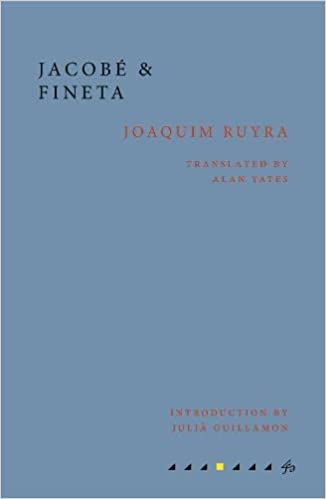
When Essie dies unexpectedly, Liv is left with a life-changing last wish: to complete Essie’s final novel. To do so, change-averse Liv will have to step away from the fictitious worlds in her head, and into Essie’s shoes. As she begins to write, she uncovers a surprising connection between the two women – and a secret that will change Liv’s life forever…

Brimming with joy and packed with a sparkling cast of characters, The Book Share is a moving reminder that it’s never too late to re-write your own story – perfect for fans of All the Lonely People and The Authenticity Project.

My Review of The Book Share

My full review of The Book Share can be found on the My Weekly website here.

However, here I can say that The Book Share is warm hearted, engaging and thoroughly entertaining with a wonderful insight into a writer’s life and a hint of mystery that hooks the reader completely. I really enjoyed it.

Do visit My Weekly to read my full review here.

About Phaedra Patrick

Phaedra Patrick studied art and marketing and has worked as a stained glass artist, film festival organiser and communications manager. An award-winning short story writer, she now writes full time in Saddleworth where she lives with her family.

Her debut novel, The Curious Charms of Arthur Pepper, was translated into over twenty languages worldwide and has been optioned by a major Hollywood film studio. Her second novel, Rise and Shine, Benedict Stone (named Wishes Under the Willow Tree in the UK), is also under option in the US as a TV movie. Her third novel is The Library of Lost and Found, and the fourth one is titled The Secrets of Love Story Bridge (The Secrets of Sunshine in the UK).

For further information, visit Phaedra’s website or follow her on Facebook, Twitter @phaedrapatrick and Instagram.