An Interview with Luccia Gray

All hallowstwelfth night at eyre hall

midsummer

As an ex-English teacher and lover of classic literature, it’s always a delight when a series comes along that enhances my reading experience. I’ve loved Luccia Gray’s follow up to Charlotte Bronte’s Jane Eyre and am so pleased that Luccia has agreed to be interviewed for Linda’s Book Bag today. What could be better on the 200th anniversary of Charlotte Bronte’s birth?

You can read my review of All Hallows at Eyre Hall here and of Twelfth Night at Eyre Hall here (although the giveaway associated with that post is now finished, read on for some exciting news from Luccia!)

Hello Luccia. Thank you so much for agreeing to answer some questions on my blog about your Eyre Hall Trilogy.

Hi Linda, thank you for this opportunity to tell your readers about myself and my books.

Firstly, please could you tell readers a little about yourself?

I was born and brought up in London and graduated in modern foreign languages from London University. I speak Spanish, French and Italian. I live in the south of Spain with my husband and I have three children and three grandchildren. When I’m not reading or writing, I teach English at an Adult Education Centre and the Spanish Distance University.

Please would you introduce your Eyre Hall Trilogy to those who haven’t read any of the books yet?

The Eyre Hall Trilogy is the sequel to Charlotte Bronte’s Jane Eyre. I have picked up the story twenty-two years after Jane’s marriage to Mr. Rochester, while he is on his deathbed. They are living at Eyre Hall, which Jane built with her uncle’s inheritance, on the same spot Thornfield Hall had stood, before it was burnt down. Richard Mason, Mr. Rochester’s brother-in-law, who interrupted Mr. Rochester’s first bigamous marriage attempt, returns once more from Jamaica, to reveal more of Rochester’s secrets and turn Jane’s world upside down.

What was it about Charlotte Bronte’s Jane Eyre that so compelled you to write a sequel?

I fell in love with Mr. Rochester, as most readers did, when I first read Jane Eyre as a teenager. It soon became my favourite novel.

About thirty years later, I read the prequel, Wide Sargasso Sea, by Jean Rhys. This short, but intense novel, which was written in the 1960s, tells the story of Bertha Mason in three parts: her childhood, before she met Mr. Rochester, their first meeting and arranged marriage and first four years of matrimony, and finally her death at Thornfield Hall. After reading Wide Sargasso Sea, it’s impossible not to reread Jane Eyre with new insight and perspective.

Finally, when I taught Postcolonial Literature at the University of Córdoba, one of the topics on the syllabus was a comparison of Jane Eyre and Wide Sargasso Sea, and that really sparked classroom discussion and my imagination. I later gave a talk at the University of Málaga on ‘Sexuality and Gender Relations in Jane Eyre and Wide Sargasso Sea’, which has been published in 2015 by Lexington Books.

The idea of reinstating the first Mrs. Rochester, Bertha Mason, had been nagging at me for a long time. I had jotted lots of ideas, but it wasn’t until the summer of 2013 that I decided to put pen to paper and give Bertha back her place by bringing her daughter to life.

Are you as interested in the Brontes in general as you are in Jane Eyre?

I’m interested in all Victorian writers, especially the Bronte’s, Dickens and Wilkie Collins. Many of them, as well as their literary creations, appear as characters in my novels.
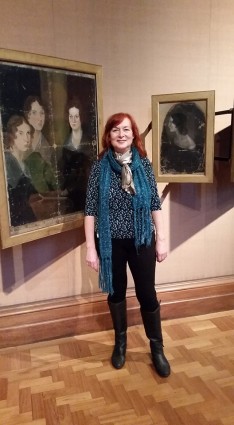
Lucy and the Brontes

How has your role as a teacher impacted on how you’ve written the Eyre Hall Trilogy?

I don’t think I would have written the Eyre Hall Trilogy if I hadn’t taught Postcolonial Literature to Undergraduates. I had wanted to write a novel for many years, and I’d even dabbled at writing fiction, but analysing Bertha Mason and Jane Eyre in greater detail, discussing it with my students and colleagues, and writing a research paper, gave me the final push.

You don’t always present Rochester or Jane in a favourable light. How have readers responded to this?

Funny you should ask. I was recently asked by friends if I got ‘hate mail’. Fortunately, I don’t, but it wouldn’t bother me. I’ve been a teacher for over thirty years, most of them teaching adolescents, so I can cope with criticism, even if its ‘unreasonable’ or ‘exaggerated’! I have received a few negative reviews due to my supposedly unfair treatment of Mr. Rochester, and that’s fair enough. I have my views, which are based on literary analysis, and careful thought. I don’t expect everyone to agree with me or like my creative reinterpretation of Jane Eyre.  You can’t please everyone, and quite honestly, there’s no point in trying or worrying about it.

What has been the most challenging element of writing a sequel to one of the world’s most popular novels?

I’m an independent author. No publisher or agent has officially backed me, so when I published my first novel, I felt very insecure. I was terrified of my novel not being professional enough. It took me almost a year after finishing it before I published. I spent this time learning about indie publishing, finding beta readers, a book designer, an editor, dong some marketing on social media, etc. I’m now confident that my novel is as professional as any other which is available for purchase, of course that doesn’t mean everyone has to like it.

I take criticism humbly, fully aware that I’m not in the same league as Charlotte Bronte. I’m using her characters and part of her plots to write a sequel, which I hope will be appealing to read for modern audiences.

I consider my novels as a tribute to Charlotte Bronte and many other Victorian writers, who have inspired me with their literary mastery.
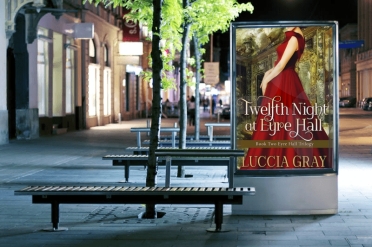
Twelfth Night Billboard

How did you ensure period authenticity whilst still appealing to the modern reader?

I think most modern readers don’t have the time or the patience to read authentic Victorian Literature. There’s too much telling, too much description, too much detail, it’s fixed in a specific historical time-frame, and it’s aimed at a specific mind-set. That doesn’t mean it’s irrelevant to contemporary readers, but it does need to be adapted. I don’t think this adaptation is a question of language, but of style and content.

Modern readers need more and faster action, and more conciseness in the prose. They read novels in fewer sittings, so they don’t forget plot or characters between readings (many Victorian novels were read in weekly instalments over months).

Modern readers also need to be immersed and understand things that Victorians took for granted. Victorian readers knew things about their own lives that contemporary readers don’t know or have forgotten. For example a horse and carriage could only ride about 40-50 miles a day, lack of indoor plumbing, use of candles instead of electric lights, layers of clothing, etc. This type of detail has to come across subtly in the narrative for a modern audience.

I know the third novel in the Eyre Hall Trilogy is due out soon. Without spoiling the plot, can you give us a hint of what is to come?
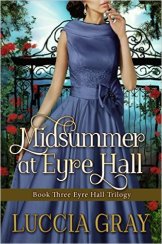
midsummer

Yes, Midsummer at Eyre Hall, the final part of The Eyre Hall Trilogy is now in the beta reading and editing stage. It is now available for pre-order on kindle. It will be published on 21st June, Midsummer’s Day.

The first part of Midsummer at Eyre Hall is very dramatic and action-packed. Jane will find herself in completely unexpected and dreadful circumstances, which neither she, nor the reader would ever imagine, so I can’t say much more! The second part begins to show some improvement in her situation and contains more surprises, including two new characters, who will drastically change Jane’s life forever. The third part will disclose one more final and unexpected twist, which will restore stability to her life. I hope the reader will find the end is satisfactory, although it’s happier for some characters than for others…

There have been so many adaptations of Jane Eyre for stage and screen, who would you choose to portray Jane if your trilogy were to be turned into a film and why would you choose them?

I love this question! I hate it when Jane is portrayed as excessively meek and naïve. I believe she had much more character than most film producers and directors imagine. Readers sometimes forget she was top of her class at Lowood, excelling in all subjects. She was independent, hard-working, honest, reliable, and very principled. She’d had a very hard life and had managed to overcome all the obstacles without self-pity. She was only 19 when she married Mr. Rochester. I’m sure she would have become a self-assured, attractive and imposing lady, in spite of her tiny height!

My favourite actress to play my mature Jane Eyre is Rachel Weisz, because she’s striking, but not too beautiful, she looks intelligent, kind, caring, strong-willed, and confident.
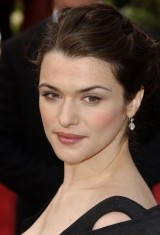
Rachel+Weisz+78th+Annual+Academy+Awards+sRe4GhQudfgl

Do you have your eye on any other classic novels for a continuation? 

I’d love to write a prequel to Rebecca. I’ve already started it actually, but it’s a bit of a secret right now! I may finish it, but I’m not sure at the moment. I’d like to write some contemporary fiction first.

Which of your characters would you most like to be and why?

I wouldn’t like to be any of my characters. I purposefully wrote about a place, time and people I don’t feel personally identified with. However, I dream about them, talk to them, and love them all, even the villains! I try to walk in their shoes, which is why I write using the rotating first person narrative.

If you had 15 words to persuade a reader that the Eyre Hall Trilogy should be their next read, what would you say?

It’s a well-written historical romance. The characters are absorbing, and the plot is suspenseful and exciting.

By the way they’re both on Kindle Countdown Deals this week at 0.99!

(Click here for All Hallows at Eyre Hall and here for Twelfth Night at Eyre Hall)

Thanks so much for being on Linda’s Book Bag today Luccia. I’ve really enjoyed interviewing you about your Eyre Hall trilogy.

Thank you so much for this interview, Linda. It’s been a pleasure visiting your literary blog, which is so helpful for readers, who can find their next favourite book, and writers, who can spread the news about their novels.

Thanks Luccia! And a final word from you:

If anyone is interested in reading an ARCs of Midsummer at Eyre Hall, please let me know in the comments or email me at luccia.gray@gmail.com

*** I’d also like to gift a paperback of All Hallows at Eyre Hall and Twelfth Night at Eyre Hall to two readers of Linda’s blog. Please email me, telling me which of the two you’d like to receive and why you’d like to read the novel. ***

About Luccia Gray
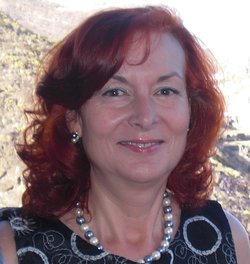
Luccia Gray Author

Luccia Gray was born in London and now lives in the south of Spain with her husband. She has three children and three grandchildren. When she’s not reading or writing, she teaches English at an Adult Education Centre and at the Spanish National University.

If you’d like to find out more about Luccia Gray and this wonderful series, here are the author links you need:
Facebook

Twitter

Goodreads 

Google+ 

Pinterest

Blog Rereading Jane Eyre 

An Interview with David Coubrough, author of Half a Pound of Tuppeny Rice

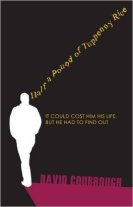
Tuppeny

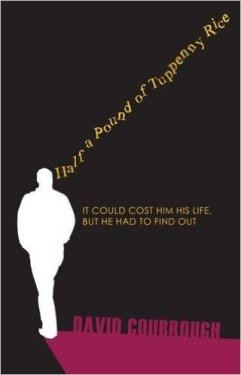
Today, 21st April 2016, is the publication day for David Coubrough’s debut novel Half a Pound of Tuppenny Rice and I’m delighted to be bringing you an interview with David. Half a Pound of Tuppenny Rice is available from all good book shops as well as from Amazon.

Half a Pound of Tuppenny Rice

Each summer a group of families holiday together in St Ives, Cornwall.  The parents eat, drink, play sport, shop and frequently argue, while their teenage children hang out and enjoy the odd holiday romance. Then, in 1972 their lives are shattered and they never meet up again.

In a lane near the village a night porter is found fatally poisoned. Later that day the body of a man is washed ashore under mysterious circumstances, apparently drowned.  All five fathers are questioned but released, and no-one was ever charged.

For Grant Morrison, then aged seventeen, it was the last family holiday, the last golden summer.  The devastating events troubled him for decades and finally, nearly forty years later, he decides it’s time to find out the truth, revisiting the Cornish places of his youth.

It could cost him his life, but he had to find out…

Tuppeny

An Interview with David Coubrough

Welcome to Linda’s Book Bag David. Firstly, please could you tell readers a little about yourself?

After 35 years in the commercial world, chasing money, conforming to routines and being walked like a dog on a lead to endless meetings, I decided I had drunk enough coffee, looked at too many balance sheets, sat through too many meetings and was more interested in writing.

When did you first realise you were going to be a writer?

I always knew one day I would write, it was more about creating time and developing ideas to such an extent that a proper plot had formed.

If you hadn’t become an author, what would you have done instead as a creative outlet?

Journalism.

How do you carry out the research for your novels?

A lifetime of studying people and their behaviours, allied to a love of places, such as Cornwall; researching the locations there for my novel was a labour of love.

Which aspects of your writing do you find easiest and most difficult?

Conversational interaction I find the easiest, describing what people are wearing I find the hardest.

What are your writing routines and where do you do most of your writing?

In the early hours, from about 3am to 6am! The kitchen table has seen many hours of duty.

When you’re not writing, what do you like to read?

Contemporary fiction, such as Jon Canter, in addition to the Classics, re-visiting Dickens, Hardy and Virginia Woolf in particular.

Do you have other interests that give you ideas for writing?

Yes; theatre and travel primarily, but also observing people from all sorts of contexts.  This can include sitting on my own in a busy bar watching people’s facial expressions.

Which of your characters would you most like to be and why?

Justyn Silver, he is unconventional, a little mercurial but basically a very decent guy.

How important do you think social media is to authors in today’s society?

Increasingly so unfortunately.

If you had 15 words to persuade a reader that your book should be their next read, what would you say?

‘People need to be stimulated and entertained, to be feeling good and satisfied simultaneously.

Is there anything else you would have liked to be asked?

Yes; we all should constantly challenge ourselves, reach beyond confines of how our lives have been historically and in the words of Jools Holland, ‘Enjoy yourselves, it’s later than you think’.

That’s great advice David!

About David Coubrough

David

David Coubrough David spent 35 years in the hospitality industry so a hotel in St Ives was the natural location for his first crime novel.  After starting as a trainee manager at the Goring Hotel in London, he founded the specialist hospitality firm Portfolio Recruitment in partnership with two others in the 1980s, where he became chief executive, and has been company director and member of the Board of Governors of the Royal Academy of Culinary Arts and chairman of Bespoke Hotels. He has also been a director at Maldon Sea Salt and is on the board of Bloomsbury Properties. He is co-owner of the Beehive pub and restaurant in Berkshire and is now working on his second novel.

You can follow David on Twitter and find his author page on Facebook.

Ascension by Jeannie van Rompaey

Oasis Ascension Front Final

I’m pleased to be part of the launch celebrations for Ascension, by Jeannie van Rompaey. Ascension was published by Clink Street on 12th April 2016 and is the first in the Oasis Series. Ascension is available for purchase from Amazon UK and Amazon US. I have a fascinating guest blog from Jeannie about dystopian fiction below.

Ascension

Meet the MUTANT HUMANOIDS. They may look a little different from us, but inside they’re much the same as you and me. Left on a diseased Earth, they live in windowless compounds, safe from the contaminated wilderness outside. Safe, yes, but their lives are restricted. When the mutant humanoids discover that some complete human beings, COMPLETES, have also survived and are living greatly improved lives on satellites, they determine to rectify this imbalance and claim their share of Earth’s heritage. Three-headed RA rules the humanoids with ruthless precision, but others are involved in a power struggle to depose him. Who will succeed in being the next CEO of Planet Earth? Sixteen -year-old MERCURY plans to start a new life on Oasis. Will it prove the Utopia he expects it to be?

Oasis Ascension Front Final

ASCENSION, the first novel in Jeannie van Rompaey’s Oasis Series, explores with humour and compassion the way humans respond to change. The future worlds of Earth and Oasis mirror our contemporary society. The division between the haves and have-nots widens and the lust for power leads to corruption. But there are idealists determined to build a fairer, more egalitarian society.

And now for something completely different…

A Guest Post from Jeannie van Rompaey

Writing Ascension was an exciting departure for me. I was creating an imaginary future world, entering the genre of science fiction and dystopian fiction for the first time. Before that my novels tended to be classed as general fiction, fixed securely in time and place and peopled by realistic characters. For this new venture I flexed my creative muscles to invent a world and characters that were a little different. I found the change invigorating. Refreshing.

Oddly enough I don’t read a lot of science fiction. The books in this genre that did inspire me were by literary authors who do not write exclusively in this field. Margaret Atwood’s The Handmaid’s Tale (1985) is a terrifying portrayal of a future world designed by men to keep women in their place while her trilogy, Oryx and Crake (2003) The Year of the Flood (2009) and MaddAdam (2013) is an indictment of scientific experiments gone wrong. The books are not all doom and gloom. Atwood shows the capacity of human beings to rise above what happens to them. As an optimist myself, this confidence in human nature is something I find important to express in my work. Kazuo Ishiguru’s Never Let Me Go describes a dystopian world in which cloning and genetic engineering have been taken to the extreme. Although a very different future is envisaged from that in Atwood’s novels, the resilience of the victims is once again highlighted. Ishiguru is such a consummate storyteller that I was gripped from beginning to end. Unlike many writers in the science fiction genre, the work of these two authors is not formatted, nor is it dependent on gratuitous action to stimulate readers. The characters and their response to the world they find themselves in are sufficient to hold our interest. These were the kind of books I wanted to write. I only wish my writing could be as good as theirs and my novels as popular.

One reason I’m interested in utopian/dystopian fiction is that it explores social and political structures. As I read or watch the news on TV, like most people, I often think about the kind of world we’re living in. The problems are easy enough to see, but not so easy to solve. The activist in me seeks change. Artists use their tools to explore possibilities for change. Ai Weiwei through sculpture, writers through words. Through writing dystopian fiction I can imagine what might happen if we don’t correct the mistakes being made in our society.  By placing my imaginary world in the future I can look at our current world from a different perspective. And so can my readers.

As Keith M. Booker notes, “dystopian fiction is used to provide fresh perspectives on problematic and political practices that might otherwise be taken for granted or considered natural and inevitable.” For example, when my novel, Ascension, begins, it describes an Earth two hundred years into the future. Some of its inhabitants, mutant humanoids, have developed extra limbs or heads or only have one eye. They tend to move awkwardly and speak jerkily. They are shut up in windowless compounds and don’t venture outside for fear of further contamination from the plague that caused the mutations and the barren Earth. But what is this plague that has caused these disasters? Did it occur because we didn’t take enough care of our planet? Instead of writing a political non-fiction book, I weave these ideas into a story and let my readers make the connection themselves. The last thing I want to be is didactic and preachy. Oh, the power of fiction.

It’s not just a case of looking back and wondering what went wrong. In Ascension, apart from the mutant humanoids shut up in compounds on Earth there are completes, humans without mutations, who escaped from polluted Earth and live on Oasis, a manmade satellite in the sky. These privileged people set out to make a new world, a utopia. But human beings, even completes, are fallible and Oasis soon falls short of its ideals.

Once I’d created these two groups and began to think fictionally I saw that my novel must be about the bringing together of these two disparate groups. Prejudice, envy, anger and ambition will impede progress. Every story needs conflict. But I am determined to keep the ending of each novel upbeat. If I tell you that the third book in the series is called Renaissance it should give you a clue that this optimism for the future continues. I should just like to add there is quite a bit of humour in the books too.

It’s not only writers that sometimes feel the need to change direction and try a different genre, but readers too. If you decide you’re ready for a change, I hope you’ll try my books.

About Jeannie van Rompaey

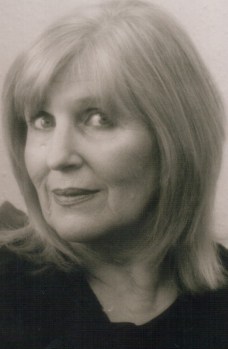
Jeannie-Van-Rompaey-668x1024

Award-winning author, Jeannie van Rompaey, MA in Modern Literature, has enjoyed a varied career as lecturer, theatre-director, actress and performance poet. As Jeannie Russell, she is a senior member of the Guild of Drama Adjudicators and adjudicates at drama festivals in Britain and Europe. Originally from London, she has lived in various countries including America and Spain. She now resides in Maspalomas, Gran Canaria, with her historian husband, Tony. She spends her time writing novels, short stories, plays and poems. When not writing she enjoys painting, and has had several art exhibitions on the island, and runs poetry and theatrical events at The British Club in Las Palmas. She has written eight novels including After (CreateSpace 2014) and Devil Face (Create Space 2013), as well as a number of short stories, two books of poetry –Straight Talk and On the Move- and a series of plays.

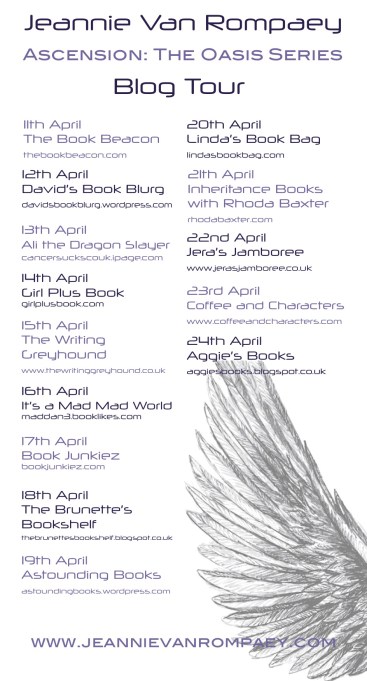
You can find more about Jeannie on her website and with these other bloggers:

JeannieVanRompaey_Final Banner

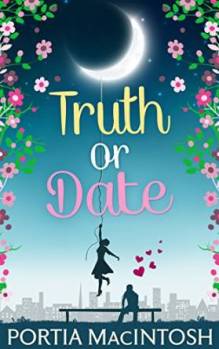
The Art of Making Stuff Up – A Guest Post by Portia MacIntosh, author of Truth or Date

Truth or Date

I really enjoy books published by Carina and I’m delighted to be bringing you another lovely read – Truth or Date by Portia MacIntosh which was published on 11th April 2016 and is available in e-book here. To celebrate publication, Portia has kindly written a guest post all about making stuff up!

Truth or Date

Ruby Wood is perfectly happy playing the dating game – until she has a red-hot dream about her very attractive flatmate, Nick. He might spend every day saving lives as a junior doctor, but he’s absolutely the last man on earth that fun-loving Ruby would ever date!

The solution? Focus on all of Nick’s bad points. And if that fails, up her dating antics and find herself a man! So what if she manages to make disapproving, goody two-shoes Nick jealous in the process…

Only, after a series of nightmare first dates, there’s still just one man on Ruby’s mind. Maybe it’s time to admit the truth and dare to ask Nick to be her next date?

Truth or Date

The Art of Making Stuff Up

A Guest Post by Portia MacIntosh

My name is Portia MacIntosh, and I make stuff up.  I know what you’re thinking: you’re a novelist, Portia, it’s your job to make stuff up. But I actually make stuff up in all areas of my life.

Let me start by making one thing clear: I only use my powers for good. No, wait, that’s not exactly true – I’m literally making stuff up right now. OK, let me try that again. I don’t use my powers for bad.

Making stuff up is for getting yourself out of tricky situations. It’s for avoiding hurting the feelings of others. At worst, it’s for getting out of doing things you really don’t want to do.

Sometimes I’ll opt for a stretch of the imagination, like: I know 11am is a little early to start drinking cocktails, and I know that I’m mixing my drinks by having four different ones but, come on, mixing drinks is the very definition of a cocktail, and I’m celebrating, and if I don’t have a few from the menu, how will I know which one I like best?

Sometimes, I want to avoid hurting someone’s feelings, so if I go on a date that I don’t enjoy, and he wants me to go back to his, unless he’s been a spectacularly horrible person, I’ll try and let him down gently. Do I want to come upstairs? Erm… it’s my time of the month/I have to be up early in the morning/I’m actually a lesbian.

I am a late person. I was born late, and I have been late for everything – ever – since. Don’t get me wrong, I do actually feel bad about this, but I was born this way so I’m powerless to stop it. But, like I said, I do feel bad, so I make up stories to excuse my lateness – because I don’t want people thinking I don’t value them enough to turn up on time. So maybe my taxi driver went the long way and I missed my train – and maybe that train was delayed. Maybe I had to wait in for a delivery before I could leave. Maybe I needed to go and visit a relative to help them with something first. All of these reasons sound better than: look, I was really looking forward to seeing you, so I tried on seven different outfits, hated all of them and wound up wearing the first one I tried on – during this time I missed three trains, sorry.

Maybe my version of ‘making stuff up’ is as bad as lying – heck, maybe it is lying – but, hey, I’m doing my best to get better at dealing with the above situations… or am I?

About Portia MacIntosh

Portia MacIntosh has been ‘making stuff up’ for as long as she can remember – or so she says. Whether it was blaming her siblings for that broken vase when she was growing up, blagging her way backstage during her rock chick phase or, most recently, whatever justification she can fabricate to explain away those lunchtime cocktails, Portia just loves telling tales. After years working as a music journalist, Portia decided it was time to use her powers for good and started writing novels. Taking inspiration from her experiences on tour with bands, the real struggle of dating in your twenties and just trying to survive as an adult human female generally, Portia writes about what it’s really like for women who don’t find this life stuff as easy as it seems.

You can find Portia’s books here and follow her on Twitter. Visit her website here.

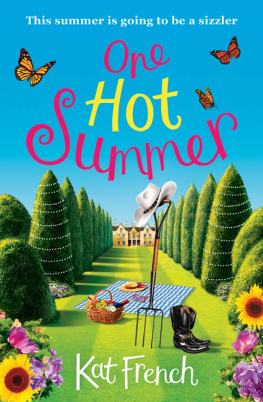
Cover Reveal – One Hot Summer by Kat French

One Hot Summer

Given that we seldom have a glorious summer in the UK, I thought I’d improve our chances and take part in the cover reveal for Kat French’s story One Hot Summer to be released in paperback and e-book on 2nd June 2016 by Avon Books, an imprint of Harper Collins. One Hot Summer is available for pre-order on Amazon and from the publisher.

One Hot Summer

Being married to a celebrity isn’t all it’s cracked up to be, especially when that celebrity has a very public affair with his co-star…

Alice McBride is determined that the one thing she won’t lose in her marriage breakup is Borne Manor, her beloved home, but she gets more than she bargained for when she rents it out for the summer and a sexy cowboy comes to stay.

Country music star Robinson Duff has had his own share of heartbreak and needs somewhere quiet to hide out for the summer. Neither Alice nor Robinson are in any position for romance; the timing is terrible and they’re both rebounding like out of control frisbees.

Can a holiday romance help mend their broken hearts. Or will it just make things even worse when the long hot summer comes to its inevitable end?

Sounds good doesn’t it?


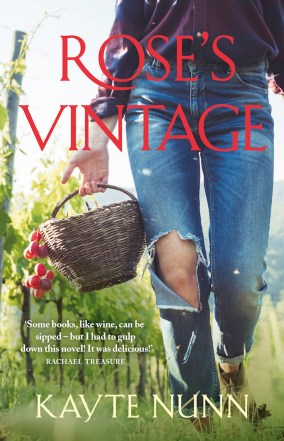
Interview with Kayte Nunn, author of Rose’s Vintage

Rose's Vintage (online)-2

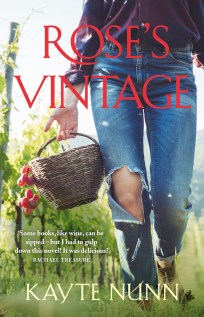
I’m delighted to be interviewing Kayte Nunn as Kayte’s debut novel, Rose’s Vintage is published today 18th April 2016 by Black Inc BooksRose’s Vintage is available in hard copy from Book Depository, or in e-book from amazon.com.

As well as finding out all about Kayte and her debut novel Rose’s Vintage, there is an opportunity to enter to win one of 5 e-copies of the book at the bottom of this blog post.

Rose's Vintage (online)-2

With her heart in tatters after a relationship break-up, Rose Bennett swaps her hometown of London for the sunny shores of Australia – but she arrives to find the Shingle Valley shrouded in winter.

As the weather improves, Rose starts to unlock the secrets of the valley – from bonfire ceremonies and wine-making traditions to eccentric locals and their histories.

Despite herself, Rose starts to fall in love: with the valley, the wines, the two children she’s helping to look after – and with the handsome and brilliant Mark Cameron, owner of the troubled Kalkari Wines estate.

What will happen when Mark’s estranged wife, the tempestuous Isabella, returns? Will Rose find a future in the Shingle Valley, or will she be forced to leave?

An Interview With Kayte Nunn

Hi Kayte. Thank you so much for agreeing to answer some questions on my blog about your book  ‘Rose’s Vintage’.

Firstly, please could you tell me a little about yourself?

I am a freelance book, magazine and web editor and writer with more than 20 years’ publishing experience and am the former editor of Gourmet Traveller WINE magazine. I am also a mother to two girls and when not writing, reading or ferrying my daughters around can be found in the kitchen, procrasti-baking. Rose’s Vintage is my first novel.

You can find me on my web site and on Facebook.

Kayte portrait 1

Readers can follow Kayte on Twitter too.

You already write about travel, health, well-being, parenting and lifestyle and ‘Rose’s Vintage’ is your first novel. How did writing a novel differ from your usual writing?

It was completely different! An awful lot harder, but so much more rewarding – I loved being able to just make the story up and live with the characters inside my head for months on end.

When did you first realise you were going to be a writer?

It’s been a slow ‘becoming’ – without really realising it, I’ve always written – bad poetry, gushing teenage diaries, and then for a career, as a features writer. Words have always been my thing. Writing fiction was, however, a secret dream, and I only summoned up the courage to tackle it fairly recently.

If you hadn’t become an author, what would you have done instead as a creative outlet?

A baker – making ethereal and delicious creations!

You obviously have a background in wine! How do you go about researching detail and ensuring your books are realistic?

A lot of the detail I had learnt as a result of editing a wine magazine for five years. When I wasn’t sure of something I checked online, or spoke to a winemaker contact.

Which aspects of your writing do you find easiest and most difficult?

Getting started is always the hardest and I’m very good at procrastinating, but once I’ve opened the document and begun typing I’m away. It’s also hard to find the time to write in between juggling freelance editing projects and looking after my two children, especially during the school holidays. I’ve learnt to seize even short snippets of time, and to fiercely protect the time I am able to set aside to write.

(I have a feeling an awful lot of writers are also procrastinators.) 

What are your writing routines and where do you do most of your writing?

I write mostly at home when my daughters are at school. I generally go for a walk or run or to the gym after I’ve dropped them off, then come home and write like crazy until it’s time to pick them up again – my most productive hour is often the one right before school pick-up! I’ll also disappear to a spare room or to the library for an hour or so at the weekend if I can. I have been known to take my laptop to my daughter’s swim squads, in the car while she’s at soccer practice, to her gym… I have gotten very good at zoning out and just focussing on the screen!

When you’re not writing, what do you like to read?

I love to read domestic noir – Liane Moriarty, Paula Hawkins, etc. I also like crime – Robert Galbraith is a favourite, as is Michael Robotham. I’m a huge fan of JoJo Moyes, Amy Tan, Isabelle Allende, Geraldine Brooks – stories with heart. And, always, Jilly Cooper.

Do you have other interests that give you ideas for writing?

I’ve an interest in plants and their healing properties, and am currently working on a historical novel about a Victorian plant hunter.

If you could chose to be a character from ‘Rose’s Vintage’, who would you be and why?

There are two elderly sisters in the novel, who are outspoken, fearless and have an earthy sense of humour – I’d be one of them for sure!

If  ‘Rose’s Vintage’ became a film, who would you like to play Rose? 

That’s easy – Alicia Vikander, without a doubt.

If you had 15 words to persuade a reader that ‘Rose’s Vintage’ should be their next read, what would you say?

It’s a delicious tale of an English chef who finds a new life in the Australian vineyards.

(That’s 17 words but we’ll let you off!)

Will we see more of Rose in future novels or are you working on something else?

Absolutely – I’ve finished a second novel, called The Angel’s Share (which is the part of wine that is lost to evaporation when it is maturing in the barrel), which features some new characters in the same setting, as well as catching up with Rose.

‘Rose’s Vintage’ is published today. How are you celebrating?

With a glass of wine! Probably Champagne – Laurent-Perrier Rose is a favourite.

Is there anything else you think we should know about ‘Rose’s Vintage’?

Rose’s Vintage and The Angel’s Share recently sold in a bidding war to the German publisher, Piper Verlag.

Thank you so much, Kayte, for your time in answering my questions.

Rose's Vintage (online)-2

Enter to win one of 5 e-copies of Rose’s Vintage by clicking here. Competition open internationally until UK midnight Thursday 28th April 2016. No purchase necessary.

My Map of You by Isabelle Broom

My Map of You

My enormous thanks to Francesca Russell at Penguin Random House for an advanced reader copy of My Map of You by Isabelle Broom in return for an honest review.

My Map of You will be released in paperback and e-book on 21st April 2016 and is available to buy from Amazon, Waterstones, WH Smith and all good bookshops.

My Map of You

Holly Wright has had a difficult few years. After her mother’s death, she’s become expert at keeping people at a distance – including her boyfriend, Rupert.

But when Holly receives an unexpected letter explaining that an aunt she never met has left her a house on the Greek island of Zakynthos, the walls she has built begin to crumble. Arriving on the island, Holly meets the handsome Aidan and slowly begins to uncover the truth about the secret which tore her family apart.

But is the island where Holly really belongs? Or will her real life catch up with her first?

My Map of You

My Review of My Map of You by Isabelle Broom

Holly has had an unsettled past but is making her life in London with boyfriend Rupert. However, a letter is about to undo the stability she has created and make her question everything about herself.

I absolutely adored My Map of You. Just occasionally a book comes along that totally resonates with what you want to read or with the mood you’re in and Isabelle Broom’s My Map of You did exactly that. I found everything about this novel, from the cover design and title to the Acknowledgements, just perfect. The title is so apt as many of the characters are in need of an emotional map to understand themselves and their own identities as well as there being a couple of physical maps that also inspire the story.

The story is so satisfying. The third person chronological approach feels so comforting after all the time slip and first person present historic novels that are so popular at the moment. It is a proper story with a beginning, a middle and an end reached by intelligent and engaging writing. The conflicts, difficulties and events are totally believable.

The characters are flawed, but completely human. I missed them when I wasn’t reading the book. I liked the way that Rupert was presented especially, as he is a perfectly acceptable man and not the over stereotyped villain that boyfriends are sometimes made out to be. Even the most minor characters feel like people you might meet in real life. I think many readers will be able to find elements of themselves in Holly too.

What is so gorgeous about My Map of You though, is Isabelle Broom’s setting and her ability to transport the reader to Greece. If you’ve been you’ll recognise every word she writes is true of Zakynthos and if you haven’t been, you’ll want to after reading My Map of You. I was transported away from grey skies of England to the warmth and relaxation of Greece.

Whilst I would say this is very much traditional women’s fiction, with romance very firmly threaded throughout, the themes in My Map of You are compelling and thought provoking. What makes us who we are? How do we deal with grief? How much can the past affect our present and future lives? How far do we settle for just enough rather than take a risk?

My Map of You is a perfect summer read and I cannot recommend it highly enough – especially if you’re off to Zakynthos for your holidays. I might just have to book myself a trip there now!

An Interview with Lynda Renham

Renham-PerfectWeddings-Invite

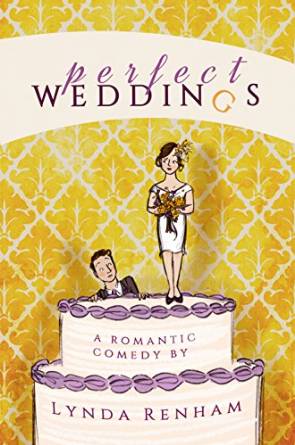
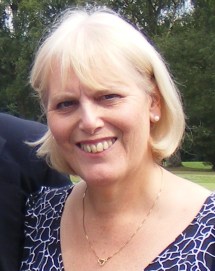
Having been through some tough months recently, it is wonderful to have authors to turn to whose books I know are going to have a sense of fun, so it is with great pleasure that I’m interviewing Lynda Renham about her writing today. Lynda’s latest book, Perfect Weddings was published in e-book on 12th April 2016 and will be available in paperback from 30th April. You can buy a copy on Amazon, from Waterstones, and all good bookshops.

Perfect Weddings

cover

Every bride wants a perfect wedding and that includes Georgina Winters. Amy Perfect is the crème de la crème of wedding planners so who best to plan Georgina’s wedding… except the man Georgina plans to marry is the same man who jilted Amy three years ago. Will her plan to give Georgina the most imperfect wedding backfire on her? Is this the chance for Amy to win back the love of her life, or will insufferable Ben Garret put a spanner in the works? Arab princes, spoilt brides and wedding catastrophes make Perfect Weddings a page-turning romantic comedy that will keep you guessing until the very last page.

If you’re new to Lynda’s writing, you might like to read my review of one of her other books, 50 Shades of Roxie Brown, by clicking here.

50 Shades of Roxie Brown

An Interview with Lynda Renham

Hi Lynda. Thank you so much for agreeing to answer some questions on my blog about your writing in celebration of your latest book, Perfect Weddings.

Firstly, please could you tell me a little about yourself?

I’m thirty five (yeah, right, was that a pig I just saw fly by?) I live in Oxfordshire with my second husband, Andrew. (This one is okay, so I don’t think I’ll be getting a third) We have one cat. He has real attention issues and spends most of the time destroying the furniture in an attempt to get attention. His name is Bendrix, after a character in a Graham Green novel but everyone calls him Bendy. He even bounds forward, knocking me over, to get to the post lady just so he can get her attention, I think he would kill me to get to her. I plan on writing a book about him called ‘We need to talk about Bendy’.

When did you first realise you were going to be a writer?

When I was 7 and a comic published my poem.

You’re a prolific writer. How do you manage to maintain the enthusiasm for your craft?

Andrew has a special whip. It keeps me enthused.

What are your writing routines and where do you do most of your writing?

In my writing room which is named ‘The Beach Hut’ Bendy, the mad cat, often sits with me. I start at 9 and procrastinate for a good few hours, make lots of coffee, look in the fridge a lot and then finally start work. I repeat this cycle until my husband comes home.

When you’re not writing, what do you like to read?

Gothic thrillers, psychological thrillers and autobiographies.

You have a strong comedic element to your writing. Are you naturally funny, telling jokes in real life, or do you have to work hard to get comedy into your books?

I’m told I’m naturally funny and a bit eccentric so that all helps. I don’t tell jokes, or at least when I do, I always get them wrong so I steer clear of them. But comedy seems to come naturally to me.

dogs

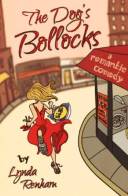
Some of your titles (like The Dog’s Bollocks) are quite risqué – how do they come about?

Ah, from all kinds of avenues. My husband and I banter about words until we come up with something that sounds funny and fits the title. ‘The Dog’s Bollocks’ featured cockneys and someone in the book called a meal ‘the dog’s bollocks.’  The book originally had a different title and didn’t do too well. The reader wrote a review saying how she thought the book was ‘The Dog’s Bollocks’ and hence the title change.

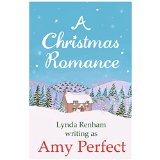
You’ve also written as Amy Perfect. What made you use a different pen name?

A Christmas Romance’ was my first Amy Perfect novel. I changed the name because it was going to be a romantic novel as opposed to a romantic comedy. I loved writing it and my readers enjoyed it.  Book 2 of the Little Perran series will be coming in the summer.

Cover 1

Amy Perfect is also the name of the protagonist in your latest book Perfect Weddings. Why did you name her this way and what can we expect from her (but don’t spoil the plot please!)?

It was a little bit of fun on my part. But her name is Amy Perfect for a reason, just check out the title.

(You’ll get an idea of who Amy is from the blurb at the top of the page too).

If  Perfect Weddings became a film, who would you like to play Amy?

Honestly? An unknown British actress because I hate celebrity culture.

Of all your characters, which is the closest to Lynda Renham in personality and why do you say this?

I think it has to be Harriet in ‘The Dog’s Bollocks.’ Harriet is very down to earth like me. Doesn’t suffer fools and is honest. She’s blunt and funny. I related to her more than any of my other main characters.

You’re frequently described as down to earth – how well do you cope in a crisis when life goes awry?

I’m actually the one losing her head while everyone keeps theirs. I’m hopeless and full of ‘What if’s’. Ask me the words I use the most and it will be ‘What if.’

Whenever I read about you I’m always aware of your links to the Cotswolds and your sense of community. How important is geographic location to you?

It’s everything. I live in a small village. We are a tight community. We look after each other. We socialise with each other. It’s rather like being on an island and I couldn’t imagine living anywhere else. I love the country. There is nothing that makes me happier than donning my wellies and walking through the barley fields.

I know that, despite your light hearted novels, you’ve had pain in your life, suffering severely from Bartholin cysts and being unable to have children for example. How far is writing a cathartic experience or escapism for you?

I used my writing to explore my childlessness many years ago through articles, which I think are still online, to poetry. I don’t think writing is an escape but can be cathartic and my agent is pressing me continuously to write more about it but I feel at peace in that area now and am not sure I want to journey back to those times.

You are very honest on your own blog about your life and I’m certain your posts are helpful to a wide range of people. Is this deliberate on your part or are you just naturally open?

I’m an open book. What you see is what you get.

If you could never write again, what else would occupy your time?

Reading, learning the piano, needlecraft, travelling, learning a new skill.

If you had to choose just one of your novels to be saved from a fire, which one would it be and why?

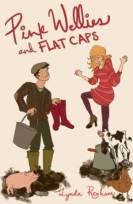
Pink Wellies and Flat Caps’ because it was written during an extension when the house was a tip, my life was no longer private and I felt sure it would be a flop but instead it became my biggest selling novel. Hitting number one in humour and staying there for many months.

wellies

If you had 15 words to persuade a reader that Lynda Renham should be their next read, what would you say?

Do you like that feeling you get after a feel good movie? Like a good chuckle or even a laugh out loud howl? Then don’t wait for that feel good film, buy a feel good book. Buy a Lynda Renham. They are guaranteed to cheer you up.

(You might have cheated on the 15 words there Lynda but I’ll let you off!)

Is there anything else you would like to have been asked?

What is my secret temptation? But you didn’t so I shan’t tell you.

(Great question – I shall be using it with future interviewees even if I neglected to ask you!)

Thank you so much for your time in answering my questions Lynda. It’s been great fun having you on the blog.

Thank you so much for inviting me onto your blog.

lynda

You can find Lynda on Facebook, follow her on Twitter and visit her website.


The Second Chance Shoe Shop by Marcie Steele

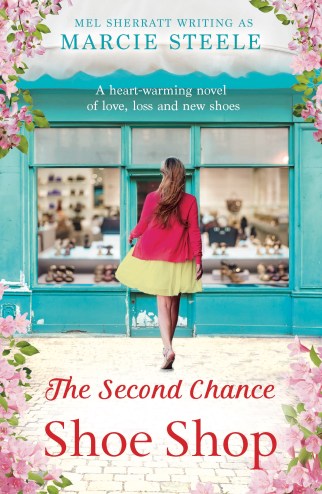
The-Second-Chance-Shoe-Shop-Kindle

I am absolutely delighted to be part of the launch celebrations for The Second Chance Shoe Shop by of one of the nicest writers around – Mel Sharratt, writing as Marcie Steele. The Second Chance Shoe Shop was published by Bookouture in e-book and paperback in early April 2016 and is available to buy on Amazon. Today I have a review of the story.

The Second Chance Shoe Shop

All Riley Flynn wants is to meet someone who makes her happy. But attracting the right kind of man is not easy, and with her heart still hurting from her last break-up, Riley believes she’ll never find love again.

A year ago, Sadie Stewart’s whole world was shattered when her husband, Ross, died. She has struggled to keep herself together for the sake of their young daughter, but with the anniversary of his death approaching, Sadie finds herself overwhelmed by grief.

Sadie and Riley work at Chandlers shoe shop, in the charming town of Hedworth. But when Chandlers is threatened with closure, the friends are confronted with the loss of not only their jobs, but also their support network – the glue that holds them together when they are close to breaking.

As they put together a plan to save their beloved shop, Sadie realises that she might just be learning to live again. Could it be that new beginnings are just round the corner? The campaign also finds Riley unexpectedly crossing paths with charming photographer, Ethan. Maybe her second chance at love is right under her feet …

The-Second-Chance-Shoe-Shop-Kindle

My Review of The Second Chance Shoe Shop

I have to admit that I wasn’t sure what to expect from Mel writing as Marcie. The Second Chance Shoe Shop is billed as a heart-warming story of love, loss and new shoes and if I’m honest I thought it might be a bit twee and contrived. Not a bit of it. The Second Chance Shoe Shop is a smashing story that gets under your skin so that you become part of the circle of friends who’ve lost Ross to cancer and who are struggling to balance their lives and their relationships.

The characters are very well drawn so that they are three dimensional and realistic. I’m not keen on children in fiction but Esther is natural and appealing. I never once felt her character was unrealistic as I sometimes do when reading children’s roles. I particularly loved Riley as a woman with flaws, assumptions, loyalties and mistakes – just like a real human being.

The plot is so well done. At the centre is the need to keep Chandler’s Shoe Shop open, but this is just the trunk of the narrative from which all the branches and twigs of sub-plot and theme emerge. Marcie/Mel explores up to the minute issues of online dating, adultery, the many sides of social media, the effects of grief, the threat of redundancy and real friendships.I loved the conceit of having an online campaign of #ShoeLove in the book running alongside Mel’s #ShoeLove on Twitter. Indeed, so realistic was the fictional campaign that I really wanted to be part of it.

But the most important aspect of The Second Chance Shoe Shop is this – it’s a really satisfying read that totally absorbs and entertains the reader – what more can you ask of a book?

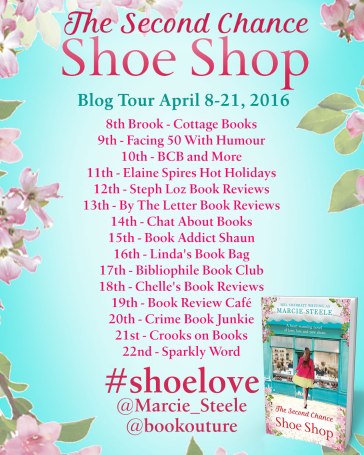
You can visit Marcie/Mel’s website , find her on Facebook as Mel and here as Marcie Be sure to find out more about Marcie/Mel and The Second Chance Shoe Shop with these other bloggers too:

Second-Chance-Shoe-Shop-Blog-Tour-Graphic

How to Throw Your Life Away by Laurie Ellingham

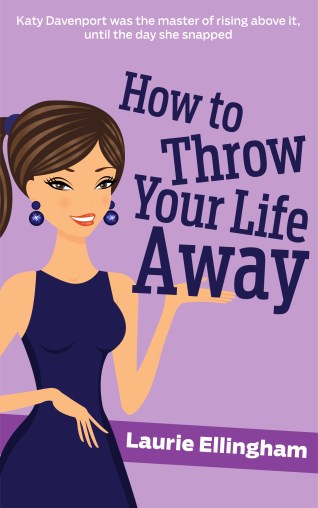
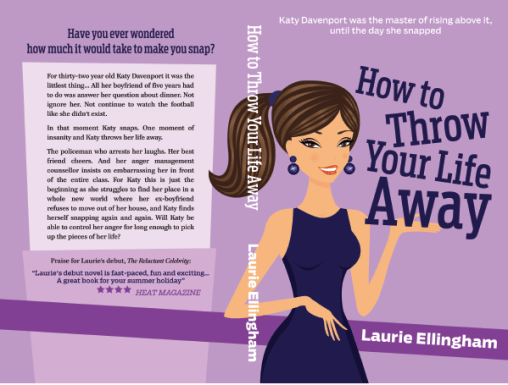
Cover final

It gives me enormous pleasure to be featuring How to Throw Your Life Away by Laurie Ellingham which was published on 14th April 2016.

I’m lucky enough to have met Laurie and to have read and reviewed her debut novel The Reluctant Celebrity here. Laurie was also kind enough to write a guest post for Linda’s Book Bag when I was just starting out as a blogger and you can read it here.

Today I have my review of How to Throw Your Life Away and Laurie is giving you a chance to enter to win a copy of the book and some yummy chocolates at the bottom of the post. Good luck!

How to Throw Your Life Away

Katy Davenport was the master of rising above it – until the day she snapped!

For thirty-two year old Katy Davenport it was the littlest thing… All her boyfriend had to do was answer her question about dinner. Not ignore her. Not continue to watch football like she didn’t exist.

In that moment Katy snaps. One moment of insanity and Katy throws her life away…

Cover jacket

How to Throw Your Life Away is available here.

My Review of How to Throw Your Life Away

Having been arrested on a domestic violence charge, Katy Davenport finds herself given a caution and a course of anger management. Little does she realise just how profound an effect on her life this will have.

My goodness this is a roller coaster of a read. Katy’s life is complicated, challenging and totally entertaining for the reader. Every time I thought a resolution was inevitable, Laurie Ellingham confounded my expectations and threw another complication into the works. There’s such emotion and humour too, so that reading How to Throw Your Life Away is thoroughly entertaining.

How to Throw Your Life Away is such a clever title as, although it very firmly applies to Katy, other characters also qualify for the dubious honour of having done just that. I think this is what makes How to Throw Your Life Away slightly different. There are some really serious issues and themes explored alongside the romantic elements, and although to explain too fully here would spoil the plot, they give a depth to the narrative alongside the humour and romance.

What also works so well is that in women’s fiction very often the lead female is more sinned against than sinning but Katy is a fully rounded character, full of contradictions, errors of judgement and flaws making her much more realistic and three dimensional than many others of this genre. She irritated me, I felt sorry for her, I wanted to shake her and I cheered her triumphs. I’d quite like her as a friend!

I really enjoyed How to Throw Your Life Away. Laurie Ellingham has a lightness of touch and a quality of style that enables the reader to be engrossed in the story and brilliantly entertained.

About Laurie Ellingham

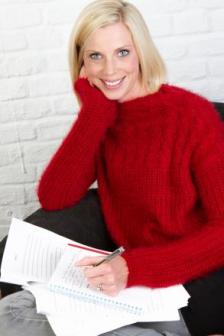
laurie

When Laurie is not running around after her two young children, her husband, their cockerpoo Rodney, or just plain running, she loves nothing more than disappearing into the fictional world of her characters, preferably with a large coffee and a slab of chocolate cake to hand.

In the past five years Laurie has moved from East London to Chelmsford and she’s finally settled in a small village in the heart of the beautiful Dedham Vales on the Suffolk/Essex border.

When she’s in the thick of a character crisis she can often be seen walking around the village with her jumper on inside out and back to front, chatting (and occasionally laughing) away to herself.

Laurie has a First Class honors degree in Psychology and a background in Public relations, both of which help her in everything she does.

You can follow Laurie on Twitter and find out all about her on her website. You’ll also find Laurie on Facebook.

TODAY ONLY: Enter to win a copy of How To Throw Your Life Away with some lovely chocolates by clicking here.