Leopard at the Door by Jennifer McVeigh

LATDblogtour_TWbanner_Jun9 me

I adore Africa and am thrilled to be part of the launch celebrations for Leopard at the Door by Jennifer McVeigh, especially as it is set in Kenya.

Leopard at the Door is published by Penguin and is available in e-book, hardback and paperback here.

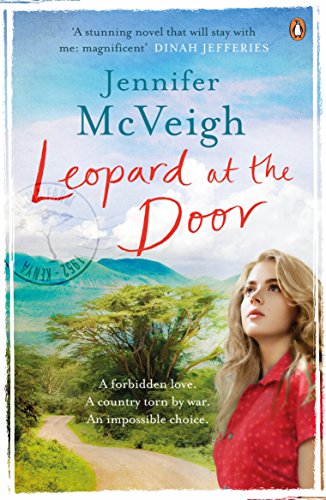
Leopard at the Door

Leopard at the door

Stepping off the boat in Mombasa, eighteen-year-old Rachel Fullsmith stands on Kenyan soil for the first time in six years. She has come home.

But when Rachel reaches the family farm at the end of the dusty Rift Valley Road, she finds so much has changed. Her beloved father has moved his new partner and her son into the family home. She hears menacing rumours of Mau Mau violence, and witnesses cruel reprisals by British soldiers. Even Michael, the handsome Kikuyu boy from her childhood, has started to look at her differently.

Isolated and conflicted, Rachel fears for her future. But when home is no longer a place of safety and belonging, where do you go, and who do you turn to?

My Review of Leopard at the Door

In 1952, after six years in England Rachel arrives home to Kenya. But it isn’t the Kenya she left.

Leopard at the Door is, quite simply, outstanding.

Within two paragraphs of reading Leopard at the Door I was totally ensnared by Jennifer Mc Veigh’s spellbinding prose. She instantly transported me to the Africa I know and love through fantastic use of the senses to convey the sights and smells that make this such a unique place. The heat, the dirt, the brutality all come through with vivid accuracy.

Leopard at the Door has a mesmerising intensity that made me horrified and enthralled in equal measure. I think I felt every one of Rachel’s emotions as I read. The writing is so intelligent. I can’t believe it’s coincidence that the title refers to a supreme hunter and can be applied to Mau Mau, Steven Lockhart and the creature itself, as well as the way in which the white population has treated the Kenyans in the past. Similarly, the fact that Rachel means ewe or lamb, and innocent purity, had me anxious for her welfare from the very first page.

The characterisation is wonderful. It felt absolutely right that both Sara and Steven’s names begin with an evil sibilance as they impact so negatively on Rachel’s life. My heart contracted with pity for Harold but it was Rachel herself who completely enchanted me. Her grief for her mother, her lost childhood and the events that happen as the magnificent plot unfolds absolutely overtook my life as I read.

Meticulously researched, the political events of the novel taught me so much so that I feel I have a far better understanding of Kenya both then and now. However, Jennifer Mc Veigh manages to present those events inextricably wound into realistic, everyday lives of ordinary people through her beautiful prose.

Leopard at the Door is simultaneously disturbing and enthralling and my life has been enriched by reading it. I adored it.

About Jennifer McVeigh

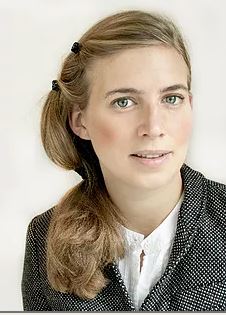
jennifer

Jennifer graduated from Oxford University in 2002 with a degree in English Literature. She went on to work in film, television, radio and publishing, before leaving her day job to do an MA in Creative Writing at Bath Spa University. She graduated in 2011.

She has travelled in wilderness areas of East Africa and Southern Africa, often in off-road vehicles, driving and camping along the way. The Fever Tree and Leopard at the Door were inspired by those experiences.

In 2014 The Fever Tree won the Epic Novel Category at the Romantic Novel of the Year Awards.

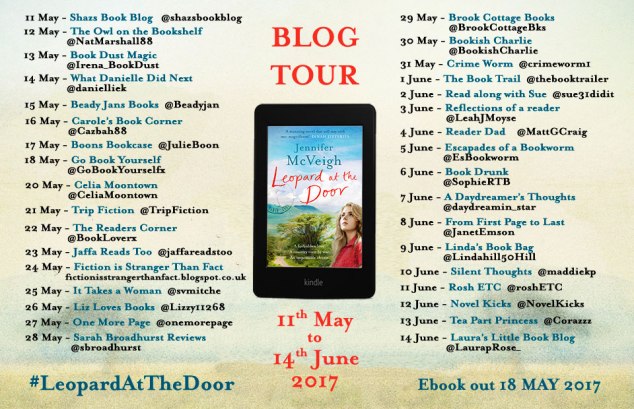
You can follow Jennifer on Twitter, find her on Facebook and visit her website. There’s more with these other bloggers too:

LATDblogtour_poster

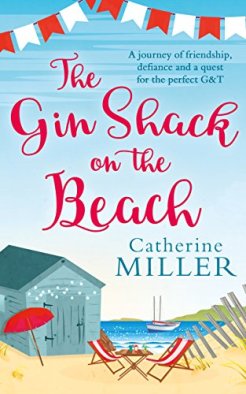
The Gin Shack on the Beach by Catherine Miller

gin shack

I’m delighted to be featuring lovely Catherine Miller today to celebrate her latest book, The Gin Shack on the Beach.

Catherine was kind enough to write a piece for Linda’s Book Bag previously, about striving for what we want that you can read here.

Published by HQ Digital on 5th June 2017, The Gin Shack on the Beach is available for purchase here.

The Gin Shack on the Beach

gin shack

You’re never too old to try something new!

When octogenarian Olive Turner is persuaded by her son to move into a retirement home, she congratulates herself on finding the secret to an easy life: no washing up, cooking or cleaning. But Olive isn’t one for mindless bingo with her fellow residents, and before the first day is over she’s already hatching a plan to escape back to her beloved beach hut and indulge in her secret passion for a very good gin & tonic.

Before long Olive’s secret is out and turning into something wonderful and new. Only a select few are invited, but word spreads quickly about the weekly meetings of The Gin Shack Club. Soon everybody on the beach wants to become a gin connoisseur and join Olive on her journey to never being forced to grow older than you feel.

A journey of friendship, defiance and a quest for the perfect G&T.

My Review of The Gin Shack on the Beach

Olive Turner agrees to move into a retirement apartment but she isn’t going to let her son Richard take her beach hut away without a fight!

What a lovely summery story this is. There’s a real sense of place and community on the beach and The Gin Shack on the Beach made me wish I had a beach hut of my own.

Firstly, I really enjoyed the way in which Catherine Miller has created a cast of lively and often feisty characters whatever their ages. I found Richard so frustrating but there is a history to be uncovered in the relationship between him and Olive that explains why they act as they do towards one another. Matron is despicable and again, there’s more to her than meets the eye so that as well as a light summer read, The Gin Shack on the Beach has mystery too.

I thought the plot was hugely entertaining. Olive and her gang encounter brushes with police, adventure and romance as Catherine Miller explores friendship, loyalty and the search for the perfect G+T. Indeed, it did make me wonder just what kind of research went in to this aspect as I never knew there were so many gins to taste! As I read I thought what a marvellous Sunday night series on television this would make.

The element that took me by surprise was the range of emotions conveyed in what I thought would be a simple beach book. I certainly laughed aloud at lighter moments, but I felt sadness and compassion too so that there were more layers than I had anticipated.

The underlying principal of The Gin Shack on the Beach is that we shouldn’t judge others by age or appearance and if Olive can go skinny dipping in her 80s I’m sure we all can! There’s such positivity and entertainment here that The Gin Shack on the Beach is a feel good read I highly recommend.

About Catherine Miller

catherine miller

When Catherine Miller became a mum to twins, she decided her hands weren’t full enough so wrote a novel with every spare moment she managed to find. By the time the twins were two, Catherine had a two-book deal with Carina UK. There is a possibility she has aged remarkably in that time. Her debut novel, Waiting For You, came out in March 2016, followed by All That is Left of Us.

Catherine was a NHS physiotherapist, but for health reasons (Uveitis and Sarcoidosis) she retired early from this career. As she loved her physiotherapy job, she decided if she couldn’t do that she would pursue her writing dream. It took a few years and a couple of babies, but in 2015 she won the Katie Fforde bursary, was a finalist in the London Book Fair Write Stuff Competition and highly commended in Woman magazine’s writing competition.

You can also find out more about Catherine Miller on Facebook , via her web site and by following her on Twitter.

There’s more with these other bloggers too:

Gin shack poster

Fractured Families: A Guest Post by Dianne Noble, Author of Oppression

104 KB

I love books and I love travel and what better than to combine the two! Today, I am delighted to welcome back Dianne Noble to Linda’s Book Bag. Previously, Dianne took me to India in a super guest post that you can read here when her book A Hundred Hands was published and I’ve now booked a trip there for next year!

Today, we’re featuring Dianne’s new book Oppression, which will be released by Tirgearr on 14th June 2017, when I’ll be able to go back to Egypt, a country I’ve visited and loved.

Oppression is available for pre-order in e-book here.

Oppression

104 KB

When she tries preventing the abduction and forced marriage of 16-year-old Layla, Beth defies her controlling husband, Duncan, and travels to Cairo where she finds the girl now lives in the vast necropolis known as The City of the Dead. She’s hiding from her abusive husband, and incites fellow Muslim women to rebel against the oppression under which they live. Beth identifies with this and begins helping her.

Cairo is in a state of political unrest, and Beth gets caught up in one of the many protests. She’s rescued by Harry, who splits his working life between Egypt and England, and they eventually fall in love. When Harry returns home and Layla vanishes, Beth begins being stalked and threatened with violence. And then Duncan turns up…

Can Beth ever find peace, or will her hopes of happiness remain shattered?

Will Layla’s ideals of freedom ever be fulfilled?

Fractured Families

A Guest Post by Dianne Noble

I have three novels with a fourth on the way, and all of them seem to deal with fractured families.

In my current one, Oppression, which is to be published June 14th.and is available on pre-order at 99p., Beth’s mother has found religion and considers herself on a fast track to salvation. In actual fact she is hard and judgmental and when Beth’s father dies while she’s in Egypt helping Layla, the victim of a forced marriage, she feels truly orphaned.

a-hundred-hands

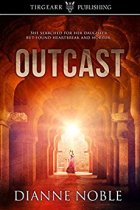
In my two previous novels, both based in India, Polly’s mother abandoned her (A Hundred Hands) and Rose’s mother (Outcast) is distant both geographically and emotionally.

outcast

The background of dysfunctional families in each book wasn’t deliberate but in fact is, in my opinion, topical. Children are raised in single families as a regular thing nowadays, parents have to travel and work unsocial hours to put bread on the table so are often absent, and many of the UK’s immigrants have tragically had to leave their families behind them as they strive to earn enough to live.

In many ways my own childhood was fractured. Many people feel a nostalgia for schooldays, for friends known since kindergarten. There are reunions, old school ties, framed photographs of children in uniform on doting grandmothers’ walls. The oldest pictures, Lucozade-coloured with age, show school hats: berets, Panamas, a topper if you’d been to Eton.

Spare a thought for those who were brought up in service families! Many attended a school for such a brief time there was no time – or money – for a new uniform. You were an outcast in your navy blue while everyone else sported bottle green. I went to fifteen different schools between the age of five and sixteen and it added a great deal to my life experiences but very little to my social skills. It was just not possible to build friendships.

The first interesting school I went to was on a troopship, the Dunera. which was transporting the Scottish regiment, the Black Watch from Glasgow to Korea as part of the peace-keeping force, and we were being dropped off at Singapore. The first day at sea, before we reached the Bay of Biscay and the horrors of non-stop vomiting, I was sitting on deck in the sunshine, nose buried in Enid Blyton’s Ring ‘o’ Bells Mystery. I loved Enid Blyton with a passion, devoured all I could find and was totally engrossed in this one which my father had bought me for the journey. He was more than a little disgruntled to discover I’d finished it in a day and a half and told me I’d have to keep reading it as there was nothing else available. My reading was cruelly interrupted by an officious woman herding children before her for lessons. Lessons? It appeared we had to go to school for six hours a day for the next four weeks. The ship might founder, there might be flying fish off the starboard side, but nothing could interrupt classes.

School in Singapore was wonderful. We started at 7.30 and finished at 1.30 to avoid the heat of the afternoon. Our transport there was referred to as a gharry, but it was a lorry painted air force blue into which we had to clamber before sitting on bench seats and holding on to a rope to avoid being thrown out when we crashed through the craters in the roads. In the playground we caught snails and centipedes, while in the classrooms geckoes scampered across the ceilings, dodging the overhead fans, before dropping on the unwary. On the down side there was no chance of making, or nurturing, new friends. Service life produces children who are self-reliant, somewhat solitary – the unkind would say anti-social, and this background can produce further fractured families.

After a number of years in England we flew out to Cyprus, a beautiful island on which to be educated. Very early morning starts again owing to the high temperatures but now I was older there were trips to Kykko Monastery, Famagusta, the ruins at Salamis. When the threat of Turkish invasion grew, wherever we travelled we had to be in an armed convoy, escorted by UN troops from Canada and Finland in their sky-blue berets. As a teenager I was hugely susceptible to the attraction of a man in uniform, something which has stayed with me to the present day!

But the best school of them all was when, in my fifties I taught English in the slums of Kolkata where I squatted on the ground, in the dirt, with the children who lived on the streets. Their eager little faces, happy smiles, desperation to learn were heart-breaking at times but it remains the most worthwhile thing I’ve ever done. These children came from truly fractured families.

About Dianne Noble

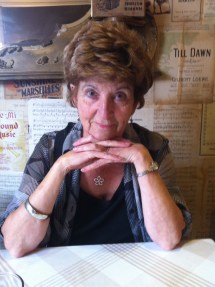
dianne-aug-2015

Born into a service family Dianne was brought up in Singapore, Cyprus and Yorkshire then went on to marry a Civil Engineer and moved to the Arabian Gulf. Since then, with sons grown and flown, she has continued to wander all over the world, keeping extensive journals of her personal experiences which she uses for her novels. Fifteen different schools and an employment history which includes The British Embassy Bahrain, radio presenter, café proprietor on Penzance seafront, and goods picker in an Argos warehouse, have resulted in rich seams to mine for inspiration.

You can find out more about Dianne by following her on Twitter, visiting her website and finding her on Facebook.

An Interview with Mark L. Fowler, Author of Coffin Maker

Coffin Maker - Mark L. Fowler - Book Cover

I’m delighted to have been asked by Caroline who blogs here to be part of the celebrations for Mark L. Fowler’s Coffin Maker. Mark is a new to me author and I love finding out about different writers so I’m thrilled that Mark has agreed to be interviewed for Linda’s Book Bag.

Coffin Maker is available for purchase in e-book and paperback here.

Coffin Maker
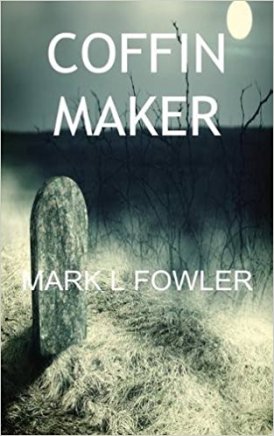
Coffin Maker - Mark L. Fowler - Book Cover

The Coffin Maker lives and works alone in the Kingdom of Death. When he completes a coffin a life on Earth ends. That’s how it’s always been.

One day as Coffin sits writing in his journal, The History of Death, trying to sum it all up in one perfect sentence, a note sails past his window.

Is he about to gain a glimpse of the elusive Divine Plan that has eluded him for centuries? Is life in the Kingdom of Death about to change forever?

There are rumours that the devil is finally arriving in the guise of Colonel Gouge. Rumours started by a priest who has upset the Church by writing a book: Coffin Maker. A book written to comfort a bereaved nephew. A book that appears to prophesy not only the arrival of Gouge, but also the cataclysmic events about to unfold in the Kingdom of Death.

An Interview with Mark Fowler

Welcome to Linda’s Book Bag. Thank you so much for agreeing to answer some questions on my blog about your writing . Firstly Mark, please could you tell me a little about yourself?

Hi Linda, and thank you for inviting me to your Book Bag. I’m based in Staffordshire and I have been a writer almost as long as I can remember. I’ve tried my hands at many forms of writing, including poetry, songs, sitcoms, short stories and novels. But I’m primarily a story teller, and more than anything I love writing fiction. I have three novels published so far: Coffin Maker, The Man Upstairs, and Silver. I have a fourth novel, Red Is The Colour, due out in July this year.

When did you first realise you were going to be a writer?

When I was a youngster, I was very much a dreamer, drawn to the world of the imagination. I loved making things up. But I was always very shy about showing anything that I’d written to anybody. I always imagined that they would laugh and say, “Who does he think he is, imagining he can write?” My writing also tended to be very personal, in the early days, quite autobiographical, and of course I was concerned that I might be giving too much of myself away. I think that it was writing my first novel, Coffin Maker, that really changed things for me. I was writing about things that interested me, but I was no longer writing about myself. Things that mattered to me, things that concerned me, that frightened me, perhaps; things that I found amusing, or that made me angry – but I had burnt off the autobiographical tendencies, realising that writing, storytelling, could be an adventure, a voyage of discovery, and the most tremendous fun. I knew then what I wanted to do.

If you hadn’t become an author what would you have done instead as a creative outlet and do you have other interests that give you ideas for writing?

I have musical interests. I play piano and guitar and occasionally I write songs, though nobody listens to them – ha ha, sob sob. A few of my books have a musical theme. I wish I was a better singer, though. I think if I wasn’t writing novels I would go back to screen writing. I had a lot of fun writing sitcoms, and there might still be some unfinished business there one day.

How do you go about researching detail and ensuring your books are realistic?

It depends on the book I’m writing, really. My latest book, Red Is The Colour, has two police officers as main characters. I had to ensure that I had certain facts correct, and I even got a police officer to read over an earlier draft checking for any errors regarding procedures. Beyond that, though, I felt that getting the psychology of the characters right was even more important. The same with Coffin Maker. Coffin is obviously an entirely fictional creation, but I had to know what makes him tick, his desires, motivations, fears. I had to make him real. I wasn’t trying to write an academic treatise; I wanted to be thought provoking. I was free to make of the Kingdom of Death whatever I wanted, but I still had to create the right landscape for the Coffin Maker to inhabit. I had to be consistent and credible even though it was very much a work of the imagination.

Which aspects of your writing do you find easiest and most difficult?

I love writing dialogue. Perhaps that’s the screen writer in me. On the other hand, I don’t tend towards long character descriptions, as I generally don’t enjoy reading them. I like to reveal character more through what they do and what they say. Their interactions. I like to leave some room for the readers’ own imaginations, rather than spelling everything out.

(That sounds like perfect ‘show, don’t tell’ to me Mark!)

What are your writing routines and where do you do most of your writing?

I write at home mainly, and I try to write most days. I find that writing works best for me when I keep a momentum going. If I come to a complete stop, the fear of the blank page can take over, and a week of writing nothing can easily lead to a month, and so on. I think writing feeds ideas, and questions emerge in the writing process.

Without spoiling the plot, please could you tell us a bit about Coffin Maker?

Coffin Maker is a gothic tale set between our world and the Kingdom of Death. In the Kingdom the Coffin Maker lives a solitary existence, and every coffin he completes signals the end of a life in our world. One day he discovers that he is to be sent two apprentices, amid rumours that the devil is arriving on Earth.

How far do you believe in fate or a Divine Plan?

Ha, that depends on how philosophical you want to get. And maybe how religious and psychological. It can be very difficult to reconcile a predestined, Divine Plan, with individual freewill.  Just as it can be difficult to reconcile the idea of a loving God with the existence of pain and suffering, and indeed death. I believe that as human beings we are naturally curious about these things, and it is partly the fascination with such deep mysteries that draws me to philosophy. We get glimpses sometimes, flashes of insight, but I don’t think we can ever nail these questions entirely. In the end it has to come down to faith, I believe. Philosophy can only take you so far.

You studied Philosophy at university. How far has that study impacted on what and how you write?

I think that the study of philosophy has to some extent fed my natural curiosity, and that curiosity has often manifested itself in storytelling. I have never had any interest in writing academically, but in a number of my books, and perhaps in Coffin Maker particularly, I have been drawn into asking philosophical questions. Primarily, though, I want to tell a good story, to explore an interesting character, or characters. Philosophy can fuel a sense of wonder, and so can good storytelling.

There are very real and concrete consequences for Coffin when he completes a coffin.  How far were you trying to convey an allegorical message through your narrative?

I wanted to convey the dark reality of death; the grim, heart-breaking, savagery of what occurs every day in this world. Yet at the same time I wanted to show the possibility of hope and the saving grace of love and compassion.

Coffin Maker has a cover that suggests decay and gothic horror to me. How did that image come about and what were you hoping to convey (without spoiling the plot please!)?

I was trying to convey desolation, I think. A clear evocation of death and loss, but without being too corny. I wanted an atmospheric image that had a gothic feel, possibly suggestive of horror, but without tying the book to that genre in an obvious way.

If you could choose to be a character from Coffin Maker, who would you be and why?

Hieronymus. He is a revolutionary, a flawed hero, fighting against something monstrous. I wish I had his courage.

If Coffin Maker became a film, who would you like to play Coffin and why would you choose them?  

It would have to be either an unknown actor, or at least an unrecognisable one. I don’t think that it could possibly work if you were familiar with the actor. Having said that, I have been surprised many times on the screen. I would love to see Coffin Maker on the big screen.

When you’re not writing, what do you like to read?

I read quite a bit of fiction, mainly crime, psychological thrillers, some contemporary fantasy and gothic/horror fiction. I love coming across stories that don’t quite fit into a clear genre, that exist on the borderlines. I think that Coffin Maker fits into that category.

If you had 15 words to persuade a reader that Coffin Maker should be their next read, what would you say?

You will not read another book quite like Coffin Maker. It is utterly unique.

Thank you so much for your time, Mark, in answering my questions.

About Mark Fowler

Mark L. Fowler Author Image

Mark L. Fowler is the author of the novels Coffin Maker, The Man Upstairs, Silver, and Red Is The Colour, and more than a hundred short stories. His particular interests are in crime and mystery, psychological thrillers and gothic/horror fiction.

His first published novel, Coffin Maker, is a gothic tale set between our world and the Kingdom of Death. In the Kingdom the Coffin Maker lives a solitary existence, and every coffin he completes signals the end of a life in our world. One day he discovers that he is to be sent two apprentices, amid rumours that the devil is arriving on Earth.

Mark’s second novel, The Man Upstairs, features the hard-boiled detective, Frank Miller, who works the weird streets of Chapeltown. Having discovered that he is in fact the hero of twenty successful mystery novels, authored by The Man Upstairs, Frank has reasons to fear that this latest case might be his last.

In 2016, Silver, a dark and disturbing psychological thriller was published by Bloodhound Books. When a famous romance novelist dies in mysterious circumstances, she leaves behind an unfinished manuscript, Silver. This dark and uncharacteristic work has become the Holy Grail of the publishing world, but the dead writer’s family have their reasons for refusing to allow publication.

Red Is The Colour is Mark’s latest book, a crime mystery featuring two police detectives based in Staffordshire. The case involves the grim discovery of the corpse of a schoolboy who went missing thirty years earlier. Red Is The Colour is the first in a series featuring DCI Tyler and DS Mills, and will be published in July 2017 by Bloodhound Books.

The author contributed a short story, Out of Retirement, to the best-selling crime and horror collection, Dark Minds. Featuring many well known writers, all proceeds from the sales of Dark Minds will go to charity.

A graduate in philosophy from Leicester University, Mark lives in Staffordshire, and is currently writing a follow up to Red Is The Colour. When he isn’t writing he enjoys time with family and friends, watching TV and films, playing guitar/piano and going for long walks.

You can follow Mark on Twitter and find him on Facebook.

There’s more with these other bloggers too:
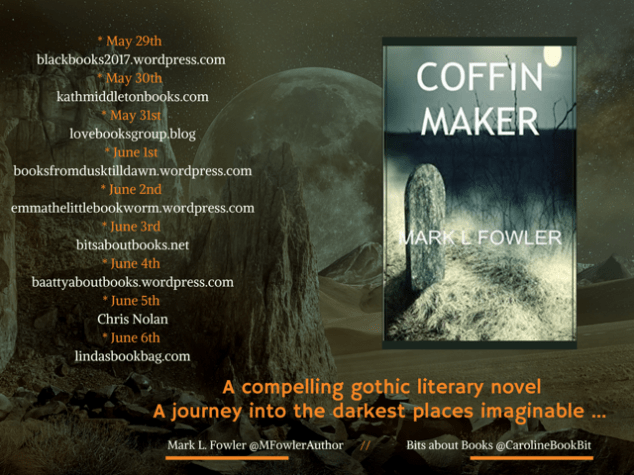
BlogTourPoster Coffin Maker - Mark Fowler - May 29th to June 6th- perfect

A History of Running Away by Paula McGrath

A history of running away

I am indebted to Ruby Mitchell at Hodder for an advanced reader copy of A History of Running Away by Paula McGrath in return for an honest review.

A History of Running Away will be published in e-book and hardback by John Murray on 15th June 2017 and is available for purchase here.

A History of Running Away

A history of running away

In 1982 Jasmine wants to box, but in 1980s Ireland boxing is illegal for girls.

In 2012 a gynaecologist agonises about a job offer which would mean escape from the increasingly fraught atmosphere of her Dublin hospital. But what about her mother, stuck in a nursing home?

And in Maryland Ali, whose mother has recently died, hooks up with a biker gang to escape from grandparents she didn’t know she had.

Gradually revealing the unexpected connections between the three women, A History of Running Away is a brilliantly written novel about running away, growing up and finding out who you are.

My review of A History of Running Away

Running away isn’t always the answer to life’s difficulties – but it can help.

I don’t know what it is about female Irish writers, but they somehow seem to be able to convey extreme emotion completely effortlessly and Paula McGrath is no exception. I loved A History of Running Away because it transported me into the lives of the women between its pages so fully I simply could not stop reading until I had consumed the entire novel in one sitting.

There is a cleverly planned plot that weaves initially seemingly disparate strands together in such a satisfying manner, but A History of Running Away is so much more than just a good story. Through its pages Paula McGrath explores social history and attitudes. She gives the reader a sometimes brutal and disturbing picture of what it is to be female in the early 1980s as well as more recently, so that there is a strong feminist undercurrent that works brilliantly without being aggressively overstated. I could quite easily see myself in the position of any of the women in this story. I also found the violence portrayed very disturbing. It is by no means graphic, but based in cruelty, sexism and racism it felt all too familiar and real. Paula McGrath skilfully makes the reader consider society’s attitudes whilst she entertains.

I loved the structure of the novel. The different voices are distinct and authentic and I found the lack of speech punctuation added to this feeling. A History of Running Away has a natural flow to the style so that it feels more like eavesdropping on real lives than reading about characters.

I thoroughly enjoyed reading A History of Running Away. From the metaphorical to the literal meaning in the title as characters run away from their debts, their families and their own mistakes, to the exploration of how we find our own identity in a world that seeks to define and control us I thought Paula McGrath had produced a pitch perfect novel that ultimately left me feeling uplifted and positive. A History of Running Away is a superb book.

About Paula McGrath

paula mcgrath

Paula McGrath lives in Dublin. Her first novel, Generation, was published in 2015, and described as ‘remarkable’ by the Sunday Times. She has a background in English Literature and is currently a doctoral student at the University of Limerick. In another life she was a yoga teacher.

You can follow Paula on Twitter and visit her website

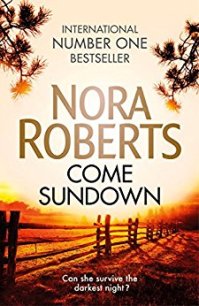
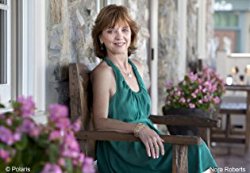
Come Sundown by Nora Roberts

come sundown

It gives me very great pleasure to be part of the launch celebrations for international bestselling author, Nora Roberts’, latest novel Come Sundown.

Come Sundown was published on 30th May by Piatkus, an imprint of Little Brown and is available for purchase in e-book and hardback here.

Come Sundown

 come sundown

Love. Lies. Murder. A lot can happen… Come Sundown.

Bodine Longbow loves to rise with the dawn. As the manager of her family’s resort in Western Montana, there just aren’t enough hours in the day – for life, for work, for loved ones. She certainly doesn’t have time for love, not even in the gorgeous shape of her childhood crush Callen Skinner, all grown up and returned to the ranch. Then again, maybe Callen can change her mind, given time…

But when a young woman’s body is discovered on resort land, everything changes. Callen falls under the suspicion of a deputy sheriff with a grudge. And for Bodine’s family, the murder is a shocking reminder of an old loss. Twenty-five years ago, Bodine’s Aunt Alice vanished, never to be heard of again. Could this new tragedy be connected to Alice’s mysterious disappearance?

As events take a dramatic and deadly turn, Bodine and Callen must race to uncover the truth – before the sun sets on their future together.

My Review of Come Sundown

When Alice is abducted on her way home there are reverberations for years to come in the Bodine household.

If you’re not a Nora Roberts fan there’s every danger that Come Sundown will appear formulaic and predictable. If, like me, Nora Roberts is your guilty pleasure then Come Sundown contains every element you could possibly hope to see and more.

Firstly there are tall attractive men in jeans, especially Callen. Mixed with the strong feisty women like Bodine, there’s a sexual chemistry with love and romance guaranteed.

There’s great drama in the plot of Come Sundown, with vulnerable women abducted, abused and killed so that no-one is really safe and every one is a suspect, making for an entertaining and exciting read as you try to work out who’s next and who dunnit! Nora Roberts has that Christie-esque technique of making the perpetrator someone seemingly innocuous who was hidden in plain sight all along and I love that element to her stories.

Come Sundown contains all those themes I expect too. Nora Roberts covers friendship and rivalry, love and passion, feminism and relationships, childhood and adulthood, family and home with genuine warmth. However, in Come Sundown, there are more controversial issues raised so that added depth occurs too. ‘Sir’ is a white supremacist uncovering uncomfortable attitudes of sexism, racism and religious fanaticism that, as an outsider to America, have a horrible fascination. I believed in his character totally so that the passages where he appeared genuinely made my flesh crawl.

I really, really, enjoyed reading Come Sundown. I loved the pun in the title as events unfold when Callen returns to the Bodine establishment on his horse, Sundown (who is also a character in his own right), but the denouement of the story is when sundown arrives too. I enjoyed every aspect of Come Sundown as sheer, reliable, Nora Roberts escapism. A highly entertaining read.

About Nora Roberts

nora roberts

Nora Roberts is the New York Times bestselling author of more than 190 novels and there are 300 million copies of her books in print. Under the pen name J. D. Robb, she is author of the New York Times bestselling futuristic suspense series, which features Lieutenant Eve Dallas and Roarke.

You can visit Nora Roberts on Facebook and find out more on her website.

There’s more with these other bloggers too:
poster final

Single for the Summer by Mandy Baggot

Single for the summer

My grateful thanks to Ebury, an imprint of Penguin Random House, and Netgalley for an advanced reader copy of Single for the Summer by Mandy Baggot in return for an honest review. I have previously read and thoroughly enjoyed another of Mandy’s books, One Christmas in Paris, my review of which you can read here.

Single for the Summer will be published by Ebury on 27th July 2017 and is available for pre-order here.

Single for the Summer

Single for the summer

Tess Parks has made up her mind: love isn’t for her.

When it comes to dating she has one rule: after six weeks with a guy, she ends it. So when her heartbroken best friend invites her for a girly getaway in Corfu, Tess is sure she can stick to their pact to stay single for the summer.

But then she meets the gorgeous restaurateur Andras…

To keep his overbearing mother off his back, Tess agrees to pretend to date him. But as the two spend time together, Tess begins to realise that this fake relationship is starting to feel like the best one she’s ever had…

My Review of Single for the Summer

Tess Parks only ever dates men for six weeks having been jilted at the altar, so she can’t see any problem in staying single when she heads on holiday to Corfu with Sonya.

Single for the Summer is the perfect summer beach read with wonderful evocative settings. Moreover, Mandy Baggot conveys the allure of Corfu so brilliantly that I want to be on a Greek beach right now. She weaves elements relating to the senses so effortlessly that I could taste sweet baklava, smell the lavender in the pots next to the taverna and feel the sand beneath my feet. I even told my husband I would have to book a holiday there.

The plot hinges around a throw away remark from Andras, and his brother Spiro’s wedding. I learnt a great deal about Greek traditions and the closeness of Greek families with strong matriarchs at the helm so that as well as enjoying a super romantic read, I felt as if I had a cultural experience too.

Alongside a panoply of vivid and credible characters that provide humour and Greek authenticity are stand out performances from Tess and Andras. Whilst this is a light hearted read with all the elements one would expect from a chick-lit style book, there is also real depth to their personalities as both deal with emotional hurt from the past. It was impossible not to believe in them completely.

What I so enjoy about Mandy Baggot’s writing is her vivacious style. She can drop in a product or cultural reference like Strictly Come Dancing and make her reader know instantly exactly what she means. She has a wicked sense of humour and a deft hand at writing sex scenes too so that reading Single for the Summer is a lovely, life affirming book that lifts the spirits and puts the reader in the right mood for summer – and maybe a little romance of their own. I loved it.

About Mandy Baggot

mandy-baggot

Mandy Baggot is an award-winning writer of romantic comedies, chick-lit and contemporary romance.

In February 2016 her romantic comedy novel, One Wish in Manhattan, was shortlisted for the Romantic Novelists’ Association Romantic Novel of the Year award.

Mandy loves mashed potato, white wine, country music, World’s Strongest Man, travel and handbags. She has appeared on ITV1’s Who Dares Sings and auditioned for The X-Factor.

Mandy is a member of the Romantic Novelists’ Association and the Society of Authors and lives near Salisbury, Wiltshire, UK with her husband, two daughters and cats, Kravitz and Springsteen.

Find out more about Mandy by visiting her website. You can follow her on Twitter and find her on Facebook. You’ll find all Mandy’s lovely books here.

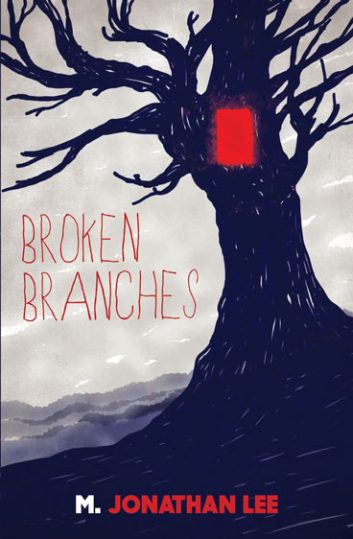
Broken Branches by M.Jonathan Lee

broken branches

My grateful thanks to Hideaway Fall, a brand new publisher, for an advanced reader copy of Broken Branches by M. Jonathan Lee in return for an honest review.

Broken Branches will be released by Hideaway Fall on 27th July 2017 and is available for pre-order through the publisher links here.

Broken Branches

broken branches

Family curses don’t exist. Sure, some families seem to suffer more pain than others, but a curse? An actual curse? I don’t think so.

A family tragedy was the catalyst for Ian Perkins to return to the isolated cottage with his wife and young son. But now they are back, it seems yet more grief might befall the family.

There is still time to act, but that means Ian must face the uncomfortable truth about his past. And in doing so, he must uncover the truth behind the supposed family curse.

My Review of Broken Branches

Following a family tragedy, Ian Perkins is back in his childhood home with the menacing sycamore tree lowering over his whole life.

I don’t usually read books with any form of supernatural element and I wasn’t sure if a book about a curse would appeal to me. However, I was drawn in to Broken Branches immediately. Certainly there are supernatural elements if Broken Branches is accepted at face value, with Gothic style nursing homes, mysterious noises, ethereal shapes and ghostly people, and it is a cracking read at that level, but I wasn’t convinced that this was what we were entirely meant to believe in as readers.

As the plot unfolds, with the structure linking back in time to reveal more about the curse, so Ian becomes increasingly manic in his need to uncover the truth behind that curse. The reason for his desire to do so is gradually uncovered so that the reader finds it hard to decide if this is a straightforward narrative, or the unsettled workings of a man suffering mental health issues. I really enjoyed this fascinating element of the book. It was as if there were several layers to unpick and I found myself ensnared in the story. Even at the end, I wasn’t entirely sure what I believed so that Broken Branches will stay with me for some time as I think back over its contents.

Ian is a character who becomes increasingly real as the story unfolds. The more I read about him, the more intrigued I was about what was happening in his life and his mind.

I also loved the way the text was presented. M. Jonathan Lee introduces the metaphorical image of broken branches of family and society as well as the seemingly dead branch belonging to the tree so that Broken Branches is a highly thought provoking read. The way in which the text is fragmented with a variety of sentence lengths to reflect the action and Ian’s thoughts works so well, as does the iterative image of red and blood from the tree house door on the cover to more dramatic elements within.

The themes of family, grief, relationships and rivalry that underpin the fast paced narrative of Broken Branches are written so that there is always a feeling of quiet menace beneath the surface. The relationship between Ian and his father I found completely heartbreaking.

Broken Branches is a bit of an enigma. It is also beautifully written and absorbing as it tackles taboo issues of suicide, mental health and emotional cruelty so that reading Broken Branches has a deep effect on the reader. I highly recommend it.

About M. Jonathan Lee

m jonathan lee

M. Jonathan Lee (also known as Jonathan Lee) is an award-winning novelist who has had two novels in the top 10 Amazon charts. He was born in Yorkshire, northern England where he still lives today.

His first novel, the critically-acclaimed The Radio was shortlisted for The Novel Prize 2012 and is the first in the loosely titled The ‘The’ trilogy.

M. Jonathan Lee works closely with Rethink and Mind Charities to raise awareness of mental health issues, and is a regular commentator on the BBC.

His latest novel, Broken Branches, is due out in July 2017, published by Hideaway Fall.

You can follow M. Jonathan Lee on Twitter, visit his website and find him on Facebook.

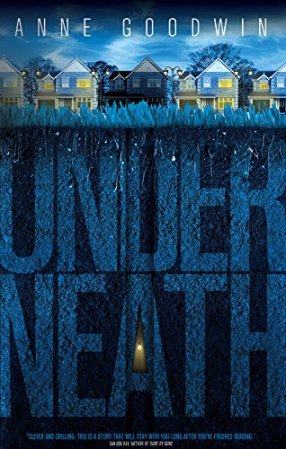
Family Dynamics: A Guest Post by Anne Goodwin, Author of Underneath

Underneath

I’m delighted that Anne Goodwin, author of Underneath, makes a welcome return to Linda’s Book Bag today. Anne previously wrote a smashing guest post all about how we are shaped by the events in our lives that you can read here. Today, Anne is exploring the role of family dynamics in Underneath.

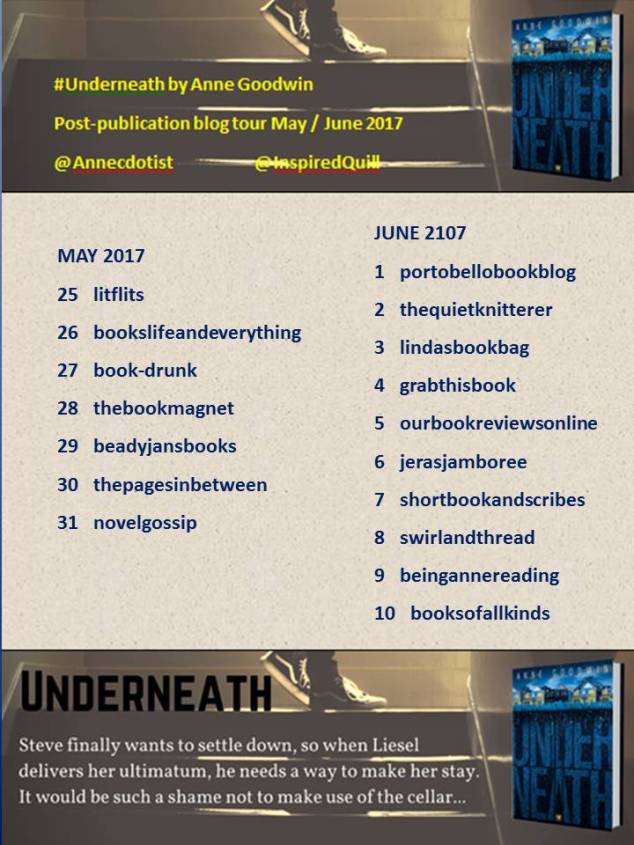
Published by Inspired Quill on 25th May 2017, Underneath is available for purchse in e-book and paperback here.

Underneath

Underneath

He never intended to be a jailer …

After years of travelling, responsible to no-one but himself, Steve has resolved to settle down. He gets a job, buys a house and persuades Liesel to move in with him.

Life’s perfect, until Liesel delivers her ultimatum: if he won’t agree to start a family, she’ll have to leave. He can’t bear to lose her, but how can he face the prospect of fatherhood when he has no idea what being a father means? If he could somehow make her stay, he wouldn’t have to choose … and it would be a shame not to make use of the cellar.

Will this be the solution to his problems, or the catalyst for his own unravelling?

Steve’s Mother and Sisters in Underneath

A Guest Post by Anne Goodwin

One of the themes I like to explore in my fiction is how the dynamics of our families of origin shape the adults we become. Families are fascinating, particularly when each member’s memories and interpretation of events is different, rendering the truth an enigma.

Growing up with a mother, older twin sisters and no dad, it’s little wonder my narrator, Steve, perceives girls as more powerful than boys. Grieving for her husband – the father who died before Steve was born – his mother is emotionally absent, leaving him in the custody of his sisters while she retreats to her room (p58-9):

The twins are supposed to watch me, but they’re outside playing a skipping game. I can hear their chanting through the kitchen window.

Miss Fothergill says that if another child hurts you, you should tell a grown-up. It’s not snitching, especially if they’re bigger than you and ought to know better. I get down from the table and go out into the hallway.

Our stair-carpet is dark blue with pale blue discs and rings. I like to count them when I go up and down but the number comes out different every time. I tell Mummy they’re pictures of Saturn, but Celia and Polly say they’re nothing at all.

There are four doors at the top of the stairs, all painted light brown: my room; Mummy’s room; the bathroom; the twins’ room with its stick-on No Boys Allowed sign. I sit cross-legged on the floor outside Mummy’s room and listen. Someone’s crying inside.

I push back my sleeve and examine my arm. It still prickles, but the marks have gone from where Celia jabbed me with the pin of my Sheriff’s badge. I think of when Mrs Hetherington says, You’re the man of the house or when Mummy calls me My Little Man.

I hear the bedsprings creaking, but Mummy doesn’t come out. I picture her lying on top of her continental quilt that’s sprigged with lavender. She’s clutching her hankie, her eyes rimmed with red.

When my legs go dead, I shuffle downstairs on my bottom. I get up to two hundred and fifty-seven Saturns, and still Mummy doesn’t leave her room.

Neglected themselves, the twins, although six years older, don’t want to be burdened by their younger brother and bully him relentlessly, albeit in ways they’re unlikely to be found out. They’re like “a two-headed monster” and it’s not until late in the novel, when the siblings are middle-aged, that Steve can begin to perceive his sisters as individuals. Unfortunately, by then, it’s too late. Imprisoning a woman in a cellar is far worse than anything Steve suffered as a child.

The novel being narrated from Steve’s point of view, the reader has only his interpretation of events to draw on. Nevertheless, there are strong indications that his sisters don’t perceive the past as negatively as he does. When, along with Steve’s new girlfriend, Liesel, they meet for an evening meal, they tell her (p101):

“It’s like he’s blotted out his childhood.”

Liesel grinned: “Was it so gruesome?”

“Not a bit of it,” said Polly. “He was spoilt rotten.”

Celia leant in closer: “Imagine it! The only boy. Never had to lift a …”

“Finger,” Polly continued. “We’re six years older. It’s like he’s had …”

“Three mothers,” said Celia. “Waited on hand and …”

“Foot,” said Polly. “We were …”

“Besotted with him, of course,” said Celia.

His mother, in contrast, appears to have no need to airbrush the past, although the twins, as well as the staff of the care home where she now lives, attribute her hostility to dementia. Not having seen her for some time, on his first visit, she fails to recognise him and, when he introduces her to Liesel, she sends him off, as if he’s a waiter, to make the tea. On his next visit, when he’s in need of advice about Liesel’s sudden insistence they start a family, she seems particularly lucid, although far from friendly (p138):

Spittle gathered in the corners of Mum’s mouth. Pulling away … and pushing against the arms of the chair, she shuddered to her feet. The stringy sinews stood out on her forearm as she raised her fist. “I never wanted that baby,” she screamed. “Horrid little squirt killed my husband!”

To Steve, this is the most honest thing he’s ever heard, but there’s no chance of a rational conversation about it. After years of denying his own vulnerability, while he might be open to discussion, others aren’t. Even when his sister acknowledges the bullying, she’s no interest in hearing his perspective (p246):

Celia took a tissue from her bag. “It’s better if you don’t interrupt. We should’ve had this conversation years ago. We gave you hell, Polly and me, and it wasn’t your fault.”

His childhood hasn’t made Steve a criminal, but it has contributed to the particular pattern of pathology that allows him to act immorally when the occasion arises. If you’re interested in this theme, there’s more in some of my other guest posts:

The Child in the Clothes of the Criminal

Victims, villains and vulnerability

Compassion for the Criminal, Condemnation of the Crime

Child, lover, jailer: The three faces of Steve

Fictionalising the Mentally Disordered Offender

Or, of course, you can read the book!

(We can indeed Anne!)

About Anne Goodwin

Anne goodwwin

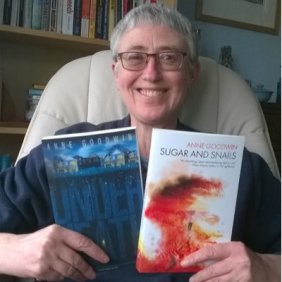
Like Steve, Anne Goodwin used to like to travel, but now she prefers to stay at home and do her travelling in her head. Like Liesel, she’s worked in mental health services, where her focus, as a clinical psychologist, was on helping people tell their neglected stories to themselves. Now that her short fiction publication count has overtaken her age, her ambition is to write and publish enough novels to match her shoe size. Underneath is her second novel; her first, Sugar and Snails, was shortlisted for the Polari First Book Prize. Anne lives in the East Midlands and is a member of Nottingham Writers’ Studio.

You can find out more about Anne on her website and follow her on Twitter.

There’s more with these other bloggers too:

blog tour 25 May to 10 June

Loving the Past: A Guest Post by Fiona Ford, Author of The Spark Girl

saprkgirlhr

I’ve been secretly hoarding books for August when I’m disappearing from guest posts and blog tours to concentrate on reading books that are calling to me from my TBR pile. The Spark Girl by Fiona Ford is one of those books and I’m thrilled that Fiona has agreed to write a guest blog for Linda’s Book Bag today, all about the allure of the past.

The Spark Girl was published yesterday, 1st June 2017, by Orion and is available for purchase here.

The Spark Girl

saprkgirlhr

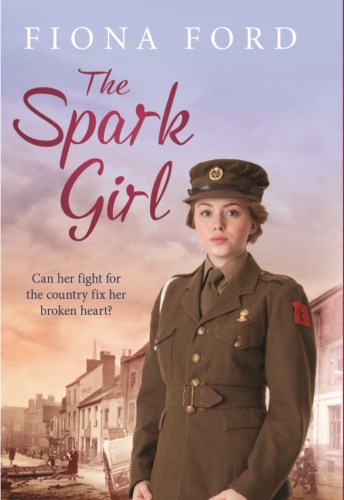
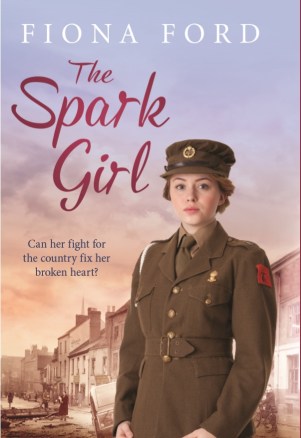
A knock on the door early one morning wouldn’t normally be cause for concern but it is 1941, Britain is at war, and Kitty Williams’s fiancé Joe is far from home fighting Hitler with the Navy. As Kitty’s heart is shattered into pieces hearing the news she had been dreading, resolve kicks in and she becomes more determined than ever to do her bit for the war effort.

Signing up to the Women’s Army is just the sort of challenge Kitty needs and on meeting new recruits Mary, Di and Peggy, she is happy to learn that the challenge won’t be a lonely one. But it also won’t be easy and when bombs start to fall on her home town of Coventry, and supposed allies turn against her, Kitty must find the strength she never knew she had to save her family, fix her broken heart and help her country to victory.

Why do we love to live in the past?

A Guest Post by Fiona Ford

If I had a penny every time I heard a cliche I would be a very rich woman by now. Thanks to the joy of social media, platitudes such as ‘Don’t look back, that’s not the way you’re going’, or my own personal favourite, ‘the future is forward’, litter my personal news feeds, and I bet they clog up yours as well.

It begs the question, with so much life advice on looking  to the future rather than the past why are we all so obsessed with times gone-by?

Whether we’re revelling in Downton Abbey, reliving our heritage in The Crown, rooting for Ross and Demelza in Poldark or simply enjoying life’s simpler times in Call the Midwife, there’s no getting away from the fact that although we’re supposed to be moving forwards, a lot of us want to hang back.

It’s certainly something I’ve been pondering of late, as my very first historical novel, The Spark Girl hits bookshelves from 1 June. For the past three years I have been living, breathing, researching and writing the life and times of World War Two and I have to say I have been extremely happy in the 1940s.

Its strange isn’t it? After all, in the 21st century we have more say in our world than ever before. New technology is being invented all the time along with better quality food, instant fashion and improved healthcare, to quote Winston Churchill, we’ve never had it so good.

So why as I lock myself away in a world more than seventy years old, do I feel so at home here? After all, World War Two was not exactly known as a time of peace, certainly not when 495,000 were killed in the UK alone and we were left with over £40 million in debt to repay.

With WWII leaving us with so much terror and heartache on our very streets, I have often wondered over the past three years just why I feel so at home in the 1940s and I think the answer is this – security.

Yes, that’s right security. Because even though almost everything of any use was rationed, bombs fell like confetti from the sky and people lived in daily terror for their lives, we know with the comfort of 21st century hindsight that everything worked out in the end. Good triumphed over evil, right won out over wrong and we as a society moved forwards and learned from the tragedies we had witnessed.

And that’s the great thing about living in the past; curled up with a book, or a decent boxset, we know as we relive the drama of those times that everything is going to be all right in the end.  It might be difficult, it will often be painful but things will work out. With so much uncertainty around us at the moment, I think that’s the beauty of reminding ourselves of times gone by. We can take stock and think, goodness people survived all of that, we will too.

(I’d never thought of it like that, Fiona. Well said!)

About Fiona Ford

fiona1

Fiona Ford is a freelance journalist. She has spent the last 15 years writing gritty real-life stories, news and a smidgeon of celebrity tittle-tattle for national newspapers and magazines. Following a stint as a ghost writer, Fiona plucked up the courage to combine her love of writing and history to write a novel in her own name. The Spark Girl, is her first saga.

Originally from Bath, Fiona now lives in Berkshire and is married with two cats. Thankfully, both her husband and pets have all mastered the art of pretending to listen patiently as she begins yet another anecdote with the words, ‘during the war’. When she is not writing or researching World War 2, Fiona can be found running along the Thames Path, training for a half marathon of some kind and wishing she was sat on the sofa eating chocolate instead.

You can follow Fiona on Twitter and visit her website.