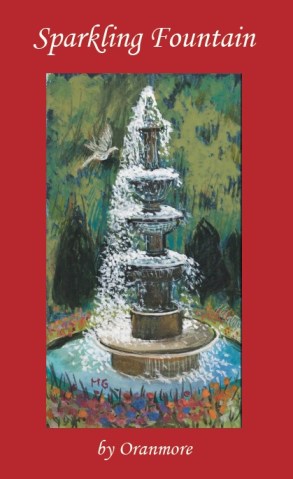
Sparkling Fountain by Oranmore

Sparkling Fountain

Since I’ve been blogging I have rediscovered the enjoyment of reading poetry again – something that I haven’t really done since I gave up teaching. It has given me great pleasure to read and review Sparkling Fountain by Oranmore for this tour.

Published by Clink Street on 30th November 2017 Sparkling Fountain is available for purchase here.

Sparkling Fountain

Sparkling Fountain

Life and death, conflict and oppression, nature, love, philosophy and faith. The poems of Oranmore resonate with deep, universal themes and are based on real events and poignant personal experiences. From growing up in Ireland to the 100th Birthday of his father — 4th Lord Oranmore and Browne and the longest serving member of The House of Lords — and his travels across the globe, Sparkling Fountain combines both previously published and new poems to create a fine original collection which is a joy for all to read.

My Review of Sparkling Fountain

Sparkling Fountain is such an apt title for this extensive collection of poetry because the language cascades and glitters like water droplets in the sunlight. I really enjoyed these poems. They are by no means perfect and occasionally tense shifts or clashes mean that the reader has to work just that little bit harder to grasp meaning but I think that is what makes them all the more appealing.

I got a strong sense of our literary history reading Sparkling Fountain. Is seems to me as if Oranmore has distilled a wide range of genres and styles into a unique voice of his own. I thought I could hear the cadences of Gerard Manley Hopkins in Mother Earth and there’s everything from the nursery rhyme-like An Irish Fiddle through poems that reminded me of the Romantic poets (Sit and Slumber made me think of Coleridge’s Frost at Midnight for example) to others like Honesty that reminded me of a local poet to me, John Clare. There are so many universal themes explored, from the political negligence of those in power and their disregard for the ordinary person, through love, faith and fate to the more prosaic concepts of cramped air travel (I loved Traveller to Australia) and a windy day that I feel there is something in this anthology for every poetry lover to enjoy.

I don’t usually quote from what I’ve read in my reviews, but of all the poems in this anthology, one of the more simple lines stands out for me and it is the opening to Destiny: ‘Try your best and then accept what the cards have dealt.’ That seems to me to be considerable common sense.

Whilst I don’t share any of the religious belief that features in many of the poems such as Good Friday, I thoroughly enjoyed reading Sparkling Fountain. The poems made me think, provoked memories from my past and gave me an insight into a highly educated and interesting mind. Sparkling Fountain is well worth dipping into.

About Oranmore

Oranmore, also known as Dominick Mereworth, is a poet and playwright. He has had numerous anthologies previously published including The Glory of Glories: Inspirational Poetry (Arcturus Press 2005) and has had a number of plays produced on Fringe Theatre London including Seal of Rome in Belfast and I married Madeline as well as others produced in Belfast and Cork.

Over the years Dominick has also had short stories published to wide acclaim in national magazines. In addition, he continues to work extensively in the voluntary and charity sector including: Kent Refugee Action Network and Rapid Ireland, he is the president of Celtic Vision and Vice-President for both Veterans in Europe and Montecassino Federation for Remembrance and Reconciliation. His father, 4th Lord Oranmore and Browne, was to date the longest serving member of The House of Lords and Dominick succeeded him in 2002 to become the 5th Baron. Today he lives in London with his family.

There’s more with these other bloggers too:

Oranomore_Banner

The Book Lovers’ Miscellany by Claire Cock-Starkey

the book lovers' miscellany

My grateful thanks to the author Claire Cock-Starkey for a copy of The Book Lovers’ Miscellany in return for an honest review.

Published by the Bodleian Library on 13th October 2017, The Book Lovers’ Miscellany is available for purchase here.

The Book Lovers’ Miscellany

the book lovers' miscellany

Ever wondered how ink is made? Or what is the bestselling book of all time? Or which are the oldest known books in the world? Highbrow to lowbrow, all aspects of the book are celebrated and explored in The Book Lovers’ Miscellany.

From a list of unfinished novels, a short history of the comic, the story behind Mills and Boon and an entry on books printed with mistakes, to a guide to the colours of Penguin paperback jackets and a list of the most influential academic books of all time.

Between these pages you will discover the history of paper, binding, printing and dust jackets; which books have faced bans; which are the longest established literary families; and which bestsellers were initially rejected. You can explore the output of the most prolific writers and marvel at the youth of the youngest published authors; learn which natural pigments were used to decorate a medieval bible; and what animal is needed for the making of vellum.

The ideal gift for every bibliophile, The Book Lovers’ Miscellany is full of fun facts, potted histories and curious lists, perfect for dipping into and sharing.

My Review of The Book Lovers’ Miscellany

The Book Lovers’ Miscellany is a cornucopia of bookish facts and information.

This is a little gem of a book. Although I read it in the order presented, it would pay huge dividends if treated like a bookish box of chocolates, dipping in at random and seeing what tasty morsel came out. Alternatively, as many pages are cross referenced, readers could enjoy a kind of literary mystery tour, jumping from one author led note to another. The footnotes too add an extra dimension of interest.

An aspect I really enjoyed was the way different elements prompted memories for me. The references to papyrus took me back to a trip to Egypt where I saw it made, for example. I adored the oath for the Detection Club that I hadn’t come across before because it made me giggle.

Whilst many of the materials such as the glossary of book and manuscript terms were familiar, and avid bibliophiles may feel they know much of the information already,  reading The Book Lovers’ Miscellany also provided new information and I especially liked learning the ages of older first time authors – there’s hope for me yet!

Claire Cock-Starkey writes with a meticulously researched, fluent and authoritative style that is a pleasure to read. I think The Book Lovers’ Miscellany would be a perfect gift for any book lover, be they a reader or a writer.

About Claire Cock-Starkey

Claire Cock Starkey

Claire Cock-Starkey started out in media, working at BBC Radio Four and Five Live before going on to work at LBC. Having had a family, Claire is now a writer and freelance copy editor always keen to work on new projects.

You can find out more by visiting Claire’s website and following her on Twitter @NonFictioness.

An Interview with Mary Wood, Author of Brighter Days Ahead

Brighter days cover

Given the way life has been of late there couldn’t be a more fittingly aspirational title for a book than Brighter Days Ahead and I’m thrilled to be interviewing Mary Wood all about her latest novel as part of its launch celebrations.

Published by Pan Macmillan on 30th November 2017, Brighter Days Ahead is available for purchase through the publisher links here.

Brighter Days Ahead

Brighter days cover

War pulled them apart, but can it bring them back together?

Molly lives with her repugnant father, who has betrayed her many times. From a young age, living on the streets of London’s East End, she has seen the harsh realities of life . . . When she’s kidnapped by a gang and forced into their underworld, her future seems bleak.

Flo spent her early years in an orphanage, and is about to turn her hand to teacher training. When a kindly teacher at her school approaches her about a job at Bletchley Park, it could be everything she never knew she wanted.

Will the girls’ friendship be enough to weather the hard times ahead?

An Interview with Mary Wood

Welcome to Linda’s Book Bag, Mary. Thank you so much for agreeing to answer some questions on my blog about your writing and Brighter Days Ahead in particular. Firstly, please could you tell me a little about yourself?

Hello Linda,

Thank you for having me as your guest today.

To begin at the beginning, I was born the thirteenth child of fifteen. We had a wonderful mother, who encouraged us all to follow our dreams.

We were very poor at times as my father’s work – farm labourer, wasn’t paid well. But always we were happy and loved.

My circumstances led me to have an empathy and interest in social history, which was later to influence my writing.

I met and married my husband, Roy when very young, and began a family of my own when just eighteen.

This led to me having a chequered career, from cleaning, to party plan, and working at home – stitching knickers! Anything and everything that brought in extra and fitted in with being a mum to our four wonderful children. Till eventually, I joined the Probation Service and became a Probation Service Officer, which was also to influence my writing – giving it the gritty element.

An avid reader, I always dreamt of becoming an author.

I began to write in 1989, but always my work was rejected. I never gave up, but it wasn’t until 2011, having survived breast cancer twice, and a year in a wheel chair struck down by M.E. that I took my fate into my own hands and self-published on kindle.

Each of my self-pub books went to number one in genre and then, the most wonderful thing happened. I was spotted by an editor for Pan Macmillan and at the age of 68 offered a seven-book deal!

I am now a grandmother and great grandmother many times over, and about to sign my fourth contract with Pan Macmillan and love working with the wonderful team that look after me and my books.

(My goodness! What a roller coaster of a life. And what an uplifting biography for the rest of us too.)

Why do you write?

Writing is a compulsion. It is a completion of me, and yet an escapism too. A short answer this time, but that’s it in a nutshell. It is something I did as a child, and what I will do until I die.

When did you realise you were going to be a writer?

The spark was lit by a teacher. There were two who taught me English. One used to set us a title for a composition, and then say – ‘And, Mary Olley, (my nee name) I want one side, and one page only – not a novel!’

His successor, an altogether, different person, said, – ‘Well done. You know, one day you will be an author, you have a special talent.’

This, and my mother’s tales about her grandmother, who was an author, my great grandmother, Dora Langlois, gave me a burning desire to follow in her footsteps.

(As an ex-English teacher I love hearing how teachers have inspired authors.)

Which aspects of your writing do you find easiest and most difficult?

Easiest – writing the first draft.

Most difficult – tackling the edit. I have a wonderful team of editors at Pan Macmillan, but when I am faced with page after page that has turned red, well, I fall out with them in my head, then love them again as I see what their suggestions have done to my novel – they contribute so much, with just a tweak of a sentence. An amazing skill to possess. I always say that an author is nothing without her/his editor.

What are your writing routines and where do you do most of your writing?

I rise early – sometimes as early as 4.30 am. When in Britain, I go to my little-bedroom office, to begin work. During my time in Spain, I still rise early, but I become a duvet writer and take my laptop to my bed – that is, until the sun comes up, and then I am on my rooftop solarium, or even on the beach!

I like to write between 3 and 5000 words a day, but my record is 8000! I have written three books this year, and am hoping to make that four. Usually, I will finish work at around two and then, Roy and I spend quality time together. Roy has all the chores done by then as he has taken over the running of the home. He is a gem, and I couldn’t do what I do without him. We are the A-team.

(Oh! I have one like that too and he’s worth his weight in gold!)

Without spoiling the plot, please could you tell us a bit about Brighter Days Ahead?

Set in wartime, the story’s main characters are Molly and Flo. Their stories are very different. Molly is an East Ender, and her story unfolds to a background of the blitz. She is wronged by her father who has become mixed up with a black-market gang. His greed leads to Molly’s downfall and she finds herself torn away from David, the love of her life, and forced to work in a brothel. David is called up and becomes a pilot. Neither know where the other is.

Flo has been brought up by foster parents in the North of England. A kindly employer sees her potential and pays for extra schooling for her. Through her tutor she becomes a candidate for the code breaking operations in Bletchley. Fitting into this world of upper-class girls isn’t easy for working-class Flo.

Molly and Flo are worlds apart and yet, through a chance meeting become friends.

Theirs is a story that touches many threads of life – The heartbreak for Flo of falling in love with a man who is homosexual, and the fear she has for him and his partner as they face the threat of a prison sentence, if they are discovered. The terrible consequences of the blitz and the poverty it inflicts. The love between Simon’s sister who is a journalist, and a German student she met at university before the war, and how that goes horribly wrong. And a deep friendship between Flo and Molly that is all that Molly has to cling to as she lives her daily life in fear, and not knowing if she will ever see David again.

Throughout, Flo remains strong and is the rock that the others depend on. For her, true love comes along in a surprising way, and helps her to see where her heart really lies.

And so, we have a mix of characters playing out an emotional, and thrilling drama – Prostitutes. A girl from the wrong background, but with a brilliant mind. Two gay men, who live in fear of discovery, and a young woman who has fallen for a fellow student, whom war turns into the enemy.

How did you go about researching detail and ensuring Brighter Days Ahead was realistic?

When I had the initial idea, the main place for the setting was going to be Bletchley. And so, I went on a daytrip there to find out all that I could. I found it a wonderful place, atmospheric, informative, and an ignite of my imagination.

I was then privileged to speak with a lady who worked there during the war and still does. And she shattered this notion that I had, that Bletchley was an exciting place to work. She told me that mostly, it was boring. Long hours sitting at a desk processing words that meant nothing to her. It wasn’t until afterwards that it all seemed worthwhile when she discovered what a vital part she had played in winning the war.

And so, the setting changed, to include many scenes at Bletchley, but spread out to London and the blitz, and of course, a northern city, which in this book, is Blackburn.

I know Blackburn well, as I worked there for two years, and London, the war and the blitz, is something I have researched many times now, but always there is a gap in my knowledge. This is when I turn to books and the internet.

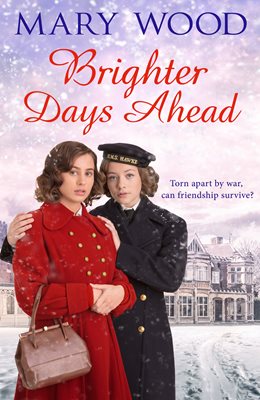
Brighter Days Ahead has a cover that suggests true friendship to me. How did that image come about and what were you hoping to convey (without spoiling the plot please!)?

My editor at Pan Macmillan works with a cover designer, and they engage models to depict their ideas. I am asked for my final approval. I love what they come up with, and, because my editor thoroughly knows my book from the work she has done on it, I trust her. She hasn’t let me down. To me, the girls on the cover are my Molly and my Flo, and I love how their friendship comes across.

If you could choose to be a character from Brighter Days Ahead, who would you be and why?

Flo. For one, I would not like to go through what Molly does, bless her, and two: Flo is how I would like others to see me. She is kind, and does what she can for others. She is dependable. She has empathy, and is capable of deep love and loyalty. She hasn’t a criteria for giving of herself, all are encompassed, from prostitutes, to a high-born girl, to a destitute East Ender, and, in a time when it was criminal – those with the same sex persuasion, all are people to her, who need love, understanding, and occasionally help.

If Brighter Days Ahead became a film, who would you like to play Molly and Flo and why would you choose them?  

Oh, I wish! For Flo, I would choose, Clair Foy. She would be perfect and has the look of my Flo. She has a way with her, that gives the viewer the sense of her being able to cope in all situations and yet with compassion, as my Flo does. I can’t wait to see her in Breathe.

And for Molly, Jessica Raine, from The Last Post and Call the Midwife. Jessica, can convey emotion without all the tears and tantrums. She can get into people’s heart. Molly would need these qualities to put over how she is wronged – not the wrongdoer.

Many of your books are set in the fairly recent past. What draws you to the eras you write about?

I have books that are set in the mid nineteenth century, which is where The Breckton Series begins, and in May 2018, I have a book out that begins in the early nineteenth century, but yes, quite a few are set during the twentieth century and the two world conflicts of that era.

I have a fascination for the struggles and challenges that war presented to the women of the day. They were called upon to step up and keep the home fires burning, which entailed taking on traditionally male roles, and yet, still had few rights that were afforded to men.

I’m fascinated too, by the active roles that women took on during both wars, which took them to the heart of the fighting. My book, Proud of You is about a girl in the second world war, who became a special agent behind enemy lines. A theme that runs through my novels, Time Passes Time and In Their Mother’s Footsteps. Whilst, All I Have to Give is about a female surgeon in the First World war, and is a prequel to In Their Mother’s Footsteps.

I love how this era takes you to many countries too, so my settings are varied throughout. You may find yourself in Poland, France, Ypres, or dodging bombs in London.

In all my books you will find that I take you right into the action in a gritty way that tells it as it is. I don’t relate events – the reader lives them. Quite hard to take at times, but then it was harder for my heroines, who did what they did so that following generations could live in peace.

It took a while for you to become conventionally published. What message would you give to other authors struggling to be recognised?

Love your art. Dedicate yourself to it. Work at becoming the best that you can be. Make your stories live on the page. There are rules to our craft – learn them and live by them, then, never give up. If you do this, then it will happen for you. But you must work towards making it happen.

Your writing has evolved over time. Could you tell us a bit about that please?

I think this is a natural process in any craft – you move with the times and the demand – readers want more war settings, and so I responded to that. This moved me away from my natural northern setting, but not entirely, as I always sneak a northern lass in there somewhere, and often as one of the heroines, as Flo, in Brighter Days Ahead.

You enjoy interaction with your readers. What advice would you give to new authors on developing a readership?

First and foremost – remember that nothing can bring you more readers, or more success, or that contract you so desire, than knowing your craft and putting your utmost into your books.

But, of course, in these days of social media, you can help yourself become known in other ways.

Create a page on Facebook. Make this space an interesting and welcoming place for your followers to be and make it visible, by including a link to it wherever you can – as a signature to your emails, in your books and especially on your webpage.

Don’t use your followers just to promote your work, or hard sell to them. Grow your community by being a true friend. I genuinely love every one of my followers of my Facebook page and I am always there for them, as they are for me. I love to share everyday life with them. I love too, to be able to make a difference if they are hurting, or to have their comfort if I am.

I think that a webpage, is essential, as this is how readers can find you. I love interacting through the email accessed through my webpage. I receive some lovely messages this way. And I send a monthly newsletter to subscribers.

Then there is: Twitter, and Goodreads, Google and any number of social media help, but be careful with your time management, as all social media can take up so much of your time that you can find that you have little to give to your writing.

When you’re not writing, what do you like to read?

I don’t read much at all these days – an awful admission for a writer, when the advice to us is to read all we can, but I don’t have the time. Also, I find it difficult. I find myself critiquing, instead of enjoying. My relaxation is in games, such as scrabble and word find, and I love crosswords and clue word, as well as solo card games. Oh, and I watch the tele. I like dramas. And I am thinking of joining audible, as I know I would enjoy listening to books, much more than reading them as I love listening to a narration on the radio.

If you had 15 words to persuade a reader that Brighter Days Ahead should be their next read, what would you say?

A gritty, emotional story set in WW2 driven by the power of love and friendship.

Thank you so much for your time in answering my questions, Mary.

Thank you, for having me. I have so enjoyed this interview. Much love to you and to all who follow your blog. Mary x

About Mary Wood
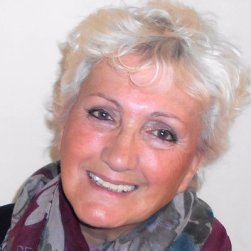
Mary wood

Born in Maidstone, Kent, in 1945, the thirteenth child of fifteen children, Mary’s family settled in Leicestershire after the war ended.

Mary married young and now, after 54 years of happy marriage, four children, 12 grandchildren and many great-grandchildren, Mary and her husband live in Blackpool during the summer and Spain during the winter – a place that Mary calls, ‘her writing retreat’.

After many jobs from cleaning to catering, all chosen to fit in with bringing up her family, and boost the family money-pot, Mary ended her 9 – 5 working days as a Probation Service Officer, a job that showed her another side to life, and which influences her writing, bringing a realism and grittiness to her novels

Mary first put pen to paper, in 1989, but it wasn’t until 2010 that she finally found some success by self-publishing on kindle.

Being spotted by an editor at Pan Macmillan in 2013, finally saw Mary reach her publishing dream.

When not writing, Mary enjoys family time, reading, eating out, and gardening. One of her favourite pastimes is interacting with her readers on her Facebook page.

You can also visit Mary’s website and find her on Twitter @Authormary.

There’s more with these other bloggers too:

blog_tour

The Girl I Used To Know by Faith Hogan

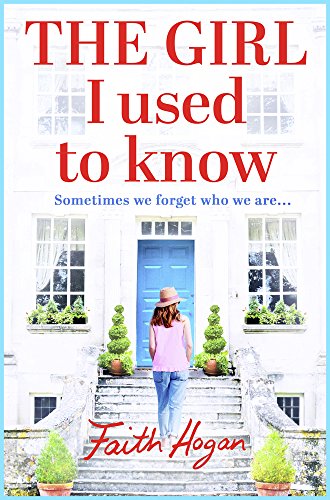
Cover

I’m absolutely delighted to be part of the launch celebrations for The Girl I Used To Know by Faith Hogan because Faith has previously provided a couple of lovely posts for Linda’s Book Bag but until now I haven’t had chance to squeeze in a review of one of her books. You’ll find a post all about character in My Husband’s Wives here, and another all about secrets, from when The Secrets That We Keep was released, here.

The Girl I Used To Know was published by Aria on 1st December 2017 and is available for purchase on Amazon, Kobo and i-Books.

The Girl I Used To Know

Cover

A beautiful, emotive and spell-binding story of two women who find friendship and second chances when they least expect it. Perfect for the fans of Patricia Scanlan.

Amanda King and Tess Cuffe are strangers who share the same Georgian house, but their lives couldn’t be more different.

Amanda seems to have it all, absolute perfection. She projects all the accoutrements of a lady who lunches. Sadly, the reality is a soulless home, an unfaithful husband and a very lonely heart.

By comparison, in the basement flat, unwanted tenant Tess has spent a lifetime hiding and shutting her heart to love.

It takes a bossy doctor, a handsome gardener, a pushy teenager and an abandoned cat to show these two women that sometimes letting go is the first step to moving forward and new friendships can come from the most unlikely situations.

My Review of The Girl I Used To Know

Tess and Amanda are at loggerheads and hate each other. However, they may have more in common than they thought.

Never having read Faith Hogan before, I was amazed at how much reading The Girl I Used to Know felt like returning to a favourite author. The writing felt familiar, loved and welcome. Faith Hogan has a style that is smooth and effective, drawing in the reader to the story without them actually realising they are reading a work of fiction. I loved the way in which events from the past were threaded through, providing insight into the lives and characters of Tess and Amanda and helping me understand them as people.

In fact, I was instantly invested in Tess and Amanda’s stories, even though I didn’t much like Tess to begin with as I thought she was too self-centred and delusional. The intense sadness of their later lives touched me so that I was desperate for each to have a happy outcome. I think there are aspects of both their characters that anyone could relate to as life doesn’t always pan out as we hope or expect. Although both Douglas and Richard are unpleasant men, they too felt real and three dimensional and their negative personalities were well complemented by the characters of Stephen and Carlos giving very balanced perspectives in men’s behaviour through highly skilful writing.

Whilst I thoroughly enjoyed the story in its own right and found it very entertaining, particularly because I cared so much what happened to Tess and Amanda, it was the themes of The Girl I Used To Know that gave me the greatest satisfaction. Our routine lives can make us lose sight of who we really are or who we wanted to be when we were young and the way in which Faith Hogan wove in the subtle changes we can make so that all is not lost was beautifully handled. Reading The Girl I Used To Know restored my belief that age is just a frame of mind and that anyone can fulfil a dream. I thought that friendship, materialism and relationships were brilliantly explored, giving real prescience and understanding for the reader to apply in their own life.

It has been far too long for me to discover Faith Hogan’s writing. The Girl I Used To Know has shown me just what I have been missing. It’s a lovely book.

About Faith Hogan

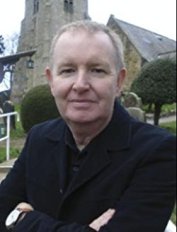
Faith Hogan portrait for inside cover of her book

Faith Hogan was born in Ireland.  She gained an Honours Degree in English Literature and Psychology from Dublin City University and a Postgraduate Degree from University College, Galway.  She has worked as a fashion model, an event’s organiser and in the intellectual disability and mental health sector.

She was a winner in the 2014 Irish Writers Centre Novel Fair – an international competition for emerging writers.

You can follow Faith on Twitter and find her on Facebook. You’ll find her website here.

There’s more with these other bloggers too:
TGIUTK Blog tour banner

Thomas Pryce: A Guest Post by Mark Stibbe, Author of The Fate of Kings

The Fate of Kings

I love historical fiction and am thrilled to be part of the launch celebrations for The Fate of Kings by Mark Stibbe and G. P. Taylor today. With such a rich history to call on, I always wonder how authors select the period of time they are going to write about and create their characters. I have a wonderful piece from Mark Stibbe explaining how protagonist Thomas Pryce emerged for this new series.

Published by Michael Down on 3rd November 2017, The Fate of Kings is available for purchase here.

The Fate of Kings

The Fate of Kings

1793. As the Terror begins to cast a great shadow over France, Thomas Pryce, the new Vicar of Deal, crosses the Channel to find the missing parents of his beautiful French wife. Facing grave dangers, he makes his way to Brittany where he not only discovers the fate of his in-laws but also uncovers a plot which threatens to topple the British monarchy. Fighting against a sinister secret society in a race against time, Pryce battles to thwart the plans of a Parisian spymaster and his agents in London.
The Fate of Kings is the first in a series of gripping spy thrillers that will engross readers of C.J. Sansom, Dan Brown, as well as the many avid watchers of Poldark and Grantchester. In the first years of the British Secret Service, Thomas Pryce truly is the original James Bond.

Thomas Pryce

A Guest Post by Mark Stibbe

The idea for the Thomas Pryce novels came to me at the end of 2012, when I was living in Kent. My wife decided I needed cheering up so she booked us into afternoon tea at Bleak House in Broadstairs. A venue with the word ‘bleak’ might not have seemed the best cure for melancholy but it turned out to be an inspired act of kindness. While we were there, we saw the desk where Charles Dickens wrote David Copperfield and the museum in the musty cellars of the house, dedicated to the Kent smugglers and their trade in the 1790s and early 1800s.

That night I couldn’t get to sleep and it was as I lay reflecting on the Broadstairs experience that the figure of Thomas Pryce began to emerge in my imagination – a Vicar during the same historical period who becomes a spy for the newly emerging Secret Service in 1793. I had always been fascinated by this period of history since my childhood. The old adage, ‘write what you know’ came to mind and so I started to re-read all my old books on the Terror and the Napoleonic wars, as well as buy and read a lot of new ones. Twelve stories began to form around the figure of Thomas Pryce as I did.

In May 2015, after writing the first draft of the first story, The Fate of Kings, I invited my old friend G.P.Taylor to collaborate on the project, with a special mandate for him to turn the novels into film or TV screenplays. Graham has also loved this period of history since he was a boy. His first, best-selling novel, Shadowmancer, was based near this time and has many fans throughout the world. I am one of them.

Finally, the figure of Thomas Pryce taps into both of our own stories in powerful ways. We were both formerly Church of England Vicars, as Pryce is, so we understand from personal experience the challenges of clergy life, as well as the moral conflicts that being a man of the cloth and at the same time a flawed human being can generate, especially when living, as Pryce does, in a context of continuous moral dilemmas.

Writing about what we know has meant not only bringing Napoleonic history into our storytelling. It has also meant importing aspects of our own histories too.

About Mark Stibbe

Mark Stibbe recent

Dr Mark Stibbe is an award-winning Christian author who has over thirty popular books and five academic books in print.

His academic books are required reading in universities and seminaries all over the world. Recently Mark has taken to writing works of fiction and is currently collaborating with G.P. Taylor in developing a series of novels about an English spy vicar in the time of the French Revolution and the Napoleonic Wars. Mark is founder and CEO of KWS (Kingdom Writing Solutions), a holistic service for Christian writers. He is also a popular contributor at writer’s conferences and workshops and has recently started Stibbe Webinars, a web-based interactive teaching and training initiative.

You can follow Mark on Twitter @markstibbebooks. You can also visit his website for writers.

About G. P. Taylor

G P Taylor.jpg

Graham Peter (G. P.) Taylor is a motorcyclist and former rock band roadie turned Anglican minister. His first novel, Shadowmancer, reached number 1 on the New York Times Best Sellers List and has been translated into 48 languages. G. P Taylor lives in North Yorkshire with his wife and three children.

You can visit G. P. Taylor’s website.

There’s more with these other bloggers too:

Fate of Kings - blog tour poster

An Interview with Lynda Stacey, Author of House of Christmas Secrets

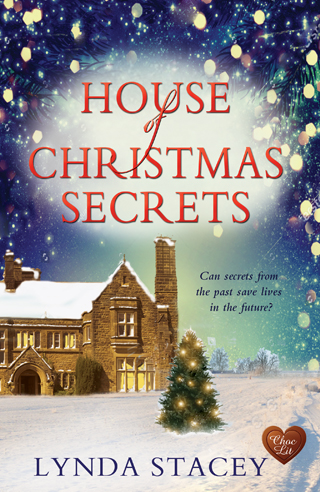
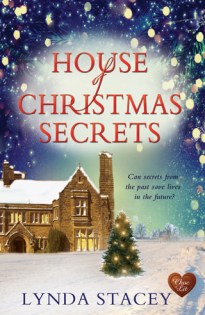
HOCS_v2.4

It gives me very great pleasure to welcome back Lynda Stacey to Linda’s Book Bag to celebrate today’s publication of House of Christmas Secrets with an interview. Lynda previously introduced us here on the blog to Madeleine, one of her characters from another of her books House of Secrets, and you can read that post here.

Published today, 5th December 2017, by Choc Lit, House of Christmas Secrets is available for purchase here.

House of Christmas Secrets

HOCS_v2.4

This year we’re just going to have a nice, normal Christmas…

Last year’s Christmas at Wrea Head Hall didn’t quite go to plan which is why Jess Croft is determined this festive season will be the one to remember, for the right reasons. And she has plenty of reasons to be hopeful, she’s going to marry the man of her dreams, Jack Stone, seven days after New Year’s Eve.

However, as family secrets are revealed in hidden letters and two unexpected guests turn up on the doorstep, Jess is left wondering whether her life will ever be the same again.

Can Jess and Jack still experience a peaceful festive season that they had imagined or are there some problems that even Christmas can’t fix?

An Interview with Lynda Stacey

Welcome to Linda’s Book Bag, Lynda. Thank you so much for agreeing to answer some questions on my blog about your writing and House of Christmas Secrets in particular. Firstly, please could you tell me a little about yourself?

HI Linda. Thank you so much for having me on you blog.

You want to know about me? Really… Lol…Well, I’m really quite boring. I work full time as a Sales Director, which means I get a fancy title in return for a lot of extra hours worked. I live in the countryside, in a small hamlet and if I didn’t go for a long walk to the end of the drive, I wouldn’t even know that I have neighbours. I can honestly say that I’ve lived here for ten years and still I have no idea of who lives next door but one.

Most of my days are a little like groundhog day, I get up, I go to work, I get home, eat tea and by 6pm I’m sat in front of the log fire in my pj’s. This is when I try to fit in a little writing, after which I go to bed and it all starts again.

Why do you write?

Because I feel that I have a story to tell. The stories build inside me and the characters begin to take over my thoughts. If I didn’t write it all down, they’d annoy the hell out of me until I did.

When did you realise you were going to be a writer?

At a very young age. I can’t ever remember not wanting to write a book. I had a real wish to see my name on the front of one.

I always loved books and used to go to the library all the time and I distinctly remember my mum having to take whole bundles of books off of me, tutting and saying, ‘Darling, you can only borrow six… just six… not all of them.’

Which aspects of your writing do you find easiest and most difficult?

Easiest… lol..! None of it…!

I’m full of ideas, but with very little by way of ‘good’ education, I struggle with it all. I work very hard to create scenes, to keep the emotion in the words and to ensure that something happens on every page.

I really don’t find any part of it easier than another. All I know is that from somewhere the story emerges and if I’m honest, I have no idea where it comes from. Many times I read back what I’ve written and I astound myself with what it says.

What are your writing routines and where do you do most of your writing?

I try to write on an evening. But I do prefer to write early in a morning. I like to get up while the house is quiet. It’s a time when I can get lost in the scene.

Your own life has been quite unpredictable. How has this led to your career as a novelist?

You’re right. My life has been a little unpredictable and certainly challenging, however I don’t allow my past to cloud my future, although I do use my experiences to give my novels emotion. I also think that my history has given me a strength and a determination to succeed and I wanted to make my mum proud, I really did… and if she’d lived she would have been proud. Even though it did take me a long time to realise that I really didn’t need to do anything very special, she’d still have been proud of me.

(I know your Mum would have been immensely proud Lynda.)

Without spoiling the plot, please could you tell us a bit about House of Christmas Secrets?

This was the book that I was never going to write. I’ve watched far too many film sequels that really didn’t live up to expectations. But, everyone kept asking me to write it, especially my publisher. And, how can you say no to your publisher… it’s impossible. I spent a long time thinking about how to write it. In House of Secrets, I’d pretty much thrown everything that I could at my heroine Madeleine and even I couldn’t be that cruel as to throw some more at her, so I picked up her sister’s story. Jess played quite a part in House of Secrets and I felt that she really should have her own story, besides she had one or two unanswered questions of her own, which I felt really deserved an answer.

9781781892916r

House of Christmas Secrets follows House of Secrets. What essential elements do readers need to know about that first book to enjoy House of Christmas Secrets?

I’ve tried very hard to make this book stand alone. I bring some of the history back via memories, but I really hope that anyone reading House of Christmas Secrets wouldn’t feel as though they’ve missed out if they didn’t first read House of Secrets. Although of course, I’d love for the readers to buy and read both.

Many readers tell me they don’t read Christmas themed books before December. What do you think to this philosophy of reading?

Wow… I don’t know. I’ve never felt that it has to be a certain time of year to read a book. You don’t only read beach books on holiday, do you? If I love the author, or the subject, I’d be happy to read it at any time. I really do hope it’s picked it up all year round and that the word ‘Christmas’ doesn’t make people feel as though it’s only a book for December.

To what extent do you agree that a Christmas setting lends itself to books centred on relationships?

House of Christmas Secrets is definitely a book about relationships, however it literally could have been set at any time of the year, with the same storyline. Most people feel that Christmas is the perfect time of the year for love… personally I just think that December is cold.

You were part of the Romantic Novelists Association New Writers’ Scheme. How did this impact on your writing and what advice would you give to other aspiring writers?

I was part of the RNA New writers scheme. I felt that it gave me a fabulous platform on which to learn. Once other authors found out you were on the scheme, they tended to take pity on you a little and give you little nuggets of valuable information that they probably wouldn’t have felt comfortable advising someone who’d published half a dozen books.

What advice would I give… GO FOR IT, focus and keep going. If it’s your dream to become an author, don’t give up. If I can do it… you can do it…! x

(I’ll bear that in mind if I ever stop blogging long enough to complete my own novel!)

When you’re not writing, what do you like to read?

Mmmmm, time to read, that would be nice. I rarely ever read unless I’m on holiday. At which time I love to read books by my many author friends.

If you could choose to be a character from House of Christmas Secrets, who would you be and why?

Oh, I’d love to be Nomsa. She works at the hotel in the kitchens and whatever happens she puts the kettle on and spends her days feeding everyone.

If House of Christmas Secrets became a film, who would you like to play Jess and why would you choose them?

That’s a really difficult question. Jess is of mixed race, she has crazy wayward hair that never looks brushed, but always looks perfect… my problem is that I don’t know of any actresses that look like this. So, maybe it’d be a chance for a newcomer.

Finally, Lynda, if you had 15 words to persuade a reader that House of Christmas Secrets should be their next read, what would you say?

This is so much more than a novel about Christmas, it’s about love & family.

Thank you so much for your time in answering my questions Lynda.

About Lynda Stacey

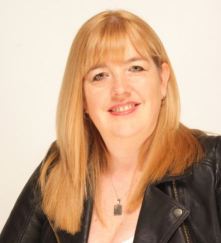
Lynda Stacey

Lynda, is a wife, step-mother and grandmother, she grew up in the mining village of Bentley, Doncaster, in South Yorkshire.

She is currently the Sales Director of a stationery, office supplies and office furniture company in Doncaster, where she has worked for the past 25 years. Prior to this she’d also been a nurse, a model, an emergency first response instructor and a PADI Scuba Diving Instructor … and yes, she was crazy enough to dive in the sea with sharks, without a cage. Following a car accident in 2008, Lynda was left with limited mobility in her right arm. Unable to dive or teach anymore, she turned to her love of writing, a hobby she’d followed avidly since being a teenager.

Her own life story, along with varied career choices helps Lynda to create stories of romantic suspense, with challenging and unpredictable plots, along with (as in all romances) very happy endings.

Lynda joined the Romantic Novelist Association in 2014 under the umbrella of the New Writers Scheme and in 2015, her debut novel House of Secrets won the Choc Lit & Whole Story Audiobooks Search for a Star competition.

She lives in a small rural hamlet near Doncaster, with her ‘hero at home husband’, Haydn, whom she’s been happily married to for over 20 years.

You can follow Lynda on Twitter @LyndaStacey, find her on Facebook and visit her website.

An Interview With Olive Collins, Author Of The Tide Between Us

The Tide Between Us

I don’t know what it is about Irish authors, but I find myself drawn to their writing like a moth to the flame. Consequently it gives me enormous pleasure to welcome Olive Collins, author of The Tide Between Us, to Linda’s Book Bag today to tell me more about her work.

The Tide Between Us is available for purchase in e-book and paperback here.

The Tide Between Us

The Tide Between Us

1821: After the landlord of Lugdale Estate in Kerry is assassinated, young Art O’Neill’s innocent father is hanged and Art is deported to the cane fields of Jamaica as an indentured servant. On Mangrove Plantation he gradually acclimatises to the exotic country and unfamiliar customs of the African slaves, and achieves a kind of contentment.

Then the new heirs to the plantation arrive. His new owner is Colonel Stratford-Rice from Lugdale Estate, the man who hanged his father. Art must overcome his hatred to survive the harsh life of a slave and live to see the eventual emancipation which liberates his coloured children. Eventually he is promised seven gold coins when he finishes his service, but he doubts his master will part with the coins.

One hundred years later in Ireland, a skeleton is discovered beneath a fallen tree on the grounds of Lugdale Estate. By its side is a gold coin minted in 1870. Yseult, the owner of the estate, watches as events unfold, fearful of the long-buried truths that may emerge about her family’s past and its links to the slave trade. As the body gives up its secrets, Yseult realises she too can no longer hide.

An Interview with Olive Collins

Welcome to Linda’s Book Bag, Olive. Thank you so much for agreeing to answer some questions on my blog about your writing and The Tide Between Us in particular. Firstly, please could you tell me a little about yourself?

I’m an Irish writer with a passion for books especially historical fiction. I also love to travel and dip into other cultures, sometimes vastly different from my own. My favourite country is Cuba, I spent a month travelling around it and loved the old crumbling buildings and the people, the hospitality and the climate. I’m not a domestic goddess of any description, I cannot cook and once almost poisoned a few friends to death. My ideal night-out is a nice restaurant with good company and conversations that rolls into the early morning.

Why do you write?

I write to release the many characters and storylines that form in my imagination, if I didn’t they’d make living impossible.

(I think that sounds quite scary actually!)

When did you realise you were going to be a writer?

From a young age. I always had stories to release. When I meet new people who interest me or strangers on a bus or at the theatre, I try to establish their stories or where they’re going.

Which aspects of your writing do you find easiest and most difficult?

At the moment, my difficulty is where to set Book 3. Once I decide on the time and year, it becomes easier. I find it difficult establishing the character for the first few thousand words but once I find the voice and know the character as if they are life-long friends, it becomes a great release and a pleasure, it’s as if they are writing the book and not I.

What are your writing routines and where do you do most of your writing?

My writing routine is normally rigid, 1000 words a day. Each day I set aside a few hours to read, when I find something that tickles my imagination I write about that the following day. Most of my writing is done on an armchair by a window at night. I like to write at night, the layer of darkness brings me closer my characters.

You’ve had quite an eclectic range of jobs in the past. How have your experiences affected your writing style now?

I’ve had various jobs and always welcome new experiences. I worked in the bank in England, was a plasterer in Israel, washed dishes in Tel Aviv. Each job was a new avenue to explore and gave me a clear glimpse into other people lives at an honest raw level which I loved.

For seventeen years I’ve worked in advertising. I spent my days meeting a variety of business owners who wanted to run advertising campaigns. Most people were willing, not only to discuss their businesses but also their personal lives. I’m naturally curious (or nosy) and liked to delve into their backgrounds, why they chose their careers or were they happy to take over their business from a parent? Most were more than happy to discuss everything with me however none knew that the notes I often scribbled in the car afterwards had nothing to do with their business and everything to do with their personal lives – names are always changed!!

(That’s probably just as well…)

How do you find that kernel of a story that takes over until you have to write about it?

Finding the kernel varies for each book. The Tide Between Us began with a chance encounter at a St Patrick’s Day Party in Israel. A Jamaican man who attended the party identified his heritage as Irish. He told me that vast numbers of Jamaican’s were of Irish descent. When Google became available, I researched his story and found so many accounts of exiled Irish to Jamaica, I was enthralled. One particular story about 2,000 exiled children tugged at me. I tried to comprehend their story after their arrival in Jamaica. How did they survive to find their own sense of freedom? When writing about a specific period, I read everything possible, diaries, novels, history books, academic papers and I listen to the music. Music always gives me a greater insight into the social history. The lyrics, melody and instruments convey the atmosphere of the time.

Without spoiling the plot, please could you tell us a bit about The Tide Between Us?

My novel is based between Jamaica and Ireland (1821 – 1991). It follows the story of Art O’Neill, an Irish boy deported to Jamaica at 10 years of age. When he acclimatises to the exotic country and bizarre customs of the African slaves, he takes us through the decades of his life, the coarseness of Jamaica, a county that eventually allowed him progresses from servant to overseer and eventual landowner. We see him become a father and watch as slave emancipation unfolds liberating his coloured children. His greatest battle was fought quietly as he struggled with his abhorrence at his Anglo-Jamaica oppressors, a mutual loathing that passed from father to son. Eventually Art is promised seven gold coins when he finishes his service. Art doubts the plantation owner will part with the coins. Part 1 ends in 1891 with Art going to the Big House to claim his gratuity.

Part 2 is based in Ireland (1921 – 1991) It opens with the discovery of a skeleton beneath a tree on the grounds of Lugdale Estate with a gold coin minted in 1870. Yseult, the owner of Ludgale Estate watches the events unfold and recaps on the rumours that abounded about her father’s beginnings in Jamaica, a county with 25% of the population claiming Irish descent. As the body gives up its secrets, Yseult realises she too can no longer hide.

How did you go about researching detail and ensuring The Tide Between Us  was realistic?

The research was pain-staking and vital. I have a loyalty to the reader, it must be accurate and covey the sentiment of the time. Apart from a month-long holiday in the Caribbean, I knew very little about Jamaica. I began at the beginning, researching the types of boats used for the deportees, the atmosphere of the country both socially and politically when they arrived in 1821. I used diaries, academic papers, letters from the period, documentaries and music. With each passing decade of the novel it reflected the politics of the time. I must admit, it was a wonderful experience writing about slave emancipation and the great strides the ex-slaves made after freedom. I was so involved in the characters, it was as if I too had been liberated and celebrated with them.

To what extent was it your overt intention to explore the political aspects of the way the Irish were treated in the past and to what extent was that element a side issue of your story?

Ireland was a poor country with large families, poor education and occasionally some didn’t speak English, like every third world country we were susceptible to abuse and prejudice. It’s part of our history and was a large vein in my novel as was the survival of the Irish. For centuries large numbers of Irish had great success abroad when Ireland could never offer anything apart from hard work with little to show for it. During the writing of my novel, I realised that the Irish abroad had more of a chance than other nationalities. In my novel, the Irish are indentured servants, they could travel freely (unlike the Africa slaves) in Jamaica. Once the indentureship term expired, the Irish were free. I was surprised to find some Irish had slaves and had no issues with slave-trading. It was necessary to include the political element of the time because that was the backbone of society. It dictated our lives, oppression and rebellion went hand-in-hand both in Ireland and in Jamaica.

What is it that draws you to writing about the past?

I was always interested in history and the past, and the link between the past and how it impacts our present. Not only as a nation, but how it affects smaller communities and in turn family units and finally how conflicts were passed down the generations, eventually impacting us as individuals. Every disagreement, small and large has a backstory. To understand the present, we need to go back.

In 2016 you won the Annie McHale debut novel of the year for The Memory of Music. How did that make you feel?

I was almost finished The Tide Between Us and very close to burn-out when I won the Annie McHale Award. It came at just the right time, I’d locked myself away for ten months to write the novel, in late January I was exhausted. The night I won it I drove back to my apartment and put the award onto my bookshelf in my line of vision. It was the best tonic to motivate me and finally get me over the line with the novel.

Your writing seems to have the underdog or the oppressed at the centre of your plots. How far do you think writers have a moral responsibility to provide a voice for those people?

I don’t consciously search for the oppressed voice, the voice seems to form and when I begin to write and explore the character, it takes flight. Personally I don’t and couldn’t write for any moral obligation. Writing for me is like an involuntary muscle reaction to a story or a picture or something so far in my subconscious, I’m not aware where it comes from, only when the same voice surfaces and niggles me over a long period of time, I must follow it.

When you’re not writing, what do you like to read?

My reading varies across all genres, contemporary, historical, classics and short stories.

If you could choose to be a character from The Tide Between Us, who would you be and why?

It would be Arry, she has no fear.

If The Tide Between Us became a film, who would you like to play Art and why would you choose them?

Maybe the Irish actor Gabriel Byrne as Art O’Neill.

If you had 15 words to persuade a reader that The Tide Between Us should be their next read, what would you say?

A saga with adversity, survival, humour. A novel conveyed with sincerity.

Thank you so much for your time in answering my questions.

About Olive Collins

Olive Collins

Olive Collins grew up in Thurles, Tipperary, and now lives in Kildare. For the last fifteen years, she has worked in advertising in print media and radio. She has always loved the diversity of books and people. She has travelled extensively and still enjoys exploring other cultures and countries. Her inspiration is the ordinary everyday people who feed her little snippets of their lives. It’s the unsaid and gaps in conversation that she finds most valuable.

You can follow Olive on Twitter @olivecollins and find her on Facebook.

There’s more with these other bloggers:

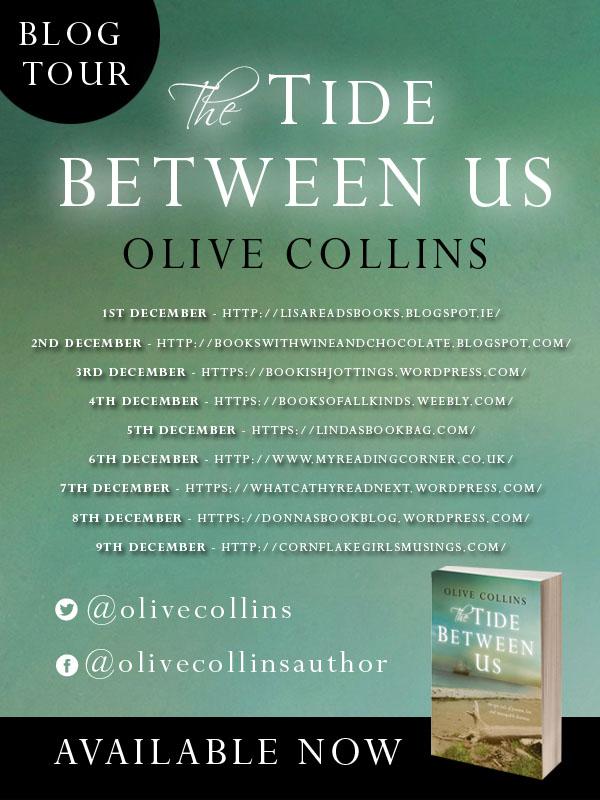
tour poster

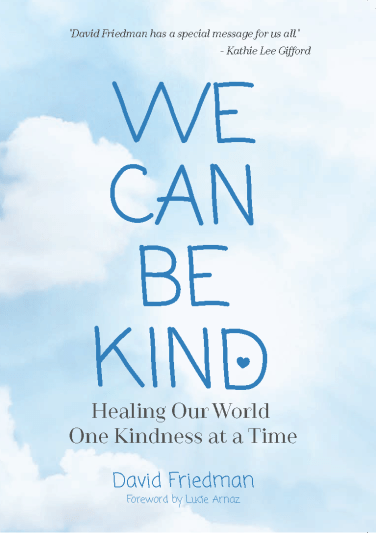
An Extract from We Can Be Kind by David Friedman

We can be kind

A few days ago when I was visiting my mother in hospital she accused me of making life difficult for her because the ambulance took six hours to attend her after she fell and broke her hip and it was my fault. If I’d lied and said she was bleeding or not breathing then it would have arrived sooner and she wouldn’t have had to suffer for so long. I was livid. Was I supposed to lie and put another person’s life at risk who may not actually have been breathing? I opened my mouth to retort and then thought the better of it. I’d recently been sent David Friedman’s We Can Be Kind for review with an extract that I’m sharing with you today. Having read the extract (though I haven’t read the whole book yet) I realised Mum didn’t mean it.  She was about to be released from hospital and was scared of the future. So, following the advice in We Can Be Kind, I didn’t say what I was thinking!

Published by Mango on 27th October 2017 We Can Be Kind is available for purchase here.

We Can Be Kind

We can be kind

One Kindness at a Time

Be kind: The world is changing at lightening speed, and meaningful connections are increasingly elusive. David Friedman, creator of the hit song “We Can Be Kind” offers a powerful reminder of how we need to treat each other, from children to family to coworkers as well as strangers, neighbors and those across the political aisle. Through story, meditation and suggestions of kindness, Friedman encourages us to create new ways of building community. Through the practice of kindness, we become most fully connected, alive, and integrated.

Practicing The Golden Rule: The past few years have shown us what it is like to live in a less caring world. David Friedman’s advocacy for treating each other better and applying the Golden Rule is an idea whose time has come. His deeply thoughtful handbook for the heart brings it all home with simple suggestions of how to be kinder and why it is more important than ever now.

Compassion and empathy: We Can Be Kind is a course in compassion from a beloved composer for Disney Films and Broadway, Daily Show regular, and Unity Church spiritual leader. The book provides:

  • Lessons on the value of kindness
  • Inspiring meditations
  • Daily affirmations
  • Essential truths

An Extract from We Can Be Kind

Chapter Two

A Small Incident Inspires a Universal Song

There was an annual benefit event in New York City called In Celebration of Life, where composers were paired up with singers. The composers were each asked to write a new song that in some way pertained to healing, and the singers performed these songs in a concert that was given at St. Paul’s Cathedral. The AIDS crisis was in full swing, so many of the songs that were written and performed had to do with AIDS. Now if anything qualified as something devastating that could not be controlled, it was AIDS. People across the world were getting sick and dying, and nobody seemed to know anything about how the disease could be cured. In their helplessness, people expressed themselves in whatever ways they could. They talked about it. They sang about it. They raised money for research. What that evening did, alongside so many other performances, research projects, books, speeches, etc., was raise consciousness and open people’s minds to the idea that there had to be a cure. By becoming vocal about it, more and more people became open to this idea. The disease was no less terrifying, but these community expressions gave people hope and the sense that they were not alone.

Each year, the concert closed with Nancy LaMott singing a new song I had written for her. This particular year, I asked Nancy what she wanted me to write about, and she said, “I was getting on the bus this morning, and this woman in front of me was so nasty! Could you write a song about how people should be nicer to each other?” And so, out of that little incident, out of one of those “little” hurts that happen every day, I wrote this song which has ended up being sung around the world for all sorts of causes, big and small.

We Can Be Kind to Ourselves

When you notice that something hurtful has happened, see if you can simply register that it has happened and allow yourself to feel however you feel about it. Don’t fight it off. Don’t try to change it. Often, when hurtful things happen, if we don’t try to fight them off or change them, we get to get in touch with painful feelings we’ve had for a long time which we haven’t allowed ourselves to feel and process. This can be, in its own way, very healing. So before you go into action, try being kind to your “Inner Child” by being with it, giving it a chance to feel whatever it feels, and acknowledging that that feeling exists. Kindness is what our Inner Child didn’t get in the areas in which it’s still in pain. It is you and you alone who can offer this “Inner Child” the kindness it needs to heal.

We Can Be Kind in the World

  1. When someone in a store, in a bank, or on the street is nasty to you, see what  happens if you are not nasty in return. Try to get past their behavior to see why they might be behaving that way. Are they scared? Are they angry? And then, try to offer them what you think they might need to feel better.
  1. You may not be able to prevent people from doing things that hurt you, but you certainly can prevent yourself from doing things that hurt others. The next time you find yourself about to do something that might hurt someone, don’t! Be kind instead and watch what happens, to them as well as inside yourself.
  1. Before you speak or act in any given situation, stop for a moment and think: “Am I hurting anyone by doing this?” And if you find that the action you’re about to take or the words you’re about to use would be hurtful to someone, see if you can substitute kind actions or words instead.

About David Friedman

David Friedman

David Friedman is a conductor and vocals arranger for Disney Classics such as Beauty and the Beast, Aladdin, and Pocahontas. Also, David has written songs for icons such as Diana Ross (“Your Love” Quadruple Platinum), and Barry Manilow (“We Live on Borrowed Time”). The inspiration for his book was inspired by the song with the same title, “We Can Be Kind,” written for the late Nancy Lamott.

You can listen to the song behind the book We Can Be Kind here.

You can also visit David’s inspiring website and follow him on Twitter.


The Fascination of Death: A Guest Post by Lulu Allison, Author of Twice the Speed of Dark

Twice teh speed of dark cover

I’m delighted to be part of the launch celebrations for Twice the Speed of Dark by Lulu Allison, not least because I think it’s a fabulous title!

Published by Unbound on 24th November 2017, Twice the Speed of Dark is available for purchase in e-book and paperback here.

Twice the Speed of Dark

Twice teh speed of dark cover

A mother and daughter circle each other, bound by love, separated by fatal violence.

Dismayed by the indifference she sees in the news to people who die in distant war and terror, Anna writes portraits of the victims, trying to understand the real impact of their deaths.

Meanwhile Anna’s daughter, killed by a violent boyfriend, tells her own story from the perplexing realms of death, reclaiming herself from the brutality.

Anna’s life is stifled by heartache; it is only through these acts of love for strangers that she allows herself an emotional connection to the world.

Can Anna free herself from the bondage of grief and find a connection to her daughter once more?

The Fascination of Death

A Guest Post by Lulu Allison

Sometimes it has felt like Twice the Speed of Dark is a bit of a hard sell. The inevitable first question when I tell someone I am writing/funding/editing/promoting a book is ‘What is it about?’ If I were to answer with one word, that word would be death. Of the two main characters, Caitlin is dead, Anna, her mother, is grieving. The plot of the book relates entirely to those two circumstances. Furthermore, Anna scours the newspaper to find mention of fatalities from bomb blasts and terror attacks and writes portraits of unnamed dead people in the news stories in order to understand what their deaths might really mean.

Here is my work-around that gloomy pitch: The book is about death but it is, as a consequence, very much about life. And love.

Like many people when I was younger I was terrified of death – the death of loved ones, my own, the mere fact of it. My first method for overcoming fear was to define it as a long way off. To keep in contact with people. To reassure myself with statistics about the unlikeliness of X or Y demise. I was lucky not to lose anyone close to me; my grandparents died at a reasonable to good age. My sister suffered a life-threatening accident but recovered completely. My parents always came home after their nights out.

As I got older, I rationalised that there was no reason to worry about death because there were so many terrifying things that could happen, chances are I’d be worrying about the wrong one any way. I found ways not to look at the fear rather than over-come it.

As I got older, banishment became inadequate. In part because people do die; people I love very dearly have died far too young. There is no fairness or logic in their deaths, no system that can be seen to have been applied. Accident, fate, the betrayal of the body, a foolish action. All have caused deaths of people I love, long before their three score and ten. And even when deeply loved people die in their eighties, the enormous sense of loss is life-changing.

As a writer, I have to think about death because I think about it as a human. How could I not? It is one of the most stunning, mind-boggling aspects of life. And through these thoughts, eventually, a kind of peace can be found. Through a process that has been erratic, varied, sometimes dominated by emotion, sometimes by wonder, a process that does not have the measured calm, but has the regular application of a meditation, I have learnt that it is all right. Not, I must add swiftly, the loss of a loved one – this is difficult and can be utterly overwhelming. It seems to me that each bereavement must be met and dealt with anew, each time it is experienced, even when we might look to our shared experiences to find a way through. What I mean is the fact of death. It is all right because the life we have is so wonderful and that wonder is because it is switched on briefly. It is all right because to live forever would be appalling.

Even in the time I have had, I have grown weary of the mistakes, the political foolishness, the cruelty and stupidity of which our species is capable. I am fed up with how little we learn from history, how often our spite, fed by the frailty of our egos has led us to harm others. When will grown humans finally realise that if you hate someone for what they are, that hate is your own, however much incidental pain it causes? Never, sadly, is my answer. We will keep on being too clever by far, not smart enough by half; a mixture that can dream and aspire, that can love, cherish and care with such beautiful courage, and damage and destroy with such ease. I couldn’t stand an eternity of that.

I am not religious, but have developed a soothing sense of wonder in this acceptance. Life is such a blessing. Human life is, perhaps, a not entirely successful experiment and we may never learn to tame our destructive ways. But we thread the air around us with such wonders, such joys, and such hopes. I don’t imagine that rabbits sit on the slope of a grassy field, paralysed with terror or rapt with awe at that sure but uncertain knowledge of the void of space, the unfathomable lurch of eternity, the terrible finality of death. And maybe, because of that, being a rabbit would be easier. We humans do face that and somehow, we get on with our dreams, with our ambitions, with our caring and nurturing, with our loving.

We falter and fail, and take beautiful, defiant stands against that failure. It is why in Twice the Speed of Dark, Caitlin, the girl telling her story from death says “I long for the chance to face the eternal dark of death once more” because it is in facing it that we learn how blessedly alive we are.

(Thank you so much Lulu for such a wonderful guest post.)

About Lulu Allison

Author photo smaller

Lulu Allison has spent most of her life as a visual artist. She attended Central St Martin’s School of Art then spent a number of years travelling and living abroad. Amongst the bar-tending and cleaning jobs, highlights of these years include: in New Zealand, playing drums for King Loser and bass for Dimmer. In Germany, making spectacle hinges in a small factory and nearly designing the new Smurfs. In Amsterdam painting a landmark mural on a four storey squat. In Fiji and California, teaching scuba diving.

After a decade of wandering, she returned to the UK, where she had two children and focused on art. She completed a fine art MA and exhibited her lens-based work and site-specific installations in group and solo shows.

In 2013 what began as an art project took her into writing and she unexpectedly discovered what she should have been doing all along.

Twice the Speed of Dark is her first book. She is currently writing a second, called Wetlands.

You can follow Lulu on Twitter @LRAllison77 and find her on Facebook.

There’s more with these other bloggers too:

blog tour poster

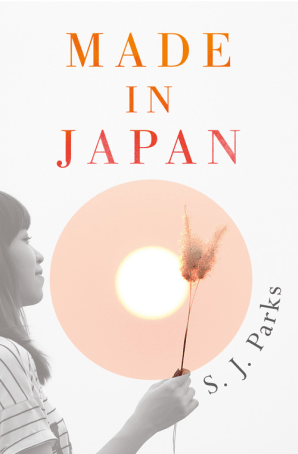
Made in Japan by S. J. Parks

made in japan

Having recently visited Japan I was delighted to be invited by the Bookollective team to be part of the celebrations for Made in Japan by S. J. Parks and I am extremely grateful to them for providing a copy in return for an honest review.

Made in Japan was published by Harper Collins earlier this year and is available for purchase through the links here.

Made in Japan

made in japan

A young girl traces her mother’s steps all the way from London to Japan to search for the father she never knew.

Hana arrives in Tokyo with only two words in her mind: The Teahouse. She’s a long way from home in East London and still fresh from the loss of her mother. But her grief has sent her across to the other side of the world to find out who she is, and for Hana that means finding the Japanese man she has never met, her father with only these two words as clues.

Made in Japan is a beautifully woven story of a mother and daughter who, decades apart, tread the same streets of glittering Tokyo looking for that something that might complete them.

My Review of Made in Japan

Naive and emotionally incomplete following her mother’s death, grieving Hana travels to Japan to find the tea house of her mother’s memories and her real identity.

Made in Japan is a gorgeously written book. It may sound negative, and it is certainly not intended to be so, but reading Made in Japan was almost painful at times. There’s such a strong sense of oppression for Naomi and Hana with a desperate longing to be loved and to belong that I could feel their needs physically. I found the style quite complex and I needed to concentrate as the syntax was sometimes alien to me. I thought this fitted Hana’s sense of displacement especially well. The text is intense, poetic and so potent that I was glad many of the chapters were short as I needed to come up for air.  This is powerful writing.

Essentially, the plot is quite simple. Two women, Hana and her mother Naomi before her, search for their place in life in Tokyo. However, there are twists and turns to their stories that reveal a disturbing world of class, business, forced hedonism and greed that made me feel quite uncomfortable at times as I witnessed Josh’s behaviour in particular. I thought S. J. Parks showed the dichotomies of the country so effectively in Made in Japan and I loved the sense of place. The reader is treated to the customs and places as well as some of the history of Japan with vivid texture through the writing. I felt transported back to some of the places I have visited.

However, it was the themes of Made in Japan that held me captivated the most. There are betrayals on many levels and so many of the characters felt so desperately sad or damaged that I was willing them to find their truths. Friendship, honour, love and passion all underpin the narrative alongside a surprisingly pragmatic approach to life in many ways that I felt this book would reward many re-readings in order to appreciate the subtleties and layers.

I honestly don’t know if I enjoyed Made in Japan. It felt uncomfortable and almost suffocating to read at times because of the depth of feeling conveyed and yet I’m glad I have read it. It deserves to become a modern classic.

About S. J. Parks

SJ

S. J. Parks is a literature graduate with a writing MA from the University of London, Two weeks after she got married S.J Parks went to live in Tokyo and ended up staying for 5 good years. She found the Japanese are an amazing people, living on a cultural and tectonic fault line where East meets West and where once every other month or so an earthquake hits and as in 2011 a huge tidal wave struck the coast.  From her time in Japan she knows what it is like to live among strangers and wanted to begin her writing with a love story like Madam Butterfly. So Made in Japan was born.

S. J. Parks now lives in England with her family.

You can follow S. J. Parks on Twitter and there’s more with these other bloggers:

Made in japan tour poster