Book Launch : Dr Barbara Xiaoyu Wang’s Guanxi in the Western Context:  Intra-Firm Group Dynamics and Expatriate Adjustment

pUPyMT6A

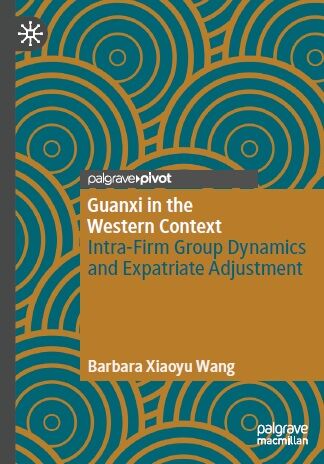
It was a somewhat different book launch that I attended on Tuesday 12th November at Hult Ashridge Executive Education, and one that held surprising links for me. At first glance, Guanxi in the Western Context: Intra-Firm Group Dynamics and Expatriate Adjustment by Dr Barbara Wang might not seem an obvious book for Linda’s Book Bag to feature, but given that I’m touring China next year and my M.Ed is in Educational Leadership and Management, I found the concept of Guanxi in the Western Context: Intra-Firm Group Dynamics and Expatriate Adjustment, a new China West cross-culture leadership and business management book, intriguing. My thanks to Olivia Sandu at Ash Communications for inviting me the launch.

Guanxi in the Western Context:  Intra-Firm Group Dynamics and Expatriate Adjustment is available for purchase here.

Guanxi in the Western Context:

Intra-Firm Group Dynamics and Expatriate Adjustment

pUPyMT6A

Deeply rooted in Chinese culture, the concept of guanxi has been widely researched from historical, cultural and political perspectives. As Chinese multinational corporations (MNCs) expand, expatriates are increasingly carrying guanxi with them to host countries, yet little has been written on how this indigenous construct is employed in the Western world.

This book takes a theoretical approach to the examination of this phenomenon and proposes a conceptual framework for the ‘guanxi capitalism structure,’ illustrating its fundamental role as the invisible hand in China.

Providing empirical analysis, the author demonstrates how guanxi affects intra-firm multicultural group dynamics involving Chinese expatriates and host-country natives in Chinese MNCs.

With insights for scholars researching Asian business and globalisation, and practitioners working in Chinese MNCs, this book argues that guanxi significantly alters an expatriate’s adjustment, and offers practical suggestions for cross-cultural management and the process of  initiating, building, and utilising guanxi in a Western context.

Dr Barbara Wang says, “This book contributes more generally to shed light on cross-cultural management in terms of Chinese guanxi practice in the Western context.  When I started my study I made assumptions that all Chinese executives practise guanxi.  However, I discovered that Chinese expats don’t practise guanxi with local Chinese for complex reasons as they don’t believe they can reap the returns they need.

“The other assumption I made was that local Europeans don’t understand or practise guanxi.  However, I learned that there is a desire to study Chinese culture and Westerners are motivated to practise guanxi even though it is not inherent to how they operate.

“I recommend that if Chinese companies want to improve their soft power they should take steps to study cross-cultural programmes and become ‘glocal’.  They should do their homework and understand and adapt to the local culture and be open to including everyone in guanxi, which will enhance their global cultural influence.  To sum up, guanxi is the code of China.”

Professor Davide Ravasi, director of the PhD Programme at UCL School of Management, comments, “From research in international business we know a lot about Western multinationals, but we know much less about the up and coming multinationals from China. Yet, many of these multinationals will likely dominate global markets in the years to come. Barbara Wang’s work illuminates for the first time how guanxi – a form of social interaction unique to the Chinese culture – shapes social relations in Western branches of these multinationals. It is an important reading for both Western managers who seek a deeper understanding of how their Chinese counterparts operate, and Chinese managers who want to increase their awareness of the culture they are immersed in.”

Professor John Yang, co-Dean of BiMBA at the National School of Development, Peking University, adds, “Barbara Wang’s new book on guanxi is full of insights and wisdom critical for both Western and Chinese expatriates as well as Chinese professionals overseas. The book not only contributes to making successful global business deals but also provides better cross-cultural perspectives to develop a healthier China versus world business relationship.”

Launch Day:

Guanxi in the Western Context:

Intra-Firm Group Dynamics and Expatriate Adjustment
IMG_3199

It was an early start to make sure I was at Euston station to be met by Ash Communications’ Lynda Heath at 9:20am and transported to the fabulous setting of Hult Ashridge for the launch of Guanxi in the Western Context: Intra-Firm Group Dynamics and Expatriate Adjustment. It was a glorious trip across Ashridge House Estate with the colours on the trees turning fiery colours for autumn.

Barbara_BookLaunch_06.JPG

Having been welcomed by Dina Dommett, Head of Faculty, Hult Ashridge, Peter Bishop, Deputy Chief Executive of London Chamber of Commerce then interviewed Dr Barbara Wang about Guanxi in the Western Context: Intra-Firm Group Dynamics and Expatriate Adjustment. (You will be able to find a review of the book in the next edition of London Business Matters through the website.)

Barbara_BookLaunch_33.JPG

The discussion was fascinating, not least because questions were asked in English and responded to in Mandarin with a translator providing detail so that all the audience could understand and this had the effect of transporting me back to the module I had studied for my Masters Degree on Language and Linguistics in Social Context. Dr Wang spoke so inspiringly that attending her book launch fired me with enthusiasm for an academic world I thought I had left behind.

I found Dr Wang’s desire to extend better understanding of culture in working practices to the benefit of all concerned an obvious, but sadly previously neglected concept, and applaud her actions in raising awareness of guanxi. Although she explained that her book is very much aimed at company managers, I have since had chance to read Guanxi in the Western Context: Intra-Firm Group Dynamics and Expatriate Adjustment and it is surprisingly accessible to a lay person like me. Indeed, as an example of research practice, I think it would be an invaluable exemplar of research methodology for anyone studying for a higher degree in any subject, not just business.

Immediately after the Q and A session I was privileged to have a brief discussion with Dr. Barbara Wang about culture and the extent to which she felt fiction might help cross cultural understanding as well as the concept of guanxi. She told me that she felt fiction was hugely important because it often has a wider reach and audience than academic books often have and that readers love to be entertained so that cultural messages can be embodied in fiction and absorbed more effectively. Sadly, Dr Wang had to leave to teach so I was unable discuss with her more at the time and she has kindly answered some of my questions since. You can read that interview below.

IMG_3209 (1)

Attendees were then treated to a buffet-style banquet provided by the in-house award-winning chef and live music in the Lady Marianne Room. Given that the music was played on a conventional Western acoustic guitar and a traditional Chinese pipa, or lute, I thought this was the perfect concrete embodiment of the type of cross-cultural links and guanxi Dr Wang had spoken about. With my book blogger interests it amused me considerably that the muscular male marble statues either side of the fireplace where we ate were allegedly based on the gardeners who worked at Asridge House and might have inspired D.H. Lawrence’s Lady Chatterley’s Lover.

Barbara_BookLaunch_109

Before we departed to return to London, guests were treated to a wonderful guided tour of Ashridge House. Several elements have been used in the Harry Potter films so again my fiction reading interests were piqued alongside my interest in the history of the building.
IMG_3220

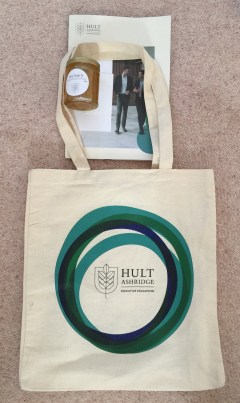
We also came away with a robust and useful goody bag containing a jar of tasty honey made on the Ashridge Estate.

Having wondered whether the launch of an academic book Guanxi in the Western Context: Intra-Firm Group Dynamics and Expatriate Adjustment would really be of relevance and interest to me, the entire day was absorbing, entertaining and informative. The arrangements made by Ash Communications were exemplary and I found Hult Ashridge Executive Education inspiring. I’d like to extend my thanks to all involved in making it such an interesting day.

I an also heartily recommend exploring the concept of guanxi through Dr Barbara Wang’s informative and accessible book Guanxi in the Western Context: Intra-Firm Group Dynamics and Expatriate Adjustment, available here.

An Interview with Dr Barbara Wang

Barbara_BookLaunch_34

Thank you so much for your time in answering my questions, Barbara. Tell me, if you had to distil the concept of guanxi into one sentence, what would you say?

Guanxi is the hierarchical human moral relationship derived from Confucian ethics for the purpose of long-term reciprocity, obligations, and mutual benefit grounded in the affection-based trust among all actors in the circle initiated by one person at a time.

Guanxi is based very clearly on a distinct Chinese culture and the guidance of Confucius. I often feel that we have no distinct cultural identity in the UK. What does your research tell you about the differences and similarities between the two cultures?

It needs another book to answer😊. To generalise, the similarities are: 1) social stratification 2) indirect communication, 3) pragmatism, 4)‘Birds of a feather flock together’. The differences are: 1)British have linear thinking, Chinese have holistic thinking; 2)British are individualistic, Chinese are particularistic; 3) British are rational, Chinese are emotional; 4) British focus on transaction, Chinese focus on relationship; 5) Britishmen know how to respect women (whether they can do is another question), Chinese men don’t know how to respect women (even if they want to) due to Confucian’ infamous quote: ‘only devious man and woman are difficult to deal with.’ 6) British rely on Teamwork, Chinese rely on a Leader; 7)British have democratic thinking, Chinese have hierarchical thinking.

Gosh. There’s plenty of food for thought and debate there!

Guanxi seems to echo the ‘old boy network’ that was once prevalent in public schools of Western society. How far is that a fair assessment?

Guanxi has been one of the most crucial elements of Chinese culture and remains relevant, although the “dark side” (corruption-related) of guanxi has been acknowledged, which definitely echoes the ‘old boy network’ to some degree.

Could you see the application of guanxi in the UK strengthening or weakening Dr Clotaire Rapaille’s definition of Class at the English ‘code’ for England?’

It is hard to say given the hierarchical and particularistic nature of guanxi, however, in a way, it might weaken the Class because guanxi is driven by individual influencing across all social classes which depends on specific people rather than a certain class. Therefore, it is quite common in Chinese history that peasants from low class overthrew aristocratic class through down-top guanxi building across classes.

That’s interesting as it somewhat echoes what has happened here in the past.

Your research interviews and ‘Degree of Adjustment’ findings suggest that Guanxi isn’t universally successful. How far have Chinese attempts to use guanxi in western contexts actually undermined Chinese identity rather than preserved it do you think?

I didn’t observe any case that Chinese undermined their identity, in contrary, the failure of guanxi practice attempts enforced their Chinese identity and increased their awareness of cultural difference.

From reading Guanxi in the Western Context it seems to me that guanxi could be likened to ocean tides, ebbing and flowing as tides do, depending on the perceived requirements of connections. How far would you define guanxi as a similarly organic concept (perhaps the rule of man) and how far as a mechanical one (the rule of law) depending on context?

Guanxi is affection-based, and the core of rule of man society, human touch or deep sharing of personal emotions between guanxi actors is fundamental. It might help increase deep communication among people in the society of rule of law, however, the nature of rule of law might defeat the purpose.

China is often seen as expending into Western markets in an unstoppable manner. To what extent would an understanding of the principles of guanxi help dispel any disquiet about that expansion in the Western world?

Guanxi development is time consuming, it would help in great deal if Chinese companies could do their ‘homework’ about western culture and customs before going abroad and take initiative to building guanxi in host country in a fashion of adapting to the ‘rule of law’ society.

I will be touring China for the first time next year, Barbara. What guanxi principles can I apply most readily to my interactions,as an ordinary person,with Chinese people I meet en route?

Be yourself, do some homework about Chinese culture and history, be open to personal emotions from Chinese, try not to say ‘No’ to any invitations unless it is too far from your comfort zone.Try to avoid any topics in relation to religion and politics.

I think that’s sound advice in any context!

And finally, Barbara, what would you like to see happen with guanxi in the western world and in China in future?

In addition to the efforts from Chinese, it would be great if westerners would be willing to understand China and Chinese. It requires efforts from both parties, i.e. Chinese should be more inclusive and open about guanxi building and westerners should be patient and relational for long-term business.

And I think you have just defined the perfect way to behave in so many areas of life. Many, many thanks for answering my questions Barbara and I wish you every success with Guanxi in the Western Context: Intra-Firm Group Dynamics and Expatriate Adjustment.

About Barbara Xiaoyu Wang

Debora

Dr Barbara Wang is the academic director – China of Hult Ashridge Executive Education and association dean of China initiatives.

Her interests lie in cross-cultural leadership/management, and Chinese leadership and executive coaching.  She has extensive experience in management training and consulting and has designed and delivered leadership development programmes and coaching for multinational companies such as ABB, Volvo, Daimler, Continental, Sinopec, China Post, Bank of China and Air China. She also teaches on executive programmes for other British and Chinese universities.

Before her current roles, Barbara was a vice president for the Western Management Institute of Beijing.  Her commercial experience extends to working for multinational companies in China where she was the retail operations director for CELINE of the Louis Vuitton group, and the global accounts manager in China for DHL.

Barbara holds a PhD from Cass Business School in the UK, where her research focused on cross-cultural leadership/management of Chinese multinational enterprises in Europe. She has qualified in many leadership psychometric tools.

Barbara is co-author of Chinese Leadership (Palgrave Macmillan, 2011).
Staying in with Tracey Scott-Townsend, Author of The Vagabond Mother

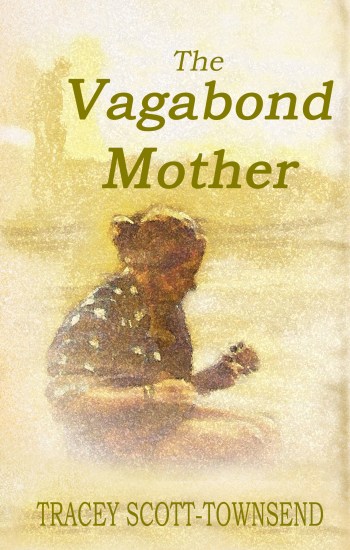
The Vagabond Mother front cover (1)

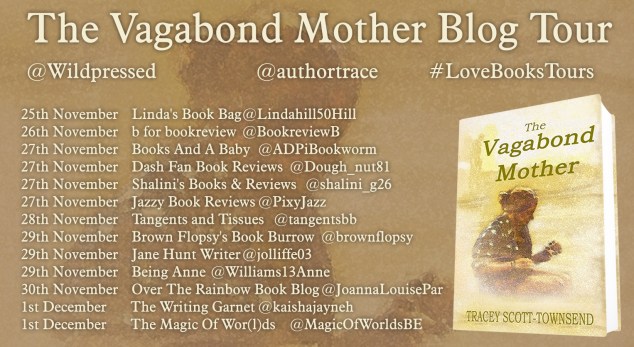
Although it’s a while since I first met Tracey Scott-Townsend at an event called Oceans of Words, at which she was speaking, and my write up of which you can read here, I’ve had the pleasure of meeting Tracey a couple of times in real life as well as asking her onto Linda’s Book Bag to tell me about one of her books, Another Rebecca, in a post you can read here. I have also had the pleasure of reviewing some of Tracey’s poetry in her anthology So Fast and you can read that review here. Consequently, Tracey feels like a true friend and I’m delighted to be starting off the Love Books Group blog tour for her latest book The Vagabond Mother by asking Tracy to stay in with me to tell me all about it.

Staying in with Tracey Scott-Townsend

Welcome back to Linda’s Book Bag, Tracey. Thank you for agreeing to stay in with me.

Thank you for inviting me, Linda, it’s a pleasure to be visiting you again. (Offers Linda a hug.)

(Which Linda accepts with pleasure!)

I rather think I know, but tell me, which of your books have you brought along to share this evening Tracey and why have you chosen it?

The Vagabond Mother front cover (1)

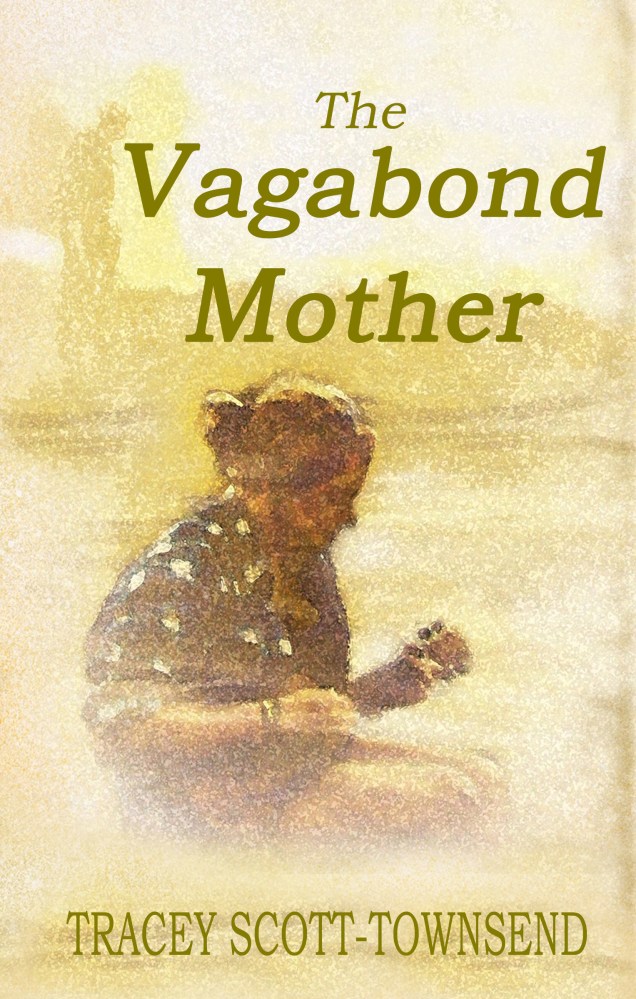
I’ve brought The Vagabond Mother along with me today. I’ve chosen this because it’s my upcoming novel, due to be released on 22 January, 2020. This is a very personal book, in a way, as the story was originally inspired by my youngest son, who went off travelling the world when he was only sixteen.

Crikey, that’s young to head off. Tell me, what can we expect from an evening in with The Vagabond Mother?

You can probably expect to be a little bit shocked at how Maya, the main character in the book, has changed over the two-plus years she’s been living the vagabond lifestyle. Honestly, you wouldn’t recognise her. She used to be one of those well-groomed middle-class village women who attended the local charity ball and held regular dinner parties in her conservatory-dining room, Now she’s thin, brown-skinned, wears her uncombed hair wrapped in a scarf and is capable of walking twenty miles a day, carrying a heavy backpack.

I think I’d rather like Maya! 

Expect Maya to regale you with tales about her adventures on the road, from Australia to Bali, Iceland, Denmark, Germany and Spain to name but some of the places she’s been to; sometimes staying in hostels and sometimes sleeping out in the wild. She can teach you about food-salvaging, how to toilet when there are no facilities, and how to come to terms with mistakes made in the past and set about putting them right. She might get her guitar out and encourage you to join in a song or two as well. I wouldn’t ask her too much about her husband, Con, though. She tends to clam up on the subject.

And now, of course, I want to know all about Con!

What else have you brought along this evening and why?

I’ve also brought along a copy of “The Vagabond Guide”, it’s full of helpful tips about food-salvaging, the best places to hitchhike from and where to sleep in the urban wild. It was actually written for me by my son for the book. I’ve included it at the end of The Vagabond Mother, along with some paragraphs written by my daughter-in-law, who also became a solo traveller from a young age. The two of them met in a hostel in Reykjavik, I was visiting my son there at the time and was privileged to be present at their first meeting.

How romantic. I love Iceland.

Another of the chapters in the book was contributed by my middle son, who described a street in Bali for me in great detail. All I had to do was insert my characters. Finally, I took inspiration for Maya’s son’s time working on a farm in Bundaberg, Australia, from my oldest son, who told me about his experiences at the same place.

With Bali and Australia also having been on my travels I think I’m going to enjoy The Vagabond Mother Tracey!

choc

I’ve brought along a selection of food and drink items from some of the countries Maya visits in the book. You might like to try a whale burger from Iceland, a heiße Schokolade from Germany, or tostados con tomate from Spain.

I’m not sure about a whale burger, but did someone say hot chocolate?

tom

I do love a guest who brings food. You’re welcome back any time!

I think we should listen to Bob Dylan and Joan Baez records as well, as these are some of the tunes Maya plays as a busker.

That sounds like perfect background music as you tell me a bit more.

I can tell you about my experience of sleeping in a ten-bed room in a vibrant Berlin hostel, which I challenged myself to do as part of my post-research for the book. Goodness knows what my room-mates in their twenties must have thought about the old lady in the corner bed, but for me it was a wonderful opportunity for some non-participatory observation, and gave me some valuable first-hand material to talk about in my promo for the book.

I  bet that was VERY entertaining! It’s been lovely chatting with you all about The Vagabond Mother Tracey. Thanks so much for stopping by. 

I’ve really enjoyed spending the evening with you, Linda. I hope you enjoyed Maya’s and my travelling tales, the music and the food. Thank for having me!

It’s always a pleasure. You’re welcome back any time Tracey.

The Vagabond Mother

The Vagabond Mother front cover (1)

Not every Vagabond is a Castaway…

Maya Galen’s oldest son, Jamie, left home eight years ago after a massive row with his parents and now Joe, her youngest child and apple of her eye, has cut off all contact with them too.

Called to Australia to identify the body of a young man, Maya is given her son’s journal. After a sleepless night she decides that the only thing she can do is follow in Joe’s footsteps and try to discover her most basic human self. Eschewing a monetary lifestyle, from now on she must rely on her physical and emotional strength to survive.

Following Joe’s hand-drawn maps and journal entries, she travels from Australia to Denmark and beyond, meeting many other travellers along the way and learning valuable lessons.

Eventually a crisis forces her to return home and confront the end of her marriage, but also a new understanding of what family, in the widest sense, really means.

Exploring the big questions at the heart of human existence, The Vagabond Mother shares territory with books and films such as Into the Wild by Jon Krakauer, The Way, starring Martin Sheen, Wild:A Journey from Lost to Found by Cheryl Strayed and Eat, Pray, Love by Elizabeth Gilbert.

The Vagabond Mother will be released by Wild Pressed books on 22nd January 2020 and is available for pre-order here.

About Tracey Scott-Townsend

author photo new

Tracey is the author of The Last Time We Saw MarionOf His BonesThe Eliza Doll and Another Rebecca. Her fifth novel, Sea Babies was released on 1st May 2019. Her novels have been described as both poetic and painterly. Her first poetry collection, So Fast was published in January 2018.

Tracey is also a visual artist. All her work is inspired by the emotions of her own experiences and perceptions.

Tracey is the mother of four grown-up children and now spends a lot of time travelling in a small camper van with husband Phil and their rescue dogs, Pixie and Luna, gathering her thoughts and writing them down.

You can find out more about Tracey by visiting her website, finding her on Facebook and following her on Twitter @authortrace.

There’s more with these other bloggers too:

Vagabond Mother

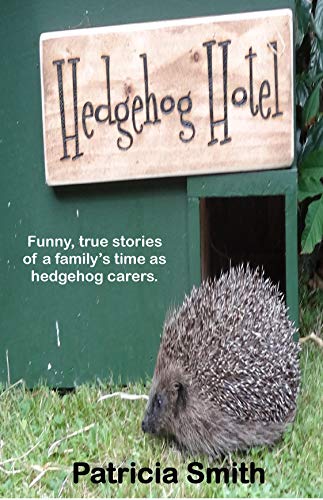
Hedgehog Hotel by Patricia Smith

hedgehog hotel

Over the summer we were thrilled to find that yet again a small family of hedgehogs had taken up residence in our tiny garden. With hedgehogs increasingly under threat I couldn’t say no when Patricia Smith got in touch to see if I would review her book Hedgehog Hotel and I’d like to thank Patricia for sending me a copy of Hedgehog Hotel in return for an honest review.

Hedgehog Hotel is available for purchase here.

Hedgehog Hotel

hedgehog hotel

Funny, true stories about a family who are hedgehog carers and their interactions with these colourful, delightful little creatures. The stories include: Bedroom Shenanigans, The Diary of a Bald Hedgehog, The Three Bears, Two Sisters and a Witch and Isabel the Magnificent.

My Review of Hedgehog Hotel

A series of hedgehog based real stories.

If I’m honest, I hadn’t expected to be as captivated by this book of real life hedgehog stories as I was. There’s a joy behind the writing that is infectious so that I ended reading Hedgehog Hotel being glad for the twenty plus hedgehogs that have found their way to the author’s hedgehog hotel to be bathed, fed and nursed back to health. There’s also an attractive quality to the prose so that Patricia Smith’s love of nature comes through in her vivid descriptions.

The individual hedgehogs are lovingly described. I enjoyed Izzy’s ‘teenage strops’ for example. And although this is a collection of stories about hedgehogs and their individual characters and quirks, I thoroughly enjoyed meeting the humans, not least because I felt I’d been given a glimpse into the life of a caring family doing their bit for the environment which gave me a hugely positive feeling.

There’s a surprising amount of practical advice and hedgehog information woven throughout the book, from the number of heartbeats a hibernating hedgehog might have to the difficulty of sexing a hedgehog and the inconvenience of having a hedgehog up your trouser leg!

However, the aspect I enjoyed most in Hedgehog Hotel was the inclusion of some wonderful photographs that accompany the accounts. They bring to life the characters we meet and are quite charming.

Hedgehog Hotel would make a good book for an older child who is beginning to express an interest in wildlife and for anyone, old or young, interested in these feisty, curious little creatures. I liked it.

About Patricia Smith

pat smith

Patricia Smith worked for fourteen years in technical support and as a computer programmer before changing career to help young people to improve their numeracy and English skills.

She has enjoyed writing stories all of her life and her first novel Time Split, which made several best sellers lists, was published in 2011. This was soon followed by her Distant Suns stories, Islands – The Epidemic and more recently the long awaited sequel to Time Split, Time Split – Briggs.

For more information, visit Patricia’s website. You’ll also find her on Twitter @ForTheLoveOfSF and Facebook.

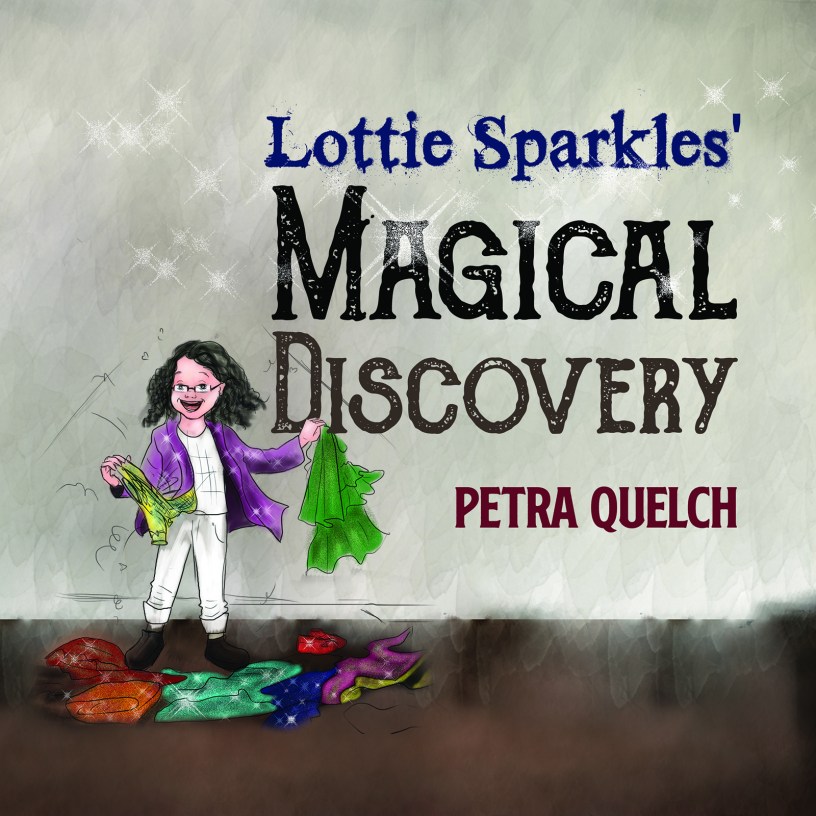
Lottie Sparkles’ Magical Discovery by Petra Quelch

9781528955522.jpg

I’m very fond of a children’s book here on Linda’s Book Bag and am delighted to be part of the Rachel’s Random Resources blog tour for Lottie Sparkles’ Magical Discovery by Petra Quelch.

Today I have my review of Lottie Sparkles’ Magical Discovery and a chance for a lucky UK or European reader to win a signed copy of the book. More details at the bottom of this blog post!

Lottie Sparkles Magical Discovery

Lottie Sparkles’ Magical Discovery is available for purchase on Amazon UK,Amazon USAmazon AU and the Book Depository.

Lottie Sparkles’ Magical Discovery

9781528955522.jpg

Who wouldn’t like a magical jacket?

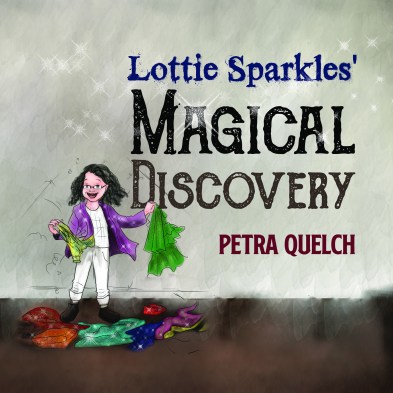
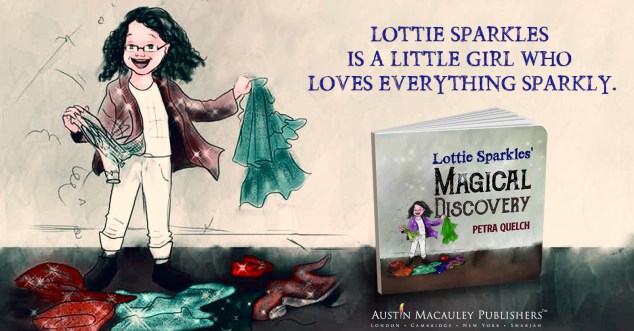
Lottie Sparkles is a little girl who loves everything sparkly,mainly clothes. Anything plain or dirty is a disgrace in Lottie s mind! When Lottie is sent to spend time with her lovely grandparents in the countryside, she is furious because that essentially means smelly animals, lots of puddles and hard work!

But what she certainly didn’t count on was coming face to face with a magical object…

My Review of Lottie Sparkles’ Magical Discovery

Lottie loves everything clean and sparkly so two weeks in the country is not her thing at all!

In Lottie Sparkles’ Magical Discovery Petra Quelch has created someone many children will be able to relate to perfectly. Lottie is sulky, determined to get her own way and yet able to learn from her adventures so that I can imagine children desperate to get into the attics of their own homes to see if they can discover something just as magical. Although Lottie is perhaps more traditionally appealing to girls with her passion for sparkly clothes, I loved the fact that Grandad George does the baking and cooking whilst Grandma Ada mucks out the animals and creates inventions in the shed as their roles suggest that gender doesn’t have to be constrained.

The narrative is well structured with a good variety of paragraph length and a perfect font for independent readers so that children can enjoy the book independently as well as with an adult.

There are some lovely illustrations to go with the story and as someone who has had sight problems since very early childhood I really appreciated the fact that Lottie wears glasses as this gives status to young children in the same position.

Lottie Sparkles’ Magical Discovery is an entertaining and enjoyable read for children.

About Petra Quelch

Authors photo

Petra Quelch loves everything sparkly and glittery but hopefully, she says, she is not a diva like Lottie from her book. Aside from all the glitz and glamour, she is a collector of magical books, tea sets, movies and a huge fan of chocolate. She has two little girls also known as “The Little Book-Fairies” with a BIG imagination.

You can find out more by following Petra on Twitter @ACaseOfBooks  and Instagram and finding her on Facebook.

There’s more with these other bloggers too:

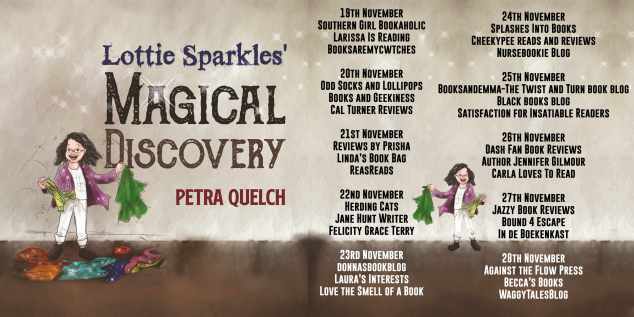
Lottie Sparkles Magical Discovery Full Tour Banner

Giveaway

Social Graphics (2)

If you live in the UK or Europe and would like the chance to win a signed copy of Lottie Sparkles’ Magical Discovery, click here.

Please note that this giveaway is run independently of Linda’s Book Bag. The winner will be selected at random via Rafflecopter from all valid entries and will be notified by Twitter and/or email. If no response is received within 7 days then Rachel’s Random Resources reserves the right to select an alternative winner. Open to all entrants aged 18 or over.  Any personal data given as part of the competition entry is used for this purpose only and will not be shared with third parties, with the exception of the winners’ information. This will passed to the giveaway organiser and used only for fulfilment of the prize, after which time Rachel’s Random Resources will delete the data.  I am not responsible for dispatch or delivery of the prize.

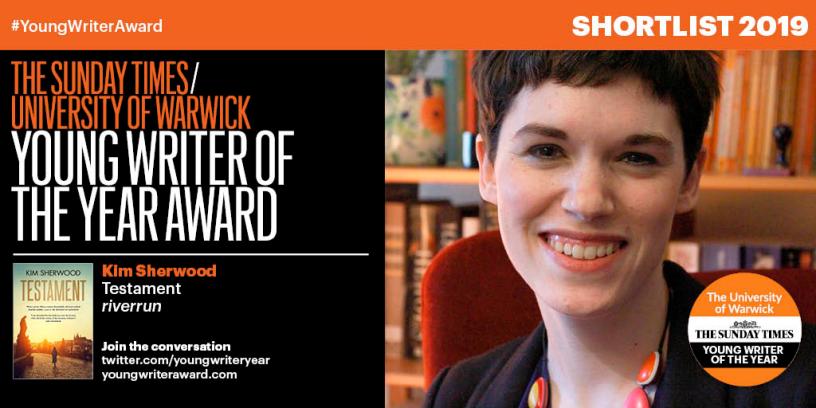
Testament by Kim Sherwood

9781786488688

Tomorrow I’ll be heading off to London for a panel meeting as shadow judge for The Sunday Times/University of Warwick Young Writer of the Year Award where we will be discussing the four shortlisted books and choosing our winner. Consequently, today I have my final review and this time it’s Testament by Kim Sherwood. (In case you were wondering, I’ve reviewed the books in alphabetical order by title, not by any other preference!)

You’ll find more about the award here on Linda’s Book Bag and on The Sunday Times/University of Warwick Young Writer’s Award website.

kim sherwood instagram

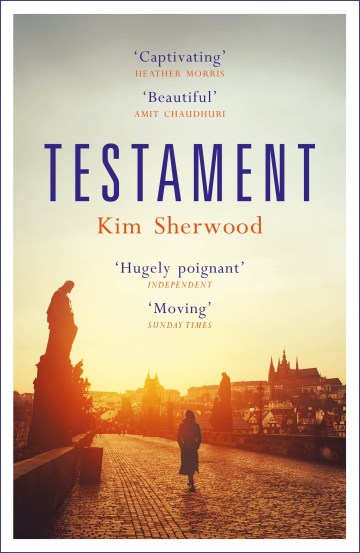
Published by Quercus imprint Riverrun, Testament is available for purchase through the links here.

Testament

9781786488688

Of everyone in her complicated family, Eva was closest to her grandfather: a charismatic painter – and a keeper of secrets. So when he dies, she’s hit by a greater loss – of the questions he never answered, and the past he never shared.

It’s then she finds the letter from the Jewish Museum in Berlin. They have uncovered the testimony he gave after his forced labour service in Hungary, which took him to the death camps and then to England as a refugee. This is how he survived.

But there is a deeper story that Eva will unravel – of how her grandfather learnt to live afterwards. As she confronts the lies that have haunted her family, their identity shifts and her own takes shape. The testament is in her hands.

Kim Sherwood’s extraordinary first novel is a powerful statement of intent. Beautifully written, moving and hopeful, it crosses the tidemark where the third generation meets the first, finding a new language to express love, legacy and our place within history.

My Review of Testament

Eva’s attempts to record her grandfather’s life lead her to more discoveries than she might have imagined.

Testament is one of those books that is terribly difficult to review because it transcends the superlatives a reader might wish to apply to it. I found Kim Sherwood’s writing both beautiful and harrowing, deeply sad, yet ultimately uplifting, with an intensity that meant I had to force myself to breathe at times. It actually took me quite a while to read Testament as I had to take breaks to recover from what I’d just read.

The plot is skilfully constructed so that the events of the past reverberate and impact on the present completely convincingly. I loved the brilliant exploration of identity, of how we are shaped by the past, but equally, how we can construct our own identity, past and truths, even at the moment of being our most duplicitous. Silk is both nothing he claims to be and yet everything he claims to be, making him a complex, fascinating and compelling character. I felt I understood him completely and he became so real to me I wished I had known him personally too. The concepts of family, nationality and belonging swirl and eddy through the writing like the waters of the Danube itself, drawing me in to the narrative completely. I’m not usually a lover of dual time frames but thoroughly enjoyed them in Testament as the truth behind Silk’s life and Eva’s discovery of that truth merge together.

The quality of research that Kim Sherwood has put in to Testament is exemplary and I feel I have learnt a great deal more about the era; especially what happened to Jewish people post war. Reading Testament has reinforced what I thought I knew and shown me the ignorant acceptance of past times that I may have previously displayed so that I can honestly claim that this narrative has altered my perspectives. I found a real resonance in the exploration of grief and love too.

I loved the quality of the writing. Kim Sherwood’s description of place is so evocatively depicted through her use of the senses that it is possible to experience her settings almost first hand. Similarly, the immediacy of the action she describes is so vivid that events happening to Józef and László seem like films rather than text.

Kin Sherwood’s Testament is a powerful, absorbing and incredibly moving novel that has had a visceral effect on me, making me feel the emotional pain, the fear and the joy of the characters quite physically. I recommend it unreservedly. It’s quite wonderful.

About Kim Sherwood

Kim Sherwood - Headshot - No credited needed

Kim Sherwood was born in Camden in 1989 and lives in Bath. She studied Creative Writing at UEA and is now Senior Lecturer at the University of the West of England. Her pieces have appeared in Mslexia, Lighthouse, and Going Down Swinging.

Kim began researching and writing Testament, her first novel, after her grandfather, the actor George Baker, passed away and her grandmother began to talk about her experiences as a Holocaust Survivor for the first time. It won the 2016 Bath Novel Award, was longlisted for the 2019 Desmond Elliot Prize and shortlisted for the 2019 Author’s Club Best First Novel Award.

For more information, follow Kim on Twitter @kimtsherwood.

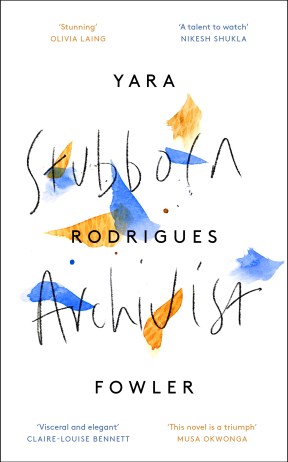
Stubborn Archivist by Yara Rodrigues Fowler

Stubborn Archivist

I’m delighted to share the third of my reviews as shadow judge for The Sunday Times/University of Warwick Young Writer of the Year Award this year. Today I have my review of Stubborn Archivist by Yara Rodrigues Fowler. You’ll find more about the award here on Linda’s Book Bag and on The Sunday Times/University of Warwick Young Writer’s Award website.

yara rodrigues fowler instagram

Published by Little Brown imprint Fleet, Stubborn Archivist is available for purchase through the links here.

Stubborn Archivist

Stubborn Archivist

When your mother considers another country home, it’s hard to know where you belong. When the people you live among can’t pronounce your name, it’s hard to know exactly who you are. And when your body no longer feels like your own, it’s hard to understand your place in the world.

This is a novel of growing up between cultures, of finding your space within them and of learning to live in a traumatized body. Our stubborn archivist tells her story through history, through family conversations, through the eyes of her mother, her grandmother and her aunt and slowly she begins to emerge into the world, defining her own sense of identity.

My Review of Stubborn Archivist

An account of a young woman’s life.

Stubborn Archivist is a complex and intriguing read that held me spellbound even as it confused and beguiled me. I loved the title. With little conventional fictional plot, the narrative is, to some degree, an archive of one person’s life and whilst they have both British and Brazilian heritage, they have to cling stubbornly to their own sense of self and identity. I’m writing so generically about ‘they’ because other than being referred to frequently as the baby, the name of the woman is elusive, reflecting the looseness of her identity and her difficulty in defining herself and where she belongs.

The sections in Portuguese added a brilliant level of authenticity because my inability to read them perfectly mirrored the struggle in the protagonist’s life. Snatches of meaning came through, and at other times these meanings felt obfuscated so that I experienced some of the same frustrations and misunderstandings of the woman whose life is gradually being revealed by the narrative. I thought this was a hugely appropriate technique.

Similarly, the fractured structure of the book, looking sometimes more akin to poetry or a list than prose, the white space suggesting not all the protagonist’s life has been lived or defined yet, but rather that there is more to come, all contributed to the sense of searching for personal identity. I thought this was innovative and so effective. Although punctuation is used almost haphazardly on occasion, I felt this was perfect in delineating some of the truths in the book and leaving open interpretation or less definite elements at other times. Stubborn Archivist pushes the boundaries of conventional writing and makes the reader engage with the text on so many levels. The total lack of speech marks led me to wonder how much of the conversation had been filtered or falsely remembered and how much was true. There’s an unreliabilty in Stubborn Archivist that I found fascinating.

Frequently Yara Rodrigues Fowler’s writing is visual and poetic. Through imagery of food, flora and vividly lyrical descriptions the reader is transported to Brazil, rural England and London so that there is a deep sense of place and its relevance to identity in Stubborn Archivist. The contrast of heat and cold gave far more definition to Brazil and London than the young woman is able to find in her own identity. I also loved the way in which quite shocking or disturbing events are dropped into the narrative almost casually so that I actually exclaimed aloud on a couple of occasions.

The theme of identity is masterfully presented, especially through the physical effect on the protagonist’s body and through the inclusion of family oral history, because although it is individual and personal it also helps create a sense of national and political identity too. It had the added effect of making me recall my own family’s stories and thereby reconnected me to my own sense if self as well as to Stubborn Archivist as a reader.

Feminist, international and creative, Stubborn Archivist is a book I haven’t fully got to grips with. It will reward many readings and I have a feeling I have hardly scratched the surface of what it has to offer. It’s intriguing, frustrating and simultaneously beautifully written. I think you should read if for yourself!

About Yara Rodrigues Fowler

Yara

Yara Rodrigues Fowler is a British Brazilian novelist from South London. Her first novel, Stubborn Archivist, was published in 2019 in the UK and USA. It was called ’stunning’ by Olivia Laing, ‘visceral and elegant’ by Claire-Louise Bennett and ‘breathtakingly written’ by Nikesh Shukla.

Yara was named one of The Observer’s nine ‘hottest-tipped’ debut novelists of 2019 and longlisted for the Desmond Elliott Prize.

Yara is also a trustee of Latin American Women’s Aid, an organisation that runs the only two refuges in Europe for and by Latin American women. She’s writing her second novel now, for which she received the John C Lawrence Award from the Society of Authors towards research in Brazil.

For more information, follow Yara on Twitter @yazzarf. You an also visit her website.

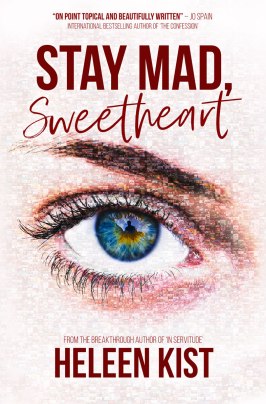
Staying in with Heleen Kist, author of Stay Mad, Sweetheart

StayMadSweetheartFINAL_Low

It gives me very great pleasure to be part of the launch celebrations for Stay Mad, Sweetheart by Heleen Kist and to stay in with Heleen to hear more about the book. My thanks to Dylan at Red Dog Press for inviting me to be part of the blog tour.

I last stayed in with Heleen Kist to chat about her novel In Servitude in a post you can see here so I’m delighted to welcome her back again today.

Staying in with Heleen Kist

Welcome back to Linda’s Book Bag, Heleen. Thank you for agreeing to stay in with me once again.

Hi Linda, thanks for having me. What a lovely fire you’ve got on – it’s freezing outside!

It is! Pull your chair nearer and tell me, which of your books have you brought along to share this evening and why have you chosen it? 

StayMadSweetheartFINAL_Low

I brought my second novel Stay Mad, Sweetheart. I see you’ve still got In Servitude on your bookshelf from when I was last here. I’m honoured.

0. In Servitude by Heleen Kist-cover

Indeed I have and blog readers can find out more about In Servitude here from when we last stayed in together. So tell me, what can we expect from an evening in with Stay Mad, Sweetheart.

You might feel “both engaged and enraged” like one early reader said.

Oh. Sounds intriguing. Explain a bit more…

The book explores the grey areas of consent, insidious harassment and discrimination at work; and what happens when the women have had enough. It’s pacy, with short chapters and I’m told it’s hard to put down until the very end — when you’re left punching the air!

Jo Spain called it ‘a terrific new read’ and ‘on point topical and beautifully written’, which really made my day.

I imagine it did (and if you look along the shelf there you’ll see one of Jo’s books still waiting to be read next to In Servitude!)

It’s an intentionally thought-provoking book a bout everyday sexism and how easy it is to get carried away. I’m hoping it will leave you mulling over where the line is between right and wrong for some time.

I love a book that makes me think Heleen. I imagine a certain interview broadcast over the weekend will make readers even more interested in Stay Mad, Sweetheart! What else have you brought along and why? 

Hold on, while I unlock the carrier. Say hello to Scout, the ferret.

Scout the ferret

Wow! I think Scout must be the most unusual item an author has brought along. She’s very cute isn’t she? But why bring a ferret?

She’s owned by Craig, a photographer, one of my characters. Last year, a friend of mine dared me to include a ferret in this book and whilst at first I had no idea what to do with her, I ended up growing very fond of this pink-nosed creature.

My main character Laura has a cat named Atticus. You might recognise the literary reference: Scout & Atticus. It’s one of a few in the novel. Laura is a real book worm and her love of words is critical to the plot.

Now cats have come along before when authors have stayed in with me and if you look around you’ll see I’m a real cat lover Heleen, but the way Scout is curling up in front of the fire I think she might be converting me! To Kill a Mockingbird is one of my favourite all time novels so thank you for reminding me of it as we’ve chatted about Stay Mad, Sweetheart

You’ve really whetted my appetite for Stay Mad, Sweetheart, Heleen and thank you for being here. Let’s find out more about it:

Stay Mad, Sweetheart

StayMadSweetheartFINAL_Low

THERE’S A FINE LINE BETWEEN INNOCENCE AND GUILT. AN EVEN FINER LINE BETWEEN JUSTICE AND REVENGE.

Data scientist Laura prefers the company of her books to the real world – let alone that cesspit online. But when her best friend Emily becomes the victim of horrific cyberbullying, she makes it her all-engulfing mission to track down the worst culprits.

Petite corporate financier Suki is about to outshine the stupid boys at her firm: she’s leading the acquisition of Edinburgh’s most exciting start-up. If only she could get its brilliant, but distracted, co-founder Laura to engage.

Event planner Claire is left to salvage the start-up’s annual conference after her colleague Emily fails to return to work. She’s determined to get a promotion out of it, but her boss isn’t playing ball.

As the women’s paths intertwine, the insidious discrimination they each face comes to light. Emboldened by Emily’s tragic experience, they join forces to plot the downfall of all those who’ve wronged them.

But with emotions running high, will the punishments fit the crimes?

Published tomorrow, 19th November 2019, by Red Dog Stay Mad, Sweetheart is available from all good bookshops, Amazon and directly from the publisher.

About Heleen Kist

Heleen Kist has been fondled, patronised and ordered to smile by random men. So she wrote Stay Mad, Sweetheart, a feminist tale of revenge. Whilst her professional knowledge of technology start-ups fed the novel’s setting, its theme of harassment and workplace discrimination required no research: it is familiar to all women.

Heleen was chosen as an up and coming new author at Bloody Scotland 2018. Her first novel, In Servitude won the silver medal for Best European Fiction at the Independent Publishers Book Awards in the USA and was shortlisted for The Selfies awarded at London Book Fair.

A Dutch strategy consultant living in Glasgow and married to a Scotsman, she’s raising their son to be a good man and their daughter to kick ass.

You can follow Heleen on Twitter @hkist and Facebook. Or sign up to her newsletter on her website here.

There’s more with these other bloggers too:

SMS_BT_Banner (1)

The Space Race by Liz Butler

The Space Race

One of my most loved memories is watching the moon landings on television through a shop window when I was on holiday as a child in Minehead so when Liz Butler asked me if I’d like to review her children’s book The Space Race I readily accepted. My thanks to Liz for sending me a copy of The Space Race book in return for an honest review.

The Space Race was published by Matador on 31st October 2019 and is available for purchase in all the usual places including here.

The Space Race

The Space Race

And the race is on!

Meet Cat and Dog, two fiercely competitive characters who fight like only cats and dogs can!

The Space Race is a story about the extra-terrestrial adventures of Cat and Dog as they compete in the ultimate challenge – a race to the moon – to prove once and for all who is the best.

But who will win?! Who will be left to wear the pants of shame upon their head?! And can an old dog (or cat) learn new tricks?!

My Review of The Space Race

Cat and Dog decide to settle their differences with a race to the moon.

What a smashing children’s book!

Written in alternate end-rhyme, the language in The Space Race is so good because there’s no forcing of the sounds to fit. Instead, children have the opportunity to explore language in this exciting story with rhymes like ‘day’ and ‘say’ and homophones like ‘floor’ and ‘draw’, as the narrative unfolds. The rhythm of the language works really well read aloud, but equally it is simple enough for slightly older children to read and enjoy independently.

Children will recognise the conflict between Cat and Dog as being very similar to that they might have with friends or siblings and there’s a lovely moral that working together brings a much more positive outcome than does fighting! I love the fact that there is some peril in the story that is satisfactorily resolved so that young children can experience fear and excitement in a safe environment. There’s also humour, especially when the alien is sick, as well as the themes of competition, collaboration and friendship. Added to the opportunity to discover more about space by researching the moon and black holes, this makes The Space Race a brilliant children’s book.

The illustrations by Kate Gallagher are perfect for the text. They have a naive quality that is hugely appealing but also they help underpin the story flawlessly.

The Space Race is a cracking story for very young children. I thoroughly enjoyed it too!

About Liz Butler

liz butler

Liz Butler released her debut children’s story book, The Space Race, in October 2019. Liz works in education and has previously attended creative writing courses due to her passion for writing.

Children inspire her imagination and creativity and with two young children of her own, Liz loves nothing more than settling down with an excellent story book and letting their (and her) imaginations run wild!

For more information, follow Liz on Twitter @LizButl57860113. You’ll also find Liz on Facebook.

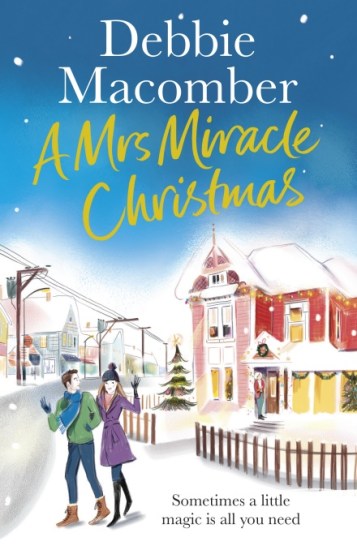
A Mrs Miracle Christmas by Debbie Macomber

A Mrs Miracle Christmas

Not having read Debbie Macomber before but hearing such good things about her writing, I was delighted to be asked to participate in the launch celebrations for A Mrs Miracle Christmas and would like to thank Rachel Kennedy at Penguin Random House for inviting me.

A Mrs Miracle Christmas was published by Penguin Random House imprint Arrow on 14th November and is available for purchase through these links.

A Mrs Miracle Christmas

A Mrs Miracle Christmas

Laurel McCullough is in desperate need of help.

Her beloved grandmother has just been diagnosed with Alzheimer’s and the baby she and her husband Zach have longed for now seems like an impossible dream.

So when Mrs Miracle appears at the door, Laurel couldn’t be more relieved. She invites the nurse into her life and it’s not long before they become firm friends.

When her grandmother’s condition begins to improve, and as Laurel and Zach continue their desperate quest for a child, Laurel soon realises that there is more to Mrs Miracle than meets the eye…

My review of A Mrs Miracle Christmas

Laurel’s life is rather complicated!

Now, I’ve no religious belief or faith and I’ve never been a mother nor had any desire to be one, so A Mrs Miracle Christmas should be a book that I really didn’t enjoy. Hmm. Totally untrue! Whilst some readers may find it too sentimental, Debbie Macomber writes with such uplifting warmth, that I couldn’t help being drawn in to this lovely narrative. I read the book on a cold wet afternoon and it was the perfect story to transport the reader away into a world of love and positivity – even when life isn’t treating Laurel and Zach well. I think what I enjoyed so much was the knowledge that everything was likely to be resolved happily, though you’ll have to read the book yourself to see if that is true!

Although A Mrs Miracle Christmas is a light read, Debbie Macomber doesn’t shy away from tougher issues like dementia and infertility so that the book will resonate for many an ordinary reader dealing with similar issues in their own life. I felt especially sorry for Zach as he tries to do what he feels is best. So much of the attention in cases of infertility is focused on women, but here Debbie Macomber sensitively explores the impact on men too and I felt this added depth to the narrative.

I really enjoyed the reduced number of characters because with just Helen, Laurel, Zach and Mrs Miracle dominating, there is the opportunity fully to get to know them. I rather feel we could all do with a Mrs Miracle in our lives at times! I loved the way she embodies the concept that memories are important for us all as she guides Helen along.

A Mrs Miracle Christmas is a heartwarming, entertaining book that I very much enjoyed. It would be an ideal gift at Christmas, particularly, I think, for anyone living alone or in need of solace and cheer. It’s very uplifting and I ended it feeling more positive than when I set out to read it.

About Debbie Macomber

debbie macomber

Debbie Macomber is a No. 1 New York Times bestselling author and one of today’s most popular writers. In addition to fiction, Debbie has also published two bestselling cookbooks; numerous inspirational and nonfiction works; and two acclaimed children’s books. The beloved and bestselling Cedar Cove series became Hallmark Channel’s first dramatic scripted television series, Debbie Macomber’s Cedar Cove, which was ranked as the top program on US cable TV when it debuted in summer 2013.  Hallmark has also produced many successful films based on Debbie’s bestselling Christmas novels. Debbie Macomber owns her own tea room, and a yarn store, A Good Yarnnamed after the shop featured in her  popular Blossom Street novels. She and her husband, Wayne, serve on the Guideposts National Advisory Cabinet, and she is World Vision’s international spokesperson for their Knit for Kids charity initiative. A devoted grandmother, Debbie and her husband Wayne live in Port Orchard, Washington (the town on which her Cedar Cove novels are based) and winter in Florida.

There’s more with these other bloggers too:

A Mrs Miracle Christmas Blog Tour Banner

A Night on the Orient Express by Veronica Henry

A Night on the Orient express

It’s funny how life works out isn’t it? I was at an event showcasing Orion’s 2020 releases that you can read about here, where I was chatting to Veronica Henry and thrilled to pick up a copy of her book Christmas at the Beach Hut, and lo and behold, her earlier novel A Night on the Orient Express came out of the box for the U3A reading group to which I belong. I’m delighted to have my review for A Night on the Orient Express today.

A Night on the Orient Express was published by Orion in July 2013 and is available for purchase through these links. Christmas at the Beach Hut is available for purchase here too!

A Night on the Orient Express

A Night on the Orient express

The Orient Express. Luxury. Mystery. Romance.

For one group of passengers settling in to their seats and taking their first sips of champagne, the journey from London to Venice is more than the trip of a lifetime.

A mysterious errand; a promise made to a dying friend; an unexpected proposal; a secret reaching back a lifetime… As the train sweeps on, revelations, confessions and assignations unfold against the most romantic and infamous setting in the world.

My Review of A Night on the Orient Express

Several people have very different reasons for boarding the Orient Express.

I have a confession. To travel on the Orient Express is on my bucket list and so reading A Night on the Orient Express allowed me to fulfil my fantasy – albeit vicariously. Veronica Henry creates the settings so perfectly, with food, music and ambiance so clearly described that I could imagine myself aboard with her characters. Similarly, I found Venice depicted exactly as I have experienced it so that I felt a clear connection to the writing.

There’s quite a cast of characters, and I thoroughly appreciated Adele’s back story that underpins the plot and draws many of the threads together. It made such a change from women’s fiction that only features thirty-somethings, to find love and life lived to the full with teenagers like Beth and the more mature Riley, Sylvie, Adele and Jack. That said, Archie was the one I felt most drawn to because his emotions more closely mirrored my own, but I don’t want to spoil the story by saying why! I thought the plotting was deftly handled as there are very disparate stories for the characters, with the Orient Express as a unifying theme. Similarly, love in its various forms from filial and parental to romantic and physical, provides a unity across the book making it such a good read.

In A Night on the Orient Express Veronica Henry presents a microcosm of society through the relationships and actions of her characters so that there is resonance for all. Modern family life and dynamics, love, betrayal, crime, grief and so on fill the pages and draw in the reader in a tapestry of drama that I thoroughly enjoyed.

A Night on the Orient Express is sheer escapism, transporting the reader to a world of romance and glamour with just enough reality to make them think they could step aboard too. I enjoyed it.

About Veronica Henry

veronica henry

Veronica Henry has worked as a scriptwriter for The Archers, Heartbeat and Holby City amongst many others, before turning to fiction. She won the 2014 RNA Novel Of The Year Award for A Night on the Orient Express. Veronica lives with her family in a village in north Devon.

Find out more by visiting Veronica’s website or following her Twitter @veronica_henry. You’ll also find her on Facebook.