The Space Race by Liz Butler

The Space Race

One of my most loved memories is watching the moon landings on television through a shop window when I was on holiday as a child in Minehead so when Liz Butler asked me if I’d like to review her children’s book The Space Race I readily accepted. My thanks to Liz for sending me a copy of The Space Race book in return for an honest review.

The Space Race was published by Matador on 31st October 2019 and is available for purchase in all the usual places including here.

The Space Race

The Space Race

And the race is on!

Meet Cat and Dog, two fiercely competitive characters who fight like only cats and dogs can!

The Space Race is a story about the extra-terrestrial adventures of Cat and Dog as they compete in the ultimate challenge – a race to the moon – to prove once and for all who is the best.

But who will win?! Who will be left to wear the pants of shame upon their head?! And can an old dog (or cat) learn new tricks?!

My Review of The Space Race

Cat and Dog decide to settle their differences with a race to the moon.

What a smashing children’s book!

Written in alternate end-rhyme, the language in The Space Race is so good because there’s no forcing of the sounds to fit. Instead, children have the opportunity to explore language in this exciting story with rhymes like ‘day’ and ‘say’ and homophones like ‘floor’ and ‘draw’, as the narrative unfolds. The rhythm of the language works really well read aloud, but equally it is simple enough for slightly older children to read and enjoy independently.

Children will recognise the conflict between Cat and Dog as being very similar to that they might have with friends or siblings and there’s a lovely moral that working together brings a much more positive outcome than does fighting! I love the fact that there is some peril in the story that is satisfactorily resolved so that young children can experience fear and excitement in a safe environment. There’s also humour, especially when the alien is sick, as well as the themes of competition, collaboration and friendship. Added to the opportunity to discover more about space by researching the moon and black holes, this makes The Space Race a brilliant children’s book.

The illustrations by Kate Gallagher are perfect for the text. They have a naive quality that is hugely appealing but also they help underpin the story flawlessly.

The Space Race is a cracking story for very young children. I thoroughly enjoyed it too!

About Liz Butler

liz butler

Liz Butler released her debut children’s story book, The Space Race, in October 2019. Liz works in education and has previously attended creative writing courses due to her passion for writing.

Children inspire her imagination and creativity and with two young children of her own, Liz loves nothing more than settling down with an excellent story book and letting their (and her) imaginations run wild!

For more information, follow Liz on Twitter @LizButl57860113. You’ll also find Liz on Facebook.

A Mrs Miracle Christmas by Debbie Macomber

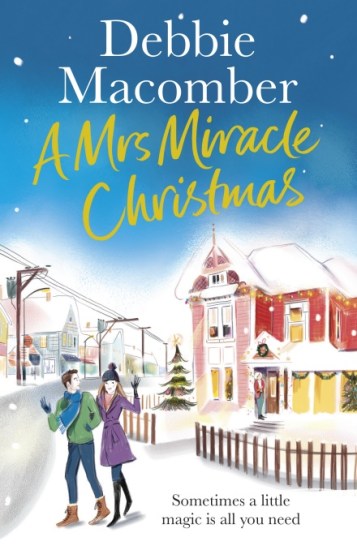
A Mrs Miracle Christmas

Not having read Debbie Macomber before but hearing such good things about her writing, I was delighted to be asked to participate in the launch celebrations for A Mrs Miracle Christmas and would like to thank Rachel Kennedy at Penguin Random House for inviting me.

A Mrs Miracle Christmas was published by Penguin Random House imprint Arrow on 14th November and is available for purchase through these links.

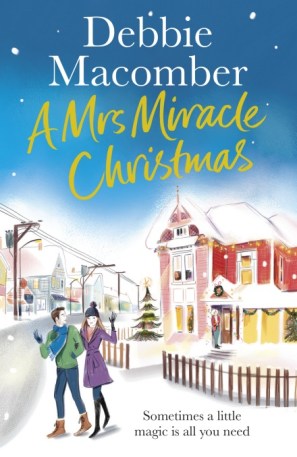
A Mrs Miracle Christmas

A Mrs Miracle Christmas

Laurel McCullough is in desperate need of help.

Her beloved grandmother has just been diagnosed with Alzheimer’s and the baby she and her husband Zach have longed for now seems like an impossible dream.

So when Mrs Miracle appears at the door, Laurel couldn’t be more relieved. She invites the nurse into her life and it’s not long before they become firm friends.

When her grandmother’s condition begins to improve, and as Laurel and Zach continue their desperate quest for a child, Laurel soon realises that there is more to Mrs Miracle than meets the eye…

My review of A Mrs Miracle Christmas

Laurel’s life is rather complicated!

Now, I’ve no religious belief or faith and I’ve never been a mother nor had any desire to be one, so A Mrs Miracle Christmas should be a book that I really didn’t enjoy. Hmm. Totally untrue! Whilst some readers may find it too sentimental, Debbie Macomber writes with such uplifting warmth, that I couldn’t help being drawn in to this lovely narrative. I read the book on a cold wet afternoon and it was the perfect story to transport the reader away into a world of love and positivity – even when life isn’t treating Laurel and Zach well. I think what I enjoyed so much was the knowledge that everything was likely to be resolved happily, though you’ll have to read the book yourself to see if that is true!

Although A Mrs Miracle Christmas is a light read, Debbie Macomber doesn’t shy away from tougher issues like dementia and infertility so that the book will resonate for many an ordinary reader dealing with similar issues in their own life. I felt especially sorry for Zach as he tries to do what he feels is best. So much of the attention in cases of infertility is focused on women, but here Debbie Macomber sensitively explores the impact on men too and I felt this added depth to the narrative.

I really enjoyed the reduced number of characters because with just Helen, Laurel, Zach and Mrs Miracle dominating, there is the opportunity fully to get to know them. I rather feel we could all do with a Mrs Miracle in our lives at times! I loved the way she embodies the concept that memories are important for us all as she guides Helen along.

A Mrs Miracle Christmas is a heartwarming, entertaining book that I very much enjoyed. It would be an ideal gift at Christmas, particularly, I think, for anyone living alone or in need of solace and cheer. It’s very uplifting and I ended it feeling more positive than when I set out to read it.

About Debbie Macomber

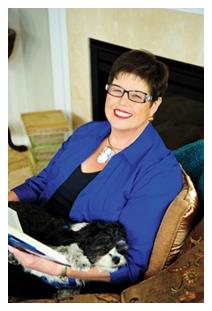
debbie macomber

Debbie Macomber is a No. 1 New York Times bestselling author and one of today’s most popular writers. In addition to fiction, Debbie has also published two bestselling cookbooks; numerous inspirational and nonfiction works; and two acclaimed children’s books. The beloved and bestselling Cedar Cove series became Hallmark Channel’s first dramatic scripted television series, Debbie Macomber’s Cedar Cove, which was ranked as the top program on US cable TV when it debuted in summer 2013.  Hallmark has also produced many successful films based on Debbie’s bestselling Christmas novels. Debbie Macomber owns her own tea room, and a yarn store, A Good Yarnnamed after the shop featured in her  popular Blossom Street novels. She and her husband, Wayne, serve on the Guideposts National Advisory Cabinet, and she is World Vision’s international spokesperson for their Knit for Kids charity initiative. A devoted grandmother, Debbie and her husband Wayne live in Port Orchard, Washington (the town on which her Cedar Cove novels are based) and winter in Florida.

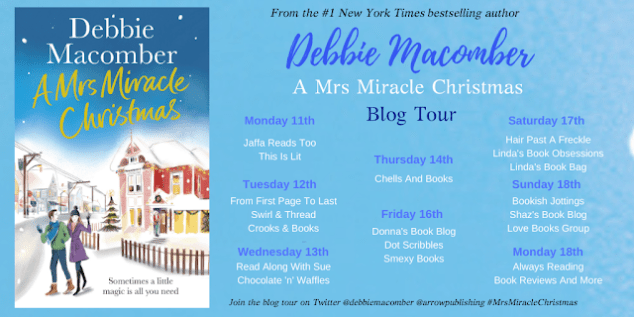
There’s more with these other bloggers too:

A Mrs Miracle Christmas Blog Tour Banner

A Night on the Orient Express by Veronica Henry

A Night on the Orient express

It’s funny how life works out isn’t it? I was at an event showcasing Orion’s 2020 releases that you can read about here, where I was chatting to Veronica Henry and thrilled to pick up a copy of her book Christmas at the Beach Hut, and lo and behold, her earlier novel A Night on the Orient Express came out of the box for the U3A reading group to which I belong. I’m delighted to have my review for A Night on the Orient Express today.

A Night on the Orient Express was published by Orion in July 2013 and is available for purchase through these links. Christmas at the Beach Hut is available for purchase here too!

A Night on the Orient Express

A Night on the Orient express

The Orient Express. Luxury. Mystery. Romance.

For one group of passengers settling in to their seats and taking their first sips of champagne, the journey from London to Venice is more than the trip of a lifetime.

A mysterious errand; a promise made to a dying friend; an unexpected proposal; a secret reaching back a lifetime… As the train sweeps on, revelations, confessions and assignations unfold against the most romantic and infamous setting in the world.

My Review of A Night on the Orient Express

Several people have very different reasons for boarding the Orient Express.

I have a confession. To travel on the Orient Express is on my bucket list and so reading A Night on the Orient Express allowed me to fulfil my fantasy – albeit vicariously. Veronica Henry creates the settings so perfectly, with food, music and ambiance so clearly described that I could imagine myself aboard with her characters. Similarly, I found Venice depicted exactly as I have experienced it so that I felt a clear connection to the writing.

There’s quite a cast of characters, and I thoroughly appreciated Adele’s back story that underpins the plot and draws many of the threads together. It made such a change from women’s fiction that only features thirty-somethings, to find love and life lived to the full with teenagers like Beth and the more mature Riley, Sylvie, Adele and Jack. That said, Archie was the one I felt most drawn to because his emotions more closely mirrored my own, but I don’t want to spoil the story by saying why! I thought the plotting was deftly handled as there are very disparate stories for the characters, with the Orient Express as a unifying theme. Similarly, love in its various forms from filial and parental to romantic and physical, provides a unity across the book making it such a good read.

In A Night on the Orient Express Veronica Henry presents a microcosm of society through the relationships and actions of her characters so that there is resonance for all. Modern family life and dynamics, love, betrayal, crime, grief and so on fill the pages and draw in the reader in a tapestry of drama that I thoroughly enjoyed.

A Night on the Orient Express is sheer escapism, transporting the reader to a world of romance and glamour with just enough reality to make them think they could step aboard too. I enjoyed it.

About Veronica Henry

veronica henry

Veronica Henry has worked as a scriptwriter for The Archers, Heartbeat and Holby City amongst many others, before turning to fiction. She won the 2014 RNA Novel Of The Year Award for A Night on the Orient Express. Veronica lives with her family in a village in north Devon.

Find out more by visiting Veronica’s website or following her Twitter @veronica_henry. You’ll also find her on Facebook.

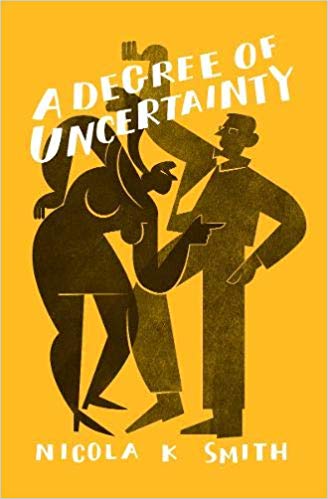
Staying in with Nicola K. Smith, Author of A Degree of Uncertainty

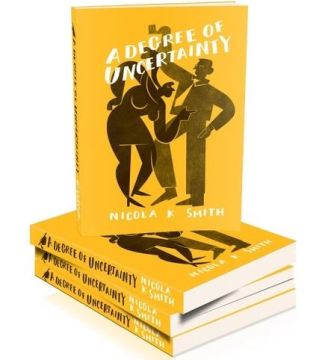
A degree of uncertainty

I haven’t been able to stay in with many authors this year although you’ll find some of those posts here. Today, however, I’m delighted to welcome Nicola K. Smith to stay in with me to tell me all about her debut novel.

Staying in with Nicola K. Smith

Welcome to Linda’s Book Bag, Nicola. Thank you for agreeing to stay in with me.

My pleasure!

Tell me, which of your books have you brought along to share this evening and why have you chosen it?

degree f

I have brought my debut novel, A Degree of Uncertainty. I am a journalist based in Falmouth, in Cornwall and the last few years have seen the town’s art college grow into a full blown university, and the student population has bloomed exponentially. While the students have certainly added more colour and character (not to mention interesting fashion trends) to the town, as well as boosting the economy, the shift in dynamics has inevitably caused some tensions…

I imagine it has! Tell me more…

My novel was prompted by overhearing mutterings in local cafes, conversations (and heated discussions!) with friends, and letters in our famous local newspaper, the Falmouth Packet. There are two sides to every story, and it was a book just crying out to be written!

That’s very true. So, what can we expect from an evening in with A Degree of Uncertainty?

It is a character driven novel. While it explores a Cornish community that is increasingly divided by students — and is further under threat by the ruthless Vice Chancellor’s proposal to increase student numbers by 3,000 more — it is very much about people. It explores love, ambition, betrayal and loyalty.

That sounds really good. Is there anything you’d like to say about those characters?

Harry Manchester is the anti-hero of the tale. He is born and bred in the Cornish town of Poltowan and he vows to protect the community from being overrun by students, and to stop too many houses being bought by greedy landlords. Many residents are relying on him to protect their town, their way of life. Yet Harry is grappling with a number of additional problems, not least trying to reconcile himself with his broken marriage, and concern for his estranged wife, Sylvia, who suffers from depression.

Harry goes head-to-head with Dawn Goldberg, the sassy and ambitious Vice Chancellor who is determined to carve out her career legacy and make her late father proud. Dawn regularly seeks counsel from the statue of a naked man outside her office window, as well as the photo of her father on her desk, both of whom offer condemnation and encouragement in equal measure. As Dawn’s back story unfolds, we come to realise that behind her formidable exterior there are a number of frailties.

I think I’d rather like to see that statue Nicola. I may have a question or two of my own to ask it!

There are several twists and turns as relationships develop and unlikely friendships form – not least between Harry and Ludo, a charismatic Irish student.

Holistically, the story looks at how a community under threat brings out the best — and the worst — in people.

I think A Degree of Uncertainty sounds like my kind of book Nicola. I love character driven narratives and these characters certainly sound colourful!

What else have you brought along and why?

Queen GH

I have brought Queen’s Greatest Hits. Harry Manchester is a frustrated musician and a huge Queen fan. His Bohemian Rhapsody ringtone interrupts his live TV interview at the start of the book, and there are several times when he seeks solace and inspiration from a rousing Queen song when in times of need…

I’m quite partial to a bit of Queen myself. Hang on a minute and I’ll just set this up to play before we chat further…

gin

I have also brought a bottle of Caspyn Cornish Dry Gin (and of course a bottle of tonic and half a cucumber). This wonderful tipple is produced in west Cornwall, near the fictional town of Poltowan, and it is Harry’s go-to drink… Make sure you garnish it with cucumber though! Harry likes his just curling around the rim… Cheers!

Regular Linda’s Book Bag readers will know I can’t tolerate wine as it makes me ill since I had whatever it was that caused me to pass out and hallucinate all over the place, but gin, however, that’s another story! Cheers Nicola, and thank you for staying in with me to chat all about A Degree of Uncertainty.

A Degree of Uncertainty

degree f

A Cornish community is divided by its rapidly growing university. Some residents see it as progress. Others see it as a threat to their town, an end to everything they know.

​Ambitious Vice Chancellor, Dawn Goldberg vows to keep expanding Poltowan University, while businessman, Harry Manchester is committed to saving his beloved community from being overrun by students and greedy landlords. But Harry is also grappling with his broken marriage, while Dawn is consumed by making her late father proud.

​It’s town versus gown. And something’s got to give…

A Degree of Uncertainty is available for purchase directly from Nicola’s website or in paperback or ebook on Amazon from December 1st 2019.

About Nicola K. Smith

Nic-1

Nicola K Smith is a freelance journalist based in Cornwall. She contributes to a range of titles including The Times, guardian.co.uk, Coast magazine and BBC Countryfile. She has just written her first novel, inspired by life in her home town of Falmouth, and set in a fictional Cornish town…

To find out more about Nicola, visit her website, or follow her on Twitter @NicolaKSmith and on Instagram @nicolaksmith740. You’ll also find Nicola on Facebook.

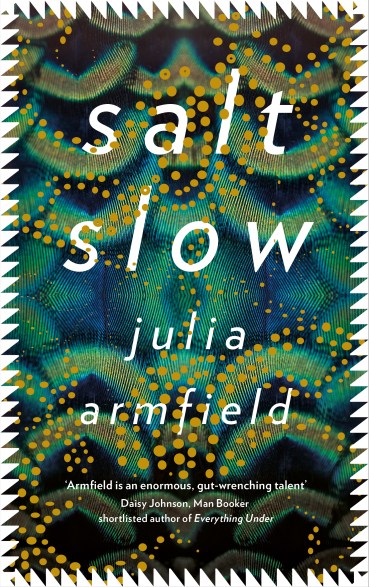
Salt Slow by Julia Armfield

Salt Slow cover

It gives me very great pleasure today to feature Salt Slow by Julia Armfield as the second of my reviews as shadow judge for The Sunday Times/University of Warwick Young Writer of the Year Award this year. You’ll find more about the award here on Linda’s Book Bag and on The Sunday Times/University of Warwick Young Writer’s Award website.

julia armfield instagram

Published by Pan Macmillan imprint Picador, Salt Slow is available for purchase through the links here.

Salt Slow

Salt Slow cover

In her brilliantly inventive and haunting debut collection of stories, Julia Armfield explores bodies and the bodily, mapping the skin and bones of her characters through their experiences of isolation, obsession, love and revenge.

Teenagers develop ungodly appetites, a city becomes insomniac overnight, and bodies are diligently picked apart to make up better ones. The mundane worlds of schools and sleepy sea-side towns are invaded and transformed, creating a landscape which is constantly shifting to hold on to its inhabitants. Blurring the mythic and the gothic with the everyday, Salt Slow considers characters in motion – turning away, turning back or simply turning into something new entirely.

Winner of The White Review Short Story Prize 2018, Armfield is a writer of sharp, lyrical prose and tilting dark humour – Salt Slow marks the arrival of an ambitious and singular new voice.

My Review of Salt Slow

A collection of nine short stories.

Salt Slow is a beautifully written collection that surprises, shocks and entertains. Julia Armfield writes in such an innovative manner in Salt Slow that the ills, fears and desires of modern society are presented in startlingly mystical and yet totally believable ways. Her quality of prose left me reeling. I loved the poetic nature of her descriptions. In Salt Slow Julia Armfield manages to encapsulate precisely what the reader might have thought if only they had had the same glorious skill in creating the same new, descriptive compound words. To me this felt like living breathing writing that appealed to all my senses. This is a truly organic collection.

The themes of Salt Slow are universal but explored highly innovatively. We’re so used to a lack of sleep, for example, but having the concept personified in this wraith-like fashion is such a clever and affecting approach. Julia Armfield made me wonder what my own Sleep might look like and how it might behave. With body image, relationships, birth, death, nature, popular culture, relationships, love and obsession woven into the stories I’d defy any reader not to find something in Salt Slow that spoke directly to them through Julia Armfield’s writing.

I found I had to read Salt Slow in a measured way, fully to appreciate the incredible skill of the author. The stories are prescient with menace, sometimes bordering horror, with their frequently voodooistic, vampyric and violent undertones. Oblique literary references to Shakespeare, Mary Shelley and Bram Stoker for example, leave a feeling of disquiet and at times I felt my nerves almost supercharged by the intricate and all too convincing sensory descriptions. Almost against my will I felt a visceral response to Julia Armfield’s writing that perturbed me.

This collection truly isn’t like anything I’ve read before. The quality of imagination translated into fabulous prose is just wonderful. Salt Slow is unsettling, entertaining and beautifully written. I loved Julia Armfield’s collection and recommend it without reservation.

About Julia Armfield

Julia Armfield photo credit Sophie Davidson

Julia Armfield lives and works in London. She is a fiction writer and occasional playwright with a Masters in Victorian Art and Literature from Royal Holloway University. Her work has been published in LighthouseAnalog MagazineThe White Review and Salt‘s Best British Short Stories 2019. She was commended in the Moth Short Story Prize 2017, longlisted for the Deborah Rogers Prize 2018 and is the winner of The White Review Short Story Prize 2018.

You can follow Julia on Twitter @JuliaArmfield and visit her website for more information.

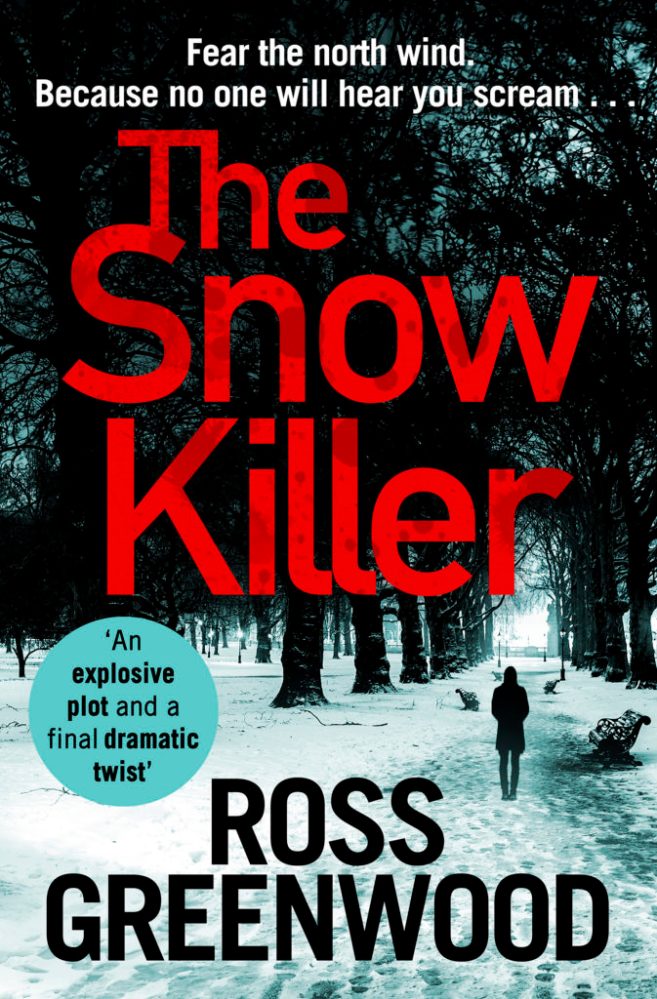
A Publication Day Extract from The Snow Killer by Ross Greenwood

The Snow Killer

I often say that lovely Ross Greenwood appears on Linda’s Book Bag more frequently than I do! Most recently we shared the cover of his brand new thriller The Snow Killer. The Snow Killer is out today from Boldwood Books and I am delighted to share an extract from the beginning of the book with you today.

Other posts on Linda’s Book Bag featuring Ross include:

A guest post all about seizing the day when his book Shadows of Regret was published in a post you can see here.

An introduction to Ross’s protagonist for Abel’s Revenge here.

My Lazy Blood interview with Ross here.

A guest post and my review of The Boy Inside here.

My review of Ross’s Fifty Years of Fear here.

Once you’ve read the extract from The Snow Killer I’m sure you’ll want to get a copy and you can do that here.

The Snow Killer

The Snow Killer

‘FEAR THE NORTH WIND. BECAUSE NO ONE WILL HEAR YOU SCREAM…’

A family is gunned down in the snow but one of the children survives. Three years on, that child takes revenge and the Snow Killer is born. But then, nothing – no further crimes are committed, and the case goes cold.

Fifty years later, has the urge to kill been reawakened? As murder follows murder, the detective team tasked with solving the crimes struggle with the lack of leads. It’s a race against time and the weather – each time it snows another person dies.

As an exhausted and grizzled DI Barton and his team scrabble to put the pieces of the puzzle together, the killer is hiding in plain sight. Meanwhile, the murders continue…

The first in a new series, Ross Greenwood has written a cracking, crackling crime story with a twist in its tale which will surprise even the most hardened thriller readers. Perfect for fans of Mark Billingham and Stuart MacBride.

And now’s your chance to read the opening of The Snow Killer

An Extract from The Snow Killer

Chapter One

I must have been ten years old when I first tidied up his drug paraphernalia. I didn’t want my sister crawling over it. We called her Special – a take on Michelle – because she was an enigma. She never spoke a single word and seemed more of a peaceful spirit than a physical entity. Give her a crayon or pencil and a piece of paper, though, and her smile filled the room.

I monitored my father’s habit through his mood swings or by how much time he spent in bed. The foil and needles increased rapidly just before we escaped London a few years back. I cried because both my parents left evidence of their addiction.

In many ways, my mother was as simple as Special. Swayed by my dominant father, she did everything he said, even though she had more common sense. Joining him in his heroin habit was inevitable.

Until the night we left, we took holidays and ate out in restaurants. I didn’t know where the money came from because I had no idea what my father did.

The evening we fled London, we packed our suitcases at ten at night and caught the last train to Peterborough, arriving at two in the morning. I recall beaming at my parents, especially when we checked into a huge hotel on the first night. My mum’s brother, Ronnie, lived nearby. When we eventually found him, he helped us move into a cottage in rural Lincolnshire, which was cheap for obvious reasons. The single storey building had five rooms and no internal doors. You could hear everything from any room – even the toilet.

Six months after we settled in our new home, I lay in the damp bed with my sister’s warm breath on my neck and heard my father casually say he’d shot the wrong man. The fact my mother wasn’t surprised shocked me more.

Life carried on. My parents continued to avoid reality. We ate a lot of sandwiches. Lincolnshire is only two hours north of London but it felt like the edge of the world after the hustle and bustle of the capital city. I walked the three miles to school. Special stayed at home where she painted and coloured. My mum sold Special’s pictures. She drew people and animals in a childish way, but they captivated people as the eyes in the pictures haunted the viewer.

One freezing night, my sister and I cuddled in bed and listened to another argument raging in the lounge. We had our own beds but only ever slept apart in the hot summer months. At six years old, she didn’t take up much room.

‘You did what?’ my mother shouted.

‘I saw an opportunity,’ my father replied.

‘What were you thinking?’

‘We’re broke. We needed the money.’

‘What you’ve done is put our family in danger. They’ll find us.’

‘They won’t think I took it.’

I might have been only fifteen years old, but I had eyes and ears. My parents constantly talked about money and drugs. By then, that was all they were interested in. That said, I don’t recall being unhappy, despite their problems. Normal life just wasn’t for them.

My mother’s voice became a loud, worried whisper. ‘What if they come for the money? The children are here.’

‘They won’t hurt them,’ my father said.

A hand slammed on the kitchen table. ‘We need to leave.’

‘It’s three in the morning and snowing. No one will look now. Besides, where would we go?’

‘We’re rich! We can stay where we like.’

Crazily, they laughed. I suppose that’s why they loved each other. They were both the same kind of mad.

That was the sixties and a different time. Not everyone spent their lives within earshot of a busy road. In fact, few people owned their own car. If you’ve ever lived deep in the countryside, you’ll know how quiet the long nights are. So it makes sense that I could hear the approaching vehicle for miles before it arrived. The put-put-put we gradually heard in unison that night sounded too regular for it to be my uncle’s ancient van. And anyway, good news doesn’t arrive in the middle of the night.

Mum understood and her bellow filled the cottage. ‘Grab everyone’s coats and shoes. I’ll wake the kids. Move!’

We slept more or less fully clothed due to the draughty windows and non-existent central heating. The warmth from the fire failed to reach the bedrooms. I rammed my boots on in seconds, and I slid Special’s warm feet into her little red wellies. Even at that time of night, my mother wore full make-up, but her beauty couldn’t disguise her wild eyes and trembling jaw. She hustled us kids to the back door where our jackets hung.

I held my hands out to my father. ‘Come on, Dad. Please, let’s go.’

My father peered through the window. Judging by the volume of the car’s engine ticking over, they had arrived. Then, a heavy silence. He glanced past me at my mother.

‘I’ll stay and talk to them. Get the children safe.’

Until that point, the extreme danger hadn’t registered. The expression of grim acceptance and resignation on my father’s face told me whatI needed to know. I grabbed his wrist and pulled him away from the window.

‘Please, Dad!’

‘Go. Don’t worry about me. See you at Uncle Ronnie’s when I get there.’

I frowned at him. If it was going to be all right, we wouldn’t need to go to my uncle’s. The loud, hard double knock on the front door jolted us from our inertia and my sister, mum and I fled through the back door.

We waited at the side of the house. Even the clouds seemed to hold their breath. The inches of settled snow cast an eerie light over the fields. I peeped around the corner at our visitors and recognised three men: a gaunt man, a fat man, and a man with weird sticking-out teeth. They’d been to our place on numerous occasions. Goofy, as I’d secretly nicknamed him, watched Special in a manner that gave me goose bumps. I always took her to our room if they arrived and we hadn’t gone to bed yet. I called the other two Laurel and Hardy for their different sizes.

Perhaps, it would be okay after all. Even though they talked down to my father, I thought they were friends. They joked that they all worked in the same line of business. Our front door opened. With the fire long dead and no electricity, the interior showed black and solid. Out of this darkness came my father’s outstretched hand holding an envelope.

A flash startled me, followed by a deafening, frightening bang. It lit my father up like a photograph. Terrified like rabbits, we panicked and left our hiding spot. Stupid, really. The cottage sat on a straight track. There wasn’t another house for miles. We ran in a line up the snowy lane towards the wood. If you run like that, holding hands, you can only go at the pace of the slowest runner. Special’s little boots slipped and skidded across the surface. She rarely went outside.

The first trees and only cover remained distant. I stole a glance back, knowing if they came after us, we would never make it. They stood in a line in the centre of the road, unmoving. Weirdly, considering the weather, they wore similar blue suits. Each had a raised hand. They were colour on a blank canvas, and clear as if it were daylight. We were sitting ducks. This time, multiple booms crashed around our ears.

Incredibly, we carried on running. A sound not dissimilar to a whip cracking whistled by my right ear. A lone crow in front of us launching into flight seemed to be the only consequence of the volley of bullets until my mother stumbled. She dragged herself up with gritted teeth and spat on the floor. Her eyes fixed on the distant tree line, and we continued to move forward. I heard the men laughing. Another torrent of cracks echoed from behind, and my mother hit the ground face first with a sickening thump.

I crouched and scraped the bloody hair from her cheek. Blood poured from her mouth. The snow devoured the liquid even though it gushed out. Her eyes lost focus and, with her dying breath, she gasped, ‘Run.’

The men’s footwear crunched closer. I swung Special onto my back. She adored that: playing horses. She weighed nothing but could hang on like the finest jockey. I set off much faster, terror loaning speed and strength to my legs. I reached the wood and burst in. Branches rustled and scratched my face. But just the trees at the edge were thick conifers, the ones beyond only skeletons. I prayed that our hunters would give up if I put enough distance between us.

It wasn’t a forest by any means, and soon I reached the edge. A large expanse of white opened up before me. The voices behind me echoed louder and closer. Special’s soft, slow breath warmed my ear. I clung to that fact. She didn’t understand. I had no choice and fled into the snow field. Beneath the covering of white, rutted uneven ground unbalanced me. I managed twenty stodgy paces when I heard chuckling again.

Special’s grip loosened after the next succession of shots boomed out. I grabbed her little arms to stop her sliding off my back. Another bang shattered the silence, and a stabbing pain seared my right thigh. After lurching a few more paces, my leg gave way. I collapsed onto my side and Special rolled off. She stared at me. She wasn’t sad or frightened. Her face only displayed kindness. Special had never uttered a word, but she tried that night.

‘Sorry,’ she mouthed. And then the light inside her died. My beautiful sister faded. My sister who gave the best hugs in the world.

A few seconds later, a man appeared in my vision. It was Goofy. He reached down and put his hand towards Special’s neck. I didn’t want him touching her. Energy coursed through me and I pushed up with my arms. The agony in my leg stole my power as I attempted to stand, and I crumpled backwards.

The killer shrugged and removed his hand from Special. His fingers came away dripping with blood. He ran a parched tongue over misshapen teeth and put a finger in his mouth. He regretted that she’d died, but only because it prevented him from having her.

A voice in the distance barked out, ‘Finish them off.’

Goofy leaned over me. I smelled the whisky my father drank when he couldn’t get what he needed. His eyes narrowed. I’d often been called Junior at school. A smattering of freckles below cautious green eyes hinted at an age beneath my years. My parents didn’t waste money on haircuts any more, and my mother was no hairdresser. One of the other kids in my class called me Oliver Twist. Perhaps my innocence made Goofy pause.

The wrinkles between his eyebrows deepened, and a cheek twitched. The snow fell again and flurried behind him. Maybe he thought twice, but he remained ruthless at heart. I stared at his eyes as he leaned back. I kept my gaze on him and implored for mercy until I peered into the barrel of his gun.

The next retort and flash were muffled as though the weather had taken the brunt. And darkness fell.

They left us in that bleak field in the depths of winter without a care. The papers would be full of the news for weeks. They called them the snow killings.

I don’t know about you, but that makes me want to read The Snow Killer immediately!

About Ross Greenwood

ross greenwood - author image

Ross Greenwood was born in 1973 in Peterborough and lived there until he was 20, attending The King’s School in the city. He then began a rather nomadic existence, living and working all over the country and various parts of the world.

Ross found himself returning to Peterborough many times over the years, usually, so he says “when things had gone wrong.” It was on one of these occasions that he met his partner about 100 metres from his back door whilst walking a dog. Two children swiftly followed. And, according to Ross, he is “still a little stunned by the pace of it now.”

Lazy Blood book was started a long time ago but parenthood and then four years as a prison officer got in the way. Ironically it was the four a.m. feed which gave the author the opportunity to finish the book as unable to get back to sleep he completed it in the early morning hours.

Ross Greenwood’s second book, The Boy Inside, was picked up by Bloodhound Books, and in September 2017, Fifty Years of Fear was published. The year 2018 saw the publication of his next psychological thriller, Abel’s Revenge. All his books are thought provoking, and told with a sense of humour.

Ross Greenwood hopes you enjoy reading them.

You can find out more about Ross on his web site. You can also follow Ross on Twitter @greenwoodross and find him on Facebook.

Brad was Sad by M. C. Goldrick, Illustrated by Rebecca Alexander

Brad - front_hardcover

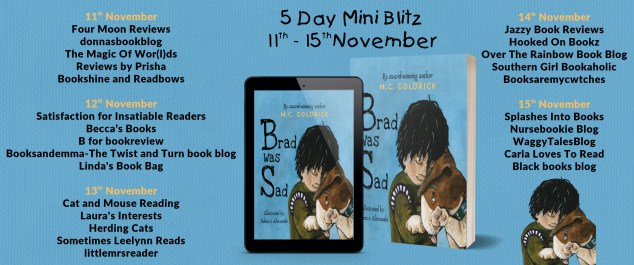
My thanks to Rachel of Rachel’s Random Resources for inviting me to participate in the blog tour for children’s book Brad was Sad by M.C. Goldrick. I’m sharing my review today.

Brad Was Sad

There is also a lovely giveaway for US/Canadian readers to win one of three paperback copies of Brad was Sad through this link. Please note that this giveaway is independent of Linda’s Book Bag.

Brad was Sad is available for purchase on Amazon UK and Amazon US.

Brad was Sad

Brad - front_hardcover

Did Brad’s dad make him sad?

Brad thought he had…until his dog, Plaid, proved he could choose his outlook and feel glad.

Kids learn best through stories. Empower your child to own their feelings with this beautifully illustrated picture book by award-winning author, M.C. Goldrick.

Brad’s dog Plaid shows him how to feel and deal with emotions. Though Brad is having a bad day, Plaid shows him that it’s in his power to choose his perspective and his feelings.

My Review of Brad Was Sad

Brad’s been told off and he’s sad!

Although this is a simple story for young children, there’s a lovely message behind Brad Was Sad because Brad is shown the truth about his emotions through his pet dog Plaid, and comes to realise he alone is responsible for his feeling through the way he responds to others. This would afford an excellent opportunity to explore feelings and emotions with a child at bedtime.

Told through rhyme, Brad Was Sad also allows language development, particularly through the consideration of spelling for homophones.

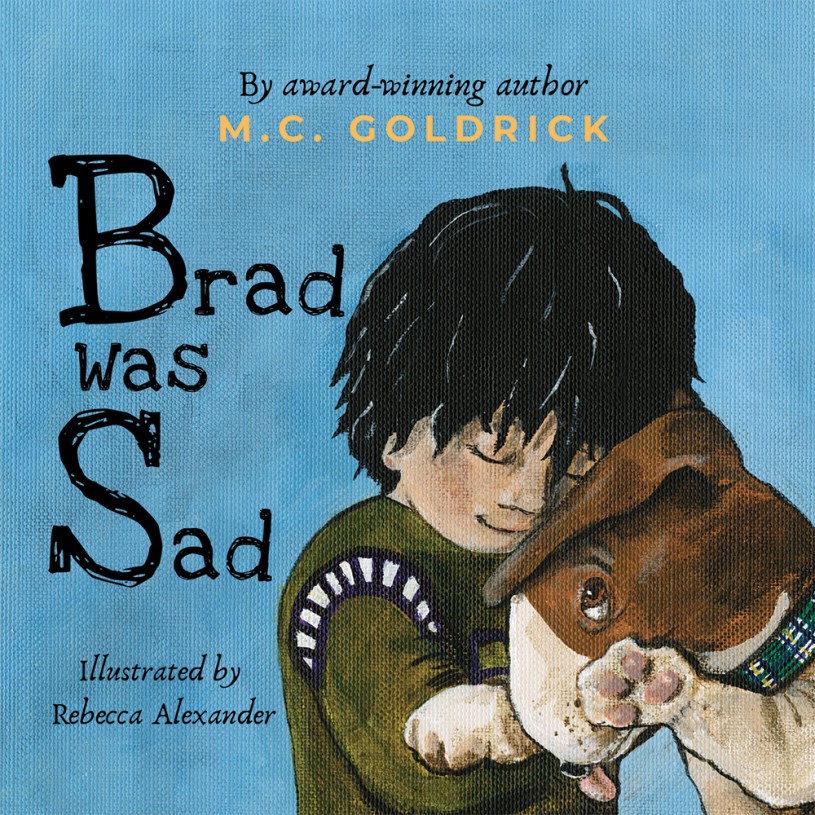
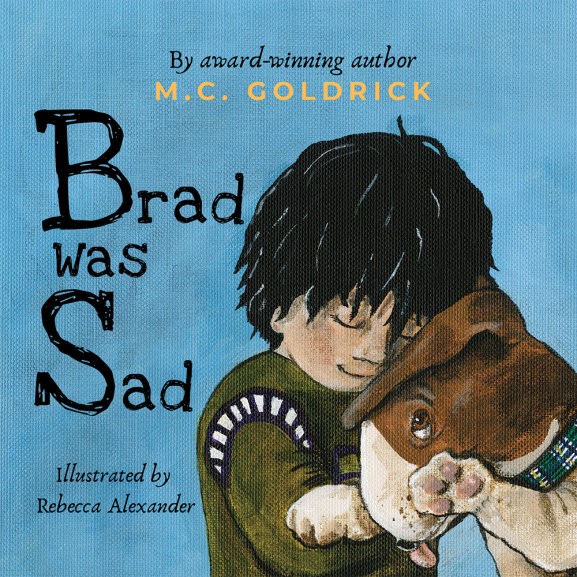
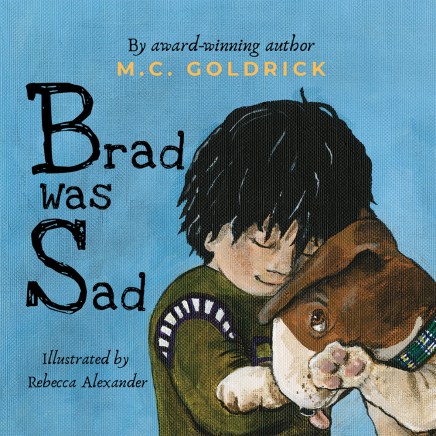
There are charming images to support the text throughout and the blue background fits perfectly the concept of feeling blue or sad. I really like the inclusion of a web address where there is a free activity book to be had too.

Brad Was Sad is a quick and easy read that children will enjoy and will be able to relate to perfectly.

About M. C. Goldrick

Brad Was Sad Author Photo

Award-winning author & mother of two, M.C. Goldrick sees feelings as our first language. Through her books she helps us identify and own our emotions. Her acclaimed Juvenile fiction series TIMEFLIES is an example of how stories can both enrich and entertain. She lives in Ottawa, Ontario, Canada with her family.

You’ll find M.C Goldrick on her website, Amazon, Facebook and Instagram.

About Rebecca Alexander

Rebecca Alexander, mother of two now-grown-up boys, is an accomplished artist with a private gallery. Her work has been featured on Canada Post Christmas Cards & stamps. She lives in St.Catharines, Ontario, Canada.

Brad Was Sad Full Tour Banner

The Name Beneath The Stone by Robert Newcome

The Name Beneath the Stone

What could be more appropriate on Remembrance Day than to feature Robert Newcome’s The Name Beneath The Stone: Secret Of The Unknown Warrior? My grateful thanks to Aimee at Bookollective for inviting me to participate in this blog tour and for sending me a copy of The Name Beneath The Stone in return for an honest review. It is my pleasure to begin the tour.

Published by Unicorn on 23rd September 2019, The Name Beneath The Stone is available for purchase in all the usual places including here.

The Name Beneath The Stone

The Name Beneath the Stone

Three generations, one family, connected by an historic secret.

1917: Private Daniel Dawkins fights at Messines Ridge and Passchendaele. He writes home to his true-love Joyce, but reveals little of his extreme bravery, his kindness, his loyalty to his comrades and the horrors they experience on the Western Front.

1920: Captain Peter Harding is tasked with a secret mission to assist in the selection of a body dug up from the battlefields of Flanders to be buried in Westminster Abbey as the ‘Unknown Warrior’. Events take place on that expedition that come to haunt him for the rest of his life.

2011: Sarah Harding discovers Daniel’s letters and Peter’s diaries. Together with historian James Marchant she pieces together the hidden truth behind the Tomb of the Unknown Warrior and must decide what to do with it. Values are challenged and characters are tested in this gripping novel which asks what if the identity of the Unknown Soldier was discovered – and should that secret ever be revealed?

My Review of The Name Beneath The Stone

The story of just who might be the Unknown Warrior.

In the interests of complete honesty, I have one very small criticism of The Name Beneath The Stone that I’m going to get out of the way before my review proper; whilst totally appropriate to the era and situations, I found too many expletives in the direct speech of those parts of the book set in 1917. This is purely my personal response and I’m sure others would not have the same opinion.

That said, I thoroughly enjoyed (if that’s the correct word as as times it’s quite harrowing) reading The Name Beneath The Stone because it’s absolutely fascinating, totally authentic and very thought-provoking. I thought the three strands of the story were woven together by Robert Newcome with great skill so that I was completely convinced by all the action. The blending of fact and fiction makes for a compelling narrative that educates as well as entertains. The level of reality in the depiction of army life and the quality of research that has gone in to The Name Beneath The Stone is exemplary. I was also surprised by some of the elements in The Name Beneath The Stone, not all of which I can mention as they would spoil the story. However, one such example is the inclusion of original photographs, which serve to give credence to the plot and descriptions and enhance the impact of the book.
I found the characters had depth and realism, especially Daniel, and I often found the 1917 passages quite uncomfortable to read because Robert Newcome presents the locations and situations that Daniel finds himself in so convincingly that I could hardly bear what he had to endure. Indeed, I think The Name Beneath The Stone is a wonderful book in making sure we remember those who fought and died in WW1. It is by no means just an entertaining read, it is an important one too. The quality of description is frequently heart rending.

The themes of guilt, bravery, cowardice, relationships and duty that might be expected in a book like this, are presented so well in all three timescales that the significance of the Unknown Warrior resonates just as much now in The Name Beneath The Stone as it would have done in 1920. However, even more interesting for me was the sense of mystery and the process of historical research that forms the 2011 sections. I was so intrigued I had to keep looking things up to see if they were real or invented.

The Name Beneath The Stone is an absorbing narrative. With high quality research underpinning a mystery story as well being historically accurate and engrossing, Robert Newcome’s writing intrigues the reader and draws them in. I hadn’t expected a fresh approach to writing about WW1 but Robert Newcome has certainly managed it. I really recommend The Name Beneath The Stone as it’s a book I’ll be thinking about for a very long time.

About Robert Newcome

robert

After five years serving as an officer in The Light Infantry, Robert studied Political Philosophy at Exeter University. Following this he had various management positions in the John Lewis Partnership, finally running management training. He then spent a number of years working for management consultants before setting up his own business with a colleague in 2007. Throughout this period he was writing articles, short stories and novels in his spare time.

Robert has just joined Twitter @NewcomeRobert.

A Name Beneath the Stone poster

The Christmas Wish List by Heidi Swain

the-christmas-wish-list-9781471185687_lg

Regular Linda’s Book Bag readers will know how much I love Heidi Swain, both as an author and as a person, so it will come as no surprise that I am thrilled to be part of the launch celebrations for her latest book, The Christmas Wish List, by closing the blog tour with my review today. My enormous thanks to Harriett Collins at Simon and Schuster for inviting me to participate.

Recently I reviewed Heidi’s Poppy’s Recipe for Life here and hosted a guest post from Heidi here all about what Christmas means to her when Snowflakes and Cinnamon Swirls at the Winter Wonderland was published.  You can read what happened when we ‘stayed in’ together to discuss Sunshine and Sweet Peas in Nightingale Square here, and read my review of Heidi’s Mince Pies and Mistletoe at the Christmas Market here.

Published by Simon and Schuster on 3rd October 2019, The Christmas Wish List is available for purchase through these links.

The Christmas Wish List

the-christmas-wish-list-9781471185687_lg

After being let go from her job in a swanky hotel just weeks before Christmas, Hattie is feeling lost. Even more so when her high-flying boyfriend announces he’s landed his dream job in Abu Dhabi and asks her to move with him. Luckily, Hattie’s long-time friend Dolly is on hand to help and invites Hattie to spend one last holiday in the small, festive town of Wynbridge, determined to give her a Christmas to remember . . .

Upon Hattie’s arrival, holiday preparations are in full swing. But for Hattie, whose Christmas cheer has long since run out, it’ll take more than mince pies and mistletoe to open her heart to the season once more. Relishing the task of reigniting Hattie’s Christmas spirit, Dolly suggests they create a wish list of all the things the season can offer, and with the helpful hands of Wynbridge’s resident handyman, Beamish, Hattie finds her frosty exterior is starting to thaw.

As Wynbridge prepares for its most spectacular Christmas yet, will Hattie leave snowy England behind for life in a sunnier clime, or will she in fact realise that her heart’s desire lies much closer to home?

The Christmas Wish List is the perfect read this Christmas, promising snowfall, warm fires and breath-taking seasonal romance. Perfect for fans of Carole Matthews and Cathy Bramley.

My Review of The Christmas Wish List

A return to Wynbridge will provide more than just a rest for Hattie.

I think it’s wonderful to be able to open a book by an author and know you’re guaranteed a wonderful read and that’s exactly what happens with a Heidi Swain novel; The Christmas Wish List being no exception.

I love the way Heidi Swain creates a festive atmosphere. She manages to weave traditions and cosiness into her narrative without being saccharine or twee so that The Christmas Wish List provides a compelling and uplifting setting that feels perfect for a winter read. Smatterings of snow, carols, winter wonderlands and roaring fires transport the reader to a world of pleasure and positivity. However, The Christmas Wish List isn’t all sweetness and joy, and elements of the story that I don’t want to reveal because they will be spoilers, provide a perfect balance and reality that give even greater depth and enjoyment.

Whilst characters I’ve met before in Wynbridge make an appearance, there’s actually quite a reduced cast list at the heart of this story so that there is an intensity to their relationships that touches the reader highly effectively. I’m sure I was just as much in love with Beamish as any Wynbridge resident, but it was Dolly’s attitude of making the most of life through her actual wish list that resonated most with me. The positive message behind the narrative is simply flawlessly portrayed. I also thought Hattie was such a realistic character. She is stubborn and sometimes quite foolish and her actions often frustrated me because I cared about her. Her relationships with her family, Dolly and Jonathan in particular made her embody a microcosm of many a young woman in today’s society. I was desperate for he to have a happy resolution in The Christmas Wish List but you’ll need to read the book to see if that particular wish of mine was fulfilled.

As ever when I read Heidi Swain, although I adore the storytelling, it is the underpinning themes behind the story that I find most appealing. A sense of identity and appreciating what really matters in life form a tapestry with friendship, relationships, a sense of community and love so that in The Christmas Wish List I think there is something for every reader to identify with.

The Christmas Wish List is yet another triumph of a book from Heidi Swain. It truly does embody the festive spirit of Christmas, but more importantly, it conveys the message of making the most of the lives we have. I thoroughly enjoyed it.

About Heidi Swain

heidi-swain-576635598

Heidi Swain is the Sunday Times bestselling author of five novels: The Cherry Tree CafeSummer at Skylark FarmMince Pies and Mistletoe at the Christmas MarketComing Home to Cuckoo Cottage and most recently, Sleigh Rides and Silver Bells at the Christmas Fair. She lives in Norfolk with her husband and two teenage children.

You can follow Heidi on Twitter @Heidi_Swain and visit her blog or website. You’ll also find Heidi on Facebook and there’s more with these other bloggers too:

The Christmas Wish List Blog Tour Graphic (1)

Things That Art: A Graphic Menagerie of Enchanting Curiosity by Lochlann Jain

Things that art

My grateful thanks to Bei Guo at Midas PR for inviting me to participate in the launch celebrations for Things That Art: A Graphic Menagerie of Enchanting Curiosity by Lochlann Jain and for sending me a copy of the book in return for an honest review.

Published by the University of Toronto, Things that Art is available for purchase here and directly from the publisher.

Things That Art

Things that art

Lochlann Jain’s debut non-fiction graphic novel, Things That Art, playfully interrogates the order of things. Toying with the relationship between words and images, Jain’s whimsical compositions may seem straightforward. Upon closer inspection, however, the drawings reveal profound and startling paradoxes at the heart of how we make sense of the world.

Commentaries by architect and theorist Maria McVarish, poet and naturalist Elizabeth Bradfield, musician and English Professor Drew Daniel, and the author offer further insight into the drawings in this collection. A captivating look at the fundamental absurdities of everyday communication, Things That Art jolts us toward new forms of collation and collaboration.

My Review of Things That Art

A series of drawn images with commentaries.

My word – or should that be ‘my image’? I don’t think I have encountered a book quite like Things That Art before and I’m not quite sure how to review it. I actually ‘read’ this book three times before attempting to summarise my thoughts. I loved the title Things That Art. Whilst it describes the contents of the book perfectly, it also generates the question, ‘Things that art what?’ so that the reader is immediately drawn into a more inquisitive frame of mind.

Firstly I simply looked at all the images and pondered their links and meanings. Whilst some were obvious, many of Lochlann Jain’s associations are startling, innovative and clever so that they reward time spend looking and looking again. I confess I didn’t understand all of them, even after reading the commentaries and looking (or reading) again but this is by no means a criticism. I researched some things, expanded my vocabulary, knowledge and understanding and felt Things That Art had not only been fascinating to explore, it had enhanced who I am because I now have a more acute and questioning attitude to objects around me than before. For example, I found myself adding items to some of the concepts presented too because Lochlann Jain had made me think differently. By way of illustration, I mentally included racism and sexism to ‘things that are institutionalized’ and I think this is one of the joys of Things That Art – it is more than a picture book or graphic novel, it’s a catalyst for thought.

The artwork has a naive quality that belies the meanings and references it embodies, and adds to the overall effect of the book in taking the reader by surprise. The commentaries are fascinating essays that enlighten the reader and make them appreciate Things That Art still further. Again, I felt my ignorance challenged (I didn’t know what ‘koan’ meant for example. It’s ‘a paradoxical anecdote or riddle without a solution, used in Zen Buddhism to demonstrate the inadequacy of logical reasoning and provoke enlightenment’ and fits this book perfectly) and having read the commentaries and looked again at Lochlann Jain’s images it was akin to being given entry to an elusive and elite club. This felt quite special!

I am unsure how to encapsulate Things That Art in a summary. It is peculiar, disturbing, thought-provoking and hugely entertaining. Things That Art is totally unlike any other book I’ve encountered before – and all the better for it!

About Lochlann Jain

image011

Lochlann Jain is a non-binary British academic and Professor of Anthropology at Stanford University and Global Health and Social Medicine at King’ College London. Jain has studied art at the Slade (London) and the San Francisco Art Institute. Whether in art or scholarship, their work aims to disrupt ways of knowing. Jain’s work has been praised as “a remarkable achievement,” (TLS), “a whip-smart read” (Discover Magazine), “brilliant and disturbing,” (Nature Magazine), and having “the phenomenological nuance of James Joyce.” (Medical Humanities) Jain is the author of Injury (2006) and Malignant: How Cancer Becomes Us (2013).

Lochlann Jain has won numerous prizes for work in anthropology and medical journalism, including the Staley Prize, June Roth Memorial Award, Fleck Prize, Edelstein Prize, Victor Turner Prize, and the Diana Forsythe Prize. The work has been supported by Stanford Center for the Advanced Study of Behavioral Sciences, National Endowment for the Humanities Fellowship, and the National Humanities Center.

To find out more, follow Lochlan on Twitter @lochlannjain or visit Lochlan’s website.

There’s more with these other bloggers too:

Things That Art Blog Tour (1)