An Interview with Ambreen Hameed and Uzma Hameed, authors of UNDYING

My enormous thanks to Ben at Cameron Publicity for putting me in touch with Ambreen Hameed and Uzma Hameed, authors of UNDYING. Ambreen and Uzma are sisters and co-author books. I was so intrigued by the concept that I simply had to interview them here on Linda’s Book Bag.

An Interview with Ambreen Hameed and Uzma Hameed

Welcome to Linda’s Book Bag ladies. Would you like to introduce one another please?
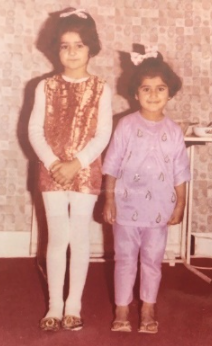
Ambreen: Uzma is my younger sister, though by no means the lesser. She’s a successful theatre-maker and dramaturg who, among her many credits, collaborated on the Royal Opera House’s ballet acclaimed ballet Woolf works.  In UNDYING, she writes the voice of the younger sister, Zarina.  If it hadn’t been for her determination and her  formidable editing skills we would never have finished the book.

Uzma sounds formidable!

Uzma: Ambreen has degrees in physics and the philosophy of science and has a passion for knowledge. She’s a journalist with a highly successful career in TV, including as series producer for C4’s landmark Devil’s Advocate and, somehow, has managed to fit in being a yoga teacher too. As a writer, she’s super-talented – and fast. She’s also my big sister and the voice of the elder sister, Sufya in UNDYING.

Crikey! You both make me and my big sister seem very inadequate!

And could you tell me a bit about UNDYING?

Ambreen: Undying is a black comedy told from the point of view of two British Muslim sisters who have fallen for the same man.  At the time the novel takes place, they aren’t communicating well with each other (we gradually understand the reason why) so – privy to both sisters’ experience – the reader always knows more than each sister.  The man they are in love with is called Heathrow – he’s an elusive but charismatic individual named after the Terminal 3 concourse where he was found abandoned as a child.  The epigraph for the book is Humphrey Bogart’s  line  from Casablanca “It doesn’t take much to see that the problems of three little people don’t amount to a hill of beans in this crazy world” because, like Ilse, Rick and Victor in the movie, our love triangle takes place against a backdrop of seismic political change.   One of our favourite reviews of the book called it “The Bronte sisters meets Four Lions.”  We couldn’t have been more chuffed.

I bet!

Uzma: As children, we heard of a superstition that says that djinns (genies) are attracted to triangular spaces and we were interested about the kind of destructive power that might exist in a love triangle. UNDYING is set against the backdrop of the Clinton/Lewinsky affair, and the subsequent bombing of Iraq that was considered by many to be an attempt to deflect attention from his impeachment trial. In a sense, the destruction that was unleashed on the global stage, could be said to have its origins in an ill-fated triangular relationship. Among Heathrow and the two sisters too, the triangular relationship has unforeseen and devastating consequences when Zarina performs an esoteric ritual to draw Heathrow to her (not really believing it will have any effect!) but ends up inadvertently summoning a djinn.

You have both made me desperate to read UNDYING. So, what was it like writing together as sisters?

Ambreen: Working together as sisters was both extremely challenging and extremely rewarding.   We quickly realised that in order to properly understand the deep currents in the relationship between Zarina and Sufya we were going to have to excavate our own sibling relationship.  The challenge – and the rewards – lay in having difficult  conversations that perhaps we would otherwise never have had.  Not only did it help us build layers into what happens between Sufya and Zarina but it also brought us much closer together.  But there were times when we had to take deep breaths and give each other space.  It can be hard enough taking notes as a writer – as I mentioned, Uzma is a brilliant editor – and it can get really tough when the notes come from your sister … the person who knows how best to press your buttons!

Uzma: A huge gift was having the benefit of each other’s imagination. Although we had drafted a detailed structure that set out what events would be narrated in each chapter, how we each interpreted our ‘instructions’ was often a surprise. There were so many times when I thought I could never have written the chapter the way that Ambreen did, but what she had written also immediately inspired new ideas for my next chapter too. At the outset we were interested in exploring the shifting nature of truth within families – the way that no two siblings will agree on their shared history.  We didn’t expect that we would encounter this issue head on in the actual process of writing.  In this sense, the book wasn’t just about the clash of perspectives between siblings – it actually embodies it.

I imagine that was quite an interesting experience. How has the experience of writing a book together changed your relationship?

Uzma: Often in families, siblings become polarised, occupying different territories. One lovely by-product of writing this book is that we realised that we are perhaps more similar than we had thought!

If you were to sum up the experience of writing UNDYING as sisters what three words would you use?

Ambreen: Painful, enriching, hilarious.

Uzma: Challenging, fulfilling, surprising.

How did you write?

Uzma: In UNDYING, Sufya and Zarina write alternating chapters so that the reader switches between the two characters’ viewpoints. Ambreen and I together devised a detailed structure which laid out what the heart of each chapter was ‘about’ and what needed to ‘happen’. This document was quite detailed with each of the plotlines – magical/psychological/relationship/political colour-coded so that we could make sure that each of the plates were kept in the air! Still, the real writing happened on our own when we would each bring the events in the structure to life, often with unexpected epiphanies occurring. For example, we didn’t decide the form that the djinn would take – mostly because, no matter how much we discussed it, none of the ideas felt quite right. But, having inhabited the writing up to that point, once I reached the chapter where the djinn first appears, I suddenly knew what it had to be…but I won’t tell you here!

No. No plot spoilers thank you!

What advice would you give to others considering joint authorship?

Uzma: For us, this ended up being a life-event as well as the writing of a book – a revealing and joyous process that we both wanted to stick with, despite having to write in gaps between other work on and off for a decade! I think if you weren’t writing with your sister, you might be wise to put a collaboration agreement in place with roles, timescales and what happens if you disagree, all stipulated up front!

Knowing my sister I think you’re right. She’d be hounding me every step of the way…

UNDYING has been described as having ‘Sit-com style comedy’. How has your work in theatre Uzma and in television Ambreen impacted on the style of UNDYING?

Ambreen: A number of readers have talked about how visual the book is, and I think this is particularly true of Uzma’s writing.  Throughout the novel, her character Zarina is trying to stage a play (about another more ancient love triangle), and you can really feel the truth of Uzma’s many years of experience in the theatre, as well as her dramatic imagination.   I think my own experience in television and journalism perhaps helped us expand the novel from the story of “three little people”, to a story about a British Muslim family caught up in a world which views Muslims in general with suspicion and incomprehension.

Uzma: Only the reader is privy to what both sisters are doing/thinking which, (we hope!) adds a sense of suspense, especially as chapters often end on a dramatic note before the viewpoint switches. I think that’s one of the reasons so many people have said the book would be so suited to a TV serial.

I think is sounds perfect to be adapted to television.

How important is dark comedy or satire in conveying truths about society in fiction do you think?

Ambreen: I don’t think we knew when we started out that we were going to write “dark comedy”.  But in retrospect it seems obvious that we couldn’t write about our subject matter in any other way.  The satirical voice is so powerful, and can help convey and capture experience that would otherwise be too painful to digest.

How important has your cultural heritage been in the writing of UNDYING?

Ambreen:  Again, I don’t think we realised when we started planning our story that we would be exploring British Muslim identity.  But it makes sense that as the world around the two sisters becomes more polarised, each of them is forced to assess what it means to her to live with the label British Muslim.

Uzma: We discovered that, in writing about sisters, we were also writing about being British-Muslim because the experience of being immigrants in a society that is so culturally different impacts on the sibling relationship. Each sister has to carve out her own path between expectations and influences, inevitably bringing up questions of loyalty and betrayal.

What might those unfamiliar with British Muslim experience learn from UNDYING?

Ambreen: First and foremost we hope that people will enjoy it and love the characters.  The difficulty remains that “British Muslim” conjures up stereotypical images and roles to those who are unfamiliar, and we hope that our characters are complex, humanising and loveable so that readers go away with a richer sense of who their British Muslim neighbours are.

What are you working on now?

Ambreen:  I’m writing another novel now – the story of an Urdu  interpreter who works in police stations.  The situation of  interpreter has always fascinated me – someone who is between worlds, and who must convey meaning between two other people with absolutely no input from herself – as if  she didn’t exist.

I used to be a police lay visitor and interpreters fulfilled such an important role for both the police and detainees.

Uzma: I have been scoping out my next book which, at the moment, I’m not going to say much about as it’s still at an early stage. I’m not sure when I’ll get a block of time to write it yet, as my theatre work has picked up again after lockdown. I’m currently working The Dante Project, a new ballet by Wayne McGregor which opens in October.

It must be wonderful to be back in live work after all the lockdowns.

Is there anything else we should know about UNDYING?

Ambreen and Uzma: It has been longlisted for the Bath Novel Award 2021, and  championed by some of our literary heroes!

Congratulations. How exciting. Fingers crossed. Here are some of the comments being made about UNDYING:

A novel of huge ambition: both an irony-sharpened comedy of manners (and errors – lots of errors), and a powerful, passionately written dissection of the anger, confusion and violence that led up to 9/11.  I loved ‘Undying’, and couldn’t put it down until I had reached the last page.

Stef Penney 

*

Sibling rivalry, evolutionary science, theatre, film and even magic all have a part to play in Ambreen and Uzma Hameed’s exuberant tale of a romantic triangle that also touches on questions of belonging, identity and individuality that we all wrestle with today. Undying is huge fun. Its sitcom-style comedy and affectionate satire deepen into a mystery that explores what unites and divides us, in families and communities, and asks how art, science and religion try to make sense of a violent and unjust world.

Boyd Tonkin

*

What begins as a warm, sharply observed and trenchantly witty study of sibling rivalry, family dynamics and social mores amongst British Pakistanis (with a wonderful cast of principal and supporting characters) develops into a deep and tragic dramatic study of conflict in all its forms: family, gender, social and political. I loved the references to Humphrey Bogart and to Bollywood, to the sex lives and biological imperatives of bees and other animals, to political Islam versus actual lived Muslim life, and to corporate shenanigans in the supermarket world! This is much, much more than the story of two sisters in love with the same man. 

Savita Kalhan

*

The narrators are two sisters alternating between chapters, changing perspectives, winning and losing the sympathies of the reader. They take you on an audacious, at times, bewildering and always enthralling journey. The main characters stay with you: the entwined yet intensely rivalrous siblings, Zarina and Sufya, Heathrow, like Heathcliff, the unknowable, sexually mesmerising outsider, a range of Muslim relatives defying all stereotypes. The books shift between the real and spectral worlds, lived realities and imagined scenarios. You end up wanting more. I hope the Hameed sisters give us more.

Yasmin Alibhai-Brown

Thank you Ambreen and Uzma for giving us such a wonderful insight into UNDYING. I wish you both every success.

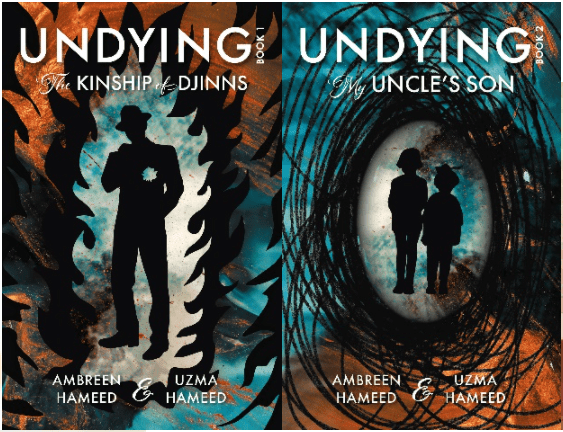
UNDYING Book 1: The Kinship of Djinns

It is 1998 and the leader of the free world is under fire after an affair with a young intern. Meanwhile, in a corner of South London, the Malik sisters have also committed a sin: they are in their thirties and still not married. Now the unexpected return of their childhood playmate spells the chance of a happy ending: but only for one of them. And this time, younger sister Zarina is determined she won’t be second in line to Sufya, the eldest – even if it means resorting to dubious occult practices. But as tensions rise across the Muslim world, sibling rivalry and Sufi spells are not the only forces with which the three lovers must contend.

Longlisted for The Bath Novel Award 2021

UNDYING Book 1: The Kinship of Djinns is available for purchase here.

UNDYING Book 2: My Uncle’s Son

Christmas 1998 approaches and the Malik sisters struggle to come to terms with Heathrow’s disappearance. A series of unanswered questions leads Sufya on a journey across the Holy Land. Back in South London, Zarina believes she is receiving messages from beyond the grave. As the leader of the free world sends bombs down on Baghdad, anger boils over in the Muslim community. The family falls under suspicion and both sisters must pick a side.

My Uncle’s Son is the thrilling conclusion to UNDYING.

UNDYING Book 2: My Uncle’s Son is available for purchase here.

About Ambreen Hameed and Uzma Hameed
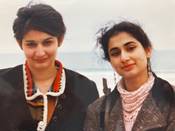
Ambreen Hameed is a television producer and journalist.  Ambreen’s career in television began at the BBC on the Asian programme, Network East, after which she worked for London Weekend Television, on its flagship current affairs show, The London Programme. She was series producer of the award-winning Channel 4 series Devil’s Advocate presented by Darcus Howe. Three of her London Programmes were nominated for Royal Television Society awards including an hour-long Special on the experiences of Black and Asian officers in the Metropolitan Police Service. Other career highlights include the award-winning series Second Chance for Channel 4, and Dispatches. She has also written for New Statesman and a short story for Radio 4’s Pier Shorts.

You’ll find Ambreen on Twitter @AmbreenHameed1 and Instagram.

UZMA HAMEED is a writer, director and dramaturg, working in theatre and dance. In 2015 she was dramaturg to choreographer Wayne McGregor on the Royal Ballet’s multi award-winning production of Woolf Works. She has since collaborated with him on Obsidian Tear (2016)Multiverse (2016) and The Dante Project – Inferno (2019) for the Royal Ballet, and on Company Wayne McGregor’s Autobiography (2017). She has also worked with choreographer Cathy Marston on Northern Ballet’s Victoria (2019), which won the Sky Arts/South Bank Show award for dance.

In 1997 she founded The Big Picture Company, a theatre company which quickly gained a reputation for its innovative visual style, combing new writing with choreography and film. For Big Picture, she wrote and directed plays which toured extensively around the UK and enjoyed London seasons at The Young Vic, BAC and Riverside Studios. From 2002-2005 Uzma was Associate Director at Derby Playhouse.

Uzma has directed for Kali Theatre, led projects at the National Theatre Studio and given talks and workshops for a variety of organisations including The Royal College of Art, Dulwich Picture Gallery, Edinburgh International Festival and Playwrights Studio Scotland.

You’ll find Uzma on Twitter @UzmaHameedRexha and Instagram.
UNDYING has a Facebook page and website too.

The Bookshop of Second Chances by Jackie Fraser

My enormous thanks to Laurie McShea and Sara-Jade Virtue of TeamBATC for inviting me to participate in the blog tour for The Bookshop of Second Chances by Jackie Fraser and for sending me a copy of the book in return for an honest review. I’m thrilled to share that review today and to have the honour of closing the tour.

Published by Simon and Schuster in paperback on 2nd September 2021, The Bookshop of Second Chances is available for purchase through these links.

The Bookshop of Second Chances

Set in a charming little Scottish town, The Bookshop of Second Chances is the most uplifting story you’ll read this year!

Shortlisted for the RNA Katie Fforde Debut Romantic Novel Award 2021.

Thea’s having a bad month. Not only has she been made redundant, she’s also discovered her husband of nearly twenty years is sleeping with one of her friends. And he’s not sorry – he’s leaving.

Bewildered and lost, Thea doesn’t know what to do. But, when she learns the great-uncle she barely knew has died and left her his huge collection of second-hand books and a house in the Scottish Lowlands, she seems to have been offered a second chance.

Running away to a little town where no one knows her seems like exactly what Thea needs. But when she meets the aristocratic Maltravers brothers – grumpy bookshop owner Edward and his estranged brother Charles, Lord Hollinshaw – her new life quickly becomes just as complicated as the life she was running from…

An enchanting story of Scottish lords, second-hand books, new beginnings and second chances perfect for fans of Cressida McLaughlin, Veronica Henry, Rachael Lucas and Jenny Colgan.

My Review of The Bookshop of Second Chances

Running away is just the start for Thea.

The cover image of The Bookshop of Second Chances gave me a preconceived idea of the nature of the book so that I was surprised to find Jackie Fraser’s writing a lot more gritty and edgy than anticipated and I enjoyed the read all the more for it. I had expected a standard romantic story and indeed there is romance, but The Bookshop of Second Chances is very much more than that. There’s actually quite a deep psychological aspect to the story as Edward’s family background is uncovered. Add in considerable dry humour and The Bookshop of Second Chances is enormously entertaining.

I loved meeting Thea. She’s a thoroughly rounded character in whom Jackie Fraser balances strength and insecurity absolutely perfectly so that Thea feels very much a real woman. Her first person narrative makes reading the story seem as if a close friend is chatting with the reader. Jackie Fraser has an unusual style in the direct speech employed by Thea and Edward particularly, and this enhances the intimate feeling, the sense of immediacy and the reality and authenticity of the story. I thought this aspect was brilliant. Of the male characters it was Edward who completely captivated me. Resonant of Charlotte Bronte’s Rochester he epitomises the brooding anti-hero that is so attractive. I was in love with him myself from the first time I met him and was fascinated to see if or how his interactions with Thea might develop into something more. You’ll have to read the book to find out what ensues!

I so enjoyed the plot. In a sense, not a great deal happens but this is by no means a criticism. Rather, The Bookshop of Second Chances gives a totally absorbing and compelling insight into the building of an ordinary new life for Thea and demonstrates so skilfully how new friendships and relationships are established. There’s a real depth to this aspect of the book that I found fascinating. It’s as if Jackie Fraser has looked into the mind of a kind of ‘Everywoman’ in Thea and afforded the reader the opportunity to understand her, to empathise and to exclaim ‘Oh yes!’ in response to some of Thea’s thoughts and actions. I found this such an engaging aspect of The Bookshop of Second Chances.

The themes of The Bookshop of Second Chances are totally captivating. The breakdown of a marriage, the need to start again in middle age, the concepts of fidelity, revenge, public versus private persona, family, friendship and love all blend into a compelling story that I found both entertaining and intelligent.

I really recommend The Bookshop of Second Chances. I have a feeling it might not be exactly what readers are expecting, but they’ll love what they find. I thoroughly enjoyed it.

About Jackie Fraser

Jackie Fraser is a freelance editor and writer. She’s worked for AA Publishing, Watkins, the Good Food Guide, and various self-published writers of fiction, travel and food guides, recipe books and self-help books since 2012. Prior to that, she worked as an editor of food and accommodation guides for the AA, including the B&B Guide, Restaurant Guide, and Pub Guide for nearly twenty years, eventually running the Lifestyle Guides department.   She’s interested in all kind of things, particularly history, (and prehistory) art, food, popular culture and music. She reads a lot, (no, really) in multiple genres, and is fascinated by the Bronze Age. She likes vintage clothes, antique fairs, and photography. She used to be a bit of a goth. She likes cats.

You can follow Jackie on Twitter @muninnherself and Instagram. You’ll find Jackie on Facebook and there’s more with these other bloggers too:
Research: A Guest Post by M W Arnold, Author of Wild Blue Yonder

It gives me enormous pleasure to welcome back M W Arnold to Linda’s Book Bag today to celebrate his latest book Wild Blue Yonder with a guest post all about research for historical novels. Mick is such a generous author and a great writer and I’d like to thank Rachel of Rachel’s Random Resources for inviting me to participate in this blog blitz.

You’ll find what happened when previously I stayed in with Mick alongside my review of the first novel in the Broken Wings series, A Wing and a Prayer, here.

Wild Blue Yonder is available for purchase here as well as via Nook and iBooks.

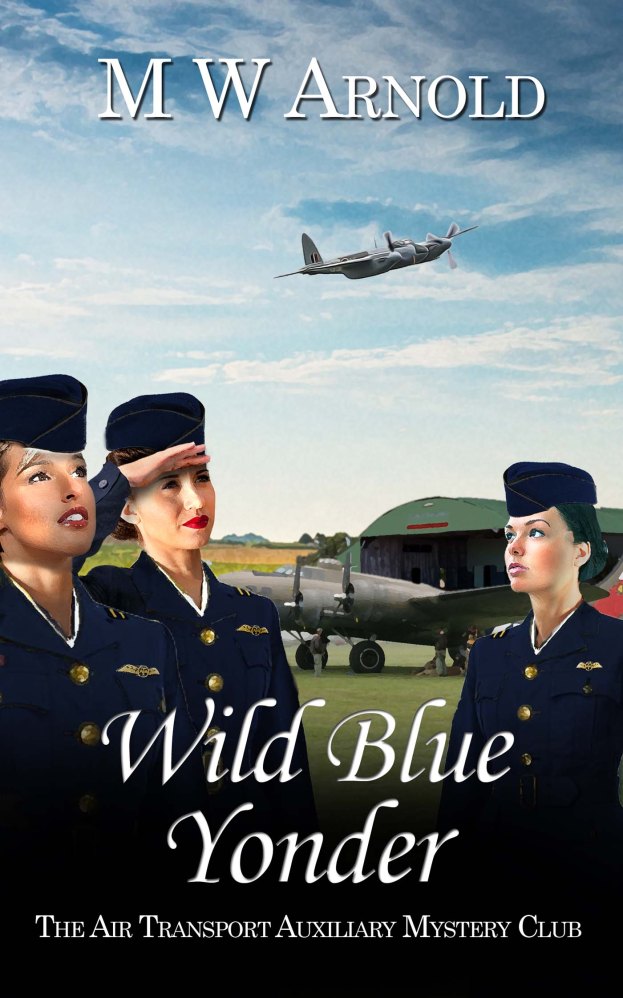
Wild Blue Yonder

Wild Blue Yonder

Air Transport Auxiliary pilot Doris Winter is accused of stealing a valuable item from a famous Hollywood movie star, now a captain in the US Army Air Corps, after a dance at the air base in England where he’s stationed. Gathering her close friends together, she’s determined to clear her name.

Ruth’s POW son suffers a life-changing injury just as her own cottage takes damage in an air raid and Penny’s estranged little sister unexpectedly turns up, having run away from school. Together with the ongoing thefts of items of clothing and surprise personal revelations, these all threaten to hamper their investigation.

In spite of the worsening war situation, they must band together to rise above their troubles and prove love and friendship is worth fighting for.

Research

A Guest Post by M W Arnold

Research.

One wee word, but its potential for making or breaking a book is immense, especially, at least in my experience, for a historical story. I try and remember now I’m writing in this genre that there’s always going to be at least one person out there who is ready to pounce on any mistakes I make.

I hadn’t planned upon writing my first World War Two saga, it kind of happened. I’d had a romantic/drama published back in 2017 and then decided to become ill. By the time I was recovered, I felt the need to start writing something new, something different. A very good writing friend of mine, Elaine Everest, made that suggestion. I’ve always loved history and after watching a documentary on the Spitfire Girls, I found myself investigating this mysterious organisation called, the Air Transport Auxiliary. To say I was astounded by what they accomplished and how they went about it, would be to put it mildly. The internet is a boom to writers and never more so than during what we are just coming out of. Through this, I discovered a wealth of material from which I could craft a good few dozen books, if I could clone myself.

However, it’s one thing finding the material, quite another putting it to good use. World War Two is so well documented that you cannot get event in the wrong order, as it stands out a mile. The clothes you describe have to be authentic to what could be worn during the war. Don’t forget, in wartime Britain, virtually everything was rationed, including clothing, so you can’t have someone decide to pop into Harrods and buy a bespoke satin cocktail dress. Believe me, I know, as I’d written just such a scene and was very pleased with how it came out before that thought hit me. Hence, research. This revealed that Harrods chiefly made uniforms.

Which brings me onto contacts, by the backdoor. You may be surprised at how long some institutions have been around and how easy it is to contact them these days, as most have an online presence and hence, an email address or online form. I emailed Harrods and was soon into a great email conversation with their very helpful ‘History of Harrods’ department. I’m afraid I don’t have the lady I was chatting with name handy, but she couldn’t be more helpful with checking facts with me, what was and was not possible, that kind of thing. I dare say I could have re-written the scene without her help, but to have the facts from the (next best thing to the) horse’s mouth was so useful. Plus, she told me to feel free to contact her again whenever I need her.

That’s a very important thing to remember whenever you initiate contact with someone you want something out of. Be polite. You must take into account that they are almost certainly at work and would need to take time out of their day to find out what you wish to know. It’s entirely up to them whether they reply, let alone use their time to find out the information you wish to know. If they come back with a ‘no’, you should reply thanking them for their time. Politeness costs nothing.

I’ve made quite a few contacts during writing these sagas and without them the books would have been much harder to write. There’s a Police Inspector in Portsmouth who’s been invaluable in all three books so far written.

Even when I think I’ve written a scene correctly, it still needs to be checked for authenticity, as the misuse of a single word can spoil everything. On this subject, I mentioned internet research earlier, but there’s nothing like having a relevant book to hand. I have thesaurus’s, dictionaries, even baby name books, but if you looked at my book shelves, you’d find books on the Black Market, Airfields of Great Britain in the war, the 1940’s house and housewife and probably 90% of the books written by and about the Air Transport Auxiliary. I can spend all day reading and call it research! This is also a great excuse to watch my Lady Wife’s enormous collection of films about World War Two!

I’ll finish on this note – if there’s one thing I’ve discovered from my research about the war, it’s that the British always made time for a cup of tea.

****

This tea drinker thinks that’s the perfect place to end! Thanks so much for such an insightful guest post Mick.

About M W Arnold

Mick is a hopeless romantic who was born in England and spent fifteen years roaming around the world in the pay of HM Queen Elizabeth II in the Royal Air Force before putting down roots and realizing how much he missed the travel. He’s replaced it somewhat with his writing, including reviewing books and supporting fellow saga and romance authors in promoting their novels.

He’s the proud keeper of two cats bent on world domination, is mad on the music of the Beach Boys, and enjoys the theatre and humoring his Manchester United-supporting wife. Finally, and most importantly, Mick is a full member of the Romantic Novelists Association. Wild Blue Yonder is the second novel in his Broken Wings series and he is very proud to be a part of the Vintage Rose Garden at The Wild Rose Press.

You can follow Mick on Twitter @Mick859 and find him on Facebook. Mick is also on Instagram.

There’s more with these other bloggers too:


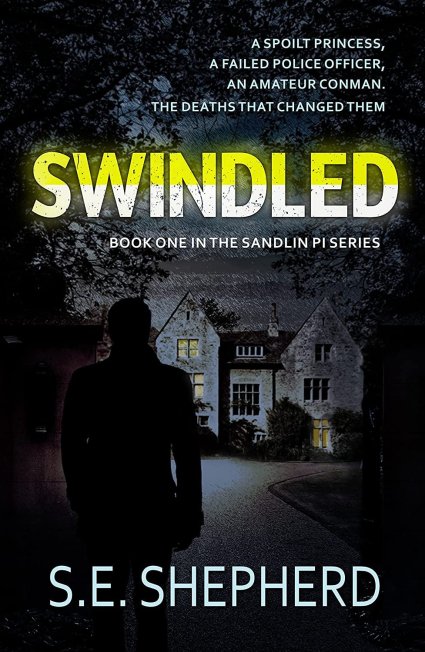
Swindled by S.E Shepherd

My enormous thanks to Rebecca Collins at Hobeck for sending me a copy of Swindled by S.E. Shepherd in return for an honest review. I’m delighted to share that review today. Swindled is the first in a brand new thriller series from S.E. Shepherd.

You may know the author as Sue Shepherd too. In that incarnation, you’ll find Sue here on Linda’s Book Bag chatting with me about Can’t Get You Out of My Head and here when I had a spotlight on Sue to celebrate Love Them and Leave Them.

Published by Hobeck today, 7th September 2021, Swindled is available for purchase here.

Swindled

Lottie

Beautiful, but a little spoilt, Lottie Thorogood leads a charmed life. Returning home from horse riding one day, she finds a stranger, drinking tea in the family drawing room – a stranger who will change her life, forever.

Hannah

After a bad decision cut short her police career, Hannah Sandlin is desperate to make her mark as a private investigator. She knows she has the skills, but why won’t anyone take her seriously? She’s about to become embroiled in a mystery that will finally put those skills to the test and prove her doubters wrong. It will also bring her a friend for life.

Vincent

Vincent Rocchino has spent his life charming the ladies, fleecing them and fleeing when things turn sour. How long can he keep running before his past catches up with him?

My Review of Swindled

Lottie, Hannah and Vincent have more in common than they might think.

Swindled was absolutely NOT what I was expecting. I thought I’d be in for a good read but I wasn’t aware that S.E. Shepherd would blend her storytelling with such naturalistic dialogue, often including surprising expletives, with considerable humour and more than a touch of naughtiness too. All these aspects add up in Swindled to a book greater than the sum of its parts in a hugely entertaining read. In fact, as well as being a fast paced thriller, I found Swindled ever so slightly bonkers and that is no bad thing at all!

It took me awhile to settle in to the different characters and timescales at the start but I loved the way the threads belonging to Hannah, Lottie and Vincent gradually drew together. There were several moments when I was completely wrong-footed by S.E. Shepherd so that the title Swindled seems to reflect the treatment of the reader as well as the behaviour of Vincent!

Speaking of Vincent, I felt I should have loathed him from the very beginning, but somehow he retained my sympathy. Certainly he’s a lying, cheating, manipulative individual, but equally, he has a vulnerability, a need to be accepted and loved, and a personality that attracts trouble not always of his making that give him an appealing depth. In fact, it was Lottie I liked least of the three main characters but again, S.E. Shepherd managed to manipulate me into caring about her and liking her by the end of the narrative.

Entertaining story and great characters aside, I thoroughly enjoyed the themes explored in Swindled. Identity of several kinds  is at the heart of the story, but sexism, manipulation in many forms, ambition, wealth and poverty, family and friendship and so on all add to the mix so that there is much to uncover whilst reading.

I think Swindled is an entertaining exploration of the concept that what doesn’t break you makes you stronger – unless it kills you, but you’ll need to read the book to find out why!

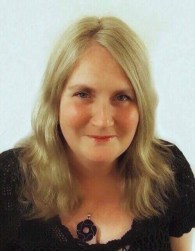
About Sue Shepherd

Sue Shepherd author photo

Born in Harrow, Sue went on to spend several years living in Hertfordshire before selling up and taking a leap of faith across The Solent. She now resides on the picturesque Isle of Wight with her husband, two sons and a standard poodle.

Her passions in life are: her family, writing, the seaside and all the beautiful purple things her sons have bought her over the years.

Happiest when hunched over her laptop with a cup of tea on the go, Sue loves to create stories with plenty of heart and laughs, but she makes sure to include a bit of naughtiness too. Ask Sue to plan too far in advance and you’ll give her the heebie-jeebies and she’d prefer you not to mention Christmas until at least November!

You can follow Sue on Twitter @thatsueshepherd You’ll find Sue on Facebook and Instagram too.

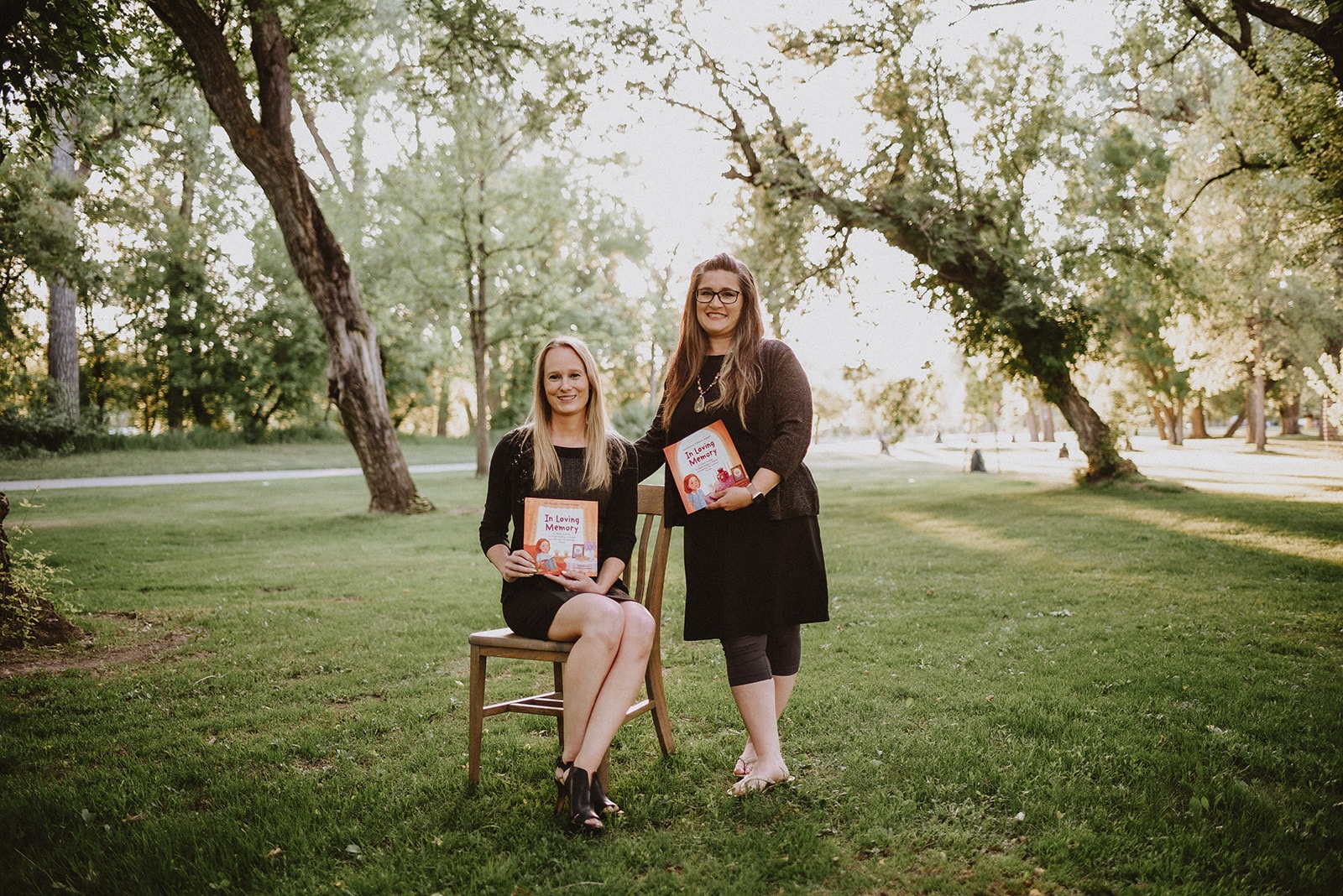
In Loving Memory by Lacie Brueckner and Katherine Pendergast

My grateful thanks to Kat’s Socks for sending me a copy of children’s book In Loving Memory: A Child’s Journey to Understanding a Cremation Funeral and Starting the Grieving Process by Lacie Brueckner and Katherine Pendergast in return for an honest review.

In Loving Memory is available for purchase here.

In Loving Memory:

A Child’s Journey to Understanding a Cremation Funeral and Starting the Grieving Process

The co-author Lacie Brueckner has been a funeral director serving families since 2005. She has always taken a special interest in meeting the needs of children during the funeral process. She has found that most children want to feel included in the funeral too.

In this story a young girl named Harper has lost her grandma. Through gentle words and soft illustrations Harper learns what a funeral looks like and how she can participate. Harper and her family also take you through her journey of starting the grieving process.

A child who has lost someone near and dear to them can learn from young Harper’s experience.

Harper learns the following throughout her journey:
-Death is a natural part of life. Harper learns that plants, animals, and people live and die.
-Bodies go through natural changes when we die, so our bodies might look a little different. Through beautiful illustrations, Harper sees an open casket visitation, funeral, and grave side services.
-Each child might have a different comfort level when it comes to participating in a funeral. Harper’s parents allow her to decide how much she wants to participate in the funeral process by asking if she would like to see the body. They also ask if she is comfortable getting up and sharing a special memory of her grandma.
-Feeling different emotions is natural. Sometimes emotions come and go long after the funeral. Harper’s mom helps her do special activities that remind her of her grandma.
-Harper learns that our loved ones are always in our hearts long after the funeral. There are pages for your child to write or draw memories and ideas on what they can do to remember their loved one.

There is a video message from the authors that you will find here.

My Review of In Loving Memory

A children’s book about death and remembrance.

An aside for UK readers before I begin my review proper is that In Loving Memory is an American book so a couple of practices are different to those we have in the UK, such as cremation taking place in advance of the funeral, whereas in the UK the two events are usually held on the same day. Some language is different such as ‘vacation’ for holiday. That said, I think any differences can be turned to a benefit and used to explore language use in wider contexts such as KS1 and early KS2 classrooms or other children’s groups.

In Loving Memory is just the kind of book needed to help children come to terms with the death of a loved one, because it reassures them that the feelings they have are perfectly natural and to be expected. It’s short and accessible enough for a child to read independently, but I think would work best when shared with an adult so that discussions can be had about their own deceased loved ones. The concept of cremation is made clear and is dealt with in a matter of fact manner that demystifies it for children and removes the fear and trepidation.

In Loving Memory takes a child through the grieving process, but keeps a focus on positive aspects such as recreating activities that have been enjoyed together as when Harper bakes the cookies she used to love making with her Grandma. I think this would be a fabulous thing to do. I loved the scrapbook Harper’s Mum makes of all the things Grandma loved the best so that there is a permanent reminder of the joy in her life. I think this would be a healing and helpful idea for adults and children alike to ensure their memories of those they loved remain clear and present. I thought the space for young readers to share their own favourite memories of a loved one at the end of the book, either through writing or drawing, was an excellent touch too.

The illustrations in In Loving Memory are beautifully presented, conveying emotions and complementing the writing perfectly so that whilst the subject is sad, the book is actually very uplifting. I have one small comment to make in that I’d have liked Grandma to have friends and family of a wider ethnic range to make the book even more inclusive, but this is very much a personal preference.

I think In Loving Memory could be just the resource families, teachers, children’s workers and others are looking for in tackling the tricky subject of death with children aged 4 to 8. I recommend it.

About Lacie Brueckner and Katherine Pendergast

Lacie has been a funeral director serving families since 2005. She takes a special interest in meeting the needs of children during the funeral process, as they very much want and need to feel included too. In her experience she has found that including them and letting them lead the way in how much they want to be included usually works the best. Lacie is a North Dakota native and lives there with her husband and 5 children. She has always had an interest in writing and was honored to co-author this book.

Katherine lost her mom many years ago, and one of her favourite memories of her mom was on her last Mother’s Day. They planted petunias and went out for ice cream. Now, every Mother’s Day, Katherine plants petunias at her house not because they are her favourite but because they remind her of this special memory with her mom. Katherine lives with her family and two dogs in Bismarck, North Dakota. She has also written several other books including her award-winning books Pickles the Dog: Adopted, Pickles the Dog: A Christmas Tradition, and Babies of the Badlands.

You’ll find further information by visiting the Kat’s Socks website and finding more on Facebook and Instagram.

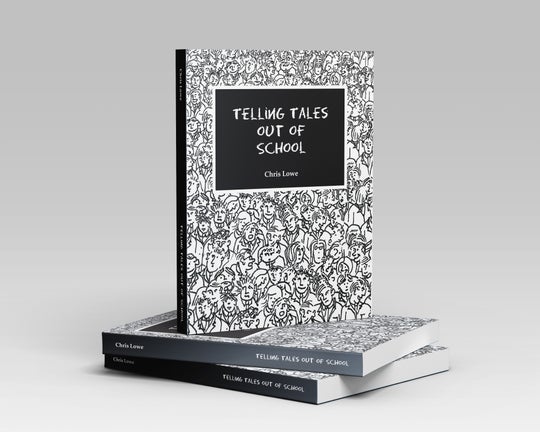
Telling Tales Out of School by Chris Lowe

I cannot begin to tell you what an important blog post this is for me. You see, the author of Telling Tales Out of School, Chris Lowe, was my head teacher at Prince William School (PWS) in Oundle where I attended until 1979. And as Chris reminded me recently in an email, I was the first PWS student to go off to university to read English so both Chris and the school have a very special place in my heart. (Chris also said he remembered me as a ‘rather engaging teenager’ but I don’t know how true that is!) Those who know me well will be aware that I still see my English teacher of the time, John Rhodes, very regularly too as he had such an influence on my life.

That makes Telling Tales Out of School special enough, and this weekend sees me attending the fiftieth anniversary of my old school’s incarnation after the comprehensive system was brought in to education in England.

However, the most important aspect of Telling Tales Out of School is that all proceeds from the book go to charities enhancing the lives of young people. In particular, Telling Tales Out of School supports the James Rutterford Trust. The James Rutterford Trust was set up in memory of a former PWS student tragically killed in a car accident. It was one of the trustees, Jenny Blount (tour de force behind this weekend’s reunion and my former French A’Level teacher with whom I still keep in touch) who invited me to review Telling Tales Out of School. I could not have been happier to do so.

It’s not just me reviewing Telling Tales Out of School. Here are a couple of folk Chris also taught, whom you might just recognise, sharing their thoughts:

Former PWS student Nev Fountain, writer for the BBC Dead Ringers and Have I got News for You and News Quiz, and also staff writer on Private Eye:

The ultimate survival guide for Teachers.  Funny and Informative.  A titter on every page! 

And a comment from Colin Sell, the pianist on the BBC long-running panel game spoof I’m Sorry I Haven’t A Clue:

Telling Tales Out Of School is full of splendid anecdotes of pupils and teachers told by a Man Who Has Been There. Chris Lowe’s Telling Tales Out of School is an enduring, chucklesome treat for anybody who’s ever been to school – in any capacity. A bedside, witty, dip-into-it must!

Telling Tales Out of School is available for purchase here.

Telling Tales Out of School

Chronicling the tales he had collected throughout his career in education started as a lockdown pastime for Chris Lowe. The end result is Telling Tales Out of School: fifty tales to mark the fiftieth anniversary of Prince William School, Oundle. The Tales are all based on true events or stories told to Chris by fellow teachers: stories about growing up, about learning, teaching and coping together.

All proceeds from sales of the book will be donated to the James Rutterford Trust, which is targeted at families who need financial support to enable their children at PWS to take part in school activities, school trips, to provide equipment to aid their study or to support out-of-hours school activities.

Please visit tellingtales.bigcartel.com for more information about the project and to buy Telling Tales Out of School.

My Review of Telling Tales Out of School

A collection of fifty school based stories.

What fun Telling Tales Out of School is. I read the stories in the order they are presented and although they have a unifying Chaucerian style pub chat between Marcus Brampton and his friends in the telling, they would equally well reward dipping into at random because they stand alone and create memories in the reader of their own school experience. Indeed, much of my own teaching past was brought back to life vividly through these tales, as were some of the youngsters I’ve taught, giving a universality to the book. Telling Tales Out of School is a book that will appeal to anyone who has had any contact with education in any form!

I loved the style employed by Chris Lowe in Telling Tales Out of School. There are literary references that I enjoyed spotting but this is by no means an ‘exclusive’ book only for those with a literary background or who attended the author’s school. Rather, the style is flowing and engaging and the more memorable and appealing characters are the rogues and miscreants (not just the students either) between its pages. The authorial voice is very reminiscent of P.G. Wodehouse, especially in the direct speech which has the effect of bring characters to life incredibly vividly. There’s so much humour here that I found myself snorting aloud at some of the incidents and comments and again having memories of my own school life and teaching career brought flooding back. This has the effect of making Telling Tales Out of School both entertaining and incidentally quite poignant because it reminds the reader of who they were, their past life and of people and moments they had forgotten.

There’s a visual quality to Telling Tales Out of School that I hadn’t expected. When I picked it up I wasn’t aware that there would be cartoon style drawings by Chris Ellard and Steve Lancaster that are as witty and appealing as the text and complement it perfectly. However, it is the writing that creates images in the reader’s mind so evocatively and I’m not sure I’ll be able to look at a pantomime style donkey in quite the same way again! Indeed, I think Telling Tales Out of School would make a fantastic set of short television plays because there’s humour, action and fabulous dialogue just begging to be used.

Wit and humour aside, Telling Tales Out of School has a more profound impact too. Not only does it support a charity, the James Rutterford Trust, but Chris Lowe’s tales illustrate our need for human connection, showing how false assumptions and preconceptions can be wide of the mark. Here, through the persona of Marcus, the reader is gently taught that compassion, understanding and not a little wiliness and cunning can go an awful long way in improving the lives of others. I finished Telling Tales Out of School most royally entertained, but also somewhat humbled and moved. In a curious way reading Telling Tales Out of School has restored my faith in human nature.

Telling Tales Out of School is a smashing meander down each reader’s individual memory lane and I thoroughly enjoyed it. I really recommend it.

About Chris Lowe

When Chris Lowe retired in 1999 after 29 years as principal of Prince William School, a profile in the Times Educational Supplement said he was the longest serving secondary head of a single school in the country, and “might also be the most famous head in the world”.

During his career, Mr Lowe sat on the board of the Royal Opera House, was president of the UK Secondary Heads Association, and visited 43 countries as one of the founders of the International Confederation of Principals. He was awarded a doctorate, a fellowship, a professorship in Australia, and a CBE by the Queen.

You’ll find Telling Tales Out of School on Twitter @TalesPws and Instagram.

Staying in with Alan Jones

All kinds of books are brought to my attention and it grieves me that I simply cannot read them all. This is exactly what has happened with Alan Jones’s latest novel as I’ve been hearing fantastic things about it from my fellow bloggers. As a result I simply had to ask Alan to stay in with me to chat about the book and I’m thrilled to have it on my TBR. Let’s hope it’s not too long until I can read it. Here’s what happened when Alan dropped by:

Staying in with Alan Jones

Welcome to Linda’s Book Bag Alan and thank you for agreeing to stay in with me.

Thanks a million for having me over, Linda.

Tell me, which of your books have you brought along to share this evening and why have you chosen it?

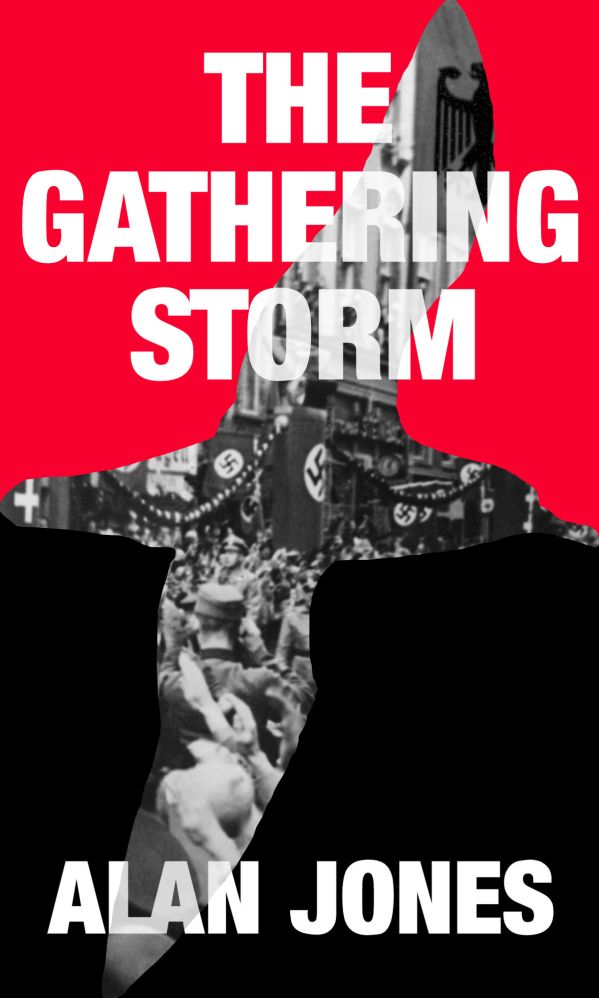
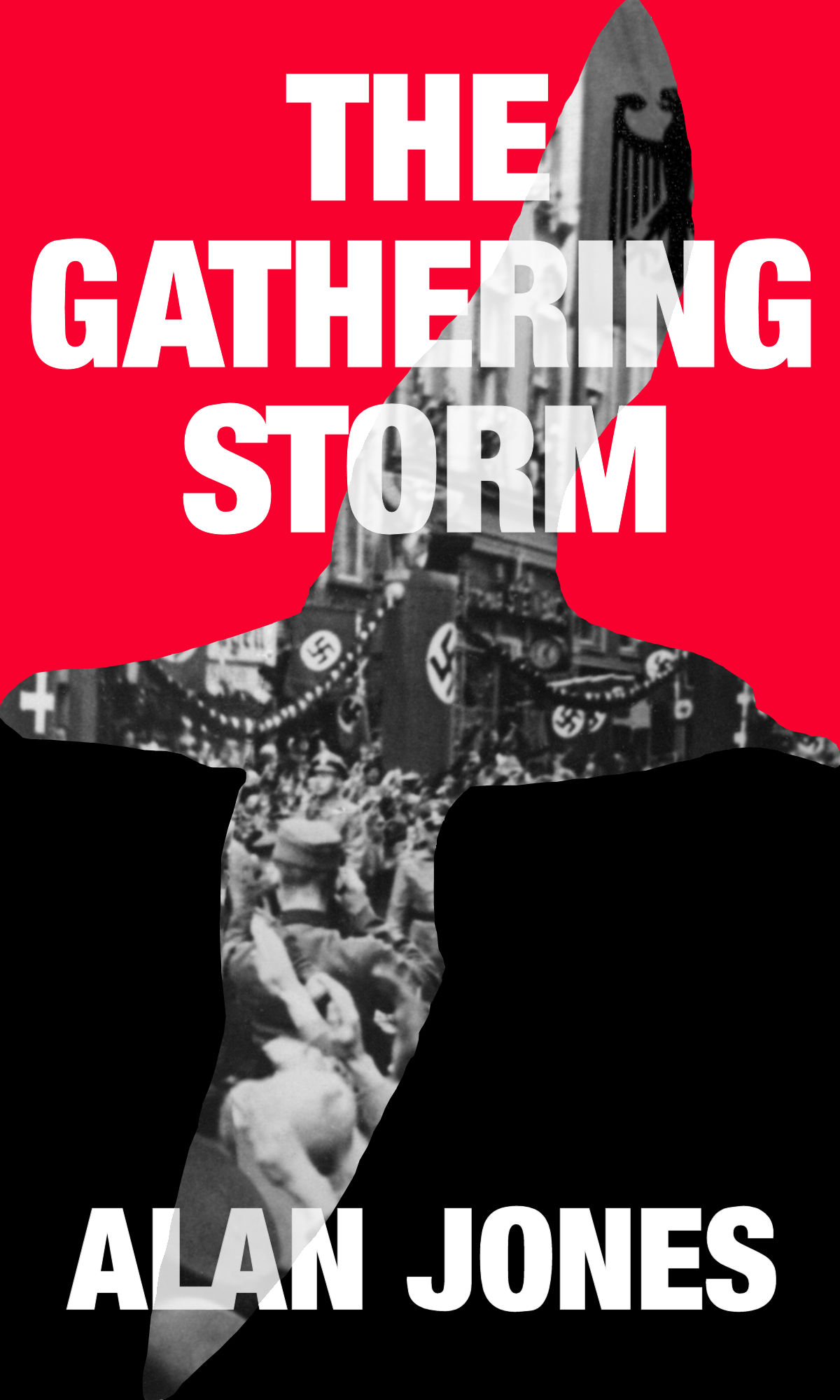
I’ve chosen to bring along The Gathering Storm, the first book in The Sturmtaucher Trilogy published on the 19th of August 2021 as an eBook, with a paperback to follow early in 2022. It is a Holocaust story based in the naval city of Kiel in Northern Germany.

Why have I chosen it? It’s a completely new genre for me and is the first part of a story that has been five years in the making, and by far the most heavily researched of the books I have written so far.

I’ve been fascinated and horrified in equal measure by the Holocaust since reading ‘Diary of a Young Girl’ by Anne Frank as a ten or eleven year old and, although I’ve read extensively about this most terrible period in history, the deeper I researched, the more I realised I didn’t know.

Oh I understand that completely Alan. The era fascinated and horrifies me in equal measure. It was Anne Frank’s writing and visiting her hiding place in Amsterdam that hooked me too.

I’d also wanted to write a book that involved sailing, and the sea, and the germ of an idea came to me when I searched for locations for the story and found that, not only was Kiel the biggest German Naval base, but it was also the centre for German sailing, and would host the Olympic sailing events in 1936.

Five years later, and a lot of things have happened during that time; I retired after 38 years as a mixed-practice vet, I acquired four beautiful grandchildren, I became an RNLI lifeboat coxswain, and I have written a trilogy that I am very proud of, no matter how successful it is.

Goodness me. You don’t hang about do you? How fabulous to include sailing in your writing when it’s part of your new life.

What can we expect from an evening in with The Gathering Storm?

It will be a sombre evening; the slow erosion of the rights of Germany’s Jews and the cruel indifference of their fellow citizens can make for uncomfortable reading, but you will get to know two German families intimately, affected by the National Socialists’ abhorrent policies in very different ways – The Kästners, a successful military family who prosper under Nazi military expansion and economic prosperity, and the Nussbaums, a Jewish family who work for them as domestic servants, who find life increasingly strained.

Actually, Alan. I think The Gathering Storm illustrates just how little we have learnt from history. Events in recent history seem to me to bear an uncanny and uncomfortable similarity.

You can expect a bit of sailing – it is what the Kästner family do in their free time, and also a smattering of German well-to-do society, of ladies who lunch and host charitable events to help the poor, of lakeside houses and grasping, self-serving politicians. There’s fascism, and hate, and a nation consumed by its place in the world but also Jewish communities, who try and stick together and help each other.

This sounds utterly fascinating. I love social history and I know I’ll be totally engaged by The Gathering Storm when I finally get round to reading it.

And there are one or two individuals who see the wrong in what is happening, and stand up for the dispossessed, no matter the danger to them or their families.

I always wonder what I might do in a similar situation. I fear I might not be as brave…

What else have you brought along and why have you brought it?

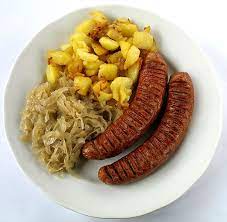
I’ve brought some Bratwurst, Bratkartoffeln and Sauerkraut, a hearty German dish of sausages and fried potatoes with pickled cabbage, some Rugelach for dessert, and a few bottles of German beer and a bottle of Schnapps to wash it down, and a large black folio containing just some of the maps, charts, and documents that I used so extensively during the writing of the book.

Hmm. I think I might need that beer as I’m not very keen on Sauerkraut…

Once we’ve eaten, I’ll apologise for being a map nerd, obsessed with documents and old newspapers, then I’ll open the folio and I’d lay out in front of you the beautiful wartime maps and 1930’s charts, and some of the key documents that starkly illustrate the descent into horror that brought Europe to its knees in the decade the National Socialists were in power.

Oh, no need to apologise (except for the sauerkraut) as I love all this kind of history.

I’ll show you the telegram sent to police forces around Germany about Kristallnacht, the minutes of the Wannsee conference where Himmler, Heydrich and Eichmann revealed their ‘Final Solution’, and a wall chart showing the various permutations of Jewishness as prescribed by the Nuremberg Race Laws.

Isn’t it sobering to see ‘man’s inhumanity to man’ so vividly?

The maps will be equally sobering, despite the Schnapps. The street plan of Kiel, showing Gestapo headquarters, the town hall and square, bedecked by Nazi flags, and the shipyards that produced warships and U-boats in incredible number for the Third Reich. There’s the war maps, the maps of the Greater Germany showing the German Reich rapidly taking grip of most of Europe.

In contrast, the sea charts reveal the Kästner’s yachting playgrounds, of trips to Danish ports and the Frisian islands in the North Sea, where the happenings at home can almost be forgotten.

I’ll show you the newspapers, German and British, a narrative of newsprint that documents the war years, and those leading up to it.

And when we’ve finished, we’ll pray that nothing like it ever happens again.

We will indeed Alan although sadly I don’t think those prayers are being answered. Thank you SO much for staying in with me to chat all about The Gathering Storm. I think it sounds fabulous and cannot wait to read it. Now, you pour the Schnapps, open your folder, and I’ll give blog visitors a few more details about The Gathering Storm:

The Gathering Storm

The Gathering Storm: Book 1 in the Sturmtaucher Trilogy, a powerful and compelling story of two families torn apart by evil.

Kiel, Northern Germany, 1933. A naval city, the base for the German Baltic fleet, and the centre for German sailing, the venue for the upcoming Olympic regatta in 1936.

The Kästners, a prominent Military family, are part of the fabric of the city, and its social, naval and yachting circles. The Nussbaums are the second generation of their family to be in service with the Kästners as domestic staff, but the two households have a closer bond than most.

As Adolf Hitler and his National Socialist Party claw their way to power in 1933, life has never looked better for families like the Kästners. There is only one problem.

The Nussbaums are Jews.

The Sturmtaucher Trilogy documents the devastating effect on both families of the Nazis’ hateful ideology and the insidious erosion of the rights of Germany’s Jews.

When Germany descends ever deeper into dictatorship, General Erich Kästner tries desperately to protect his employees, and to spirit them to safety.

As the country tears itself apart, the darkness which envelops a nation threatens not only to destroy two families, but to plunge an entire continent into war.’

Published on 19th August 2021, The Gathering Storm is available for purchase here.

About Alan Jones

Alan Jones is a Scottish author with three gritty crime stories to his name, the first two set in Glasgow, the third one based in London. He has now switched genres, and his WW2 trilogy will be published from August to December 2021. It is a Holocaust story set in Northern Germany.

He is married with four grown up children and four wonderful grandchildren.

He has recently retired as a mixed-practice vet in a small Scottish coastal town in Ayrshire and is one of the coxswains on the local RNLI lifeboat. He makes furniture in his spare time, and maintains and sails a 45-year-old yacht, cruising in the Irish Sea and on the beautiful west coast of Scotland. He loves reading, watching films and cooking. He still plays football despite being just the wrong side of sixty.

His crime novels are not for the faint-hearted, with some strong language, violence, and various degrees of sexual content. The first two books also contain a fair smattering of Glasgow slang.

He is one of the few self-published authors to be given a panel at the Bloody Scotland crime fiction festival in Stirling and has done two pop-up book launches at previous festivals.

He has spent the last five years researching and writing the Sturmtaucher Trilogy.

To find out more, visit Alan’s website, follow him on Instagram and Twitter @alanjonesbooks, or find him on Facebook.

All The Names Given by Raymond Antrobus

My enormous thanks to Alice Dewing at Picador for sending me a copy of All The Names Given by Raymond Antrobus in return for an honest review.

I was delighted to receive All The Names Given as I previously reviewed (here) Raymond Antrobus’ Perseverance when I was a shadow judge for The Sunday Times/University of Warwick Young Writer of the Year Award in 2019. You can read about that experience here. Perseverance won the award in 2019.

All The Names Given is published by Pan Macmillan imprint Picador today, 2nd September 2021, and is available for purchase through these links.

All The Names Given

Raymond Antrobus’s astonishing debut collection, The Perseverance, won both Rathbone Folio Prize and the Ted Hughes Award, amongst many other accolades; the poet’s much anticipated second collection, All The Names Given, continues his essential investigation into language, miscommunication, place, and memory. Beginning with poems meditating on the author’s surname – one which shouldn’t have survived into the modern era – Antrobus then examines the rich and fraught history carried within it. As he describes a childhood caught between intimacy and brutality, sound and silence, and conflicting racial and cultural identities, the poem becomes a space in which the poet can reckon with his own ancestry, and bear witness to the indelible violence of the legacy wrought by colonialism. The poems travel through space, shifting between England, South Africa, Jamaica, and the American South, and move fluently from family history, through the lust of adolescence, and finally into a vivid and complex array of marriage poems — with the poet older, wiser, and more accepting of love’s fragility.

Throughout, All The Names Given is punctuated with [Caption Poems] partially inspired by Deaf sound artist Christine Sun Kim, which attempt to fill in the silences and transitions between the poems, as well as moments inside and outside of them. Direct, open, formally sophisticated, All The Names Given breaks new ground both in form and content: the result is a timely, humane and tender book from one of the most important young poets of his generation.

My Review of All The Names Given

A volume of forty poems.

My word. All the Names Given may be a slim volume but it packs the kind of punch that leaves the reader reeling. Both personal and political, intimate and global, these poems by Raymond Antrobus illustrate perfectly how history and the present impact the individual so that I felt all manner of emotions in reading them. The poet has made me understand my privileged life and to appreciate it much more clearly.

As well as being emotionally moved, I was educated by All the Names Given. Reference to a painting in Plantation Paint, for example, had me scurrying off to research the image so that the resonance of these poems reaches far beyond their reading. I’m sure too, that the more time the reader spends with Raymond Antrobus’s words, the more there is to be gleaned and appreciated. I loved the quotations from other writers that gave the poems an added interest. Again, I discovered writers like poet Christopher Gilbert whom I hadn’t encountered before. Indeed, after I’d read the collection, I found the ‘NOTES ON THE POEMS’ included at the end afforded me all kinds of new pleasures to explore further.

I thoroughly appreciated too, the poetic techniques used by the Raymond Antrobus. Enjambement illustrates how the links with history run through the present. Rhetorical questions show the reader that answers still need to be found to the questions of identity and race, as well as the attitudes to them.  The asides or Caption Poems in square brackets added auditory depth that I found especially effective coming from this hearing impaired writer. White space is used so judiciously that it provides pause to allow the reader to absorb meaning, and its contrast with the written word intensifies the poetry until what is left unwritten becomes just as affecting as what is written. I thought these techniques worked so effectively because they seem natural and unforced; organic rather than self-consciously crafted.

However, although the references to different locations also add depth and colour to the writing, the poetic techniques are skilful and the historical, geographical and literary references are fascinating, what is most affecting about All The Names Given is the sense of Raymond Antrobus the man. He takes the reader through a kind of potted history of his life, from the cursing of his mother under his breath as a boy to marriage, so that All The Names Given feels as if the reader has been given privileged access into the mind of the poet, watching him change and evolve as the poems are read.

I thought All The Given Names was both brutal and tender, personal and universal so that Raymond Antrobus has included something for every reader in this collection. Indeed. I thought it was excellent.

About Raymond Antrobus

raymondantrobus_creditcalebfemi_preferred

Raymond Antrobus was born in Hackney to an English mother and Jamaican father. He is the recipient of fellowships from Cave Canem, Complete Works III and Jerwood Compton Poetry. He is one of the world’s first recipients of an MA in Spoken Word Education from Goldsmiths, University of London. Raymond is a founding member of Chill Pill and Keats House Poets Forum. He has had multiple residencies in deaf and hearing schools around London, as well as Pupil Referral Units. In 2018 he was awarded the Geoffrey Dearmer Award by the Poetry Society (judged by Ocean Vuong).

The Perseverance (Penned in the Margins, 2018), was a Poetry Book Society Choice, the winner of the Rathbones Folio Prize and the Ted Hughes Award, and was shortlisted for the Griffin Poetry Prize and Forward Prize for Best First Collection.

For more information visit Raymond’s website. You’ll also find him on Twitter @RaymondAntrobus, Facebook and Instagram.

The Dark by Emma Haughton

Although I’m trying hard not to take on new blog tours because my TBR is threatening to bury me, I simply couldn’t resist taking part in this one for The Dark by Emma Haughton as I’ve visited Antarctica where the book is set. My enormous thanks to Jenny Platt at Hodder for inviting me to participate. I’m delighted to share my review of The Dark today.

Published by Hodder on 19th August 2021, The Dark is available for purchase through the links here.

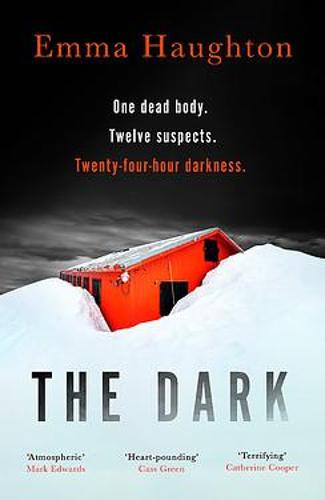
The Dark

In the most inhospitable environment – cut off from the rest of the world – there’s a killer on the loose.

A&E doctor Kate North has been knocked out of her orbit by a personal tragedy. So when she’s offered the opportunity to be an emergency replacement at the UN research station in Antarctica, she jumps at the chance. The previous doctor, Jean-Luc, died in a tragic accident while out on the ice.

The move seems an ideal solution for Kate: no one knows about her past; no one is checking up on her. But as total darkness descends for the winter, she begins to suspect that Jean-Luc’s death wasn’t accidental at all.

And the more questions she asks, the more dangerous it becomes . . .

My Review of The Dark

Kate’s the new doctor at the research station in Antarctica.

I thoroughly, thoroughly, enjoyed The Dark. Emma Haughton has created an atmospheric, claustrophobic thriller that twists and turns in a chilling locked room style narrative. Despite the modern setting of an Antarctic research station that gives it a fresh appeal, The Dark has all the best hallmarks of traditional crime fiction so that it belongs very firmly within that body of work.

The sense of place is magnificent. The darkness, the relentless nothingness of the continent and the literal and metaphorical cold add a sense of danger and fear from the first page to the last that intensifies the reader’s own anxieties as they read. The Dark becomes chilling on many levels!

With the small number of characters that contracts as deaths occur, there’s a further sense of claustrophobia and Kate’s first person account heightens the intimacy of the narrative so that, despite the remoteness of the setting, The Dark feels very personal and immediate. I didn’t always agree with Kate’s attitudes and behaviour but because of Emma Haughton’s skilled characterisation,  I still wanted her to triumph, be accepted and, above all else, escape being murdered! What I enjoyed so much was that I guessed the killer’s identity several times – until, of course, they became a victim, thereby wrong-footing me and adding to my engagement with the writing.

I found the plot fast paced and exciting, but as well as a completely engaging and entertaining story in The Dark, Emma Haughton makes the reader wonder just how they might cope in a similar setting. She weaves in themes of human interaction and relationship that could quite easily be studied in the very setting of the book, giving it an extra authenticity too. Add in addiction, truth and lies, guilt and forgiveness, authority and abnegation amongst other themes and The Dark becomes even more interesting and multi-layered. The narrative works brilliantly on so many levels.

I found The Dark deliciously menacing from the first line. It is a cracking thriller and I recommend it completely.

About Emma Haughton

Emma Haughton grew up in Sussex, studied English at Oxford and worked as a journalist for several national newspapers, including The Times Travel section. Emma has written several non-fiction books for schools as well as YA thrillers. This is her first crime novel.

For further information, follow Emma on Twitter @Emma_Haughton and visit her website. You’ll also find Emma on Instagram.

There’s more with these other bloggers too:

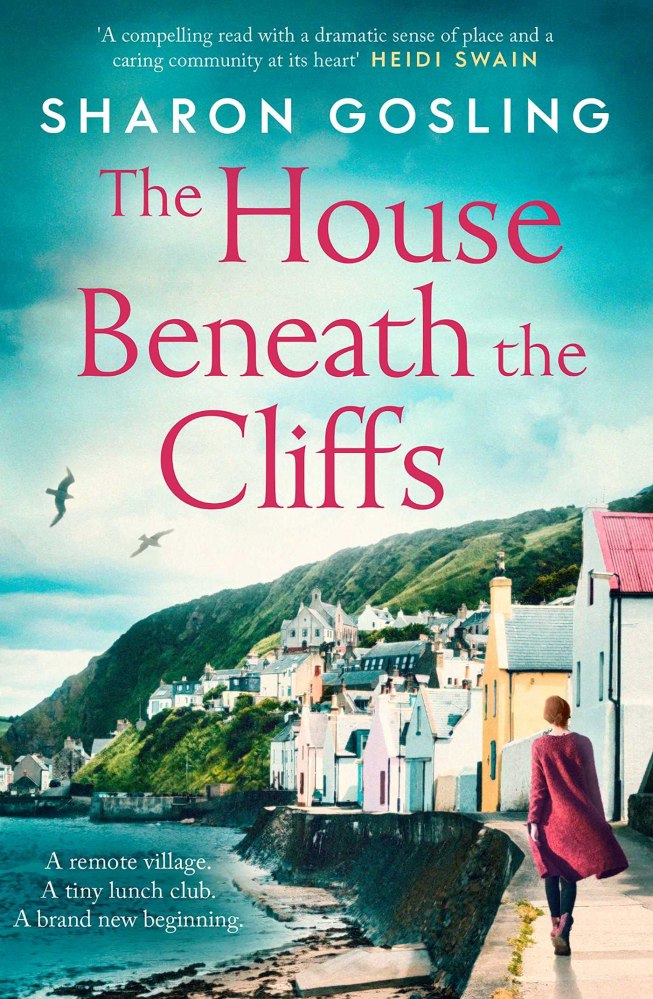
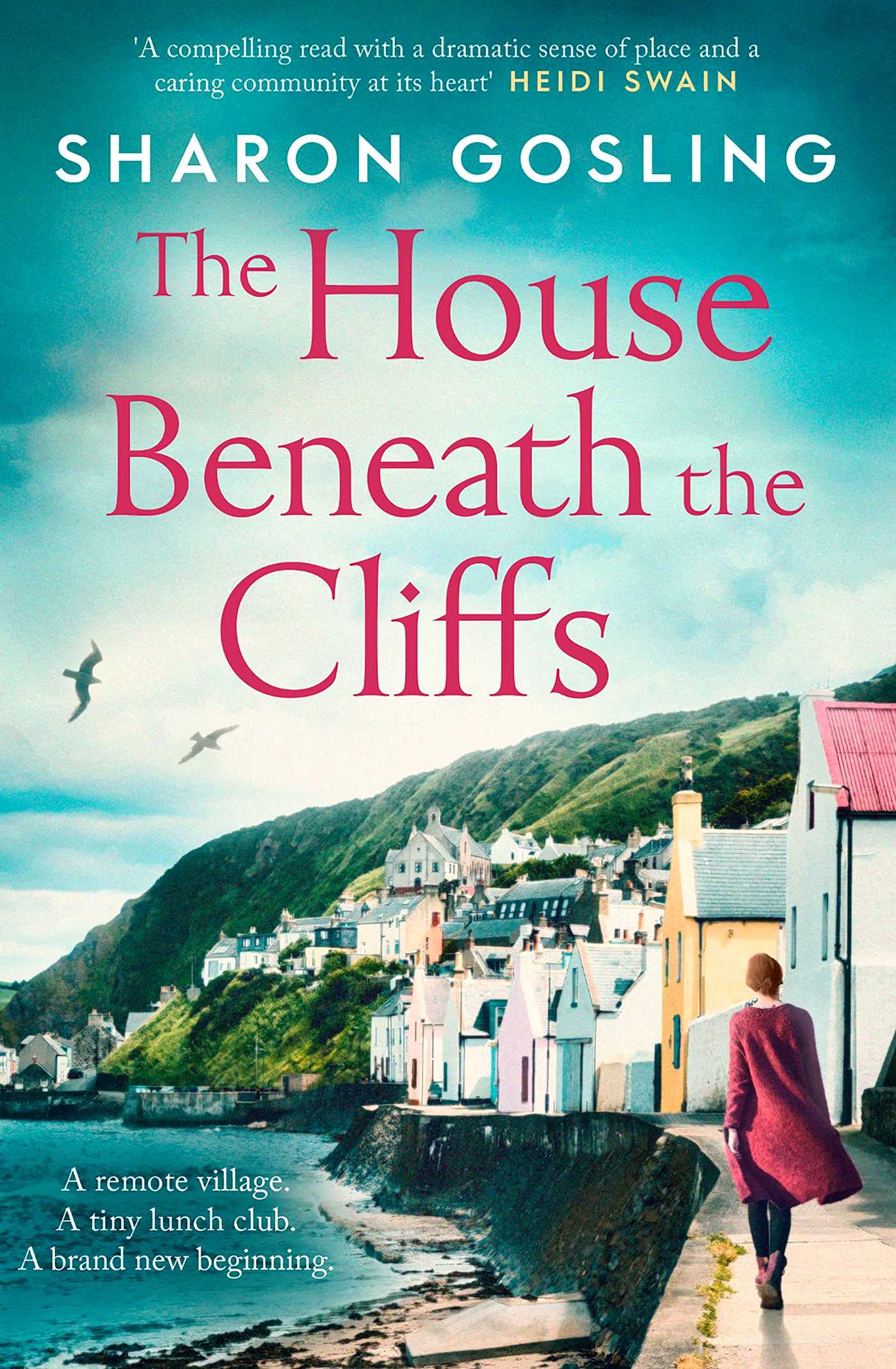
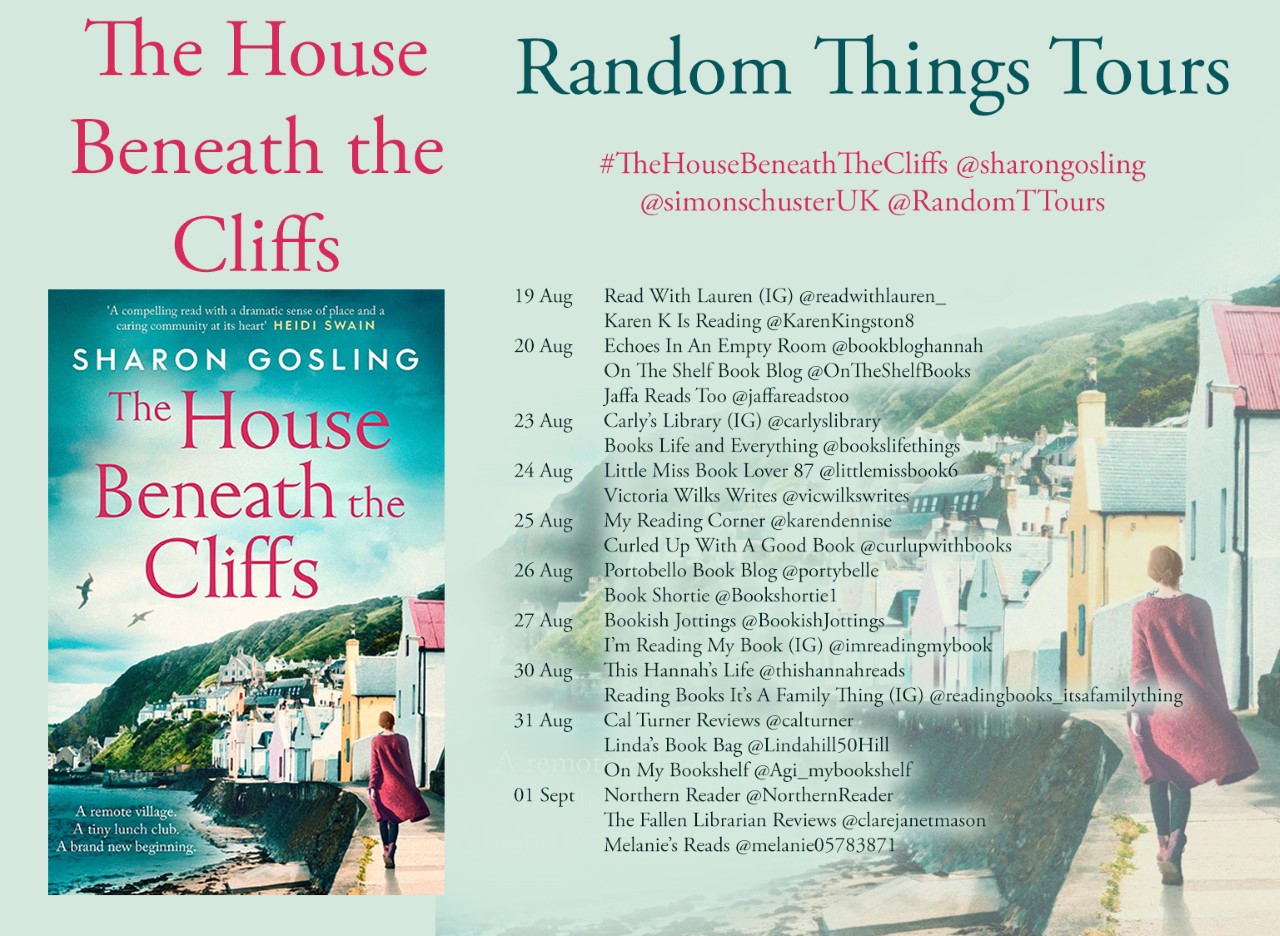
The House Beneath the Cliffs by Sharon Gosling

I’m delighted that it’s finally my turn on the blog tour for Sharon Gosling’s The House Beneath the Cliffs. My grateful thanks to Anne Cater of Random Things Tours for inviting me to take part and to TeamBATC for sending me a copy of the book in return for an honest review. It gives me enormous pleasure to share that review today.

Published by Simon and Schuster on 19th August 2021, The House Beneath the Cliffs is available for purchase through these links.

The House Beneath the Cliffs

A remote yet beautiful village. A tiny kitchen lunch club. The perfect place to start again.

Anna moves to Crovie, a tiny fishing village on the Moray Firth, for a fresh start. But when she arrives, she realises her new home is really no more than a shed, and the village itself sits beneath a cliff right on the edge of the sea, in constant danger of storms and landslides. Has she made a terrible mistake?

Yet as she begins to learn about the Scottish coast and its people, something she thought she’d lost reawakens in her. She rediscovers her love of cooking, and turns her kitchen into a pop-up lunch club. But not all the locals are delighted about her arrival, and some are keen to see her plans fail.

Will Anna really be able to put down roots in this remote and wild village? Or will her fragile new beginning start to crumble with the cliffs . . . ?

Beautiful, moving and utterly absorbing, The House Beneath the Cliffs is a novel of friendship and food, storms and secrets, and the beauty of second chances.

My Review of The House Beneath the Cliffs

Anna is starting a new phase in her life.

Oh yes! The House Beneath the Cliffs is exactly my kind of read and I couldn’t have loved it more because Sharon Gosling imbues her writing with genuine heart-felt emotion that draws in the reader and makes them care about her characters.

I adored meeting the cast of The House Beneath the Cliffs. The tiny close-knit community of Crovie means that each character is a distinct personality with every type represented, from the curmudgeonly Douglas McKean to the unselfish Frank, with Anna taking centre stage. Anna felt so real to me it was as if I knew her personally. Her previous life, her potential future and her present activities in Crovie held me spell bound. I wanted her to be happy, to succeed and leave the foul Geoff behind with every fibre of my being. Similarly, Auld Robbie was perfectly depicted. What I found so engaging was the way in which the whole community was presented. Sharon Gosling understands implicitly how small communities operate, with their mutual support and long held petty jealousies, their friendships and relationships, so that I felt I had been plunged into the heart of the place alongside Anna. The House Beneath the Cliffs also felt an authentic portrait of how such small communities have to live; with economic and environmental challenges that can threaten their very lives so that Crovie is every bit as much a character as any of the people. Indeed, there are some heart stopping moments in reading The House Beneath the Cliffs that are not just to do with romance!

The setting is glorious. I loved the seascapes painted by Sharon Gosling’s evocative writing and the references to food, to ecology and landscape all combine into a wonderful sense of place. The author knows exactly how much detail to provide to give the reader a vivid experience without ever slowing the pace of the plot, so that reading The House Beneath the Cliffs is an immersive and completely satisfying experience.

And it’s an equally fantastic plot. The story races along, encapsulating everything from the most prosaic to the most dramatic in a perfect balance of storytelling. I genuinely think The House Beneath the Cliffs is exactly the kind of book to appeal to any situation – from beach read to cosy winter’s afternoon by the fire because it sweeps the reader away from their real life so completely.

The themes in The House Beneath the Cliffs are sensitively handled, intelligently woven into the narrative and deeply affecting. The human need for connection and a sense of belonging underpins other concepts such as grief, parenthood, ambition, friendship, and opportunity so that there is resonance and appeal for all readers.

I thought The House Beneath the Cliffs was enchanting. It’s beautifully written and captivated me completely. I loved every second spent reading about Anna and Crovie. It’s a wonderful book, not to be missed.

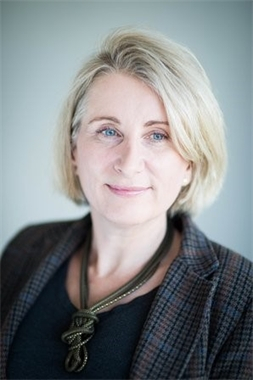
About Sharon Gosling

Sharon Gosling lives with her husband in a very remote village in northern Cumbia, where they moved to run a second-hand bookshop, Withnail Books in Penrith. She began her career in entertainment journalism, writing for magazines in the science fiction and fantasy genre, before moving on to write tie-in books for TV shows such as Stargate and the ‘re-imagined’ Battlestar Galactica. She has also written, produced and directed audio dramas based in the same genre.

When she’s not writing, she creates beautiful linocut artwork and is the author of multiple children’s books. The House Beneath the Cliffs is her first adult novel.

You can follow Sharon on Twitter @sharongosling and Instagram or visit her blog.

There’s more with these other bloggers too: