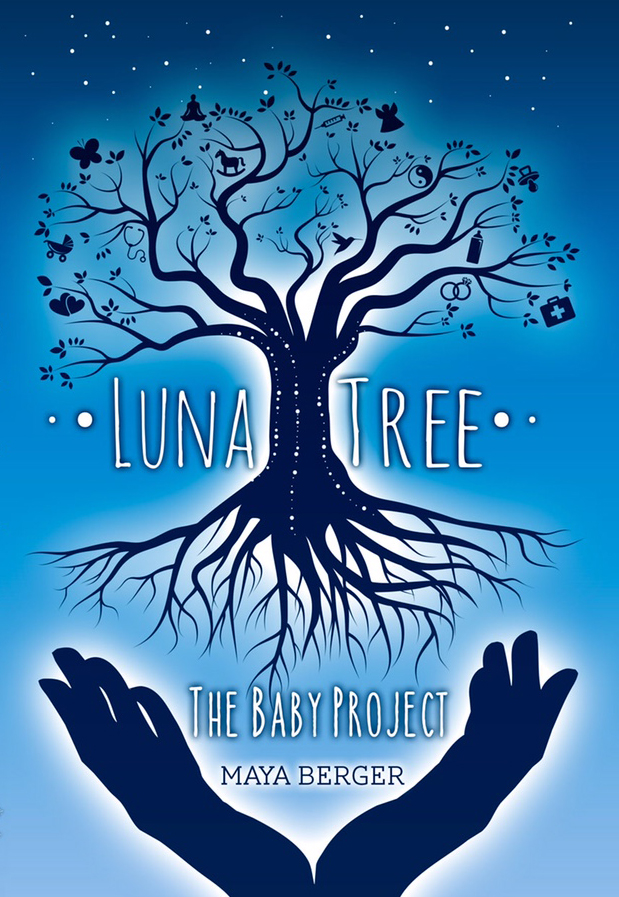
Beyond the Surf by Henry Neild

BeyondtheSurfFrontCover

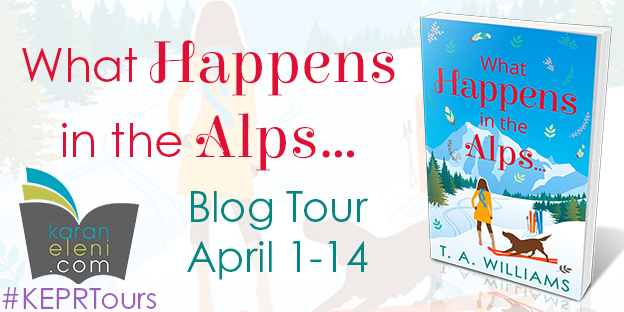
It gives me great pleasure to be part of the launch celebrations of Beyond the Surf by H W Neild, published on 11th March by HNL. Beyond the Surf is available to purchase in e-book and paperback from online retailers including Amazon UK and Amazon US and to order from all good bookstores.

Beyond the Surf

BeyondtheSurfMap

A young woman’s dream.
A mercenary tycoon seizing the opportunity.
Islands ripe with potential.
…. All in the throes of coming of age through political unrest …….

Kayte King lives to kitesurf. Financially broke in her windless hometown, Kayte’s spirits sink to all new levels. When an all-expenses paid invite to The Martinez Islands presents itself, to promote tourism with the potential to break her current world record — a once in lifetime opportunity — Kayte grabs it.

Accompanied by her boyfriend, Steve, she travels to the islands with high hopes and expectations. They link up with their American counterparts and form the kitesurfing group that will attract tourism the islands desperately need.

Mercenary leader, Roger MacGill, brought in to eliminate anarchy, is tasked with the formation and training of a local police force. Stability temporarily subdued, MacGill has capitalised on the island’s beauty and invests in its modernisation. But, MacGill is now dangerously low on funds and desperate to see returns on his investment.

The kitesurfing contingency’s arrival rocks local interest. Fascinated by the kites, yet wary of foreigners, their apprehension bubbles to the surface. Storm clouds gather. The political unrest that follows, threatens to shatter all their dreams.

An extract from Beyond the Surf

BeyondtheSurfFrontCover

The letter, typed on official-headed paper, read:

Dear Ms King, 12th February 2003

On behalf of our esteemed and honoured Life President, Prince Jaffa, I am writing to you, as the current female kite surfing speed record holder, to invite you to improve your record on The Martinez Islands, our nation State on 14th March 2003.

We are delighted that Mr Chuck Schneider, the men’s record holder from America, will also be attending.

As soon as you accept Prince Jaffa’s invitation in writing, I will send you two airline tickets and a cheque for $5,000.00 to attend. If you break your record whilst here on The Martinez Islands the Prince will be delighted to present you with another cheque for $15,000.00.

This will be an all expenses paid one week trip. The Prince will pay for all yours and a kite caddy’s travel costs, including taxis to the airport, excess baggage and all accommodation and expenses for both of you during your stay.

I very much look forward to hearing from you, at your earliest convenience, to confirm your attendance. My office will be in touch immediately afterwards regarding all the travel arrangements.

If there is anything else you would like to know please do not hesitate to contact me.

Yours sincerely,

Signed Jon Mabenge Director of Tourism.

And here she was, exactly three weeks after receiving the letter, coming into land on The Martinez Islands, two tiny full stops and a comma in the middle of nowhere – five hundred miles off the east coast of Africa. She hadn’t really believed the invitation was 100% genuine until the moment she’d seen the islands clearly come to focus.

About H W Neild

Henry Neild divides his time living  in a small village outside Winchester and a coastal retreat in southern France. Leaving school age 16 Henry worked in the film industry as a freelance location manager and later turned his hand to music videos for bands including; Oasis, Moby and Pulp. Returning to college he studied Agricultural Business and Finance which took him to work in Africa. He went on to become a rural property developer and wine exporter before setting up web-based conduit for commercial property owners and filmmakers in the UK. He has previously written scripts for Sky Travel and Fierce Vision as well as articles for magazines including; Hampshire Life, Flybe and Society. Henry’s interests include walking with his Patterdale terrier, Mister Bonaparte, gardening, cooking and horse racing, he is also a keen tennis player and ocean swimmer.

For more information please visit Henry Neild’s web site or follow him on Twitter.

BeyondtheSurf_BlogTourBanner

Caroline James Author Interview

CTTCM Cover High Res

Since joining several online groups for authors and bloggers I have been fortunate to meet some lovely people and author Caroline James is one of them. Her new book Coffee, Tea, the Caribbean and Me was released last month and I’m delighted Caroline has agreed to tell me more about her writing.

Coffee, Tea, the Caribbean and Me

‘The time to be happy is now…’

Jo remembers her late husband’s words but is struggling to face the lonely future that lies ahead. A heartbroken widow, the love of her life, husband Romany John, has died suddenly and Jo finds herself alone with ghostly memories at Kirkton House – a Cumbrian Manor that until recently, she ran as a thriving hotel. Her two sons have moved away; Jimmy to run a bar in Barbados and Zach, to London to pursue a career as a celebrity chef. Middle-age and widowhood loom frighteningly and Jo determines to sell up and start again, despite protestations from colourful friend, Hattie and erstwhile admirer Pete Parks. Hattie convinces Jo to postpone any life-changing decisions by enjoying a Caribbean holiday in Barbados and their holiday sets off a course of events that brings mayhem and madness to Jo and her family.

Confused and anxious for her future, can life really begin again for Jo? Is there hope in middle years and can romance happen?

CTTCM Cover High Res

An Interview with Caroline James

Hi Caroline. Thank you so much for agreeing to answer some questions on my blog about your writing and your latest book  ‘Coffee, Tea, the Caribbean and Me’.

Hi Linda – thanks so much for hosting me on your lovely blog.

Firstly, please could you imagine we are on a one minute speed date and tell me a little about yourself?

OK, ‘speed date’ head on, here goes…

I hated school and left home at 15 and headed to Cornwall where, in-between beach days and surfing, I worked in a hotel.  Three years later I got a grip, shed the cheesecloth dress, hippy cowbell and Jesus sandals and went to college and my career in hospitality began. From pot washing to waiting table, working for a large hotel group and ultimately owning a pub then gorgeous country house hotel in Cumbria, after which, I ran a business representing celebrity chefs for many years which was great fun despite the crazy and sometimes bizarre situations I often found myself in.

AUTHOR CAROLINE JAMES (PROFESSIONAL PROMO SHOTS 14.08.2015)

(I was a pot washer too so maybe there’s hope for me yet as a writer!)

When did you first realise you were going to be a writer?

Four years ago. It was a do or die moment, as in glue your bum to a chair, stop talking about it and get writing.

(That might be one of the ways I’m going wrong. Note to self – glue bum to chair…)

If you hadn’t become an author, would you have become a chef as I notice you have lots of food related elements in your writing and on your website, or is there another creative outlet you’d prefer?

chef

I’d like to have been a criminal lawyer but having buggered (can I say that?) school up that was out of the question, although I went on to get an education in my own time. I have been a chef and, having worked with some of the best when I represented them,  know how hard they work to get to the top. It isn’t all about glamour in front of the camera; it takes blood, sweat, tears and courage to rise above the rest.

How do you go about researching detail and ensuring your books are realistic?

I write what I know and flavour it with a subtle camouflage of made-up characters. Research is made easier by the internet but I like to emerge myself physically in the places I write about.

Which aspects of your writing do you find easiest and most difficult?

Food trips across the page with as much pleasure as I have when I’m eating it. Death makes me dig deep and having experienced tragedy in my life, it is painful to write.

How different or similar do you find writing short stories or articles for magazines in comparison with novels?

Just as hard. Every short story or article is a pocket version of a novel, it has to have a beginning, middle and rounded ending but you have less time to tell the story.

What are your writing routines and where do you do most of your writing?

My best time is very early morning, as in 5 am. The world is sleeping and calm and the only sound is the ticking of a clock. I can meet up with my characters again and in the peace of an undisturbed day I can find out where they are going next. I write at an old oak desk in the corner of a room with doors firmly closed.

When you’re not writing, what do you like to read?

I love crime and lots of complicated tales from the darker side. I’ll have a go at most genres but if it doesn’t grip in the first few pages I don’t often hang in there.

If you could chose to be a character from ‘Coffee, Tea, the Caribbean and Me’, who would you be and why?

I’d like to be Hattie because she rides through life with an open mind and willingness to try anything once. Age is just a number to Hattie and she’s a larger than life colourful character who has a heart of gold. To be like this would be a joy, not worrying about the extra pounds, the commitment to day-to-day nonsense or what people think – imagine the freedom!

If  ‘Coffee, Tea, the Caribbean and Me”  became a film, who would you like to play Jo and Hattie?  

If we’re talking block-buster I’d have Meryl Streep as Jo and Melissa McCarthy as Hattie.

If you had 15 words to persuade a reader that ‘Coffee, Tea, the Caribbean and Me’ should be their next read, what would you say?

It’s never too late in life and there is always hope no matter what…

You supported Movember with the publication ‘Let’s Hear it for the Boys’. What made you choose to do that?

It’s a great cause and Movember is an excellent charity that is committed to changing men’s health and someone close to me was suffering with prostate cancer, which bought it home. We must look after our men – they often forget to look after themselves.

Movember

What was it like writing in collaboration with two other writers, Sheryl Browne and Emma Calin?

Fabulous – lovely ladies and great writers, as are all the contributers in the book, Let’s Hear It For The Boys.

What’s next for Caroline James as a writer?

I’m on the final furlong with the next book, Coffee Tea The Boomers & Me and loving it. There is a really nasty evil character in there called, Andy Mack, and I am enjoying the ride with him (they say write what you know!”). This is due for publication Autumn this year.

(Now I’m intrigued about Andy…)

Thank you so much, Caroline, for your time in answering my questions.

Thanks for asking such great questions Linda, it’s been my pleasure to chat with you here.

Gypsy

You can find all of Caroline’s books on Amazon UK and Amazon US.

Find out more about Caroline on her website and follow her on Twitter.

Waiting for You by Catherine Miller

cover

I’m delighted to be part of the launch celebrations for Catherine Miller’s debut novel Waiting for You published by Carina UK on 10th March 2016. Waiting for You is available in e-book from Amazon UK and Amazon US.

It seems impossible to believe that Catherine is mum to young twins and battles various illnesses as well as being an author so I asked her how she managed to achieve what she has. You can read her reply below in an inspiring guest post.

Waiting for You

cover

Waiting for You is an emotional and gripping debut novel you won’t be able to put down…

You’d never guess that Fliss Chapron doesn’t have it all

All Fliss wants is to see two blue lines telling her she is pregnant with her much longed for second baby. But as the negative tests stack up, dreams of completing her perfect family feel more hopeless every day.

After years of disappointment, Fliss’s husband Ben is spending more time at the office than in their marital bed, and Fliss finds herself wondering who could be responsible for their inability to conceive another child. Yet, where do you lay the blame when it comes to having a child – and can anyone really be at fault…

As Ben becomes increasingly distant, Fliss begins to question whether her desire for a baby is just a sticking plaster to save her marriage. Because in the end, how well can you ever know another person…even the man you’re married to?

Nothing Is Easy. Everything Is Possible.

A Guest Post by Catherine Miller

Catherine

That’s been my mantra for life.

It was my mantra for the years I worked to be a physiotherapist.

It was my mantra in the years of attempting to become a writer after ill health meant I needed to change career.

It was definitely my mantra after giving birth to beautiful twin girls and at that point, only having written the first chapter of Waiting for You.

In Waiting for You, Fliss is desperate for a second baby. To her it’s important for her daughter to have a sibling and for the family to feel complete, but she’s quick to realise her marriage isn’t as happy as it once was. They have a dual living arrangement with her husband up in London during the week and with them in their Kent cottage at the weekends. The decision to have another child is put on hold while she tries to fix their marriage, but it doesn’t stop her from taking up an opportunity that might help that dream in the long run.

My mantra for life applies to Fliss. The path to what she is hoping to achieve hasn’t been easy, but she’s not willing to give up on the chance of a happy family, in whatever form that might take.

But why does anyone need a mantra?

Personally, I’ve always needed it because I’m dyslexic. When I was born my heart stopped three times during my breech delivery and as a result I had brain damage associated dyslexia. It’s led to a lifetime of people underestimating me. Of teachers saying things that are the opposite of encouragement. A lifetime of realising so what if it’s not easy? It doesn’t mean I won’t do it in the end.

I’m pretty sure my mantra can apply to all of us. Whatever it is we want to achieve in life, it’s possible if we’re determined enough. Ignore the doubters, the only person who should set the limits is you.

———-

That’s a pretty important mantra to have Catherine. Thank you so much for sharing it with us.

You can find out more about Catherine and Waiting For You with these other bloggers:

Waiting for You Blog Tour

———-

You can also find out more about Catherine Miller on Facebook , via her web site and by following her on Twitter

Natalie’s Getting Married by Rosa Temple

Natalies Getting Married Cover Reveal Banner2

This lovely romantic comedy, Natalie’s Getting Married, by Rosa Temple is published on 14th March 2016 and I’m delighted to be sharing the cover with you through Brook Cottage Books. Natalie’s Getting Married is available on AMAZON US and AMAZON UK.

Natalies Getting Married Cover

Career minded, Natalie Spencer, had never been in love. She could never understand what all the fuss was about. But when she met Jackson Humphries during Fresher’s Week at University, that all changed.

Utterly infatuated, Natalie quickly discovers the meaning of love and, before she knows it, she’s heading up the aisle – for the first time, that is.

This is a tale about four wedding dresses, a runaway groom and a girl who got so carried away, she couldn’t see true love staring her right in the face.

However, if you can’t wait to read Natalie’s Getting Married you can enter to win an e-copy by clicking here.

About Rosa Temple

Rosa Temple author pic

Rosa Temple began writing chick lit and romance novellas out of a love for the old films she watched as a young girl. As a ghost writer, she gained experienced writing romantic novellas both sweet and on the slightly more steamy side. A passion to write self penned novellas in this genre, as opposed to being a ghost writer, gave rise to the completion of Sleeping With Your Best Friend and the soon to be published novel, Natalie’s Getting Married.

Rosa Temple is a Londoner and is married with two sons. She is a reluctant keep fit fanatic and doer of housework and insists that writing keeps her away from such strenuous tasks. Drinking herbal tea and munching biscuits helps her create characters and story lines.

To find out more about Rosa and to catch up on all her musings please join her here on Rosa Temple Writes

You can find Rosa on Facebook, Goodreads, and Google+. You can also follow Rosa on Twitter.


Alchemy by Jade Kennedy

Alchemy

Alchemy is a collection of short pieces of prose – or flash fiction – interspersed with poetry, by Jade Kennedy. Alchemy is available to purchase as an e-book on Amazon UK and Amazon US.

I was asked by Jade Kennedy if I would like to read and review her collection of flash fiction and poetry many months ago, but with a huge pile of books waiting to be read it has taken me some time to get to it. However, it was worth the wait.

Initially I wasn’t sure if I’d like such short pieces of fiction and I felt the opening piece A Collection wasn’t as strong as many of the other pieces, but soon I grew accustomed to the rhythm of them, and found myself drawn into an ethereal world of half seen images, ghostliness and other-worldliness.

Jade Kennedy writes like a painter, using skilful similes and metaphors that bring alive her descriptions, particularly those of the natural world. There are mists and fogs, stars and sands, waves and waterfalls that link closely and evocatively with the emotions of the narrative voice.

However, the real strength for me in Jade Kennedy’s writing is her poetry. I’m not sure whether it was the formatting of the e-book I had, but many of the lines were fragmented and disjointed, suiting perfectly the content of the poems. There’s a kind of mysticism and longing in her lines that I found frequently very moving. Reading the poetry evoked feelings of longing and sadness, but also optimism and hope. One line from The Lies I Told My Mother I thought summed up the quality of Jade Kennedy’s writing so well. She says ‘Leave that which scars the spirit to fade beneath the dust.’ I think those are wise words for us all.

It’s a huge shame that this kind of writing is so underrated as talents like Jade Kennedy’s are in danger of being lost in the face of the huge publishing houses and big name authors. I think she deserves recognition and praise for her writing as she really has ‘fingers tinted in poetry’.

You’ll find Jade on GoodreadsGoogle+ and on her blog. You can also follow Jade on Twitter.

The Finding of Martha Lost by Caroline Wallace

martha lost

My enormous thanks to Sophie Christopher at Penguin Random House for an advanced reader copy of The Finding of Martha Lost by Caroline Wallace in return for an honest review. The Finding of Martha Lost is published by Doubleday, an imprint of Transworld Books, on 10th March 2016 and is available from Amazon UK, Amazon USWaterstones where it is their Book of the Month, and Penguin.

The Finding of Martha Lost

Martha is lost. She’s been lost since she was a baby, abandoned in a suitcase on the train from Paris. Ever since, she’s waited in station lost property for someone to claim her. It’s been sixteen years, but she’s still hopeful. In the meantime, there are mysteries to solve: secret tunnels under the station, a suitcase that may have belonged to the Beatles, the roman soldier who appears at the same time every day with his packed lunch. Not to mention the stuffed monkey that someone keeps misplacing. But there is one mystery Martha cannot solve. And now the authorities have found out about the girl in lost property. Time is running out – if Martha can’t discover who she really is, she will lose everything…

martha lost

My Review of The Finding of Martha Lost

Martha is a foundling who’s never left Lime Street Station in Liverpool, where she lives and works with Mother in the lost property office. She is the Liver Bird of Lime Street. But in the heatwave of 1976, Martha’s life is going to change.

The Finding of Martha Lost is utterly astounding. It’s a book that’s almost impossible to review because it is so fantastic.

Martha is completely compelling. From the moment she speaks to the reader in the opening sentence of the book there is an endearing breathlessness to her wonderful personality, even in the face of adversity. Martha is simultaneously innocent and wise in a glorious creation. Quite how Caroline Wallace has created such a fabulous character is difficult to define. It’s partly because Martha suffers at the hands of Mother, the woman who has brought her up, partly because she spins instead of walks taking me back to the feelings of uninhibited pleasure in my own childhood, partly because Martha has magic in her fingers, partly because she has such an affinity with books. But Martha is so much more than the sum of her parts. I didn’t just love her, I wanted to be her. If the world were filled with Marthas it would be a better place. Reading about her has restored my faith in humankind. I’ve ended up reading The Finding of Martha Lost by being rather in love with George too.

At the risk of sounding pretentious, I think what makes The Finding of Martha Lost such a perfect book is that it has all the hallmarks of classical Greek drama. There’s the unity of time in 1976, the unity of place in Lime Street Station and the unity of action as Martha tries to find out who she really is. There’s such a satisfying unity of theme too; it’s not just Martha who is lost. My heart went out to William, living in the shadows, to Elisabeth searching for her own happiness and even to the monstrous Mother in her misguided manner of looking for faith. The items in the lost property come alive under Martha’s fingers so we have more loss and sub-text giving layer upon layer of interest as Martha understands the stories behind the items. I loved the echoes of and references to writing and fairy tales too. This is very fine writing indeed.

All the characters are so beautifully defined so that it felt as if I were reading about people I knew. Even the heat of the summer becomes a character in its own right. The Finding of Martha Lost called to me when I wasn’t reading it and I put the day on hold to finish it, so hypnotic was the writing and so vivid the descriptions. Caroline Wallace evokes the era so well. The music and fashions, the Beatles hangover and the story of Mal Evans serve to weave a spellbinding tale. There’s a lightness of touch so that a single word of prose or a brief exclamation from the characters can convey huge emotion or move on the plot with enormous impact.

Martha thinks ‘Books are magical’ and this one certainly is. I laughed aloud frequently. I sobbed a couple of times. It’s taken me much soul searching to decide ultimately what I feel about reading The Finding of Martha Lost and, because so many things Martha says resonate in my heart, in the end I’ve decided on one word – joy.

Now I’m off to arrange all my books by the colours of their spines!

You can follow Caroline Wallace on Twitter and I really think you should.

Journey to Death by Leigh Russell

Cover

I’m delighted to be part of the launch celebrations of Leigh Russell’s novel Journey to Death which was published by Thomas & Mercer on 3rd March 2016. Journey to Death is available on Amazon UK and Amazon US in both e-book and paperback. Leigh has kindly told me all about the inspiration for Journey to Death.

Lucy Hall arrives in the Seychelles determined to leave her worries behind. The tropical paradise looks sun-soaked and picture-perfect—but as Lucy soon discovers, appearances can be very deceptive. A deadly secret lurks in the island’s history, buried deep but not forgotten. And it is about to come to light.

As black clouds begin to gather over what promised to be a relaxing family break, Lucy realises that her father stands in the eye of the coming storm. A shadow from his past is threatening to destroy all that he holds dear—including the lives of his loved ones.

A dark truth is about to explode into their lives, and that truth is going to hit them right between the eyes.

The Inspiration for Journey to Death

A Guest Post by Leigh Russell

Cover

The story of Journey to Death was inspired by a first hand account I was given of a political coup in the Seychelles in the late 1970s. Interested in the impact of politics on ordinary people, I invented the story of a love affair between two people from different cultures, torn apart by circumstances.

For a fiction writer, weaving a real historical incident into my narrative posed an interesting challenge. After the episode in the 1970s, the narrative shifts to the present day. In the idyllic holiday resort of Beau Vallon Bay, the disturbing fall out from affair in the 1970s gradually emerges.

The political unrest that casts a shadow over events in the beginning of the book is only one strand of Journey to Death. The main story focuses on the adventures of Lucy Hall, who arrives in the Seychelles in the present day. I wanted Lucy to be young at the start of the series, to allow her room to develop as a character.

In some ways a retrospective love story, in some ways a novel about life on a tropical island, Journey to Death is mainly a novel about a girl maturing into adulthood, learning to make decisions that impact on others, and taking responsibility for her own life.

Before the manuscript for Journey to Death was ready to go to my editor, I felt I owed it to my readers to check that my descriptions of the location were accurate. In asking readers to suspend their disbelief, authors have to do their best to create a world that seems authentic. So I packed my bags and flew off to the Seychelles.

2

Although the research trip was hard work, it was also wonderful; I was not prepared for the beauty of the islands. It would be hard not to feel inspired by the beauty of the sun setting over the Indian Ocean as ‘grey clouds suddenly flared with orange light, and the sea shimmered pink and golden beneath the setting sun.’

Many different things influenced my writing of Journey to Death: historical events, real and imaginary people, and places. All of these contributed to the novel and each, in their different way, add a different layer to the narrative.

About Leigh Russell

Leigh

Internationally bestselling author Leigh Russell is published in English, and in translation throughout Europe. Her Geraldine Steel and Ian Peterson titles have appeared on many bestseller lists, including #1 on kindle. Leigh’s work has been nominated for several major awards, including the CWA New Blood Dagger and CWA Dagger in the Library, and her Geraldine Steel and Ian Peterson series are currently in development for television with Avalon Television Ltd.

Journey to Death is the first title in her Lucy Hall series published by Thomas and Mercer.

Links to all Leigh’s books can be found on her website and you can follow her on Twitter.

There’s lots more to find out about Leigh with these other bloggers too:

journey to death blog tour banner


The Butcher’s Hook by Janet Ellis

Butchers Hook

I’m thrilled to be part of the launch celebrations for Janet Ellis’s debut novel, The Butcher’s Hook. Published by Two Roads Books, an imprint of John Murray on 25th February, The Butcher’s Hook is the dark and twisted tale of a young girl in 18th-century London determined to take her life in her own hands. It is available to buy from Amazon UKAmazon US, from the publisher and from all good book stores.

The Butcher’s Hook

At nineteen, Anne Jaccob is awakened to the possibility of joy when she meets Fub, the butcher’s apprentice, and begins to imagine a life of passion with him.

The only daughter of well-to-do parents, Anne lives a sheltered life. Her home is a miserable place. Though her family want for nothing, her father is uncaring, her mother is ailing, and the baby brother who taught her to love is dead. Unfortunately her parents have already chosen a more suitable husband for her than Fub.

But Anne is a determined young woman, with an idiosyncratic moral compass. In the matter of pursuing her own happiness, she shows no fear or hesitation. Even if it means getting a little blood on her hands.

A vivid and surprising tale, The Butcher’s Hook brims with the colour and atmosphere of Georgian London, as seen through the eyes of a strange and memorable young woman.

Getting the Right Setting

Butchers Hook

A Guest Post from Janet Ellis

The setting of any novel quickly becomes part of the narrative. It would be impossible to imagine the Larkins anywhere other than Kent . Cornwall  is as much a part of the story as Rebecca’s nameless heroine and if you took Damon Runyon’s guys and dolls out of New York, they’d probably never meet.

When I started telling Anne Jaccob’s tale in The Butcher’s Hook , she had to be in London. Not just because I live there ( although I am very fond of my home town, carbuncles and all),  but because Anne needed a grimy, busy and  vivid background. I knew initially that she would be living in the past, away from mobile phones and areoplane rides, but it was a while until it was obvious to me that Anne was a Georgian girl. The Georgian era is quietly insistent. Its bossy grandchildren, the Victorians, quickly took over the place- so that the way we celebrate Christmas, commute to work , bury our dead and much more besides is all a Victorian legacy. But throughout England, waiting to be spotted like a fine horse in a stable of  pit ponies, Georgian buildings stand quiet and graceful. The more developed the city becomes, the more the contrast between the sharp, harsher architecture of the twenty-first century and the calm, ordered, stately eighteenth version peeking out beside it.

It isn’t just the look of that time I find beguiling. Until time-travel becomes (a) affordable and (b) an actual thing, I relied on my imagination to supply the other details. London must have stunk! Open sewers, fires kindled with animal fat, horses in every street and a scant acquaintance with personal hygiene would have added up to a constant aroma, thick as jam. In those days, for the first time, the number of town dwellers outnumbered country folk and the city teemed. You could practically walk across the Thames going from deck to deck of the boat traffic  up and down its length and, as most people didn’t travel by carriage, everywhere was packed with pedestrians.

All in all, a perfect place to maroon a solitary, singular girl. I’m familiar with Marylebone and the area north of Oxford Street where the Jaccob family lived (the layout is the same)  and, in my mind’s eye, I liked to strip away everything built since Anne’s day and set her walking. Primrose Hill was a long way then from anything Kate Moss would recognise, but the ideal spot from which Dr Edwards could show Anne her city. ‘The bald head of St Paul’s’ still dominates the skyline and provides a useful marker for the lost traveller.

If they ever do get the time machine going, I’d love a ticket. What did London sound like ? Was it much colder then ? It must have been much darker without street lighting and who knows what lurked in the little alleys and backstreets, long since demolished. In the map of my imagination, there’s still much uncharted territory to explore.

———-

Janet

Janet Ellis trained as an actress at the Central School of Speech and Drama. She is best known for presenting Blue Peter and contributes to numerous radio and TV programmes.
She recently graduated from the Curtis Brown creative writing school. The Butcher’s Hook is her first novel.

You can follow Janet on Twitter and find out more about her on her website.

The Forgotten Summer by Carol Drinkwater

the-forgotten-summer

My very grateful thanks to Gaby Young at Penguin Random House for an advanced reader copy of Carol Drinkwater’s The Forgotten Summer in exchange for an honest review. The Forgotten Summer was published by Michael Joseph, an imprint of Penguin Books, on 11th February 2016 in hardback and e-book. It will be released in paperback on September 8th 2016. The Forgotten Summer is available to purchase on Amazon UK and from all good bookshops.

The Forgotten Summer

the-forgotten-summer

Secrets ripen and fester over a long sweltering summer in France . . .

The annual grape harvest at the Cambon family’s magnificent vineyard is always a cause for celebration. But not this year. When an accident destroys the crop, leaving the estate facing ruin, Clarisse Cambon knows exactly who to blame – her daughter-in-law Jane.

It’s just the latest incident in a decades-long feud whose origin both women have concealed from Luc, who struggles to keep his wife and mother on speaking terms. But is Luc the saint he appears to be? When tragedy strikes, Jane is thrown into doubt. What secrets has her husband been keeping?

Forced to take charge of the ailing vineyard, Jane uncovers further proof that Luc may not be the man she fell in love with twenty years ago. And, worse still, she knows that her old enemy Clarisse is the only one who knows the truth . . .

My Review of The Forgotten Summer

Jane and her mother-in-law Clarisse Cambon do not get on, so that when Clarisse finds excuse to blame Jane for a poor grape harvest on the family estate in France, Jane’s husband Luc is unable to reconcile them. However, their lives are not going to remain separate for long as fate has a nasty habit of intervening.

I feel I owe Carol Drinkwater an apology. I picked up The Forgotten Summer believing I was about to read merely a fluffy, lightweight, love story. I did indeed get a love story, but one of great depth and resonance and of more than one kind of love. The Forgotten Summer is literary, well researched and hugely satisfying to read. It explores not just love, but searing grief, hatred, deceit, joy and despair providing a richness of experience for the reader.

The characters are human, three dimensional creations who are flawed and realistic so that at times I wanted to shake them in frustration and at others I wanted to hold them and comfort them. I thought about them when I wasn’t reading the book. I’m also left wanting to know more about them in the future and would love a sequel.

The plotting is tantalising and entertaining as Carol Drinkwater uncoveres suggestions and details that kept me wanting to read on. Just occasionally I would have liked a little less of the viticultural detail but there’s no denying these elements are impeccably well researched and presented.

The Forgotten Summer is wonderfully atmospheric writing. It’s the small details that really bring the narrative alive. Carol Drinkwater plays to all the reader senses, immersing readers in the sounds of jazz, with Nina Simone singing in the background for example, or evoking the taste of oozing Brie on fresh crusty loaves. I could so easily see the blossoms, olives and grapes and smell the lavender. Anyone who knows France would recognise instantly the scenes presented so beautifully.

I thought The Forgotten Summer was a wonderful read and am ashamed of my prejudice that has kept me away from Carol Drinkwater’s writing in the past. It is mature, engaging, emotional and atmospheric. I shall be seeking out her other fiction immediately.

carol-drinkwater-quote-from-penguin

About Carol Drinkwater

Anglo-Irish actress Carol Drinkwater is perhaps still most familiar to audiences for her award-winning portrayal of Helen Herriot in the BBC series All Creatures Great and Small. A popular and acclaimed author and film-maker as well, Carol has published nineteen books for both the adult and young adult markets. She is currently at work on her twentieth title.

When she purchased a rundown property overlooking the Bay of Cannes in France, she discovered on the grounds sixty-eight, 400-year-old olive trees. Once the land was reclaimed and the olives pressed, Carol along with her French husband, Michel, became the producers of top-quality olive oil. Her series of memoirs, love stories, recounting her experiences on her farm (The Olive Farm, The Olive Season, The Olive Harvest and Return to the Olive Farm) have become international bestsellers. Carol’s fascination with the olive tree extended to a seventeenth-month, solo Mediterranean journey in search of the tree’s mythical secrets. The resulting travel books, The Olive Route and The Olive Tree, have inspired a five-part documentary films series entitled The Olive Route.

Carol has also been invited to work with UNESCO to help fund an Olive Heritage Trail around the Mediterranean with the dual goals of creating peace in the region and honouring the ancient heritage of the olive tree.

You can follow Carol on Twitter and visit her web site.

Hester and Harriet by Hilary Spiers

Hester and Harriet

Today it’s my great pleasure to be hosting a guest author who lives just a few miles away from my home, Hilary Spiers. Hilary’s debut novel Hester and Harriet is published by Allen and Unwin in paperback today, 3rd March 2016. Hester and Harriet is available here in the UK and in ebook here in the US.

Equally exciting, is the super guest post from Hilary who is also a playwright as well as a novelist and today she tells us just how different, yet equally tricky those skills are.

About Hester and Harriet

Hester and Harriet two widowed sisters in their 60s, are reluctantly driving to visit relatives when they come across a young woman hiding with her baby in a bus shelter. Seeing the perfect excuse for returning to their own warm hearth, the sisters insist on bringing Daria and Milo home with them.

But the arrival of a sinister stranger looking for a girl with a baby, followed quickly by their cousins’ churlish fifteen-year-old son, Ben, who also appears to be seeking sanctuary, Hester and Harriet’s carefully crafted peace and quiet quickly begins to fall apart. And, perhaps, it’s exactly what they need…

A Guest Post from Hilary Spiers

WRITER’S BLOCK: a play by Hilary Spiers

Hilary sits in front of her computer. From time to time she taps at the keys with one finger. She glances at the screen, reads what she has written, and deletes the lot in frustration. This happens several times.  A noise from upstairs. She shoves her chair back and hurries for the door

HILARY                  Is it lunchtime yet?

WRITER’S BLOCK A novel by Hilary Spiers

Hilary has never learned to type. But she can type. Not admittedly the way people are meant to type, with both hands, eight fingers and two thumbs. No, she types – as she has for more years than she is prepared to reveal – with the middle finger of her right hand, surprisingly fast and accurately.

But today, the fact she cannot type properly, nor as quickly as many others who use a keyboard for their living, is irrelevant. Because today there is nothing to type. Today, the words that sprang so readily to mind as she drifted off to sleep last night, those precise, telling, perfect words, are flat and lifeless on the page. For the fourth time in as many minutes, she presses the Delete key, on this occasion with a savagery that her keyboard does not deserve. The blank screen sneers back at her.

She glances at her coffee cup: empty. She looks at the screen again: empty. Upstairs, a floorboard creaks: her husband getting to his feet. Perhaps glancing at his watch, calculating how long it has been since breakfast. Picturing the left-over chicken breast in the fridge, the butter, the mayonnaise, the still-warm loaf peppered with seeds on the bread board … It’s not a very big piece of chicken. Will it stretch to two sandwiches? Is there more than a scraping of mayo in the jar? Surely he’ll be just as happy with cheese and pickle …

Leaping to her feet, she hurries for the study door. His shadow falls across the hall as he rounds the newel post at the top of the stairs. If she’s quick, she can make it to the fridge ahead of him. With studied casualness she calls up, as if surprised to see him, ‘Is it lunchtime yet?’

*********

I write both novels and plays, two very different disciplines that nonetheless overlap. The first – and obvious – difference between plays and novels is length. A play might only run to a quarter or even a fifth of a novel’s word count but don’t let that fool you into thinking playwriting is an easier option: as with short stories, you keep paring and paring to ensure that every spoken word counts. There can be no longeurs in a play or the audience loses interest – fast.  In line with the famous maxim ‘Show, don’t tell’, one endeavours to let information emerge organically as the plot unfolds; lengthy exposition (indeed pretty much any exposition) serves only to annoy them (‘For God’s sake, we know all this!’ or ‘Is this relevant?’ or ‘Just get on with it!’ ).

A novel on the other hand offers the luxury of space and time to expand characters, to paint them exactly as you see them, not leaving your creations to the mercies of an actor or director to place their own (sometimes inexplicable) interpretations on a line or character.  A novelist is casting director and scene-painter, dictating precisely the look, shape, age of the characters (indeed, how many characters appear, a make-or-break decision in the cash-strapped theatre) and creating the backdrop for the story, unconstrained by space or money or the practicalities of whisking characters from, say, a coffee shop to a prison cell in the blink of an eye. (That’s not to say you can’t write a play with multiple settings: you just have to be aware what you are asking of a set designer. And whether the company concerned can afford to realise your ambitions.)

What’s lovely about the theatre is that – once a play finally makes it on to the stage – feedback is immediate. You hear and see what works and what doesn’t in the moment. That line you and the cast found so funny in rehearsal? Deathly silence. That moment of intense pathos in Act 2? How can anyone be laughing?! And audiences will differ from night to night (and even pre and post-interval, which admittedly may have something to do with a glass of wine or two). In contrast, a novel demands patience. Your baby is launched into the choppy, unpredictable seas of publication and you have to sit and wait, stomach churning, for readers to react. For reviewers to review. For ratings to be given. Some readers are kind enough to take the time to contact you directly to give feedback, to say what they liked (or disliked) about your characters, your plot, your style.  And even to ask when the next book is appearing …

And then there’s the loneliness issue. It’s a truism that writing is a solitary business. When a play is in development or rehearsal, you’re working alongside other people: the director, the actors, the rest of the company. Characters are unpicked, suggestions made to tighten or shorten or lengthen a scene and your script becomes a living entity, evolving and hopefully improving as it develops and changes. I love that part of the process. That’s not say I don’t love novel writing. I’ve enjoyed every minute I’ve spent (and am still spending) with Hester and Harriet. They make me laugh, they often surprise me. They make me re-consider my prejudices. But all this is done in isolation. Of course, I have my writing buddies, my stalwart friends reading and re-reading drafts, and then in time my editors, but every revision means only one thing: the brewing of yet more coffee, the return to my study, the shutting of the door and the application of my hard-working middle finger to the keyboard. The wonderful thing is, I have both these opportunities and I wouldn’t have it any other way.

About the author

Hilary Spiers has had a varied career – including law, speech therapy, teaching, youth work and the NHS. She has also been involved with the theatre as an actor, director and playwright, and her dramatic work has been performed in a number of theatres including Hampstead Theatre and Riverside Studios. Hilary has won several national short story competitions and had work broadcast on the radio.  She lives in Stamford, Lincolnshire and is available for interview.

You can find out more about Hilary Spiers on her web site. Hilary will be signing copies of Hester and Harriet at Walkers Bookshop in Stamford Lincolnshire on Saturday 5th March between 11AM and 1PM.