Christmas at Lilac Cottage by Holly Martin

christmas-at-lilac-cottage

My grateful thanks to Emily Burns at Bonnier Zaffre for a copy of Christmas at Lilac Cottage by Holly Martin in return for an honest review. Originally released in e-book, Christmas at Lilac Cottage is now available for purchase in paperback too here.

Christmas at Lilac Cottage

christmas-at-lilac-cottage

Snow is falling on White Cliff Bay, where Christmas is magical and love is in the air . . .

Penny Meadows loves her cosy cottage with its stunning views over the snow-topped town of White Cliff Bay, but not even the roaring log fire can keep her personal life from feeling frozen.

That is until dashing Henry and his daughter Daisy arrive at the cottage for the festive season. And between decking the halls and baking delicious mince pies, Penny realises there is more to Henry than meets the eye.

With sleigh bells ringing and fairy lights twinkling, the ice-sculpting competition and Christmas Eve ball are in full swing. Will Penny be able to melt the ice and allow love into her heart? And will she finally have the perfect Christmas she’s been dreaming of?

My Review of Christmas at Lilac Cottage

Penny has been so hurt in the past that her lonely existence has become the norm, but that could just be about to change when she rents out the annexe to her cottage.

Christmas at Lilac Cottage is my first Holly Martin read and it certainly won’t be my last.

I have one negative comment that I want to get out of the way first and that it the over use of the word ‘arse’! It appears much too often as an insult, an endearment, a reprimand, as a casual comment and as a physical description to the extent that I almost began playing ‘arse’ bingo to spot it as I read. Mind you, that did add to my entertainment value from the book too!

That aside, I thoroughly enjoyed Christmas at Lilac Cottage. I appreciated the way in which Holly Martin set up the difficulties in relationships so that there was good tension in what is, essentially, a feel-good read. Whilst I didn’t always agree with the way Henry and Penny conducted their relationship I could understand why they behaved the way they did and I though it was very realistically portrayed so that I was on their side throughout.

I thought this realism was carried through into a really well created plot too. The events that create tension are those we could all, as readers, easily relate to. I really enjoyed the unusual premise of an ice sculptor in Penny too, and learnt quite a bit about a topic I’ve never really thought about before. Considering Daisy’s mother and the responses of the townsfolk to Penny’s past relationship made me appreciate how other people’s attitudes can affect us and I thought this was one of the most successful aspects of Christmas at the Lilac Cottage. It may be a conventional Christmas read in some respects, illustrating a difficult relationship between two highly attractive main characters, but there was also much to think about too.

Although I liked the characters of Penny, Henry and Daisy in particular, even the smallest bit-part players also felt real and three dimensional through Holly Martin’s descriptions. I think Henry must be every heterosexual woman’s dream and I loved the romantic sections involving him and Penny. These aspects also gave much of the humour too especially through Penny’s voluble explanations and that scene in the car, so that reading Christmas at the Lilac Cottage was enormously entertaining and frequently had me giggling.

I don’t often mention book covers, but in this case I have to say how beautifully sparkly and festive Christmas at the Lilac Cottage is. The image in this blog post doesn’t do it justice and merely picking it up to read lifted my spirits.

Christmas at the Lilac Cottage is a lovely feel-good read just right for the run up to Christmas – a season which forms the back drop of the story, but doesn’t over dominate. Even better, there’s a smashing recipe just asking to be backed at the end too. I’m looking forward to reading much more from Holly Martin in the future.

About Holly Martin

holly-martin

Holly Martin studied media at university which led to a very glitzy career as a hotel receptionist followed by a even more glamorous two years working in a bank. The moment that one of her colleagues received the much coveted carriage clock for fifteen years’ service was the moment when she knew she had to escape. She quit her job and returned to university to train to be a teacher.

Three years later, she emerged wide eyed and terrified that she now had responsibility for the development of thirty young minds. She taught for four years and then escaped the classroom to teach history workshops, dressing up as a Viking one day and an Egyptian High Priestess the next. But the long journeys around the UK and many hours sat on the M25 gave her a lot of time to plan out her stories and she now writes full time, doing what she loves.

Holly has been writing for 7 years. She was shortlisted for the New Talent Award at the Festival of Romance. Her short story won the Sunlounger competition and was published in the Sunlounger anthology. She won the Carina Valentine’s competition at the Festival of Romance 2013 with her novel The Guestbook. She was shortlisted for Best Romantic Read, Best eBook and Innovation in Romantic Fiction at the Festival of Romance 2014.

the-guestbook

You can follow Holly on Twitter, find her on Facebook and find all Holly’s books here.

What Happened Next, a Guest Post by Colette McCormick, author of Things I Should Have Said and Done

things-i-should-5-amend

Regular readers of Linda’s Book Bag know I’m full of good intentions when it comes to writing my own novel and less good at actually doing it. Therefore, I’m always fascinated by the process others have gone through. So, I’m delighted to welcome Colette McCormick, author of Things I Should Have Said and Done, today to tell us all about what happened immediately after she got her book deal.

Things I Should Have Said and Done was published by Accent Press on 15th November 2016 and is available for purchase here.

Things I Should Have Said and Done

things-i-should-5-amend

Ellen never knew what hit her. But when a drunk driver runs a red light her life is over in an instant. Her small daughter survives – and Ellen, hovering in the borderland between life and the afterlife, can only watch as her loved ones try to pick up the pieces without her. Her husband Marc, struggling with being a single parent. Naomi, her little girl, blaming her mother for leaving her. And Ellen’s mother, full of guilt, slowly falling apart. Ellen isn’t ready to let go. She doesn’t want to say goodbye. She is confused, angry and hurting for her family and herself.

And that’s where George comes in. He is her guide through her confusion as she witnesses the devastation among the living. With George at her side Ellen learns that even though she is dead she is not helpless. There are things that she can do from beyond the grave to influence what happens in the world she left behind. But George is new to his ‘job’, and has issues of his own. A working arrangement starts to become something neither of them expects. It is only after death that life can be fully understood.

What Happened Next

A Guest Post by Colette McCormick

My goal was to get a book deal and I’d not given a lot of thought to what would happen after I’d secured it. I had absolutely no idea what would need to happen to get my book from the slush pile and onto the shelves.

This is what happened next.

The first thing was that I had to tell the world, well my friends and family anyway. That was actually harder than it sounds because writing is something that I did just for myself so very few people knew that I “wrote” and only one person knew that there was a book that I was trying to place. I got more than one quizzical look, as if they thought I’d been dreaming or drinking but everyone seemed happy for me. I think some of them still think I was talking nonsense though.

In terms of the book however, at first nothing happened, well it did at the publishers but not for me. I sometimes wondered if I had actually imagined it. Now that would have been awkward.

Then, one day, a few months after the contract had been signed I had an email from my editor asking how I felt about a name change. I actually felt fine because I knew it was coming, I knew that the book needed it and by this stage it was all about making the book the best that it could be. I wasn’t about to get precious about a name. So the book that had been Beyond the Light, became Things I Should Have Said and Done.

Several weeks later a “cover treatment,” arrived which, I soon found out, is a mock up of what the book cover would look like. I’d had no idea what to expect and when I saw it I was blown away. It was so pretty, and I have to be honest, I like pretty. I downloaded it onto my phone and looked at it often. This was how my book was going to look and it started to feel very real.

I had something that I could use on social media and so now was the time to start the self promotion that every new writer has to get used to. I have learned that social media, used the right way, can be my friend. I’m still not great at it but I am learning and I think I’m getting better at spreading the word about my book.

So I had a new name, I had a cover and now the hard work was about to start.

I’d never seen anything like the editorial comments before. My editor had gone through the novel and now I had to do the same. I had to go through the novel line by line and either accept or decline every little change that had been made, from a comma to deleting a paragraph. I was amazed what a difference changing a word here or an intonation there could make. I found this the hardest part of the whole process mainly because of the time pressure that was involved. I had a week to get it done and I work full time so my time for editing was limited.  For the first time, writing started to feel like a job and I was relieved when I delivered them on time even though it did mean a 5am start on the Sunday morning.

After the line edits came the proofreading which (thankfully) wasn’t done by me, but I did have to accept it.

By this time I had a publication date and all that was left to do was to wait for that day to arrive and promote the book whenever and wherever I could.

One week before publication day I came home from work to find a parcel and I was beyond excited when I opened it to find my author copies inside. Finally I had my book, yes my book, in my hands.

It was fourteen months between signing the contract and publication day. It was one heck of a ride and I loved every minute of it.

About Colette McCormick

dscf3443

Colette McCormick was born and raised in Sheffield but has made the North East her home for over 30 years. Writing is her love but her job is as a charity shop manager for a leading children’s charity. She has a husband, two sons and a daft dog.

You can follow Colette on Twitter, find her on Facebook and Instagram and visit her blog.

An Extract from Fifteen Words by Monike Jephcott Thomas

fifteen-words-cover

I love historical fiction and am delighted to be part of the launch celebrations for Fifteen Words by Monike Jephcott Thomas, bringing you an extract from the book today. Fifteen Words was published by Clink Street on 22nd November 2016 and is available for purchase in e-book and paperback from Amazon.

Fifteen Words

fifteen-words-cover

Two young doctors form a profound and loving bond in Nazi Germany; a bond that will stretch them to the very limits of human endurance. Catholic Max – whose religious and moral beliefs are in conflict, has been conscripted to join the war effort as a medic, despite his hatred of Hitler’s regime. His beloved Erika, a privileged young woman, is herself a product of the Hitler Youth. In spite of their stark differences, Max and Erika defy convention and marry.

But when Max is stationed at the fortress city of Breslau, their worst nightmares are realised; his hospital is bombed, he is captured by the Soviet Army and taken to a POW camp in Siberia. Max experiences untold horrors, his one comfort the letters he is allowed to send home: messages that can only contain Fifteen Words. Back in Germany, Erika is struggling to survive and protect their young daughter, finding comfort in the arms of a local carpenter. Worlds apart and with only sparse words for comfort, will they ever find their way back to one another, and will Germany ever find peace?

Fifteen Words is a vivid and intimate portrayal of human love and perseverance, one which illuminates the German experience of the war, which has often been overshadowed by history.

An Extract from Fifteen Words

In this extract we are in the last year of the war. Erika and her father-in-law Karl are trying to get across a decimated Germany to the relative safety of Karl’s home in North-West Germany on a crumbling train system at breaking point with the sheer numbers of migrants fleeing danger: from the Allied bombings, from other politically opposed Germans, or just trying to find family. The trains and stations are also bursting with non-German refugees fleeing persecution.

This extract is an example of not only some of the gripping action in the book, but also of the comedy which sometimes finds its way into the most unlikely moments in this story – as perhaps can only happen in a story set in such a bizarre landscape as a World War.

‘The train is about to leave. Will you be able to make it?’

Erika felt better for having been sick, but could have happily laid on the stinking couch for the rest of the morning. The sun was up now though and she took some solace from that as she hurried as fast as she could behind Karl. ‘I’ll make it,’ she smiled. She had to. For Karl more than herself. She couldn’t imagine how frustrated he would be if they missed this train.

‘Good,’ he said, ‘because there’s not another for fifteen hours.’

As they entered the station Erika felt another wave of nausea wash over her. She stopped and bowed her head, hands out in front for balance and protection from the crowds. The feeling soon passed and she raised her head to see Karl almost hopping about with the tension of it all.

Tick tick tick tick.

A whistle sounded. Karl beckoned to Erika with epileptic energy. She hurried after him to the platform where their train and their luggage were getting ready to leave them. The guard was at one end waving his flag at the driver, signalling him to go. There was a clunk as the engine took the strain on its chain of carriages. Karl grabbed Erika’s hand with his left and mounted the ledge outside the nearest compartment door as the train began to move.

‘Step up!’ he yelled at her.

The train continued gradually building momentum.

Erika put one foot on the ledge and found herself hopping along beside the train as Karl tried to haul her up. Karl had a firm grip on the compartment door with his good hand but Erika’s weight was the last straw for the camel’s back of his exhausted left wrist and he yelped.

The yelp told Erika she would end up on her back on the platform if she didn’t stop relying on Karl to rescue her. With her free hand she grabbed the compartment door too and ripped herself clear of Karl’s well-meaning molestations. She now had two hands to hold on with and she yanked herself up onto the ledge next to her father-in-law.

Karl and Erika looked at each other for a second, the fear on each other’s faces laced with delight at their success. Until Karl tried to open the door.

It was locked.

Or it seemed to be locked. Erika looked in through the window. The compartment was full of people and she came face to face with a mother breast feeding her baby. A soldier was standing with his back to door holding it firmly shut, as he had been since they boarded to gallantly preserve the mother’s dignity. Erika couldn’t be sure whether his chivalry was so fierce towards the mother that he would keep two other passengers hanging on the outside of an accelerating train till the child was full, or whether he was just unaware of their presence. Karl knocked on the window. Erika even saw the mother’s lips move as she said something to the soldier. But he didn’t budge. The baby suckled on. Quickly, like everyone else in the country, hurrying up in case he missed out or the supplies dried up.

Karl shouted an expletive which, coming from him, would have made Erika laugh and blush had she not been clinging on for dear life to the outside of a train that was now moving out of the station at some speed.

‘Oi, boss!’ a voice came riding on the growing wind from behind Karl. It belonged to a young chap sticking his head out the door of the next compartment. ‘Come in this way.’

Karl looked at the chap. Looked back at Erika as if to say, ‘Shall we?’ Erika glowered back at Karl with more than a hint of sarcasm in her features that said, ‘No, I’m fine here thanks!’ And they quickly began to edge along the outside of the speeding train. Karl put one hand out to help Erika along but she slapped it away. If she had time to think at all she thought he wouldn’t consider it a rude gesture in the circumstances as they both needed two hands to clamp themselves to whatever railings and bars made themselves available to them on their precarious shuffle along to the next compartment. Memories of her climbing holidays in the Alps chugged through her muscles and she later found herself, ironically, praising God for some aspects of the Hitler Youth Movement, the parts that promoted physical fitness at least. For the first time in a few months she didn’t think about the fact that she was pregnant in so much as she didn’t feel the tiredness, the cramps, the sickness. She was being pumped full of adrenaline, the magical hormone that put everything else the body was going through on hold when it was in charge. And now it really was a time for adrenaline to be in charge. Karl had reached the next compartment and the young chap opened the door ready to receive them.

They will have to close that if we reach the tunnel before I’m in, Erika thought to herself.

Because indeed there was a tunnel up ahead and they were closing in on it fast. She saw Karl disappear into the carriage and then she did think about the physiognomy of her pregnancy, despite the adrenaline. She thought about how far she stuck out from the side of the train because of her belly and how that meant flattening herself against the side of it as they roared through the tunnel was not an option. She would be churned up between the bricks and the train if she wasn’t inside by then.

Tick tick tick tick.

‘Come on, Miss,’ the young chap beckoned frantically, just as Karl had done to her at the station entrance a few minutes before. She was sick of being beckoned at like a dog. She was sick of waddling like a duck. She inhaled her frustrations, like the steam engine consumed coal, turning them into kinetic energy to power herself along with her arms for the last few metres. Things suddenly got very dark as the bright blue winter sky was blocked out now by the looming tunnel. Her feet side stepped along the ledge as fast as possible, too fast for their own good and she slipped.

She felt herself fall.

About Monike Jephcott Thomas

monkika-jephcott-thomas

Monika Jephcott Thomas grew up in Dortmund Mengede, north-west Germany. She moved to the UK in 1966, enjoying a thirty year career in education before retraining as a therapist. Along with her partner Jeff she established the Academy of Play & Child Psychotherapy in order to support the twenty per cent of children who have emotional, behavioural, social and mental health problems by using play and the creative Arts. A founder member of Play Therapy UK, Jephcott Thomas was elected President of Play Therapy International in 2002.

You can find out more by visiting Monika’s website and with these other bloggers:

fifteen-words-alternative-banner

An Interview with Jessikah Hope Stenson, author of Trace This Scar

trace-this-scar

I’m delighted to welcome Jessikah Hope Stenson, author of Trace This Scar, to Linda’s Book Bag today. Trace This Scar was published by Excalibur on the 24th November 2016 and is available for purchase here.

Trace This Scar

trace-this-scar

A lie. A betrayal. A Murder.

Daphne has everything she’s been dreaming of since the day her parents died when she was a teenager. A husband, a home and a job. The only problem is her beloved Rich’s ex girlfriend Gina who won’t leave then alone. Filled with jealousy, Gina’s interference soon escalates into harassment.

But one day Gina disappears. When Rich is sentenced to sixteen years in prison for murdering Gina, Daphne refuses to believe he is guilty.

But what else could explain his mysterious disappearances?

And if he didn’t kill Gina…

…then who did?

An Interview with Jessikah Hope Stenson

Hi Jessikah. Thank you so much for agreeing to answer some questions on my blog about your writing  and Trace This Scar in particular.

Firstly, please could you tell me a little about yourself?

I absolutely love reading (of course) and I run a book blog called Read By Jess. Second to that is my love of music – I love listening to it, going to gigs, interviewing bands, the whole scene. I’m basically just one of those people who prefers the books and music to watching TV.

You seem completely immersed in the world of writing. When did you first realise you were going to be a writer?

When I was in Year 9 our homework task for English was to write a prologue for a story. I wrote about someone looking out of their bedroom window at night to see another person looking up at them – a person who went on to stalk them, although the protagonist didn’t know why. I read it out to my mum to check it over and she asked me what was going to happen next? How did the mystery unravel? So instead of telling her, I wrote it. I’ve never stopped writing since.

You’re a very young author. What do you say to those who feel authors need experience in life to write well?

There’s a brilliant quote from American short story writer Eudora Welty. She says: “I am a writer from a sheltered life. A sheltered life can be a daring life as well. For all serious daring starts from within.” While I agree experience definitely helps, I find my best writing comes completely from my imagination and sometimes if you are writing from experience you can get too fixated on how you personally felt about something, rather than how your character would feel.

You blog and are studying at university, as well as writing fiction. How difficult is it to balance all the elements in your life?

I’m also the Editor-In-Chief of the university’s music magazine and work as a freelance journalist so it’s pretty difficult to keep everything in balance. I think the most important thing is to keep on top of everything. I set myself goals every day and make sure I get everything done. Good planning and a diary is essential!

How do you go about researching detail and ensuring your writing is realistic?

This is my weakness. With Trace This Scar there are scenes involving prisons and courtrooms which were a real challenge. I did very little research and made loads of errors to begin with, I just sort of felt my way around each chapter, hoping for the best. I sent each chapter to my boyfriend as I wrote it – he studies criminology so he managed to help me a bit. Then my mum and I spent hours on the phone, each of us on Google, trying to figure it all out. After that, my editor Jane ironed out any inaccuracies – she’s just great at that.

Which aspects of your writing do you find easiest and most difficult?

I think the easiest thing is starting a novel. Coming up with a first line or paragraph can be really fun. Sticking with it right to the end is the challenging bit, as well as editing your own work.

What are your writing routines and where do you do most of your writing?

With Trace This Scar I used to get up every morning and write 1,000 words first thing as that’s usually when I am most inspired. I dedicated every Wednesday afternoon to sitting in a local coffee shop and writing a bit more. Now, I’m back to writing short stories for a while and I usually dedicate Mondays and Tuesdays to just gazing out my bedroom window and writing at my own pace.

When you’re not writing, what do you like to read?

I love thrillers and YA. They tend to be quite different as YA is often issue-focussed whereas thrillers have the creepy, action factor. YA can have a sense of thrill too and that combination is great.

Do you have other interests that give you ideas for writing?

As a journalist I hear people’s stories all the time and I’ve come across some really interesting life stories which could manifest so well into characters. Of course, all of my characters come from my own imagination, but I feel like taking time out to interview people helps you understand what makes a person an individual and that can give you a great sense of character.

Both Trace This Scar and your first book of short stories A Single Drop of Perfect contain plots built around truth and lies. Why do you choose to explore this theme in your writing?

I hadn’t even noticed that! I guess we subconsciously write about what plays on our minds. I’ve been through some really nasty betrayals in the last couple of years and I suppose I’ve just been channelling them into my writing as a way of processing it.

Trace This Scar has quite a bleak cover that matches the blurb for the book so well. How did that image come about and what were you hoping to convey (without spoiling the plot please!)?

I did a lot of research into the book covers of psychological thrillers then I saw the eye and just loved it, it demands attention. The fabulous Ollie Cave designed the dust-jacket and found the images of the prison and barbed-wire to complete it. The idea was to convey a sense of the looming threat of the criminal justice system and to imply that perhaps there’ll be a crime aspect to the novel.

If you could choose to be a character from Trace This Scar, who would you be and why?

If I could say none of them – I would! But if I have to pick, I’d be Jamie’s mum. She’s hilarious!

If Trace This Scar became a film, who would you like to play Daphne and Rich?

That is so difficult! Perhaps Emily Blunt for Daphne because she is so good in Girl On The Train. Leonardo Dicaprio for Rich – that could be quite conflicting for viewers. We have to include Jamie in this and I’d get Paul Wesley or Sam Heughan to play him – Sam’s already had practice of playing another Jamie in Outlander.

If you had 15 words to persuade a reader that Trace This Scar should be their next read, what would you say?

One woman’s dead. One man’s in prison. Perhaps both are innocent.

Thank you so much, Jessikah, for your time in answering my questions.

About Jessikah Hope Stenson

jessikah

Jessikah Hope Stenson is an author, book blogger and journalist. She currently studies English at the University of Exeter where she is also the Editor-In-Chief of PearShaped Music Magazine. In her spare time, she enjoys slam poetry, listening to Paramore and curling up with a good book.

You can follow Jessikah on Twitter, visit her blog and find her on Facebook.

There’s more with these other bloggers too:

postertracethisscar_blogtour

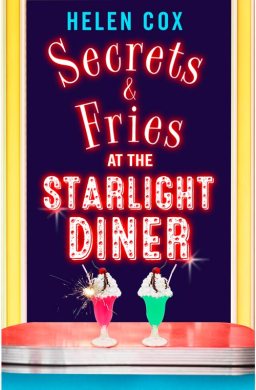
Cover Reveal: Secrets and Fries at the Starlight Diner by Helen Cox

starlight-diner-2

Having previously featured Helen Cox, author of Secrets and Fries at the Starlight Diner, with a smashing guest post all about where to eat in New York that you can read here, I’m delighted to be participating in the cover reveal for this latest book.

Secrets and Fries at the Starlight Diner will be published on 16th December 2016 is available for pre-order here.

 Secrets and Fries at the Starlight Diner

starlight-diner-2

What brings Bonnie Brooks to The Starlight Diner? And why is she on the run?

As the front-woman in a band, Bonnie is used to being in the spotlight, but now she must hide in the shadows.

Bonnie only has one person who she can turn to: her friend Esther Knight, who waitresses at the Fifties-themed diner. There, retro songs play on the jukebox as fries and sundaes are served to satisfied customers. But where has Esther gone?

Alone in New York City, Bonnie breaks down in front of arrogant news reporter, and diner regular, Jimmy Boyle. Jimmy offers to help her. Can she trust him?

When the kindly owner of the Starlight Diner offers Bonnie work, and she meets charming security officer Nick Moloney, she dares to hope that her luck has changed. Is there a blossoming romance on the cards? And can Bonnie rebuild her life with the help of her Starlight Diner friends?

About Helen Cox

helen

Helen Cox is a book-devouring, photo-taking, film-obsessed novelist. If forced to choose one, Helen’s Mastermind specialism would be Grease 2. To this day, she still adheres to the Pink Lady pledge and when somebody asks her if she is a god she says ‘yes.’

After completing her MA in creative writing at the University of York St. John Helen found work writing for a range of magazines, websites and blogs as well as writing news and features for TV and radio. She has written three non-fiction books and founded independent film publication: New Empress Magazine. She currently lives in York and writes novels.

You can find Helen on Facebook, follow her on Twitter and visit her website.

Argentina and Me, a Guest Post by Liselotte Roll, author of Good Girls Don’t Tell

good-girls-dont-tell

Having visited Argentina en route to Antarctica, I was fascinated by the country. Consequently I’m delighted to be featuring a guest post about Argentina by Liselotte Roll, author of Good Girls Don’t Tell as part of the launch celebrations for the book. Good Girls Don’t Tell was published by World Editions on 17th November and was translated by Ian Giles. It is available for purchase here.

Good Girls Don’t Tell

good-girls-dont-tell

When Erik Berggren, a man with  learning disabilities is found mutilated and brutally murdered Inspector Magnus Kalo and his team are mystified.  Other than being an alcoholic, the victim seems to have led a completely normal, if rather lonely, life.

Then Erik’s mother is viciously attacked in a similar way.  Investigating family secrets that stretch back decades and a trail that leads to to the Argentinian military Junta’s reign of terror Magnus realises that someone is stalking him and his own family.  His wife, Linn, a therapist, offers her own insights into the case until she too is attacked.

As the Swedish winter draws in clues seem to disappear under the falling snow. It’s clear that Magnus is on the trail of a master manipulator with a brutal mission…

Argentina and Me

A Guest Post by Liselotte Roll

The earth is dry and red, with harsh mountains and here and there and clusters of huge cactus plants. Once in a while you’ll see rattlesnakes sunbathing on top of the sun heated rocks.

Prior to my work as a news reporter and scriptwriter for a kids show in public radio I worked as an archaeologist. It was during that time, in the late 90’s that I visited Argentina and La Rioja, a medium size city embedded in the Pre-Andees. I was part of a pre-Incan excavation, looking for the remains of the locally called ‘Leopard people’. The country and its generous people made quite an impression on me. I was young and travelled by myself so I had to reflect on everything on my own, since there was no travel companion to bounce off my thoughts with, maybe that’s why I remember everything so well.

Initially I stayed at a self-proclaimed Shaman woman who had an altar of Marilyn Monroe in her hallway and a dog kennel in her house. I thought it was quite interesting and exotic, but my colleagues at the Patrimonial Cultural were concerned. They argued that her house wasn´t clean enough (the dogs had some accidents) and that the woman was obviously mad. Eventually a colleague of mine invited me to stay at her house instead, and we became good friends and indeed still are.

My friend told me stories about the military junta and took me to a cemetery where young men who had died during the military regime were exposed in glass coffins, to always be remembered. It was emotional and I think that’s why ten years later I came to write Good Girls Don´t Tell. And small pieces of my life melted together in this story.

Argentina has a sad history, but the people are still able to enjoy life in a way that Swedish people usually don’t. Maybe it’s the hot weather, maybe it’s because they have learnt to appreciate what they have, knowing that all can be lost? In Sweden we close our doors in the late fall and don’t come out until the light and warmth comes back, usually six months later, so we are not a very social people.

Argentina and Sweden are different in many ways, but my characters seemed to move themselves easily over the borders, both geographically and emotionally. It really didn’t matter if they were in a snowy Sweden or struck by a heat wave in La Rioja, they did what they were destined to do. My main characters, Linn, who is a smart therapist and her husband Magnus, who is a kind but somewhat slow minded cop, have to protect themselves and their two little daughters from a very conniving and savage murderer, who likes to scald his victims, and the tracks went back to the military regime in Argentina.

When I get a story in my mind it usually rolls along by itself. It´s more or less like watching a movie, with the exception that I can go back and change parts I don´t like afterwards. I really loved writing this scary story, hopefully you will like it too … and hopefully I will frighten you.

About Liselotte Roll

liselotte

Liselotte Roll lives with her family near Stockholm. While studying Archaeology, she lived and worked in Argentina, where she witnessed at first hand how the military junta’s reign of terror was still affecting the lives of Argentinians. This experience led to her debut novel Good Girls Don’t Tell.

Liselotte Roll has been compared to crime writers such as Camilla Läckberg, Liza Marklund, Sara Blaedel and Karin Slaughter.  Her work has been translated into eight languages.

About Ian Giles

Ian Giles currently divides his time (often unequally) between translation and his doctoral research at the University of Edinburgh in Scotland. He also sits on the managing committee of the Swedish-English Literary Translators’ Association. He has translated a wide range of Scandinavian works for publication or performance, including August Strindberg’s Dance of Death. In 2015, Ian was shortlisted for the Crime Writers’ Association International Dagger for his translation of Andreas Norman’s Into A Raging Blaze.

You can find Ian on Twitter.

There’s more with these other bloggers too:

good-girls-tour-banner-use-this-final

Setting the Scene, a Guest Post by Cheryl Rees-Price, author of Frozen Minds

frozen-minds

I love featuring authors I’ve actually met so it gives me great pleasure to be part of Cheryl Rees-Price’s blog hop for Frozen Minds as I met lovely Cheryl at a recent book event. Cheryl’s second book in her The Winter Meadows series, Frozen Minds, was published by Accent Press on 14th October 2016 and is available for purchase in e-book here.

To celebrate Frozen Minds, Cheryl has provided a smashing guest post all about the challenges of settings.

Frozen Minds

frozen-minds

When a man is found murdered at Bethesda House, a home for adults with learning difficulties, local people start to accuse the home’s residents of being behind the killing. The victim was a manager at the home, and seemingly a respectable and well-liked family man.

DI Winter Meadows knows there’s more to the case than meets the eye. As he and his team investigate, Meadows discovers a culture of fear at the home – and some unscrupulous dealings going on between the staff.

Does the answer to the case lie in the relationships between the staff and the residents – or is there something even more sinister afoot?

Setting The Scene

A Guest Post by Cheryl Rees-Price

When I started writing The Winter Meadows series my first choice of setting was the village and surrounding area where I grew up and still live. It seemed to be a perfect location, I knew the area well, there are plenty of nooks and crannies to hide a body, and no C.C.T.V. Added to that there is also the abundance of secrets and gossip.

As I started to write it occurred to me how easily I could offend. I couldn’t just place a body on someone’s farmland, this could well cause suspicion especially if the farmer’s wife was off to visit her daughter in Australia. Then what of the antagonist? Imagine if the character was the local vicar, school teacher or shop keeper, I could be responsible for all manner of rumours!

To solve the problem I created a fictitious setting, based on the Valley. This gave me the scope to place buildings where I pleased and squeeze in an extra farm, or church. Anyone who lives locally can still identify the area and some readers have told me they enjoy working out where I am in the valley as they read.

The Setting for The Silent Quarry

silent-quarry

So what makes remote locations a good setting for a murder mystery? For me the close knit communities found in small remote villages was appealing. People have a sense of belonging, many have grown up in the area and are from large families. There is also a sense of safety, if you are out late at night it’s likely you will run into someone you know out walking the dog. They will stop for a chat, comment on the weather and ask after your mother. This makes a murder in these locations so much more shocking. One of your own has been taken and one of your own could be responsible. It is a fact that murder is less common in small communities. If you look at the citizens report UK site, locations where there has been a violent crime are highlighted with a balloon. You can see the balloons clustered around the larger cities, very few in remote areas. When these crime do occur there is a huge impact on the community involved with many affected, someone is a relative, close friends, or neighbour of yours.

Home

home

Most who live in these villages will confess to enjoying a good gossip. This exchange of information renders the local newspaper redundant. You can find out who is sick, who’s been having an affair and who’s dead all when going out to post a letter. The gossip goes around like Chinese whispers and there have been occasions when someone has been pronounced dead only to be seen walking the dog up the park two days later.

From a writer’s point of view gossip can either hinder or help the investigation. It is a great way of getting information across to the reader and can aid in setting a smoke screen.

I have tried to capture the spirit of the community in my books and encompass the shock, speculation, and fear that follows a violent crime. Fortunately for me the only crime to occur in my home village is that in my imagination.

About Cheryl Rees-Price

cheryl-by-rasa-mombeini-6

Cheryl Rees-Price was born in Cardiff and moved as a Young child to a small ex-mining village on the edge of the Black Mountains, South Wales, where she still lives with her husband, daughters and two cats.  After leaving school she worked as a legal clerk for several years before leaving to raise her two daughters.

Cheryl returned to education, studying philosophy, sociology and accountancy whilst working as a part time book keeper. She now works as a finance director for a company that delivers project management and accounting services.

In her spare time Cheryl indulges in her passion for writing, the success of writing plays for local performances gave her the confidence to write her first novel. Her other hobbies include walking, and gardening which free her mind to develop plots and create colourful characters.

You can find out more about Cheryl by visiting her website, following her on Twitter and finding her on Facebook. There’s more with these other bloggers too:

blog-tour-banner

Iceland, a Guest Post by Adam LeBor, author of The Reykjavik Assignment

cover

I loved Reykjavik when I visited so even the title of Adam LeBor’s The Reykjavik Assignment appeals and I’m delighted to be part of the launch celebrations. The Reykjavik Assignment was published by Head of Zeus on 3rd November 2016 and is available for purchase here.

Today, Adam LeBor tells us why Iceland is perfect as a setting for thriller writers.

The Reykjavik Assignment

cover

A lone agent. A terrifying enemy. UN negotiator Yael Azoulay uncovers a people-trafficking ring with links to Iran… and Washington.

UN covert negotiator, Yael Azoulay, has been sent to Reykjavik to broker a secret meeting between US President Freshwater and the Iranian president. Both parties want the violence to stop, but Yael soon realises that powerful enemies are pulling the strings. Enemies for whom peace means an end to their lucrative profit streams.

In this gripping, intelligent thriller, Adam LeBor uses insights gained from twenty-five years of frontline reporting to show us who really has the upper hand in the international game of politics.

Iceland

A Guest Post by Adam LeBor

Iceland is a gift for thriller writers.

The ground is alive: giant cracks rend the earth asunder, geysers erupt, sending giant spurts of boiling water high into the air. Underneath our feet tectonic plates shift, magma bubbles. Great plains of black lava stretch towards the horizon. A freezing wind howls, pauses for a moment as if to take a breath, then whips at us with even greater force while rainbursts explode overhead.

And then, as suddenly as the downpour erupted, it stops. The sun appears, the wind stops, and the sky turns blue. The local saying has it best: “Welcome to Iceland. If you don’t like the weather then wait five minutes.”

Yet the bleak landscape has proved a catalyst for extraordinary creativity. The Sagas, the epic tales of life in Iceland in the 10th and 11th centuries, rank with Homer and Shakespeare. Iceland has more writers and publishes more books per capita than any country in the world.

Iceland certainly worked it creative magic on me. I travelled there as a guest of the Iceland Writers Retreat. The second half of The Reykjavik Assignment, my new thriller, takes place in Iceland. Yael Azoulay, the heroine, is a former Mossad agent who now works as the secret negotiator for the United Nations secretary-general. Yael is in Iceland on her most difficult and dangerous mission yet: to broker a secret deal between the presidents of the United States and Iran.

My trip to Reykjavik and its surrounds provided plenty of scene-setting. I took long walks around the city to find useful and suitable locations. There are no rules for the kind of place that can be useful and I don’t take notes. I do take photographs and video clips, dozens of them for each city. There’s definitely something about water that appeals to me: seafronts, lakes and oceans; ferries and ships seem to feature in most of my thrillers.

I spent quite a while at Lake Tjörnin in the heart of downtown Reykjavik. This is how Yael sees the lake and the shore, while she waits for Eli, her former lover and enemy, to kidnap her.

The shore was lined with large, detached houses painted in bright colors, their reflections shimmering on water the color of gunmetal. The sky was a patchwork of clouds, daubs of white on a vast gray canvas. The wind gusted back and forth, sending gentle waves lap- ping at the shore.

And there is always something new to learn on location-finding trips, which can also be included in the narrative:

Who knew bird-watching could be so engrossing? A whooper swan glided across the water, its long white neck regally straight. A short and stubby greylag goose bobbed past, its beady black eyes looking from side to side. A mallard watched her warily from the stone bank, its green head tucked into its curved body. The sun suddenly emerged and the lake shimmered.

I was lucky enough to interview Olafur Ragnar Grimsson, the then-president of Iceland, on my trip, for Monocle magazine. We met at Bessastadir, the presidential residence, which stands on an isolated strip of land a short drive from the city. I knew immediately that Bessastadir would be the setting for the climax of the book. This is how I used the setting in The Reykjavik Assignment:

Bessastadir was only twenty minutes’ drive from downtown Reykjavik, but the sense of isolation was palpable. It was a tiny settlement, a handful of buildings and a church, built on a long, thin promontory of land that poked into the Atlantic like a crooked finger. Such isolation was not rare in Iceland, but more surprising was the lack of security at the residence. The flat terrain around it was wide open, the gray-green grass, liberally spattered with seabird droppings, turning into a swampy black mud where it met the water.

A low white gate controlled vehicular access to the black stone road, but it would barely slow a family sedan, let alone a determined attacker. There were no fences or gates or flip-up barriers to stop a vehicle crashing into the building. The windows seemed to be normal glass. Overhead a helicopter swooped low, banked steeply, and then headed out to sea. With the Americans and the Iranians coordinating with the Viking Squad, the residence was ringed with well-trained, armed agents from all three countries. But the basic topography could not be changed. Bessastadir was an assassin’s dream.

Until Yael Azoulay arrives.

About Adam LeBor

Adam LeBor lives in Budapest and writes for the Economist, Newsweek, New York Times, The Times and other publications. He is the author of a number of nonfiction books, including the Orwell Prize shortlisted Hitler’s Secret Bankers.

You can find out more about Adam by visiting his website, by following him on Twitter or on Facebook.

There’s more too with these other bloggers:

reykjavic-assn


Who Killed The Mince Spy by Matthew Redford

who-killed-the-mince-spy

I’m delighted to be taking part in the launch celebrations of Who Killed The Mince Spy by Matthew Redford. Who Killed The Mince Spy will be published by Clink Street on 6th December 2016 and is available for purchase in e-book and paperback here.

In celebration, as well as my review, Matthew Redford has kindly provided a guest post all about Christmas cracker jokes.

Who Killed The Mince Spy

who-killed-the-mince-spy

Who Killed The Mince Spy?

Tenacious carrot, Detective Inspector Willie Wortell is back to reveal the deviously delicious mind behind the crime of the festive season in this hugely entertaining, and utterly unconventional, short story.

When Mitchell the Mince Spy is horrifically murdered by being over baked in a fan oven, it falls to the Food Related Crime team to investigate this heinous act. Why was Mitchell killed? Who is the mysterious man with a long white beard and why does he carry a syringe? Why is it that the death of a mince spy smells so good?

Detective Inspector Willie Wortel, the best food sapiens police officer, once again leads his team into a series of crazy escapades. Supported by his able homo sapiens sergeant Dorothy Knox and his less able fruit officers Oranges and Lemons, they encounter Snow White and the seven dwarf cabbages as well as having a run in with the food sapiens secret service, MI GasMark5.

With a thigh slap here, and a thigh slap there, the team know Christmas is coming as the upper classes are acting strangely – why else would there be lords a leaping, ladies dancing and maids a milking?

And if that wasn’t enough, the Government Minister for the Department of Fisheries, Agriculture and Rural Trade (DAFaRT) has only gone and given the turkeys a vote on whether they are for or against Christmas.

Let the madness begin!

This short story by Matthew Redford follows his deliciously irreverent debut Addicted To Death (Clink Street Publishing, 2015).

addicted

Three Favourite Christmas Cracker Jokes

A Guest Post by Matthew Redford

So who doesn’t like a good Christmas cracker joke? They are silly, corny, and groan-inducing but every bit a part of Christmas lunch as the turkey or the roast potatoes.  Who can resist sitting around the kitchen table wearing a paper hat, pigs in blankets wrapped up cosily on your plate, reading aloud some of the worst jokes ever to have been written?

And let’s be honest, if you are forcing Brussels sprouts down your throat at least you can try and have a chuckle while doing so.

Personally, I look forward to the Christmas cracker jokes. And before you ask, I honestly haven’t been on the mulled wine before I started to write this piece. I have a daft sense of humour. I like puns. I enjoy wordplay, and so they appeal to me. I share this sense of humour with my Mum and, when he was alive, my grandfather too. For my Dad and my Nan, they look at me and Mum as we fall about laughing as though we’ve lost the plot completely, which to be fair, we probably have.

So while much derided, I am going to stick-up for the Christmas cracker joke. It is not easy to write a Christmas cracker joke. It has to be easy to understand, short, sharp and funny. They are underrated, slightly surreal and the perfect antidote for when you realise that despite having eaten those darn Brussels sprouts for the last twenty minutes, you’ve still got another five left on your plate. Seriously, do they multiple when you are not looking?

So here are my three top Christmas cracker jokes and the reasons why I think they are funny.

How does Good King Wenceslas like his pizzas? Deep pan, crisp and even.

It’s daft, it’s funny and its food related which I like. There is also a nice musical element to the joke. So not only do you get to tell a joke, but you can sing the punch line too if you feel so inclined! Just a word of warning, which is that while you can sing a punch line, those at the kitchen table don’t appreciate it when you stand on your chair giving it the big jazz hands. Apparently that is considered ‘unnecessary and over the top’.

What happened to the man who stole an advent calendar? He got 25 days…

And so he should, theft is no laughing matter, In fact, he should have got a lot longer than just 25 days…oh, hang on, I’ve just got it. Silly me, apologies everyone.

Who hides in the bakery at Christmas? A Mince Spy.

Now I had to have this one in the mix didn’t I? How could I overlook a mince spy given that I have written a food related crime story about one who gets murderously over-baked. So the mince spy is the James Bond of the Christmas food items, mysterious, spicy, rarely seen all year around and then before you know where you are, its Christmas and the mince spy is about once more!

My Review of Who Killed The Mince Spy

Mitchell the Mince Spy has been horrifically murdered by fan oven and it’s up to food sapiens police officer Detective Inspector Willie Wortel so solve the case.

Recently my dear father passed away. One thing he was always known for was his awful jokes, so I feel I’m honouring his memory by featuring a book that has equally groan worthy jokes on Linda’s Book Bag.

I’m going to be completely honest; had I not agreed to be part of the blog tour I wouldn’t have read Who Killed The Mince Spy. I rarely enjoy so-called comic writing as my sense of humour seems at odds with that of many authors. However, I did enjoy Matthew Redford’s book. It lifted my spirits at a very sad time. The puns were akin to those in my childhood from the Beano and I liked the ones based on word play especially.

Aside from the ridiculous humour though, Who Killed The Mince Spy is actually cleverly written. There are many political, social and historical references and I liked playing spot the allusion and the conceit of referring to the first story in the series too, Addicted to Death. There is also a fast paced, completely madcap, plot for readers to enjoy.

Who Killed The Mince Spy is seriously bonkers. If you have the kind of sense of humour that loved the Leslie Nielson films, for example, this book is a must.

Oh – and in the spirit of this blog post, a typical joke from my Dad in advance of his funeral on Thursday;

Q.’Why is there a cockerel on so many church spire weather-vanes?

A. ‘Because if there was a hen, it’d be too far to collect the eggs!’

About Matthew Redford

Born in 1980, Matthew Redford grew up with his parents and elder brother on a council estate in Bermondsey, south-east London. He now lives in Longfield, Kent, takes masochistic pleasure in watching his favourite football team snatch defeat from the jaws of victory, is a keen chess player and is planning future food related crime novels. To counterbalance the quirkiness of his crime fiction Redford is an accountant. His unconventional debut crime thriller, Addicted to Death: A Food Related Crime Investigation was published by Clink Street Publishing last summer.

You can find more about Matthew by following him on Twitter and visiting his website. There’s more with these other bloggers too:

matthew-redford_banner

Rehab Run by Barbra Leslie

rehab-run

I’m so excited to welcome back Barbra Leslie to Linda’s Book Bag to celebrate Rehab Run, the second in Barbara’s Cracked trilogy. Rehab Run is published today in North America and on 25th November 2016 in the UK, by Titan and is available in e-book and paperback from Amazon and through the publisher.

Last year I read the first in the series, Cracked, my crime book of the year 2015, reviewing it here and was delighted when Barbra agreed to an interview which you can read here. Today, to celebrate Rehab Run, Barbra has written a guest blog all about her central character Danny, who doesn’t always behave as Barbra wants! I’m also sharing my review.

Rehab Run

rehab-run

Danny Cleary is getting clean. When her twin sister was murdered and her nephews kidnapped, drug-addicted Danny crossed North America with her brother Darren pursuing those responsible and being pursued. Now she’s in rehab in the peace and tranquility of rural Nova Scotia; the hardest thing she’s smoking is nicotine, and she s taken up running. This was exactly what she needed. Then she finds a human hand in a mailbox and her rural idyll is shattered. Once again Danny is drawn into a complex underworld of insanity, revenge and murder. She will have to fight to protect her family and uncover the truth.

Controlling Character

A Guest Post by Barbra Leslie

The lovely Linda Hill mentioned something to me recently about writing about the “less salubrious” side of life – her words, not mine.  Once I was able to wipe the smile off my face (‘salubrious’ is one of my favourite words, and I’m always tickled when someone uses it), it got me thinking.  How much of my own life makes it into my fiction?  And holy cow, does everyone assume my own life is as dark as what I write about?

The first novel in my crime trilogy, Cracked, involves a woman – who happens to be a crack addict – on a quest to avenge her twin sister’s murder.  As readers of Linda’s blog may know, I took my own trip down the rabbit hole of addiction, years back.  (In fact, I started writing an early draft of the book when I was recovering.)  Cracked covers a lot of ground – literally.  From the streets of Toronto to a wealthy California beach town and east to the wilds of Maine, Danny is an unstoppable force.  It has an almost frenetic pace.

In the new book, Rehab Run – and I don’t think I’m giving much away here, future readers – Danny is in rehab.  This time, she’s in a cloistered private facility on the east coast of Canada, in Nova Scotia.  And in this chapter of the Danny saga, we are entirely in one part of the world; no private planes for our heroine in this book.  That being said, the action – and as I wrote it, you can be pretty sure there is a lot of action – takes place in the idyllic Annapolis Valley.

I was born and raised in the area I wrote about in Rehab Run.  I have family and friends there.  Those streets and lakes and woods are as familiar to me as the concrete jungle I live in now.  In fact, the Annapolis Valley is where I retreated to, when I left the mess of my own life of addiction behind.  While I never went to rehab myself – I white-knuckled detox and recovery on my own – and the facility Danny stays in is a figment of my imagination, I used a lot of my own experience, my own pain, and made it Danny’s.  Writing about Danny’s struggles with addiction is an exorcism, of sorts, for me.

That being said, I most definitely have not walked in Danny’s shoes in most respects, I am happy to report.  I have three amazing sisters, all of whom are alive and kicking.  And like most of us in the real world, I don’t think I have an archenemy, and as far as I can recall no one has every shot at me with a crossbow.  Really, she and I don’t have much in common, other than that pesky addiction, and the tendency to be a smart-aleck at unfortunate moments.  It may sound crazy to some, but Danny really has got a life of her own, outside of my plans for her.  I found that while writing Rehab Run, Danny was getting up to things that I hadn’t planned for her.  As a writer, that’s both invigorating and sometimes slightly annoying, throwing my careful plot outlines out the window.

Speaking of which, one of my favourite scenes in Rehab Run involves Danny crawling out an upstairs window clad in not much more than an old pair of her late husband’s boxers.  I hadn’t planned for her to do that, but Danny does what Danny does.

Myself, I’m closing my window right now against a cold, grey November morning in Toronto.  I’m keeping myself firmly planted in my office chair, throwing an old cardigan over my t-shirt, and working on my plans for Danny in the next book.  Which she will, undoubtedly, ignore.

(And which I can’t wait to read about Barbra!)

My Review of Rehab Run

Crack addict Danny is trying to get clean in Rose’s rehabilitation unit after a pretty tough time, but her life simply won’t settle down.

Barbra Leslie’s writing should come with a warning; if you don’t want to put your life on hold, don’t pick up one of her books because once you have, that’s it – you’re hooked. Having loved Cracked I wondered whether Rehab Run would appeal as much. It did. I couldn’t tear myself away.

It’s so difficult to review books like Rehab Run without giving away some of the plot, which in this case is twisty and compelling so that one shock for the reader follows another until you’re almost as punch-drunk as some of the characters! Rehab Run is a thrilling, heart thumping read. I kept having to put the book down to get my breath back and take in the furious pace of events, but I couldn’t leave it alone either and had to read on, almost without my own say so, so brilliant is Barbra Leslie’s storytelling. I don’t usually quote from fiction books I review for fear of spoiling the read, but if I share the first line of Rehab Run I think you’ll get an idea of Barbra Leslie’s style far more eloquently than I can express: ‘It was just my luck that I was the one who happened to to find the severed hand in the mailbox.

As the narrative raced along, with the frequently gruesome body count increasing, I was well out of my comfort zone, but I loved every word, even the frequent expletives as they are never out of place or gratuitous. What Barbra Leslie does so skilfully is to vary the length of her sentences so that they have maximum impact, especially at the end of chapters. She also writes with a wry, dark humour and the first person approach made it feel as if someone I knew really well, Danny, was addressing me directly as I read.

And it is Danny who really makes this series so magnetic. She is an incredible creation. She’s violent, unpredictable, feisty and volatile but equally vulnerable and sensitive when it comes to those she loves. If the chips were down you’d want her on your side and to be honest, I’d be completely terrified if she were my enemy.

Whilst Rehab Run is the second in the Cracked trilogy, you don’t have to have read Cracked to appreciate and enjoy it. There are references that will help new readers and remind previous ones, but Rehab Run is a brilliant thriller as a stand alone too. I honestly, truly, can’t recommend Barbra Leslie’s writing highly enough. If you love crime thrillers and you haven’t read Cracked or Rehab Run you’re really missing out.

About Barbra Leslie

img_1059-1-1

Barbra Leslie studied film and theatre at York University, then English at University of Toronto. She has published numerous stories in literary magazines, novels, and a screenplay. She’s been a marketing manager for a major law firm, a court reporter, and a criminal law issues officer for a government ministry.

You can follow Barbra on Twitter and visit her website.