Cover Reveal: The Secrets of Ivy Garden by Catherine Ferguson

secrets-of-ivy-garden

Having previously really enjoyed Four Weddings and a Fiasco, my review of which you can read here,  I’m very pleased to be taking part in the cover reveal for The Secrets  of Ivy Garden by Catherine Ferguson.

The Secrets  of Ivy Garden will be published by Maze, an imprint of Harper Collins on 3rd April 2017 and is available for pre-order in e-book here.

The Secrets  of Ivy Garden

secrets-of-ivy-garden

When Holly breaks up with her boyfriend Dean, she’s at a loss as to what to do next. But things go from bad to worse when her beloved grandmother Ivy dies – and Holly is left in charge of sorting out Ivy’s house and garden. As she sorts through her grandmother’s belongings and makes her way through the wilderness outside, Holly soon finds that there is more to Ivy than meets the eye, and uncovers a surprising family secret that changes everything…

This is a heart-warming and hilarious story from Catherine Ferguson about starting over, learning to garden and most of all learning to love.

About Catherine Ferguson

catherine-ferguson

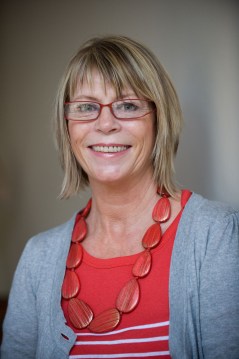
Catherine Ferguson burst onto the writing scene at the age of nine, anonymously penning a weekly magazine for her five-year-old brother (mysteriously titled the ‘Willy’ comic) and fooling him completely by posting it through the letterbox every Thursday.

Catherine’s continuing love of writing saw her study English at Dundee University and spend her twenties writing for various teenage magazines including Jackie and Blue Jeans and meeting pop stars. She worked as Fiction Editor at Patches magazine (little sister to Jackie) before getting serious and becoming a sub-editor on the Dundee Courier & Advertiser. Moving south in her thirties, she set up Surrey Organics, delivering fresh organic produce to people’s homes – and this experience provided the inspiration for her first attempt at writing a full-length novel.

Catherine’s first novel Humbug and Heartstrings is very loosely based on Dickens’ A Christmas Carol and is a clever, modern tale about the price of friendship, the cost of enmity, and the value of love. She lives with her son in Northumberland.

You can follow Catherine on Twitter.

An Interview with Dinah Jefferies, Author of Before the Rains

cover

It’s difficult to convey how excited I am to welcome Dinah Jefferies, author of Before the Rains to Linda’s Book Bag today as part of the book’s launch celebrations. I love Dinah’s writing and you can read my review of The Tea Planter’s Wife here and of The Silk Merchant’s Daughter here. I’m still to read Before the Rains as I want to savour it when I have time to immerse myself completely.

Before the Rains will be published by Penguin on 23rd February 2017 and is available for purchase in e-book and hardback from all good booksellers as well as here.

Before the Rains

 cover

1930, Rajputana, India. Since her husband’s death, 28-year-old photojournalist Eliza’s only companion has been her camera. When the British Government send her to an Indian princely state to photograph the royal family, she’s determined to make a name for herself.

But when Eliza arrives at the palace she meets Jay, the Prince’s handsome, brooding brother. While Eliza awakens Jay to the poverty of his people, he awakens her to the injustices of British rule. Soon Jay and Eliza find they have more in common than they think. But their families – and society – think otherwise. Eventually they will have to make a choice between doing what’s expected, or following their hearts. . .

btrjustpreorder

An Interview with Dinah Jefferies

Photographs kindly provided by the author

img_3484-v-fb

Welcome to Linda’s Book Bag Dinah. Thank you so much for agreeing to answer some questions on my blog about your writing and your latest novel Before the Rains in particular. Firstly, please could you tell me a little about yourself?

Well I live in Gloucestershire with my husband and our Norfolk Terrier, Teddy, and not far from family which is lovely. I’m very family oriented and love nothing more than going on holiday with everyone. Kids keep you young I reckon. I enjoy reading and I love to travel too.

Without spoiling the plot, please could you tell us a bit about Before the Rains?

This book is an unashamed love story set in Rajasthan India, which is the most gloriously romantic place I’ve ever been – India’s hilltop forts and ornate palaces were magical and I hope to go back. But, as is usual with my books, there is an edge. When Eliza, a photojournalist, is sent to a Princely state to photograph the royal family she’s determined to make a name for herself. But when she arrives at the palace she meets, Jay, The Prince’s handsome brooding brother. She is enchanted by him and by India but can’t ignore the shocking poverty she sees around her, nor the plight of women. Gradually she awakens to the injustices of British rule too and must find her way in this alien world. The bond between Eliza and Jay is powerful and they have much in common, but their families and society have different ideas and she is left with heart-breaking choices.

img_3350-v-chandelao-garh-fb

Which aspects of your writing do you find easiest and most difficult?

I find the first draft the hardest part and I enjoy the editing the most. Anything is better than staring at a blank page. Mind you the whole thing is a juggling act. By the time you’re doing the publicity for one book you’re already writing the next and it’s hard sometimes to remember where you are.

What are your writing routines and where do you do most of your writing?

I write in the mornings in my lovely new garden room. I’ve only had it for a few months and it still feels such a luxury. In the afternoons I walk the dog, do any chores and see to emails and such like. I’ll edit a little and maybe plan the next chapters. I don’t work in the evenings as I run out of energy.

The tragic death of your son at an early age has been a catalyst for your writing. Is writing a cathartic experience for you?

It isn’t cathartic but I do think the loss does inform my writing. It’s a part of who I am, so it’s a part of my work, and there is usually some kind of loss lurking at the heart of my stories.

You were born in Malaya. How far has this impacted on your choice of settings for your books as I know it influenced The Separation?

It has hugely impacted on my choice of settings. It’s as if I keep going back to the East in search of something I lost when we moved to England. Now my publisher keeps suggesting even more far flung places. It’s very exciting.

How do you go about researching detail and ensuring your books are realistic?

I read massively and I watch as many films and videos as I can. Youtube can be very useful. I try to build a picture of a time and place by making endless notes until I feel as if I had actually been there at the time in question. Going to the country helps so much with detail and atmosphere. For example who knew the palaces walls were once actually studded with rubies and the like, some as large as a child’s fist. Now it’s coloured glass of course.

When I see your research travels I’m always very jealous. Which comes first – the travel and then an idea for a book or the idea and then the travel to research it?

With The Tea Planter’s Wife I had already written the first draft when I went to Sri Lanka, so I knew exactly what I was looking for while I was there and that helped enormously. But I went to Vietnam before I’d even started The Silk Merchant’s Daughter so that was very different. I guess what I’m saying is that it can be either way. I had started Before The Rains before I went to India but going there helped clarify my ideas and gave form to the hazy imaginings in my mind.

img_3289-v-dinah-with-two-men-in-shapura-fb

What’s your essential author travel kit when you’re travelling and researching?

Lots of notebooks, pens and my camera. Most importantly I seek out books while I’m there that I’d never have found if I hadn’t visited the country. For Before the Rains I went to Rajasthan where I found an amazing book about Indian beauty regimes which inspired a chapter of the story when Eliza is taken in hand by the concubines.

All your books feature strong women. How important is it for you to give an historical voice to women?

img_3321-vfb-1

I am fascinated by how much changed for women during the Twentieth Century and I do enjoy going back in time to give a voice to women at different times from our own. We have come a long way in terms of women’s rights but it wasn’t always the case. I value what the past can teach us.

How do you create your characters?

First I have an idea for a character and their story and then I jot down rough notes until I can actually see him or her in my mind. During the next stage of planning I write a character synopsis for each main character based on my jottings. Usually my characters develop even further as I’m writing the first draft and I learn more about who they are.

When I read your books (and I notice Before the Rains is no different) I always get a sense of social or political injustice exposed. Is this a deliberate or incidental feature of your writing?

It’s deliberate as I think it’s important to set my stories in a social and political context in order to anchor them firmly at a particular time. It helps to create the mood and mindsets of the period.

There’s often a theme of secrecy and identity in your books. Does this reflect your own search for identity or a more general view of how society functions?

I think it reflects my own search for identity. I spent my early childhood in Malaya, and it was home to me. I felt it was where I belonged so coming to England at the age of nine left me with a sense of not fitting in. Malaya had been so warm, colourful and seductive but Worcestershire in February couldn’t have been more different. It was cold and smelt of coal smoke.

dinah-in-hall-of-mirrors-amer-fort-nr-jaipur-fb

In Before the Rains, the protagonist Eliza is a photojournalist. How far does this reflect one of your own passions?

Actually it’s one of my husband’s passions and so I picked his brain rather a lot on this.

So, if you hadn’t become an author, what would you have done instead as a creative outlet?

Before I started writing I was a painter but I hurt my shoulder and couldn’t easily paint the large abstract landscapes I liked to make. Now I paint with words and love to create visual and sensory impact in that way.

When you’re not writing, what do you like to read?

Well, for example, I’ve just finished The Essex Serpent which I loved and I do get sent quite a number of proofs to look at and quote for too. But I have wide ranging reading tastes and love to get lost in an engaging novel.

I adore all the covers for your books. How has that style come about?

I’m happy to say that the style of the covers is entirely down to Penguin’s design team. They came up with the look and continue to develop it. I get asked for feedback but so far I’ve been delighted by what they’ve done.

If you could choose to be a character from Before the Rains, who would you be and why?

I would be Eliza because I would love to have seen Rajasthan back in the day before tourism. And also I think Jay is gorgeous and exactly my cup of tea!

And finally, Dinah, if you had 15 words to persuade a reader that Before the Rains should be their next read, what would you say?

Sink into a complex love story set in the vast deserts and fabulous palaces of Rajasthan. Sorry Linda it’s 16!

As I love your writing, I’ll let you off! Thank you so much for your time in answering my questions Dinah.

About Dinah Jefferies

dinah-author

Dinah was born in Malaya and moved to England at the age of nine. In 1985, the sudden death of her fourteen year old son changed the course of her life, and deeply influenced her writing. Dinah drew on that experience, and on her own childhood spent in Malaya during the 1950s to write her debut novel, The Separation.

Now living in Gloucestershire with her husband and their Norfolk terrier, she spends her days writing, with time off with her grandchildren.

You can follow Dinah Jefferies on Twitter and visit her web site. You’ll also find Dinah on Facebook.

There’s more with these other bloggers too:

dinah-blog-tour-banner-v4

How To Get A (Love) Life by Rosie Blake

how-to-get-a-love-life

I so loved How To Find Your First Husband by Rosie Blake, my review of which you can read here, that I can’t thank Atlantic Books enough for a copy of How To Get A (Love) Life in return for an honest review. How To Get A (Love) Life is published in e-book and paperback by Corvus, an imprint of Atlantic, and is available for purchase here.

How To Get A (Love) Life

how-to-get-a-love-life

Nicola Brown doesn’t like to lose control. Her flat is always meticulously tidy and her weekly meals carefully planned; Nicola keeps her life in order.

When her carefree colleague Caroline challenges Nicola to find a date for Valentine’s Day, it’s a surprise to them both when Nicola agrees. As Nicola’s search for a man begins, she is thrown in at the deep end – sometimes quite literally – of the dating scene. From men more likely to sell their mother than open their wallet, to those who are determined to find a girlfriend who shares their passion for extreme sports, Nicola has to run the full gamut of dodgy dates.

But as the deadline looms closer, Nicola realises it isn’t so bad to lose control. It turns out that trying to get a love life can be rather a lot of fun…

My Review of How To Get A (Love) Life

Nicola Brown is a control freak and that means not only is her flat pristine, but so are her emotions – she doesn’t let them get away from her. Perhaps she should.

What a hugely entertaining read How To Get A (Love) Life is. I enjoyed every word. Rosie Blake has the skill of producing a light, delightful read that also manages to be intelligently written so that it is effortless to immerse yourself in and escape reality for a while. I’ve said before that I rarely laugh aloud at books marketed as funny, but I certainly did with this read. It is such a fun book and I found Rosie Blake articulated exactly the kind of thoughts I often have.

I thought How To Get A (Love) Life was really deftly plotted. Many of the incidents are simple parts of everyday life that any reader can relate to, but that are presented with such humour and incisive observation of the familiar that they appear fresh and new. I loved the overall cyclical structure too as well as the ‘adverts’ which were highly amusing. i had fun trying to work out the significance of the box numbers too!

The characters are so good. Whilst Nicola is understandably the most finely drawn, the secondary characters add real layers of amusement whilst highlighting Nicola’s personality further. It took me a while to warm to Nicola completely and again I think this is a strength of the writing. She’s so uptight to begin with that the reader relaxes with her as the story progresses. Her brother Mark is just wonderful with his bat obsession and as for James, I think I was rather in love with him from the first moment!

Behind what is essentially chick-lit, are also some important messages indicated by the brackets in the title. It isn’t just Nicola’s love life that needs attention. Life is short and can so easily pass us by. We do need to ‘get out there’, as Nicola tries to do, and enjoy every moment. Reading How To Get A (Love) Life is one of those enjoyments and I really recommend it. Rosie Blake is becoming an author I know I can rely on to give me a thoroughly feel-good read. Smashing stuff!

About Rosie Blake

rosie-blake

Rosie is an author of comic commercial fiction. She spent her university years writing pantomimes based on old classics (highlight: ‘Harry Potter: The Musical’) and went on to write short stories and features for a range of publications including Cosmopolitan,The LadySunday PeopleBest and Reveal magazines. She worked in television as a presenter on both live and pre-recorded shows in Bristol and London.

Rosie likes baked items, taking long walks by the river and speaking about herself in the third person. Her greatest ambition in life is to become Julia Roberts’s best friend.

You can follow Rosie Blake on Twitter and visit her web site. You’ll find her on Facebook too.

Getting the Balance Right, a Guest Post by Amie O’Brien, Author of The Merchant’s Pearl

merchants-pearl

I’m a great lover of historical fiction and often wonder how much of the research to an historical novel ends up in the book. As a result, I’m pleased to welcome Amie O’Brien, author of The Merchant’s Pearl to Linda’s Book Bag today to tell us a bit more about that very subject.

Published last year, The Merchant’s Pearl is available for purchase here.

The Merchant’s Pearl

merchants-pearl

Sarai was led to believe that the whole world could exchange their beliefs for hers. But when her parents are murdered, she quickly learns that the world never stops for just one person. The world takes, forgets, and swiftly moves on.

By 1875, she isn’t even Sarai anymore. She’s spent her teenage years repackaged as Leila, a palace concubine-in-waiting for the overly indulgent, Ottoman Sultan, Abdul’Aziz. Leila does her best to stay out of the eye of ‘Aziz as well as his son, Prince Emre. But when young and thoughtful Emre claims Leila for his own harem, she is forced out of her shell and thrown into a ring of competitive women. Here, she cannot hide from the attention her young master wishes to lavish upon her. Nor can she can avoid the ruthless retaliations of his prior favorite, Aster. But it’s the unexpected gift of sexual sanctuary and an inside look into his family’s struggles that really collides with Leila’s upbringing. Soon, despite her better judgment, she finds her heart becoming increasingly tied to him.

But can she submit her faith and independent spirit to such a future—a future where to be loved means settling for the fact that she can only ever be his favorite? Will she be able to take turns sharing him among the four beautiful girls he had received before her, one being a jealous rival and another a closest friend? And what will happen to their love if Emre’s father can’t hold together his fragile kingdom, an empire that has grave threats encroaching from every side…including within?

Getting the Balance Right

A Guest Post by Amie O’Brien

I knew there was a fine line when writing historical fiction. Though this was the first historical novel (or novel period) I had written, I had read enough of them over the years to know that my mind tends to wander when faced with too much information. My eyes begin to droop and suddenly my face gets smacked by my fallen treasure. I typically regroup, but not without fanning the pages to see how soon I’ll be rewarded with actual dialogue, not a recapping of what was going on in politics, fashion, or plagues.

Which is why…I never told myself I was writing a historical. In my mind, I was going to write women’s fiction. It was going to be sophisticated, solid. It was going to be deeply human, filled with characters flawed on both sides. It was going to be an all-out war of the hearts and, best of all, it was going to be romantic! Then the story started to reveal itself to me and I knew I had to find the perfect home for my characters.

My mind wrapped itself around a Victorian setting. I knew my cast were Christian and Muslim. I knew I had a story of slavery, an almost Esther of the Bible scenario in which other girls would vie for my character’s position, but she would feel utterly powerless and devalued.

First, I determined who Leila was before everything in her life begins to shatter. Then, after some soul searching, it came to me what would be her deepest desire. I mapped out several of the conflicts that would be before her, even before I officially began my research. I wanted them to be matters of the heart. I was certain that if what she wanted was universal—to be loved and valued above all else—then there would be plenty of accurate and compelling historical truths I could build around her.

Researching the Ottoman Empire was something completely new to me. I knew next to nothing about “white slavery.” But I was fascinated by every article, every Sultan’s reign, their political entrapments, and harem dynamics, so much so, that it made it painful to sift what would make it into my story.

It seemed to me there were plenty of novels covering earlier sultans, such as Suleyman, Mahmud, and Abdulhamid. They focused on either the swift rise of the Ottoman Empire and the heroic feats of these men, or they focused on the truly dark parts of Ottoman history, their families, and self-destructive, epic demise. Even more so, when written from a heroine’s perspective, the stories revolved around power. Women came in feisty, were tamed after seeing the promise of reward, and (after a few cat fights) traded their ambitions of love and freedom for more attainable goals, such as massive amounts of jewelry, dominion over lesser concubines, and the joy of producing an heir.

For me, these storylines didn’t match up to what I had laid out for Leila. It wasn’t her at all. So my characters took a far less beaten path. Basically, I discovered I didn’t need the crazy part of the historical encounters (or maybe just bits and pieces of crazy). What I personally found more compelling as a story was the direct conflict between Leila and her master, Emre. I wanted to see what would happen if an attachment slowly formed. Could Leila process those unexpected and unwanted feelings? Could she balance her faith with her actions? Would she crumble under the pressure? This led me to look at history through a more compassionate lens. What could I find in my research that would make excuses for Emre’s behavior? Where were the gray and muddled areas? Where could I see when progress was being made in the culture, but perhaps other countries would meddle, keeping them where they had started?

It’s true that The Merchant’s Pearl includes elements known to have caused the fall of the Ottoman Empire. It’s a very real fear for my characters as their story unfolds. But it was best that the reader only see the parts that my characters, a slave and her prince, would have knowledge of. If it threatened their future or pressed on their day-to-day life, then it was viable material. I wasn’t trying to teach a history lesson. I was trying to say something about love.

About Amie O’Brien

amieobrienpic

The Merchant’s Pearl is the first novel from Amie O’Brien, but she would tell you her characters are constantly nagging her for their future instalments. Madly in love with her husband and children, she hopes to spend more time petting horses, reading books, and pursuing her addiction with world travel.

You can follow Amie on Twitter and find out more about her writing here or on Facebook.

The Dangers of Being Too Tidy, a Guest Post by Linda Huber, Author of The Saturday Secret

the-saturday-secret-ebook-for-amazon

It gives me great pleasure to welcome Linda Huber, author of The Saturday Secret back to Linda’s Book Bag. Linda previously told us about her writing life in a post that you can read here. Today Linda is persuading us not to be too tidy!

The Saturday Secret was published by Fabrian Books on 15th February 2017 and is available in e-book and paperback here. Profits from The Saturday Secret will be going to charity.

The Saturday Secret

the-saturday-secret-ebook-for-amazon

The Saturday Secret and other Stories is a collection of fifteen tales of life, love, and family – perfect for a coffee-break! Previously published in UK national magazines, the stories are about relationships within the family and without – some are humorous, some bittersweet; all are upbeat and emotional.

The Party Partners   Belinda and Phillip have fun at weddings, engagement parties and all sorts of celebrations. But anything more personal was out of the question – or was it?

Family Matters   Gary shares Sharon’s dream of having children – but as far as he’s concerned, it’s something for the future.

Corinna’s Big Day   It was the most important day in baby Corinna’s life, but for Madge, it was one of the saddest…

Lucky for Some   You might say drawing number 13 in the cycle rally was bad luck. You might say falling off was bad luck, too. But Hilary knew better!

Patiently Waiting   Mike woke up after his operation and saw the girl of his dreams. The problem was the engagement ring she wore on a chain round her neck…

The Saturday Secret   What was she up to? The whole family wanted to know! But Gran wasn’t telling…

And many more…

The Dangers of Being Too Tidy

A Guest Post by Linda Huber

Two things happened to me in 2013. Both were  l  o  n  g  events; the kind that started one day and ended many months later, and both turned my life upside down. The more far-reaching was the publication of my first suspense novel, The Paradise Trees. From acceptance in January, through editing to publication in September, it took about 150% of my normal energy. And at the same time, I was selling the rambling old house my sons and I lived in, tidying and organising all our ‘stuff’ – we were downsizing from ten rooms, including the cellar, to four. Looking back, I don’t know how on earth I managed. That four-room flat was even a stopgap; we were there for 18 months while our new flat was being built. Which meant a lot of ‘stuff’ spent the duration in packing cases, and even more was ‘tidied’ away for good.

When you’re about to move house, and especially when you know you’ll soon be moving again, you look at your possessions and think, ‘I never use this. I never even look at it now. Do I really need to keep it?’ And when you’re downsizing so drastically, there’s a lot you can’t keep.

One little bundle that didn’t see the light of day all the time we were in the temporary flat was a 35-litre bin bag containing women’s magazines. My first pieces of published writing were in these mags; I hadn’t looked at them for years but I couldn’t have disposed of them any more than I could dispose of old photos of my children. They dated from the late nineties, when my first romantic short story was published. Fifty-odd others followed, humorous, light-hearted stories – and then one day I discovered the love of my writing life, psychological suspense, and I’ve never looked back.

Until last year, when I was searching for shoes in the spare room wardrobe and came across the bin bag of magazines. I looked at my story collection and thought, ‘I wonder…’ A couple of emails later, I knew that a) the rights to these stories now belonged to me, and b) lots of people had self-published collections of their ex-magazine stories.

I decided to do the same with some of mine, and also to make it a charity collection. Profits from both eBook and paperback sales of The Saturday Secret will go to a medical charity (still to be chosen – I plan to see what’s happening in the world at the end of this year, and then decide).

The moral of this story, for writers, is – never downsize. Keep everything you write, even in bin bags. I hadn’t looked at my stories for over a decade (I had to work my way through them, giving the characters smartphones etc), but I’m so glad I kept them.

And – every bit as good as making this charity collection – I found a story I can mould and change into another suspense novel. Watch this space!

About Linda Huber

LindaHuber.JPG

Linda grew up in Glasgow, Scotland, but went to work in Switzerland for a year aged twenty-two, and has lived there ever since. Her day jobs have included working as a physiotherapist in hospitals and schools for handicapped children, and teaching English in a medieval castle. Not to mention several years being a full-time mum to two boys and a rescue dog.

Linda’s writing career began in the nineties, and since then she’s had over fifty short stories and articles published, as well as five psychological suspense novels. Her books are set in places she knows well – Cornwall (childhood holidays), The Isle of Arran (teenage summers), Yorkshire (visiting family), as well as Bedford and Manchester (visiting friends).

After spending large chunks of the current decade moving house, she has now settled in a beautiful flat on the banks of Lake Constance in north-east Switzerland, where she’s working on another suspense novel.

You can visit Linda’s web site, find her on Facebook and follow her on Twitter.

Sealskin by Su Bristow

sealskin

There are insufficient words to thank Karen Sullivan at Orenda Books enough for a copy of Sealskin by Su Bristow in return for an honest review.

Sealskin was published by Orenda on 15th January 2017 and is available in ebook and paperback by following the publisher links here.

Sealskin

sealskin

What happens when magic collides with reality?

Donald is a young fisherman, eking out a lonely living on the west coast of Scotland. One night he witnesses something miraculous … and makes a terrible mistake. His action changes lives – not only his own, but those of his family and the entire tightly knit community in which they live. Can he ever atone for the wrong he has done, and can love grow when its foundation is violence?

Based on the legend of the selkies – seals who can transform into people – Sealskin is a magical story, evoking the harsh beauty of the landscape, the resilience of its people, both human and animal, and the triumph of hope over fear and prejudice. With exquisite grace, Exeter Novel Prize-winner Su Bristow transports us to a different world, subtly and beautifully exploring what it means to be an outsider, and our innate capacity for forgiveness and acceptance. Rich with myth and magic, Sealskin is, nonetheless, a very human story, as relevant to our world as to the timeless place in which it is set. And it is, quite simply, unforgettable.

My Review of Sealskin

When Donald encounters the selkies dancing on the shore, lives in his small community will never be the same again.

And my life will never be the same again having read Sealskin. I’ve been sitting here trying to compose myself sufficiently to write a review and I’m struggling. I know Sealskin is based on a well known legend, but somehow Su Bristow manages to shape a narrative that is totally enthralling, fresh in its telling and devastating in its effect on the reader. I do genuinely feel bereft having finished this wonderful book. Although it’s relatively short, it actually took me quite a few days to read because I felt its intensity so acutely and had to recover after each chapter read.

Su Bristow’s prose is as silky and graceful as a seal in water. So many phrases almost stopped me in my tracks and I had to allow time to savour and contemplate how beautifully she had constructed the language. I was reminded time and again of the best of Thomas Hardy and, on occasion, of the kind of sprung rhythm of Gerard Manly Hopkins, so poetic is the writing. And yet, at the same time, it is also simple and pared back giving a balance and depth of emotion I can hardly describe. Su Bristow ensnares the reader in her narrative in an almost mystical way.

I adored the characterisation. Even the most minor characters have depth that makes them come alive instantly on the page. But Mairhi is a triumph. Though speechless, she manages to convey the full range of emotions so that she is like phosphorescence on the sea – beautiful, magical and enchanting. Donald too grows before the eyes of the reader so that it is impossible not to be heartbroken by his story. The relationship between Donald and Maihri is so intricate and intense that I almost felt like a voyeur at times but I didn’t want to tear myself away.

If the brilliance of characterisation and the magnificence of the writing were not enough, Su Bristow conveys superbly the sense of community in the fishing village. The pettinesses, the intrigues, the violence, the sense of belonging and of being an outsider – all the elements one would expect are woven into this story like the fishermen weave their nets. It really is a triumph.

The plot of Sealskin is quite simple in a way, describing the lives of the fishing village, but manages simultaneously to be alluring and captivating so that it feels as if a spell has been put on the reader to beguile them and ensnare them. I loved every word of it.

2017 has produced some fantastic books this year so far and Sealskin by Su Bristow takes its place amongst the very best. What a book. It is, quite simply, outstanding.

About Su Bristow

su-bristow

Su Bristow is a consultant medical herbalist by day. She’s the author of two books on herbal medicine: The Herbal Medicine Chest and The Herb Handbookand two on relationship skills: The Courage to Love and Falling in Love, Staying in Love, co-written with psychotherapist, Malcolm Stern. Her published fiction includes ‘Troll Steps’ (in the anthology, Barcelona to Bihar), and ‘Changes’ which came second in the 2010 CreativeWritingMatters flash fiction competition. Her novel, Sealskin, is set in the Hebrides, and it’s a reworking of the Scottish legend of the selkies, or seals who can turn into people. It won the Exeter Novel Prize 2013. Her writing has been described as ‘magical realism; Angela Carter meets Eowyn Ivey’.

You can follow Su on Twitter and find her on Facebook.

Extract and Giveaway from The Breakdown by B.A. Paris

the-breakdown

I’m thrilled to be part of the launch celebrations for The Breakdown by B A Paris as this book is on my must read pile. The Breakdown was published by Story HQ, an imprint of Harper Collins on 9th February 2017 and is available for purchase in e-book and paperback through the publisher links here.

Today I have an extract from The Breakdown for you to read as well as the chance to win one of three paperback copies of the book.

The Breakdown

the-breakdown

It all started that night in the woods.

Cass Anderson didn’t stop to help the woman in the car, and now she’s dead.

Ever since, silent calls have been plaguing Cass and she’s sure someone is watching her.

Consumed by guilt, she’s also starting to forget things. Whether she took her pills, what her house alarm code is – and if the knife in the kitchen really had blood on it.

An Extract from The Breakdown

FRIDAY, JULY 17th

The thunder starts as we’re saying goodbye, leaving each other for the summer holidays ahead. A loud crack echoes off the ground, making Connie jump. John laughs, the hot air dense around us.

‘You need to hurry!’ he shouts.

With a quick wave I run to my car. As I reach it, my mobile starts ringing, its sound muffled by my bag. From the ringtone I know that it’s Matthew.

‘I’m on my way,’ I tell him, fumbling for the door handle in the dark. ‘I’m just getting in the car.’

‘Already?’ His voice comes down the line. ‘I thought you were going back to Connie’s.’

‘I was, but the thought of you waiting for me was too tempting,’ I tease. The flat tone to his voice registers. ‘Is everything all right?’ I ask.

‘Yes, it’s just that I’ve got an awful migraine. It started about an hour ago and it’s getting steadily worse. That’s why I’m phoning. Do you mind if I go up to bed?’

I feel the air heavy on my skin and think of the storm looming; no rain has arrived yet but instinct tells me it won’t be far behind. ‘Of course not. Have you taken anything for it?’

‘Yes, but it doesn’t seem to be shifting. I thought I’d go and lie down in the spare room; that way, if I do fall asleep, you won’t disturb me when you come in.’

‘Good idea.’

‘I don’t  really  like  going to  bed  without  knowing you’re back safely.’

I smile at this. ‘I’ll be fine, it’ll only take me forty minutes. Unless I come back through the woods, by Blackwater Lane.’

‘Don’t you dare!’ I can almost sense a shaft of pain rocketing through his head at his raised tone. ‘Ouch, that hurt,’ he says, and I wince in sympathy. He lowers his voice to a more bearable level. ‘Cass, promise you won’t come back that way. First of all, I don’t want you driving through the woods on your own at night and, second, there’s a storm coming.’

‘OK, I won’t,’ I say hastily, folding myself onto the driver’s seat and dropping my bag onto the seat next to me.

‘Promise?’

‘Promise.’ I turn the key in the ignition and shift the car into gear, the phone now hot between my shoulder and ear.

‘Drive carefully,’ he cautions. ‘I will. Love you.’

‘Love you more.’

I put my phone in my bag, smiling at his insistence. As I manoeuvre out of the parking space, fat drops of rain splatter onto my windscreen. Here it comes, I think.

By the time I get to the dual carriageway, the rain is coming down hard. Stuck behind a huge lorry, my wipers are no match for the spray thrown up by its wheels. As I move out to pass it, lightning streaks across the sky and, falling back into a childhood habit, I begin a slow count in my head. The answering rumble of thunder comes when I get to four. Maybe I should have gone back to Connie’s with the others, after all. I could have waited out the storm there, while John amused us with his jokes and stories. I feel a sudden stab of guilt at the look in his eyes when I’d said I wouldn’t be joining them. It had been clumsy of me to mention Matthew. What I should have said was that I was tired, like Mary, our Head, had.

The rain becomes a torrent and the cars in the fast lane drop their speed accordingly. They converge around my little Mini and the sudden oppression makes me pull back into the slow lane. I lean forward in my seat, peering through the windscreen, wishing my wipers would work a little faster. A lorry thunders past, then another and when it cuts back into my lane without warning, causing me to brake sharply, it suddenly feels too dangerous to stay on this road. More lightning forks the sky and in its wake the sign for Nook’s Corner, the little hamlet where I live, looms into view. The black letters on the white background, caught in the headlights and glowing like a beacon in the dark, seem so inviting that, suddenly, at the very last minute, when it’s almost too late, I veer off to the left, taking the short cut that Matthew didn’t want me to take. A horn blares angrily behind me and as the sound chases me down the pitch- black lane into the woods, it feels like an omen.

Even with my headlights full on, I can barely see where I’m going and I instantly regret the brightly lit road I left behind. Although this road is beautiful by day – it cuts through bluebell woods – its hidden dips and bends will make it treacherous on a night like this. A knot of anxiety balls in my stomach at the thought of the journey ahead. But the house is only fifteen minutes away. If I keep my nerve, and not do anything rash, I’ll soon be home. Still, I put my foot down a little.

A sudden rush of wind rips through the trees, buffeting my little car and, as I fight to keep it steady on the road, I hit a sudden dip. For a few scary seconds, the wheels leave the ground and my stomach lurches into my mouth, giving me that awful roller-coaster feeling. As it smacks back down onto the road, water whooshes up the side of the car and cascades onto the windscreen, momentarily blinding me.

‘No!’ I cry as the car judders to a halt in the pooling water. Fear of becoming stranded in the woods drives adrenalin through my veins, spurring me into action.

Shifting the car into gear with a crunch, I jam my foot down. The engine groans in protest but the car moves forward, ploughing through the water and up the other side of the dip. My heart, which has been keeping time with the wipers as they thud crazily back and forth across the windscreen, is pounding so hard that I need a few seconds to catch my breath. But I don’t dare pull over in case the car refuses to start again. So I drive on, more carefully now.

A couple of minutes later, a sudden crack of thunder makes me jump so violently that my hands fly off the wheel. The car slews dangerously to the left and as I yank it back into position, my hands shaking now, I feel a rush of fear that I might not make it home in one piece. I try to calm myself but I feel under siege, not only from the elements but also from the trees as they writhe back and forth in a macabre dance, ready to pluck my little car from the road and toss it into the storm at any moment. With the rain drumming on the roof, the wind rattling the windows and the wipers thumping away, it’s difficult to concentrate.

There are bends coming up ahead so I shift forward in my seat and grip the wheel tightly. The road is deserted and, as I negotiate one bend, and then the next, I pray I’ll see some tail lights in front of me so that I can follow them the rest of the way through the woods. I want to phone Matthew, just to hear his voice, just to know I’m not the only one left in the world, because that’s how it feels. But I don’t want to wake him, not when he has a migraine. Besides, he would be furious if he knew where I was.

Just when I think my journey is never going to end, I clear a bend and see the rear lights of a car a hundred yards or so in front of me. Giving a shaky sigh of relief, I speed up a little. Intent on catching it up, it’s only when I’m almost on top of it that I realise it isn’t moving at all, but parked awkwardly in a small lay-by. Caught unaware, I swerve out around it, missing the right-hand side of its bumper by inches and as I draw level, I turn and glare angrily at the driver, ready to yell at him for not putting on his warning lights. A woman looks back at me, her features blurred by the teeming rain.

Thinking that she’s broken down, I pull in a little way in front of her and come to a stop, leaving the engine running. I feel sorry for her having to get out of her car in such awful conditions and, as I keep watch in my rear-view mirror – perversely glad that someone else has been foolish enough to cut through the woods in a storm – I imagine her scrambling around for an umbrella. It’s a good ten seconds before I realise that she’s not going to get out of her car and I can’t help feeling irritated, because surely she’s not expecting me to run back to her in the pouring rain? Unless there’s a reason why she can’t leave her car – in which case, wouldn’t she flash her lights or sound her horn to tell me she needs help? But nothing happens so I start unbuckling my seat belt, my eyes still fixed on the rear-view mirror. Although I can’t see her clearly, there’s something off about the way she’s just sitting there with her headlights on, and the stories that Rachel used to tell me when we were young flood my mind: about people who stop for someone who’s broken down, only to find there’s an accomplice waiting to steal their car, of drivers who leave their cars to help an injured deer lying in the road only to be brutally attacked and find that the whole thing was staged. I do my seat belt back up quickly. I hadn’t seen anyone else in the car as I’d driven past but that doesn’t mean they’re not there, hiding in the back seat, ready to leap out.

Giveaway

For your chance to win one of three paperback copies of The Breakdown click here. Giveaway closes at UK midnight on Wednesday 22nd February 2017.

About B A Paris

author

B A Paris is the internationally bestselling author of Behind Closed Doors, her debut novel. She was brought up in England and moved to France where she spent some years working in Finance before re-training as a teacher and setting up a language school with her husband. They still live in France and have five daughters

You can follow B A Paris on Twitter and find her on Facebook.

thebreakdown_blogtour

Writing Motivation by Jennifer Gilmour, Author of Isolation Junction

51mebrsdr5l-_sx322_bo1204203200_

I’m delighted to welcome back Jennifer Gilmour, author of Isolation Junction to Linda’s Book Bag today in association with Emma Mitchell PR. Previously Jennifer provided a highly thought provoking post on tackling domestic abuse through fiction that you can read here.

Today Jennifer is explaining more about the motivation behind Isolation Junction which is available for purchase in e-book here and paperback here. There’s also a lovely giveaway for you to enter further down this post to win either a signed paperback or an e-copy pf Isolation Junction.

Isolation Junction

isolation-junction

Rose is the mother of two young children, and finds herself living a robotic life with an abusive and controlling husband. While she struggles to maintain a calm front for the sake of her children, inside Rose is dying and trapped in ‘Isolation Junction’.

She runs an online business from home, because Darren won’t let her work outside the house. Through this, she meets other mums and finds courage to attend networking events, while Darren is at work, to promote her business. It’s at one of these events that Rose meets Tim, a sympathetic, dark-haired stranger who unwittingly becomes an important part of her survival.

After years of emotional abuse, of doubting her future and losing all self-confidence, Rose takes a stand. Finding herself distraught, alone and helpless, Rose wonders how she’ll ever escape with her sanity and her children. With 100 reasons to leave and 1,000 reasons she can’t, will she be able to do it? Will Tim help her? Will Rose find peace and the happiness she deserves? Can Rose break free from this spiralling life she so desperately wants to change?

Why I Wrote Isolation Junction

A Guest Post by Jennifer Gilmour

I was on an awareness course about Domestic Abuse. Alongside me were about 8 other women who had been in abusive relationships. As the day progressed, I found that I simply couldn’t believe that some of what the other women were saying was exactly what I had gone through but just in a different format. Domestic Abuse tends to go in a cycle (see photo below) and whichever way it begins, the behaviour spirals again and again.

capture

At first it could be months between incidents but for me, as time went on there were many instances within one day. It is quite normal to try to prevent the cycle from starting again by changing your behaviour as much as possible.

By the end of the course I had come to understand that we were all subjected to the same behaviour and that no one knew before that this could even happen to someone i.e. that a relationship can be so unhealthy and soul destroying. I realised that others simply needed to know more about this unacceptable behaviour; they needed to see the warning signs before the relationship goes further or the behaviour gets even more serious.

On the other hand, I needed others to see the behaviour for what it is. If people are in a relationship and the behaviour within it is not acceptable and is not their fault, it can’t simply be changed by changing yourself.

I knew I had a story to tell and with my previous unfinished written work I realised my first novel had to be more than a book but a message – a way for others to be able to pass a book on to help victims and to get the penny to drop and bring about realisation of what is happening sooner. This means that when the relationship ends victims and survivors realise they are not the only ones out there and its ok to talk about the abuse.

Giveaway

This giveaway is run by Emma Mitchell PR and closes on Monday 20th February 2017. Click here to enter to win either a signed paperback or an e-copy of Isolation Junction.

Successful winners must respond to Emma’s email by 8PM UK time on Wednesday 22nd February 2017 otherwise a further winner will be selected.

About Jennifer Gilmour

jennifer

Born in the North East, Jennifer is a young, married mum with three children. She is an entrepreneur, running a family business from her home-base and she has a large readership of other young mums in business for her blog posts.

Jennifer’s debut novel Isolation Junction is designed to raise awareness of domestic violence whilst providing readers with a great read.

You’ll find more about Jennifer on her website, on Facebook and by following her on Twitter.

There’s more with these other bloggers too:

blog-tour-banner-1

An Interview with SJI Holliday, Author of The Damsel Fly

Cover Spread Damselfly.indd

I loved Willow Walk by SJI Holliday, reviewed here, so I’m thrilled to be part of the launch celebrations for book three in the Banktoun series, The Damsel Fly. I’ll be sharing my review of The Damsel Fly very soon, but today I have a wonderful interview with SJI Holliday.

The Damsel Fly was published by Black and White on 2nd February 2017 and is available for purchase in e-book and paperback here.

The Damsel Fly

Cover Spread Damselfly.indd

Katie Taylor is the perfect student. She’s bright and funny, she has a boyfriend who adores her and there are only a few months left of school before she can swap Banktoun for the bright lights of London. Life gets even better when she has an unexpected win on a scratch card. But then Katie’s luck runs out.

Her tragic death instead becomes the latest in a series of dark mysteries blighting the small town. The new school counsellor Polly McAllister, who has recently returned to Banktoun to make amends in her own personal life, is thrown in at the deep end as the pupils and staff come to terms with Katie’s death. And it’s not long before she uncovers a multitude of murky secrets. Did Katie have enemies? Is her boyfriend really so squeaky clean? And who is her brother’s mysterious friend?

With Banktoun’s insular community inflamed by gossip and a baying mob stirring itself into a frenzy on social media, DS Davie Gray and DC Louise Jennings must work out who really murdered Katie before someone takes matters into their own hands…

An Interview with SJI Holliday

Hi Susi. Thank you so much for agreeing to answer some questions on my blog about your writing and your latest release The Damselfly. Firstly, please could you tell me a little about yourself?

Hi Linda. Thanks for having me! A little bit about me… well, I am Scottish, have travelled the world and now live in London. I grew up in a small town near Edinburgh where my parents had a newsagents and then a pub… so you can see where the influence came from for the settings in my books! I’ve got a brother who lives in New Zealand, a sister in Chile and another sister who still lives in Scotland. I try to visit as often as I can.

And tell us a bit about The Damselfly without spoiling the plot of course!

It’s a tragic tale about a teenage girl who is found dead at home. It’s a classic whodunit with lots of potential suspects, mixed with the psychological exploration of a community in mourning.

How far is Banktoun, the setting for your novels, based in a real place and how far an imaginary place?

Basically Banktoun is my home town, with some parts removed or renamed. When I was writing Black Wood, I printed out a map of the area, scored out the bits I was cutting out, adding in my replacement street names, and spotted an actual place called Black Wood just outside the real town. It was meant to be!

The Damselfly is your third book set in Banktoun. How have the plots emerged?

I always had the idea for The Damselfly bubbling at the back of my mind after a real-life tragedy that stuck with me. Willow Walk came from nowhere, in that I had no real idea I was going to write it, but it did emerge from Black Wood in that Marie was mentioned very briefly in the first book as a potential love interest for Davie and it didn’t pan out – so I decided to give her a story. I did something similar with Quinn from Willow Walk, who is given his own part to play in the third book. So although these are standalone mysteries, reading them in order does provide the reader with a few nuggets.

How do you think your writing has changed or consolidated over the three books of Black Wood, Willow Walk and The Damselfly?

I deliberately set out to write each book in a different way, but still keeping the overall voice that comes out of me without me having any control over it. I experimented with past and present tense, first and third person narrators, flashbacks, things such as letters and blogs inserted in there to add to the tension. Ultimately I am still a new writer, with only three books under my belt, and I don’t think I will ever stop learning and experimenting with what I do. People say this is my best book. I hope I can keep improving, but I’m worried that it’s not achievable. Authors are notoriously wracked with self-doubt.

The Damselfly considers the impact of social media. What is your view of today’s use of social media?

It has its pros and cons. I do hark back to the days before it existed and have fond memories of a life without the internet, but it exists now and it isn’t going away. Social media is an excellent way for people to keep in touch from all over the world, in real time. People make friends that they might never have made otherwise, and then meet them in real life. People who love books are spoilt for choice with recommendations, clubs, blogs about books. But there is a dark side, of course. The keyboard warriors who set out to deliberately hurt, forgetting that there is a real person behind the screen somewhere. Nasty people will always be nasty. It’s a shame to give them a platform, but removing it won’t make them go away.

Why do you think female writers are so good at psychological thrillers?

Ha – good question – probably because we overthink things too much! Some things I tell my husband, and I can tell he is trying hard not to roll his eyes at me when I am analysing something I’ve read or heard about in the most minute detail. I think men are more into doing things, women are more into talking them to death first – sweeping generalisations, of course. Mark Edwards and Peter Swanson are excellent psychological thriller writers.

You also work in the pharmaceutical industry. To what extent does this give you an understanding of procedures that you can employ in your writing?

I’m not sure it helps at all! Unless you can count the slightly anal use of spreadsheets and managing time effectively – I work best when I am busy and have a deadline.

All your books have received critical acclaim from fellow writers. How does that make you feel?

It’s an amazing feeling when a writer you have admired for years tells you that they loved your book. I find it hard to believe them. It is utterly terrifying asking your peers to read and comment on your book – this one especially so, as I was convinced it was total rubbish.

When I read your books I’m always so impressed by the way the variety of sentence length affects the tension and plot. Do you have to edit hard to achieve this effect or is it part of your natural writing style?

It’s my natural style. I spent a long time writing short stories before I finished a novel and I think this time was where I really developed my ‘voice’ without realising that was what I was doing. I spend a lot of time thinking about the book before writing a word. I write lots of notes, and then I finally get stuck in. When I edit, there are huge passages that I don’t even touch – but of course there are certain parts which will get re-written several times until they sound just right.

Your books increase my heart rate as I read. Does your writing have the same effect on you as you write?

Yes! And some bits make me scared, or sad and some bits make me cry. Quite a lot of The Damselfly made me cry. When I am in the flow of it, I do feel like I am actually in Banktoun and that I actually know these people.

You often take part in events with other writers. How important is it for you to do this?

It’s very important for several reasons. Firstly, there are thousands of authors out there and thousands of books published every year – we have to be seen so that readers know we exist. It makes my heart sink when I tell someone I am a writer and they say ‘Oh, would I have heard of anything you’ve written?’ and I say ‘No, of course not!’ How many authors would the average person recognise on the street? Very few, I think. Secondly, we write to be read – so meeting readers is wonderful – especially if they have read your book and make a point of coming to tell you so. Being at a good book event can also introduce your books to new readers, and that is ultimately the aim. Thirdly, I have made some very good friends in this business – crime authors are a lovely bunch and it is always great fun to hang out with your mates, talking about stuff you love.

So, if you hadn’t become an author, what would you have done instead as a creative outlet?

I love drawing, but I am not very good at it anymore (I was quite good when I was younger.)  I keep hoping I will have more time to teach myself. I will, eventually! My dream would be to write and illustrate a children’s book. One day!

And finally, when you’re not writing, what do you like to read?

I love creepy psychological thrillers and the everyday horror type things. One to watch out for this year is The Binding Song by Elodie Harper. My perfect kind of book.

Thanks so much Susi for your time in answering my questions.

About SJI Holliday

susi-holliday

S.J.I. (Susi) Holliday grew up in East Lothian. A life-long fan of crime and horror, her short stories have been published in various places, and she was shortlisted for the inaugural CWA Margery Allingham prize. She has written three crime novels, a mix of police procedural and psychological thriller, set in the fictional Scottish town of Banktoun. They are: Black Wood, Willow Walk and The Damselfly – all featuring the much loved character, Davie Gray. Susi also works as a pharmaceutical statistician. She is married and lives in London.

You can find out more about SJI Holliday via her website, by following her on Twitter or finding her on Facebook.

There’s more with these other bloggers too:

damselfly-blog-tour

An Interview with Emma Curtis, Author of One Little Mistake

cover

I’m so pleased to be part of the launch celebrations for One Little Mistake by Emma Curtis. One Little Mistake will be published in e-book on 23rd February 2017 and paperback on 15th June 2017 and is available for purchase here.

I so love a psychological thriller and am delighted to have the opportunity to interview Emma Curtis about One Little Mistake today.

One Little Mistake

cover

Vicky Seagrave is blessed: three beautiful children, a successful, doting husband, great friends and a job she loves. She should be perfectly happy.

When she risks everything she holds dear on a whim, there’s only person she trusts enough to turn to.

But Vicky is about to learn that one mistake is all it takes; that if you’re careless with those you love, you don’t deserve to keep them . . .

An Interview with Emma Curtis

Hi Emma and welcome to Linda’s Book Bag. Firstly, can you tell us a bit about yourself please?

Hi Linda. Thank you so much for putting this together. It’s my first interview for One Little Mistake and so is a great opportunity to work out what my responses and feelings about the book are.  I am in my early fifties, married and live in London and have two grown up children.  I’ve wanted to write for a long time but started after I had my second baby and needed something to fill my mind.  I had no luck but learnt a great deal.  I worked as a secretary for many years and then started writing again when my oldest went to University.  Four years and several manuscripts later I found a wonderful agent, Victoria Hobbs at AM Heath (the hardest thing, harder than writing or finding a publisher, is getting representation.)  I was lucky enough to be picked up by Transworld.

(I think talent might have something to do with it too!)

And tell us a little about One Little Mistake without spoiling the plot please! 

One Little Mistake came from unresolved feelings of guilt about early motherhood.  When I had my first child we were living in a one bed flat in Stockwell, my husband was travelling a lot for work and I became very isolated.  I was young and my friendship group hadn’t reached that stage yet, so I was on my own. I can’t look back at that time without wincing in horror.  It never occurred to me to ask for help from family or doctors.  It could have gone badly wrong, but fortunately my son and daughter survived my sketchy mothering and have grown into grounded and gorgeous young adults. One Little Mistake is about a young mother whose moment of madness puts her in a position where  she can no longer trust the people closest to her.

When did you first realise you were going to be a writer?

I think the moment I thought, I can do this, was when I won first prize in a Short Story competition.  It was like I had been given permission to say, I am a writer. That was a wonderful moment for me for which I’ll be forever grateful.  It spurred me on.

What drew you to a psychological thriller as opposed to any other genre in your writing?

Because I love them!  I am an eclectic reader and read all types of fiction, but a good domestic noir, psychological thriller is my guilty pleasure.

From a technical point of view I do need boundaries, a kind of scaffold to the novel, because that scaffold frees me to write how I like and what I like within it.  Does that make sense?  When I first started, I tried Mills and Boon and although I had no success, I loved what you could do within their rules – those came on a cassette back then.  A climbing rose flourishes on a good solid trellis after all.

There seems to be a proliferation of women writing psychological thrillers. Why do you think that is and how far do you think different genres are gender driven?

You are right, there are.  I don’t know why that is.  I know that I love watching that sort of drama on TV but my husband and son won’t touch it.  They cope well with violence, blood-curdling torture and endless decapitations in the likes of Game of Thrones and Vikings, but the thought of a child going missing from an ordinary family just like theirs – well they just can’t hack it.  Perhaps we need a psychiatrist for that one.

Which aspects of your writing do you find easiest and most difficult?

Writing fresh material is the easiest aspect.  Self-editing is the toughest.  Somewhere in the middle is doing the work that my editor wants – particularly because it often involves restructuring. Staying focussed can be hard, particularly when I’m publicising a current book.  I spend too much time on Twitter when I should be writing.

What are your writing routines and where do you do most of your writing?

I like to start early and finish at lunch time.  I work in different places depending on the time of year. In the spring, summer and Autumn I use my shed.  In the winter I set up in the spare bedroom.  Now that my children have sort of moved home (they keep coming back!) I have plenty of choice.  I use Voice Recognition software these days so I have to be out of earshot or I get self-conscious. After lunch, I walk for an hour or so, thinking through the next scene or working out solutions to problems (or ways out of corners I’ve written myself into!) I’m lucky to live in such a beautiful part of London.  I don’t work in the evenings because it keeps me awake at night.

How do you go about researching detail and ensuring your books are realistic?

I go to the places and walk and I read round my subject and central theme.  Without giving anything away, to get into Katya’s head, I read memoirs by ordinary women who had been through truly horrible experiences as children.

At the initial research stage of the novel I’m writing currently, I’ve listened to Youtube videos made by people who have left the Jehovah’s Witnesses.  It’s fascinating, shocking and has been a real eyeopener.  I’m hoping to meet a survivor to discuss how it really feels, and have been putting feelers out.

One Little Mistake arises out of quite a prosaic domestic situation. To what extent do you think that everyday life can inspire dramatic fiction? 

I know exactly what you mean.  I’ve written scenes using events that have actually happened to me, only to be told that readers will find it hard to believe.

Domesticity is so much more interesting to me than a glamourous backdrop.  I have no interest in writing thrillers set in huge corporations, politics, or drug cartels.  There are authors who do that brilliantly.  I like the minutiae of family life.  I know from experience that it doesn’t take much to wind a relative up the wrong way.  Crime and murder is so much more interesting when it happens between people who know each other well, don’t you think?

(I do indeed – and I also know exactly what you mean about everyday life being beyond belief at times…)

Trust is a central theme to One Little Mistake. Which came first – the concept of trust and then the narrative, or the narrative and then the exploration of trust – or did one arise naturally out of the other?

I’d say they arose naturally.  I had my premise and an idea or where I wanted the novel to end up.

When you were writing One Little Mistake what techniques did you consciously employ to create such tension?

Write the scene.  Go back and slow it down.  Go back and slow it down some more.  Add detail.  And if I can bear it go back…Something else you can do is reach a crucial point then frustrate your reader by inserting another scene.  It can’t be gratuitous padding, it has to move the plot forward, but the reader will be desperate to get back to the cliffhanger.

How important do you think social media is to authors?

I know that some authors don’t use it and do perfectly well without, but I think it’s increasingly important.  It’s vital to me.  Sad to say, I’m not great at isolation and Twitter and The Prime Writers keep me feeling connected.  As for whether Twitter influences sales, it entirely depends who you ask, or who is giving the Media talk.  Book bloggers are a growing phenomenon and the great thing is that they are connecting more and more with each other and authors both on social media and in the real world.  I was delighted to meet Bloggers in the flesh at Louise Beech’s launch of A Mountain in My Shoe.  Anyone who wants to sell a product needs a decent footprint on the internet and it’s there, it’s free and it’s common sense to use it.  I have no time for people who are snotty about it. (Get quite hot under the collar actually!)

If you hadn’t become an author, what would you have done instead as a creative outlet?

The thought makes me feel panicky!  I have no idea.  I think I’d get very bored. I’ve always liked doing up wrecks so maybe some more of that.

Do you have other interests that give you ideas for writing?

I’m curious about other people’s lives but I don’t know if that came before the writing or developed from it.

(Oh – I think all writers are inherently nosy!)

If you could choose to be a character from One Little Mistake, who would you be and why?

I’d be Jenny.  She is unflappable, down to earth and without pretentions.

If One Little Mistake became a film, who would you like to play Vicky and why would you choose them?

Nicola Walker without hesitation.  Her face is wonderful, all her emotions are written there.  I think she’s an amazing actress.

If you had 15 words to persuade a reader that One Little Mistake should be their next read, what would you say?

Wow! That is hard. If you don’t count the title this makes 15! Or is that too cheeky?

You’ll love One Little Mistake.  It’s a complex, spinetingling suspense that will keep you up all night.

And what can we expect next from Emma Curtis?

My next novel is a psychological suspense about Joanna, whose Jehovah’s Witness family have shunned her since she left the faith, and Andrew, whose family were murdered twenty-five years ago.  They haven’t seen each other since and when they meet again, it feels right.  Who else could possibly understand what it’s like to be without a family?

The discovery of a corpse means the case is reopened and a fresh look taken at what Andrew did that night.  How badly does Joanna want to believe in his innocence? And how much is she prepared to overlook and excuse?

Crikey – that sounds amazing – I look forward to reading it! Thanks so much for your time in answering my questions Emma.

About Emma Curtis

emma

Emma Curtis was born in Brighton and brought up in London. Her fascination with the darker side of domestic life inspired her to write One Little Mistake, her first psychological suspense. She has two children and lives in Richmond with her husband.

You can follow Emma on Twitter and there’s more with these other bloggers too:

tour-poster