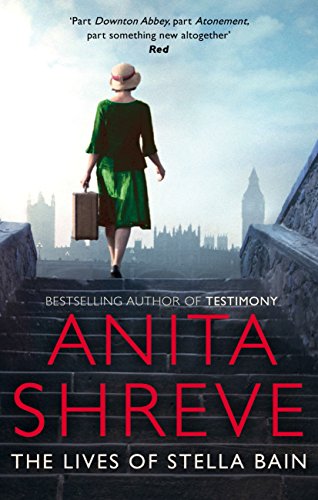
The Lives of Stella Bain by Anita Shreve

stella bain

I rather ashamedly have to confess that I haven’t read an Anita Shreve book before so I’m grateful to the members of my U3A reading group for choosing The Lives of Stella Bain this month.

The Lives of Stella Bain is published by Abacus, part of the Little Brown Group, and is available for purchase here.

The Lives of Stella Bain

stella bain

Hauled in a cart to a field hospital in northern France in March 1916, an American woman wakes from unconsciousness to the smell of gas gangrene, the sounds of men in pain, and an almost complete loss of memory: she knows only that she can drive an ambulance, she can draw, and her name is Stella Bain.

A stateless woman in a lawless country, Stella embarks on a journey to reconstruct her life. Suffering an agonising and inexplicable array of symptoms, she finds her way to London. There, Dr August Bridge, a cranial surgeon turned psychologist, is drawn to tracking her amnesia to its source. What brutality was she fleeing when she left the tranquil seclusion of a New England college campus to serve on the Front; for what crime did she need to atone – and whom did she leave behind?

Vivid, intense and gripping, packed with secrets and revelations, The Lives of Stella Bain is at once a ravishing love story and an intense psychological mystery.

My Review of The Lives of Stella Bain

I can’t believe that The Lives of Stella Bain is my first Anita Shreve book and I can’t wait to delve into more of her writing.

I thoroughly enjoyed the sense of mystery in the early part of the novel when Stella is trying to regain her identity. I found her initial reason for fleeing to France an interesting premise for the novel and although I didn’t find her actions, because of her feelings of guilt, entirely convincing, I found the event that precipitated her being in France very effective.

I’m always fascinated by the setting of the First World War but, whilst I am thoroughly aware of the devastating effects it had on young men, I am ashamed that I have never really thought too much about the effects on the women working there too. This was a compelling and thought provoking element to The Lives of Stella Bain and I enjoyed this first part of the novel particularly because I was educated as well as entertained as I read.

Usually preferring a novel with a linear time scale, I actually loved the structure of The Lives of Stella Bain and the uncovering of the mystery surrounding Stella. Anita Shreve has magnificent insight into the human psyche so that Stella, as she is initially known, is a compelling, human and believable woman. I thought all the characters were engaging and I enjoyed the way in which the novel ultimately resolves itself around them.

As well as being well written and entertaining with some wonderful descriptions that give a dramatic sense of place, I thought The Lives of Stella Bain had great depth too. Anita Shreve considers the place of women in marriage and society, the role of motherhood and who judges (literally in this case) what it means to be a woman and mother. She raises the questions of identity and self, and of love and hatred, so that I was made thankful for the life and love I have.

The Lives of Stella Bain may be my first Anita Shreve read but it most certainly won’t be my last. It’s a highly appealing story.

About Anita Shreve

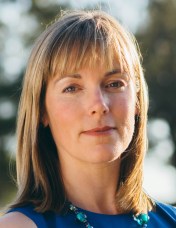
Anita shreve

Anita Shreve is the acclaimed author of seventeen novels, including Rescue, A Change in Altitude, Testimony, and The Pilot’s Wife, which was a selection of Oprah’s Book Club. Her latest book is The Stars Are Fire. Anita first began writing when working as a high school teacher. She lives in Massachusetts.

You can find Anita on Facebook and visit her website.

Just Where You Left It… and other poems by David Roche

Just Where You Left it

I don’t read and review enough poetry so when a copy of Just Where You Left It by David Roche dropped into my inbox unexpectedly, I thought I’d dip in straight away.

Published by Unbound on 24th August 2017, Just Where You Left It is available for purchase here.

Just Where You Left It

Just Where You Left it

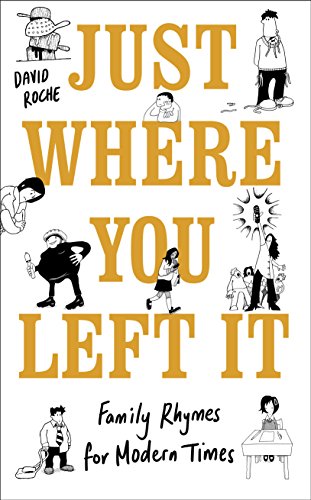
Just Where You Left It is a collection of humorous poetry about how to survive school, parents and everything else that’s unfair in life.

From David Roche come these simple and charming rhymes designed to make parents and children alike fall in love with poetry again… or maybe for the first time. It all started with a poem about the agony of poetry recitation, written by David for his son.

In fact, all of these poems were written for his three sons, touching on everything they might encounter growing up: exams, school meals, bullying, sports days, embarrassing Dads and nagging and know-it-all Mums were fair game.

These are poems for parents, poems for children and poems for parents to read to their children, offering a witty and charming take on life for every stage of growing up. If you grew up in a world of Ogden Nash and Shel Silverstein, then this is the book for you.

My Review of Just Where You Left It

If at first you don’t succeed keep trying until you win your children’s school poetry reciting competition. Family life laid bare through rhyme!

I’m going to begin by saying that I am not normally a fan of adult rhyming poetry. However, in Just Where You Left It David Roche has produced a wry and witty insight into family life with our reliance on social media, wifi and emojis, and with familiar anxiety dreams, holidays, food and so on.

Before commenting on the poetry, I must just mention the brilliant illustrations from Dave Cormell at the start of each poem. They made me smile before I’d even read the humour in the verses themselves.

Some of the rhymes in Just Where You Left It are almost tortuous at times, adding to the charm of the poems – especially in We Have Ways of Making You Eat where I really enjoyed the homage to Churchill.

My favourite poem was The Poetry Recitation as it took me back to the days of performing at Oundle music and drama festival when I stumbled my way through the Ducks’ Ditty from Wind in the Willows as a nervous 8 year old. It also reminded me of poems I’ve loved and not revisited for far too long. There are many social, historical, literary and political references peppered throughout the collection which adds an extra layer of enjoyment.

I was less keen on Thank You, Baby Boomers as it made me feel quite guilty, being of a certain age! It also made me think and ponder whether David Roche was right in the messages the poem contains.

I think Just Where You Left It will appeal to slightly older readers (like me), more than to youthful ones, as we can all remember the kinds of experiences described and can read this collection with a fond nostalgia that transports us back to our youth. The poems are great fun, highy entertaining and if nothing else, I recommend you follow the advice in The Best Advice!

About David Roche

david roche

David Roche was born in London, got a faintly grubby degree in Psychology at Durham University, and then got married far too young. He has been married for 30 years to his Finnish wife and they have 3 sons in their twenties. David has worked, for what seems to him an inordinately long time, as a director of HMV, Waterstones, Borders, Books etc, and also in publishing at HarperCollins. He now lives in Kingston upon Thames and has several roles related to books and writing. This is his first book.

You can follow David on Twitter.

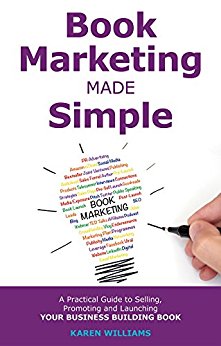
Celebrating Non-fiction Books with Karen Williams, Author of Book Marketing Made Simple

Bookmarketing made simple

A few weeks ago I was fortunate to attend an event of bloggers, publishers editors and other bookish folk held by Bookollective. One of the people I met and chatted to was Karen Williams, author of Book Marketing Made Simple, from Librotas whose enthusiasm for supporting authors shone through to the extent that I had to invite her on to Linda’s Books Bag to tell me about her passion for non-fiction.

Book Marketing Made Simple is available for purchase through the following links.

Book Marketing Made Simple

Bookmarketing made simple

There has never been a better time for coaches, consultants, and therapists to write and publish a business book. With a great idea, a clear strategy, and a well-formed marketing plan, your book will help you to build your business and attract more clients.

Your book may be a manual, textbook, how-to guide, self-help book, anthology, parable, memoir, or any type of book that you hope will be a marketing tool and credibility builder.

In Book Marketing Made Simple, you’ll get easy to follow strategies to market your book at all stages of your journey – from the day you start to write a book until after your book launch.

Celebrating non-fiction books

A Guest Post by Karen Williams

When was the last time you picked up a self-help guide, business book or memoir? Or indeed any non-fiction book.

Although we all love a good story and a bit of escapism, there’s certainly merit in learning from the experiences and knowledge of others. In a world where fiction outsells non-fiction, go into any good bookshop, and you’ll see a range of non-fiction books on sale to motivate and educate readers.

So why are non-fiction books becoming more popular?

Many business experts and celebrities write in the non-fiction arena. To get noticed in this fast-paced and competitive world, writing a good book enables them to stand out from the crowd. A book is a great way for them to inspire others, build their community, and develop their credibility and expert status.

Many authors use their personal experiences to inspire their readers and provide practical advice. They can reach more people in this way, rather than simply replying on their website or social media presence.

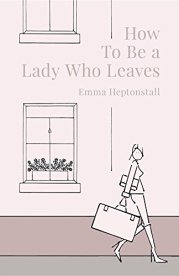
Some readers will find that a good non-fiction book can help them when they’re going through a trauma or difficulty. For example, one of my clients, Emma Heptonstall, is the author of How To Be a Lady Who Leaves, a self-help book aimed towards women who are considering getting divorced. Emma’s book gives them valuable advice to help them to make the decision to stay or go, and then guidance on what to do next. This is an easy purchase for those who want help and are unsure where to go for this support.

how to be a lady who leaves

Real life stories will often support this learning. One client is sharing her experiences of her father who went through gender reassignment to become a woman 30 years ago, and the impact it had on her and her family. Another client is writing a book to support childless women, and a third is using her book to help those who have gone through cancer. They are all using stories to give hope to those going through similar experiences.

In addition, many people seek out non-fiction books to help with their learning and development. My clients are currently writing on a wide range of topics including visualisation, time management, retirement, confidence, happiness, raw food, and business.

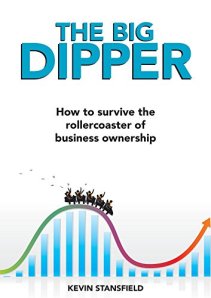
An example of this is Kevin Stansfield, who has recently published The Big DipperHow to Survive the Rollercoaster Ride of Business Ownership,which is loosely based on his father’s story of buying a business off a guy in a bar. Parable in style, he shares the story in the book, interspersed with lessons that will inspire and educate small business owners.

The Big Dipper

One of the reasons why non-fiction books are becoming more common is that the publishing industry is changing. With the rising trend in self-publishing and hybrid or partnership publishing, it’s easier than ever before to write a book and get published. The downside is that anyone can say they’re a published author and this can impact on the quality of some books on the market.

That’s why I work with non-fiction authors who have a passion to share their experiences, stories and learning to make a bigger difference with their knowledge. As the author of five non-fiction business books myself, including my personal memoir, I know the value of supporting these authors to create a valuable, helpful, and marketable product that impacts positively on the lives of readers.

About Karen Williams

karen williams

Karen Williams is the Book Mentor at Librotas. She works with business experts who want to write and publish a book that grows their business, raises their credibility and attracts higher-paying clients.  She is the bestselling author of Book Marketing Made Simple, The Mouse That Roars, Your Book is the HookHow to Stand Out in Your Business and The Secrets of Successful Coaches.

Karen loves to speak, and she does some crazy stuff too like jumping out of planes and helping people to walk on hot coals too!

Find out more by following Karen on Twitter @librotas and on the Librotas website. You’ll also find her on Facebook.

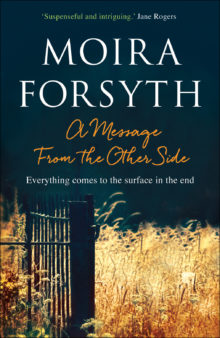
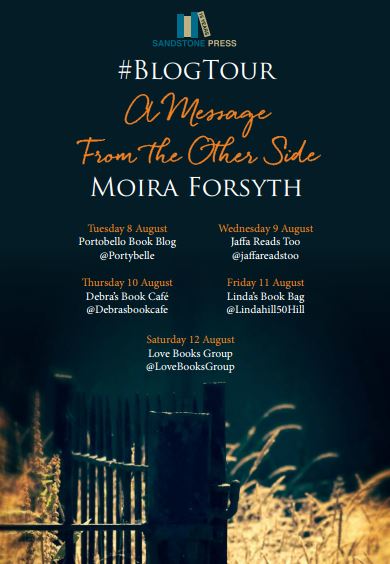
A Message From The Other Side by Moira Forsyth

a message from the other side

I was delighted to be asked by Sandstone Press to be part of the launch celebrations for A Message from the Other Side by Moira Forsyth. Moira has agreed to write for Linda’s Book Bag about a message she’d like to receive from the other side and in the spirit of collaboration, I’m writing a short piece too alongside my review.

A Message from the Other Side was published by Sandstone Press on 20th July 2017 and is available for purchase here.

A Message from the Other Side

a message from the other side

When Catherine moves several hundred miles away from her sister, Helen says phone calls aren’t enough, but they make it easier to edit the truth. Helen can dismiss Gilbert and his enchanted Factory as weird when she’s never met him, and Catherine thinks Helen foolish for loving the unreliable and dangerous Joe. Neither sees the perils concealed in what they have not told each other, or guesses at the sinister connection between their separate lives.

A Message from the Other Side is a novel about love and marriage, but even more about hatred and the damage people do to each other in the most ordinary of families.

The Message I Want to Hear

A Guest Post by Moira Forsyth

I didn’t always have an easy relationship with my mother. She grew up in a farming community in the North East of Scotland, at a time when it was the boy in the family who was educated. My uncle became an architect; my aunt and mother learned shorthand typing and became secretaries. When my sister and I were born, my mother stayed at home to look after us. She said she always loved doing that, but she knew she had missed out. If she had been given the chance, she said, she would have been a lawyer. She also wrote stories, quietly, never sending them anywhere.

For my sister and me, there was no choice: we were bound for university. When I muttered something about Art School, that was swept aside. University. A degree. Then, she anticipated, I’d be a teacher. I got my degree, but I didn’t want to be a teacher. I was going to write. For ten years I moved from job to job, none of them paying well or providing me with much satisfaction, while I wrote several unpublished novels. When I had my son, I felt for the first time wholly approved of. ‘He’s beautiful, Moira,’ she said. Of course he was, and so was my daughter, two years later. For a long time, my mother and I got on very well.

I was not so popular when my marriage broke up. Divorce was not what people did, in my family. In the end, after a difficult few months, we talked, properly, for the first time for years. We became close, and when she grew frail in old age, I felt enormous pity and love, that someone so bright and clever, so quick in her thinking, had lost the ability to think coherently at all.

After her death, she still seemed near. I wondered what message she had for me ― that there was something, I was sure.

My daughter now has a sixth month old son of her own. She’s rather like her grandmother, knowledgeable, intelligent and intuitive. Yet all through these early baby months she has asked my advice, because she’s in uncharted territory, and as anxious as I was more than thirty years ago, to do her best. I want to advise her and say the right thing, but hesitate. If only I could ask my own mother! I’d say, what do you think? You always knew what to do. Whatever was wrong with the children: a crying baby, a rash, a fever, a niggling worry ― you knew the answer and could reassure. Whereas I feel I’m making up being a granny just as I made up being a mother. I desperately want to be good at both – to be as good as you were.

So I want that last message from you, I want to know how you knew so much, and were so wise. And I want to know – how am I doing? Am I good enough?

(I’m sure you are Moira.)

My Own Message I Want to Hear

I’ve had these questions in my mind for as long as I can remember, so today I’m going to ask my Grandfather for some answers. Here goes:

Although I never met you, as you died when my mother was 16, there is so much I want to know. I’m going to keep this simple and just list my questions to you.

What had been happening in the past that meant you married again six weeks after my grandmother died as a result giving birth to my Mum?

Why did you parcel Mum out as a 12 week old baby to live with relatives and not keep her and her siblings?

Why didn’t Mum know she was fostered and that her Mum and Dad were really her aunt and uncle until she was 8?

What happened to your son, the brother Mum never knew?

Are you aware of the impact your actions have had in making Mum insecure for the whole of her life?

I hope so.

My Review of A Message From The Other Side

Very different sisters Catherine and Helen have more in common than they might imagine, including men.

Initially I didn’t understand A Message From The Other Side at all. I wasn’t sure where it was headed and why it was going to be divided into the time frames it has. It puzzled me.

However, as I realised that A Message From The Other Side isn’t a psychological thriller or a supernatural read or women’s fiction where I was trying to place it, but rather a narrative that explores relationships in exquisite detail I understood what Moira Forsyth was doing and loved the read. I moved from being uncomfortably puzzled to intrigued and ensnared.

This is character driven writing at its best. I absolutely loathed Kenneth throughout, regardless of any redeeming features he has, or actions he makes. He repulsed me completely both physically and emotionally. And yet he’s just human. This is what is so skilled about Moira Forsyth’s writing. She doesn’t make judgements but she presents her characters in such a way that it is impossible not to respond as a reader. I would have loved to have met Hugh and found Catherine and Helen flawed, foolish and utterly understandable. I railed at both Helen and Catherine for their relationships with Kenneth and Joe. Reading A Message From The Other Side made me quite uncomfortable too as I have a horrible feeling I would have a very snobbish and condescending view of Rose were I to meet her.

Moira Forsyth presents relationships and all their complications in intense, beautifully written prose. I found an underlying sadness behind the writing as Moira Forsyth explores how half truths and omissions can affect our lives. There’s a pared down plot so that even though there is a mystery surrounding Catherine’s seeing dead people from the beginning of the book, this isn’t the roller coaster read some might expect. It is, however, an emotional exploration of humanity, of loneliness, love, fear hatred and the glorious intricacies of relationships.

About Moira Forsyth

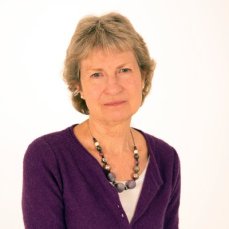
64UZHNk__400x400

Moira Forsyth is the author of four novels, and a published poet and short story writer. She has been a registrar of births, deaths and marriages, sold hotels and catering properties, been a bookshop manager, a lecturer and schoolteacher, and taught in a Young Offenders’ Institution. Moira is now an editor, and has worked on a wide range of fiction and non-fiction books. Moira has two grown-up children (non-resident), two cats (resident), and lives in the Highlands of Scotland.

You can follow Moira on Twitter.

There’s more with these other bloggers too:

poster

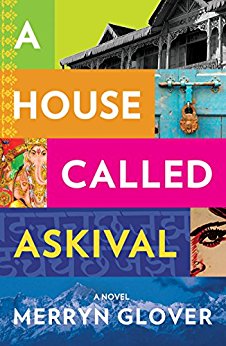
Mussoorie, A Guest Post by Merryn Glover, Author of A House Called Askival

Askival paperback

Although I’ve travelled the world from Antarctica and Australia to Zanzibar and Zambia I am desperate to visit India, so I’m thrilled that, until my planned trip next year, I can visit vicariously through a fabulous guest post by Merryn Glover, author of A House Called Askival. Merryn writes so evocatively about Mussoorie that I’m there already!

A House Called Askival is available for purchase here.

Merryn Glover is celebrating the 10th Anniversary of A House Called Askival by producing an audiobook, being narrated by her Indian actress friend. To learn more and to support the project have a look at her Kickstarter: https://www.kickstarter.com/projects/merrynglover/a-house-called-askival

A House Called Askival

Askival paperback

James Connor is a man who, burdened with guilt following a tragic event in his youth, has dedicated his life to serving India. Ruth Connor is his estranged daughter who, as a teenager, always knew she came second to her parents’ missionary vocation and rebelled, with equally tragic consequences.

After 24 years away, Ruth finally returns to Askival, the family home in Mussoorie, a remote hill station in the Northern State of Uttarakhand, to tend to her dying father. There she must face the past and confront her own burden of guilt if she is to cross the chasm that has grown between them.

In this extraordinary and assured debut, Merryn Glover draws on her own upbringing as a child of missionary parents in Uttarakhand to create this sensitive, complex, moving and epic journey through the sights, sounds and often violent history of India from Partition to the present day.

Mussoorie

A Guest Post by Merry Glover

When I decided it was time to fulfil a life-long dream and write my first novel, I knew immediately where I wanted it set: Mussoorie, a hill-station in the Himalayan foothills of North India.  It was where I attended boarding school for nine years, becoming a significant home base that I still visit whenever I can.  Quite apart from my own history, it is story gold.

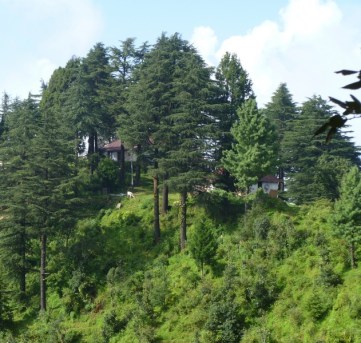
Askival Site

Askival Site

Scattered across a steep range at roughly 7000 feet, the busy town started life as a handful of shepherds’ huts in deep forest.  During the British Raj, that hill area was seized by the feisty warriors of Nepal, triggering the Gurkha wars that saw the British in the undignified position of needing a large army and several canons to defeat a far smaller force with little more than knives, superior mountain skills and their legendary courage.  The upshot was that the Gurkhas returned the land, resisted colonisation and won everlasting respect, being recruited into the British army to this day.  The military men who led the victory were given land on the ridge for hunting lodges and thus, in the 1820s, the hill station of Mussoorie was born.

Hill stations developed across India because the high altitudes gave the British an escape from the heat, mosquitoes, crowds and diseases of the plains.  They were ideal locations for hospitals, boarding schools and military cantonments and even the whole government of British India, which moved to Simla every summer.  And they rapidly became popular holiday destinations, swelling during ‘The Season’ and filling the growing number of hotels, cinemas, ballrooms, shops and skating rinks that sprung up on the steep slopes.  At their height, hill-stations teemed with the serried ranks of the Raj, taking tea on their balconies, cavorting at themed dances or parading down the Mall, often in hand-drawn rikshaws.  What’s more, with deep forests, cool air, rain and mist, the hill stations were rather like home and nostalgia abounded.  Houses were named Scotsburn and Tipperary, Strawberry Cottage and Ivy Bank, and in Mussoorie, a whole string were named after Sir Walter Scott novels: Waverley, Ivanhoe, Kenilworth and Woodstock, which became my boarding school.

Like much of British India at the time, it was a largely segregated world, with only Maharajas and their ilk getting a foot-hold on the social and property ladders, while most Indians serviced the enterprise.  All of this was upended with the coming of Independence in August 1947 and the departure of the colonial powers.  Since then, Mussoorie has grown and changed and is now as popular with the new Indian middle-classes as it was with the British, though it still carries many vestiges of the Raj in the stone bungalows, the boarding schools, the cemeteries and old shops, and in the quaint traditions still fiercely upheld by older residents, ex-pat and Indian alike.  I love discovering remnants of this bygone world: the crumbling grandeur of the Savoy Hotel where a moth-eaten stag glares from one glass eye; an antique shop creaking with Willow-pattern china and rusting snuff boxes; a collection of sepia photographs of ladies in sedan chairs and moustachioed gents trussed up as Egyptians.

mussoorie in snow x

Mussoorie in Snow

But what has never changed about Mussoorie is its beauty.  Looking south from the hillside, you can see the Dehra Dun plain with the Ganga and Jamuna rivers curving across it like serpents, and looking north, you might see the Himalayas in their jagged splendour.  On the hills themselves, the protected forests are cathedrals of life, full of fragrance, wildflowers and small creatures, threaded with the sounds of birds and the wind through pines; and this high up, the air is clear, the sunsets vivid and the nights rich with stars.  In the monsoon – a season that inhabits my novel like another character – moss and ferns spring from the ground and tree trunks, and mist moves across the ridges like a brooding spirit.

All of this beauty and history are the stage for A House Called Askival, an epic story spanning 70 years from pre-Independence to the new millennium, through the lives of an American family who, like me, are deeply bonded to Mussoorie and forever changed by it.

(And doesn’t that post make me want to get on the plane to India even more!)

About Merryn Glover

OLYMPUS DIGITAL CAMERA

Australian by passport, Merryn Glover was born in a former palace in Kathmandu and brought up in Nepal, India and Pakistan.  Her writing has won awards and been published in anthologies, magazines and newspapers and her fiction and drama broadcast on Radio Scotland and Radio 4.  A House Called Askival is her first novel and she is currently working on a second, set where she lives in the Highlands of Scotland.  Two days a week she works in a high school library where she works hard to get young people and books together.  Much of her writing explores themes of culture, identity, belief and belonging.

You can find out more about Merryn on her website, on Facebook, on Goodreads and by following her on Twitter @MerrynGlover.

A Publication Day Interview with Carol Warham, Author of Resolutions

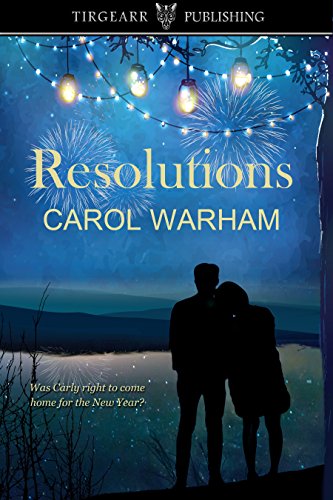
resolutions

One of the reasons I blog is to provide a platform for new authors to showcase their books and I’m delighted to welcome Carol Warham to Linda’s Book Bag. Carol’s novel Resolutions is published today 9th August 2017 and I’m so glad she agreed to come onto the blog to tell me a little about it.

Published by Tirgearr in e-book, Resolutions is available for purchase here.

Resolutions

resolutions

A few days before the New Year, Carly Mitchell returns home to the small town on the Yorkshire moors. Her intention for the short visit is to make her apologies and offer an explanation for her action. A year earlier, she fled, leaving her bridegroom and friends bewildered.

She’s met with mixed reactions, ranging from curiosity to open hostility. However, when an emergency arises, Carly agrees to change her plans and stay a little longer. Falling in love with the new local doctor, Ben Thornton, was not part of her original plan either. Especially when it appears his past is shrouded in mystery.

Complications and tensions increase during the town’s New Year celebrations and she begins to doubt whether she has done the right thing by coming home.

Can she find the resolution she needs to overcome the challenges facing her, or will she run away again?

An Interview with Carol Warham

Welcome to Linda’s Book Bag, Carol. Thank you so much for agreeing to answer some questions on my blog about your writing and Resolutions in particular.

Thank you for inviting me along Linda, it’s a pleasure to be here.

Congratulations on Resolutions which is published today. How does it feel to have a book out there with your name on it?

It still feels quite surreal. I know most authors hope to have a book published one day, but deep down I never really expected it to happen. Initially Resolutions will be published as an e-book. I very much hope, that one day, it will be in print. That’s when it will be special, when I can actually hold it in my hand.

As a new author, please could you tell me a little about yourself?

I’m actually a Lancashire lass (born in Manchester) who ‘emigrated’ to Yorkshire over thirty years ago via a few years on the Ayrshire coast of Scotland.  As with most writers, writing is something I’ve always done. Originally I wanted to be a journalist and studied with the NCTJ (National Council for the Training of Journalists).  However I soon decided that wasn’t the sort of writing I was interested in. Life, as it does, then got in the way, I married had two daughters and held down a number of different jobs, working for the taxman, book-keeping and running our own businesses.  When I retired about seven years ago I returned to writing.

Why do you write?

That is a difficult question to answer! I think it’s because I love the feeling of creating a world, a life-style and characters and ‘jumping’ into the story to be with them.  Once you start writing, more and more ideas keep filling your head, and you just have to get them down on paper or on the computer.

I know you used to make up comics for your toys as a child. Was this when you realised you were going to be a writer?

It was probably the start. Certainly from then on, I do remember writing a lot.  In infant school we kept a daily diary which I remember gave delight and often embarrassment to my parents. Apparently I once wrote, in full detail, about seeing my mum sitting on my dad’s knee, which I thought hugely amusing.

Later, I enjoyed school compositions, as we called them then, even the ‘What I did in my school holidays,’  which came round every year.

In senior school, I had a wonderful English/Literature teacher, Sr Mary Anne (yes I went to a convent). She introduced me to the world of creative writing, and to wonderful writers like Jane Austen. My interest continued to flourish from there. At the time I thought Journalism was the way to go, writing a novel never entered my head.

Which aspects of your writing do you find easiest and most difficult?

The plot, and even the title, came easiest to me. After that it was all uphill! I’m not good at disciplining myself to sit down and ignore everything else around me – suddenly the ironing or even the dirty windows can look very inviting!

However, once I’ve actually settled down to write my main difficulty is expressing emotions. I’m a fairly reserved person myself, when it comes to showing them. I had to learn to ‘feel’ them through my character and then write it down – showing not telling – it wasn’t easy at all.

What are your writing routines and where do you do most of your writing?

I don’t have a routine. I squeeze writing in between family commitments. I also volunteer for various things around the village, which can take up quite a bit of time.

Without spoiling the plot, please could you tell us a bit about  Resolutions?

Resolutions tells the story of Carly Mitchell who returns, at New Year, to her home in a small market town after a year away.  She left in a hurry, leaving behind her fiancé Steve, and causing a lot of heartbreak and returning is not easy for her.

She intends to stay only for a few days at the Resolution Hotel, owned by Steve’s parents. However, her plans change when Steve’s father is taken ill, and she feels obliged to step in and help with running the hotel. This also means having to deal with Steve’s antagonism since he has never forgiven her for humiliating him.

A further complication comes in the form of Ben Thornton, the local doctor, to whom Carly feels an immediate attraction. They enjoy getting to know each other and falling in love, until a famous model from Ben’s past arrives in the town, and stays at the hotel.

Steve attempts to get his revenge on Carly by driving a wedge between her and Ben, and by threatening to reveal what he knows about Ben’s troubled past unless Carly leaves town.

The resolution lies in Carly’s hands as she struggles between wanting to flee from the town again and wanting to stay with the man she has grown to love.

Resolutions is set in locations close to where you live. How important is Yorkshire to you and your writing?

Yorkshire is very important. I love living here. It is after all ‘God’s Own County’. It has beautiful, scenery, a magnificent coast line and is packed with history at every turn. My next novel will be also based in Yorkshire. It starts in Scarborough but moves onto other wonderful places.

Resolutions has a cover that very clearly makes the reader think of New Year Resolutions. How did that image come about and what were you hoping to convey (without spoiling the plot please!)?

My publisher, Tirgearr, and their wonderful artist Elle J Rossi, came up with the cover. We tried all sorts of ideas, with moors, lakes and fireworks but none gave the message or ‘hint’ we wanted. Elle came up with this. I loved it as soon as I saw it. It gives an idea of the location and time of year, which are important to the story.  It also, to me, has a peaceful look, which is the way I wanted the book to end after Carly’s emotional journey.

If Resolutions became a film, who would you like to play Carly and why would you choose them?  

I have absolutely no idea. When I ‘saw’ Carly I envisage her to look like Karen Gillan (Amy Pond in Dr. Who).  I think that’s one worry I’ll think about IF it actually did happen!

When you’re not writing, what do you like to read?

History! I love historical novels and I read all the authors. I also enjoy all the classics. I recently started re-reading John Buchan’s Richard Hannay novels – all good ripping yarns!  I belong to a reading group which does take me out of my reading comfort zone.

At the moment I’m reading for the RNA’s RoNa awards, which I’ve done for the last few years, so I have a number of books awaiting my attention

If you had 15 words to persuade a reader that Resolutions should be their next read, what would you say?

It’s a story of guilt, resentment and a new love set amid the Yorkshire moors.

Thank you so much for your time in answering my questions and congratulations once again on today’s publication of Resolutions.

Thanks again for inviting me Linda. I’ve enjoyed myself being here.

About Carol Warham

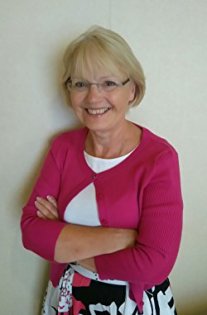
carol warham

Writing has been Carol’s love since childhood. She started by making small comics for her dolls, progressed to training as a journalist for a short while. Once the family had grown up she settled down to writing short stories, poems and holiday articles. Some of which are published.

In recent years she has become a judge in the short story section for the HysteriaUK competition and also for the RNA’s romance novel of the year.

Earlier this year, she represented her book group on BBC Radio Leeds, talking about books and the work on her novel.

Carol lives in Yorkshire, surrounded by some beautiful countryside, which is ideal for her other passion of walking, often with a dog called Sam.

You can follow Carol on Twitter @carol_warham, find her on Facebook and visit her blog.

Green Figs and Blue Jazz by Lizzie Fincham

Green figs and blue jazz

I’ve been drawn back into reading poetry of late and when Lizzie Fincham asked if I’d like to review her collection Green Figs and Blue Jazz I jumped at the chance.

Published by Cinnamon on 1st June 2017, Green Figs and Blue Jazz is available for purchase here.

Green Figs and Blue Jazz

Green figs and blue jazz

The narrative arcs of love and loss, sex and death, with the constant interplay between time present and time past, unite this deeply affective collection from widely published and award winning poet, Liz Fincham.

Structured in three acts, Green Figs and Blue Jazz moves from a winter solstice, gathering memories of a relationship in which the signs of transience and mortality appear in retrospect, to a central act in which loss comes to the fore so that every place, each object, even the mud on a pair of boots becomes a stark meditation on what has gone, what might have been. Finally resolving in a final act in which memory, dreams and hope conspire to remake the past and give substance to possible futures, this evocative and rich collection moves full circle, ending in advent with the world still waiting.

My Review of Green Figs and Blue Jazz

It comes as no surprise to me to learn that Lizzie Fincham comes from the Gower in south Wales as my immediate response when opening this wonderful collection of poetry was that the writing made me think of Dylan Thomas. I was also strongly reminded of Gerard Manley Hopkins and Seamus Heaney, such is the quality of Green Figs and Blue Jazz.

I found this collection incredibly moving. It’s difficult to pinpoint exactly why, but the odd word or phrase reminded me acutely of people I’ve loved and are no longer here and the poems gave me that indefinable Welsh feeling of hiraeth that I was first introduced to by my Welsh husband when we met 35 years ago. There’s a desperate longing and deep sadness behind many of the poems.

Lizzie Fincham uses poetic technique so effectively to convey the memories and emotions threaded through these poems. The enjambment of Clinical Trials, for example, when the disease is apparently unstoppable, contrasts so beautifully with the short, brief lines of Heading For The Coast and the concept of travelling light and leaving much behind. The fragmented end to Iron filings stopped me in my tracks. In two words at the end of the poem Lizzie Fincham has encompassed exactly what losing a loved one, and forgetting briefly, feels like. She uses an iterative image of nature and plants throughout so that I felt I understood something about the man who is gone as well as a brief hope that there could be new life in the future in the same way nature is able to regenerate and fill a vacuum. I thoroughly enjoyed the references to other poets, like my favourite Donne, and the arts so that these poems thrum with colour, music and image – all the things that help create memories for us.

I loved the way the poems in Green Figs and Blue Jazz are divided into three Acts like a conventional drama, with the first one setting the scene of the cause of the grief so sensitively depicted in Act Two. I found the emotions so intense that I had to stop after reading Elegy for a man because the tears were streaming down my face and I couldn’t see. In Act Three, the grief is still so present but there is hope. There are moments when life does continue and the writer forgets – almost.  Equally, the memories seem more controllable but no less vivid.

I found Green Figs and Blue Jazz profound, moving and beautiful.  I think reading these poems is genuinely life affecting and they definitely touched my soul. Amazing.

About Lizzie Fincham

liz_fincham

Lizzie Fincham was born in Gower and married in Wales. She has two daughters. Her poems are published in Cinnamon anthologies, Envoi, New Welsh Review, The North, Poetry Wales, Poems on Hoardings (National Museum of Scotland). She has been shortlisted three times for the Bridport Poetry Prize and Highly Commended twice for Poetry on the Lake. She was invited to and encouraged at a Masterclass at Ty Newydd by Gillian Clarke and Carol Ann Duffy. Her tutors for an MA in Creative Writing at Royal Holloway (for which she received a distinction) were Andrew Motion and Jo Shapcott. Currently she is reading for a PhD in Creative Writing at Swansea University supervised by John Goodby. Her mentor for this collection was Jan Fortune. She thanks all who have supported her on this journey.

You can follow Lizzie on Twitter.

An Interview with Karl Holton, Author of The Weight of Shadows

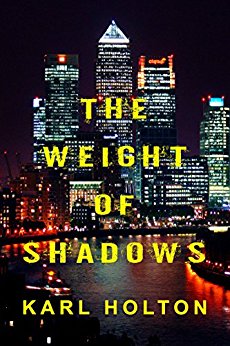
The weight of shadows

I was so intrigued by the sound of The Weight of Shadows by Karl Holton that, even though I sadly couldn’t fit it into my TBR, I wanted to know more about it. Karl kindly agreed to an interview to tell me more.

The Weight of Shadows was published by Thuja on 13th July 2017 and is available for purchase here.

The Weight of Shadows

The weight of shadows

When you have spent your life in the shadows, what would you do at the dying of the light?

Three years ago the best murder detective in London is blamed for the death of his colleague and kicked out of the Met.
A man with secrets buried in the past and present returns to London, the city that started the mysterious career which made him a billionaire.
The two need each other.
But they have no idea how much.

A gripping crime thriller mystery with twists from the beginning to end.

An Interview with Karl Holton

Welcome to Linda’s Book Bag, Karl. Thank you so much for agreeing to answer some questions on my blog about your writing and The Weight of Shadows in particular. Firstly, please could you tell me a little about yourself?

I’m a husband and father of two; girl of thirteen, boy of ten. I live in Surrey in England. I’m a chartered accountant that had worked in and around the financial markets in London for over thirty years.

You used to work in the financial markets sector. How did you make the decision to follow your dream and become a writer?

I hit one of those moments where I needed to make a very big decision. Writing the stories I was carrying in my head was something I had dreamed of doing. But I knew that there was no way I could write at what I think is a reasonable pace and work at the same time. Like many potential authors, when you do twelve to fourteen hour days during the week, it’s hard to come home and write. Then when you add your family commitments it becomes almost impossible to isolate the time to produce quality writing. I decided that if I wanted to give my writing the best chance of success I had to commit to this full time so I could put everything behind it. Bottom line, I had to take the risk.

Why did you choose the mystery thriller genre for your first book?

It really wasn’t a hard decision. I’ve had the two main characters in this book in my head for about twenty years and added others in that time. This story, which will play out across a series of books, is shaking around inside … I just needed to get it out.

You’ve just begun a writing career. Which aspects of your writing do you find easiest and most difficult?

Well I am fairly new to this, but I think I find dialogue easier than most other parts. I imagine the characters in front of me speaking and I just copy it down.

Maintaining character and plot continuity is hard; you just need discipline and attention to detail.

What are your writing routines and where do you do most of your writing?

Once I have had enough coffee, I try to get focused on the piece I am writing and avoid all the other tasks that a self-publishing author needs to do. Once I fail at that, I start writing … after more coffee.

Most of my writing is done sat on the sofa. I do try to work towards a daily target number of words but I can vary quite widely from it.

Without spoiling the plot, please could you tell us a bit about The Weight of Shadows?

The main character is Danny Benedict, a murder detective, kicked out of the Met when blamed for the death of a colleague in 2013. A second character, Ray Hanson, a mysterious billionaire returns to London in August 2016. The series plot begins in The Weight of Shadows and shows a period of six days during which events happen across London bringing these two together. The two men need each other, but they have no idea how much.

I know you’re self-publishing The Weight of Shadows. What advice would you give to other new authors thinking of self-publishing?

If I was giving one single piece of advice it would be that self-publishing does not mean you can avoid editing. It also does not mean self-editing. If your book is fiction with a twist, I don’t think this is possible and you must have your work edited and critiqued by a third party. Once complete, you must listen to the editor and trust them and go through everything in detail. You might not agree with every point but make sure you know exactly why. To give you an idea my edit process ended up taking far longer than it took me to write the complete first draft.

(I think that might be true of many writers Karl!)

The Weight of Shadows has a cover that suggests quite a conflict between light and shade, good and evil to me. How did that image come about and what were you hoping to convey (without spoiling the plot please!)?

That is spot on. The plot is very much looking at the variations between good and evil and how we perceive and ultimately measure these as individuals. The image is attempting to illustrate the dispute and combine it with elements of the story. Without saying too much, the Thames, London, and money are all drivers in the narrative.

The Weight of Shadows is the first in a proposed series. How do you manage planning for a series of books?

Primarily, you must have a very good handle on the core story arcs not only within the singular book but also across the whole series. You need to know how and when you will introduce them, develop their flow in the narrative and reveal the conclusion. But you must do this at the same time as making the individual book engaging.

In a series, you need to consider this over a longer period. So for example, there are series story arcs in The Weight of Shadows which you can see that I have obviously introduced; but others are more subtle and will be harder to spot. Some in the series will be introduced later, so with these, you must ensure you don’t compromise them with anything earlier in the narrative.

I also think the timing of character building is critical. If I want to make a character have longevity then I need to begin the back story reveal at the right time.

The Weight of Shadows has a series of twists. How far did these arise naturally in your writing and how far did you need to plan each one (Though don’t give any of them away!)

The main twists within The Weight of Shadows I had planned. Obviously, I cannot explain which ones they are but I will say that I have tried to give the reader clues. Some of the twists could also be called story arcs and these present themselves in the single book and others will take longer to uncover.

But certain twists did develop during the writing and edit. I think this is what you do as a writer and especially within the edit stage. You let the writing process enhance your ideas and add colour to the way it integrates within the story. Then in edit you might change their shade, making them darker or lighter, possibly being more pronounced or less pronounced. There was a significant one that I can think of, but I cannot explain it without giving too much away.

(Sounds intriguing!)

If you could choose to be a character from The Weight of Shadows, who would you be and why?

The obvious choice is Benedict, especially as I am a man. I shouldn’t say too much about Hanson here and let readers decide. But there is a female Flying Squad DI named Wallace. I really enjoy writing the chapters that include her and the way she interacts with Benedict.

And when you’re not writing, what do you like to read?

I tend to read lots of different things. In fiction, my preference today is for the crime thriller genre books and I will normally have something by Agatha Christie, Ian Rankin and Anthony Horowitz on the go at any given moment.

But if you were asking about non-crime thriller fiction influences, they are numerous. Off the top of my head and starting at ‘A’, let’s say, Douglas Adams and JG Ballard. I better stop because I will go on for too long.

If you had 15 words to persuade a reader that The Weight of Shadows should be their next read, what would you say?

The Shadows are dark and what would you do at the dying of the light?

Thank you so much for your time in answering my questions Karl.

I just want to say thank you so much for this interview. It’s been a pleasure.

About Karl Holton

karl holton

Karl Holton is a brand new self publishing author. His first book, The Weight of Shadows, is available now on Amazon. This is the first book in a crime thriller mystery series, with twists from beginning to end.

Karl previously worked in financial markets for over thirty years, before deciding that he had to write. He couldn’t leave this dream any longer.

He lives in Surrey with his wife and two children.

You can discover more about Karl on his website/blog and by following him on Twitter, Instagram and Facebook.

Riley Can Be Anything by Davina Hamilton

RCBA front cover

My grateful thanks to the author Davina Hamilton for a copy of Riley Can Be Anything in return for an honest review.

Riley Can Be Anything is available for purchase here.

Riley Can Be Anything

RCBA front cover

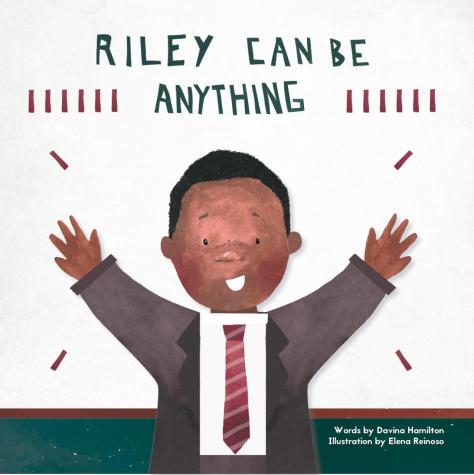
The inspiring rhyming story follows Riley as he discovers some of the wonderful things he can do when he grows up. With the help of his big cousin Joe, Riley is taken on a series of imaginative journeys that allow him to realise he can be anything he wants to be.

Complete with joyful illustrations by Elena Reinoso, Riley Can Be Anything is an uplifting and encouraging story for young children.

My Review of Riley Can Be Anything

Riley doesn’t know what he wants to be when he grows up, but he could be anything!

What a breath of fresh air Riley Can Be Anything is. It makes such a change to have a book with ethnic diversity that gives such positive messages.

Riley Can Be Anything is wonderfully illustrated with a rhyme scheme that feels natural and engaging and that will enhance a child’s vocabulary. I liked the suggested good manners in saying please and thank you as well as the encouragement to be inquisitive because these elements are slipped into the narrative without being overt or conescending. So too is the health message of drinking water.

However, for me, the outstanding aspect of Riley Can Be Anything is the positivity behind the story. Riley is told that he really can be anything and there are aspirational roles like doctors or pilots for him to consider, as well as creative ones like being a chef or a musician. In a world where boys like Riley are often put down, Davina Hamilton has created an environment where they have as much right to enjoy a positive and exciting future as anyone else. I thought Riley Can Be Anything was brilliant.

About Davina Hamilton

Capture

Davina Hamilton is an exciting writer with 15 years of journalism experience. The former entertainment editor for UK publication, The Voice, Davina has contributed to a host of publications, both in the UK and internationally. She has also featured on a number of radio programmes on stations including BBC London, LBC and BBC Radio 5 Live.

Davina lives in London, England with her husband and two children. She is available for interview upon request.

You can follow Davina on Twitter @davina_writes, visit her website and find Riley on Facebook.

Extract and Giveaway: The Big Dreams Beach Hotel by Lilly Bartlett

Cover

I’m so lucky to receive advanced reader copies of Lilly Bartlett’s novels and will be sharing my review of her latest, The Big Dreams Beach Hotel, on 23rd August, so do drop back then to see what I thought. You can read my review of Lilly’s previous two books, The Big Little Wedding at Carlton Square here and of The Second Chance Cafe in Carlton Square here.

Today I’m thrilled to be part of the launch celebrations for The Big Dreams Beach Hotel with an extract to share with you and the chance for you to win your own signed copy of another of Lilly’s books, The Big Little Wedding in Carlton Square, at the bottom of this blog post.

The Big Dreams Beach Hotel will be published by Harper Impulse on 18th August and you can order your copy here in the UK and here in the US.

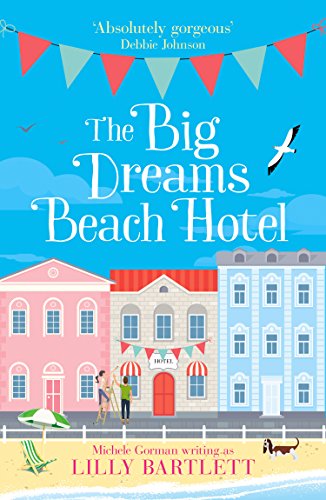
The Big Dreams Beach Hotel
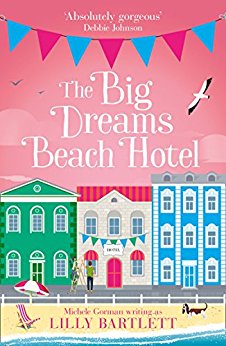
paperback cover

This is a brand new standalone novel from the author of the Carlton Square series with a whole new cast of characters to fall in love with!

Wriggle your toes in the sand and feel the warm breeze on your face when you check into the hotel that’s full of dreams…

Three years after ditching her career in New York City, Rosie never thought she’d still be managing the quaint faded Victorian hotel in her seaside hometown.

What’s worse, the hotel’s new owners are turning it into a copy of their Florida properties. Flamingos and all. Cultures are clashing and the hotel’s residents stand in the way of the developers’ plans. The hotel is both their home and their family.

That’s going to make Rory’s job difficult when he arrives to enforce the changes. And Rosie isn’t exactly on his side, even though it’s the chance to finally restart her career. Rory might be charming, but he’s still there to evict her friends.

How can she follow her dreams if it means ending everyone else’s?

An Extract from The Big Dreams Beach Hotel

by

Lilly Bartlett
Excerpt for bloggers graphic

Chapter 1

New York is where I fell head over heels for a bloke named Chuck. I know: Chuck. But don’t judge him just because he sounds like he should be sipping ice-cream floats at the drive-in or starring in the homecoming football game. Rah rah, sis boom bah, yay, Chuck!

Believe me, I didn’t plan for a Chuck in my life. But that’s how it happens, isn’t it? One minute you’ve got plans for your career and a future that doesn’t involve the inconvenience of being in love, and the next you’re floating around in full dozy-mare mode.

I won’t lie to you. When Chuck walked into our hotel reception one afternoon in late October, it wasn’t love at first sight. It was lust.

Be still, my fluttering nethers.

Talk about unprofessional. I could hardly focus on what he was saying. Something about organising Christmas parties.

‘To be honest, I don’t really know what I’m doing,’ he confided as he leaned against the reception desk. His face was uncomfortably close to mine, but by then I’d lived in New York for eighteen months. I was used to American space invaders. They’re not being rude, just friendly. And Chuck was definitely friendly.

‘I only started my job about a month ago,’ he told me. ‘It’s my first big assignment, so I really can’t fuck it up. Sorry, I mean mess it up.’ His blue (so dark blue) eyes bore into mine. ‘I’m hoping someone here can help me.’

It took all my willpower not to spring over the desk to his aid. Not that I’m at all athletic. I’d probably have torn my dress, climbed awkwardly over and landed face-first at his feet.

Keep him talking, I thought, so that I could keep staring. He looked quintessentially American, with his square jawline and big straight teeth and air of confidence, even though he’d just confessed to being hopeless at his new job. His brown hair wasn’t too long but also wasn’t too short, wavy and artfully messed up with gel, and his neatly trimmed stubble made me think of lazy Sunday mornings in bed.

See what I mean? Lust.

‘I noticed you on my way back from Starbucks,’ he said.

At first, I thought he meant he’d noticed me. That made me glance in the big mirror on the pillar behind him, where I could just see my reflection from where I was standing. At five-foot four, I was boob-height behind the desk in the gunmetal-grey fitted dress uniform all the front-desk staff had to wear. My wavy dark-red hair was as neat as it ever got. I flashed myself a reflected smile just to check my teeth. Of course, I couldn’t see any detail from where I stood. Only my big horsy mouth. Mum says giant teeth make my face interesting. I think I look a bit like one of the Muppets.

‘Do you have the space for a big party?’ he said. ‘For around four hundred people?’

He didn’t mean he’d noticed me; only the hotel. ‘We’ve got the Grand Ballroom and the whole top floor, which used to be the restaurant and bar. I think it’s even prettier than the ballroom, but it depends on your style and your budget and what you want to do with it.’

Based on his smile, you’d have thought I’d just told him we’d found a donor kidney for his operation. ‘I’ve been looking online, but there are too many choices,’ he said. ‘Plus, my company expects the world.’ He grimaced. ‘They didn’t like the hotel they used last year, or the year before that. I’m in over my head, to be honest. I think I need a guiding hand.’

I had just the hand he was looking for, and some ideas about where to guide it.

But instead of jumping up and down shouting ‘Pick Me, Pick Me!’, I put on my professional hat and gave him our events brochure and the team’s contact details. Because normal hotel receptionists don’t launch themselves into the arms of prospective clients.

When he reached over the desk to shake my hand, I had to resist the urge to bob a curtsy. ‘I’m Chuck Williamson. It was great to meet you, Rosie.’

He knew my name!

‘And thank you for being so nice. You might have saved my ass on this one. I’ll talk to your events people.’ He glanced again at my chest.

He didn’t know my name. He’d simply read my name badge.

No sooner had Chuck exited through the revolving door than my colleague, Digby, said, ‘My God, any more sparks and I’d have had to call the fire department.’

Digby was my best friend at the hotel and also a foreign transplant in Manhattan – where anyone without a 212 area code was foreign. Home for him was some little town in Kansas or Nebraska or somewhere with lots of tornadoes. Hearing Digby speak always made me think of The Wizard of Oz, but despite sounding like he was born on a combine harvester, Digby was clever. He did his degree at Cornell. That’s the Holy Grail for aspiring hotelies (as we’re known).

Digby didn’t let his pedigree go to his head, though, like I probably would have.

‘Just doing my job,’ I told him. But I knew I was blushing.

Our manager, Andi, swore under her breath. ‘That’s the last thing we need right now – some novice with another Christmas party to plan.’

‘That is our job,’ Digby pointed out.

‘Your job is to man the reception desk, Digby.’

Ya vol, Commandant.’ He saluted, before going to the other end of the desk.

‘But we do have room in the schedule, don’t we?’ I asked. Having just come off a rotation in the events department the month before, I knew they were looking for more business in that area. Our room occupancy hadn’t been all the company hoped for over the summer.

‘Plenty of room, no time,’ Andi snapped.

I’d love to tell you that I didn’t think any more about Chuck, that I was a cool twenty-five-year-old living her dream in New York. And it was my dream posting. I still couldn’t believe my luck. Well, luck and about a million hours earning my stripes in the hospitality industry. I’d already done stints in England and one in Sharm El Sheikh – though not in one of those fancy five-star resorts where people clean your sunglasses on the beach. It was a reasonable four-star one.

There’s a big misconception about hotelies that I should probably clear up. People assume that because we spend our days surrounded by luxury, we must live in the same glamour. The reality is 4a.m. wake-ups, meals eaten standing up, cheap living accommodation and, invariably, rain on our day off. Sounds like a blast, doesn’t it?

But I loved it. I loved that I was actually being paid to work in the industry where I did my degree. I loved the satisfied feeling I got every time a guest thanked me for solving a problem. And I loved that I could go anywhere in the world for work.

I especially loved that last part.

But back to Chuck, who’d been stuck in my head since the minute he’d walked through the hotel door.

I guess it was natural, given that I hadn’t had a boyfriend the whole time I’d been in the city. Flirting and a bit of snogging, yes, but nothing you could call a serious relationship.

There wasn’t any time, really, for a social life. That’s why hotelies hang out so much with each other. No one else has the same hours free. So, in the absence of other options, Digby and I were each other’s platonic date. He sounds like the perfect gay best friend, right? Only he wasn’t gay. He just had no interest in me. Nor I in him, which made him the ideal companion – hot enough in that freckle-faced farm-boy way to get into the nightclubs when we finished work at 1 or 2a.m., but not the type to go off shagging and leave me to find my way home on the subway alone.

About Lilly Bartlett

michele-photo

Lilly Bartlett is a pen name of Michele Gorman. Michele writes books with heart and humour, full of best friends, girl power and, of course, love and romance. Call them beach books or summer reads, chick lit or romcom… readers and reviewers call them “feel good”, “relatable” and “thought-provoking”.

She is both a Sunday Times and a USA Today bestselling author, raised in the US and living in London. She is very fond of naps, ice cream and Richard Curtis films but objects to spiders and the word “portion”.

You can find Michele on Instagram and on Facebook . You can follow her on Twitter and visit Michele’s blog and her website. There’s also a Lilly Bartlett Facebook page here.

Giveaway of The Big LittleWedding in Carlton Square
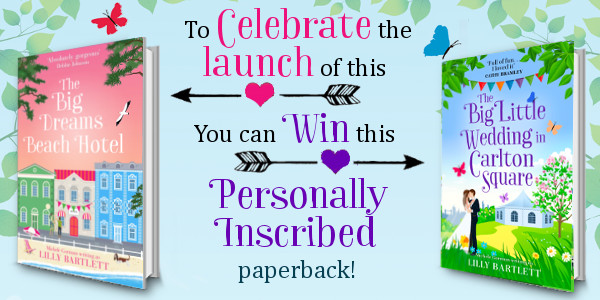
Paperback giveaway for bloggers new

You’re warmly invited to the Wedding of the Century with all your favourite friends. It’s the most vintage fun you’ll have this year!

To win a personally inscribed paperback of this gorgeous book, The Big Little Wedding in Carlton Square, simply sign up here.

Winners will be randomly selected and notified on August 18th via the email used to sign up.

Please note: This giveaway is run independently of Linda’s Book Bag.