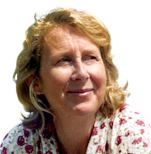
An Interview With A Presence of Absence Authors Sarah Surgey and Emma Vestreheim

A Presence of Absence High Res

Slightly differently on Linda’s Book Bag today I’m interviewing two authors, Sarah Sugery and Emma Vestrheim who write collaboratively and have just released A Presence of Absence.

A Presence of Absence is available for purchase in e-book and paperback from your local Amazon site.

A Presence of Absence

A Presence of Absence High Res

The Odense Series is a new Nordic Noir/Brit Crime series that blends humanist stories and family drama with gritty crime in the central Danish city Odense.

British detective Simon Weller escapes the fallout from the recent suicide of his Danish wife, Vibeke and heads out to her home city of Odense. But once there he is paired up with a local detective, Jonas, who is also about to hit rock bottom in his home life and they must overcome their differences and personal problems to try and catch one of the worst serial killers Odense has seen in many years.

The case takes them back into past decades as history starts catching up with some of the local inhabitants.

When Simon realises that his wife’s suicide may not be all it seems and her name appears in the case, his integrity within the case is compromised, how far will he go to find out the truth of Vibeke’s past and hide it from his already troubled police partner?

Back home in London Simon’s family are struggling with their own web of lies and deceit and the family is falling apart.

With one family hiding a dark secret, the whole case is just about to reach breaking point.

An Interview with Sarah Surgey and Emma Vestrheim

Welcome to Linda’s Book Bag ladies. Without spoiling the plot, please could you tell us a bit about A Presence of Absence?

Sarah: A Presence of Absence is the first book in The Odense Series. It is a crime novel but also deals quite openly with grief and the fallout within families from this.

A British detective is struggling to deal with the suicide of his Danish wife, Vibeke. He heads back to her birth town of Odense (also the birthplace of Hans Christian Andersen) where he finds himself being partnered up with a local detective, Jonas, to try and track down a killer on the loose there.

Alongside the crime we find out about the demons in each detectives lives, how two suicides, decades apart are linked.

London and Odense are two cities united by grief, lies and revenge.

This book really focuses quite highly on our characters development and blends Nordic Noir with Brit Crime.

You’re writing collaboratively. How does that work on a practical level?

Sarah: It actually works out well for us. I live in the UK and fit my writing around having 4 daughters, so quite often my writing times are early in the morning or later on at night. Emma fits hers around her magazine and work so slots it in between days off. This allows us to both write and then send to each other to look over. We email every day i think and usually a few times a day, we skype and manage to meet up when possible as although Emma is Australian she now lives in Norway, so not as far!

Emma: It was also good when I was living in Australia and Sarah was in the UK, so I could write during my day and then Sarah would write during hers! The book was being worked on 24/7.

When did you first realise you were going to be writers?

Sarah: Always. I’ve always written, but alongside everything else it wasn’t until you start having your work published that you realise you can actually give yourself that title.

Emma: I’ve been writing short stories since I was a kid, but have spent most of my time writing scripts. I’ve always been more interested in telling stories on screen, and it’s been a real learning process writing a novel.

What are your writing routines and where do you do most of your writing?

Sarah: I have four daughters so anywhere and everywhere, quiet time for me to sit down and write uninterrupted is not always a luxury I am offered!

Emma: When I worked full time in an office I’d use my lunch break (and sometimes when I was supposed to be working) writing, but now that I am self employed I try to allocate one day a week to the novel. Though for the blog tour it’s been almost every day.

Which aspects of your writing do you find easiest and most difficult?

Sarah: For me the creative writing and descriptions are the easiest, it just seems to flow from my hands as I write because it is always playing out in my mind.

Emma: I’d say I’m better at dialogue as I’ve been taught how to write scripts. I’m not the best at explaining emotions, settings, and objects in full detail, but Sarah is incredible at it!

If you hadn’t become authors, what would you have done instead as a creative outlet?

Sarah: I have really got into photography, my father is a professional photographer and i think it’s laid dormant in my blood. I am most active on Instagram because I think with all the writing I do, it’s nice to just put a photo on to speak a thousand words.

Emma: I spend most of my time working on a Nordic film journal, Cinema Scandinavia, so that’s my main job. However, I am currently working on a script for a feature film, which is based heavily on my childhood. Film will always be my first love and I hope one day to see A Presence of Absence on the screen.

You’re self- publishing A Presence of Absence with an ambition to take on the world of BritCrime and Nordic Noir by combining the two genres. How have you set about achieving this goal?

Sarah: We are both used to working at our computers as freelance writers and know that the process doesn’t end there. When you write something, as good as it is, it can just sit there unnoticed unless you put it out there, market, contact people and use social media. Through these forums we want to spread the word that we have created a slight twist on what is out there at present! blending the two together works because they both rely on a certain gritty undertone that people are fascinated by.

Emma: I was heavily inspired by Nordic film and television. When I was writing the book, I wanted to be sure I could picture it as a television series on the same level as The Killing and The Bridge. Those television series were so popular in the UK that it made sense we blend the two worlds.

You’re funding A Presence of Absence through Indiegogo. Can you explain a bit more about that please?

Sarah: As with self-publishing there are of course, costs. So crowd funding is a great way to cover these whilst being open and honest with the pledgers how this money will be spent. But, crowdfunding isn’t just about making money to publish your work and you may very well not reach your target, it is also an important way to again promote your book, speak to people and market. We chose Indiegogo because this has an art/creative fan base.

Emma: When you’re self publishing a book, it’s all about finding the right method of getting it promoted. We wanted to try everything and see what stuck, basically. We tried Indiegogo and had some success with it, but we’ve found that the bloggers have been so inviting and it feels like we are achieving more through a blog tour.

I know you’re interested in reliance in the face of adversity. How have you incorporated this theme into your writing?

Sarah: This theme is threaded through the book. People often ask why we write crime, are we interested in gory murders, well no, it’s more for us the interest with how us as humans deal with death, fear and extreme adversity. So the reactions of friends and family and behavioural changes is just as important in our books as the crime which sets off these events.

Odense is the setting for your fiction. Why here particularly?

Sarah: We knew that we wanted to have a British Detective travel to Denmark so we could incorporate Nordic Noir and Brit Crime. We felt Copenhagen was a bit too obvious so looked further afield, when we came to Odense, birthplace of hans Christian Andersen, it just felt right. Emma actually visited there in the beginning a got a feel for the city, so we have made the stories geographical locations as true to life as possible.

Emma: Odense is a fascinating city. Whenever you see a Nordic Noir setting, it’s either a capital city or it’s far away from society. We knew having either of those stories would be slightly cliche, so we chose Odense as something in between. It’s surrounded by farms, but is also the third-largest city in Denmark. It’s so brown and dull like a major city, but in the narrow alleys are old wooden houses that reflect on its history. It’s a beautiful place and needs more attention.

There are some pretty weighty themes in A Presence of Absence such as grief, combating personal demons and cultural identity. How far did those elements arise naturally as you wrote and how far were they consciously selected to be themes?

Sarah: These actually arose naturally as we went on through the book. Of course we right not to order and don’t know what each other has written to begin with, so when we started putting it together we could see that we had both incorporated these heavier themes and that felt and sounded right.

Emma: I think we knew early on that we didn’t just want to write about gruesome murders and crazy killers. Neither of us are particularly interested in that aspect; we prefer looking at the person behind these crimes. Also with many detectives they are beaten down by life, have issues with their family and so on. In a way, we gave Simon a more legitimate reason to be so miserable. Using grief as a central element was a way to bring out the complex human character.

A Presence of Absence is the first in what is set to be a new series. What can we expect next?

Sarah: Our next book The Enlightened is the second in the series and follows on from where we left off with the characters, but of course a lot of the first book is their introductions, back history and development which doesn’t need to be added in as much detail in the second. So, it’s grittier and darker whilst still keeping in touch with the characters journeys and woes. We see our detectives head up to Norway after a young girl’s body is discovered in a burnt out church in Odense and the clues point up to the most northern point. There are some good twists in this book already and we focus quite heavily on Norse Mythology because of course, Odense used to be called Odin.

London is still reeling from the fall out whilst lies are starting to untangle there.

It’s not finished but we feel really excited by book two already.

Emma: I’m very excited to be writing about Norway for the second book. I visited Trondheim last November and did some location scouting, and just loved the atmosphere. During that time of the year it’s snowing and the sun barely goes above the horizon, yet the city itself is just so magical. I really want to combine this northern setting with elements of Norse mythology, which I’ve been reading a lot of lately; in particular, Snorri Sturluson’s Prose Edda. I love Norwegian history and culture so it’s exciting to be incorporating it into our story.

How do you go about researching detail and ensuring your books are realistic?

Sarah: Like I said, Emma visited Odense, I am from london originally and most of my family are, I also have danish family who I am close to so could explore the differences between our two cultures. For the police procedures and terms we had to do quite a bit of internet searching!

Emma: Besides visiting Odense, I really spent a lot of time studying how Scandinavians act. Since I’ve been living in Norway I’ve heard Scandinavians speak English as a second language and have gotten used to the way they behave in conversation with English speakers. They are very direct, sometimes use odd word choices, and so on. I wanted to make sure that we had these elements in our book.

When you’re not writing, what do you like to read?

Sarah: Crime novels, it’s been in my blood since a teen as that is what my mum has always read!

Emma: I’m not the biggest reader; I am a huge fan of Jo Nesbø and also love the Harry Potter series. At the moment I’m reading Lion and Jasper Jones – I’ve always been more interested in Australian fiction than fiction from other areas.

Do you have other interests that give you ideas for writing?

Emma: I work a lot in film, and most of my time is spent either watching movies or interviewing people about their movies. I always look to what film does as a medium and how people treat their works and take inspiration from that.

A Presence of Absence has quite a stark cover suggestive of Nordic Noir to me. How did that image come about and what were you hoping to convey (without spoiling the plot please!)?

Sarah: A good friend of ours Mike Godwin (see here) is a super talented artist and kindly offered to sketch our covers for us. We literally said the words Nordic Noir, crime and Danish barn and he came up with the most amazing cover.

If you could choose to be a character from A Presence of Absence, who would you be and why?

Sarah: Sanne. Our British detectives daughter. Her struggles highlight how strong a character she is. She has to try and be mum to her two whilst dealing with being a grieving daughter. Her character really evolves and changes as we go along and we have big plans for her in book two.

Emma: As with most literary characters, they have such complicated lives! I’m not sure I could deal with that much drama.

If A Presence of Absence became a film, who would you like to play Simon Weller and why would you choose them?

Emma: That is hard! Maybe Hugh Laurie? Someone super British and brooding.

If you had 15 words to persuade a reader that A Presence of Absence should be their next read, what would you say?

Emma: It’s refreshing crime fiction that will take you between two countries.

Thank you so much for your time in answering my questions.

About Sarah Surgey
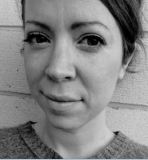
Sarah 1

Sarah Surgey is a 36 year old British feature writer for various magazines. She lives in the UK with her husband and 4 daughters.

She has had an interest in all things Nordic for many years and has written about many genres within this subject for publication. Although British, she has Danish family and enjoys exploring Denmark and its culture whenever the opportunity arrives.

Sarah was brought up with crime books and inevitably has always had crime story scenarios going around inside her head. After interviewing many famous authors for different magazines within the Nordic literary circle and always knowing the answer to her question of “why did you start writing?” she felt now was her time to get her stories out there, for people to read!

About Emma Vestrheim

emma

Emma Vestrheim is the owner and editor-in-chief of Cinema Scandinavia, a Nordic film and television journal that analyses popular Nordic titles. Part of her work includes working with directors, actors and filmmakers, and her numerous interviews with the biggest names in Nordic film and television have given her a privileged access to what makes Nordic narratives so successful. Cinema Scandinavia publishes bimonthly and is available in major Nordic film libraries.

You can find out more about the Odense series on Facebook and the website. You can follow the series on Twitter and follow Emma on Instagram here and Sarah here.

There’s more with these other bloggers:
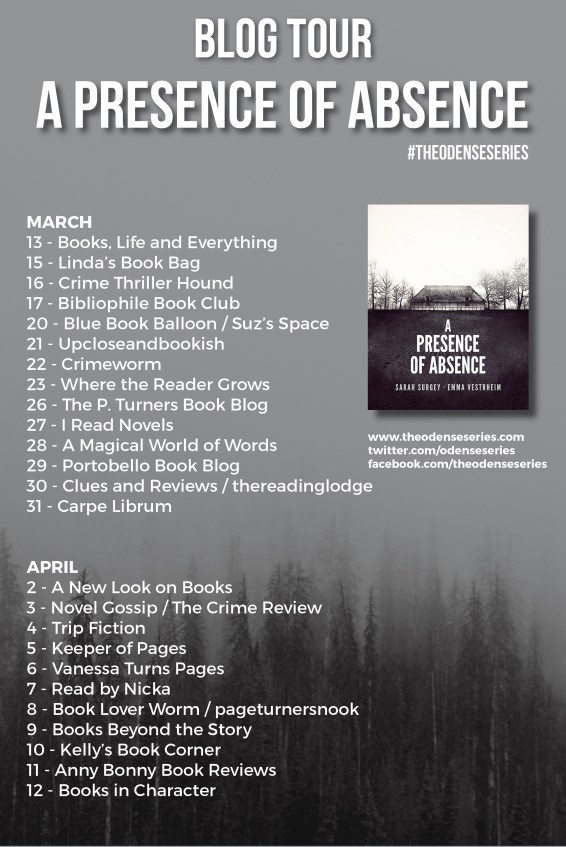
Banner Horizontal Full Size

Cover Reveal: The Sister’s Secret by Penny Kline

the sisters secret

I’m really excited to be helping to reveal The Sister’s Secret by Penny Kline today. The Sister’s Secret will be published by Accent Press on 26th October 2017 and is available for pre-order here.

The Sister’s Secret

the sisters secret

Can you really trust her?

Erin is devastated when her pregnant sister Claudia is left brain dead from a tragic accident. When Claudia’s boyfriend Ollie wants to switch off her life support, a desperate Erin finds herself fighting to give the baby a chance.

As she starts to uncover things Claudia never shared with her, Erin turns to the people closest to her sister. But why is everyone refusing to talk about her? And just where has Ollie run off to?

Yearning for her sister, Erin grows close to Claudia’s friend Jon. She refuses to get involved with another married man. But soon, this is the least of her worries.

The more people Erin meets, the less she can trust. And now, her life is in danger too …

About Penny Kline

penny kline

Penny Kline writes the crime series featuring psychologist Anna McColl, beginning with Dying to Help. She has worked as a psychotherapist, and before that, as a teacher. Penny has two children and five grandchildren, three of whom are triplets.

You can follow Penny on Twitter and find her on Facebook.

A Letter to the Past, a Guest Post by Neil White, Author of From The Shadows

cover

I’m delighted to be part of the launch celebrations for From The Shadows by Neil White. From The Shadows is the first book in Neil’s brand new series to feature Dan Grant and Jayne Brett. As an ex-teacher I was interested to see that Neil had an unconventional educational route to his present career and writing so to commemorate From The Shadows I asked him to write a letter to his 19 year old self. Luckily he agreed to do so!

From The Shadows was published by Bonnier Zaffre on 9th March and is available for purchase here.

From The Shadows

cover

He hides in the shadows, watching, waiting, until the time is right . . .

Mary Kendricks, a smart, pretty, twenty-four-year-old teacher, has been brutally murdered and Robert Carter is accused of killing her.

When defence lawyer, Dan Grant inherits Carter’s case only weeks before the trial starts, everyone expects him just to babysit it, but Dan’s not that kind of lawyer. He’ll follow the evidence – wherever it takes him.

But as Dan and his investigator Jayne Brett look into the case, they discover that there is more to it than meets the eye. In order to do their jobs they need to push the limits of the system, even if it means putting themselves in danger.

Together they will get to the truth – whatever the cost . . .

A Letter to the Past

A Guest Post by Neil White

Dear Neil,

I’m writing to you from the future.

I know it’s not easy being nineteen and uncertain of where your life is heading, but let’s look at how you got there. Yeah, I’ll start with the brickbats, because it’s the mess you created.

School was fun, or so you thought, but you never spotted when it was supposed to become about work. Doing well in tests and exams is great fun when you’re small, but didn’t you notice that the workload got harder? That your friends stopped going out as much?

I get that the town you were living in, Bridlington, doesn’t offer much hope in the eighties, that industry was light and offered mainly summer work, but hadn’t you noticed that other people were looking beyond the town boundaries?

weston-1987

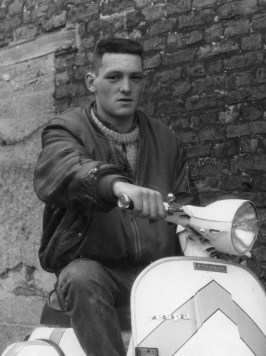
So there you are, living in your bedsit in your small seaside town that you’d called home since you were twelve. How do you think that is going to work out, as you spend all day either playing records or tinkering with your Lambretta, even though your mechanical skills aren’t good? You tell yourself that you’re not giving into “the man”, that you’re staying somehow pure by not succumbing to the nine-to-five, sticking your middle finger up to Thatcher by refusing to bend for the bosses.

Is that really how you see it? When I peer into your life, I see someone who doesn’t know where his next meal is coming from but is prepared to blow all his dole money on a weekend binge of booze and fags, all the while dodging the TV detector van, knowing which cupboard the monochrome monstrosity will be thrown into, before cadging and scraping his way to the next dole cheque.

Go away, I say, leave the town. But where to, you say.

That’s the problem, Neil. You look for the reasons why you can’t rather than the ways in which you can. You read books on France and listens to tales of young men who travelled overseas to pick grapes or work in resorts in Greece. You could set off but you don’t. Instead, you spend your time dreaming, losing yourself in music and books.

Why not try to capture your dreams instead?

Do you remember the old typewriter you found in your bedsit when you first moved in, and how you typed out random things, the delight at seeing your thoughts in print, as if it somehow made them more real? Explore that more. You could write. Other people do.

I could look back and say not to worry, it all works out. You’ll end up as a lawyer and a writer, and you can spend your middle-age patting yourself on the back, but is that really what you want? Didn’t you always see more adventure in your life?

19870331

You’ve got a lot of fun ahead though. You’ll spend too much money on that Lambretta. You’ll buy a Vespa and spend weekends on seaside scooter rallies, but be careful. You’ll get up to things that could derail your legal career if found out, because you’ve got to have a clean record to be a lawyer. Nothing too bad, just the scrapes you get into when things get a little too wild. I’m not going to explain them here, of course, this letter might get discovered, but just keep an eye out. When you see the blue helmets, play nice.

You’ll learn a few lessons along the way too.

Take that chip off your shoulder, for a start. You’re not some kind of working class hero, Thatcher’s victim. That feeling will fall away. You’ll go to university and meet people of all backgrounds, and you’ll realise straight away that we’re all just the same. All we want to do is have a little fun and find a way of paying the bills.

How will it turn out for you? I can’t say, because I’m at my end of the journey but it’s the one that I took.

What if you follow my advice and make more of your life? I don’t mean materially, but spiritually. See the world, meet great people. I got lucky and made a few choices that worked out okay. It might work out even better for you.

I went to university but chose a law degree, for no other reason than it sounded interesting. I hadn’t realised back then that it was a one-track journey into a proper grown-up career. And I stayed in the north-west rather than returning to the small seaside town you live in, where the winds blow too harsh in winter, which meant that I bounced around a couple of defence firms before I fluked my way into the prosecution. I was happy there.

I started writing. That must sound weird for you, knowing that if you keep on writing and pushing you might end up with something printed in a proper book, in a proper bookshop. Of course, there won’t be as many around in the future, but it’s still fun to see.

What do I make of your life though? Honestly? A bit of a waste really. I yearn for it sometimes, when a Youtube journey might take me into the old ska classics and I think about buying another Vespa, perhaps one of the vintage ones I always fancied, but those thoughts pass.

Youtube? It’s on the internet, which is where you look at a screen and explore the whole world. It’s crazy but it will change everything. The world will become a smaller place, a more exciting place, sometimes a more frightening place, but there’s plenty to see.

You want my advice? Pack your bag, put your records in storage, and hit the road. Have an adventure. I opted for the shirt and tie, and then the word processor, but that was my own adventure. I don’t know if it’s the best one I could have had, but it’s been a blast so far.

Yours sincerely

Neil

About Neil White

neil

Neil White was born and brought up in West Yorkshire. He left school at sixteen but returned to education in his twenties, when he studied for a law degree. He started writing in 1994 and, despite his huge writing success, is still a criminal lawyer by day and a crime writer by night.

You can follow Neil on Twitter, visit his website and find him on Facebook.

Travel and Research, A Guest Post by Rosanna Ley, Author of The Little Theatre by the Sea

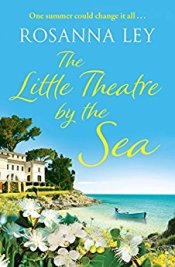
little theatre by the sea

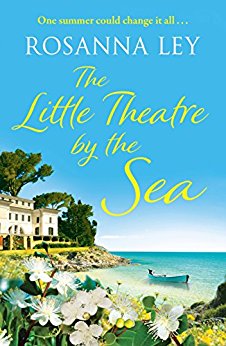
Last year, Rosanna Ley’s Last Dance in Havana was one of my books of the year and you can read my review here. Consequently, I’m delighted to be hosting a guest piece from Rosanna about travel and research to celebrate her latest release, The Little Theatre by the Sea.

The Little Theatre by the Sea was published by Quercus on 9th March 2017 and is available for purchase here.

The Little Theatre by the Sea

little theatre by the sea

Faye has just completed her degree in interior design when she finds herself jobless and boyfriend-less. While debating what to do next she receives a surprise phone call from her old college friend Charlotte who now lives in Sardinia and is married to Italian hotelier, Fabio.

When Charlotte suggests that Faye relocate for a month to house-sit, Faye wonders if a summer break in sunny Sardinia might be the perfect way to recharge her batteries and think about her future. But then Charlotte tells Faye that there’s something more behind the sudden invitation: her friends Marisa and Alessandro are looking for a designer to renovate a crumbling old theatre they own in the scenic village of Deriu. The idea certainly sounds appealing to Faye, but little does she know what she’s letting herself in for if she accepts this once-in-a-lifetime opportunity . . .

Travel and Research

A Guest Post by Rosanna Ley

What comes first: the chicken or the egg? Or in an author’s case, what comes first: the story, the characters or the setting?

For me, the answer varies from book to book. For example, in Return to Mandalay the story I wanted to tell was very specific, inspired by my husband’s family’s experiences in Burma, so that was always going to be the location for the novel. In The Saffron Trail the first seed of the book was saffron so I built the story around a place where saffron is grown and where the other elements of my story (e.g. a hippy trail) could also take place – Morocco was the obvious choice. In Little Theatre by the Sea I just really wanted to write about Sardinia.

Italy is my favourite place to be and to write about and having spent a week in Sardinia a few years ago, I’d acquired a taste for this more rural and unspoilt island. So, my husband/ travelling partner/ photographer (that’s one person) Grey and I decided to travel around the island in our motorhome. This, we reckoned, would enable us to camp by isolated little coves and other delectable places and we would be free to simply go wherever we needed to be in the name of research. But we only had three weeks and there were so many places!

I do a lot of research before I choose a setting. A place has to have an interesting history and culture (although arguably almost everywhere does!) and of course, it has to appeal to me. I have to be inspired by it, be passionate about it and want to write about it. It needs to be the right kind of place for the story I want to write, and it needs to be the kind of place my readers might like too.

With Sardinia, I researched different parts of the island to find a town for my main location, and happily came upon Bosa. This was perfect. It was pretty, it was near a beach, it had a fascinating history… It sounded and looked like my kind of place. And  – since by that point I’d decided that I wanted to write about a theatre – Bosa didn’t have one. (This sounds contradictory, but it would have been tricky. I couldn’t write about any existing theatre – it had to be my fictional theatre.)

Ideally, I like to use a real place for inspiration and then take a few liberties with it so that it fits my story and becomes my own. A bit cheeky, but… I then usually re-name it so as not to upset anyone and so Bosa became Deriu (Casa Deriu was a wonderful museum we came across in the town). Similarly, in The Villa my location inspiration was the village of Scopello (to which I gave its original name of Cetaria.) This technique doesn’t work so well with bigger cities, so in my novels, Mandalay, Barcelona and Havana have retained their true identities…

Research I do for location often begins on the Internet – trawling for information, ideas and historical events to follow up. Then I’ll be reading books (fictional and non-fictional) set there so I can immerse myself in the place more fully, possibly watching films and documentaries set there and finally spending some time there. That’s the best bit! Nothing replaces first-hand for capturing the flavour.

Once I am in situ I will explore, follow up ideas and destinations I’ve researched, attempt to talk to the locals (depending on language barriers!) and glean more information from bookshops, tourist offices, museums or whatever… I will find the ‘places’ where my characters live, work and spend time, and I’ll track their journeys around the town so I know what they will see, hear and experience. As I’m doing this I’ll make notes and my ‘photographer’ will take pictures. It’s quite full on and while I’m doing it I’m sure people watch and wonder what on earth I’m up to. But being so thorough (let’s be positive, I’m not going to call it obsessive) means that when I write up the scene, I can almost re-live the experience – as close as possible anyway. Google Earth doesn’t quite do it for me.

My essential survival kit for going on a research trip would be notebook, pen, map and camera. Oh, yes and walking boots. What else could you possibly need…?

About Rosanna Ley

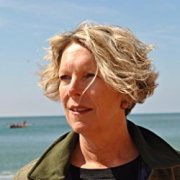
author

Rosanna Ley is the bestselling author of novels including Return to Mandalay and The Villa, which sold over 310,000 copies. In February 2015 Return to Mandalay was shortlisted for the RNA Award for the Epic Romantic Novel. She has written numerous articles and short stories for magazines, and her novels have been published in the UK, Germany, France, Italy, Spain, Poland, Norway, Hungary, Portugal, Lithuania, Turkey and the Czech Republic. The Villa is also published by Quercus in the US.

Rosanna has also worked as a creative writing tutor for over 20 years. She has led courses for colleges and universities in England, and runs her own writing retreats in the UK and abroad in Italy and Spain. She has worked with community groups in therapeutic settings and completed an MA in Creative Writing for Personal Development in order to support this. She also runs a manuscript appraisal service to appraise and mentor the work of new writers.  She is married with children and lives in Dorset.

You’ll find Rosanna Ley on Facebook and can follow her on Twitter. You can also visit her website.

There’s more with these other bloggers too:

Little Theatre blog tour image

Location, A Guest Post by Daisy James, Author of There’s Something About Cornwall

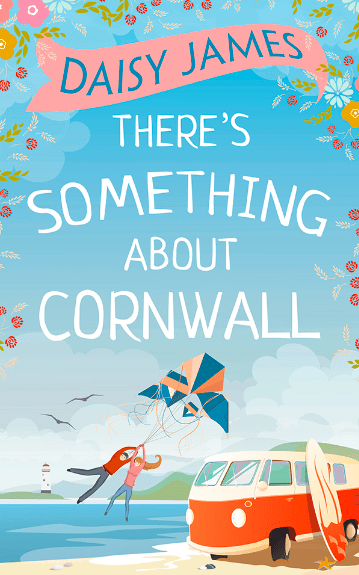
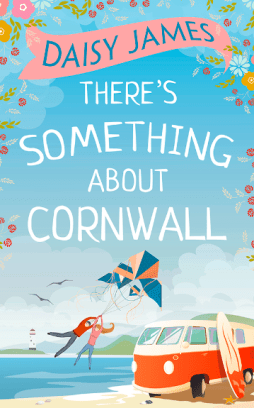
Cover of There's Something About Cornwall

I’m so pleased to welcome lovely Daisy James back to Linda’s Book Bag today to celebrate her latest novel There’s Something About CornwallThere’s Something About Cornwall was published by HQ Digital, an imprint of Harper Collins, on 8th March 2017 and is available for purchase here.

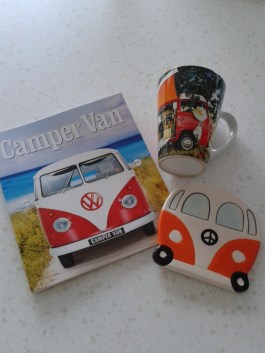
In celebration, Daisy has a giveaway to win a book on the history of the much-loved, iconic camper van, a mug and a coaster and you can find out how to enter at the bottom of Daisy’s guest post.

There’s Something About Cornwall

something-about-cornwall

A knight in a shining camper van!

Life is far from picture perfect for food photographer Emilie Roberts. Not only has her ex-boyfriend cheated on her, he’s also stolen her dream assignment to beautiful Venice! Instead, Emilie is heading to the Cornish coast…

Emilie doesn’t think it can get any worse – until disaster strikes on the very first day! And there’s only one man to rescue this damsel in distress: extremely hunky surfing instructor Matt Ashby.

Racing from shoot to shoot in a bright orange vintage camper van, Matt isn’t the conventional knight in shining armour – but can he make all of Emilie’s fairy-tale dreams come true?

Location!

A Guest Post by Daisy James

First of all, a huge thank you for featuring my brand new release – There’s Something About Cornwall – on your blog.

Location is always very important to me when I’m writing. It’s almost as though it’s another character that requires just as much attention, just as much crafting, as any other. My first novel – The Runaway Bridesmaid – was set in New York. I enjoyed an amazing trip there a couple of years ago, for a milestone birthday, except, instead of spending five exhilarating days taking in the sights, because of Hurricane Sandy we ended up being there for eleven. Everywhere was closed, even the Broadway shows, so I grabbed a pen and some paper and started writing and my first published novel was born.

When I began researching my fourth book, I wanted my characters to have a fabulous backdrop for their story, so it had to be Cornwall. The scenery is so beautiful and diverse, not to mention the fact that the sun always seems to be shining. There’s Something About Cornwall follows Emilie Roberts, a food photographer, who takes a culinary road trip around the whole county as she works on a photoshoot for a celebrity TV chef working on her next cookery book.

Emilie’s epic journey starts in Padstow where she meets Matt at a beach party. He becomes a last-minute replacement driver for an orange-and-cream vintage campervan they’ve nicknamed The Satsuma Splittie. There’s plenty of stops along the way and lots of baking and tasting of the delicious Cornish food that is being photographed.

I wanted to showcase not only the local recipes, but also the wide array of artisan beverages that Cornwall is famous for. So, in Truro, they visit an apple orchard where Emilie photographs the Cornish Cyder Cake and Apple and Caramel Loaf, but they also indulge in a few pints of the local Scrumpy.

Apple and caramel loaf

Apple & Caramel Loaf

During my research, I was amazed to find that vineyards flourish on south-facing slopes and fabulous white and rosé wine is produced in Cornwall. The county is also the only place in England that grows tea – Tregothnan Tea – it offers a whole new meaning to the label English Breakfast tea!

I also came across the Southwestern Distillery (click here for details), run by Tarquin Leadbetter, which produces not only Cornish Gin but also Cornish Pastis. The pastis is a modern take on the classic French aperitif and the first of its kind created in the UK. It is made with gorse flowers foraged from the Atlantic clifftops and fresh orange zest finished off with a touch of liquorice root. Tarquin also grows his own Devon violets for use in his Tarquin’s Gin.

gin 1 gin 2

I hope readers will enjoy escaping to our southernmost county when they read There’s Something About Cornwall.

Giveaway

coaster photo

For a chance to win a book on the history of the much-loved, iconic camper van, a mug and a coaster, just follow Daisy James on Twitter and retweet the pinned tweet. The prize will be drawn on 31st March 2017 (UK only).

About Daisy James

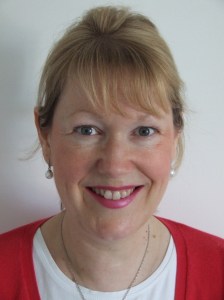
Photos of me - bio 023

Daisy James is a Yorkshire girl transplanted to the north east of England. She loves writing stories with strong heroines and swift-flowing plotlines. When not scribbling away in her peppermint-and-green summerhouse (garden shed), she spends her time sifting flour and sprinkling sugar and edible glitter. Her husband and young son were willing samplers of her baking creations which were triple-tested for her debut novel, The Runaway Bridesmaid. She loves gossiping with friends over a glass of something pink and fizzy or indulging in a spot of afternoon tea – china plates and teacups are a must.

The Runaway Bridesmaid_FINAL2 (1)

You can follow Daisy on Twitter, find her on Facebook and find all Daisy’s books here.

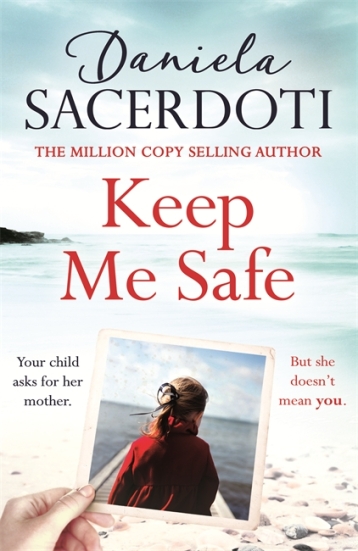
Keep Me Safe by Daniela Sacerdoti

keep me safe

I’m so grateful to the team at Headline for an advanced reader copy of Keep Me Safe by Daniela Sacerdoti in return for an honest review. Keep Me Safe is the first in a new series of books set on Seal Island.

Keep Me Safe will be published by Headline Review on 6th April 2017 and is available for pre-order by following the publisher links here.

Keep Me Safe

keep me safe

When Anna’s partner walks away from their relationship, she is shattered. But it is her little girl Ava who takes it hardest of all. The six year old falls silent for three days. When she does speak, her words are troubling. Ava wants to go home. To a place called Seal. To her other mother.

Anna knows to unravel the mystery she must find Seal and take Ava there. She hopes this tiny island will unlock her daughter’s memories. But could it also offer a new life… and unexpected love… for Anna too?

My Review of Keep Me Safe

When Toby tells his six year old daughter Ava he’s leaving she goes in to shock and doesn’t speak. Three days later she speaks again, asking for her other mother – not Anna, the woman who gave birth to her.

Ooh. I really enjoyed Keep Me Safe. Although I’m not usually keen on multiple first person perspectives I thought the different voices in Keep Me Safe were very well defined and distinct so that I could keep the individuals perfectly clear in my mind. I found the characters realistic and believable and rather wish there was a Sorren in my life too!

I loved the premise for the narrative and found the plotting exciting and captivating. When I wasn’t reading Keep Me Safe I was thinking about it. I was frustrated by Anna’s reluctance to confide in others and kept wanting to read on to see what might happen next and whether she would reveal quite what Ava was going through. As well as enjoying the mystery behind Ava’s words, Keep Me Safe also made me consider memory and human connection very deeply and wonder if the brain can accommodate far more than we yet understand.

The themes of second sight, the supernatural, nature, family, loyalty and love were woven together in a spell-binding way that made me reluctant to tear myself away so that I’m thrilled to find this is the first in a new series. I definitely want to read more and part of the reason for this is Seal itself. Daniela Sacerdoti has such an exquisite touch when it comes to creating settings that I could picture Seal perfectly. The capricious weather, the scent of salt on the air, the effect of moonlight were all so well described I felt as if I was on Seal too.

If you’re looking for a story that will transport you to another place, for characters who will captivate you and you’ll care about and a narrative that is exciting and emotional Keep Me Safe is exactly what you’re after. I highly recommend it.

About Daniela Sacerdoti

daniela

Daniela Sacerdoti writes beautiful, haunting and bestselling fiction for adults (the Glen Avich series), young adults (the Sarah Midnight trilogy) and children. Over one million copies of her novels have been sold in eBook, her debut novel Watch Over Me was the 8th bestselling Kindle book of all time in 2015 and she was also ranked as the 11th top-selling Kindle author. Her novels have been translated in twelve languages. Born and raised in Italy, Daniela studied Classics, then lived in Scotland for fourteen years, where she married and taught in a primary school. She has also written for the BBC. Daniela, her husband and their two sons make their home in a tiny village in the Italian Alps.

You can follow Daniela on Twitter, visit her website

Spotlighting Sheryl Browne

Reveal

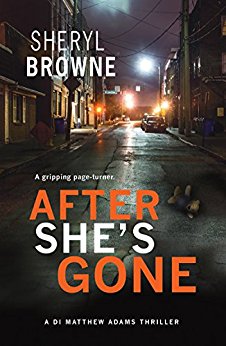
I’m doing things slightly differently today on Linda’s Book Bag and spotlighting lovely Sheryl Browne, but getting her to do all the hard work! Sheryl has two fabulous new books out now; After She’s Gone and Sins of the Father which are Books One and Two in the DI Matthew Adams series and she’s going to tell us all about them and share an extract with us.

All Sheryl’s books are available for purchase here.

Spotlighting Sheryl Browne

Hi Linda,

Thank you for spotlighting me! I promise not to break into a song and dance act. Rather, I thought I would share a little bit about my psychological thrillers After She’s Gone and Sins of the Father. As these are Books One and Two in the DI Matthew Adams series, I hope you won’t mind me sharing BOTH Blurbs, along with the prologue to Book One, which I hope might be tempting. I’ll try not to take up to much space with boring facts about me, other than to answer a question I’m frequently asked.

Q: Why do you write psychological thrillers.

A: Apparently I have a scary insight into the mind of a psychopath. Thank you Rachel at Rachel’s Random Reads. I’m flattered … I think.

Without further ado, the blurbs:

Are you ready to take an all-consuming journey into the mind of a madman?

After She’s Gone

Sins of the Father

They will eat you and spit you back out.

View the trailer here.

After She’s Gone

after she's gone

He’s killed your child and kidnapped your wife. What would YOU do?

There’s evil and then there’s Patrick Sullivan. A drug dealer, pimp and murderer, there are no depths to which Patrick would not sink, and Detective Inspector Matthew Adams has found this out in the most devastating way imaginable.

When Patrick’s brother is shot dead in a drug bust gone wrong, the bitter battle between the two men intensifies, and Matthew finds it increasingly difficult to hold the moral high ground. All he wants is to make the pimping scum suffer the way he did … the way Lily did.

But being at war with such a depraved individual means that it’s not just Matthew who’s in danger. Patrick has taken a lot from Matthew, but he hasn’t taken everything – and now he wants everything.

Sins of the Father

sins of the father

What if you’d been accused of one of the worst crimes imaginable?

Detective Inspector Matthew Adams is slowly picking up the pieces from a case that nearly cost him the lives of his entire family and his own sanity too. On the surface, he seems to be moving on, but he drinks to forget – and when he closes his eyes, the nightmares still come.

But the past is the past – or is it? Because the evil Patrick Sullivan might be out of the picture, but there’s somebody who is just as intent on making Matthew’s life hell, and they’re doing it in the cruelest way possible.

When Matthew finds himself accused of a horrific and violent crime, will his family stand by him? And will he even be around to help when his new enemy goes after them as well?

An Extract from After She’s Gone

Prologue

‘Oi, you can’t park there!’ a police officer yelled as Matthew mounted the kerb, careering his car haphazardly to a stop on the pavement.

His gut twisting violently inside him, his head reeling, Matthew ignored him, ramming his door open instead to scramble from the car and set off at a run.

‘What the …?’

Vaguely aware of the man giving chase, Matthew kept going, attempting to push past another officer closing in in front of him, only to be caught from behind.

‘Whoa. Come on, mate, you need to get back.’ Taking hold of his arm, the officer behind attempted to steer him away. ‘There’s been an accident up ahead. We need to clear—’

‘Shit, it’s Adams.’ The officer in front intervened.

‘Who?’ The man still hanging on to his arm asked.

‘Detective Inspector Adams,’ the officer in front supplied warily. ‘Let him through.’

Stumbling forwards as the guy behind relaxed his grip, his legs like dead weights beneath him, Matthew forced himself on, bypassing other officers, who now stood respectfully aside.

His wife was with her. Matthew swallowed back a hard knot in his throat. She was crouched over her, holding her impossibly small hand in her own. She didn’t look up. Rebecca kept her gaze focussed on their daughter. His daughter. Matthew felt something break inside him as he took in his baby’s injuries, her broken body, the slow trickle of lifeblood pooling beneath her, staining the drab, grey road crimson.

Please don’t. Matthew prayed hopelessly as he moved closer. Please don’t do this. The world seeming to slow to a stop around him, the use of his legs finally deserting him, Matthew dropped to his knees at the side of the child he’d loved with every fibre of his being ever since he’d first glimpsed her tiny form on the monitor.

‘Hey, Tigerlily,’ he said, his voice cracking as Lily’s eyes fluttered open. Wide blue eyes, once crystal clear with the innocence of childhood, were filled with confusion and pain as she looked pleadingly up at him, silently begging him, her daddy, to fix it. His heart turned over as her lips parted. She wanted to speak. She couldn’t. Please don’t try to speak, baby. Tears he couldn’t hope to hide streaming down his face, Matthew leaned towards her, brushing her blood-matted, beautiful blonde hair gently away from her face. ‘Daddy’s here, darling,’ he choked. ‘It’s going to be just fine.’

Lies. Lies. He screamed inside. It wasn’t going to be fine. It could never be. He couldn’t fix it. How could he let his little girl go knowing he couldn’t? Cradling his baby gently in his arms, Matthew’s heart splintered inside him as he watched her life ebb away.

****

They were taking her away in an ambulance. What use was an ambulance? Panic engulfing him, Matthew took a faltering step towards it, and stopped. He couldn’t. Couldn’t ride with her, watch as the warmth drained from her body, her baby-soft skin turning blue and cold. Life fucking extinct.

‘Matthew!’ Rebecca called to him as, his chest heaving, Matthew turned away. Terrified of what he might see in her eyes, he couldn’t turn back. This was his fault. He should have been there. He’d promised to drive them to the cinema. He’d known Patrick Sullivan might make good his threat. He should have been there! A potent mixture of grief and rage broiling inside him, Matthew recalled his last encounter with the sadistic piece of scum with sickening clarity. Sullivan’s expression hadn’t altered when he’d informed him his brother had been an unfortunate casualty in a drug bust gone wrong. Matthew had been surprised. Sullivan’s hatred of him went way back since they were kids in school. Guessing he would hold him personally responsible, Matthew had been bracing himself for Sullivan to reach across the table and attack him right there in the prison interview room. Instead, Sullivan had reached casually for a cigarette. Lighting up, he’d glanced down and scratched his forehead slowly with his thumb.

‘How’s that pretty young wife of yours, DI Adams? Pregnant again, isn’t she?’ he’d enquired eventually, blowing smoke circles into the air as he’d looked back at him. ‘Give her my regards, won’t you?’

Sullivan had then leaned forwards, a twisted smirk on his face, his eyes as black as molasses and swimming with pure evil. ‘I would do it myself, but I’m a bit busy … banged up … in here.’

It had been a threat. Innocent to all ears but Matthew’s, it had been a direct threat. And now, still sitting pretty in prison with a cast iron alibi, Sullivan was no doubt congratulating himself on a job well done, imagining that he’d also succeeded in warning Matthew off pursuing him once he got out. Wrong, you bastard.

About Sheryl Browne

Sheryl Browne03 small file

Sheryl Browne brings you edgy, sexy contemporary fiction and psychological thrillers.

A member of the Crime Writers’ Association, Romantic Novelists’ Association and awarded a Red Ribbon by The Wishing Shelf Book Awards, Sheryl has several books published and two short stories in Birmingham City University anthologies, where she completed her MA in Creative Writing.

Recommended to the publisher by the WH Smith Travel fiction buyer, Sheryl’s contemporary fiction comes to you from multi-award winning Choc Lit.

You can find more about and from Sheryl using these links:

Website | Twitter | Facebook | Buy | Buy US | Pinterest

Loveahappyending Lifestyle

Choc Lit | Romantic Novelists’ Association

The Shock of the Old, A Guest Post by Martin White, Author of To Catch the Conscience of the King

conscience-of-the-king

I really enjoy historically based fiction but sadly just don’t have time to read all the books out there. Edward II featured in my A’Level history many moons ago so I’m delighted to welcome Martin White to Linda’s Book Bag today as I asked him to tell us a bit more about To Catch the Conscience of the King.

To Catch the Conscience of the King is published by Di Butrio Books in e-book and paperback, and is available for purchase here.

To Catch the Conscience of the King

conscience-of-the-king

To Catch the Conscience of the King is set against the background of King Edward II’s downfall and is told from the perspective of Brother Stephen, who, as the king’s confessor, sets out to save the royal soul, but instead places his own in jeopardy.

The Shock of the Old

A Guest Post by Martin White

When I went up to Cambridge University in 1972 to study history I found I was obliged to take at least one exam paper relating to the Middle Ages. This did not please me at first. Surely, the only history worthy of study was “modern history”, history no further back than 1750. Surely, I was going to major on subjects relevant to our modern world – the French and American Revolutions, Hitler, the causes of the two World Wars. Well, in the event, I did not major on any of those topics. I did not in fact, major on the Middle Ages, but at least spending two terms studying “Medieval Europe” opened a door, which was later to be of immense significance to me.

Half a lifetime later, when I became a novelist, it was to that door I found myself increasingly drawn. My novel, To Catch the Conscience of the King, in fact relates to the downfall of the English monarch, Edward II, in the fourteenth century. Why so, you may ask? Why go back so very far?

You might as well ask, why travel? Why visit California, Australia, or Timbuktoo? For history, like the globe, is the multifarious backdrop to humanity’s story. If human nature is the most elevated field of study (as we have believed since the Renaissance), and if that nature, as I would contend, is and has been fairly constant, it is its context, varied as between the Gobi Desert and the Amazon, or as between the Stone Age and the Industrial Revolution, which really points it up, really shows it, tests it, in all variety of circumstances. And with history, that context is available at the cost of a book or ebook, rather than that of an air ticket.

Why, for me, though, the medieval period, rather than any other? Jan Huizinga, in his pioneering work, The Waning of the Middle Ages, draws attention to what he calls “The Violent Tenor of Life”. It was a world very different to our own: one of sensory extremes (imagine the fetor of a medieval town, where excrement was thrown into the street, or think of the gaudy colours of medieval clothing, or the teeming environment before its fatal denudation of species began). It was a world of strife, not between nations (they had hardly been invented), but between neighbouring cities and baronies. The mean average age was so low, due to disease and the physical dangers of existence, that society was “adolescent”, much more volatile than our own – even more prone to uprisings and brawling. The aristocracy itself behaved little better than brigands most of the time.

In my novel, I portray the squalor of medieval Hereford, the ritualistic violence of the hanging, drawing and quartering of the king’s favourite, Despenser, the rigours of the monastic life at Blackfriars in Gloucester, and the bizarre sumptuousness of the medieval feast (lamprey cooked with alkanet  in a sauce of its own blood, plus skewered starlings, anybody?). As for character and plot, the world I depict is again one of extremes. Edward’s story, with his incarceration at Kenilworth and Berkeley, the plots and counter-plots to release him, his faked death, his sham state funeral, his escape to Italy – all this is so extraordinary, that only now are historians coming to accept its truth –  in place of the old, but in its own way similarly fantastic story of his murder  by red-hot poker .

If life was violent, so too were the ideas and philosophies it bred. With death everyman’s companion, the proximity of the grave, but also of Hell, Heaven, and Purgatory was a continual obsession. In a Catholic world, individual saints, and above all, the Virgin Mary, were ubiquitous participants, as much in the individual’s daily life as in his ultimate cosmic fate. So important was religion that a whole class of society was devoted to its service, to living a life of study and contemplation (as far removed from the lay world as possible), and to preaching salvation in God’s Kingdom (where all the manifest horrors and injustices of this life would be righted). The central character and narrator of my novel, Brother Stephen, is just such a man of religion. It is through his eyes that we see those horrors, though his ministry that we come to know the complexities and sins of his royal master, and through his growing love for Edward that we come up against the full rigours of medieval religious doctrine, and in particular its loathing and condemnation of “sodomites”.

About Martin White

20170215_162418

Martin White was brought up in Gloucestershire, living both in Stroud and Gloucester, before attending Cambridge University in the 1970s. Despite taking an MA in History, he turned to law for a profession, and became a partner in law firm Pinsent Curtis. Having retired early, he has begun a second career as a novelist, and for subject matter has returned to historical themes. He lives in Sutton Coldfield in the West Midlands.

You can find Martin on Facebook and follow him on Twitter.

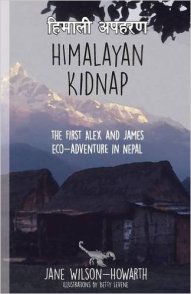
An Interview with Jane Wilson-Howarth, Author of Himalayan Kidnap

himalayan-kidnap

It gives me great pleasure to welcome Jane Wilson-Howarth, author of the children’s book Himalayan Adventures, to Linda’s Book Bag today.

Published by Eifrig, Himalayan Kidnap is available for purchase in paperback here.

Himalayan Kidnap

himalayan-kidnap

When sixteen year old Alex’s parents ask him to deliver a mysterious package to their animal research camp in the Nepalese jungle, he and his twelve-year old brother James do not know the trouble they are about to face.

An unsuccessful ransom payment leads to an arduous journey through the crisp forests of the wild west of Nepal in pursuit of the terrorists who have kidnapped their parents.

Even with the help of their friend Atti, how can three children rescue the parents from armed kidnappers?

An Interview with Jane Wilson-Howarth

Welcome to Linda’s Book Bag, Jane. Thank you so much for agreeing to answer some questions on my blog about your writing. Firstly, please could you tell me a little about yourself?

I’m a medical doctor and when my new husband took me off to a small town in central Sri Lanka I envisaged making a difference, working hard to improve maternal and child health in a rural community. But we arrived in the middle of two wars and some days I’d see nearly 200 patients, sometimes six, depending on what threat the local insurgents had made that week. I was an under-employed memsahib and thought I’d attempt to write a book about an expedition to Madagascar I’d organised the previous year. Dervla Murphy used one of my photos in her book Muddling through in Madagascar so I had a contact in John Murray publishing. The writing flowed – perhaps aided by lack of distractions. I had no TV, a very limited social circle, sometimes there wasn’t even electricity. The book that emerged was Lemurs of the Lost World. Since then I’ve been fortunate in also having three travel health guides, another travel narrative and a novel for adults published.

When did you first realise you were going to be a writer?

I have a zoology degree as well as a medical qualification and all my early writings were about animals. My first publication was in an academic journal and it was about tiny cave-dwelling, dung-eating creatures. I also wrote some pieces for local newspapers about my first expedition – to the Himalayas; these made my Dad proud. I am mildly dyslexic so never imagined I’d ever write a book but Dad was passionate about the written word and our home was lined with book so I always felt it was a worthy aspiration.

Without spoiling the plot, please could you tell us a bit about your latest children’s book Himalayan Kidnap?

Brothers Alex and James take a call from a stranger instructing them to bring a ransom to their parents’ research camp in the jungle of lowland Nepal. The kidnappers take the money but the parents aren’t set free and the boys set out on an arduous journey in the crazy assumption that somehow they will be able to sneak their parents away from armed terrorists. It isn’t just the Maoist insurgents that endanger the boys. They have to navigate through Kiplingesque jungles that are home to top predators and cross a swirling river where other unseen threats lurk. This fast-paced adventure is peopled with kindly and not-so-friendly Nepalis and the boys meet many of the wildlife stars of the Himalayas. The book is aimed at 8 – 12 year olds.

How do you go about researching detail and ensuring your books are realistic?

They are all based on my personal experience, and conversations. I am a magpie for snippets of stories and experiences which pop out of my memory unexpectedly.

Which aspects of your writing do you find easiest and most difficult?

I am not a great planner – not in life; not in my writing. If I plan too rigorously I am in danger of producing something that reads like a scientific or medical report. I have to think myself into a scene and let it flow. Then I have the huge labour of editing and restructuring and honing the story. It is probably not a very efficient way of working – I was struggling with my memoir A Glimpse of Eternal Snows for a decade – but the story that finally emerged was powerful and it has appeared now in three editions in four continents. Reviewers often remark that my writing is atmospheric; it is the descriptive prose that I find easiest and most enjoyable to write.

What are your writing routines and where do you do most of your writing?

Routine is not a word in my vocabulary. I grab time when I can although some days I just don’t have the fire in my belly and know I’d be more productive attending to the hovering or the laundry. I write at my desktop in a little first floor room surrounded by untidy piles of papers and books. I look out on an aging silver birch tree which attracts birds. My favourites are flocks of tiny goldcrests which come to pick at the bark. They are Britain’s smallest birds and they are absolutely beautiful.

You’ve written several non-fiction books as well as adult fiction. Why did you choose a children’s genre for your latest fiction?

I write to unwind and I was going through a difficult patch at work. The local health authority decided to close down my GP surgery and my patients were distressed and bereft. Lots of tears were being shed – including by me. We had a large number of folks with mental health problems on our list and although I was supposedly only working half time it began to feel as if my patients’ problems we coming home with me.  I started writing an adventure story. When I’m writing about an exotic place I go there in my head and it was like taking a holiday for an hour or two. I started reading the story to my then 10-year-old and he was enthusiastic and demanded new episodes every night. It was hard to keep up but it was a good spur to churning out the story.

What are the challenges of writing for children?

It is said that writing for children is like writing for adults, only harder. Children need pace. The vocabulary needs careful consideration. You can’t make many assumptions about your reader’s knowledge-base, and you can’t lecture them. In making the older brother, Alex, my narrator I increased the challenges, especially in giving him an authentic 16-year-old’s voice. Fortunately I have a faecal sense of humour so that transferred across to the boys nicely.

Your children’s books exemplify adventure, travel and nature. How important is it for children to experience those aspects of the world, at least vicariously?

I am passionate about wildlife conservation and I take delight in encounters with animals – even with small creatures like wrens and dragonflies and dung beetles. I believe meeting such wild “characters” allows children to grow to love the natural world too. I hope through meeting the less well-known species in the book (gharials, springtails, sloth bears, skinks) my readers will be inspired to protect our world, and even venture out into parks and gardens to see what lives there. I want to show that it is still possible to have adventures in the real world: everything that happens in the book is possible. Finally I slip in references to the challenges of poverty and caste so that readers from the industrialised world may think a little on how fortunate they are.

How much has the travel you’ve done influenced the way you write?

All my writing has a travel theme. I love to describe exotic places.

As a seasoned traveller yourself, what advice would you give to those wishing to combine travel and writing?

The most important thing is a small note book and a couple of pens – I’m always loosing mine. Impressions written at the time, and snippets of overheard conversations, are so much fresher and more alive than anything the memory records, and it is the seemingly small trivial details that bring scenes to life. I’m not much of a diarist but am in the habit of writing letters home – or, more recently, blogging here – and often I go back to these contemporary accounts of my experiences to improve my writing. Latterly I have travelled with a small laptop but I still find writing with a pen and letting my pen go where it wants can produce some of my most interesting prose.

When you’re not writing, what do you like to read?

I am a slow but catholic reader. I enjoy Young Adult novels. I love novels with a strong sense of place and with evocative descriptions of scenery. I’m currently reading Sunset Song.

Do you have other interests that give you ideas for writing?

I love the outdoors and wildlife spotting and I enjoy rowing. Sometimes situations – falling into the river, or diving into deep murky water to try to retrieve my glasses – lend themselves to being absorbed into an adventure story. I enjoy messing about in white water – canoeing and rafting – I’m a trained SCUBA-diver and have served as a volunteer cave rescue warden. I was once lost in a Nepali cave for 13 hours. My caving experience and the sensations of plunging into turbulent water are worked into the action in Himalayan Kidnap.

(Crikey!)

If you could choose to be a character from book Himalayan Kidnap, who would you be and why?

I’d be Atti – the strong quiet competent Nepali girl who joins the English boys on their quest.

If Himalayan Kidnap became a film, who would you like to play Alex and James and why would you choose them?  

A young lean Edward Norton for Alex and a young muscled Brad Pitt for James – my sons wo were the models for the boys in the book would approve of these actors in “their” roles

If you had 15 words to persuade a reader that Himalayan Kidnap should be their next read, what would you say?

Exotic wildlife; brotherly banter; danger; dung-fight; scary jungle sounds; lost and alone; terrorists; cliff-hanging; page-turner.

Thank you so much, Jane, for your time in answering my questions.

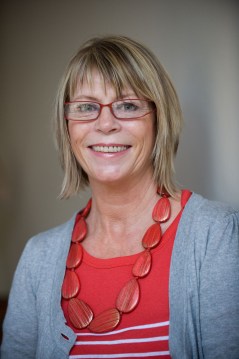
About Jane Wilson-Howarth

jane wilson.JPG

Jane Wilson-Howarth lives in Cambridgeshire where she writes, teaches medical students and, for about 30-hours a week, works as a general practitioner.

You can follow Jane on Twitter and visit her website.

An Interview with Mark Adlington, Author of Painting The Ice Bear

painting-the-icebear

As someone obsessed by travel and nature, I so loved Painting The Ice Bear by Mark Adlington that I cheekily asked him if he would be interviewed for Linda’s Book Bag. Luckily he said yes!

You can read my review of Painting The Ice Bear here.

Painting The Ice Bear was published by Unicorn in partnership with John Martin Gallery on 16th December 2016 and is available for purchase in hardback here and from the Gallery here.

Painting The Ice Bear

painting-the-icebear

Fascinated from the outset by all things wild, Mark Adlington has travelled the globe, seeking out, observing and painting many of the rarest, most breathtaking animals on the planet. Combining intensive on-site work and preparation with countless subsequent hours in the studio creating his images, Adlington has become one of the most popular wildlife painters working today.

This stunning quarter bound edition brings together more than one hundred of Adlington’s images of polar bears, following the world’s largest land predator from cub to maturity both above and below the water. The product of countless trips to wildlife reserves in northern Europe and the frozen expanses of the Arctic, these images are engaging and powerful in equal measure, as Adlington brilliantly conveys the many, and often contrasting aspects of this most charismatic of animal icons.

An Interview with Mark Adlington

Welcome to Linda’s Book Bag Mark. Thank you so much for agreeing to answer some questions on my blog about your work. Firstly, please could you tell me a little about yourself?

Thank you for asking me Linda! I grew up in a wild bay on Ireland’s Atlantic coast, and after a childhood floating about in a boat watching seals and otters, have an obsessive interest in wild places and animals. I am however a painter by vocation,  so constantly strive to find a path between these two overriding interests in a way that makes some sense of both.

Please  could you tell us a bit about how Painting The Ice Bear came about?

I have always wanted to make books with painting, but was never attracted to the idea of illustration per se. The opportunity really came about after the Unicorn Press used a lot of my watercolours of otters for the centenary edition of Gavin Maxwell’s classic “Ring of Bright Water” ( which had been a firm favourite of mine throughout my adolescence ). Luckily the success of that edition gave them the confidence to want to make another book with me, and by that time I was already deep into the Polar Bear project. They decided to take a punt on it, and the idea of “Painting the Ice Bear” was born.

You’re predominantly an artist. How does your work in painting and sculpting translate into the practice of writing?

I have always enjoyed words and language, and in fact originally  went to University to study English Literature. What is fascinating about paint though, is its ability to bypass literal understanding. At its best paint can give the viewer a direct link to the experience of the artist when confronted by his/her inspiration/subject. It is what John Berger describes as a “burrowing under the apparent” in his brilliant essay A Professional Secret. I think the two media have very different strengths.

There’s a mix of sketches and finished paintings in Painting The Ice Bear. Why did you decide to present your work this way?

One of the joys of making a book with my images is that I was able to give equal emphasis to both sketches and large canvases. In the art world, oil paint has a tradition of being more “valuable” and important, whereas for me a line drawing from life which might take a few seconds is often more precious (capturing the ephemeral nature of an encounter), and might well portray the essence of the animal better. I can’t change the art world single handedly, but I could in this book, give a double spread to a few lines!

I was struck by the palette you use. How easy or difficult was it to decide how best to represent polar bears?

It was an unusual palette, and during the course of the project I became obsessed with cobalt violet and cerulean blue – unfortunately two of the most expensive pigments available to an artist! I think I was trying to give a sense of the otherworldliness of the polar bears environment. The Arctic was so  utterly unlike anywhere I had ever been, and while I am not a landscape painter I was keen to somehow suggest that strangeness with the choice of palette.

It seems to me that your purpose in producing Painting The Ice Bear was to show the full gamut of polar bear existence and I found looking at the images very moving. What would you say was the purpose of the book?

Thank you for saying that Linda – it’s lovely to get that sort of feedback. I think you are right to suggest that a “portrait “ of the polar bear in the round, the full gamut, as you put it, was one of my main aims. Though as I say at the end of the introduction, that was inevitably setting myself up for failure, as you can never observe or understand, let alone capture everything about any species. Taken from another angle I also  wanted to show the full gamut of an artist’s working process – to give people who might never have been to a painters studio an intimate look at how I approach a subject through the marks, media and colour which are the physical mnifestations of where the eyes and brain have travelled…

How did you go about researching the factual detail about polar bears in the introduction to Painting The Ice Bear?

I love research and have always had a voracious appetite for animal knowledge. The internet is obviously a contemporary bonus on the research front – though it needs to be treated with suspicion and all facts triple checked in these days of “alternative facts”. I was also given many wonderful suggestions of reading matter by arctic specialists when I was in Svalbard. Barry Lopez’s Arctic Dreams in particular is a mesmerising blend of science history and literature.

Which aspects of producing Painting The Ice Bear were easiest and most difficult?

Strangely by the time I came to write the introduction (days before the deadline!) the words seemed to fall onto the page, in order, with minimal effort. I think unknown to me, it had been writing itself for three years in my head! So that was probably the easiest aspect. Trickier by far, was the business of editing down hundreds and hundreds of images to fit the 160 pages of the book, and ordering the shortlist in such a way as to make sense, variety and some form of narrative – Felicity Price-Smith from the Unicorn Press came to the studio for the final layout and we were both too exhausted to speak by the end of the day…

I adore the cover  to Painting The Ice Bear as it seems to convey a determinism in the animal to me. How did you decide which image to use and what were you hoping to convey about polar bears?

The Unicorn Press effectively gave me carte blanche  with all creative decisions, but when I went for the meeting about the cover, with my many mock-ups and ideas, I discovered that they had already chosen one – the image which you have been so nice about! I have to admit that it was not one I had even thought about, but they were extremely firm on that one point, and it seems from your reaction, that they knew what they were doing!

What made you select the poem Polar Bear by J. Patrick Lewis as the only other text than your introduction, as opposed to any other piece about polar bears?

I was introduced to the poem by Simon Perks of the Unicorn Press, and immediately knew that it would make a great end page for the book. I am passionate about conservation, having seen even in my lifetime the shocking decline in numbers of almost all other species, and wanted the book to have some impact in this regard without being too obvious. I loved the way the poem gives you a sense of the polar bear as seen through centuries of different human cultures and then leaves you with a terrible sense of its potential extinction (again at our hands) in a few words at the end.

You’ve also worked on images of other animals. What can we expect next from a Mark Adlington book?

I have so many ideas, and some books that are almost ready to be made from previous projects, such as a book on the world’s only wild horse, the Przewalski, and the extraordinarily beautiful and little known wildlife of the Arabian Peninsula. Currently though I’m ready for a shift into warmer climes, and colours, and finally feel ready to try and say something original about the iconic species of Africa. I think I know what I am going to be working on, but don’t want to jinx the project until I am a little further down the road ! Watch this space….

When you’re not writing, painting, sculpting and taking photographs, what do you like to read?

I read widely and very eclectically, from thrillers to classics. I do like to read around my current subject matter though, and the last book I read that had a deep impact on me was The Solitude of Thomas Cave by Georgina Harding – set in Svalbard and Copenhagen in the 17th century. In the subtlest of ways it is a cry from the heart to re-examine man’s relationship to the earth. I couldn’t recommend it more highly.

And finally, if you had 15 words to persuade a reader that Painting The Ice Bear should be their next purchase, what would you say?

I think I’m way too British to do that Linda, so will have to resort to quoting your lovely review and say that Painting the Ice Bear is a “glorious, sumptuous, celebratory book… for any animal lover, anyone interested in natural history and any artist.“

And I meant every word! Thank you so much, Mark, for your time in answering my questions.

Thank you Linda for responding  so intelligently to the “Ice Bear”. It’s been a pleasure.

About Mark Adlington

mark-a

Mark Adlington is a London based artist who travels extensively in search of the wildlife which has been his principal obsession since early childhood. He works extensively on site before returning to the studio to try and recreate the immediacy of his responses to the animals using various and often mixed media. Mark exhibits regularly in London and abroad, and occasionally works to commission. He is represented by the John Martin of London Gallery in Mayfair, and by the Bridgeman Art Library.

You can find Mark on Facebook, and visit his website where you’ll see some of the stunning images from Painting The Ice Bear.