Tackling Domestic Abuse Through Fiction, a Guest Post by Jennifer Gilmour, author of Isolation Junction

isolation-junction

I’m a lucky person. I’m married to a man who goes out of his way to make sure I’m loved and happy, but not everyone is as fortunate and when I realised Jennifer Gilmour was releasing her debut novel Isolation Junction to coincide with October’s Domestic Violence Awareness Month I had to invite her onto the blog to tell us more. 

Isolation Junction is available for purchase in e-book here and paperback here.

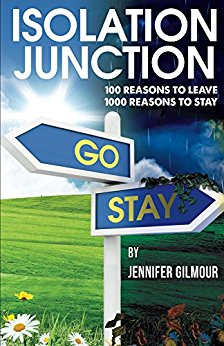
Isolation Junction
isolation-junction

Rose is the mother of two young children, and finds herself living a robotic life with an abusive and controlling husband. While she struggles to maintain a calm front for the sake of her children, inside Rose is dying and trapped in ‘Isolation Junction’.

She runs an online business from home, because Darren won’t let her work outside the house. Through this, she meets other mums and finds courage to attend networking events, while Darren is at work, to promote her business. It’s at one of these events that Rose meets Tim, a sympathetic, dark-haired stranger who unwittingly becomes an important part of her survival.

After years of emotional abuse, of doubting her future and losing all self-confidence, Rose takes a stand. Finding herself distraught, alone and helpless, Rose wonders how she’ll ever escape with her sanity and her children. With 100 reasons to leave and 1,000 reasons she can’t, will she be able to do it? Will Tim help her? Will Rose find peace and the happiness she deserves? Can Rose break free from this spiralling life she so desperately wants to change?

The Importance Of Tackling Difficult Issues

Like

Domestic Abuse Through Fiction

A Guest Post by Jennifer Gilmour

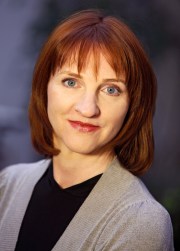
I’m Jennifer Gilmour, a young married mum of 3, an entrepreneur and now a published author. From an early age, I have had a passion for writing and have been gathering ideas and plot lines from my teenage years.  A passionate advocate for women in abusive relationships, I have amalgamated and fictionalised other survivors’ experiences alongside my own to write my first novel. It details the journey of a young woman from the despair of an emotionally abusive and unhappy marriage to develop the confidence to challenge and change her life and to love again.

Isolation Junction has been a challenging novel to write and I have written it for a few reasons. I have been the victim of abuse myself. I found myself writing down my feelings in a way to get it out. For many years I have kept a diary; it first hit when I was around 15 and Bridget Jones came out – I wanted her diary. I don’t have those diaries from my teenage years anymore and I never really read through them. I did however, find it very therapeutic to write my emotions, highs and lows down and this got me through my early teens.

This was a bit harder; I had to keep a record to remember my emotions on the abusive relationship. You can find yourself minimising the abuse and looking on it and thinking it wasn’t that bad, but when reading back on my diary snippets I can see that it is important for me to remember. Isolation Junction was by far not an easy write and there were times I couldn’t write because it was damaging emotionally, I really had to be in the right zone. Now my debut novel is released it feels a little strange but now the conversation is about the message of the book and this is the important thing. I feel like I don’t have to be quiet anymore about admitting what I went through.

People have seen a different side to abuse through my fictional novel. It’s something that has been addressed in a text book rather than a novel. The reaction has been that people have learnt about a different type of abuse and what coercive control can look like. It is hard to explain in a text book to fully demonstrate this type of behaviour. I’m pleased that people are being educated through my fictional story.

I’ll quote a few reviews here to give you a bit of an idea:

”This book I was not able to put down”

“A hugely important book!”

“A very gripping and interesting read”

“Thank you Jennifer for highlighting this issue and hopefully inspiring women to break free from emotional abuse”

“A fictional account of an everyday, unacceptable issue”

The novel has opened up a huge discussion of the behaviour and for those who don’t understand, it’s enlightened them to see what it could be and the progression behind it. My aim is to encourage questions, challenge the current law and the behaviour itself. It has gotten people thinking about their friendship circle and I have been contacted by many saying, “I have passed your book on to my friend because I think they are in this situation…”

As well as educating, it is also an entertaining book as you can see from the reviews. It is not filled with doom and gloom but features romance and some comedic moments.

I hope that the book will raise awareness of this often hidden and unseen behaviour and empower women in abusive relationships to seek help for themselves and find the confidence to change their lives. I also mention at the end of the book a message from myself and I include a helpline as I recognise that there needs to be a link to support from reading the book.

Now the book is out there to buy, the message needs to be talked about and to break the taboo. The book is just the beginning of blocking the road to ‘Isolation Junction’, I have put myself forward as an passionate advocate for women in abusive relationships.

Thank you so much Jennifer for raising awareness of such a tricky subject. If readers need help they might like to see some of the following websites:

Victim Support

Safe Lives

Refuge

Woman’s Aid

About Jennifer Gilmour

jennifer

Born in the North East, Jennifer is a young, married mum with three children. She is an entrepreneur, running a family business from her home-base and she has a large readership of other young mums in business for her blog posts.

Jennifer’s debut novel Isolation Junction is designed to raise awareness of domestic violence whilst providing readers with a great read.

You’ll find more about Jennifer on her website, on Facebook and by following her on Twitter.
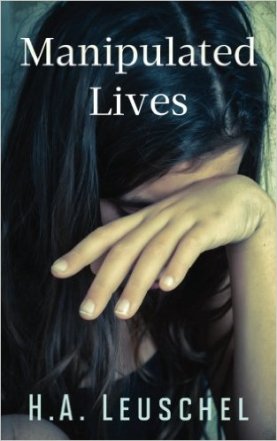
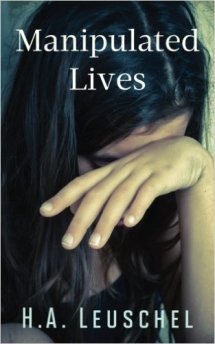
Mindreading Matters, a Guest Post by H. A. Leuschel, author of Manipulated Lives

cover

When H. A Leuschel asked me if I’d like to read her series of five novellas contained in Manipulated Lives I jumped at the chance as I love anything with a psychological element to it, but unfortunately life has got in the way and I have only had time to read one from the collection and I am reviewing The Narcissist from Manipulated Lives today. Manipulated Lives was published on 28th June 20116 and is available for purchase in e-book and paperback here.

I’m thrilled that today H.A (Helene) Leuschel has also kindly agreed to write a fascinating guest blog all about the need for mindreading skills as an author.

Manipulated Lives

cover

Five stories – Five Lives.

Have you ever felt confused or at a loss for words in front of a spouse, colleague or parent, to the extent that you have felt inadequate or, worse, a failure?

Do you ever wonder why someone close to you seems to endure humiliation without resistance?

Manipulators are everywhere. At first these devious and calculating people can be hard to spot, because that is their way. They are often masters of disguise: witty, disarming, even charming in public – tricks to snare their prey – but then they revert to their true self of being controlling and angry in private. Their main aim: to dominate and use others to satisfy their needs, with a complete lack of compassion and empathy for their victim.

In this collection of short novellas you meet people like you and me, intent on living happy lives, yet each of them, in one way or another, is caught up and damaged by a manipulative individual. First you meet a manipulator himself, trying to make sense of his irreversible incarceration. Next, there is Tess, whose past is haunted by a wrong decision, then young, successful and well balanced Sophie, who is drawn into the life of a little boy and his troubled father. Next, there is teenage Holly, who is intent on making a better life for herself and finally Lisa, who has to face a parent’s biggest regret. All stories highlight to what extent abusive manipulation can distort lives and threaten our very feeling of self-worth.

Mindreading Matters

A Guest Post by Helene Leuschel

Does an author attempt to present life from a range of perspectives deliberately or unconsciously? Or should I ask the question differently: do we generally try and read each other’s minds deliberately or unconsciously? I would argue that mind reading is a survival skill in itself, that without it we would not even remotely be able to make our way in life within a community and society as a whole. Even if someone lacks empathetic skills, the person still needs to acquire the rudimentary basics of the universal language of human behaviour, probably for the simple reason that we all need each other. No one – however powerful, clever, multi-talented and wealthy – can make a simple decision without attempting to understand what may go on in another person’s mind or at the very least their own.

Fiction in my view is the perfect ‘playground’ for the exploration of other people’s minds. They may appear as real as live characters, live diverse ways of life and express certain opinions and thoughts. The readers may feel that they are simulating the story in their minds, imagining the way a character looks and moves, engaging with a protagonist’s likes and dislikes, then conclude whether these characters appear plausible within the context they are portrayed in. Equally so, when our next door neighbour gossips about a newcomer in the area, you compare it with your own encounter with the person, their initial attitude and your first impressions, then conclude for yourself whether your neighbour is just spinning a fairy tale or not. While in real life these observational skills can help us to assess someone’s insinuations, reading fiction may hone our imaginative abilities to slip into a stranger’s shoes so to speak so we can observe ‘what it is like’ to be in his or her position – a ballet dancer, truck driver or even a psychopath.

Fictional characters in novels are not people in flesh and blood but yet we sometimes speak of them as if they were. We may believe that we know them so well that when we watch them ‘come to life’ on a cinema screen, we are often disappointed by their looks, behaviour or the way they talk. Behind the black and white lettering, most of us seem to be able to conjure up an image of Dickens’s well-known character Oliver Twist for instance as if we were watching him in our ‘inner theatre’. We attribute realistic human traits to the young boy and imagine a specific setting, yet know that we do not share his circumstances. At the end of the novel it is the reader who will have followed a narrative whose depictions were deliberately set by the author yet depending on a reader’s level of vocabulary, age, attention and grasp of the plot, Oliver will ‘come to life in one’s mind’ in different ways. General characteristics such as that Oliver is a young boy, poor, an orphan and living in 19th Century London are added to the individual’s own way of imagining his attitude and looks.  Our ability to empathize further adds to this perspective taking capacity. We may feel fear with a character, cry when she is betrayed or laugh at a funny twist in the story.

The reason why we may often take these mind reading and empathising skills for granted is that scientists believe that as soon as a baby is born, it is able to exhibit an emotional response through the mirroring of other people’s facial expressions. She does so unconsciously. Then by the time the child reaches the age of 4-5, she can engage in perspective taking, is able to role-play, imagine to swap perspectives and as she grows older her skills will be honed into the awareness that there is a deliberate ability to imagine to be in someone else’s shoes. She may then also become aware that she is somewhat limited by her own personal experiences, character traits and also the socio-economic circumstances she grew up in when trying to understand another person’s intentions and goals.

Therefore, I would conclude that an author, as much as a person moving through the challenges of daily life, is led by deliberately as well as unconsciously making use of mind reading skills and benefits from the knowledge one acquires from the experience. Just as a child will learn from early reading and interaction with other people so will she as an adult apply the mindreading skills to more complex fictional stories as well as ‘real’ relationships.

My Review of The Narcissist from Manipulated Lives

A conman lies in a prison hospital bed and finds himself considering his past.

Gosh this is an interesting and powerful piece of writing. Although there were a couple of awkwardnesses in the phrasing, I felt these actually added to the deviousness of the character of the Narcissist as he holds himself one step removed from his actions.

The characterisation is totally convincing. The voice behind the protagonist in this story is so strong that initially I felt I wished to do him an injury! His story is almost like a con merchant’s handbook. I felt the fact that we don’t get his real name was crucial. He’s been duplicitous all his life so that to name him would be to reveal an identity he has spent a lifetime covering up.  However, Helene Leuschel cleverly reveals the truth behind the man and why he is as he is, as a result of his past. As the story progresses the truth becomes more complicated and when reading the Visitor passages I began to be unsure just who is manipulating whom in this psychological tale.

I liked the way the story was divided between the Narcissist, the Visitor and Emily so that they all have a voice in the narrative. It’s as if the reader is being manipulated as well as the characters because I felt all three were not entirely truthful. The story appeared rather like a a really clever case study to me and it made me wonder whether there was a link with the author’s own life. Reading The Narcissist reminded me of The Death of Artemio Cruz and made me question just who we really are almost as much as that text did when I studied it at university all those years ago.

I’m only sorry I haven’t had chance to read all five stories yet as I am intrigued by The Narcissist. It made me think and provoked quite an uncomfortable feeling at times. I shall be returning to this fascinating collection soon.

About Helene Leuschel

photo-helene-2

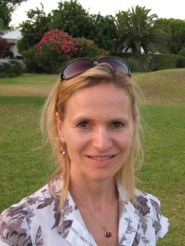
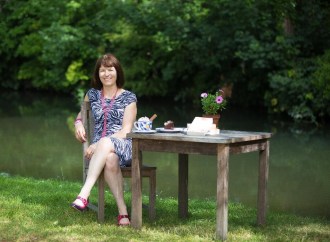
Helene Andrea Leuschel was born and raised in Belgium to German parents.  She gained a Licentiate in Journalism, which led to a career in radio and television in Brussels, London and Edinburgh. Helene moved to the Algarve in 2009 with her husband and two children, working as a freelance TV producer and teaching yoga.  She recently acquired a Master of Philosophy with the OU, deepening her passion for the study of the mind. Manipulated Lives is Helene’s first work of fiction.

You can follow Helene on Twitter.

Choices and Consequences, a Publication Day Guest Post from Rebecca Bradley

dfw-rb-twd-cover-mid

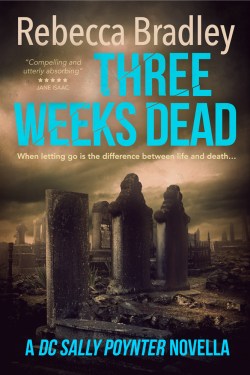
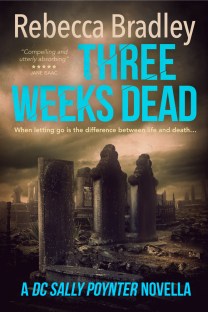
It gives me great pleasure to welcome lovely Rebecca Bradley back to Linda’s Book Bag to celebrate today’s publication of her novella Three Weeks Dead. Three Weeks Dead is the prequel to Rebecca’s DI Hannah Robbins series and is available for purchase in e-book here.

Rebecca has previously visited the blog with a smashing guest post on locations in her writing and you can read that post here.

Three Weeks Dead

dfw-rb-twd-cover-mid

How far would you go if someone took your wife?

Especially, if you buried her a week ago.

When Jason Wells is faced with this scenario, he is confronted with the prospect of committing a crime that will have far-reaching consequences.

Can young DC Sally Poynter get through to him before he crosses that line, or does a desperate husband prove to be the case she won’t ever forget?

A prequel novella, set before Shallow Waters, the first in the DI Hannah Robbins series.

shallow

Three Choices and their Consequences

 A Guest Post by Rebecca Bradley

First of all, I’d like to thank Linda for her generosity in having me on her blog today. It was a very short notice request when I popped up on Facebook asking if anyone would be interested in helping out with a blog tour and Linda was the first one to respond with a yes. So, thank you, Linda.

(My pleasure – lovely to have you back Rebecca.)

Linda suggested that I write a piece in line with the title of the novella that I’m releasing today, Three Weeks Dead. A story of a man who is faced with committing a crime that will have far-reaching consequences. So, here are my three actions that have had consequences.

  1. If I hadn’t dropped out of an Open University degree I was doing in Geosciences, telling myself it was only going to be for a year as I wanted to see if I could write, I might not be here right now. I have never gone back to the degree as I find myself writing every day, doing something I love. If I hadn’t made that difficult decision, I might not have written two full length novels, a novella and be writing my third novel. Yes, I miss the education, but I absolutely love being a writer and I’m thankful every day for it.
  2. If I hadn’t joined Twitter I wouldn’t have met some of the very wonderful people I now consider friends, and I wouldn’t have gone to the festivals I’ve been to. My life wouldn’t be as rich as it is now. There is a lot of negativity around online life, but if you use it well, use it to interact, rather than trying to sell your wares, or to hurt others because you feel you’re safe hiding behind a keyboard, then you can really get a lot out of it.
  3. If I hadn’t read The Famous Five, I wouldn’t have moved on to Nancy Drew and then on to Agatha Christie, my love of crime fiction wouldn’t have grown and flourished. If I’d have picked up different first books I may even have had a different career rather than joining the police, as well as writing in a different genre. Who knows where our choices actually do take us. One simple choice can lead to, who knows where, maybe to your dreams or maybe the road to hell. Choose wisely…

(I love the idea that our early reading may affect us in later life Rebecca!)

About Rebecca Bradley

profile-photo

Rebecca Bradley is a retired police detective who lives in Nottinghamshire with her family and her two cockapoos Alfie and Lola. They always keep her company while she writes. Rebecca needs to drink copious amounts of tea to function throughout the day and if she could, she would survive on a diet of tea and cake while committing murder on a regular basis.

You can sign up to the newsletter on Rebecca’s blog for exclusive content and giveaways and you can follow her on Twitter. You’ll also find her on Facebook.

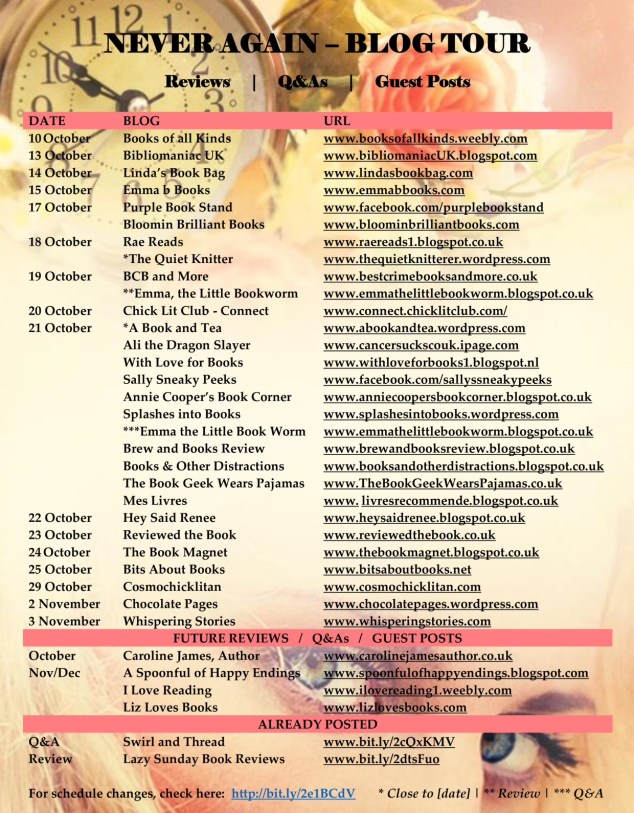
The Journey to Self-Publication, a Guest Post from Nicky Clifford, author of Never Again

never-again

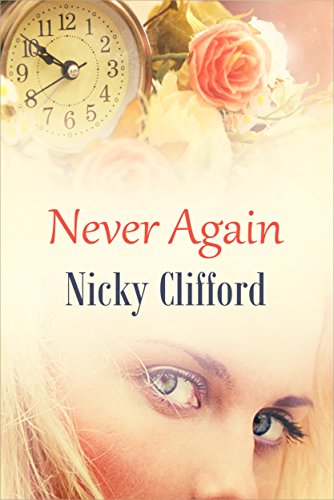
I’m delighted to welcome Nicky Clifford to Linda’s Book Bag today. Nicky’s debut novel Never Again will be published in e-book on 21st October 2016 and is available for purchase here.

Nicky was kind enough to tell me about her journey to publication in a special pre-publication guest blog.

Never Again

never-again

Mountains, Mystery, Romance: Can you run from your past?

Harriet Anderson’s life is spiralling out of control. Unused to such mayhem, she ditches her high-powered job to take refuge in the Swiss Alps where she meets Philippe Smith, a crime writer with a dark and shadowy past. Thrown together by chance, is their fate intertwined? Will the karma and romance of the mountains and the quaintness of the Alps soothe their troubled souls?

Or will their rocky paths create avalanches that cannot be avoided…

The Journey To Self-Publication

A Guest Post from Nicky Clifford

Having the time and space to focus

Up until last year, my life has been full of its fair share of trauma and health issues. Whilst battling through the dense fog that hovered over my life for a number of years, it was impossible to summon up the energy to push my novel forward. Being granted a significant break in the clouds a couple of years ago, which allowed the sun to shine through and the howling wind to die down, gave me the impetus I needed. Getting my book published became my mission and I was determined to see it through to completion. With my boys now teenagers and far more independent, and my job reduced to two mornings a week, I also had the luxury of time.

Breadth and depth of experience

Naively I had thought that, following countless edits and re-writes, getting to ‘The End’ would be ‘The End’. Nothing could be further from the truth. The challenges of self-publishing have been numerous, technical, complex and overwhelming. Working for years in large corporates with tight deadlines and high expectations, somehow shaped me into a highly-organised person who learned the hard way to face one challenge at a time. Up until recently, I have had to fight relentlessly in one particular area of my life – this has given me a tenacity, which I certainly didn’t possess when I was a spring chicken! I have also learned, over the years, to ask for help and this has been essential; producing this novel has very much been a ‘team effort’.

So whilst there is some regret that I didn’t embark on the adventure of self-publishing years ago, I also believe that things happen when they are meant to in life. I don’t think I would have been nearly as well equipped to struggle over each of the hurdles presented to me on this journey to publication had I not lived (and I mean ‘lived’!) every one of the last 50 years.

Looking Forward

With one son at Uni and the other in his last year at college, life moves on apace. For me? I can’t wait to get stuck into my next novel, which inevitably includes more than a splattering of romance! I will be making donations from the profits of Never Again to two charities which are very dear to my heart: Childhood Tumour Trust and Auticulate (supporting autistic children).

About Nicky Clifford

nicky-clifford-author-photo

Writing has always been a passion for Nicky Clifford and as a student she penned poems, short stories and articles, many of which were successfully published. But a lack of confidence in her novel writing led her to follow a different career path and for many years she worked in the corporate world of HR & Training.

Now with her sons having reached their teens and with her husband’s encouragement, Nicky has decided to focus on her writing once again and, glued to her writer’s chair, has completed three novels. Her debut novel, Never Again, is the first to be published and hits the contemporary romance shelves this autumn. The book is set in her home county of Berkshire and also in the Swiss Alps where Nicky has many happy memories, having worked there in her student days.

As well as dedicating her time to writing, Nicky also works part-time for a local charity. She will make a donation from the book royalties to the charities, Auticulate and Childhood Tumour Trust. Having completed a writing course at Reading University, she is a member of her local writing group which she says, were staunch in their support and have helped enormously in encouraging Nicky to launch her first book.

Nicky was a keen ice-skater, managing to perfect backwards crossovers, mohawks and one foot turns, but has recently hung up her boots to spend more time relaxing with her friends and family at home in Berkshire.

You can find out more about Nicky by visiting her website, finding her on Facebook and following her on Twitter. There’s more with and about Nicky with these other bloggers too:
never-again-by-nicky-clifford-blog-tour

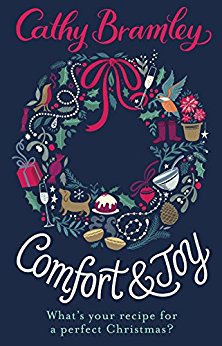
Comfort and Joy by Cathy Bramley

comfort-and-joy

I love featuring authors I’ve met so I’m delighted to be reviewing Comfort and Joy by Cathy Bramley as it is published today, 13th October 2016, by Transworld, an imprint of Penguin Random House. Comfort and Joy is available for purchase in e-book here.

Comfort and Joy

comfort-and-joy

It’s been a busy year for Verity Bloom at the Plumberry School of Comfort Food, but Christmas Eve is finally here. With delicious treats all wrapped up and the ingredients packed away, Verity is looking forward to a relaxing few days with her new boyfriend.

Good food, family and friends – it’s a simple recipe for true comfort and joy, and all Verity’s friends in the village are full of excitement about the holidays too.

But the weather has other plans in store… Relentless rain leads to a power cut that spells disaster for many of Plumberry’s residents. It’s starting to look like this year’s celebrations could be a total washout.

With dreams of a perfect Christmas dashed, will the last of the festive cheer be swept away in the downpour? Or can the cookery school create a Christmas miracle for everyone Verity holds dear?

My Review of Comfort and Joy

It’s Christmas Eve for the inhabitants of Plumberry but Christmas might not be quite what they expected!

Comfort and Joy by Cathy Bramley should come with a health warning. The descriptions of food are so enticing and sumptuous that I felt ravenous the whole time I was reading. From fudge to turkey, champagne to truffles I could so easily imagine tasting the glorious food and drink presented in the writing. I’m not sure I’m going to be naming our turkey this year though!

This is my first Cathy Bramley read and I loved it. Considering Comfort and Joy is a short story I couldn’t believe how well developed and wide ranging the characters were. They became so life like as I read that I am now going to read the rest of the Plumberry stories about them as I want to know more.

I thought Comfort and Joy embodied the spirit of Christmas wonderfully, with a feel good element that wasn’t at all saccharine, but that was realistic and satisfying. I loved the balance between disaster and success and laughed aloud as well as shed a tear or two. The themes touched upon are so relevant to the season with relationships between parents and children, lovers and friends beautifully portrayed. But I loved too the elements of local and national relevance with floods, the homeless and the concept of charity all woven seamlessly into the plot.

A further element that I thoroughly appreciated too was the quality of the dialogue. I thought the separate voices were distinct and the speech natural so that I could hear the voices in my head.

In Comfort and Joy Cathy Bramley has created the perfect fireside read to touch the heart and make it truly Christmas. Read it!

About Cathy Bramley

cathy

Cathy is the author of the best-selling romantic comedies Ivy Lane,Appleby Farm, Conditional Love, Wickham Hall and The Plumberry School Of Comfort Food. She lives in a small Nottinghamshire village with her husband, two teenage daughters and Pearl, the Cockerpoo.

You’ll find all Cathy’s lovely books here.

You can find out more about Cathy Bramley on her website and you can follow her on Twitter. You’ll also find her on Facebook.

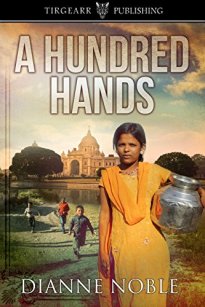
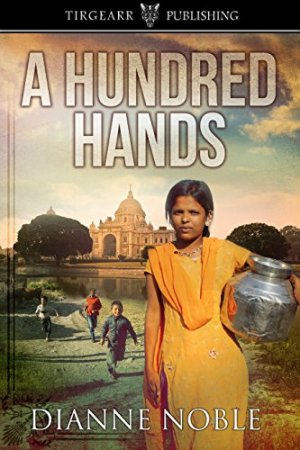
India, a Guest Post by Dianne Noble, author of A Hundred Hands

a-hundred-hands

Those of you who know Linda’s Book Bag well will also know that I love to travel as much as to read (and if I can do both together so much the better). Next on my travel wishlist is India so I’m delighted to welcome Dianne Noble to the blog today. Dianne’s latest book A Hundred Hands is set in India and she has agreed to tell me a little more about the country as a means of inspiration.

A Hundred Hands will be published on 1st November 2016 and is available for pre-order until publication day at the special price of only 99p/99c from online sellers including Amazon.

A Hundred Hands

a-hundred-hands

When Polly’s husband is jailed for paedophilia, she flees the village where her grandmother raised her and travels to India where she stays with her friend, Amanda.

Polly is appalled by the poverty, and what her husband had done, and her guilt drives her to help the street children of Kolkata. It’s while working she meets other volunteers, Liam and Finlay. Her days are divided between teaching the children and helping with their health needs. But when Liam’s successor refuses to let Polly continue working, she’s devastated to think the children will feel she’s abandoned them.

After a health scare of her own, she discovers her friend, Amanda, is pregnant. Amanda leaves India to have her child. At this time Polly and Finlay fall in love and work together helping the children. Tragedy strikes when one child is found beaten and another dead. Polly feels history repeating itself when Finlay becomes emotionally attached to a young girl.

Can Polly recover from her broken heart and continue to help the children, or will she give up and return home?

India

A Guest Post by Dianne Noble

The first time I visited India I was ten years old, flying back to England with my parents and brothers after a long tour in Singapore. Our RAF Hermes plane took almost three days, stopping in several countries to re-fuel, and de-ice the wings. We’d travelled out in a troopship – a whole month and school lessons every day – but the Suez Canal had been closed so here we were in Calcutta, as it was then known. I remember the heat, the highly spiced kofta they gave us for breakfast with a fried egg, which none of us could eat, the hole in the floor toilet we had to squat over while flies buzzed around us, the strange smells and sounds. How could I have known I’d begun a lifelong love affair with India?

A single parent for much of the time, I had to wait until my children had grown and flown before I could travel to Rajasthan, the princely state of maharajahs and palaces. Since then I’ve been all over the country, generally on India’s excellent trains, from Delhi and Agra in the north where the Taj Mahal reduced me to tears, to beautiful Kerala in the south, the temples of Bhubaneshwar in the east and vibrant Mumbai in the west, yet still, time after time I am drawn back. Next year I hope to travel the width of the country by train, up to its border with Pakistan and then into the Himalayas. My modest house – I spend all my money on travel – needs replacement windows but hey!

Ten years ago I volunteered to spend three months teaching English to street children in Kolkata. While there I realised what it is I love about the country –it’s the people. Despite great deprivation they laugh and are joyful. This time in Kolkata proved to be the hardest thing I have ever done. Broken, crumbling buildings sit amid lakes of raw sewage; filthy children encrusted with sores are homeless; families live on a patch of pavement so narrow they take it in turns to lie down. They give birth – and die – there. Yet their indomitable spirit shines through.

I feared I couldn’t do it, felt my resolve dying daily amid the horrors and hardship, but I started writing a journal and it saved me. Every night, no matter how dirty and exhausted I felt, I recorded one child’s progress with the alphabet, another’s disappearance, how many times I’d been hugged. It was a form of de-briefing but also cathartic. It got me through and these diaries formed the basis for A Hundred Hands.

About Dianne Noble

dianne-aug-2015

Born into a service family Dianne was brought up in Singapore, Cyprus and Yorkshire then went on to marry a Civil Engineer and moved to the Arabian Gulf. Since then, with sons grown and flown, she has continued to wander all over the world, keeping extensive journals of her personal experiences which she uses for her novels. Fifteen different schools and an employment history which includes The British Embassy Bahrain, radio presenter, café proprietor on Penzance seafront, and goods picker in an Argos warehouse, have resulted in rich seams to mine for inspiration.

You can find out more about Dianne by following her on Twitter, visiting her website and finding her on Facebook.

An Interview with Isabel Costello, author of Paris Mon Amour

pma-final-crop

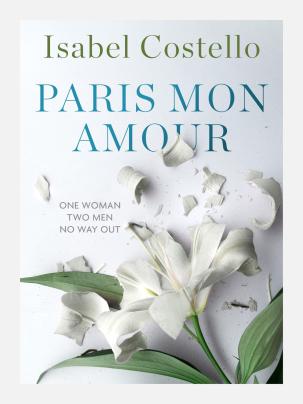
I have had Paris Mon Amour on my TBR for ages so I decided that whilst I was finding time to read it I’d ask the author Isabel Costello if she would be interviewed for Linda’s Book Bag. Luckily she agreed! Paris Mon Amour was published by Canelo on 13th June 2016 and is available for purchase here.

Paris Mon Amour

pma-final-crop

The first time I caused terrible harm to the people I love it was an accident. The second is the reason I’m here.

When Alexandra discovers that her husband Philippe is having an affair, she can’t believe he’d risk losing the love that has transformed both their lives.

Still in shock, Alexandra finds herself powerfully attracted to a much younger man. Jean-Luc Malavoine is twenty-three, intense and magnetic. He’s also the son of Philippe’s best friend.

With every increasingly passionate liaison, Alexandra is pulled deeper into a situation that threatens everyone she holds dear.

Beautifully told through the boulevards and arrondissements of the City of Light, Paris Mon Amour is a sensual novel about inescapable desire and devastating betrayals. It is the story of one woman and two men, and what happens when there is no way out.

An Interview with Isabel Costello

Hi Isabel. Thank you so much for agreeing to answer some questions on my blog about your writing and Paris Mon Amour.

Normally you’re the one featuring authors on your own blog, the Literary Sofa. How does it feel to have the tables turned on you today?

It feels great, thank you for inviting me! Like any writer I’m delighted when anyone takes an interest in my book.  And knowing how many debuts are out there at any given moment, I really appreciate the enthusiastic response from the blogging community.

When did you first realise you were going to be a writer?

I’ve always had a vivid imagination and a tendency to notice things – I loved reading and writing stories from a young age. But it wasn’t until my thirties, when I was busy with small children and had very little head space, that I felt a real need to write.  It became impossible to ignore and when I finally took it up aged 41, it was a huge relief.  It’s changed everything.

Why did you choose Paris as the setting for your debut novel Paris Mon Amour?

My lifelong connections with France run so deep I can’t imagine myself without them.  I’ve spent a lot of time in Paris and whenever I’m there (fortunately quite often) I get a strange sense of heightened emotion that unleashes inspiration and ideas. Whilst the sensual, romantic image of Paris makes an ideal backdrop for my fiction, life in any city has a darker dimension too and I try to reflect that.

How do you go about researching detail and ensuring your books are realistic?

The two kinds of research I enjoy are walking the streets, imagining my characters’ relationship with the setting, as distinct from mine – and talking to people, to further my understanding of a place or situation.  In the process of writing Paris Mon Amour several individuals confided very private experiences relevant to the themes and I was touched by that. Frankness is important to me – a lot of what makes a novel realistic and relatable comes down to emotional truth and things we usually keep to ourselves.

Which aspects of the writing process do you enjoy most/least?

I don’t enjoy producing first drafts and the inevitable obsession with word count, which has to be the least meaningful indicator of progress (or quality) there is.  I love all the technical components of fiction – characterisation, plot, dialogue, prose – I’ve been thinking about what makes a book work for most of my life so it’s exciting to put it into practice.  I thrive on the risky business of tackling taboo subjects: in my novel narrator Alexandra’s affair with the much younger son of her husband’s best friend falls into that category. Whatever the story, I have to feel absolutely compelled to tell it.

You’ve written quite a bit of short fiction as well as Paris Mon Amour. How similar or different did you find a full length novel?

Writing short stories is not only satisfying in its own right (you get to finish something in weeks rather than years) but it’s helped me a great deal with writing novels.  In the short form, every word, line and detail must justify its presence or face the chop, which I’ve realised is a great discipline to apply to any piece of writing: novels, features, reviews, even blog posts. So the two are not as different as they may appear; I’d encourage anyone who wants to work on their prose style to experiment with short fiction.

When you’re not writing, what do you like to read?

My taste is very broad, but I like books which make me think and are emotionally engaging.  Not too bleak or heavy – dark and deep is fine, as long as it’s balanced with some light or humour. Controversial or charged themes make for lively discussion, which I enjoy.  But what thrills me most is really good writing – it takes me less than a page to detect it.  If the style or voice grate, however, it’s unlikely I’ll make it past the first chapter.

In Paris Mon Amour you explore human nature and our inability to cease doing those things we feel guilty about. Did you set out to do this or did the themes arise naturally?

My fascination with human nature underpins everything I write.  I don’t set out to focus on guilt but it crops up every time; I mostly write from a female perspective and women are particularly prone to it. People are complicated and often fragile – it’s hard to reconcile all the factors that make us who we are and I’m especially interested in the ‘interior life’ behind the face we present to others. My outwardly conventional and respectable protagonist Alexandra is the last person anyone would expect to be unhinged by irresistible desire. The only conscious aim with this book was to challenge the myths and double standards surrounding female sexuality – there’s no separating that from human nature!

I thought the cover to Paris Mon Amour suggested the loss of innocence. How did that image come about and what were you hoping to convey (without spoiling the plot please!)?

The lilies have a symbolic meaning in the book and using them on the cover was the brainwave of my publisher Iain Millar at Canelo, brilliantly interpreted by designer Dan Mogford.  Although the shattered lily image looks like digital trickery, the truth is that Australian photographer Anna Thomas flash-freezes real blooms in liquid nitrogen and smashes them with a hammer! The cover has been a hit with readers and I do think it conveys the story very well, but to say more would indeed be a spoiler…

If Paris Mon Amour became a film, who would you like to play the main characters and why?  

Philippe is easy – Alexandra describes her husband as looking like ‘Vincent Cassel in a good suit’ (as opposed to when playing a gangster) – I’ll admit to slightly indulging myself there! Alexandra is more difficult – she’s 40 and definitely attractive, but most actresses still in the public eye at that point are only photographed in red-carpet mode and don’t look their age. For Jean-Luc, her lover, I’d cast Vladimir Perrin (as seen in the TV series Résistance and the Taylor Swift video Begin Again), although at 27 he’s already four years older, so interested parties please note that there’s no time to waste!

Thank you so much for your time in answering my questions.


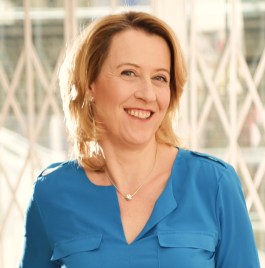
About Isabel Costello

isabel-costello-headshot

Isabel Costello is a writer and avid reader of contemporary fiction, a keen traveller and a lifelong francophile.

Originally from Wiltshire, after studying modern languages she moved to London where she lives with her husband and teenage sons. Five years ago she started the Literary Sofa blog.

Her other interests include art, photography, theatre, cooking and wine. Isabel is also a great believer in the restorative powers of a long swim and a long bath.

You can follow Isabel on Twitter, find out more on her blog and visit her on Facebook.

Adapting a Classic, a Guest Post by Lou Kuenzler, author of Finding Black Beauty

cover.jpg

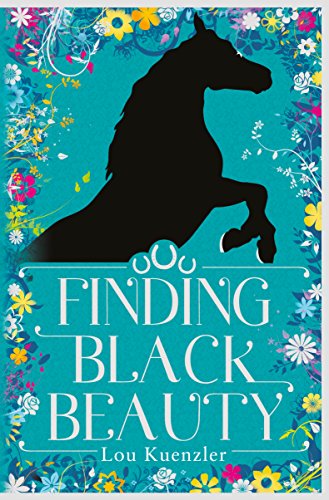
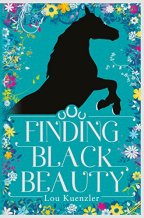
I’m delighted to be featuring a guest post from Lou Kuenzler today to celebrate her latest children’s book Finding Black Beauty. Finding Black Beauty was published on 6th October by Scholastic and is available for purchase here and through the publisher.

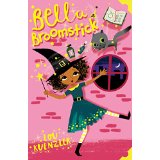
I have previously featured Lou on Linda’s Book Bag when I thoroughly enjoyed reviewing another of her children’s books, Bella Broomstick. You can read my review here.

Bella Broomstick

Finding Black Beauty

cover

Told from the point of view of a young girl who masquerades as a boy in order to become a groom, this is the other side of the classic horse story Black Beauty. Aspiring groom Jo comes to love Beauty and when they are separated she travels to London to find him – on the way solving the mystery of her long-lost mother. A sweeping tale of a young girl and her love for a horse, and the circumstances that divide them.

Adapting a Classic

A Guest Post by Lou Kuenzler

Thank you Linda’s Book Bag for inviting me onto the blog to talk about my new children’s book Finding Black Beauty and to explore the relevance of adapting a classic novel for a modern audience.

I have never taken direct inspiration from a classic story before but, when invited to consider it by my publishers,  I knew at once that it would be Anna Sewell’s Black Beauty I would pick.  Growing up on a farm, I had loved the story myself. While some of Sewell’s language and episodic structure may be dated, and the levels of cruelty she exposes extremely shocking, I felt certain that the fast-paced adventure at the heart of the story was something that would definitely appeal to modern children – especially if told in a fresh new way.

I decided early on, in whatever way I tried to tackle the story, I would not attempt to tell it in Black Beauty’s own voice – Sewell does this so brilliantly, I felt Beauty’s viewpoint was best left as it was.  Also, with the benefit of hindsight and history, I found that was I drawn not only to the plight of animals in Victorian Britain but to the people – and specifically the children – too. Here I felt the murmur of untapped voices.

Jo, the young stable lad, began to whisper to me.  I know when I visit National Trust properties, or similar grand country houses, it is always the servants’ quarters I am drawn to.  There never seems to be quite enough emphasis on this – with kitchens and/or stables often having been turned into tearooms (not that I’m not a massive fan of good Victoria sponge!) and the attics and lofts out of bounds (perhaps for safety reasons).  It is as if a hundred hurrying footsteps have been hushed up. I think part of the huge appeal of Downton Abbey; for instance, was that we got to see life upstairs and downstairs.

I felt confident that contemporary children would be drawn to the story of a young stable lad –  pretty much the same age as the oldest of the primary school children Finding Black Beauty is aimed at.  Whilst they are thinking about SATS and the transition to secondary education, a working Victorian child would be earning a living.  To really explore this servant role, I decided to turn it on its head: my Jo is not only a girl (Josie) in disguise, she has also come from a privileged background and never had to consider the lives of those who have served her until now.  With the sudden and unexpected death of her father, Josie – already abandoned by her mother – is forced to see the world through very different eyes.

I felt that this switch in perspective would offer a way in for contemporary readers – they would be able to share fresh experiences and question social norms alongside Josie as she goes on a journey of self-discovery, seeing the world in a whole new, less sheltered, way.

Yet, while the character of my Josie is taken from the very few lines Anna Sewell writes about Jo, her stable lad; the arch of the plot has similarities – the plight of the magnificent horse is at the centre of both books.  Sewell’s story is a wonderful flat-out, galloping adventure. That, I felt, could definitely be revisited for children in any age.  My Josie’s story is laced with her growing self-knowledge, examining class and gender in the nineteenth century and – unavoidably – raising issues still of resonance for children today. But, at heart, Finding Black Beauty is about passion. It is the story of a young girl’s desperate attempt to protect a beloved horse. It is, I hope, life and death stuff – just as Anna Sewell’s wonderful, heart-rending original story was.

I had huge fun writing the book, researching Victorian life and creating fleshed out characters from those who appear only briefly in Black Beauty itself. Always having the original to refer back to was a wonderful support but I was always very aware that my new story needed to be more than a companion piece or sequel.  To draw in and then hold young readers, Finding Black Beauty had to be a compelling story in its own right.

About Lou Kuenzler

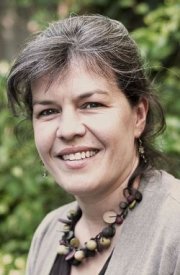
Lou Kuenzler

Lou Kuenzler was brought up on Dartmoor and moved to Northern Ireland to study theatre. She worked as a theatre director and drama lecturer before coming the writer of the Princess Disgrace, Shrinking Violet and Bella Broomstick series with Scholastic. Finding Black Beauty is her first retelling of a classic novel. Lou now lives in London with her husband and their two children.

You can find out more about Lou on her website, on Goodreads and you can follow her on Twitter. There’s more with these other bloggers too:
blog-banner-01

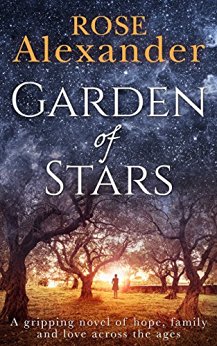
The Past and Portugal, a Guest Post by Rose Alexander, author of Garden of Stars

cover

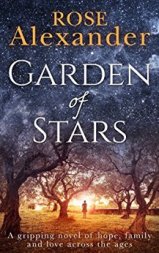
I’m so disappointed I haven’t had time yet to read Rose Alexander’s debut Garden of Stars as so many bloggers are telling me how good it is. Garden of Stars was published in ebook by Carina on 25th July 2016 and is available for purchase from Amazon and all other e-tailers.

Having loved Lisbon when I visited a couple of years ago, I invited Rose Alexander to explain how Garden of Stars has been inspired by Portugal.

Garden of Stars

cover

The Alentejo, Portugal 1934

I am Inês Bretão and I am 18 years old. Now that I am finally an adult and soon to be married, I feel like my real life is about to begin. I have decided to document everything that happens to me, for my children and my grandchildren…

As Sarah Lacey reads the scrawled handwriting in her great-aunt’s journal on a trip to Portugal, she discovers a life filled with great passion, missed chances and lost loves – memories that echo Sarah’s own life. Because Sarah’s marriage is crumbling, her love for her husband ebbing away, and she fears the one man she truly loves was lost to her many years ago…

But hidden within the faded pages of the journal is a secret Inês has kept locked away her entire life, and one final message for her beloved niece – a chance for Sarah to change her life, if she is brave enough to take it.

Of the Past and Portugal

A Guest Post by Rose Alexander

“The past is a foreign country: they do things differently there.”

So goes the quote from The Go-Between by L P Hartley, one of my all-time favourite books. And the idea of the past was one I wanted to explore in my debut novel.

Above all else, Garden of Stars is a love story – but the love is complicated by time. Time that’s passed, time that’s present and time that’s still to come. I find the whole idea of choices and decisions a fascinating one. What if I had gone to that university instead of this one? What if I had returned the phone call from that boy instead of pursuing the one who wasn’t interested? What if I had taken that job instead of this one? Life is full of turning points and it’s usually not until much, much later that the implications of the course one has followed become apparent. So it turns out for both Sarah and Inês, the lead characters in my book. Their lives have been defined by a series of actions taken, driven at the time by the belief that they were the right and moral choices, leaving regret to ferment and fester for years to come. Of course, that in itself wouldn’t be a very satisfying story. But, I hope, examining the fall-out from that regret, what they both do with it and where it takes them, is a tale that is worth telling.

Woven throughout the book is my deep love of Portugal, a country in which I have had the good fortune to spend a fair amount of time when I undoubtedly should have been doing something more useful and productive. University holidays spent on the Algarve and in Lisbon, my TEFL course completed at International House in the capital, holidays since in the beautiful, pristine central region, the north and Porto. So many, many lovely places to explore and get to know. In my twenties, I twice hitchhiked home to England and could probably write a couple of books about those experiences as well. (Trade secret: the truckers’ food and accommodation on Brittany Ferries is superb.)

One of the most important elements of the Portuguese economy is cork and the serene, ethereal cork forests that cover much of the Alentejo region are not only crucial for the bark they produce but also for the flora and fauna they support – and cork is central to the storyline of Garden of Stars. Because cork is left to do its own thing for years in between harvesting cycles, nature can burgeon undisturbed. It’s forbidden to destroy cork oaks in Portugal and hopefully the continuing development of new uses for this amazing natural material will ensure it has a future. In the novel, the cork tree’s lifecycle of growth, harvesting and renewal stands as a metaphor for love, loss, hope and new beginnings. Time, even if it doesn’t heal, changes things and leads us out of the past and into a future that we can, and should, shape for ourselves. Our experiences define us; it’s how we work with them that counts.

I hope that anyone who reads Garden of Stars enjoys it and gets something from it. It would be absolutely amazing if, whatever your thoughts about it, you leave a review on Amazon. Reviews are the lifeblood of authors, especially newbies like me, so help us out if you can!

Thanks for reading and enjoy.

Rose x

About Rose Alexander

rosealexander

Rose has had more careers than is probably strictly necessary, including TV producer / director making programmes for all the major broadcasters, freelance feature writer for publications including The Guardian and secondary school English teacher, not forgetting cocktail waitress, melon picker and interior designer.

Writing a novel is, however predictable the line seems, the realisation of Rose’s childhood dream and the result of finally finding ‘a voice’.  The triumph is that the voice was heard above the racket created by her three children plus rescue cat (tabby white, since you ask). Rose likens the experience of penning Garden of Stars, a multi-layered love story, to another recent achievement of learning to ice-skate: progress is two-slides-forward-one-back; insecurity, self-doubt and despondence reign supreme; onlookers laugh, mock or even worse, smile indulgently…. But the finished manuscript, polished and pristine, is like the perfect pirouette performed on freshly raked ice. (Rose can’t do pirouettes yet, obviously, they just made the best simile.)

Rose is currently working on several new projects including a novel based on a relative’s true story of an epic journey as a ‘flüchtlinge’, fleeing the vengeance of the rampaging Red Army as Nazi Germany collapsed.

You can follow Rose on Twitter and find out more on her website.

Writing in the First Person, a Guest Post by Jo Lambert, author of Watercolours in the Rain

watercolors-in-the-rain-tour-banner-1

I’m delighted to be working with Brook Cottage Books in welcoming Jo Lambert back to Linda’s Book Bag today to celebrate Jo’s latest novel Watercolours in the Rain. A lovely contemporary romance, Watercolours in the Rain is available for purchase on AMAZON UK and  AMAZON.COM.

Not only do I have a wonderful guest post from Jo Lambert explaining about the challenges of writing three first person viewpoints in Watercolours in the Rain, but there is the opportunity to enter to win a dreamcatcher necklace (UK only) and one of two e-copies of Watercolours in the Rain at the bottom of this blog post.

Watercolours in the Rain

watercolours-in-the-rain-cover-medium-web

What happens to the future when past and present collide?

JESS:  Six years ago Jess’s relationship with Talún Hansen was torn apart by one night of deception. He disappeared from Lynbrook village and she headed for university vowing never to let anyone break her heart again. Now a teacher, Jess returns from holiday to an unexpected phone call and life changing news which will eventually bring her back home once more.

TALUN: Six years on Talún Hawkeswood, as he is now known, is heir to his grandfather’s Norfolk farming empire. When he hears of trouble in the village due to Lynbrook Hall being put up for sale, going back is the last thing on his mind. But staying away is not an option either, not when someone he owes so much to is about to lose their home and their livelihood.

LILY: Splitting with her husband after her son Josh’s birth, Lily now works as part of an estate agency sales team.  She has always held onto her dream of finding a wealthy husband and a life of self-indulgence. When the sale of an important property brings her face to face with Talún once more, she realises despite the risks involved, the night they spent together six years ago may be the key to making those dreams come true.

As Jess, Talún and Lily return to Lynbrook and the truth about what happened that summer is gradually revealed, Talun finds himself in an impossible situation. Still in love with Jess he is tied into to a trade off with Lily: his name and the lifestyle she craves in exchange for his son. And when a child is involved there is only one choice he can make…

Voices In My Head…Writing From The First Person

A Guest Post by Jo Lambert

When I began writing Watercolours in the Rain, I knew because this was the sequel to Summer Moved On, I would need to incorporate a certain amount of back story.   I discussed this with my editor, saying I thought it might be a good idea to begin the book with three short prologues from each of the main character’s points of view.  The plan was then to revert to third person narration for the rest of the novel.  We agreed this might be a good place to start, so I went ahead and completed the pieces and submitted them.  I had really positive feedback which was accompanied by the suggestion maybe it would work well if the whole book was narrated from Jess, Talún and Lily’s individual perspectives.  I wasn’t a stranger to writing in this way. Way back, my very first novel had been written through the eyes of a twenty something female. However that was then and this was now and getting into three people’s heads at the same time – and one of them male – threw up a whole host of different issues.  The one positive thing going for all of this was that as I had travelled with them through the first book, their characters were well known to me.

So with the prologue sections completed, I began to work on a task which I realised was very much a gamble…but it was also a challenge and I was determined to give it a try.  Writing from one person’s viewpoint is quite restricting; it narrows your story because you are only seeing what is going on from behind one pair of eyes. Writing from three, allows a broader view and is almost as good as writing from the third person.  However, it goes far beyond that as you are projecting each individual’s thoughts and emotions as well, which in some ways makes the book more human.

After a few initial hiccups, I eventually I settled down and began to enjoy what I was doing. It was great to be able to slip into someone else’s skin – almost like virtual acting. I had great fun with my female antagonist, bad girl Lily.  She was the perpetrator of some awful actions but in the end karma caught up with her.  I think the saying ‘be careful what you wish for’ was very relevant.  She got to live her dream but in the end it all went horribly wrong. I did have to sit for a while though, weighing up what would eventually be her fate. I could also see potential headache writing from a male perspective but then got totally caught up with his story – the discovery of a son he wasn’t aware of, the extremes he had to go to in order to secure him…and the way he became emotionally entangled with Jess. And as for Jess? Well as my central female character she was the easiest of the three characters. But that’s probably because in all my books I’m always very close to my heroine.

Would I do it again? Well I’m not sure. It was quite complex and far more difficult than writing from the third person. I don’t think I would have attempted it had I not had such a close knowledge of my char.  But I have to say it really did work for Watercolours in the Rain.  In fact I don’t think the book would have turned out as well had I written it any other way.

About Jo Lambert

unnamed 3

Born and raised in rural Wiltshire, Jo Lambert grew up with a love of books and a vivid imagination. As a child she enjoyed creating her own adventure stories similar to Enid Blyton’s Famous Five. Writing always stayed with her, but college, work and eventually marriage found it was kept very much in the background. However in 2009 she finally had her first novel – When Tomorrow Comes – published. Three other connected books – Love Lies and Promises, The Ghost of You and Me and Between Today and Yesterday followed. They became collectively known as the Little Court Series.

tomorrow

In 2013 she decided to give up full time work to concentrate fully on her writing. Two other books have been written since – The Other Side of Morning which is the final book of the Little Court Series and Summer Moved On, a love story set in South Devon. Jo is about to publish, Watercolours in the Rain, and plans to begin work on her new book in early November 2016. She describes her writing style as drama driven romance.

Jo is married and lives in a village on the eastern edge of Bath with her husband, one small grey feline called Mollie and a green MGB GT.  She loves travel, red wine, rock music and has a passion for dark chocolate…

714DaAHCxrL

You can find Jo Lambert on Facebook, Google+ and her web site. You can also follow her on Twitter and read her blog.

Competition

book-tour-prize-1

For your chance to enter to win a dream catcher necklace (UK only) or one of 2 e-copies of Watercolours in the Rain, click here.

watercolours-in-the-rain-cover-medium-web