A Publication Day Spotlight on A Gift Called Hope by Eva Jordan

Friend and author, lovely Eva Jordan, has appeared several times on Linda’s Book Bag, most recently here when I reviewed 183 Times A Year along with a feature on Eva’s Time Will Tell.

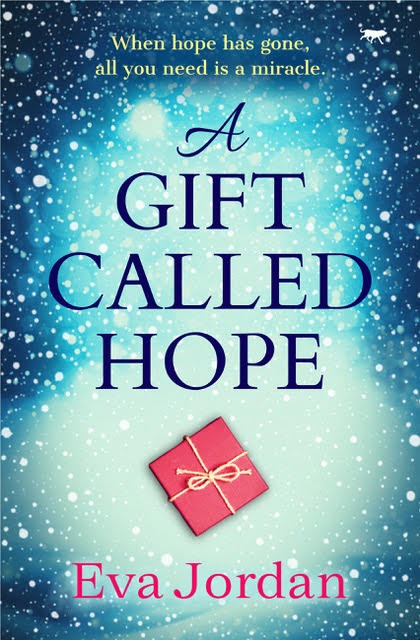
Since then Eva has had a change of publisher and is back with a fantastic sounding new book, A Gift Called Hope which is published today, 4th November 2022, by Bloodhound.

A Gift Called Hope is available for purchase from Amazon, Barnes & Noble, Apple Books, Kobo Books, and Open Road Media.

Let’s find out more:

A Gift Called Hope

A heartfelt novel of a Christmas shadowed by loss and regret—and brightened by hope for renewal—from the author of Time Will Tell.

Six-year-old Jack is counting the days to Christmas. But his grandmother is just counting the days until it’s over. For Jill, the holiday comes with painful memories, and she wants only to escape the recent past and its tragedies.

She’s moved and started a new life running a food truck in Widmore Bay, a quaint seaside town, in order to flee her agonising history.

It’s only for little Jack’s sake that Jill tolerates the tree and decorations. She just wants to spend Christmas with the curtains drawn, reading a book and drinking coffee.

But this season, she may stumble onto a miracle that restores joy—and hope—in her heart . . .

****

Doesn’t A Gift Called Hope sound just wonderful and quite possibly the gift of hope so many of us would benefit from in modern times?

About Eva Jordan

DT6C0010

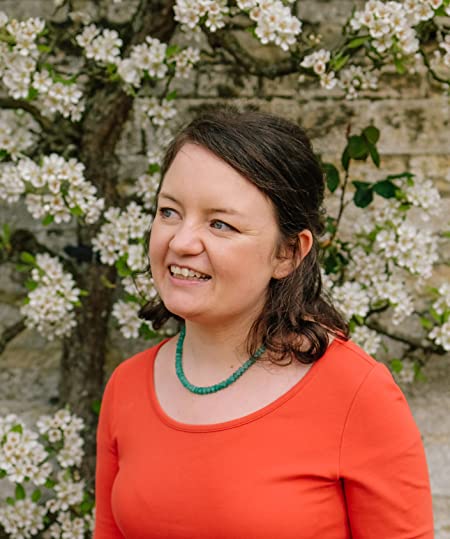
Eva Jordan, born in Kent but living most of her life in a small Cambridgeshire town, describes herself as a lover of words, books, travel and chocolate.

Eva is a published writer of several short stories and debut novel 183 Times A Year. Eva has always had a love of books and reading and really got the writing bug when she received a first for her dissertation, which looked at The People’s War during World War II, whilst studying for a degree in English and History.

Eva’s career has been varied, including working in a Women’s Refuge and more recently at the city library. However, storytelling through the art of writing is her true passion. Eva enjoys stories that force the reader to observe the daily interactions of people with one another set against the social complexities of everyday life, be that through crime, love or comedy.

You can find Eva on Facebook, and Instagram, follow her on Twitter @EvaJordanWriter and visit her website.

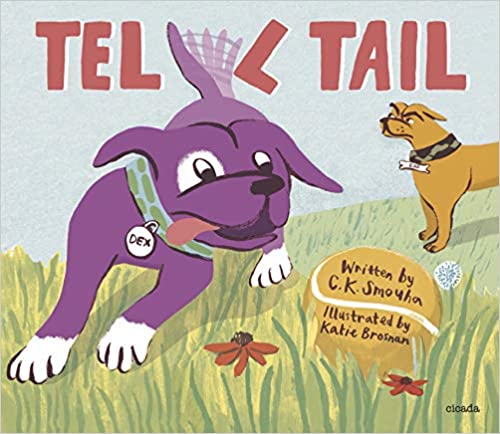
Tell Tail by C.K Smouha and Illustrated by Katie Brosnan

The lovely folk at Cicada frequently send me surprise children’s books in return for honest reviews and I’m ashamed to sat that Tell Tail by C.K Smouha and illustrated by Katie Brosnan is one such book that has been languishing on my TBR for some months. Today, however, I’m finally sharing my review.

Tell Tail was published by Cicada in November 2020 and is available for purchase here.

Tell Tail

Dex is a Staffie with an unruly tail. All the other members of Dex’s family are tough as nails, but Dex is cut from a different cloth. He likes to chat and play, and when he does, his tail wags wildly. When he’s sad, his tail tucks under. Everyone can see exactly how he’s feeling. The rest of Dex’s family find it very embarrassing, so Dex tries to rein his tail in – to no avail.

One day at the park, Dex is doing his best to control his tail when a big red dog called Bailey bounds up to him. Bailey has the waggiest, most ridiculous tail Dex has ever seen. They have a marvellous time playing, until Dex catches sight of his dad’s disapproving face.

Dex runs and runs and runs, until he stops caring – about his tail – about anything. When Dad finds him, his tail is completely still. It doesn’t wag, it doesn’t tuck under. It’s just there. After a couple weeks, Dad starts to feel uncomfortable. What could be wrong with Dex? Dad and Dex go back to the park, where with the help of Bailey, they rediscover the joys of self expression.

My Review of Tell Tail

Dex’s tail gets him into trouble.

The physical qualities of Tell Tail are as good as I’ve come to expect with books from this publisher. The hard cover is robust and durable and the book itself of a perfect size for sharing with groups of children as well as individuals. I liked the naïve, slightly sketchy quality of the illustrations by Katie Brosnan too as she conveys the emotions and attitudes of Dex and his family as well as Bailey’s exuberance so effectively with just a few brush strokes.

The story in Tell Tail is well designed with a really good balance of text to illustration and sufficient length to make it quick enough to read and retain a child’s attention, but with enough depth and variety to make it a story that can be returned to on several occasions. The dogs digging, running and fighting are all concept that are familiar to children so that they can identify with canine behaviour as well as, perhaps, their own experiences.

However, it’s the messages underpinning the action in Tell Tail that make it such a success. This is a story about being true to yourself as Dex comes to terms with his unruly tail, about realising that difference is not a negative thing and about being aware how your attitude to another person – in the way Dad makes Dex control his tail – can affect their happiness and well-being. There’s so much here to discuss with children and gently teach them about their place in the world. I’m sure Tell Tail will enhance the confidence of children who feel distanced from others and help them accept their own attributes.

Tell Tail is a lovely story. Tell Tail is perfect for adults and children alike, not least because it reminds us all of the joy we once knew as children and reminds us to embrace life and our physical attributes in order to have fun and enjoy ourselves.

About C.K. Smouha

C K Smouha is a television writer and author living in London. Her writing credits include Clique (BBC2) and Dates (Channel 4). She is also a children’s author whose previous books include Born Bad, Sock Story and Iced Out.

About Katie Brosnan

Katie Brosnan is a British author and illustrator who lives in Northamptonshire. She earned an MA with distinction in Children’s Book Illustration from the Cambridge School of Art, and also studied Fine Art at Nottingham Trent University. She was a UK winner of the International Picture This! award in 2018, and highly commended in the Macmillan Prize for Illustration in the same year.

Keith Among the Pigeons was her debut picturebook, published by Childs Play International in 2019. It was longlisted for the 2020 Klaus Flugge prize and selected for the UK Library Summer Reading Challenge. Her second book Gut Garden, a non fiction illustrated book was published by Cicada Books in 2019. It has been nominated for several awards including being shortlisted for The Royal Society’s Young People’s Book Prize 2020.

When she isn’t drawing or working on books, Katie helps to run workshops for children, gets involved in local wildlife projects and makes one-off ceramic characters.

For further information, follow Katie on Twitter @katiebdrawing or visit her website. You’ll also find her on Instagram and Facebook.

Three’s A Crowd by S. R. Booker

My enormous thanks to Sara-Jade Virtue for inviting me onto the blog tour for Three’s a Crowd by S. R. Booker and for sending me a copy of the book in return for an honest review. I’m delighted to share that review today.

Three’s a Crowd was published by Simon and Schuster on 27th October 2022 and is available for purchase through the links here.

Three’s A Crowd

Out-of-work actor Harriet is recuperating from a crash-and-burn affair with Damian – aka ‘Cockweasel’ – and making ends meet as a barista when she meets two rather lovely men. Tom is a regular at the café, and seems like such a nice guy. Smooth-talking DJ Richard is older, but in great shape – a real silver fox.

Deciding to take a chance on both of them, Harriet doesn’t realise at first that she is actually dating father and son. Tom and Richard aren’t on speaking terms, and don’t share a last name – so how was she to know? By the time everyone finds out, both Tom and Richard are truly madly deeply in love with Harriet, and she’s faced with an impossible choice.

But as the battle for her affections intensifies, ‘Cockweasel’ makes an unexpected reappearance and begs her to give him another chance…

My Review of Three’s A Crowd

Harriet’s love life is about to get complicated.

What an absolute treat of a book. You know, occasionally the right book comes along just at the right moment for a reader and S.R. Booker’s Three’s A Crowd was exactly that for me. It’s one of those narratives where you realise your face feels odd and that’s because you’ve been grinning with pleasure from the very beginning. Three’s A Crowd brought back my sense of humour and made me happy.

In Three’s A Crowd there’s a wonderful conversational tone that makes the reader feel the characters are speaking directly to them, ensnaring them completely. I loved the way that character comments directed at the reader gave compelling hooks at the end of chapters as it made me excited to read what might be coming next and made me feel involved in the narrative.

And for anyone who thinks rom-com style fiction is simply formulaic boy meets girl, they break up and then get back together again, S.R. Booker makes them look a fool. Aside from the fact Harriet finds herself embroiled with an estranged father and son, the plot is fabulous as it twists and turns with so many elements that I simply didn’t see coming but that held me captivated. I genuinely had no idea how Three’s A Crowd would be resolved. There’s a fast pace that romps along and strands that are most unexpected that add to the sheer enjoyment of the story.

With a relatively small cast of central characters there’s the opportunity to get to know Harriet, Richard and Tom intimately so that the reader cares for them completely. I’m not usually a fan of multiple viewpoints, but here the individual voices are so clear that I absolutely loved them all. I think it illustrates the quality of S. R Booker’s writing that I simply couldn’t decide how I wanted Three’s A Crowd to end. And what I got wasn’t what I expected, but you’ll have to read the book for yourself to see what I mean! I also loved meeting those, like Nan, who don’t have such major roles. Whilst I wasn’t sure I’ll enjoy the same films in my 80s, I think Nan has several traits and habits that I might just adopt! Again, I’m not telling you which! You really do need to read this fabulous book for yourself to discover all its delights.

However, much as Three’s A Crowd is frothy, witty and fun, it has at its heart some profound themes such as identity, responsibility, mental health and family that give it really satisfying depth too. I thought the balance was perfect. Harriet’s ‘Thoughts’, although extreme, are eminently relatable and the family dynamics between Tom and Richard are central to humour and poignancy making Three’s A Crowd surprisingly emotional as well as funny.

I loved Three’s a Crowd because it’s fun, fresh and fabulous. I could not have enjoyed it more and really recommend it.

About S.R. Booker

Author and screenwriter Simon Booker writes crime novels and prime time TV drama for the BBC, ITV and US TV. He is also Writer in Residence at HMP Grendon.  His TV credits include BBC1’s Inspector Lynley MysteriesHolby City and The Mrs Bradley Mysteries; ITV thrillers The Stepfather and The Blind Date; and Perfect Strangers, the CBS romantic comedy starring Rob Lowe and Anna Friel.  Simon lives in London and Deal. His partner is fellow crime writer and Killer Women co-founder Mel McGrath. They often discuss murder methods over breakfast. Three’s a Crowd is his first contemporary fiction novel.

For further information, follow Simon on Twitter @simonbooker and find him on Facebook and Instagram.

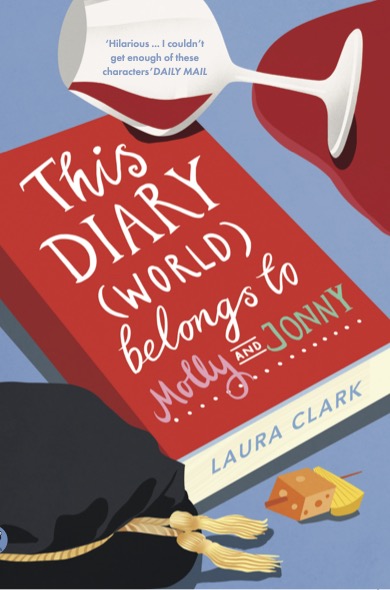
This Diary (World) Belongs to Molly and Jonny by Laura Clark

My huge thanks to Mikka at Everything With Words for sending me a copy of This Diary (World) Belongs to Molly and Jonny by Laura Clark in return for an honest review and for waiting so patiently as I became inundated with requests for blog space. I’m delighted finally to share my review today.

Published on 22nd September 2022 by Everything With Words, This Diary (World) Belongs to Molly and Jonny is available for purchase here.

This Diary (World) Belongs to Molly and Jonny

Dr Molly Beaujolais (Lecturer in Performing Arts and Applied Theatre) and Jonathan Nylon (Lecturer in History) both keep diaries and have offices next door to each other. Two unlikely lovers, particularly since much of Molly’s time is taken up internet dating while Jonathan Nylon obsesses about his presentation of the battle of Narvik, his course on medieval disease and punishment and his impossible lodger, but life likes to play around with the impossible. Wickedly funny, clever and daring. And touching because it’s all about being human in a very lonely world.

My Review of This Diary (World) Belongs to Molly and Jonny

Molly and Jonny are looking for love.

It’s a long time since I’ve laughed aloud so frequently reading a book but This Diary (World) Belongs to Molly and Jonny made me snort with laughter time and again. It’s quirky, witty and steeped in both convention and, ironically, pretention (as in Molly’s ongoing conversations about Nathaniel) in a unique, intelligent and vibrant manner that makes it such fun to read. I confess that not every allusion was within my frame of reference, but that only added to my enjoyment and to the academic setting for the story. I looked up some elements and had memories sparked by others.

In many ways the characters in This Diary (World) Belongs to Molly and Jonny reminded me of a modern day cast of Commedia dell’Arte with their quirks and roles in highlighting Molly and Jonny, especially as student theatrical performance is one of the themes of the narrative. I thought the role of Beacon lighting the way to true love for Molly (that she initially misses) was inspired and I have no idea if I’m reading more into my interpretation than was intended, but Vincent’s narcissistic photographic behaviour made me think of Vincent Van Gogh’s self portraits. Honestly, This Diary (World) Belongs to Molly and Jonny might be more a novella in length, but I think it could be read and re-read many many times and even more interpretations and allusions could be found and enjoyed. It’s a rich tapestry of life past and present that offers so much more than just a diverting narrative.

Set against this fascinating background the two central characters of Molly and Jonny are brilliantly prosaic, concerned with all the things we all worry about. Have we said and done the right things? Have we made fools of ourselves? Will we find true love? Their lives swirl around one another in an entertaining and believable courtship dance that never quite synchronises so that the reader begins to despair that they will ever truly be happy. What Laura Clark does so brilliantly is to explore the human condition, and the need we all have for connection and intimacy in a world gone mad with political intrigue and global concerns. Molly and Jonny are the very microcosm of humanity. Whilst This Diary (World) Belongs to Molly and Jonny is set just before Covid, it is just as relevant now and has a universality that will endure.

I thought This Diary (World) Belongs to Molly and Jonny was a super read and I devoured it in one sitting because I found it so engaging. Maybe, in the spirit of Molly and Jonny I should sum up my review in a diary entry of my own:

21st October Linda Hill- Read This Diary (World) Belongs to Molly and Jonny. Laughed frequently. Fell in love with Molly and Jonny. Loved spotting cultural, historical, geographical and literary allusions. Shed a small tear at the human need for intimacy and connection so brilliantly displayed. Thoroughly enjoyed the book!

About Laura Clark

Laura Clark grew up in Gloucestershire and studied music at the University of Birmingham. Highlights of her musical career include singing at St Peter’s Basilica and getting a fork for Gareth Malone’s couscous, before he was really famous. She has written for: Musical Opinion, San Francisco Classical Voice, New Humanist, BBC Music Magazine’s news feed, Jazz Journal, Warships International Fleet Review, Drama and Theatre, CBeebies magazine, The Wotton Times, Good on Paper and others. Her children’s story book A Conker for a Pearl was made into a stop-motion animation by Sasha Langford and screened at InMotion Festival in Aberdeen.

For more information, follow Laura on Instagram.

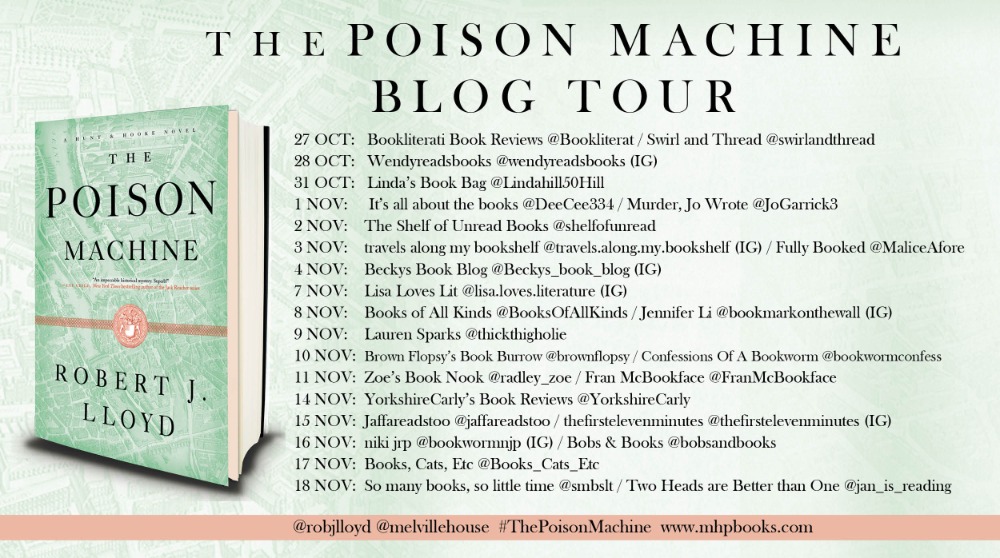
The Poison Machine by Robert J. Lloyd

It’s almost exactly a year since I reviewed The Bloodless Boy by Robert J. Lloyd in a post you’ll find here. Consequently, when Nikki Griffiths invited me to participate in the blog tour for Robert J. Lloyd’s second book in the Hunt and Hooke series, The Poison Machine, I simply had to take part. I’m delighted to share my review today.

Published by Melville House on 27th October 2022, The Poison Machine is available for purchase here.

The Poison Machine

In a thrilling sequel to The Bloodless Boy —a New York Times Best New Historical Novel of 2021 — combining the colour and adventure of Alexandre Dumas and the thrills of Frederick Forsyth — early scientists Harry Hunt and Robert Hooke of the Royal Society stumble on a plot to kill the Queen of England . . .

London, 1679 — A year has passed since the sensational attempt to murder King Charles II, but London is still a viper’s nest of rumoured Catholic conspiracies, and of plots against them in turn. When Harry Hunt — estranged from his mentor Robert Hooke — is summoned to the remote and windswept marshes of Norfolk, he is at first relieved to get away from the place.

But in Norfolk, he finds that some Royal workers shoring up a riverbank have made a grim discovery — the skeleton of a dwarf. Harry is able to confirm that the skeleton is that of Captain Jeffrey Hudson, a prominent member of the court once famously given to the Queen in a pie. Except no one knew Hudson was dead, because another man had been impersonating him.

The hunt for the impersonator, clearly working as a spy, will take Harry to Paris, another city bedevilled by conspiracies and intrigues, and back, with encounters along the way with a flying man and a cross-dressing swordswoman — and to the uncovering of a plot to kill the Queen and all the Catholic members of her court. But where? When?

The Poison Machine is a nail-biting and brilliantly imagined historical thriller that will delight readers of its critically acclaimed predecessor, The Bloodless Boy.

My Review of The Poison Machine

There’s a new investigation afoot.

I thoroughly enjoyed being back in the company of Harry Hunt and Robert Hooke. Robert J. Lloyd creates such a vivid sense of setting that the writing has a filmic quality providing a truly visual experience for the reader. It means The Poison Machine would make a marvellous television series and although the story is set in the 1600s, it has a Dickensian tone to the style that feels high quality. What I also really appreciated in Robert J. Lloyd’s style is that he often uses direct speech as a counterpoint to detailed description, frequently with witty understatement so that whilst the plot is fast paced and exciting, often with unsavouriness and occasional violence, there’s humour too that provides pitch-perfect balance.

As with The Bloodless Boy, The Poison Machine plot is steeped in meticulously researched historical detail, and blended with imagined events seamlessly to create an authentic and, I felt, occasionally quite a disturbing read. So much of the religious prejudice, the political machinations and the corruption of Harry Hunt and Robert Hooke’s era is all too pertinent to today’s world, making the exciting narrative feel uncomfortably and unnervingly modern as well as historically satisfying. This is a book that entertains but also makes the reader contemplate the world around them.

I think a reader needs to set aside quality time to read The Poison Machine because I kept finding myself thinking, ‘Oh. That’s interesting. I wonder if it/they were real.’ so that I kept pausing to look up references, so fascinating was the story. I also think The Poison Machine would reward several re-reads as I think there are nuances that only become clear once the full story is known.

That said, The Poison Machine is also a fast paced adventure that explores false identity, betrayal, science, religion, relationships, culture and friendships at both an international and personal level so that the reader isn’t always sure just who the heroes and villains really are, making for cracking entertainment. What Robert J. Lloyd does so well when he reveals the truth about a character, is to make the reader aware that there are layers to everyone and a simple definition of good or bad is not easily applied. He explores humanity so effectively. There’s also a salutary consideration of being careful what you wish for mixed in with murder, abduction, diamonds, and machinations of many kinds. The Poison Machine is every bit as intense, heart-thumping and diverting as any James Bond film so enjoyed today.

I confess I was glad of the cast list at the start of the book as there are quite a few names to retain. However, following on from The Bloodless Boy, in The Poison Machine, the main characters become more distinct to the reader. I especially liked the development of Grace because she refuses to conform to the norms of the times. She’s a well balanced combination of strength and vulnerability that makes her feel all the more real. I’m not sure I could endure some of her adventures with quite such equanimity!

The Poison Machine is a cracking historical thriller that I thoroughly enjoyed. Robert J. Lloyd led me on an adventure as eloquently written as any of the literary greats of the past two hundred years. I recommend it most highly.

About Robert J. Lloyd

Robert Lloyd, the son of parents who worked in the British Foreign Office, grew up in South London, Innsbruck, and Kinshasa. He studied for a Fine Art degree, starting as a landscape painter, but it was while studying for his MA degree in The History of Ideas that he first read Robert Hooke’s diary, detailing the life and experiments of this extraordinary man. After a 20-year career as a secondary school teacher, he has now returned to painting and writing. He is the author of The Bloodless Boy, which was selected by Publishers Weekly as a Mystery Book of the Year and The New York Times as a Best New Historical Novel of 2021.

You can follow Robert on Twitter @robjlloyd. You’ll also find Robert on Facebook.

There’s more with these other bloggers too:

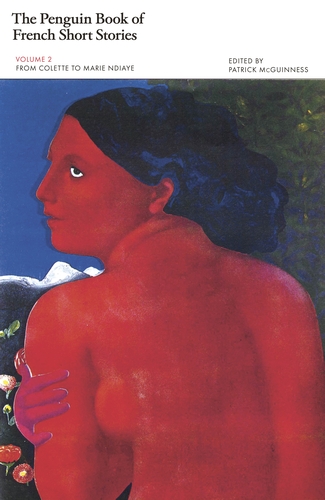
The Penguin Book of French Short Stories Volumes 1 and 2, Edited by Patrick McGuinness

It’s well over 40 years since my French A’Level first introduced me to French short stories through Colette and Guy de Maupassant, so when surprise copies arrived of The Penguin Book of French Short Stories Volume 1: From Marguerite de Navarre to Marcel Proust and The Penguin Book of French Short Stories Volume 2: From Colette to Marie NDiaye, edited by Patrick McGuinness, I was delighted to be returned to my youth!

I have a feeling that I owe thanks to Emma Lubega at Penguin Random House for sending me these books as I had previously received a sampler. It’s a pleasure to share my review today.

Both published yesterday, 27th October 2022, by Penguin Classics The Penguin Book of French Short Stories Volume 1 is available for purchase through the links here and The Penguin Book of French Short Stories Volume 2 is available here.

The Penguin Book of French Short Stories Volume 1: From Marguerite de Navarre to Marcel Proust

A major new celebration of the French short story

‘Nowhere have I witnessed real happiness, but surely it is to be found here…’

The short story has a rich tradition in French literature. This feast of an anthology celebrates its most famous practitioners, as well as newly translated writers ready for rediscovery. Here are decadent tales, ‘bloody tales’, fairy tales, detective stories and war stories. They are stories about the self and the other, husbands, wives and lovers, country and city, rich and poor.

The first volume spans four hundred years, taking the reader from the sixteenth century to the ‘golden age’ of the fin de siècle. Its pages are populated by lovers, phantoms, cardinals, labourers, enchanted statues, gentleman burglars, retired bureaucrats, panthers and parrots, in a cacophony of styles and voices. From the affairs of Madame de Lafayette to the polemic realism of Victor Hugo, the supernatural mystery of Guy de Maupassant to the dark sensuality of Rachilde, this is the place to start for lovers of French literature, new and old.

Edited and with an introduction by Patrick McGuinness, academic, writer and translator.

The Penguin Book of French Short Stories Volume 2: From Colette to Marie NDiaye

A major new celebration of the French short story across the twentieth century

‘A story? No. No stories, never again…’

The short story has a rich tradition in French literature. This feast of an anthology celebrates its most famous practitioners, as well as newly translated writers ready for rediscovery. Here are fables, puzzles, fairy tales, war stories and family histories, testing and expanding the boundaries of the form. They are stories about the self and the other, the centre and the periphery, experimental and existential, real and surreal.

The second volume takes the reader through the tumultuous twentieth century in the company of writers including Simone de Beauvoir and Maryse Condé, Patrick Modiano and Virginie Despentes, covering world wars, revolutions, and the horrors of the motorway service station. Along the way we meet electronic brains, she-wolves, a sadistic Cinderella, ancestors, infidels, dissatisfied housewives and lonely ambassadors, all clamouring to be heard. Funny, devastating and fresh at every turn, this is the place to start for lovers of French literature, new and old.

Edited and with an introduction by Patrick McGuinness, academic, writer and translator.

My Review of Both Books

Two volumes of eclectic writing spanning several centuries.

I have to apologise in advance as reviewing both Volume 1 and Volume 2 means there will be some generality to my thoughts but what we have here in these volumes is an absolute cornucopia of reading that encompasses not only many centuries, but many genres, styles and relevance to readers.

I found the introduction (repeated in both volumes) by Patrick McGuinness absolutely fascinating as he contemplates the nature of both the short story and the definition of Frenchness for their inclusion here. I loved the way in which each translator is acknowledged at the end of each story too, along with brief biographies of the authors at the end of each volume, as these features add a layer of interest as well as a feeling of community that transcends the stories themselves. I think it says something about the quality of translation too that the earlier stories in the first volume are equally as accessible as those belonging to the C20th entries in volume two.

With over 40 stories in each volume, there really is something here for everyone. Whilst I was familiar with obvious names like Balzac, Maupassant, de Beauvoir et al, I discovered so many I knew nothing about such as Sarzan by Birago Diop, so that The Penguin Book(s) of French Short Stories became a treasure trove of delight, discovering new authors, styles and literary approaches. I also found myself scuttling off to find out more about those new-to-me authors so that The Penguin Book(s) of French Short Stories have a life beyond simply reading the stories themselves. They are hugely educational whilst being totally absorbing and diverting.

As well as beautifully translated fiction with riveting stories in just about every conceivable genre, The Penguin Book(s) of French Short Stories somehow seem to enhance humanity. They encompass the real and the imagined, the corporeal world and the supernatural, war and peace, the prosaic and the exceptional, with all manner of themes that amplify the human condition and emotions from jealousy and passion through impatience and boredom to elation and love. To dip into both volumes of The Penguin Book(s) of French Short Stories is to dip into the hearts, minds and souls of writers, characters and themes across the ages.

These two volumes are filled to the brim with entertainment that the reader can return to time and again. They would make wonderful gifts and offer an enriching reading experience that I haven’t finished with yet. I’ll be returning to The Penguin Book(s) of French Short Stories time and again. I thought both volumes were excellent and really recommend them.

About Patrick McGuinness

Born in Tunisia in 1968, Patrick McGuinness is the author of The Last Hundred Days, which was longlisted for the 2011 Man Booker Prize, shortlisted for the 2011 Costa First Novel Award and won the 2012 Wales Book of the Year Award. His other books include two collections of poems, The Canals of Mars (2004), Jilted City (2010), and Other People’s Countries (2015), which won the Duff Cooper Prize and was the Wales Book of the Year. He is a Fellow of St Anne’s College, Oxford, where he lectures in French.

For further information, visit Patrick’s website, follow him on Twitter @padrigmcg.

Researching Historical Fiction: A Guest Post by Sarah Mallory, Author of The Duke’s Family for Christmas

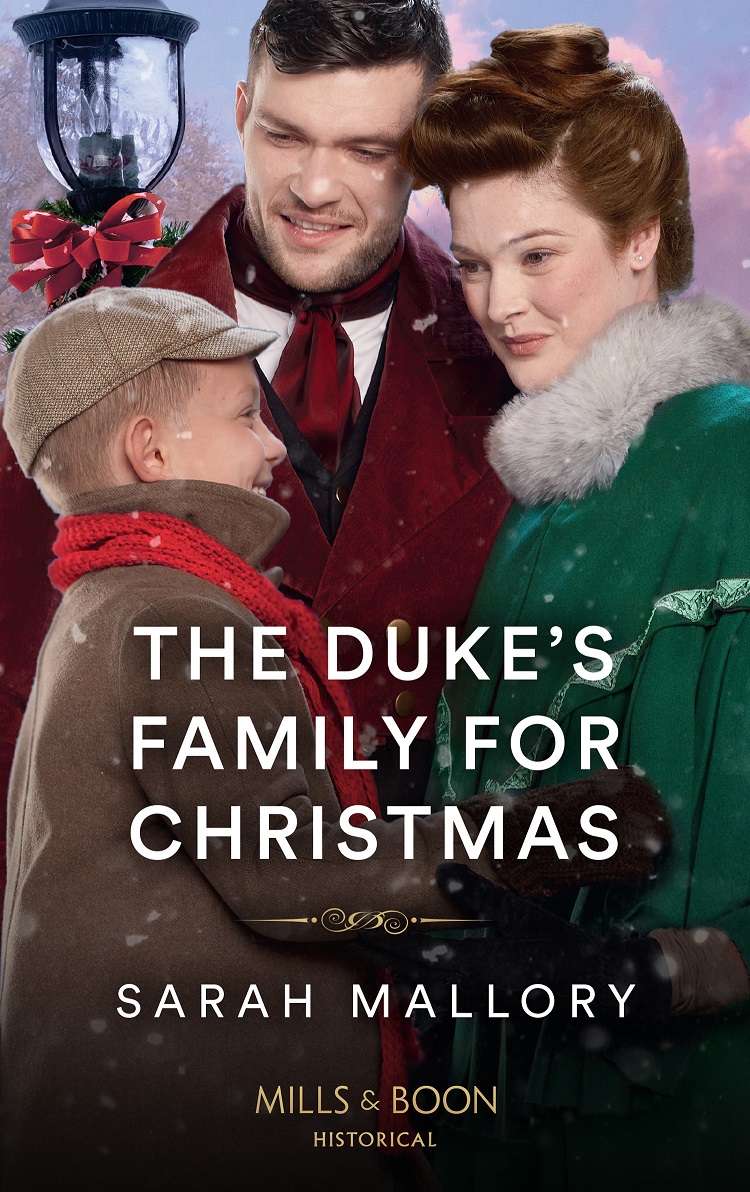
I’m so lucky to have a copy of Sarah Mallory’s latest book The Duke’s Family for Christmas on my TBR and I’m hoping to immerse myself in it in December, However, as today is publication day for The Duke’s Family for Christmas I thought I’d invite Sarah back to Linda’s Book Bag to tell me a bit about how she researches historical fiction and luckily she agreed. As a result I have a smashing guest post to share with you today and you’ll find Sarah on the blog in other posts here. First, though, let me tell you about The Duke’s Family for Christmas.

Published by Mills and Boon Historical today, 27th October 2022, The Duke’s Family for Christmas is available for purchase in all the usual places including directly from the publisher here.

The Duke’s Family for Christmas

He has until Christmas Eve…

To make them a family!

Determined to claim the son his late wife kept secret from him Leo, Duke of Tain, is working in disguise as his tutor. Until Miss Lily Wrayford, the child’s fiercely protective guardian, discovers Leo’s true identity…and gives him until Christmas to prove she can trust him!

All Leo wants is to be a good father, but might this brave, captivating woman be the final missing piece of his family?

Researching Historical Fiction

A Guest Post by Sarah Mallory

Personally, I think it’s a bit early for the C word, but my latest book is published today, so I can’t avoid it! The Duke’s Family for Christmas is a Regency romance that ends at, well, the Festive Season. When I was writing this book, I was very much aware that many of our Christmas customs did not arrive until after the Regency Period. Charles Dickens was responsible for some of them, as was Queen Victoria.

Christmas during the Regency was more about special meals, decorating the house with evergreen plants and perhaps a visit to church in the morning. Mail coaches ran their regular service on Christmas Day, so it was not the special holiday we think of today.

However, books of the period talk of snowstorms in December, so I didn’t think it would be too far-fetched to have snow in my story. There are also reports of wassailers going from house to house, singing hymns and more seasonal songs and raising money for the poor. However, 6th December was St Nicholas Day, which was the traditional day for exchanging gifts.

All this brings me on to researching for historical novels, so here goes with a few tips, for those who are thinking of writing one.

If it’s a new period for you, read around the subject – biographies, history books, literature and music. Plays and poetry of the time are good for the use and flow of language. You also need to research your facts. Children’s history books can be very good at giving you a simple overview, then you can delve deeper into your particular interest. When I started writing, one had to visit the local library, who would order in special books if you needed them, or you could travel to the bigger city libraries. These days, many universities have primary documents online, so its worth searching for these.

You can also get a feel for the period by visiting old houses, battlefields etc. Many specialist organisations are only too happy to share their knowledge, if you ask them. For example, in one book I wanted to know how to sabotage a Regency carriage. I contacted the National Trust’s carriage museum and was put in touch with a carriage builder who told me more than I would EVER need to know for my book.

Which brings me to travel – Beware of potholes

Travel can catch out the unwary author. In the early 18th Century, roads were mainly dirt tracks and a coach took a week to travel from London to York. If you look at old coaching time-tables, the average speed for a coach was 8-10 mph. Yes the rich travelled, but most people remained close to their home.

Research is great

I love it. You can disappear down so many rabbit holes!  But remember, not everything you know needs to go into the book. Beware of information dump. You are writing fiction and too much historical detail can slow up the story.

It’s not what you say

Dialogue can be a headache for the historical novelist. You only have to listen to films from the 1930s to know that we don’t talk the same now as we did in the past. Go back 200 years and the problem is multiplied! Some authors go for modern dialogue – it’s a personal choice. A few historical words and slight changes to the arrangement of the words can give an impression of the period without leaving your reader bored or bewildered.

There is much more to it than this, of course, but everyone has to start somewhere, and if you have been itching to write that novel then the best thing is to get on and do it. You’ll learn on the job.

Sarah Mallory.

****

Fabulous advice Sarah. Thanks so much!

About Sarah Mallory

Sarah Mallory is an award-winning author who has published more than 25 historical romances with Harlequin Mills & Boon. She loves history, especially the Georgian and Regency period. She has recently moved to the romantic Scottish Highlands, where she walks long walks to plot out her latest adventure!

Sarah is also the award-winning author Melinda Hammond.

You can follow Sarah on Twitter @SarahMRomance. You can also visit her excellent website and find her on Instagram or Facebook.

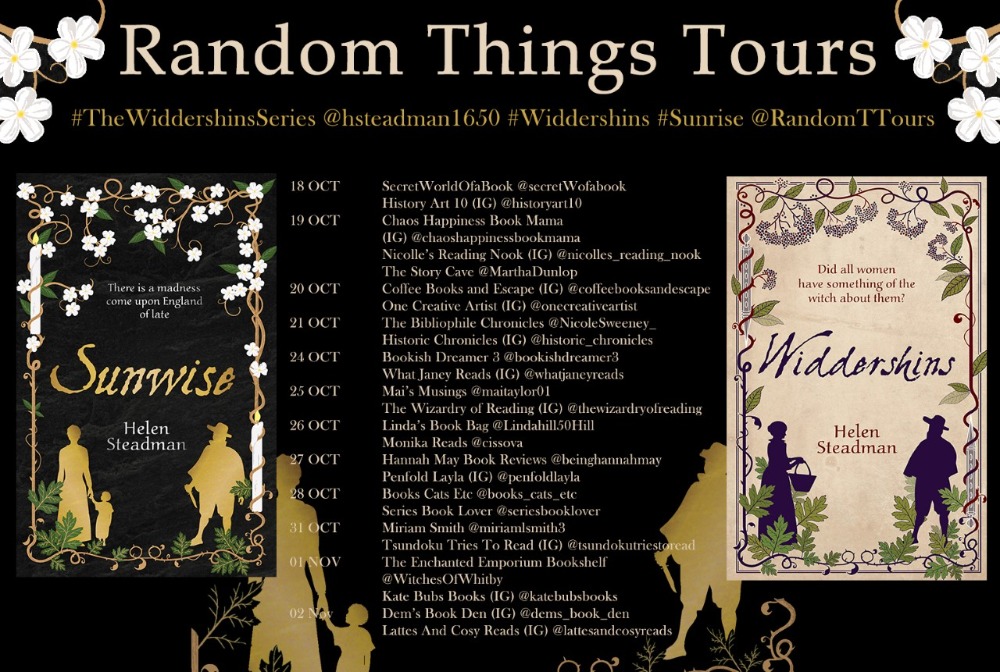
The Widdershins Series by Helen Steadman

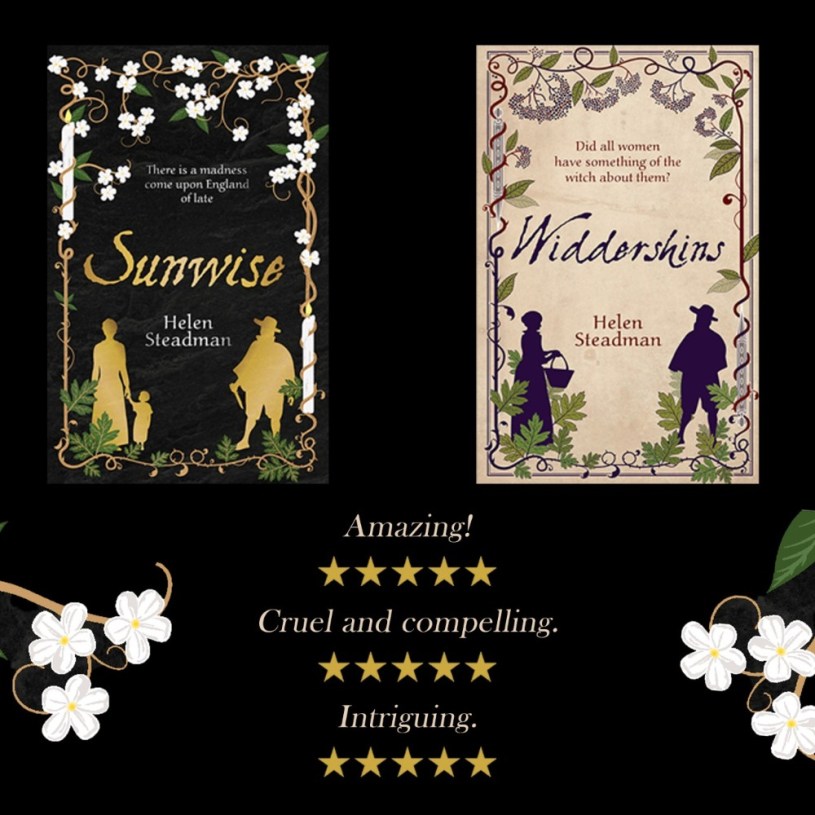
It’s rare that I reblog a previous review, but I was so impressed by Helen Steadman’s writing that when  Anne Cater of Random Things Tours invited me to participate in this blog tour for Helen’s Widdershins Series I had to take part. I loved both Sunwise and Widdershins and am delighted to reshare my reviews today. I’m lucky enough to have Helen’s The Running Wolf on my TBR too. However, let me tell you about the Widdershins Series:

The Widdershins Series 

Jane Chandler is learning the art of healing while John Sharpe wants to rid the world of witchcraft. In an English town gripped by superstition and fear, two destinies collide in these absorbing historical novels based on true events.

 Widdershins

 ‘DID ALL WOMEN HAVE SOMETHING OF THE WITCH ABOUT THEM?’

 England, 1649. A sadistic witch hunter. An apprentice healer accused of witchcraft. Can she escape the hangman’s noose?

When John’s parents die at the hands of a witch, he faces a choice: an easy life with a woman who serves Satan, or a hard life with a preacher who serves God. The cursed orphan chooses the church. Raised on raging sermons, he discovers his true purpose: to become a witchfinder and save virtuous souls from the jaws of hell.

In a town mesmerized by superstition and fear, two destinies collide. As John rounds up the local witches, Jane gets more than she bargained for when bartering with the apothecary. Instead of trading herbal remedies, she finds herself on trial for consorting with the devil. Can she prove her innocence, or will she be condemned to death?

If you like historical novels based on real witch trials, you’ll love Helen Steadman’s Widdershins and its sequel, Sunwise.

Buy Widdershins here to find out whether good triumphs over evil.

Recommended for fans of The FamiliarsTidelands and The Witchfinder’s Sister.

Sunwise


‘There is a madness come upon England of late.’

England, 1650. A sadistic witch hunter. An innocent healer and her child accused of witchcraft. Can they escape the hangman’s noose?

Filled with vengeance, John will stop at nothing in his sworn mission to free the world from the scourge of witchcraft. When his quest to vanquish evil is thwarted by Jane, he decrees that she must die.

After defeating the witchfinder, Jane must continue her dangerous healing work. Alone in a hostile and superstitious village, she struggles to keep her little girl alive.

Determined to keep his vow, the witchfinder must put mother and daughter to death. When John brings the witch hunt to Jane’s home, can she save herself and her child from certain slaughter?

If you like historical novels based on real witch trials, you’ll love Helen Steadman’s Sunwise, the sequel to Widdershins.

Buy Sunwise here to find out whether good triumphs over evil.

Recommended for fans of The FamiliarsTidelands and The Witchfinder’s Sister.

My Review of Widdershins

Jane learns the ways of natural healing from her mother. John is an orphan affected by his bad luck. Each is a product of their time.

Widdershins is absolutely brilliant. Read it.

I’m not sure I can bring myself to say anything else, so wonderful was this story, but I’ll try.

Set in the mid seventeenth century, Widdershins paints the most vivid and disturbing portrait of the times. Helen Steadman shows humanity (or frequently the lack of it) nature, superstition, the church and authority, relationships and life at all levels in a totally absorbing and disturbing read. On occasion I could hardly bear to continue and I kept stopping to put down the book and recover my composure before I read the next part so enraged was I by the attitudes displayed. I had a good idea intellectually about the era and how women were treated, but I’ve never experienced that knowledge so viscerally and emotionally as I did when reading Widdershins.

The characters of Meg, John, Jane, Tom, Annie et al were described so wonderfully through their speech and actions that they came alive as I read. I utterly loathed John but understood him completely so that alongside my hatred, Helen Steadman made me feel sorry for him too. That is masterful writing. I don’t want to reveal any of the plot for fear of spoiling the read for others but there were elements in Jane’s story that had me exclaiming aloud and giving her advice until my husband thought I’d gone quite crazy.

Widdershins is inspired by actual events but this is no dry retelling of our history. Helen Steadman is as much a witch in her spellbinding ability to enthral the reader as any of those in the story. I’m not usually overly fond of dual narratives but the stories of Jane and John absorbed me entirely and as their lives began to converge my heart genuinely thumped louder. Widdershins is historical fiction at its best, but it’s also a roller coaster read of emotion and thrills too.

I really like the way Widdershins is divided into three sections, perhaps representing the superstitious number three and its significance in the holy trinity and folklore that underpin the story.

However, an aspect that I think really took Widdershins from a very good read to an outstanding one for me was the overall quality of the prose. There’s a cracking plot, historical accuracy, naturalistic dialogue befitting the era and wonderful characterisation, but best of all is the beauty and rawness of the language. The natural descriptions took me back to my childhood and I felt there wasn’t a word out of place. I was there with Jane picking elder flowers for example.

Initially I wasn’t especially looking forward to reading Widdershins as I thought it might be dry and ‘worthy’. Instead I discovered a vivid and dynamic story that transported me back in time it and cannot recommend Widdershins highly enough.

My Review of Sunwise

Witch finder John Sharpe is back to rid the world of his perceived evil.

Having so enjoyed the fabulous Widdershins by Helen Steadman, I knew I was in for a treat with Sunwise and I wasn’t disappointed. There’s a glorious and frequently harrowing intensity to Helen Steadman’s narrative style, coupled with a vibrant historical accuracy that hypnotises the reader and transports them to a world of superstition, tradition, religion and persecution. I cannot begin to express just how authentically accurate Sunwise is, or to comprehend the level of diligence and research that must have gone in to its creation. This is a marvelous example of historical fiction.

I thought the plotting of the novel, with alternate chapters given to John Sharpe and Jane Driver exemplified perfectly the balance of good and evil, religion and superstition, women and men. Sunwise presents a seventeenth century world as vividly as if the reader is experiencing it first hand and yet with themes that are as fresh and relevant to today’s century – from abuse to corruption, greed to love. It’s impossible not to be drawn into the events because of the fabulous quality of Helen Steadman’s writing.

The fervour of John’s obsessive religious viciousness is thoroughly terrifying, and he’s a character I could hardly bear to read whilst simultaneously being unable to avert my eyes. He brought out the very worst in my personality and I wished him personal pain and suffering with a passion that made me feel quite uncomfortable.

Conversely, Jane enhanced all that is good and positive in the face of adversity. I desperately wanted her to have a happy ending and you’ll have to read the book yourself to find out if my wishes were fulfilled!

If you love historical fiction that is authentic, fascinating and compelling with characters that thrum with life then look no further than Sunwise. Helen Steadman has established herself as a brilliant writer with the power to be as spellbinding as any of the witches John Sharpe is hunting. I thought Sunwise was brilliant and connot recommend it highly enough.

About Helen Steadman

helen steadman

Dr Helen Steadman is a historical novelist. Her first novel, Widdershins and its sequel, Sunwise were inspired by the seventeenth-century Newcastle witch trials. Her third novel, The Running Wolf was inspired by the Shotley Bridge swordmakers, who defected from Solingen, Germany in 1687. Helen’s fourth novel is God of Fire, a Greek myth retelling about Hephaestus, possibly the least well-known of the Olympians. Helen is now working on her fifth novel.

Despite the Newcastle witch trials being one of the largest mass executions of witches on a single day in England, they are not widely known about. Helen is particularly interested in revealing hidden histories and she is a thorough researcher who goes to great lengths in pursuit of historical accuracy. To get under the skin of the cunning women in Widdershins and Sunwise, Helen trained in herbalism and learned how to identify, grow and harvest plants and then made herbal medicines from bark, seeds, flowers and berries.

The Running Wolf is the story of a group of master swordmakers who defected from Solingen, Germany and moved to Shotley Bridge, England in 1687. As well as carrying out in-depth archive research and visiting forges in Solingen to bring her story to life, Helen also undertook blacksmith training, which culminated in making her own sword. During her archive research, Helen uncovered a lot of new material and she published her findings in the Northern History journal.

You can follow Helen on Twitter @hsteadman1650 and visit her website. You’ll also find her on Instagram and Facebook. There’s more with these other bloggers too:

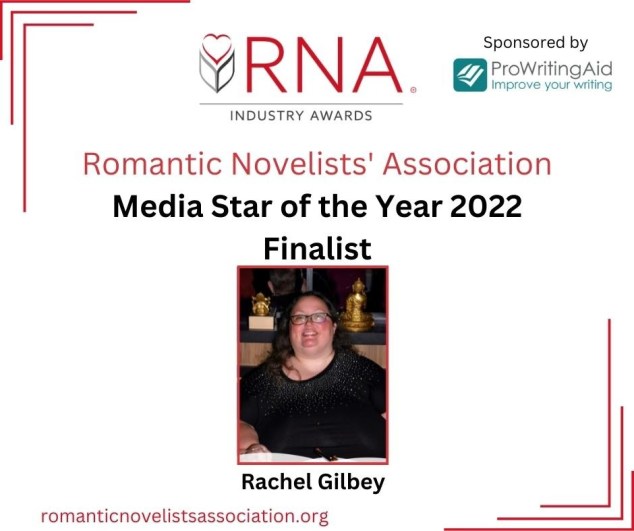
An Interview with Romantic Novelists’ Association Media Star of the Year 2022 Finalist Rachel Gilbey

It’s an absolute pleasure today to welcome fellow blogger and friend Rachel Gilbey to Linda’s Book Bag. Rachel is a fabulous blogger at Rachel’s Random Reads and a huge supporter of romantic fiction, meticulously organising blog tours through Rachel’s Random Resources, as well as being an avid reader. Rachel has been nominated several times and as a previous winner of the Romantic Novelists’ Association Media Star Award, she has again made it through to the final for 2022. I’m delighted Rachel agreed to be interviewed today.

An Interview with Rachel Gilbey

Welcome to Linda’s Book Bag Rachel and congratulations on your RNA Media Star Award nomination.

This isn’t the first time you’ve been nominated and you’ve won the award in the past. How does that make you feel?

Thank you so much for having me Linda. If I thought I was in shock the first time I was nominated, nothing can compare to discovering I was on the shortlist for a 5th year in a row this year. Utterly amazing and entirely grateful to anyone that nominated me.   And given I am the current Media Star, I honestly didn’t in my wildest dreams think I would be on that shortlist again this year.

Your nomination is much deserved Rachel!

What was it like when you won previously? 
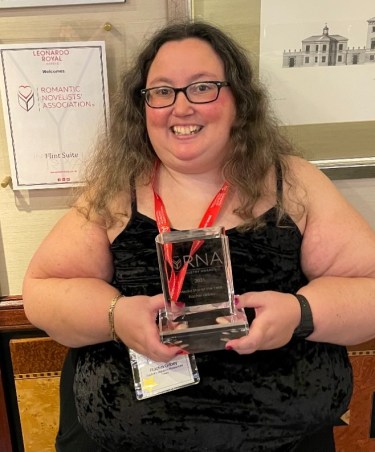
I’d imagine it was a bit like when you won it yourself previously.  Completely overwhelming, and almost a full year on still can’t believe that I won. It was amazing, and I still remember Jean Fullerton when handing over the award to me, checking that I would be ok to organise her next blog tour!

I think the smile on your face says it all! I was delighted for you as you’re such a champion of romantic fiction.

Last year’s RNA Industry Awards and Winter party was the first big book event I believe since the start of the pandemic, so it was just wonderful to see so many people that I had missed over the previous 18 months or so, in the flesh.  To me the parties (and invite to them) are the true prize of being shortlisted – as there is nothing like an RNA party.

I quite agree and am only sorry I can’t be there again this year. It’s the fantastic people that make it such a brilliant event.

A mix of top and upcoming romance authors, a lot that I have either read or worked with in one place, with typically a mix of people working in the industry too, normally makes for a fantastic evening.  And the award and winning was just the cherry on top of a rather special cake!

That being said I do have the trophy and certificate in pride of place on my media centre unit, where I can see them whenever I look up and they always make me smile.

I bet! My Media Star award is still in pride of place too!

This was the first time I’ve ever won anything on merit and it still feels incredible.

And no-one can take that away from you.

So, what do you think is so special about romantic fiction?

For me it is all about escapism, ever since I was a young teen (may have been pre-teen), reading my first Mills & Boons, I have been hooked on romance. I love the feel good factor of the genre, the ability to lose yourself in a story and with the books I tend to read have a happy ending.

It takes you away from the gritty reality of life, and anything that can give you pleasure, and make you believe that there could just be a man out there for you (even when you aren’t the traditional / stereotypically beautiful woman), has to be a good thing.

I think you’re absolutely right Rachel. There’s someone for everyone and we all need that escapist happiness that romantic fiction delivers in spades, whatever our relationship status or appearance. 

What would you say to those who never read romantic fiction?

I’d say that most genres almost certainly have a romantic storyline in them whether it is at the heart of the story or not. In crime we often learn about the detectives personal lives, and I find myself drawn to their relationships just as much as I am to the crimes they are solving.

Romantic fiction is so much more than the “bodice rippers of yesteryear”, they feature real characters, relationships (romantic / friendship / family), and tend to be characters you can really relate to, while also being able to lose yourself into a fictional world.

I agree. It’s all about relationships of all kinds and if we strip those out of other genres there’s not often much left!

Is there anything you’d like to see more or less of in romantic fiction? 

I am a sucker for an exotic destination and love being able to travel with my books too, and would love to see more than just France / Spain / Italy / Greece featured in the main summer releases.  There are so many other great holiday destinations that characters could go to!

Oh yes! I love a bit of vicarious travel too. 

Of course an increase in diversity in all of its forms race / sexuality / disability would be good to see too.

And age (for those of us in out 60s?)

Linda, if you are looking for books with older protagonists, make sure to check out Maddie Please, Judy Leigh to name two authors that instantly jump to my mind with older characters.

I will! Thanks for the suggestion Rachel.

Is there a ‘go to’ romantic author whose books you never miss?

You know asking a mother who her favourite child is, would probably get you a more definite answer, than asking a book lover for her “go to” romantic author.

My must read every single book author list is far too long to start naming here! But if you insist I absolute can’t get enough of…. Actually I tried to start typing and then realised I don’t have a spare hour to tell you, and even then I would miss some.  But they do regularly feature on my blog!

Brilliant answer. 

Which romantic novelist do you think is too much under the radar and deserves more recognition?

Ah now that’s an interesting question – Holly Martin jumps to mind for this one – she is the absolute queen of the big romantic gesture, and her books are just wonderful.

Oo. I’ve just checked and I haven’t read nearly enough of her books. 

Is there a romantic book you haven’t read that you’re itching to get to?

Pretty much all the ones on both my Netgalley shelf and also my actual bookcase, not to mention the many hundreds of other books on my kindle that I really would like to read!

What I can say with certainty though is that when The Christmas Bookshop by Jenny Colgan (which is out on 27th October) arrives from Amazon, I will be 110% itching to finish whatever I am currently reading that day in order to read that.

Ok so Jenny Colgan, Milly Johnson, Jill Mansell, Cathy Bramley, Carole Matthews, Ali McNamara, Sarah Morgan, Jo Thomas, Sophie Kinsella, Lindsey Kelk are just some of my all time favourite authors of romantic fiction – which I possibly should have just started naming two questions ago.

The trouble is, there are so many fabulous authors and books in the romantic genre that there aren’t enough years in our lives to read them all!

Which has been your favourite romantic read this year so far? 

As you may be starting to realise I am rubbish at picking favourites, I just love so so many books.

But standouts include the final three books of the Hedgehog Hollow series by Jessica Redland (ah yes another go to author, speaking of which have I mentioned Nicola May for that yet too, or Julie Caplin, Sandy Barker, Heidi Swain!).

Guilty Women by Melanie Blake – couldn’t get enough of it, and eagerly awaiting her next book (another drop everything author, can you see why I can’t ever pick what book to read next, I’d drop everything for more authors than there are days in a month!).

Lost Luggage by Samantha Tonge – another memorable book from the year, from another go to author, with such a unique concept behind it, that has stuck with me a lot too.

Three very different choices which just goes to show the variety within romantic fiction I think.

What other genres do you enjoy?

I tend to enjoy crime / thriller and psychological thrillers too which I tend to read as palate cleansers every few romance, just for a bit of variety.

Absolutely. Variety is the spice of life…

You’re a blogger so could you tell us a bit about your blog and what blogging entails for you please?

For the past 7 years I have been blogging as Rachel’s Random Reads, and at the moment the actual blogging is me writing and sharing reviews of books I’ve read, to spread the book love to as many people as I can.

I used to run regular features, on there too, but since setting up Rachel’s Random Resources (Linda, bet you’re wondering why it took me so long to mention it!) where I organise blog tours for authors I have a lot less time for the blogging part of my life.

I was wondering…

However it’s through blogging that I have met so many wonderful authors, publishers, fellow bloggers and truly feel that I have found where I belong in the world – amongst fellow book lovers. Especially at RNA events, where I really am with my tribe!

You really are and it is most definitely where you belong. And long may Rachel’s Random Reads and Rachel’s Random Resources continue! Huge congratulations again Rachel on your fifth nomination for the RNA Media Star Award and thanks so much for being on Linda’s Book Bag today. 

Thank you so much for having me Linda.

About Rachel Gilbey

Since starting her popular blog Rachel’s Random Reads over seven years ago, Rachel has discovered just how much the book community means to her, and has even created her own ideal job of organising blog tours at Rachel’s Random Resources. She loves reading a wide range of genres, but particularly enjoys contemporary romantic fiction. She lives just outside central London, which she says is useful for attending book events, and indulging in her passion for West End musical theatre.

For more information, follow Rachel on Twitter, find her on Facebook and Instagram or visit her blog and website.
An Unplanned Series: A Guest Post by Robert Crouch

Lovely Robert Crouch has been a frequent feature on Linda’s Book Bag in several posts you’ll find here. Today I’m delighted to welcome Rob back as he contemplates how he came to write the Kent Fisher series of books with a simply wonderful guest post celebrating getting to the eight book in the Kent Fisher series, No Escape.

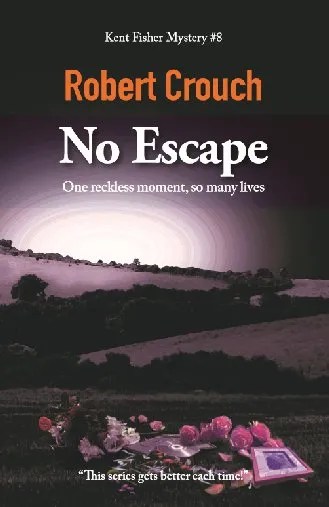
Before I share that though, let me tell you about No Escape, which is available for purchase here.

No Escape

One reckless moment, so many lives.

Gemma Dean goes missing one chilly October morning, leaving behind her phone. Texts hint at secrets far darker than Kent Fisher could ever imagine.

When a body is found in his burned out car over a hundred miles away, murder brings the past crashing into the present with the first in a chain of painful discoveries.

Struggling to make sense of a past that threatens to devastate his future, Kent faces his most personal and challenging investigation so far.

But how will he deal with the fallout from one reckless moment that cost so many lives?

An Unplanned Series

A Guest Post by Robert Crouch

On the 19th September 2022, a reader posted a five star review that ended with the following paragraph –

‘I held off writing a review as I wanted to get the second book and see if it was as good. Now I’m on book SIX in the series and it’s STILL rocking along with the same energy, enjoyment and real-life background that’s utterly engrossing, with no sign of becoming formulaic. Wonderful!’

Forgive me for blowing my own trumpet, but when you’re struggling to write Book Nine in the series, and your thoughts keep flirting with an idea for a different novel, you need all the encouragement you can get.

And there you have it in a nutshell – the joys and struggles of writing a series.

Readers want them. They love them, often reading one after another in rapid succession, the way viewers binge watch series on catch up TV. After completing the first two Kent Fisher murder mysteries, I had no plans or ideas for a third.

I only wrote a second novel because the first one had environmental health officer, Kent Fisher, investigating a serial killer. The concept posed several awkward questions that challenged the credibility of the story.

Why was an environmental health officer (EHO) investigating a murder?

Did a relative of the victim pop down to the town hall and ask if an EHO could slip in some sleuthing between food hygiene inspections of local restaurants?

That’s what was happening in No Bodies, the first novel in the series at this point.

So I wrote a second book, which would become the first in what was starting to look suspiciously like a series in the making. Kent had to be drawn into investigating a murder. Disguising a killing as a work accident came to me while I was out on my South Downs district, thinking about murder between food hygiene inspections.

The idea became No Accident, the first Kent Fisher murder mystery. While investigating the accident, he uncovers a perfect murder, which turns out to be the start of his troubles.

Many years were to pass before the novels were published and I had to consider writing a third. Readers enjoyed the first two, liking the characters, the backstory and the complex whodunits. Many also wrote how much they enjoyed something fresh and different from the usual police procedurals on the market.

Could I write a third?

The first two novels were planned in great detail over several years. And how many times could I get away with an EHO investigating a murder? I had visions of him ending up like Jessica Fletcher in Murder She Wrote, relying on relatives and people she knew to provide the sleuthing opportunities.

Kent was a bit of a loner, running an animal sanctuary outside of the day job. He had commitment issues, which meant his love life was a series of short encounters. He lacked the time and large family to support a series of murder investigations.

Or was this fear and self-doubt talking?

One of the other key features readers enjoyed were the glimpses into environmental health work. A health and safety at work accident investigation in the first, infectious disease control in the second.

Could I select some of the other diverse areas of my work as a basis for stories? This could stop them becoming formulaic, further stretching the credibility of my character and the stories.

Don’t ask me where the idea came from, but the opening lines popped into my thoughts one day. It was delivered by an elderly resident in a luxury residential home.

The old man’s grip tightens on my forearm. “They’re killing me.”

Now Kent could have been walking through the main lounge after inspecting the home’s kitchens, but this could become repetitive. Indeed in subsequent stories, I make sure there’s always a chef apologising for not having a body in the freezer.

Instead, Kent took his West Highland white terrier, Columbo, to the care home on a ‘Pets as Therapy’ visit. A few weeks later, the man dies and has to be buried by the local council as he has no relatives to arrange or pay for a funeral. (This was another environmental health aspect to slip into the novel.)

Kent’s drawn into a third murder investigation in No Remorse.

I forged ahead without any planning, not wanting to keep readers waiting. Equally, I wasn’t sure I could produce a third novel, so plunging straight in didn’t allow time for any doubts to defeat me. When I completed the novel, this method became the template for the future.

It also demonstrated the importance of the backstory – the animal sanctuary, his problems at work during a time of Government spending cuts, his romantic encounters, and the characters that had become a family to me. Readers agreed, enjoying these elements, which often added a humorous, cosier counterpoint to the grim aspects of murder.

Determined to avoid repetition, I had the police seek Kent’s help with a cold case in the fourth novel, No More Lies. In No Mercy, the fifth story, I created the restaurateur from hell to wreak havoc on social media after his business was given a poor hygiene rating. When he was murdered in one of his walk-in chillers, Kent became a suspect.

Personal issues in the backstory allowed me to end each novel with a problem and a hook. Of course, this meant the next novel had to answer any questions raised. This meant I had to consider these questions before I could give much thought to the next murder.

And all the time, readers keep telling me each story was better than the previous one, adding to the pressure.

In the sixth novel, No Love Lost, Kent, the hunter, became the hunted. It stuck to the template, but this time his past was under the spotlight. Still with one eye on avoiding formula or cliché, I risked another personal novel for the seventh in the series, No Going Back. This time it was the drowning of a friend and fellow hunt saboteur at the heart of the story.

As I wrote the first draft of the novel, it had the feeling of being the last.

It’s difficult to keep the stories and investigations fresh and inventive. Sooner or later, I’ll produce a novel that doesn’t meet the standards of the previous ones. Then there’s the continuity challenge, which becomes more difficult with each new book in the series.

I keep records of the main characters and events in each novel, but not always the details I need. I’m forced to check back for something as simple as a character’s hair or eye colour, which interrupts the creative flow.

Then, just as I felt sure No Going Back would be the last in the series, I finished with a cliff hanger ending. The moment I wrote the final sentence, I knew I couldn’t leave it there.

Was this my subconscious rebelling? Was I worried about letting down my readers?

No Escape, the eighth novel, was another deeply personal story for Kent Fisher, but one which showed his vulnerabilities. It dragged me out of my comfort zone and opened up a fresh possibility. Could Kent become a private investigator after leaving environmental health?

I don’t know how readers will react to this new approach. I’ve no idea whether it will work.

Then again, I never planned to write a series of eight novels either.

****

What an absolutely wonderful guest post Rob. You illustrate so brilliantly the writing process and an author’s self-doubts and efforts. Thanks so much.

About Robert Crouch

Robert Crouch and Harvey

Robert Crouch brings something familiar but different to the traditional murder mystery.

Drawing on his experiences as an environmental health officer, he created amateur sleuth, Kent Fisher. Being neither a police officer nor a private investigator, Kent brings a fresh and original twist to the classic whodunit.

When he’s not writing most complex murder mysteries, Robert enjoys roaming the gentle hills and beautiful coastline of the South Downs with his wife. Armed with a camera or two, he likes to capture the wildlife and settings that play such a big part in his novels.

You can find out more on Robert’s website, and if you sign up to Robert’s reader’s group here, you’ll receive a free copy of Fisher’s Fables. You can also follow Robert on Twitter @robertcrouchuk and find him on Instagram and  Facebook.