
The Sunrise by Victoria Hislop

The sunrise

I was lucky enough to receive two copies of ‘The Sunrise’ by Victoria Hislop; one from Caitlin Raynor at Headline via Bookbridgr and the other from Joanne Finney through the Good Housekeeping Book Room on Facebook. https://www.facebook.com/groups/GoodHousekeepingBookRoom/

The story begins as Savvas and Aphrodite Papacosta are opening an opulent new hotel in the Cypriot town of Famagusta little realising the political turmoil that is about to put their wealth and lives at stake.

‘The Sunrise’ is a good book. Well written, it is thoroughly researched and blends the events of the 1970s with fiction to make an intelligent narrative as the invasion of Samagusta takes place. It is historically and geographically interesting and accurate.

However, I was disappointed. I loved Victoria Hislop’s previous books, especially ‘The Island’,  and ‘The Sunrise’ felt flat in comparison. The pace seemed pedestrian and slow so that I found my mind wandering a bit as I read.

Other than Frau Bruchmeyer, I found I didn’t empathise with many of the characters. I thought much of the writing was more like a non-fiction telling of the facts than a fictionalised narrative showing the reader the details, and it wasn’t until the latter part of the text that it felt like I was reading a novel as the writing became more cinematic and vibrant. In fact, the part of the book I enjoyed the most was the historical essay at the end of the novel where I really felt Victoria Hislop’s narrative voice had returned.

I am sure there will be many who thoroughly enjoy ‘The Sunrise’. I did enjoy it, but I had hoped to be enthralled and sadly this wasn’t the case.

Warning Cry by Kris Humphrey

Warning cry

I was delighted to receive a copy of the children’s book ‘Warning Cry’ from the author, Kris Humphrey, in return for an honest review of the book. It is published by Stripes Books on 6th July 2015.

Narlaw demons are over running the lands. Having been deemed a Whisperer at birth with the drop of a white feather on her doorstep, Nara is needed to fight the onslaught. She sets off with her panther, Flame, to try to rescue the kingdom of Meridina from the Narlaw invasion.

This is the second in a quartet of books under the umbrella title ‘Guardians of the Wild’. Although there are a few references to the first book, ‘A Whisper of Wolves’, and this one ends on a cliff hanger leading to the third in the series, it is hugely enjoyable as a stand alone read.

I was really surprised (and stereotypically stupid) to discover the author is male as I thought the strength of the female characters Nara, Dawn and Tuanne were so convincing. They almost give this a feminist aspect.

The plot romps along with huge pace so that I can see readers of 9 or 10 years old and above being utterly transfixed. As a middle aged adult I really enjoyed it too. There is danger and travel, telepathy and death – all themes that are universally attractive, not just to the target audience. There is quite a strong moral element underpinning the text as Nara decides who she can trust, what family and belonging mean and has to debate with her own conscience the rights and wrongs of killing. Nature also features as a powerful force.

Elements that make this such a satisfying book to read are the quality of writing and the illustrations. Kris Humphrey does not dumb down the vocabulary or the range of sentence structures and paragraphs so that there is a rhythm to the reading. The black and white illustrations by Chellie Carroll are absolutely fabulous. There is also a supportive website where readers can meet the land of Meridina and the characters in more detail and find their own Whisperer companion http://www.meridina.co.uk/ (I got a raven!)

I thoroughly recommend ‘Warning Cry’ to children and to adult readers alike.

Kadian Journal by Thomas Harding

kadian

I received a copy of ‘Kadian Journal’ from Windmill Books on Twitter #KadianKindness.

‘Kadian Journal’ is a book written in memory of Kadian Harding who was tragically killed in a road accident when riding his beloved bike. His father Thomas’s grief was understandably so all consuming that this journal became a way of dealing with it in a small way.

This is a short text and I thought I’d easily read it in two or three hours. It has taken me almost two full days because the depth of emotion portrayed by Thomas Harding, as he suffers Post Traumatic Shock Disorder having been present as his son died, is so overwhelming I found I needed frequent breaks to deal with my own feelings.

Structured with real time events and memories of family life focusing on when Kadian was alive, ‘Kadian Journal’ is brutally honest in portraying the rawness of grief that takes over a parent’s life when a child is killed. That is not to say that it is morbid or self-indulgent. I found the writing gave me a real insight into the vibrancy of Kadian’s character so that I felt a vicarious knowledge of a boy I would have liked to have known.

The book gives us a very firm lesson in making the most of life and recording our happy memories. ‘Kadian Journal’ is a moving and wonderful read for anyone but would be so supportive to those who are suffering their own grief.

You can find out more about Kadian and the memorial projects set up in his name here: http://www.kadianharding.com/

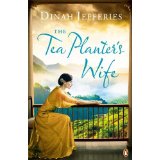
The Tea Planter’s Wife by Dinah Jefferies

Tea Planter

My enormous thanks to http://www.lovereading.co.uk @lovereadinguk for an Advanced Reader Copy of ‘The Tea Planter’s Wife’ by Dinah Jeffries.

When Gwen marries the slightly older Laurence, a widowed Ceylonese tea planter, she is excited at the prospect of a new life. However, Gwen’s ironically named sister-in-law Verity, Christina, a past lover of Laurence, and the mysterious artist Savi Ravasinghe seem to be contriving to scupper her plans so that adapting to a different climate and dealing with a house and servants become the least of her worries.

Set in Ceylon in the first part of the twentieth century, the book is incredibly well researched with all aspects of history, geography and politics absolutely convincing but subtly woven into the narrative so they serve to underpin an interesting and exciting story. An inherent racism and colonial snobbery contribute to a feeling of menace and change as a dramatic backdrop for the more prosaic elements of life.

The plot flies along as Gwen feels her way in her marriage to a man holding secrets from the past until she has secrets of her own. It is totally engaging. I really wanted to know what would happen next and there were twists, red herrings and shocks throughout – even until the last few pages.

I found the characters believable and human, and had a particular empathy for Gwen. They flirt, argue, love with a passion, sulk and hurt one another so that they feel real to the reader. There is a vivid sense of the difference between tea plantation owners and the staff who work for them, giving layers of authenticity to the narrative.

An aspect that made the novel so enjoyable a read was the attention to detail; the senses are fully explored through the scents of cinnamon, the steamy heat of the monsoon season, the whisper of silk, the colours of clothes and the sound of drums. Dinah Jefferies paints a startling and convincing picture of colonial Ceylon.

I thoroughly enjoyed ‘The Tea Planter’s Wife’. It’s recommended reading for those who love sweeping historical dramas that are totally entertaining.

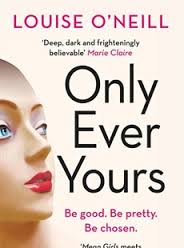
Only Ever Yours by Louise O’Neill

only ever yous

I am extremely grateful to Hannah Robinson at Quercus books for a review copy of Louise O’Neill’s ‘Only Ever Yours’. An updated adult version of this young adult text is published on July 2nd 2015.

frieda is an eve, a created female whose role in life is to be good, be pretty and do as she is told. As she approaches the Ceremony when her future life will be allocated, as a companion, a concubine or a chastity, the constant need to be perfect takes its toll and her life begins to unravel as she tries to conform.

I cannot say that I enjoyed ‘Only Ever Yours’ as that would be an incorrect verb to apply. Its dystopian content is stark and bleak, being unnervingly, chillingly, possible. Reading it put me in mind of Attwood’s ‘The Handmaid’s Tale’ or Forster’s ‘The Machine Stops’.

I found the constant competition between the girls as wearing as did frieda and it took me a while to empathise with any of the characters. I think this is part of the skill of the writing. O’Neill makes them generic and only physically distinguishable to start with because that’s how they have been created. The mysterious isabel is thoroughly spurned by society and the gradual unfolding of her story adds another layer to the text. By the conclusion my heart went out to isabel and freida in particular.

The writing is highly skilful. None of the girls is given a capitalised name to reinforce their inferiority to males and to the Father in particular. Frequently referred to by number, they are not allowed an identity of their own unless it is based on physical image and cruel comparison. The sadness is that this is how many girls and women feel today. Although men control women, the story isn’t totally misandrist. The aptly named Darwin’s frequent injuries illustrate that men can, and do, suffer too.

There are challenging themes in ‘Only Ever Yours’ and the book can be read on many levels. Bullying, the sense of being an outsider, physical perfection, the use and abuse of drugs, genetic engineering, homosexuality and identity are laid bare and underpinned by clever references such as Rainbow 24 as an homosexual gene or the capitalisation of pronouns to describe the Father.

I’m not sure how many reading ‘Only Ever Yours’ will be able to say they enjoyed it, but I’d challenge any reader not to be horrified and, ultimately, moved by a society that may not be too far removed from our own. The messages in ‘Only Ever Yours’ will reverberate in my mind for some time.

Little Black Lies by Sharon Bolton

Little Black Lies

I am indebted to Alison Barrow at Penguin Random House for my advanced reader copy of ‘Little Black Lies’ by Sharon Bolton. It is published in hardback by Bantam Press on 2nd July 2015.

After Rachel’s negligence has killed Catrin’s two sons their childhood friendship is ripped apart and, three years on from the deaths, Catlin is plotting her revenge. However, when another child goes missing in the Falkland Islands, events lead to some uncomfortable truths.

Sharon Bolton builds the tension in ‘Little Black Lies’ from the first sentence and I was unable to tear myself away. I read the book in one go with my heartbeat increasing the nearer to the end I got. What is so clever is that, whilst the plot is natural and not contrived as I have found some psychological thrillers, just when you think it is resolved one small word or phrase sends the bottom dropping out of your perceptions. It’s a truly captivating read. I was convinced I had worked out exactly who was guilty and who innocent. I was wrong.

The story is divided into a series of days surrounding the third anniversary of the deaths of Catrin’s boys and is told through the first person eyes of three people; Catrin, Callum and Rachel so that the story builds and builds with mounting tension as different perceptions and truths are revealed. It is utterly engaging.

The setting of the Falklands had real appeal to me, having been there en route to Antarctica, and I could easily picture the bleakness of the settings. I also thought the references to the agony in Coleridge’s ‘Rime of the Ancient Mariner’ that weave through the text were subtle and highly effective. The burdens so many are carrying – Rachel’s guilt, Catlin’s sorrow and desire for revenge and Callum’s PTSD – are like a weight around their necks and there is a burning desire to put things right however misguided the reasons for doing so might be. Characters are flawed, human and believable.

I found the dialogue natural and the emotions portrayed utterly convincing. I thoroughly enjoyed reading ‘Little Black Lies’ and will be recommending it to everyone.

.

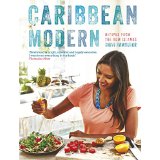
Caribbean Modern by Shivi Ramoutar

Caribbean Modern

I entered a competition on the Olive Branch Facebook page (where I confessed to using olive oil mixed with descaler to clean up Roman coins) and was delighted when I found I had not only won a bottle of Olive Branch olive oil (which WON’T be used for coins) but also a signed copy of this gorgeous book. Not having posted a non-fiction book review before I thought I would!

The premise of this book is to challenge the perception of Caribbean cooking as just ‘Jerk Chicken, Rice and Peas’ and it certainly manages that. Well organised into types of recipe such as ‘One Pot’ or ‘Sweet Things’ rather than individual foods, it is beautifully produced. Within the recipes are ingredients that anyone can obtain and where there are unusual elements where I thought ‘Oh, I haven’t heard of that’ such as amchar masala, the easily made recipe for them is included at the end of the book.

I love the slightly faded title and headings so that it feels as if the Caribbean sun has bleached some of the writing. The photographs illustrate that this is not a ‘cheffy’ book, but one that has recipes easily cooked by anyone.

However, there is more to ‘Caribbean Modern’ than the recipes. Shivi Ramoutar provides a fascinating background to the food with insights into the geography and history of the Caribbean as well as practical advice about tackling the cooking. I shall certainly be taking up the Trinidadian concept of ‘liming’.

‘Caribbean Modern’ is published by Headline and is available from Amazon and all good book shops.

If you want an excellent olive oil too see:

@olivebranchfood or https://www.facebook.com/enjoyoliveoil

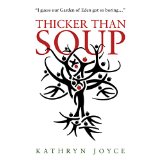
Interview with Kathryn Joyce, author of Thicker Than Soup

Thicker than soupKathy

‘Thicker Than Soup’ is published by Troubador on 28th June 2015 and is available from the publisher and all good bookshops.

Thank you so much for agreeing to be interviewed for my blog Kathy.

Thank you, too, Linda. It’s a great pleasure to be invited.

‘Thicker Than Soup’ is your debut novel. I know that you’ve got personal experiences that helped in the writing. Could you tell us a bit more about the inspiration for your story?

The inspiration for Thicker Than Soup came from several directions. Firstly, I’d just finished a year of working with VSO in Pakistan and it was very fresh in my mind. And, whilst there, a couple of vaguely related books had impressed me greatly: Oswald Wynd’s The Ginger Tree and Francis Osborne’s Lila’s Feast; both stories of strong women whose lives were greatly changed by Asian cultures.

On my return, a friend who had read some travel writing I and my husband had done, suggested I wrote a book – it struck a chord.

But writing a book about travelling didn’t feel like the right sort of challenge.  I read a lot. So, I wondered, could I write a novel?

You cover huge themes in your writing. Why did you decide to explore them through fiction?

I worked in HR, I’ve trained people, I read psychology at uni – I’m curious and fascinated by people. I love the justifications we make for our decisions, the vulnerabilities that make us human, the inexplicability of emotion. And I love peeling back the layers.

One of the strange things that happen through writing is one uncovers old truths, and one I recently recalled was the excitement of my late and lovely father uttering “Once upon a time, in a far off land, there lived a…” Is it surprising I love travel and fiction!

If ‘Thicker Than Soup’ could be made into a film, who would you cast as Sally and John?

It’s certainly a visual story, and emotional too. Hmm, how about the beautiful Aishiwarya Rai, or perhaps Kate Beckinsale as Sally, and chunky loveable James Cordon as John – if he can play a hard man too.

Will the short stories that you’re currently writing have similar themes to ‘Thicker Than  Soup’?

The ones I’ve written so far certainly explore relationships and the human condition, some of them are set abroad, and food seems to crop up in a variety of guises. But this is where my writing comes from and there aren’t any deliberate links.

Which aspects of your writing do you find easiest and most difficult?

I like writing dialogue. It ‘says’ so much and can be used to disclose or mislead or disguise. And, as you might have already gathered, characters are at the core of my writing. But I also like to settle into a space and absorb it. It might be a local café or (one of my favourites) a Norfolk beach in the winter.  I once tried my hand at watercolours, and rightly gave up very quickly. But the effort wasn’t wasted –  describing a setting needs the same deep analysis, and at least with writing I can shape and re-shape for as long as I need to.

And that’s where my frustrations lie. I’d love to be a poet. But I’m not. And finding the right words and putting in the right order so that the hairs stand on the back of the neck is something I spend far too much time trying to do. It took me around three years to write Thicker Than Soup, and another three years turning it into a jig-saw and putting it back together before it was published. It’s a better book for it, but over that time, the story hardly changed!

What are your writing routines and where do you do most of your writing?

I write in my spare time, which in reality means, I write instead of doing the housework!

When I started Thicker Than Soup I had no intention of publishing it. I write because I love writing. I write where I’m comfortable; in my study – a lovely garden room with lots of light, or in the winter, I write with my feet up on the sofa in front of a log fire. Or anywhere I can get into that place in my head where ideas and connections happen, which is a great place to be. Of course, it’s not always like that, but time flies when it is.

When you’re not writing, what do you like to read?

I read every day – I have to have my fix! My favourite genre is literary fiction, and I like easy poetry too. I’m currently reading Mr Mac and Me by Esther Freud. It’s a compelling story told by a poor Suffolk boy who befriends Rennie Macintosh during the WW1. And I’ve just read The Guest Cat by Takashi Hiraidi – a must for cat lovers.

The last poetry I read was Carol Ann Duffy’s The World’s Wives, which is another must, this time for all women.

Do you have other interests that give you ideas for writing – I’m assuming travel and cooking might be some of them?

You’ve hit the nail on the head. Cooking and travelling, yes. And of course, reading. Then there’s walking, opera, the theatre…. I’m compulsive.

As for ideas– they’re everywhere. I just pick them up and re-shape them a bit.

What advice would you give to someone thinking of changing career and becoming a writer?

Go travelling first.

It has been brilliant having Kathy on my blog and I’m sure you’ll want to find out more about her so here are some links:

Web – http://www.kathyjoyceauthor.co.uk

Twitter – @kathyAnnJoyce

Facebook – https://www.facebook.com/Kathryn.Joyce.Author?fref=ts

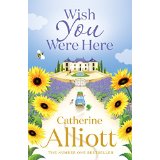
Wish You Were Here by Catherine Alliott

wish you were here

I am very grateful to Gaby Young at Penguin Random House for providing an advanced reader copy of Catherine Alliott’s ‘Wish You Were Here’. It is published on 2nd July 2015.

When James administers an EpiPen to a child on a flight from Paris, he, and Flora his wife, are given the opportunity to stay in a house in the south of France as a reward. As they, family and friends, jump at the chance of a free holiday, events don’t always turn out as they thought.

I found it interesting that the title didn’t come with a question mark as we usually associate with ‘Wish You Were Here’ and I feel that this omission helps create the framework for the story as the characters find their own paths through life and no longer need to ask questions about themselves.

‘Wish You Were Here’ is exactly the kind of novel I enjoy on a warm summer afternoon or on holiday. In some ways the plot is quite predictable, but this is part of its appeal and there are sufficient twists to elevate it beyond an ordinary read. The back stories are seamlessly woven into the narrative, providing depth and richness that is highly satisfying.

Alliott introduces the numerous characters very skilfully and although the story is told from Flora’s first person perspective, all of them are rounded and convincing. I particularly liked Flora’s mother who retains a bohemian attitude to men and life regardless of other people’s opinions.

The conversational style works extremely well and at times Flora addresses the reader almost directly so that reading ‘Wish You Were Here’ is akin to participating in the events. There is wit and charm in the writing.

‘Wish You were Here’ is an easy, feel good read, but this is not to say that it lacks depth as it is totally absorbing and engaging. I would highly recommend packing ‘Wish You were Here’ in your suitcase this summer.

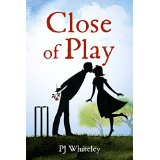
Close of Play by P J Whiteley

close of play

My huge thanks to Urbane Publications for my review copy of ‘Close of Play’ by P J Whiteley

Brain Clarke is a typical middle aged, middle classed, unmarried cricket fanatic of middle England. Still living in a deceased relative’s house he sees little point in developing any romantic relationship whilst he has cricket and pub quizzes to occupy him. The Reverend Godfrey Charlton, whilst convinced Brian is called Colin, has his best interests at heart and introduces Brian to Elizabeth Giles. However, Brian is more comfortable with cricket than a relationship because ‘well, in cricket there are rules.’

I would say at the outset that I loathe cricket! Occasionally I didn’t want to hear the post match dissections or references to aspects like silly point. However, that said, I really enjoyed ‘Close of Play’. There is a warmth and humour in the writing so often missing from life as Brian finds himself trying to work out Elizabeth’s intentions as well as his own. Brian made me smile and frequently laugh aloud. You’ll have to read the book and I don’t want to spoil the plot, but his comment about the frog is just beautifully inappropriate and mistimed.

The first person narrative gives a refreshing male perspective and there is honesty and humility in Brian’s perception of the world that makes him totally endearing. His cricket team collectively constitute a kind of Everyman so that there are characters every reader will feel they can identify with and relate to.

What I liked most about ‘Close of Play’ is P J Whiteley’s ability to entertain without sensationalism. This is a nostalgic, gentle read about events that took place twenty years ago, with our universal desire for love at its centre and it succeeds brilliantly.