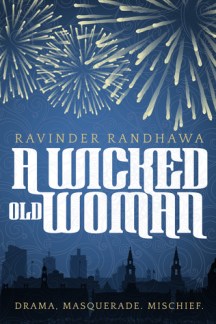
A Wicked Old Woman by Ravinder Randhawa


A Wicked Old Woman

Drama. Masquerade. Mischief.

It is my great pleasure to bring you a promotional post for Ravinder Randhawa’s book ‘A Wicked Old Woman’ in association with Faye Rogers.

awickedwomanblogtour2

The story:

A sharply observed, witty and confident novel. Linguistically playful, entertaining and provoking.

In a bustling British city,  Kulwant mischievously masquerades as a much older woman, using her walking stick like a Greek chorus, ‘…stick-leg-shuffle-leg-shuffle…’ encountering new adventures and getting bruised by the jagged edges of her life. There’s the Punjabi punk who rescues her after a carefully calculated fall; Caroline, her gregarious friend from school days, who watched over her dizzy romance with ‘Michael the Archangel’, Maya the myopic who can’t see beyond her broken heart and Rani/Rosalind, who’s just killed a man …

Vividly bringing to life a bit of the 60s, 70s and 80s.

Information about the book

Title: A Wicked Old Woman

Author: Ravinder Randhawa

Genre: Contemporary

Publisher: Matador

Format: Paperback & Ebook

Published: October 24th 2015 (republished)

Goodreads Link

Amazon Link

About Ravinder Randhawa:

Ravi Photograph

Ravinder Randhawa is the acclaimed author of the novels Beauty and the Beast (YA), A Wicked Old WomanThe Tiger’s Smile and the short story collection Dynamite. She’s currently working on a trilogy: The Fire-Magician. Ravinder was a Royal Literary Fund Fellow at Toynbee Hall, Queen Mary’s University, the University of London, and founded the Asian Women Writer’s Collective.

Ravinder was born in India, grew up in leafy Warwickshire, now lives in London and agrees with Samuel Johnson’s saying (though of course, in a gender non-specific way) ‘…if a man is tired of London, he is tired of life.’  Loves good coffee and really good thrillers.

You can follow Ravinder on Twitter and via her web site and on Facebook and Goodreads


Author Interview with Barbra Leslie

Cracked

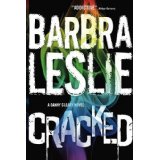
I recently read what, for me, was one of the best crime books I’ve encountered since I began blogging – ‘Cracked’ by Barbra Leslie. You can read my review by clicking here. I was so impressed by Barbra’s writing that I asked if she would mind asking a few questions and I’m delighted that she agreed.

Welcome to Linda’s Book Bag Barbra. Thank you so much for being here.

Thank you!  I’m so happy to be talking to you.

Firstly, would you mind telling readers a little bit about yourself?

Sure!  I was born and raised in a small village in Nova Scotia, Canada, the youngest of six children.  Youngest by quite a lot, I might add – my next oldest sibling is eight years older than I am.  We owned a small grocery store and lived above the store, all of us.   My father died when I had just turned four, and my eldest siblings had moved out by then, off to university and their lives.  By the time I was 10 or 11, it was just my mother and me.  I moved to Toronto for university when I was 18, and other than lots of travelling and living other places for periods of time – London, Dallas, Texas – it’s been my home ever since.  I’ve been writing all my life – published my first story at 15, and poetry and short stories in university and after – but I was working long hours at day jobs by the time I was in my early 20s, and really living the life of a young woman about town.  I published a novel in the late 90s called Nerve, and wrote other things I never did wind up publishing, but an unpublished manuscript found its way into the hands of a producer and it got optioned for film.  I spent a lot of time on that screenplay, my first, and a fun project.  Hasn’t yet been made, but who knows?  It’s a fickle business, the movie business.

But I’ve worked in many kinds of legal jobs, from a writer for a legal newspaper to doing marketing for a big law firm, from tracking criminal cases for the Attorney General to working as a court reporter.

What made you decide to write crime fiction as opposed to any other genre?

Well, my first novel, Nerve, wasn’t a crime book, and I had never written crime fiction before.  Frankly the idea hadn’t occurred to me until, quite literally, the night I sat down and started writing a very early draft of Cracked.  And I love this genre so much now, I can’t imagine writing anything else.

Unless I do a foray into a post-apocalyptic novel or series, which I am also a bit obsessed with just now.

As you know, I thought ‘Cracked’ was the best crime thriller I’ve read since I started blogging, what gave you the idea for the novel?

That is such high praise, Linda.  I’m flattered.  I may even be blushing a little, sitting here at my desk!

I decided to come clean with this about a month ago, knowing the book was coming out, and questions like this might be asked.  So, in a nutshell: in 2005 when my marriage ended – and I knew I wasn’t going to have children, which I quite literally, at that time, couldn’t imagine living without – I embarked on a kind of odyssey of low living.  It wasn’t planned, of course.  At first I just started frequenting a local bar where a friend had gotten a job.  Soon, though, I realized that the new friends I had met there were doing a lot of cocaine.

Now, you must understand, I was about the farthest thing from a drug user – let alone addict — that you could imagine.  I had tried weed a number of times in my life and for the most part hated it, and the smell made me sick.  And in high school when my friends were experimenting with acid – it had a big revival at that time, at least where I grew up – I had no interest.  I do like my wine, but even that I didn’t really start drinking – again, with a few exceptions – until I lived in London when I was in my late 20s.  England taught me how to drink!  (But that could be a topic for another interview altogether: the difference between English and North American bar culture.  Maybe another day…!)  But sitting at my desk here tonight, when I think of it, I haven’t had any wine since – oh I guess a week ago maybe?  When I was doing crack, I pretty much counted the hours until I could do it again.

When I jumped into this life of partying with cocaine, things went downhill quite quickly.  I was, in retrospect, suffering from major depression, and I couldn’t bear to be alone with my sadness.  I fell in love with a man who was as damaged as I was, but unfortunately for me, his level of addiction beat me, hands down.  When he started doing crack, I eventually tried it.

I went from being a nice young middle-class matron to a hard-core crack addict in the space of about a year.  It ruined my life, put simply.  I lost myself, I lost my soul, and I could easily have lost my life.  And while I have been clean for about seven years now, there are aspects of that time that I am still climbing back from.

But I am so incredibly fortunate to have the people around me that I do, my friends.  None of my friends before this did any kind of drug.  I pushed them away for a long time, but when I was ready to come back to the land of the living they were there for me with open arms.

There is a very dark underworld in ‘Cracked’. Without spoiling the plot for future readers, how did you go about researching the world of drugs, guns and murder?

Well, drugs – I’ve told you about that.  While Cracked is most definitely fiction, the depictions of drug use pretty closely mirror my own experience.  Guns and murder?  I’ve spent years watching and listening to police interviews with accused, witnesses and victims in criminal cases, for a police service here in Ontario – but not, I hasten to add, in Toronto.  (And I take my confidentiality agreements very seriously!)  Plus sitting in a lot of courtrooms, reading a lot of police files while I was tracking cases for the Ministry – I was paid to get that education, you might say.

What made you decide on a female protagonist?

It wasn’t a conscious decision.  I’ve written from a male perspective before as well, and I’ve had editors think that I was a man, from my writing.  Which is bizarre to me, and funny.  But an editor at one publishing house rejected Cracked because of the drug use – which is fair enough, but as you know, Linda, the book isn’t about drugs, it’s just a part — and she couldn’t understand why a man would use a female pseudonym.  No woman could write this level of violence, she said.

I guess when I very first started writing the book, I took Danny Cleary on as a part of my psyche.  When I started a very early draft, I was sitting in Nova Scotia at my mother’s house, where I had gone to care for her when she was sick.  I was just getting clean, and I couldn’t tell her – I didn’t want to upset her – so I had no rehab, no help, nothing.  Writing Cracked was my rehab.  Although once I wrote a very rough draft I put it away for a long time.  It was hard to come back to; when I was newly clean and still having urges at times, I didn’t want to immerse myself into that world again.

I thought the first person narrative was incredibly effective. What made you write from this perspective and not the third person?

Excellent question, Linda.  I think, again, that it was unconscious.  When I sat down that night to start this book, I wasn’t sure what I was going to write, exactly.  I hadn’t thought past the basic plot.  But I just had to write it – the pull was as strong as any I have ever felt, to anything.  And I was using Danny as a sort of catharsis, I think.

How did you go about planning ‘Cracked’? Did it emerge naturally as you wrote or did you have meticulous plans before you began?

Before I began?  Absolutely no meticulous plans.  I knew the tone I wanted, the sort of style I wanted.  But in the back of my mind, the book was just all about revenge.  Take-no-prisoners revenge.  My life was in utter shambles at that time, and other than the time I spent at the gym in the afternoons while my mother slept – as I said, she wasn’t well and I tried to stick close to home – I exorcised my demons, and the book fair raced along.

However, the book you read does not much resemble the book I wrote originally, other than that the characters of Danny and Darren don’t change, and the very basics of the stimulus of the plot – Ginger’s murder and the quest for answers and vengeance.  But I must say, a good 60% of the plot changed when I picked it back up again, a long time later.

This is the first in a trilogy about Danny Cleary. Why did you decide to have a trilogy?

I realize that my answers here sound as though I’m a bit flighty, but it wasn’t a decision I made, as such.  I didn’t want to let Danny go – I couldn’t imagine this book being a one-off.  I had a million ideas for where I wanted Danny, and a possible series, to go.  (You know, there have been times over the last few years, when I’m having a bad day, when I’m feeling low, I just stop and start thinking about these characters, thinking about what they should do, and I feel utterly calm again.)

I had started an outline for the second book before I even finished my last draft of Cracked.  Then when Titan Books expressed an interest in signing me for the book, they asked for an outline of a third.  I said, “yes, please,” and it was down on paper, almost fully fleshed-out, that afternoon.  In fact, in some ways the third book became more real to me than the second.

And who knows?  If they do well enough, maybe we’ll see more of Danny et al!  I certainly hope so.

We hear quite a lot about Danny’s brother Darren in book one. Will he appear in the next part ‘Cracked; Rehab Run’?

Yes, absolutely.  But I’ll let you in on a little secret: the sibling who’s front and centre with Danny in the second book is Laurence, her TV producer brother who lives in New York.  The second book, most of it, takes place in rural Nova Scotia, where I grew up.  It’s my homecoming book.  But the book – the character — is so much about family that Darren is most definitely not the only family member that the reader will get to know.

Family is obviously important to Danny. How far do her views reflect your own feelings about family? 

For me, my family is my lifeline.  I have five brothers and sisters whom I love beyond anything.  And some of them have families.  In fact, in the acknowledgements section at the back of Cracked, I name them all.  My mother, had she lived to see this book released, would have loved that.

But I am probably closest to my three sisters.  The four of us get together every year or so, usually in southern California, where some of Cracked is set.  One of my sisters has lived there for 30 odd years — but she is not, I hasten to add, the basis for Ginger’s character.  I don’t have a twin, never did.  But I talk to my family constantly, and if someone is in crisis, someone else flies to be there.  We all live in different cities, or at least most of us do.  Orange County, Vancouver, Toronto, and parts of Nova Scotia.  My sisters and I are all very different; lead vastly different lifestyles and have different interests, but when you get us together, you can be pretty sure that for the first two nights no one within a quarter mile gets much sleep.  We share the same sense of humour.

And after the really awful years of my life, I can truly say I don’t think I would be alive without them.

And not having any family where I live, I’ve got friends who are as close to me as family and who, as my friend Linda likes to say, I would walk through fire for.

The different characters in ‘Cracked’ are quite tricky to pin down and decide who’s to be trusted. To what extent do you think multiple personas are typical of people in real life?

Another great question!  To answer this as fully as I would like, I would have to give away plot details, which I am obviously not going to do.  But I will say that the extent that it is used in crime/thriller/mystery books – or plays and films, for that matter – is not proportionate with real life.  No one would be getting anything done; we’d all be sequestered behind locked doors in mortal fear.

That being said, we are so often treated to stories of men who have double lives, with two different families who don’t know a thing about each other.  Or exponentially more horrific, serial killers who lead seemingly normal existences with responsible jobs and families who love them.  Dennis Rader, known as the BTK killer, was an upstanding citizen in his Kansas town; a church deacon, from what I’ve read.  I defy anyone to look at any photographs of that man and think that he was capable of the horrors he carried out; in fact he looks remarkably like someone who tried to sell me a car a few years ago.  Here in Ontario several years ago, we had Russell Williams, who was a Colonel in the Canadian Forces and, while in that role, committed two horrible murders and several sexual assaults.  And notoriously photographed himself in his victims’ lingerie.  His arrest was a shock to his community, and by all accounts to his wife.

I believe that evil does exist.  I think the majority of people in prison are not evil; most of them are products of their birth, circumstance, upbringing and untreated or undiagnosed psychiatric issues.  Evil exists; it just doesn’t usually wear the face we expect it to.  It’s just as likely to look like Ted Bundy as Ted Kaczynski (the Unabomber).

These have been amazing and honest answers Barbra. I’d like to thank you again for agreeing to answer questions about ‘Cracked’ and to wish you all the success you so obviously deserve in your future writing.

Thanks, Linda!  And here’s wishing you continued success with the blog!!

You can follow Barbra on Twitter

‘Cracked’ was published in ebook and paperback by Titan on 24th November 2015 and is available from Amazon.co.uk and Amazon.com as well as from Titan. ‘Cracked’ is the first in the Danny Cleary series by Barbra Leslie.

The Trouble With Goats and Sheep by Joanna Cannon

goats and sheep

I am hugely indebted to Love Reading and to Ann Bissell at Harper Fiction for advanced reader copies of ‘The Trouble with Goats and Sheep’ by Joanna Cannon. It is published by Borough Press in hardback and ebook on 28th January 2016.

It’s hot in The Avenue in the baking summer of 1976 and Margaret Creasy is missing. Ten year olds Grace and Tilly set out to find her – and God. Their search uncovers more than anyone in The Avenue might have wished.

 Just occasionally there comes a book that is perfect and Joanna Cannon’s ‘The Trouble with Goats and Sheep’ is one of them. I’m reluctant to write a review as I can’t possibly do justice to this novel and I feel my words will sully it somehow. The writing is word perfect and every phrase is a work of art so that the reader sees perfectly what is described or intimated. Everything a reader ever wanted to say but couldn’t find the words for is there. There isn’t a dissonant note anywhere. Joanna Cannon’s masterful, understated and beautiful prose reveals more about character and feeling than any writer I’ve encountered in a very long time. I was hooked from the first word.

So seamless is the writing that I didn’t even notice the switch from Grace’s glorious first person account to the mesmerising third person of other characters – including the heat, which is as much a presence as any of the people. I didn’t so much read ‘The Trouble with Goats and Sheep’ as live it. I was Grace as I read and I’d defy anyone not to find elements in Grace and Tilly that reflect themselves as children.

The attention to detail, and especially the quality of the metaphors, makes ‘The Trouble with Goats and Sheep’ a kaleidoscope of emotion to read. It is breathtakingly lovely. I laughed and cried as I read.

The longing, the loneliness, the love all shine through; their light blurring the distinction between goats and sheep in a lesson for life for all of us. This may be billed as part coming of age and part mystery story and it is, but that does it a disservice. ‘The Trouble with Goats and Sheep’ is a beautiful, comic, sad and utterly, utterly wonderful tale of humanity and the desire to belong. Joanna Cannon has touched my heart and my soul with her novel. I won’t be parting with it.

‘The Trouble with Goats and Sheep’ will be one of THE books of 2016.

You can find out more about Joanna Cannon via her website and you can follow her on Twitter.

Guest Post by Chickens Eat Pasta author Clare Pedrick

Chickens eat pasta

Regular blog readers will know I love travel almost as much as books so I am delighted to host a guest post from Clare Pedrick, author of ‘Chickens Eat Pasta: Escape to Umbria’ as it is an area I have yet to visit. ‘Chickens Eat Pasta’ was published by Troubador on 28th July 2015 and is available for purchase direct from the publishers here and in all the usual places in both ebook and paperback.

The Story

‘Chickens Eat Pasta’ is the tale of how a young Englishwoman starts a new life after watching a video showing a chicken eating spaghetti in a mediaeval hill village in central Italy. “Here I was, 26 years old, alone and numb with boredom at the prospect of a future which until recently had seemed to be just what I wanted.”

Unlike some recent bestsellers, this is not simply an account of a foreigner’s move to Italy, but a love story written from the unusual perspective of both within and outside of the story. As events unfold, the strong storyline carries with it a rich portrayal of Italian life from the inside, with a supporting cast of memorable characters. Along the way, the book explores and captures the warmth and colour of Italy, as well as some of the cultural differences – between England and Italy, but also between regional Italian lifestyles and behaviour. It is a story with a happy ending. The author and her husband are still married, with three children, who love the old house on the hill (now much restored) almost as much as she does.

‘Chickens Eat Pasta’ is Clare’s autobiography, and ultimately a love story – with the house itself and with the man that Clare met there and went on to marry. If you yearn for a happy ending, you won’t be disappointed. It’s a story that proves anything is possible if you only try.

Clare’s Guest Post

A journalist isn’t necessarily a writer!

when I first saw my house 2

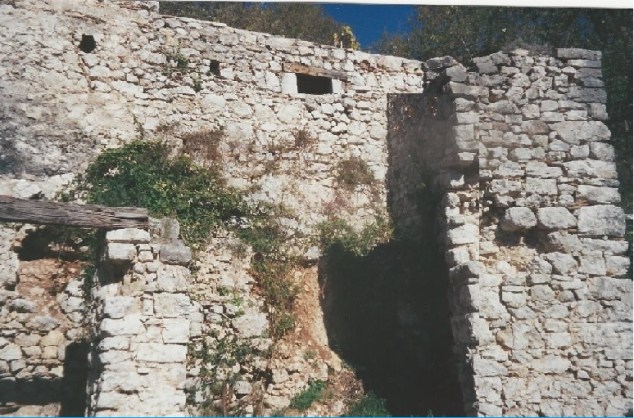
The house when Clare first saw it

When I first started to write the story about how I’d bought an old ruin in the hills of Italy – and all that it led to – I naively thought that it would be quite straightforward. In my day job I’m a journalist, so I rather assumed it would be fairly simple to get the tale down on paper in a more or less readable form, though I knew that finding a publisher was likely to prove very difficult indeed. When I say getting it down on paper, that’s because my first efforts did indeed involve using my old but trusty typewriter to bash out Chapter One. At the time, I had only just bought the house, and I’d had had a fairly rudimentary renovation done to make it habitable, by which I mean putting in plumbing and electricity and adding a roof and some floors where they were missing, which was in most of the rooms. So I sat in my kitchen for a couple of hours each day, looking out over the glorious rolling hills and valleys, and started to write my book.

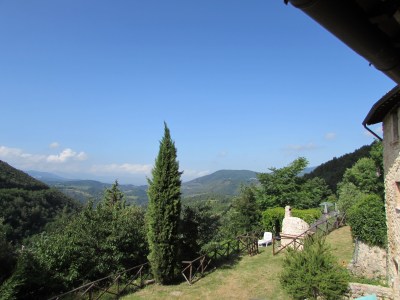
The view from my kitchen window

The view!

As I say, I am and always have been a journalist, and my reporter’s nose told me that this was a terrific story – not just the fact that I had suddenly decided to leave my comfortable little Regency house in Brighton and pack in a promising career to move to a crumbling wreck in the spectacular but remote foothills of the Umbrian Appenines. But because all the characters who lived in the mediaeval hill village where I had bought my house were straight out of a Fellini film. You couldn’t have invented them if you tried. But at that stage, there was no love interest in the story, and I remember going to see a literary agent in New York – where I spent several months helping to set up a news agency not long after I bought the house in Umbria – and she was incredibly enthusiastic about the idea of my writing a book recounting my Italian adventure.

“The only thing that’s missing is the love interest,” she said. “It would be so much better if it had one.”

I was single at the time, and licking my wounds after a very painful break-up with a long-term boyfriend in England, so, as I told the agent, there was absolutely no chance of any love interest in my Italian tale. That was just a few months before I met a handsome young man from Naples, in the very village where I had bought my house – whose total population was 43 by the way – so fairly soon, my agent’s wish was granted, and although I don’t want to spoil the story, it was certainly a love story with plenty of ups and downs.

Going back to the fact that I was a reporter, that side of things soon started taking over my life as I became quite a successful journalist, writing mainly from Rome, but also travelling a fair amount. And so the draft of that first chapter was stuffed into a manila envelope and hidden in a drawer in an old wooden table in my Umbrian house, in readiness for the moment when I would have time to get back to it. As it turned out, that time didn’t come for several years, although I always had a nagging feeling that I really should fish out the envelope, and friends who came and stayed with me were always trying to persuade me to get on and write the book, though funnily enough hardly any of them knew I had actually started it. A Year in Provence and Under the Tuscan Sun came and went, and I realised that I had seriously missed the boat, which was very foolish as I could be rolling in cash by now and afford to give up the day job forever!

My agent in New York gave way to an equally enthusiastic one in London, and it was really she who galvanised me into action and told me that I just had to get the book out there. So I took her advice and went back to Chapter One, and fiddled around with it quite a bit before adding several more, and then I went to London to see what my agent thought. Her name is Heather Holden-Brown and I owe her a great deal, because the manila envelope would probably still be in a drawer if it hadn’t been for her. Anyway, I hadn’t found the writing particularly difficult, because, as a journalist, I’m used to having to get a story out as quickly as possible. The blank page holds no fear for me and writer’s block is something I have never had to contend with. I remember working on a daily newspaper in Brighton where I had to phone the story over to the copytaker from the courthouse after covering a big case. There wasn’t even time to write the article down in my notebook if I was going to be in time for the evening edition. So I was rather surprised when I walked into Heather’s agency after sending her the draft chapters and was given the bad news that writing a novel, or a travel memoir as mine is usually described although it reads much more like a novel, was very different from writing a feature article or a news story.

“Your writing is fine and you really convey a sense of the place and the people, but it’s easy to tell what you do for a living,” she said, trying to sugar the bitter pill. “We often find this with journalists. You just don’t know how to draw things out. It’s all so breathless.”

Of course she was right, and I must admit that my own reading tastes reflect this professional quirk to some extent. When passages in a book get too long-winded and descriptive I become impatient and I find my eye wandering ahead sneakily, trying to find out what happened. But for a book such as mine, which tells the tale of a young woman doing up an old ruin in a remote corner of central Italy, description and mood were critical in setting the scene and accompanying the story itself as it moved forward. I got there in the end, but I have to confess that it took me no fewer than five drafts before Chickens Eat Pasta was finally ready for publication.  It’s just as well that I didn’t know how long and laborious the whole process would prove, or I would probably have left that manila envelope in the drawer forever.

My house in the hills now 5

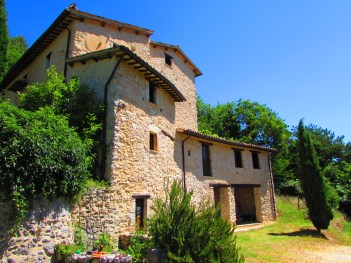
The house today

About Clare Pedrick

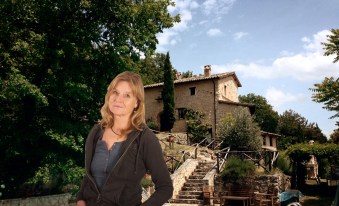
Clare and house

CLARE PEDRICK is a British journalist who studied Italian at Cambridge University before becoming a reporter. She went on to work as the Rome correspondent for the Washington Post and as European Editor of an international features agency. She still lives in Italy with her husband, whom she met in the village where she bought her house.

You can follow Clare on her Facebook Book Page, her own Facebook page and on Twitter.

Search for the Truth by Kathryn Freeman

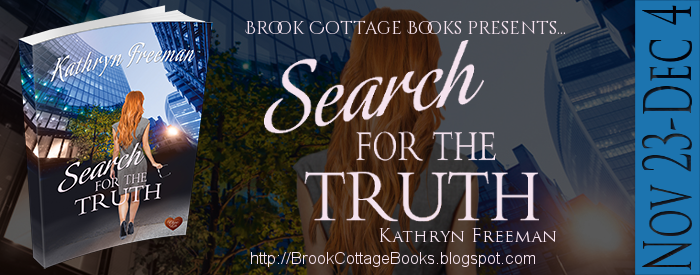
Search for Truth Tour Banner

It is my great pleasure to be part of a book highlight with Brook Cottage Books for ‘Search for the Truth’ by Kathryn Freeman, published by Choclit on 15th August 2015 and to bring you a great giveaway, open internationally, to win an ecopy of one of Kathryn’s books.

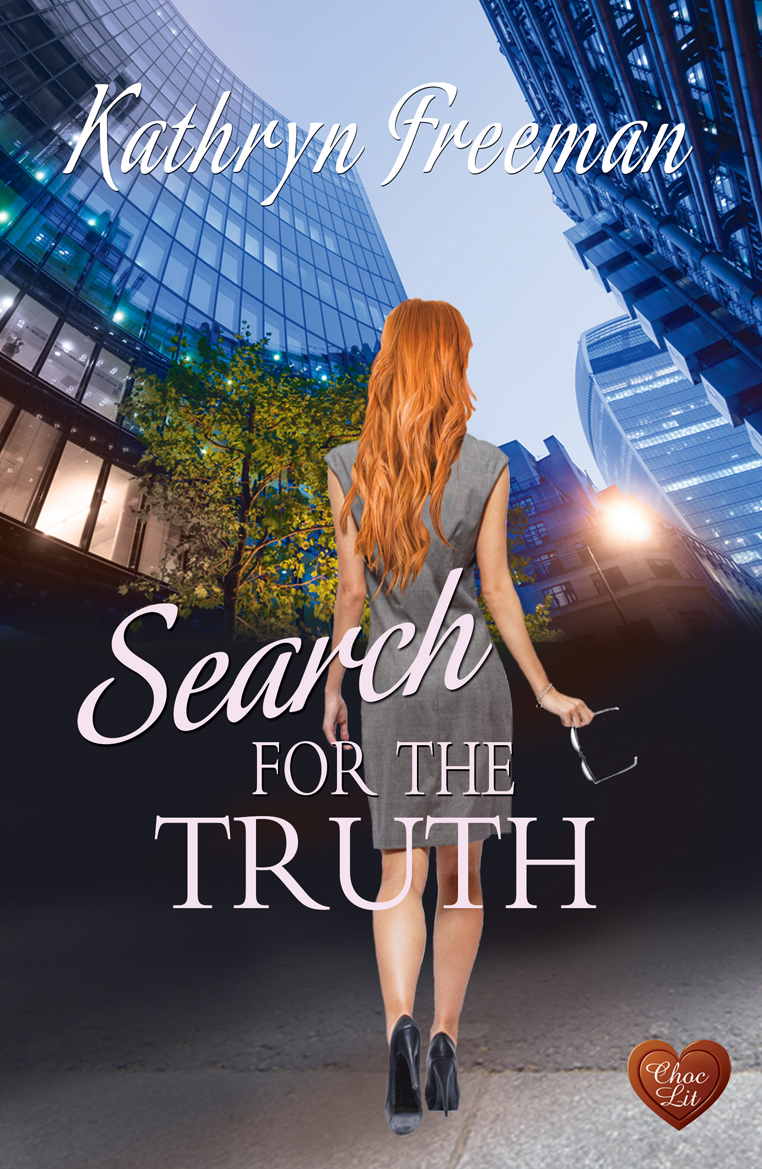
SEARCH FOR TRUTH_front150dpi

Sometimes the truth hurts …

When journalist Tess Johnson takes a job at Helix pharmaceuticals, she has a very specific motive. Tess has reason to believe the company are knowingly producing a potentially harmful drug and, if her suspicions are confirmed, she will stop at nothing to make sure the truth comes out.

Jim Knight is the president of research and development at Helix and is a force to be reckoned with. After a disastrous office affair he’s determined that nothing else will distract him from his vision for the company. Failure is simply not an option.

As Tess and Jim start working together, both have their reasons for wanting to ignore the sexual chemistry that fires between them. But chemistry, like most things in the world of science, isn’t always easy to control.

You can buy ‘Search for the Truth’ on Amazon UK and Amazon US

About Kathryn Freeman

5707-2

A former pharmacist, I’m now a medical writer who also writes romance. Some days a racing heart is a medical condition, others it’s the reaction to a hunky hero.

With two teenage boys and a husband who asks every Valentine’s Day whether he has to buy a card (yes, he does), any romance is all in my head. Then again, his unstinting support of my career change proves love isn’t always about hearts and flowers – and heroes come in many disguises.

Follow Kathryn on Facebook, on Twitter and on her website

You can also find out more about Kathryn on Goodreads and Linkedin

Enter to win an ecopy of Kathryn Freeman’s book ‘Too Charming’ by clicking here.

The Lost Girl by Liz Harris

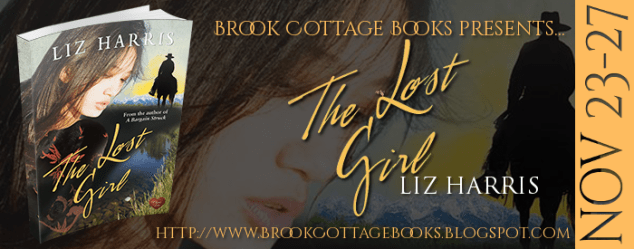
The Lost Girl Tour Banner

I’m a lover of historical writing so it is my great pleasure to bring you a new historical romance from Liz Harris, ‘The Lost Girl’ in association with Brook Cottage Books. You can also win a paperback of this lovely read below – open internationally.

The Lost Girl by Liz Harris

What if you were trapped between two cultures?

9781781892363

Life is tough in 1870s Wyoming. But it’s tougher still when you’re a girl who looks Chinese but speaks like an American.

Orphaned as a baby and taken in by an American family, Charity Walker knows this only too well.  The mounting tensions between the new Chinese immigrants and the locals in the mining town of Carter see her shunned by both communities.

When Charity’s one friend, Joe, leaves town, she finds herself isolated. However, in his absence, a new friendship with the only other Chinese girl in Carter makes her feel like she finally belongs somewhere.

But, for a lost girl like Charity, finding a place to call home was never going to be that easy …

Genre: Historical Romantic Fiction

Release Date: 16th October, 2015

Publisher: Choc Lit

About Liz Harris 

IMG_0426 (2)

Liz Harris lives south of Oxford. Her debut novel was THE ROAD BACK (US Coffee Time & Romance Book of 2012), followed by A BARGAIN STRUCK (shortlisted for the RoNA Historical 2013), EVIE UNDERCOVER, THE ART OF DECEPTION and A WESTERN HEART. All of her novels, which are published by Choc Lit, have been shortlisted in their categories in the Festival of Romantic Fiction. In addition, Liz has had several short stories published in anthologies. Her interests are theatre, travelling, reading, cinema and cryptic crosswords.

Follow Liz on FacebookTwitter, on her website and on Goodreads

Win a paperback of ‘The Lost Girl’ by Liz Harris by clicking here.

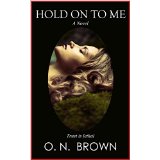
Hold On To Me by O N Brown

Hold on to me

‘Hold On To Me’ by O N Brown was published by CreateSpace on July 14th 2015. It is available in both ebook and paperback on Amazon UK and Amazon US. I received a copy from the author in return for an honest review.

When Henry Davidson is arrested for a series of abductions and murders, it seems the police in New York have their man. However, appearances are not always what they seem.

I found ‘Hold On To Me’ a somewhat mixed book. Parts were excellent and highly atmospheric, with a real feel of the setting of New York and other moments felt disjointed as if they had been written as an after thought. I think it may have suffered in my reading coming immediately after the best crime thriller I have read so that the comparison wasn’t helpful. The plot is interesting, but I have to be honest and say at times I found it tricky to follow as some of the sentence construction was awkward. With the spacing between each paragraph it felt more as if ‘Hold On To Me’ was a screen play than a novel.

There is no doubt that O N Brown has an excellent understanding of the criminal mind and the elements of psychology are strong. There are some very feisty women too, especially Special Agent Amber Winterlynn, but none of them really gained my empathy entirely.

An underlying sensuality, sexuality and often a kind of black humour added to the depth of the book and I wonder if it would appeal more to those who like American crime programmes than it did to me.


The Lion Hunter by Daniel Pembrey

lion hunter

I usually read very few short stories and novellas but have recently realised that I am missing out so I was delighted to accept a copy of ‘The Lion Hunter’ from its author Daniel Pembrey in return for an honest review. Published as a Kindle Single on 17th November 2015 ‘The Lion Hunter’ is available on Amazon UK and Amazon US.

Journalist Andrew Riley is on honeymoon when he encounters a big game hunter, Jim Paterson. Intrigued and determined to write an article based on the hunting experience, Andrew gets more than he bargained for.

I was amazed by Daniel Pembrey’s writing. In only 51 pages he has constructed a tightly written, absorbing and exciting narrative worthy of much longer novels. The pace is rapid so that the reader’s heartbeat increases as does Andrew’s as events unfold. Even the characters are incredibly well developed. I think I was expecting a slightly sentimentalised view of Tanzania and the wildlife but the writing is so sophisticated and assured that there is no preaching a particular message, just brilliant story telling. What I particularly liked was the way often the most important elements of the story were presented with the most pared down prose, giving a vibrancy and immediacy to the reading.

The setting of Tanzania is instantly recognisable to those who’ve been there with the full range of senses woven into the narrative so that it is easy to hear the sounds, feel the heat and smell that particular aroma of the African countryside. I felt there was a visual element to the writing so that the experience was if I were watching a film rather than reading a short story. As I read, I was reminded of the quotation from Tennyson of ‘Nature, red in tooth and claw’.

Daniel Pembrey does not shy away from some of the difficult issues that Africa can throw up; from tribalism to terrorism, but he weaves these themes so cleverly that they help form the colourful tapestry of the overall story. His prose is flawless.

I thoroughly enjoyed ‘The Lion Hunter’ and am looking forward to reading more of Daniel’s writing. If, like me, you usually find short stories unsatisfying and one dimensional, then read ‘The Lion Hunter’ and be prepared to have all your prejudices challenged and refuted. It’s a really wonderful read.

You can find out more about Daniel via his web site or follow him on Twitter


Cracked by Barbra Leslie

Cracked

I am indebted to Philippa Ward at Titan Books for an advanced reader copy of ‘Cracked’ by Barbra Leslie in return for an honest review. It is published in ebook and paperback by Titan on 24th November 2015 and is available from Amazon.co.uk and Amazon.com as well as from Titan. ‘Cracked’ is the first in the Danny Cleary series by Barbra Leslie.

When crack addicted Danny (Danielle) Cleary’s twin sister Ginger is found dead it initially looks as if she’s committed suicide. But Danny doesn’t believe it and so begins a frenetic race to find out just what happened and to prevent further deaths.

‘Cracked’ is, if you’ll forgive the pun, a cracking read. It has a fast paced adrenaline fueled plot that twists and turns adding layer after layer of surprise from the first word to the last. I found myself thinking about the story in the middle of the night, wondering what was going to happen next. Without giving the plot away, there is skilful resolution with enough potential for the next book and I can’t wait to read the next Danny Cleary book ‘Cracked:Rehab Run’.

The title is very clever, referring as it does to the crack cocaine the protagonist Danny uses, but also to the disturbed mental state of some of the characters, the fragmented nature of Danny’s family as the story progresses and to the range of emotions she experiences. I think there is a cracked and fragmented nature to society too as we see the polarisation of the very wealthy and those in less salubrious circumstances.

Each character is so well created and many are not who or what they seem so that the reader is taken by surprise several times. I found myself beginning to think like Danny as she uncovers who she can trust and who is really the enemy, such is the quality of Barbra Leslie’s writing. The first person conversational style is perfect. The whole tone of the book is sharp, witty and thrilling.

Even though I abhor drugs and would never normally have chosen to read a book where they feature so heavily I have to be honest and say ‘Cracked’ by Barbra Leslie is the most exciting and engaging crime fiction I have read since beginning my blog. I thought it was absolutely brilliant and I can’t recommend it highly enough.

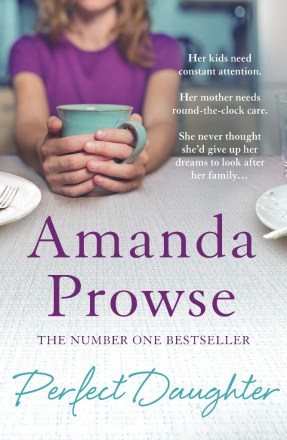
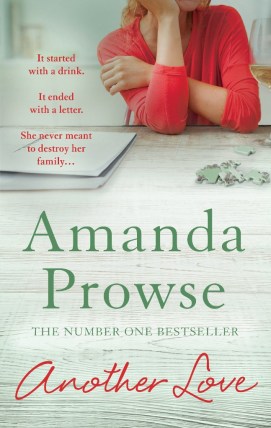
Amanda Prowse Cover Reveal

A perfect daughter

It gives me enormous pleasure today to bring you brand new cover reveals for two of Amanda’s novels ‘Perfect Daughter’ and ‘Another Love’.

Another love

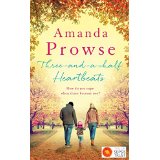
I have long been a fan of Amanda Prowse and had the great privilege of meeting her recently. Not only is Amanda an amazing author, she’s also a wonderful human being and is an active supporter of The Sepsis Trust where 100% of the monies made from her story ‘Three and a Half Heartbeats’ go.

Three and a half heartbeats

Find out more about Amanda on her web site or follow her on Twitter and Facebook

Amanda’s Books are available to purchase on Amazon UK and Amazon US