Adapting a Classic, a Guest Post by Lou Kuenzler, author of Finding Black Beauty

cover.jpg

I’m delighted to be featuring a guest post from Lou Kuenzler today to celebrate her latest children’s book Finding Black Beauty. Finding Black Beauty was published on 6th October by Scholastic and is available for purchase here and through the publisher.

I have previously featured Lou on Linda’s Book Bag when I thoroughly enjoyed reviewing another of her children’s books, Bella Broomstick. You can read my review here.

Bella Broomstick

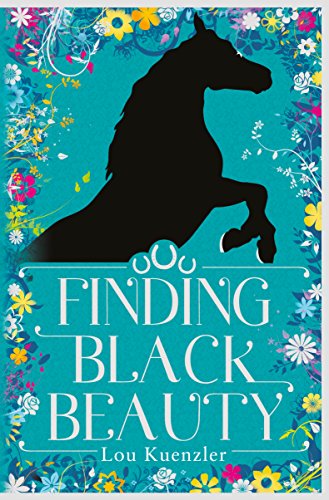
Finding Black Beauty

cover

Told from the point of view of a young girl who masquerades as a boy in order to become a groom, this is the other side of the classic horse story Black Beauty. Aspiring groom Jo comes to love Beauty and when they are separated she travels to London to find him – on the way solving the mystery of her long-lost mother. A sweeping tale of a young girl and her love for a horse, and the circumstances that divide them.

Adapting a Classic

A Guest Post by Lou Kuenzler

Thank you Linda’s Book Bag for inviting me onto the blog to talk about my new children’s book Finding Black Beauty and to explore the relevance of adapting a classic novel for a modern audience.

I have never taken direct inspiration from a classic story before but, when invited to consider it by my publishers,  I knew at once that it would be Anna Sewell’s Black Beauty I would pick.  Growing up on a farm, I had loved the story myself. While some of Sewell’s language and episodic structure may be dated, and the levels of cruelty she exposes extremely shocking, I felt certain that the fast-paced adventure at the heart of the story was something that would definitely appeal to modern children – especially if told in a fresh new way.

I decided early on, in whatever way I tried to tackle the story, I would not attempt to tell it in Black Beauty’s own voice – Sewell does this so brilliantly, I felt Beauty’s viewpoint was best left as it was.  Also, with the benefit of hindsight and history, I found that was I drawn not only to the plight of animals in Victorian Britain but to the people – and specifically the children – too. Here I felt the murmur of untapped voices.

Jo, the young stable lad, began to whisper to me.  I know when I visit National Trust properties, or similar grand country houses, it is always the servants’ quarters I am drawn to.  There never seems to be quite enough emphasis on this – with kitchens and/or stables often having been turned into tearooms (not that I’m not a massive fan of good Victoria sponge!) and the attics and lofts out of bounds (perhaps for safety reasons).  It is as if a hundred hurrying footsteps have been hushed up. I think part of the huge appeal of Downton Abbey; for instance, was that we got to see life upstairs and downstairs.

I felt confident that contemporary children would be drawn to the story of a young stable lad –  pretty much the same age as the oldest of the primary school children Finding Black Beauty is aimed at.  Whilst they are thinking about SATS and the transition to secondary education, a working Victorian child would be earning a living.  To really explore this servant role, I decided to turn it on its head: my Jo is not only a girl (Josie) in disguise, she has also come from a privileged background and never had to consider the lives of those who have served her until now.  With the sudden and unexpected death of her father, Josie – already abandoned by her mother – is forced to see the world through very different eyes.

I felt that this switch in perspective would offer a way in for contemporary readers – they would be able to share fresh experiences and question social norms alongside Josie as she goes on a journey of self-discovery, seeing the world in a whole new, less sheltered, way.

Yet, while the character of my Josie is taken from the very few lines Anna Sewell writes about Jo, her stable lad; the arch of the plot has similarities – the plight of the magnificent horse is at the centre of both books.  Sewell’s story is a wonderful flat-out, galloping adventure. That, I felt, could definitely be revisited for children in any age.  My Josie’s story is laced with her growing self-knowledge, examining class and gender in the nineteenth century and – unavoidably – raising issues still of resonance for children today. But, at heart, Finding Black Beauty is about passion. It is the story of a young girl’s desperate attempt to protect a beloved horse. It is, I hope, life and death stuff – just as Anna Sewell’s wonderful, heart-rending original story was.

I had huge fun writing the book, researching Victorian life and creating fleshed out characters from those who appear only briefly in Black Beauty itself. Always having the original to refer back to was a wonderful support but I was always very aware that my new story needed to be more than a companion piece or sequel.  To draw in and then hold young readers, Finding Black Beauty had to be a compelling story in its own right.

About Lou Kuenzler

Lou Kuenzler

Lou Kuenzler was brought up on Dartmoor and moved to Northern Ireland to study theatre. She worked as a theatre director and drama lecturer before coming the writer of the Princess Disgrace, Shrinking Violet and Bella Broomstick series with Scholastic. Finding Black Beauty is her first retelling of a classic novel. Lou now lives in London with her husband and their two children.

You can find out more about Lou on her website, on Goodreads and you can follow her on Twitter. There’s more with these other bloggers too:

blog-banner-01

The Past and Portugal, a Guest Post by Rose Alexander, author of Garden of Stars

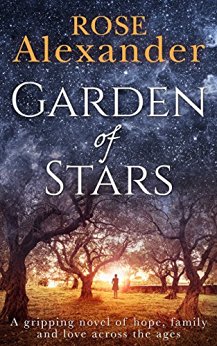
cover

I’m so disappointed I haven’t had time yet to read Rose Alexander’s debut Garden of Stars as so many bloggers are telling me how good it is. Garden of Stars was published in ebook by Carina on 25th July 2016 and is available for purchase from Amazon and all other e-tailers.

Having loved Lisbon when I visited a couple of years ago, I invited Rose Alexander to explain how Garden of Stars has been inspired by Portugal.

Garden of Stars

cover

The Alentejo, Portugal 1934

I am Inês Bretão and I am 18 years old. Now that I am finally an adult and soon to be married, I feel like my real life is about to begin. I have decided to document everything that happens to me, for my children and my grandchildren…

As Sarah Lacey reads the scrawled handwriting in her great-aunt’s journal on a trip to Portugal, she discovers a life filled with great passion, missed chances and lost loves – memories that echo Sarah’s own life. Because Sarah’s marriage is crumbling, her love for her husband ebbing away, and she fears the one man she truly loves was lost to her many years ago…

But hidden within the faded pages of the journal is a secret Inês has kept locked away her entire life, and one final message for her beloved niece – a chance for Sarah to change her life, if she is brave enough to take it.

Of the Past and Portugal

A Guest Post by Rose Alexander

“The past is a foreign country: they do things differently there.”

So goes the quote from The Go-Between by L P Hartley, one of my all-time favourite books. And the idea of the past was one I wanted to explore in my debut novel.

Above all else, Garden of Stars is a love story – but the love is complicated by time. Time that’s passed, time that’s present and time that’s still to come. I find the whole idea of choices and decisions a fascinating one. What if I had gone to that university instead of this one? What if I had returned the phone call from that boy instead of pursuing the one who wasn’t interested? What if I had taken that job instead of this one? Life is full of turning points and it’s usually not until much, much later that the implications of the course one has followed become apparent. So it turns out for both Sarah and Inês, the lead characters in my book. Their lives have been defined by a series of actions taken, driven at the time by the belief that they were the right and moral choices, leaving regret to ferment and fester for years to come. Of course, that in itself wouldn’t be a very satisfying story. But, I hope, examining the fall-out from that regret, what they both do with it and where it takes them, is a tale that is worth telling.

Woven throughout the book is my deep love of Portugal, a country in which I have had the good fortune to spend a fair amount of time when I undoubtedly should have been doing something more useful and productive. University holidays spent on the Algarve and in Lisbon, my TEFL course completed at International House in the capital, holidays since in the beautiful, pristine central region, the north and Porto. So many, many lovely places to explore and get to know. In my twenties, I twice hitchhiked home to England and could probably write a couple of books about those experiences as well. (Trade secret: the truckers’ food and accommodation on Brittany Ferries is superb.)

One of the most important elements of the Portuguese economy is cork and the serene, ethereal cork forests that cover much of the Alentejo region are not only crucial for the bark they produce but also for the flora and fauna they support – and cork is central to the storyline of Garden of Stars. Because cork is left to do its own thing for years in between harvesting cycles, nature can burgeon undisturbed. It’s forbidden to destroy cork oaks in Portugal and hopefully the continuing development of new uses for this amazing natural material will ensure it has a future. In the novel, the cork tree’s lifecycle of growth, harvesting and renewal stands as a metaphor for love, loss, hope and new beginnings. Time, even if it doesn’t heal, changes things and leads us out of the past and into a future that we can, and should, shape for ourselves. Our experiences define us; it’s how we work with them that counts.

I hope that anyone who reads Garden of Stars enjoys it and gets something from it. It would be absolutely amazing if, whatever your thoughts about it, you leave a review on Amazon. Reviews are the lifeblood of authors, especially newbies like me, so help us out if you can!

Thanks for reading and enjoy.

Rose x

About Rose Alexander

rosealexander

Rose has had more careers than is probably strictly necessary, including TV producer / director making programmes for all the major broadcasters, freelance feature writer for publications including The Guardian and secondary school English teacher, not forgetting cocktail waitress, melon picker and interior designer.

Writing a novel is, however predictable the line seems, the realisation of Rose’s childhood dream and the result of finally finding ‘a voice’.  The triumph is that the voice was heard above the racket created by her three children plus rescue cat (tabby white, since you ask). Rose likens the experience of penning Garden of Stars, a multi-layered love story, to another recent achievement of learning to ice-skate: progress is two-slides-forward-one-back; insecurity, self-doubt and despondence reign supreme; onlookers laugh, mock or even worse, smile indulgently…. But the finished manuscript, polished and pristine, is like the perfect pirouette performed on freshly raked ice. (Rose can’t do pirouettes yet, obviously, they just made the best simile.)

Rose is currently working on several new projects including a novel based on a relative’s true story of an epic journey as a ‘flüchtlinge’, fleeing the vengeance of the rampaging Red Army as Nazi Germany collapsed.

You can follow Rose on Twitter and find out more on her website.

Writing in the First Person, a Guest Post by Jo Lambert, author of Watercolours in the Rain

watercolors-in-the-rain-tour-banner-1

I’m delighted to be working with Brook Cottage Books in welcoming Jo Lambert back to Linda’s Book Bag today to celebrate Jo’s latest novel Watercolours in the Rain. A lovely contemporary romance, Watercolours in the Rain is available for purchase on AMAZON UK and  AMAZON.COM.

Not only do I have a wonderful guest post from Jo Lambert explaining about the challenges of writing three first person viewpoints in Watercolours in the Rain, but there is the opportunity to enter to win a dreamcatcher necklace (UK only) and one of two e-copies of Watercolours in the Rain at the bottom of this blog post.

Watercolours in the Rain

watercolours-in-the-rain-cover-medium-web

What happens to the future when past and present collide?

JESS:  Six years ago Jess’s relationship with Talún Hansen was torn apart by one night of deception. He disappeared from Lynbrook village and she headed for university vowing never to let anyone break her heart again. Now a teacher, Jess returns from holiday to an unexpected phone call and life changing news which will eventually bring her back home once more.

TALUN: Six years on Talún Hawkeswood, as he is now known, is heir to his grandfather’s Norfolk farming empire. When he hears of trouble in the village due to Lynbrook Hall being put up for sale, going back is the last thing on his mind. But staying away is not an option either, not when someone he owes so much to is about to lose their home and their livelihood.

LILY: Splitting with her husband after her son Josh’s birth, Lily now works as part of an estate agency sales team.  She has always held onto her dream of finding a wealthy husband and a life of self-indulgence. When the sale of an important property brings her face to face with Talún once more, she realises despite the risks involved, the night they spent together six years ago may be the key to making those dreams come true.

As Jess, Talún and Lily return to Lynbrook and the truth about what happened that summer is gradually revealed, Talun finds himself in an impossible situation. Still in love with Jess he is tied into to a trade off with Lily: his name and the lifestyle she craves in exchange for his son. And when a child is involved there is only one choice he can make…

Voices In My Head…Writing From The First Person

A Guest Post by Jo Lambert

When I began writing Watercolours in the Rain, I knew because this was the sequel to Summer Moved On, I would need to incorporate a certain amount of back story.   I discussed this with my editor, saying I thought it might be a good idea to begin the book with three short prologues from each of the main character’s points of view.  The plan was then to revert to third person narration for the rest of the novel.  We agreed this might be a good place to start, so I went ahead and completed the pieces and submitted them.  I had really positive feedback which was accompanied by the suggestion maybe it would work well if the whole book was narrated from Jess, Talún and Lily’s individual perspectives.  I wasn’t a stranger to writing in this way. Way back, my very first novel had been written through the eyes of a twenty something female. However that was then and this was now and getting into three people’s heads at the same time – and one of them male – threw up a whole host of different issues.  The one positive thing going for all of this was that as I had travelled with them through the first book, their characters were well known to me.

So with the prologue sections completed, I began to work on a task which I realised was very much a gamble…but it was also a challenge and I was determined to give it a try.  Writing from one person’s viewpoint is quite restricting; it narrows your story because you are only seeing what is going on from behind one pair of eyes. Writing from three, allows a broader view and is almost as good as writing from the third person.  However, it goes far beyond that as you are projecting each individual’s thoughts and emotions as well, which in some ways makes the book more human.

After a few initial hiccups, I eventually I settled down and began to enjoy what I was doing. It was great to be able to slip into someone else’s skin – almost like virtual acting. I had great fun with my female antagonist, bad girl Lily.  She was the perpetrator of some awful actions but in the end karma caught up with her.  I think the saying ‘be careful what you wish for’ was very relevant.  She got to live her dream but in the end it all went horribly wrong. I did have to sit for a while though, weighing up what would eventually be her fate. I could also see potential headache writing from a male perspective but then got totally caught up with his story – the discovery of a son he wasn’t aware of, the extremes he had to go to in order to secure him…and the way he became emotionally entangled with Jess. And as for Jess? Well as my central female character she was the easiest of the three characters. But that’s probably because in all my books I’m always very close to my heroine.

Would I do it again? Well I’m not sure. It was quite complex and far more difficult than writing from the third person. I don’t think I would have attempted it had I not had such a close knowledge of my char.  But I have to say it really did work for Watercolours in the Rain.  In fact I don’t think the book would have turned out as well had I written it any other way.

About Jo Lambert

unnamed 3

Born and raised in rural Wiltshire, Jo Lambert grew up with a love of books and a vivid imagination. As a child she enjoyed creating her own adventure stories similar to Enid Blyton’s Famous Five. Writing always stayed with her, but college, work and eventually marriage found it was kept very much in the background. However in 2009 she finally had her first novel – When Tomorrow Comes – published. Three other connected books – Love Lies and Promises, The Ghost of You and Me and Between Today and Yesterday followed. They became collectively known as the Little Court Series.

tomorrow

In 2013 she decided to give up full time work to concentrate fully on her writing. Two other books have been written since – The Other Side of Morning which is the final book of the Little Court Series and Summer Moved On, a love story set in South Devon. Jo is about to publish, Watercolours in the Rain, and plans to begin work on her new book in early November 2016. She describes her writing style as drama driven romance.

Jo is married and lives in a village on the eastern edge of Bath with her husband, one small grey feline called Mollie and a green MGB GT.  She loves travel, red wine, rock music and has a passion for dark chocolate…

714DaAHCxrL

You can find Jo Lambert on Facebook, Google+ and her web site. You can also follow her on Twitter and read her blog.

Competition

book-tour-prize-1

For your chance to enter to win a dream catcher necklace (UK only) or one of 2 e-copies of Watercolours in the Rain, click here.

watercolours-in-the-rain-cover-medium-web

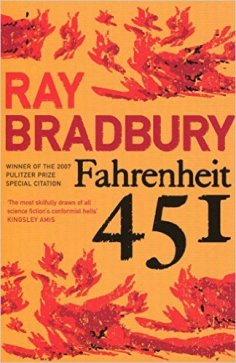
Farenheit 451 by Ray Bradbury

451

Farenheit 451 by Ray Bradbury has been languishing on my book shelf for over 40 years and this month it is the book selected by my U3A reading group so I have finally read it. The copy of Farenheit 451 I have read, via the library service (leaving my own in pristine condition), is the 50th anniversary edition published in 2008 by Harper Voyager, an imprint of Harper Collins. It has an introduction and afterword by the author and is available from all good book sellers and by following publisher links.

Farenheit 451

451

The hauntingly prophetic classic novel set in a not-too-distant future where books are burned by a special task force of firemen.

Guy Montag is a fireman. His job is to burn books, which are forbidden, being the source of all discord and unhappiness. Even so, Montag is unhappy; there is discord in his marriage. Are books hidden in his house? The Mechanical Hound of the Fire Department, armed with a lethal hypodermic, escorted by helicopters, is ready to track down those dissidents who defy society to preserve and read books.

The Classic novel of a post-literate future, Fahrenheit 451 is part of the Voyager Classic series. It stands alongside Orwell’s 1984 and Huxley’s Brave New World as a prophetic account of Western civilization’s enslavement by the media, drugs and conformity.

Bradbury’s powerful and poetic prose combines with uncanny insight into the potential of technology to create a novel which, forty years on from first publication, still has the power to dazzle and shock.

My review of Farenheit 451

In an inverted world where firemen burn books (and people) instead of saving them, an encounter with Clarisse changes Guy Montag’s perspective on life and truth.

It’s quite difficult to convey what an outstanding read Farenheit 451 is and equally difficult to review it without being derivative. I adored every word. The prose is taut, affecting and beautiful. At times it is like reading a horror story with mechanical dogs that never fail to kill their target and at others reading Farenheit 451 is like encountering the most stunning poetry. I even found myself copying out lines and arranging them as poems to see the effect. I also selected a quotation to be used at my funeral (though I’m hoping I won’t be needing it for a few decades yet!); ‘Stuff your eyes with wonder… live as if you’d drop dead in ten seconds. See the world. It’s more fantastic than any dream made or paid for in factories.’

The characterisation is amazing given the brevity of the novel. Clarisse is a catalyst for the action of the novel, and just the smallest word or action conveys the most intimate detail about those in the story. The relationship between Montag and his wife is sad, not unexpected and utterly heartbreaking. But it was the character names that enthralled me. I am certain Clarisse is so named because she is bright, clear and shining, that Guy Montag is Guy to be a possible Everyman and Montag is the start of the week – Monday in German – so that he is seen as the start of a change in the world. I’m sure Faber must have been named after the publishers of some of the most prestigious writers we’ve known. It was these small details and the snatches of half-remembered quotation from my own reading history that really drew me into the novel.

What stunned me about Farenheit 451 was the frightening potential of its contents. The intrusive screens in our homes, the way it can be a battle to get people to read, our disregard for life and property – themes that, whilst written about in 1953, resonate with modern society. But what I loved most was the sense of hope. There are Fabers and Clarisses in the world and we do have humanity and books.

I can’t believe my own copy of Farenheit 451 has remained undisturbed on my shelf for all these years. I urge you to read it if you haven’t already, or re-read it if you have. It’s incredible.

There is more about Ray Bradbury on the official website.

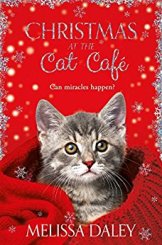
Christmas at the Cat Cafe by Melissa Daley

christmas-at-the-cat-cafe

My grateful thanks to Jess Duffy at MacMillan for an advanced reader copy of Christmas at the Cat Cafe by Melissa Daley in return for an honest review. Christmas at the Cat Cafe will be published by Macmillan in e-book and hardback on 20th October 2016 and is available from a variety of retailers by following the publisher links.

Christmas at the Cat Cafe

christmas-at-the-cat-cafe

The Costwolds’ town of Stourton-on-the-Hill has its very own cat café. Resident cat Molly, and her kittens, live here in feline paradise, while owner Debbie serves the locals home-made goodies. But even in the most idyllic surroundings, things don’t always go to plan . . .

When Debbie’s heartbroken sister Linda arrives at the café, Debbie insists she move in. But Linda is not alone, and the cats are devastated with the arrival of Linda’s dog, Beau. Sadly, Beau’s arrival is not the only bombshell – now Molly’s home is also under threat when a rival cat moves in on her turf.

With Christmas approaching, Molly is unsettled, barely roused by the promise of tinsel to play with. Fearing for her feline family she hopelessly stares out of the café window searching for an answer. Only a Christmas miracle could bring everyone together . . .

My Review of Christmas at the Cat Cafe

When Debbie’s prickly sister, Linda, arrives from her broken marriage at Molly’s, the cat cafe, life is about to be disrupted for everyone, both human and feline.

I am an obsessive cat lover and with a character as my namesake I was really looking forward to Christmas at the Cat Cafe but I have to be honest and say I was slightly disappointed. It might be that I have just read two Christmas books that I felt were stunning, or it might be because I haven’t read the first of the books, Molly and the Cat Cafe, but I struggled to engage emotionally with the story, despite its absolutely fabulous cover. I felt I had to make a conscious effort willingly to suspend my disbelief at the anthropamorphic first person feline narrator. Perhaps wrongly, I kept thinking of hygiene and I found I couldn’t set aside my prejudiced attitude to cats in a cafe, even though I know there are establishments like that. I also thought that maybe Christmas at the Cat Cafe would be better suited to a younger audience, making a great present for a KS2 or 3 reader.

However, although that sounds quite critical, I did think Christmas at the Cat Cafe would be a wonderful read for others. It is well written and soundly plotted with a full and varied exploration of emotions and family relationships – it’s just I would have liked those relationships to have been more weighted towards the humans in the story. The narrative is heartwarming and cosy so that those looking for a feel-good read will love it.

The cat characters are incredibly well presented. I could recognise at behaviour and attitudes that I have witnessed in my own cats extremely well. Any cat lover would find resonances there that they’d really enjoy.

Christmas at the Cat Cafe will be a lovely read for the right reader and I did enjoy it but not as much as I had hoped.

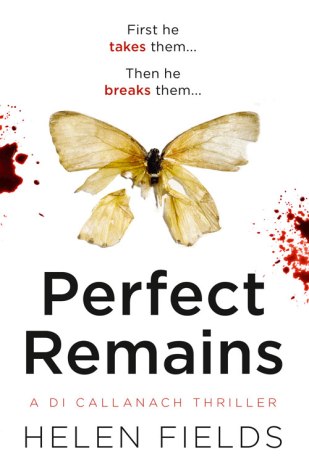
Cover Reveal: Perfect Remains by Helen Fields

perfect-remains-2

You know a book is going to be special when a publisher sends you teasers about it all week and then provides two wonderful covers that I’m delighted to be revealing tonight. Perfect Remains is the debut novel by Helen Fields. Perfect Remains will be published by Avon, an imprint of Harper Collins, on 26th January 2017, and is available for pre-order here.

Perfect Remains

perfect-remains-1

On a remote Highland mountain, the body of Elaine Buxton is burning. All that will be left to identify the respected lawyer are her teeth and a fragment of clothing.

In the concealed back room of a house in Edinburgh, the real Elaine Buxton screams into the darkness.

Detective Inspector Luc Callanach has barely set foot in his new office when Elaine’s missing persons case is escalated to a murder investigation. Having left behind a promising career at Interpol, he’s eager to prove himself to his new team. But Edinburgh, he discovers, is a long way from Lyon, and Elaine’s killer has covered his tracks with meticulous care.

It’s not long before another successful woman is abducted from her doorstep, and Callanach finds himself in a race against the clock. Or so he believes … The real fate of the women will prove more twisted than he could have ever imagined.

Fans of Angela Marson, Mark Billingham and M. J. Aldridge will be gripped by this chilling journey into the mind of a troubled killer.

About Helen Fields

helen-fields

Helen Fields herself is a force to be reckoned with. An ex Criminal Barrister, she’s used her experiences dealing with some of this country’s most terrifying criminals to create a killer who will strike fear into your soul. Not only that, but she now runs her own film making company (aptly named Wailing Banshee).

Beyond writing, she has a passion for theatre and cinema, often boring friends and family with lengthy reviews and critiques. Taking her cue from her children, she has recently taken up karate and indoor sky diving. Helen and her husband now live in Hampshire with their three children and two dogs.

You can follow Helen on Twitter.

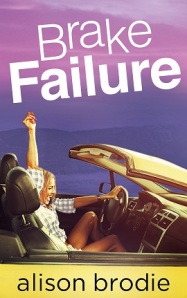
The Nightmare of Second Book Syndrome, a Guest Post by Alison Brodie, author of Brake Failure

brakefinalcover

I’m very pleased to welcome Alison Brodie to Linda’s Book Bag today. Alison’s new novel Brake Failure will be released on 9th January, 2017 and is already firmly on my TBR pile. Brake Failure is available for pre-order here.

With Brake Failure on its way, I wanted to ask Alison about her writing history and she has been utterly honest in the telling me about it. I’m delighted to share her personal guest post all about second novel syndrome with you.

Brake Failure

brakefinalcover

“Is it too late to tell him you love him when you’re looking down the barrel of his gun?”

Ruby Mortimer-Smyth is an English debutante, destined for Lady’s Day at Ascot and taking tea at The Savoy. She knows the etiquette for every occasion and her soufflés NEVER collapse.

She is in control of her life, tightly in control … until fate dumps her down in Kansas.

Ruby believes that life is like a car; common-sense keeps it on the road, passion sends it into a ditch. What she doesn’t know is, she’s on a collision course with Sheriff Hank Gephart.

Sheriff Hank Gephart can judge a person. Miss Mortimer-Smyth might act like the Duchess of England but just under the surface there’s something bubbling, ready to explode. She’s reckless, and she’s heading for brake failure. And he’s not thinking about her car…

The Nightmare of Second Book Syndrome

A Guest Post by Alison Brodie

Imagine this:  going into the major book shop of your local town and seeing your book in hardback set out along the shelves.

This is what happened to me.  I hadn’t been expecting this display and I was stunned.  This was MY book!  I walked out of the shop in a daze and moments later I felt the tears crawling down my cheeks.  My friend asked in shock:  “What’s wrong?”  And I said, blubbering:  “I am so happy.”

So how did that dream become a nightmare?

Let’s start at the beginning.  I’ve never had writing lessons, heck, I’ve never had much of an education, but I’ve always liked the look and of paper, with the urge to write something on it.  It wasn’t until I was on a modelling assignment in the Highlands of Scotland that a story came to me.  The landscape was breath-taking, the owner of the house that we stayed was also breath-taking; although a wee bit dour at having these London folk invade his territory.

Everything went wrong on that assignment, the weather, mostly.  I was with another model, Pierra, and she was such a prima donna!  Complaining at the least little thing, and waving her arms about like someone from a tragic opera.  I did think she was wonderful, though.  When someone is that beautiful you can forgive a lot.

Naturally, our dour Scottish host and Pierra struck sparks off each other.  It was funny to watch, although the photographer and assistants didn’t seem to notice; they were too busy worrying about the light.

face-to-face

When I returned to London I started writing what would become Face to Face.  It was a hobby; although I didn’t tell anyone what I was doing.  Out of curiosity, I sent it off to an agent, Dinah Wiener.  Within two weeks she secured me a two-book deal with Hodder & Stoughton.  That was it!  I was a writer!  I was going to be famous.  Nothing could stop me.

Immediately I sat down to write my second book.  It was going to be so easy.  The first one had written itself; in fact, I had enjoyed every second of it.  I put pen to paper and waited, and waited … and waited.

Nothing.  Nada.  Zilch.

My mind was a total blank.  Panic set in.  I had a two-book deal with a top publishing house and they wanted the second book at the end of the year!  Fear clouded my brain.   Desperately, I started writing; slowly coming to a halt when I realised it was rubbish.

There were no characters in my head.  No dialogue.  No LIFE!  I got 80K words down but it was rejected.  I tried again.  This time they published, but not to the fanfare that they had given me first time round.  The book was called Sweet Talk.  I don’t know if anyone bought it … somehow I don’t think so.

sweet-talk

The experience put me off writing.  I went to live in America for 2 years, and one day an idea for a story came into my head.  I couldn’t ignore the characters who were desperate to be heard, so I started jotting down notes, reluctant to take it further.  My characters continued writing the story in my head and I began to write it all down until I had The Double.

the-double

I sent The Double (it was called Famous Last Words at that time) to my agent, Dinah Wiener, and she immediately sent me an email saying, I quote:  “It’s a really good read, a page-turner with good characterization and a splendid plot.  I look forward to offering it, and to representing you again.”

Writers, I believe, have big egos.  I immediately thought:  this is it, I am back on track.  Sadly, Dinah couldn’t find anyone who wanted to publish it.  Was it because my second book had bombed?  Probably.  Publishers put a lot of money in publishing a book and they need to be confident that their writers can deliver the goods.  At the time, the publishing industry was at an all-time low.

That’s why I advise new authors to have that second book tucked away before signing a contract.  And if you are not ready to fulfil a two-book deal, admit it.

So there I was.  I had no agent, no publisher.  But I carried on writing because I HAD to.  Characters appear in my head and want to be brought to life, they want to tell a story.  So I just carried on writing … for fourteen years.

Last year, I became an indie author.  I HAD to:  I had so many manuscripts lying about doing nothing!

wild-life

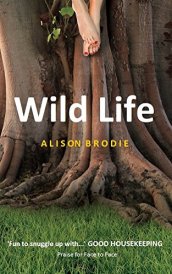
I published Wild Life, then The Double.  In January 2017, I will publish Brake Failure, then Zenka in September.  After that, I will publish the rest.

So here I am, an indie author (or am I a hybrid?).

What have I achieved so far?

I have entered a world where I have been embraced by fellow writers and book bloggers, finding friendship and support in places as far away as Brazil and Australia!  I have overcome my techno phobia and become rather nifty on my laptop!  With regards to publishing:  I think one person bought a copy of Wild Life.  I had some good reviews for The Double, ie, “The Double is another addition to author Alison Brodie’s body of work, and proof of her genius in writing fiction.” –San Francisco Book Review.  (I think I might have sold 5 copies of that one.)

Now I have become a general pushing his troops to the front line of battle!  I’ve got all my guns out!  I am doing all I can to get Brake Failure noticed.  I am sending review requests to EVERY blogger, networking on social media, everything!  At the time of writing, it is 3 months before the release and already I have reviews, all of them five 5-stars, from professional reviewers.

“Everyone needs to read this book.  It’s blooming brilliant.”  -The Reading Shed

“A laugh-out-loud tale that will keep you flipping the pages.” –Tome Tender

“Hilarious.” –Lauren Sapala, Reviewer and Writers’ Coach

“5/5  Empowering … comical … refreshing.”  -San Francisco Book Review

“OMG…I LOVED this book…going on the list of one of my favorites of 2016!” –Star Angel Reviews

This is going to sound like a big fat lie, but it’s not:  what I want the most is not the money (although it would come in handy) it is actually getting my words in front of readers and knowing those readers have enjoyed my book so much, the world around them ceased to exist.

I hope, one day, I can contact Dinah Wiener and show her my reviews so that she knows that her faith in me all those years ago was justified.

(And we readers hope so too Alison.)

About Alison Brodie

author-photo

Alison Brodie is a Scot, with French Huguenot ancestors on her mother’s side.  Alison was a photographic model for a wide range of products, such as Ducatti motorbikes and 7Up.  She was also the vampire in the Schweppes commercial.

Alison lived in Kansas for two years.  She loved the people, their friendliness, the history and the BBQs!  Now, she lives in Biarritz, France with her rescue mutt, Bayley.

You can see what early readers think of Brake Failure on Goodreads.

Alison loves to hear from her readers.  Find out more by visiting her website or following her on Twitter. You’ll also find her on Facebook.

All of Alison’s books are available here.

An Interview with Karen Aldous, author of One Moment at Sunrise

sunrise

You know, I love being a blogger, because I get to interview all kinds of wonderful people and I’m delighted to welcome Karen Aldous to Linda’s Book Bag today to tell me about her writing and her latest book One Moment at Sunrise. One Moment at Sunrise was published by Carina in e-book and is available for purchase here.

One Moment at Sunrise
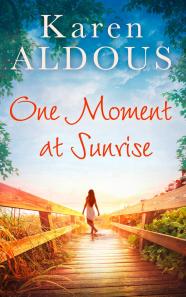
sunrise

Nothing will ever be the same again…

Evie Grant has spent two years hidden away in a quiet French village, longing to escape her beautiful villa with its blue-shuttered windows. Maybe this summer, the father of her child will keep his broken promises and return to whisk her away to another life. One way or another, Evie’s determined to stop feeling like his dirty little secret…

Yet when a mysterious stranger almost knocks Evie off her bicycle early one morning, her world begins to change in ways she never expected. Embarking on a painful journey of self-discovery, Evie begins to face her darkest fears and rebuild her fragile dreams. But can she ever truly break free from her gilded cage and learn to love again?

An Interview with Karen Aldous

Hi Karen. Thank you so much for agreeing to answer some questions on my blog about your writing  

Firstly, please could you tell me a little about yourself?

Hi Linda, it’s a pleasure, thank you so much for featuring me on your lovely blog. I am tucked away in a village in Kent with hubby and most of my family and friends close-by. When I’m not writing, much of my time is spent with them; I’m so lucky to have four gorgeous grandchildren who I adore, along with my rather large yellow Labrador who loves taking me for walks. My other passion is travel, Europe being a particular favourite.

When did you first realise you were going to be a writer?

It finally dawned on me when I was in my late teens. I’d always had a penchant for pens, pads, typewriters and stationery, writing poetry and regularly writing letters to pen friends. I was also one to take myself off to the library after school when I was a junior, but reading novels on my commute to work each day created the biggest itch and I began writing short stories, even attempted a novel (an outline and four chapters), but I never had the confidence to send anything out.

(I think an awful lot of bloggers are addicted to notebooks and stationery too!)

How much did joining the Romantic Novelist New Writers Scheme affect your writing?

When my mum was terminally ill, it made me realise how limited time really was. I made up my mind that I was going to write the novel I’d always promised myself and try to get it published. From subscribing to writing magazines, I’d learned of the scheme and after completing the first chapters of my novel, I applied to the scheme and was successful. I had eight months to complete it. The following day I also enrolled in a local creative writing class and discovered many like-minded writers, some of whom were also on the scheme. It was as though the classes were made for me and when I received an encouraging report from the RNA NWS, I immediately began editing my first three chapters and entered them into a Writing Festival competition. Although I didn’t win, it led me to a meeting with an editor who liked it, and asked for more. That’s how I received my publishing contract. I believe joining both of these organisations were instrumental in their help and support; drumming up my own belief whilst giving publishers and agents the signal you are seriously committed to your writing.

To what extent do you think studying psychology has impacted on your writing?

First and foremost, studying for the degree really boosted my confidence. Graduating with a BSc Honours was a huge achievement for me. Because my parents were not great believers in further education, I was expected to find a job at sixteen which I did, then married at nineteen, children at twenty-two. As my children grew, I began exploring my own path. The course I chose tied in with my fascination for people and understanding behaviour differences, the why’s and what lies beneath. It gave me a deeper insight into individuals’ psychological make-up. I would say it has created quite an impact on my writing particularly when creating my characters and understanding their motivations as well as providing confidence within myself as a writer.

If you hadn’t become an author, what would you have done instead as a creative outlet?

I’d like to think either photography or being a musician. I enjoy taking photographs and invested in a brilliant camera a few years back which I’m still learning to use effectively. Predictably, I love to capture beautiful scenery such as lakes surrounded by mountains like those of Lake Leman in Switzerland or Lake Como in Italy but I also love to capture faces or profiles close-up, particularly my grandchildren. There’s something magical about catching expressions. And music. I used to play in a band and I love the lift you get from playing ensemble and in harmony. Although I’m a crap singer, I often sing to the grandchildren and they love it, (well they laugh and join in) but such fun!

France features quite heavily in your novels. Why have you chosen this particular location?

Put simply, France provides me with so much inspiration. Particularly the south of France. The beauty of much of its landscape, the language and culture, the food and wine, and of course, the ambience. From tiny scenic villages to thriving cosmopolitan towns, it has everything I could want as a writer and I could feed off it for years. I would love a base there and have easy access to Italy, Switzerland and Greece, my other favourites. I find these destinations relaxing whilst enticing in so many ways. Wherever you stay in Europe, there is so much history, people and places to visit you could never be short of material for novels.

How do you go about researching detail and ensuring your books are realistic?

Naturally, I visit a location to experience it for myself before I write or it has inspired me to go there. Sometimes, I might discover something which is a real surprise. For example, my latest book, One Moment at Sunrise, was inspired when visiting the Canal-du-Midi. However, as soon as I began researching more about the canal, visiting sites and museums etc., once home, I found an un-notable mention about Pyrenean mountain woman being involved with its construction. I just had to dig out more. I discovered an academic work which provided so much relevant evidence and material to suggest that Paul-Pierre Riquet, the visionary responsible for its success, had employed peasant woman for their numerous methods of channelling water in the mountain regions but, from this research discovered these women’s names had been taken off the payroll and have never been credited for their significant input.

Which aspects of your writing do you find easiest and most difficult?

The aspect I find easiest is ideas. The hardest is in the execution and how those ideas are going to be portrayed and written. As my writing has progressed I’ve found that I’m fascinated by women in history and what they’ve achieved and I find I want to include them. I also find myself reading so many beautiful writers that I want to improve my writing too and all the time I find I’m challenging myself to expand my knowledge on all fronts.

What are your writing routines and where do you do most of your writing?

I prefer to write in the mornings and evenings where possible. I think the mornings is when my mind is freshest but evenings when I can escape to my study and find the quiet to get into the zone.

When you’re not writing, what do you like to read?

My favourite books usually have a strong setting and historical elements such as Victoria Hislop’s The Island, Rosanna’s Ley’s The Villa, Leah Flemming’s The Girl Under the Olive Tree, Dinah Jeffries’ The Tea Planter’s Wife, Erica James’ The Dandelion Years, Elena Ferrante’s  My Brilliant Friend. I also enjoy dual time lines like Iona Grey’s Letters to the Lost, Kath McGurl’s The Pearl Locket and, psychological fiction such as Lisa Hall’s Between You and Me.

(Oh! Fabulous books there Karen. I’ve read all your choices or got them on my TBR.)

The covers of your books have exactly the kind of image that attracts me as a reader. How much involvement have you had in their creation?

Aww thank you, the cover designers are amazing but I have little input apart from the story itself. I leave it to the experts.

The title of your latest novel, One Moment at Sunrise, suggests that life can be affected in an instance. How far do you believe this to be true?

An interesting question, Linda and I would say I think there are moments in our lives which ignite something within us. As stated earlier, when at the hospital with my mother; that moment I had when reality hit that life is actually rather short and we are all volatile, and if I was going to get my novel published I would have to change some things. It was a catalyst to change. Also, when I discovered I was having twins at twenty weeks during my second pregnancy, I remember the moment even now. I had been worried sick about how we were going to manage financially having a ten-month old son already, so I was forced to think differently and creatively to manage. Having experienced such moments, I must be confident that we can be affected in an instance.

(I can empathise with that entirely, Karen. In the last ten months my husband has had cancer, my father has suffered a massive stroke and my great niece, Emma Faith, was still born at full term so I accept entirely that we need to make the most of our chances.)

If you could choose to be a character from one of your novels, who would you be and why?

Oh don’t do this, it’s like choosing one of your children! Ok, I’ve come back to this because I think Evie in One Moment at Sunrise has much more potential as a person and as a writer, developing film scripts. I would love to see where she heads next. It would certainly be a dream for me to see something I wrote on the big screen.

If One Moment at Sunrise became a film, who would you like to play Evie and why would you choose them?  

Either a younger Reese Witherspoon or a blonde Gemma Arterton. They are both stunning but they have a vulnerability about them like Evie. And those mischievous eyes, I’m thinking humour and seduction. Evie is also very bright albeit a little naïve in that she likes to please. I think both these actresses could pull off that quality.

If you had 15 words to persuade a reader that One Moment at Sunrise should be their next read, what would you say?

Evie has everything; successful man, a house, beautiful daughter, so why is she so unhappy?

(Good question – we’ll all have to read One Moment at Sunrise to find out.)

Thank you so much, Karen, for your time in answering my questions.

My pleasure, Linda. Thank you.

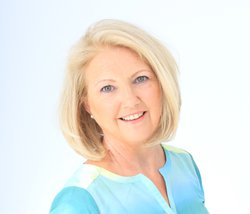
About Karen Aldous
karen-aldous-author

Karen Aldous enjoys village life on the edge of the north-downs in Kent with easy access to the buzz of London. Not only does she love the passive pleasures of reading and writing, she also craves the more active pursuits with her family and friends such as walking, cycling and skiing especially when they involve food and wine!

You can follow Karen on Twitter, find her on Facebook and Pinterest and visit her website.

You can find all Karen’s wonderful books here.
image001

An Interview with Oliver Cable, author of Fresh Air and Empty Streets

better-cover

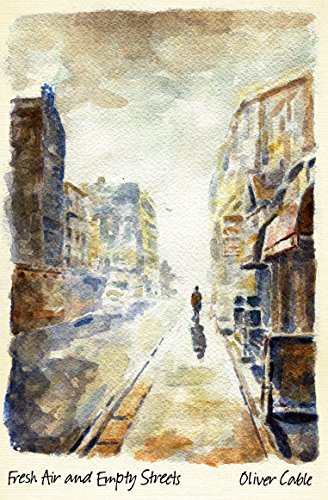
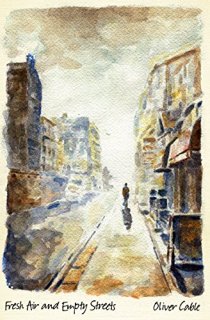
When we were married my husband and I had our honeymoon in Paris and we retuned for our silver wedding anniversary. Oliver Cable has recently written Fresh Air and Empty Streets set in that very city and the cover alone evokes many memories for me. As a result, I had to ask Oliver to tell me a little bit more about Fresh Air and Empty Streets.

Fresh Air and Empty Streets was published on 29th July 2016 and is available for purchase in ebook here.

Fresh Air and Empty Streets

better-cover

Fifteen years ago, Alexander left his wife and small child behind to pursue the life of an artist in Paris. Now all grown up, Felix travels to Paris to meet his elusive father. On a journey through smoky jazz bars, artists’ studios and along the banks of the Seine, Felix discovers more and more about Alexander, calling into question his long-held beliefs.

An Interview with Oliver Cable

Hi Oliver. Thank you so much for agreeing to answer some questions on my blog about your writing and Fresh Air and Empty Streets in particular.

Firstly, please could you tell me a little about yourself?

I’ve had a pretty international upbringing. I grew up in Holland but have spent time living in France and Malaysia too. For now, I’m in London. I’m 26.

When did you first realise you were going to be a writer?

Only after I’d been one for a third of my life! I wrote my first poem at the age of 14 but it was always a case of just writing individual pieces when inspiration struck, rather than any concerted effort to write. I followed a Creative Writing course at the University of East Anglia and made a promise to continue writing. Two years later, Fresh Air and Empty Streets was published.

When you’re not writing, what do you like to read?

I read literary fiction on the whole. Master writers and master storytellers: Jack Kerouac and Haruki Murakami are two whose styles I admire. There’s so many classics that I can’t keep up with the new styles.

Does that put you at a disadvantage as a writer?

I don’t think so – I write what I want to write, not necessarily what’s selling.

If you hadn’t become an author, what would you have done instead as a creative outlet?

I love painting and music as two forms of expression, and by music, I mean jazz in particular. I think that’s why the two play just a major part in Fresh Air and Empty Streets. I drum, but I’d love to learn double bass or saxophone. It may be too late now.

(No, it isn’t Oliver! It’s never too late to try something new!)

one book.jpeg

How and why did you choose Paris for the setting of your novella Fresh Air and Empty Streets?

On a trip to Paris with two friends (one of whom ended up painting the cover), a number of plot elements floating around in my head just fell into place, with the city as a natural backdrop. On one hand, it’s true to Paris, while on the other; it’s a Paris I hope once existed.

How did you go about researching detail and ensuring Fresh Air and Empty Streets is realistic?

I wrote intensively during that first trip, and drew heavily on those notes (scribbled notes of life from our days in the city) in writing the first draft. When I reread it, I realised the piece needed some accurate descriptions of Paris. So I booked a flight and an Airbnb, sat down and wrote what I saw.

Which aspects of your writing do you find easiest and most difficult?

Descriptions are my forte. A number of readers have commented on how poetic the descriptions are in the novel. It’s what happens when a poet becomes a novelist, I suppose.

What I found hardest (and this is more during the editing than the writing process), was knowing when the piece was ready. I went through it at least six times after I’d finished writing it, changing bits every time I went. At what point can you then say the book is finished? It’s procrastination coupled with fear – as long as you’re still editing, they can’t criticise. At some point you just have to say enough is enough and move onto the next stage. Reading back, there’s still bits I’d edit. But can a piece ever really be finished?

(I think that’s often something writers struggle with – the letting go of their work.)

multi

What are your writing routines and where do you do most of your writing?

My writing routine was a little unorthodox, in that I wrote the whole thing in a month alongside a full-time job. So my life looked like: wake up early, write for an hour, go into work, write on my lunch-break, come home, eat dinner, write for an hour, sleep, repeat. I mainly wrote at my desk in my room, but my office has meeting rooms with great views across the Thames for my lunchtime sessions. Wrong city perhaps, but it certainly helped me write.

Why did you decide to publish a novella rather than a full novel in Fresh Air and Empty Streets?

I didn’t ever really decide to! It was only when I was submitting to agents that the term ‘novella’ was used to describe it. They suggested extending it, but for me the story was finished. To add any more would be superfluous.

The cover of Fresh Air and Empty Streets reminds me so much of the paintings to be found in Paris where the book is set.  How did that image come about and what were you hoping to convey (without spoiling the plot please!)?

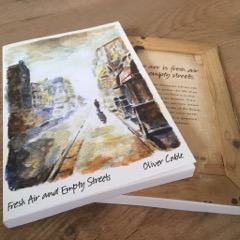
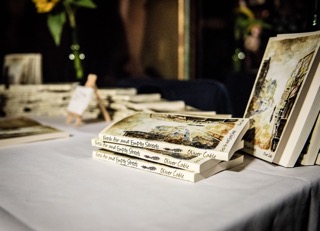
The process of creating the cover took almost as long as the writing of the novel itself. It started off as a picture of a street that I took one morning. To cut a long story short, Ron, who was on that initial trip to Paris, painted it, and Mark Ecob took the painting and designed a beautiful cover for the book.

The painting mirrors the whole feel of the book: an artistic life.

(I think it’s certainly very evocative of Paris.)

If you had 15 words to persuade a reader that Fresh Air and Empty Streets should be their next read, what would you say?

Art, jazz and Paris. A hundred readers before you have flown through it in a day.

Thank you so much, Oliver, for your time in answering my questions.

About Oliver Cable

bio-pic

Oliver Cable was born to English parents in Holland and currently lives in London. As a result, he’s not entirely sure where he’s from. In the ten years since writing his first poem, he’s written short-form poetry and prose, inspired and influenced by jazz, travel and the absurdity of daily life. After following a Creative Writing course at UEA, he turned his hand to writing longer pieces, but to this day still enjoys a good four-line poem. Fresh Air and Empty Streets is his debut novel.

You can find out more about Oliver by following him on Twitter.

The Christmas Promise by Sue Moorcroft

christmass-promise

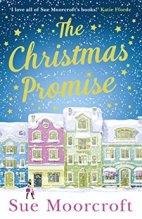
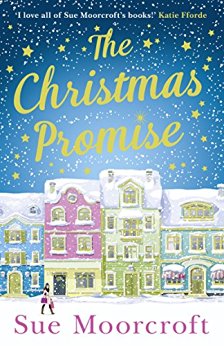
I am thrilled to be part of the launch celebrations for The Christmas Promise by Sue Moorcroft. The Christmas Promise was published yesterday, 6th October 2016, by Avon Books, an imprint of Harper Collins, and is available in e-book and paperback from your local Amazon site and by following the publisher links here.

Sue Moorcroft has previously been kind enough to give an interview to Linda’s book Bag which you can read here. Today, Sue has provided a highly thought provoking guest blog on the dangers of over-sharing.
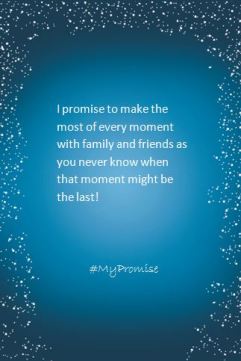
As part of the celebrations for The Christmas Promise, I’m not only reviewing but I’m making my own promise too:

final-bloody-thing

The Christmas Promise

christmass-promise

For Ava Bliss, it’s going to be a Christmas to remember …

On a snowy December evening, Sam Jermyn steps into the life of bespoke hat maker Ava. Sparks fly, and not necessarily the good ones.

Times are tough for Ava – she’s struggling to make ends meet, her ex-boyfriend is a bully, and worst of all, it’s nearly Christmas.

So when Sam commissions Ava to make a hat for someone special, she makes a promise that will change her life. She just doesn’t know it yet…
Over-sharing Can Be bad For You

A Guest Post by Sue Moorcroft

Has anybody shared anything of yours without your permission? I don’t mean taken a bite from your Mars Bar or borrowed your best dress for a date. I mean taken an image of you and posted it on social media? It’s a situation I use in The Christmas Promise, combined with a vengeful ex-boyfriend.
Celebrities come up against this issue all the time. They’re out having a particularly junky junk-food meal with their kids; they’re having a row with their partner in a park; they’re letting their cellulite wobble on a beach … and somebody takes a picture on their phone. Time was, the person taking the pic would have hoped to make money out of it by selling it to the tabloid press (and maybe they still do that) but by far more common is that they simply set it free in the wilds of social media.

Before they know it the celebrity’s trending with a hashtag before their name because the image has awoken some emotion in people: sadness, laughter, resentment, schadenfreude, anger. It has been retweeted, it has been captioned, opinion has been passed. It’s been made into a meme or is the subject of blogs.

This may come with the territory for celebrities, who know that fame has its downsides. And no publicity’s bad publicity, right? Hey, their publicity department might even have helped this to happen as ‘going viral’ can be a publicity dream.

But what if you’re not a ‘’sleb’? What if you feel safe to sun yourself in your bikini in a private garden and your friend takes a pic showing your stretch marks and varicose veins in glorious detail, the chilled wine’s so refreshing that you’ve drunk a bottle each so you’re howling with red-faced laughter and her camera-work’s shaky.

And what seems absolutely hilarious to your friend at that moment … is to post that image on social media.

What?

You begin to sober up. Seriously? She didn’t really just do that, did she? She did. And she’s tagged you so it will appear on your timeline and all your friends can see it. All her friends can see it. Friends from both accounts begin sharing it and all their friends can see it. Your colleagues. Your kids, nieces and nephews. Maybe even some of your clients/customers/students/lecturers.

You make your friend delete it instantly and you do the same. Your friend’s full of shamefaced apologies. You vow never to get yourself in that situation again.

But once that image is up on the internet it has gone from your control.

All you can usefully do is wise up for the future by combing through your settings for useful features.

  • Limiting your posts to ‘friends’ can slow the spread of material through your account but even then, is having your boss as a social media friend such a good idea?
  • You can untag yourself from pictures you hate so anybody searching your name or your timeline won’t stumble across them.
  • Changing your settings so that you have to approve tagged posts before they appear on your timeline can keep your own timeline from being sullied by the bad stuff.
  • Selecting ‘private’ in settings wherever practicable is a good baseline from which to work. Social media’s default setting is rarely private but it doesn’t take long to make manual changes that will make you more comfortable.
  • Remembering that you have the power to block people and report them can save you anguish. Do it if you feel the need!

It’s wise, of course, not to make yourself vulnerable in the first place (especially to that hopefully mortified friend) but so many hands hold camera phones every day that images are bound to go astray. Just look at the trouble Ava gets into in The Christmas Promise! #MyPromise is that the situation seriously gets away from her.

My review of The Christmas Promise

When her ex-boyfriend won’t take no for an answer, her finances are at rock bottom and her least favourite time of the year, Christmas, is looming, Ava thinks life can’t get much worse. She’s wrong.

I cannot believe that The Christmas Promise is my first Sue Moorcroft book. Am I mad? Chick-lit, women’s fiction, romance, call it what you will, The Christmas Promise is the perfect embodiment of fabulous story-telling and I utterly adored it.

Firstly, The Christmas Promise deals with topical and moving themes of finance, health and the abuse of social media so that there is a depth and quality to the writing I wasn’t expecting. I actually learnt a lot from reading this book. The quality of research that has gone in to the theme of millinery, for example, is so impressive and enhances the experience of reading, but it is the salutary lesson about the use of social media that really packs a punch. Those who read this book might just find themselves safer online – and know what to do if things go wrong.

The characterisation in The Christmas Promise is wonderful. I loved Ava and Sam especially, but even the smallest supporting character felt very real so that it was as if I was reading about people I knew. I even shed a tear over Wendy. If I said I wouldn’t mind meeting Sam in a darkened room you’ll know what I mean. The romantic passages were just lovely and very natural and sensual so that I could imagine myself as Ava.

The plotting is incredible. I felt as if I couldn’t bear what was happening to Ava and yet I was transfixed and couldn’t stop reading on. My heart went out to Ava, Wendy and even the awful Harvey in some ways because Sue Moorcroft has presented their lives and actions so convincingly. Just when I thought there was a resolution to their problems, off we went again so that The Christmas Promise was exciting as well as emotionally satisfying.

The Christmas Promise is a wonderful read, and not just at Christmas. I can’t recommend it highly enough.

About Sue Moorcroft

DSC_3507

Award winning author Sue Moorcroft writes contemporary women’s fiction with occasionally unexpected themes. The Wedding Proposal, Dream a Little Dream and Is This Love? were all nominated for Readers’ Best Romantic Read Awards. Love & Freedom won the Best Romantic Read Award 2011 and Dream a Little Dream was nominated for a RoNA in 2013. Sue’s a Katie Fforde Bursary Award winner, a past vice chair of the RNA and editor of its two anthologies.

Sue also writes short stories, serials, articles, writing ‘how to’ and is a creative writing tutor.

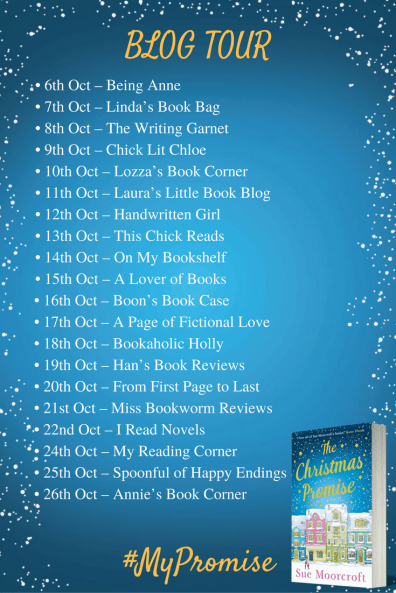
You can find out more about Sue on her website, blog, Google+, LinkedIn, Goodreads, Take Five Authors, Facebook and her Facebook author page. You can also follow Sue on Twitter. There’s more with and from Sue by following the #MyPromise and with these other bloggers too:

blog-tour