An Interview with Catherine M Byrne, author of Isa’s Daughter

katrina66-72dpi-1500x2000

I’m pleased to welcome Catherine M Byrne to Linda’s Book Bag today. Catherine’s latest novel Isa’s Daughter is the fourth in Catherine’s Raumsey Series (all of which can be found here and directly from the publisher here) and today Catherine has kindly agreed to answer some questions about her writing and Isa’s Daughter in particular.

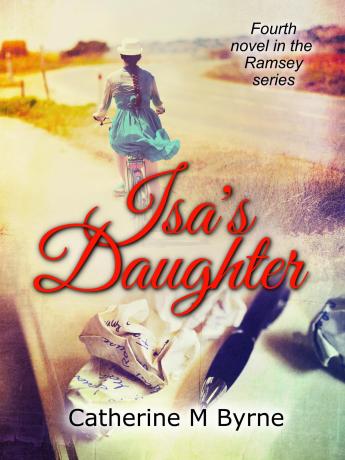
Isa’s Daughter
katrina66-72dpi-1500x2000

The Great War is over, and the inhabitants of Raumsey Island struggle to regain their livelihood. Seventeen-year-old Annie Reid is a spirited, ambitious girl, determined not to end up a herring gutter or go into service.

Annie befriends a young schoolteacher, Alexander Garcia, who promises to help her further her education but, after tragedy strikes, Annie pursues a nursing career amidst the political complexity of Glasgow. Garcia dreams of a return to his Spanish roots, but Spain is also in political turmoil.

Annie’s love for the teacher remains through the years, but will love overcome the barriers and prejudice of race, religion, beliefs and distance?

An Interview with Catherine M Byrne

Hello Catherine. Thank you so much for agreeing to answer some questions on my blog about your writing and Isa’s Daughter in particular.

Firstly, please could you tell readers a little about yourself?

I was born on the Island of Stroma, and was brought up hearing stories from my parents and grandparents about the island life of a different generation. An interest in geology, history and my strong ties to the island have influenced the choice of genre for my first series.

I have had some success as a landscape artist and I worked as a glass engraver with Caithness Glass until I left to become administrator for my husband’s two businesses. I always wanted to write, however.

Since first attending the AGM of the Scottish Association of Writers in 1999, I have won several prizes, commendations and have been short-listed both for short stories and chapters of my novel. In 2009, I won second prize in the general novel category for Follow The Dove.

My main ambition was to write novels and since the death of my husband in 2005, I have retired in order to write full time.
dove

When did you first realise you were going to be a writer?

When I was at school, maybe aged about eight, my teacher asked us if we had any little poem in a book at home that we could recite for the Christmas Treat.  I found one, and I also wrote one. The teacher very kindly said they were both very good, ‘but you can only have one,’ she said. No surprise that she did not choose the one written by me.  Since I also loved to draw, I began to draw comic strips and wrote stories to go with them. In my teens, I wrote song lyrics and rhyming poems, so I guess the urge was always there.

If you hadn’t become an author, what would you have done instead as a creative outlet?

An artist. I’ve sold many of my landscapes. I haven’t been painting much since I started writing seriously.

How do you carry out the research for your novels?

Internet, reading, visiting the places I write about (where possible) and speaking to historians.

Which aspects of your writing do you find easiest and most difficult?

I love writing descriptions. I see the place in my mind’s eye, I transport myself there, ask myself what am I feeling, what am I smelling, who is walking around me? I also like writing dialogue. I become my character, get into the conversation, become angry, sad, happy as the scene dictates.  The most difficult aspect is marketing. I find it very difficult to put myself out there. My fan base is steadily growing, and I sell a lot of books locally, but I need to get further afield.

I met some tourists from America recently who bought a box of my books to take home with them. Can’t imagine the weight of their luggage.

(I think an awful lot of writers will empathise with that marketing dilemma Catherine!)

What are your writing routines and where do you do most of your writing?

Since I now live alone, my computer is in the corner of my dining room. I write as the muse dictates. I do try to write a bit every day, sometimes just one sentence, but I’m thinking about my story most of the time.

When you’re not writing, what do you like to read?

Apart from what I read for research, I read most genres. Right now I’m into psychological thrillers or murder mysteries. I do like to read factual books as well. Sometimes I just want something beautiful.

Do you have other interests that give you ideas for writing?

I enjoy travel, gardening, my computer and walking the dogs. Ideas come to me while walking in the countryside or along the beach. My contemporary novella, Song for an Eagle, was prompted by a photograph of my granddaughter and an eagle.
eagle

Why did you choose the Orkney’s and Spain as your settings for Isa’s Daughter?

I chose Orkney as I was born on the island of Stroma myself, although Stroma is not technically one of the Orkney islands, it has close connections.The character of Isa Reid features strongly in the first book of the series, Follow the Dove, and she is very loosely based on a real person. The Spanish Armada was shipwrecked off the north coast of Scotland, so the story goes, and many of the sailors survived to settle and live there. So you could say we do have Spanish blood in our veins!

(How romantic!)

You explore big themes such as love and lust, truth and deceit, family relationships and the place of women in society in Isa’s Daughter. How far did you plan for these and how far did they arise naturally out of your writing?

All my novels explore love, lust, truth and deceit, and family relationships. I think they arise naturally from human nature. The place of women in society arose from Annie’s spirit and the period in which the novel is set. I wrote about the world through Annie’s eyes, and the things she encountered.

I know you are marketing Isa’s Daughter yourself. What advice would you give to others who are self-publishing and trying to get their book noticed? 

It’s difficult to get your book notice when marketing yourself. Social media is a great tool. Apart from that I give talks to women’s groups, set up a stall at fayres and offer my books to several outlets on a sale or return basis. Although it’s very slow, if your book is good, word of mouth is one of the best ways to get your book noticed.

What plans do you have next for your writing?

When I finished Isa’s Daughter, I felt almost bereft. So much so, that I immediately started another in the saga of the same family. However, I am also working on a psychological thriller, my favourite genre.

Which of your characters would you most like to be and why?

I think I’d be Isa. She’s strong and feisty. Of course she’s not featured so much in my new novel as it’s all about her daughter, Annie.

If one of your books  became a film, which would you choose and why?

It would have to be the first, Follow the Dove. That would leave the way open for the others.

(Ha ha – good point!)

How important do you think social media is to authors in today’s society?

It appears to be very important in getting your name out there. For someone like myself who doesn’t do much else in the way of marketing, it’s a must.

If you had 15 words to persuade a reader that a Catherine M Byrne book should be their next read, what would you say?

A good read that’ll turn out to be a lot different to what you expect.

Is there anything else you would have liked to be asked?

Where am I going next? Well I miss my characters so much I’m staying with them. Number five in the series will take us up to and through the second world war. Let me say that each book is stand alone. But, hey, in between times, I’m working on another novella, a psychological thriller.

Thank you so much for your time, Catherine, in answering my questions.

And thank you for allow me to.

Pleasure!

About Catherine M Byrne

author

You can find out more about Catherine and her books by visiting her website, finding her on Facebook and by following her on Twitter.

Introducing Blue by Leslie Tate

front180

I’m delighted to welcome Leslie Tate to Linda’s Book Bag today. Leslie is introducing Blue, the second in his Lavender Blues: Three Shades of Love, trilogy. Blue is  published today, 1st November 2016, and is available for purchase directly from Leslie by clicking here and from your local Amazon site.

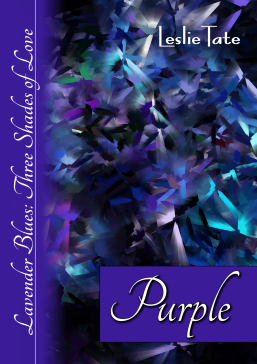
Purple

Purple, the first book in the Lavender Blues: Three Shades of Love trilogy is available here.

front_300.png

Purple is a coming-of-age novel, a portrait of modern love and a family saga. Set in the North of England, it follows the story of shy ingénue Matthew Lavender living through the wildness of the 60s and his grandmother Mary, born into a traditional working-class family. Both are innocents who have to learn more about long-term love and commitment, earning their independence through a series of revealing and closely-observed relationships.

Heaven’s Rage

Leslie also has a wonderful collection of lyrical essays, Heaven’s Rage, coming out on December 1st 2016.  You can message him from his website if you want more details, but I have been lucky enough to review part of that collection below. Heaven’s Rage is an imaginative autobiography. Reporting on feelings people don’t usually own up to, Leslie Tate explores addiction, cross-dressing and the hidden sides of families. Writing lyrically, he brings together stories of bullying, childhood dreams, thwarted creativity and late-life illness, discovering at their core the transformative power of words to rewire the brain and reconnect with life. A Robin Red breast in a Cage / Puts all Heaven in a Rage – William Blake.

You can pre-order Heaven’s Rage here.

And Then There Was Blue

A Guest Post by Leslie Tate

front180

Blue, the second in the Lavender Blues trilogy, was based on my experiences in the 80s as a member of a feminist-led collective – but shaped and adapted to fit the logic of fiction. The words and the characters were my main guide, taking me to places I hadn’t expected. The themes were feminism, marriage and open relationships, but only as they developed in their own sweet way. What I had to establish was the ebb and flow of feelings as an authentic experience, and this meant that the beginning was seminal. Like the first few bars in a symphony, the opening paragraph signposted the key, tempo and mood.

So what did I hear at the start?

Blue begins with a quiet, observational figure – with moments of unease and the word ‘enough’ running through the mind of my protagonist, Richard Lavender. By contrast, my second subject, his wife Vanessa, sails in noisily with a messy exchange with her children and her close friend Ruth. Then the narrative voice kicks in, taking us back through the first ten years of Richard and Vanessa’s relationship. The emerging pattern is: intro – smooth exposition – back to theme, using the word ‘enough’ as leitmotif.

With Blue I’d already decided that I wanted to explore a different type of beginning from my first novel. In Purple the reader is transported by the first sentence back to the 60s. With Blue the process is more close-up and gradual, showing Richard and Vanessa living in the 90s – flashing back to the 80s – with less overview. So it’s a controlled outing, a walk in the park if you like, with enough time to look around. The reader is taken into the lives of the warring couple through pacing and changes in voice. And because I wanted to fully explore the action, each incident has an element of arrest, a tableau-like dimension, as it extends itself, stretching time and space. Of course I also had to move the story on. So I repeatedly rewrote the start to each chapter, searching for shortcuts, ways of jumping through time and space without sounding false. And in that search I found that a ‘go for it’ mind-set helped. Anything was possible as long as I wrote with freedom and didn’t get too hemmed in by ‘writing school’ conventions. So my story moved according to feel, switching between characters out there in the world doing surprising things and the dispassionate study of a couple beneath the microscope.

To write Blue I needed a strong, flexible authorial voice. Rereading my first attempts I identified a register – a combination of formal and informal, in third person, dipping in and out of my two main characters’ heads – so my first draft was composed around a series of variations on that style. But when I revisited the story later, new expressive registers appeared. For instance a new beginning, with Richard’s cousin Matthew, the main character in Purple and now a professor, lecturing about relationships. His voice was witty and erudite, offering indirect comments on Vanessa and Richard’s marital struggles. It added an element of humour and a connection between the books. Other styles appeared, helping to vary the narrative, including articles, dialogues and programme notes for an exhibition. What I’d put together by the end was a collection of voices, all bearing on the same question: will Vanessa and Richard manage to save their relationship?

To do my subject justice I needed to include a consciousness-raising meeting and a counselling session, contrasting them with romantic getaways – which called for a switch between irony and poetic prose. With the counselling I had to ‘pack it in’, foreshortening hours of talk into a few concentrated exchanges before moving on to practical, slightly wacky exercises. A counselling scene could be very static, so I squeezed several sessions into one, making it possible for Richard and Vanessa to achieve tangible progress. As an author I often overlay the actual with the generic, striking a balance between the documentary and the imaginary. The process, as Susan Sontag says, makes the writer: ‘Love words, agonize over sentences. And pay attention to the world.’

In the world I’d belonged to, the feminist-led group had set out to overturn monogamy, but jealousy got the better of us. So in the book the open relationships have similar problems, but not before Richard and his ‘secondary partner’ Ginny have a wild love affair. Their romance is told largely in terms of crazy night walks in forgotten parts of the city. The normal rules don’t apply in the darkness of the park or the abandoned railway line, but the relationship does follow the well-established pattern that romantic love can be a fleeting thing.

So Blue tells a quasi-historical tale, but in the form of a satirical-romantic-adventure. It covers that time in life when couples struggle to ‘stay alive’ against the pressures of jobs and bringing up children. It’s also an investigation into modern love.

In the words of my blurb: ‘Blue tells the story of Richard and Vanessa Lavender, who join a 90s feminist collective sharing childcare, political activism and open relationships. Boosted by their ‘wider network’ they take secondary partners, throw parties and observe the dance of relationships amongst their friends. But finding a balance between power and restraint, and handling shared love, proves difficult…’

My Review of Cross-Dressing from Heaven’s Rage

How Leslie began cross-dressing and the impact on his life is explored in this essay.

My goodness this is such good writing. What Leslie Tate does is lay himself emotionally open and honest in a manner that cannot fail to touch the heart of the reader in his autobiographical writing.

If I’m honest, I’m not usually especially interested in autobiographical writing, but Leslie Tate has inspired me to read more if it is to be of this quality. Heaven’s Rage and the chapter I read, Cross-Dressing, is raw, beautifully written and utterly compelling reading. When I’d finished reading Cross-Dressing I wanted to reach out my arms to Leslie Tate and hold him close.

Anyone who has struggled with their sexual and personal identity will find so much that resonates here and for those of us who have always been conventional, Leslie Tate illustrates what others have had to contend with. That’s not to say that this is a sympathy requesting piece. Far from it. It is a true, moving and fascinating account of how Leslie began cross-dressing and how he was viewed, and viewed himself, as a result. It explores the way the media treats those who appear other, the way society expects certain norms for acceptance and how hard so many of us find it to be easy in our own skin.

What I enjoyed most about this piece was the eloquence of the writing. Leslie Tate has a beautiful turn of phrase that conveys perfectly the emotions of the moment. He presented me with concepts that had never really reached my consciousness and made me think in a manner I found hugely skilful.

No matter what your own personal viewpoint and perspective, Cross-Dressing cannot fail to move and impress the reader. It’s magnificent.

About Leslie Tate

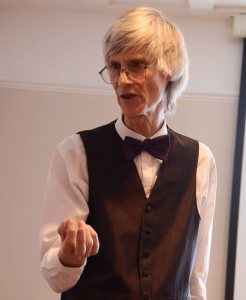
leslie-at-slough-writers-close-up

Leslie wrote his Lavender Blues trilogy while attending a University of East Anglia Creative Writing Course. He is a novelist, poet and teacher, with an MA in Creative Writing, whose stories are driven by language and character. Leslie admires Virginia Woolf, James Joyce, Carol Shields, Marilynne Robinson and Michael Ondaatje.

He runs mixed-arts shows, a poetry reading group and a comedy club, and has led writing workshops at universities, libraries and festivals. He uses music and art as part of his performances which offer surprising insights into prose and how authors ‘reread the world’. He often performs with his wife, author Sue Hampton. Calling themselves ‘Authors in Love’, they live together in Hertfordshire.

Leslie has been shortlisted for the Bridport, Geoff Stevens and Wivenhoe Poetry Prizes.

To find out more about Leslie Tate, visit his website, find him on Facebook and follow him on Twitter.  On Leslie’s website you will also find weekly interviews and guest blogs by writers, artists and musicians, as well as Leslie’s own writings.

A Letter to 1976 by Stuart Douglas, author of The Counterfeit Detective

sh_counterfeit-detective_cvr

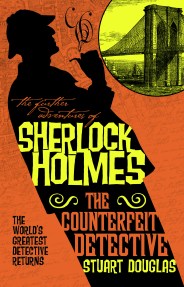
If, like me, you’ve read all the Sherlock Holmes stories and loved the television series with Benedict Cumberbatch, you might just be needing the latest novel from Stuart Douglas – The Counterfeit Detective. The Counterfeit Detective was published by Titan on 18th October 2016 and is available for purchase in e-book and paperback from all good booksellers, including here.

Today, Stuart looks back to his younger self and writes a letter encouraging himself to be a writer. There’s great advice for all aspiring authors in his words as NaNoWriMo starts today.

The Counterfeit Detective

sh_counterfeit-detective_cvr

An anonymous letter brings strange news to Baker Street; there is an impostor Sherlock Holmes at work in New York City, solving cases and taking society by storm. The real Sherlock Holmes wastes no time in crossing the Atlantic to confront the charlatan. But he and Watson find more than they bargained for: the counterfeit Sherlock is missing, his landlady has been horribly murdered, and his clients are refusing to reveal their secrets…

A Letter to 1976

A Guest Post by Stuart Douglas

Dear Stuart,

The bad news first. Everyone who said that drawing maps of imaginary kingdoms and then writing their fictitious histories was never going to earn you a living was right.  You will never get a publishing deal for ‘Captain Douglas in the Land of the Six Headed Xenomorphs‘.

That said, they were wrong when they said that mattered. It doesn’t. Even now, forty years later, I can still remember the joy you – I – felt in completing a story of my own.  Scribbled in the back of last year’s school exercise books, with full colour crayon illustrations (and, usually, a guest appearance by Doctor Who!), those first faltering attempts to create something of your own are something I – you – treasure even now. Publication is one form of validation, but there’s something to be said for just writing what you want, purely for yourself.

But assuming you want more people than just your mum to read your stories, those few pages would still be valuable work.

Because, cliche though it is, the trick to writing is to write. All the time. About anything and everything. Be brash and full of confidence, because no fiction you write can ever be wrong.  Sure, write about wizards and spaceships, because I know you love that stuff (and still will by the time the next millennium comes around), but also write about romances and battles and members of your family, and talking animals and haunted woods and secret alliances. Write about the city and the country, the real and the unreal, the fantastic and the plain ordinary.

And read too. Mustn’t forget that. Read all these things as well, and find writers whose words you love. Because if you don’t love words and the ways other people use them, how can you hope to convince readers to love yours?

Most of all, make writing a pleasure. If it becomes a chore, stop writing and go and do something else instead. That’s maybe the most important thing to remember.

See you in forty years’ time,

Stuart

PS By 2016 we have this thing called the internet which, in terms you’ll understand, is a sort of giant Teletext encyclopaedia which you can access with the press of a single button – only one where most of the content is either wrong or creepy. You’ll definitely want to be switching that off whenever you’re writing. It can be a little bit distracting.

About Stuart Douglas

Stuart Douglas is the author of numerous short stories and novellas, and has edited several anthologies. He set up Obverse Books in 2009, a small press imprint. He contributed a story to Titan’s Encounters of Sherlock Holmes in 2013, and is the Features Editor of the British Fantasy Society journal. He lives in Edinburgh.

You can follow Stuart on Twitter.

The Secret Blog Tour with Katerina Diamond

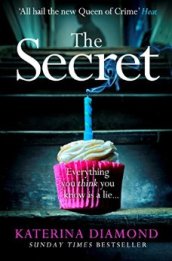
the-secret

Having been involved in the launch of Katerina Diamond’s The Teacher (more of which can be found here) earlier this year, I’m thrilled to be part of the celebrations for The Secret. The Secret was published on 20th October by Avon, an imprint of Harper Collins, and is available for purchase in e-book, paperback and hardback here.

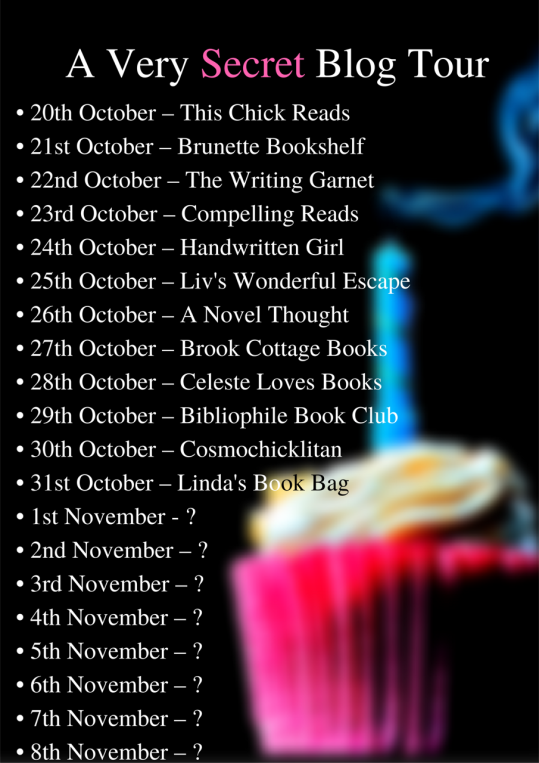
As The Secret is so special, the celebrations are only being revealed gradually! I have an extract for you today and you can find out more by following #AVerySecretBlogTour!

The Secret

the-secret

Can you keep a secret? Your life depends on it…

When Bridget Reid wakes up in a locked room, terrifying memories come flooding back – of blood, pain, and desperate fear. Her captor knows things she’s never told anyone. How can she escape someone who knows all of her secrets?

As DS Imogen Grey and DS Adrian Miles search for Bridget, they uncover a horrifying web of abuse, betrayal and murder right under their noses in Exeter.

And as the past comes back to haunt her, Grey must confront her own demons.Because she knows that it can be those closest to us who hurt us the most…

An Extract from The Secret

A little while later, away from the chaos of her mother’s house, Imogen pulled up outside Plymouth Police Station and looked at herself in the rear-view mirror. She pulled out her mascara and reapplied it.

She walked in and sat at her desk, before pulling out the relevant forms for her report about the dead girl. She looked over at Sam’s desk. He was long gone already, a discoloured apple core lying on top of the crime scene photos. It can’t have been his, she was pretty sure he was allergic to anything that wasn’t processed or dripping in trans-fats. She leaned over and picked up the photos, tossing the core in the bin. Something about apple cores made her feel sick, maybe it was the myriad of tooth marks and the knowledge of all the saliva and forensics that put her off. Since spending a weekend on a forensics seminar she had been put off a lot of things. Apple cores, hotel rooms, the backs of taxis. They were all very evidence heavy, in the form of bodily fluids.

She looked at the images of the girl. As she stared, the phrase ‘There but for the grace of God,’ sprang into her head. She wasn’t a religious person, but she appreciated that particular sentiment. It could have easily been her who was lying face down in her own excrement and vomit. These things happen gradually. You make one bad decision, then another, each one slightly more fucked up and soul destroying than the last. Then bam, before you know it you’re an addict; willing to do absolutely anything to get that next fix. It wasn’t lost on Imogen; if she thought about it she could probably pinpoint the exact moments in her life where she had fought with herself to make the right decision. Where, thanks to God or whoever else was in charge that day, she hadn’t had the overwhelming urge to self-sabotage. She’d had the opportunities, she just knew that there were some decisions you couldn’t come back from. She was grateful, because it was in her DNA to mess up; it was genetic, hereditary. At least that’s what it felt like. Not for the first time, she wondered about her father – what had he been like? Had he too had the same streak as her mother, that awful capacity to self- destruct? She’d never known him. She never would.

About Katerina Diamond

Katerina Diamond writes crime fiction. She lives by the coast in East Kent. Her first crime novel The Teacher was published on March 10th 2016 by Avon Books. Katerina is also interested in TV and Movies, sewing, making things and watching people.

You can visit Katerina’s website find her on Facebook and follow her on Twitter.

There is more with these other bloggers with more to be revealed soon!

tour-poster

1840s Extremes and Inequalities, a Guest Post by M. J. Carter, author of The Devil’s Feast

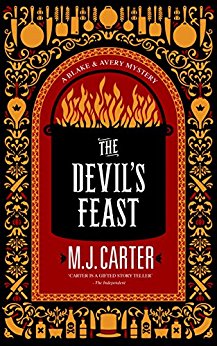
the-devils-feast

I’m delighted to be part of the launch celebrations for The Devil’s Feast by M.J. Carter. The Devil’s Feast was published by Fig tree, an imprint of Penguin, on 27th October 2016 and is available for purchase in e-book and hardback from all good booksellers including here.

I’m thrilled that M.J. Carter has written a guest post today all about the inequalities of food in the 1840s when The Devil’s Feast is set.

The Devil’s Feast

the-devils-feast

London, 1842. There has been a mysterious and horrible death at the Reform, London’s newest and grandest gentleman’s club. A death the club is desperate to hush up.

Captain William Avery is persuaded to investigate, and soon discovers a web of rivalries and hatreds, both personal and political, simmering behind the club’s handsome façade – and in particular concerning its resident genius, Alexis Soyer, ‘the Napoleon of food’, a chef whose culinary brilliance is matched only by his talent for self-publicity.

But Avery is distracted. Where is his mentor and partner-in-crime Jeremiah Blake? And what if this first death was only a dress rehearsal for something far more sinister?

Food and Loathing in the 1840s

How its extremes and inequalities make it a great decade to write about

A Guest Post by M. J. Carter

My thrillers are set in the 1840s, the first decade of Queen Victoria’s reign. It’s a decade which I’m fascinated by: a great period of tumultuous change and conflict—and conflict is always great to write about. This was the decade which saw the end of chaotic Georgian England, and the beginning of uptight, rich, triumphalist Victorian England.

Great inventions—railways and telegraph most of all—transformed the country. There seemed to be geniuses inventing extraordinary things all over the place: William Fox Talbot invented photography; Brunel was building bridges and ships, Dickens and the Brontes were writing masterpieces.  Fascinating real-life characters pop up in my research all the time and I can’t wait to put them in my books. At the same time London became the biggest, richest city the world had ever seen—and a place of cowboy ethics.

Wealth poured in but at the same time inequality between rich and poor became an ugly, widening rift. The rich got richer, benefitting from Britain’s position as the world centre of trade and banking, enjoying all the fruits of innovation and wealth: gas lights, hot running water in their homes. The lives of the urban poor were arguably as bad as they’d ever been. Old jobs and trades were dying, new factories provided work but conditions and hours were unregulated and often appalling. As cities were redeveloped, slums and old tenements were cleared, and the poor ended up in ever more crowded, unsanitary conditions where disease and crime were rife. Life expectancy amongst the poor declined. Politicians like young Benjamin Disraeli talked about a country of ‘two nations’. There were race riots, political unrest, foreign émigrés preaching revolution in London, bank crashes, the Irish famine. Sounds familiar? One of things I particularly like about writing about this period is that there are constantly surprising parallels between then and now—and alongside them attitudes and old habits that are jarringly different. So far I’ve written about the Empire, and about the press, in my new book it was food that grabbed me.

Nowhere was inequality in 1840s Britain more visible than in the matter of food, and this has been the inspiration for my latest book, The Devil’s Feast. For the rich and the middle classes, there had never been such a time of plenty. In Covent Garden peaches and pineapples were available year round, imported from abroad or grown in great glasshouses. On Piccadilly, shops displayed bottles of olive oil and anchovies and Crosse and Blackwell began to market bottled relishes. The railways meant a salmon caught in the morning in the Severn could be served in London for dinner. Cookbooks were selling as they never had. Every rich man worth his salt had a French chef.

The greatest of the French chefs was Alexis Soyer, who ran the kitchens at the Reform Club in Pall Mall, where he was at the cutting edge of culinary innovation, using gas ranges for the first time, and producing power and even ice from a steam engine in the basement, and producing new impossible concoctions to stimulate even the most jaded palates. So famous was he and his kitchen than people would pay to take the tour and the newspapers called him ‘the Napoleon of food.’ His cookbooks, The Gastronomic Regulator (he was a bit pretentious) and The Modern Housewife sold hundreds of thousands of copies.  One of his most decadent specialities was a plate of lamb chops and mashed potatoes and mushrooms in sauce. It appeared towards the end of the dinner, then looking closer the eater realised it is was actually sponge cake, cream and meringue, in a peach cream. Heston Blumenthal eat your heart out.

The poor on the other hand, struggled to feed themselves at all: the decade is often known as ‘the Hungry Forties’. A series of bad harvests started it, and failed potato harvests in Ireland led to the terrible famine of 1845-7. Economic downturn depressed wages.  Tory governments made it all worse with a series of measures called the Corn Laws, which kept the price of wheat artificially high and banned cheap foreign imports, to benefit their chief supporters, agricultural landowners.

Alexis Soyer, rather surprisingly, was deeply troubled by the state of the nation’s diet. He tried to bridge the gap between luxury and need. He wrote one of the first cookbooks for the working class, concentrating on cheap ingredients: A Shilling Cookery for the People. It’s actually a brilliant book and has never been out of print.  He completely reinvented the soup kitchen, feeding thousands of the East End poor and then setting up Dublin during the famine, mostly at his own cost. And eventually he went to the Crimean war with Florence Nightingale, where he completely reorganised the provisioning of the British army.

Soyer seemed to me such a great character that I decided I had to put him in my book—another score, I think, for the 1840s.

About M. J. Carter

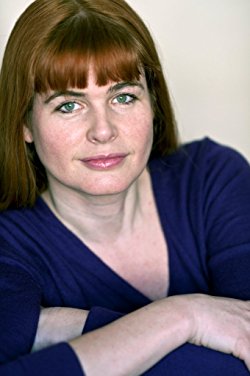
author

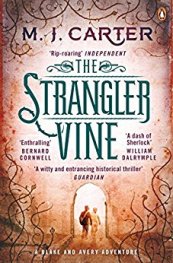
M. J. Carter is a former journalist and the author of the Blake and Avery series. The first in the series, The Strangler Vine, was shortlisted for the Crime Writer’s Association’s New Blood Dagger Award and longlisted for both the 2015 Bailey’s Women’s Prize for Fiction and the Theakstons Old Peculiar Crime Novel of the Year. The next in the series was The Printer’s Coffin (formerly published as The Infidel Stain).  M. J. Carter is married with two sons and lives in London.

strangler

You can follow M. J Carter on Twitter, visit her website and find her on Facebook. There’s more with these other bloggers too:

the-devils-feast-blog-tour

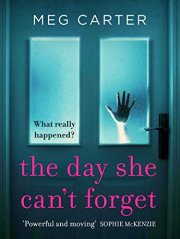
The Art of Writing, a Guest Post by Meg Carter, Author of The Day She Can’t Forget

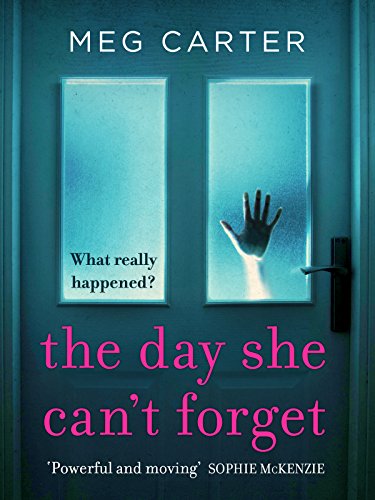
cover

I’m thrilled to be part of the launch celebrations for The Day She Can’t Forget by Meg Carter. The Day She Can’t Forget was published by Canelo on 24th October 2016 and is available for purchase in e-book by following the publisher links here.

To celebrate publication of The Day She Can’t Forget I have a fabulous guest post from Meg all about the art of writing and how experience isn’t always necessary.

The Day She Can’t Forget

cover

It changed her life. But can she remember everything?

On a cold evening Zeb, a single mum in her thirties, is found wandering aimlessly on a remote road. She is dazed, confused and bloodied.

She doesn’t know where she is, or how she got there. She has travelled far from home and someone has attacked her.

Memory loss means she can trust no-one, and with her assailant unidentified, Zeb is desperate to be reunited with her son Matty, and to ensure their safety.

But what will her search for the truth uncover? Will it bring answers, or more questions? And what if the person she can rely on the least… is herself?

The Art Of Writing

A Guest Post by Meg Carter

The history of journalists who have turned their hand to writing novels is long and proud. But earning a living through factual writing is no guarantee your fiction will be a success. If anything, it can blinker you to the immensity of the task you have set yourself.

I started writing my first novel – The Lies We Tell, which was published last year – after working in journalism for just shy of 20 years. This, and the fact I studied English Literature at London University and have always been a voracious reader made me feel (and I wince now at the thought of it) confident that I could do it.

I soon realised my mistake.

Writing 100,000-plus words isn’t just writing a feature on a much bigger scale. It’s about creating from scratch a credible and compelling world, populating it with characters whose complexities engage and mastering the unfolding of a plot at pace. And while I did eventually get there – and find an agent, have that book published and embark on a second: The Day She Can’t Forget, which was published October 24th – the journey was long and arduous.

Certainly, there are advantages when as a journalist you write fiction. A working life-time spent observing, analysing an explaining for a start. I’ve always been a collector of stories – at first, factual and issues-based to inform my journalism; latterly, human stories from family, friends and features to trigger fictional ideas about character, plot and motivation. So I had no shortage of ideas and inspiration.

My starting point for The Day She Can’t Forget, for example, was an image I’ve had in my head since hearing a tea-time news report on Radio 4 when I was still living with my parents about a man found wandering along a remote Scottish highland road, coatless and bloodied, unable to recall his name, what had happened to him or why he was there. Other real life stories that fed into my thinking included the case of ‘Canoe Widow’ Anne Darwin and what happened to the former British nanny Louise Woodward.

The dramatic opener is another journalistic conceit and literary equivalent, I guess, of a newspaper headline. Then there’s dialogue. Having interviewed people and recorded answers word for word for years, the voices – and body language – of the characters I create play and re-play like a podcast inside my head.

A career as a journalist also helps you view writing as a task with an understanding of the need for forward momentum and regular self-imposed deadlines. The blank page has never scared me. But there’s a downside to this, even though it might sound like a plus. Because at times, writing the next sequence can almost be too easy. And the danger with this is that the wild horse of an idea you are trying to tame carries you away. What’s critical is to be able to acknowledge the need to develop and practice new, longer-form storytelling skills and this takes a quality not every journalist possess: humility.

Journalists used to quickly turning around short-form pieces of copy can also struggle to stick with a longer format – especially with the constant editing and re-editing required, in particular once an agent and then an editor step in. One friend of mine on hearing I’d completed a further re-drafting of my first novel after finding an agent exclaimed she couldn’t think of anything worse. She works for a news agency, and her preferred approach to writing is research, write, publish then – most importantly: quickly move on.

Even though I am a former magazine editor whose freelance career has also involved editing and re-writing factual copy written by others, editing my own copy has its challenges. While I can be cold and clinical about what’s working and what must change, the input of an agent and editor is invaluable. The process of responding to their feedback inevitably makes the final book all the better – even if you don’t always agree, as they push back with their Whys? and What ifs?

Without doubt, aspects of what it takes to be a journalist – curiosity, observation skills, the ability to explain, to name just three – are invaluable for writing fiction, along with empathy, skin thick enough for negative feedback, perseverance and drive. The good news, however, is that none of these qualities is restricted to any particular type of person or, indeed, members of a single profession.

About Meg Carter

meg

Meg Carter is an author and journalist.

She is the author of The Day She Can’t Forget, published by Canelo on October 24 2106, and The Lies We Tell, published in 2015.

Meg worked as a journalist for twenty years before turning her hand to fiction. Her features have appeared in many newspapers, magazines and online with contributions to titles including You magazine, Independent, Guardian, Financial Times, and Radio Times.

Now based in Bath, she recently relocated from west London with her husband and teenage son.

Meg is on the advisory committee of Women in Journalism and a member of writers collective 26.

The Day She Can’t Forget is Meg’s second novel. She is currently working on her third.

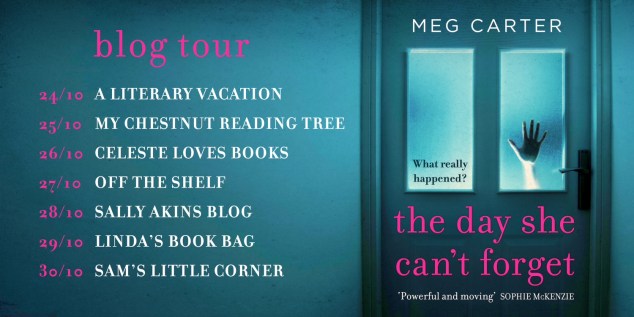
You can find out more about Meg on her website and by following her on Twitter. There’s more with these other bloggers too:

tdscf-blog-tour-2-1

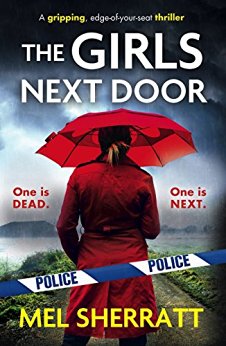
The Girls Next Door by Mel Sherratt

the-girls-next-door

I’m delighted to be part of the launch celebrations for The Girls Next Door by Mel Sherratt. The Girls Next Door was published by Bookouture on 27th October 2016 and is available for purchase in e-book here.

The Girls Next Door

the-girls-next-door

One warm spring evening, five teenagers meet in a local park. Only four will come out alive.

Six months after the stabbing of sixteen-year-old Deanna Barker, someone is coming after the teenagers of Stockleigh, as a spate of vicious assaults rocks this small community. Revenge for Deanna? Or something more?

Detective Eden Berrisford is locked into a race against time to catch the twisted individual behind the attacks – but when her own niece, Jess Mountford, goes missing, the case gets personal.

With the kidnapper threatening Jess’s life, can Eden bring back her niece to safety? Or will the people of Stockleigh be forced to mourn another daughter…?

My Review of The Girls Next Door

Katie feels under pressure to be Nathan’s so-called girlfriend, but events on the night she goes to meet him are going to rock her life and that of the whole community.

Good gracious. I know Mel Sharratt writes gritty, fast paced thrillers, but I really wasn’t expecting the break-neck speed of events in The Girls Next Door. Reading this book was somewhat akin to being on an aeroplane in turbulence. I felt jolted and my stomach dropped time after time and just when I though there might be a breather off we went again. The short chapter structure of the book also adds to this effect and although it took me a while to work out who was who with all the quick changes of character and scene to begin with, I soon had a real sense of who everyone was. Indeed I felt the cast of characters was highly realistic and reminded me very much of some people I used to teach in a very deprived area years ago. In fact, the depiction of those living in deprivation, and the various ways with which they deal with their situation, was extremely accurate.

I really enjoyed the interconnectedness of the plot and had to admire Mel Sherratt’s skill in keeping all the various threads so cleanly and clearly defined, whilst simultaneously so well drawn together and linked through the various characters.

What I hadn’t expected alongside the thriller pace was the underpinning theme of mental heath and how we are affected by grief and guilt. I thought Mel Sherratt handled these elements sensitively without detracting from the breakneck plot.

The Girls Next Door is a highly entertaining, fast paced and exciting read and I’m sure this book is going to be a huge hit with crime fans everywhere. I’m really looking forward to reading more about Eden in the future.

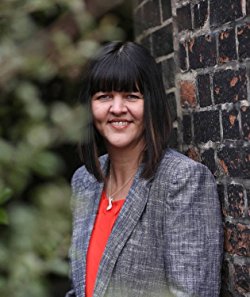
About Mel Sherratt

mel-sherratt

Mel writes gritty crime dramas, psychological suspense and fiction with a punch – or grit-lit, as she calls it. Shortlisted for the prestigious CWA (Crime Writer’s Association) Dagger in Library Award 2014, Mel’s inspiration comes from authors such as Martina Cole, Lynda la Plante, Mandasue Heller and Elizabeth Haynes. Since 2012, all eight of her crime novels have been bestsellers, each one climbing into the kindle UK top 20 and she has had several number ones. Mel has also had numerous Kindle All-star awards, for best read author and best titles.

Mel also writes contemporary fiction under the name of Marcie Steele – Stirred with Love was published in September 2015, The Little Market Stall of Hope and Heartbreak in December 2015 and The Second Chance Shoe Shop in April 2016.

(You can read my review of The Second Chance Shoe Shop here.)

Mel lives in Stoke-on-Trent, Staffordshire, with her husband and terrier, Dexter (named after the TV serial killer) and makes liberal use of her hometown as a backdrop for some of her books.

You can find out more on Facebook, by visiting Mel’s website and by following her on Twitter. You’ll find all Mel’s books for purchase here.
You can follow events for The Girls Next Door using the #HelpMe

help-me

You will also find more with these other bloggers:

tour-poster

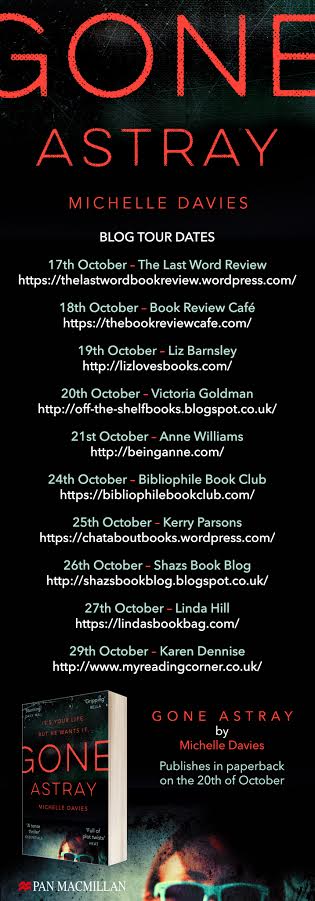
Writing a Series, a Guest Post by Michelle Davies, Author of Gone Astray

cover

I’m delighted to be part of the paperback launch celebrations for Gone Astray by Michelle Davies. Gone Astray is published by Pan Macmillan and is available for purchase in e-book, hardback and paperback via the publisher links here.

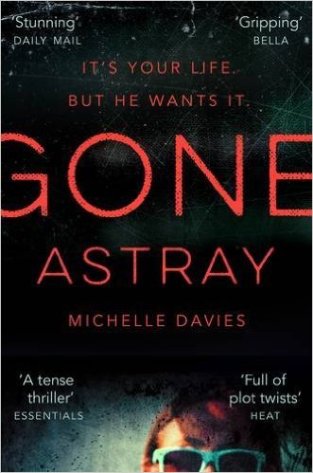
Gone Astray

cover

Lesley and her husband Mack are the sudden winners of a £15 million EuroMillions jackpot. They move with their 15-year-old daughter Rosie to an exclusive gated estate in Buckinghamshire, leaving behind their ordinary lives – and friends – as they are catapulted into wealth beyond their wildest dreams.

But it soon turns into their darkest nightmare when, one beautiful spring afternoon, Lesley returns to their house to find it empty: their daughter Rosie is gone.

DC Maggie Neville is assigned to be Family Liaison Officer to Lesley and Mack, supporting them while quietly trying to investigate the family. And she has a crisis threatening her own life – a secret from the past that could shatter everything she’s worked so hard to build.

As Lesley and Maggie desperately try to find Rosie, their fates hurtle together on a collision course that threatens to end in tragedy . . .

Money can’t buy you happiness.
The truth could hurt more than a lie.
One moment really can change your life forever…

Why I Chose To Write A Series Over A Standalone

A Guest Post by Michelle Davies

Some of the nicest feedback I’ve had so far for Gone Astray is from readers say how much they like DC Maggie Neville, my central police character. This thrills me no end, because when I set out to write Gone Astray many moons ago I always envisaged it as the first in a series rather than a standalone and I hoped readers would become invested enough in Maggie to want to read subsequent books.

I set out to write a crime series because, as a reader, I enjoy them enormously. I like ending one book knowing another is coming soon, especially ones that cleverly draw out more of the main character’s personality and background while delivering a fresh and gripping new plot. My current favourites are Sarah Hilary’s Marnie Rome series, Robert Galbraith’s Cormoran Strike and Tana French’s Dublin Murder Squad.

I have already written the next instalment in Maggie’s story – it’s called Wrong Place and will be published first in hardback and e-book on 27 February next year. What I’ve learned so far while writing a series is that you have to pay attention to detail: while writing Wrong Place I kept a copy of Gone Astray next to my laptop at all times so I could make sure every detail of Maggie and her family were the same in both novels!

In Wrong Place Maggie finds herself at the mercy of the austerity budget cuts currently affecting real-life forces nationwide when she’s split between two cases as Family Liaison Officer. She and her colleagues at Mansell Force CID are already investigating a distraction burglary that’s left an elderly woman fighting for her life when she’s called to join a team looking into a husband’s attempted murder of his wife in another part of Buckinghamshire. When Maggie uncovers a startling connection between the two cases, she’s no longer torn between them but is in a race against time to piece them together before anyone else is seriously hurt. Can she do it? You’ll have to read Wrong Place to find out!

(We certainly will Michelle!)

Thank you for hosting me on my first ever blog tour and for supporting Gone Astray. I hope you enjoy the book.

My pleasure Michelle and good luck with both Gone Astray and Wrong Place.

About Michelle Davies

michelle

Michelle Davies has been writing for magazines for twenty years, including on the production desk at Elle, and as Features Editor of Heat. Her last staff position before going freelance was Editor-at-Large at Grazia magazine and she currently writes for a number of women’s magazines and newspaper supplements. Michelle has previously reviewed crime fiction for the Sunday Express‘s Books section.

Michelle lives in London with her partner and daughter and juggles writing crime fiction with her freelance journalism and motherhood. Gone Astray is her first novel, and the sequel is Wrong Place.

You can follow Michelle on Twitter, find her on Facebook or visit her website. There is more with these other bloggers too:

blog-banner

Advice for Aspiring Writers, a Guest Post by Joyce Schneider, author of Her Last Breath

her-last-breath

I’m thrilled to be helping to celebrate Her Last Breath, the second psychological thriller by J.A. Schneider, after Fear Dreams – featuring highly intuitive NYPD detective Kerri Blasco. Her Last Breath and is published in e-book and paperback and is available for purchase here.

You can read an extract from Her Last Breath here.

Her Last Breath

her-last-breath

A chilling psychological thriller about a woman caught between two men…

Mari Gill wakes to horror in a strange apartment next to a murdered man, and can’t remember the night before…

Accused of murder, she feels torn between her husband, a successful defense attorney, and a mysterious, kind man who wants to help.

Can she trust either of them – or even her friends? Detective Kerri Blasco battles her police bosses believing Mari is innocent…but is she?

Advice for Aspiring Writers

A Guest Post by J.A. Schneider

Never give up. Never stop writing. Life will do everything it can to throw you roadblocks and disappointment, but keep at it. It’s hard to maintain the passion in the face of constant rejection, but don’t forget what made you start writing in the first place. Also, avoid comparing your beginning to someone else’s middle. Those “oh-so-lucky best sellers” you see in the top slots on Amazon – 99% of them, anyway – went through decades of rejection and frustration.

Her Last Breath is my eighth book. Readers are finally starting to hear about me. Or maybe it began with my seventh book, Fear Dreams –  but before those two psychological thrillers I wrote the six-book Embryo medical thriller series, which had some success, acquired a small but loyal following, but didn’t resonate as Fear Dreams did. Which, again, was my seventh book. If I had given up after six…

fear-dreams

Often, the hardest part is not the writing at all, but keeping alive the will to keep going. For inspiration and encouragement, two of my favorite author quotes are David Baldacci’s “A writer is always terrified,” and E.L. Doctorow’s “Writing is like driving at night. You can only see as far as your headlights.” Other terrific quotes are Tess Gerritsen’s “Do you have the guts to stay with it?” and Stephen King’s “Just flail away at the g-damn thing.” I have a collection of those quotes on a Word doc which I keep open to the left of my writing draft, and those quotes are my crutch, like friends saying, “Hey, we’ve all been through the same thing!”

That collection of quotes is a comfort, and since those writers have more years of hair tearing and toil behind them than I do, I’d like to share a few of their helpful nuggets with you. Herewith, for inspiration and encouragement:

Hugh Howey: “Try to worry about the writing and nothing else. Also look at it as a marathon, not a sprint. My bestselling book was my eighth or ninth. As soon as it took off, the rest of my books took off with it. The idea that we can pub one title and it will catch on … your odds are better that you’ll rope a unicorn.”

Lisa Gardner: “It took a good ten years for me to become an overnight success. (Laughter).”

Bella Andre: “Seven years of frustration, my publisher dropped me…”

T.R. Ragan: After 20 years, I began to question my sanity and the whole perseverance thing. I knew this writing business wouldn’t be easy. If it were, everyone would be doing it. But I never thought it would be this hard. By the time I had signed with my second agent and worked with two editors, I decided to stop writing romance and start writing thrillers. I took my frustration with the industry and unleashed it as I wrote my first serial killer novel.”

[When sales of Abducted reached 300,000 (after 20 yrs of tears) Ms Ragan was approached by two of New York’s big five publishers—at long last. “I said, ‘Forget you,’” Ragan recalls, laughing. Instead, she signed with Thomas & Mercer…]

There’s also that wonderful passage from the Bible, Galatians 6:9: ”Do not give up, for in due season you shall reap if you do not tire.” You don’t have to be religious to appreciate that one. It’s pretty powerful.

As a final note I’d suggest that you not show your first draft to others until you’ve reached the end. That first draft is fragile, you’re in the earliest phase of finding your story from the sticky morass of characters and plot threads. Any comments, positive or negative, can affect the way you feel about your story before its elements have cleared for you, in their own time.

There can never be enough encouragement for you, so hang in there; keep those imagination wheels turning even if pushed to the back burner. No matter what the stress or distraction, it can also be helpful to keep an old-fashioned notebook, in hand, literally. It just feels good to hold. On bad days, get one sentence into it before the bleep hits the fan again. You’ll feel better. Keep the dream alive.

About Joyce Scneider

JoyceAuthor250.jpg

J.A. (Joyce Anne) Schneider is a former staffer at Newsweek Magazine, a wife, mom, and reading addict. She loves thrillers…which may seem odd, since she was once a major in French Literature – wonderful but sometimes heavy stuff. Now, for years, she has become increasingly fascinated with medicine, forensic science, and police procedure. Decades of being married to a physician who loves explaining medical concepts and reliving his experiences means there’ll often be medical angles even in “regular” thrillers that she writes. She lives with her family in Connecticut, USA.

You can find out more about J.A. Schneider on her website, on Goodreads, by following her on Twitter and on Facebook. All of Joyce’s books are available here.

You an find out more from and about Joyce with these other bloggers:

herlastbreath-poster_465x679px

Trick or Treat, a Guest Post by Helena Fairfax, Author of A Year of Light and Shadows

a-year-of-light-and-shadows-cover

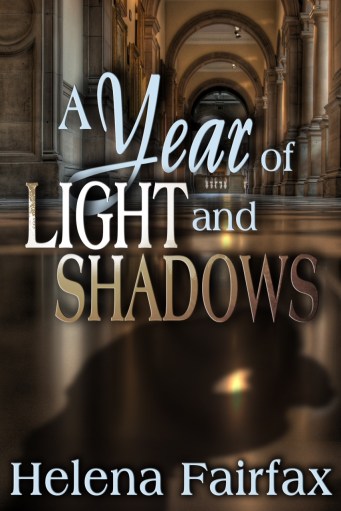
It gives me enormous pleasure to welcome Helena Fairfax to Linda’s Book Bag today with a guest post all about fairy tales and the trickery that has inspired A Year of Light and Shadows. Available in e-book with a paperback to follow soon, A Year of Light and Shadows is available on pre-order from major e-tailers including Amazon and Kobo.

A Year of Light and Shadows

a-year-of-light-and-shadows-cover

A Year of Light and Shadows contains three romantic mysteries in one volume.

Palace of Deception

From the heat of the Mediterranean….

When the Princess of Montverrier goes missing, Lizzie Smith takes on the acting job of her life. Alone and surrounded by intrigue in the Royal Palace, she relies on her quiet bodyguard, Léon. But who is he really protecting? Lizzie…or the Princess?

The Scottish Diamond

To the heart of Scotland…

Home in Scotland, Lizzie begins rehearsals for Macbeth, and finds danger stalking her through the streets of Edinburgh. She turns to her former bodyguard, Léon, for help – and discovers a secret he’d do anything not to reveal…

A Question by Torchlight

A story of mystery and romance…

The approach of Hogmanay in Edinburgh means a new year and new resolutions. Lizzie and Léon have put their year of danger behind them. But something is still troubling Léon, and Lizzie fears the worst…

Trick or Treat? Fairy Tales and Trickery

in

A Year of Light and Shadows

A Guest Post by Helena Fairfax

Ever since I was a child, I’ve always loved fairy tales that involve some sort of trickery or deception. There’s the big bad wolf, who dresses up as grandma, or the wicked stepmother, who tricks Snow White into biting into a poisoned apple. There’s something so appealing to children about characters who play wily tricks. One of the most enduring tricksters is Puss-in-Boots, who tells his master to take off his clothes and jump in the river, and then tricks the king by pretending their clothes have been stolen, and that they are both wealthy noblemen. It’s the start of a series of tricks and deceptions that make Puss-in-Boots wealthier and wealthier, and as a child I was riveted.

Sometimes I wonder if children love these stories so much because in the real world children lack physical strength and are powerless. Cunning can overcome strength, and so with these fairy tales perhaps children can feel empowered and that anything is possible if they use their intelligence and imagination.

A Year of Light and Shadows is a collection of two romantic suspense novellas and a short story in which trickery and deceit play a major role. It’s only recently that I’ve realised how much these stories follow in the fairy tale tradition. It would be giving away too much to reveal the deceptions that gradually come to light. I can say that they were great fun to write!

My heroine, actress Lizzie Smith, is also in the fairy tale tradition. She’s an ordinary young woman who is whisked out of her circumstances. The “handsome prince” of the story is Léon, who is a bodyguard for the royal family in the fictional country of Montverrier. Montverrier is only a small principality – about the size of Monaco – and so over the centuries its people have developed a wily cunning that makes up for their lack of strength. My hero, Léon, recounts fantastical tales of fabulous diamonds lost at cards through trickery, or an entire Roman fleet deceived into thinking their men were possessed. I loved writing these scenes, and I think it’s their fairy tale quality that appeals to me so much.

We’re coming up to the season of “Trick or Treat” – so what better time to release my collection!

Did you have any favourite fairy tales as a child? Why do you think children love these stories, and why do you think they’ve endured so long? If you’ve enjoyed my post, or have any comments at all, I’d love to hear from you.

Thanks so much for having me today, Linda. It’s been great fun revisiting the schemes and intrigues of my stories, and the fairy tales that inspired them.

My pleasure Helena. It has been fascinating reading your guest post.

About Helena Fairfax

helena-fairfax

Helena Fairfax writes engaging contemporary romances with sympathetic heroines and heroes she’s secretly in love with. Her first novel, The Silk Romance, was a contender for the UK’s Romantic Novelists’ Association New Writers’ Scheme Award and a runner-up in the Global Ebook Awards. The Scottish Diamond was a finalist in the I Heart Indie Awards. Helena Fairfax was shortlisted for the Exeter Novel Prize in 2014.

silk-romance

When not writing, Helena walks the Yorkshire moors near her home every day with her rescue dog, finding the romantic landscape the perfect place to dream up her heroes and her happy endings.

If you’d like to get in touch with Helena, or find out more about her books, writing, and photos of her settings or the Yorkshire moors where she lives, please follow her newsletter by subscribing here. All new subscribers to Helena’s newsletter will receive a free copy of Palace of Deception – the first book in the collection A Year of Light and Shadows.

 palace-of-deception

All of Helena’s lovely books can be found here.

You can find out more about Helena by visiting her website, finding her on Facebook, or following her on Twitter.