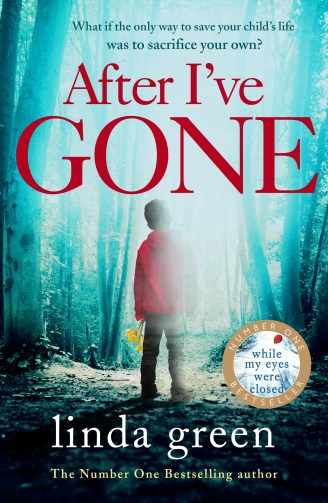
Cover Reveal: After I’ve Gone by Linda Green

after-ive-gone

Having previously treated Linda’s Book Bag readers to an extract (here) from While My Eyes Were Closed by Linda Green, I’m excited to be helping to reveal the brand new cover for After I’ve Gone by Linda today.

After I’ve Gone will be released by Quercus in e-book on 18th May 2017 and paperback on 27th July 2017 and is available for pre-order here.

After I’ve Gone

after-ive-gone

A gripping new thriller from the number one bestselling author of While My Eyes Were Closed.

On a wet Monday in January, Jess Mount receives the devastating news that she hasn’t got long left to live. She doesn’t hear it from a doctor, though. She discovers it when her Facebook timeline skips forward eighteen months and friends and family start posting tributes to her, following her death in a terrible and mysterious accident.

At first, Jess thinks this must be a sick joke by a colleague jealous of her handsome new boyfriend. But as the posts continue and it becomes clear that no one else can see what she can, Jess is forced to confront that her impending death might be all too real . . .

About Linda Green

Linda Green

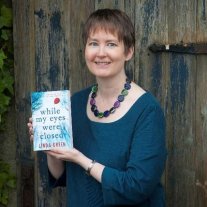
Linda Green was born in North London in 1970 and brought up in Hertfordshire. She wrote her first novella, the Time Machine, aged nine, but unfortunately the pony-based time travel thriller genre never took off. Undeterred, she declared that her ambition was to have a novel published (she could have been easy on herself and just said ‘to write a novel’ but no, she had to consign herself to years of torture and rejections). She was frequently asked to copy out her stories for the classroom wall (probably because her handwriting was so awful no one could read her first draft), and received lots of encouragement from her teachers Mr Roberts, Mrs Chandler (who added yet more pressure by writing in her autograph book when Linda left primary school that she looked forward to reading her first published novel!) and Mr Bird.

You can find out more about Linda Green on her website and by following her on Twitter. You’ll also find her on Facebook. You’ll find all Linda’s books for purchase here.

The Allure of Psychology, a Guest Post by Sam Carrington, Author of Saving Sophie

samc

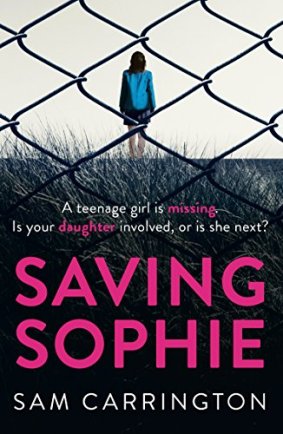
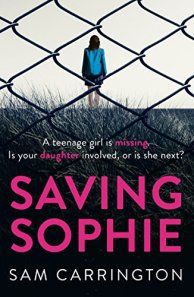
Although I love many genres, one of my favourites is a psychological thriller and I couldn’t be more delighted than to be featuring Saving Sophie by Sam Carrington today. Already available in e-book, Saving Sophie is published by Avon Books in paperback and audio today, 15th December 2016, and is available for purchase here.

In celebration of today’s paperback release, Sam has kindly written a guest post for Linda’s Book Bag all about the allure of psychology in her life and writing.

Saving Sophie

samc

A teenage girl is missing. Is your daughter involved, or is she next?

Your daughter is in danger. But can you trust her?

When Karen Finch’s seventeen-year-old daughter Sophie arrives home after a night out, drunk and accompanied by police officers, no one is smiling the morning after. But Sophie remembers nothing about how she got into such a state.

Twelve hours later, Sophie’s friend Amy has still not returned home. Then the body of a young woman is found.

Karen is sure that Sophie knows more than she is letting on. But Karen has her own demons to fight. She struggles to go beyond her own door without a panic attack.

As she becomes convinced that Sophie is not only involved but also in danger, Karen must confront her own anxieties to stop whoever killed one young girl moving on to another – Sophie.

A taut psychological thriller, perfect for fans of The Girl on the Train and I Let You Go.

The Allure Of Psychology In My Life, My Characters And My Writing

A Guest post by Sam Carrington

Since taking psychology as a subject at college, I’ve been fascinated by the human mind – the ‘how and why’ we do certain things and act in particular ways. I can’t remember quite when I became interested in the criminal mind – I like to blame it on reading Patricia Cornwell books, but I think to be fair, it must have been before that. I always loved the police shows on TV – Juliet Bravo, Bergerac, Cagney and Lacey etc, so I think by the time I was reading crime books, the obsession was already blooming!

After I’d been nursing for some years, I began an Open University psychology degree. I became hooked and ended up studying with the OU for eleven years – undertaking a course each year. This is despite hating exams! I have a strong interest in criminology and together with my psychological background I decided a job in the prison service would be right for me. Working with offenders within the offending behaviour programmes department was extremely interesting and challenging and my experiences there influenced my writing.

Having worked with offenders – knowing their crimes and listening to them talk about how and why they committed them – I think it was inevitable that I chose to write stories with a crime element. But despite hearing details about a lot of violent offences, that isn’t something I wanted to focus on in my writing. Although the opening of Saving Sophie is a murder, I didn’t want the shock value of describing it in graphic detail. I think it can be scary enough hinting at it, and leaving some things to the reader’s imagination. It’s more the psychological aspect of how crime affects people that I want to explore in my novels.

I hope that the reader gets involved in the lives of Karen and Sophie and can feel some of what they’re going through. From a psychological perspective it can be more chilling and sometimes terrifying not knowing exactly what you’re up against – or who the person who means you harm is. Creating tension and fears that you don’t feel in control of can be very powerful and I hope those reading Saving Sophie feel compelled to keep turning the pages.

I continue the psychological side of crime in my next novel, exploring how two fatal events that occurred in the past still affect those people in the present.

My Review of Saving Sophie

When a seemingly inebriated Sophie is delivered home by the police, so begins a tangled web of lies, half-truths and deceit that will impact on all around her.

I have to be completely honest and admit that I found I needed to employ a willing suspension of disbelief with elements of Saving Sophie as some of the ways in which the characters behaved seemed highly unlikely to me so that the plot was a little shaky at times.

However, this may well be because Sam Carington obviously has a better understanding of the psychology of the human psyche than I do, having studied it and worked  with offenders. And despite some flaws, I still enjoyed the read very much. At the beginning the structure is a little fragmented but becomes more fluent as the story progresses, which I found a brilliantly clever way of reflecting what is happening to Sophie’s memory and its gradual recovery. Even though I thought parts of the plot felt slightly unlikely, I still was gripped and wanted to know what the outcome would be. I felt the story would make an absolutely cracking television series and often found myself thinking ‘Oooh!’.

The three perspectives of Sophie, Karen and DI Wade gave added depth so that it made me consider just how many people really are affected when a crime, or the perception of a crime, has been committed. It was as if a pebble had been dropped into a pool and the ripples of effect spread far and wide. I didn’t feel a deep emotional connection to any of the characters, although I found Karen’s agoraphobia elicited my sympathy and made me wonder what it might be like to be similarly afflicted and I’d really like to find out more about DI Wade in future books as I think she has real potential for development.

Alongside the twisty plot there were some weighty themes explored extremely well that made me think – the consideration of collective memory, grief and guilt, the idea of trust and deception, the exploration of family relationships and what constitutes adultery were all concepts woven into Saving Sophie which made for an interesting read.

Saving Sophie is a twisty, thought-provoking thriller and shows that Sam Carrington will certainly be an author to watch.

About Sam Carrington

author-pic-sam-carrington

Sam Carrington lives in Devon with her husband and three children. She worked for the NHS for fifteen years, during which time she qualified as a nurse. Following the completion of a Psychology degree she worked for the prison service as an Offending Behaviour Programme Facilitator. Her experiences within this field inspired her writing. She left the service to spend time with her family and to follow her dream of being a novelist. Before beginning her first novel, Sam wrote a number of short stories, several of which were published in popular women’s magazines. Other short stories were included in two charity anthologies.

Sam moved quickly on to novel writing and completed her first project within six months. Although this novel attracted attention from agents, it was her next that opened up opportunities. She entered this novel, with the working title Portrayal, into the Crime Writers’ Association Debut Dagger Award in 2015 and was delighted when it was longlisted.

Being placed in such a prestigious competition was instrumental in her success securing a literary agent. When completed, this novel became Saving Sophie, a psychological thriller which was published by Maze, HarperCollins as an ebook in August. The paperback and audio editions are publishing on 15th December.

You can follow Sam on Twitter and find her on Facebook.

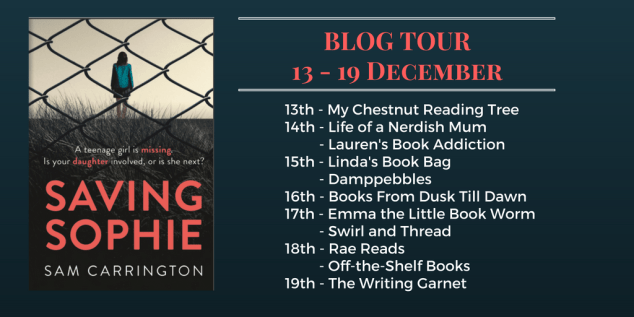
There’s more with these other bloggers and #SavingSophie too:

poster

Irish Writing, a Guest Post by Denise Deegan, Author of Through the Barricades

through-the-barricades-ebook-cover

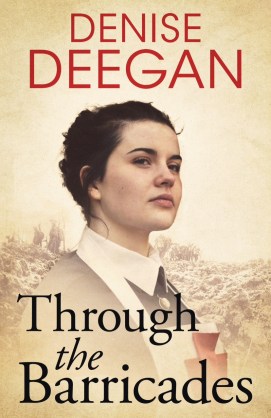
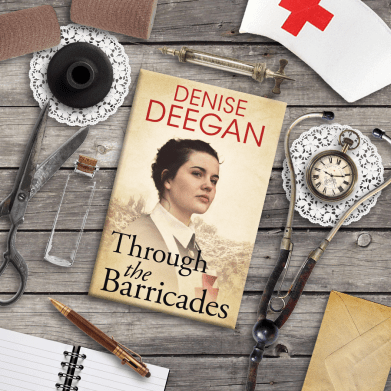
I’m obsessed by the era surrounding the First World War and I love historical fiction and Irish writers so when I realised that Denise Deegan’s Through the Barricades hit every one of these elements I had to invite her onto Linda’s Book Bag. Through the Barricades was published on 2nd December 2016 and is available for purchase in paperback and e-book here.

Through the Barricades

book-flatlay-for-denise

She was willing to sacrifice everything for her country.

He was willing to sacrifice everything for her. 

‘Make a difference in the world,’ are the last words Maggie Gilligan’s father ever says to her. They form a legacy that she carries in her heart, years later when, at the age of fifteen, she tries to better the lives of Dublin’s largely forgotten poor.

‘Don’t go getting distracted, now,’ is what Daniel Healy’s father says to him after seeing him talking to the same Maggie Gilligan. Daniel is more than distracted. He is intrigued. Never has he met anyone as dismissive, argumentative… as downright infuriating.

A dare from Maggie is all it takes. Daniel volunteers at a food kitchen. There, his eyes are opened to the plight of the poor. It is 1913 and Dublin’s striking workers have been locked out of their jobs. Their families are going hungry. Daniel and Maggie do what they can. Soon, however, Maggie realises that the only way to make a difference is to take up arms.

The story of Maggie and Daniel is one of friendship, love, war and revolution, of two people who are prepared to sacrifice their lives: Maggie for her country, Daniel for Maggie. Their mutual sacrifices put them on opposite sides of a revolution. Can their love survive?

Irish Writing

A Guest Post by Denise Deegan

When Linda – kindly – invited me to do a guest post she said:

‘I feel there is something very special about the literature that comes out of Ireland. Is it the sense of community there? Is it the legacy of great Irish writers? Is there a history, culture and tradition of tale-telling? Is there something about the Blarney Stone tradition tied up with the concept of narrative perhaps? Is it the rain which means finding indoor pursuits is a necessary evil? Are the Irish obsessed with stories?’

I blame the rain – for everything. The End.

I don’t actually think the rain affects my writing. I do think it affects the personality of the Irish, though, so perhaps in that blurry way it does impact on our stories. We are a very accepting, race. We just get on with it – rain or shine.

Of all Linda’s suggestions, I think that the history, culture and tradition of tale-telling is perhaps the most powerful influence. As a Celtic nation, we have passed down our traditional stories for hundreds of years – great stories – like the one about the boy who gained the wisdom of the world by tasting a particular salmon, or the tale about the lovers who travelled to a land where no one ages, or the one about the stepmother who cast a spell on her stepsons transforming them into swans. I have included some of these stories in Through the Barricades, because a) I love them and b) they are important to the novel which is very much about identity as a driving force in the fight for freedom.

Irish history in general also plays a role, I believe. For hundreds of years, we were ruled by another nation. In 1695, ‘Penal Laws’ were introduced which forbade Irish Catholics (the vast majority of the population) from practicing their religion, educating their children, owning land, having a trade…. What did we do as a people? We carried on educating our children and practising our religion – in the fields. Our stories became more important than ever in terms of our identity. We clung to them. When I visit schools to deliver story workshops, I remind the children of how storytelling is in our blood. It is very motivating.

Our history is sad, our stories the same. But. We have always been able to laugh in the face of our troubles and that is something that shines strongly in our stories. Some of my favourite scenes in Through the Barricades are at the front-line in WW1. The banter between the soldiers stuck in this terrible situation can be very humourous and warm. One character later points out that that is how you tell an Irishman on the front-line. Humour slips into our writing because it is part of who we are. We laugh in the face of the rain. We laugh in the face of oppression. We laugh – a lot.

I also – perhaps bizarrely – think that there is something magical in the air, here. I have spoken to writers from other countries who, when they visit Ireland, discover that their stories just flow. I experience it myself. In certain places – for example an artists’ retreat I visit in Monaghan – it feels as if I am a channel for stories that are coming from another dimension. This is a mystical place to live and write. And I am very grateful for that.

Thanks for the great questions, Linda. Really made me think.

And thank you for such fabulous responses Denise!

About Denise Deegan

denisecolour

Denise Deegan lives in Dublin with her family where she regularly dreams of sunshine, a life without cooking and her novels being made into movies. She has a Masters in Public Relations and has been a college lecturer, nurse, china restorer, pharmaceutical sales rep, public relations executive and entrepreneur. Denise’s books have been published by Penguin, Random House, Hachette and Lake Union Publishing. Denise writes contemporary family dramas under the pen name Aimee Alexander. They have become international best-sellers on Kindle.

You can follow Denise on Twitter and find her on Facebook and Instagram.

Extract and Giveaway: The Silent Kookaburra by Liza Perrat

the-silent-kookaburra-cover-ebook-large

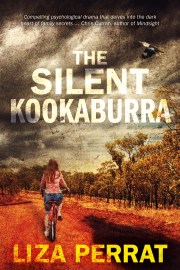
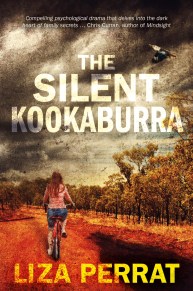
My fellow bloggers will know that awful feeling when a book comes along and you simply don’t have time to read it but you desperately want to. The Silent Kookaburra by Liza Perret is one such book. The Silent Kookaburra was published on 16th November 2016 and is available for purchase in e-book here.

However, even though I haven’t read The Silent Kookaburra yet, I do have an extract for you today and the chance, open internationally, to enter to win one of five e-copies of thee book. Just click on the link at the bottom of this blog post.

The Silent Kookaburra

the-silent-kookaburra-cover-ebook-large

All eleven-year-old Tanya Randall wants is a happy family. But Mum does nothing besides housework, Dad’s always down the pub and Nanna Purvis moans at everyone except her dog. Then Shelley arrives –– the miracle baby who fuses the Randall family in love for their little gumnut blossom.

Tanya’s life gets even better when she meets an uncle she didn’t know she had. He tells her she’s beautiful and could be a model. Her family refuses to talk about him. But that’s okay, it’s their little secret.

Then one blistering summer day tragedy strikes, and the surrounding mystery and suspicion tear apart this fragile family web.

Embracing the social changes of 1970s Australia, against a backdrop of native fauna and flora, The Silent Kookaburra is a haunting exploration of the blessings, curses and tyranny of memory.

Unsettling psychological suspense blending the intensity of Wally Lamb with the atmosphere of Peter James, this story will get under your skin.

An Extract From The Silent Kookaburra

Chapter 1

2016

Knuckles blanch, distend as my hand curves around the yellowed newspaper pages and my gaze hooks onto the headlines.

HAPPY AUSTRALIA DAY. January 26th, 1973. 165-year anniversary of convict ships arriving in Sydney.

Happy? What a cruel joke for that summer. The bleakest, most grievous, of my life.

I can’t believe my grandmother kept such a reminder of the tragedy which flayed the core of our lives; of that harrowing time my cursed memory refuses to entirely banish.

Shaky hands disturb dust motes, billowing as I place the heat-brittled newspaper back into Nanna Purvis’s box.

I try not to look at the headline but my gaze keeps flickering back, bold letters more callous as I remember all I’d yearned for back then, at eleven years old, was the simplest of things: a happy family. How elusive that happiness had proved.

I won’t think about it anymore. I mustn’t, can’t! But as much as I wrench away my mind, it strains back to my childhood.

Of course fragments of those years have always been clear, though much of my past is an uncharted desert –– vast, arid, untamed.

Psychology studies taught me this is how the memory magician works: vivid recall of unimportant details while the consequential parts –– those protective breaches of conscious recollection –– are mined with filmy chasms.

I swipe the sweat from my brow, push the window further open.

Outside, the sun rising over the Pacific Ocean is still a pale glow but already it has baked the ground a crusty brown. Shelley’s gum tree is alive with cackling kookaburras, rainbow lorikeets shrieking and swinging like crazy acrobats, eucalyptus leaves twisted edge-on to avoid the withering rays.

But back in my childhood bedroom, behind Gumtree Cottage’s convict-built walls, the air is even hotter, and foetid with weeks of closure following my parents’ deaths.

Disheartened by the stack of cardboard boxes still to sift through, uneasy about what other memories their contents might unearth, I rest back on a jumble of moth-frayed cushions.

I close my eyes to try and escape the torment, but there is no reprieve. And, along with my grandmother’s newspaper clipping, I swear I hear, in the rise and dump of its swell, the sea pulling me back to that blistering summer of over forty years ago.

About Liza Perrat

lizaperratauthor

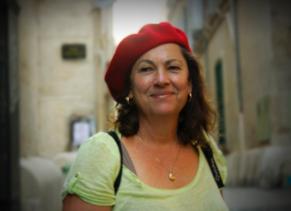
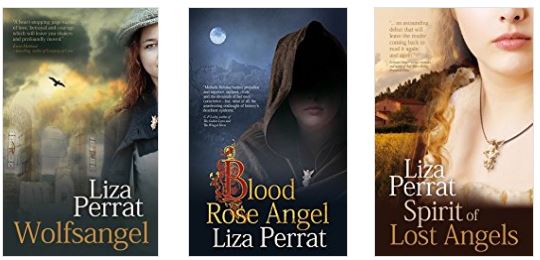
Liza grew up in Australia, working as a general nurse and midwife. She has now been living in France for over twenty years, where she works as a part-time medical translator and a novelist. She is the author of the historical The Bone Angel series. The first, Spirit of Lost Angels is set in 18th century revolutionary France. The second, Wolfsangel, is set during the WW2 Nazi Occupation and the French Resistance, and the third novel, Blood Rose Angel, is set during the 14th century Black Plague years. All of Liza’s books are available here.

capture

Her latest novel, The Silent Kookaburra, is a psychological suspense, set in 1970s Australia.

Liza is a co-founder and member of the writers’ collective Triskele Books. Liza also reviews books for Bookmuse.

You can find out more by visiting Liza’s website, her blog and by following her on Twitter. You’ll also find her on Facebook and with Triskele Books.  If you sign up to Liza’a site here you can receive a FREE copy of Ill-Fated Rose, short story that inspired The Bone Angel French historical series.

Giveaway

the-silent-kookaburra-cover-ebook-large

Click here to enter to win one of 5 e-copies of The Silent Kookaburra. Competition open until UK midnight on Tuesday 20th December 2016.

An Interview with Jonathan Carter, Author of The Death of Mr Punch

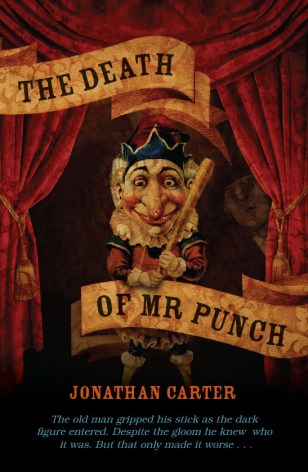
death-of-mr-punch-copy

It gives me great pleasure to welcome Jonathan Carter to Linda’s Book Bag today to tell me about his writing and his novel The Death of Mr Punch. The Death of Mr Punch is published by Peter Owen and is available for purchase in e-book and paperback from such sellers as Amazon, Waterstones and directly from the publisher.

The Death of Mr Punch
death-of-mr-punch-copy

An elderly man dressed as Mr Punch crouches in a darkened room. Someone is coming up the stairs. A ghastly figure approaches . . .

Cut to Bayview, a care home with a difference. Increasingly haunted by memories, George Pemberton, the latest resident, is determined to return to his wife Judy. Not if the motley crew of Bayview inmates has anything to do with it. Feeling incarcerated, George has little choice but to bide his time vandalizing cars, enticing residents to sneeze their teeth out and performing exorcisms with unholy water. When George finally does take his chance of escape, freedom, brings its own problems: a busker with a grudge and a psychotic clown are hot on his heels. Will he ever find his way home to Judy?

The Death of Mr Punch, like One Flew Over the Cuckoo’s Nest takes us into an institution of neglect and explores in a manner reminiscent of J.G. Ballard only with a greater conscience and heart what it is like to feel imprisoned by old age, by memory and a nagging sensation of grief. At once funny and chilling and with a unique cast of characters, Jonathan Carter’s remarkable debut novel is one that will stay with you long after you have closed the book . . .

An Interview with Jonathan Carter

Hi Jonathan. Thank you so much for agreeing to answer some questions on my blog about your writing and The Death of Mr Punch in particular. Firstly, please could you tell me a little about yourself?

I was born in Kingston-Upon-Thames and spent my first decade in the London suburbs, before moving to Cornwall and various other parts of the UK. Because of all the moving about, I left school at 13 and was taught at home by my mother (a singer) and my father (an economist). As a child actor, I appeared in various TV ads and played rock guitar in my late teens. I later pursued my interest in art, winning the Jeffrey Archer Prize in 1988, in the GLC’s Spirit Of London competition. I then worked for an academic publisher, and started writing short stories. A couple of them turned up in Faber & Faber books, but most ended up in obscure literary magazines. Eventually I became a film journalist for the BBC and various other outlets, although I gave that up after a few years, unable to stomach the misplaced vanity of film actors.

And tell us a little about The Death of Mr Punch.

When my father died, after a long battle with Alzheimer’s, and my mother moved to an old people’s home, I realised how vulnerable we are to our memories. That was the impetus to start writing The Death Of Mr Punch, about an old man who’s haunted by his past in all manner of ways. I used to travel down to Brighton to see my mother on a regular basis. I vividly remember the home she was in. The whole building was like one big waiting room. When I left I used to walk along the beach, past the Punch & Judy booths. It all needed to be written down.

What an interesting premise.

So, when did you first realise you were going to be a writer?

I guess, looking back, it all started in primary school. Just to be irritating, I’d taken a maths textbook home for the weekend. It was intended to last a whole term, but I completed it in two days and came back into class on Monday morning full of boasts. From then on, when everyone else was doing maths, the Headmistress decided that I would sit at the side of the class and write stories. I used to love writing those crazy little tales. Thank you, Miss Webb. I still write short stories now. You can read one of them here on the Peter Owen website.

You seem to class yourself as a mystic. How does this help or hinder your writing process?

I don’t actually class myself as a mystic – that was the publisher’s way of putting it. I guess I’m more of a ghost whisperer, or at least someone who takes the paranormal completely in his stride. I grew up with a psychic grandmother and mother, and regularly visited mediums. There is always a presence when I’m writing or drawing. Indeed, one of the characters in The Death Of Mr Punch is based on the spirit of a small boy I encountered in a house in North London. You can hear me talking about it on Jim Harold’s Campfire podcast here. My story starts at 13m 40s.

Which aspects of your writing do you find easiest and most difficult?

By far, the most difficult aspect of writing is actually making yourself sit down and do it. There’s always one more cup of tea to make, or one more chore to complete. Which is why I have to turn the whole process into a job and go to the library. Once there, music always cures me of any reluctance to write. The easiest aspect of writing is walking around atmospheric London streets in a daze, visualising plots and situations. That can’t be bettered.

I’m sure prevarication is the bane of many writers.

What are your writing routines and where do you do most of your writing?

I try and write 500 words every day, including holidays. It doesn’t sound like much, but it was good enough for Graham Greene, so I guess it’s fine for me too. The key is to get in touch with that part of you that wants to write. It’s the same part of me that wants to turn up to a posh dinner party in dirty clothes, so it’s pretty easy to access.

When you’re not writing, what do you like to read?

Oddly enough, nowadays I rarely read fiction. There are exceptions, of course, but I mainly stick to histories and biographies. One of my current favourites is The London Nobody Knows by Geoffrey Fletcher, first published in 1962. I find truth much stranger than fiction.

Do you have other interests that give you ideas for writing?

Ever since I was a small boy, I have drawn and painted. In fact, The Death Of Mr Punch includes several examples of my artwork. I’ve even made two small films related to the story, which you can see here and here. Sometimes I’ll sit and draw, just to clear my head, and realise that a character is appearing before me on the page. Music is also a big inspiration. Often I’ll be listening to a song, or even a symphony, and I’ll imagine it as a soundtrack to a film.

You sound an incredibly creative individual Jonathan.

The Death of Mr Punch has quite a grotesque cover . How did that image come about and what were you hoping to convey (without spoiling the plot please!)?

The cover wasn’t actually designed by me. It was designed by Juan Pablo Cambariere, and I think it’s brilliant. Having said that, the creepy face peeking out from behind the curtain is part of a sculpture that I made many years ago: an intense puppet-like figure sitting in a slate-lined box. He’s holding a large nail in his hand and the slate walls are covered in graffiti…

How did you manage to balance light and shade in your writing as I know The Death of Mr Punch has humour as well as pathos?  

It’s strange. Many people talk about the way the book flits from humour to downright creepiness, and then to pathos. One person even told me that they were laughing on one page and crying on the next. However, this wasn’t done on purpose. I think it’s just the way I am.

One of the elements of The Death of Mr Punch is a psychotic clown. Why did you choose this device in your writing?

Somehow, as I was writing, the figure just seemed to appear, which I suppose is creepy in itself. I guess one reason was to play up the sinister Punch & Judy element – it’s all part of that hideous pantomime world. Our instinct tells us that anyone who’s dressed up must be hiding something, and the more vivid the disguise, the more horrible the thing that they’re hiding must be. Which makes a clown the ultimate implied horror of horrors.

I’m sure many readers agree here!

If you could choose to be a character from The Death of Mr Punch, who would you be and why?

This is a difficult question. I’m tempted, of course, to say no one, or perhaps one of the passers-by in the street. But it would probably be Upton Silver, the elderly Elvis impersonator who performs at Bayview Retirement Home. (Mr Silver also briefly appears in my next novel.)

If The Death of Mr Punch became a film, who would you like to play George Pemberton?

Definitely Michael Gambon. Or possibly Mark Rylance. Directed by Steven Spielberg, of course.

Of course!

And finally, if you had 15 words to persuade a reader that The Death of Mr Punch should be their next read, what would you say?

Dare you visit Bayview Retirement Home, where Samuel Beckett meets Stephen King at Fawlty Towers?

Thank you so much, Jonathan, for your time in answering my questions.

About Jonathan Carter

jonathan-carter-aug-2016

Jonathan Carter is a writer and mystic. He was born in London in 1964 into a family of clairvoyants. He appeared as a child actor in television adverts before finishing his education at home in different parts of the country. As an arts journalist he has contributed to Dazed & Confused, The Guardian, Cosmopolitan, Esquire and GQ. He has created online films and content for London’s Serpentine Gallery, the British Film Institute, Faber and Faber and the charity NESTA.

You can follow Jonathan on Twitter.

Motivate Me! Weekly Guidance for Happiness and Wellbeing by Shelley Wilson

motivate-me

I have met Shelley Wilson on a few occasions and found her to be one of the loveliest and most inspiring people around so when I heard she had out a new book, Motivate Me! Weekly Guidance for Happiness and Wellbeing, I simply had to buy a copy straight away as life has been getting the better of me this year. I have also interviewed Shelley so you can find out just what she’s like for yourself by reading that interview here.

Shelley’s latest self-help book, Motivate Me! Weekly Guidance for Happiness and Wellbeing, was published on 1st December 2016 by Zander, an imprint of BHC Press, and is available in ebook and paperback here.

Motivate Me! Weekly Guidance for Happiness and Wellbeing

motivate-me

Your weekly guide for happiness! Designed to give you a weekly boost of motivation, this sixty- four page guidebook will offer you a positive dose of inspiration throughout the year. Listen to your inner voice, pick a page, and then take meaning from the message you receive.

My Review of Motivate Me! Weekly Guidance for Happiness and Wellbeing

Motivate Me! Weekly Guidance for Happiness and Wellbeing is a booklet of 52 simple tasks to carry out that are achievable and motivating – one idea for each week or the year.

I chose to buy the paperback of this little book rather than the e-book and I’m so glad I did as one of its strengths is the lovely illustrations, many of which could be used as an adult colouring book so that there is an added dimension of distraction from the stresses of life without having read a word of the lovely ideas, prompts and instructions Shelley Wilson provides. And one of Shelley’s ideas is also built around doodling and colouring so her illustrations underpin her words perfectly.

Amongst the 52 ideas is a range of suggestions from physical ways to improve health such as drinking more water and eating different foods, to doing things both for yourself and for others. Shelley Wilson gives the reader permission to be themselves, to ask for help and to offer it to others. I really like the way these ideas are not presented in numbered pages, so the reader can simply pick a page at random and try an idea without the constraint of feeling you have to do things in a certain order. There’s also a lot of white space on each page which I feel helps present a calming and clarifying atmosphere. I can see myself adding annotations to the pages as a reminder of what I achieved using that prompt too so that there is a permanent record of my success for future motivation.

Motivate Me! Weekly Guidance for Happiness and Wellbeing isn’t a heavy tome of psychological weight, and the author herself describes it in her introduction as being partly for ‘entertainment’, but it does contain 52 ideas that, if you give them a try, could well make a positive difference to how you feel. I know I’m going to use it to start off my 2017 in the hope of a more relaxed and positive year next year and if nothing else, I’ll have some fun giving all the suggestions a go.

About Shelley Wilson

shelley

Shelley Wilson divides her writing time between motivational non-fiction for adults and the fantasy worlds of her young adult fiction.

Her non-fiction books combine lifestyle, motivation and self-help with a healthy dose of humour. She works in the Mind, Body, Spirit sector as a practitioner and tutor. Her approach to writing is to provide an uplifting insight into personal development and being the best you can be.

Shelley writes her Young Adult Fiction under ‘S.L Wilson’ and combines myth, legend and fairy tales with a side order of demonic chaos.

She was born in Yorkshire but raised in Solihull, UK, where she lives with her three children, a crazy kitten and a fat fish. She is an obsessive list maker, social media addict and a huge Game of Thrones fan.

You can follow Shelley on Twitter, and visit her writing blog, her motivational blog, her YA Facebook page or find her Non-fiction Facebook page.

An Interview with Derek Hayes, author of Maid of Turpin’s

better-cover

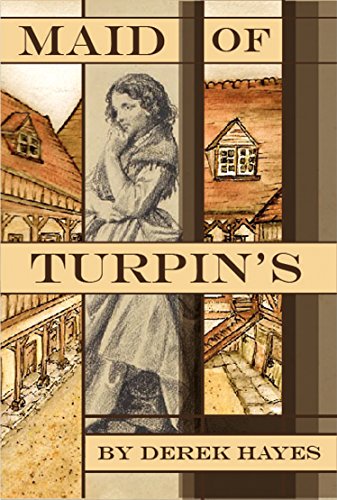
As regular Linda’s Book Bag readers know, I’m always happy to support less well known authors and publishers so it gives me great pleasure to introduce Derek Hayes today. Derek’s latest book  Maid of Turpin’s was published by Bretwalda Books on 16th July 2016. Maid of Turpin’s is available for purchase here.

Maid of Turpins

better-cover

Young Sybil Turpin is an innkeeper who caters for the unsavoury underworld of 18th Century London. When she gets involved in a fiendish plot about spies and political intrigue her life is suddenly in danger from the most ruthless of men.

The year is 1720 and the government of Prime Minister Robert Walpole is overwhelmed by a criminal scandal which threatens to bankrupt the country. Richard Hamilton secret agent of the crown is sent to investigate. The story centres around the notorious tavern in Honey Lane; a lawless neighbourhood within Cheapside.

Turpin’s is ruled by a feisty young Sybil Turpin; an eccentric character who bathes daily in a hogshead barrel and rides like a highwayman.

She and Richard, himself an unconventional character, start as adversaries but when more brutal criminal activity unfolds, they join forces and their quest leads them around the streets of London, from Tyburn to the Bank of England; through Vauxhall Pleasure Gardens to a prison vault under London Bridge.

Richard Hamilton may have met his match with this bold young woman but the Maid of Turpin’s has a further challenge ahead, far beyond her comprehension or ability.

An Interview with Derek Hayes

Hi Derek. Thank you so much for agreeing to answer some questions on my blog about your writing. Firstly, please could you tell me a little about yourself?

I’d describe myself as a well-fed bookworm, people-watcher, storyteller and an expert at make believe. They are lifelong attributes and still as useful now as they ever were. I read a lot and have quite diverse tastes. I usually have two or three books on the go at the same time.

I was a child of the fifties, but I hasten to add a very young one. I live in Wiltshire with my wife Jennifer and lots of grandchildren nearby; still able to indulge the story telling.  I spent most of my working life in the NHS and that was where the people-watching began. It was always a privilege being present through the critical times of other people’s life experiences; often of the dramatic and terminal kind. But then there was hospital humour; usually itself profoundly unnerving but always a palliative for the distress and sadness. Experience enough for several lifetimes.

(I bet!)

And tell us a bit about your Langford series of books.

mud

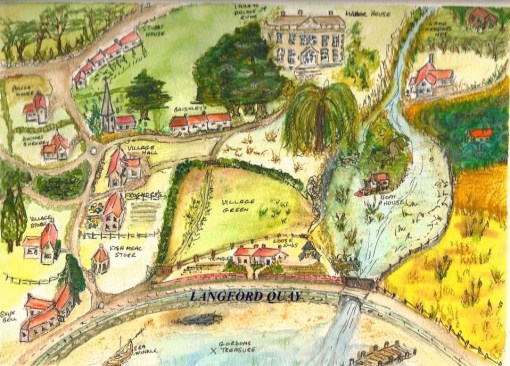
This is where the people-watching became reality for me. Set in the 1950s Langford Follies are a study of real people. All true to life characters, perhaps just a little exaggerated. Langford Quay is a real place for me.

langford-quay-2

Life in the 1950s was far less complicated than now. There were only two private telephone lines in the entire village and most residents still had an air raid shelters in their back garden. There were many residents with painful memories of the war and war widows and ration books and a live-for-the-moment mentality.

I have detailed case histories written for the main characters, going right back to their grandparents. Knowing their background so intimately means I know how they will respond in a given situation. After that it’s easy; put them in an unusual situation and they take over. They almost write the script themselves. Then occasionally I can anchor the story to real life character; as when Gordon Drake meets Prime Minister Winston Churchill his hero.  (See the December Newsletter on my blog.)

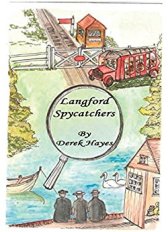
spycatchers

The third book in the series ‘Langford Liberators’ will hopefully be available next year.

What made you decide to write about a different era in your latest book, Maid of Turpin’s?

I was being told that the Langford Follies was not a popular genre. Look on the shelves in bookshops, they said. That simple mischievous lifestyle created by HE Bates in Darling Buds is not fashionable any more. So I chose to do a historic thriller. The story is set in 1720 in a notorious area of London called Cheapside.  I loved doing the historic research and was influenced by the Dennis Wheatley’s Roger Brook novels of the 1970’s.

In Maid of Turpin’s Sybil Turpin, the beautiful but feisty tavern keeper, meets the handsome if slightly accident prone Richard Hamilton, secret agent to Prime Minister Walpole; a sort of 18th century James Bond? Weaving it all around a real life event helps the believability. The story is based around the South Sea Bubble event.

How did you go about researching the detail of Cheapside in Maid of Turpin’s?

The single most useful research aid to writing the Maid of Turpin’s is my John Rocque’s 26 inches to the mile map of 1746 London. On a DVD it enables me to plot a route through the streets of Cheapside. From the Thames across the city up as far as Tyburn and beyond; it is possible to walk the streets with Sybil Turpin and imagine life in the poorer, violent areas of the city.   I placed the Turpin’s Tavern in Honey Lane and I could tell you how long it takes Sybil to walk down to the docks or out of the city to her secret lake for a swim.

And when did you first realise you were going to be a writer?

I have always been a storyteller. The difference is that now retired there is time to write the stories down and share. And I can write every day. No one complains about me wasting time. Well almost no one.

I know you write short stories as well as longer fiction. Which do you prefer?

The short stories came first; lots of them. For many years I wrote competition pieces for the Writing Magazine and other journals. It taught me the discipline of writing succinctly and there was always the thrill of occasionally getting shortlisted; that meant sometimes getting a free critique – very useful. Both Langford Follies and Maid of Turpin’s started off as short stories and a critic saying to me, there is a full length story there for the writing.

If you hadn’t become an author, what would you have done instead as a creative outlet?

I am passionate and disciplined about my writing but it is only a hobby; not to be taken too seriously. There are other important interests in my life like the health and wellbeing of the community I help to serve and my charities.

You seem drawn to the past for your writing. Why is this?

Something intriguing about the past and easier to imagine being present at the time.

What are your writing routines and where do you do most of your writing?

Writing is a joy but I am easily distracted and getting started is difficult sometime. I have a comfortable study where I write every day. Early morning is best for me but I can’t sit still for long, so after an hour I am looking for something important that cannot possibly wait, that must be done immediately. A break and then it means I come back refreshed for another session.

When you’re not writing, what do you like to read?

I am presently reading again Patrick O’Brien’s Jack Aubrey novels about Napoleonic warfare on the high seas. O’Brien is the master of clarity when it comes to life aboard ship in the eighteenth century. The rest of us can only marvel at his depth of understanding and knowledge. His narrative is so powerful he might almost have been there.

I’m also reading Andy Martin’s Reacher Said No.  The author sat beside Lee Child whilst he was writing Make Me. Terrific insight in to this best-selling author.

My third book is David Walliams Grandpa’s Great Escape. He’s a better children’s writer than he is a comedian.

(I think many would agree with that last comment Derek!)

If you could choose to be a character from Maid of Turpin’s, who would you be and why?

Richard Hamilton of course; he is the James Bond of the eighteenth century. However, gadgets don’t always work for him. Perhaps that’s why Sybil is attracted to him. He has that vulnerability which makes him adorable to the Maid.

If Maid of Turpin’s became a film, who would you like to play Sybil and why would you choose them?

I would choose Eleanor Tomlinson who plays Demelza in Poldark. She is a feisty character who would know how to pull Richard Hamilton’s strings.  I can see Eleanor slipping a noose around Hamilton’s neck on the Tyburn Tree whilst he tries in vain to release his hidden weapon.

If you had 15 words to persuade a reader that Maid of Turpin’s should be their next read, what would you say?

Political espionage in eighteenth century London, criminal scandal, fiendish intrigue and romance in equal measure.

(Oo 15 words exactly!)

About Derek Hayes

derek

Derek lives in Wiltshire with his wife Jennifer and, having retired, spends his time reading, writing and entertaining his grand children.

You can follow Derek on Twitter, visit his blog and find him on Facebook. His monthly newsletter and short stories are available on his blog, The Bookworm and the Storyteller.

All of Derek’s books are published by Bretwalda Books and available on Amazon.

Mince Pies and Mistletoe at the Christmas Market by Heidi Swain

mince-pies-and-mistletoe

I recently attended a blogger, author and publisher party thanks to lovely Sara-Jade, Project Manager at Books and the City, and in my goody bag was a copy of Mince Pies and Mistletoe at the Christmas Market by Heidi Swain. Mince Pies and Mistletoe at the Christmas Market was published by Simon and Schuster on 17th November 2016 and is available for purchase in e-book and papaerback here.

Mince Pies and Mistletoe at the Christmas Market

mince-pies-and-mistletoe

Christmas has arrived in the town of Wynbridge and it promises mince pies, mistletoe and a whole host of seasonal joy.

 Ruby has finished with university and is heading home for the holidays to save up for her trip around the world in January. Against her father’s wishes, she takes on a stall at the local market, and sets about making it the best Christmas market stall ever. There’ll be bunting and mistletoe and maybe even a bit of mulled wine.

But with a new retail park just opened on their doorstep, the market is under threat. So together with all the other stallholders, Ruby devises a plan to make sure that Wynbridge is the first port of call for everyone’s Christmas shopping needs.

The only thing standing in her way is Ruby’s ex, Steve. It’s pretty hard to concentrate on saving the world when he works on the stall opposite, especially when she realises that her feelings for him are still there…

This Christmas make time for some winter sparkle – and see who might be under the mistletoe this year…

My Review of Mince Pies and Mistletoe at the Christmas Market

Ruby is back in Wynbridge having dropped out of her masters degree. The trouble is, she hasn’t moved on as much as she’d hoped from her small Fenland town.

I really enjoyed this entertaining festive read. Firstly the setting of Mince Pies and Mistletoe at the Christmas Market really appealed to me as I live in a small Fenland market town not far from the Peterborough mentioned in the story and I felt Heidi Swain had captured the essence of the area very authentically. I could easily picture the settings in my mind’s eye so which helped the story feel very realistic.

Whilst the narrative has a romantic theme and there is, as one would expect, a heavy reliance on the traditions of Christmas, I also thought there was a real depth to the story too. The sub-plot of Ruby’s Dad, Robert, was very well handled and surprising so that this wasn’t just a will they/won’t they chick lit. There is an honesty to the plot – life is not all wonderful in these settings and people do have to work hard to make a go of such places as the market featured in this story.

I appreciated the range of characters too. There is a sufficiently large cast to ensure enough variety, but somehow each character earns their place in the story and doesn’t feel extraneous, meaning that these become people the reader cares about. I really wanted Ruby and Steve to have a happy ending, but you’ll have to read the book to find out if that’s the case.

An element that surprised me in a way was the quality of ideas for small town regeneration. I think many a struggling market town could benefit from reading what initially appears a chick lit Christmas read. In Mince Pies and Mistletoe at the Christmas Market there are some excellent and achievable ideas that actually inspired me to want to be more creative. This is very effective writing.

So, if you’re looking for a romantic seasonal Christmas read that has conflict, depth and creative ideas to keep your attention throughout, you can’t go wrong with Mince Pies and Mistletoe at the Christmas Market by Heidi Swain.

About Heidi Swain

heidi

Although passionate about writing from an early age, Heidi Swain gained a degree in Literature, flirted briefly with a newspaper career, married and had two children before she finally plucked up the courage to join a creative writing class and take her literary ambitions seriously.

A lover of Galaxy bars, vintage paraphernalia and the odd bottle of fizz, she now writes contemporary fiction and enjoys the company of a whole host of feisty female characters.

Heidi can be found at the keyboard at all hours of the day and night and quite often scribbling longhand in her car during her lunch break. She lives in stunning south Norfolk with her wonderful family and a mischievous cat called Storm.

Her debut novel, The Cherry Tree Cafe, was published on July 16th, 2015 and became an Amazon bestseller.

the-cherry-tree-cafe

All Heidi’s books are available here. You can follow Heidi on Twitter and visit her blog.

Setting and Characters, a Guest Post by Julieann Dove, Author of The Secret He Keeps

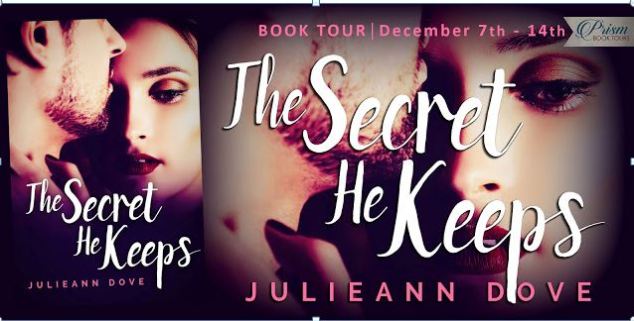
tour-image

Having featured Julieann Dove here on Linda’s Book Bag before, I’m pleased to host a return visit with Prism Book Tours to celebrate Julieann’s latest release The Secret He Keeps. The Secret He Keeps is out today, 8th December 2016, and is available for purchase here.

I’m delighted to be hosting a guest post from Julieann Dove all about the setting and characters for The Secret He Keeps as well as a giveaway for US readers at the bottom of this blog post.

The Secret He Keeps

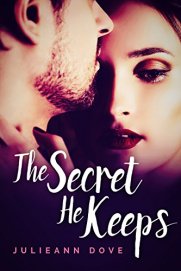
cover

Dr. Rachel Miller has no recollection of what happened that night she climbed in the car with her husband and he drove recklessly into a tree. She has no clue as to why she survived and he didn’t. Nor does she understand why strangers are coming up to her on the street and telling her things she can’t recall about a life that seems so long ago. But Dane Stone knows.

Dane Stone is Rachel’s business partner…and her deceased husband’s best friend. He knows about the notes, the hotel receipt, and the reason she got in the car that night. It’s for her protection that he keeps the secret, but inside he’s dying to tell her.

The Setting and Characters for The Secret He Keeps

A Guest Post by Julieanne Dove

lindas-book-blog-mystic

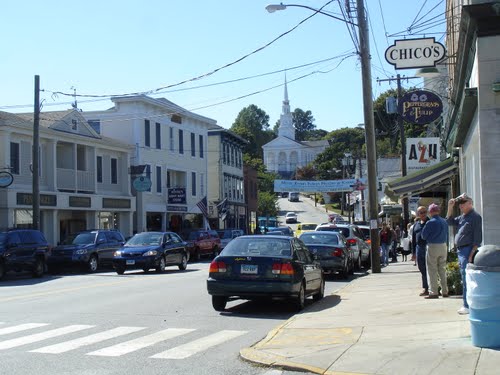
The setting takes place in Mystic, Connecticut. This is a place my family visits once a year. As you may know, the movie, Mystic Pizza took place there. It was Julia Roberts’ first real acting gig, I believe.  I absolutely love that movie, so I thought, ‘what about another story that originates from there?’ And there I had it. My very own creation from a place I simply adore. You’ve got to visit if you get a chance and are on the east coast. It’s very quaint, and quite lovely. Don’t forget to visit Mystic Pizza. They play the movie on repeat and the pizza is out of this world!

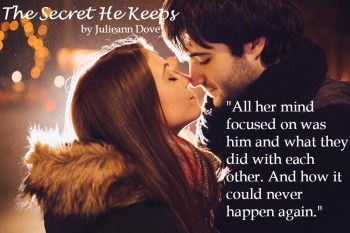
Young couple in love outdoor

The characters in my book involve a girl and two guys—one living and one not so much. He does come back in rare flashbacks. Rachel is a recent widow, suffering from survivor’s guilt and a slight mishap of temporary amnesia from the traumatic accident. Her husband, Scott, died while driving them home one night. He was Rachel’s everything. She had him so far up on a pedestal, she could never imagine him falling from grace. But he did. (You’ll find out how she tripped up, by the end of the book!) And Dane, my second guy, was witness to it. He is Rachel’s business partner, and her husband’s best friend. Consequently, he is also in love with Rachel. He just has to wait until she’s ready to hear it…

About Julieann Dove

julieann

Julieann lives in Virginia, yet longs to live everywhere else. It doesn’t come as a surprise that along with her gypsy soul, comes an active imagination. That’s why she loves to write and invent worlds and people, so that she can formulate their happily ever after. Hobbies include cooking new recipes, sewing, and spending time with her cute boyfriend/husband and five fabulous children. Vacations happen in Nantucket or the Carolina beaches–anywhere there is inspiration for her next book. One day she hopes to travel to Italy, drive one of those little cars around the countryside, and speak the language fluently! Please sign up for her newsletter to find out about new releases by clicking here!

You will find more about Julieann Dove on Goodreads, Facebook, and Pinterest and by following her on Twitter.

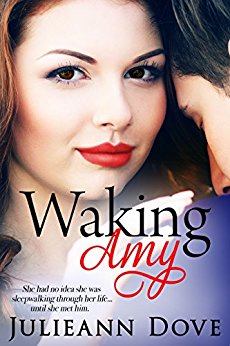
Lucky US readers can also enter to win a signed copy or an e-book of another of Julieann’s books, Waking Amy, by clicking here.

amy

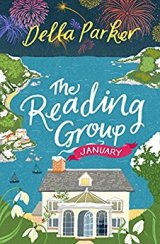
The Reading Group: January by Della Parker

the-reading-group-january

I really enjoyed reading The Reading Group: December by Della Parker so I was delighted to be offered the chance to read The Reading Group: January via Netgalley. You can read my review of The Reading Group: December here and the e-book is currently free here.

The Reading Group: January, part two in the Reading Group Series, was published by Quercus on 1st December 2016 and is available for purchase in e-book here.

The Reading Group: January

the-reading-group-january

Anne-Marie has always considered herself a bit of a matchmaker – never mind that she’s only got one real success under her belt. And this year she’s determined to up her game: Little Sanderton’s singles could certainly benefit from her expertise!

But while Anne Marie thinks she knows what’s best for everyone else, her own life couldn’t be less of a fairytale romance. Between looking after her cranky father and running her own business, she doesn’t have time for a relationship. Her friends in the Reading Group know better though: after all, love can be found in the most unexpected of places . . .

This January the Reading Group is tackling Jane Austen’s Emma . . . but who’s got time for fiction when romance is in the air?

My Review of The Reading Group: January

This month the reading group are tackling Emma by Jane Austen, but Anne-Marie is so busy interfering in other people’s love lives she hasn’t got time to read the book and maybe she should.

Initially this story didn’t appeal as much as the December one and it took me a while to get into the rhythm of it. However, on reflection, I think that is a strength of the story because Emma is my least favourite of Austen’s works and I think I may have found the resonances too strong, reminding me of my own prejudices. It didn’t have the emotional pull of Grace’s December story for me as it is more light hearted.

That said, the more I read the more I enjoyed it and January is a highly entertaining read, feeling more like chick-lit than December. Anne-Marie is so well defined as a character, busybodying in other people’s relationships so that she hasn’t actually got a love of her own. As the story went along I really warmed to her and wanted her to be lucky in love too. This may only be a novella of just over 90 pages, but the characters are never two dimensional, but rather they feel real and human.

I liked the humour presented, mostly through Anne-Marie’s matchmaking efforts, that made The Reading Group: January the kind of read just right for a commute or cold winter’s afternoon. It doesn’t matter if the reader hasn’t encountered the first story in this series as January stands alone perfectly and you certainly don’t need to have read Emma. I’m looking forward to encountering The Reading Group: February as the reading group are embarking on Lady Chatterley’s Lover and I’m dying to know what Della Parker makes of that! It’s sure to be entertaining.

About Della Parker

della-parker

Della Parker lives in a Dorset village with her two large hounds.

Before becoming a writer she worked as a Customer Services Manager for a water company. Solving customer complaints is not a million miles away from solving plot problems, so Della thinks her former life was quite a good background for a writer. And of course there were the wonderful characters she met.
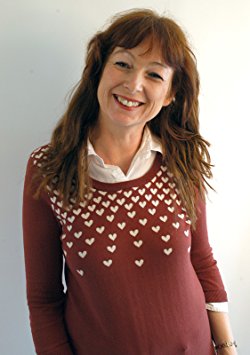
When Della is not writing she enjoys running marathons and going to the gym for long workouts. Unfortunately, she doesn’t have the time to pursue these worthwhile hobbies as often as she’d like to – as she much prefers writing!

All the books in Della’s Reading Group Series are available here.

You can follow Della on Twitter and visit her website here. You’ll also find her on Facebook.