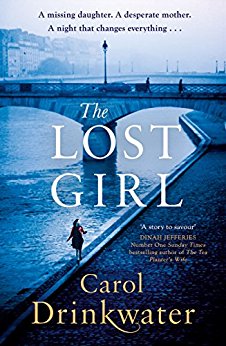
An Interview with Carol Drinkwater, Author of The Lost Girl

the lost girl

Oh my goodness am I excited today. I absolutely loved The Lost Girl by Carol Drinkwater when it was published and was lucky enough to review it and host an extract here. Carol’s writing always touches me and I have also reviewed another of her books on Linda’s Book BagThe Forgotten Summerhere. Imagine then, how exciting it is for me to be able to interview Carol all about her writing, especially as her latest book The Lost Girl has so many resonances in recent times.

The Lost Girl was published on 29th June 2017 by Michael Joseph, an imprint of Penguin, and is available for purchase via the links here.

The Lost Girl
the lost girl

Her daughter disappeared four years ago. . .

Since her daughter went missing four years earlier, celebrated photographer Kurtiz Ross has been a woman alone. Her only companion her camera. Since Lizzie disappeared, she has blamed and isolated herself, given up hope. Until, out of the blue, an unexpected sighting of Lizzie is made in Paris.

Could this lead to the reconciliation she has dreamed of?

Within hours of Kurtiz arriving in Paris, the City of Light is plunged into a night of hell when a series of terrorist attacks bring the city to a standstill. Amid the fear and chaos, a hand reaches out. A sympathetic stranger in a café offers to help Kurtiz find her daughter.

A stranger’s guiding light

Neither knows what this harrowing night will deliver, but the other woman’s kindness – and her stories of her own love and loss in post-war Provence – shine light into the shadows, restoring hope, bringing the unexpected. Out of darkness and despair, new life rises. New beginnings unfold.

Dare she believe in a miracle?

Set during a time of bloodshed and chaos in one of the most beautiful cities on earth and along the warm fragrant shores of the Mediterranean, Kurtiz discovers that miracles really can happen . . .

An Interview with Carol Drinkwater

Welcome to Linda’s Book Bag, Carol. Thank you so much for agreeing to answer some questions on my blog about your writing and The Lost Girl in particular. I’m really excited that you’re here! Firstly, please could you tell me a little about yourself?

I am of Irish blood on my mother’s side and a little bit on my father’s side too though I was born in London. I have an Irish passport and chose Ireland as my mother country early in adulthood. I was educated at an Irish convent in Kent, and hated almost every minute of it. It did offer me the opportunity to study languages which I love. Spanish, Italian and French, all of which have stood me in good stead as a traveller and a writer and, of course, as a French resident. The nuns also allowed me to indulge in my love of acting and drama. After I left the convent I worked backstage in the theatre in London before going to drama school in north London. There I studied acting and classical drama.

I live in France on an olive farm overlooking the Bay of Cannes. I ended up here because I fell in love with a Frenchman who asked me to marry him on our first date in Sydney, Australia. This love story is the basis of my Olive Farm series of six books.

I still keep a small bolthole near where my mother was born in Ireland. Keeping in touch with my roots is very important to me.

Why do you write?

I HAVE TO. I need to create or I drive myself insane. If I am not writing or acting or preparing a film it is as though I have a swarm of delinquent bees inside me, buzzing and stinging.

(What a fabulous analogy!)

When did you realise you were going to be a writer?

I have been writing since I was about eight. I KNEW I would act; I DREAMED of being a writer.

Which aspects of your writing do you find easiest and most difficult?

All of it is difficult. The fun bit is looking at the books line up on the shelves. I am writing my 24th now. Yay!

(Yay indeed. I can’t wait!)

What are your writing routines and where do you do most of your writing?

I begin early and write long hours, stopping for a couple of hours mid-afternoon to swim, walk, ponder, rest my mind. Then back to it for another couple of hours so that it is in my head ready to sleep on it.

Many of your reading fans also know you as an actress. What has being involved in drama added to your writing?

I think visually. I see every scene clearly. The way people look, move, dress. The details are essential. I look for the drama, the resistance in any moment, which creates drama in scenes. I aim to draw the inner lives of my characters as they seek to overcome obstacles. While writing I act out every scene, play every part aloud. The training I received at Drama Centre, London was perfect for writers.

(How fascinating – I’d never have thought of acting out what I write.)

You’re obviously very creative with both acting and writing as part of your skill set. Is there a creative talent you haven’t mastered but would like to?

I have no musical skills except that I love to dance and listen to music. My father was a musician and I am very sad that as a child I did not learn any musical instrument.  I am considering either brushing up on my Spanish and Italian, learning Arabic (difficult!!) or learning to play the guitar. But with everything I have going on in my life I probably won’t get round to any of it.

Without spoiling the plot, please could you tell us a bit about The Lost Girl?

The Lost Girl is the story of two very different women. They meet in a bistro in Paris on the night of the November 2015 terrorist attacks on the city. Over that weekend, their stories unfold.

The book is set in two time frames: November 2015 during the weekend of those terrorist attacks that rocked and shocked Paris, leaving more than a hundred dead and many more wounded. The second time frame is the glorious, headily-scented, post-war south of France, amongst the flower farms that fed the perfume industry in Grasse, the Perfume Capital of the World. The modern part of the story is darker, grittier, I think, than the earlier story. Both are told through the eyes and experiences of the two female protagonists women who meet in the bistro in Paris on 13th November 2015.

At its core, The Lost Girl is a love story with a twist, a miracle that, I hope, redeems the darker side of the story offering hope and new beginnings.

How did you manage the two time frames when you were writing The Lost Girl?

I wrote the two stories at the same time. There was no definite order to it. Sometimes I wrote Marguerite’s story for days, weeks, and then one day I would return to Kurtiz. When I was stuck I would write a scene from one or other of their live even if I knew I would not use it later.  It was important to keep telling myself their stories. The big challenge was putting it all together. This part took weeks.

The plot of The Lost Girl is based around the terrorist attacks in Paris. How did you come to the decision to write around such an emotive topic?

I watched the unfolding of the attacks on the news on that November Friday night. I was with my mother. We stood together with our arms round one another witnessing the horrors. I was weeping. When the TV reporters announced that 1,500 concert-goers were locked inside the Bataclan concert hall and had been taken hostage, Mummy said to me: “for everyone inside there fearing for their lives, there is a mother outside anxiously waiting for news”. It sowed the seed for my story.

One of the two women who is in the Parisian bistro is waiting to hear news of her daughter who went missing from her home in London when she was sixteen. She, Kurtiz, the girl’s mother, and her husband have reason to believe that their daughter, Lizzie, might be attending the concert at the Bataclan.

How did you go about researching detail and ensuring The Lost Girl was realistic whilst still making it a fiction?

I spent a month at the National Library in Paris in their media division. I watched, listened to footage, recordings from that weekend and afterwards. I researched very thoroughly. I owed it to the family members of those who lost their lives to make it accurate. Even if they never read the book.

(I think that level of care comes across very strongly to the reader Carol.)

How important is literature in exploring the difficult situations, emotional and political events of modern times do you think?

Essential. Think of Pablo Picasso’s stupendous work Guernica, a visually alarming, angry statement against the senseless lives lost during the bombing of Guernica in northern Spain in April 1937.  Many of the Greek tragedies were observations on the nation’s enthusiasm for war. Lysistrata by Aristophanes is a Greek comedy written and first performed in 411 BC. It recounts the story of one woman, Lysistrata, who persuades the women of Greece to withhold sexual favours from their husbands and lovers until they stop fighting and negotiate peace. It is an early, brilliant anti-war piece of theatre.

I believe literature, film, theatre, music and art can be the voices of sanity, of reason. They give us emotional air to breathe, you might say. While the media plasters on the doom and gloom, frequently inciting hatred, racism, mistrust, art can offer us hope, laughter, release, a way forward. Humans are complex, our emotions and experiences are prisms, spectrums of colours, of light and shade. Mostly, we struggle to overcome our darker instincts; we strive for goodness, not evil. Evil is the exception. Most of us desire peace, love, harmony. Even in our darkest hours we search for the  lighter moments. I have seen this over and over again in war zones, areas of conflict. The chink of light. This is what I hope The Lost Girl does. It is a story of generosity, regeneration, or that is certainly what I set out to achieve.

(Very powerfully said. And you certainly achieve what you set out to do in The Lost Girl.)

France has become a huge part of your life. How important is location to you as an author when you are writing?

I feel location, if one can say that. I breathe in the perfumes, the temperatures. Every blade of grass counts. I like to immerse myself in the places I am writing about and almost always go to the chosen locations to “live” the place before setting pen to paper.

That said, The Lost Girl seems to take you further away from your Olive Farm books. How has this change in your writing evolved?

I think it is important for me as a writer to evolve. I would not want to have played Helen Herriot for all my life (which is why I left the series). I need new challenges or I stultify.

So what can we expect next from Carol Drinkwater, the writer?

I never know what I will be writing until I have written it! I am at work on a book which, I THINK, is more of a chamber piece. At the moment it also covers two time frames (though this could change!). It is a relationship story, a love story, also set in France.

If you could choose to be a character from The Lost Girl, who would you be and why?

Marguerite, of course, because she’s an actress. Or on another day, it would be Kurtiz because she has fought to become an independent woman.

If The Lost Girl became a film, would you consider taking on one of the roles? 

YES!

When you’re not writing, what do you like to read?

I go through phases. At present, as it is summer and I am taking some time off, I am reading modern, mainly light fiction, mostly by female writers: Ferrante, re-reading Du Maurier, a few commercial novels on sale for my Kindle, writers I probably would never usually choose …

If you had 15 words to persuade a reader that The Lost Girl should be their next read, what would you say?

From reviews:  “beautifully written”, “page-turner”, “fabulously written”, “action-packed”, “emotive”, “captivating”, “hated finishing it”, “novel of hope”

Thank you so much for your time, Carol, in answering my questions.

Thank YOU very much.

About Carol Drinkwater
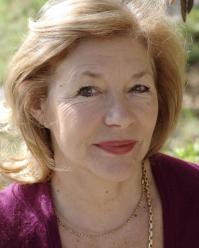
Carol Drinkwater c Michel Noll

Carol Drinkwater is a multi-award-winning actress who is best known for her portrayal of Helen Herriot in the BBC television series All Creatures Great and Small. She is also the author of over twenty books, both fiction and non-fiction. Her quartet of memoirs set on her olive farm in the south of France have sold over a million copies worldwide and her solo journey round the Mediterranean in search of the Olive tree’s mythical secrets inspired a five-part documentary film series, The Olive Route.
You can follow Carol on Twitter and visit her website.

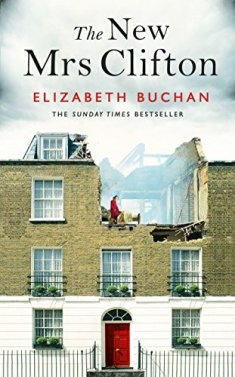
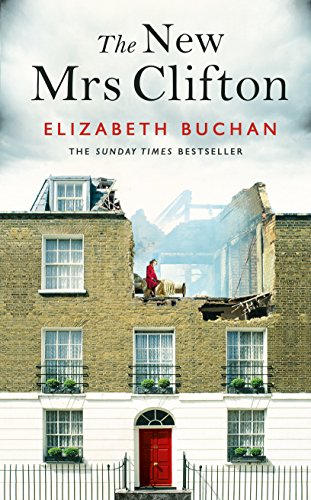
The New Mrs Clifton by Elizabeth Buchan

The New mrs Clifton

Having long been a fan of Elizabeth Buchan, author of The New Mrs Clifton, I’m a little bit star struck to welcome her to Linda’s Book Bag with a mini-interview today. I’m also pleased to be sharing my review of The New Mrs Clifton.

Published by Penguin on 11th August 2017, The New Mrs Clifton is available for purchase here.

The New Mrs Clifton

The New mrs Clifton

‘Wrapped in the roots of the sycamore was a skeleton; the remains of a woman, between twenty-five and thirty. She had carried a child . . .’

At the close of the Second World War, Intelligence Officer Gus Clifton returns to London. On his arm is Krista, the German wife he married secretly in Berlin. For his sisters, this broken woman is nothing more than the enemy. For Nella, Gus’s loyal fiancée, it is a terrible betrayal. These three friends wonder what hold Krista has over decent, honourable Gus. And, they ask themselves, how far will they have to go to permanently get her out of their home, their future, their England?

An Interview with Elizabeth Buchan

Welcome to Linda’s Book Bag, Elizabeth. Thank you so much for agreeing to answer some questions on my blog about your writing and The New Mrs Clifton in particular. Firstly, please could you tell us a little about yourself?

Thank you so much for inviting me. I’ve spent my life with my head in a book – as a child I was often caught reading with a torch under the blankets late into the night. Before I embarked on the novels, I worked in publishing at Penguin Books and was briefly a fiction editor but the siren call of writing was too strong and I left to write my own books. Fifteen novels in, I am about to embark on the latest.  I live in London and my family all live close by which is wonderful.

Without spoiling the plot, could you tell us a bit about The New Mrs Clifton?

Intelligence officer, Gus Clifton, returns from Berlin in 1945 bringing with him a new bride. To the horror of his two sisters, and the bewilderment of his ex-fiancée who was fondly waiting to marry him on his return, she is German. Why has he done this? The answer can be found in the upheaval and violence of war, even on a home front. Nice people do terrible things in this situation and the will to survive is stronger than anything else. Both Gus and Krista find they run up against aspects of themselves which shocks them.

The New Mrs Clifton is set in post war London as well as Berlin. How did you ensure the settings and detail felt authentic?

I got hold of every book on the subject I could lay hands on, including memoirs of the time. They are invaluable for supplying the little telling details, such as the impossibility of getting hold of soap, shampoo and paint even after the fighting stopped. I looked at old photographs and – my greatest coup – I managed to get hold of a second-hand copy of the original bomb maps published by the Greater London council which shows where every bomb fell, what type it was and the extent of the damage it inflicted.  Gold dust.

The marriage between Krista and Gus sees two seemingly conflicting cultures joined together. How important is it to explore the question of culture and expectation through fiction?

I think that is precisely what a novel can do and should do.  Imaginative empathy often goes beyond the historian’s facts.  If one can invite a reader into thinking, sensing and feeling a character’s predicament and their setting then the novelist is doing the best job possible to open up worlds.

Which character do you identify most with from The New Mrs Clifton, and why?

I love my Krista. I feel for her isolation and terror and admire her determination to become normal.

Thank you so much for your time in answering my questions.

My Review of The New Mrs Clifton

A body is found in the garden when a new couple move in – but to whom does it belong?

I found The New Mrs Clifton a mesmerising read and one that frequently made me very uncomfortable because so much of it is based on past horrific experiences and I wondered just how I might have behaved and acted in similar ones. I think one of the great successes of the story is that Elizabeth Buchan makes the reader think and question their beliefs and certainties. I had a far better understanding of the effects of WW2 on the ordinary person after the war than I had really had before and reading the book made me glad I was born well afterwards. The uncovering of inherent racism, corruption and manipulation at all levels is totally convincing.

The narrative style was just as good as I hoped and expected from an Elizabeth Buchan novel. There’s an intensity and claustrophobia that is palpable and much of the effect comes as much from what isn’t said as what is so that I experienced the same responses and emotions as the characters. The three main women, Krista, Julia and Tilly, are magnificent creations so that each was very real. I understood their frailties, desires and fears completely. Despite Kritsa’s displacement and the fact that she deserves the reader sympathy, it was Julia I felt most for. She begins as an odious individual but by the end of the novel she had my complete understanding and I felt almost as sorry for her as for Krista.

I loved the plot. The way Elizabeth Buchan drops in the tiny daily details that enhance setting or our understanding of her characters’ emotions to her ability to present the most startling information with a pared down sentence that shocks the reader makes her writing incredibly satisfying to read. Towards the end I found my heart rate increased dramatically as I headed to a knowledge of whose body was in the garden.

The New Mrs Clifton is an intelligent, and unsettling, book that makes the reader wonder just what they themselves might be capable of in extreme circumstances. I won’t forget it in a very long while.

About Elizabeth Buchan

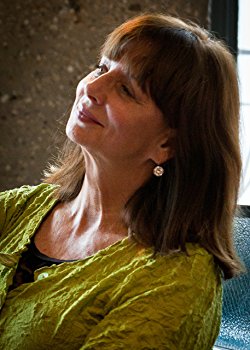
Elizabeth Buchan

Elizabeth Buchan began her career as a blurb writer at Penguin Books after graduating from the University of Kent with a double degree in English and History. She moved on to become a fiction editor at Random House before leaving to write full time. Her novels include the prizewinning Consider the Lily, Revenge of the Middle-Aged Woman, The Second Wife, Separate Beds, and Daughters. After talking to some amazing women who had been employed by SOE, she wrote the Danish wartime resistance story, I Can’t Begin to Tell You. The New Mrs Clifton, is based on a situation that happened in her own family after the war – only in reverse.

Elizabeth Buchan’s short stories are broadcast on BBC Radio 4 and published in magazines. She reviews for the Sunday Times and the Daily Mail, and has chaired the Betty Trask and Desmond Elliot literary prizes. She was a judge for the Whitbread First Novel Award and for the 2014 Costa Novel Award . She is a patron of the Guildford Book Festival and of The National Academy of Writing, and sits on the author committee for The Reading Agency.

You can find Elizabeth on Twitter @elizabethbuchan, on Facebook and find out more on her website.

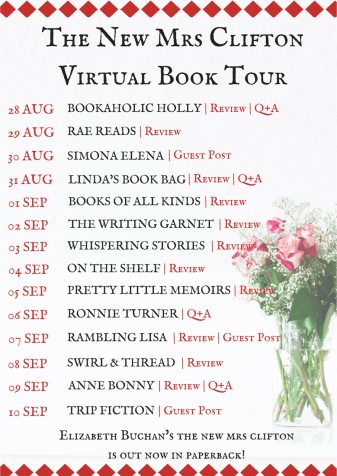
There’s more with these other bloggers too:

poster

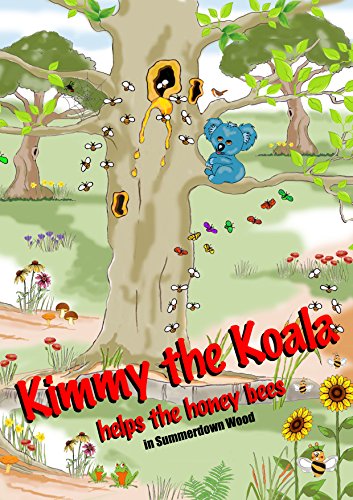
Kimmy the Koala Helps the Honey Bees by Graham Swan

kimmy

It always gives me great pleasure to review children’s books and so I’m delighted to be part of the launch celebrations for Kimmy the Koala Helps the Honey Bees by Graham Swan.

Published by Clink Street on 1st August 2017, Kimmy the Koala Helps the Honey Bees is available for purchase here.

Kimmy the Koala Helps the Honey Bees

Kimmy the Koala loves few things more than honey, eating it for breakfast everyday during the summer months. When he asks the wise tree, Warewood, where his favorite treat comes from though, he is startled to learn the bees who produce the honey are struggling because of the weather. Now determined to help, he recruits Penny the Panda, Ronnie the Rat and his other forest pals to plant wild flowers throughout the woods to give them plenty of pollen to make honey with for the next year..

My Review of Kimmy the Koala Helps the Honey Bees

If you love honey like Kimmy, you have to know how to help the bees produce it.

I’m going to get one tiny criticism out of the way before I continue. Almost all of the direct speech in Kimmy the Koala Helps the Honey Bees does not begin on a new line for a change of speaker which is what we would normally expect and I like children’s books to model literacy conventions. There’s also the odd slip in tenses from present to past, but that is my adult educational head reviewing rather than a child’s love of story.

That aside, I like this children’s book. The illustrations are wonderful and add so much to the story. I thought adding in partly coloured pages at the end to provide an activity for children was an inspired touch too. There’s a great opportunity for discussion as, once the story is read, the map at the beginning can be looked at again and children asked what happened at each location so that the story can be returned to time and again. The language is quite challenging and will help extend children’s vocabulary.

The themes of conservation, friendship, sharing and cooperation are perfect for the target audience so that there is much to recommend in Kimmy the Koala Helps the Honey Bees.

About Graham Swan

Graham Swan is a graphic designer and accomplished artist, who lectures part-time in graphics. Writing for his grand children Graham is also an animal lover and produced all the images in Kimmy the Koala Helps the Honey Bees.

There’s more with these other bloggers:

Kimmy_Banner

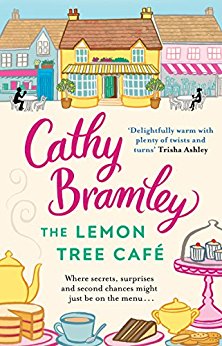
Afternoon Tea with Cathy Bramley, Author of The Lemon Tree Cafe

Lemon tree cafe

Having met lovely Cathy Bramley a few times I’m thrilled to welcome her to Linda’s Book Bag to celebrate her latest book The Lemon Tree Cafe today. I love Cathy’s writing and have previously reviewed another of her books, Comfort and Joyhere. Cathy also featured when her book The Plumberry School of Comfort Food was released and you can find that post here. Today we’re talking afternoon tea!

The Lemon Tree Cafe was published on 24th August 2017 by Corgi, part of Transworld, and is available for purchase here.

The Lemon Tree Cafe

Lemon tree cafe

The Lemon Tree Cafe was originally published as a four-part serial. This is the complete story in one package.

When Rosie Featherstone finds herself unexpectedly jobless, the offer to help her beloved Italian grandmother out at the Lemon Tree Cafe – a little slice of Italy nestled in the rolling hills of Derbyshire – feels like the perfect way to keep busy.

Surrounded by the rich scent of espresso, delicious biscotti and juicy village gossip, Rosie soon finds herself falling for her new way of life. But she is haunted by a terrible secret, one that even the appearance of a handsome new face can’t quite help her move on from.

Then disaster looms and the cafe’s fortunes are threatened . . . and Rosie discovers that her nonna has been hiding a dark past of her own. With surprises, betrayal and more than one secret brewing, can she find a way to save the Lemon Tree Cafe and help both herself and Nonna achieve the happy endings they deserve?

Cathy Bramley’s ideal afternoon tea at The Lemon Tree Café

When I was asked to be part of the tour for The Lemon Tree Cafe I asked Cathy, “Which three real or fictional guests would you invite to afternoon tea at The Lemon Tree Café and why, and what cakes and sandwich fillings and cakes would you choose?” This is what Cathy told me:

Oh Linda, what a great question! I’ve never been asked this before and as soon as I read your request I instantly thought of how interesting it would be to get three characters from books together at the café.

The worlds I create seem very real to me and I often think back to Wickham Hall and The Plumberry School of Comfort Food and the allotments at Ivy Lane. I can picture the settings very clearly and I wonder about the characters. (By now half of your readers will be thinking that I’ve gone a bit loopy…!)

So, back to afternoon tea. I’d love to get Holly from Wickham Hall, Verity from Plumberry and Tilly Parker from Ivy Lane around a table together to have a good old chat. None of these characters cross over in my books, however, Verity is good friends with Rosie who runs The Lemon Tree Café; they were housemates in The Plumberry School of Comfort Food. Verity also makes a cameo appearance in The Lemon Tree Café.

Holly is now living at Wickham Hall with Benedict Fortescue, Lord and Lady Fortescue’s son and I’ve love to hear how she has adapted to living with her aristocratic in-laws! I think she’d have some great stories to tell.

The last time we saw Verity was in my Christmas novella, Comfort and Joy. She and chef boyfriend Tom had just moved into their first cottage together. I think wedding bells were on the cards for those two and I’d like to find out if what they are up to.

Tilly Parker, the star of Ivy Lane is probably my favourite character form all my books, she had had such a tough time and fingers crossed things are going well for her in her new life. If I could shoehorn Tilly into every book, I would!

The menu at The Lemon Tree Café has plenty of delicious things on it. Juliet makes a delicious lemon drizzle cake and Lia, Rosie’s sister is a very good cook too. Holly isn’t much of a cook although she really enjoys eating what Jenny Plum cooks at the Wickham Hall Coach House Café. She’d probably choose Jenny’s special marchpane tart made of an Elizabethan version of marzipan. Verity loves fish finger sandwiches although they’re probably an acquired taste and might look a bit odd on a three-tier cake stand! She did learn to make bread though, so she might bring some delicious rye bread with her. This would be gorgeous with some smoked salmon sandwiches. Now that Tilly has an allotment she cooks lots of things with fresh vegetables in it like courgette cake. However, her go-to recipe has always been chocolate chip cookies, so there would have to be plenty of those.

So there you are, Linda, my guests and their menu – I so wish this could happen!

So do I Cathy, and I’ll have to ask Tilly for that courgette recipe as I’ve been inundated with them on my allotment this year!

About Cathy Bramley

cathy

Cathy is the author of the best-selling romantic comedies Ivy Lane, Appleby farm, Conditional Love, Wickham Hall and The Plumberry School Of Comfort Food. She lives in a small Nottinghamshire village with her family and Pearl, the Cockerpoo.

Her recent career as a full-time writer of light-hearted romantic fiction has come as somewhat of a lovely surprise after spending eighteen years running her own marketing agency. However, she has always been an avid reader, hiding her book under the duvet and reading by torchlight.

You’ll find all Cathy’s lovely books here.

You can find out more about Cathy Bramley on her website and you can follow her on Twitter

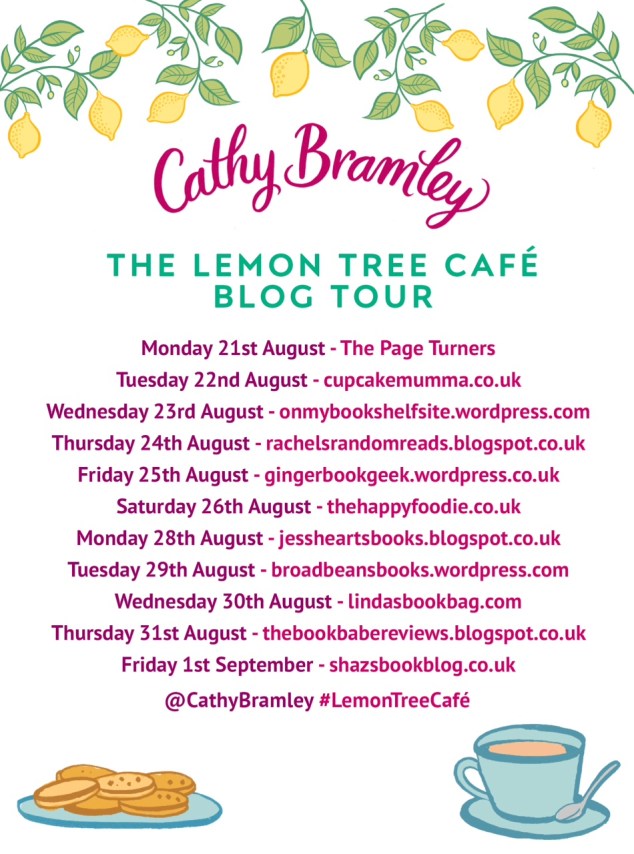
There’s more with these other bloggers too:

blog tour poster

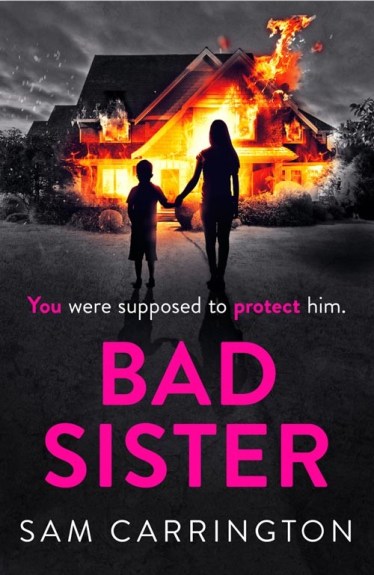
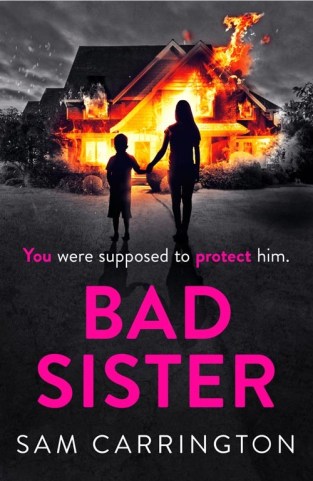
Introducing Bad Sister by Sam Carrington

bad sister

A while ago on Linda’s Book Bag I was privileged to host a guest post from Sam Carrington all about the allure of psychology in fiction. I had my review of Sam’s debut Saving Sophie too. You can read that post here.

Now Sam Carrington is back with a new thriller, Bad Sister, and I’m delighted to introduce it today.

Bad Sister will be published by Avon Books, an imprint of Harper Collins, in e-book on 9th October 2017 and paperback on 14th December. Bad Sister is available for pre-order here.

Bad Sister

bad sister

The gripping new thriller from the bestselling author of Saving Sophie.

Stephanie is scared for her life. Her psychologist, Connie Summers, wants to help her face her fears, but Connie will never really understand her. Stephanie’s past has been wiped away for her own protection. Stephanie isn’t even her real name. But then, Dr Summers isn’t Connie’s real name either.

And that’s not all the women have in common. As Stephanie opens up about her troubled relationship with her brother, Connie is forced to confront her own dark family secrets.

When a mutilated body is dumped in plain sight, it will have devastating consequences for both women.

Who is the victim?
Who is to blame?
Who is next?

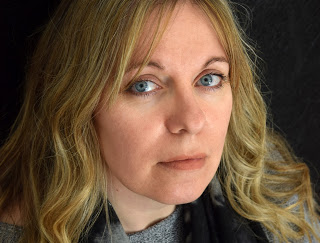
About Sam Carrington

SamCarringtonColour

Sam Carrington lives in Devon with her husband and three children. She worked for the NHS for fifteen years, during which time she qualified as a nurse. Following the completion of a Psychology degree she worked for the prison service as an Offending Behaviour Programme Facilitator. Her experiences within this field inspired her writing. She left the service to spend time with her family and to follow her dream of being a novelist. Before beginning her first novel, Sam wrote a number of short stories, several of which were published in popular women’s magazines. Other short stories were included in two charity anthologies.

Sam moved quickly on to novel writing and completed her first project within six months. Although this novel attracted attention from agents, it was her next that opened up opportunities. She entered this novel, with the working title Portrayal, into the Crime Writers’ Association Debut Dagger Award in 2015 and was delighted when it was longlisted.

Being placed in such a prestigious competition was instrumental in her success securing a literary agent. When completed, this novel became Saving Sophie, a psychological thriller which was published by Maze, HarperCollins.

You can follow Sam on Twitter and find her on Facebook. You can also visit Sam’s blog.

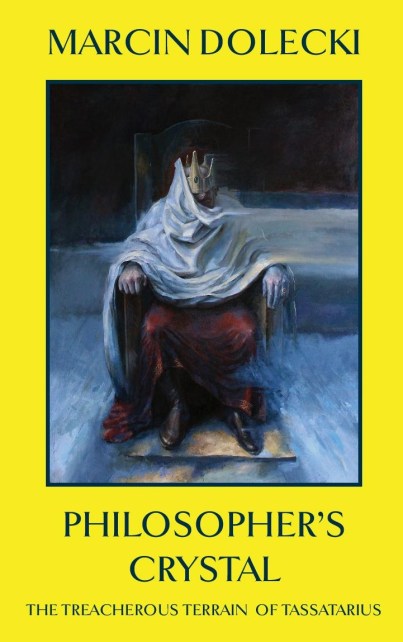
An Interview with Marcin Dolecki, Author of Philosopher’s Crystal

Philosopher's Crystal front cover second edition

Many moons ago when I was an undergraduate, one of the elements to my degree was philosophy and I have retained an interest ever since. As a result, when I realised that Marcin Dolecki’s Philosopher’s Crystal was based on that discipline, I had to ask Marcin a few qustions about his writing and his concepts of philosophy.

Published by Montag Press, Philosopher’s Crystal is available for purchase from your local Amazon site.

Philosopher’s Crystal

Philosopher's Crystal front cover second edition

A fantastical time traveling journey bringing to life some of the world’s great philosophers and exotic locals as two young lovers flee an Emperor and secrets that must be revealed. A feast for the curious reader.

Twenty-year-old Philip lives alone in an authoritarian country, his parents arrested after the imperial police find a secret notebook in their apartment. Then one evening Philip meets an uncommon girl, her name Julia, possibly on the run from the police, or sent to him as a secret agent by the state. Despite his concerns, he offers to put her up for the night.

In the morning a mysterious person knocks on his door and advises him to escape immediately.

This is how the couple’s strange, paradoxical and hazardous journey begins, leading Philip and Julia in a quest through time to the collapsing Roman empire, 17th century Amsterdam and the medieval Indian jungle. During their travel they meet famous philosophers who confront the couple with existential questions – only to find that the answers Philip and Julia discover will help them face the ultimate danger.

An Interview with Marcin Dolecki

Welcome to Linda’s Book Bag, Marcin. Thank you so much for agreeing to answer some questions on my blog about your writing and Philosopher’s Crystal: The Treacherous Terrain of Tassatarius in particular. Firstly, please could you tell me a little about yourself?

Linda, you’re welcome, thank you very much for the invitation to this interview.

I’m a philosopher, chemist, and historian of chemistry (Ph.D.).

I live in Poland and work at the Institute for the History of Science. I also give lectures on the history of chemistry at the Faculty of Chemistry (the University of Warsaw).

I love cycling. I visited some European countries (e.g. Italy, Estonia, Romania), traveling on my bike.

I just love tea – all kinds of it.

(Me too – there’s always a cup of tea on the go in my house!)

You’re both a scientist and a philosopher. To what extent do you think the two disciplines are mutually exclusive or supportive of one another?

My fields of specialization were physical chemistry and teachings of the Church Fathers (eminent Christian writers, living in the ancient and early medieval period), so they are totally unrelated to each other; nevertheless, both studies gave me broader and complementary perspectives. Sometimes I think of reality as of swirling particles and as of gigantic energy field, and sometimes as of one living being.

(An interesting perspective!)

Why do you write?

It’s a challenge, because I believe that it’s easier to think than to write. I often feel that my thoughts are more precise when they are finally written down.

It’s also a joy of creation. Writing gives me an additional “dimension” of interaction with other people – because I could invite at least some of them to visit new, imaginary worlds together.

When did you realise you were going to be a writer?

Philosopher’s Crystal is my first novel, created in the climate of science fantasy. It was published originally in Polish and entitled One of Possible Worlds (Jeden z możliwych światów, Attyka, Warszawa 2013). I was working on the Polish text for almost two years. Many times I thought about the idea of two young people traveling in time and talking with some famous thinkers, so finally I decided to write it down and add a fictional story to it. The American version, translated by Paulina Trudzik, is extended and substantially altered, for example, I changed the end.

Apart from this book, I wrote a short story, a fairy tale for adults: Asalda, the Queen of the Mice (in Polish). I posted it on my blog: https://mdolecki.wordpress.com/

My other texts concern primarily philosophy and history of chemistry.

Which aspects of your writing do you find easiest and most difficult?

Generally, I find it easier to write about ideas than about people and their inner worlds.

The most difficult aspect is how to use metaphors properly. I’m a philosopher, so when I think of them, trying to find new ones, I almost instinctively wonder, if they could be assessed as true or false. This is often more important to me than their aesthetic value.

(Oh, interesting point – you’ve really got me thinking about that idea.)

Without spoiling the plot, please could you tell us a bit about Philosopher’s Crystal: The Treacherous Terrain of Tassatarius?

The main characters – Philip and Julia, both twenty years old, living under the totalitarian regime of Emperor Tassatarius – travel in time and talk with some thinkers from the past, mostly about issues concerning philosophy of religion.

Working on this novel was a fascinating international adventure. The inside illustrations were prepared by prof. Anna Trojanowska (an author of novels herself) and most of them (originally used in the Polish version) were redrawn by Rosann Antonio Portes – an artist from the Philippines, the front cover painting was made by Giorgi Makharashvili – an artist from Georgia, my promotional film was taken in Italy (Monika Bajer read the foreword at the Gorizia Castle), one blurb was written by prof. Joseph Kaipayil – a scholar from India, the other by Bruce Lee Bond – an author from Alaska. The book was published in California, by Montag Press.

(It sounds a really exciting journey to publication.)

How important is it to explore philosophical concepts through fiction do you think?

Many people avoid reading about philosophical issues, because they suppose, philosophy is helplessly difficult. However, Ludwig Wittgenstein claimed that “what can be said at all, can be said clearly”. I agree and would add: what can be said clearly, could be interwoven into situations from real life, therefore also in the plot of a novel. This is a way of showing that philosophical discussions might be understandable virtually for everyone, and fascinating. 

(I agree. I studied philosophy as part of my degree and found it totally absorbing.)

I know you have developed your own philosophical concept, oneiric personalism. Please could you explain this a little and tell us how it informs your fictional writing?

Oneiric personalism is a modification of a very old idea – that walking life might be regarded as similar to dreams. I only dream that I’m a person. As the Dreamer, I’m more real than the person I am in this particular dream called life. I’m not present in any of my dreams; I’m entirely free, and I could be happy by myself, yet this happiness could be also shared with others. The beloved persons are just as real as the person I am in this dream, so love is not illusory.

I tried to avoid any kind of propaganda in this book, so my concept is quite fiercely debated, along with others. For some readers it is a crypto-Christian work, for some others – crypto-atheistic. In fact, it is neither this nor that.

Of all the philosophers in your novel, which would you personally most like to meet and why?

My master’s thesis concerned the concept of the Holy Trinity according to St. Augustine. I have been interested in his texts for several years. He was a Roman (I love the history of ancient Rome) and a brilliant thinker. His comparison of the Trinity to human soul is one of the greatest achievements in Western theology.

It’s interesting that people talented in some aspects are very ordinary or even astonishingly unpleasant in many others, for example, Augustine treated the beloved girl from his youth rather instrumentally, he even didn’t mention her name – the mother of his only child, Adeodatus (the name means: given by God) -, in his autobiographical Confessions.

If you could choose to be a character from Philosopher’s Crystal: The Treacherous Terrain of Tassatarius, who would you be and why?

I would answer this way: Philip is the person I think I was in the past, the Emperor is the person I hope I will never become in the future. I treat the other main characters as my teachers, even spiritual guides of some kind.

(That’s a fabulous concept!)

If Philosopher’s Crystal: The Treacherous Terrain of Tassatarius became a film, who would you like to play Philip and Julia and why would you choose them?  

It is not an easy question, we would be talking about distant and vague future. However, some months ago prof. Jan Piskurewicz, a historian of science and education, said about the Polish version of my novel that it could be adapted into a good play.

When you’re not writing, what do you like to read?

I’m a big fan of Tolkien. I like to read his works, especially at night. I’m also very fond of reading Lemony Snicket’s Series of Unfortunate Events. Jacek Dukaj is one of my Polish masters, he writes excellent works of speculative fantasy, as far as I know, some of them have been translated into English.

If you had 15 words to persuade a reader that Philosopher’s Crystal: The Treacherous Terrain of Tassatarius should be their next read, what would you say?

Join Philip and Julia on journey through time and space to the border of existence.

Thank you so much for your time in answering my questions.

Thank you once more Linda.

About Marcin Dolecki

Marcin

Marci Dolecki is philosopher (MA), chemist (MSc), and historian of chemistry (PhD).

He works as an assistant professor at the L.&A. Birkenmajer Institute for the History of Science of the Polish Academy of Sciences and has conducted philosophy classes at the Faculty of Chemistry of the University of Warsaw, where he currently gives lectures on the history of chemistry.

Marci is an enthusiastic cyclist, visiting Italy, Austria, Hungary, Slovenia, Romania, Lithuania, Latvia, Estonia, and Ukraine on his bike. He is fan of ancient cultures, the history of Ethiopia and of vintage buses.

You can follow Marcin on Twitter @marcin_dolecki and visit his blog.

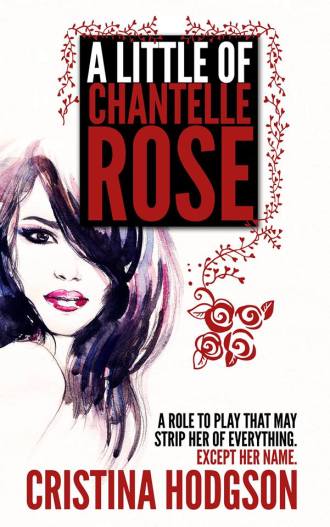
An Extract From A Little of Chantelle Rose by Cristina Hodgson

C.Rose cover art.jpg

I’m offered so many books that I would like to read but simply can’t add to my TBR pile so it’s always a pleasure to have an extract to give me a flavour. Today I’m delighted to welcome Cristina Hodgson to Linda’s Book Bag with an extract from A Little of Chantalle Rose.

Published by Crooked Cat Books, A Little of Chantelle Rose is available for purchase here.

A Little of Chantelle Rose

C.Rose cover art.jpg

At the age of twenty-four, Chantelle Rose has all a city girl can expect: a tiny bed-sit in South London, a lousy poorly-paid job, a tyrannical boss, and quite a few exes added to an ever-growing list.

Desperate for change, she becomes an extra in a seedy crime film. When that leads to the opportunity of a lifetime – a role to play with a million dollars to win and seemingly nothing to lose – she accepts without thinking twice. After all, what could possibly go wrong? In any event, she´ll earn enough to buy her dream home, set up her own business and never worry about money again.

And what about love? Two men have won her heart: Robbie – sultry, silent, mysterious; and Lionel – Hollywood heart-throb, charm, wealth, adventure.

But who can she trust? Who is bent on scaring her away, and why?

There seems to be more at stake than just her heart. Will a million dollars be worth it?

An Extract From A Little of Chantelle Rose

My elation over the cottage vanished in a flash as I read and re-read the note. It was just seven words long, but each made me shiver. Cut-out newspaper letters had been strung together to form the message:

HOLLYWOOD BITCH, YOU ARE NOT WANTED HERE.

My legs wobbled slightly as I glanced around me, wondering if the sender was watching me from the dense woods. Despite my thumping heart, I had to pretend I was calm. Despite tears of fright welling up inside, I had to pretend that I wasn’t on the verge of breaking down and crying. Pulling myself together, I opened the car door, which I’d left unlocked, and before I got in I held my right arm high and stuck-up my middle finger, swinging it around in a clear gesture of FUCK YOU.  I hoped that if the crazed stalker was still lurking around, he or she would get a clear view of my cool, unimpressed and bravo attitude.

Boy, was I scared. I whammed the door of my Mini shut so forcefully that the whole vehicle vibrated. I punched down the lock on the door and mumbled over and over as I fumbled for the car keys.

“Please, please, please God, let the car start first time…

Then it dawned on me, with a wave of pure and utter dread, that I’d left the car keys on the windowsill in the master bedroom on the first floor as I’d tried, unsuccessfully, to open the window.

I peered through the car window at the surrounding woods. I really didn’t fancy going back into the house, or even getting out of the car. I’d a good chance of getting attacked by the lunatic who’d followed me out here.

Where was my showy spunk now? So much for sticking my finger up in the air in a bravado pretence that I didn’t care.

I took several deep breaths and braced myself. This is when I see what I’m made of!  With that I swung the car door open and pelted up the driveway towards the house, practically hurdled the gate and took the doorsteps in one flying leap. My hands shook uncontrollably as I let myself into what I now began to think of as a dark and sinister house. I shot across the living room like a bullet and took the stairs two at a time. I swerved into the master bedroom and drew a deep sigh of relief on seeing my car keys glinting in the sunlight. I pounced on them and as I was about to turn to leave I heard a distinct noise from down below. At least I thought I did, but my heart was pounding so hard that I could hardly hear anything except the thump-thump, thump-thump as blood pulsed through my veins.

Then I heard a voice.

“Chantelle? Where are you?”

***

Just as I reprimanded myself for being so spiteful, her long legs that positively went on forever appeared as she descended the stairs.

“You have a really cute house,” she cooed as soon as she saw me. That left me momentarily stunned. I’d just about learned to deal with her cattiness, so her unexpected courtesy threw me somewhat.

In all truth I thought we made quite a convincing Tom and Jerry team – me being Jerry, of course. This new Tom in her, consequently, left me wary as hell.

Vivien pulled up a chair by the kitchen table and sat down directly opposite me. For a moment we just stared at each other in awkward silence. Accustomed as we were to out-and-out slanging matches, getting a civilised conversation going was quite a challenge. I sat silent, thinking that I’d let her start the ball rolling, and depending on what she said I would decide whether to throttle her or not.

What I didn’t expect was for her to turn her baby-blue eyes on me. I noticed they were brimming with unshed tears, and though she attempted to keep them at bay, it was with little success. Her chin started wobbling and her cheeks glowed from rosy pink to deep crimson. Soon the wobbling of her chin spread and her shoulders commenced to tremble.

I sat there petrified. She was obviously on the verge of some sort of spasm attack. I hadn’t a clue where she kept her medication, or if she had any to start with. A Valium would come in handy. I couldn’t dial 999 either, as my mobile battery, which had a life span of three hours or less, needed to be charged. My charger was in the van, and the van had been taken by Tammy to load with kitchen devices.

And, shit, I’d forgotten to phone Lionel.

My mind was in a whirl, and now I was getting as jumpy and apprehensive as she was. If I didn’t soothe myself pronto, I would be in grave danger of going to pieces. And Vivien, in her disarray, was going to be no help to me.

I took a deep breath to try and control myself as I continued to witness Vivien’s chronic decline. Her bright crimson cheeks had started to go blotchy and her whole body had started to judder. She’d closed her eyes momentarily. I don’t want to be bitchy, but she looked truly bloodcurdling, like she was possessed or something. She looked like the girl out of The Exorcist – the original version – the one I’ve always had nightmares about.

So there was Vivien, my living nightmare, and I waited in hushed trepidation for her head to turn through 360º.

Vivien suddenly opened her eyes, and it was like opening a sluice gate. Tears just flooded out in non-stop waves. She was leaning against the table and even this started to vibrate alongside her quivering body. I didn’t know what to say to attempt to lessen her anguish. I’m always so tongue-tied in these circumstances. Eventually, in desperation, I blundered ahead and said, rather ineptly, “Is there anything wrong?”

At the rate she was going, she would surpass the previous day’s rain! On hearing my words Vivien started to shake her head vigorously from side to side.

Is that a NO? I was puzzled, because I would have said that there was something very seriously wrong.

About Cristina Hodgson

AUTHOR PIC

Cristina Hodgson, mother of two, born in Wimbledon, London, currently lives in southern Spain. Cristina had a long career in sport, reaching national and international level and still actively participates in Triathlon races and enjoys outdoor activities. In her spare time she also enjoys reading and writing. She won a sports scholarship to Boston College. After a period in Boston, she returned to the UK and graduated from Loughborough University with a degree in PE and Sports Science.
A Little of Chantelle Rose is her debut novel. Amazingly, it has nothing to do with running!

You can follow Cristina on Twitter @HodgsonCristina and visit her website. You’ll also find her on Facebook.

A Hundred Tiny Threads by Judith Barrow

Layout 1

I feel as if I’ve known Judith Barrow, author of A Hundred Tiny Threads, for ever as she has been such a supporter of Linda’s Book Bag since I started blogging. I was thrilled to interview Judith about her Pattern trilogy to which A Hundred Tiny Threads is the prequel. You can read that interview here. Consequently I’m delighted that I have finally been able to read one of Judith’s books and be part of the launch clebrations for A Hundred Tiny Threads with my review today.

A Hundred Tiny Threads was published on 17th August 2017 by Honno Press and is available for purchase here and directly from Honno.

A Hundred Tiny Threads

Layout 1

It’s 1911 and Winifred Duffy is a determined young woman eager for new experiences, for a life beyond the grocer’s shop counter ruled over by her domineering mother.

The scars of Bill Howarth’s troubled childhood linger. The only light in his life comes from a chance encounter with Winifred, the girl he determines to make his wife.

Meeting her friend Honora’s silver-tongued brother turns Winifred’s heart upside down. But Honora and Conal disappear, after a suffrage rally turns into a riot, and abandoned Winifred has nowhere to turn but home.

The Great War intervenes, sending Bill abroad to be hardened in a furnace of carnage and loss. When he returns his dream is still of Winifred and the life they might have had… Back in Lancashire, worn down by work and the barbed comments of narrow-minded townsfolk, Winifred faces difficult choices in love and life.

My Review of A Hundred Tiny Threads

Winifred’s unhappy relationship with her mother will be just the start of her troubles.

My goodness what a super read A Hundred Tiny Threads is. There’s a cracking plot that is meticulously researched so that the setting and era are vivid and totally convincing, making reading this book a means to transport yourself into the past. There are so many elements that make A Hundred Tiny Threads not just an entertaining read, but a fascinating insight into social and political history in the early part of the twentieth century. I love it when I learn something new as I read and I certainly did here.

The quality of description is superb. There’s no shying away from the visceral, the violent and the mundane so that A Hundred Tiny Threads is a visual and auditory experience too. From the stench of the slums to the bloodshed of Suffragette demonstrations and the cacophony of the First World War battlefields I could picture everything in my mind’s eye.

Similarly, Judith Barrow’s characters are so well depicted. I found Bill especially complex and rounded. I didn’t much like his belligerent nature but I felt it was totally understandable and realistic.  When I wasn’t reading A Hundred Tiny Threads I wondered what the characters were getting up to without me! I think it’s the wonderful direct speech that helps to create such an impression of real people.

I really enjoyed this read and I have to confess it surprised me. I haven’t read Judith Barrow before and was expecting a good book that would hold my attention. A Hundred Tiny Threads was so much better than merely good – it’s excellent. I was totally immersed in the story and sorry when the book ended because I loved the mature exploration of what makes a marriage at the heart of the story, from violence and obsession to love and loyalty. I recommend A Hundred Tiny Threads wholeheartedly. It’s a brilliant book.

About Judith Barrow

judith Barrow

Judith Barrow grew up in a small village in Saddleworth, at the foot of the Pennines in North-West England, UK. In 1978 she moved with her husband, David, and their three children to Pembrokeshire in West Wales, where she is a creative writing tutor. Her short stories have been published in several Honno anthologies. Her first novel, Pattern of Shadows, published by Honno, is a wartime saga, set around the first German POW camp in Britain. The sequel, Changing Patterns was published in May 2013. The last of the trilogy is Living in the Shadows. The prequel to the Pattern series, A Hundred Tiny Threads, is now published. Judith also has an eBook, Silent Trauma that is fiction built on fact and based on the drug Diethylstilboestrol, which has caused devastating damage to unborn women.

You can follow Judith on Twitter @barrow_judith and find her on Facebook. Judith also has an excellent blog where you’ll find wonderful reviews and articles.

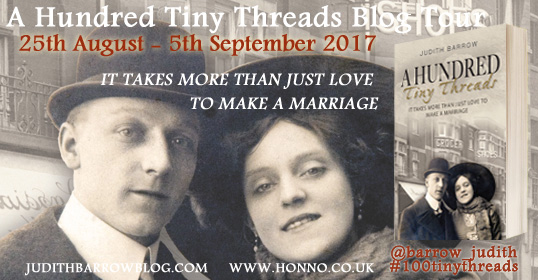
100 TT blog tour poster final

Happy Ever After Endings: A Guest Post by Julie Stock, Author of The Vineyard in Alsace

the vineyard in Alsasce

I was so fortunate to meet lovely Julie Stock, author of The Vineyard in Alsace, at our local Deepings literary festival back in April and you can read more about that here. I was delighted when Julie agreed to come on Linda’s Book Bag and tell me a bit about why she writes stories with happy ever after endings, because in a world that seems to have gone crazy with man’s inhumanity to man of late, I feel we all need a little extra happiness in our lives.

The Vineyard in Alsace is available for purchase here.

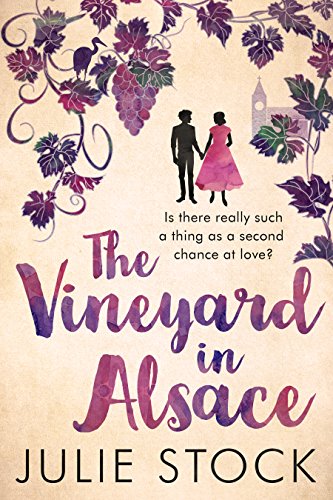
The Vineyard in Alsace

the vineyard in Alsasce

Is there really such a thing as a second chance at love?

Fran Schell has only just become engaged when she finds her fiancé in bed with another woman. She knows this is the push she needs to break free of him and to leave London. She applies for her dream job on a vineyard in Alsace, in France, not far from her family home, determined to concentrate on her work.

Didier Le Roy can hardly believe it when he sees that the only person to apply for the job on his vineyard is the same woman he once loved but let go because of his stupid pride. Now estranged from his wife, he longs for a second chance with Fran if only she will forgive him for not following her to London.

Working so closely together, Fran soon starts to fall in love with Didier all over again. Didier knows that it is now time for him to move on with his divorce if he and Fran are ever to have a future together. Can Fran and Didier make their second chance at love work despite all the obstacles in their way?

The Vineyard in Alsace is a contemporary romance set against the enticing backdrop of the vineyard harvest in Alsace in France.

Why I Write Stories With Happy Ever After Endings

A Guest Post by Julie Stock

All my life I have been a voracious reader, reading everything I could lay my hands on during our weekly visit to the local library when I was a child. As soon as I was allowed to use the adult section of the library, I gravitated towards the romance section. I think this was because, at the time, as a teenager, love was the only thing I couldn’t find out about by asking other people so books filled that void. I read everything from Jackie Collins (I know, I don’t know how I got away with it either) to Barbara Cartland, and so began my love affair with romantic fiction as a reader.

As a slightly older teen, I branched out into other genres of course – for a long time, all I read were Stephen King books – and I enjoyed those books just as much, but in a different way to romance novels. What I liked most about them was the way that good usually conquered evil, and the same can also be said of many thrillers and murder mysteries, as well as many other types of genre fiction.

Once I stopped having to read certain books for school, I found that there were many other classic books from English literature that I could enjoy as well just for the sake of reading them and more often than not by that stage, I chose books with an element of romance to them. A Tale of Two Cities is one of my personal favourites, partly for the romance but also because it is set in France, which brings me neatly to my university years. I took my degree in French and my particular course involved reading a lot of classic French literature, which allowed me to explore romantic stories I might otherwise not have come across. Madame Bovary at one end of the spectrum, is a book that has stayed with me ever since, just as much as Le Mort le Roi Artu (The Death of King Arthur) which is much more of a romantic tale.

Along the way, I began discovering that romantic fiction didn’t always have a happy ending and what’s more, that some of those books would turn out to be among my favourites. To this day, my favourite Shakespeare play is still Romeo and Juliet, despite the tragic ending. Every time I see the play, or watch a different version of it – West Side Story for example – I still hope the ending will be different, even though I know it won’t. So this would seem to prove that although I don’t mind crying my eyes out for a story that I love, I still want the characters to have a happy ending, or at least a happy ending of sorts. And then there’s the books like Jane Eyre, which hover on the brink of tragedy for so long and then in the final pages, give you back a little hint of hope for the future. That’s another one of my favourites. This all led me to conclude that I like a bit of hope with my tragedy.

When I look back and consider all the romance books I have read since those early days, I think that one of the main reasons I have continued to read and enjoy them is because there’s something so satisfying about seeing the characters you have come to love get to walk off together into the sunset. You can heave a sigh of happiness and know that they’ll be all right on their own now. These are the books that bear re-reading time and time again as well. Pride and Prejudice fills me with happiness every time I read it, and I have read it a fair few times!

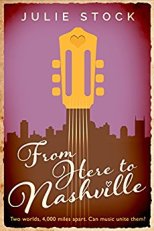
From here to nashville

So when I finally sat down to write my first novel, From Here to Nashville, I knew it would be a romance. I also knew that I would write books with a very determined happy ending rather than any sense of tragedy because however much I might enjoy a book that makes me cry with sadness from time to time (The Time Traveler’s Wife anyone?), I still love a story with a happy ending. When I wrote my first book, I’d actually been going through a bit of a hard time, and writing the book became my escape from reality, a place where I could make everything work out and where I could whisk my readers away to a different environment as well. And I think this is one of the main reasons that romance readers love the genre too.

I write and read romance because it makes me happy to see the characters find their happy ending. I don’t mind the occasional romantic tragedy if it sets me up to expect a sad ending. I loved Me Before You because for me, it was the perfect example of it being ‘better to have loved and lost than never to have loved at all’, and their love was so selfless. I feel the same about The Fault in our Stars. Sometimes, it’s cathartic to cry over a lost love and it’s that reality that makes those books so effective. Falling in love is part of the human condition and the majority of us will have been in love at some point in our lives, and maybe lost in love as well. So after the tears have been shed, what better pick-me-up than to read a romance with a happy ever after ending?

(Oh, Julie, I agree with every word and I share a love of so many of the same books. I can’t wait to read The Vineyard in Alsace which is firmly on my TBR!)

About Julie Stock

Julie stock

Julie Stock is an author of contemporary romance from around the world: novels, novellas and short stories. She indie published her debut novel, From Here to Nashville, in February 2015 and has just published her second novel, The Vineyard in Alsace. A follow-up novella to From Here to Nashville is also in progress, as well as the next novel.

Julie is a proud member of the Romantic Novelists’ Association, The Society of Authors and The Alliance of Independent Authors.

When she is not writing, Julie works part-time for a charity as a communications officer, and freelance as a proofreader, web designer and supply teacher. She is married and lives with her family in Bedfordshire in the UK.

You can find out more about Julie on her website, ‘My Writing Life.’ You can also follow her on Twitter and via her Facebook Author Page.

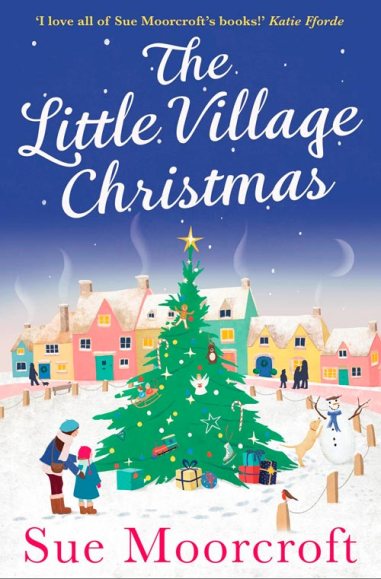
Cover Reveal: The Little Village Christmas by Sue Moorcroft

The Little Village Christmas

Whenever Sue Moorcroft has a new book out I know I’m in for a treat so I’m thrilled that her latest, The Little Village Christmas, is being revealed today.

I’ve previously reviewed Sue’s The Christmas Promise here, and Just for the Holidays here. I’ve been lucky enough to interview Sue too here.

Published by Avon Books, an imprint of Harper Collins, The Little Village Christmas will be out in ebook on 9th October and paperback on 2nd November. It is available for preorder here.

The Little Village Christmas

The Little Village Christmas

Alexia Kennedy – interior decorator extraordinaire – has been tasked with giving the little village of Middledip the community café it’s always dreamed of.

After months of fundraising, the villagers can’t wait to see work get started – but disaster strikes when every last penny is stolen. With Middledip up in arms at how this could have happened, Alexia feels ready to admit defeat.

But help comes in an unlikely form when woodsman, Ben Hardaker and his rescue owl Barney, arrive on the scene. Another lost soul who’s hit rock bottom, Ben and Alexia make an unlikely partnership.

However, they soon realise that a little sprinkling of Christmas magic might just help to bring this village – and their lives – together again…

About Sue Moorcroft

DSC_3507

Award winning author Sue Moorcroft writes contemporary women’s fiction with occasionally unexpected themes. The Wedding Proposal, Dream a Little Dream and Is This Love? were all nominated for Readers’ Best Romantic Read Awards. Love & Freedom won the Best Romantic Read Award 2011 and Dream a Little Dream was nominated for a RoNA in 2013. Sue’s a Katie Fforde Bursary Award winner, a past vice chair of the RNA and editor of its two anthologies.
The Christmas Promise was a Kindle No.1 Best Seller and held the No.1 slot at Christmas!
Sue also writes short stories, serials, articles, writing ‘how to’ and is a creative writing tutor.

You can follow Sue on Twitter @SueMoorcroft, find her on Facebook and visit her website.