An Interview with Marcin Dolecki, Author of Philosopher’s Crystal

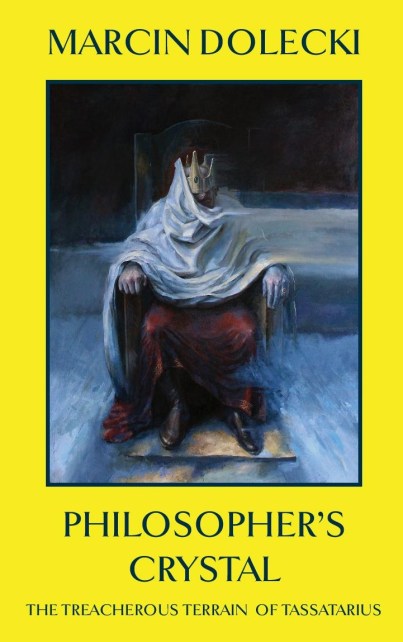
Philosopher's Crystal front cover second edition

Many moons ago when I was an undergraduate, one of the elements to my degree was philosophy and I have retained an interest ever since. As a result, when I realised that Marcin Dolecki’s Philosopher’s Crystal was based on that discipline, I had to ask Marcin a few qustions about his writing and his concepts of philosophy.

Published by Montag Press, Philosopher’s Crystal is available for purchase from your local Amazon site.

Philosopher’s Crystal
Philosopher's Crystal front cover second edition

A fantastical time traveling journey bringing to life some of the world’s great philosophers and exotic locals as two young lovers flee an Emperor and secrets that must be revealed. A feast for the curious reader.

Twenty-year-old Philip lives alone in an authoritarian country, his parents arrested after the imperial police find a secret notebook in their apartment. Then one evening Philip meets an uncommon girl, her name Julia, possibly on the run from the police, or sent to him as a secret agent by the state. Despite his concerns, he offers to put her up for the night.

In the morning a mysterious person knocks on his door and advises him to escape immediately.

This is how the couple’s strange, paradoxical and hazardous journey begins, leading Philip and Julia in a quest through time to the collapsing Roman empire, 17th century Amsterdam and the medieval Indian jungle. During their travel they meet famous philosophers who confront the couple with existential questions – only to find that the answers Philip and Julia discover will help them face the ultimate danger.

An Interview with Marcin Dolecki

Welcome to Linda’s Book Bag, Marcin. Thank you so much for agreeing to answer some questions on my blog about your writing and Philosopher’s Crystal: The Treacherous Terrain of Tassatarius in particular. Firstly, please could you tell me a little about yourself?

Linda, you’re welcome, thank you very much for the invitation to this interview.

I’m a philosopher, chemist, and historian of chemistry (Ph.D.).

I live in Poland and work at the Institute for the History of Science. I also give lectures on the history of chemistry at the Faculty of Chemistry (the University of Warsaw).

I love cycling. I visited some European countries (e.g. Italy, Estonia, Romania), traveling on my bike.

I just love tea – all kinds of it.

(Me too – there’s always a cup of tea on the go in my house!)

You’re both a scientist and a philosopher. To what extent do you think the two disciplines are mutually exclusive or supportive of one another?

My fields of specialization were physical chemistry and teachings of the Church Fathers (eminent Christian writers, living in the ancient and early medieval period), so they are totally unrelated to each other; nevertheless, both studies gave me broader and complementary perspectives. Sometimes I think of reality as of swirling particles and as of gigantic energy field, and sometimes as of one living being.

(An interesting perspective!)

Why do you write?

It’s a challenge, because I believe that it’s easier to think than to write. I often feel that my thoughts are more precise when they are finally written down.

It’s also a joy of creation. Writing gives me an additional “dimension” of interaction with other people – because I could invite at least some of them to visit new, imaginary worlds together.

When did you realise you were going to be a writer?

Philosopher’s Crystal is my first novel, created in the climate of science fantasy. It was published originally in Polish and entitled One of Possible Worlds (Jeden z możliwych światów, Attyka, Warszawa 2013). I was working on the Polish text for almost two years. Many times I thought about the idea of two young people traveling in time and talking with some famous thinkers, so finally I decided to write it down and add a fictional story to it. The American version, translated by Paulina Trudzik, is extended and substantially altered, for example, I changed the end.

Apart from this book, I wrote a short story, a fairy tale for adults: Asalda, the Queen of the Mice (in Polish). I posted it on my blog: https://mdolecki.wordpress.com/

My other texts concern primarily philosophy and history of chemistry.

Which aspects of your writing do you find easiest and most difficult?

Generally, I find it easier to write about ideas than about people and their inner worlds.

The most difficult aspect is how to use metaphors properly. I’m a philosopher, so when I think of them, trying to find new ones, I almost instinctively wonder, if they could be assessed as true or false. This is often more important to me than their aesthetic value.

(Oh, interesting point – you’ve really got me thinking about that idea.)

Without spoiling the plot, please could you tell us a bit about Philosopher’s Crystal: The Treacherous Terrain of Tassatarius?

The main characters – Philip and Julia, both twenty years old, living under the totalitarian regime of Emperor Tassatarius – travel in time and talk with some thinkers from the past, mostly about issues concerning philosophy of religion.

Working on this novel was a fascinating international adventure. The inside illustrations were prepared by prof. Anna Trojanowska (an author of novels herself) and most of them (originally used in the Polish version) were redrawn by Rosann Antonio Portes – an artist from the Philippines, the front cover painting was made by Giorgi Makharashvili – an artist from Georgia, my promotional film was taken in Italy (Monika Bajer read the foreword at the Gorizia Castle), one blurb was written by prof. Joseph Kaipayil – a scholar from India, the other by Bruce Lee Bond – an author from Alaska. The book was published in California, by Montag Press.

(It sounds a really exciting journey to publication.)

How important is it to explore philosophical concepts through fiction do you think?

Many people avoid reading about philosophical issues, because they suppose, philosophy is helplessly difficult. However, Ludwig Wittgenstein claimed that “what can be said at all, can be said clearly”. I agree and would add: what can be said clearly, could be interwoven into situations from real life, therefore also in the plot of a novel. This is a way of showing that philosophical discussions might be understandable virtually for everyone, and fascinating. 

(I agree. I studied philosophy as part of my degree and found it totally absorbing.)

I know you have developed your own philosophical concept, oneiric personalism. Please could you explain this a little and tell us how it informs your fictional writing?

Oneiric personalism is a modification of a very old idea – that walking life might be regarded as similar to dreams. I only dream that I’m a person. As the Dreamer, I’m more real than the person I am in this particular dream called life. I’m not present in any of my dreams; I’m entirely free, and I could be happy by myself, yet this happiness could be also shared with others. The beloved persons are just as real as the person I am in this dream, so love is not illusory.

I tried to avoid any kind of propaganda in this book, so my concept is quite fiercely debated, along with others. For some readers it is a crypto-Christian work, for some others – crypto-atheistic. In fact, it is neither this nor that.

Of all the philosophers in your novel, which would you personally most like to meet and why?

My master’s thesis concerned the concept of the Holy Trinity according to St. Augustine. I have been interested in his texts for several years. He was a Roman (I love the history of ancient Rome) and a brilliant thinker. His comparison of the Trinity to human soul is one of the greatest achievements in Western theology.

It’s interesting that people talented in some aspects are very ordinary or even astonishingly unpleasant in many others, for example, Augustine treated the beloved girl from his youth rather instrumentally, he even didn’t mention her name – the mother of his only child, Adeodatus (the name means: given by God) -, in his autobiographical Confessions.

If you could choose to be a character from Philosopher’s Crystal: The Treacherous Terrain of Tassatarius, who would you be and why?

I would answer this way: Philip is the person I think I was in the past, the Emperor is the person I hope I will never become in the future. I treat the other main characters as my teachers, even spiritual guides of some kind.

(That’s a fabulous concept!)

If Philosopher’s Crystal: The Treacherous Terrain of Tassatarius became a film, who would you like to play Philip and Julia and why would you choose them?  

It is not an easy question, we would be talking about distant and vague future. However, some months ago prof. Jan Piskurewicz, a historian of science and education, said about the Polish version of my novel that it could be adapted into a good play.

When you’re not writing, what do you like to read?

I’m a big fan of Tolkien. I like to read his works, especially at night. I’m also very fond of reading Lemony Snicket’s Series of Unfortunate Events. Jacek Dukaj is one of my Polish masters, he writes excellent works of speculative fantasy, as far as I know, some of them have been translated into English.

If you had 15 words to persuade a reader that Philosopher’s Crystal: The Treacherous Terrain of Tassatarius should be their next read, what would you say?

Join Philip and Julia on journey through time and space to the border of existence.

Thank you so much for your time in answering my questions.

Thank you once more Linda.

About Marcin Dolecki
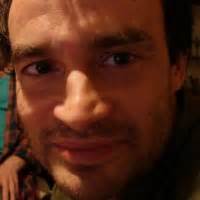
Marcin

Marci Dolecki is philosopher (MA), chemist (MSc), and historian of chemistry (PhD).

He works as an assistant professor at the L.&A. Birkenmajer Institute for the History of Science of the Polish Academy of Sciences and has conducted philosophy classes at the Faculty of Chemistry of the University of Warsaw, where he currently gives lectures on the history of chemistry.

Marci is an enthusiastic cyclist, visiting Italy, Austria, Hungary, Slovenia, Romania, Lithuania, Latvia, Estonia, and Ukraine on his bike. He is fan of ancient cultures, the history of Ethiopia and of vintage buses.

You can follow Marcin on Twitter @marcin_dolecki and visit his blog.
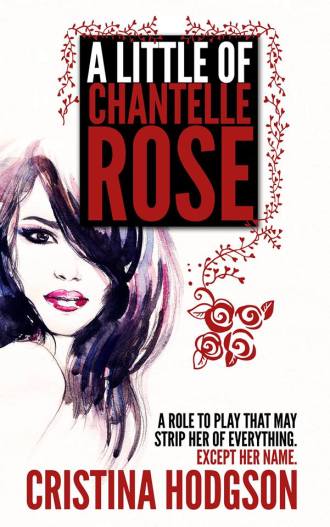
An Extract From A Little of Chantelle Rose by Cristina Hodgson

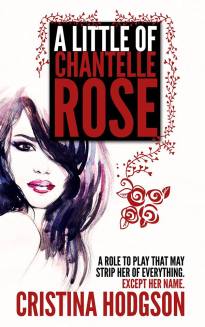
C.Rose cover art.jpg

I’m offered so many books that I would like to read but simply can’t add to my TBR pile so it’s always a pleasure to have an extract to give me a flavour. Today I’m delighted to welcome Cristina Hodgson to Linda’s Book Bag with an extract from A Little of Chantalle Rose.

Published by Crooked Cat Books, A Little of Chantelle Rose is available for purchase here.

A Little of Chantelle Rose

C.Rose cover art.jpg

At the age of twenty-four, Chantelle Rose has all a city girl can expect: a tiny bed-sit in South London, a lousy poorly-paid job, a tyrannical boss, and quite a few exes added to an ever-growing list.

Desperate for change, she becomes an extra in a seedy crime film. When that leads to the opportunity of a lifetime – a role to play with a million dollars to win and seemingly nothing to lose – she accepts without thinking twice. After all, what could possibly go wrong? In any event, she´ll earn enough to buy her dream home, set up her own business and never worry about money again.

And what about love? Two men have won her heart: Robbie – sultry, silent, mysterious; and Lionel – Hollywood heart-throb, charm, wealth, adventure.

But who can she trust? Who is bent on scaring her away, and why?

There seems to be more at stake than just her heart. Will a million dollars be worth it?

An Extract From A Little of Chantelle Rose

My elation over the cottage vanished in a flash as I read and re-read the note. It was just seven words long, but each made me shiver. Cut-out newspaper letters had been strung together to form the message:

HOLLYWOOD BITCH, YOU ARE NOT WANTED HERE.

My legs wobbled slightly as I glanced around me, wondering if the sender was watching me from the dense woods. Despite my thumping heart, I had to pretend I was calm. Despite tears of fright welling up inside, I had to pretend that I wasn’t on the verge of breaking down and crying. Pulling myself together, I opened the car door, which I’d left unlocked, and before I got in I held my right arm high and stuck-up my middle finger, swinging it around in a clear gesture of FUCK YOU.  I hoped that if the crazed stalker was still lurking around, he or she would get a clear view of my cool, unimpressed and bravo attitude.

Boy, was I scared. I whammed the door of my Mini shut so forcefully that the whole vehicle vibrated. I punched down the lock on the door and mumbled over and over as I fumbled for the car keys.

“Please, please, please God, let the car start first time…

Then it dawned on me, with a wave of pure and utter dread, that I’d left the car keys on the windowsill in the master bedroom on the first floor as I’d tried, unsuccessfully, to open the window.

I peered through the car window at the surrounding woods. I really didn’t fancy going back into the house, or even getting out of the car. I’d a good chance of getting attacked by the lunatic who’d followed me out here.

Where was my showy spunk now? So much for sticking my finger up in the air in a bravado pretence that I didn’t care.

I took several deep breaths and braced myself. This is when I see what I’m made of!  With that I swung the car door open and pelted up the driveway towards the house, practically hurdled the gate and took the doorsteps in one flying leap. My hands shook uncontrollably as I let myself into what I now began to think of as a dark and sinister house. I shot across the living room like a bullet and took the stairs two at a time. I swerved into the master bedroom and drew a deep sigh of relief on seeing my car keys glinting in the sunlight. I pounced on them and as I was about to turn to leave I heard a distinct noise from down below. At least I thought I did, but my heart was pounding so hard that I could hardly hear anything except the thump-thump, thump-thump as blood pulsed through my veins.

Then I heard a voice.

“Chantelle? Where are you?”

***

Just as I reprimanded myself for being so spiteful, her long legs that positively went on forever appeared as she descended the stairs.

“You have a really cute house,” she cooed as soon as she saw me. That left me momentarily stunned. I’d just about learned to deal with her cattiness, so her unexpected courtesy threw me somewhat.

In all truth I thought we made quite a convincing Tom and Jerry team – me being Jerry, of course. This new Tom in her, consequently, left me wary as hell.

Vivien pulled up a chair by the kitchen table and sat down directly opposite me. For a moment we just stared at each other in awkward silence. Accustomed as we were to out-and-out slanging matches, getting a civilised conversation going was quite a challenge. I sat silent, thinking that I’d let her start the ball rolling, and depending on what she said I would decide whether to throttle her or not.

What I didn’t expect was for her to turn her baby-blue eyes on me. I noticed they were brimming with unshed tears, and though she attempted to keep them at bay, it was with little success. Her chin started wobbling and her cheeks glowed from rosy pink to deep crimson. Soon the wobbling of her chin spread and her shoulders commenced to tremble.

I sat there petrified. She was obviously on the verge of some sort of spasm attack. I hadn’t a clue where she kept her medication, or if she had any to start with. A Valium would come in handy. I couldn’t dial 999 either, as my mobile battery, which had a life span of three hours or less, needed to be charged. My charger was in the van, and the van had been taken by Tammy to load with kitchen devices.

And, shit, I’d forgotten to phone Lionel.

My mind was in a whirl, and now I was getting as jumpy and apprehensive as she was. If I didn’t soothe myself pronto, I would be in grave danger of going to pieces. And Vivien, in her disarray, was going to be no help to me.

I took a deep breath to try and control myself as I continued to witness Vivien’s chronic decline. Her bright crimson cheeks had started to go blotchy and her whole body had started to judder. She’d closed her eyes momentarily. I don’t want to be bitchy, but she looked truly bloodcurdling, like she was possessed or something. She looked like the girl out of The Exorcist – the original version – the one I’ve always had nightmares about.

So there was Vivien, my living nightmare, and I waited in hushed trepidation for her head to turn through 360º.

Vivien suddenly opened her eyes, and it was like opening a sluice gate. Tears just flooded out in non-stop waves. She was leaning against the table and even this started to vibrate alongside her quivering body. I didn’t know what to say to attempt to lessen her anguish. I’m always so tongue-tied in these circumstances. Eventually, in desperation, I blundered ahead and said, rather ineptly, “Is there anything wrong?”

At the rate she was going, she would surpass the previous day’s rain! On hearing my words Vivien started to shake her head vigorously from side to side.

Is that a NO? I was puzzled, because I would have said that there was something very seriously wrong.

About Cristina Hodgson

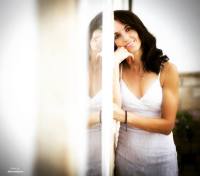
AUTHOR PIC

Cristina Hodgson, mother of two, born in Wimbledon, London, currently lives in southern Spain. Cristina had a long career in sport, reaching national and international level and still actively participates in Triathlon races and enjoys outdoor activities. In her spare time she also enjoys reading and writing. She won a sports scholarship to Boston College. After a period in Boston, she returned to the UK and graduated from Loughborough University with a degree in PE and Sports Science.
A Little of Chantelle Rose is her debut novel. Amazingly, it has nothing to do with running!

You can follow Cristina on Twitter @HodgsonCristina and visit her website. You’ll also find her on Facebook.

A Hundred Tiny Threads by Judith Barrow

Layout 1

I feel as if I’ve known Judith Barrow, author of A Hundred Tiny Threads, for ever as she has been such a supporter of Linda’s Book Bag since I started blogging. I was thrilled to interview Judith about her Pattern trilogy to which A Hundred Tiny Threads is the prequel. You can read that interview here. Consequently I’m delighted that I have finally been able to read one of Judith’s books and be part of the launch clebrations for A Hundred Tiny Threads with my review today.

A Hundred Tiny Threads was published on 17th August 2017 by Honno Press and is available for purchase here and directly from Honno.

A Hundred Tiny Threads

Layout 1

It’s 1911 and Winifred Duffy is a determined young woman eager for new experiences, for a life beyond the grocer’s shop counter ruled over by her domineering mother.

The scars of Bill Howarth’s troubled childhood linger. The only light in his life comes from a chance encounter with Winifred, the girl he determines to make his wife.

Meeting her friend Honora’s silver-tongued brother turns Winifred’s heart upside down. But Honora and Conal disappear, after a suffrage rally turns into a riot, and abandoned Winifred has nowhere to turn but home.

The Great War intervenes, sending Bill abroad to be hardened in a furnace of carnage and loss. When he returns his dream is still of Winifred and the life they might have had… Back in Lancashire, worn down by work and the barbed comments of narrow-minded townsfolk, Winifred faces difficult choices in love and life.

My Review of A Hundred Tiny Threads

Winifred’s unhappy relationship with her mother will be just the start of her troubles.

My goodness what a super read A Hundred Tiny Threads is. There’s a cracking plot that is meticulously researched so that the setting and era are vivid and totally convincing, making reading this book a means to transport yourself into the past. There are so many elements that make A Hundred Tiny Threads not just an entertaining read, but a fascinating insight into social and political history in the early part of the twentieth century. I love it when I learn something new as I read and I certainly did here.

The quality of description is superb. There’s no shying away from the visceral, the violent and the mundane so that A Hundred Tiny Threads is a visual and auditory experience too. From the stench of the slums to the bloodshed of Suffragette demonstrations and the cacophony of the First World War battlefields I could picture everything in my mind’s eye.

Similarly, Judith Barrow’s characters are so well depicted. I found Bill especially complex and rounded. I didn’t much like his belligerent nature but I felt it was totally understandable and realistic.  When I wasn’t reading A Hundred Tiny Threads I wondered what the characters were getting up to without me! I think it’s the wonderful direct speech that helps to create such an impression of real people.

I really enjoyed this read and I have to confess it surprised me. I haven’t read Judith Barrow before and was expecting a good book that would hold my attention. A Hundred Tiny Threads was so much better than merely good – it’s excellent. I was totally immersed in the story and sorry when the book ended because I loved the mature exploration of what makes a marriage at the heart of the story, from violence and obsession to love and loyalty. I recommend A Hundred Tiny Threads wholeheartedly. It’s a brilliant book.

About Judith Barrow

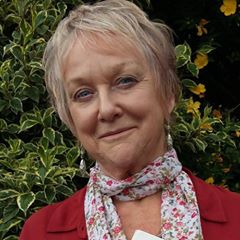
judith Barrow

Judith Barrow grew up in a small village in Saddleworth, at the foot of the Pennines in North-West England, UK. In 1978 she moved with her husband, David, and their three children to Pembrokeshire in West Wales, where she is a creative writing tutor. Her short stories have been published in several Honno anthologies. Her first novel, Pattern of Shadows, published by Honno, is a wartime saga, set around the first German POW camp in Britain. The sequel, Changing Patterns was published in May 2013. The last of the trilogy is Living in the Shadows. The prequel to the Pattern series, A Hundred Tiny Threads, is now published. Judith also has an eBook, Silent Trauma that is fiction built on fact and based on the drug Diethylstilboestrol, which has caused devastating damage to unborn women.

You can follow Judith on Twitter @barrow_judith and find her on Facebook. Judith also has an excellent blog where you’ll find wonderful reviews and articles.

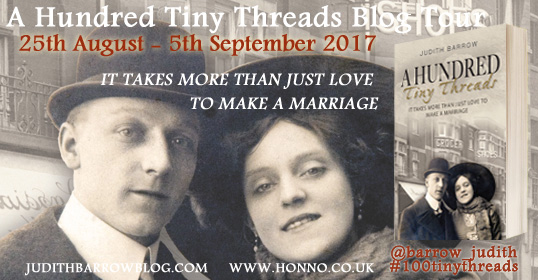
100 TT blog tour poster final

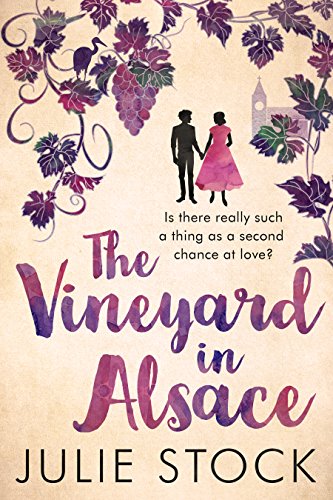
Happy Ever After Endings: A Guest Post by Julie Stock, Author of The Vineyard in Alsace

the vineyard in Alsasce

I was so fortunate to meet lovely Julie Stock, author of The Vineyard in Alsace, at our local Deepings literary festival back in April and you can read more about that here. I was delighted when Julie agreed to come on Linda’s Book Bag and tell me a bit about why she writes stories with happy ever after endings, because in a world that seems to have gone crazy with man’s inhumanity to man of late, I feel we all need a little extra happiness in our lives.

The Vineyard in Alsace is available for purchase here.

The Vineyard in Alsace

the vineyard in Alsasce

Is there really such a thing as a second chance at love?

Fran Schell has only just become engaged when she finds her fiancé in bed with another woman. She knows this is the push she needs to break free of him and to leave London. She applies for her dream job on a vineyard in Alsace, in France, not far from her family home, determined to concentrate on her work.

Didier Le Roy can hardly believe it when he sees that the only person to apply for the job on his vineyard is the same woman he once loved but let go because of his stupid pride. Now estranged from his wife, he longs for a second chance with Fran if only she will forgive him for not following her to London.

Working so closely together, Fran soon starts to fall in love with Didier all over again. Didier knows that it is now time for him to move on with his divorce if he and Fran are ever to have a future together. Can Fran and Didier make their second chance at love work despite all the obstacles in their way?

The Vineyard in Alsace is a contemporary romance set against the enticing backdrop of the vineyard harvest in Alsace in France.

Why I Write Stories With Happy Ever After Endings

A Guest Post by Julie Stock

All my life I have been a voracious reader, reading everything I could lay my hands on during our weekly visit to the local library when I was a child. As soon as I was allowed to use the adult section of the library, I gravitated towards the romance section. I think this was because, at the time, as a teenager, love was the only thing I couldn’t find out about by asking other people so books filled that void. I read everything from Jackie Collins (I know, I don’t know how I got away with it either) to Barbara Cartland, and so began my love affair with romantic fiction as a reader.

As a slightly older teen, I branched out into other genres of course – for a long time, all I read were Stephen King books – and I enjoyed those books just as much, but in a different way to romance novels. What I liked most about them was the way that good usually conquered evil, and the same can also be said of many thrillers and murder mysteries, as well as many other types of genre fiction.

Once I stopped having to read certain books for school, I found that there were many other classic books from English literature that I could enjoy as well just for the sake of reading them and more often than not by that stage, I chose books with an element of romance to them. A Tale of Two Cities is one of my personal favourites, partly for the romance but also because it is set in France, which brings me neatly to my university years. I took my degree in French and my particular course involved reading a lot of classic French literature, which allowed me to explore romantic stories I might otherwise not have come across. Madame Bovary at one end of the spectrum, is a book that has stayed with me ever since, just as much as Le Mort le Roi Artu (The Death of King Arthur) which is much more of a romantic tale.

Along the way, I began discovering that romantic fiction didn’t always have a happy ending and what’s more, that some of those books would turn out to be among my favourites. To this day, my favourite Shakespeare play is still Romeo and Juliet, despite the tragic ending. Every time I see the play, or watch a different version of it – West Side Story for example – I still hope the ending will be different, even though I know it won’t. So this would seem to prove that although I don’t mind crying my eyes out for a story that I love, I still want the characters to have a happy ending, or at least a happy ending of sorts. And then there’s the books like Jane Eyre, which hover on the brink of tragedy for so long and then in the final pages, give you back a little hint of hope for the future. That’s another one of my favourites. This all led me to conclude that I like a bit of hope with my tragedy.

When I look back and consider all the romance books I have read since those early days, I think that one of the main reasons I have continued to read and enjoy them is because there’s something so satisfying about seeing the characters you have come to love get to walk off together into the sunset. You can heave a sigh of happiness and know that they’ll be all right on their own now. These are the books that bear re-reading time and time again as well. Pride and Prejudice fills me with happiness every time I read it, and I have read it a fair few times!

From here to nashville

So when I finally sat down to write my first novel, From Here to Nashville, I knew it would be a romance. I also knew that I would write books with a very determined happy ending rather than any sense of tragedy because however much I might enjoy a book that makes me cry with sadness from time to time (The Time Traveler’s Wife anyone?), I still love a story with a happy ending. When I wrote my first book, I’d actually been going through a bit of a hard time, and writing the book became my escape from reality, a place where I could make everything work out and where I could whisk my readers away to a different environment as well. And I think this is one of the main reasons that romance readers love the genre too.

I write and read romance because it makes me happy to see the characters find their happy ending. I don’t mind the occasional romantic tragedy if it sets me up to expect a sad ending. I loved Me Before You because for me, it was the perfect example of it being ‘better to have loved and lost than never to have loved at all’, and their love was so selfless. I feel the same about The Fault in our Stars. Sometimes, it’s cathartic to cry over a lost love and it’s that reality that makes those books so effective. Falling in love is part of the human condition and the majority of us will have been in love at some point in our lives, and maybe lost in love as well. So after the tears have been shed, what better pick-me-up than to read a romance with a happy ever after ending?

(Oh, Julie, I agree with every word and I share a love of so many of the same books. I can’t wait to read The Vineyard in Alsace which is firmly on my TBR!)

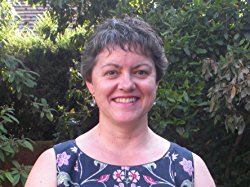
About Julie Stock

Julie stock

Julie Stock is an author of contemporary romance from around the world: novels, novellas and short stories. She indie published her debut novel, From Here to Nashville, in February 2015 and has just published her second novel, The Vineyard in Alsace. A follow-up novella to From Here to Nashville is also in progress, as well as the next novel.

Julie is a proud member of the Romantic Novelists’ Association, The Society of Authors and The Alliance of Independent Authors.

When she is not writing, Julie works part-time for a charity as a communications officer, and freelance as a proofreader, web designer and supply teacher. She is married and lives with her family in Bedfordshire in the UK.

You can find out more about Julie on her website, ‘My Writing Life.’ You can also follow her on Twitter and via her Facebook Author Page.

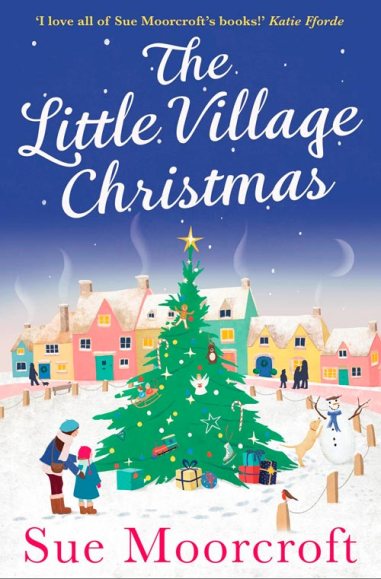
Cover Reveal: The Little Village Christmas by Sue Moorcroft

The Little Village Christmas

Whenever Sue Moorcroft has a new book out I know I’m in for a treat so I’m thrilled that her latest, The Little Village Christmas, is being revealed today.

I’ve previously reviewed Sue’s The Christmas Promise here, and Just for the Holidays here. I’ve been lucky enough to interview Sue too here.

Published by Avon Books, an imprint of Harper Collins, The Little Village Christmas will be out in ebook on 9th October and paperback on 2nd November. It is available for preorder here.

The Little Village Christmas

The Little Village Christmas

Alexia Kennedy – interior decorator extraordinaire – has been tasked with giving the little village of Middledip the community café it’s always dreamed of.

After months of fundraising, the villagers can’t wait to see work get started – but disaster strikes when every last penny is stolen. With Middledip up in arms at how this could have happened, Alexia feels ready to admit defeat.

But help comes in an unlikely form when woodsman, Ben Hardaker and his rescue owl Barney, arrive on the scene. Another lost soul who’s hit rock bottom, Ben and Alexia make an unlikely partnership.

However, they soon realise that a little sprinkling of Christmas magic might just help to bring this village – and their lives – together again…

About Sue Moorcroft

DSC_3507

Award winning author Sue Moorcroft writes contemporary women’s fiction with occasionally unexpected themes. The Wedding Proposal, Dream a Little Dream and Is This Love? were all nominated for Readers’ Best Romantic Read Awards. Love & Freedom won the Best Romantic Read Award 2011 and Dream a Little Dream was nominated for a RoNA in 2013. Sue’s a Katie Fforde Bursary Award winner, a past vice chair of the RNA and editor of its two anthologies.
The Christmas Promise was a Kindle No.1 Best Seller and held the No.1 slot at Christmas!
Sue also writes short stories, serials, articles, writing ‘how to’ and is a creative writing tutor.

You can follow Sue on Twitter @SueMoorcroft, find her on Facebook and visit her website.

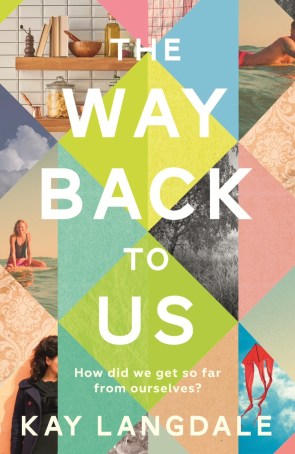
The Way Back To Us by Kay Langdale

Final cover

I’m thrilled to be part of the launch celebrations for The Way Back To Us by Kay Langdale, but I have a confession. Initially I said I wouldn’t have time for review and had no intention of reading the book with my TBR pile standing at over 900. I then had a conversation with Katie Marsh who endorses The Way Back To Us with this statement: ‘This poignant page-turner felt vividly real, making me cry and – ultimately – filling me with hope.’ Katie told me I HAD to read it. She was right!

In addition to my review today I’m thrilled to have a guest post from Kay Langdale all about the origins of The Way Back To Us.

Published by Hodder and Stoughton on 10th August 2017, The Way Back To Us is available for purchase here.

The Way Back To Us

Final cover

Since their youngest son, Teddy, was diagnosed with a life-defining illness, Anna has been fighting: against the friends who don’t know how to help; against the team assigned to Teddy’s care who constantly watch over Anna’s parenting; and against the impulse to put Teddy above all else – including his older brother, the watchful, sensitive Isaac.

And now Anna can’t seem to stop fighting against her husband, the one person who should be able to understand, but who somehow manages to carry on when Anna feels like she is suffocating under the weight of all the things that Teddy will never be able to do.

As Anna helplessly pushes Tom away, he can’t help but feel the absence of the simple familiarity that should come so easily, and must face the question: is it worse to stay in an unhappy marriage, or leave?

The Origins of The Way Back To Us

A Guest Post by Kay Langdale

How best to explain where the idea for The Way Back to Us came from?

I think novels originate from multiple, parallel, thought processes which then segue into a  narrative thread. It’s a bit like constructing a fishtail plait – the weft and weave of character, theme, and incident into something which has unified substance.

The Way Back to Us has its roots in three thoughts.

All of my novels obsess about the ties that bind us, and about the ongoing transactions which characterise long term relationships. I wanted to look at how ordinary circumstances can polarise a relationship – in this case where Tom works full time and where Anna is the primary carer. Teddy’s specific needs mean this is a more intense version of what happens in many relationships (irrespective of which person takes on which role) and I wanted to explore what happens to Anna and Tom as a way of thinking about any and every marriage, dialled up.

I’m also interested in the scrutiny which is part and parcel of parenthood, particularly motherhood. From the very first ante-natal class, women are subjected to an avalanche of advice which gains momentum during a child’s early years. From midwives, to health visitors, to teachers, to work colleagues, women are besieged by external opinion. Teddy’s SMA dials this up again, and compounds the responsibility Anna feels as her child’s primary carer. I wanted to look at motherhood as a state of siege, where the feeling that a mother can have of being a filter between her infant and the world is intensified by Teddy’s vulnerability. Sadly, this element has chimed with current events in the press, where a mother’s fight for her child resulted in a total estrangement from his health care providers.

I also wanted the novel to ask the reader to consider how we think about divorce, and how having a child with a life limiting illness impacts upon whether we think it’s a reasonable thing to do or not. It would be easy to say that Tom leaving Anna for Eliza would be particularly reprehensible because of Teddy’s condition, but I wanted the novel to ask whether it would be any less subject to being ‘judged’ in relation to Isaac too. I wanted to ask the question in a way that did not provoke judgement of any of the characters, but rather, a way of thinking about emotional damage rather than physical disability. I found myself at the end of the novel thinking, with Anna, that Teddy is actually stronger than Isaac. I’ve been very touched by how many of the early reviewers want to scoop Isaac up!

Writing a piece like this makes those three thoughts, and the subsequent writing of the novel, sound clear and logical and straightforward. My advice to any budding writer is that it never is! It’s easier to see a path once you’ve walked along it. I think you have to listen to your own writerly voice – that’s the part that I think comes unbidden – and write about what interests you, and let your characters step away from you and challenge you. I’m also a fan of Picasso’s quote that ‘inspiration exists but it has to find you working’. What’s great about writing is that some of your best ideas can come when you are driving back from the supermarket or loading the washing machine. The joy is in letting your creativity take flight.

My Review of The Way Back To Us

With Teddy having a life affecting genetic illness, the impact isn’t just on him, but on the whole family.

Oh dear. Do not read this book unless you are willing to be emotionally broken. I adore emotional reads and loved every word of The Way Back To Us.

I’m not usually a fan of multiple voiced narratives, but in this case, Anna, Tom, Isaac and Teddy held me spellbound for every syllable. Their personalities are vivid, and so delicately drawn that it is impossible not to understand every element of how they think and feel. I didn’t like Anna at all for 95% of the novel because of her self-destructive nature, but she had every ounce of my compassion and, ultimately, my complete understanding so that I changed my mind about her totally. Of all four, however, it was Isaac for whom my heart broke. There is a moment when I could hardly bear his sadness and guilt.

Kay Langdale illustrates with devastating honesty what daily life can be like when a child is ill. I now have a sympathetic understanding of the emotions: the fear, the rage. the guilt, the loneliness, of caring for a child with a life affecting genetic disease. However, The Way Back To Us is more than just a story about a family with a sick child. It is also an exquisite and heartbreaking exploration of the disintegration of a marriage, of parent and child relationships, friendships and family. I felt as if those who are in a spiral of distance from their loved ones would be able to repair their relationships if only they read this book.

The Way Back To Us is a wonderful, story, beautifully and poetically written. The balance of prose to direct speech, for example, mirrors the inability of the characters to communicate with one another effectively. Every emotion and action portrayed is totally believable and real. The Way Back To Us has made me grateful for everything I have and determined never to lose sight of why I love my own wonderful husband.

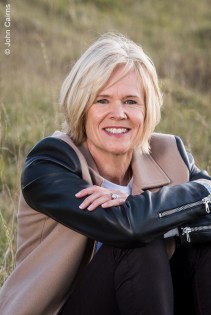
About Kay Langdale

Kay Langdale © John Cairns

Photo courtesy of John Cairns

Born in Coventry, Kay Langdale has written eight novels including The Way Back To Us. Kay says ‘I write about marriage, the ties that bind us, what a child needs, and what being a parent means. Thematically, my books explore social issues like surrogacy, adoption, and the complexities of modern family life. I’m a fan of the seemingly quiet story, and I like writing about people’s frequently unexpressed emotional hinterlands.’

With a doctorate from Oxford University, Kay is married with four children and enjoys, ballet, yoga, swimming and walking. She also loves cooking and reading.

You can follow Kay on Twitter @kaylangdale and visit her website.

There’s more with these other bloggers too:

twbtu-blog-tour

The Snake Who Baked a Cake by S. Afrough and S.Hough

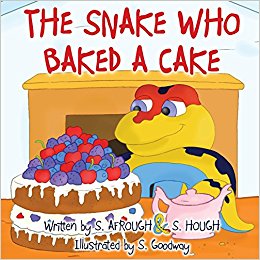
snake who baked a cake

I love reviewing children’s books on Linda’s Book Bag and I’m delighted to have another to share today; The Snake Who Baked a Cake by S. Afrough and S.Hough, illustrated by S. Goodway.

The Snake Who Baked a Cake was published by Clink Street on 1st August 2017 and is available for purchase in e-book and paperback here. To celebrate, the authors have kindly told me about a favourite recipe of their own.

The Snake Who Baked a Cake

snake who baked a cake

Join Jake the Snake in his kitchen to find out how he bakes a big chocolate cake!

The Snake who Baked a Cake is the first in a series of illustrated children’s stories by sister writing team Sarah and Simin.

Baking Memories

A Guest Post by Sarah and Simin

Growing up, Simin and Sara’s mother was an avid baker.  She often used baking as a tool to interact with her children in a fun and interactive way. By assigning tasks to each of them, Sara and Simin grew a bond and a creative interests in the kitchen.

One of their favourites bakes was the classic chocolate brownie. Sugar, eggs, salt, vanilla, flour and chopped walnuts were added to melted chocolate and butter and baked for 25 minutes.

Once baked, the tasty treats were devoured by either themselves, family and friends.

Sara and Simin have fond memories of visits to their Grandmother as kids, and she too played a prominent role in their childhood. One activity they were involved with annually was helping with her cherry jam production over the summer. This was largely a family affair where the sisters, along with their cousins, would be organised into teams and compete over the most number of cherries pitted.  Their Grandmother would then cook the cherries for hours and once the jams were ready, they would be potted for family and friends.

Simin and Sara cherish these nostalgic memories they gathered as children, and often recall how instrumental these were in creating special bonds with families and friends. They reflect on the variety of skills that were passed down through generations during these activities, and use/will use these as guides to encourage interaction with their own children.

My Review of The Snake Who Baked a Cake

Jake the snake is cooking!

You’d think there wouldn’t be much to say in reviewing a book a mere 18 pages long aimed at two year olds, but I disagree.

Firstly, there are some smashing illustrations to captivate young children and I like the way these relate to the text so that children might count the three illustrated eggs that Jake uses, for example, promoting numeracy as well as a love of storytime.

I thought the rhyme scheme was very well maintained, allowing young children to hear similarly spelled words to help with future oracy and literacy. I also liked the fact that although the text is primarily simple and at the right level for very young children there are also a few words like ‘wobbling’ to extend their vocabulary too.

Alongside these aspects I thought the care taken with the oven as Jake baked was a good way to promote safety and I liked the fact he wore his apron to keep clean. It is no bad thing either that a male snake is baking to invert sexual stereotypes and I love the concept of getting children active in the kitchen so they can emulate Jake’s baking too.

I thought The Snake Who Baked a Cake was an excellent book for pre-school children.

About S. Afrough and S.Hough

After becoming an auntie and mother respectively for the first time, sisters Sara and Simin quickly came to love story time and the joy of creating new worlds, and adventures, which would spark the imaginations of the children in their family. Wishing to share their stories with other young readers, and their families, they decided to put pen to paper beginning with their favourite character of Jake, a Californian red-sided garter snake, and his surprising ability to cook scrumptious cakes.

Complimented by colourful and dynamic illustrations, Sara and Simin hope that that the book will not only provide an entertaining bedtime read but will also encourage young and extended families to start baking tasty treats together in the kitchen!

There’s more with these other bloggers too:

SnakeWhoBaked_Banner

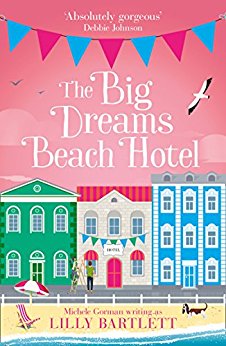
The Big Dreams Beach Hotel by Lilly Bartlett

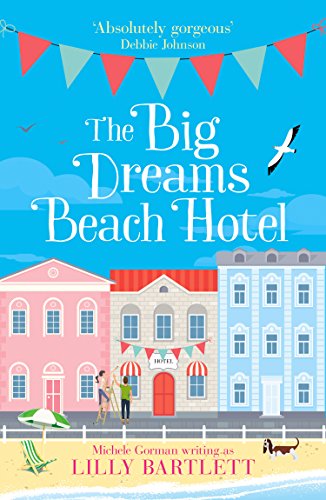
Cover

My enormous thanks to the author Lilly Bartlett for allowing me to read The Big Dreams Beach Hotel. I always enjoy her books and this was no exception. You can read my review of Lilly’s previous two books, The Big Little Wedding at Carlton Square here and of The Second Chance Cafe in Carlton Square here.

The Big Dreams Beach Hotel was published by Harper Impulse on 18th August and you can purchase it here in the UK and here in the US.

I also have an extract that you might like to read here, although the giveaway is now closed.

The Big Dreams Beach Hotel

paperback cover

This is a brand new standalone novel from the author of the Carlton Square series with a whole new cast of characters to fall in love with!

Wriggle your toes in the sand and feel the warm breeze on your face when you check into the hotel that’s full of dreams…

Three years after ditching her career in New York City, Rosie never thought she’d still be managing the quaint faded Victorian hotel in her seaside hometown.

What’s worse, the hotel’s new owners are turning it into a copy of their Florida properties. Flamingos and all. Cultures are clashing and the hotel’s residents stand in the way of the developers’ plans. The hotel is both their home and their family.

That’s going to make Rory’s job difficult when he arrives to enforce the changes. And Rosie isn’t exactly on his side, even though it’s the chance to finally restart her career. Rory might be charming, but he’s still there to evict her friends.

How can she follow her dreams if it means ending everyone else’s?

My Review of The Big Dreams Beach Hotel

When a stint in New York doesn’t quite go according to plan, Rose finds herself back in Scarborough in a hotel just ripe for development.

Having loved Lilly Bartlett’s previous two novels I approached The Big Dreams Beach Hotel with trepidation because I knew I was going to meet a new set of characters and I didn’t know if I would like them as much as I have those in the Carlton Square. I needn’t have worried. I loved The Big Dreams Beach Hotel and its inhabitants even more.

The Big Dreams Beach Hotel is unashamedly light, romantic and chick-lit in style and Lilly Bartlett writes this genre with consummate skill to perfection. I find her books effortless to read. That doesn’t mean they are insubstantial, but that the writing flows so well that I am totally absorbed in the story. I love the direct appeal to reader at times as it makes me feel I am actually part of the narrative too.

The Big Dreams Beach Hotel has humour that never feels contrived and comes through the wonderful characterisation. I rarely laugh aloud when reading but I did during this book. It was a delight to meet Rosie, Rory et al and apart from a couple of characters whom I won’t name for fear of spoiling the story, I loved them all – especially Barry. Lilly Bartlett manages to convey what makes us human so emotionally that I admit to shedding the odd tear too.

I absolutely loved The Big Dreams Beach Hotel. It has everying I want in a book of this genre. There’s a great and believable plot. There’s an exploration of community, friendship and love. There’s a colourful range of characters who feel real and human. Above all, there’s a hugely satisfying and entertaining read. I cannot recommend it higly enough.

About Lilly Bartlett

michele-photo

Lilly Bartlett is a pen name of Michele Gorman. Michele writes books with heart and humour, full of best friends, girl power and, of course, love and romance. Call them beach books or summer reads, chick lit or romcom… readers and reviewers call them “feel good”, “relatable” and “thought-provoking”.

She is both a Sunday Times and a USA Today bestselling author, raised in the US and living in London. She is very fond of naps, ice cream and Richard Curtis films but objects to spiders and the word “portion”.

You can find Michele on Instagram and on Facebook . You can follow her on Twitter and visit Michele’s blog and her website. There’s also a Lilly Bartlett Facebook page here. There’s more with these other bloggers too:

Big Dreams Blog Tour (1)

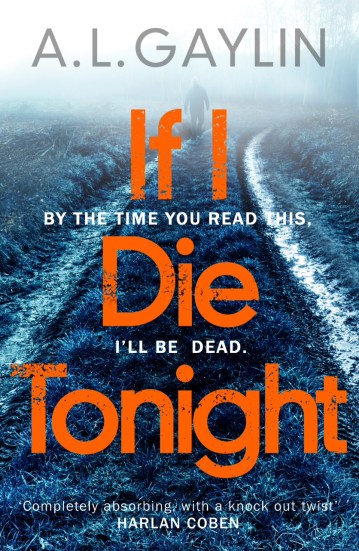
Introducing Jackie and Wade with A. L. Gaylin, Author of If I Die Tonight

If I Die Tonight

I’m so thrilled to be part of the launch celebrations for A. L .Gaylin’s If I Die Tonight. Alison has very kindly told me a bit more about two of her characters from If I Die Tonight, Jackie and Wade, and I’m delighted to be able to share that with you on Linda’s Book Bag today.

If I Die Tonight is published by Penguin on 24th August 2017 and is available for pre-order here.

If I Die Tonight

If I Die Tonight

BY THE TIME YOU READ THIS, I’LL BE DEAD…

There was a time when Jackie Reed knew her sons better than anyone. She used to be able to tell what they were thinking, feeling, if they were lying…

But it’s as though every day, every minute event, she knows them a little less. Her boys aren’t boys anymore, they’re becoming men – men she’s not sure she recognises, men she’s not sure she can trust.

So when one of her son’s classmates is killed in suspicious circumstances, people start asking questions. Was it really a hit and run? A car-jacking gone wrong? Or something much more sinister? Now Jackie must separate the truth from the lies. How did that boy end up on the road? And where was her son that night?

Wade and Jackie

A Guest Post by A.L Gaylin

Thank you very much to Linda for hosting today’s stop on my blog tour with If I Die Tonight – I am really pleased to be here.

Wade

It is Wade’s voice we hear first in If I Die Tonight – in the form of a suicide note posted to Facebook. Yet despite that deeply personal introduction, the 17-year-old high school outcast is the character we know the least about for most of the book. With his dyed black hair, dark wardrobe and sullen disposition, Wade is an anomaly in bright, preppy Havenkill. But that isn’t the only reason why so many in town are suspicious of him. While he largely keeps to himself, he was hurt emotionally by his parents’ divorce, and more than once that’s manifested itself in hostile behaviour, which we learn about as the book progresses.  As we find out, a disturbing incident involving Wade’s estranged father and his new family two years earlier almost resulted in the teenager’s arrest, and troubles his mother Jackie to this day. So, when Wade’s classmate Liam Miller falls victim to a hit-and-run, it’s not surprising that this troubled young artist is blamed – especially after it’s revealed that the assailant fit Wade’s description. An angry outburst on Instagram – in which Wade lashes out at both Liam and his grieving friends — only serves to incriminate him more.

But there is much more to Wade than just sullenness and anger. A talented artist who collects found objects, he’s sensitive and loyal to those he loves, including his mother and brother. He’s also keeping more than one secret that he’s willing to guard with his life. Did he really kill Liam Miller? While he insists he did not, Wade’s refusal to tell anyone where he was the night of the hit-and-run casts even more doubt on this enigmatic young man… and may actually point to his guilt.

Jackie

If I Die Tonight is a story told through four separate points of view, and it was that of Wade’s mother, Jackie, that was most difficult — and scary — to write. I’d like to tell you a bit about her.

Jackie Reed is a middle-aged woman who grew up in Havenkill, Jackie once dreamed of being a novelist, and still keeps a half-finished manuscript stashed in her desk. When she was young and adventurous, she and her then-boyfriend Bill Reed drove across country to California – she with her manuscript, he with his screenplay — in the hopes of fulfilling their dreams and making it big in Hollywood. Those dreams ended when Jackie got pregnant with her first son, Wade. The couple married and returned to Havenkill, where Bill finished law school and became an attorney and Jackie eventually found work as a realtor before giving birth to their second son, Connor.

They’ve since divorced, with Bill leaving Jackie for the young office manager at his firm when Connor was starting preschool and Wade in elementary school. Raising the two boys on her own, Jackie is finding their teenage years particularly difficult, and feels as though she knows them less and less with each passing day. That’s particularly true of Wade, about whom she’s genuinely worried. When it’s revealed that a mysterious carjacker has run down local high school football star Liam Miller, sensitive Jackie can’t help but empathize with his parents. But her sympathy turns to dread when she realizes that mysterious Wade was missing that night, his whereabouts unaccounted for.

Honesty is a trait that Jackie values more than any other. So it’s particularly frustrating to her that so many people have lied to her in her life – from Bill to her confounding quiet sons. As the book progresses, Jackie uncovers more and more truths that have been kept from her, and in the process, grows more and more resolute in her desire to save Wade and prove him innocent – for his sake as well as her own.

Jackie is one of my favourite characters I hope you enjoy reading her story.

Alison.

(Oh, I’m sure we will Alison! Thank you so much for telling ua about your characters.)

About A L Gaylin

AL Gaylin

Alison Gaylin’s debut book Hide Your Eyes, was nominated for an Edgar award in the best first novel category.  Her critically acclaimed suspense novels have been published in such countries as the U.K., France, Germany, the Netherlands, Norway and Japan.

She has been nominated for the ITW Thriller, Anthony and RT awards and won the Shamus Award for And She Was, the first book in the Brenna Spector series.  Her books have been on the bestseller lists in the US and Germany.

You can Follow A.L.Gaylin on Twitter @alisongaylin, visit her website and find her on Facebook. There’s more with these other bloggers too:

If I Die Tonight Blog Tour - final

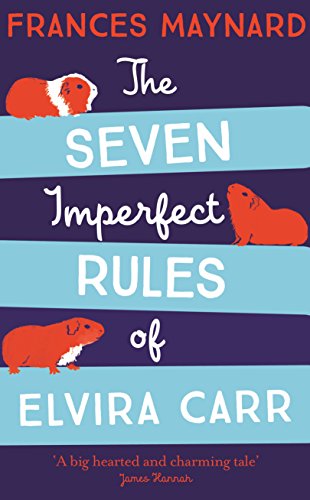
An Extract from The Seven Imperfect Rules of Elvira Carr by Frances Maynard

cover

I was desperate to read The Seven Imperfect Rules of Elvira Carr by Frances Maynard in time for these launch celebrations but unfortunately, life and my enormous TBR pile got in the way! However, I do have the opening of the novel to share today so at least I have had the pleasure of reading part of this wonderful book.

Published by Mantle, an imprint of Pan Macmillan, The Seven Imperfect Rules of Elvira Carr is available for purchase through the publisher links here.

The Seven Imperfect Rules of Elvira Carr

cover

Funny, heart-warming and ultimately triumphant, The Seven Imperfect Rules of Elvira Carr is the perfect story for anyone who doesn’t quite fit in – and for everyone who chooses not to.

Elvira Carr is twenty-seven and neuro-atypical. Her father – who she suspects was in the secret service – has passed away and, after several Unfortunate Incidents growing up, she now spends most of her time at home with her overbearing mother. But when her mother has a stroke and is taken into care, Elvira is suddenly forced to look after herself or risk ending up in Sheltered Accommodation. Armed with her Seven Rules, which she puts together after online research, Elvira hopes to learn how to navigate a world that’s full of people she doesn’t understand. Not even the Seven Rules can help her, however, when she discovers that everything she thought she knew about her father was a lie, and is faced with solving a mystery she didn’t even know existed . . .

An Extract from The Seven Imperfect Rules of Elvira Carr

1

Preparation, Elvira, is the key

– Mrs Agnes Carr (Mother) 

I was scrubbing potatoes when it happened.

Mother liked them with the skins left on, because of Vitamins, but I had to make sure any little marks or green bits were cut out. My feet were aching and I was just about to take off my slippers to rub them when there was a crash and a moan from the living room.

My heart thudded. I knew this kind of thing happened because I’d seen it on Casualty. Old people often collapsed and fell, but I’d never thought it would happen to Mother. I was surprised she’d allowed it to.

I wished she’d fallen in her Opera Class or her Bridge Afternoon, where there would be people who knew what to do. I went into the living room, my feet throbbing. She was lying on the floor beside her chair, trying to pull herself up.

‘Are you alright?’ I asked. I’d never been in this situation before so I didn’t know what else to say.

I twisted the hem of my apron – it was the one with Dog Breeds of the World on it – and looked at her.

Normally, whenever Mother saw me doing this she’d shout Apron! or Jumper! depending on what I was wearing, but this time she wasn’t looking at me. She wasn’t saying anything either, which was unusual. The noises she was making sounded like the monkeys in David

Attenborough’s Nature Documentary The Life of Mammals. They weren’t proper words, but groans with gasps in between.

I tried to pull her up. Mother was quite a thin person, not like me, but I couldn’t lift her. Her left hand was white as she hung on to the chair leg.

I was struggling to get my words out. ‘Have you . . . broken your hip, Mother?’ I asked. This was a common accident for old people. Older people. (No, just people, Mother would scowl. She said she was wrinkled before her time because of having to screw her face up into expressions clear enough for me to recognize.)

My heart was still thudding, and I couldn’t think straight because of the suddenness. Mother groaned again and I thought I heard a familiar word: useless.

‘Shall I call the Doctor, Mother? Um . . . or go next door and fetch Sylvia and Trevor? What should I do?’ Mother’s moaning got louder. She lifted her head slightly. Her hair hung over her face like the madwoman in a Classic Horror Film I’d watched with Father when she’d been Away. Her mouth was twisted. People who had strokes on TV fell and were paralyzed down one side, and their mouths were lopsided. ‘Have you had a stroke, Mother?’ I asked, bending down. She snorted. Call an ambulance, I thought. That’s what people did.

It came very quickly with two men – paramedics was the correct word – who looked young and strong. They moved around as if they were used to people having strokes and they made a lot of jokes. I knew they were jokes because the one making the joke looked at the other one and then they both laughed. I don’t like talk-ing to Strangers but I liked these ones coming. It made me feel safe. I think even Mother would have liked them

if she’d been feeling better. They carried her into the back of their ambulance: Light as a feather, you are, love. She clung to the sides of the stretcher and kept making the monkey noises even though no one could understand them.

‘Soon have you checked out, no worries,’ one said, and then, to me, ‘Are you coming with your mother, love?’

My face went hot when he called me love.

Coming with your mother?

I hardly ever went anywhere. Father was dead and Mother had sold his car. When I’d made trips on my own there had been Incidents. I occasionally went to places, places such as the Dentist, on the bus with Mother, but that was a palaver and made her knees hurt.

I would have enjoyed a trip out but I knew ambulances were only for sick people.

‘No, thank you.’ I stared at his ear. ‘I’m not ill. And I haven’t finished getting the lunch ready.’

They looked at each other. I screwed up a fold of my apron and held it tight. The apron ties cut into my waist. I could do with losing a few pounds. (A few stones, Mother used to say, looking at me and sniffing.) We ate a Healthy Diet, because Mother decided what we ate, but

I had an interest in biscuits. I did the shopping – I was used to our local branch of Asda and could manage going there on my own – so I bought them then, sometimes without Mother knowing. I liked trying out different brands and varieties and comparing them. It added another dimension to my life.

‘We’ll be off, then.’ The ambulance man was looking at me. ‘Sandhaven Hospital. Give us an hour or so before you ring.’

‘Why do you want me to ring you?’ I asked, chewing my lip.

‘Not us, love,’ he said, very slowly. People often talked slowly to me. Mother didn’t. She talked fast and loudly and didn’t leave room for replying. ‘Ring the hospital to find out how your mum is. Alright?’

‘I’m alright, thank you.’ I wasn’t ill but my feet ached and my heart was still pounding and there was a new hollowness inside me that was like the feeling I got when I looked down from the top of the escalator in the Shopping Centre.

About Frances Maynard

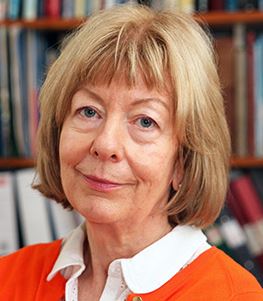
frances maynard

Frances teaches English part-time to adults with learning difficulties, including Asperger’s. She is married with one grown-up daughter and lives in Dorset.

You can follow Frances on Twitter @perkinsfran1 and visit her website.

There’s more with these other bloggers too:

blog_tour