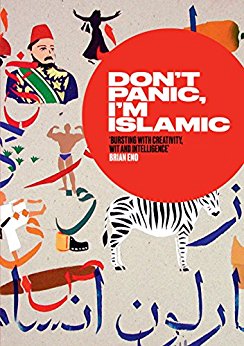
Don’t Panic, I’m Islamic Edited by Lynn Gaspard

Don't panic I'm Islamic

Now when I was asked by James Scanlan at Saqi Books if I would like a copy of Don’t Panic, I’m Islamic edited by Lynn Gaspard in return for an honest review, the title so caught my imagination I had to say yes!

Don’t Panic, I’m Islamic was published by Saqi on 17th July 2017 and is available for purchase in e-book and paperback here.

Don’t Panic, I’m Islamic

Don't panic I'm Islamic

‘Bursting with creativity, wit and intelligence’ Brian Eno

How can you tell if your neighbour is speaking Muslim?

Is a mosque a kind of hedgehog?

Can I get fries with that burka?

You can’t trust the media any longer, but there’s no need to fret: Don’t Panic, I’m Islamic provides you with the answers.

Read this book to learn how you too can spot an elusive Islamist. Discover how Arabs (even 21-year-old, largely innocuous and totally adorable ones) plant bombs and get tips about how to interact with Homeland Security, which may or may not involve funny discussions about your sexuality.

Commissioned in response to the US travel ban, Don’t Panic, I’m Islamic includes cartoons, graffiti, photography, colouring in pages, memoir, short stories and more by 34 contributors from around the world. Provocative and at times laugh-out-loud funny, these subversive pieces are an explosion of expression, creativity and colour.

Contributors: Hassan Abdulrazzak, Leila Aboulela, Amrou Al-Kadhi, Shadi Alzaqzouq, Chant Avedissian, Tammam Azzam, Bidisha, Chaza Charafeddine, Molly Crabapple, Carol Ann Duffy, Moris Farhi, Negin Farsad, Joumana Haddad, Saleem Haddad, Hassan Hajjaj, Omar Hamdi, Jennifer Jajeh, Sayed Kashua, Mazen Kerbaj, Arwa Mahdawi, Sabrina Mahfouz, Alberto Manguel, Esther Manito, Aisha Mirza, James Nunn, Chris Riddell, Hazem Saghieh, Rana Salam, Karl Sharro, Laila Shawa, Bahia Shehab, Sjón, Eli Valley, Alex Wheatle.

My Review of Don’t Panic, I’m Islamic

With an eclectic mix of entries from colouring in through photos to essays, poetry and fiction, a book endorsed by Brian Eno immediately gets my attention!

I had no real idea what I was getting when my copy of Don’t Panic, I’m Islamic arrived and to be totally honest, I’m not sure what I’ve just read. I think I’m too ignorant of the Islamic culture to understand fully all the implications of some of the entries, but I still found this an intriguing and entertaining read. Saying that, I think the book achieves what it sets out to do and raises awareness and questions in those, like me, who don’t really think deeply about Islam and what it means in today’s society. I also think that my response of ‘so what?’ to many of the pieces, because I felt they could be true of any human being, not just someone Islamic, was also the whole point. Islam has been so demonised in recent years that many see anyone from an Islamic background as a potential threat rather than another human being! Joumana Haddad’s piece on keeping her son quiet on the Paris metro really brought that home, as did Karl Sarro’s entry on getting a green card to work in America as I’ve been through that process myself and as a white British woman, found it equally as ridiculous.

I didn’t enjoy the more overtly political writings as much as the more personal ones. The essay I enjoyed the most was Amrou Al-Kadhi’s about being a drag queen. He certainly undermines the stereotyped suicide bomb wearing terrorist view of his ethnicity!

I found Don’t Panic, I’m Islamic interesting, engaging and occasionally too self-consciouly politically correct or politically angry but I feel my responses arise more out of my own ignorance than the intrinsic worth of the book. I urge others to read it and form their own views. It certainly makes you think!

About Lynn Gaspard

Lynn gaspard

Lynn Gaspard is the publisher of Middle-East specialist press Saqi Books. Shortlisted for the Independent Publishers Guild Young Publisher of the Year Award in 2013, Lynn Gaspard is a trustee of the Shubbak Festival and sits on the English PEN Writers in Translation Committee.

You can follow Lynn on Twitter.

The Blood of Kings by Angela King

Blood of Kings correct final

I love historical fiction so I’m delighted to be part of the launch celebrations for The Blood of Kings by Angela King.

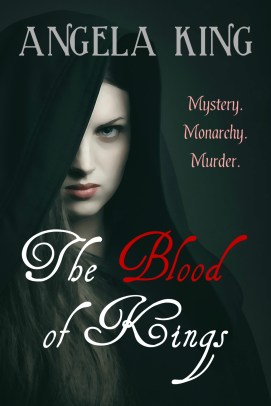
The Blood of Kings was published on 1st September by Bombshell Books, an imprint of Bloodhound, and is available for purchase here.

The Blood of Kings

Blood of Kings correct final

1559. A girl arrives in London to search for her brother.

Aalia, an awkward, arrogant teenager plans to bring William to his senses, until she discovers that both their lives are based on a lie. Aalia must unravel a web of secrets but has the weight of her past to contend with. Courageous and undisciplined, Aalia gradually comes to terms with the truth that William, her brother, has royal blood.

Deciding to undermine the men who want to use him as a pawn, Aalia must negotiate a world where secrecy arms the powerful. But unwilling to ask for anyone’s help she is forced into making a fateful decision. Who can she trust when everyone around her is plotting? Is the truth really something worth dying for?

This epic story of secrets and betrayal paints a vivid picture of Elizabethan England and asks questions that span beyond the test of time.

My Review of The Blood of Kings

With Queen Elizabeth on the throne, there are those who feel they have a greater claim.

The Blood of Kings surprised me. It took me quite a while to get into as there are several characters introduced in quick succession who are more fictionalised than I was expecting and I needed to get them clear in my mind.

I thought The Blood of Kings was well constructed. The plot hinges on events and conjecture from the times so that there is a real plausibility to it. As I read I kept thinking, ‘Oh. What if…’ so that the read was very entertaining. There’s so much action that this book would make a smashing film or television series as the narrative twists and turns in dramatic style. The themes of loyalty and betrayal, love and family are universal ones that are so well explored in The Blood of Kings too.

What I think Angel King is most skilled in is the attention to detail. She creates authentic setting to the extent that it is as if you’re there seeing and hearing exactly what the characters see and hear. I could picture so much of her settings extremely clearly and with the realistic dialogue that so well reflects what might have been spoken at the time I feel The Blood of Kings has considerable depth.

The characters are an eclectic mix of real people in history and fictional creations. Aalia’s life is fascinating and I found her feminist attitude very engaging. Reading The Blood of Kings made me glad I wasn’t alive in the Elizabethan era!

Interesting and fast paced, I think lovers of historical fiction will enjoy the new perspectives presented in The Blood of Kings.

About Angela King

angela-pic-1

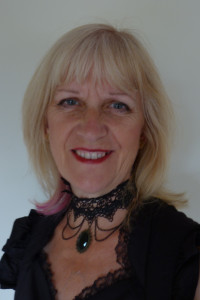
Angela King has always loved words and writing. She was born in Wimbledon and always dreamed of becoming a writer, but I came from a long line of practical dreamers who need first to earn a living so went to Medway College of Art in Rochester, to study design, later working as assistant designer to Bruno Stern.

After a series of personal disasters including a terrible car crash for her husband Michael and a fire that burned down their home, Angela and Michael moved to Cumbria where they began working from home. In 2008, two of Angela’s very close friends died, kicking her into action – if she didn’t write her novel soon it might never be written. She joined a couple of local creative writing groups and finally allowed her imagination to run free.

In 2016 Angela had short stories published in three different anthologies: Dark Minds (Bloodhound Books), Happily Never After (C & P Writers) and Dot, Dot, Dot, (Wiza Words).

You can follow Angela on Twitter @angelaS969, or visit her blog.

There’s more with these other bloggers too:

BLOG TOUR (6)

How Dan Knew Came To Be: A Guest Post by F J Curlew, Author of Dan Knew

Dan Knew

I’ve never been a dog owner, although I have been owned by many cats, so it is very exciting to welcome F J Curlew to Linda’s Book Bag today to tell me all about the Ukranian street dog Dan, the star of her latest book Dan Knew.

Dan Knew is available for purchase here.

Dan Knew

Dan Knew

A Ukrainian street dog is rescued from certain death by an expat family. As he travels to new countries with them a darkness grows and he finds himself narrating more than just his story. More than a dog story. Ultimately it’s a story of escape and survival but maybe not his.
The world through Wee Dan’s eyes in a voice that will stay with you long after you turn that last page.

How Dan Knew Came To Be

I had cried uncontrollably in the shop where I was casually buying a pair flowery wellies when I received the phone call. “It’s the vet here about Wee Dan. I’m sorry, it’s bad news.” I crumpled onto the floor in a heap of utter despair. The sobbing continued as I was walking along the street: sitting on the bus, going home, opening the door. I couldn’t stop and I didn’t want to. Drowning in sorrow was all I could do. People had avoided looking at me, probably thinking I was that crazy woman who talked to herself, had fits of hysteria, to be kept at a distance. Ignored.

I didn’t know if I could do this. I really didn’t. It felt like something was tearing at my heart, my chest hurt, my breathing was erratic: I felt sick, my head was swimming. Thoughts made no sense. Nothing made sense. My little dog had gone. No warning. No time to prepare myself. Just gone.

I’ve had dogs all of my life, lost several, been very sad, mourned and grieved over them, but nothing like this. I spent the day staring at mindless television…just getting through. Just.

I knew I had to write. It was the thing that kept me going these days. The thing I could count on to lift me out of whatever reality I was stuck in. It had got me through hard times before: given me hope, a reason. When I couldn’t teach any more, or work at all, due to the devastating side effects of a nasty little cancer, it had given me a purpose and more than that. A purpose that I loved! The ability to lift myself out of this world and into one of my imagination had been an absolute life-saver. I tried to work on my latest project. I was 60 000 words in. I could do it.

Well, actually, no I couldn’t.

It had to be his story. Our life together. That was all I could think about and it kept him with me somehow: kept him alive. I was writing it in his words, from his point of view and it was wonderful. Being inside his head. Every day.

As I wrote about him, relived it all, he was here with me for that little bit longer, by my side, tapping at my keyboard, nudging at my hand with his little wet nose. I was obsessed. I had to write, and write, and write. Now I had a positive reason for foraging through countless photographs, walking down streets in Ukraine, Lithuania, Estonia, Portugal, on Google Maps, remembering. Reliving. Writing.

We had been through such a lot together. Lived in all those countries, faced abuse, fear and sickness…together. The story poured out of me and I had the first draft of 70 000 words done in a month. That was unusual for me. I take my time, write slowly and carefully, perfecting and perfecting as I go. Not this time.

Of course, as I wrote, memories of some unpleasant times that I had long since buried also crept back in, and some of the writing was very difficult. I skirted a lot, avoided saying too much about me and my story, not really wanting to go back there, nor to crowd Dan’s story out with mine. Getting the balance right was a challenge. Sifting through a life, deciding which stories to tell, events to cover, feelings to express. There were many, many rewrites.

But I love that, the editing, making something that you have created the very best it can be gives me a thrill. And this was Wee Dan’s story so I had to do it justice. I can remember watching a documentary about Donna Tarrt and being amazed at how each of her novels had taken ten years to write. Now I understand. I could go on writing Dan Knew: perfecting it, living it for years. But that would be remarkably unhealthy. I know I have to move on, to live in the present.

Even now the synapses connect and more memories surface. I remember something and think maybe I should have added that?  But the deed is done and the book has been published. As long as I have shown enough, so that the reader can understand what was going on, whilst keeping it all in the voice of Dan, I am happy.

It is also amazing to be able to hold his book in my hands, to see it for sale, to know that his little voice is being heard by somebody else. His journey continues. That gives me a thing of concrete, of permanence. And I like that. I like that a lot.

About F J Curlew

Fiona

Fiona dropped out of school aged 15, because being the consummate rebel, she hated it! After becoming a single parent she decided to return to education, graduating in 1996 with an honours degree in primary education. Ah, the irony!

As soon as she graduated she packed everything she owned into her Renault 11, including her daughter, two dogs and a cat, and headed off to Estonia to become an international school teacher. After fifteen years of teaching, predominantly in Eastern Europe, she returned to the UK .

She now lives on the east coast of Scotland with two Scottish rescue dogs and a disgruntled Portuguese cat.

Fiona is also the author of To Retribution – A love story/political thriller set in times of turmoil, available here.

There’s more about Fiona on Facebook, on her website, Twitter and with these other bloggers:

Dan Knew Blog Tour

A Woman of A Certain Age: A Guest Post by Audrey Davis, Author of A Clean Sweep

A Clean Sweep

Recently, Audrey Davis asked me if I’d like to review her debut novel A Clean Sweep. The answer was a resounding yes (not least as I discovered I had already bought it when I came to investigate it), but as usual, my TBR is so huge I simply haven’t got to it yet.

As the main character in both A Clean Sweep and its prequel A Clean Break is fifty-something Emily and I happen to be a fifty-something woman, I asked Audrey if she’d like to tell me a bit more about how that feels as she is a woman past her half-century too. Today, Audrey reflects on what it means to be ‘a woman of a certain age’ in the 21st century.

A Clean Sweep and the short prequel A Clean Break are both available for purchase here.

A Clean Sweep

A Clean Sweep

A laugh-out-loud tale of love, lies and second chances.
Love comes around when you least expect it. Fifty-something widow Emily isn’t expecting romance. Nor is she expecting a hunky twenty-something chimney sweep on her doorstep.
Daughter Tabitha knows something isn’t quite right with her relationship, while her boss – Abba-loving Meryl – thinks she’s found the real deal. Are they both right, or pursuing Mr Wrong?
Emily’s sister, Celeste, has the perfect marriage … or does she? Can a fitness tracker lead her down the path to happiness or heartbreak?
Susan is single, overweight and resigned to a life of loneliness. There was the one who got away but you don’t get another try, do you?
Prepare for a rollercoaster ride of emotions in a book that will grab your heart, make you smile and wish you had a chimney to sweep.

A Woman of A Certain Age

A Guest Post by Audrey Davis

I drew on my own thoughts and experiences when fleshing out the character of Emily, as well as some of the other women in the book. I wanted to show that age should not be a barrier to how we behave, dress or who we fall in love with.

Was I happy to hit forty? Not really, but with two boys aged nine and ten at the time I was still mingling with younger mums in the school playground and feeling reasonably content with my reflection in the mirror. Ten years later, the boys had flown the nest and reading glasses had taken up residence in every room of the house. Like Emily, magnifying mirrors were avoided when possible – ‘Some things didn’t need to be brought into sharp focus. A gentle blurring of the edges was just fine.’

Now, at fifty-three, I can say I’m comfortable with my age even if my knees creak a bit and the pounds take longer to shift. My life is full, particularly now that I’m writing and can call myself a genuine published author. I have a great circle of friends – some older, some younger – and I will happily shop at Zara or Mango, even if their sizing is targeted at girls with no internal organs. I wear cut-off shorts in the summer, skinny jeans in the winter and work out at the gym three times a week.

There are times I think of my mother, who sadly died of breast cancer at the age of fifty-nine. The disease withered her slowly and painfully for many years, but I realise how different her life was. Thirty years ago, many women of her age dressed and behaved much older. Her outfits were always sensible and – dare I say it – old-fashioned. Her life was perhaps simpler but I am so glad to be in my fifties today, even if the world we live in seems full of hate, fear and hypocrisy.

Looking ahead, I will continue to write and participate in the wonderful community of fellow authors I’ve discovered through social media. Travel is always a particular joy, with trips to Africa and weekends away with friends to Spain and Belgium recent highlights. I don’t see my gorgeous boys as often as I’d like, but I can always hop on a plane (we live in Switzerland) and visit them in Edinburgh and Liverpool.

A couple of good friends are now in their sixties, but their energy and joie de vivre would put some younger folk to shame. Age is just a number. As long as we have good health and a positive attitude, we can do anything we want. Am I looking forward to sixty? No, but I’ll be ready to embrace and challenge whatever comes my way when the day arrives.

(Good for you Audrey – I’m with you all the way!)

About Audrey Davis

IMG_0891

Audrey Davis is a former journalist who can recall the days of typewriters and overflowing ashtrays. Born in Scotland, she has called Switzerland home for the past 15 years. Audrey still struggles with speaking French although she is well versed in dealing with plumbers and other workers. Her first novel began with a writing fiction course and took over a year to complete. She hopes the second one will be a little quicker.

You can follow Audrey on Twitter, visit her blog and find her on Facebook.

An Interview with Carol Drinkwater, Author of The Lost Girl

the lost girl

Oh my goodness am I excited today. I absolutely loved The Lost Girl by Carol Drinkwater when it was published and was lucky enough to review it and host an extract here. Carol’s writing always touches me and I have also reviewed another of her books on Linda’s Book BagThe Forgotten Summerhere. Imagine then, how exciting it is for me to be able to interview Carol all about her writing, especially as her latest book The Lost Girl has so many resonances in recent times.

The Lost Girl was published on 29th June 2017 by Michael Joseph, an imprint of Penguin, and is available for purchase via the links here.

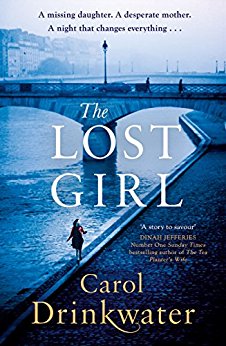
The Lost Girl
the lost girl

Her daughter disappeared four years ago. . .

Since her daughter went missing four years earlier, celebrated photographer Kurtiz Ross has been a woman alone. Her only companion her camera. Since Lizzie disappeared, she has blamed and isolated herself, given up hope. Until, out of the blue, an unexpected sighting of Lizzie is made in Paris.

Could this lead to the reconciliation she has dreamed of?

Within hours of Kurtiz arriving in Paris, the City of Light is plunged into a night of hell when a series of terrorist attacks bring the city to a standstill. Amid the fear and chaos, a hand reaches out. A sympathetic stranger in a café offers to help Kurtiz find her daughter.

A stranger’s guiding light

Neither knows what this harrowing night will deliver, but the other woman’s kindness – and her stories of her own love and loss in post-war Provence – shine light into the shadows, restoring hope, bringing the unexpected. Out of darkness and despair, new life rises. New beginnings unfold.

Dare she believe in a miracle?

Set during a time of bloodshed and chaos in one of the most beautiful cities on earth and along the warm fragrant shores of the Mediterranean, Kurtiz discovers that miracles really can happen . . .

An Interview with Carol Drinkwater

Welcome to Linda’s Book Bag, Carol. Thank you so much for agreeing to answer some questions on my blog about your writing and The Lost Girl in particular. I’m really excited that you’re here! Firstly, please could you tell me a little about yourself?

I am of Irish blood on my mother’s side and a little bit on my father’s side too though I was born in London. I have an Irish passport and chose Ireland as my mother country early in adulthood. I was educated at an Irish convent in Kent, and hated almost every minute of it. It did offer me the opportunity to study languages which I love. Spanish, Italian and French, all of which have stood me in good stead as a traveller and a writer and, of course, as a French resident. The nuns also allowed me to indulge in my love of acting and drama. After I left the convent I worked backstage in the theatre in London before going to drama school in north London. There I studied acting and classical drama.

I live in France on an olive farm overlooking the Bay of Cannes. I ended up here because I fell in love with a Frenchman who asked me to marry him on our first date in Sydney, Australia. This love story is the basis of my Olive Farm series of six books.

I still keep a small bolthole near where my mother was born in Ireland. Keeping in touch with my roots is very important to me.

Why do you write?

I HAVE TO. I need to create or I drive myself insane. If I am not writing or acting or preparing a film it is as though I have a swarm of delinquent bees inside me, buzzing and stinging.

(What a fabulous analogy!)

When did you realise you were going to be a writer?

I have been writing since I was about eight. I KNEW I would act; I DREAMED of being a writer.

Which aspects of your writing do you find easiest and most difficult?

All of it is difficult. The fun bit is looking at the books line up on the shelves. I am writing my 24th now. Yay!

(Yay indeed. I can’t wait!)

What are your writing routines and where do you do most of your writing?

I begin early and write long hours, stopping for a couple of hours mid-afternoon to swim, walk, ponder, rest my mind. Then back to it for another couple of hours so that it is in my head ready to sleep on it.

Many of your reading fans also know you as an actress. What has being involved in drama added to your writing?

I think visually. I see every scene clearly. The way people look, move, dress. The details are essential. I look for the drama, the resistance in any moment, which creates drama in scenes. I aim to draw the inner lives of my characters as they seek to overcome obstacles. While writing I act out every scene, play every part aloud. The training I received at Drama Centre, London was perfect for writers.

(How fascinating – I’d never have thought of acting out what I write.)

You’re obviously very creative with both acting and writing as part of your skill set. Is there a creative talent you haven’t mastered but would like to?

I have no musical skills except that I love to dance and listen to music. My father was a musician and I am very sad that as a child I did not learn any musical instrument.  I am considering either brushing up on my Spanish and Italian, learning Arabic (difficult!!) or learning to play the guitar. But with everything I have going on in my life I probably won’t get round to any of it.

Without spoiling the plot, please could you tell us a bit about The Lost Girl?

The Lost Girl is the story of two very different women. They meet in a bistro in Paris on the night of the November 2015 terrorist attacks on the city. Over that weekend, their stories unfold.

The book is set in two time frames: November 2015 during the weekend of those terrorist attacks that rocked and shocked Paris, leaving more than a hundred dead and many more wounded. The second time frame is the glorious, headily-scented, post-war south of France, amongst the flower farms that fed the perfume industry in Grasse, the Perfume Capital of the World. The modern part of the story is darker, grittier, I think, than the earlier story. Both are told through the eyes and experiences of the two female protagonists women who meet in the bistro in Paris on 13th November 2015.

At its core, The Lost Girl is a love story with a twist, a miracle that, I hope, redeems the darker side of the story offering hope and new beginnings.

How did you manage the two time frames when you were writing The Lost Girl?

I wrote the two stories at the same time. There was no definite order to it. Sometimes I wrote Marguerite’s story for days, weeks, and then one day I would return to Kurtiz. When I was stuck I would write a scene from one or other of their live even if I knew I would not use it later.  It was important to keep telling myself their stories. The big challenge was putting it all together. This part took weeks.

The plot of The Lost Girl is based around the terrorist attacks in Paris. How did you come to the decision to write around such an emotive topic?

I watched the unfolding of the attacks on the news on that November Friday night. I was with my mother. We stood together with our arms round one another witnessing the horrors. I was weeping. When the TV reporters announced that 1,500 concert-goers were locked inside the Bataclan concert hall and had been taken hostage, Mummy said to me: “for everyone inside there fearing for their lives, there is a mother outside anxiously waiting for news”. It sowed the seed for my story.

One of the two women who is in the Parisian bistro is waiting to hear news of her daughter who went missing from her home in London when she was sixteen. She, Kurtiz, the girl’s mother, and her husband have reason to believe that their daughter, Lizzie, might be attending the concert at the Bataclan.

How did you go about researching detail and ensuring The Lost Girl was realistic whilst still making it a fiction?

I spent a month at the National Library in Paris in their media division. I watched, listened to footage, recordings from that weekend and afterwards. I researched very thoroughly. I owed it to the family members of those who lost their lives to make it accurate. Even if they never read the book.

(I think that level of care comes across very strongly to the reader Carol.)

How important is literature in exploring the difficult situations, emotional and political events of modern times do you think?

Essential. Think of Pablo Picasso’s stupendous work Guernica, a visually alarming, angry statement against the senseless lives lost during the bombing of Guernica in northern Spain in April 1937.  Many of the Greek tragedies were observations on the nation’s enthusiasm for war. Lysistrata by Aristophanes is a Greek comedy written and first performed in 411 BC. It recounts the story of one woman, Lysistrata, who persuades the women of Greece to withhold sexual favours from their husbands and lovers until they stop fighting and negotiate peace. It is an early, brilliant anti-war piece of theatre.

I believe literature, film, theatre, music and art can be the voices of sanity, of reason. They give us emotional air to breathe, you might say. While the media plasters on the doom and gloom, frequently inciting hatred, racism, mistrust, art can offer us hope, laughter, release, a way forward. Humans are complex, our emotions and experiences are prisms, spectrums of colours, of light and shade. Mostly, we struggle to overcome our darker instincts; we strive for goodness, not evil. Evil is the exception. Most of us desire peace, love, harmony. Even in our darkest hours we search for the  lighter moments. I have seen this over and over again in war zones, areas of conflict. The chink of light. This is what I hope The Lost Girl does. It is a story of generosity, regeneration, or that is certainly what I set out to achieve.

(Very powerfully said. And you certainly achieve what you set out to do in The Lost Girl.)

France has become a huge part of your life. How important is location to you as an author when you are writing?

I feel location, if one can say that. I breathe in the perfumes, the temperatures. Every blade of grass counts. I like to immerse myself in the places I am writing about and almost always go to the chosen locations to “live” the place before setting pen to paper.

That said, The Lost Girl seems to take you further away from your Olive Farm books. How has this change in your writing evolved?

I think it is important for me as a writer to evolve. I would not want to have played Helen Herriot for all my life (which is why I left the series). I need new challenges or I stultify.

So what can we expect next from Carol Drinkwater, the writer?

I never know what I will be writing until I have written it! I am at work on a book which, I THINK, is more of a chamber piece. At the moment it also covers two time frames (though this could change!). It is a relationship story, a love story, also set in France.

If you could choose to be a character from The Lost Girl, who would you be and why?

Marguerite, of course, because she’s an actress. Or on another day, it would be Kurtiz because she has fought to become an independent woman.

If The Lost Girl became a film, would you consider taking on one of the roles? 

YES!

When you’re not writing, what do you like to read?

I go through phases. At present, as it is summer and I am taking some time off, I am reading modern, mainly light fiction, mostly by female writers: Ferrante, re-reading Du Maurier, a few commercial novels on sale for my Kindle, writers I probably would never usually choose …

If you had 15 words to persuade a reader that The Lost Girl should be their next read, what would you say?

From reviews:  “beautifully written”, “page-turner”, “fabulously written”, “action-packed”, “emotive”, “captivating”, “hated finishing it”, “novel of hope”

Thank you so much for your time, Carol, in answering my questions.

Thank YOU very much.

About Carol Drinkwater
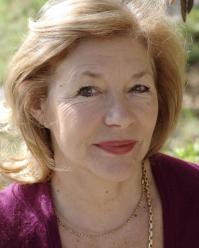
Carol Drinkwater c Michel Noll

Carol Drinkwater is a multi-award-winning actress who is best known for her portrayal of Helen Herriot in the BBC television series All Creatures Great and Small. She is also the author of over twenty books, both fiction and non-fiction. Her quartet of memoirs set on her olive farm in the south of France have sold over a million copies worldwide and her solo journey round the Mediterranean in search of the Olive tree’s mythical secrets inspired a five-part documentary film series, The Olive Route.

You can follow Carol on Twitter and visit her website.
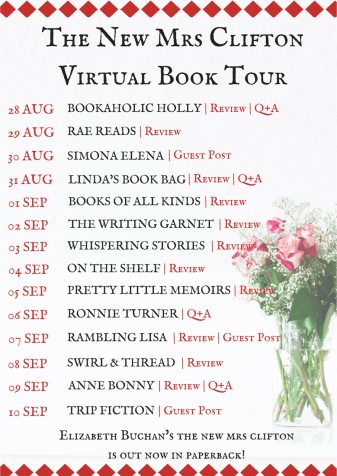
The New Mrs Clifton by Elizabeth Buchan

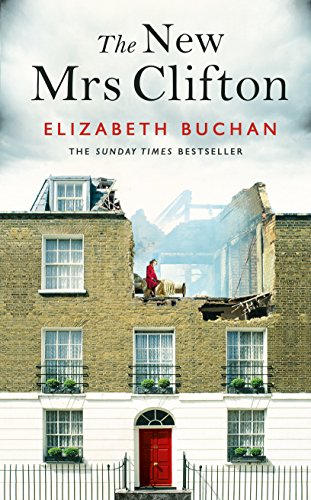
The New mrs Clifton

Having long been a fan of Elizabeth Buchan, author of The New Mrs Clifton, I’m a little bit star struck to welcome her to Linda’s Book Bag with a mini-interview today. I’m also pleased to be sharing my review of The New Mrs Clifton.

Published by Penguin on 11th August 2017, The New Mrs Clifton is available for purchase here.

The New Mrs Clifton

The New mrs Clifton

‘Wrapped in the roots of the sycamore was a skeleton; the remains of a woman, between twenty-five and thirty. She had carried a child . . .’

At the close of the Second World War, Intelligence Officer Gus Clifton returns to London. On his arm is Krista, the German wife he married secretly in Berlin. For his sisters, this broken woman is nothing more than the enemy. For Nella, Gus’s loyal fiancée, it is a terrible betrayal. These three friends wonder what hold Krista has over decent, honourable Gus. And, they ask themselves, how far will they have to go to permanently get her out of their home, their future, their England?

An Interview with Elizabeth Buchan

Welcome to Linda’s Book Bag, Elizabeth. Thank you so much for agreeing to answer some questions on my blog about your writing and The New Mrs Clifton in particular. Firstly, please could you tell us a little about yourself?

Thank you so much for inviting me. I’ve spent my life with my head in a book – as a child I was often caught reading with a torch under the blankets late into the night. Before I embarked on the novels, I worked in publishing at Penguin Books and was briefly a fiction editor but the siren call of writing was too strong and I left to write my own books. Fifteen novels in, I am about to embark on the latest.  I live in London and my family all live close by which is wonderful.

Without spoiling the plot, could you tell us a bit about The New Mrs Clifton?

Intelligence officer, Gus Clifton, returns from Berlin in 1945 bringing with him a new bride. To the horror of his two sisters, and the bewilderment of his ex-fiancée who was fondly waiting to marry him on his return, she is German. Why has he done this? The answer can be found in the upheaval and violence of war, even on a home front. Nice people do terrible things in this situation and the will to survive is stronger than anything else. Both Gus and Krista find they run up against aspects of themselves which shocks them.

The New Mrs Clifton is set in post war London as well as Berlin. How did you ensure the settings and detail felt authentic?

I got hold of every book on the subject I could lay hands on, including memoirs of the time. They are invaluable for supplying the little telling details, such as the impossibility of getting hold of soap, shampoo and paint even after the fighting stopped. I looked at old photographs and – my greatest coup – I managed to get hold of a second-hand copy of the original bomb maps published by the Greater London council which shows where every bomb fell, what type it was and the extent of the damage it inflicted.  Gold dust.

The marriage between Krista and Gus sees two seemingly conflicting cultures joined together. How important is it to explore the question of culture and expectation through fiction?

I think that is precisely what a novel can do and should do.  Imaginative empathy often goes beyond the historian’s facts.  If one can invite a reader into thinking, sensing and feeling a character’s predicament and their setting then the novelist is doing the best job possible to open up worlds.

Which character do you identify most with from The New Mrs Clifton, and why?

I love my Krista. I feel for her isolation and terror and admire her determination to become normal.

Thank you so much for your time in answering my questions.

My Review of The New Mrs Clifton

A body is found in the garden when a new couple move in – but to whom does it belong?

I found The New Mrs Clifton a mesmerising read and one that frequently made me very uncomfortable because so much of it is based on past horrific experiences and I wondered just how I might have behaved and acted in similar ones. I think one of the great successes of the story is that Elizabeth Buchan makes the reader think and question their beliefs and certainties. I had a far better understanding of the effects of WW2 on the ordinary person after the war than I had really had before and reading the book made me glad I was born well afterwards. The uncovering of inherent racism, corruption and manipulation at all levels is totally convincing.

The narrative style was just as good as I hoped and expected from an Elizabeth Buchan novel. There’s an intensity and claustrophobia that is palpable and much of the effect comes as much from what isn’t said as what is so that I experienced the same responses and emotions as the characters. The three main women, Krista, Julia and Tilly, are magnificent creations so that each was very real. I understood their frailties, desires and fears completely. Despite Kritsa’s displacement and the fact that she deserves the reader sympathy, it was Julia I felt most for. She begins as an odious individual but by the end of the novel she had my complete understanding and I felt almost as sorry for her as for Krista.

I loved the plot. The way Elizabeth Buchan drops in the tiny daily details that enhance setting or our understanding of her characters’ emotions to her ability to present the most startling information with a pared down sentence that shocks the reader makes her writing incredibly satisfying to read. Towards the end I found my heart rate increased dramatically as I headed to a knowledge of whose body was in the garden.

The New Mrs Clifton is an intelligent, and unsettling, book that makes the reader wonder just what they themselves might be capable of in extreme circumstances. I won’t forget it in a very long while.

About Elizabeth Buchan

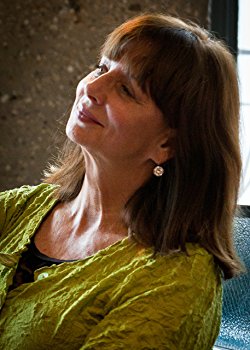
Elizabeth Buchan

Elizabeth Buchan began her career as a blurb writer at Penguin Books after graduating from the University of Kent with a double degree in English and History. She moved on to become a fiction editor at Random House before leaving to write full time. Her novels include the prizewinning Consider the Lily, Revenge of the Middle-Aged Woman, The Second Wife, Separate Beds, and Daughters. After talking to some amazing women who had been employed by SOE, she wrote the Danish wartime resistance story, I Can’t Begin to Tell You. The New Mrs Clifton, is based on a situation that happened in her own family after the war – only in reverse.

Elizabeth Buchan’s short stories are broadcast on BBC Radio 4 and published in magazines. She reviews for the Sunday Times and the Daily Mail, and has chaired the Betty Trask and Desmond Elliot literary prizes. She was a judge for the Whitbread First Novel Award and for the 2014 Costa Novel Award . She is a patron of the Guildford Book Festival and of The National Academy of Writing, and sits on the author committee for The Reading Agency.

You can find Elizabeth on Twitter @elizabethbuchan, on Facebook and find out more on her website.
There’s more with these other bloggers too:

poster

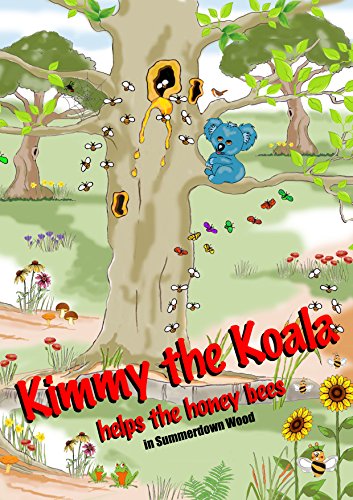
Kimmy the Koala Helps the Honey Bees by Graham Swan

kimmy

It always gives me great pleasure to review children’s books and so I’m delighted to be part of the launch celebrations for Kimmy the Koala Helps the Honey Bees by Graham Swan.

Published by Clink Street on 1st August 2017, Kimmy the Koala Helps the Honey Bees is available for purchase here.

Kimmy the Koala Helps the Honey Bees

Kimmy the Koala loves few things more than honey, eating it for breakfast everyday during the summer months. When he asks the wise tree, Warewood, where his favorite treat comes from though, he is startled to learn the bees who produce the honey are struggling because of the weather. Now determined to help, he recruits Penny the Panda, Ronnie the Rat and his other forest pals to plant wild flowers throughout the woods to give them plenty of pollen to make honey with for the next year..

My Review of Kimmy the Koala Helps the Honey Bees

If you love honey like Kimmy, you have to know how to help the bees produce it.

I’m going to get one tiny criticism out of the way before I continue. Almost all of the direct speech in Kimmy the Koala Helps the Honey Bees does not begin on a new line for a change of speaker which is what we would normally expect and I like children’s books to model literacy conventions. There’s also the odd slip in tenses from present to past, but that is my adult educational head reviewing rather than a child’s love of story.

That aside, I like this children’s book. The illustrations are wonderful and add so much to the story. I thought adding in partly coloured pages at the end to provide an activity for children was an inspired touch too. There’s a great opportunity for discussion as, once the story is read, the map at the beginning can be looked at again and children asked what happened at each location so that the story can be returned to time and again. The language is quite challenging and will help extend children’s vocabulary.

The themes of conservation, friendship, sharing and cooperation are perfect for the target audience so that there is much to recommend in Kimmy the Koala Helps the Honey Bees.

About Graham Swan

Graham Swan is a graphic designer and accomplished artist, who lectures part-time in graphics. Writing for his grand children Graham is also an animal lover and produced all the images in Kimmy the Koala Helps the Honey Bees.

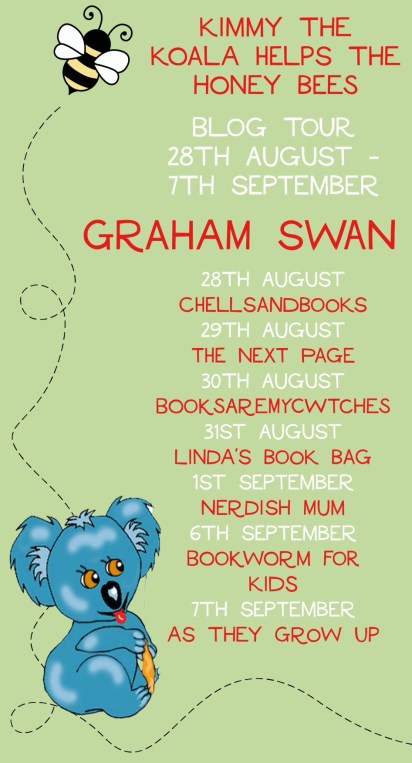
There’s more with these other bloggers:

Kimmy_Banner

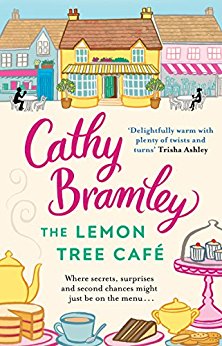
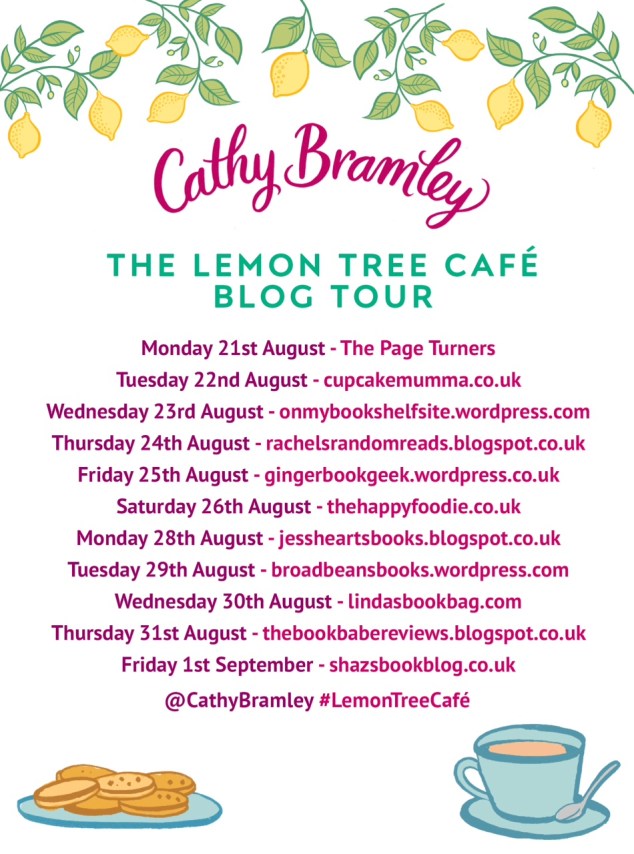
Afternoon Tea with Cathy Bramley, Author of The Lemon Tree Cafe

Lemon tree cafe

Having met lovely Cathy Bramley a few times I’m thrilled to welcome her to Linda’s Book Bag to celebrate her latest book The Lemon Tree Cafe today. I love Cathy’s writing and have previously reviewed another of her books, Comfort and Joyhere. Cathy also featured when her book The Plumberry School of Comfort Food was released and you can find that post here. Today we’re talking afternoon tea!

The Lemon Tree Cafe was published on 24th August 2017 by Corgi, part of Transworld, and is available for purchase here.

The Lemon Tree Cafe

Lemon tree cafe

The Lemon Tree Cafe was originally published as a four-part serial. This is the complete story in one package.

When Rosie Featherstone finds herself unexpectedly jobless, the offer to help her beloved Italian grandmother out at the Lemon Tree Cafe – a little slice of Italy nestled in the rolling hills of Derbyshire – feels like the perfect way to keep busy.

Surrounded by the rich scent of espresso, delicious biscotti and juicy village gossip, Rosie soon finds herself falling for her new way of life. But she is haunted by a terrible secret, one that even the appearance of a handsome new face can’t quite help her move on from.

Then disaster looms and the cafe’s fortunes are threatened . . . and Rosie discovers that her nonna has been hiding a dark past of her own. With surprises, betrayal and more than one secret brewing, can she find a way to save the Lemon Tree Cafe and help both herself and Nonna achieve the happy endings they deserve?

Cathy Bramley’s ideal afternoon tea at The Lemon Tree Café

When I was asked to be part of the tour for The Lemon Tree Cafe I asked Cathy, “Which three real or fictional guests would you invite to afternoon tea at The Lemon Tree Café and why, and what cakes and sandwich fillings and cakes would you choose?” This is what Cathy told me:

Oh Linda, what a great question! I’ve never been asked this before and as soon as I read your request I instantly thought of how interesting it would be to get three characters from books together at the café.

The worlds I create seem very real to me and I often think back to Wickham Hall and The Plumberry School of Comfort Food and the allotments at Ivy Lane. I can picture the settings very clearly and I wonder about the characters. (By now half of your readers will be thinking that I’ve gone a bit loopy…!)

So, back to afternoon tea. I’d love to get Holly from Wickham Hall, Verity from Plumberry and Tilly Parker from Ivy Lane around a table together to have a good old chat. None of these characters cross over in my books, however, Verity is good friends with Rosie who runs The Lemon Tree Café; they were housemates in The Plumberry School of Comfort Food. Verity also makes a cameo appearance in The Lemon Tree Café.

Holly is now living at Wickham Hall with Benedict Fortescue, Lord and Lady Fortescue’s son and I’ve love to hear how she has adapted to living with her aristocratic in-laws! I think she’d have some great stories to tell.

The last time we saw Verity was in my Christmas novella, Comfort and Joy. She and chef boyfriend Tom had just moved into their first cottage together. I think wedding bells were on the cards for those two and I’d like to find out if what they are up to.

Tilly Parker, the star of Ivy Lane is probably my favourite character form all my books, she had had such a tough time and fingers crossed things are going well for her in her new life. If I could shoehorn Tilly into every book, I would!

The menu at The Lemon Tree Café has plenty of delicious things on it. Juliet makes a delicious lemon drizzle cake and Lia, Rosie’s sister is a very good cook too. Holly isn’t much of a cook although she really enjoys eating what Jenny Plum cooks at the Wickham Hall Coach House Café. She’d probably choose Jenny’s special marchpane tart made of an Elizabethan version of marzipan. Verity loves fish finger sandwiches although they’re probably an acquired taste and might look a bit odd on a three-tier cake stand! She did learn to make bread though, so she might bring some delicious rye bread with her. This would be gorgeous with some smoked salmon sandwiches. Now that Tilly has an allotment she cooks lots of things with fresh vegetables in it like courgette cake. However, her go-to recipe has always been chocolate chip cookies, so there would have to be plenty of those.

So there you are, Linda, my guests and their menu – I so wish this could happen!

So do I Cathy, and I’ll have to ask Tilly for that courgette recipe as I’ve been inundated with them on my allotment this year!

About Cathy Bramley

cathy

Cathy is the author of the best-selling romantic comedies Ivy Lane, Appleby farm, Conditional Love, Wickham Hall and The Plumberry School Of Comfort Food. She lives in a small Nottinghamshire village with her family and Pearl, the Cockerpoo.

Her recent career as a full-time writer of light-hearted romantic fiction has come as somewhat of a lovely surprise after spending eighteen years running her own marketing agency. However, she has always been an avid reader, hiding her book under the duvet and reading by torchlight.

You’ll find all Cathy’s lovely books here.

You can find out more about Cathy Bramley on her website and you can follow her on Twitter

There’s more with these other bloggers too:

blog tour poster

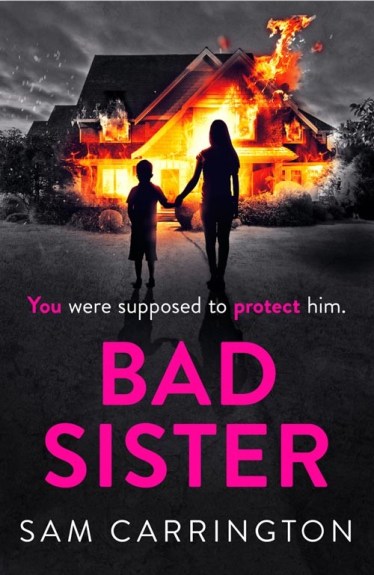
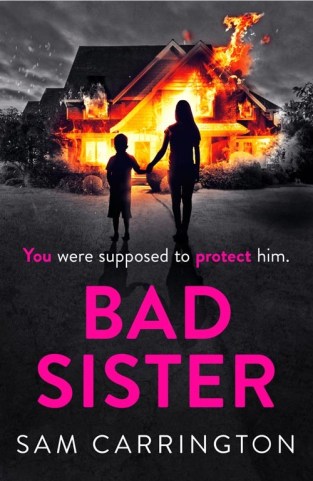
Introducing Bad Sister by Sam Carrington

bad sister

A while ago on Linda’s Book Bag I was privileged to host a guest post from Sam Carrington all about the allure of psychology in fiction. I had my review of Sam’s debut Saving Sophie too. You can read that post here.

Now Sam Carrington is back with a new thriller, Bad Sister, and I’m delighted to introduce it today.

Bad Sister will be published by Avon Books, an imprint of Harper Collins, in e-book on 9th October 2017 and paperback on 14th December. Bad Sister is available for pre-order here.

Bad Sister

bad sister

The gripping new thriller from the bestselling author of Saving Sophie.

Stephanie is scared for her life. Her psychologist, Connie Summers, wants to help her face her fears, but Connie will never really understand her. Stephanie’s past has been wiped away for her own protection. Stephanie isn’t even her real name. But then, Dr Summers isn’t Connie’s real name either.

And that’s not all the women have in common. As Stephanie opens up about her troubled relationship with her brother, Connie is forced to confront her own dark family secrets.

When a mutilated body is dumped in plain sight, it will have devastating consequences for both women.

Who is the victim?
Who is to blame?
Who is next?

About Sam Carrington

SamCarringtonColour

Sam Carrington lives in Devon with her husband and three children. She worked for the NHS for fifteen years, during which time she qualified as a nurse. Following the completion of a Psychology degree she worked for the prison service as an Offending Behaviour Programme Facilitator. Her experiences within this field inspired her writing. She left the service to spend time with her family and to follow her dream of being a novelist. Before beginning her first novel, Sam wrote a number of short stories, several of which were published in popular women’s magazines. Other short stories were included in two charity anthologies.

Sam moved quickly on to novel writing and completed her first project within six months. Although this novel attracted attention from agents, it was her next that opened up opportunities. She entered this novel, with the working title Portrayal, into the Crime Writers’ Association Debut Dagger Award in 2015 and was delighted when it was longlisted.

Being placed in such a prestigious competition was instrumental in her success securing a literary agent. When completed, this novel became Saving Sophie, a psychological thriller which was published by Maze, HarperCollins.

You can follow Sam on Twitter and find her on Facebook. You can also visit Sam’s blog.

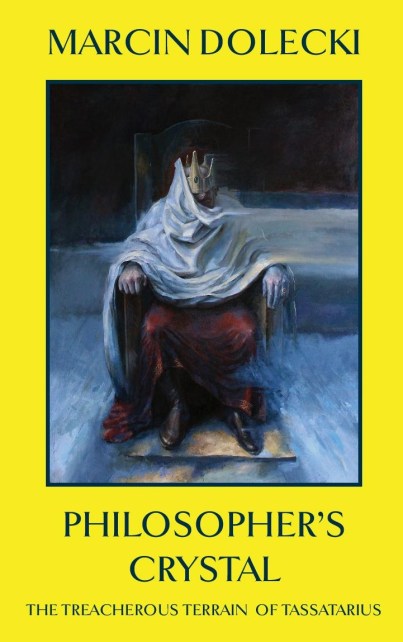
An Interview with Marcin Dolecki, Author of Philosopher’s Crystal

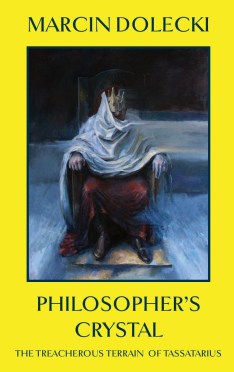
Philosopher's Crystal front cover second edition

Many moons ago when I was an undergraduate, one of the elements to my degree was philosophy and I have retained an interest ever since. As a result, when I realised that Marcin Dolecki’s Philosopher’s Crystal was based on that discipline, I had to ask Marcin a few qustions about his writing and his concepts of philosophy.

Published by Montag Press, Philosopher’s Crystal is available for purchase from your local Amazon site.

Philosopher’s Crystal

Philosopher's Crystal front cover second edition

A fantastical time traveling journey bringing to life some of the world’s great philosophers and exotic locals as two young lovers flee an Emperor and secrets that must be revealed. A feast for the curious reader.

Twenty-year-old Philip lives alone in an authoritarian country, his parents arrested after the imperial police find a secret notebook in their apartment. Then one evening Philip meets an uncommon girl, her name Julia, possibly on the run from the police, or sent to him as a secret agent by the state. Despite his concerns, he offers to put her up for the night.

In the morning a mysterious person knocks on his door and advises him to escape immediately.

This is how the couple’s strange, paradoxical and hazardous journey begins, leading Philip and Julia in a quest through time to the collapsing Roman empire, 17th century Amsterdam and the medieval Indian jungle. During their travel they meet famous philosophers who confront the couple with existential questions – only to find that the answers Philip and Julia discover will help them face the ultimate danger.

An Interview with Marcin Dolecki

Welcome to Linda’s Book Bag, Marcin. Thank you so much for agreeing to answer some questions on my blog about your writing and Philosopher’s Crystal: The Treacherous Terrain of Tassatarius in particular. Firstly, please could you tell me a little about yourself?

Linda, you’re welcome, thank you very much for the invitation to this interview.

I’m a philosopher, chemist, and historian of chemistry (Ph.D.).

I live in Poland and work at the Institute for the History of Science. I also give lectures on the history of chemistry at the Faculty of Chemistry (the University of Warsaw).

I love cycling. I visited some European countries (e.g. Italy, Estonia, Romania), traveling on my bike.

I just love tea – all kinds of it.

(Me too – there’s always a cup of tea on the go in my house!)

You’re both a scientist and a philosopher. To what extent do you think the two disciplines are mutually exclusive or supportive of one another?

My fields of specialization were physical chemistry and teachings of the Church Fathers (eminent Christian writers, living in the ancient and early medieval period), so they are totally unrelated to each other; nevertheless, both studies gave me broader and complementary perspectives. Sometimes I think of reality as of swirling particles and as of gigantic energy field, and sometimes as of one living being.

(An interesting perspective!)

Why do you write?

It’s a challenge, because I believe that it’s easier to think than to write. I often feel that my thoughts are more precise when they are finally written down.

It’s also a joy of creation. Writing gives me an additional “dimension” of interaction with other people – because I could invite at least some of them to visit new, imaginary worlds together.

When did you realise you were going to be a writer?

Philosopher’s Crystal is my first novel, created in the climate of science fantasy. It was published originally in Polish and entitled One of Possible Worlds (Jeden z możliwych światów, Attyka, Warszawa 2013). I was working on the Polish text for almost two years. Many times I thought about the idea of two young people traveling in time and talking with some famous thinkers, so finally I decided to write it down and add a fictional story to it. The American version, translated by Paulina Trudzik, is extended and substantially altered, for example, I changed the end.

Apart from this book, I wrote a short story, a fairy tale for adults: Asalda, the Queen of the Mice (in Polish). I posted it on my blog: https://mdolecki.wordpress.com/

My other texts concern primarily philosophy and history of chemistry.

Which aspects of your writing do you find easiest and most difficult?

Generally, I find it easier to write about ideas than about people and their inner worlds.

The most difficult aspect is how to use metaphors properly. I’m a philosopher, so when I think of them, trying to find new ones, I almost instinctively wonder, if they could be assessed as true or false. This is often more important to me than their aesthetic value.

(Oh, interesting point – you’ve really got me thinking about that idea.)

Without spoiling the plot, please could you tell us a bit about Philosopher’s Crystal: The Treacherous Terrain of Tassatarius?

The main characters – Philip and Julia, both twenty years old, living under the totalitarian regime of Emperor Tassatarius – travel in time and talk with some thinkers from the past, mostly about issues concerning philosophy of religion.

Working on this novel was a fascinating international adventure. The inside illustrations were prepared by prof. Anna Trojanowska (an author of novels herself) and most of them (originally used in the Polish version) were redrawn by Rosann Antonio Portes – an artist from the Philippines, the front cover painting was made by Giorgi Makharashvili – an artist from Georgia, my promotional film was taken in Italy (Monika Bajer read the foreword at the Gorizia Castle), one blurb was written by prof. Joseph Kaipayil – a scholar from India, the other by Bruce Lee Bond – an author from Alaska. The book was published in California, by Montag Press.

(It sounds a really exciting journey to publication.)

How important is it to explore philosophical concepts through fiction do you think?

Many people avoid reading about philosophical issues, because they suppose, philosophy is helplessly difficult. However, Ludwig Wittgenstein claimed that “what can be said at all, can be said clearly”. I agree and would add: what can be said clearly, could be interwoven into situations from real life, therefore also in the plot of a novel. This is a way of showing that philosophical discussions might be understandable virtually for everyone, and fascinating. 

(I agree. I studied philosophy as part of my degree and found it totally absorbing.)

I know you have developed your own philosophical concept, oneiric personalism. Please could you explain this a little and tell us how it informs your fictional writing?

Oneiric personalism is a modification of a very old idea – that walking life might be regarded as similar to dreams. I only dream that I’m a person. As the Dreamer, I’m more real than the person I am in this particular dream called life. I’m not present in any of my dreams; I’m entirely free, and I could be happy by myself, yet this happiness could be also shared with others. The beloved persons are just as real as the person I am in this dream, so love is not illusory.

I tried to avoid any kind of propaganda in this book, so my concept is quite fiercely debated, along with others. For some readers it is a crypto-Christian work, for some others – crypto-atheistic. In fact, it is neither this nor that.

Of all the philosophers in your novel, which would you personally most like to meet and why?

My master’s thesis concerned the concept of the Holy Trinity according to St. Augustine. I have been interested in his texts for several years. He was a Roman (I love the history of ancient Rome) and a brilliant thinker. His comparison of the Trinity to human soul is one of the greatest achievements in Western theology.

It’s interesting that people talented in some aspects are very ordinary or even astonishingly unpleasant in many others, for example, Augustine treated the beloved girl from his youth rather instrumentally, he even didn’t mention her name – the mother of his only child, Adeodatus (the name means: given by God) -, in his autobiographical Confessions.

If you could choose to be a character from Philosopher’s Crystal: The Treacherous Terrain of Tassatarius, who would you be and why?

I would answer this way: Philip is the person I think I was in the past, the Emperor is the person I hope I will never become in the future. I treat the other main characters as my teachers, even spiritual guides of some kind.

(That’s a fabulous concept!)

If Philosopher’s Crystal: The Treacherous Terrain of Tassatarius became a film, who would you like to play Philip and Julia and why would you choose them?  

It is not an easy question, we would be talking about distant and vague future. However, some months ago prof. Jan Piskurewicz, a historian of science and education, said about the Polish version of my novel that it could be adapted into a good play.

When you’re not writing, what do you like to read?

I’m a big fan of Tolkien. I like to read his works, especially at night. I’m also very fond of reading Lemony Snicket’s Series of Unfortunate Events. Jacek Dukaj is one of my Polish masters, he writes excellent works of speculative fantasy, as far as I know, some of them have been translated into English.

If you had 15 words to persuade a reader that Philosopher’s Crystal: The Treacherous Terrain of Tassatarius should be their next read, what would you say?

Join Philip and Julia on journey through time and space to the border of existence.

Thank you so much for your time in answering my questions.

Thank you once more Linda.

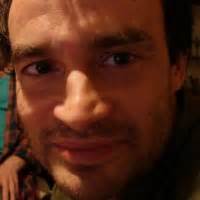
About Marcin Dolecki

Marcin

Marci Dolecki is philosopher (MA), chemist (MSc), and historian of chemistry (PhD).

He works as an assistant professor at the L.&A. Birkenmajer Institute for the History of Science of the Polish Academy of Sciences and has conducted philosophy classes at the Faculty of Chemistry of the University of Warsaw, where he currently gives lectures on the history of chemistry.

Marci is an enthusiastic cyclist, visiting Italy, Austria, Hungary, Slovenia, Romania, Lithuania, Latvia, Estonia, and Ukraine on his bike. He is fan of ancient cultures, the history of Ethiopia and of vintage buses.

You can follow Marcin on Twitter @marcin_dolecki and visit his blog.