The Long Shadow of School Bullying: A Guest Post by Linda MacDonald, Author of Meeting Lydia

MeetingLydiaAUDIBLE2

It gives me very great pleasure to welcome another Linda to Linda’s Book Bag today. Linda MacDonald is the author of Meeting Lydia which is about to be released on Audible. Today Linda tells me about the inspiration behind her novel in a wonderfully personal guest post.

Meeting Lydia is available for e-book and paperback purchase and Audible pre-order here.

Meeting Lydia

MeetingLydiaAUDIBLE2

Marianne Hayward is having a midlife wobble. When she finds her charming husband has befriended the glamorous Charmaine, she is seized by jealousy. Her once-happy marriage begins to slide.

Insecurities resurface from when she was bullied at a boys’ prep school. Only one boy was never horrible to her, the clever and enigmatic Edward Harvey; her first crush.

Daughter Holly persuades her to join Friends Reunited where she searches for Edward convinced he may be the answer to all her problems. But she is unprepared for the power of email relationships.

Narrated by the talented voice actress Harriet Carmichael, Meeting Lydia is a book about childhood bullying, midlife crises, obsession and jealousy and will appeal to anyone interested in relationship dynamics.

The Long Shadow of School Bullying

How I came to write Meeting Lydia

A Guest Post by Linda MacDonald

When I was 5 years old and living in Cumbria, my parents sent me – as a day girl – to a boys’ prep school. They thought it would be less rough than the local primary. They were wrong. Girls were scattered thinly throughout the school and between the ages of 9 and 10, I was the only girl in the class. I was bullied. It was the usual stuff: name-calling, stealing equipment, being left out. No single incident was what you might call ‘serious’, but it happened hour upon hour, every day. And if someone makes fun of you often enough, you begin to believe it.

In the past bullying was accepted as a rite of passage, even ‘character building’. But does it really help children to cope better as adults? The Kidscape children’s charity thinks not. In a survey of 1000 adults, they found early bullying experiences often led to a lack of self esteem, depression, shyness, and less likelihood of success in education, the workplace or in social relationships. Most said they felt bitter and angry about their experiences.

These results are supported by a longitudinal study by a team from Kings’ College, London, who examined data on 7771 adults born in Britain during a particular week in 1958. At age 50, those who had been bullied showed greater incidence of depression, anxiety and suicidal thoughts and reported poorer physical health. The findings have provoked some researchers into saying that the effects of bullying are as serious as physical abuse or neglect. Those victimised were found to be less likely to have qualifications and/or to live with a spouse or partner and their cognitive IQ was also found to be lower than one would expect when taking their childhood IQ into account. Worryingly, it is speculated that school bullying could lead to premature ageing.

For me, I knew even the comparatively low level bullying I experienced had affected my confidence well into midlife and I can only guess that it may have played a role in some of my adult health issues. I always found it difficult to talk about and I pushed it to the back of my mind. But I had written stories since I was a child and through a hazy curtain, there was always a whispering that I should write a novel with a bullying theme. The problem was, I didn’t have a plot, and it wasn’t until 2001 – way into my midlife – that an idea struck.

Friends Reunited was hitting the headlines. It was the first of the major social networking sites and there were hundreds of exciting tales of people getting in touch with old classmates. In the class where I was the only girl, there was one boy who was never horrible to me. He was very clever and enigmatic and somehow different from the others. And he was the only boy I would write too – if I could find him.

It was some weeks before I saw his name on the site and I sent a tentative email. I was delighted when he wrote straight back and over the next three weeks we exchanged lots of emails – mostly about the past. He empathised with my situation, but also reminded me of the good times.

And in that short time-span of email exchanges, something strange happened. I realised the baggage I’d been carrying around for most of my life had gone. It was like a miracle – but I suppose revisiting the past had been like being in therapy.

As the weeks passed by and the emails continued, an idea began to form for the novel I had always wanted to write. I thought, if I spice up the reality, perhaps create an ‘only girl in a class who has a crush on the boy who was never horrible’ situation, then it would give potential for a much more interesting story if they met via the internet in later life.

So Meeting Lydia came into being and although the children in the story are very much inspired by my own experiences, the adults and their lives are fictional. I hope that the book may help others who have been bullied as children face up to what happened to them and perhaps find a way, as I did, to let go of the past.

The modern world brings new bullying threats in the form of cyberbullying. The founder of BeatBullying says that this threat could be even more damaging to future generations. In the past, children came home from school and shut the door. Now there is no escape. It is therefore ever more urgent that we try to find imaginative ways to address this problem and there are no easy answers. Ideally, bullying needs to be tackled at source, but that requires overturning thousands of years of evolution where humans have learned to establish a pecking order with the strong dominating the weak. Parents and schools must play their part, but their influence is limited and bullying is often hidden. Keeping anti-bullying in the news via celebrities and sporting role models may be a way forward. The message needs to be clear: ‘Bullying is So Not Cool’.

(What a fabulous post Linda. I’m so glad you have been able to move on and that there is a positive outcome in the form of Meeting Lydia for you.)

About Linda MacDonald

Colour crop

Linda MacDonald is the author of four independently published novels: Meeting Lydia and the stand-alone sequels, A Meeting of a Different Kind, The Alone Alternative and The Man in the Needlecord Jacket. They are all contemporary adult fiction, multi-themed, but with a focus on relationship issues.

After studying psychology at Goldsmiths’, Linda trained as a secondary science and biology teacher. She taught these subjects for several years before moving to a sixth-form college to teach psychology. In 2012, she gave up teaching to focus fully on writing.

Linda was born and brought up in Cockermouth, Cumbria and now lives in Beckenham, Kent.

You can find Linda on Facebook and follow her on Twitter @LindaMac1. You’ll find all Linda’s books here.

Why We Need Older Protagonists: A Guest Post by Eva Jordan, Author of All The Colours In Between

ATCIB cover

This evening I’m off to a very special event – the launch of All The Colours In Between by Eva Jordan. I’ve met Eva a few times and she’s absolutely lovely so I’m thrilled to be part of the launch celebrations for All The Colours In Between both virtually on Linda’s Book Bag and in person later.

Eva has appeared on the blog before (here) with a smashing post about female friendships and today I asked her to tell me her thoughts about older protagonists.

Published by Urbane on 19th October 2017, All The Colours In Between is available for purchase here and directly from the publisher.

All The Colours In Between

ATCIB cover

Lizzie is fast approaching 50. Her once angst ridden teenage daughters, now grown and in their twenties, have flown the nest, Cassie to London and Maisy to Australia. And, although Connor, Lizzie’s sulky, surly teenage son, is now on his own tormented passage to adulthood, his quest to get there, for the most part, is a far quieter journey than that of his sisters. The hard years, Lizzie believes, are behind her. Only, things are never quite as black and white as they seem… A visit to her daughter in London leaves Lizzie troubled. And that is just the start. Add to that an unexpected visitor, a disturbing phone call, a son acting suspiciously, a run in with her ex husband plus a new man in her life who quite simply takes her breath away; Lizzie quickly realises life is something that happens while plans are being made. Gritty but tender, thought provoking but light-hearted, dark but brilliantly funny, this is a story of contemporary family life in all its 21st century glory. A story of mothers and sons, of fathers and daughters, of brothers and sisters, and friends. A tale of love and loss, of friendships and betrayals, and coming of age. Nobody said it would be easy and as Lizzie knows only too well, life is never straightforward when you see all the colours in between.

Why We Need ‘Older’ Protagonists

A Guest Post by Eva Jordan

Firstly, I’d like to thank the lovely Linda for offering to take part in the blog tour for my second novel, All The Colours In Between. Referring to Lizzie, one of the main characters in my novel, Linda invited me to write a guest post questioning why we need ‘older’ protagonists.

I didn’t consciously make one of my main protagonists an ‘older’ woman, nor do I think I considered a particular market or age group when I wrote my second novel. Lizzie, like the novel, just evolved, and now, with the passing of time, is naturally older than when we were first introduced to her back in my debut novel, 183 Times A Year. Mid 40’s, Lizzie the librarian was then the exasperated mother of Cassie, Connor and stepdaughter Maisy.

unnamed

Fast-forward 5 years and All The Colours In Between sees Lizzie fast approaching 50. Her once angst ridden teenage daughters, now grown and in their twenties, have flown the nest, Cassie to London and Maisy to Australia. And, although Connor, Lizzie’s sulky, surly teenage son, is now on his own tormented passage to adulthood, his quest to get there, for the most part, is a far quieter journey than that of his sisters. The hard years, Lizzie believes, are behind her. Only, things are never quite as black and white as they seem…

Therefore, although it can be read as a standalone, All The Colours In Between is, for all intents and purposes, the sequel to my debut. So, in that sense, the characters are older (although not necessarily wiser) and life is moving on, as it does with all of us.

On a personal note, my preferred reading is quite broad. I love to read different genres and I like to be introduced to characters that include a diverse range of characteristics including class, race, gender and age. There is, however, a lot to be said for writing about ‘older’ characters, including a lot more scope for a back-story. As a writer you get to ask how your characters personalities were shaped? If they had easy or difficult childhoods? You also get to ask, as adults, do they consider themselves a success or a failure and what lessons have they learned from life? Then of course there is the aging process itself, which finds you asking your characters how they deal with the physical changes caused by ageing as demonstrated by Lizzie in the following extract.

“I finish applying my make-up and stare at the reflection in the mirror. I’m repulsed at the haggard face staring back at me. More powder is needed to seal the foundation covering the cracks of my aging face. Picking up an over-large brush I wave it like a wand across my cheeks and nose. Sadly though, this wand is not a magic wand and fails to miraculously transform me. No amount of foundation can hide the crevices becoming more obvious every day. The slightly delicate lines above my lips are the worst. Not immediately noticeable, at least not first thing in the morning, but slap on a bit of lipstick and within a few hours I am left with tiny rivers of blood leading from my mouth to the base of my nose. Threads of colour seeping and creeping along miniscule gaps where they remain stubbornly embedded, no matter how hard I rub them. Then there are the lines around my eyes, of course. Laughter lines, Simon calls them. Haven’t laughed much lately, though.”

I should add here, though, Lizzie is not the only protagonist, either in 183 Times A Year or All The Colours In Between. Her narration is contrasted with the voices of her younger children, namely 16 year old Cassie in 183 Times A Year, who is now 21 years old in All The Colours In Between, and Lizzie’s youngest child, Connor, who was 11 years old in my debut but is now 16 years old in the second novel. Connor has a much larger role in the second novel compared to the first, mainly because I have teenage children myself and they remind what a difficult transition period going from childhood to adulthood can be. But I also find young adults both hilariously funny and fascinating, apt to inspire me but also exasperate me, all within a Nano second of speaking, thus providing evidence of the disparities between young and old but also, at times, highlighting the perfect parallels between them.

However, Linda’s question did get me thinking about the idea of ‘older’ protagonists, especially female ones. A few immediately sprang to mind like Yvonne Carmichael, the forty something character in Louise Doughty’s Apple Tree Yard. Then of course there is Helen Fielding’s Bridget Jones who, although started out in her 30’s in the first novels, is now in her 50’s in the more recent books in the series. Nonetheless, when I investigated the subject matter a little more closely, I was pleasantly surprised to find quite an abundance of novels containing ‘older female’ protagonists. I therefore thought it a good idea to end this post with a short reading list of ten titles of books I have either read and enjoyed, or, I like the sound of and would like to read, all of which include ‘older female’ protagonists (not forgetting 183 Times A Year and All The Colours In Between, of course!).

Happy Reading!

Notes on a Scandal by Zoe Heller

The Long Weekend by Jane E James

The Break by Marion Keyes

The Silent Wife by A.S.A. Harrison

The Bulgari Connection by Fay Weldon

Half Broken Things by Morag Joss

A Tale for the Time Being by Ruth Ozeki,

The Blind Assassin by Margaret Attwood

The Woman Who Walked Into Doors by Roddy Doyle

The Night Guest by Fiona McFarlane

Great post and super reading suggestions Eva. Thanks so much. 

About Eva Jordan

DT6C0010

Eva Jordan, born in Kent but living most of her life in a small Cambridgeshire town, describes herself as a lover of words, books, travel and chocolate. She is also partial to the odd glass or two of wine. Providing her with some of the inspiration for her novels, Eva is both a mum and step mum to four grown-up children. Her career has been varied including working within the library service and at a women’s refuge. She writes a monthly column for a local magazine and currently works as a volunteer for a charity based organisation that teaches adults to read. However, storytelling through the art of writing is her passion. All The Colours In Between is Eva’s second novel.

You can find Eva on Facebook, follow her on Twitter and visit her website.

There’s more with these other bloggers too:

ATCIB twitter blog tour banner

Introducing Yes: A Guest Post by Anne Patterson, Author of Yes

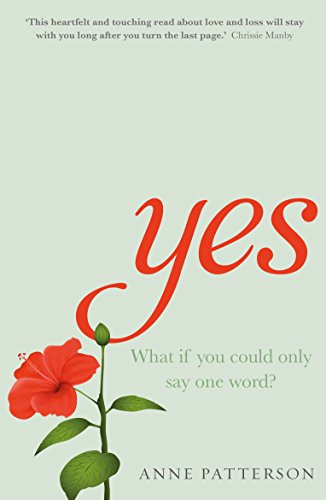
Yes

It’s almost a year (9th November) since my wonderful Dad died from the massive stroke he had in July and when I realised that Yes by Anne Patterson involved a protagonist who’d had a stroke I wanted to feature it on Linda’s Book Bag. I’m afraid I haven’t quite gathered the emotional strength to read Yes yet, but today Anne tells me a bit about it.

Published today, 26th October 2017 by Silver Tail Books, Yes is available for purchase here and on Amazon.

Yes

Yes

Maureen McCormack wakes up after a stroke, her memory fragmented. She can say only one word – Yes. Friends, family and lovers visit her in hospital, filling silences with secrets and learning to open up as Maureen learns to listen.

As the revelations mount, her view of life fundamentally shifts. Maureen and those around her attempt to come to terms with all that has been left unsaid and unexamined.

When her ability to speak gradually returns, she decides to keep it a secret, until she has made sense of her past and gathered the strength to shape her future.

Yes is a novel about how relationships grow, disintegrate and heal, showing what happens when people really listen to each other.

Introducing Yes

A Guest Post by Anne Patterson

I trained as a nurse and still work full time in the NHS and as you’ll see, my day job has had an influence on my noveI. I have always found hospitals fascinating; the rules, the language and the hierarchy. It’s also a great way of taking your characters out of their comfort zone and making them have conversations they wouldn’t normally have. The idea for Yes has been around for a while. In 1999 at age 38, I wanted to write about an overburdened woman aged 50 whose life is put on pause and she suddenly has time to think.  It’s taken me so long to get the book written that I have overtaken my character Maureen in age! I think in your 50’s you can easily sit back and have regrets or you can see it as a time to get started. I am talking about myself as well as Maureen.

Maureen is a full-time teacher, part-time farmer and would-be artist. She’s the narrator of Yes. When a stroke deprives her of nearly, but not quite all her speech, she starts to have regrets about how she has distanced herself from the people she loves. In her family and community, folk keep themselves to themselves, never talking about how they really feel. While she’s critical of that in others, after the stroke it dawns on her that she too has been part of the problem: isolating herself, emotionally, by being too busy to talk; shying away from uncomfortable conversations; worrying about being judged. While recovering from her stroke, Maureen has time to revisit, mentally, her secrets, her lovers, her crushes, her furious hatreds and the deep sadness she’s packed away and tried to forget. Her silence encourages her visitors to keep talking. Her hospital bedside is a venue for monologues and confessions, declarations of love and stories of betrayal.

Maureen isn’t based on anyone I know. Being able to say only one or a few set words following a stroke is quite common. My dad’s friend, John was a great talker – ‘great craic’ as they say where I come from. In his fifties, he had a stroke and for a while he could only say yes. His story made me think about the impact that losing your speech might have on relationships and how others react to you. Somehow he was able to stay part of the conversation using the word yes to show hearty agreement, extreme scepticism and stern negativity. His cronies all stuck by him. In time, his speech started to trickle, then to flow back. John was a confident outgoing guy; but for some, aphasia can be very isolating. Aphasiaalliance.org has some useful tips on ‘aphasia-friendly communication’.

Yes is set in 1998. There have been huge developments in stroke prevention, treatment and rehabilitation since then. Maureen was lucky because a stranger called an ambulance when she had the stroke. I can’t help thinking that if she’d been at home, she’d have said, ‘Don’t make a fuss, I’ll be okay after a nice cup of tea.’ Campaigns by the Stroke association have helped people know when to call 999 for crucial early treatment.

People have asked me about the book. Is it a romance? There is a bit of romance in it but I think the key relationship is the one between Maureen and her sister Shirley. Inseparable as little girls, their everyday lives are still intertwined, but Maureen realises that they have stepped back further and further from each other when they should have stood together.  Maureen is shocked at her sister’s frankness; once Shirley starts talking at the bedside, there’s no stopping her. This is a story as much about the importance of listening as the value of talking.

(And that’s a lesson we could all learn – before it’s too late Anne.)

About Anne Patterson

Anne patterson

Anne Patterson is from County Antrim. She lives in London and works for the NHS. Yes is her first novel.

You can follow Anne on Twitter @Patterson13Anne.

Special Christmas Giveaway from Lilly Bartlett, Author of Christmas at the Falling-Down Guest House

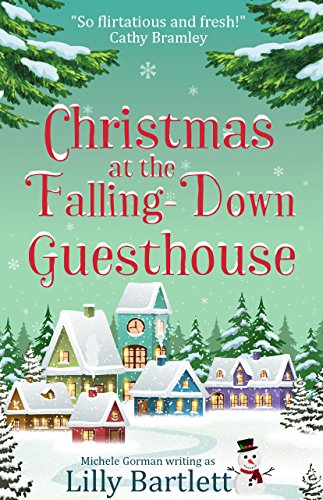
Christmas cover

I’m delighted to be part of the launch celebrations for Lilly Bartlett’s latest release Christmas at the Falling-Down Guesthouse not least because there’s a chance to win homemade cookies from the author Lilly, otherwise known as Michele Gorman, herself. I’ve loved the Lilly Bartlett books I’ve read and you’ll find my review of The Second Chance Cafe in Carlton Square here, and of The Big Dreams Beach Hotel here.

Previously Michele’s The Reluctant Elf, Christmas at the Falling-Down Guesthouse is published today, 25th October 2017 and is available for purchase here.

Christmas at the Falling-Down Guesthouse

GIF snowy cover

Put your feet up and tuck into the mince pies, because you won’t have to lift a finger to enjoy this Christmas!

Too bad the same can’t be said for single mother and extremely undomestic goddess, Lottie. When her beloved Aunt Kate ends up in hospital just before Christmas, Lottie and her seven-year-old daughter rush to rural Wales to take over her B&B. A picky hotel reviewer and his mad family are coming to stay, and without the rating only he can give them, Aunt Kate will lose her livelihood.

But Lottie can barely run her own life, let alone a hotel. How will she manage to turn the falling-down guesthouse into the luxurious wonderland the reviewer expects? And could the mysterious taxi driver, Danny, who agrees to help her, turn out to be the real gift this season?

As the snow sparkles on the trees and hot chocolate steams in your hand, snuggle into the delicious magic of Christmas at the Falling-Down Guesthouse.

My Review of Christmas at the Falling-Down Guest House

When Lottie’s Aunt Kate ends up in hospital, Lottie and her daughter Mabel have to help run her B and B over Christmas.

Yet again Lilly Bartlett has produced a warm-hearted story which is just right for the festive season. As a short novella I think Christmas at the Falling-Down Guesthouse would be perfect for snuggling up with on Christmas Eve or after Christmas lunch as it brings with it lovely themes of family and sticking together.

I really enjoyed the touches of humour and the speedy plot so that it felt satisfying to read an entire story in the space of an afternoon. I could picture the falling down guest house vividly and felt as if I was a guest too.

As always with Lilly Bartlett, the characters are warm, human and certainly not perfect so that they feel real and believable. I don’t usually like children in stories, but Mabel was a triumph with her aphorisms and balanced the foul Amanda and Oscar wonderfully.

Christmas at the Falling-Down Guesthouse is a lovely way to while away and hour or two as a Christmas treat.

About Lilly Bartlett

michele-photo

Lilly Bartlett is a pen name of Michele Gorman. Michele writes books with heart and humour, full of best friends, girl power and, of course, love and romance. Call them beach books or summer reads, chick lit or romcom… readers and reviewers call them “feel good”, “relatable” and “thought-provoking”.

She is both a Sunday Times and a USA Today bestselling author, raised in the US and living in London. She is very fond of naps, ice cream and Richard Curtis films but objects to spiders and the word “portion”.

You can find Michele on Instagram and on Facebook . You can follow her on Twitter and visit Michele’s blog and her website. There’s also a Lilly Bartlett Facebook page here.

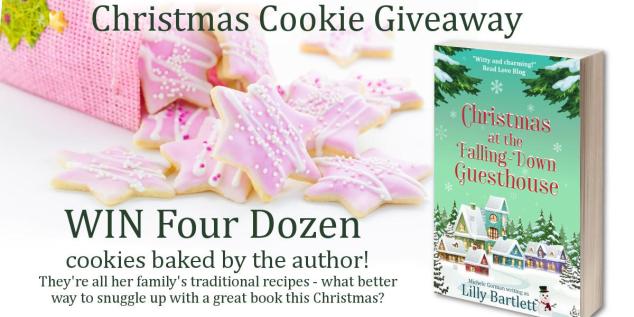
Christmas Cookie Giveaway

Cookies

Win four dozen homemade Christmas cookies from Sunday Times bestselling author Michele Gorman, aka Lilly Bartlett!

Enter to win four dozen Christmas cookies baked by the author! Unlike poor Lottie in Christmas at the Falling-Down Guesthouse, she’s a keen cook who grew up baking every Christmas with her mum – dozens and dozens (and dozens!) of cookies to fuel the family through the season. This year, she’ll be baking for YOU!

The giveaway is global and the winner will be randomly selected on November 1st 2017. To enter, sign up here for Michele’s/Lilly’s newsletter (around three times per year, you can unsubscribe easily at any time and your details will never be shared).

Please note that this giveaway is independent of Linda’s Book Bag.

Fangs and Feasts in Transratania by Geronimo Stilton

Fangs and feasts

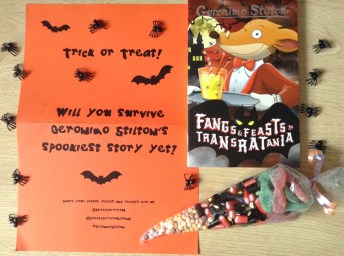
My enormous thanks to Jess at Sweet Cherry Publishing for a copy Fangs and Feasts in Transratania in return for an honest review (and for the spiders and sweets that accompanied it)!

IMG_0819 (1)

Published by Sweet Cherry in October 2017, Fangs and Feasts in Transratania is available for purchase here.

Fangs and Feasts in Transratania

Fangs and feasts

After a mysterious phone call from his cousin Trap, Geronimo sets off for Ratoff in spooky Transratania.

The garlic-fuelled town holds many mysteries, not least the residents of Ratoff Castle. Maybe it’s the way they sleep during the day, maybe it’s the blood-red drink they have with every meal, but there’s something not quite right about them …

Who are these mice?

And will Geronimo manage to survive the night?

For children aged 5-7 and also available as part of a 10 book box set.

My Review of Fangs and Feasts in Transratania

When a mysterious phone call in the middle of the night from cousin Trap sends Geronimo off to Transratania, his adventures are just beginning.

What a cracking book for children Fangs and Feasts in Transratania is. I’m going to get a small negative out of the way first before my review proper. I found the different fonts, designed to engage reluctant readers and break up what can be challenging amounts of text, quite tricky to read smoothly. However, I’m a 50 something woman and not a six or seven year old child.

Aside from that tiny quibble, I thought Fangs and Feasts in Transratania was an excellent story for children. There’s a really well maintained theme of blood and vampire allusions with smashing jokes through word play so that language becomes fun and entertaining. However, there’s nothing that could spark nightmares and unsettle children, just really good storytelling.

The plot is fast paced and engaging so that children would want to read just a little bit more. I think boys especially would enjoy Fangs and Feasts in Transratania and given that they can be hard to interest in reading, this is wonderful.

There’s a great sense of Geronimo as a character too through his first person account so that readers will want to find out what happens to him on other adventures. With another nine books in this particular publisher series available it would be enormous (or enor-mouse) fun to collect them all.

I thought the super illustrations added extra value too as they could be discussed with children, but also they help break up the text, making it more accessible to young independent readers.

Fangs and Feasts in Transratania is a super children’s book. I can understand why Geronimo Stilton is so popular as I thought his adventure was excellent and this particular book would make a perfect Hallowe’en gift.

About Geronimo Stilton

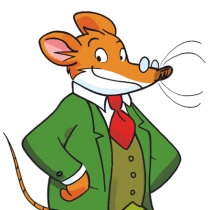
Geronimo

Born in New Mouse City, Mouse Island, Geronimo Stilton is Rattus Emeritus of Mousomorphic Literature and of Neo-Ratonic Comparative Philosophy. For the past twenty years, he has been running The Rodent’s Gazette, New Mouse City’s most widely read daily newspaper. Stilton was awarded the Ratitzer Prize for his scoops on The Curse of the Cheese Pyramid and The Search for Sunken Treasure. He has also received the Andersen 2000 Prize for Personality of the Year. One of his bestsellers won the 2002 eBook Award for world’s best ratlings’ electronic book. His works have been published all over the globe. In his spare time, Mr. Stilton collects antique cheese rinds and plays golf. But what he most enjoys is telling stories to his nephew Benjamin.

You can find out more about Geronimo, watch videos, play games and find lots of fun on his website.

A Publication Day Interview with John Jackson, Author of Heart of Stone

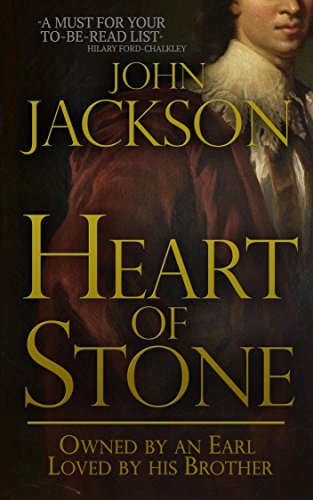
Heart of Stone

It’s no secret that I love featuring authors I’ve actually met on Linda’s Book Bag and today I’m delighted to welcome another of those authors, John Jackson. John and I met in September and I’m so pleased he agreed to tell me all about Heart of Stone.

Heart of Stone is published today, 24th October 2017, and is available for purchase here.

Heart of Stone

Heart of Stone

Dublin, 1730

When young and beautiful Mary Molesworth is forced to marry Robert Rochford, widowed heir to the earldom of Belfield, she finds that her idea of love is not returned. Jealous, cruel and manipulative, Robert ignores her after she has provided him with a male heir, preferring to spend his nights with his mistress. Power-hungry, Robert builds up a reputation that sees him reach for the highest positions in Ireland.

Caught in an unhappy marriage, Mary begins to grow closer to Robert’s younger brother, Arthur. Acknowledging their love for each other, they will risk everything to be together. But Robert’s revenge threatens their lives and tears them apart.

Will Mary and Arthur find a way to escape Robert’s clutches?

Based on real events, Heart of Stone is a tale of power, jealousy, imprisonment, and love, set in 1740s Ireland.

An Interview with John Jackson

Welcome to Linda’s Book Bag, John and congratulations on today’s publication of Heart of Stone. Thank you so much for agreeing to answer some questions on my blog about your writing and Heart of Stone in particular.

Tell me, why do you write?

Because I enjoy it! (although I don’t enjoy the struggles with writers block)

When did you realise you were going to be a writer?

When I realised that I had a story to tell, and that I could tell that story. What I had to learn was to tell it in a way that made it approachable for others.

Which aspects of your writing do you find easiest and most difficult?

If I can get the story fixed in my head, then I can rip out several thousand words a day. That’s the easy bit.

The hardest has been deciding exactly where you want to go with a story.

What are your writing routines and where do you do most of your writing?

I use a trolley table and type at my chair in the lounge. I am quite happy typing away with the TV on. Weird, isn’t it?

(Interesting as many authors tell me they need to be away from all distractions!)

In your previous working life you did quite a lot of technical writing. How difficult was it to turn your hand to fiction?

Ha ha ha!! Chalk and cheese in so many ways. My previous experience certainly helped in so far as I knew my way around a document, so the technical side was very familiar.

The more technical documentation I wrote, the more I realised that I was writing for the reader – in my previous life these were mostly ships officers who had English as a second language. In other words, simplicity and clarity are everything. That was a help when it came to writing fiction.

Without spoiling the plot, please could you tell us a bit about  Heart of Stone?

It is set in Ireland and is about a family of three brothers. One had all the advantages by way of position and money, while the middle brother had all the moral advantages. Add a third brother who’s only love is money, and a young girl pressured into marriage and you have some great ingredients.

I know you have an avid interest in family history and have used some of it as a basis for your writing. How did it feel to include elements about those from your own background?

Great! For me it personalised it, so in many ways writing it didn’t feel like work.

How did you go about researching detail and ensuring Heart of Stone was realistic?

I read all I could about the personalities involved, and visited the main sites for the story – initially on line and then in person. As Heart of Stone is set partly in a major building in Ireland, I contacted the managers of Belvedere who were also amazingly helpful.

Heart of Stone is set in Ireland. Why here particularly and how easy did you find it to create a sense of place in your writing?

I have been to Ireland a few times over the years, and researched the period and area as extensively as I could. A lot of the “first draft” had to be intelligent guesswork, but we went over to the location two years ago and just wandered around soaking up the atmosphere and “feel” of the place. As it happens, there was very little I needed to change, but it was extremely useful in giving me more confidence in what I had written. Even little but important details, like “Can you see over the local hedges lining the roads there”

You’re highly supportive of other authors on social media. What advice would you give to those authors who tell me they don’t use social media platforms?

If you have never used Twitter or Facebook before it can seem very daunting, especially when you see and read so many warnings about identity theft, etc. I found it a great place to meet people, and, over the years, to meet them in real life, where on-line friends turn in to real friends,

I would urge any writer to try Twitter and Facebook, and not to be afraid of them. It is, perhaps, the modern equivalent of a “chat across the garden fence”.

I know you belong to the Romantic Novelists Association and the Historic Novel Association and love attending conferences. What do you gain as a writer from such involvement?

Meeting friends!! I have lost count of the times that I have been approached by someone and told “Hi, John – I’m on your Friday twitter list,” or “We are friends on Facebook”

As a writer, it helps me get back in the groove. I have learnt a LOT from the various sessions, especially from Julie Cohen and from Emma Darwin.

As a writer, I would say I learn more about the “Craft” of writing at the RNA Conferences, and more about History and Historic Writing at the HNS Conference.

Heart of Stone has a cover that suggests murkiness and mystery to me. How did that image come about and what were you hoping to convey (without spoiling the plot please!)?

The cover uses a portrait of one of the main protagonists in the story. The original hangs in the house I mentioned, Belvedere. The management were unbelievably helpful in allowing me to use the image.

If you could choose to be a character from Heart of Stone, who would you be and why?

Very difficult. Probably either Stafford or Flynn.

If Heart of Stone became a film, who would you like to play Mary and why would you choose them?  

Keira Knightley.

When you’re not writing, what do you like to read?

I tend to read a lot of historical novels, esp. writers like Bernard Cornwell, Linsey Davis and Simon Scarrow.

If you had 15 words to persuade a reader that Heart of Stone should be their next read, what would you say?

It’s a story of jealousy, passion, privilege and suffering, but with love at its heart

Thank you so much for your time in answering my questions John.

And thank you for asking them.

About John Jackson

John Jackson

Following a lifetime at sea, John Jackson has now retired and lives in York. After thirty years of non-fiction writing, drafting safety procedures and the like, he has now turned his hand to writing fiction.

An avid genealogist, he found a rich vein of ancestors going back many generations. His forebears opened up Canada and Australia and fought at Waterloo.
A chance meeting with some authors, now increasingly successful, led him to try to turn some of his family history into historical novels.

John is a keen member of the Romantic Novelists Association and graduated through their New Writers Scheme. He is also a member of the Historic Novel Association and an enthusiastic conference-goer for both organizations.

He describes himself as being “Brought up on Georgette Heyer from an early age, and, like many of my age devoured R L Stevenson, Jane Austen, R M Ballantyne, and the like.”

You can find out more by following John on Twitter @jjackson42, visiting his blog and finding him on Facebook.

Why Mummy Drinks by Gill Simms

Why mummy drinks

My enormous thanks to Polly Osborn at Harper Collins for a copy of Why Mummy Drinks in return for an honest review.

Why Mummy Drinks was published on 19th October 2017 by Harper Collins and is available for purchase through the publisher links here.

Why Mummy Drinks

Why mummy drinks

It is Mummy’s 39th birthday. She is staring down the barrel of a future of people asking if she wants to come to their advanced yoga classes, and polite book clubs where everyone claims to be tiddly after a glass of Pinot Grigio and says things like ‘Oooh gosh, are you having another glass?’

But Mummy does not want to go quietly into that good night of women with sensible haircuts who ‘live for their children’ and stand in the playground trying to trump each other with their offspring’s extracurricular activities and achievements, and boasting about their latest holidays.

Instead, she clutches a large glass of wine, muttering ‘FML’ over and over again. Until she remembers the gem of an idea she’s had…

My review of Why Mummy Drinks

Ellen is fast approaching 40 and as her two children behave like tyrants and her husband Simon retreats in front of the TV she turns to drink!

Although I use them myself on occasion, I’m not usually particularly fond of books with loads of expletives and Why Mummy Drinks is peppered liberally with them from the euphemistic initials of FML to more outright examples. So, I think it says something about Why Mummy Drinks that I absolutely loved it!

It took me quite a long time to read Why Mummy Drinks because I literally couldn’t see through the tears of laughter running down my face. I had to read parts aloud to my husband and that took extra time as I couldn’t stop laughing long enough to do so properly. I found it utterly hilarious. For me, most of the humour came through Ellen thinking exactly what so many of us think too, but also through the carefully crafted writing. Gill Simms knows exactly where to use upper case letters or a judicial full stop for maximum impact. I found her writing flowed faultlessly.

I loved too, the family dynamics, especially as Peter and Jane confirmed everything I ever believed about children as a non-parent. Of course the characterisation is somewhat exaggerated in order to fit the genre, especially with Louisa, but that didn’t make the people in Why Mummy Drinks any less believable. Ellen is an absolute triumph of self deception, exasperation and realism.

Although the plot is slightly incidental as Why Mummy Drinks is a kind of monologue from Ellen, I thought the division into the months of the year so that ordinary family events like bonfire night, Easter and Christmas could be explored, worked brilliantly and when I’d finished reading and reflected I discovered there was actually quite a lot going on. Indeed, humour and fabulous entertainment aside, Why Mummy Drinks is also a witty and insightful insight into the modern world of middle class Britain – but don’t let that put you off, as it’s also a laugh out loud, fantastic read that I completely adored. Just brilliant.

About Gill Simms

Gill simms

Gill Sims is the author and illustrator of the hugely successful parenting blog and Facebook site ‘Peter and Jane’. She lives in Scotland with her husband, two children and a recalcitrant rescue Border Terrier, who rules the house. Gill’s interests include drinking wine, wasting time on social media, trying and failing to recapture her lost youth and looking for the dog when he decides to go on one of his regular jaunts.

You’ll find Why Mummy Drinks on Twitter, and can visit Gill’s Peter and Jane Facebook page or read her blog.

Why A Book Launch Matters: A Guest Post by Barbara Henderson, Author of Punch

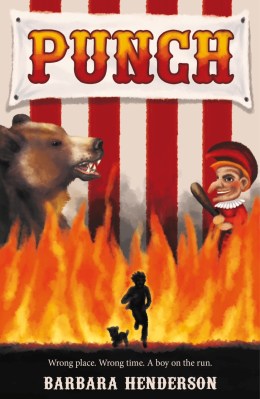
PUNCH EBOOK COVER FINAL

I am absolutely delighted to welcome back Barbara Henderson, author of Punch to Linda’s Book Bag. Barbara is a wonderful person and a fantastic writer. You can find out what I thought of her novel Fir For Luck here. Fir For Luck was one of my books of the year in 2016 and I was thrilled when Barbara shared her previous publication day experience with me here.

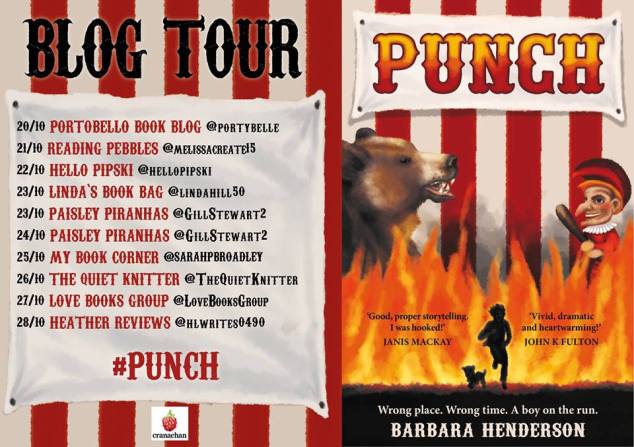
Punch is published today, 23rd October 2017, by Pokey Hat, the children’s book imprint of Cranachan and is available for purchase here.

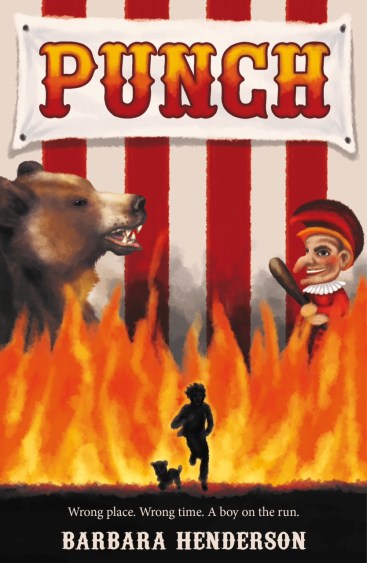
Punch

PUNCH EBOOK COVER FINAL

Wrong place. Wrong time. A boy on the run.
THE MARKET’S ON FIRE. FIRE! FIRE! THE BOY DID IT!

Smoke belches out through the market entrance.

And me?

I turn and run.

Inverness 1889.

When 12-year-old Phin is accused of a terrible crime, his only option is to flee. In the unlikely company of an escaped prisoner and a group of travelling entertainers, he enters a new world of Punch and Judy shows and dancing bears.

But will Phin clear his name?

And what can he do when memories of a darker, more terrible crime begin to haunt him?

Why a Book Launch Matters

A Guest Post by Barbara Henderson

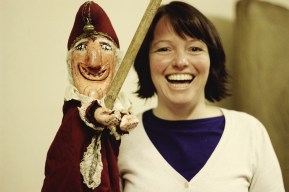
IMG_6130

By the time you read this, my book Punch will be officially out in the big wide world – today is publication day, and I will be three days away from the beginning of my grandly named but probably actually not all that impressive launch tour.

I think every book deserves a proper launch – not to bother seems churlish, akin to denying an excited child a birthday party. When Fir for Luck, my debut novel for children, was launched last year, I put out a general invite to friends and family, chatted to my local Waterstones branch and that was that. Thankfully, to my immense relief, they came – many of them! Waterstones swiftly ran out of space, and then books – and I was euphoric! It’s that feeling when walking into the church at your own wedding. You know everyone (well, almost everyone), and they are on your side, willing you on to succeed. They listen, they smile, and – helpfully – they may even buy!

20160922_175803[1]

Of course, the thought of a launch event with an audience may seem daunting to some. I am by no means an introvert, but even I feel an onslaught of nervousness  just before.

So why should anyone bother?

  1. To forge links with local booksellers ! These people are part of your journey, and you are part of theirs. Your success is their success. Happy bookbuyers make their hearts sing, just as they do yours (and your publisher’s).
  2. To raise awareness of your book. True story: I had a knockback last week. A well-known radio show we had approached in the summer had asked for a copy of Punch. It sounded interesting. Yes, this may well be a fit for their show. When I hadn’t hear anything in response, I got in touch. Oh, they said. Didn’t you know that 500 books were published last week in the UK alone? No, we won’t be able to feature your book. Too crowded out there.

Do you see my point? A book, out there on its own, struggles to be noticed (especially if you are not a well-known author already). A book, with images of a well-attended launch event, on the other hand, makes for a more promising premise. Especially if you can think of something quirky.

  1. To be remembered! Coming back to my point of quirkiness, you have a better chance of online success if your images stand out from the crowd. Take Edinburgh writer Lesley Kelly. Her novel The Health of Strangers was launched a while ago. I have only met her fleetingly, her book is not usually my genre, but yet, I remember the title, the author and the publisher. Why?

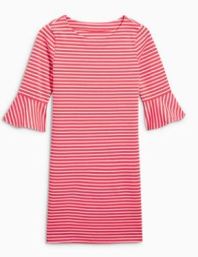
Because she had an awesome idea for her book launch!  What could be better for the launch of a virus-themed novel than wearing a bio-hazard suit, serving nibbles in syringes/petri dishes, and handing out protective face masks to the audience. The images continued to do the rounds online long after the launch had come and gone. And I remembered her book! Of course, my question is: What quirky thing might work for Punch? Puppetry will feature, naturally. For the children’s events, a bit of dressing up (I am customising  costumes as speak) and some props for audience participation tend to go down well in schools. I am going to basically wear a Punch and Judy tent (well, a dress with that type of pattern) – think bold red and white stripes, probably teamed up with red shoes. And there is a giant inflatable club – after all, the word slapstick came from Punch and Judy shows! Any new ideas welcome!

dress

  1. To attract a bit of media interest! An unusual venue might really help with this. In today’s visual world, anything that makes for a fab photo opportunity goes down well, and it may be as beneficial to the venue as it is to you. My Glasgow launch is going to take place with a school group, in the Scottish Mask and Puppet Centre. Provided the school is ok with this, there is nothing to say that we can’t invite the Glasgow papers’ journalists/ TV /radio crews, simply because it is different. And as I am, sadly, not all that interesting on my own, an unusual venue, I hope, may help. Let’s face it, I need all the help I can get! With 500 books published in a single week, we all do!
  2. To have fun! Most of us pass on having a party for any occasions, as if it was an ordeal to celebrate a success or an achievement with like-minded people. Come on! Let’s shed the British reserve, kick our figurative shoes off and let rip. You have a book out!

That is more than enough reason to revel! Wish me luck for my first launch events for Punch on the 26th! I can’t wait!

(We wish you all the (well-deserved) luck in the world Barbara.)

About Barbara Henderson

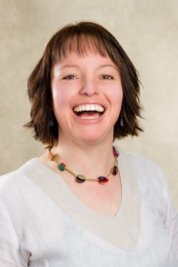
barbara-henderson

Barbara Henderson has lived in Scotland since 1991, somehow acquiring an MA in English Language and Literature, a husband, three children and a shaggy dog along the way. Having tried her hand at working as a puppeteer, relief librarian and receptionist, she now teaches Drama part-time at secondary school.

Writing predominantly for children, Barbara won the Nairn Festival Short Story Competition in 2012, the Creative Scotland Easter Monologue Competition in 2013 and was one of three writers shortlisted for the Kelpies Prize 2013. In 2015, wins include the US-based Pockets Magazine Fiction Contest and the Ballantrae Smuggler’s Story Competition.

You can find out more by following Barbara on Twitter and reading her blog. You’ll also find her author page on Facebook.

There’s more with these other bloggers too:

Punch tour poster

The Cabinet of Linguistic Curiosities by Paul Anthony Jones

Cabinet of linguistic curiosities

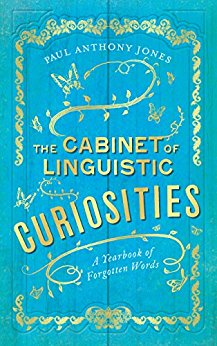
I had been coveting The Cabinet of Linguistic Curiosities: A Yearbook of Forgotten Words by Paul Anthony Jones so when a copy arrived on my door mat I was thrilled and I’m delighted to be part of the launch celebrations today. Not only do I have my review, but I have today’s entry so that you can get a flavour of the book.

The Cabinet of Linguistic Curiosities was published by Elliott and Thompson on 19th October 2017 and is available for purchase here.

The Cabinet of Linguistic Curiosities

Cabinet of linguistic curiosities

Who knows where each day will lead you?

Open The Cabinet of Linguistic Curiosities on any day of the year: you might leap back in time, learn about linguistic trivia, follow a curious thread or wonder at the web of connections brought to you by popular language blogger Paul Anthony Jones.

Within its pages you will discover a treasure trove of language, with etymological quirks and connections for every day of the year.

Today’s Entry in The Cabinet of Linguistic Curiosities

22 October

brolly-hop (n.) a parachute jump

On 22 October 1797, a French balloonist and daredevil named André-Jacques Garnerin performed the world’s first successful parachute jump.

Floating in a gondola hanging beneath a hot air balloon, Garnerin climbed to a height of 3,000 feet above the Parc Monceau in central Paris. He then cut the ties attaching his basket to the balloon, which floated skyward, and as he and the gondola began their descent, his homemade 23-foot canvas parachute unfurled above him. The descent was far from smooth, and the basket swung violently as it fell, but Garnerin managed to make a bumpy but nevertheless successful landing in the grounds of the park and stepped from the gondola uninjured.

Over the years that followed, Garnerin continued to improve his hot air balloon parachute designs, and gave regular demonstrations of his prototypes to ever larger crowds; in 1798, he courted controversy by asking a woman named Citoyenne Henri to accompany him on one of his flights.

Sadly, after a lifetime of surviving perilous falls, in 1823 Garnerin was struck by a falling beam while constructing a new balloon in his workshop and was killed. His place in history as the world’s first successful parachutist, however, was secured.

To British Royal Air Force parachutists in the first half of the twentieth century, parachuting became known as brollyhopping, while a brolly-hop was a parachute jump. First recorded in 1932, the term – alluding to the umbrella-like canopy of the parachute – grew in popularity during the Second World War but had largely disappeared by the 1950s.

My Review of The Cabinet of Linguistic Curiosities

With an entry for every day of the year, The Cabinet of Linguistic Curiosities takes the reader across centuries and continents as long forgotten terms are brought back to life.

Now here’s the thing. I never do this, but I’m actually going to review a book I haven’t actually completely read!

When I got my copy of The Cabinet of Linguistic Curiosities I dashed straight to my birthday where I discovered ‘crack-halter, a ‘gallows-bird’, someone liable one day to be hanged; a habitual troublemaker‘. Hmm! I then looked at my wedding anniversary to find ‘escarmouche, a brief skirmish or fit of anger‘! After that I flitted about from one significant date to another, thoroughly enjoying the brilliant discoveries I made. Then I stopped. And now I’m savouring each day as it arises in the calendar because I don’t want reading this delightful selection of entries to be over too soon.

You can read The Cabinet of Linguistic Curiosities on a daily basis as I am now doing, or you can turn to the Wordfinder at the back of the book and select a word that takes your fancy. Either way, the entries are hugely entertaining. As well as the linguistic interest there’s history, sociology, geography and so many wondrous things to discover. I am so impressed by the incredible devotion to research that has gone in to finding the words, and making them available to the reader through totally accessible prose and providing the background to the word’s etymology and usage.

I’m absolutely adoring this book and think it would make a fantastic gift for any reader or writer. There are three friends at least who will be receiving copies from me. In the meantime, having read some of The Cabinet of Linguistic Curiosities I may now have to become a word-grubber, but until then I’m off to scurryfunge the house!

About Paul Anthony Jones

Paul

Paul Anthony Jones is something of a linguistic phenomenon. He runs @HaggardHawks Twitter feed, blog and YouTube channel, revealing daily word facts to 39,000 engaged followers.  His books include Word Drops (2015) and The Accidental Dictionary (2016).  His etymological contributions appear regularly, from the Guardian to the Telegraph, Buzzfeed to Huffington Post and BBC Radio 4.

You can follow Paul Anthony Jones on Twitter @paulanthjones, and visit his website.

There’s more with these other bloggers too:

tour poster


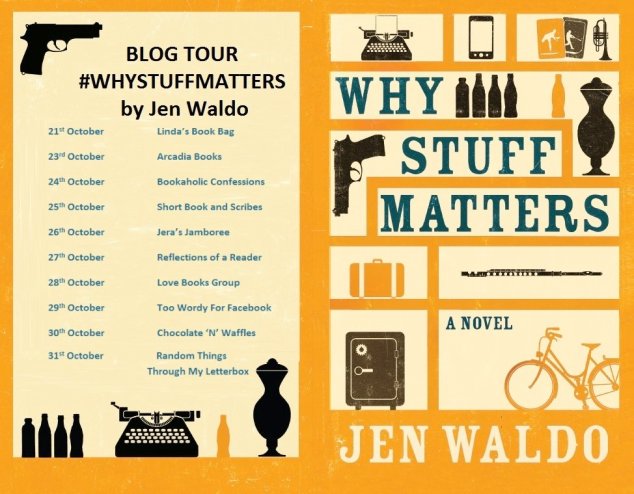
Three Belongings: A Guest Post by Jen Waldo, Author of Why Stuff Matters

Why Stuff Matters Jacket

I’m delighted to be part of the launch celebrations for Jem Waldo’s new book, Why Stuff Matters. I’m married to a terrible (or should that be expert) hoarder who never throws anything away. As we’ve aged we’re realising that material possessions aren’t important and there are only a few things with deep sentimental meaning that we’d really hate to be parted from. With that in mind I asked Jen Waldo what three things she’s save from her possessions in the event of a fire and she’s telling us today.

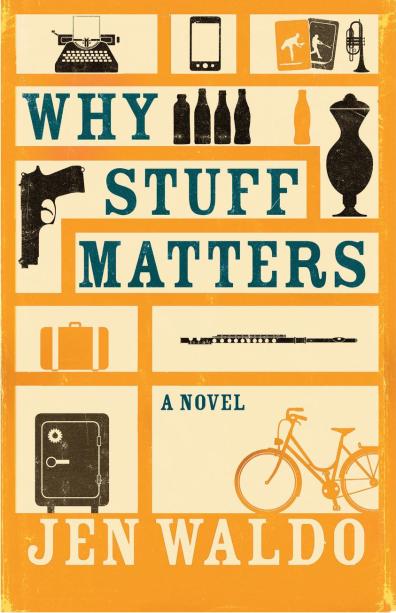
Why Stuff Matters was published on 19th October by Arcadia Books and is available for purchase here.

Why Stuff Matters

Why Stuff Matters Jacket

When Jessica, a grieving widow, inherits an antique mall from her mother she also inherits the stallholders, an elderly, amoral, acquisitive, and paranoid collection.

When one of the vendors, a wily ex-con named Roxy, shoots her ex-husband, she calls on Jessica to help bury the body and soon Jessica is embroiled in cover-ups, lies, and misdirection. Into this mix comes Lizzie, Jessica’s late husband’s twelve-year-old daughter by his first marriage, who’s been dumped on Jessica’s doorstep by the child’s self-absorbed mother and it soon becomes apparent that Lizzie is as obsessed with material possessions as Jessica’s elderly tenants.

Why Stuff Matters is a compelling ode to possession, why people like things and the curious lengths they will go to keep them. Returning to her fictional Caprock, Waldo turns her wry wit on the lives of those afraid to let go.

Three Belongings

A Guest Post by Jen Waldo

If I had to evacuate because of a fire, what three things would I save? Considering that my new novel, Why Stuff Matters, addresses a small community’s obsession with material possessions, this is a relevant question. Also, fires do occasionally sweep through this portion of Texas, so the possibility of this scenario coming true is a literal concern as well as a figurative one.

The first thing I’d grab would be my laptop, which goes with me every time I spend a night away from home. Over this one item, I’ll admit to obsession. I write every morning. It is invariably what I do. Even if I were evacuated to some stale hotel while my home burned down, I’d write.

The next thing I’d take with me is woefully unoriginal. I’d take the photo albums. Not that I ever spend time browsing through them, but as a family we’ve had adventures. I think our sons would want me to rescue pictures of them as children riding camels, hiking through the Scottish highlands, scrambling around the ruins of Petra, or strolling through the tulips at Keukenhof.

Lastly, I’d dump the little dishes that hold my jewelry into my leather jewelry box that’s meant for traveling. Necklaces, earrings, rings—the usual stuff, but it’s nice stuff and I wouldn’t want to lose it.

Now keep in mind that for us, a fire might become a reality. We live amongst a lot of splintery cedar trees and undergrowth, and when there’s been no rain for a couple of months, the area becomes frighteningly dry. But there would be warning. An evacuation notice would be given; we’d have ample time to gather some clothes, pack up, and get out.

It’s not like my husband and I haven’t discussed the likelihood and made a plan. The first thing in the truck will be the laptop. Then, while I gather the photo albums and jewelry, David would be freeing the art from the walls. We’ve collected some nice oils and batiks over the years, and each piece holds a memory—where we got it, how we haggled to get the price down, the endless discussion of where we’d hang it. In many cases, we know the artist.

After all this stuff is in the truck, we’d walk through and see what else we could save—probably a few small pieces of furniture. Together, we’d lift and carry the rosewood chest that reigns from the end of the hallway, purchased in Sorrento. And another chest; we bought it in Vietnam when we lived in Singapore and ended up paying the price again in duty to get it into the country. Live and learn. We’d slide both of these chests into the bed of the truck.

And that’s it. That’s all the truck will hold.

While I’ve written about the items I hold most dear, I’m also aware that it’s just stuff. However, having said that, a few months ago David and I loaded up the truck and went on a road trip. Four hours into it, we stopped for lunch. I walked around the back of the truck and saw that we’d driven that whole way with the tailgate open. Our luggage and David’s golf clubs were still there, but we lost a box of items that I’d put in at the last minute. The box held two new beach towels, laundry detergent, sunscreen, a bottle of Grey Goose, and two bottles of a really nice Malbec. I didn’t spare a thought about how this box, falling on the highway, could have caused an accident. I was upset over the loss of the stuff. I felt befuddled and incomplete until every one of those items had been replaced. It seems I have more in common with the acquisitive folk in Why Stuff Matters than I thought.

(I think perhaps we all do Jen!)

About Jen Waldo

Jen Waldo

Jen Waldo has lived in seven countries over a thirty-year period, and now lives in Marble Falls, Texas with her husband, David and small dog Trip. She first started writing in Cairo, where she struggled to find interesting things to read and decided to write something for herself. Finding pleasure and power in the process of creating, she has since earned a Masters of Fine Art, has been published in The European, and has been shortlisted in a competition by Traveler.

She is often asked why, with her knowledge of international cultures and settings, she places her novels in a stark dry town in North Texas. It’s because it’s the place she knows best – the dusty gusts, the flat earth, the square houses, the late-summer thunderstorms. The people are stocky, stubborn, religious, big-hearted, abhorrent toward change, and suspicious of success. She’s grateful to Amarillo for providing colourful characters and a background of relentless whistling wind.

To find out more you can visit Jen’s website.

There’s more wwith these other bloggers too:

Why Stuff Matters poster