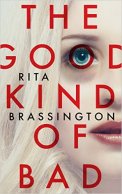
The Good Kind of Bad by Rita Brassington

cover

Regular readers of Linda’s Book Bag will know I love to feature authors I’ve actually met and today I’m delighted to be welcoming Rita Brassington whom I met at a recent author and blogger event. Lovely Rita agreed to write a guest post for the blog which you can read below, but first I’d like to tell you more about Rita’s psychological thriller The Good Kind of Bad.

The Good Kind of Bad

The Good Kind of Bad is available on Amazon UK and Amazon US.
cover

Secrets don’t stay secret for long…

She spent her whole life being the perfect daughter, the perfect girlfriend, and was all ready to become the perfect wife. But after ditching her fiancé at the altar and escaping to Chicago, she marries smouldering stranger Joe Petrozzi three weeks after meeting him in a bar. At least this time, there’s no chance of cold feet. Married life starts out great: there’s the new job, a gorgeous, enigmatic husband and money’s not an issue.

So what if she’s kept a few secrets from Joe – like where all her money came from. Joe’s been keeping secrets from her, too.

But his might just get her killed.

The Good Kind of Bad has just been selected as one of Heat Magazine’s Top Five Reads too!

Heat

The Art of Letting Go

A Guest Post by Rita Brassington

rita and book

When I started writing, I knew I was going to finish the book. Though I wasn’t so sure it would ever go further than my laptop screen. Last year, it did, and The Good Kind of Bad, my psychological thriller/crime novel, was launched into the world – ten years after I first put pen to paper. Yes, the road to letting go was a long one.

I first had the idea for the book in 2004, when I was in America’s Mid-West at St. Louis airport. I’d been visiting friends I’d made while studying abroad, and distinctly remember the feeling of being in an alien environment but surrounded by familiar faces. This idea of the other, or the age-old fish-out-of-water scenario popped into my head. I looked up at the airport departure boards, the people queuing for flights or sleeping in chairs and I wondered about their stories, what led them to be there. I saw a flight leaving for Chicago, wondered about who was on it, and I thought ‘what would happen if you left your whole life behind and started again?’

When I arrived home, I started formulating ideas though only began writing the year after, once finishing my degree. That summer I began to write, with a loose plot in my head, and thought I’d let the writing take me in whatever direction felt right. I’ve never suffered with writer’s block, not that it means whatever flows from my fingers is liquid gold, far from it. When I did start writing the book in 2005, it took nine months to finish it. Great, I thought. I’ve done it. I’ve written a book. The hard part came next. Editing. My great hurdle in the art of letting go.

Editing is the reason it took ten years to get the book out. In a way, I’m glad I waited. The literary landscape during that time changed beyond recognition. With the advent of social media, self-publishing, eBooks, bloggers etc. it has widened the scope and possibility for writers of all genres. My procrastination did have an upside.

Many times over the ten years I tried to let go. I sent it to a few agents, re-edited time and again, but it never felt like the right time. Life got in the way. I was never totally happy with the manuscript, and that was the key. In every draft it was always missing something. I went back to the drawing board and thought about what the story was about. Did it make sense? Did the characters make sense? Was I ever going to let go?

Then in 2013, I uploaded the book to Wattpad, the story sharing website with ten million users or so. In the space of a few months, I clocked up two million reads. People liked it. They gave me usable feedback. I changed things. Added sections. Though what it truly gave me was the authority to say, ‘the book is good. People like it.’

What had been missing from my book before wasn’t necessarily the words, but the permission I wouldn’t give myself, to believe I had written something someone else would want to read – to take it seriously.

I hired an editor, who also tore the book to pieces, but holding the book in my hand was becoming more real. I hired a cover designer, Jamie Keenan (who’s an award-winner, no less). For me, it was always about the finished, polished version of what had once started as an idea, almost a challenge to myself to see if I could do it – to see if my twenty-year-old self could write a book. All that time, I was waiting for the book to be finished, where I could reconcile with myself and truly say I was done. The book was finally perfect.

That day never came. It still isn’t finished. There’re still bits I’d love to change, even though I can now pick my own book off my bookshelf, nestled between Joyce Maynard and Paula Hawkins (ha!). Though I don’t think any book will ever be finished. There will always be new readers to carry on the story, to think up new scenarios for when the words run out.

That’s the best thing about letting go. There’s always someone to bring it back.

You can follow Rita on Twitter and find out more about her on her web site.
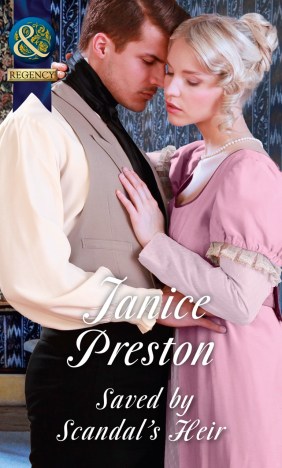
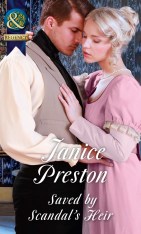
Saved by Scandal’s Heir by Janice Preston

Saved by Scandal's Heir

Knowing how popular Harlequin Mills and Boon (HMB) books are with so many readers and having read a few myself, I am fascinated by the writing process for this romance genre. It is with great pleasure that I have a really interesting guest piece from Janice Preston telling us all about the writing process for Harlequin Mills and Boon and about Regency romance in particular.

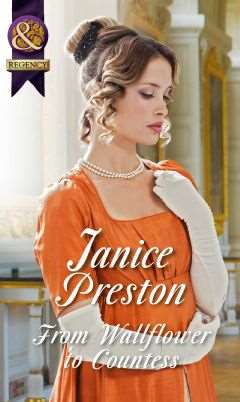
Janice’s new book Saved by Scandal’s Heir was published yesterday 1st. April 2016. It is her fourth Regency romance for HMB, and it features one of her favourite characters as heroine: Harriet, Lady Brierley, who first appeared in Janice’s second Regency From Wallflower to Countess (recently shortlisted for the RoNA Rose award) as the former mistress of the hero. You can read an extract below.

wallflower

About Saved by Scandal’s Heir

Harriet, Lady Brierley, is a respectable widow, determined to keep the secrets of her broken heart deeply buried. But when Benedict Poole—the very man who deserted her—returns, Harriet’s safe world threatens to unravel.

Believing Harriet left him for a wealthy lord, Benedict must fight to uncover the true consequence and tragedy of their affair years before. But with his family’s name now synonymous with scandal, can he hope to win back the trust of the woman he has always loved?

Saved by Scandal's Heir

All Janice’s HMB book are available here and you’ll find many of them on Amazon UK and Amazon US.

Writing Regency Romance for Harlequin Mills & Boon

A Guest Post from Janice Preston

Thank you, Linda, for inviting me onto your blog.

You asked me about the challenges of writing Regency romance for Harlequin Mills & Boon (HMB), and I’d like to answer that in three parts.

The challenge of writing is universal. Ultimately, you just have to get on and do it, or forget it and go clean the oven (insert your own least favourite chore here!)

The challenge of writing romance (also known as series or category romance), as opposed to romantic fiction, is the ability to focus almost entirely on the developing relationship between the hero and heroine (or hero/hero, heroine/heroine if you are writing same-sex romance). The plot is driven by the protagonists’ inner conflicts (ie the emotional or mental obstacles within the character). It is the resolution of those inner conflicts (and not exterior obstacles such as other people) that results in the characters changing and leads ultimately to their happy-ever-after. With a shorter word count (in the case of HMB it is 50000 words for contemporary, 75000 words for historical) there simply isn’t the luxury to stray too far from the central romance.

Nora Roberts once said that writing series romance is akin to “performing Swan Lake in a phone booth”. That describes it perfectly.

The challenge of writing Regency romance is the same as writing about any historical period. Fortunately there are numerous contemporary resources from the Regency era in existence, and the internet is a blessing in providing access to all kinds of information. It must be harder to research, say, Medievals or the ancient civilisations, where fewer contemporary sources exist. On the other hand, with fewer ‘facts’, there is more scope for the imagination.

Google is brilliant for research but it can be unreliable and the advice is to try and find at least three original sources for any fact—sometimes easier said than done. I am slowly building a collection of Regency reference books, often using them in preference to the internet. And my reference books have to be physical books. I simply cannot get on with having reference books on my kindle—I like something to flick through!

I use the internet, old maps and Google maps to research settings, and both the internet and my books to research clothing, interiors, travel etc. It is important not to get carried away with the research, however. Readers buy romances for the developing relationship between the hero and heroine, not to read pages of regurgitated facts, no matter how fascinating.

I like to imagine my stories as a stage play, with the Regency world providing the backdrop but the focus firmly on the interaction of the actors on stage. The world must be authentic, but it is the backdrop. I am writing from my protagonists’ points of view so I try to describe only the details that they might realistically notice which means I don’t describe every single detail of, say, the décor of a room or the clothes a character is wearing unless it is pertinent to the story.

Dialogue is a constant challenge. I bear in mind I am writing for the readers of today, not those of the Regency, or even those of the 1960s or 1970s. I therefore try to suggest the era, with the occasional use of a word or a turn of phrase that will remind the reader they are in the Regency era. It’s a bit like the advice given for writing dialects: use it sparingly and it works; use it throughout and the flow of the story suffers. I hope I get the balance right. I don’t use obviously modern terms, however, and one of my most-used reference books is English Through the Ages (William Brohaugh), which gives the earliest-recorded use of most common words.

I do push the boundary with regard to the formality with which characters address one another, but I do that deliberately in the hope of making the story more readable and, I hope, to win a younger readership over to the genre. Husbands and wives in the Regency appeared to address one another formally as, for instance, Mr Bennet and Mrs Bennet (although whether they continued that formality in the throes of passion is a moot point!) My characters do conform to the customs of the time in social settings but as their relationship deepens they do graduate to first name terms when they are private and in their inner thoughts. I also have friends address one another by their Christian names, even though I doubt that would be the case in real life, unless they had been friends from childhood. I just find too many Lady this and Miss that peppering the story becomes clunky.

So, that is it. The challenges—to me—of writing Regency romance.

Thank you once again, Linda, for inviting me onto your blog.

Janice, thanks so much for this. I thought I knew about fiction but had no idea that there was a distinction between romance and romantic fiction. Fascinating.

An Excerpt from Saved by Scandal’s Heir

(Harriet, Lady Brierley—a respectable widow—has travelled to Kent. In this excerpt she meets, for the first time in 11 years, her former childhood sweetheart, Benedict Poole.)

‘Lady Brierley. To what do we owe this pleasure?’

Harriet froze. It could not be. Had she conjured him up in the flesh, just by allowing her thoughts one tiny peek at those memories? Moisture prickled her palms even as her mouth dried. She drew a calming breath, gathered her years of experience in hiding her feelings, and turned.

He was framed in the open doorway.

Benedict.

After all this time.

He had the same long, lean legs and wide shoulders, but this was a man, not the youth she’d once known. His chin was just as determined but the high forehead under the familiar fox-red hair now sported faint creases. His lips were set in an uncompromising line and his leaf-green eyes pierced Harriet as he stared into her face, his gaze unwavering. A cat stalking its prey could not be more focused.

Harriet swallowed past the jagged glass that appeared to have lodged in her throat.

‘Good afternoon, Mr Poole.’ Had those composed words really come from her lips? She took courage. She had faced worse than this. ‘I apologise for calling uninvited. I did not realise your…’ What was his relationship to Sir Malcolm again? All she could recall was that he had been Benedict’s guardian. ‘… Sir Malcolm was so very ill. I had hoped for a few words with him.’

‘He is my second cousin. I’m the only other Poole left now.’

‘I’m sorry.’

The platitude slid readily from her tongue. She wasn’t sorry. The world would be well rid of the Pooles. But she would remain polite. Let nothing of her bitterness show. Sir Malcolm had spent his life in pursuit of his own pleasures, a dissolute rake with not a care for the ruined lives he left in his wake. Felicity’s poor sister had been just one of his victims. And Benedict had proved himself equally as contemptible, equally as careless of the heartbreak he had left behind. Hardly surprising with Sir Malcolm as his only role model since childhood.

Benedict prowled into the centre of the room, nearing Harriet. The very air seemed to vibrate between them. She stood her ground, although she could not prevent a swift glance at her maid, Janet, who had accompanied her, sitting quietly on a chair near the beautifully carved stone fireplace. Benedict followed her gaze.

At least I am not alone.

‘Why are you here?’ The words were softly spoken. Benedict’s green eyes bored into Harriet’s. ‘Did you think to wed another wealthy man on his deathbed?’

‘Brierley was not on his deathbed! And I had no ch—’ Harriet shut her mouth with a snap. She’d endured over seven years with that lecher. Seven years of misery and disgust, empty arms and a broken heart, all because of Benedict Poole.

She had not in a million years thought to meet him here. He had gone overseas—right to the other side of the world. And even that was not far enough away for Harriet. Hatred for this man rose as the long-suppressed memories cascaded through her thoughts.

His lying words. His false promises. All of it.

She concealed any hint of her feelings. He must never know how her heart still ached for what might have been.

———

If you would like to read more, the first chapter is free to read on Janice’s website.

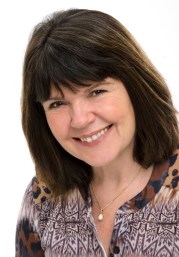
About Janice Preston

_JKP3233a

Janice Preston grew up in Wembley, North London, with a love of reading, writing stories and animals. In the past she has worked as a farmer, a police call-handler and a university administrator. She now lives in the West Midlands with her husband and two cats and has a part-time job with a weight management counsellor (vainly trying to control her own weight despite her love of chocolate!)

You can follow Janice on Twitter and find her on Facebook.

What Happens in the Alps by TA Williams

TAWilliams-Alps-BlogTourBanner

TA (Trevor) Williams is one of the most gentlemanly authors I’ve come across so I’m thrilled to be starting the launch celebrations for his latest book What Happens in the Alps which was published on 21st March 2016 by Harlequin/Carina UK and is available on Amazon US, Amazon UK, iTunes and Barnes & Noble.

I have a smashing guest post from Trevor and at the very bottom of this post you can enter for the chance to win an e-copy of What Happens in the Alps, but first, find out about this lovely read.

What Happens in the Alps

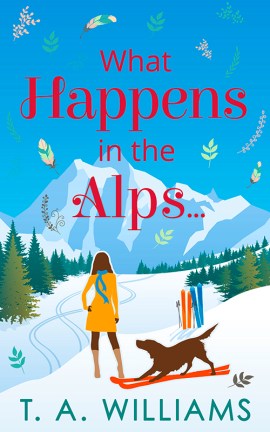
TAWilliams-Alps-Cover

Up in the magical, snow kissed mountains…

Two years ago, Annie Brewer’s life was turned upside down when her adrenaline-junkie husband died in a tragic climbing accident. So she’s hoping that moving to the beautiful village of Santorso in the Italian Alps will finally put her life back on track!

…anything can happen!

She might be going into business with her oldest friend – notorious lady-charmer Matt Brown – but men are definitely out of the question for Annie! That is, until she bumps into tall, dark and delicious Alessandro Lago on the ski slopes…and spontaneously says ‘Yes’ to a date! It must be the crisp mountain air but suddenly, anything seems possible. The only trouble is, chivalrous Matt is looking more gorgeous than ever…

A sparkling romantic comedy guaranteed to beat the winter blues, What Happens in the Alps…is one story you don’t want miss in 2016!

How much of me goes into my books? 

A Guest Post by TA Williams

Well, they say you should write about what you know. And I suppose I should know lots about me. So it’s pretty inevitable that I’m going to transpose stuff from my life onto my characters. Let’s take a look at What Happens in the Alps…,  my seventh book for publishers Carina UK. Where does Trevor Williams rear his bald and wrinkly head?

For starters, like with my previous books, I didn’t make it easy for myself. I chose to write this one from the standpoint of the main character, Annie. Annie is a woman. I’m not. So not much chance of overlap there, I hear you say. Well, that’s not strictly correct.

You see, first of all, Annie falls in love with a black Labrador called Leo. He speaks Italian (or at least he understands it). My old Lab definitely slotted in straight after my wife and daughter in my affections (outstripping both of them on occasions, but don’t tell them I said that). Leo is also directly responsible for introducing Annie to the handsome Alessandro.

So, we’ve established that Annie has inherited my love of big black dogs.

Second, Annie goes off to live in Santorso, in the beautiful Italian Alps. Well, many, many years ago, I lived and worked there. Santorso, my invented town, is very closely modelled on Aosta, situated in a mountain valley just south of the Mont Blanc tunnel. Annie shares my love of that wonderful place. I hope my description of it manages to do justice to somewhere that will always be very dear to me. If I wasn’t married to the only Italian in the world who prefers to live in England rather than in Italy, I would, without doubt, be writing this in a little house somewhere in Italy.

So that’s the dog and the place. Now, what about the story? Annie sets up her own English Language School. That’s what I did. In fact, I spent eight years of my life working in TEFL in Italy and then came back to the UK when our daughter was born and continued here in Devon for many years. In consequence, I know a lot about language schools so it was, as they say, a no-brainer to write about this particular field of activity.

The other characters? The local people working in and around the school are based on people I knew when I lived there. All the characters in the book love good wine and good food, and that’s me all over.

Looking back over my previous books, I find numerous other examples of how experiences and people in my life appear in my work. In When Alice Met Danny  Alice buys a house to develop and finds it full of poo. That is exactly what I did when I first started doing a bit of property developing. Her work colleague, Danny, loves windsurfing. So did I for years until I knackered my back. In What Happens in Tuscany…, the enigmatic Paul Taylor loves fritto misto. I’m with him a far as that’s concerned. Not familiar with fritto misto? Read the book and I guarantee you’ll be salivating by the end! In What Happens in the Alps… Annie’s crazy about skiing. I was lucky enough to be given a full season lift pass each year by one of my (very wealthy) students when I lived in Aosta/Santorso, and I used it every week from November to April. I hope my love of the mountains and skiing comes through on the pages of What Happens in the Alps… .

So, one way or another, I’m afraid you’ll find out quite a bit about me in my books. I hope you enjoy my latest offering.

And here’s more information about Trevor!

TAWilliams

Firstly, my name isn’t T A. It’s Trevor. I write under the androgynous name T A Williams because 65% of books are read by women. In my first book, Dirty Minds one of the (female) characters suggests the imbalance is due to the fact that men spend too much time getting drunk and watching football. I couldn’t possibly comment. Ask my wife…

I’ve written all sorts: thrillers, historical novels, short stories and now I’m enjoying myself hugely writing humour and romance. Romantic comedies are what we all need from time to time. Life isn’t always very fair. It isn’t always a lot of fun, but when it is, we need to embrace it. If my books can put a smile on your face and maybe give your heartstrings a tug, then I know I’ve done my job.

I‘ve lived all over Europe, but now I live in a little village in sleepy Devon, tucked away in south west England. I love the place. That’s why you’ll find leafy lanes and thatched cottages in most of my books. Oh, yes, and a black Labrador.

I’ve been writing since I was 14 and that is half a century ago. However, underneath this bald, wrinkly exterior, there beats the heart of a youngster. My wife is convinced I will never grow up. I hope she’s right.

You can find out more about Trevor on his website, on Facebook, Goodreads and Amazon. You can also follow him on Twitter. 

Giveaway

TAWilliams-Alps-Cover

Enter to win an e-copy of What Happens in the Alps by clicking here.

Homecoming by Tanya Bullock

Homecoming

I’m delighted to be introducing Tanya Bullock’s wonderful new novella Homecoming, published today, 1st April 2016 by Blackbird Books. You can buy Homecoming on Amazon UK, Amazon US and from Waterstones. There is the chance to win Homecoming in an international giveaway at the bottom of this blog post and so that you can see what a wonderful prize this is, I’m reviewing Homecoming in a no spoilers piece below.

Homecoming

Quite possibly the strangest romance ever told

Homecoming

Rosie and Tom belong together.
For too long, war and its devastating aftermath have kept them apart.
Now that Tom has finally returned home, Rosie hopes that they will be able to put the past behind them.
But when a mysterious sequence of events unfolds, their love is put to the test once more.
With a shocking secret hanging heavily over their relationship…
With circumstances conspiring against them at every turn…
Rosie and Tom find themselves caught up in the biggest battle of their lives.
Will their demons ultimately consume them?
Or will love conquer all in the end?

My Review of Homecoming

I read the first few pages of Homecoming thinking I knew exactly what to expect, only to find my expectations confounded and surpassed almost immediately. Tanya Bullock is a cracking story teller. The plot is compelling, being frequently surprising with complex social and personal issues for readers to contemplate along the way.

Homecoming is an exquisite read. Tanya Bullock’s understanding of human nature is outstanding. In just a few pages she creates a cast list worthy of the weightiest tracts so that readers have someone to love, to empathise with, to hate and to pity in a roller-coaster read of emotions. Managing such an affecting read in so few pages takes consummate skill and Tanya Bullock has that skill in spades.

I thought it was incredibly effective to write of Rosie’s past life in the present tense, and her current life in the past tense, to convey the state of her life and her mind so well. Both she and Tom come alive on the page making their story realistic and with the potential to be the story for so many of us in the future.

There is a wide range of emotions presented to, and instilled in, the reader by Homecoming. It is an accomplished and engaging story that I think will resonate with all of us – especially as we got older. Most of all, however, Homecoming is a wonderful story of love.

If you have an hour or so to spare Homecoming is the perfect way to fill it.

About Tanya Bullock

Tanya Bullock

Tanya Bullock is a college lecturer, writer and award-winning filmmaker. She lives in the West Midlands with her husband and two young children. She has a passion for foreign culture and languages (inherited from her French mother) and, in her youth, travelled extensively throughout Australia, America, Asia and Europe. As a filmmaker, she has gained local recognition, including funding and regional television broadcast, through ITV’s First Cut scheme; two nominations for a Royal Television Society Midlands Award, and, in 2010, a Royal Television Society Award in the category of best promotional film. In 2008, she directed a short drama, Second Honeymoon, which was screened at the Cannes Film Festival. On maternity leave in 2011 and in need of a creative outlet, Tanya began to write That Special Someone, the story of a mother’s quest to help her learning-disabled daughter find love. It has been longlisted for The People’s Book Prize and The Beryl Bainbridge First Time Author Award 2015/16.

That special Someone

Click here to read a publisher interview with Tanya.

You can follow Tanya on Twitter and find her on Facebook.

To enter for the chance to win one of two e-copies of Homecoming click here.

Guest Post by Giselle Green, author of Dear Dad

grainlight

Regular blog visitors will know how much I enjoy belonging to Book Connectors on Facebook. Today I’m delighted to be featuring another author I have met through the group, Giselle Green. Giselle’s latest novel Dear Dad is published in e-book today 31st March 2016 and is available on Amazon UK and Amazon US. Giselle has kindly provided me with a guest post on juggling multiple viewpoints in writing and you can read what she has to say below.

About Dear Dad

Handsome, 28-year old, Nate Hardman is a frontline reporter with a big problem. Suffering from shell-shock and unable to leave his house, he’s already lost his social life and his girlfriend. Now his career prospects are sinking fast.

9 year-old Adam Boxley who lives alone with his ageing nan, also has big problems. Neglected at home and bullied at school, he’s desperate to reach out to his dad – and that’s when he sends his first letter to Nate. Only Nate’s not who he thinks he is. Will he help? More importantly – can he?

Across town meanwhile, caring but impulsive teacher Jenna Tierney really wants to help Adam – except the feisty redhead has already had enough of teaching. Recently hurt by yet another cheating boyfriend, Jenna’s now set her sights on pursuing a dream career abroad … only she’s about to meet Nate – her dream man who’ll make her re-think everything.

The big question is; can three people desperate to find love, ever find happiness when they’re only connected by one big lie?

grainlight

Juggling Multiple Viewpoints

A Guest Post by Giselle Green

Many thanks to Linda for inviting me onto her blog today to talk about juggling multiple viewpoints.

Six books in now with Dear Dad, I can say this has very much become my modus operandi. All of my books have been based on dual perspectives. There are (usually) alternating chapters for each character so the reader gets to understand how each of the two main characters are viewing the unfolding action … and to anticipate the misunderstandings and dilemmas that are going to ensue.

In Dear Dad, for instance, young frontline reporter Nate who’s become housebound is deeply moved by lonely orphan Adam to act in loco parentis for the child. But the only way he can do that is by making out to the boy’s teacher Jenna that he is in fact Adam’s father. What honest and upright Nate intends as a small, inconsequential lie turns into something so much bigger as his growing feelings for Jenna become reciprocated. But from Jenna’s viewpoint we know that – while she too is falling for him – she’s going to take an extremely dim view of him deceiving her.

I love writing like this. Because I write in the first person, present tense, I get a chance to really get into the persona of each protagonist and see right into their thoughts and feelings. I make sure that both sides are usually standing in stark opposition on some main point so this can become very interesting! As the writer ‘being’ the character, I have to be equally passionate about both sides of the argument. Both parties need to have compelling and plausible reasons for feeling the way that they do – in this case, they both have Adam’s best interests at heart – and I want the reader to be able to sympathise with both sides. This way of tackling a story can make for lively book club/readers’ group discussions too because it makes readers question why people feel or think the way they do about certain things.

With Dear Dad, for the first time I have added the third vector of having another main character – the young boy, Adam. Whilst he doesn’t have an ‘onstage’ point of view, he’s very much a third central character. Through the use of a lot of dialogue, his poignant situation and the strength of his determination and spirit shine through. He’s only nine years old but he’s one of my most favourite characters I’ve written to date!

Of course, with three people in the mix, the amount of juggling (for the writer, hopefully not so much for the reader) goes up considerably. You have to keep tabs of who said what and who knows what and – where there are fibs being told, who knows the truth and who doesn’t.  When you add minor characters into the mix – for instance as in the wedding scene in this book – it can be all too easy for the characters themselves to forget who said what to whom, leading to sometimes comic (and potentially disastrous) consequences. Through it all, only the reader has the full grasp of the situation. They know that sooner or later, it’s all going to come out … and then the emotional fallout will be huge … but even without any happy ending in sight, it’s human nature to always hope for one.

I hope I’ve delivered on that this time. I’ve certainly enjoyed writing it!

About Giselle Green

giselle_biography photo only

Giselle Green was born in the UK but grew up in Gibraltar, where she has extensive family. Her debut novel, Pandora’s Box, won the Romantic Novelists’ Association New Writer’s Award in 2008. Her third novel, A Sister’s Gift, went to number one on the Amazon Kindle chart in 2012. She lives in Kent with her husband and their six sons.

You can find all Giselle’s books here. You can follow Giselle on Twitter and visit her web site.
Fever at Dawn by Peter Gardos

Fever at Dawn

I can’t thank Alison Barrow of Penguin Random House enough for my advanced reader copy of Fever at Dawn by Peter Gardos. Fever at Dawn is published by Doubleday on 7th April 2016 and is available from Amazon UK, Amazon US, Waterstones and all good book stores.

Having survived the horrors of the Second World War, Jewish Hungarian Miklos determines to find himself a wife and writes to 117 young Hungarian women to fulfil his quest – despite being told he only has six months to live.

Based on the real life letters of the film director Peter Gardos’s parents, Fever at Dawn is a moving account of a love story against all the odds.

I’ve read that some readers have found Fever at Dawn slow and pedestrian. I couldn’t disagree more. I thought the pace of Fever at Dawn exemplified perfectly the obstacles placed in the way of Lili and Miklos and created an almost unreal dreamlike quality to the writing that might echo the actual fever Miklos suffered most mornings – hence the title. There’s a sparsity and simplicity to the vocabulary that serves to enhance the authenticity of the story. I found it completely compelling and moving, especially in the recounting of the memories Lili and Miklos don’t tell each other. Quite stark events are presented baldly with concise description making their impact even more profound and, for me, giving an intimacy to the writing. Even with this pared down approach, Peter Gardos manages to encompass all the senses so that there is a cinematic feel to descriptions.

The themes and events are often quite bleak – the war, concentration camps, rehabilitation, impending death, bureaucracy, politics and religion, but Peter Gardos has an incredible lightness of touch so that humour and quirkiness act as a foil and bring the story to life, particularly through Harry and his relentless pursuit of sexual gratification.

Even though I knew there must have been some kind of positive resolution for Miklos and Lili otherwise Peter Gardos wouldn’t be alive, their story had me gripped and I was never quite sure whether there would be a happy ending or something more prosaic.

The characters presented illustrate the power of human endurance and Miklos and Lili made me wonder how I would have responded had I lived through the same events. I cared about them completely, willing life to treat them positively and fairly.

Fever at Dawn is a wonderful story. It is moving, intimate and tightly written. I think it’s destined to become a modern classic – and deservedly so.

Interview with Sandra Nikolai, author of Icy Silence

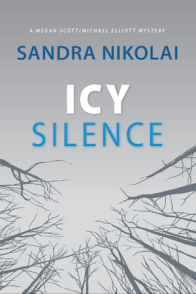
Icy Silence_SNikolai

I love finding new to me authors and so it is with great pleasure that I’m interviewing Sandra Nikolai on Linda’s Book Bag today and finding out all about the latest book in her Megan Scott/Michael Elliott series, Icy Silence.  Icy Silence is available for purchase along with Sandra’s other books on Amazon UK and Amazon US.

An Interview with Sandra Nikolai

Hi Sandra. Thank you so much for agreeing to answer some questions on my blog about your book ‘Icy Silence’.

Hello, Linda. Thank you for inviting me to your blog today. I’m thrilled to be here.

Firstly, please could you tell readers a little about yourself?

I’m Canadian, born and educated in Montreal. I graduated from McGill University and followed a winding career path in sales, finance and high tech. With my husband’s encouragement, I took an early retirement and finally sat down to do what I’d wanted to do for so long—write mysteries.

When did you first realise you were going to be a writer?

As a child, I fell in love with the magical world of stories. My interest in books spanned various genres over time, though mysteries remained my favourite—triggered in part by the Nancy Drew Mystery series. I secretly aspired to be a writer ever since I can recall, but logic dictated that I had to pursue more practical means of earning wages to help pay the bills. With the arrival of the Internet and expansion of social media, I grabbed the opportunity to fulfil my dream. I began to write short stories and submitted them to publications. I was successful in getting a string of short stories published and earned several awards, which motivated me to write novels.

If you hadn’t become an author, what would you have done instead as a creative outlet?

I love the written word, so maybe I would have taught literature or worked as an editor.

How do you go about researching detail and ensuring your books are realistic?

I research the material for my settings to make sure they’re as realistic as possible, though in many instances, I’ll blend different settings and use fictitious names. Since I write mysteries, I ensure that ordinary characters experience extraordinary events in my stories. As in real life, nothing is more shocking than finding out that something horrendous has happened to someone you know or to a neighbour who lives on your street.

I know you also write short stories. How does that differ from writing novels and which do you prefer?

The plot in a novel offers more leeway when it comes to building a world where characters can develop and interact. Readers tell me they enjoy getting to know the characters and love to follow them through a series. I value my readership. Their feedback is priceless! Although it takes more time and research, I have to admit I prefer working on a novel.

Which aspects of your writing do you find easiest and most difficult?

I’ll start with the most difficult aspect first: the plot outline. I’ve tried writing without one, but I didn’t have much success. I need to visualize the storyline from start to finish, and I can accomplish that task best if I set up an outline first. It’s hard work but worth it in the end. The easiest aspect of writing is dropping my characters into threatening situations. It’s the most fun too! (Cue evil laugh here.)

What are your writing routines and where do you do most of your writing?

I write at my computer in a home office and usually work several hours each morning and afternoon. Bookshelves line two walls of the room and are filled with books from my favourite authors. A large window affords a view of a quiet street lined with maple trees, evergreens and colourful flowerbeds—except in the winter, of course, when a snowy landscape turns everything white. It’s quite pretty too!

(That sounds wonderful – I’m surprised you’re not too distracted to write!)

When you’re not writing, what do you like to read?

Mysteries, of course! To be honest, I’ll read any book that tells a good story.

To what extent do you think reading Nancy Drew mysteries as a child has influenced your genre as a writer now?

Immensely. Had my parents not gifted me with Nancy Drew mystery novels throughout my younger years, I probably wouldn’t have been as interested in the genre as I am now. These novels—though tattered and faded—still sit on the bookshelves in my office.

Do you have other interests that give you ideas for writing?

Watching the news will sometimes spark an idea for a “what if?” storyline. It’s amazing how much evil lurks in the real world. Sometimes I’ll use a familiar element to enhance the plot in my story, but I’ll put my own spin on it.

‘Icy Silence’ has a very striking cover. I think the branches look like skeletal hands reaching for help. How did that image come about and what were you hoping to convey (without spoiling the plot please!)?

Readers of Icy Silence have expressed different interpretations of the cover image. I suppose it depends on how and why certain scenes in the story touched them. I think the illustration represents a variety of perspectives drawn from the contents and encourages discussion—which is always good.

Why did you decide to make Megan a ghostwriter?

I wanted to give Megan a level playing field with Michael, who is an investigative reporter. As a ghostwriter, Megan writes material for clients from diverse professional backgrounds. She is considered a generalist whose knowledge in various fields can come in handy when helping Michael solve a crime.

Icy Silence is the third of your Megan Scott/Michael Elliott series. How much have these characters developed since you began writing about them?

Megan and Michael have a special relationship—one built on trust from their life-threatening experiences in False Impressions, the first book in the series.

false

In his quest for justice, Michael takes risks and thinks nothing of dealing with shady informants to get to the truth. His determination to weed out criminals will only get stronger—as will the risks he takes. Although Megan prefers anonymity and works behind the scenes at her desk, she is showing an increased interest in Michael’s investigative work. She assists him more often in digging up information and following up on leads. It’s a given that their different personalities and viewpoints do create conflict, but they’ve often helped each other out of dangerous situations, thereby reinforcing their mutual trust. As far as romance goes…? Michael has hinted at a more ‘permanent’ relationship between them, but Megan isn’t ready to give up her independence just yet.

If you had 15 words to persuade a reader that ‘Icy Silence’ should be their next read, what would you say?

Icy Silence will forever change the way you look at boarding schools.

Thank you so much, Sandra, for your time in answering my questions and providing such interesting answers.

Linda, thank you for asking such thought-provoking questions.

Sandra Nikolai author photo

You can find out more about Sandra and her books by visiting her website, finding her on Facebook or following her on Twitter.

Burlesque by Christopher Logan

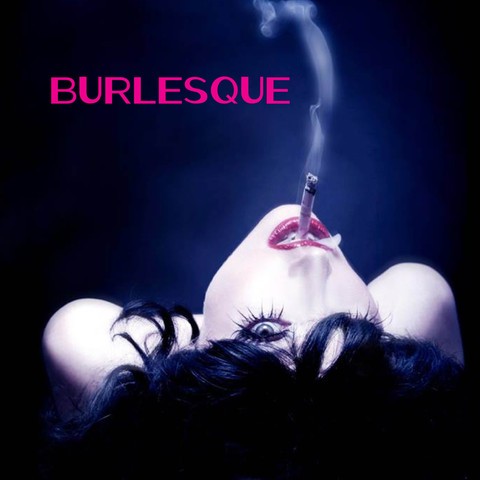
Burlesque

I was approached by the creator of Burlesque, Christopher Logan to see if I reviewed coffee table books and, not having done so on the blog I thought I’d give it a go. I wasn’t sure what to expect and what I found was quite different from anything that has appeared on Linda’s Book Bag before.

Burlesque follows d.r.a.g (Dressed as Girls), and is part of a project run by actor Christopher Logan to raise funds for independent film projects. The cover image is by Karl Giant. Burlesque will be released on 30th March 2016 and is available from the Book The Film website.

I was slightly disappointed to begin with that there wasn’t more text for me to read about the history of burlesque after the initial definition and introduction or more details about the individuals appearing in the photographs as I would have liked to know more about them.

That slight criticism aside, Burlesque is a stunning book. The photographs are gorgeous, high quality images that reward multiple views in order to appreciate the photographic skill. There is fabulous lighting to show off the performers at their very best such as that of Angie Pontani where the shadows give sculpture and form to her image. Colours are vibrant and the black and white images are atmospheric so that each plate is a work of art in its own right.

I hadn’t really considered the role of men in burlesque before so photos of people like Captain Kidd certainly made me challenge my own perceptions. So too did the expressions on the performers’ faces. Every emotion from sadness to joy and seduction to sweetness is to be found in the burlesque world. I appreciated the almost feminist pose of Missy Malone, for example, and the less than perfect but still beautiful figures of World Famous *BOB* and Selene Luna. Having said I would have liked more text to accompany the images, I still learnt an awful lot about burlesque. Looking at the photographs over several days and really studying them I began to see how the positioning of a hand, for example, was typical of some poses or conveyed a completely different meaning in others, and how a slight alteration in the lips could move an expression from innocence to seduction. Burlesque really isn’t a book to look through only once.

If you’re looking for something a bit different, are open minded and don’t mind some nudity, but want a book that is beautifully produced and supports an interesting project, look no further than Burlesque.

You may have seen Christopher in the recent X-Files episode ‘Founder’s Mutation’ and you can follow his Book The Film project on Twitter.

Summer at the Star and Sixpence by Holly Hepburn

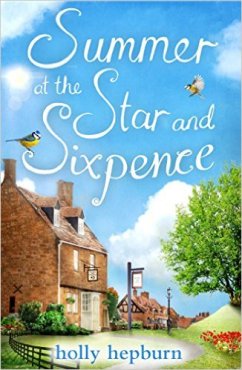
Summer at the Star and Sixpence

I was recently fortunate enough to meet Holly Hepburn at a Spring Blogger Event hosted by the Simon and Schuster Books and the City Team where it was lovely to hear Holly read from Summer at the Star and Sixpence and to get my copy signed by her.

Summer at the Star and Sixpence will be released by Simon and Schuster on 25th April 2016 and is available for pre-order on  Amazon UK, Amazon US as well as Nook, Sainsbury’s and other online retailers.

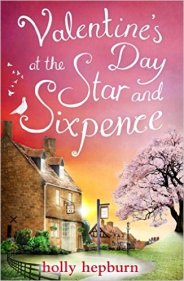
The story is part of a series of novellas featuring the Star and Sixpence pub and I previously read the short story Valentine’s Day at the Star and Sixpence, my review of which you can read here.

Valentine's Day at the Star and Sixpence

My review of Summer at the Star and Sixpence

With accommodation renovations underway at the Star and Sixpence, sisters Sam and Nessie are preparing to host a huge wedding for Jojo and Jamie. All appears to be going well, but Sam’s past is rapidly catching up with her.

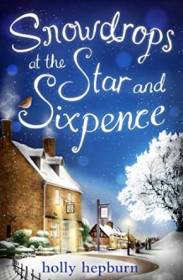
Snowdrops at the Star and Sixpence

I would say that it is best to have read Snowdrops at the Star and Sixpence and Valentine’s Day at the Star and Sixpence before reading Summer at the Star and Sixpence in order to have the full picture of all the back stories to the characters, but that it really doesn’t matter if you haven’t as Holly Hepburn skilfully provides just enough information to ensure the reader can enjoy the story as a stand alone.

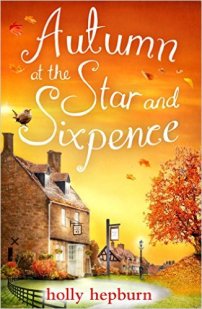
For such a short read there’s a fast paced and well developed plot that leaves the reader wanting more – setting up nicely the next in the series, Autumn at the Star and Sixpence, to be released in September. I would have liked just a little more at this point to resolve Sam’s story more fully as there is plenty of potential development in Nessie’s part of the narrative for the next book.

Autumn at the star and sixpence

I really like the way Holly Hepburn tantalises the reader. In Summer at the Star and Sixpence Sam’s secret is finally revealed and it wasn’t entirely what I was expecting. I can’t say more without giving away the plot.

This series is really easy to read. The narrative flows along effortlessly so that the reader becomes wrapped up in the story and longs for a happy ending for all the characters – from the tyrannical post-mistress Franny who frequently adds a comedic element, to heart-broken widower Owen. That’s not to say the reader always gets what they want though!

The Star and Sixpence series is a lovely escape from daily life. The stories are quick and light to read, but with enough depth and development to make the reader feel as if they’ve been part of real people’s lives for just a little while. I’m thoroughly enjoying them.

You can follow Holly Hepburn on Twitter and visit her web site. You’ll also find Holly on Facebook.
For more romantic reads follow Books and the City on Twitter or visit the website.

An Interview with Jan Brigden, Author of As Weekends Go

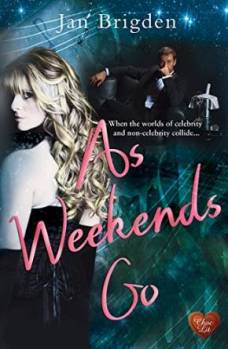
As weekends go

I ‘know’ author Jan Brigden from a variety of Facebook book groups and so it gives me enormous pleasure to be interviewing her for Linda’s Book Bag today. After winning the Choc Lit & Whole Story Audiobooks Search for a Star competition 2014/2015 with her debut novel As Weekends Go, Jan signed with Choc Lit and As Weekends Go was published by them on 4th December 2015. As Weekends Go is available on Amazon UK and Amazon US.

CHOC

About As Weekends Go

As weekends go

What if your entire life changed in the space of a weekend?

When Rebecca’s friend Abi convinces her to get away from it all at the fabulous Hawksley Manor hotel in York, it seems too good to be true. Pampering and relaxation is just what Rebecca needs to distract herself from the creeping suspicion that her husband, Greg, is hiding something from her.

She never imagined that by the end of the weekend she would have dined with celebrities or danced the night away in exclusive clubs. Nor could she have predicted she would meet famous footballer, Alex Heath, or that he would be the one to show her that she deserved so much more …

But no matter how amazing a weekend is, it’s always back to reality come Monday morning – isn’t it?

An Interview with Jan Brigden

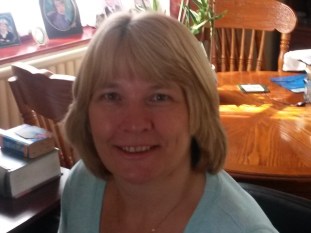
20150927_114738 - Copy

Hello Jan. Thank you so much for agreeing to answer some questions on my blog about your writing.

Hi, Linda. I’m thrilled to feature – thank you for your support.

Firstly, please could you tell readers a little about yourself?

Well, I live in south-east London with my husband Dave who’s a painter and decorator and, alongside my writing and sporadic freelance proofreading jobs, I look after the admin side of his business. I write contemporary fiction, romance at heart with plenty of emotional fireworks, and my debut novel As Weekends Go was published by Choc Lit in December.

When did you first realise you were going to be a writer?

Probably at school, even if I did also want to be an actress and a policewoman… I always  loved reading and  creating little fictional scenarios either in my head or in story form for school friends and family and recognised this as being something I hoped to further explore.  I later enrolled on a creative writing course which eventually sparked the idea for my novel. I studied every ‘How to’ book I could get my hands on and attended as many writerly events as possible whilst also connecting with other readers and writers on social media to absorb as much knowledge and sound advice as possible.

How did it feel to win the Choc-Lit and Whole Story Audio Books Search for a Star competition?

Jaw-droppingly brilliant! My smile was watermelon-slice wide for days, Linda. A truly magical moment.

Congratulations on that wonderful achievement Jan.

How did you carry out the research for As Weekends Go – did you have a trip to a luxury hotel?

There is a gorgeous countrified hotel with glorious grounds and facilities fairly near to me upon which I loosely based Hawksley Manor in my novel. I’ve never  stayed there as a guest but had been to a couple of events there,  so made an appointment to see the manager who kindly showed me round and answered about a zillion questions for me.  I also had a good contact at a lovely hotel in Manchester who offered me masses of help and shared a few stories with me.

Which aspects of your writing do you find easiest and most difficult?

I’m a terrible ‘tweaker’ so I’d say the most difficult is my ‘editing as I go’ habit rather than bashing out the first draft and then revising afterwards (which, having learned the hard way, is what I am doing with Book 2).  As much as I love it, I don’t find any aspect of writing easy,  so I’d probably say research  is the most enjoyable.

What are your writing routines and where do you do most of your writing?

I’m home-based so able to chop and change the hours I write around my other commitments, so no typical writing days, really. In my dining room is mainly where I work, either at my little desk or at the table.

How did you create Rebecca’s character? Did you begin with a name, an image, a trait or something else and did you write a full profile before putting her in As Weekends Go or did she emerge naturally?

A bit of all sorts, really. I remember canvassing opinions from friends and family when I was toying with naming her.  I had three names in mind and eight out of ten people I asked said the name Rebecca Stafford appealed to them more than the other two names I’d put forward. I created a character profile for her and interviewed her which is what I do with all my main characters. It’s amazing what they tell me! I do also like to keep an open mind as I’m writing, though, so it’s not too regimented.

You’re one of The Romaniacs (www.theromaniacs.co.uk). Tell us more about that group.

Well, we all met via the Romantic Novelists’ Association’s excellent New Writers’ scheme. We were at varying stages with our writing and used to bounce ideas off each other and offer mutual encouragement and support, etc. The blog was a natural progression as we wanted to pool and share our various nuggets of knowledge and experience. Our name derived from a typo, so we stuck with it and now couldn’t imagine being called anything else.

When you’re not writing, what do you like to read?

Anything from Lisa Jewell to Bill Bryson to Stephen King.  I love dipping in and out of different genres.

If you hadn’t become an author, what would you have done instead as a creative outlet?

Probably something drama-based, albeit in the background rather than in the spotlight. (I’ve toyed with signing up to be an extra) or a publicist in some capacity, perhaps, as I enjoy helping people.

Do you have other interests that give you ideas for writing?

I do a lot of walking (and people-watching) which always provides plenty of great fodder or ‘what if’ moments for storylines.

Which of your characters would you most like to be and why?

Probably Rebecca, because she’s real and honest and despite her marriage woes and dramas, her confidence returns and blooms as her story progresses (and she also gets to meet lovely Alex!).

If As Weekends Go became a film, who would you choose to play Rebecca and Alex and why?  

Hmmm… this is tricky. Can I be REALLY greedy please, Linda? I’d say for Alex, possibly a short-haired Chris Hemsworth. Also, I know the age is all wrong, but I’m a HUGE Brad Pitt fan and quite often had his younger image in my head when writing Alex’s scenes. Same with Rupert Penry-Jones as Adam Carter in Spooks (I told you I was being greedy)  RPJ in Spooks was the perfect combo of kind/tough/manly/intelligent, not to mention great looking – in my eyes anyway. With Rebecca, I think either Lily James or Sienna Miller, perhaps?  Lily James has that vulnerability about her.

Will we see more of Greg, Alex and Rebecca or are you working on another set of characters for a new novel now?

We will definitely see more of all three. Plenty of newbies too.

You have your own blog and you’re on Facebook and Twitter. How important do you think social media is to authors in today’s society?

I think it’s incredibly important. The relationships I’ve formed with other authors, bloggers, readers, have been priceless. I’ve learned so much and the mutual encouragement and camaraderie  within the writerly community is fantastic. Social media is a great way to engage with people but it’s equally important to chat to and get to know those people and not just bombard them with book links or promotional stuff. It’s  also a terrific source of info for upcoming events/talks/sharing photos and book recommendations and just everyday news and views. It’s about  mutual effort  and never forgetting to respect boundaries and be grateful for all the help and support offered or received.

If you had 15 words to persuade a reader that As Weekends Go should be their next read, what would you say?

Oh my word … (excuse the pun!) Only 15? Er… right, here goes:  I’d say … “It’s eye-opening escapism, a fun-filled, temptation-beckoning trip, with life-changing emotionally explosive consequences for all parties.”

I think all those compound adjectives might be cheating but I’ll let you off!

Is there anything else you would have liked to be asked?

No, I think you’ve covered everything wonderfully.

Thank you so much for your time in answering my questions Jan. I’ve really enjoyed finding more about you.

And thank you, Linda, for featuring me on your fab blog.

Readers can find Jan on Facebook and follow her on Twitter.